Michael Cargill Interview On His 2nd Amendment SCOTUS win.
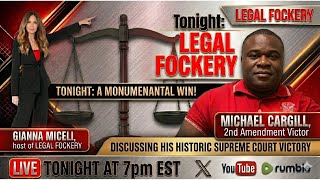
In this extensive interview hosted by Gianna Miceli of LegalFalkiri, veteran constitutional litigator and gun‑store owner Michael Cargill discusses his landmark Supreme Court victory in Garland v. Cargill (June 14 2024), which struck down the ATF’s bump‑stock ban and reaffirmed that federal agencies lack authority to rewrite statutes without congressional approval. Cargill walks through the emotional moment he learned of the decision, the multi‑year litigation path from district court to the Fifth Circuit and finally the Supreme Court, and the strategic choices that led to a $1‑plus‑million case. He explains the broader implications for Chevron deference, agency overreach, and how the ruling could affect future regulations by the ATF, IRS, and other bodies. The conversation then shifts to Cargill’s other legal battles, notably NSSF v. James, a challenge to New York’s law holding firearms dealers liable for crimes committed with guns they sold. He outlines the constitutional arguments, the status of the petition, and the potential impact on state‑level gun‑dealer liability. Cargill also shares his personal background: a former Army soldier, a former Democratic candidate turned staunch Second‑Amendment advocate, and the founder of Central Texas Gun Works, the first Texas gun store to accept cryptocurrency. He discusses his training program for over 50,000 gun owners, his philosophy that the Second Amendment protects all other rights, and his views on issues such as felon rights, age restrictions, gun registration, constitutional carry, and traveling with firearms across state lines. Finally, the interview touches on Cargill’s media experience (a decade of live radio, now short‑form content), his activism against local corruption, his relationship with the New Civil Liberties Alliance, the financial realities of high‑cost litigation, and practical advice for gun owners on safety, use‑of‑force, and post‑incident legal steps. The dialogue is informal, enthusiastic, and often interspersed with personal anecdotes, reflecting both Cargill’s passion for gun rights and Miceli’s advocacy style.
Chapters
Hello everyone, this is Gianna Miceli from LegalFalkiri at joingianna.com. I made a much more simple link because people sometimes don't know how to spell LegalFalkiri. I have a guest tonight for the Thursday show. This is a great interview subject. Michael Cargill is a fascinating American hero, I would say. Of Second Amendment law, a very hot topic on X right now. Also a small business owner, owns a fantastic business we'll talk about. Military veteran and a constitutional litigator. So when I saw Michael, he is right up my alley for what we do. And he is the man behind Garland v. Cargill, a 2024 Supreme Court bump stock ruling. And anybody that's been in the Supreme Court, we definitely want to talk to you. Welcome, Michael. How are you?
I'm doing great. How are you doing today?
I love how you're behind all those guns.
Oh, thank you. Appreciate that.
You don't hide who you are, and I love it. And where do you live at? Where are you from?
I'm from Austin, Texas.
Texas?
All your life? Liberal mecca. A little blue dot in the sea of red in Texas.
All your life?
No, originally I'm from Fort Lauderdale, Florida. Oh, and then I joined the military, ended up here in Austin, Texas.
Okay, I moved to Austin for one week in 2018. I grabbed a hotel for a week and I went, you know, I was really trying to work at Infowars. I, I couldn't find it and I didn't have all the experience I have now, but I thought I could do it and I could get on air and I, I thought I could just find it because they didn't respond to my emails, but I couldn't find it. And then there was just, it's just way too many homeless. I don't know if they're still there, but in 2018 there was just seas of homeless people. And that year I got assaulted by 3 homeless men in Vegas, so I was very scared and stuff, so I just left went back to New York. But how is it these days?
It's worse.
Oh no, I wasn't expecting that.
No, yeah, it's worse.
Oh, okay. Well, you know, sometimes we've just got to trust in God that he'll have it all work out.
And buy a gun.
Maybe it's good for you, right? Very cool. Very cool. So let's get into the meat and potatoes. The Supreme Court ruled in your favor on June 14th, 2024. Isn't that President Trump's birthday? Walk me through the moment you heard that decision. Where were you and what did it feel like?
It's funny, I was actually laying in bed and all of a sudden my phone started doing really weird things. There's so many phone calls coming in at the same time. Wow. I knew something had happened. I'd actually been watching the Supreme Court website and seeing if it dropped in. They only drop so many cases in. And so I figured, oh man, they're done, you know, for the day. It's not gonna happen this week. We're gonna have to wait till next week. And then all of a sudden, boom, you know, phone starts going crazy. I call my attorney. I'm like, okay, it just dropped in, you know, did we win? You know, what's the ruling? He's, he's like, hold on, you know, Mike, let me, let me go through it real quick. I said, okay. And I'm waiting. I was like, okay, well, did we win? I mean, what happened? I mean, did we lose? Did we win? He's, hold on. He says, Michael, it's like 20-something pages I gotta go through.
You gotta, you could just throw it through AI today, right?
Right. And so then he's like, yeah, you won. Not only did you win, they gave you everything and they gave you more. I was like, okay, wow.
So if he didn't know and it was 20 pages, who was calling you? It—
the media, everyone. It's— it was just insane. I never experienced that before.
Look at you. Okay, wow. So it wasn't just about bump stocks, it was whether federal agencies can rewrite statutes without Congress, one of my favorite topics, because this is exactly to the core of the lack of authority of the IRS. So how can you explain that distinction to people who think this was just about a firearm accessory?
Right. So we're talking about the Chevron deference. So we're talking about a federal agency, and 10, 12 years ago, right, you know, an agency. So we're talking, it could be the Department of Justice, it could be immigration, it could be OSHA, the health department, anyone, Department of Transportation. We're saying, can they create or write law? And the answer is no. It's like the Schoolhouse Rock song. How does a bill become law? It goes to— someone writes the bill, it goes to Congress, they go to the committee, they vote on it, they pass it, it goes to the president, president signs it, and that's how it becomes law. Not because an agency decides to create it.
You are just— you're— we didn't even know each other. I just cold emailed you and you are just my guy. You are speaking my language. And now I have the Schoolhouse Rock song, my I'm sitting here on Capitol Hill. Well, it's a long, long journey, you know, and it is. And this is what my IRS show was. I started to have one 2 days ago and I got knocked out. The internet got knocked out. Only me in my apartment. It was very weird. I didn't get to finish, But what I wanted to talk about was exactly this, that only legislators can legislate commerce. They can't legislate away your private rights. This is amazing. And so the New Civil Liberties Alliance represented you. And how did you find them? How did that partnership come together? And what was the strategy?
It was really weird because I was looking for an attorney and they were actually looking for a client. And I was actually contacting people when the ban went into effect or right before it went into effect, actually. And so I'm contacting attorneys and I'm trying to find an attorney that was experienced in, you know, pushing a case to the United States Supreme Court. Because my thought was, this has got to make it to the United States Supreme Court. This is not going to be a first federal court. This is not going to be, um, a, a, you know, Fifth Circuit, you know, uh, type of case. This has got to go to the United States, you know.
This isn't going to be some circuit court bullshit. No, exactly.
It's— this is the real deal here. This is, you know, we're talking— we've got to get this to the United States Supreme Court so they can make the decision, so we can change the over the entire country.
Wow. You're amazing. So do you have to climb up or can you go straight to the Supreme Court?
No. So this case took 6 years. And we started at the federal court here in Austin, Texas. And so that case was heard during 2020, during COVID Everything shut down. And the judge said, you know what? I want everyone in the courtroom. We're not going to be over online, on the internet. We're going to be in the courtroom, mask up and everything. And we're going to present this case. He wants to hear and see all parties in the case. So we have people coming in from DC, uh, the, the government came in from DC and all over the country. And so we presented the case in the federal court here in Austin, Texas. And I knew we were going to lose that case because the judge was comparing a bump stock to a shotgun, you know. And that's like, that's not it, you know. You don't have a clue how this thing works. So I figured we're going to lose that case. And we did. We lost.
Yeah. Which is okay. You know where you had to go.
Right. So we appealed that case to the Fifth Circuit. Now, once you go to the Fifth Circuit, the Fifth Circuit is comprised of mostly conservative justices on that court. But there are about, I don't know, 4 or 5 justices that actually are liberal. And so you're going to pull 3 judges in that panel. So 3-judge panel. So how many judges do you think we pulled versus liberal versus conservative?
100% liberal.
100%. All 3 liberal justices.
Totally random lottery, right? Okay, who's we going to give this case to, right?
I'm not the type of person to go to Vegas. I'm just not going to win. I can't win on the table, I'm telling you now. So yeah, so we lost that case. I appealed again back to the Fifth Circuit. And this time it went to, um, it was heard in front of the entire court. So you're talking, you know, like 13 justices. And so to me, that was the most intimidating court I've ever been in in my life because you're talking—
which court again?
The Fifth Circuit.
Oh, you're in the District and on the Fifth Circuit now.
Okay, so it goes to the First Court, then it goes to the Fifth Circuit, and then it's only heard by 3 justices in the Fifth Circuit. And then it's heard when— if they take it up again, which they call it unbunk, it's heard by 13 judges on the panel on that same, that same court. And so that to me, like I said, was very intimidating because, you know, you walk into a courtroom and you're talking to one judge, you know, and then, you know, possibly you make it to an appellate court, you're talking to 3 judges. But 13 judges sitting on the bench and they're throwing questions left and right, that was so intimidating because it was like a WWE fight, you know, questions, you know, throwing them back and left and right. And if you're an attorney that, you know, then didn't know what he was talking about, he didn't have a chance, you know, he or she wouldn't have a chance at defending that case. Luckily, we did great and we won. We won the Fifth Circuit, you know, and then the government decided to appeal to the United States Supreme Court.
Wow, what a story!
Wow.
Now, did you actually testify or the attorney did it all?
The attorney did everything, um, but it was exciting because, you know, first I want to tell people, you know, getting in the Supreme Court you know, you go through 3 different metal detectors, you know. I don't know if people know that, you know.
I went to the Supreme Court just to have soup in the cafeteria though, but no, I don't think we had any metal detectors.
Oh wow.
Wow. It has very— it has the cheapest lunch in, in DC. It was very delicious. So I went 2 days in a row.
Telling me that is like, I did not know they had a cafeteria.
Yeah, well, for the employees. And I, I read all the things on the wall. I had some time to kill when I I was, uh, handing out my Seventh Amendment common law jury reports, which we'll talk about later on. But it's very, very— it's a very magnificent building. It's— and everyone should see it. Everybody should see it.
It's because when you finally get in, because you can't take any— you can't take a laptop, you can't take any electronic devices at all. You have to lock all that stuff up in the locker. So when you finally get in through all the metal detectors you go through, you, you know, it's— the walls are red walls and the huge white pillars and just sitting there in the courtroom, you listen to the justices speaking and you recognize their voice, right? Oh God, man, you know, that's Justice Alito, that's, you know, Clarence Thomas. You know, you, you hear their voices and you actually recognize them, and it's like, it was just amazing to me. And just to hear them say my name, you know, uh, well, Mr. Cargill says this, and Mrs. Cargill's position is this.
I love how you're telling us the story. I feel like we're there. Please go ahead, go ahead.
Yes, it was, it was amazing. And my head was like huge. I couldn't get it out the door by the time, you know, we finished that case. And the thing is, you don't hear the ruling right away, and that's what people don't understand, is because this case was heard at the end of February of 2024, we didn't get the ruling until June 14th, which is the, uh, which is, uh, the Army's birthday, and also the— was Flag Day. And so, you know, months later is when you get the ruling. You don't hear it right away. So it was really stressful. And once the case was heard afterwards, everyone was very critical of my attorney. Why didn't your attorney bring this up? And why did he say this? And how come he didn't do it this way? Why didn't he argue that? They were second-guessing my attorney. And I sat down and I talked with him. He said, Michael, don't worry about it. He says, listen, why would I spend the time arguing with a justice on the panel who's going to be a no vote? If I argue with a no vote that's not going to change your mind, I risk the chance of turning my yes vote into a no vote. So why argue with the no vote? And so, and it made sense to me. I was like, yeah, you're right. You know, it's about playing chess, not playing checkers, right? And so he knew the game, and that is why we picked him as the attorney, you know, because he had been there. He actually was, strangely enough, he was Trump attorneys in one of the cases. You know, he actually argued for President Trump. And so we picked him, you know, he's high-dollar, very expensive attorney to argue our case, you know, because he's, hey, he's experienced in the United States Supreme Court. And so we just picked him just to argue this case in the Supreme Court. And so he did a wonderful job. And, you know, and, and man, I was very grateful that we chose him.
Wow. The chamber is amazing. So as a tourist, you can just peek inside. They've got ropes and you can't take pictures or anything, but it's just the history is just so amazing. Now, Who paid for this guy?
So, you know, yes. So NCLA, New Civil Liberties Alliance, um, you know, fitted most of the bill. We, you know, we tried to, you know, raise money, you know, that way. Uh, but what I was very disappointed because people in the 2A community did not donate, you know. Um, I'm talking to 2A organizations, and I was very hurt by that. Um, I reached out to a lot of the organizations that were out there And people talked about being very supportive. People filled out briefs, which is great, once we made it to the Supreme Court, which is good. But in the end, no one opened up the pocketbooks and actually donated. So that stuff all came from us, which is very disheartening.
How much does something like this cost, if you don't mind?
You're talking about a million-dollar case.
Really?
Yes, you're talking—
Wow.
They're expensive to time.
From start to— from the other courts too. Absolutely. Wow.
And just the attorney to argue that case to the Supreme Court is very expensive, you know, just to argue that case. And he gets paid up front before he even steps into the courtroom. Wow.
Well, I'm jealous. I'd love to have my name on a Supreme Court case. Maybe I will, because the right to travel and the IRS having no authority are the— and traffic tickets are my flags that I fly. So are you a person that believes the ATF has fundamentally exceeded their constitutional authority?
Absolutely, absolutely right.
But tell me what you think.
But I, you know, we, we allow them to— we're talking about a bump stock, a device, we're talking about a part, not even a firearm, that, you know, in this case was brought— this actually happened on the Trump administration initially. And so we're talking about a part, a piece that was banned in the entire country And if you own this part or piece, you're considered a felon.
Now you're a criminal.
That is insane to me. I purchased something legally, and all of a sudden one day I wake up and now that part— not even the gun— is actually banned in the country. And if I, if I get pulled over by law enforcement on the side of the road and that I have that part that rolls underneath my seat, when I stop for that police officer, they poke that, you know, put that flashlight, flashlight in my back window, and they see this bump stock apart, I'm a convicted felon. I'm done. And I said, that's insane. So that's why I brought this case, you know, and pushed this case all the way to the Supreme Court.
You are so fabulous. I want to ask you some questions and then towards the end, get into like more freedom stuff, like we think and see what you think about it. You have another case. You are a plaintiff in NSSF v. James, challenging New York's law allowing, check this out, the audience, lawsuits against firearms dealers for crimes committed with their products. That's like holding a liquor store owner for somebody with a DUI. And so, you know, tell me about that. How does that case fit into the government overreach? Like, you're, you're just born for this, right?
Yeah. This, this case, that case is actually still going. So we're still trying to make it to the, you know, we've actually petitioned the United States Supreme Court to take a look at this case. And we're seeing, you know, what's gonna happen there. Uh, in essence, what that case is about is that if I sell a gun to someone here in Texas, I'm a dealer. I'm a federal firearms license dealer, and then that gun gets stolen from that individual and that gun winds up in New York State and someone uses that gun in a crime in New York State, then the state of New York can come back and sue me, sue the manufacturer and the distributor.
Wow.
Is what they're saying.
And I'm like, is that a federal law?
No, this is state. This is New York State.
Okay, just state. Oh, New York.
Something that they created from—
Insanity. The insanity. I know somebody, and if they're telling the truth about their story, which I tend to believe it, but they were a felon and they were 3 months shy of the 10 years that you can't have a gun. And the sheriffs were corrupt where this person lived, and they made up some story to get inside the condo and knew who this person was and went searching, you know, of the unlaw— they just, they turned to drama once they're inside, because once you open that door, you can't— that you've given them consent. And they found in his brother's bedroom, not his own, but his brother's bedroom where he had his own possessions that were in boxes, their grandfather's antique gun, like very old, no bullets, nothing, rusted, and put him in jail for that because he had violated the 10-year thing, you know, which he didn't even know it was in there. But they wanted to get him so badly. Not only was the case state, but they made it federal. Listen to this, claiming the ore that made the gun crossed state lines.
Wow.
Pure insanity. So in the post-Loper-Bright, which is new as far as litigation, do you think it's having an effect of agencies rewriting statutes? Do you think we've made a dent? Because I feel like, okay, the Supreme Court ruling came out and it was the shot heard round the world, but who can monitor all the legal fuckery of the courts and the attorneys and the state places that it's actually being enforced? Because I have used it extensively in writing documents in my diversity that justify our standing up for our rights. And we have it on our side. It's very fabulous. And I remember people like, they don't ever really understand what it means. What's your feeling on it? Like, do you watch it and follow it? And now that it's kind of been used for you?
No, no, I have not. But you know, the thing about, the thing about this is, um, you know, we have to stay on top of things to make sure that these different agencies are not, you know, doing what they're doing. And they, they're hoping that no one's paying attention. You know, this was done under the Republican president to initially start it off. And then once a Democrat president stepped into office, they went crazy with it. You know, the ATF said, well, man, if we can get this done in a Republican president, man, we can really do some things on a Democrat president. And they did. They came after the brace, they came after different triggers, uh, they tried to put people in jail, uh, for having forced reset triggers and things of that nature.
Insanity.
Yeah, they just went ballistic because we allowed them to put their foot in the door and they just busted open and just took advantage of it. And so luckily the Cargill case came forward and made its way up to the United States Supreme Court and said, hey, hold on, ATF, you cannot create a right law. You cannot overstep your authority. That's made for Congress.
Now, let me tell you the significance of this that maybe you don't even know. And I hope that you do know, but in case you don't, your case is not just about that. It is about regulatory agencies it's as good as the Chevron. They cannot make— it's like it backs up— they cannot make legislature. The agencies have no authority to do that. So it applies to all agencies, not just the ATF. And that's why it's so beautiful. And Michael, we speak your name, you know, we speak your name. Your name is going to be in the books forever.
Right. And so it was important because once we made it to the United States Supreme Court, then the two, you know, different organizations wanted to jump in. They said, hey, how about we, you know, talk about, you know, the Constitution, reality of it. How about we focus on this over here? And I said, no, we need to focus on, you know, the ATF cannot create a right law, the Chevron deference, because that will knock down all the chips and totally destroy their house. You know, they— it stops them in their tracks. You know, don't get away, don't steer away from that. And I'm not going to do that. So I'm not listening to you guys. We're sticking to the roadmap, and this is what I'm doing, you know, and I'm not changing.
You were guided by God and it all worked out. Now In my university, we subscribe to this theory that the ATF can only regulate commerce. And when a person gets a CCW permit, a state permit, they have voluntarily ascribed to the permit, and therefore then they are under all the regulations of the state. But someone like myself would never get one because I have a Second Amendment right and I don't need anything else. House. Are you into freedom to this degree like we are?
Absolutely. We shouldn't need a license, you know, to—
you know, I love you already, right? I love you already.
Yeah, that's what the Constitution is for, you know. That's what the Second Amendment is for. And that's why I love the Constitution. I love the framework because it's like, hey, if as long as I have the Second, then I can protect everything. I can protect my First, my Third, my Fourth. I can defend everything because I have the Second, you know. First, I have a right to say what I want to say, and then if you don't listen to me, I can back that up with the Second. I love that. You know, the forefathers were genius Geniuses, right?
Geniuses, you know. And this is what we talk about in the university, uh, people all the time on the extra, like, how are you allowed to do this? I'm like, I'm not allowed. Like, I don't drive with a driver's license. I don't register my car. I don't carry insurance. This is a very personal choice. I won 12 traffic tickets while I was licensed, and I think 2 and a half years ago or so, I turned in my license to Nevada. It gets purged from the system. It didn't get purged in Florida. I had consecutive licenses, which is the CFR, which is their problem, not mine. But, uh, so I have a battle right now, which I totally welcome. I love the game. I love the game, and I will win. But during that stop, I had 2 guns in my purse, and the guy's saying he's gonna charge me, uh, with unlawful concealed carry. Now, stat— uh, Florida has given— like, we don't have CCW anymore. I don't care what the Florida legislature has to say, but like, if I'm in a traffic stop and I need to use it, I'll use it when it's to my advantage. And I'm like, dude, this is Florida. I don't need a CCW. And this jackass charged me with 2 counts, which I didn't even know until 4 in the morning, 2 counts of unlawful consent. Like, that doesn't even exist. So I had to look up the actual charge, and what it referred to is that if I'm a person, if I'm a felon, if I'm not 21, if I've been in a mental institution— I think there was something with meds. There was 5 parameters altogether, to which I met none of them, and he knew this and still applied the statute to me. And then within the first month of the slew of charges that I— which are just traffic tickets at the time— they secretly dropped those charges. And I didn't find out until a couple of months ago. Well, I cannot wait to see you in federal court because I am building a case of the century, you know. Hey, so your store is called Central Texas Gun Works, and it's the first gun store in Texas to accept Bitcoin.
Yes.
And how's that working out? What's going on?
Right, so yeah, we're the first gun store to accept cryptocurrency, you know, Bitcoin, Litecoin, Ethereum, everything. Um, it was very exciting doing that, going through— this was like 2014, 2013, I think we did it.
And, um, that's a long time ago. Wow, look at you.
I know, I know. And so, man, it was actually— it was actually pretty awesome, you know, just that experience because I wanted to push the gun stores to, you know, kind of stay up with technology. You know, we need to keep up to date. We need to get away from the fax machine. You know, let's get— we need to move toward, you know, fill out the form on, you know, on the computer and things of that nature. So it's easier to find stuff. So I want to really push technology.
And so that's amazing. And have you always been a conservative like this, or was there some catalyst?
Initially, I was a Democrat. And just really, yes, going through everything that I went through, my very first case, I was a Democrat running for office, running for constable, county constable for Travis County here in Austin. And so what really pushed me to the other side was when I ran for office, that my opponent was fired from state police, from the Texas Department of Public Safety, the state police. Because he was helping the drug cartel. And so, yeah, and so they fired him, you know. I was like, man, that's crazy. And so then he goes, he becomes a constable, and the constable, you know, gets rid of him. And then he runs and beats the— that constable that, you know, that actually got rid of him. And I said, man, you guys allowed this guy who's working with the drug cartel to become a constable, you know, in the state of Texas. And so I, I, when jumped into this race, you know, I dug into this guy's history and, and, you know, we're talking, you know, millions of dollars that, you know, this guy—
why is he running? Take the money and run, right?
Yeah, we nicknamed him the Cocaine Constable is what we—
I love it.
Came up with a song and everything. And what really hit me was the fact that the Democratic Party was so focused on me being a pro-2A person. Wow. They, you know, took a blind eye to the fact that he was helping the drug cartel.
Amazing. Amazing. And where did that end up? Where is he now?
So we— I ran the election to a runoff election, and then during the runoff election, I actually lost the runoff.
Okay.
Yeah.
Did he go to jail?
They got together, they put everything, all the resources together and block walk and just really campaign against me big time.
Hey, you stood up, you took a stand. Clearly you're an incredible leader. And, you know, there's other plans for you, like being on my show. I also ran for assembly in 2018. I was in like the Trump wave. I had never been a Democrat or a Republican, but I voted for Trump, you know, in the first time and started going to the Republican lunches and stuff. And I work at home. It was a time you could put on a dress and go to a luncheon and feel like a pretty woman and talk to people, and everybody loved me. And so I like going. And, and then on the last day, I lived in a rundown Democrat area of 5 zip codes, but they had nice high-rises. So I lived in one of the high-rises in downtown Vegas, and I was like, well, you know, I'm like, rah rah, we can't let the Democrats just have it without anyone else running. And so I was monitoring my area, my assembly, and I was like, if no one else signs up, I'll sign up for it, but there's got to be someone more qualified than me. And I waited until the last day, which happened to be my birthday, and until 4 o'clock PM. You had till 5 to sign up. So I walked down there and I throw in my $99 and my name goes on the board. Oh, look at this. And I go on Facebook and all these other people that ran, like, were dressed up and they brought their family and they took photos and put it on Facebook. It didn't even cross my mind. I just was like, this is what I'm going to do. And I called— the hell is Michael's name? The head of the Republican GOP, Michael McDonald. We were like pals, huggy bear, kissy face when we see each other at the lunches, you know, But I text him like, hey, Michael, I signed up to run for Assembly 11. Maybe you could give me some advice. I don't know what to do, but I can do it because I'm a leader and I can figure shit out. And he doesn't even respond, doesn't even respond to me. And but then you get invited to trainings and breakfasts and luncheons, and they announce during the campaign, you know, you stand up and everybody claps. Gianna Miceli running for— and I'm like, oh, I kind of like this. It's kind of fun. But I didn't have a primary. But, and so you sign up in the end of March, and then there's nothing until November, of course. So I really had nothing to do. But by May is when I got assaulted by 3 homeless men, and the sheriff would not arrest them. And my keys are right there, and they wouldn't arrest them. They wouldn't tell me why. And I was very freaked out, and I'm like, Vegas, you do not get me. You don't deserve my leadership. And I moved back to New York, and I did tell them to take me off the ballot, but they didn't. And then I got phone calls like your phone call with the Supreme Court, hey, I voted for you and I got 1,200 votes. I didn't win because it's Democrat. But, and what if I would have won? You know, I would have had to go back to Vegas or something. So let's transition a little bit. You've trained over 50,000 people, state legislators, judges, federal agency staff, and corporate groups. And what's the most surprising type of student that's ever walked through your door?
And I remember one time I had a young lady come in. She looked like someone's grandmother. And she sat down in the classroom, you know, on the side. She was really quiet, uh, you know, really enjoyed the class, told me it was really great, it was awesome experience for her. And, and then she came up to me, she goes, just so you know, I'm an air marshal.
Wow, wow. Was she like checking on your class or something?
No, no, no, she was, she was actually getting ready to retire and she wanted to get her license.
And, you know, oh, she didn't have one as an air marshal?
No, she— no, she— well, she was federal law enforcement, but she wanted to get her— she wanted to sit through the license to carry handgun course. And so she wants to get— she wanted to get that experience.
And so, you know, that is the great answer. So in Texas, is it different now? Are you constitutional carry, like they call it? I don't like that, but that's what they call it.
They, they call it constitutional carry. It's, it's a version of constitutional carry. It's not true.
What do they Yeah, but we do have it.
You do— you can carry with a license or without a license here in Texas.
Okay, that's very interesting. I would love to dig into that because it would be my standing that I don't have the license, so your regulations don't apply to me. I saw a video where— I don't know where it was though, but people were just— I'm sure you've done this or seen it— carrying their guns or their rifles around their neck, and then they stand on a corner and just exercise exercise their rights. And of course some jackass cop harasses them. Well, you can stand there, but you're not allowed to have bullets. And this guy in the video, you couldn't see him, but he was really strong. He goes, the Second Amendment does not say that you can't have bullets. In fact, what use would my firearm be if it wasn't loaded? I don't— you don't see the whole video, but he was really great standing up. And you know, if that's what I mean, like, if I, I subscribe to— if you get the CCW you're entering a contract with the state as the legal entity, and you'd have to subscribe to the statutes. Whereas just standing on your Second Amendment is standing as a living man with your rights intact as they were in, you know, when the Constitution was created, which is what the Bruen case— you're familiar with the Bruen case?
Oh, absolutely.
Okay, I just love you so much, you're so easy to talk to. You know, the Bruen case states that if you if it didn't exist at the time when the Second Amendment was created, it is not a lawful law, as they like to call it. What do you have to say about that?
Oh, absolutely. I agree 100%. And that's why we're pushing some of these other things that we're pushing across the country as well, because you're right, the Constitution, that is the only license I should need. It says that, hey, I have a right to this.
It shall not be infringed.
Exactly. Exactly.
Now, what do you think about felons? If people have done their time, do you think it's okay if they carry guns?
Yes, absolutely. You've paid your debt to society. You've— whatever the cost it is, you've gone to prison, you've been released, boom, you should get all of your rights back.
I do too.
It never should— I don't understand how we got to this point where you lose a right forever. That's just— that makes no sense.
These are God-given rights. And what about an age? That's not in the Second Amendment. What do you think if, you know, obviously parents, you know, and back in the old days, the old days like the '50s when people did have shotguns in their car and they would go to school and they did teach those classes, shooting classes in the actual high school. What do you think about today though? Do you think there should be an age, 18, 21? What do you think?
I'm all for everything. I've taken a 2-year-old to the gun range. That's so cute. You know, little kid, he was 2 years old, you know, and and I taught him how to hold, how to stand, you know, what to look for and everything. And he started shooting. He was like, okay, I got it, I got it. He's like, step back, step back, I have it. You know, he's 2 years old and it was amazing. Uh, so yes, any age actually.
You are so fabulous.
It's up to the parents. We're talking parenting. If a parent thinks that their kids, you know, can have access to the firearm to be able to use the gun, then, you know, then it should be okay. It's up to the parents.
I feel the same way about driving. I don't have a license. I believe I have a right to travel. I'm digging into that very deeply. I skipped second grade, so when the other kids were 15 getting a permit, I was only 14. But in my sophomore school, they had— they just— I think they did it for you. They filled out driver's ed forms and they put that I was born in the year with the 15-year-olds, but I wasn't. And my parents— and my dad was a cop, okay? So now when I'm 14, my permit says I'm 15, and you're supposed to to drive with someone in the car, but because my dad just didn't care. Like, it would just be a ride if my dad lived long enough to see what I do now today. But my father let me take the car at 14 alone on the weekends. Gotta be home by 11, and God forbid there was liquor or weed on my breath. That'd be the end of it. But on a sidebar, the greatest gift of that is that you got to come home with the full tank of gas, and you have to contribute to the insurance. Well, how am I going to do I got to get a job, right? And so I got a job at 14, and I've worked ever since. And I truly believe that's why I've never married, because I didn't have to have some man take care of me. I'm not a feminist by any means, but you know, it— that would be inconceivable today that a 14-year-old and their friends would go out driving.
But why not?
You know, why don't we get back to raising mature kids? And so what do you think the single biggest mistake mistake new gun owners make, and how does your training address it?
Just making sure they, you know, keep the guns away from children who, if you think they're not responsible enough to handle it, making sure that we take them out of our vehicles. Don't leave them in your vehicle overnight so someone, you know, gets, you know, gets access to that. I think you need to make sure you keep them locked, you know, if they're not going to be on you, you know. So, and that's something that we should do ourselves I don't need the government to create a law or anything around that. That's something that we need to do. And if, you know, someone gets access to someone's firearm, you hold them accountable for it.
Now you also have your own show called Come and Talk It and Love It radio show, and you've been hosting it how long? A couple years, right?
Yes, I did a live radio show for 10 years, and so now we just do, uh, just— I do shorts, you know.
Yeah, that's what we do now. Like, but you're on terrestrial radio?
Right. I was live radio for 10 years, you know, every Sunday. And so I said, okay, I'm tired of this now, every single Sunday.
All right. But no wonder you're so fabulous on this interview, you know. And, you know, what was the instigator for that, that you were just— were you asked to do it, or you just really wanted to talk about this stuff?
I was asked by the radio station, and I wasn't sure I would be able to carry a conversation. They said, Michael, just, you know, just try it. You'd be surprised. You know, you know this stuff, you know. So just go ahead and sit down and, and we'll guide you. We'll have a producer, you know, they cut you off and go to commercial break and all that stuff. So just try it. And so I did, and I loved it, right?
Right.
It was great. But 10 years, and I was ready to stop because I wanted my Sundays, my weekend back.
You did it well. I wanted to be a radio talk host person since 5 years old, and I had no idea that you could go to college for radio stuff. I never knew about that stuff. So at 37, I went to a 3-month radio school and I got a Howard Stern internship. I was the first person from my school to get it, and that's when he was still at KROQ before he went to Sirius. And I just loved it. I loved it so much. I would stay. I didn't have to stay all day, but I would stay all day because even though Howard leaves, you know, it was very interesting because it's kind of a rundown time. But at the time, you know, Howard was the highest-paid radio, you know, shock jock person, and commercials were $15,000, and I was in charge of the commercials. I had a very important role as an intern, but I loved to see how it all gets created. And so, you know, then I started my little Rumble show, I don't know, like 5 years ago. And, you know, you can, you can just— it's an amazing time that you can do what you want. Because in my previous business, as I was trying to get on the radio, and I really, I loved walking in the door to Sirius Radio. I loved— I got on the Jay Thomas Show as like the only girl with Free Shit had comedians and it only paid $25 because it was minimum wage and I did not care. It was a great experience and you might come out and like, Bruce Springsteen's in the lobby or Jon Bon Jovi and I'd have to get up at 4 in the morning, make sure I look cute in case I get on air. There could be, you know, rock stars in the hallway, but it was very magical and I tried to get on maybe, I tried to get my own show around, I think, 20, 2019 maybe or so that I was stalking the vice president of shows. I can't remember what her title was, but stalking her on her Instagram and then bought her a gift and said, I have a gift. She didn't even know me, but she doesn't have a lot of Instagram followers and she only lived two towns away. And I got her her favorite wine, which really freaked her out. And then I had a, like, a presentation for her about what I did. And she's like, I would love to hire you. But we just merged with Pandora. I would love to get more conservative voices on here, but you're not famous enough. I'm like, how am I going to get famous, you know? And what if I can't control that, you know? And what does it matter? But I'm here now, and I am so enjoying talking to you and people like you. And so you describe yourself as defending lawful gun ownership without regard to party politics.
Correct.
Is gun ownership a political bipartisan thing? You know, what goes on out there? What do you know?
People, uh, they tend to lean toward the Republican Party, um, but, you know, I'm looking at what's going on right now as far as, you know, what are we getting out of this administration. And I don't think that the current administration is actually looking out for the 2A community right now.
Yeah, um, they're very busy.
Yeah, you're right. So, um, you can't depend on the party. You know, I, I, I'm, I'm very tunnel focused. I walk through that tunnel. It's all about the 2A community because that's the one thing about me is, uh, you know, with the Second Amendment, you know, like I said before, I can have everything. And so if I can make sure that stays strong and we defend everything around that, then we can defend everything. And so it doesn't matter if you're Republican, Democrat, Libertarian, I don't care. If I think you're wrong on the 2A stance, I'm going to let you know that you're wrong and I will fight you you want it.
I want to enjoin you in this fight. I love what you're about. I want to enjoin you in this. So do you have your finger on the pulse of other states? Are we going in the direction of this so-called constitutional carry, which I could be okay with that, you know, I would love to just call it Second Amendment carry, you know, right?
I would love to do that. You're gonna have states like California, you know, that are just, it's, it's a lose-lose situation. New York State, unless— until people wake up one day and realize, you know, something's going to have to happen to them, and they realize, wow, you know, I do need a gun, you know, I do need that, right?
I got mine in the summer of BLM, you know, I was like, oh, these people are kind of getting out of control. And I did get the CCW in Florida then when I didn't know then what I know now. Now I will never fill out a government form and ask for permission to do anything. Yeah, that's what we do here. Now, what's your response to the argument that the founders— listen to this— couldn't have anticipated modern weapons when they wrote the Second Amendment?
Um, we had a young lady here in Austin, Texas, who, um, back in the 1800s decided that she was going to defend the city of Austin and protect the records from a military, uh, a, a force that decided they were going to come into Austin, Austin, 1800s, steal the records. And if they were able to steal those records, Austin would not be the capital that it is now of Texas. And what she did was she had a cannon and she fired that cannon. So if I can own a cannon back in the 1800s, then I can own anything, you know. So it doesn't matter. So yes, it is meant for modern firearms as well. It doesn't matter if it's an AR-15, doesn't matter if it's a rifle, because at the time, you know, the— you know, your soldiers had rifles that were black powder. Well, guess what? They took those home, you know, and people had those at home, those same firearms. Uh, so those same weapons that the military possessed, then individuals had those at home as well. And so there's no difference. It doesn't matter because technology has, you know, has grown, has changed a little bit.
It's still the And I believe the statistics, like, it's Switzerland where people are very armed, not open carry, but it's known that they're very— and that's a very safe, trusting environment. And, you know, it works when the right people have guns. So you were in the Army for 12 years and been overseas to other countries, you know, who don't have our Second Amendment. Did that shape your view of the Constitution? What are your feelings on that, being in other countries?
Oh, absolutely. It It let me know how vulnerable that you are when you come to— when it comes to other countries. And the fact that they're always calling the United States, and they want the United States to be the world police, you know, right? Uh, haha, you know, the US, you got a gun problem, but then when something happens, hey US, can you come save me? Can you come help me? You know, we're always that, you know, that world police. And a person— a country would be crazy to attack— to attack the US on, on, on the mainland. They'll never do that. They'll never send a ground force to the United States to attack us because they know that we have too many firearms here and they'll never stand a chance because of that.
Congress is the greatest gun salesman ever, right? Absolutely. I went to Eastern Europe. I went to 3 countries this past summer and, you know, you can't even bring pepper spray. You can't bring it on the plane. You know, I'm not going to risk bringing a gun, but walking around, I went by myself to a— I was with the tour group, but sometimes you're on your own. And since I do carry here, it just does— you're used to to it and it feels weird. You do feel vulnerable and I don't like it, you know. If only everybody would be like us. So you—
and I don't go to places that I can't carry a firearm. I try to carry a gun everywhere. I care where you go, I have someone that has one, you know. So I'm not, I'm not going to go anywhere into any establishment, any place at all that I cannot carry a firearm.
Do you go into places that say you can't bring a gun? I mean, it is— you probably carry concealed, right?
Absolutely. Absolutely.
Yeah, like, how would they know? Like, these silly rules are so ridiculous, you know? Everybody needs to stop using the word allowed. Like, they say, how are you allowed to drive? I get in the car and I push the button. I drive. I just drive. Um, is there any case or battle you haven't taken on that you think needs to be fought?
Hmm, I don't— man, that's, that's, that's a great question because I've done a lot I never thought that I would, you know, would have fought all the battles I fought so far. When that first time running for election, I ran for, you know, constable, that constable filed a defamation lawsuit against me and I beat that case in court. Of all the stuff that I brought up about him, I beat that case.
Also, you are such a winner. I love it.
I brought up corruption in the Austin Police Department. The Austin Police Department, they were not testing the rape kits. You know, ladies are being raped in this town and they weren't testing the kits. And so I exposed that. And also the senior leadership, they had an assistant chief that actually was, you know, buying cocaine for ladies in the strip club, you know. And so they're so busy doing things like that, they weren't focusing on public safety. And I exposed all that, so they filed a defamation lawsuit against And so it was a ripple effect because, you know, a lot of people lost their jobs, had to retire, and I won that case.
Wow.
And all that, you know, all that stuff, I, I tell people, it's, you know, it's, it's great, you know, to do things like that, but these things, it costs money to do these things. And so that took a lot out of me defending myself when I brought all this stuff up. And that's why I stopped doing the radio show, because I brought all this stuff up on air fired. I got kicked out of a radio station, one of the main radio stations, um, here in Austin. Kicked— locked out of the entire building. You know, I was supposed to do my show on a Sunday. I go to the building with my card swipe and I can't get into the building because they locked me out of the building, you know. And I couldn't do a show that day. And so all because I exposed, you know, this, this stuff. And, and, you know, and I don't stop, you know. I keep going. But, you know, it is, it is costly because when you things like that. People file lawsuits against you, you have to defend that. Even though I won, it still cost me a lot of money.
Are you in anything right now, any current cases?
So we're still in that New York case.
Oh, that's right, we're going up against the state of New York.
Um, and then also, um, with a case in Connecticut as well, uh, because Connecticut makes it very difficult for FFL dealers to, uh, to do background checks and to transfer firearms to people. So we're working with the state of Connecticut take it, uh, with that situation as well. And, uh, that's about it. Okay, you know, my litigation for right now.
Okay, right. And so we believe in not registering guns, correct?
You should have to register your firearms. There was no registration, and that's why the Bruin case is so important. There was no registration back in 1800s. You shouldn't register anything now.
So do you have to do that with your store?
Absolutely. Well, we don't— there's no registration in Texas. We don't register firearms, but there is— because I'm a federal firearms license dealer, I do fall under the, the, the, the behest of the Bureau of Alcohol, Tobacco, Firearms, and Explosives. So there are things and procedures I have to follow.
Okay, so if I came to you to purchase a gun, you would have to do a background check, right?
Correct.
But it's not registering.
We do— we do not register guns. That, that record that you fill out stays in the gun gun store. It does not leave the gun store unless your gun is recovered by law enforcement because it's used in a crime or stolen from you. They contact the manufacturer. The manufacturer says, hey, I transferred the gun to this distributor. Distributor says, hey, I transferred the gun to Central Texas Gun Works. And then they'll ask me for that paperwork.
How could I get it home to Florida?
Ah, so you would, you would only be able to purchase a rifle rule, you know, because you're not a resident of Texas. Or I would have to—
if it's like, tell me these rules. Okay, well, I want handguns.
If it's a handgun, then I would have to, uh, ship it to a gun store in Florida, unfortunately. Yeah. Or you can get one as a private seller from private individual while you're here visiting Texas. So a private seller can sell you a firearm.
Okay, we've tried private person. Okay, very interesting, because I'm going to be in Dallas.
Private person.
Yeah. And what are the so-called rules about that? Because last time I was in Texas, we did go to— do you know the crazy gun guy, like, near Keene, I think? Do you know him, that store?
Not sure.
Crazy gun dealer. So we went there because we had met him at Freedom classes previously around Keene, Texas, and he did just sell you guns in the private but they had changed and you had to do all the background and kind of stuff. So there's— I can't do that in Texas then unless you ship it to a gun store. That's it. Does any part involve registration?
No, there's no registration in Texas at all. So if you were in the park when you ship it here, right? If you walked out to our parking lot right now and you met someone in the parking lot who was walking to the store with a gun that they wanted to sell to us, and you met them in the parking lot and say, hey, me instead of selling it to the gun store. How about you sell that gun to me? Then they can choose to sell, you know, as a private individual, sell that gun to you, and then you can take that back to Florida.
But can I drive it to Florida and go through all those states? Yes, I can.
Yes.
What are the rules if I got pulled over? It has to be like locked up, right?
Now you have to follow those state laws that you're going through.
Each one you have to investigate, which is insane because the Second Amendment isn't every inch of the country. Right, you know, and if I'm not using it, what is the big deal? There's too many rules. I don't like all the rules.
Yeah, because if you're traveling through different states, you're traveling through— as long as that state's not your destination, you're not going to spend the night, you're not going to take a nap, you're not going to break down, not going to go shopping, not going to eat, then you can separate the firearm from the ammunition, put them in two separate cases, lock them in the trunk, and travel through that state.
I might eat.
If that state's your destination, if you're going to take a nap, you know, if you're going to do anything other than getting gas and eat, anything other than that, you know, if you do something else, then that state's your destination, and then you're subjected to those laws of that state.
Interesting. Thank you, thank you, thank you. Can I ask you this question? So do you only teach how to shoot guns, or do you also teach about the use of guns, like situations and things?
Absolutely, yes. I love teaching about the use, how to shoot, because it takes me 2 seconds to teach you how— teach a person how to shoot and kill someone.
Yeah, that's the easy part.
Yeah, that's the easy part. The hardest part is not pulling out that firearm in the first place. You know, when should you pull it out? You know, and that's my question.
Let me hit you with a question. I'm walking my dog, it's 9 o'clock at night, I'm on the street, on the public, I'm armed. Bad guy comes up, something hassles me. When can I shoot him?
Are they trying to kill you?
Yes.
Then you can use force, deadly force, to stop them in the state of Texas.
Thank you. And that's always my answer, right?
He was trying to kill me. I had to stop him.
I thought my life was in danger.
He was trying to kill me.
Okay, now I've shot him. I don't know if he's dead or alive yet. I would like to just go home. I don't care what happens to this guy. What should I do? What should I do immediately in the aftermath of this happening?
Unfortunately, you've got to contact law enforcement and then let the police come over and do their thing.
Now, I want to be— say I'm not going to check on him because maybe he's not dead. He might grab me. I gotta stay a distance away, but are there small details like what am I saying to 911?
My name is so-and-so, so-and-so. I'm located at so-and-so, so-and-so. Um, I've been a victim of a crime. I need, uh, police and paramedics. Sir, ma'am, what happened? My name is so-and-so, so-and-so. I'm located here at so-and-so, so-and-so. I've been a victim of a crime. I need police and paramedics. Ma'am, what happened? My name is so-and-so, so-and-so. I'm located at this address here. You know, you repeat that exact same thing and then, and then disconnect that phone call once they know where you are. And then contact your attorney and let your attorney do the talking to law enforcement for there. You have a right to remain silent. Anything you say can and will be used against you in a court of law. Do not make any statements to the police at all.
And people don't realize while you're on hold with 911, they're still recording. So don't say anything before someone comes on. Now what about I am armed and then you show up? Should I put the gun on the sidewalk? Should I holster it? Should I tell them? Like, at what point, you know, you don't want to get shot.
Put that gun back into that holster.
Okay.
And because, um, you put that gun back into the holster, 9 times out of 10, they didn't even know that you actually were the one that pulled the trigger, uh, because they probably won't see it because you were concealing in the first place. And then they'll probably have— they'll have to ask you, you know, and they'll say, hold on, let me get my attorney and let my attorney, you know, communicate with you because I'm not— I don't talk.
I'm not telling a single shred of the story.
Don't talk to law enforcement.
I love you. Okay, last question. If someone listening to this has never fired a gun and never even thought about their, their Second Amendment rights— you own the right, you guys— and is somewhere between skeptical and hostile to your and our worldviews, what's the one thing you'd want them to walk away with understanding.
You have a right to defend yourself and to protect yourself and also protect your family. And don't forget that, because by the time you— something happens and the police do show up, they're, they're just to fill out a report. They're not there to help you, save you, anything like that. They're to fill out a report and that is it. So it's going to be up to you to defend yourself and protect your family.
Are you taking donations for your cases you're still Not anymore.
We were, but not anymore.
Okay, if you ever are, I would like to donate. We would have given out a link. You have been beyond delightful in this. We had no conversations before except, you know, it was funny because when I reach out for people to be guests, it's always got email back and forth. And Michael called me, he's like, this is Michael Cargill, and I just was in a moment not recognizing his name. And I'm like, oh, you're actually calling me? And then we just got it done and this just absolutely fantastic. I've enjoyed myself so much. I hope you did. Any parting words? Um, want to give out your social?
Absolutely. You can reach, reach me on most of my socials, Michael D. Cargill, um, on X, Facebook, whatever. I'm there. I try to respond as best as I possibly can. I miss people that are not friends of mine, so sometimes I miss those, and I apologize if I do miss you, but I do try to respond to all messages. So I'm Michael D. Cargill on, on all the socials. And then, like I always say, you know, more guns equals less crime.
I love it.
Love it.
Thank you. I hope we can have a follow-up someday. Thank you so much.
Yes, ma'am. Thank you.
All right, I'll see you.