The G-Code: What Separates Leaders From Everyone Else
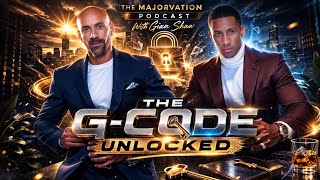
In this Majorvation podcast episode, host "Major" (Speaker A) interviews Hollywood actor, stuntman, and peak‑performance strategist Gian K Shaw. Gian recounts his journey from earning a degree in athletic training to moving to Los Angeles with only $300, taking extra work, and eventually breaking into acting and stunt work. He explains how relationships in the stunt industry opened doors to diverse opportunities, from TV narration to international shoots. Central to the conversation is Gian’s proprietary G‑CODE framework—Gratitude, Clarity, Ownership, Discipline, Execution—which he says underpins his success in stunts, acting, fitness, and leadership. He discusses the importance of embracing rejection, loving failure, and maintaining an unshakable belief in oneself. Gian highlights the role of high‑ticket mastermind groups in accelerating growth and shares his philosophy of serving others and allowing others to serve you (the "USE" mindset). He offers concrete advice for aspiring stunt performers: identify a niche, hone specific skills, create a demo reel, be reliable, and leverage relationships. The episode concludes with an announcement of Gian’s upcoming book, G‑Code: The Cheat Code to Success, featuring a foreword by Dr. Eric Thomas, and provides his social media handles. Throughout, the dialogue is conversational, motivational, and peppered with personal anecdotes that illustrate the practical application of his framework.
Chapters
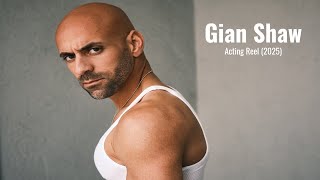
Hey, what's going on everyone? Welcome back to another Majorvation episode where we talk about all things inspirational, aspirational, and Majorvational. Today, once more, we have another amazing guest. I told you this year that I'm not going to stop when it comes to bringing insightful guests on that could inspire you, that can share great stories, and that are just absolutely doing great things in the world. Today, Gian K Shaw, a Hollywood actor, stuntman, turned peak performance strategist. Gian has worked on high-pressure films and television sets and now applies those same execution standards to leaders, founders, and teams through his proprietary GCODE framework. And that's gratitude, clarity, ownership, discipline, and execution. This isn't theory. This is how performers, operators, and leaders function when mistakes are expensive and excuses don't exist. Gian K Shaw, welcome to the Majorvation podcast, my brother.
What's going on, Major? Thanks for that intro, man. Oh, made me feel special right there, bro. Thanks for having me on, man. I'm excited. I've been waiting, you know, ever since we did that event together. I've been waiting to do a deep dive with you, so I'm excited to be here, man. Thank you.
No, same here. And then, you know, as far as the event, we went to a, a Google tour where you were kind of like a rally or something like that, you know, a little while ago, and we had an opportunity to kind of chat then. But, you know, you're doing a lot of amazing things. First, I just want to highlight your amazing family. You know, me being a family guy, I'm always a loud voice and advocate for those who stand in that, you know, in that particular space. So shout out to you and your amazing family. But let's go, you know, let's, let's, let's take a few steps back. Let's go back to a little bit of the beginning in regards to how you've matured into who you've become in this particular Hollywood space. Obviously, when you say, um, stunt double, and you know, it seems dangerous or it seems fun, what was the initial thing for you that got you into that? Or was it acting first? And then you saw another opportunity. How did that unfold for you initially?
Yeah. So taking it back to like my college years, I have a degree in athletic training and physical therapy, and I actually was offered a job in that field. I was going to take over a whole college department, and I thought that's the way I wanted to go. But about 3 months before graduation, I became an extra on a film shooting up in San Francisco because I was going to San Jose State at the time, and I just fell in love with the process. So literally the day after I graduated, college, I handed my diploma and everything to my family, my parents, and then I just hopped in my 2006 Chevy Cobalt, drove all the way down to LA. I had almost $300 to my name at the time, and I moved into a 4-bedroom home with 10 other individuals. And because I was like, you know, I'm gonna give this acting thing a shot, I'm gonna go for it. And I knew I needed to be put in the proximity to, you know, make it happen. Now, as I started going out for different acting roles, a lot of them involved some sort of physicality. I was always the UFC fighter, the cop, the military guy, the thug. I was always doing some sort of fighting. And so some of my buddies who were stuntmen, they were just like, yo, gee, this may be a route you want to go because when you're not booking the acting roles, you can do the stunt roles. And then also there's not a lot of guys that are stunt guys that like to deliver roles or deliver lines or capable of delivering lines. So for me, I'm always thinking like a strategist. And so I said, wait, this is another way for me to get more roles. If there's not a lot of competition in that area, let's go ahead and put ourselves in that category and see what can happen. And I mean, man, it's been a blessing. I've shot, you know, all over California. It's taken me all the way to Budapest where I was, you know, getting thrown off that famous Chain Bridge out there. So it's just been— man, it's been a remarkable journey for sure.
That's fantastic. And I think another extension of that, not only is it the opportunity to expand the workload, but also the relationship role. Talk a little bit about how that's been impactful because that's more partnerships, that's more lifelong friends. And, you know, in this, in this particular industry, that's more opportunity in itself. So speak a little bit about how that's worked out for you as well, if you can.
Man, it has been crazy the amount of people that I meet now that have led me to other opportunities. Like basically one of the stunt guys that I was working with out in Budapest and he hired me for a TV show called Mayans. He was actually shooting a documentary where he went and traveled over to Bangkok and, you know, fought out there, Muay Thai, just a crazy story. And his company hits me up to do the narration for that, for that documentary. And that was a relationship I built through stunts. I met some amazing directors, um, hairstylists, makeup crew. The relationship had been crazy where now I'm going to different birthday parties from those relationships that were made. And we all know, especially in this industry, we Relationships are everything. And it's not about just meeting people to meet people. I don't do that shallow thing. It's like, hey, can we really make a connection? Let's see where we can connect, dig deep, and see how this relationship can blossom where it's a win-win situation. What can I do for you? I always come into every room looking at how can I serve you best? How can I help you? How can I be a blessing to you? And having that framework has opened up so many doors for me. It's been amazing, man. Like, and not only that, it's like the stories that I've gotten from, you know, being in the stunt world and some of the crazy stunts that I've done has translated into the business world and bringing it to my whole GCODE framework. So it's really cool how it blurs the line like that.
No, no, absolutely. I think, you know, a lot of people need to understand that in regards to the importance of fostering those relationships. And obviously, from what I do as well, I use a framework similar to you as well. It's called USE. Unlocking your story, shifting your mindset, and executing your strategy. But also the books that I wrote is called Use Everybody, right? Not in a malicious way, but it's where you use everybody, whether it's a resource, energy, connection, inspiration, whatever, whatever the case may be. And so I really related to, you know, that particular story that you just shared. But I also want to talk about how powerful, how in your world are words very powerful. And how do you use that to stay motivated in your industry? Because there, even with the relationship, sometimes we go through a period of nos. And I want you to get to that a little bit as well.
You know, before we dive into that, I want to touch on you use every, everyone. I love that idea because what I had been doing before, I've always been the person that just will do it on my own and not need or ask for help from anybody. And The past couple years, I started to realize I was rejecting blessings coming my way. I was literally— blessings were trying to come away, I'm good, I don't need it, I don't need it. Well, then guess what happens? The doors start closing on those blessings. They don't keep coming. So the past year or so, I've really just been in this, you know what, if somebody offers to help me, I'm gonna let them do that, and we're gonna see where that leads. And my goodness, has it changed everything, man. Like, the blessings have been overflowing from that. So It's really cool. Like you talk about use everyone, but not in that malicious way. Like it's really, we're here, we're put on this earth to help each other. So help others, allow others to help you. And it's just that giving circle. You know what I'm saying?
Yeah. And a funny way that I frame it when I'm doing talks, I tell everyone that has an issue, 'cause you know, it's been miscategorized when you say use someone, right? It's been in a light, right? Because we've been programmed that way. But if you look at it from another perspective, even in our entry into life, G, uh, we used our mother's womb, right? We life out using someone to come and get our first breath. And that always gets a laugh from everyone, but essentially that's what it is. There's a story about the, the guy in the boat, and he's in the middle of the ocean and he has no paddle. Huge waves are coming. There's a small boat that comes and say, hey, jump on, I can save you. He says no. You know the story, guys.
Yep, yep. God, what happened?
He's like, bro, I sent you I sent you everything.
I tried to help you out many times.
Yes.
So, it really makes you think, right? Over the course of your life, how many blessings have you blocked? And where would you be if you didn't block those? And it comes down to the smallest things, even a compliment, right? Someone says, "Hey, man. That shirt's nice." Or, "Hey, man. You've been working out." Yeah, don't say like, "Oh, it's just my brother's shirt." Or, "Oh, this is just Photoshop." No. Just say, "Thank you." Accept that gift. Say, "Thank you." You know what I'm saying? And more blessings will come your way.
And I think even with the full circle moment of us connecting at an event, then connecting randomly by staying in touch and just being thoughtful, thinking of someone as well. And, you know, we're all busy— life, family, kids, work, or whatever. But there is this microwave type of friendship when you see people that do it from a place where, dang, he didn't return my my text or my call versus a person that I understand we're going to link up eventually, soon, and it's still all love and it's all good. You know, how important has that been in regards to your world with patience? Kind of walk me through that mindset.
You know what it is?
It's—
I remember when you, when you texted me, I had something going on and you wanted me to, you know, come support you at an event. From the text, I could feel the importance of it. So, I moved around my schedule a little bit because I said if this person, this guy that I've only met once in person has reached out to me and is asking, "Hey man, you want to come support me? I'm going to this event." It made me realize, you know what? Yeah, I do want to support you. You're doing something big. We connected. This me— It meant something that you reached out to me. And it wasn't immediately, right? You talk about the patience. I think it was a couple months after we met and then the random text came in. So, it's about having that patience because it's almost like when you first started dating your wife or whatever, right? You can't just rush into things, you know, you got, you're like warming up, you guys are feeling each other out, feeling where, you know, I can help you out or I can make you better or make you whole. And it's kind of that feeling out process, which basically me and you've been doing for quite some time now, but it's blossoming and the depth is there. And like you said, just because time has went by doesn't mean anything has diminished with our relationship. Because you can still hit me like you say, hey man, we got to do this podcast. I'm like, let's go, let's figure out a date, let's get this going. And we pick right back up as if it was yesterday.
And then it comes down to just, you know, the right— like, some people, when you have a certain amount of success or whatever it is, you know, it's too rushy sometimes. Me, I'm a person who likes to serve, right? So even if I'm inviting you, even without me, you may get some opportunity in a space, right? Because I'm always thinking, like, if I invite this person, maybe they can get some value from a conversation. That they, that they may meet or something like that. I've seen it happen many times where I've connected people, not personally, but because they were invited to a certain place, they end up meeting someone or long-lost friend or whatever. And so I always think those things are valuable. Selfishly, I'm gonna tell you an inside secret. I serve so much, and that's why I receive so much back.
Yep, yep. And that, that's the cheat code.
That's it.
If you Especially when you were talking about connecting people, right? If you put two people together, you introduce this person, this person, whether it's an actor, casting director, future husband and wife, you connect these people, they will never forget who made that connection. And in the back of their mind, they're thinking, how can I help Major out in the future?
Yeah.
You know what I'm saying? So you're right, man. That's the best thing to do. You put people in a place to succeed with other people, you're going to be blessed forever.
Yeah. And I do it from the pretense of I'm not about the social, just normal hangs. What kind of value can we get from that? We're adults and we have things to manage and staff or careers like, but if there's pockets of where there's value, I want to bring other people and share the value. I went to this mastermind. I don't know if I told you the story when we were together, but a couple of years ago I went to this mastermind and it was $55,000 and it was two people there that wasn't millionaires, like multi, multi-millionaires. And I was one of them, right? I'm doing okay for myself, but these guys were worth $25 million plus. And it was 214 of them, G. And so one guy financed $55,000. I begged my wife to let me do it. I felt like there was potential there. Ended up changing everything for me. I met two people. The two people has changed everything. That's why I'm at half a million books sold right now because of the systems they gave me and just opened up my entire mind. But if I wouldn't have took that risk, and knew how to operate in those spaces, everyone shouldn't do it, right? Everyone—
Oh, 100%.
100%.
Right now I'm currently on my second $40K mastermind that I'm in right now. And let's dive into that, man, because growing up in our communities, we don't talk about that. We don't talk about investing in ourselves in that type of way, being around other individuals that are performing at a higher level that can really elevate where we're going. And the only way that can happen is to start, you got to pay to play. You got to pay to get into those masterminds. And like you said, $40K, $55K, that's a lot of bread, man. I'm not a multimillionaire, doing well for myself, but I'm not a multi-multi-millionaire. But putting yourself in that uncomfortable situation to be, let's just say, the dumbest person in the room, not the richest person in the room, it will elevate you in the connections you make in that room. You can't get it anywhere else, man. You can't get it anywhere else. And, and you have to— this is something you have to humble yourself. You have to put ego aside and realize, why am I trying to reinvent the wheel? This dude already sold half a million copies. Why don't I go to him and figure out his system so he can help me sell half a million copies?
You know what I'm saying? And that was the entire mindset, you know. And then the gentleman who invited me as well, he was a supporter, someone who voted for me. I was in politics heavy. And he was like, you know, you just need to be in this room. In the following year, I was invited back and I was one of the speakers, right? But if I didn't make that initial risk and an investment in myself, that would have never, you know, transpired. So talk about— and that leads me to the next thing— in the industry that we're in there, and there's a lot of nos. We was talking about that as well.
Yeah.
How strong is— how strong does your belief have to be in order to continue to have those many victories and those successes? Because there are many, right? We have those big astronomical goals, but you have to have that humbleness of accepting those miniature wins as well, because eventually you'll, you know, get there if you stay consistent. So knowing your background in fitness and wellness and being a person that coaches other leaders, how important is belief in the industry?
You have to, you have to have unshakable belief in yourself because in this industry you're getting told more often than you're getting told yes. You're getting told no more often than you're getting told yes. And it's one of those things I would even say it's probably close to 99% of the time you're getting rejected. So you have to love rejection. But coming from an athletic background and playing sports and still heavy into fitness, at the gym I fail every time I work out because when I'm hitting different sets, I'm going to failure. So I'm failing. So I've learned to love failure because failure means growth in my opinion. So I may go into this casting office audition and they say no in the forms of not booking me for the role, but guess what? I knew I grew as a performer. I grew relationships in that room, and they're going to call me back because I got belief in myself. I know my worth. You're not saying no to me. You're just saying no to this part for me. That's all that means. And I started doing something every single time, man. I get a booking and I get to my trailer. The first thing I do is I clap for myself. It's the mini— the very mini victories that you have to clap for yourself because it's showing the gratitude, it's putting more of that out in the universe. Because I was the type of dude, okay, I hit 300 pounds on the bench press, and okay, let's get to 305. Okay, I booked one role, let's book two roles. Okay, so where's the end game, man? You're not grateful for anything, you're just spinning your wheels. It's always going to be more. Hit 7 figures, when are we going to hit 8 figures? That's not how you live your life. You got to enjoy the process, man. We all know what the end of this journey looks like for every single one of us. You don't get out this game alive, you know what I'm saying? So why are we rushing to that destination? It makes zero sense. The joy is in the process. The joy is in the no. The joy is in the failure. The joy is in the rejection, the ups and downs. But the one thing that has never been broken is my belief in myself. I know what I'm worth. I know what I'm capable of. I know what I stand on. I know my values. I know the standards I hold myself to. That's what I focus on. I don't focus on the noise. You cannot put your worth on me. You can't tell me what I'm worth. That belief is unshakable, man. But also coming back home and having that foundation of a wife that believes in me, 3 beautiful daughters that believe in me, man, the world can't tell me nothing. I ain't listening. I ain't listening.
So, and that's fantastic. I, I, pretty much mimic the exact same, you know, mindset. Um, but what I will say is everything you just said, it was extremely powerful, right? And it's very in line with someone who may have been matured and seasoned to where you are now. What would you say to someone who is 10 years removed to possibly reaching the heights that you've reached in this industry? That is dealing with self-sabotaging habits and also thoughts. What would be some advice that you would give someone who has, you know, those, you know, they don't see that enro and they have an issue with self-sabotaging, which will likely, you know, impede them from reaching where you've reached in this particular industry.
Yeah. So that's an important part. Um, that's, that's where the O comes in on the G-code, which is ownership. I always tell everybody, right, in every result of your life, you're the constant. A lot of times when people are going through self-sabotaging, I've been there, I was a youngster once. When you're going through self-sabotaging because you're doing it out of fear, it comes back to fear. You're self-sabotaging because your fear of succeeding, fear of failure, fear of rejection, there's a fear there. So, you know the little triggers that you can do, hey, I'm gonna go party out late tonight so then I'm not ready for my audition tomorrow or I'm gonna go talk to that girl so my girlfriend gets mad because this— she's the right one and it's going towards marriage and I'm afraid of that. So, we do these little things that we self-sabotage. So, 10 years removed and if I was, you know, back then, what I say is that you're in control of every result of your life, right? And it's not a way to place blame, it's actually empowering. You have the decisions and the power to choose what is right to lead you to that path. But you can only do that, right, if we work backwards on the G-code, if you have clarity. Clarity of what you want, clarity of where you're going, and then from there, working backwards, that gratitude. Gratitude right now that you're realizing, hey, you know what, I'm messing up around here. You know, I want to— I actually want to marry this woman, and I'm doing some self-sabotaging things that I need to correct. It's taking a really deep look at yourself and understanding and getting to that point where the pain of discomfort is greater than the pain of growth. And that's the problem sometimes, right? We're sitting in this— whether you're, whether you're broke, whether you're out of shape, whether you're single and lonely, whatever the case is, you haven't made a change yet because that pain and discomfort hasn't succeeded the pain of growth yet. And once it does, that's when your wheels will get spinning, man. So, I think it's just one of those things we really got to sit in the gratitude. We have to understand we're all human, we all make mistakes. I fall all the time, man. I'm misstepping all the time. But I'm at the point now where I have grace for myself. When I was younger, I didn't. I would beat myself up hard. But I have grace for myself, I'm a human, I'm not perfect. I'm far from it. I'm learning every single day. But as I'm learning, am I improving? Am I getting better? Even if it's only one step better, am I getting better? And if you could take solace in that, that will help you with those self-sabotaging thoughts or just that complacency that you may be feeling right now or going through.
Absolutely. That's fantastic. Thank you so much for sharing that. Let's talk about the G-code. Like, break down the G-code for me in regards to what it stands for, And why did you choose that particular, you know, wording and framing? And how does that empower you still to this day?
All right, man. Yeah. So G-code, this is— I've always been somebody ever since I was little. I was a point guard on my basketball teams. I was always a leader. I was always moved up to varsity. I was always in charge. And a couple of guys used to always call me the general. And so I get to college and first semester, man, I ran out of money really fast, really, really fast. And I befriended this really petite girl and she was nice enough to let me eat off her food card, bless her heart. So I was able to get through the first semester, but I had to drop out for a semester because I just couldn't continue. And I decided to get a job at the airport. And I remember they were going to fly me out to Denver for training. So they flew me out there. They said they were going to put me up in a hotel, which they did, and give me per diem because I had no money to my name. And the first day of training, I get to the training facility and they say, hey, per diem's delayed. And I'm like, man, I ain't got no money. I'm in Denver right now. I don't know anybody out here. So for the whole training from 8 to 5, I can't even focus. 5 o'clock hits, my stomach's grumbling. I walk outside, I see a Famous Dave's barbecue and I'm like, I definitely can't afford that. I see a McDonald's and I'm like, okay, maybe I could swing that. So I go to the McDonald's, I'm standing outside the door and I reach in my pocket and I literally made sure I have $1.96 to my name. And bro, as a grown man, tears just start coming up in my eyes because I'm realizing I can't even feed myself. This is pathetic. And I made a decision right then and there, I was never going to ever let someone else dictate when I ate, if I ate, or what time I ate. And so I went into that McDonald's and I convinced the guy on the other side of the counter that I worked at the McDonald's in Cali, and he gave me the employee discount and threw in some fries. So I ate that night, But more important, I made a decision. So I then started looking at all the different avenues in my life where I became successful, the things when I failed, and I was like, what is the through line? What were those success tiers? So I remember being out, I was shooting something in Texas and I was in the hotel and I'm really thinking about this guy. I said, gee, we're now in a phase of your life where you gotta give back. And I started thinking, I'm like, man, every time I was successful, things started with Gratitude. Everything was rooted in gratitude. It is the foundation of success because you're not able to attract what you want if you're not grateful for what you currently have. And I'm like, okay, well, that's cool, man. Gee, everybody calls me G. Gratitude, this works. We can do something with G. And then I was like, okay, what else, man? We got to get clear on where we're going. And then clarity, because if you're not focused on where you're going, you'll just end up anywhere. And I remember I was training to get into stunts and I was doing high falls, falling from 20 feet, and I kept missing the bag and I wasn't hitting the spot exactly on the bag where I needed to hit. And the stunt coordinator came up to me, said, "Gee, the reason you're missing your mark is because where your eyes go, the body follows. You're looking over there and that's why your body's going over there." And he meant it for stunts. And bro, I was like, "Whoa, that was deep." No, no, no, this is pertaining to life. And then so I got clarity going. And then at that point, once I got to the G and the C, I remember my buddy Eric, he passed away a couple of years ago, but he used to call me G-code back in high school. And I said, okay, we can build something off of G-code. And then I came to ownership and it was one of those things where one night I stripped off all the labels, I stripped off everything and I was standing in the mirror and I said, who am I? Who is Gian? Why am I in this position right now? Why don't I have enough money? Why am I not living the life that I want? And then I realized, like I said earlier, in every result of your life, you're the constant. And so I started taking ownership from that moment. And then when we got to discipline, I've already always been a disciplined individual. If I set a plan, I'm gonna stick to it. And you know, you have to be disciplined on whatever journey you're on in life because a lot of distractions are going to come your way. But then we see this today too, man, with social media. You could talk about things all you want, you know, Talking about things make you feel good. It can hype you up for a moment, but nothing matters if you don't execute. So talking about the thing isn't doing the thing. You actually have to do it. And that's why the G-code ends with execution. And so I always say these aren't just 5 buzzwords. These aren't 5 words that I just threw together. These are tried and true principles, framework that I put together. When stacked in that order— gratitude, clarity, ownership, discipline, execution— I call it the cheat code to success because you will be successful in any endeavor. I've used the G-code in acting, the G-code in stunts. I've used the G-code to be an athletic trainer, the G-code in fitness, the G-code as a husband, as a father. The G-code works, man. It is a system. It is a tried and true method. And it's not, it's not theory, bro. It works.
I love that, man. So with all that you're saying, man, I really feel like you should write a book.
Oh man, I probably should have told you ahead of time. No, go ahead, keep going, keep going, because I'm about to make an announcement on this podcast. We're gonna make an announcement on this podcast.
Drum roll, drum roll, drum roll. So real quick, so every time, um, I get a chance to have someone on, especially someone from a leadership perspective, I just like to be as quiet as possible and just let you guys just rock out and share, because I get so many emails and so many people following up and saying, man, that story really, you know, impacted my life, or it mirrored exactly what I was experiencing at that particular moment. So I just appreciate you being so energetic in your story and just kind of sharing on those narratives, especially when it comes to the self-sabotaging and just knowing that it takes that work and it takes that belief in order to acquire, you know, what it is that you're working towards. But everything you said, like I said, you are a person that if you wrote a book, I would purchase your book and I would support your book.
So it's funny if you said if I wrote a book. So I mean, okay, I guess, I guess I'll make the announcement here. I did write a book, my man. Um, I've been working on this book for 2 2 years. Yeah, this book has been in the work for actually 2 years now, um, and it's actually coming out on my birthday. So I'm dropping the book on my birthday, which is, uh, February 12th. So, uh, all right, we could do this, you know, we'll do the sneak peek on here, man.
You're my brother.
So we're gonna do the sneak peek on here, man.
Wow.
So this is it right here, G-Code: The Cheat Code to Success. Um, and this is it, man. This is Everything in this book was tested in the real world and lived before it was written. So these principles, like I said, can help you in any avenue in life. And I want to give a special shout out, man, to a good friend of mine. He was a mentor at first, became a great friend of mine, you know, just lend so much valuable inspiration, so much love, so much guidance. And we've grown so close over the years. And he actually wrote the foreword to my book. And it's a Dr. Eric Thomas, aka E.T. the Hip Hop Preacher, man. So like, I'm so humbled because Major, back in my college days, man, back in 2010, 2009, when I was struggling bad, I used to play all of E.T.'s stuff. And then fast forward now, which is this crazy full circle moment, I call him a friend. He wrote the foreword to my book. So I'm just like, I'm truly honored, truly humble. So yeah, G-Code: The T-Code to Success. Uh, you can get it at thegcodebook.com, and that's going to be, like I said, going live on Thursday, uh, February 12th. February 12th. Fantastic, man.
That's gonna be a great, uh, it's gonna be a great birthday. I'm sure many people are going to support it. Make sure to tag us in any post that you put so we can repost it and put it out there as well too. Appreciate it. I would say, uh, one or two more questions while I got you on here. I gotta try to squeeze everything. You gotta— I know you— let's do it. Um, when it comes to— you mentioned consistency, you mentioned discipline, miss— you mentioned, uh, having that competitive edge because you come from, obviously, like myself, a sports background. So there's certain DNA that we have when it comes to being able to apply that to other areas in life, right? What do you say to a young person that may not have come from that particular background and have that certain edge, what is like some small little frameworks they can use to help build themselves up to go after what it is that they want in life?
So the biggest thing is knowing this was built. You built yourself, Major. I built myself. This is built, right? So anybody can do that. The first step is being committed to your commitments. The fastest way to lose trust in yourself is breaking promises to yourself. And that's when confidence dips. That's when, you know, you're not— if you don't feel trustworthy to yourself, you're not gonna feel trustworthy to the world. And so being committed to your commitment. So we're talking about, if you say you're gonna wake up tomorrow morning at 6:00 AM, get up at 6:00 AM. If you say you're gonna work out 3 days a week, work out 3 days a week. If you say you're gonna finish your homework on time, finish your homework on time. If you say you're gonna take your wife on a date, take her on a date. Honor the commitments that you made. And this is how you slowly start building that confidence and that trust in yourself. And what you have to do sometimes is, I call this, I talk about this in my book, calling on your own stunt double. And what that is is borrowing confidence from your future self. How would you, Major, walk around right now if you were worth $100 million? How would you talk? How would you dress? How would you associate with people? How would you carry yourself? What would be the standards? So everybody can do this now. You can borrow from your future self. And it's just similar to like when an actor calls in a stunt double to do a dangerous role because they don't feel like they're capable of it or it's too dangerous for them. As a human being walking around on the day-to-day, you can call in that version of your future self to give you that confidence that you need. But the biggest thing is, I see it all the time, the moment you start breaking the promises to yourself, the commitments to yourself, that's when confidence tanks. So knowing you can build this, you can build yourself, day by day, simply by honoring the commitments you made.
No, that is so good. And it definitely is so valuable because a lot of people, they lose sight of that and they don't understand. Like sometimes it's about the small victories. Just like you said, it can be making up your bed. Like just those habits of completion is one of the things that I talk about. And I have a 15 going on 16-year-old son. And I mean, I'm in this state of really, you know, guiding him on a lot of principles and a lot of habits. Grow as well too. Another great book that I've read is, you know, Outwitting the Devil by Napoleon Hill. Talks about moving with intention, um, and just being purposeful in your walk. And so I just think that goes along with a lot of what I already believe and, and what other people should really gravitate towards when they're going through those moments of despair and just trying to find their footing. So I greatly appreciate that. I would guess The last thing I would say is, um, what would you say to someone that's interested in becoming, um, you know, a stunt double? Is there a certain process, and what is the actual time? Because we only have a few more minutes, but I really want to try to break it down because they see you on TV or they see your social media and they instantly want to be you, and they instantly want to be doing exactly what you're doing. But kind of walk us through real quickly through the process of what it would take for them to get to that particular point.
So number one is sharpening your skills and knowing, knowing your skill set and what you're great at. Like, I'm not somebody who does backflips and these crazy kicks, so knowing your skill set— I'm somebody who can manipulate weapons really well, do hand-to-hand combat really well. So what I do is I know your skill sets first and then hone those skills. And so that's why I do— I double down on those skills, because like I said, I'm about to turn 39. I'm not doing no backflips or doing anything crazy like that, so it ain't gonna happen. But if you're good at that stuff, hone that stuff. And to give you kind of like a fast-track process, if you're going into the stunt world or the acting world, then put yourself on tape. Whatever you're good at, if you're doing the kicks or manipulating the weapons or tactical moves, whatever the case is, put yourself on tape. Because if nobody knows you're out there, you're going to be the world's best-kept secret. So you have to start. And now in the day of social media, you could just throw everything out there, so it's Really honing those skills, going to where stunt people train, like JAM, you can— joining All Movement, it's a gym. You could just show up and start training there. And going back to what you said at the top of the podcast, Major, the relationships and the patience with the relationships. You're going to meet a ton of stunt guys, they're going to see that you're good at what you do, and then it's just growing and letting those relationships blossom because they'll remember you and they'll be able to call you in when the time has come. But then it's also find, find the niche where you can serve best. Like me being a stunt guy that can also deliver the lines, you know what I'm saying? Find a niche where you can really move in and be that guy that, man, Major's the only one that does this. Well, guess what? If you're the only one that does something, you're going to get the phone call all the time. And then on top of that, being reliable, making sure everybody can depend on you, show up when you can show up. Because in this industry, you know, Major, in this industry It seems big, but it's a small, tight-knit group. Your name will get passed around if you're someone that shows up. Man, I got hired on a job one time and I was talking to the coordinator or whatever. I was like, hey man, why'd you bring me on? He's like, because I know you'll show up on time and you'll do the job and you cause zero problems. That's the bar. That's it. Come on now. Come on. The standard's low, guys. Just be dependable, be reliable, do what you say you can do, and you know, your reputation will carry you through there.
I love that, man. That's a great explanation. Thank you so much for joining me again. I greatly appreciate it. I hope all of my guests get a chance to see this as well. Uh, so shout out to all my Major Baiters out there. Make sure to like, share, and subscribe. I'm sure me and, uh, Gio is going to do this again. You know, I got him for the first time in 2026. I think we want to do it again before the year is over with. But thank you so much for coming on board. Thank you guys for tuning in. Thank you guys for watching. This has been another episode of the Majorvation podcast, where we talk about all things inspirational, aspirational, and majorational. Gian K Shaw, thank you once more, brother. And where can they find you on Instagram?
All right, guys, you can find me on all socials @gianshaw or gianshaw.com. So that's G-I-A-N-S-H-A-W. And Major, I just want to say, man, love what you're doing, brother. So humble that you asked me to be on the show. Keep doing it, man. You're a blessing to so many people. And Majorvation, let's go!
Let's go! Thank you so much, brother. I appreciate you. All right.