Cal Newport on Deep Work, Slow Productivity & Designing a Life of Depth | Rock Your Goddess Life
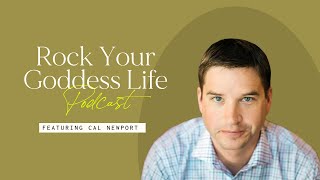
Cal Newport talks about his books on focused work and attention, from So Good They Can't Ignore You to Deep Work. He explains slow productivity, why deep work matters in a distracted world, and how he sets rules for his kids' technology use.
Chapters
Foreign. Hello and welcome to the Rock your Goddess Life podcast. Today we have Cal Newport. Cal is an MIT trained computer scientist and professor at Georgetown University who writes about the intersections of technology work and the quest to find depth in an increasingly distracted world. He's now the author of eight books, including multiple New York Times bestsellers selling well over 2 million copies worldwide. Cal offers a visionary framework for how to live a meaningful life, creating, intentionally and reclaiming our attention in the modern world. Welcome, Cal.
Well, thanks for having me. It's a, it's a pleasure to finally be talking to the, the better half of the Brian Johnson duo. Now we could get serious here.
That is awesome. Yeah. And I have yet to meet you in person, but we have talked about, about you so much in our house. I was, I was reflecting on this of like, I don't know how many times I've said to Brian, well what does Cal do? What would Cal say? So, and, and as I was preparing for this, I actually pulled out Brian's philosopher's notes and my kids are going to like a little co op thing today. And I was like, we're going to listen to daddy's philosopher's notes on Cal Newport's deep work book.
So there we go.
It was great.
Excellent.
Okay, so I want to start off with a little on your hero's journey. Right? So you got your first book deal when you were 21 and you wrote your first book. Like have you always been interested in kind of like living a meaningful life depth? Like tell us about that time and kind of what took you off on this path.
I draw it back to my high school years, right. So in my high school years, this was the late 90s, so it was the first dot com boom, that original one. And I started a business. I was a computer type kid. I was a mix of things. I was a computer geek and an athlete and played in a rock band. I did a lot of things edified labels, but I knew computers well. And in that first.com boom, because people didn't really understand what the Internet was, they assumed it was a good idea to hire 17 year olds to do technology work. It was like, who knows about this type of technology? The kids do. So I was an entrepreneur in my final years of high school. So that was very formative because I was reading books about entrepreneurs, I was reading books about time management, I was reading books about pursuing goals, I was reading business biography. So I, I had that sort of mindset heading into college and that was the mindset that actually got me into writing. I actually saw that first book I wrote, which was a book about how to do well in college. I saw that as an entrepreneurial venture. My whole idea was someone should write a book for college students that reads like a business book instead of writing books for college students that treat them like students, like kids, that talks about your roommate and the kookiness and parties. I took myself seriously. I was entrepreneur. I was like, I want to write the type of book I'd want to read, which is like, here's how you do well. Let's get into tactics. Let's get into details. And so it was actually an entrepreneur friend of mine who convinced me. He's like, look, stop talking about it. Just write it. Let's see what happens. So to me, that was the. That's what got this whole thing started, was my. My early exposure to entrepreneurship. And my first book is almost like a entrepreneurial venture. Hey, what would happen if I wrote a book like this?
That's so interesting. So you went from. It was more like inspiration. I'm inspired and I'm motivated. It's not like you were like, I'm floundering. Which I would never think that you were floundering, but you would be like, I struggled with focus. I struggled with deep work. And so then out of that challenge, I created this. That's not the case. It was more inspiration. Like, I just want to live a great life.
Well, yeah, and there's a little bit. There's a little bit of challenge. I mean, I will say, in college, I had a chip on my shoulder. I, I, I felt. I didn't know how. I just felt like I wanted to do something notable, right? Like, I, I felt like, okay, I have the capability and the drive. I don't know what it's going to be, but I felt that sort of generic drive towards, like, I want to do something notable. The actual ideas of that first book came from a little bit of a challenge. So my first year at college, I was a student athlete, and that was really what I was doing. I was rowing crew, on the crew team at Dartmouth. And then I developed a congenital heart condition. Electrical miswiring thing that just happens. Like, oh, I now have this heart condition, which I didn't have before, that made it so I couldn't row. And that threw me into a moment of like, well, what am I going to do now? And the two things I thought about is writing. Maybe I'll write. Because I had been a sort of advanced writer growing up, and I want to take my Studies more seriously. And so that launched this whole year of experimentation, my sophomore year of college, where I was applying the entrepreneurial mindset to studying and being very systematic. How am I taking notes? What might be better? How am I preparing for a math exam? Did that work or not work? What did work? How would I do it better next time? So I was running all these experiments about what's like the actual best way to be a student. Those turned out to be really successful. So my grade point average just pegged up after that. And my sophomore, junior and senior years, it was four O's every quarter except for one A minus on my senior spring. And that was. So that's. Out of that minor hardship came the content idea for my first book. Because I had this experience of like, oh, if you treat college like a job, it's really not so hard. If you're systematic about how you study, you could do really well. And so that's where that idea came out of. But yeah, that initial hardship was a big one because I was like, oh, I just want to do. This is my group. I'm going to be an athlete. It's great. You have a big group of friends. You get to travel around and fly across the country and, you know, be in the ncaa. Like, this is going to be great. And then when that went away, I had to refigure pretty quickly.
Fascinating. So you had to, you completely like you were an athlete and then you stopped. Like it was like the heart condition made you stop.
Yeah, basically. I mean, so what happened was, is they said you can take beta blockers that will prevent the electrical misfiring. The problem is beta blockers drop your max heart rate by about 20%, which is good if you're a classical musician and you want to not be nervous on stage. But reducing your max heart rate by 20% is terrible if you're in a lactic sport like rowing. And so what happened was I could still row if I took the beta blockers, but I was literally 20% worse. Like you could measure, the watt output was down by 20%. And so I fell out of the top boat and I fell into the second boat. And it was just too frustrating. It was like, okay, you can compete, but you have to take a drug that makes you worse at the sport. And I was like, this doesn't make sense, right? So I tried for a while. I finished out the season in the second boat and I said this was just too frustrating to have a self imposed physical handicap on a sport where it's all about Pushing yourself to your extreme. So I tried for a little bit, but by the end of that year, I said, this doesn't make sense. I can't keep doing this. Yeah.
Oh, fascinating. I love that. I love hearing. I was an athlete in college as well, so it's just interesting. That was a pivotal time for me of switching into the work I'm doing now. Knew that I wanted to be doing it then, you know, fascinating to see. Like, that pivot actually paved the way for your hero's journey of who you are right now. Right.
I. I see. It's the call to action. Right. That was the call to adventure, was, this isn't going to work anymore. I'm adrift. My grades were fine, not great. And I. I was. And I still had the chip on my shoulder that was the call to adventure. And so, like, that fall, that sophomore fall is when I began my experiments about how to study. And it's when I first began. I got started in writing by submitting op EDS to the student newspaper, and then I began writing for the humor magazine. So all of that began after this occasion. So, yeah, that was my call to adventure was like, let's figure out what I'm going to do next. And then when I began reaching out to agents after my junior year about let me actually write a book, that's when things really began to ramp up.
Okay, so then you wrote those two books as you were younger, and then kind of Deep Work. I feel like it was like a pivotal book for you. Right. Of like, getting out into the world. Talk to us about how, how and why you created Deep Work.
All right, so here's the pivot. I'm a grad student now. My first book comes out. I write it my senior year, comes out right after I graduate. I immediately write a second book also for students, that comes out the next year. I take a couple years to improve my craft. And I published a transition book in 2009 which was aimed at students, but the style was a Gladwell style idea book. So this was really like me. I was trying to improve my craft. I made a pivotal decision as my grad school years were winding down. And I still have the notes from this. I have the notebooks where I took these notes where I had to make this decision. Do I leave the space of student advice? Right. Because I was doing well there. These three books I'd written for students were. You know, they were good, and I had been a very successful student. And so I was the right person to be writing them. I was Becoming like an authority in that field. My blog and newsletter was focused just on students. It was called Study Hacks. That was successful. And so I could have written that, right? That was the decision. I could just remain the top guy in student advice even as I got older. And I remember grappling with, yeah, but there's only so big you can get. There's only so much impact you can get. The art is a little bit constrained, right? You can only. You can only push your writing craft so much if you're writing for students. And I really had the debate, do I want to try to generalize to broader audiences? And I went back and forth and I had all these pros and cons about, well, here would be the advantage. Like, it's a chance to actually be a much bigger writer. But then the fear was like, but no one knows me in that space, and it might not work at all. And why would I leave a space where I could write books here forever and they're happy to publish them? And so I finally decided, okay, I'm going to transition into the space of writing idea books, nonfiction, hardcover, general audience books. The way I did it is I said, I'm going to have a transition book. And it was the book so Good They Can't Ignore youe, which came out in 2012. It was my first hardcover idea book, and it was about career advice. I was like, well, this is a good transition. I've been writing for students, so now I'm going to write a book about, you know, how do you find passion in your work? And it. It was a contrarian book that was arguing that the advice, follow your passion has things backwards. Passion actually comes later as you get better at things and take control of your life. But it kind of made sense. If you had followed me as a student writer, you could, as a young adult, after you graduated, read this book. So that was my transition. That was2012, and it did okay. It didn't make back its advance right away, and I think it was seen sort of as a bit of a disappointment. But that book left a clear question open. So that book was about career advice. But my answer was, in part, if you really want to love your career, get really good at something first. And so it opened up this question of, well, how do you get really good at something? And that is where the germ of the idea of deep work came out of. Because I was thinking about this now I'm a young professor at this point, and I'm thinking about this question, and I arrive on this answer of like, you know, actually focus and concentration produces a lot of value. But sort of counterintuitively, we're doing less of this. We're more distracted because of digital technology. Okay, why don't I write a book about that? So that's where that book idea came out of. And when I pitched that book, I sold it to my publisher, but they reduced the advance from what they had paid for my previous book. They had seen the previous book as a bit of a disappointment. They're like, we'll publish this. But they clearly weren't, hey, this is going to be massive. They're like, we'll publish it, but we're going to reduce the money that we're going to give you. So I didn't feel like I was writing this for a big audience. When that book came out, there wasn't a ton of publicity behind it. I had this experience that I remember to this day, like, the day it came out. My best friend growing up, his dad had gone to Barnes and Noble to buy a copy and came back and said, oh, they're not even carrying it. And I remember. So it was really kind of. The launch of that book was actually a time where I was very frustrated and questioning whether I even wanted to be a writer anymore. I remember talking to my agent, like, what? I'm getting. No. No carry for this book. No publicity. It's not being put in the front of stores. No one cares about it. And she's like, look, it's a numbers game. You know, it's just you have to sell a lot of books for people to care. And I. Maybe you need to go do a lot of speeches. You know, I was really at a low point when that book came out, but that's where it came from.
That is so fascinating. I didn't know these things about you, Cal. It's so great. It's so great to just hear your hero's journey and the process and, like, that kernel of, I feel like I'm destined to do something meaningful. And you just kept going. You just kept going.
And that book, so Deep Work really was. In the end, I was writing that for myself, right, Because I was trying to get tenure. And I really believed I was like this. It felt right to me. And I think it comes through in the book, but it felt right to me. I was like, this is where my happy place is. Thinking and concentration. I was like, everything else is noise. I was sort of learning that as a professor, everything else is noise. What matters is, like, the best thing you produce and really thinking hard. And so I was really. I felt that book, I mean it was kind of random and looking back, the pieces fit together well. But it was a little bit random how that book was coming together. I was just, you know, pulling together different sources that had inspired me. And I had my second kid, my second of three boys was just being born around the time I was editing it. Like there was a lot going on. And then something about it just clicked and I don't remember I was trying to figure this out the other day. In my mind it didn't have a big launch, I don't think. I mean it wasn't on a bestseller list. And in my mind it took, it was a slow burn. It took a while for it to do well. But I actually think it was probably faster than that. I think by. It came out in January of 2016. I think by the fall it was kind of clear like, hey, I think this thing has legs. But the book has never been on the New York Times bestseller list. And yet it's.
I just associate that with the, like the book for Cal Newport.
All my books since then have been. So it's interesting and I don't even know how the math works. It hasn't been that many years. That book has. It's crossed a 2 million copy mark. 45 languages around the world, but never has had a week with enough sales to be, you know, on the New York Times bestseller list. So it's the definition of a slow burn, like a constant burn book. It just has continued to sell. By the way all those other books came up in its wake. So, so good. They can't ignore you. Which they thought was a disappointment over the years has continued to sell. That's like a, that's, you know, however many 500,000 copy selling book like these books in the wake of it, you know, found audiences My, my how to study book like that's like a multi. Hundreds of thousands of copies of books. Like all of these things, they came up in the slip string of deep work. Like people rediscovered them. So all of that was really exciting.
That's so great. I love, and I love deep work. I mean you could go back to my journals 15 years ago and I was like obsessed with deep living. I was like deep love, deep creativity, deep spirituality, deep rest. Like why I love your work is because I've been personally like just wanting to have that level of depth since I was in college and I was in College in the 2000s, like you know, 1997, 98 was when I was there and still without the technology that we have now, I still felt like there was that missing depth in my life.
Yes. Well, and here, here's a, like a lesser known fact about me. But like, physiologically I'm wired in such a way that that's the only real way that makes sense for me to live. I can't tolerate busyness. Well, I mean, I'm wired. I'm wired to not tolerate busyness. I get anxious, stressed, and become an insomniac if I have too much on my plate. Like my body. This is like the, the hidden driver for a lot of my writing is like, I can't just go out there and crush it. I can't just be like, let's go. I'm going to write, you know, a book a year and build a huge media empire and I'm going to give 50 speeches a year and like, let's get, let's just like, let's go. I'm going to be Mel Robbins. I can have a staff of 30 people and we're going to like rock and roll or whatever. I want to sleep right? My body hates it. Like, the only physiologically the pace that is optimal is working on something that's important, but over a long period of time where no one day is critical, but doing work over a long period of time. Like, my, my absolute sweet spot is like, this year I'm writing a book, which means the stakes of any particular day are low. Like, it doesn't matter if I'm sick on Tuesday, right? Like, it's fine. I can be sick for a few days. But what matters is like, this month I made good progress on that chapter that is, you know, I am physiologically in the sweet spot when I'm doing that. And the busier I get, the more like, sick I get. So, like, I am wired. So when I talk about, you know, deep work or slow productivity or I'm working on this book right now, on the deep life. That all comes out of a place of me trying to build a philosophy that makes sense out of the way I operate. I was just sort of configured to be someone who can't be busy. And so it's responding to that. How do I still fulfill this chip on my shoulder? And so it's interesting. And I thought, by the way, I thought I was a busy guy. That was my plan. Like in college I was like, yeah, I'd like, let's have like irons in the fire. Like, let's roll. And it was really as I Started on a grad student where, like, I began getting these insomnias and these anxieties. And it was like, nope, this plan is not going to work. And that's when, you know, it's coming out of that that so much of my philosophies were formed.
Oh, my gosh, California. I love that. I, like, actually got tears in my eyes. I'm so similar. Like, I've had to figure that out. And I am just not even being an athlete. Like, it was a lot for me, athlete and school, like, in college, like, I have to have to be very mindful because my nervous system just gets too, like, it's just too much. I'm like, I have a very different, I call it essence pace than the modern world. I just don't. I can't. I just don't do that. And I felt wrong for. So I'm like, just buckle up. Like, you know, look at all these people doing it. So I love that you shared that. But I also have to say, like, looking at you, you have a very full life. I mean, you have three kids, right?
Three kids, three boys. Yeah.
You're married and you're a professor and you're an author. So. But so I imagine your life being very. I don't want to say busy, but like, full.
So it requires a lot of effort to try to keep it reasonable. And even then, I don't know if it's quite there. I mean, Brian and I have been having this conversation for a decade that I need to simplify this much more. But what I try to do, for example. Okay, so let's look at my professorship. I have shifted it over the years. I'm a computer scientist, and I was trained traditionally to do a traditional algorithm theory, a traditional type of computer scientist. And I would write these books, but really in the background and because I wasn't a famous writer yet, so, like, I would take years to write these books. It was sort of like a, you know, deep work. I wrote over many years. And it's just. It's something I was, you know, working on. But then once the books got more successful, I was like, I can't actually be an active writer and be writing, you know, grants and all these papers. And so, you know, at my university, they began an initiative on digital ethics. And I was like, well, wait a second. All my recent books are really about technology, its impact, and then how to respond to it as an individual. And so I've shifted over to that. I helped start up the center for Digital Ethics and We created a new major that combines computer science with ethics. It's the first in the country to really fully do that. And I just declared like, okay, the writing I do that is what I'm focusing on right now is my intellectual output. I am not doing unrelated computer science. I'm writing about technology and its impact. And it might be an academic paper this month and it might be a New Yorker piece or it might be one of these books, but the writing I'm doing is all aimed at the same thing. So, like, that sort of helped the. So that's good. And so now that's more simple. It was hard because I have to say, like, I'm not supervising students anymore. I'm not taking on grants. Like, we have merit reviews and you get like, points in different categories. And I had to see, like the research points were going to fall down. I said, that's really important. I need to simplify what I'm doing for my podcast. I had to say it's. I'm going to have. At first it was a half day rule, and now I'm trying to build it to a studio day rule. So. But it stays within a confines. That's the only time I'm allowed to think or do this. And then I can have a day that I dedicate to, like, my newsletter and my podcast, and then I don't think about the other days. And so I have to have a way that it all makes sense. And so like a rhythm where I write in the morning, then I do professor stuff. But one day a week is just a podcast like that that I can kind of get my arms around. But honestly, I'd be happier if I doubled the simplicity, you know, like, that even this, like, I've done everything I can. I mean, ironically, like, I'm known for productivity advice partially, but like, all of my productivity thinking is just about how do I keep a schedule from making me feel busy. It is all just me trying to figure out, like, how can, you know, how can I do these things? I did the math the other day. I spend nine to ten hours a week just engaged in coaching, involving my various kids or whatever. So that's really time consuming. So now I feel like, okay, I want my work to be in a very confined thing. And then I want to spend as much time as possible outside of work with my kids and community. And like, that's okay to me. I'm okay being busy with life outside of work, but busy in work where the stakes are high. That doesn't work as well. So I don't know. I'm still working on it. I mean, obviously my idea would really probably be just like, I spent a couple years writing the books, and one day a week I'm doing my podcast. Like, that's probably. Physiologically, that's probably where I should be.
Yeah. No, that's so interesting. I love your four phases of deep work. When I was, you know, thinking about it and Brian, I talked about it. I talked about it with the kids. I said to my son this morning, I'm like, really? My nervous system, in the way that I'm wired, would be monastic.
Yeah.
Or bimodal. Right. Of, like, I am, like, all in. Like, I can go to a ten day silent meditation retreat, and that is like, the best thing for me. I love it, you know, like, but that's not how my life is. I'm a homeschooling mom. I also work from home. Like, it's just so, so. So, Coach Mikal, how do I create more of a life that's more systematic, like you? Because I feel like I'm in more of a journalistic, rhythmic maybe mode. But how do we do that? Like, create more simplicity, less chaos, even in a really full life?
I mean, in a sense, this is what my most recent book, Slow Productivity, is about.
I've read all the books. Well, Digital Minimalism, Deep Living, and I just started Slow Productivity, so I have not finished that one yet.
So it was me grappling with this issue. Like, okay, so now I have a life where, you know, my main economic output is built around deep work and really, like, preserving time to, like, think deeply. But I have, like, lots of other things going on and how do I make this all reasonable? And so that's a lot of what Slow Productivity was about. And some of the ideas that came out of that was take more time. So, like, with projects or this or that, like, this can just take more time. I'm going to work on this slowly over two years as opposed to, like, trying to bang this out in the next three months by just, you know, putting in the hours. So, like, that was important. Reducing concurrency was a big idea that came out of there. Right. So there's an idea of, like, you could call it accomplishment stacking, where if you're working on one big thing at a time and kind of finishing them over time, you finish multiple things, they stack on top of each other. And then when someone looks back at that, they imagine you're doing all these things at the same time, but you weren't. Like, there was A season where you were working on this, and then another season where you're working on that. And so I really had to come to grips with, like, that's okay. If it's like, I'm trying to write a book to say I'm not doing any other articles, I'm putting, like, the New Yorker on a hold. Like, that's just a season of just working on this. And then there's another season where I want to write about AI. Like, there's a lot of stuff happening and I want to try to do a bunch of articles like, but if that's what I'm doing, maybe I'm just doing that for a while and then we'll see where that goes. So slowing things down, taking your time, making things sequential so you're not trying to do lots of things concurrently. There's lots of negative side effects that happen from concurrency. The biggest issue being that when you're working on something that's meaningful, it is also going to bring with it administrative overhead, right? Like the emails, the meetings, the what have you. And that's kind of like a fixed cost. So if you're working on too many meaningful things, even if you say, I have enough time in my schedule for doing the actual work, I can see when, you know, I'm going to do the writing in the morning and I'm going to work on this podcast in the afternoon, the administrative overhead adds up. Like, that has nowhere to go. That has to be in your day. And so if you stack enough things, you're doing enough things concurrently, you get to this tipping point where so much of your day now is keeping up with the fixed overhead cost that now it's taken away from your ability to do the actual work. And that's when you get in that cycle of, like, busyness and exhaustion and frustration where nothing is really getting done and you feel like you're running around all the time. So if you slow down and just do one of them first, the administrative overhead of one thing is easily manageable. Oh, I have, like, one meeting this week and a couple of emails now you can really do that thing well, and it's not going to take as long to finish, and then you can do the next thing. So there's a lot of advantages to reducing concurrency, doing things one after another. And then the other idea that came out of there is being really careful about these sort of the small things that the administrative, the shallow tasks that can really rip out the shreds of your schedule and make it difficult to do other Things. So really thinking hard about, I'm willing to go to big lengths to reduce the number of small things that are pulling at my attention. And it could be about communication protocols, it could be about outsourcing things, it could be about, I'm going to take these type of projects off my plate because the administrative load compared to the positive output is out of whack. So now I think a lot about those things. So like slowing down, reducing concurrency, being careful, careful about like the small things that pull at your time and really treating those as something I want to be careful about. All of that helps.
Yeah, I, I would, I would imagine there's a collective deep breath just hearing you talk about that. Like, you know, I think so many people, and I put myself, although I'm very committed to this, but it's not easy to do in the modern world, as you know. And you're right about like those things do add up. But I think so many people just feel so busy all the time. And then you add in the digital inputs where digital minimalism comes in. Right. Like we did not have this 100 years ago. I mean, I don't know, 50 years ago. And it's a whole new way of being in the world that we're just getting paper cut. I envision. Often I would like to just go back to 1900 with like a little bit of Internet to do what I need to do.
But like an air conditioning.
Yeah, yeah. Refrigerator. Okay. Like certain things. But I just, I feel like I was born to be in the 1900s. I think I was supposed to just be like that.
Here's what I always think about. My grandfather was a professor, like I am. He never owned a computer during his professional career. He got his first computer after he retired. I helped him set it up. He wrote a ton of books. Like he's writing books at a faster pace than I was. And the way he did it technologically was with legal pads. Like he would need a lot yellow legal pads. And then he had a typist and that she would type up like, okay, what's going on here? And he would edit the typed out pages. Like it was a very slow process compared to I can type on a keyboard like super fast and just cut and paste and do whatever. But he wrote books, like finished them at like a really fast rate. He wrote a ton of books and like they were influential. And it kind of gets at the, there's, there's the difference between small scale speed, like, oh, this technology means like I could move really quickly at the small scale, I can move text around and type quickly and edit and go to ChatGPT and get an answer or whatever, and that's much faster. My grandfather had to have, you know, his pre Internet, so his office had something like 10,000 books in it. Right. When, when. When he died. It was donated to become the core of like a religion library. He was a religious scholar. And you would go and find the books, then you would bring it down and you would take notes. And it was like this very slow thing. And. But the pace at which the books came out wasn't slow. So at like that larger timescale, we're slower. So we're faster at the small because we have all these technologies, but we're slower at the big scale of actually producing the stuff that really matters. Finishing the book, finishing the big project, creating the thing that's meaningful. So there's this interesting tension where business at the small scale actually slows down productivity at the big scale.
That's fascinating because I have noticed, I mean, I use AI for some editing, like, you know, chat, GPT and stuff like that. But I've noticed, like I'm relaunching a program called Rocket Goddess Life. I did this 15 years ago when I did it before I literally went. We moved to Ecuador. I didn't have Internet. Like, we had to go somewhere to get the Internet. And so I was in a hole essentially for two months and I just created. It was like on fire. Right now I have technology in. My life is busy. But I've noticed I feel like I'm getting less done with more tools in AI. And I know you talk about that, but I think. Is that what you're also talking about? Of like getting that feeling, accomplishment? Because I'm not deep work, but I feel like I am. Or.
Yeah.
Like, I mean, what's going on?
I mean, like, what used to happen with the way scholars would write books, for example, is you would have this longer period where you were reading books.
Yeah.
And it would take you a long time. You would read a book, you'd internalize it, maybe you would teach a class on the book. And because this was like slow and sequential, you would. I call it long thinking. But you would take the ideas and you would carefully integrate them into your mental schemas for understanding. And you would slowly update your. And you read another book and you would think about and you would slowly update your understanding. And then when it came time to write, you had this like, really sophisticated model of like the world of these ideas. And you're like, now I can play with that and like, make original ideas. The way we write today is much more like, okay, I have a vague idea for a chapter. Let me Internet, Internet, Internet, like, get a bunch of things they can put in this chapter. It's, it's way less. It's way less thought through than it was before. Which, you know, which. Which I think is. It's an issue, you know, we're not. You don't think it's clearly, it's not as fulfilling and. Yeah. And in the end, what you're producing. The quality. Yeah, the quality is not there. So, like, we're losing the ability for long thinking that being there with these sources, being there, like with information, grappling with it, trying to make sense of feels slow in the moment. But anyways, I have a whole theory about this though. So this is at the beginning of slow productivity. I always have theories. So I have this theory of. Here's what happened. My theories always involve technology. So my theory is the following. Knowledge work emerges as a major economic sector. Like roughly in the mid 20th century, right? Everything was industrial, it was factories. And then the mid 20th century, suddenly office work, work where your mind is producing the value, you're not building a physical thing, this begins to really take off, especially in the US Economy. This created a problem. If you go back and read management theory, in fact, if you read Peter Drucker, who invented management theory, right, he's writing about this issue of we don't know how to manage knowledge workers because all of our definitions of productivity from the industrial sector are built on how much stuff did you produce per unit of time? Like, how many Model Ts did the factory produce? Oh, and when we changed the way we made Model Ts, that number went up. That's a more productive way to do it. So we had this, like, notion of productivity from industrial work. Didn't make sense in office work because we weren't building Model Ts. Like, you do 20 different things and like, what I'm working on is different than what you're working on. And it's going to, it's going to differ over time. And I can't point to a pile of widgets and like, here's how many things I produce this week. The manager like, how do we manage this? Like, what do we even. Like, how do we even know if someone's doing a good job or not? My argument is they came up with a heuristic which was, we'll use activity as a crude proxy for you're doing something useful. So the more stuff you're doing, the more productive we'll assume you're being. So busyness became a virtue because we didn't know what else to manage. And that created a philosophy I call pseudo productivity, which is we'll use activity as a proxy for useful effort. So, like in the 70s or something, in an office, like, oh, okay, that means, like, when I'm at the office, like, make sure you put the magazine down before the boss walks by and don't take, like, breaks too long and speak up in the meetings. But then in the late 90s, we begin to get office technology, right? So we get computers at the desk, and suddenly the number of different things you can do explodes because you have PCs and we have the productivity, the software productivity revolution. Now, like, well, you can be booking your own travel and doing lots of activities happen. Then we get electronic communication like email. And now the granularity at which you can demonstrate to other people that you're doing work, it's like, really small. And then we get mobile computing, laptops and phones. So now the times in which you can be demonstrating to people that you're being productive greatly expands. Now, really, at any moment, at any day, I could be, like, sending a quick email on my phone. And pseudo productivity plus technology led to this increasingly rapid cycle of busyness. Because a busyness is how we know that you are productive and we just gave you all these tools. That means you can act frantically busy at all times. That's when things begin to spiral out of control. And I think that's a lot of what's happening with burnout right now is we never really figured out what productive meant. And our heuristic doesn't play nicely with a world of laptops and smartphones and email and Slack.
But those things are not going anywhere. I love all of that. But those things are also not going anywhere, right? Like, it's like our productivity is going down, our happiness is going down, our attention is going down. Like, how do we. And I know you write about this, but it's like with the, With AI coming in and how, how. What is your future like? How do you see this playing out? Because it doesn't appear that people are getting happier, more productive. Like, it's like, it's a very interesting time.
Well, so there's other ways, there's other measures of productivity we could use. And I have some optimism that knowledge work can evolve away from this for a very simple reason. This way we work now doesn't produce value Very well. So we often mistake this because when it comes to thinking about labor relations, we're very tied to early 20th century labor politics where there are an antagonistic relationship between the managers and the worker, the owners of the factory and the factory workers. So we like to imagine we're very busy and exhausted. This must be just because we're being exploited and like, this must be to the advantage of someone else. And if that's the case, it's a really hard situation. If my exhaustion and busyness means the company makes more money now this is like we have labor strife, right? This is why the whole story of like factory labor, but it's actually not the case. The exhaustion and busyness is bad for everybody. It makes the individuals exhausted. It's also a terrible way to produce value using human brains. A human brain that has to jump between, you know, an email and slack once every six minutes and is having on average four to five hours of online meetings a day is a brain that you're not getting a very good return on. You can't create a lot of original value when you're constantly switching contacts and having to communicate all day. So the way we're working just doesn't work well for anyone. So that gives me confidence that like, it's possible to move to a better way of working, but it's proven to be really hard. Deep Work is coming up on its 10 year anniversary. Everyone's heard of it. But like you, companies have actually changed. It's very difficult to change, but I do think it's possible. And I think at the heart of this is shifting towards another notion of productivity which is based on the quality of what you produce. What, like, what are you producing? How good is it? Like, let's actually try to quantify like, oh, this thing you produce, this is very valuable. I don't really care how quickly you answer emails or if you're on a lot of zoom meetings or whatever. What I care about is this thing you're producing is really valuable. How you produce it is less important to me. I think that is going to be really important. The other revolution I think we need is introducing neuroscience and psychology into thinking about productivity. We treat the human brain like a black box. Just give it things to do and it does it. So give it more things to do, it'll do more things. But that's not the way that the gray matter inside our skull actually works. And in fact, the psychology and neuroscience of our brain says if you ask a brain to shift back and forth between a lot of different things. It can't do that well. And then the brain functions poorly. And so if we actually brought like the way the brain operates into how we thought about work, we would start saying things like, you checking email once every six minutes is a disaster. That is a. We have to fix that. I don't care if it's hard. We cannot tolerate that being the case. Because that's like in my factory, me paying millions of dollars for a really expensive piece of equipment. But I'm running it with the wrong settings and it's like operating at a fraction of its capability. I'm like, no, let's figure out how to actually run this machine well. So I think if we bring the reality of how the human brain works into our thinking about actually doing work, we would begin to realize like, oh, that what we're doing is not producing more value. We're running the brain with the wrong settings, that we're exhausting it, we're producing low value. So I do think there's room for improvement. But I have been writing about this for a long time and have been frustrated by how slow that improvement actually comes. It is just really difficult to change the way that we work. And it's not surprising, like all of the major revolutions in industrial manufacturing took a really long time. They took decades. Even though they were obvious in retrospect, it's really hard to change how industries function. But I really think knowledge work in general needs to.
And then this is just kind of a random question because knowledge work, right? There's the creators, the thinkers, and what about people who it is their job to do that, right? Like nurses or hospitality or somebody who does customer service. Like there, there is that. Do they then kind of in their off time they need to focus more on the deep work or how, how do you, how do you view that?
Well, so I mean, let's separate deep work from just the optimal way of like producing. Think about just knowledge work in general. So what deep work is good for is if you are trying to produce original value using your brain, I'm going to produce something new that has economic value using my brain. Deep work theory says focusing on it without distractions will produce much better stuff much quicker then trying to do that, while also context switching back and forth between a lot of different things. So if there's something you need to produce that is cognitively demanding, the best way to do it, the best environment is without distraction and just focusing on that one thing. And many of the big things that produce values and a lot of Knowledge where companies come from, that type of effort. So like deep work should be prioritized. Not every job though is dependent on the long form creation of something like really large and new. Some jobs, like nursing is a good example. It's more about the rapid repeated application of expert knowledge. Okay, I need to, like, I have expert knowledge and I need to apply it again and again in a bunch of different circumstances. In those type of jobs though, some of these other factors really matter and we need to think about them. So like the way our brain works, like I was just talking about, that's really relevant to nursing. Like nurses will tell you that there's been technological innovations with EMRs, with electronic medical records that actually causes them to have to do a lot more sort of switching back and forth between the patient at hand where their knowledge has the most value, and sort of administrative entering of information back and forth. And that switching back and forth makes them worse at the original thing. And so like that's a case where, you know, that really matters. It is another example. Let's say you're an IT at a company, there's a responsive job, right? Your whole job is people come to me with issues with their computers and then I'm there to fix it, right? So it's not a deep work job in the sense of I'm going to go create something new and spend a lot of time thinking about it. But there was a revolution in it in the 90s where they realized the way we're doing this, which is people can just, at an ad hoc manner, just call me up or stop by and be like, hey, what about this? Can you fix this? Hey, what happened to this problem I asked you about? Have you fixed it yet? This was so distracting that it was very hard to actually make progress on fixing the actual problem. So they invented a new way of thinking about requests called ticketing systems, where now, okay, if I have an issue, I'm formally submitting a ticket. And now the IT people, they can see the tickets and their statuses, work on one till they're done, update it, then grab the next, and the system will automatically update people. Here is the status of your ticket. So it got rid of the ability to interrupt the IT people on demand. The amount of problems they could fix went way up, right? So if we understand the way the brain operates, there's a lot of different types of jobs where that understanding can make those jobs better. But for the jobs where you're creating something substantially new from scratch, which is like a lot of knowledge jobs that's the driver for like, what brings in the economic value you have to care a lot about. Undistracted focus is like a tier one skill that we need to practice and protect.
Brilliant. So helpful. So helpful. Okay, so let's go in. I want to know more about, like, how this works for you and also for your family. So you have three kids, I have two kids. But I'm so, I've always been so curious, like, how do you do this in your house? Like, what is your, your technology? I don't want rules. Or like, how does this look for you to support your kids in this age where kids are on technology all the time and distracted all the time?
Yeah, well, I mean, first of all, they hear about it all the time that they have the unfortunate or the misfortune of me being their dad. So I'm often called in to give speeches at the school, talk to parents, talk to students. You know, I've written a lot about these topics, right. So that, that's their misfortune. But I, first of all, blessed fortune. I think long term, it'll be for the better. So I mean, I talk about it a lot. So I, first of all, like, I talk about concentration a lot and how it's a skill to practice. I have vocabulary to use if they're, let's say like my middle schoolers working on a math problem and it's hard. I have vocabulary to use about that feeling of cognitive friction. You know, like, okay, here's what you're feeling and here's what you need to do. Right? Like that's good. That means, like, your brain doesn't have an obvious circuit for solving this problem. So now we really got to get some deep work. What I want you to do is get up and like take one lap around the house, because you can't. You have to kind of get stuck out of the context and then come back at it fresh. And, you know, I have vocabulary to talk about thinking. I often narrate, like, what I'm working on. I'll say, look, let me tell you about what I'm doing now. I'm working on this article. I'm kind of stuck and I just went for a walk and I'm trying to make progress on it. So I, one of the things I try to do is make thinking a transparent conversation. Like, this is a tier one skill. Just like if your parent was an athlete, they might be talking about how they're training. So, so I talk about that and then our technology rules are really clear. I Mean, I've been following this research for a long time and writing about it. Smartphones are very, very dangerous for kids. Right. Unrestricted access to the Internet or even semi restricted access to the Internet that's ubiquitous is, in addition to all of the potential content harms you're going to be exposed to is incredibly dangerous for a developing brain. I mean, that is all that brain is going to want to do. So, like, we're very clear in our house is you can't have a smartphone and until high school, that smartphone is going to be really locked down at that point. This is just in high school, if you need the group texting for like arranging things, you have to be 16 before you really get a sort of less locked smartphone. And we're going to kind of let you now you can sort of use this more as you want. But until you leave the house, even after you have that phone, not your property, we, this is our phone that we're letting you use when you're at home. It is plugged in in the kitchen, which is where our smartphones are as well. If you need to check in, like, oh, I'm waiting to hear back from a friend, you can go to the kitchen and check what's going on. If you need to look something up, you can go to the kitchen and look it up, but it's not going to stay with you in our house. You are not going to look at that phone while we're watching a movie together. You're not going to look at that phone while we're having dinner. You for sure are not going to have that up in your room. Be able to do whatever you want with it when you leave our house. You can do what you want with the phone, but the phone is a tool that we use for specific things. It's not a constant companion. And we're certain going to have debates about, oh, I wish, I wish I could get you to stop looking at your phone so much. When we're at dinner, it's like, no, no, that's our phone. We're loaning it to you. This is where it lives. Right. So we're very careful about that. I'm very careful about the Internet. You know, we're careful about screen time. I'm, I'm very wary about specific types of video games. I have a very narrow window of what type of games I think are like, safe and appropriate. So there's a lot of discussion about technology in our house.
Yeah, I love it. So I'm so aligned and I was so Excited to talk to you with you. Because I'm pretty in. People think I'm pretty intense or extreme. But I love everything that you said. I'm like, this is why I'm extreme. Like, it's not safe. It's not. You know, I've heard some people, because we homeschool. There's some people in the homeschool community is like, technology is just a tool and you should just let your kids use a tool like you would a hammer. And I was like, except you don't get addicted to a hammer.
Yeah. But also, like, a car is a tool. And we say a 12 year old's not ready to handle a car. Like, they don't make good decisions and they're fast, twitch. But no, they shouldn't be driving yet. They can drive when they're older. Yeah. Give them access to it more gradually. Yeah, I agree.
I'm like, so my kids like to watch things sometimes. I've been very strict. Like, they couldn't watch anything for a long period of time. And my joke to them is like, how much, how many movies and screen time do you think I want you to have?
Yeah.
And they're like, zero. I'm like, okay, so let's find the balance of how much to me. And like, I'm like, there's just life to be lived. I don't want you on a screen. But it's, it's a balance. Like just last week, I don't watch Netflix. I don't do Netflix. I don't watch. I barely watch movies. I have a life to live. Like, I'm just not. I just don't do it. And so they've watched it and they've watched it with grandma and things like that. And I was like, I am no longer paying for Netflix. I quit. I quit. Why do we have to have Netflix? I don't care if it's cheap. It's not cheap. It's expensive. So we can buy the movie. And so anyways, they've gone long periods of like, you know, we did like six months of like, literally no screen time, no watching anything, no movies. But it's still like, they're allure. Like, if they could, they probably would do it much more than I would want that.
I mean, here's what I'll see is, as you know, with a middle schooler, every one of those kids in his circle that were given a phone, of course all they do is look at that phone. Yeah, like, of course. Like, what do you imagine is going to happen if you give a 12 or a 13 year old that device, you know, it's like that's all, that is all they want to do, you know, so. Yeah, yeah, I'm with you. With. I mean, I think in the future we're going to look back and be like, of course, that was dumb. Why were we giving 12 year olds unrestricted access to like both addictive content and like exposure to child exploitation, pornography, like all addictive games and just putting that all in their pocket and saying, this is yours. But like it's good for you to learn about technology, you know, I don't know, it's like saying, look, you got to learn about smoking and gambling at some point. So I put the 12 year old in a casino with a pack of cigarettes and like a bunch of tokens for the slot machines. Like we want to do that. Yeah, so that one, that one has been an interesting one though. I'll say like over the years people have changed on that. Right. Like it's interesting. There's a rear guard action. There's two different opponents to these concerns. The biggest group of opponents are sort of parents that it's like this is a hassle, my kids are bothering me, I'm afraid of doing the wrong thing and other people are going to think that I'm eccentric. And so like I'm kind of just justifying. Right, that's most of it. Right, I get that. And then there's, there's, there's sort of academic opponents to it who just think in general saying not to do things is like little c. Conservative in a way that makes like academics, you know, unhappy. But they've been shifting over the years. What about this argument that they're pushing back on or whatever. So there's kind of an academic crew that's like, well, you know, everything's complicated and like, you know, there's reasons why you might want to have a phone. And I feel like their arguments are beginning weaker and weaker as the data is picked up. And then you got the rear guard movement of just parents who. I get that it's hard to raise kids and not everyone, you know, like writes books about technology for a living. And if they're just like, all of my friends are doing this and they're just on you, on you, on you. At some point you're like, this is just easier. And then you sort of want that not to be a big deal. But I do think it's a delusion if you say, well, I trust my kid, like they're not going to look at bad stuff or whatever or like my kid will make. They'll tell me if they come across something weird or you know, they need to learn how to use these technologies one day. I mean, how long did it take us as grown ups to learn how to use an iPhone? It took seven minutes. Right? Like these are consumer facing technologies that are meant to be as low friction, as easy as possible. I don't get that argument either.
That's what I always say that people like, well, they need to understand technology. And I was like the time when their brain is forming, they do not need to be doing those things. They can figure that out when they're old and they're going to figure it out within a day. My kids know things just intuitively that I don't know. Like my daughter can get on her ipod when she listens to audiobooks and I'm like, how did you get there? I've never even seen that before.
Yeah, they don't need to practice.
No, she does not need practice on that. Okay, so I am curious because, which I'm sure you do know through Brian, my son is really into chess. My daughter is really into chess now. So they're like super into chess. Like major competitors, they're going to nationals. Like they're rated in the country.
Like I've seen the photos. Yeah, I've seen the truth.
They're like, they're like in it to win it and very competitive and you know, pretty good. But there's also like, they're on the screen a lot. Right. So they, they coach on the screen, they have tutors, they have learning, they have questions, courses. Do you have any concern around that? Like how much? I'm just saying my kids use that technology mostly for that. But also the technology in schools like so much learning on a screen or is it more about what they're doing on the screen?
I think it's what you're doing. Right. So like I'm not concerned if you're, you know, running the chess simulators to like practice moves or if you're doing like online coaching for chess right there. The screen is just a tool, but the activity itself is an activity, you know, of focus. So I'm not, I don't have like a general aversion the screens. I'm very like specific about what is happening on the screen. Right. I get a little bit more concerned when we're talking about edtech. Like I get a little bit more squeamish about the way like Google has so successfully by just making these computers Very cheap. Convinced like most actual school districts, independent public around the country, like kids need to be doing more work on basically Chromebooks. Now there's individual things you do on Chromebook. There's no problem with in a Google Doc writing something. I don't mind the fact that it's on a screen. But when they're on those computers, they also have access to all these other things as well. They're working in an ecosystem where they can also go on the Internet. They also have email. The kids are sending them emails back and forth. They put protections on them. But the kids become computer hackers when on the other side of that computer hacking is like YouTube. They'll figure out a way to get around all this sort of security. And so I do worry about that. Right. But again it comes down to like what they're doing on the screen. So like the individual things you might do on a screen, like whatever, like writing on a screen or paper, like I don't really care. But if I'm on a screen where I'm also doing these other distracting activities, that's a problem for me as well. So I'm very specific. It's like why I don't mind watching a movie is like that's fine, like that's art. That's interesting. Right. But if you're auto recommended on YouTube on your screen, like that's a completely different type of type of activity. So like screens themselves are neither good nor bad. Like I tell my kids when they're clamoring for like I want to like go on the screens. I was like, well here's if you're computer programming on that screen, I'm going to place no limits. You can spend as much time as you want building computer programs, but if you want to play a video game, oh, that's like Saturday morning for an hour or whatever, you know. So like there's certain type of activities. I'm like, go, go have at it. Because I think that's going to increase your ability to concentrate and it's hard and it's an interesting skill. So I'm very, It's the activity that matters to me.
Yeah, interesting, that's super helpful. I also find it interesting on the technology or like the apps and stuff. Like I'm, I'm just kind of old fashioned. Like I like we have like an actual reading tutor who helps the kids. Like I just, I like analog. I appreciate technology but I know you have also written about the analog but the, the games, like even the reading apps, like my son never Want to do it, but my daughter's like, hey, let me try a reading app. And I was like, okay, let's try is. I have tried like eight of them. They are a hundred percent video games.
Oh, we don't do those. Yeah.
Insane. I, I every time I try it. And she's like, but I'm like, that one's not good, that one's not good. And I just finally she's like, I really want to do it. And I was like, sorry, honey, we just don't do these.
Yeah, they use addictive design principles. Yeah, I basically say any game that's like native to an iPad, don't use. Even if it's educational. It's all addictive design principles.
I mean, they don't even learn. Right. They're really just training their brain to be reactive like a video game.
And they're using addictive design principles so that like you get the right cues and the leveling up. And so like you want to keep playing it. Yeah. The only video games that I think are safe. My theory on video games is there has to be two things. One, it has to have cost a lot of money. Like Zelda on Switch. Like it has to cost $60. Why? Because what's the business model of games that cost that much money? They're called AAA games. The business model of those expensive games is we spend a lot of money to develop these games and what we want to deliver is like a fixed number of hours of quality gameplay, like 50 hours of quality gameplay. And the games are meant to be challenging and that they don't want you to win the game in one 50 hour burst. Because then you'll think like, I didn't get my money's worth. So they're challenging and you kind of play for a while and you're like, all right, I got to come back to this later. Like I'm kind of stuck. And you come back to it again. There's no addictive design in there. They want it to be like actually just sort of good, well calibrated, difficult, like gameplay that's been expensive game. And it has to have no Internet component because if it's online at all, all sorts of bad things happen. There's child exploitation, things that happen. There's exposure. I mean, you would be surprised by things that parents think are very mundane. Like they hear the name Roblox and like, oh, is that like Legos? That sounds safe. That is like a, like a, a pedophile playground over there. Like any place where adults can have pseudo Anonymous or anonymous communication with kids. Terrible things happen, right? So no Internet. And it's got to be like a game you can put in a Nintendo. And that. Because that's meant that like, oh, after about an hour I'm like, this got hard. Like, I'm kind of stuck. I'm Zelda and I can't figure this out. I'm kind of bored with this now. I'm going to go do something else and maybe next week I'll come back and fresh and like make some progress on it. That's the only video games I'll let them do. No Internet connected. It has to be like a AAA game and then Nintendo. I know the content will. There won't be any adult content on it either. So like it's a pretty narrow universe. But in that universe I feel safe. IPad games, I don't trust they are. They have addictive design principles. Never, never give your kid a free game. If the game is free, then the business model is getting you to play it as much as possible so that you'll eventually upsell and buy things like spend money on games. They should exist on a gaming platform and they should not be Internet connected. Like that's the only place where I feel safe.
Okay, but what about chess? Because chess is online.
Well, okay, but you know, so what do you. I guess in that case you know who the other person is and. Or you can, you can see what the interaction is like.
There's no talking. So we. I make sure that they can't. Nobody can talk and they can't talk to anybody.
Yeah, so my talk to them.
But they are on the Internet because they have to play other people.
But that's fine because. So the issue is where adults have pseudo anonymous or anonymous access to interact with kids. So if they can talk or chat, bad things happen. In Roblox, what they. They. There was also problems with. They would. Even if you had turned off chat, they were using inappropriate like costumes for the players. You would just like things you would.
Yeah.
In those worlds would be really disturbing. So in chess, all you're. You're safe there, right?
Yeah, that's what I always say. I'm like, you guys, you're. I'm like, I don't do any video games other than my brief stint with trying to do those apps, which I'm kind of happy I tried because I just saw my daughter literally like obsessed with them. But then I always like, you know, I don't do any other video games. Nothing else that I'm not buying anything Else your video game, the closest you're going to get to is chess.
And then the problem becomes. So this is for like kids, our kids age, like we worry about these issues, right?
Yeah.
As kids get older, as we're talking about like older teenagers and then young adults, like you know, men in their young twenties or whatever, then these online video games play another problem which is they begin to simulate actual like accomplishment and standing in a community. And so like we have this drive we're wired for of I want to be respected in a community. Right. We're, we're a tribal species and that, that drive traditionally would push us to like go become useful, upstanding members of society. Like I'm going to get a, I get a, you know, volunteer, I'm going to get a job. I'm going to get my act together because it's really important to me. It feels so good to be have standing within a community. Video games and men fall prey to this more than women. In your young adulthood, it simulates that you're like, yeah, I'm leading my platoon in Call of Duty or whatever. But it's like way easier, the friction is lower and they very carefully met it out so that like you're always making some more accomplishments and it subverts that instinct and it prevents you from then actually going out there and doing the hard work of getting your act together and being an upstanding part of your, of the community. So it gives you like a simulacrum of this drive. So it's like if you're in your 20s, video games suddenly have this whole other valence, this whole other issue that they begin to cause problems. Right. So it's interesting at different ages we get different issues with these.
Yeah. So fascinating. So fascinating. And it's like, it does take work. Like I understand why parents do everything because it's like I'm always, I'm not the bad guy. My kids respect me. I'm kind of like you. And all the things that I talk about, they respect me and they know that I'm right. They're like, you're so weird. And I'm like, when you're older you can thank me.
And they will too.
They will, they will. And they already know. Like, they're like, I see kids on their phones all the time. That's weird to see a 10 year old with a phone. I'm like, it is weird, right? So they, they get it. But they're always like, why do you always have to be the one like, no sugar, no Data And I was like to be well adjusted to a profoundly sick society is no measure of health. Children. I don't know how many times I've said that quote to them. So anyways, so great. So last question. If you like all the stuff that you've done, if you could have your kids, I'm just going to use your kids because you're talking about your kids. Take on your teachings. Like what do you want like your legacy to be for your children moving for as they move into Adolphin.
I mean like the one non negotiable I had, you know, every kid's different as you know and they like they have their own interests and their own strengths or this or that. Like the one non negotiable I had is like every one of my kids is going to be a reader. Because I think that is, that's calisthenics for your brain. Like reading early and heavy and pushing yourself to, you know, harder and harder stuff. And my, my 13 year old and my 10 year old, they largely just read adult nonfiction. Now that I think is that was like my secret that that's calisthenics for your brain. It gives you a brain capable of doing like more interesting advanced and symbolic thoughts. Like that was my non negotiable. What you do with that is like that's up to you that your interest and like sort of where you head. But. But I really want them to understand the value of the life of the mind. Which means like developing a mind that can take in and process information, notice things. I'm off. I'm always on about life of the mind. Like my, my son in particular, my older son is really, he gets frustrated about this because he'll. He'll just like ask some question and I'm like wait, you should have had the answer that let's think about. Let me tell you, like the clues I was noticing in the environment here. Like this person said that but they were probably upset at this and that's happening over here and that like you got to be noticing and thinking and taking in the world and processing it. And so that's what I want them to have is like an appreciation of the life of the mind. And you could do so much with it, art and music and creativity or you can do writing and affect the world of ideas. Or you could be, you know, in the legal world or something like this. You know, like I can understand and make like really interesting arguments are going to find it. Like whatever it is, it's going to give you a lot of options. But you have to take care of the brain. So that's the thing. That's my non negotiable.
I'm working on reading books. What about audiobooks? Or is it.
They don't have the devices. They don't have the devices to listen to audiobooks.
So like do your kids don't listen to audiobooks?
No, they don't have the way of doing it. Yeah. So that's that.
Like you wouldn't give them an ipod.
It's too complicated because they're not supported anymore.
I know. We just have old ones.
I know. So we thought about that. Now we don't. My. We just actually got from my middle kid who's very musical. Sony makes like an old school MP3 player now. But you have to get unprotected MP3s. Like so we. You. But you can. You can. We can rip his CDs. We bought a CD player. So they all have old fashioned boomboxes. They can like go in their rooms and listen to CDs. But we could rip it like you know, 2001 style or Amazon. You can buy albums unprotected MP3s. And he. So he has this like special purpose device where you could like you. You drag them out. It's just the original ipod which. Yeah, it's really cool.
Yeah, that is so awesome.
But no books. And I just keep. And the way to make them in the readers. It just required a lot of work of like you really. I just really had to get to know exactly where they were and what was going to maximally catch their attention. And then I would find like the okay, this boom, boom, boom. Then go. They go through this series and like okay, now where are they now? It was all a matching game. Like it had to be something they were super excited about reading. Then they would read it. And so like you it required a lot of work to get them continuing to advance. Because if you just say like read this book, read the Catcher and the Rye, it's good for you. Like that doesn't go anywhere. You have to find at each level something they're really excited in and then like keep feeding it to them. I tell them I have an unlimited book budget. I will always buy you books.
100%.
Yeah. Yeah. So that's my.
Okay. Well that's inspiring me because my kids mostly do they love audiobook. Emerson's like I use my brain for chess and then I listen to audiobooks.
Yeah.
I'm always like, I think you should read more books.
Well the chest is Helping the life of the mind, too. Right? Because now you're, like, super focusing and learning about how to move your mind's eye and, like, whatever. It's getting somewhere similar, but I always tell them, like, look, I'm. I make a living manipulating words and thinking and, you know, it's like, it's not. It's. It's a. It's not a bad living if you can do it. So I try to model that for at least. I wanted them all to have the opportunity of considering that.
Yeah. Beautiful. Amazing. Well, Cal, this has been so much fun. I really appreciate you. Thank you for all of your work, and so great to hear more about your hero's journey, your hero's journey story and your family, and truly, you're truly iconoclastic. So grateful for you. And like I said at the beginning, we say a lot of stuff about you at the house. Like, what would Cal say? And so you people know about you.
I'm like, the boogeyman of the house. The Johnson house.
I always use it as a reference because I'm like, see, there's other weird people.
There we go.
He's weird, too, in the best possible way.
There's two of us. Yeah. And John Height. There's three of us.
Yeah. Yeah, exactly. I love John Height. All right, well, thank you, Cal.
Yeah. Thanks for having me. Great conversation.
Yeah. Lots of love.
More from Alexandra





Dr. Nasha Winters on Gut Health, Fiber, Fasting & Ketosis | Rock Your Goddess Life
Dr. Nasha Winters on Gut Health, Fiber, Fasting & Ketosis | Rock Your Goddess Life
Unique Hammond's Journey Through Gut Healing, Menopause & Food Freedom | Rock Your Goddess Life