Eat More, Weigh Less: Midlife Metabolism with Nagina Sethi Abdullah | Rock Your Goddess Life
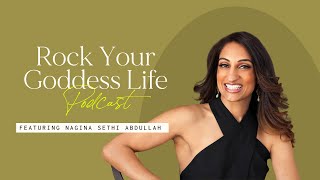
In this interview, host Alexandra Johnson (SPEAKER A) talks with Nagina Sethi Abdullah, founder of Masala Body, about her personal weight‑loss journey and the science‑based framework she uses to help midlife women lose weight without restrictive dieting. Nagina recounts the moment she realized she needed a sustainable change after years of yo‑yo dieting, back pain, and exhaustion caring for two young children while working a demanding consulting job. Leveraging her molecular and cell biology background and research at UC Berkeley, she shifted focus from calorie restriction to increasing metabolism through food choices, protein intake, and strategic food combinations. She outlines the “Fat Burning Food Framework” – four pillars: (1) protein‑forward meals (≈30 g per meal) to boost thermogenesis and preserve muscle, (2) fiber‑rich fruits and vegetables to slow digestion, (3) healthy, high‑fiber carbs (beans, lentils, sweet potatoes, quinoa, Ezekiel bread) to stabilize blood sugar and support thyroid function, and (4) healthy fats (avocado, olive oil, nuts, flaxseed) to reduce inflammation. Nagina explains how insulin resistance, declining estrogen, and loss of muscle mass drive midlife belly fat, and how stress, poor sleep, and under‑eating exacerbate these issues. She emphasizes managing cortisol, getting 7‑8 hours sleep, and avoiding chronic under‑nutrition, especially of carbs, to keep thyroid and gut health optimal. The conversation also covers the role of spices (cumin, cinnamon, turmeric, cayenne) in boosting metabolism and flavor, and how a weekly “cheat day” can prevent feelings of deprivation. For exercise, Nagina recommends strength training focused on legs and back, using a progressive 1‑2‑3 weekly schedule, and suggests that nutrition must be dialed in first. She stresses a mindset of abundance and adding nourishing foods rather than subtracting, making the approach sustainable and enjoyable. The interview ends with Nagina sharing resources: a free “sweet spice cheat sheet,” a 5‑day metabolism boost program, and links to her website and Instagram.
Chapters
Foreign. Hello, welcome. Today on Rock youk Got Us Life, we have Nagina Abdullah and she is the founder of Masala Body, a transformational coaching brand that helps women lose weight and feel confident without dieting, deprivation or hours in the gym. She personally lost £40 and she kept the weight off for a decade even after two kids and a demanding career in management consulting on all while eating delicious metabolism boosting meals inspired by her Indian heritage. So welcome, Nagina.
Thank you so much. I'm so excited to be here.
Yeah, it's so exciting. I love our alignment. I love your energy and I just love what you're creating for women. So I would love to start off with the start of this like Masala Body. You go back to when you were unhappy with your body. You were working long days, had two young kids and you were like, oh, what is that moment where you, you were like, I need to change. Like this is not sustainable. I'm not happy. What? Take us back there and kind of guide us to where you are today.
I love that I'm going to definitely tell you about the moment because it was absolutely one moment. And so, you know, previously in my life I had really struggled with my weight and I'd really struggled with sugar cravings and with my relationship with food. And, you know, I tried every single diet out there from Weight Watchers where I lost 15 pounds, but then I put on 18 pounds after I got off of it because I was restricted from all the foods that I loved. I tried Atkins, which was just so deprivational. I tried south beach, which just kind of didn't work for me. And I really tried to exercise a lot and eat less and that would work for a certain amount of time. And then I would just start eating all the foods or just giving up on working out because it was so exhausting. And so I was in this hamster wheel in this cycle of yo yoing, dieting up and down with my weight, going up and down for my entire life. And so then, you know, as an adult, I was working in a very demanding job and then I had two children and, and at that moment, I was the heaviest that I'd ever been because I had just had two children. My, my, I wasn't able to get the weight off as easily and I was really busy. I had a very demanding job. And so, you know, the moment that really hit me was I was in my family room. I remember I was sitting on the couch and my back was hurting. I felt like I was 80 years old. My back was really Painting. And then my kids started screaming and crying and they wanted to go out for a walk. And, you know, I. They were so young. They were like two and. And they were so young. And at that moment I realized I just felt like I cannot take them on a walk. I don't want to take them to the park. I don't want to go anywhere with them because I'm so exhausted in my body. And I didn't even do that much. I was just exhausted and I was in pain and. And then I got up, I went to go to the. Go to the bathroom. I saw myself in the mirror. And, you know, it just all came over me. I was, I just thought, who am I looking at in the mirror? This does not reflect all the work that I've put in. I do not look like the person that I've been. Treat myself like. Like I had been trying to be healthy, but I didn't look like it on the outside. And so then I looked forward and I said, do I want to be a mom that's going to be exhausted and tired for the rest of my children's lives and feel low confidence and just feel like they are. They. They. I don't have everything. I, I'm not completely, you know, as confident as I can be. And so that's the moment when I said, I have to make a change, but I can't go back to the yo yo dieting that I did before because it never worked. And I just don't have the time for that anymore. Anyway, that's the moment that everything really, you know, really hit me that I don't want to be like this anymore. I need to figure out a different way that's unlike any of the diets that I've tried before. And that was when my research point started of finding a different solution.
Wow, I love that. I love that. Okay, so then your research, I mean, you, you, your background is in molecular and cell biology. Biology. So tell us about the research. How did you dive into that? And, and a little bit more about the. Because this is. A lot of women struggle with this, and it's like, this isn't who I want to be. And they try all these things and it's not that they're working, they're not working hard. It's just not working for them. And then sometimes we're also like, I just don't want to change. I'm so tired. I just don't, like, talk to us about that whole research. But then also what that looks like for you. To truly transform and lose those £40.
Thank you. Yes. And so, I mean, that's the whole thing is so many women, including me, are working so hard. And I was working so hard. It's not like I was. Wasn't trying. I mean, my entire growing up years, I was always the person in my group of friends that knew the calories in every single food that was watching what I ate. I was trying not to eat sweets. I was, you know, I was very, very knowledgeable about all of the information out there, but yet I was never really able to transform my body permanently. And so. So the research that happened. Yes. So I have a degree in molecular and cell biology. And so I started to go back to that research. I went to UC Berkeley, so I was able to get access to a lot of really great research. And I started seeing, seeing that instead of dieting, there is another method where we work on increasing our metabolism. And when we work on increasing our metabolism versus dieting, that means that we become more efficient with how we burn calories. So we burn more calories while we're doing normal things. Instead of working on restricting calories, we're working on burning more calories. And that felt like something that was more positive to me, more abundant, because instead of thinking about what I can't eat, I could think about what I can eat to increase metabolism. And so, you know, I was willing to do the work. Even though I felt like I had been burned so many times before, I still hadn't lost hope because I didn't feel comfortable in my body. And I knew there had to be a better way. I couldn't stop until I found it. I just felt like there has to be a way, and at least I'm going to try. At least let me try. So I started adding certain foods, and we can talk more in detail about what those are. But I started adding foods. I started combining foods, because when you combine them, I learned that there's a lot of metabolism boosting properties, and we store less fat when we combine certain categories of food. I started doing that, and then finally I started adding spices to my food. Because I come from a Indian background where I grew up with spices. It was just normal. We had spices in everything we were eating. And when I had dieted all those times before, I was always eating bland, boring food that I was getting from recipes from those diet programs. And that was part of the reason I couldn't stick with it, because I felt deprived from flavor and from loving what I was eating. So I started doing that I had always exercised, I did exercise, but I didn't exercise anything, like too much know, abnormal. I just had regular strength training going on. And what I could not believe is that every day I would come home, my husband did this with me as well. Because we were eating the same foods every day we would come home and eat and we would look at each other and say, I can't believe this food is healthy because it tasted too good to be healthy. It just wasn't the kind of healthy food I eat before. And within nine months, I lost £40. And just to give you some perspective of what that is for me is that I had gained 20 pounds for my pregnancies. So I lost my pregnancy weight, but then I got £20 below that to what I call a new normal, A place that I never thought would exist for me because it took me so much work to even lose three pounds in the diets that I was doing. Now I lost 40 pounds and I sat at my new normal of 20 pounds below my pre pregnancy weight. And really the best part of it is it's now been over 15 years and I have kept that weight off. I have loved what I've been eating and now I've been able to focus on getting more toned and getting more muscle on my body, which also important for metabolism. But for me, that was a second step. I first needed to lose that fat, you know, and then get started on my, on my real workouts. So, so that was, you know, that was what was happening. And, and I just felt that, you know, this is, this is something that, that I wanted to open myself up to the possibility. But, you know, this could have not worked either. But it actually started working so quickly. And I think because it's based more on science, it's based on food combinations, and it's based on metabolism versus restriction and calorie cutting, which actually even once I hit midlife after the age of 45, that actually even stopped working. So that doesn't work anymore. So that even if it worked before, even if it was miserable, at least it would work. It doesn't even work anymore because calorie cutting and restricting does not work. Our body actually needs more. And so metabolism is really the way that I found to the focus to live a really healthy life at a healthy weight.
Yeah, I love that. I love that too. And I love that you're talking about the metabolism and restricting calories because that's how most people do envision it of like, hey, I'm gonna go down to 1200 and maybe that worked in your 20s or 30s, right? Okay, fine. You could do that for a period of time. It usually bounced back. But that you actually slow your metabolism down. Right. And so then your thyroid's not work, like things are not working. And then it's harder and then you have to stay low calorie and then you have no energy and life sucks. Right.
So true. And that's so true. And that's such a great explanation of why it doesn't work, especially in midlife. Because you, many of us have been dieting for a long time, but also our bodies actually need more nutrients. So if you're eating less calories, your body is used to just existing and surviving at those lower calories and you're not actually getting the nutrients that your body needs for a strong gut health. For example, for our thyroid, for our liver to process and detox food. So we have all this inflammation in our body because we're not giving our body the nutrients. And then if you eat more, your body just stores it as fat because you are, because you're not giving it to your body regularly. And so, you know, the key is to give your body regular foods, not to deprive yourself and to make sure you know what those metabolism boosting foods are so that they don't actually add belly fat especially and fat to the rest of your body as well.
Yeah. And then so, so you think that women, because I know you work with 40 and older, a lot of it is the metabolism, it's inflammation. Like, what do you think the main things for women holding excess weight? Calorie restriction. I mean, what, what are kind of your top things?
Yes. Okay, so the top things. So, so first of all, one of them is fat, especially in our belly in midlife. And that's due to a couple different things. Number one is we become naturally more insulin resistant as we get older. And what that means is that when you're eating carbs or anything that breaks down to sugar or straight sugar or sweets, you are not able, your body doesn't burn it off as quickly. Instead, insulin gets released from our pancreas and pulls that sugar out of our blood and stores it as fat. And so, so this is happening more often. Our body is not able to just burn it off, so we're becoming more insulin resistant. That means that our body's not responding as much to insulin. We have to keep, we have to keep releasing more insulin. It's pulling more sugar and storing it as fat. And a lot of it gets stored in our belly. So you know, the way to prevent this is by adding some of the metabolism boosting foods. We don't just have to say, oh, I'm more insulin resistant. I just have to live with it. No, we just have to become more conscious of the foods that we're eating and add more of those foods that are helping us balance our blood sugar. And we'll talk about those. But the other thing that's happening is due to our hormones declining, usually in our early 40s, but it could happen even earlier than that. Estrogen is a massive protector of inflammation. Okay. And so. And so that it was really helping our body not experience inflammation. And so when our estrogen is declining, we have more inflammation. And that's why many women are experiencing more belly bloat, because there's. It's not only fat. So there is some fat because of that insulin resistance. It's true. And there is some fat because estrogen also drives more fat storage to the stomach. But it's also inflammation. And this is really important to know because when I went through midlife, I actually gained this surprising weight from doing the same things I had been doing. And I kept trying to do the same things from before, and it didn't work until I realized it was inflammation and started adding foods that actually decrease inflammation. So there's increasing metabolism, boosting foods and decreasing bloating and inflammation foods. These are two major things that are happening in midlife, and they both can be solved by natural foods. That's the key.
Yeah. Yeah, I love that. I love it too, because it's the. A lot of times it's like the weight loss is a byproduct, right? You increase your metabolism, you decrease your inflammation. And the byproduct is you have a body love, right? Yes. Yes, absolutely.
Yes. You don't just go straight in and say. You don't have to go straight in and say, I need to lose weight. It's more about also making yourself feel good by nourishing your body with the right foods. And then you will decrease your fat. And it's really a different mindset. It's important. This is a different time for us. And it's a different mindset of saying less is actually less. Like less is not more. You know, adding more gets worse. And it's really hard to change that until you really understand, like, the structure, the way to. To combine your foods. But, you know, one more thing that I want to add on to the reason that things are changing is because naturally we are decreasing our muscle mass. So we have to really fight to keep our muscle because muscle burns more calories than fat. So if we do nothing, our bodies will start transforming into more of a will have higher body fat and less muscle mean and our metabolism will slow down even further. So we have insulin resistance, declining hormones as well as muscle mass. And what this is saying is that this is a call to action in midlife, to be our healthiest versions. Because if we don't take action, our action, our bodies will transform, we will gain weight, we will not be nourished, and we will see results in our immune system and chronic disease that as much more likely to happen if you're not feeding yourself the right foods and if you have more visceral fat. So it's a call to action to actually say, I'm ready to put myself first. I want to put myself first, because if I don't, I'm going to go downhill quickly. But if I do put myself first, my life is going to be amazing.
Yeah, I love that. Yes. Yes. Okay, so let's talk about. I'm going to. I want to go to the metabolizing, boosting foods. But first I want to talk about stress also because, right, like there is the cortisol aspect of like women, just like you said, they don't take care of themselves and they're running on high adrenaline, high cortisol. And that also backfires. Right. When we get to perimenopause menopause, like if you don't manage that, that's a recipe for a disaster too.
Oh, thanks for bringing that up. I mean, absolutely. So, you know, a lot of us may, real. May feel. This is how I started feeling. When I started, when I got into my kind of mid-40s, maybe around 43, I started feeling this is that the things that I was able to easily take on five years before that, it started causing a lot more just strain on my brain. I felt more stressed in my body. And this is because our cortisol levels are more sensitive now. And so if we add more stress, we're adding the same stress that we were before because we didn't have to manage ourselves. We didn't feel the repercussions of it before. To have a lot of stress, knew that it wasn't good to have a lot, but we didn't really face the consequences of it. Now we can feel like we're going to shut down at any moment. And so really that lifestyle aspect of understanding how much you're putting on your plate is key. But I'm going to name Two other things that are also really health focused that a lot of times we skip because we have a tendency as women to blame ourselves for the things that we're doing, for the things that we're not doing. But there's some other things that are really important that, that you, we may, many women don't realize, are actually affecting our stress. So, you know, obviously having, being too busy, having too much on your plate is very important to really manage to say no to things or to just understand what you can take on and be okay with taking on less. It's okay. It doesn't mean that you're not going to be as productive. It just means that you are going to be more focused on the things that really matter. But number two is getting enough sleep. Because when we don't get enough sleep and when we just keep pushing our sleep to the side and saying, I'm going to scroll on my phone or I'm going to be on Netflix or I can't go to sleep because I have a lot of other things happening when we don't get enough sleep. First of all, this is going to increase our desire for sugar the next day. It's really almost, almost impossible to fight sugar cravings if you don't have at least, I say, eight hours of sleep, but seven to eight hours of sleep could be okay. And so that lack of sleep and lack of recovery puts a lot of stress on our body. So our cortisol is increasing. So it's not like we're doing something. It's more that we're just not going to sleep and we have to fight for our sleep because a lot of people want our time. You know, if you have kids, they want your time. If you are married, you know, your spouse wants your time. If you have family, friends, there's a lot of things. And so, you know, I really make it a point to say like, I can't go, I can't meet you there at that time in the morning because I'm not going to be able to go to sleep early enough. Or I make sure to just shut down around 9, 9:30 and try to be in bed at 10. And if you're in bed at 10, then you can get up at 5 or 6 and that's good. But if you're, if you're going to bed at 12 and waking up at 6, you're going to start crashing at some point. So sleep is number two and then number three is under. Eating is massively stressing our body. And you mentioned thyroid, that's a huge, a huge problem because a lot of women are under eating in the name of losing weight and especially under eating carbs, which, yes, at some point we were able to lose weight without carbs. That's not saying it was healthy. But if we're eat to our, our thyroid needs carbs, healthy carbs. Carbs that are not digesting really quickly and breaking down to sugar very quickly. More carbs that have fiber in them, so they're breaking down slowly and not causing fat gain. That's important. But our thyroid needs the right kinds of carbs in order to keep your metabolism high. Our thyroid is our metabolism boosting gland. And a lot of women will find that they have hypothyroid in their 40s or at some point in midlife. And a lot of it could be because you've been under eating and not giving your body what it needs. And so this is a massive stress that almost, I mean, a majority of midlife women are undereating. And if you under eat, you have a stress, even if you have a very calm life, if you have that, that's amazing. But if you're under eating, you're stressing your body even though you don't feel stressed.
Yep. I love that you're saying that because I've talked to women, you know, and they're trying to lose weight and their menopause or going through it, whatever, and they're telling me what they're eating up, eating. And I'm like, all I see is you're not eating enough. And they're like, I'm trying to lose weight. And I'm like, but you're not eating enough. You're like, low energy availability. Your body is like going into fight or flight and be like, we need to hold on to this fat because she's not feeding us and we might die. It's so hard to make that switch. Right. Because you're like, I want to lose weight. But I'm like, but your metabolism is slowing down slow.
Yes, it's so true. Your metabolism is so slow. And then that's why you can't lose weight because your body's just holding whatever. It's whatever you're giving it because it needs some energy to survive.
I know, it's like, oh, just. And it's really, it's hard for women. I mean, obviously you work with thousands, but it's like, it's hard for them to make that switch of like, just trust me, just try it. Just try it. Let's just try it. You Know.
Yeah.
But I also love that you talk about sleep. I'm like always a major sleeper. I've always been a major sleeper. Always. Like, people just know if there's something late, like, don't even invite me. I'm sleeping. Like, our whole house goes to bed at the same time. Like, we go to bed the same time as our kids. Like, everybody in the house done. Like, and I've had to do that mostly because I'm super sensitive. I'm a sensitive. I can't get away with it. Like me, you know, a week of not sleep is not a good idea. Like, I just don't feel great. And so I've just made that. But that's another one for women of like, but I have so much fun to do and I want to be up with the. Like, I put the kids to bed and then I have three hours. I'm like, you need sleep.
Yes. The sleep is the way of self care. I mean, that is a huge self care method. I know that we want time with ourselves to do different things after the kids are asleep, but that's not actually. I mean, you can have some of that. But also I really think getting up, getting up earlier, having that time for yourself in the morning when it's peaceful is fine. But it depends if you're able to wake up or not. If that's kind of your rhythm. But really that just counting eight hours. How need to get this eight hours, that's the priority.
Yeah, I love that. That's my number one self care habit. Usually for when I talk with women, I'm like, number one self care habit is sleep. Like, yes, you can do journaling and all these things. I'm like, just please sleep. It's like we've had people in our programs before. Like, I worked with a guy once and he was like, I just need five hours of sleep. Right. I've done it my whole life. He's probably 55. And I was like, part of the program is you need to be in bed for this period of time. Like, you need to be in bed. That's the program, you know, so do it. And he did it. He literally said he could not believe how much better he felt. He'd gone his whole life thinking he could only do five hours of sleep. And he was like, he's like, I am 75% happy, happier, healthier, more productive, you know, like, it's crazy.
Yes, yes, yes. It's so, it's so amazing. And it's, it's really, really restorative. For our bodies. Yep.
Okay, so let's go to metabolism. How do we, what do you do? What does like a meal look like for you?
Okay, so metabolism is really, there's, there's, there's four pillars that I have that, that I talk about and, and I have a framework called the fat burning food framework. So I'll just walk through those four pillars in that fr. But the number one pillar, and this is the number one thing to understand and to start integrating. And I'll let all of those that are watching or listening, if you do this one thing that I teach you, you're going to believe us, you're going to believe us that it actually does help you lose weight, feel better, be healthier, if you actually add these foods because you're going to see it in a week. So the first thing to do, the first pillar is what I call protein more. So we have to, it's so important for us to eat more protein. Now. A lot of people have been hearing more protein, but most women are under eating protein. Okay. It's, it's, it's just about learning what those foods are that have protein in it and getting it into your diet. Now the reason protein is so important is it is the number one food that increases our metabolism. It's helping us build immune, it's helping, it's amino acids that's helping us build our, like, replenish our muscle. In fact, I have multiple, dozens and dozens of women that weren't even working out but have been able to, to, to gain muscle mass simply by adding more protein. And so this is so important. But protein digests more slowly as well. And it has a thermogenic effect where when, it's, when you're digesting protein, it burns 20 to 30% more calories than other foods that you could be eating. So you're actually burning calories while you're eating it and it's digesting more slowly. So if you were to eat a piece of, let's, let's say, let's say you eat two eggs.
Eggs.
If you eat two eggs or if you had a piece of toast, the two eggs are going to keep you full for longer. They're digesting slower. They're not breaking down as quickly, but the bread is going to quickly you're going to eat it and you're going to feel hungry possibly 10 minutes later. And that's because the properties of the food. And so what we want to do is we want to add protein to the, to the number of about 30 grams at least per meal. And it's really hard to get too much. It's more like you got to work to get enough. So don't even worry about adding too much. And so what 30 grams of protein looks like. And this is really important to start at breakfast because many, many women are skipping breakfast, possibly intermittent fasting, because they feel like it's healthy. Intermittent fasting can work if you're eating enough throughout the day, but sometimes the foods are so filling it could be hard for you to get enough. Intermittent fasting can be used as a strategy once in a while. The way that, the way that I teach, but adding more protein in the morning and then what that looks like is so two eggs is only 12 grams of protein. So if you have two eggs and that's, and you know, maybe you have something on the side, you're still going to feel hungry maybe an hour later because you only had 12 grams of protein. It's really important to get to that 30. So what you could do is if you eat a dairy or if you eat, you know, Greek yogurt is a healthier form of dairy. It doesn't have as much sugar. Even people that are more lactose intolerant can actually take, take down Greek yogurt. But there's also some vegan Greek yogurts that are really good. So if you do two eggs and a Greek yogurt, a Greek yogurt has 20 grams of protein. So then you get 20 plus the 12. So you got 32 grams of protein. That's amazing. And then you can also add about a half cup of berries to that Greek yogurt or on the side which is going to give you fiber. That's another part of either fruits or vegetables at every meal is another part of the fat burning food framework because that, that fiber is also making it take longer for you to digest that food. So you're going to really curb your appetite naturally. This is like natural ozempic, literally, because all you have to do is learn the properties of food and you feel so satisfied. Now I've been eating like this now for 15 years. But if I have one day that I skip my protein, my sugar cravings immediately come back. So sugar cravings are not a function of how you were born, which I used to think that was for me. It's not just that you have this genetic problem that you have really strong sugar cravings. It's actually that you're just not feeding yourself enough of the filling foods. So when you eat that protein then you have the berries, the Greek yogurt, that's really great. If you don't like Greek yogurt, you could also have eggs, two eggs and then a cup of egg whites. And you can of course put any veggies in here if you want want. You can also do, do a protein smoothie which is a, if you don't eat eggs, you could do a protein powder or Greek yogurt. You could combine that with a plant based milk like almond milk. Put a cup of berries, you could put a cup of spinach and then add flaxseed for the fiber. Now that's the. Remember the fiber is a secret ingredient. You, you always want to have that fiber in there too. And then you, you can add some mint for and I call that my strawberry mint morning metabolism boosting smoothie. So there's that. And then you can also just not do eggs and you can do cottage cheese or Greek yogurt. Add some berries, you could add a little bit of nuts and put some cinnamon on. Anytime you're having fruit or anytime you're having Greek yogurt, add some cinnamon. Because cinnamon is a, has a special ingredient in it that helps you lower your blood sugar. So we, then you're going to store less, you're going to store less fat when you're adding cinnamon and also gives you a sweet taste without the sugar. So that's that protein more is really great. At lunch and dinner it's just about adding 4 to 5 ounces or what's really from your fingertips to your palm about half an inch thick of some kind of protein. It could be salmon, it could be chicken, it can be beef, it can also be tofu. You could have Greek yogurt, eggs. Having that as part of your meal is key. And so that's going to be really important. Now the, the I already talked about fiber. So you want to always have a cup of vegetables or fruit with each of your meals. But the other part that's really important is healthy carbs that you pair with your, with your protein. So this combination is really key so we, you don't have to take your favorite foods out. But if you love having rice, if you love having pasta, if you love having bread, have it with your protein and the fiber. So you would have something like, like salmon, broccoli. And then you could also have a nice, like a, a cup of rice or you could have quinoa, you could have sweet potato or my favorite healthy carb are beans and lentils because they really burn very slowly and they have A lot of fiber in them as well. So you're not spiking your blood sugar and you're really staying full for longer. And so when you eat like this, you actually have to remind yourself to eat. And if somebody brought a tray of donuts, pastries, bagels in front of you, you wouldn't even want them because you'd be so satisfied. I mean, you could choose to have it if you wanted to, but you're, you wouldn't feel tempted the way that many people feel tempted when they're not eating like this. So it's truly magical to pair and combine your foods and to start with doing the protein, more breakfast to really see these changes.
Yeah, amazing. Okay, so I want to make sure I got it, I got protein more. I have fruits, veggies. Because you need your fiber. You have your healthy carbs. What you had to do a four or five.
So. Yeah, so the fourth one is a healthy fat.
Okay.
Yeah, yeah. And so a healthy fat, a lot of times that could be in the protein you're eating. So eggs have a healthy fat in them, salmon has healthy fat leave and lean beef has a healthy fat. But you can also add a healthy fat. Now, the reason a healthy fat is really important is because it actually, fat is helping us lower our inflammation and our bloating. When you get it from healthy fats, if you do non healthy fats, they can actually increase your inflammation. So healthy fats are things like avocados. So if you had half an avocado, that would be great. Have a tablespoon of olive oil which has so many polyphenols, which also helps help decrease inflammation. That's part of the reason that healthy fat is so effective. Flaxseed oil is amazing. Coconut oil and, and then otherwise it's often in the, in the proteins that you're eating. So the way that I recommend it is to have fat three times a day because the number. So the number one reason a lot of women, especially in midlife, aren't losing weight is because they are undereating. And it's, it's true their metabolism is too slow. The number two reason that women in midlife are not losing weight is because they're mistakenly eating too much fat, because they feel that it's healthy and it is healthy. But, but fat is calorically dense. So it's like 2 tablespoons of peanut butter, you know, and we. Calories is not the only measurement, but it is one of the things that's important for weight loss. Two tablespoons of peanut butter is 180 calories. So if you mistakenly eat four tablespoons of peanut butter, which I have done that.
Easy to do.
Very easy. A tablespoon looks really small when you actually do it, but. But that's an extra 200 calories and potentially more. And you're really going over the amount of food that your body needs. So your body's not going to be able to lose weight. And so, you know, even nuts, nuts are another great healthy fat to have. But you want to look at the container, the bag, and see what makes up one serving, which is usually 14 grams of fat, and stick with that. So I recommend fat three times a day, usually at breakfast, dinner, and a snack. And then I recommend having healthy carbs at lunch. And you can usually have it at one more time. This is a general framework. But once you know, it also depends on your weight. If you're someone that is. That has your final 10 pounds to lose, you kind of have to be more. You would want to have your healthy carbs at one serving. If you have maybe 40 or 30 pounds to lose, you can have your healthy carbs at least 2 servings. So it kind of matters on how much weight is your goal to lose as well.
That is awesome. Okay. I love it. We are so aligned. Everything from I love it is amazing. I mean, like, talking to people who I'm not aligned with as well, but just like, even for the protein, right? Because I'm so. Many women skip breakfast. I'm like, don't skip breakfast. If you're going to skip anything, skip dinner. But make sure you're eating enough throughout the day, right? Get breakfast and get your 30 grams. And then just the energy of the satiation. I love that you said that because there's that satiation where you're just like, I'm full. Like, I'll. I can eat. I mean, I could literally go. If I ate a great breakfast, I could go all day and I'd be fine. I eat because I also want to keep my metabolism going and I want to nourish my body. But I'm not, like, ravenous. But if I do do the sugar or if I have a little bit too much of sweet or too much of carbs and not enough protein, I then am like, that's all I want to eat.
Oh, my gosh. Well, that's such a good point. Thanks for bringing that up. Because you know what? That. What. What is happening there is when you eat some sugar. Sugar is a drug, and sugar makes us want more Sugar, it's addictive. And the thing that's happening is that as we're giving our body sugar, the bacteria in our gut that feeds off of sugar is growing more. I mean, it's not gross. It's just what it is, you know? And so. So that. So it's just growing. But when you give your body, for example, vegetables, which I know is a very stark contrast, your body actually starts craving vegetables because it's growing that bacteria. And so imagine sitting down to eat and craving vegetables, which you actually do now. And you. You might do that, too.
I'm. I'm like, you. The stuff where I am right now in my life, and I've been working on Nutrition for 25 years, but it's like, it's not even worth it. Like, I honestly don't even see a donut as food. I mean, it's like, literally, I'm like, I don't even see that as food. It's like Michael Pollan, edible food, like, substances, right? I'm like, there's no willpower for me. Like, I'm just like, that's not even a food I eat. Like, I don't. It's just not a food.
Yeah. And it's like, we evolve. Because I used to love donuts, and I feel the same way. I mean, my daughter wants to go to Dunkin Donuts. I take her in there, and I.
And.
And she's like, do you want to get anything? It's not even, like an option for me. I'm just not interested. Not because I'm depriving myself, but because I know that if I ate that donut, I would feel really awful. Like, first of all, it would completely zap all my energy if I had a donut. And then it just doesn't feel good in my gut. And so this is the thing that this can transform. If you're someone that's listening or watching and saying, well, I love donuts, I could definitely eat a donut. The thing is, that is absolutely normal. But once you start start feeding yourself in a different way, your body starts craving those other foods. And that. This is why this concept that we're talking about is a lifestyle and it's not a diet, because the willpower is completely taken out of it. You start to want to eat these foods that start increasing your metabolism, start getting your weight loss going, if that's one of your goals, and start giving you more energy. So you. So it's not like you're choosing, like, you're restricting or forcing yourself your Body is craving it.
It.
And you know that if you ate sugar, you would feel very low energy and you just wouldn't feel good anymore because you understand how good you can feel when you're not eating it.
Totally. I love that. And it's. I love that you also talked about. I say to my kids often, of like, you know, what bugs are you feeding? What microbes? What bugs are you feeding in your gut? Right. You know, and it's like, if we do. Are craving those things, we do have gene. They really have bugs that are just not. They're craving that. They're like, give me the sugar, otherwise I'm gonna die. That's why the cravings can be so intense. Right. And then you can also have obesogenic microbes. Right? That is like, why you're having excess weight, because you got to get that fiber and you got to transform your gut. And then that also impacts. Right. So it's like, I always think if I'm. I'm like, oh, okay, then the microbes in there are wanting something, you know, like, I'm not gonna feed them.
Yeah. Yes. Yep. And it happens really fast. It's like, if you have some sugar one day, all of a sudden, your body want. It's. So if you have, like, have, like, some chips even. Because chips even. It doesn't have to be sweet to be sugar. It breaks down to sugar. If you have some chips one day, then it's easy to want more sugary items or to say, forget about that healthy dinner. I want to just do takeout, or I want to have cereal or a quesadilla or something like that, because it. Your. Your body starts going down that path. So.
Yeah. And then you're. What you're talking about is, like, consistently building that momentum. And so it's like, it's just not. It's not. You're not fighting yourself, but you are setting yourself up with, like, these guardrails of like, I'm going to eat. I think you said three meals and a snack or whatever. Like, there's these. And if you do that, it's much easier to follow.
Yeah, you know it is. And I also want to share, you know, one thing, because a lot of times people feel that they'd have to give up all their favorite foods, like chocolate chip cookies or chocolate cake or things like that if they were to start eating in a healthier way. But that's actually not true. So. So I have a concept which is called the cheat day. A lot of times people like to call it different, different terms. But I call it a cheat day, which is one day a week, usually on a Saturday, which is a more social day or family oriented day. And, and you don't have as much routine. You can eat whatever you want. And so you kind of plan for your cheat day. And this has actually been so effective. And this is why so many women are creating. Using this to create a lifestyle because they have that outlet. So they're not, they're not kind of sneaking it in because we will sneak it in if we're not allowed to, if we tell ourselves we're not allowed to have it. It's been proven that if we're for women, women are forbidden from foods. All we do is think about those forbidden foods. So you have this cheat day. You can eat whatever you want. But what naturally happens over time is that you still will eat some of those foods, like chocolate cake, for example, but you may not eat as much of it. You. Because you know that it's going to bring down your energy. And you'll also pair it with something that is, you know, either you eat it soon after your dinner or you have, you know, you have like a Greek yogurt with it so that you're pairing it with a protein. And so then you're able to keep your. Your body the way that you want to keep your energy really high, but you're still enjoying your favorite foods and you really don't crave it most days anyway.
Yeah. Yeah. I love that. I love. Again, so aligned. So good. I'm a big fan. I will say though, I have to be very mindful if I have chocolate anywhere. Like, I can't have chocolate in the house because I eat it all. So that, that's like a day. I'm like, okay, cool. I'm. This is a day for chocolate. But I don't have it any because for me, I will. That. That bar of chocolate will talk to me every day until it's gone.
Yeah.
I just know, like, I think there's also like those boundaries. Sometimes you're like, okay, I just know if I have donuts in the house or whatever. Like, I just can't have them.
Yeah. Yes. So absolutely. You have to know your own boundaries because it's the same for me. I can't have like. For me, I have two weaknesses. One is Reese's Pieces and one is. One are Cheez Its. And so if my children, if my children want those things, I, I just, I've tried to get those things and it. I really can't Control myself. And so, so I'm like, I'm sorry, you're gonna have to go out to someone's house. Or like, you can go get a small bag of Cheez its when we're out, but I can't do that. And I don't even. That's not even good quality food. It's just that my body likes it. Yeah, yeah, yeah. Those are those boundaries for sure. Yes.
That is awesome. I love that. I love that. Thank you for sharing that. Okay, so let's talk about. Because I know you're big on, on spice and making it delicious. So what are your, like, I mean, do you, most of your meals, are they Indian flavored or do you. Like what, what does it look like for you? Like what, what do your meals look like? What do you, what do you, what do you, what do you eat?
Yeah, so when I met, you know, regularly at home, I just use a couple different spices that I'll share, but they're. I do love Indian food, but I don't make like full Indian food all the time. I do love to go out for Indian food or make, make it, you know, when I can. But. But I do like to take the spices from it. So. So for example, if I, you know, some of my favorite spices are cumin. So cumin is a smoky flavor. It's very mild. It just adds a, it just adds a depth to your food. It's really great on meat or it's really great in chili or stews. And cumin has also been proven to decrease belly fat by adding a teaspoon a day for. For three months. And there's been multiple studies that have actually shown this.
It's.
It's pretty unbelievable. Of course you have to still be eating healthy food for this to happen. But if you add that, it can, it can boost it. Another really great spice that I love is cinnamon, which is my favorite spice because it's sweet. And so I use cinnamon and I sprinkle it in my tea in the morning. I used to drink coffee, but I found that it was really spiking my cortisol. It was a hard thing to get over, but I've become so much more. More calm internally from drinking tea. And so I use cinnamon in my tea or when I had coffee, I would put it in that instead of sugar or instead of some kind of artificial sweet sweetener. And then also I use cinnamon over fruit. And I also use cinnamon sticks in stews or in chili because what cinnamon does is that it lowers your blood sugar. But it also gives you that sweetness that you may be craving, but it's not from sugar. So it's not going to keep you wanting more sugar like we were talking about about. And then two more spices I'll mention are turmeric. So turmeric is a golden yellow color. It's been used for thousands of years by our ancestors. It has a compound called curcumin in it which helps decrease inflammation. And so this is really key for us women in midlife. You can add, you know, when you add turmeric, you just want to add it with a sprinkle of black pepper so that it increases absorption. But a really easy way to use turmeric, it's not, not, it doesn't really have a flavor. It's very, very mild. It has a slight earthy flavor. It's not spicy at all is that you add about a half teaspoon into your eggs in the morning because it's yellow. Eggs are yellow. It combines with it. You don't even realize that it's there. The other thing that's really nice is to have a turmeric tea before bed because turmeric tea is very anti inflammatory. So it's very relaxing. And in fact it can actually make you feel more relaxed than a glass of wine would make you feel. And of course it's not going to make you feel as drowsy the next day. And then for those of you that love spice, you know, all of the spices that I mentioned, they're not even spicy. And so you don't have to have a spicy palate to use these metabolism boosting ingredients that also make your food more flavorful. But if you enjoy spice, using cayenne pepper is amazing. It has a compound called capsaicin that increases your metabolism and it helps you burn more calories. And so cayenne pepper is a little spicy. But if you want to try to add some spice and maybe get started, using paprika is a really great entry point because it still has capsaicin in it, but it's a little bit sweeter and it's definitely not as spicy. And then in between those two is using red chili flakes, which are not as spicy. Those red chili flakes are similar to what you'd have at a pizza place and you just, and they're really easy to sprinkle on things in there amounts that you want. And so, you know, once you start using some of these spices, like a good spice blend is something like a teaspoon of cumin, a teaspoon of sea salt, teaspoon of black pepper, and then you can also do a teaspoon of of turmeric. So that's going to give you a nice spice blend that you can add on so many things from meats to vegetables. And you. It's the beauty about spices. It's not like baking. You don't have to be specific. You can just add some on. And then next time you can add more on if you want, or less on. You can just test it out and see how it is. But it really brings enjoyment and pleasure to our food so that we feel excited by what we're eating and we don't feel bored or deprived by what we're eating. And this is really important to make this a healthy lifestyle.
Totally. Yeah. Because if you start to get bored, then those sugar, like, you're like, you start dreaming of things that you used to eat. Right? You're like, yeah, I really just want to go to that restaurant and eat that because my food is so boring. And you also can under eat if your food's boring too. Right. You're like, I don't even want to eat. Like, it doesn't even taste.
I don't even want to eat it. Exactly. I want to just skip it, forget about it. And then you kind of don't eat anything. Yeah.
Okay. That's awesome. I love that. Okay, I want to talk a little bit on the kind of like carbs, sugar side of things. I heard you say berries that you do, like the healthy carbs, does that amount to like, doesn't sound like you do ratios, but like, not lower carb, but you're not crazy high carb. Where do you think you would fit? I mean, like in the protein car, like, you know.
Yeah. So. So for the method that I help women with, women come to me specifically when they're looking to lose fat. And there's different phases of our healthy journey. So for example, when we're in a muscle building phase and we're specifically looking to build muscle, we are definitely going to need more carbs. And in fact, I'm in that phase right now and I eat a lot of carbs and I'm not even necessarily gaining weight, but I am gaining muscle and I'm gaining a little weight, but that's because that's the phase that I'm in. But when women want to lose weight in a healthy way that is sustainable, it is important to make sure your blood sugar is managed. And so the thing about blood sugar is that when our blood sugar is Going up and then it's coming down. That, that's caused by food breaking down really quickly and then that sugar is coming into your blood and it has to be pulled out. So when your blood sugar goes up and you feel so much energy and then it goes down right away, that means that your body's stored fat. So we want to keep your blood sugar even throughout the day. And that's why the fat burning food framework that I shared around protein with fiber as well as healthy carbs or healthy fats is going to keep your blood sugar even. So whenever you eat carbs, your carbs our the major reason that your blood sugar goes up and down. But that's why it's important to eat healthy carbs that have more fiber. So like beans, lentils, quinoa, sweet potatoes, Ezekiel bread or other kind of high fiber bread, those are really the best types of carbs that you could eat. And you just want to be conscious of. Yes. That you're not, that you're eating it like I said once to twice a day and you're keeping it at those times that you're keeping your blood sugar even and that that's going to create that fat loss along with adding those metabolism boosting protein and protein to your, to your day, which boosts your metabolism.
So, and then, so are you, you seeing it as adding those carbs are helping with your fat loss or are they helping with the pleasure which is also helping with the fat loss?
So okay, so. Well, so good question. It's actually, it's definitely pleasurable. So it does add which impacts things pleasure.
Pleasure versus stress is good. Yeah, but.
Exactly. But if you don't have enough carbs, if you're eating too low carbs, your body actually will become stressed and it will stop losing weight. It's really unhealthy to have too low of carbs because especially in midlife, like your thyroid will stop producing. But there's a lot of other parts of our body, especially in our gut, that require the nutrients that carbs bring. And so it is important that you're not low carb, like low low carb because your body will shut down. Like you're just not going to be able to lose weight. And so if you, if you, there's a certain point when someone starts losing weight where they might see a lot of weight loss happening if they lowered their carbs, but it's going to stall. You're going to stall. So for you to keep going, we want you to have the right amounts of carbs and We. And also eat the right combinations that your blood sugar is not rising. And then you will continue to lose weight throughout and go. And just bust through any plateau that will come.
Yeah, yeah, yeah. I love that. Yeah. Because there is that if you go too low card, you get gluconeogenesis, which can be stressful for anybody's body. But in a woman who's 40 and over, we don't need more stress. Right. Like, you're, like, you don't want to be triggering, like, having to. Because you need glucose. Like, I think people sometimes don't realize that, you know, it's like you go super low carb, but you need the glucose. Either you eat it or your body is going to make it from the protein that you eat, like gluconeogen. There's stress, there's cortisol, there's adrenaline. Right. That's released that you need to eat it at some. You make it or you eat it.
Yeah. And there's. I mean, like I said, there's going to be moments where if you took it out, you, you, you could do it for a short time. But I don't even recommend that because in midlife, most women are already under eating so many other things. So it's better to replenish yourself in the right way and not stress your body and cause it from just like literally being at a standstill. So a lot of women, you may find yourself stuck that you've tried to eat less and that you've tried to follow healthy habits or followed healthy weight loss, but you're stuck. And if you're stuck and nothing is working, that means your metabolism is slow. And that means there are foods that is absolutely important that your body will soak up, your body will need. And when I actually went through my midlife journey of a lot of inflammation and fat gain, especially around my belly, I actually found that carbs solved my problem. Like, I started eating more carbs than ever before and my belly flattened, and it was amazing. I mean, I could not believe that because that wouldn't have worked for me in my 30s. And all of a sudden my body was craving these carbs. And of course it was craving protein, but I'd always given my body protein, so it was really craving. And so the rules completely change. And so the best thing is to really, you know, follow a guideline, kind of follow something that. That someone or something that, you know that works. Because otherwise, if you. You really have to get over the mindset that. That eating less is going to help you, because it's just going to get you stuck.
Yeah.
And I love that.
I love your story. Right. Of like, that wasn't what you were expecting. You weren't like, like, oh, okay, cool. Wow, this is crazy. So when you say you started adding carbs, because I know women are going to want to know, like, what does that mean? Did you have like 100 grams of carbs? Did you have 150 grams of carbs? Like, what. What did that adding look like for you?
Yeah, I had about 150 to 180 grams of carbs, which actually would have. It actually scared me. Like, I was.
Yeah, for sure.
I was scared because I thought I was going to gain a lot of weight. And I was thinking, oh, my God, I've already gained this weight. I can't gain. I can't. I'm not going to be okay if I gain more weight. But then I had learned this strategy, and so I'm like, let me just try it. Let me just try it. And within a week, my belly started flattening. And it was amazing because I. I couldn't believe, like, I. I'd always eaten more. But in midlife, you actually have to eat more than you think. Like, way more than you think. And your body is. Could be lacking a lot of things because our body is not as efficient as it was before at absorbing. As at absorbing nutrients. So if you are eating the same amounts and your body kind of starts gaining weight like mine did, what me. What that means is that you're. You need to give your body more because it's not absorbing what you're giving it as much. So just because you're eating protein doesn't mean your body's absorbing it. That's why you need to make sure that you're eating the right amounts and, and also getting those healthy carbs in. And those healthy carbs, the carbs that I ate, they were all healthy. They weren't things like, you know, processed food. Like, processed food will just completely slow down everything because of the chemicals that are in there. They were real food. It was sweet potatoes, lentils, beans, more starchy vegetables like squash, zucchini, and then healthy breads like Ezekiel bread. So I ate, you know, more of those. I also ate some oatmeal, and I also ate some rice. And there's this concept that if you cook these, these, like, rice or oatmeal, and then you cool them, that creates starchy, starchy carbs. And then it doesn't elevate your blood sugar as much. So that Was good. Oh, and then I also added potatoes, and those were something that I had taken out for so long, and they actually helped me get back to who I was before. They helped me get more comfortable in my body. And it was like all the rules were blown, you know?
Yeah, I love that.
I love that.
I love potatoes.
Yeah. And I love. I know. And then, I mean, just to give an image, like this past summer, I was able to wear a bikini with my family all summer long, feel completely confident. And in the la, the three years before that, I never. I thought that that part was over for me because I. I was feeling so, so frustrated with. With how everything was not moving and everything I was doing wasn't working until I started eating even more. And then all of a sudden my body came back and so. Yeah.
Go, girl.
Thank you.
So the. And I also love what I'm hearing you just talk about is like the work. I think you said replenish, but it's also abundance. Right. Which usually doesn't go with. With weight loss. Like, you usually don't think, oh, replenish and abundance. But it's also like, what I feel like you're talking about is adding. Looking at the abundance that you can eat to fuel and replenish your body versus like restriction and subtraction, which is. It's a framework, but it's also actually what you do. It's a. It's a mindset, but it's also what you do, right?
Yes. It's so true. Abundance of what can I eat more of what can I eat? What. What do I have to make sure I'm eating today? And naturally, by eating these foods that we've been talking about, it makes us. It causes our appetite to no longer want those foods that we felt that we had to restrict ourselves from. It makes it natural because you're so satiated, so full, and you have so much energy, and you're also seeing your body transform that you want to keep eating these things. You keep seeing that. You see the results. That's a key part of it as well. And so you just want to focus on adding. And then, like, if you. Because it's also more positive, it's a more positive relationship with this body transformation and potent, you know, weight loss, if that's your goal, it's positive versus it always being a negative journey like it could have been or it was for us before, where we have to take all the foods out that we love. We have to feel bad if we eat, like one piece of, you know, one Piece of chocolate. It. We have to always feel guilty. That's not what it's about. This is about adding the right foods. If you do decide that you want to eat something else, it's okay. Completely fine. In fact, we want you to eat other foods. But if you, if you do eat other foods regularly, like, you might want to, you might want to look and see, okay, am I eating enough of these metabolism boosting foods? Because I'm having cravings, so that means I'm not eating enough of that.
Yeah. So, yeah. So good. And then we haven't touched on it. So I do want to touch on it is the exercise because I know that you, we've talked about that you. And it's like just eating in the way that we're talking about. Like my body composition is like, it is, it's great. You know, I'm 46. I'm like, I feel pretty good about it, but I do very minimal. I am noticing like you were talking about of one of our friends is Dr. Gabrielle Lyon and you know, protein. And I'm like noticing like, okay, you know, my muscle is, I need to work on that a little bit more. Like I can maintain an awesome body composition and body fat, but I'm like, I want to build that, that muscle. So it's like, okay, cool, I need to step it up and like training. But it's also not crazy training. Like people always think it means that you need to work out in the gym an hour every single day or three hours. Right. Like it is. Talk to us about this because I know, I've seen, you know, looking at, looking at you, you, you're also not, hey, you need to be training 20 hours a week. So talk to us about exercise. What do we need to do to also get those results?
Results, yes, definitely. So I mean, I, I want to first prioritize and emphasize the importance of nutrition is number one. And if you exercise without having your nutrition dialed in, you won't see results because just think about how long does it take to burn 200 calories and how easy is it to eat like one bag of Cheez? Its in my case, you know, and so, so, so. But it's just, it's not just calories either. It's more than that. So, so, so the thing is you want to have your nutrition dialed in because you need to have that protein coming in to fuel your body. You need to have the carbs to fuel your thyroid gland, to fuel your gut. You need to have those right amounts of foods. So when you start adding in exercise. I recommend strength training. And a lot of women from the past are feeling like you have to sweat and you have to work really hard at the gym in order to see results, results. And first of all, those are always temporary results. If you're only doing cardio, if you miss the gym by a week, you will, that weight will come back on. But if you actually focus on body transformation, which is what we're talking about, even with the nutrition part and even and with the strength training, you're focusing on transforming your fat into muscle. That means that when you're sitting down and doing nothing later on, you're still burning more calories than you would have if you didn't have that muscle muscle on your body. And so your metabolism has increased. So in terms of time, I really recommend what I call time saving fat burning workouts, which, which mean you spend less time and you just do the right things when you're at the gym. And the right things mean lifting weights and starting with your legs. There's a lot of studies that show that women that strengthen their legs have a much less, much less probability for a lot of disease that comes in up later in life. Not to mention we want to be able to be able to sit down, stand up, balance ourselves. But it also our muscles in our legs and our glutes are some of the biggest muscles in our body. So if you actually work those out and start to build those, your metabolism increases all over your body and that means that you're burning more fat all over your body than if you're only working on the small muscles up here of your biceps, your shoulders. Of course that looks really good, but that's not going to actually get your fat burning going on in your whole body the most. So I recommend working on legs, meaning your quads, your, your hamstrings, your glutes, and then also your back. Those are the biggest muscles, meaning you're gonna burn more fat if you work on those. And you're, it's also obviously gonna help you look completely different because it changes our shape. Like we become more, more slim and more, you know, our body fat decreases as well when we're, when we have that muscle, it really changes your shape. You don't just look like a smaller version of who you are, you look like more lean and, and, and you have like a V coming in your back and everything, everything completely changes. So, and you know what, the way I like to recommend to get going is if you're not working out at all, then to add, I call it the 1, 2, 3 method, which is to add one workout a week for week one, then do two weeks with two workouts. Meaning, like you could do like 30 minutes to 45 minutes, 30 to 45 minutes each time. And. And then the third week, do three weeks of three times a week. So you want to really move yourself up slowly. This is how you create lifestyle changes, is you don't burn yourself out and go from 0 to 60 all in one week. You just build it step by step. And then by the time you're doing three times a week, it was just like adding in one more. And if you actually start to want to work out like you're, you want to do it, it's the same thing. We were talking about food. You know, you're like, oh, my God, I can't not work out. I'm going to feel awful. So you got to build that habit. And I do recommend for those that are able to or can find a way to get a trainer. I have found that it's a major shortcut to making sure that you're motivated to get there. But also trainers, especially in the beginning, will just help you really refine your form. And if you Even move like 1cm to the right on certain exercises, you get, you, you get so much more benefits from it than if you're kind of trying to do it on your own. Either a trainer in the gym or an online trainer, or follow some exercises, like even Apple Health has, like free exercises. Follow a programmer structure so that you're, you know what you're, you know, you're, you're doing something that's systematic, dramatic, so it's actually enjoyable when you work yourself up to it. And if you will find the time, everyone can find the time. I have the busiest of women that I know that find the time. So it's just wanting to do it and knowing that you can really get a metabolism, burning body by, by lifting weights.
Yeah. Brilliant. I love it. Just like, as you were sharing too, just the feeling of like sustainability.
Right.
It's like just sustainable nutrition, sustainable training. Like, everything is sustainable. Enjoyable. Slow, steady wins the race. Like, not that. Yeah, I'm gonna burn out in six weeks. Yes. Maybe I have a rocking body, but I'm a tired. Stress slowed my metabolism. Yeah. And then I'm gonna be worse off, you know, So I love, I love you're just like, you know, you're like, just show up. It's the little things. Consistently. Yeah.
Thank you. And a lot of times, like when we have weight to lose or when we have a goal, we can just kind of only think about that goal. But I really want those of you listening and watching to think about, like, what happens after, like, how do I keep this going? Because you don't want to be in the same cycle. And so how can I actually build a lifestyle that's enjoyable and then that's doable for me where I don't feel restricted or like I'm working myself so hard, running like five miles a day and spending two hours at the gym, which I know I'm not going to be able to keep up for most people, they would not be able to do that. So what can I do? Because there are lots of these ways that we're talking about. The nutrition and the fitness are very sustainable. And guess what? If you don't do it one day, it's okay too. You don't have to be perfect. It's not about that. It's about moving in that direction.
Yep. Beautiful. Amazing. Well, Nadina, you are awesome. Nagina. I just said nagina. I said it wrong. Nagina.
You got it right, Mom. Most. Mostly, yes.
Thank you. This has been amazing. Where can people reach you? Tell us. Tell us how we find you and learn all about you.
Oh, thanks so much. Well, I am. I have a free gift that I put together for your audience that I wanted to share. And so this is my sweet spice cheat sheet. And in this cheat sheet, I share the one spice that lowers your blood sugar and that also gives you that sweet taste taste that many women love. And it's so common, it's likely in your kitchen cabinet. And so in this sweet spice cheat sheet, I'm going to share five ways to use it in your day, most of which are no cook. I'm also going to share an amazing, delicious fire tea which teaches which has the right ingredients to burn belly fat. It fires away belly fat. And so it's a really nice tea to have at night before you go to bed that also relaxes you. And so this is available@masala body.com Sweetspice PDF. We can also put that. We'll also have the link down below. And then, you know, from there I also have these events called a five day metabolism boost, where I go even deeper into what we've been talking about today and give you exact breakfast, exact fat burning food framework meals tell you more food combinations. And so if you go to my website, masalabody.com, you'll see when the next one's coming up. And if you grab that sweet spice cheat sheet, you'll also see when the next. The next ones coming up as well.
Ooh, I love that. Amazing. I do have one last final question. What does masala mean?
Oh, masala. So masala is a blend of spices and. Yeah, yeah. And when I started losing weight, I couldn't believe that adding all of these spices were helping me lose weight because my food tasted so good. And so it's spicy. A spice, spices for a spicy body.
So that's. Who doesn't want a spicy body? I'll take it. Yes, yes, I know.
Exactly. Well, I definitely did, so. So that reminds me of my Instagram as well, where I'm posting regularly, which is masala body. And so on Instagram, I'm there as well.
Amazing. Awesome. It was so great to connect. You're amazing. That's. The people are so lucky to work with you. And it's so incredible to see the results that you've gotten for thousands of women. So keep rocking it. Rocking it. Rocking your goddess life.
Thank you.
All right, Lots of love. Thank you. Okay, bye.
More from Alexandra



Dr. Nasha Winters on Gut Health, Fiber, Fasting & Ketosis | Rock Your Goddess Life
Dr. Nasha Winters on Gut Health, Fiber, Fasting & Ketosis | Rock Your Goddess Life
Unique Hammond's Journey Through Gut Healing, Menopause & Food Freedom | Rock Your Goddess Life