Power of Passionate Presence - Interview with Catherine Ingram
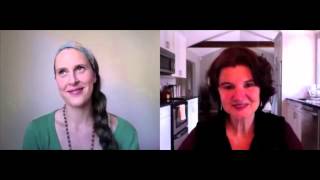
This is a YouTube video titled "Power of Passionate Presence - Interview with Catherine Ingram" created on July 13, 2015. It features an in-depth English interview conversation between Alexandra Johnson and Katherine Ingram, an author and international spiritual teacher. The discussion explores themes of passionate presence, relaxation, self-worth, forgiveness, authenticity, alignment, and the contemplation of death as a guide to living fully. Alexandra Johnson hosts and engages Katherine Ingram in a thoughtful dialogue about spiritual and personal growth, making it a rich, reflective interview format.
Foreign hello and welcome. I'm Alexandra J. Johnson, and today we have one of my favorite people and favorite teachers, Katherine Ingram. And Katherine is an author and an international spiritual teacher. And for 20 years, she has led Dharma dialogues, which is amazing work that she does. And she's the author of Passionate A Crack in Everything and In the Footsteps of Gandhi. And she leads retreats and workshops in the United States, Europe, and Australia. So welcome, Catherine.
Thank you, my dear.
Yes. I love talking to you.
Yes, we have an easy flow, definitely.
Well, I think you're just an easy person. You are easy to flow with. And I'd love to start off with just some ideas from Passionate Presence. And I would love to start off with, what does passionate presence mean? Like, what is passionate presence? And what can we get from being passionately present?
I used that particular title because sometimes if you just use the word presence, which gets bandied about a lot, there can be a connotation of this kind of withdrawn, kind of witnessing, sort of back here, transcended feeling about it. Sometimes that can be associated. So I wanted to put the word passionate in front of it to make sure everyone understands that what I'm speaking about is an engaged presence, that it's passionately alive, passionately caring, passionately, passionately empathic, genuine, delighted. All of those qualities that I mention in the book, that you're really here, embodied in this earth, and that this is where the game is going on. It's not in some transcendent imagined reality. It's here. So that's very specifically why I have that adjective.
Yeah, I love it. So passionate, you know, how do we feel? Passionately, radiantly alive. Like, what are the. You know, because I know so many of us want to feel that. We want to feel that aliveness, but for most people, it's not that common to have that aliveness flowing within them. So what do we do about that?
Well, my premise is that when we actually deeply relax into what we could call just our true, you know, our deeper currents of being, actually, that aliveness is found there. What's draining is when we're living very much in conceptual thought, so many, many people are living really just conceptual lives. You know, they're living in their heads. And it's just a kind of constant rumination of, I like, I don't like, what about me, what happened to me, what might happen to me. Those are the themes. And then, of course, everyone has their specific sub themes. So when those become uninteresting and one's attention is kind of flowing along quietly you know, in a kind of inner calm, there is this aliveness. You feel. You feel much more charged up. You feel almost like your cells are being fed somehow. And I see this a lot in retreats. I see people come just absolutely beleaguered to retreat. And within a day or two of just really just hanging out in silence and in freshness of being, they start getting pretty juicy. I mean, they just look different. They look transformed. And they start to speak from a very different place than when they arrived. So it's a tried and true formula, and it's sometimes counterintuitive. One of my friends, Tony Schwartz, wrote a great. I think it's a cover article of the New York Times Magazine. But anyway, it's in the New York Times somewhere. You can Google it. It's called relax, you'll be more productive. And in his case, it's all about being more efficient in your work and in your creativity. But the point is that it's in the deep relaxation that a lot of energy gets freed up and starts just roaring through your being.
You know? Okay, so I love this, the relax. And I know I have that personal experience because there's this feeling for so many of us, and I get into it, too, that there's. I gotta. I gotta get stuff done, you know, and you're thinking and you're planning and you're analyzing, and how do we navigate that? Because there is a place for that.
Yes.
But then it just seems like so many of us are just always in the future. We're always, like you said, conceptualizing everything. So how do we relax more?
Well, the first step is to recognize the importance of it and to actually. And some people are going to actually have to schedule it in, you know, like, really be intentional and know that this is, you know, part of your job to stay sane and to do. To be a mother and to be a person who has a creative work and company and so on, that, you know, part of your actual job is to keep your system optimized. And the way to do that is to. Is to slot in plenty of what you could call downtime. But I would call it revival. You know, And I've noticed that.
That.
In that, you know, in that just that relaxed sweetness of being. So many ideas come, so many ways of accomplishing things that are much more elegant and easy and efficient, you know, that you don't have to sort of do this whole labyrinthine, complicated, you know, morass that you can kind of cut through. Like, you know, Alexander cutting through the Gordian Knot, you know, you just kind of in one slice, get through the stuff, you know, and that you see, you actually are able to see those efficiencies much more clearly from what I like to call your right mind and your right heart when you're in that kind of deep space and this listening to. So, you know, in my own case, whenever there's a gnarly situation, any problem that arises, any circumstance that's difficult, I go to quiet, I go to silence, and I let that inform my next steps or my next words or my next plans. And inevitably it's the easy way through. So it's just a habit for me. I don't. I mean, you know, there's a natural tendency to think about a circumstance, you know, and one that's, of course, part of the process. But there comes a point when I know that I've covered all the ground that I can think about and that now it's time for silence. I don't need to keep thinking about and going over and over, you know, just like a rat in a maze and around and around on the subject. I then dive into silence and just wait, you know? Just wait. And sometimes, you know, the wait can be. It can take longer than one wishes, you know, for the clarity to be so obvious that now it's time for action. But I've also learned to just try to not be too impatient with that, you know, and that it's better to come from that deep well of silence that's so beautiful.
I love that you said habit. That has become a habit for you. Because, like you said, it's counterintuitive for us to actually. When we have something happen or we're stressed or we're overwhelmed, to go into the silence and to go into downtime. For me, it's like I've been practicing it for a while, but still, it just. I feel like I should get up and just start crazy doing stuff. Clean the house, do something, take action.
And of course, there's a time for action, you know, but sometimes we're busy taking action, and we're just sort of in a muddle in our heads, you know, so we're just kind of doing a fool's errand, you know, and just making more busy work for ourselves that is very exhausting and causes anxiety and all those things. So, yeah, these are habits. These are just life habits that one can start to. If you recognize it as something that makes sense to you, that's the very first step. And then you just make your own experiments at whatever Pace seems reasonable in my own case. You know, I've been making these experiments a very long time, and, you know, they're just getting simpler.
Yeah, I love that. The experiments and seeing the value of it. I think what you said is so great because, you know, for me and for women and talking with women that, as you said. What did you say? Revival is so essential for the modern woman. And they're just. And we have a hard time doing it because there's, you know, there's the kids, there's the family, there's the business. And I just. Yesterday, I literally. I was just tired and my son took a nap and I had tons of things to do, and I, you know, am practicing the habit. And I said, I am gonna lay down and pet my dog. So I laid down for an hour and looked outside and pet my dog.
Lovely. Lovely. Exactly. It's exactly what I'm talking about. And you know, Alexandra, another thing, you know, for all of us in this culture, which is going faster and faster, we're living in information glut. Every kind of, you know, possible distraction and a kind of weird pressure maybe isn't quite the word, but something like that, some kind of expectation that we should be just producing all the time, you know, just producing something. And there's a lot of attachment to people's sense of self worth by how much they're producing. But really, let's look at this. First of all, what is all this production going on here? You know, the earth is crying. You know, the creatures are crying and are disappearing. And we may be among those that start disappearing if we don't get this more together. And so all of this busy work and all of this usurping of resources and flying about and doing all these things, we have to really take a step back and say, are these the basis on which we, you know, have our happiness, or is it a lot more enjoyable to spend time with the baby and lay around and pet the dog? Right. I mean, the old cliche, you know, about when you might find yourself on your deathbed and look back on your life, I suspect, and it's been said a lot, that all that's going to have mattered is the love you've shared, you know, so might as well understand that very deeply as you go and give it its due. Which is the highest value? It's the. It's the high value. The high value activity is sharing love. And, you know, a lot of times it gets relegated to the bottom rung on. On the list of priorities, you know, and it's crazy.
Yeah. Okay, so I totally agree. I love this on the love. And I think, you know, this is a. For mothers and for women just in general. Like you said, there is this feeling of producing. Like you got to get out there and so many of us are in the workforce and you gotta do it. Yeah. Like it is.
Keep yourself fit, go to the gym, go to the yoga classes, do your work, make money, do the kids, get fun to write schools, you know, figure out the best stuff to eat, you know, clean the house, everything. You know, it's, you know, a lot.
Yeah. How do. So what's your thought on that? What? Because I've been contemplating what has me, when I get into that mode, what has me do that. And for me there's like a self worth, a self love. So how does that, like loving ourselves and being enough, just being. Be good enough and great enough, like help us with that.
Yeah. So it's again, it's a kind of shift of attention to your deeper waters and to begin to notice how when you're living in those deeper waters, you're actually living in a lot greater intimacy with the people on around you. And that is extremely fulfilling. And you begin to realize inevitably when you're living in those deeper waters, you will see that people value you, that they value time with you. Because people love having someone meet them in presence. They love to feel a sense of self worth based on the fact that people are loving to be in your company, not based on the fact of what you've produced. Now, it's not to say it's not okay to produce things. Of course we love being creative if that's part of what our natural flow is. Some people don't have that or have that demand. Some creatures are just different in that way, and that's fine. So it's not to say that we don't do anything, but that we don't necessarily base our true self worth on those productions and on those successes and that we get very, very clear about that. And you can kind of see it more clearly when you think about how you respond to people who have a strong sense of presence and who when you're talking to them, you have a sense that there's true empathy running back and forth between the two of you. That when you hurt, you can tell that they hurt a little bit as well. Or that when you're happy, you can tell that it makes them happy. I like to say, you know, you know, when you're with someone who gets the beauty of your trip Right. You know, you just know. And so you love being with that kind of person.
Right? Yeah.
And I would propose more than you might love being with someone who is all about their accomplishments and their big productions and who are moving from a kind of ego, which frankly has a lot of fear in it, but it often promotes itself not from its vulnerable, fearful place, but from an aggrandizement or from a braggartry. And we can feel when we're around that kind of person, it's a repelling, and it also brings up insecurities in us. Whereas when you're with someone who's just clear and free inside, being in their company is delicious, is soothing.
Right.
And generally those people tend to be quite humble. Right. And anyone who knows themselves really well is going to be humble. So, you know, you just have to switch it around and ask yourself, how do I respond to certain people? And realize, okay, I see the kind that I respond to, and I would like to be one of those types, you know, so that's how the self worth starts to be strengthened in that regard. And it's sort of the true self worth. It's the self worth of dignity, you know, and dignity is not the opposite of humility. Dignity and humility actually go together.
I like that. So I love this deeper waters in this, like, current undercurrent of your being. And I know for myself and I know for a lot of women, this isn't the case for every woman, but that men, more masculine men, tend to want to create and they're just, they. They have the testosterone and they love to just boom.
Yes.
And when we try to do that, doesn't work so great. And that for me and the women that I, that usually come to my work want to go at a slower pace. And we get renewed by yoga and walking and just. We need a lot of that spaciousness.
Yes, we do.
But there's this feeling for a lot of women I need to make a bigger difference, like me, just taking care of me, my husband, my family, or whatever they're doing, then they feel like they're not making a big enough contribution to the world. So can you talk about that? Of making a difference and contributing?
Yeah. I mean, I would caution anyone with that kind of pressure, internal pressure, to examine, where is this coming from? Is it coming from a kind of creative urge that wants to express itself, that has a creative vision or, you know, dream? If that's the case, well and good. Follow your star. But if it's coming from, let's say, the ego Based, fearful material that says, I'm not worthy, I'm not good enough. I've got to do something to prove myself out there. Then be careful, because that is never going to be satisfied. You know, I know. I know a lot of successful women who have reported this, you know, that they hit one. You know, they hit one plateau that's really impressive. And yet that. That there's always someone on a plateau somewhere, you know, and so that motor is still running, and then they keep going and they get to the next one and it's still running. And, you know, we've heard so many people. Did it just go off a second?
Yeah, but it's good now. Yeah.
Okay. We've heard so many. So many famous women, for instance, who've been wildly successful and who may then get an illness where they ratchet down everything and realize what was actually important along the way. You know, they. They get very clear in a hurry. And yeah, like I said, I know so many women and people, men as well, who get to that point of asking that question, is this all there is? You know, that do I really have to now go for a Gulf Stream jet? You know, I mean, you know, how does it take to prove yourself? And ultimately, what everyone really wants is to be loved. You know, there's a simpler route to get there. And also, you know, back to the whole creative thing. I mean, what's been interesting to me in any of the creative projects I've done is how completely impersonal they feel. I often feel I'm just taking dictation, not from some, you know, entity, but just. I just feel like something is sort of moving through me and it's coming out and I share it well and good. You know, I like sharing it, but I don't really. I don't wear it as some kind of badge of my value.
I love that. And it's just what I'm hearing in that is that it's a natural flow. It's just coming through you, and you're letting it flow and letting it go. Like it's just a natural process. There's not a. I know. I have that for myself, too, the creativity. Like some things just flow. I do videos or write something, and it's just like. I'm like, wow, that. That was easy and fun.
Yeah, exactly. Exactly. But then you probably don't sit around patting yourself on the back for it. No, it's like, you know, that's what I mean. It's like it flows out. I interviewed Joan Baez. Do you know who she is, I don't. She's a very famous. A long time ago, famous folk singer. In the day, she was a lover of Bob Dylan. And in the years of his beginning, she was coming up as well. And she was for many, many years one of the great sort of civil rights freedom voices for my generation. I interviewed her back in the 80s and she said that she had always experienced her voice as a gift. Like it was a gift that she had received and that was her relationship to it. It was just she couldn't really take ownership of it, you know, And I feel the same about whatever gifts that I've received. I don't really own them, particularly. I feel lucky in some ways that I have these few gifts. And so you have a very light relationship to your productions and to your talents. You sort of see it as like, it's sort of as impersonal and un. You know, you can't really claim it as the color of your eyes, you know.
I like that.
Now, of course, some people have talent and they develop it and that takes work and effort and, you know, kudos to anyone who has done that and does that again though. Yeah. From a vantage point of what I would say is wisdom. Those talents and successes are not really. They're more a reason for humility.
Than.
For any kind of self aggrandizement. The humility that you were so lucky to be given a gift by nature. And then the opportunity to develop that gift as we look around the world and see that many people are gifted, but with not much opportunity.
Definitely. Yeah. And then also, I love that you're saying the gifted too, and really coming back to what's true and authentic for us. You know, some people, because I do think in our culture there is like this, if you're gonna do something, you need to be an expert at it or you need to try to go big. You need to be a multimillionaire. Like, it's just bigger, better, faster all the time.
Yeah.
And this has been a process for me. I mean, I've had people I love doing videos and interviews and I've talked to coaches and stuff. Now, like, you need to do a voice coaching. You need to go do film. You need to go. I'm like, there's nothing about that that I want to do.
Right.
I just don't want to do it. I want to do it how I.
Want to do it. Don't, don't do it. I have been told so many times in my life that I needed to go get some kind of, you know, degree or medal or something from somewhere before I could be doing what I wanted to be doing. And I didn't do that. I always just did it my way, and it always worked out just fine. You know, when I first started out as a journalist, as a young journalist, the only reason I wanted to be a journalist was that I wanted to interview. I wanted to find my own mentors and have time with them, just like you're doing, you know that. I just wanted to talk to whoever I wanted to talk to. And then I had to think, well, why would they talk to me? You know, maybe we had this conversation on the last time.
I don't think so.
Okay, So I decided to become a journalist. Well, all my friends, everyone I knew was saying, you don't have any credentials, you have no degree. You're going to be in competition with all these young upstarts out of Columbia who have degrees in journalism from all over the country, actually, with degrees in journalism. And I, I just, you know, either out of ignorance or, you know, blind faith or something, I just went forward, I started doing. I got a little tiny tape recorder, I started, you know, getting people to sit down for an interview with me. And after I'd done a few, because I had done a few already and managed to get them published, more people would agree to it. And within a ridiculously short time, I was the go to girl for a particular kind of interview, which was interviews about consciousness and activism. And, you know, I began writing for all of the big alternative journals of that day, with many cover stories and so on, with virtually no credentials at all, with no training, with no nothing, you know, So I couldn't encourage you more to do it your own way, you know, and it will have your own flavor, your own stamp of the uniqueness of how you see it and the level of wisdom in your heart as you go.
Yeah, that's the true authentic path, right?
Yes.
It is your life.
Yes.
What's true for me.
Exactly. Yeah. The author of your own life. Yeah, yeah.
And that takes, you know, takes courage. Maybe it didn't take courage for you, maybe just felt like it was. Talk to us a little bit about that. Because I know that there's, you know, following your dreams and doing it differently or however you want to do it. Just even following a dream can feel daunting and you can have fear and insecurity and doubt. So how did you navigate that?
Much of what I have experienced along the way that sometimes people have said, looks like courage from my internal place there was no choice. I just had to do it the way I had to do it. Otherwise I would have been really abjectly miserable and I would have felt. The reason I would have been miserable is that I would have felt out of alignment. So one of the things that I have bowed to all my life is this feeling of inner alignment with my own. What's the word I'm looking for? I want to say soul, but I don't mean anything esoteric by it. Yeah, that's something that is the deepest, truest knowing, kind of constantly demands a lineup. And the reason is that I think anytime we're compromised inside in any part of our lives, work, love, relationship, anything that's not in high integrity, etc. It's costing Ram in the mind. Unless you're a sociopath, and there are very few sociopaths, it's costing mental peace. And I'm not willing to pay that price. I don't compromise anything for my internal peace. I don't care if I ended up homeless, you know, I just don't. It's just how I'm made. I don't take any pride in that. I'm just how I'm made. I'm too high strung to have any chatter on the line inside.
The alignment. I love this alignment with your soul, your spirit, essence, yourself, whatever you want to call it, and the chatter on the line. So I love this idea. It feels really. I mean, I can just feel it in my own body of like when you are in alignment and you feel that like passionate presence, you know, there's that connection.
Yeah.
So how does somebody we know right when we're out of alignment?
We know, we do, we know. And we also know that sometimes we're out of alignment and it starts building up and finally you have to take action and redress the disalignment. And when you do, there's this immediate quiet. No matter how hard it is, no matter what you had to give up, no matter what you had to say or the consequences or what is going to happen, cost you financially, whatever it is, you know, you take the action and suddenly things go quiet inside. You know, you pay the price and you know, you pay the price that you had to pay for peace. And because you've gone through that exercise enough, you start to become very good at preempting, having to see it, you know, you see it from afar. See, okay, I'm not going to step into this quicksand because it's going to cost me my peace. No matter what the lure might Be.
So do you think sometimes when we feel like out of alignment and we think it has to do with our job or with our friend or with our husband, and we think that we need to change them or change or leave our job or leave our husband, our wife, whatever, how do we know, like, what's really, really going on?
Again, go to silence. You'll find the answer there. Go to quiet and really know that you're in quiet. Know that. I mean, it doesn't mean, okay, I'm going to sit down for five minutes and go to quiet and see if the answer is there. But rather keep setting, keep putting the set point to silence when you're feeling off. And it might be that you need a week or two weeks for the silence to saturate through the madness, but just keep going to the quiet and with the intention of wanting to look at what is the root cause of this maladjustment.
That's so beautiful, the quiet, the stillness. And I love that you said earlier too, being patient with that or not being impatient with the process, because that can be, you know, I can feel a misalignment and there's an off. And I'm like, what is it? What? You know, and I have ideas and concepts and theories about it, but then, what is it? What is it? And sometimes it takes weeks or months.
Yes, absolutely.
Oh, that's what was going on.
Yeah, absolutely. Yeah, it does. It can take a long time. Retreats will really quicken it. Yeah. A seven day retreat will usually get to the bottom of whatever murmurings are kind of hidden around and lurking about and are, you know, pulling strings, you know, but, yeah, but in day, in, you know, workaday world, and as you're going along, it may take longer.
That's fantastic. I would love to do a retreat. I'm on a parenting retreat. It's called.
You're on a parenting retreat for a while now. So that's a fabulous retreat.
I always joke, like, it's a spiritual retreat that you don't really think, but you're going to be on a retreat for 18 years. I think Jon Kabat Zinn said that, you know, it's the best spiritual retreat for 18 years. You will see all of your triggers, all of your impatience, all of your stuff. Yep.
You're going to get a good look at it. Yeah, yeah, it's great.
And it is so great too, the what children force us to have that passionate presence. Like they don't settle for less than that. And I am out of alignment, like all the time. Throughout the day, like, I feel impatient, I feel tired. I feel like it's just constantly the reminder, back into alignment. Breath, presence.
Do you like movies?
I do.
Okay. Have you ever seen the movie called Evening?
I have not.
Okay. I recommend it for you and for any women watching this. It's a fabulous movie with an amazing cast. Claire Danes, Meryl Streep. Oh, there's so many. It's a fabulous, fabulous film. So there's a scene in the movie I'd love for you to see, and it's with Claire Danes in the kitchen and she's cooking dinner and she's got her two little kids there. So you'll know that scene when you come upon it.
Okay. Oh, my gosh, I'm totally gonna rent it today.
Yeah, it's fabulous. You'll love it.
Okay. I love that.
Yeah.
Beautiful. Okay, we'll check that out. All of us ladies, we can check out Evening.
Yes, it's called Evening Wonderful.
So I'm curious on the. This just popped up. What about forgiveness? What's your. I know there's a lot of talk about forgiveness, but I'd love to hear your thoughts on, like, how do we navigate forgiveness? When is forgiveness needed? When do we know that we've forgiven? Things like that. Well.
Forgiveness is very powerful, but it doesn't mean necessarily that you're going to then be engaged with the person. There may be circumstances whereby you feel quiet in your heart and you feel no more rancor or ill will towards someone, but that you still recognize that you really have no business together, that maybe they play a little too rough, you know, and so be it. They can play with other kids who play rough, but that, you know, you realize it's a little too rough for you and like, that, you know, that we can. Part of forgiveness is just simply the recognition. It's just an understanding that creatures are as they are and that they're operating from their own conditioning. And, you know, there's a quote I really love. It's hard to attribute it because no one knows exactly who said it, but it's be kind for everyone you meet is fighting a great battle. And so there's an understanding in that that often people act out in various ways. They're hurt and they hurt people. And, you know, that's just inherent. It usually comes from pain. And all of that is true. And usually, you know, if you look deeply enough into someone's behavior, you see how it was that they were not in their right mind and heart. They were in their madness. They were in Their neurosis, they were in their fear. So it's really. Forgiveness, in a sense, is nothing more than deep understanding of the what so of human nature. But having said that, like I said, I'll reiterate. It doesn't mean you have to be engaged. You can recognize something that is not for you, and fair enough that you avoid it.
And then you can do that from a place of right heart and right mind. Because I know for me, sometimes when I'm triggered and I'm really frustrated, I have, you know, and I want to blame somebody. Like, how can I do that? Yeah. And I don't want. I know that I don't want to spend time with them. There's still sometimes a little fire, a little like, you know, it's not. It doesn't totally feel pure. So how do we get to that pure right. Heart of. Okay, I bless them. I wish them. I wish them well. Because sometimes I don't wish them well, to be honest, Catherine.
And that may be too much to ask, actually. And that's fair enough if you don't really wish them well, but at the very least, you don't wish them ill. You know, I think that's good enough in many cases, you know, that. You see, some people are going about just, you know, they're like, you know, a train wreck. You know, they're just like a wrecking ball. That's the phrase I wanted. You know, they're going around like a wrecking ball, and it's hard to wish them well, you know, because they're causing a lot of pain and destruction. And some people just need to be locked up also, you know, and our prisons are full of people who needed to be locked up, you know, some not. Some were really victimless crimes, but for the most part, and, you know, one can feel compassion, one can have understanding. That might be enough. Good enough. It is in my book. I don't demand of myself that some people who. Whose behavior is so reprehensible and has caused so much sorrow, you know, I would find it hard to be, you know, hoping they're having a merry life. Yes.
Do you recommend. Because you're talking about the habits. So do you recommend because our minds, you know, especially our victim stories and victim mentality, when we get ahold of something like that, we can spin and spin and think about it and think about that.
Wrong.
Do you think it's beneficial to, like, okay, I'm gonna stop that story, Stop thinking about it, stop analyzing, just stop processing it or not. Do you know what I'm saying, well.
Obviously you're not gonna want to repress it. Usually when there. Something like that, the initial sting, the initial sting of the situation, somebody does something and it's fresh, the wound is fresh. And then there's going to be a lot of thought which you don't have to fight with. Let the thoughts come and be aware that they're part of a process that's now rolling through your system and that your job in it is to keep letting the spaciousness, the sense of expanse around these feelings and thoughts be part of your experience.
Right.
It's like you, you know, it's like you've just had a body blow and now you've got a really painful part of your body. Let's say, you know, somebody slammed into your arm or you fell off a ladder, whatever. You've got a throbbing part, and it's getting a lot of attention. But it's really wise to start to feel the space around you so that your entire attention isn't just collapsed into pain ongoingly. And the same with this kind of psychological pain. So it's understandable that the initial swelling of the sting. But after a point it calms down, as swellings do. And then it's possible that the thoughts are quieter even though they come along. And it's agitating when you think about it and you think, God, I can't believe he said that or did that, but that you keep resetting to the expanse, resetting to the quiet. You might have to even be a little more proactive and do some reflections about kindness or ask yourself, where is that coming from in him or her? You can start to interrupt the patterning a little bit when you're in a grumble about it. And then there may come a point where you just. It doesn't even hurt as it arises. It arises like an old wound from long ago that is now healed over, but that, you know, it still may arise as a. As a memory, or it just arises on its own, the incident or the feelings around that person. There are people that have been in my life in the past that I just no longer have anything to do with. And I am at a very quiet place in those cases, very quiet inside. But that I see that I don't want any communication with them.
And that brings up this idea for me. And I think for a lot of women, being comfortable, not pleasing everyone and not wanting to be friends with everyone and not wanting everybody to be in your inner circle and just like letting go of that, wanting to be nice and accepted and loved by everyone. And accept and love everyone. So can you talk a little bit about how you've gotten to that space of feeling, that stillness and that quietness and completeness with it?
Yeah. And again, it touches to what we were saying before about that inner alignment, that you start living much more authentically and you start to really trust that and see that that is actually a gift to everyone around you. You will very unlikely be harmful to others. You know, just because you're being authentic and you don't want to engage with someone. It's not that you're trying to cause them harm, you know, you're not trying to punish them. You're just taking care of you. And a lot of times that message is very powerful to someone. You're actually giving them a gift. It may not get through, but sometimes it does. Your withdrawal from a circumstance, whether you speak the words or not, is a statement, is a message. So you begin to trust your own instincts, your own attractions, your own repellings, start to really just like an animal, you know, just like, you know, dogs when they meet each other. Some dogs really like each other. Right. Some dogs fight, who never fought with any other dog. They just. Their chemistry doesn't work. And we lose sight of our true animal nature often based on all these laid upon stories of trying to be nice. And especially for we women, having to kind of be nice and, you know, not be a bitch. Totally, you know, but. And so I think there's a middle way that you don't have to be a bitch and you don't have to be overly nice when you don't feel nice about something. That you can just be authentic in a direct way, even in a kind way, but that you're authentic and clear. Sometimes you have to say something that is just the hard truth and you don't relish having to say it, but sometimes you do have to say it. So these are all the ways in which this inner alignment becomes second nature to you. You will start to feel when you're off, you'll start to feel a nervousness inside. You'll start to notice that there's a lot of mind rumination happening, a lot of chatter on the line. Like I said, it's the sign to rectify the alignment.
I love that too. Getting in alignment. Because I know that for me there's been times where something needed to shift or I needed to say no or I needed to change something. And I wanted to be nice and I wanted to be light and I could feel, oh, I Don't want to ruffle the feathers. It's okay, it's alright. And I'm like, no, it's not okay. I gotta say something.
How many times have we, you know, walked away from a certain circumstance that we didn't speak our truth? And you walk away and you feel sick inside, you know, you feel just sick and mad at your own self, you know, and so, yeah, it's. Again, make the experiments. I would say to you and everyone listening, you know, just make these experiments on your own, you know, and in the quiet, you can rely on your good nature to be what speaks. And if you happen to say something that you wished you hadn't, then you apologize.
I love that, having the experiment mindset. Right. Because we want to get it right. We want to do it perfect. We don't want to totally screw it up. And it's an experiment.
Yes, that's right.
Yeah.
And it has a very. You don't have to get it right every single time, you know, you just notice that I'm making an experiment and that. Or that didn't.
Yeah, totally. And I found that I've had to experiment with how I say no to things. And I look at some things and I'm like, I did not navigate that as grace. As gracefully as I could have, but it was an important step for me to kind of start standing in that alignment and being comfortable. Being uncomfortable.
Yeah, Perfect. Yes, exactly. Yes. Because there are plenty of times when we have to say something that doesn't. We're not entirely comfortable having to say it because we know there's going to be a repercussion or someone might be disappointed, but that we know that this is actually for the greater good. That it's for the greater good for the whole system.
Right.
Yeah.
Wonderful. Okay, so I have one more topic I'd like to cover with you. And you talk about organic death in passionate presence. So I would love to talk to you, I'd love to just hear your thoughts on organic death and death and how contemplating death can help us be more passionately present and have that presence.
Yes. And of course, not to be morbidly obsessed with death, but that, you know, lots of ago, Carlos Castaneda said that his teacher Don Juan had recommended to have death over your left shoulder, just to have a kind of relationship with knowing that this is a time limited run and that it puts a certain. It informs, it puts a certain value on each day. You know, there's a limited number of heartbeats that are going to be the number of heartbeats of you in this life and me, I have a lot fewer probably left than you do. And, you know, to just understand that's the inevitable trajectory that we are on and to let it be an ally, let it be a guide of sorts that, you know, you really want to live well, you want to. Again, another one of the spiritual cliches is people say that people are much more afraid of not having lived than of dying. And so you want to really live while you're here. Live well, live big in your heart and love freely and tell the truth and, you know, basic things that make this life really worthwhile and happy and clear.
So what do you, you know, because there is this. I mean, we're all gonna die. Some people don't believe that, but I believe that we're all going to die, that it is going to happen.
I think the evidence is in.
Yeah, but there's like, this feeling of waiting. Like, we wait. We're waiting for life to happen. We're waiting to get the job. We're waiting to have the kids. We're waiting to get married. Like, there's a feeling, there's always a waiting. Like, what are we waiting for?
Do you know Leonard Cohen's psalm, waiting for the Miracle?
I don't know if I do.
Fabulous, fabulous. But I'll quote the primary chorus stanza. Baby, I've been waiting I've been waiting night and day I didn't see the time and I waited half my life away There were lots of invitations and I know you sent me some But I was waiting for the miracle, the miracle to come. Wait for the next miracle to come.
Right.
Waiting for the miracle to come. Like you say, the next carrot out in the future. And we're somewhat biologically programmed for future fixation. There's a way in which we as human animals have a relationship to future that probably none of the other animals have. So it's encoded a bit because we plan a lot, and it's one of our evolutionary advantages. But we, I think, have taken it too far, all this planning. And so you can superimpose attention and awareness on this biological conditioning. You don't have to just be stuck with biological conditioning. And you can start to habituate in living it very much in present awareness. And that is really the way to honor the life. You know, it's like the old Zen story. A guy falls. He loses his footing on a path, and he falls off the cliff. And he grabs hold of a branch and he looks up and he sees there's a tiger above him waiting. And he looks down and there's another tiger below. And he notices at that moment there's some wild strawberries growing on the side of the hill where he's hanging. And he picks one and he tastes it, puts it in his mouth. The last line of the story is how sweet it tasted. And that is the perfect metaphor for us. We've got a tiger above, a tiger below, right. We might as well taste these strawberries and feel the air on your skin. If it's raining and you're walking in the rain, walk in the rain and feel it. Don't have a big story. Oh, God, it's raining. I'm getting wet. It feels a rain. You know, I've just been through the most intense cold winter here in New York, having lived my last 30 years mostly in tropical and subtropical and semi tropical places. Most of those years. There were some years in Portland when I was there, but anyway, haven't been in this cold a winter in a long time. And I was really into it. I built fires and I watched the snow. I mean, I had such a relationship to the winter. Right. It was just. It was so alive. I felt so alive in it, you know.
I love the relationship, the relationship to the winter, the relationship to our life. Like, relationship.
Yes, yes.
And then just accepting reality. Right. Like for me, and you've talked about this habit many times, My current practice and habit that I'm working on is accepting this is life. This is my life. Like right now. Like I am changing a diaper or my dog just pooped on the floor or whatever. Like, this is it. This is.
Yes, exactly. Here it is. Yeah, this is it. Love that. Yeah.
You know, sometimes you think, oh, when, when the baby stays sleeping through the night, or when I finally, whatever it is, I get the job or I get out of debt, then life will be there. And, you know, I'm 35 and I look at my life and I'm like, I've been waiting for miracles. And I've missed. I've missed some of my life, you know, in that. And it's. I feel emotional about it, like, oh, gosh, I don't want to miss my life.
You don't want to miss any more, right? Yeah. Well, you're young enough not to miss much of it. So I want to maybe in closing, I want to tell a story, a true story. These friends of mine, a gay women couple, had a child eight years ago and he died of a brain tumor a year and a half ago. But they just had another baby about Three weeks ago. And one of the two moms said to me, I was just with them in the city. One of the two moms said to me, you know, I find myself just staring at this baby boy. The other one was a boy as well. She said. And she said, with our first child, I was always looking at him and imagining him at 7 and imagining him as a young man and imagining. But she said, I am so immersed in the now with this child. I have no desire for this to go any faster than it's going. In fact, I'd like to slow it down and really experience this babyhood. And I'm so touched by that. You know, she really got it. You know, just drink in every precious moment of this.
Yeah, yeah, yeah. Beautiful tears in my eyes as a mother. And just that for all of our relationship, all areas of our life, to really. Don't rush to the finish line.
That's right. Don't rush to the finish line.
Really?
What a booby prize that would be. Death waiting there, like. Oh, wow.
Okay, fantastic. Well, can you share where we can.
Find more about you on my website, katherinengrim.com wonderful.
Well, thank you so much. I, you know, I know everybody watching this, listening to this, is just gonna feel your heart and your stillness and deep, deep alignment. And I just feel renewed and refreshed, just engaging with you. And I hope that. And I know that others will as well. So thank you. Thank you.
Total pleasure again speaking with you.
Yes, thank you. Thank you.
Okay, Alexandra, bye.
Bye.
More from Alexandra




Dr. Nasha Winters on Gut Health, Fiber, Fasting & Ketosis | Rock Your Goddess Life
Dr. Nasha Winters on Gut Health, Fiber, Fasting & Ketosis | Rock Your Goddess Life

Unique Hammond's Journey Through Gut Healing, Menopause & Food Freedom | Rock Your Goddess Life