63 - Grant Lee, Co-Founder & CEO at Gamma
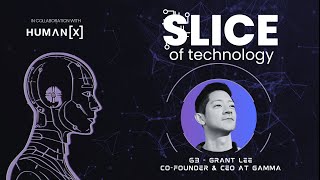
Grant Lee, CEO of Gamma, built a card-based alternative to PowerPoint that lets people write first instead of designing. After hitting 50 million users, the company rebranded and added AI features like image generation and PDF import. Gamma is moving toward becoming an AI design partner with video, audio, and agentic capabilities.
Chapters
Grant, so great to have you on the podcast. How are you today?
Hey, thanks for having me. Doing great.
I think everyone sees Gamma everywhere. I think that's. That's the. The thing. Everyone I've been talking to recently, Grant, has seen your brand in some place. It's everywhere on social media. And also not just seen it. Most of them have tried it and have had positive experiences. So I'm ecstatic to have you on. This is really cool. Let's just kick things off. Let's assume there is a portion of the audience that is just getting to know you and Gamma for the first time. So tell them a little bit about yourself and then give us that quick overview of Gamma.
Yeah, appreciate it. So I'm the CEO and co founder of Gamma. We've been around for a little bit over four years now. The original vision was really just to offer people an alternative to PowerPoint, a different way to present their ideas. Because many of us have learned maybe PowerPoint in school, maybe throughout our careers, have tried to pick it up. And I think still many of us struggle. And it's not just because of PowerPoint. I think just a lot of the incumbent tools come with this mindset of being design first rather than maybe design last or design later. And we really wanted to be able to lean into that so that people have simpler building blocks. Anybody that has an idea can help shape it. We can help them shape it and then get that out there and get going, rather than being stuck on the blank page.
What you've done a really good job with, too, is for the longest time, people that maybe struggled with PowerPoint. Because there are people that are like, I struggle with PowerPoint. I just can't figure out what to put right. You've taken that struggle and kind of taken it away, but you didn't just make it PowerPoint. Like, you have these pages. And what I really like about the breakdown of when I put something in Gamma, there was always, sometimes when you're doing a presentation, pages that you kind of needed to have, but they didn't.
Need to be huge pages.
And I love the. It's so simple. I love the thin pages that you add. You know, if it's not like it could. Or it's either it could be just something basic or it could be to make a bigger point, right? If it's just a big stat and then go on to the next thing. I know you have this as part of the features, but it just. Whenever I have a presentation on there, it just feels like you've Created a really good experience of like, I'm going through. I'm not just flying through slides. It's like, finally something's happening again. Remember how we used to always add animations to PowerPoint? That kind of went away. I don't know. I feel like you're, you're. I was very excited to have you on because I think you've, you've put together a really cool product and again, everyone's talking about you. Let's talk about, though, that is not an easy thing to do, what you've done, because, I mean, I know you're not a new company because of how much work I can tell went into the product. So I want to give you a moment to talk to, you know, where things have come to up to now. But then you also recently went through a rebrand. So I'd love to hear, you know, what the thought process was there. But, yeah, tell me just kind of how this journey continued to progress to this point. And then what feedback were you getting in the early days that really crafted, you know, this rebrand and where things are heading?
Yeah, totally. So, you know, when we decided to enter this, this category, Obviously, you know, PowerPoint is ubiquitous. Everybody, again, you know, learned it since they were kids. And it's in every size of organization. Every corner of the globe is using slides. And so when we entered this category, we felt like the only way to give ourselves a real chance is to really think from the ground up. People today are constrained by slides because they're fixed in dimension and you have to get everything to fit there. What would be a way to remove that constraint? And we knew that it would be challenging because obviously there's huge risk in just trying to disrupt anything like that. The behavior change in itself is enormous. But we felt like if we owed it to ourselves, if we're going to really give this a shot, we were going to think about, let's actually start with a building block. So instead of slides, what could we introduce that didn't force you to be a designer instantly, but you can start with just writing. And so that ended up being this notion of a card, which we have as our primitive, where a card can be any height to your point. It could start something that's a little bit narrow or thinner. It doesn't have to be something that is the 16 by 9 slide. You can just write a few words, but that allows you to then really quickly go from card to card and like, start fleshing out your ideas, gives the idea some structure. And then later on you can then take something that was made a little bit more simplistic and say, how can I take these few bullet points or these words to maybe add some layout or some visualization to it so that then you can actually shape it in a way that doesn't force you to do that up front? You can come back and revisit it later. And we always felt like writing. Obviously everybody has the ability to kind of express themselves that way. So how do we make it the lowest common denominator? Anybody can go in and really quickly write out their presentation. And over time, obviously the past couple of years, we've been layering on just many more AI capabilities such that the speed aspect of it, the ability to lower the floor even more for our users, has been what we've been really laser focused on. How do we continue to improve the UX and still keep it simple, still make it feel like it's lightweight, but allows you to then elevate what you can create? And so that's candidly still the journey we're on today. We still think that obviously the product can be simpler, it can be faster, we want to do all that. You mentioned the rebrand more recently. We did a pretty big overhaul, which in itself a rebrand can be risky. We were already at 50 million users. There are already some brand association with it. So common question is, why risk. It seems like the brand is doing fine. And the main reason we did it was, you know, we're, you know, when we first started this company, we didn't have a product. It was pre revenue, pre product. We had a placeholder brand that we felt like could get us to a certain stage. But so much has changed since then. You know, we've added more customers, we've grown the team, the product has evolved a ton. And we thought about, you know, the sunk cost fallacy of, okay, it does serve us well in the past four years. But what about the next four years? Or what about the next 10 years? What's going to be a brand that our internal team's excited about? You know, we are living in it every single day. And so it's got to be something that you're enthusiastic about and you feel energy from, like you want to work on the product. And so when we were honest with ourselves, it wasn't going to be just a light sort of brand update. It really required a complete brand overhaul. And so that's kind of the work we've been doing over the past five months is really getting to a good place where, you know, earlier this week we were able to finally unveil it.
Congratulations. I know there's a lot of work that goes into that. I'll also give you like huge kudos is you've done a great job at marketing. Like people are talking about this constantly. You know, you have a great support around you that are sharing these clips of the rebrand and what's happening. And this is also, I would also say, because you've incorporated AI, it's just, it's made it something that people want to talk more about and it really does speed up the process. I like the kind of the hidden feature of like if you have writer's block, right. You can at least get started with your product. One of the things I've been using Gamma for, for some stuff has been actually very good at like writing up a bunch of notes in a document on a particular topic and being able to then import that PDF and get started if I need some sort of presentation with it. What are you seeing? Like, what are you primarily seeing? Users leveraging the platform for the most. Is it for team meetings? Is it for sales decks? Is there a particular area that seems to really stand out?
Yeah, today a lot of our users use it more for external facing communication. So this could be for customers, clients, partners, where there is a level of higher stakes involved. It's not just for internal. I'm going to share a quick update with my team, but you want to feel like the work you put into it represents your work at a high bar, a high quality bar. The early journey for even Gamma. I started my career in consulting and so it was very much trying to solve my own pain point around. I feel like I put in all this work into crafting what I wanted to share with a client, but it wasn't reflected in the deck because the formatting wasn't always great. I didn't have enough time to put the polish in. We wanted to change that so that people didn't feel like they would be embarrassed to put their content out there. And the vast majority of their time could still be focused on the content itself rather than design and formatting. To your point, a lot of the use cases are around, hey, I have a set of notes or I have an outline or even going to ChatGPT and drafting and brainstorming a set of things. And now I have something that feels partially fleshed out. How do I take it to the next mile? Pull it into Gamma. That is a very common use case. And then you can take all that basically synthesize all the information and package it in a way that now your customers, clients, partners can consume it because obviously they can't read your brain. They need to be able to visualize it in some way. And so, and that sort of has been the unlock for a lot of people.
What do you say to the people that are set in their ways, that are like, I'm not using this AI tool to help me put together my presentations and documents. I'm going to continue with PowerPoint. What's kind of the pitch to them or just, I mean, how do you address those people?
Yeah, I mean, with any sort of technology shift, there's always going to be the early adopters. And so trying to win over the laggards or people that are really stuck in their ways early on is really just an impossible task in many way and probably just not the best source of where you can pour your energy. So where you are seeing enthusiasm, I think that is always the best way to just lean in because a lot of those people are able to kind of even paint the picture for where they want you to take the product. And it's not to say you just build exactly what they asked for, but in many ways they have some sort of intuition around what's going to be useful. And any startup needs that sort of energy. You need to be obviously enthusiastic about what you're building. But when you have a community of early adopters that are equally enthusiastic, that's where the real magic happens. And I think, you know, most founders would be better served just focusing on the pocket of people that already love your product, rather than trying to rush and like, you know, knock down every single objection or every single hurdle that all the others are still facing today.
I like your particular area a lot better than, you know, a lot of these companies that went out and said we're going to be like the AI image generators. Because now what we're starting to see is like, I feel like you're in a much safer spot than they are now with like what ChatGPT is doing with like, hey, we have a gallery and things like that. This is super broad still, but I still think it's, it's niche enough that like, it's of high value piece that I can't see a, you know, an OpenAI saying like, hey, we're going to start putting together these presentations and stuff like that now. Images, yeah, I can see that all day long. They're going to continue to improve that. One of the things I thought was pretty cool and I'd love To hear your thinking on it, a lot more platforms are starting to incorporate multiple models, like selection choices. But you've kind of had this early on in terms of like the image setup in particular is what I'm thinking of. How important was it to give the user a selection of different like AI image generators and what went into that thought process to say like, hey, we're going to give them choices?
Yeah, Part of this just comes from, you know, a lot of our early team came from a company called Optimizing. And so experimentation is very much in our DNA. And so I think any tech company, any company frankly, is just trying to pass the most value they can to their users at a reasonable price. And if you can do that well over a long time horizon, you have a chance at building a great business. And so for us, when we thought about each of the models, image models, many of them have their strengths in certain areas and users are becoming more educated as to which models may be the right tool for the right job. And so we always felt like it was a chance for us to actually let our users have that choice. I think over time it may either be a subset or smaller, maybe fewer choices because we still want to curate or have the best available. And also maybe in the future we can just more intelligently patch people to the right model given what they're trying to create. If it's something that has text in it versus something that is more photorealistic, maybe there's a way for us to more intelligently. But for now, because we're still early, we felt like we have enough users where they can help kind of experiment, use a different model, see what works, give us feedback when things are working and what's not. And we can just make sure that we're always kind of listening to that and improving the UX such that every time a better model comes out, we can offer that to users. We can see if it's actually better or not. If it's not, then we can always roll it back or take it out. I think that level of experimentation at the model level today means that we can actually compete with the incumbents because many of the incumbents don't have that flexibility. They have to choose one model because of the way they are built and we don't have that. So we can allow the flexibility and we believe that's obviously an advantage to us because it's more customer centric. It allows the customer to have the choice.
Are you seeing any particular model get selected? Maybe more or is kind of a Fan favorite as it relates to the image generator.
Yeah, it kind of changes from time to time because obviously there's, you know, sometimes a big improvement. You know, Flux was great, or still is great. You'll see ideogram great for when really you want some text in there and control around precision there. But you know, really it's interesting and Leonardo's popped up. I think it really is interesting that I think even the models obviously have done a good job of like having some external brand and so association people just love certain models because they've seen it work well for their particular use case and they want to gravitate towards that. And so I think we're seeing that the variety does help. I think each one of the models is doing a great job of just building their awareness, which helps. And then when there's set function improvements in the models, then we obviously oftentimes see that being like, oh, all of a sudden everyone's trying this now because it's frankly just working better. And I think that's, it's just been interesting to follow because oftentimes it's not as intuitive how things might change. And certainly over the past couple years has changed a lot.
I know you just had this recent rebrand, but what's, what's next that you can share with us here today? What, what excites you? What continues to, you know, make you wake up every morning and love building this?
Yeah, I think it's still very much kind of our, our vision to be, you know, someone's design partner. As if you had like an expert, you know, presentation designer or someone sitting next to you where you can ask for things, get feedback, get suggestions proactively. And we're starting to do some of that with our AI image editing capabilities. We're integrating more of the sort of agentic capability around having somebody that can actually do these tasks for you and present you with different options. And I think there's going to be much more of that and then over time we're going to be able to offer many more formats. So our initial wedge was just getting into more traditional presentations. I think there's all sorts of ways people need to package up their content to be able to share with others. And whether that is something that feels more like a website or that's something that feels much more for social media and distribution there, or even just a well polished document that can be highly readable, I think there's opportunities for us there. And obviously even within that realm, there'll be ways to kind of incorporate much more multimedia, so video, audio. So I think we're barely scratching the surface on hopefully what can become a very powerful communication tool for people in general. And we're excited to keep building.
Excited for you. It's been a real pleasure. Obviously a big fan of what you've built. Look forward to future conversations. But definitely really enjoyed our chat here today and learning more. Anything else that you want to add before we wrap up? Is there if someone wants to. Wants to sign up, wants to get going. What's usually the best path? Would you say just do it?
Yeah, yeah, just do it. We're a free product, you know, freemium product. So come up. Come on, check it out. If you have feedback, we'd love to hear it. I'm on LinkedIn, Twitter, X obviously always DMs open just to get feedback. Would love to continue to improve and really appreciate the time here.
Awesome. Thanks, Grant. Be well.
Thanks. Take care. Bye.
More from Grant
From 0 to $100M ARR in 2 Years: Gamma’s Growth Playbook | GROW EUROPE 2025 | HubSpot Live
“Dumbest idea I’ve heard” to $100M ARR: Inside the rise of Gamma | Grant Lee (co-founder)


Rethinking Team Building: how a 30-person Startup serves 50 Million Users — Grant Lee, Gamma