The Modern Startup Playbook with Grant Lee, CEO of Gamma
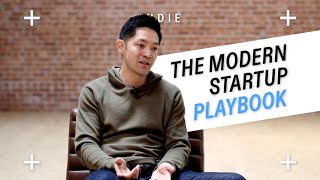
Grant Lee, CEO of Gamma, scaled the presentation software to 50 million users and $50 million revenue while staying profitable with a tiny team. He built the company on constraints, transparent culture, and avoiding over-funding, raising only small pre-seed and seed rounds since launching in late 2020.
Chapters
When we sat down with Grant a few months ago, Gamma had just over 50 million users and growing quickly, doing over 50 million in revenue.
Profitable.
They'd been profitable for well over a year. They continue to do all of this with an incredibly small team. The primary reason I wanted to sit down with Grant was to understand how they are doing so much with so little and why they're choosing to continue to do so when they are so highly leveraged to be able to raise more money if they wanted to. They're choosing to live and embrace these constraints, and I love how this comes across in the conversation. Grant is the Persona that Indy has been built for. It's the Persona that we've believed before they started to come forward with these massive wins. Like Grant, seeing with Gamma, we believe that this founder is going to be increasingly prevalent. You're going to hear an entrepreneur in a playbook that is going to sound incredibly aspirational. The number of things they're able to do that are intuitive to themselves, that they're not having to ask permission for, that comes from this degree of autonomy and independence they've been able to create through how they've built and scaled. Gamma couldn't be more excited to introduce the indie audience to Grant Lee from Gamma.
And so we were just kind of assembling the early teams. The first eight of us, first seven of us.
What was it, 2000? Was it 21 or 20 that you started?
Very end of 2020. Okay, so that was like peak pandemic.
Yeah.
This is the moment of time when we were thinking about fully distributed or in person. And we decided to do in person mostly because everyone wanted to stay in San Francisco. It was like that. It was kind of the team's choice at that point because we assembled the first seven of us. And yeah, peak pandemic, we had Shelter in place. We decided to kind of break that and we rented.
You've been taking a break from your previous startup because you were what, Optimizely.
Optimizely. Then clearbrand. Clearbrand got acquired. So I was doing some advising. My co founders were still at Optimizely, and then Optimizely was getting acquired. That's when kind of. It was just like perfect timing.
We ended up starting the story around Optimizely. From the outside looks, working in was always super positive. And then I saw. It was like a. It kind of looked like a fire sale there at the end.
Not. Not a total. Not a total fire.
But it wasn't like.
No, no, yeah, it wasn't did not live up top.
But also, I mean how much did they raise? Optimizely had raised.
They raised another round after I left. I want to say it was definitely in the hundreds of millions.
That's what I thought. Yeah.
And so yeah, they raised. They raised a bit. It's a tough market. Experimentation is tough because there's not a clear owner.
I was going to say was there a category there when they started? No. Okay.
There was test and target, like Adobe's product which was also via acquisition.
That was the omniture stuff.
Omniture and you know, it's like for marketers there's like, you know, some portion of that that was starting to gain some popularity but it wasn't, it definitely wasn't like prevalent optimize. It did do a good job of educating the market, creating the market, but the market's also just like, it's a tough one. Like the saying of like, you know, some markets are just yeah. Significantly easier and like once you penetrate it's like experimentation was not that it wasn't one where every single deal had to be earned and then it was still super hard to retain. So it wasn't like you earn and like it's a 10 year like just lock and lock them in. It wasn't, that wasn't the case. If it's takes long to acquire, very expensive to acquire and there's not the retention, the economics fundamentally just don't work. So I think that, you know, it.
Took living that because something about it attracted you to it because you. Was that your first startup?
When I joined it was. They just closed their series A. My, I joined as a, you know, first finance hire. So my first two weeks, my, my, my first like real meeting ever was board meeting with Peter Fenton. Like preparing for a board meeting with Peter Fenton, you know, because that's intimidating. And this is when he was. Yeah, there's like everybody like was admiring obviously like benchmark and like how crazy of like you know, impressive investor they were and they were extremely well Iran great partners and yeah, so that was the beginning. I was like, oh my gosh, there's so much energy. What you appreciate is like Dan and Pete founders were like they were trying to create a new category. Clearly there was enough like initial demand where there's something there. Like we grew to like 10 million ARR. Like really quickly. At the time we were YC's fastest growing company. Is that right? Yeah. Wow.
I didn't realize.
Which is insane right now. Now like there's just obviously so many Others, but it's like at that time this is like 2000 when I joined is 2013. But like when they started like 2010, it was like that early inflection point. Insane and ton of virality.
Is that what attracted you to it? The growth rate, the investor? Like what was it about?
So I knew Dan from college. We were dorm mates.
Yeah.
So it was part culture, part the market. Seemed interesting. It wasn't like oh, just joining another SaaS company. It's like, oh, this is like something different. Like if you like. Peter Fenton also just had an amazing pitch as part of, you know like when he would talk to early employees. It's just like when you realize experimentation, like how you approach software development is like if you integrate experimentation it just feels fundamentally different. You're not no longer shipping like these one off things. You're shipping something that has a chance to kind of evolve quickly. And experimentation like deeply ingrained into like software development seems like it will just fundamentally change the way software is developed. And I was like, okay, that seems pretty cool. And then software is everywhere. So if that becomes the status quo, that's a pretty cool vision. And to be part of that frame.
It, I feel like that was probably around the time of like the Lean Startup mvp. Like there's a lot of test iterate, there's a lot of like customer development, that kind of stuff.
Totally. Yeah. So a lot of it was, yeah, just the timing, the kind of, you know, what people were talking about the zeitgeist of the time. And so I was in investment banking. I was joining from investment banking and investment banking. You're talking to tech companies all the time. And there's just a difference when you enter like an office, like optimizing and like the energy that you have, it's like you're just drawn in.
Right.
It's like I just want to be part of this, you know, like whatever seat I have, just like, you know, buckle me in and like, let's go. Zero regrets. Ended up being a great ride. The type of people you meet, those type of companies are just talent magnets. People go there, you learn from the best, you work with the best, you grow as an individual. And there's very few sort of opportunities when you can come across something like that. It's like a no brainer. You go in and you can learn and just hang on for as long as you can.
Was it the energy you think that was the magnet for the talent? Was it the founders?
Was it the vision starts with the founders? I got to you know, because I knew Dan, there was many instances before even joining, I got to hang out with the company and just see what a day in the life would be like. You go over there and like, dinner, like people are hanging out for dinners and everybody's around and they couldn't help but talk about the product and like the business, like, it was just like oozing out of them. There's so much energy when you feel like that you, like, you're coming as an outsider, you're like, oh, I want to get in on this too. Right. And then you meet the rest of the leadership team and they're like, just so much energy too. You'll sit down with them and they can kind of very clearly articulate what is their vision for their function or how are they going to grow sales, how are they going to customer success. And it all felt very well thought through. And when you feel like you can join a team like that and there's so much energy, you're going to absolutely learn, even through just osmosis sitting there, you just pull it all in. It was just a stark contrast to other companies I was even talking to at the time. And that's really what I think ultimately drew me in.
Anything you took from that experience that you pulled forward into what you're doing either at the next startup, and then, you know, we can get into the gamma stuff.
Yeah. I mean, there's so many rituals that we had that were just, you know, I admired what Dan and Pete did. I think they brought a company together. It's where I learned about kind of the power of, like, things like show and tell. Like every Friday we get the entire company together. Anybody can go up and present like a feature, they're working on a project, they're working on customer research and then ask questions and. And when you're in an environment where it really feels like everyone's in it together and you're kind of on the same page. That was great. We had a lot of transparency. Like, Dan, from day one, would share financials, would share unit economics, try to educate. And I think as a finance leader, I try to play a role there too, which is like, product is just one part of the puzzle. You need to build a sustaining business. And so how do you educate the rest of the company to appreciate, you know, what that takes? Like, building a great business is significantly harder than just building a great product. It encapsulates much more, and it encapsulates a part of the dimension which is like, the customers have to see Enough value to pay for your product and to retain. And so we often talked about, you know, how do we break down unit economics, how do we educate every person in the company to appreciate that whether they're in customer success, customer support, a product manager so that when they approach their work it's not just about like the very narrowly focused, like this is my job but there's a bigger picture and we always try to do that and show and tell us an opportunity to kind of, you know, educate.
Did you have any resistance to it? Like what was that just a founder DNA thing? Why do you think that was so important?
Yeah, it's totally founder DNA.
Did you know that like you were with a cohort of other YC company you were with, you're here in San Francisco. Like I would imagine most of them weren't doing that.
Yeah. And candidly, yeah, someone coming from finance, it's super uncomfortable. Right. Like if you, you know, you work with public companies and you have to be so careful what you share because you know the, the fact that things might leak prematurely or get in the wrong hands, you're, you're very sort of constrained and even how you might approach it. Yeah but we were a private company and I think again going back to just the admiration for like Dan and Pete, they never wanted to shy away from like sharing what are the biggest opportunities for us to be better as a business. We had a fast growing business but you know, for our initial segment it was going after more of like SMB prosumers high churn. And so if we as a company don't appreciate that, we'll never be able to make the right decisions. And so part of that appreciation is the education piece because if you are someone in product or customer success, you might not understand like how that revenue churn might impact you long term. It's really hard to see the beyond the kind of your okrs for the quarter. And so that's what we really like. Dan felt like there's a responsibility to. It can't just be him trying to solve it all. It has to be a deeper appreciation. And so yeah, definitely founder kind of mindset of like we are going to be transparent because it's the right thing. Even if it puts us into a very uncomfortable position of like these numbers are sensitive, we don't want them to leak, but we feel like it's our responsibility to make sure everyone understands them.
One pushback that I would have heard back then to focusing on fundamentals would be that it you end up working towards a Local maximum. Was there anything limiting in that approach to focusing on the fundamentals? Maybe too much, I don't know.
Yeah, it's a great question. And this is one of these things where, you know, it's, you know, we can't wind the hands. I think every category might be also different. You know, some categories are very much like winner take all or there's like a moment of time where everyone's trying to capture land grab and, and many of those, you know, the belief is that you acquire those customers and they'll stick with you and you build the sort of brand around like being the number one in that category. I think for optimizing it was a different space and we were really trying to sort of gradually educate the broader market around like why is experimentation even important? So we could be somewhat patient in that sense. Hardest thing about being a founder is the both push on the pull. Like you as a founder need to set the vision long term. And many of those decisions you don't get a fast feedback loop on. It's not like you say, hey, we're going to do this over the next three years and you can know like whether or not in day one you're making, making progress. It's super hard, but you have that sort of responsibility of setting that. I think in the near term though, you do need to figure out like what are the right leading indicators that suggest that you're building something healthy and sustainable. And that's the tricky part. Like you may be making some, you know, local kind of optimizations that may end up kind of pointing you in all altogether wrong direction. And that's the part that's impossible to know. You kind of founder intuition knows whether or not you feel like you're both heading the right direction long term and doing it in a way that's sustainable.
Sustainable seems like a growing trend. Seems like that matters more to founders today especially who've lived through multiple cycles of startups. And I'm wondering from your perspective why that might be the case.
My two co founders, I think we've seen a few different sort of cohorts or eras of like startups, right? And many of the previous eras were like, grow at all costs, raise a ton of money, figure it out later sort of situation means that yeah, having a great, like having a war chest means you, you can afford to make a ton of mistakes and then at some point you make sure enough progress, you can raise again. We always felt like that was the wrong way to build things because we had been employees where seeing what the sort of side effects of some of that might be downstream just didn't feel great. We want to build something where if there's a great outcome, every employee should feel like an owner of the business and should be able to celebrate that outcome. And I think that can only be possible if you're very deliberate about how you sort of build it from day one. And part of that is just how much money you raise. I see a lot of startups today that sort of trick themselves into thinking they have product market fit super early on, when in fact maybe they don't. And when they do do that, when they do think and convince themselves they do, they go out and raise a massive round. Now they have all this money in the bank and the temptation then is to put that money to work by hiring an army of people, maybe VP with a Rolodex and filling out the org chart. And many of those decisions cannot be, you know, you can't unwind them really quickly. And so downstream of that, if you actually don't have as much traction as you thought, or the business or the market ends up changing much more than you're anticipating, it's really then hard to adapt and navigate. And so we much rather be in a position where we're very deliberate. We will grow the team as fast as we think we need to, but every team member we do add is like someone we think is a must have at that point in time. As we're growing the overall kind of our own market opportunity, we have a ton of energy going into it, there's momentum going into it versus tricking ourselves into thinking we have something that we don't.
Okay, so what are the biggest head fakes when it comes to product market Fed think they have it, raise a big round and then you know, find out it was fleeting or something like that.
I think there's a couple different flavors of this. I mean one is founders that just chase or over optimize on vanity metrics. So looking at things like signups versus you know, actual revenue retention, you know, when you have massive sign up numbers, it could be an indication of product microfiber, but it's definitely not a guarantee. And so you definitely need a peel back the layers. There's also this sort of time element to grow quickly in one month versus to grow sustainably or predictably over a year or two years are different things. And the one month signal or even like the six month signal could mean you've in that moment of time have captured something. But product market fit means you can actually grow with that market over time and have these customers that can see themselves with you for multiple years. And I don't just, you know, when you have that sort of one to six month window of time where you're showing all this revenue growth, I don't think you've yet demonstrated that there's long term commitment to that product. And you haven't even yourself kind of formed your own perception of what this brand should represent. None of us operate in a vacuum. So what is going on kind of around you? Obviously in this point in time, there's different flavors of AI apps or the model providers, hyperscalers. If you're creating an app, the existential question is always, well, if the incumbent adds AI, does that disrupt you? Or if one of the hyperscalers or one of the other mega tech companies goes after the space with their technology and disrupts that category, what happens then? And so there should be this deep sort of paranoia at all times that that could happen. And you need to not only think about how do we continue to grow in the near term, but how do you actually invest in durability over the long term. So that's like the sort of mindset that you should have. Even if you have what you think is like this initial moment of product market fit, it could be fleeting. So how do you actually make that more durable is I think, what every founder should be thinking about.
Do you think that's uniquely new to this moment with AI, or was that something you felt at previous startups too?
I think it's more unique to this moment just because if AI is changing so fast, everyone talks about it all the time, it's hard to know even six months from now what are who's going to be on the leaderboard at that point in time and what new things are going to come. And if that's the case, if there's that much uncertainty, then it's hard to build your own conviction around, hey, this looks like a clear path today, but is all of a sudden going to be blocked by something you're not even seeing? I don't think that existed necessarily with mobile. You had web before that and I think all of those were. There was some uncertainty, but you kind of could see, see the sort of line of where you could assume things would go. And I think it pretty much kind of transpired the way we could have assumed. It's just a more and more mobile doctrine. Smartphones become more pervasive. You replace much more desktop use of mobile. But it seemed like Even then it was like maybe one or two players like Apple, Android and okay, and then who else? But now it's like, I don't know, there's like obviously the big players, but then there's a ton of emerging startups. It could come from all directions. You don't know what you have today, like how long can you actually preserve that?
Have you seen any cautionary tales so far? Or have you seen things that ended up being more durable than you thought they would have been when they first came on the scene?
You know, I think there's been companies out there that have been forced to evolve. You know, the pre chatgpt companies where a lot of them were serving, you know, marketers with copywriting or different marketing assets. All of them have been forced to figure out, okay, how do we navigate in a direction that will point us further and further away from what ChatGPT is going to eventually just take over. So I think that's kind of, that was like maybe chapter one, chapter two today I think we're still living through it because some of these companies are growing really, really fast. The replits, lovables, bolts of the world and then adjacent to them, the cursors, Windsors of the world. They're doing amazing and their teams are phenomenal. The products are great. But they're also now operating in a market that's becoming hyper competitive. And so each one will have to make its own decisions and trade offs around what customers in the market will need. Not just today, but three, four, five years down the road and we're too early to tell.
That feels like a new dynamic, no? Like I would imagine, especially with something like Optimizely or some of these other startups you were part of, like they're doing some category creation or they're getting out in front of kind of new emerging trends. I don't know the category very well, but I would imagine at some point they had, I don't know, two to five, like credible competitors that were kind of going, saw the same thing, would be going after them. It seems like today 20 show up immediately once there starts to be like any kind of smoke in a potential market.
Yeah. The irony is the previous cohort, like the 2010s, a lot of startups were doing well. Very few shared their numbers publicly. So nobody knew how big the market was. Like Optimizer is growing crazy. I don't think very many outsiders maybe knew how fast it was growing. So yeah, you track some, you know, attention from, from competing startups or even like the incumbents nowadays it feels like it's, there's almost a bragging right to like, hey, we're growing so fast, this is our AR number. Then it actually attracts like, okay, well if they're doing so well, you know, and our technology is just as good, like why we're going to go head to head, we're going to compete. I think there's some of that and I don't, I don't know what the long term side effects of that is, but there is much more of a willingness to build in public, which is great. I think it's encourages us to just generally share like how what is the best way to build a product. But I do think maybe has some of these unforeseen consequences of maybe attracting way more competition than you would like. And I always view the competition is great in many markets. It isn't going to be a winner take all. It shouldn't be the sort of zero sum game. And so if that's truly the case and you are growing the market overall, then it's not as big of a concern. But there's also a practical element of it which is like if you do move into enterprise and there are only so many accounts, then yeah, maybe it is. Competition, more players in the space is going to impede your ability long term to grow a massive part of the market.
Is it just my perception or was Gamma one of those things too that like it was around, you were working on it for a couple of years and then it really supercharged with the kind of addition of AI and kind of that market starting to explode. You've been able to kind of draft out what was the evolution there?
Yeah, so we definitely started pre AI. End of 2020 was when the company was formed and in our first pitch decks, our first version of the product, no AI, no mention of AI, it was all around how do we make it simpler and faster for the average knowledge worker professional to go in and be able to like shape their ideas so they can communicate it much more was around like simplifying communication because I think what we saw is like all these incumbent tools, whether it's PowerPoint or just the other. The Adobe suite is you go in and the experiences you get dropped into what feels like a designer's canvas. It's like a canvas where you're responsible for resizing boxes, aligning things, figuring out what layers go where. And the vast majority of us are not visual designers. So we wanted to flip that and say okay. Rather than be sort of a design first Approach to content. What if we were content first approach and design later, design last. And then two years in, we realized obviously our first sort of aha was like with stable diffusion, taking off is like, well, so much of what you put into presentation is the visual aspect. If there's going to be this new technology that supercharged charges, that piece of it, like what could we do to integrate it? So we were doing a lot of internal kind of dogfooding testing early 2023. We're like, okay. We needed to basically deeply integrate AI into the entire creation flow of Gamma. Gave ourselves a three to four month sort of window of time where we just did a sprint. We're saying we're going to launch at the end of March.
Wasn't stable diffusion that kind of set that off?
Stable diffusion was the initial, like there's something here. And then it ended up being more leveraging the large language models first because that part of it felt more ready. The image part seemed a little bit like we're going to give it some time. We were playing around it internally. It didn't feel like it added a tremendous amount of value. So instead like our first version was we will have AI help with the first draft of the writing piece of it and we'll also have AI go out and look for the right images to go with it. So it will do web search. It'll kind of find the right images, complement the text. And that was our V1. So it gets usually like first draft super fast. The entire onboarding experiment experience was all sort of centered around that. And that was the inflection point. We went from like thousands of users to, you know, thousands of users per day and just adding and adding.
Did anything else change besides the product? Did you change the sign up flow? Did you change the go to market strategy?
Yeah, we, we changed the entire onboarding. So the moment a person, a user gets dropped into the product, we allowed them to experience the AI from, from day one. And so that was very different from before. I think many other apps before AI, you go in and notion is an example of this great product. You have all these building blocks and you need to figure out as a new user how to work with these building blocks. And Gamma is very similar. We're trying to launch unique primitives that Gamma allowed a user to shape, but a new user going in. Super steep learning curve. You have to learn. How do we work with this thing? It doesn't feel quite like PowerPoint. Our bet was that by revamping the onboarding experience, instead of giving a new user a scattered set of building blocks. You give them a set of pre assembled building blocks so you show them a shape of what it could look like. It's a very rough first draft, but then the user can say, okay, this doesn't look right. How do I actually work with this building block? It lowers the, flattens the learning curve tremendously and that just allowed for much deeper sort of initial activation and then better retention. Long term.
Really stood out to me in your experience is like you actually have this, like, you get to triple dip this experience. Meaning like your pin tweet is the one that I like keep going back to in my mind of like that's a really interesting way to kind of parse the experience because it's like, did you start on that path with Gamma? Like, this is how we're gonna, this is how we know how to build it. This is how we're gonna do it again. You know, you. I don't know what the funding history is so far, but it's like, did you go out and raise that big round? What did that feel like? What was the plan when you did that?
Yeah, I think one thing I've just learned over time is a lot of founders think about, you know, when they think about innovation, it's very much a product lens, like innovate on technology. And what I've learned is like, yeah, founders actually have a chance to innovate beyond that. And organ design is one of these things. How companies get formed and built can be changed and it doesn't have to be the way, you know, startups were approaching it 10 years ago, couldn't be different today. And I think we've always had sort of that mindset. But there are some moments, I think even in our four your journey that sort of really influenced kind of how we even think about today. One is just being on the brink of death. Like we, we as a company, right? Like we. I mentioned the AI launch which was in March of 2023. This was also coinciding with the SVB collapse. And so two weeks before the launch was the SVB collapse. We didn't know if we were going to be able to make payroll at the time. So we had a choice of like, okay, what are we going to do? Should we just vote? Like, is this going to happen? Is this launch still going to happen? So we pulled the entire company together, we sat down and again, just going back to transparency, we said, hey, you know, we're not sure what's going to happen, but it is our guarantee that we're going to make sure that everyone gets paid and the launch is still happening. And so I think that mentality was just like, you have to just say so scrappy. Because at any moment in time things could just be pulled away.
Totally.
I think the predecessor to that was even just coming out of zirp. And when we had finished raising our seed round, it did feel like things were changing. Money was not going to be as easy to get. And as a founder, you really need to think about how can you demonstrate enough traction, how can you be more in control of your own destiny, how can you have this sort of cockroach mentality of being able to survive almost anything. And I think because we have always been transparent, that was something that was inherent to just our culture. Like, I think we don't take things for granted sort of mentality. It's also one where, you know our values around having people that want to do more with less, that's ingrained into, into what we do. Those sorts of moments really shaped for better or worse, like how we think about things. And I think that sort of then bleeds into how you operate as a founder and how you operate as a leadership team. Our sort of.
Was that seed round hard for you to raise? Was it easy to raise?
Seed was right when it was still not difficult and then right after that is when market really changed.
There's a part of it which is like the relationships of fundraising, but you also picked a category that like VCs don't love.
Yeah, yeah, there is.
So I would imagine a lot of that seed round was like, grant, you're great, we love you, you'll figure it out. But I don't know that anybody went into it with like high conviction that presentations and PowerPoint competitors are going to be totally.
Yeah, there's a graveyard of PowerPoint slideware and tools that have not made it. I think our approach to fundraising, which is we do see a lot of founders treat fundraising as speed dating and they'll go into this and they try to drum up a bunch of demand and then pick the best suitor and move on with their lives. We try to always approach it as like, these are long term relationships. You should value the partner as if it were a marriage to your company. Because if the company does well, you're going to be with them for 10 plus years. And if the company doesn't do well, well, it doesn't matter anyways. And so pick this sort of long term partner. And so we were fortunate, like Evan who was one of our first checks in. He introduced me to a lot of people that we were considering to eventually lead our seed round. And I met with them well before we ever had a fundraise. And one of the things I want to do is really ensure we had some diversity around the table because all the other boards I'd ever board meetings ever been to, it was the same type of profile background. And so actually a lot of the investors I meeting with were women VCs. And Amy Saper, who was at Excel at the time, was someone that we just built a great relationship with in the beginning. It was more of, you know, let me just share candidly about the problems we have as a business. Like we, at that point, we're still pre product, we're thinking through like prioritization and like market. And she ended up being the sort of person who was like the prototypical user of Gamma. She in her prior life was product marketing manager, had done stints at Stripe and Twitter and so really understood, like, as a marketer you always lack design resources, but you have to create a ton of content. Why is it so painful to do that? And so something about that just really resonated with her. And through like many, many meetings of like just spending time with her and like, she's the type of person, you just gain a ton of energy like doing that. She's like, okay, she's the right fit. It wasn't like the sort of, hey, we're going to go in, try to.
Drum up it all over the place.
She understood she could see the vision. And that's why, to your point, many would have avoided the category just because, yeah, it's a hard category to break into. And if you're just trying to build incrementally better slideware, you're going to get out competed by PowerPoint. There's no way to disrupt the incumbent there, so we really want to take a big swing. She believed in the vision and I think that's where the stars were.
Everybody runs their process differently. But diversity for you was important.
Yeah.
And that, I don't know, it feels like this moment we're in, people are like really down on diversity for some reason. Why was that important to you back.
Then as a founding team is something we've always talked about. You know, we felt like, hey, if, if we weren't going to be the ones that valued that, then nobody else will. Like, the company will just be, you know, the people we hire and then that's the end of the day. And you Know someone that is, is an investor that has a deep understanding of your business is going to be this long term partner. That's a really important decision. It does set the tone for many things and we were going to let our actions speak, you know, louder than our words. If we value that, then let's go out and spend time and make sure that that's a priority. And we try to do that with hiring too. It's not easy, but we feel like it's the right path, is the better path long term.
That's awesome. I love that that's still a priority for you. What was the thinking when you closed that round? I mean there's kind of this mantra now that's working its way through the startup world of like one and done. What was your thinking around it when the seed round closed?
After we raised our pre seed round, we did have this internal discussion around we would like it to be possible that our next round is the last round we ever raised.
Oh, interesting. Why that's such a unique conversation. Why for you guys?
Because we, we believe that, you know, oftentimes money, like having, having like infinite funding doesn't provide the right constraints. Constraints for us begets creativity. And constraints could be the number of people you hire, who has a seat at the table, the amount of features you're trying to launch. And so like it is always tempting to think that more headcount is going to add to more velocity or more features shipped or like more customers acquired. And that's almost never the case. There's maybe a few markets where there's exceptions to that. But for a product like ours, which is very horizontal in nature and we have an end user that we need to have fall in love with our product, having infinite funding isn't going to make it easier for us to accelerate that journey. And we knew that. I think when we asked ourselves, like just intuitively, just that was the case. By not overfunding, we forced ourselves to do the hard work, which is create a product, launch a product, monetize it. And monetization is the ultimate test of are you delivering enough value such that customers are willing to pay for something? Right? And if you have that value, it's a much stronger signal of product market fit than anything else. And so we needed to prove that to ourselves. And we raised our seed round. We said, hey, before we run out of cash, we are going to launch and monetize. That is like a, like we have to. That is the constraint. Then you think about, okay, what is the team? What is the absolute biggest team we would need to be able to do that. What is the timeline? When do you need to launch something to even start getting signal?
How big a team did you think you were going to need back then? And how did you. And how big did you end up being by the time you launched it?
Yeah, so when we did our AI launch, we were just under 15 and we felt like that was just about right. If anything, maybe we could have been 20 and been fine, or maybe we could have been 10 and been fine, but it was in that range. We had always like hired more product designers. I think the typical company would, you know, we've, we've been like 25% roughly, which, you know, for early stage. Yeah, product designers.
And we felt like designer on the founding team.
Yeah, there was a product designer. We, you know, we think of him as like a unicorn product designer because he could code very, very visual too. And also just like has good intuition for like creating something that could be playful and useful at the same time. And so yeah, he was basically. We had three founders and then our next two hires were a front end engineer and our head of design. And then after that the next two were backend engineers. So kind of in our first seven all Optimiz, it was like super complimentary in skill sets and the exact sort of foundation you need in a founding team. I think this is one thing. I also noticed that a lot of founding teams aren't super complimentary and that actually makes it a little bit of a struggle because if you have too many people with the same sort of, you know, archetype or like profile, you end up running into each other like separate Ontario chose way too often in the very beginning and you actually need a little bit more space to operate. And for us we had, I feel like the perfect initial seven in that level.
Did you know that when you did it or was this like how intentional were you in thinking like, okay, what am I good at? Who do I, you know, who's going to compliment me? How do we.
I think, I think we're very intentional. Even the founders who I would choose as founders, I was very, very lucky that James and John decided to join me on the journey. But I needed to know. Obviously I'm not the technical co founder here, so I needed two people that were really complementary in nature. And so for us, even choosing who those two individuals were was deliberate. And then beyond that it was the same. Okay, beyond that, who else are we going to need? We needed the first seven to be enough to build the product. And so that's when we asked ourselves, what are the missing ingredients here? It became clear, how much did you.
Raise each round then?
We raised, yeah, raised a little bit over two in the pre seed. Okay. And then four in the seed.
Okay.
And then we ended up doing another sort of angel, sort of extension of the seed, you know, several months before we would then do our series A.
Your friends would think you're crazy.
Yeah, of course. Yeah. I mean, who would start. Well, crazy for, like, different reasons. You know, When I first started Gamma, we were living in London at the time. My daughter was just born. So we have two kids and, you know, why start a company peak pandemic? Two kids? Don't you have enough going on? But, you know, when you have this itch and it really feels like the stars are aligning, you just kind of trust your gut. It's like, we got to do this. This is the right moment in time. Oftentimes you always think about, early in my career, I always think about, okay, you know, when I find the right partners or, you know, potential co founders or when I find the right problem to go after, then, then I'll start something. And in that moment in time, when I asked myself, like, did I check those boxes? It was just 100% yes. And so it was like, finally, the stars of the line. The timing, of course, you know, whether peak pandemic is when you want to launch a company or not, you know, we can. We can debate that.
We never have to revisit that as a question.
So excluding the external factors, everything else, you know, that I can control. Felt like it was perfect timing.
Yeah. What I think is so interesting and what I think I underappreciated when we started, like, talking about this fundamental stuff and like company building, you know, through indie. And the way we think about it is how countercultural it is here.
Yeah.
Like how. How people feel like such outsiders if they aren't playing the game the way everybody else is playing, playing it. Was that ever an issue for you or did you ever think about that or experience that?
It's human nature, right. Like to look and be envious of someone else's position. Oh, how come it was so easy for them to raise money? Or are we raising enough? Like, what happens if they come after us? So I think it's always something you think about. I am grateful that I think again with the two founders, the three of us together, we discuss all these things all the time, and I think we keep each other in check. We're like hey, we think we can build this differently. We don't need to do that. We think some of these companies are making the wrong decisions because of the funding. So let's go back to the fundamentals of the constraints will lead to more creativity. The constraints allow us to build a team the way we want to build it. We've worked at large companies, small companies, and I think the small companies, small teams there is just like camaraderie and energy that you can sort of foster that it's hard to replicate once you get really, really big. And maybe someday we'll be a massive company, but today in the moment, we don't think we need to be that. And we're still enjoying the ride. And so why chase someone else's dreams? Let's do it the way we've always wanted to do it.
I love that. I also love that you're in a moment that you can stay true to that because a lot of people say that. And then it's either the external pressure or just the realities of hyper growth that comes along that they just then have to start throwing bodies at things. My sense is you're hiring and filtering those hires totally differently maybe than you would have even a couple of years ago. Is that driven by the constraints you've set on the business or is that driven by just the reality of this kind of the tools available and the surface area that's now possible with kind of where we are today post chatgpt?
Yeah. And it continues to evolve. It's definitely both. I think we started with the constraints. We don't believe we need to build a big team. But then what does that mean in practice and a lot of big teams where you'll start seeing the sort of initial spurt in growth as you start adding the management layer. And so we asked ourselves what is the management layer at Gamma going to look like? Is it going to be more of the traditional flavor of this where managers are mostly people managers that and spend most of their time interacting with the individuals and kind of mentoring and coaching them on a sort of one on one basis and then also dealing with the team challenges, or is it going to be someone that could play a different role? And we kind of drew the analogy of like player coach. It's been brought up by others. And the player coach model comes from sports. And there's certain sports like football where the game on the field is so fast that it's very, very valuable to have a player coach on the field and someone that on defense can be the linebacker. Or if you're the quarterback on offense that can read the game that's on the field, whether the head coach is calling someone something in or not, you can actually adapt. And for us we realize that in this moment in time, the sort of game on the field is AI. AI is moving way faster than any of us can anticipate. So having player coaches allow you to actually understand how to maybe more nimbly and like quickly evolve. Each team, not just the entire company that looks like in practice is like a player coach, still does IC work, still ships code if they're on the engineering team, but also can provide the sort of mentorship and guidance to those that are around them. And I think when it comes to like AI tooling then it could be you don't just throw AI at everything. If you're only a people manager, it's really hard to appreciate the sort of day to day tactical work that's going on. But if you're also doing the IC work then you can say, okay, where does AI make sense to integrate? How can I encourage my team to be testing and playing around with the latest and then as a team choose the right tool for the job and again, this is where it will evolve. It's like everything will change month after month, quarter after quarter. But without the sort of player coach, it's hard to actually adapt. And we don't want to be the type of company that mandates top down. Like everybody should be using this AI tool. It should feel more organic and authentic to that team. And we as founders don't always won't have the visibility to appreciate how to navigate, but the player coach does. So we've tried to replace kind of the traditional management layer with more player coaches. We have that both on the engineering side as well as go to market. So marketing customer experience and this allows us to then have someone that has the leadership capabilities to grow and mentor the team, but also has the deep sort of technical capabilities to make right product decisions.
How does that person show up then in an interview that you can start to see like who's going to thrive in a player coach situation versus who isn't? Who are you hiring today versus who you would have hired before and in terms of kind of what you look for in that candidate and then like what does their day to day look like? I mean just that as like, like a use case might be interesting for.
Our go to market hires. Our leaders all came through, our player coach leaders all came through work trials so we would put them through a three month Work trial. Neither one of them was working before. So it was, it was. We were fortunate. So we're fortunate to be able to do this. It's not always possible. We gave them either a project or like a set of things that they would own as part of that work trial. And we would treat them like a team member. They would take that thing end to end. And throughout the process we would see what it's actually like working with this person in the case.
What would be a thing.
Yeah, yeah. So we just did a big sort of rebrand. Part of that was to completely revamp our marketing site. And so our marketing leader came in knowing that we were going from old brand to new brand, new old marketing site to new marketing site, all the collateral creative that comes with that. And like, so now how do you operate with a team? How do you provide the leadership needed prioritization? And of course things are going to break. It's like, it's very, very hard. I think we accepted that things were going to be perfect, but the right person could do that job and could elevate the entire rest of the team around them. And the way you can start kind of looking for signals of like, could this person be a good player coaches, can they actually do things themselves? I think in a traditional marketing. Org structure, you would delegate a lot of responsibilities. So for instance, if I needed to do market research to figure out the right Personas to go after, you might have an analyst pull the initial data, then hire a product marketing manager to synthesize the data, report back, and then you go through that. A bunch of times our player coach would go in and say, okay, let me go into Slack where we have a running thread with all of our, what we call Gambassadors. These are power users. Everything they've ever asked for. I'm going to put that into NotebookLM and we're going to then ask questions around based on the type of backgrounds and Personas and job functions that these people have, what are the right ways to think about different Personas we have as users? And how might that impact both product roadmap as well as how we go to market? And that person could do it themselves. There wasn't an army of analysts and a product marketing manager helping. It was them doing it coming back literally the next day and saying, hey, this is my initial research. This is aligned with kind of intuitively how you've been thinking about it. And fortunately it was like, yeah, very, very close. And we were able to work off that together. And then within Like a couple of weeks, just refine that, get to that place where now we have these. Let's actually go to the marketing site and say, okay, we have these Personas. How do we create pages to actually speak to each one of these Personas based on the product offering and just very seamlessly it could migrate into something that's actionable, put into practice part of the overarching project, and gives you confidence that this person isn't going to just come in, hire the Rolodex, bring out the Rolodex. But they're going to be doing the work and can be strategic in nature and can still have those sort of tactical abilities to provide immediate value.
Did you have that expectation from them when you started the work trial that they would be able to be that efficient and they'd use all of those tools to get the job done in a time frame? Because I would imagine once you go from how it used to be done to like less than 24 hours, it's getting done. It's kind of a similar, like you kind of can't put that genie back in the bottle. But it's also one of those things where as a leader, I'm not sure you would have even known that that was something that someone would do.
Yeah, yeah, yeah. No, I mean, definitely had no idea what the actual outcomes would be. But I did feel like even just initial conversations with her, I was very clear, like, hey, we're not going to be building a large marketing team and if this is what you're signing up for, we want to obviously set you up for success, but those are the expectations. And I candidly did not know how that might transpire. But I think because she was bought into that, she was able to demonstrate to us like, yeah, go above and beyond anything we could have imagined. And that sort of is what you'd want in that sort of leader. Because now as you add more people, that is your DNA, right? That is the way you approach everything. And now everybody has the expectation that I can do a lot more with less. Like, I don't need to have a ton of resources. I can go out and self serve, learn some of these tools and then elevate everybody around me. Because it's possible. It's possible. I see the leader doing it. I can do it myself too.
Have you had any moments on this kind of next chapter of like, can't unsee it, can't put the genie back in the bottle. Like, we could never operate the way we used to operate after I've now seen or experienced any of these things, it sounds like maybe you have.
I don't know if it's just that we're like our own little special snowflake and it's not really like helpful to be trying to repeat that. But yeah, I think our approach to, you know, player, coach is one thing, our approach to hybrid work. So we started off as, you know, a company peak pandemic shelter in place in San Francisco and we sort of broke that by basically finding a two bedroom apartment and working in different corners of the office just to be in the same room together. And you know, the question was like, do we want to be fully distributed or are we going to try to make this in person thing work? And we, the in person thing was non negotiable. Like we as a team, it was just so much energy by working together and it felt like it was the only way to build. And so we've sort of adapted that to be a little bit more of a hybrid model where we do have a lot of people that live in San Francisco, some people live slightly outside in the Bay Area. And so we don't make it a mandate to be in person every single day, but we do have our anchor days. In those days we have company wide team meetings. So everybody is in the same meeting. We do like show and tells, we do metrics, reviews and that's a chance for everybody to come together. And for me it's like that's the part where I can't see, see us doing it any other way. Because when you are able to bring people together in person, the camaraderie, the sort of, the sort of tribe that you feel like you're building, I think then bleeds into how you approach product building. How you think about your customer community too and like how you want them to be, you know, involved in any way possible. And so yeah, for us we're trying to get, we're kind of, we think hybrids allowed us to kind of get the best of both worlds where you have a ton of in person time but then there's also flexibility. Like when life happens, shit is crazy. You can go off and like, you know, not have to commute the two hours or one hour and into the office and not be drained by the time you get into the, you know, your first meeting. That's great too. And that's like, you know, that shouldn't be something that is at the cost of, you know, operating, you know, what you in your mind is like operating with excellence.
Have been surprised how resonant the like profitability story has been because I feel like when I see you show up in the press these days, it's largely leading with that.
I think in general it makes people believe that building a company that should be accessible, it shouldn't be this thing that feels impossible and super daunting. Oh, only if you're able to raise a massive round from the right VC will you have success. I don't think that's the case. I think when you can do it with a tiny team and do it in a way that's super efficient, that applies to many different businesses. I feel like if that means that anybody can turn their idea into something that translates into some viable business, that's great. So many people have just been intimidated by that. And I'm hoping that what we are sharing means that more people believe it's possible, will take that chance when they see it, when the stars do align for them and start sort of punting it or stop making themselves believe that they're not good enough. I think the more success stories you hear, that's where I think in this moment of time more people need to hear that because the rest of the market is crazy and there's obviously a roller coaster in general and people even with AI don't know how things are going to impact their longer term jobs. And I think part of us just wants to believe hopefully whatever happens, technology is going to help accelerate many more people to be able to do their own things and actually pursue their dreams rather than defer them to sometime in the very, very distant future or never.
From you or your friends. Are you hiring net new roles in terms of these were actually jobs that didn't exist that AI now enables. Or is it like refactoring like we talked about your go to market or your marketing person. It's like is it refactoring what that looks like? Are we still in the refactoring phase or are we moving into a net new phase where the tools are like there's now a new role or new series of roles that start to emerge in these companies for people to fill?
I think we're sort of in the refactoring stage and I think it's more so the sort of skill sets you might look for. So we think of a lot of where there will be inherent value in a teammate is someone that is more of a generalist than a specialist. And a generalist has these kind of traits. You would look for one, they're oftentimes more of a self starter and two, they're eager to learn and they're oftentimes very quick learners. So with AI all of a sudden you don't need to be the world's best person at one skill necessarily. You can be able to like pick up that skill fast or be dangerous enough such that you can apply it to, you know, the current project or the current thing you're working on. And I think that's what we're more looking for is like people that still have the generalist mentality want to play really broad and haven't kind of spent the last 20 years doing the exact same thing, be really, really good at that thing. They've been exposed to enough, still have domain expertise, but are still super curious, super hungry to learn and, and now have like these infinitely useful tools to apply to their tool set. Yeah, I think one of our investors early on, you know, gave advice to the found the founders, which is, you know, if you aren't embarrassed by the version of yourself a year ago, you're not growing fast enough. Right. And in my mind I constantly think about that as like, yeah, there's going to be times where as a founder, if things feel very uncomfortable because it literally is your first time trying to do it, you know, for us that's been, you know, first time sharing your strategy deck with the company, first time talking about a fundraise, first time doing a product launch and all these, the first time around, it's, yeah, it's very unnatural because you want to do it in a way that makes your team proud and you're always worrying about like, do they understand what's in your head? Are they energized by the words that are coming out of your mouth? Do they still believe in the long term vision? And so that's a sort of nagging feeling that almost never goes away. It just sort of evolves. And I would always talk about this at team meetings early on, which is like startups are very much a game and that can be a mentality you have. And with games, every level of a game gets harder. There's no game where the more you play, it gets easier and easier. And so we've been fortunate to have the right to kind of earn our way, make it to the next level and many times and up leveled a few times. And that just means when you get to the next level, the moment you first appreciate how grateful you are just to have made it this far, but then know that everything you've learned before, maybe there's some things that will apply, but there's going to be all these new skills we're going to have to pick up. Those new skills either need to come through the existing team, so I need to do a better job of developing our existing team members, or I'm going to need to bring a new DNA into the company because we don't have those skills yet. And that's the sort of constant friction of like, do I spend time trying to develop an existing team member or do I bring in someone that new? You know, those are questions. As a founding team, we are constantly trying to think through and I think those going through that, that practice helps you become a better founder over time because you trains you to think about ways and there's a sequence of things. It isn't just like you, you do the thing in front of you, it's like you're about to do the thing in front of you. What are the four or five things that happen after that that you should anticipate today? And if that doesn't seem like a viable path, go back to the thing you're about to do and actually do something else. These big important decisions, whether you call them like one way doors or whatever you want to, whatever analogy you want to make is like some of these things will have longer term impact. And so we think a lot about what is the sequencing and let's try to make the next step such that the next subsequent steps after that are actually easier versus just let's take whatever next step we have and just figure it out. I think that's never been our approach.
How do you think about the long term when the short term is so uncertain?
It's having a ton of transparency and ongoing dialogue with your founders. I heard the stories like the stats, where a lot of what ends up dismantling what could have been a successful startup is like some sort of founder drama or founders becoming misaligned or maybe they don't have again, maybe complementary skill sets. And I think a lot of it will also boil back down to how do the founders communicate with, with each other. We have as a founding team two standing meetings every week, beginning of the week, end of the week. That's been something that we do not miss. Like those two meetings give us a chance to have the immediate pressure valve where if something is bubbling, we do not let it fester, we talk about it. If there's questions around macro environment changing and like we're actually now heading in the wrong direction, let's talk about that today and let's not wait until you know, the next, you know, quarterly strategy session, we're going to address it immediately. If there's some sort of boiling, you know, like tension between us because we did something that we didn't, we weren't on the same page, let's acknowledge us today and we do that again without exception, beginning of the week, end of the week, four plus years. I think we've maybe missed two out of the entire time because someone was maybe really sick. But other than that, that's, you know, that's something we don't compromise on. Let's make sure at least amongst the three of us, like there is that strong alignment. And then let's do our best to ensure that beyond us, the rest of the team, there is that cohesion too.
How have you navigated when that cohesion hasn't been there? My sense is, especially these younger founders, they have a hard time having hard conversations. And so it's much easier to blow up what could have been a productive partnership than just like wade through the really uncomfortable stuff.
It's having those awkward conversations, it's acknowledging it's sitting in a room where you can feel that tension, but knowing that the only way you're going to make it long term is like doing that together, fixing those moments of time. And we've had that. I mean, this is where I do think a lot of early teams will run into this interesting environment where the core team, I don't know if there's Dunbar's number, right, where 150 is what everyone knows is kind of like your network. But then when you back down into the concentric circles that fall from that at 50, you basically have this group of friends. And what's great about friends is work and feel like fun. It's play. It can be easy. Everyone knows each other. But what's really tough about working with friends is friends have a really tough time giving each other feedback. Friends have a really tough time rallying and moving with any sort of urgency. So I think we have acknowledged that. And so let's try to take everything we enjoy about working with a close group of people. But know that what's hard about it is if we cannot have a culture of feedback, we're not going to survive as a business and as founders. Let's practice that. Let's practice that with one another. Let's practice that with the leadership team. Let's practice that with one on ones with everybody else. And we're candidly still working on that. I just recognize that that's going to be important.
You Know, as you move to the next level of play in the game, what's the new hard and scary stuff?
The hard and scary stuff today is all around scale. Over 50 million users around the world to support that infrastructure, to support good customer support even, is hard. And how do you scale to the next 50 million? The next hundred million? I think those are things that we're just trying to plan through right now. At the same time, because we've been a smaller team that's been running so lean, where does that start breaking? Where do we need to invest more? There's no obvious answers. There's no textbook we can pick up and flip to the back to find the answers. And because we've been committed to trying to reimagine and rewrite this playbook, it's on us to sort of figure it out. We're living and breathing every day. And the biggest challenge is just knowing how do you actually, you know, predictably anticipate the scale you're going after and then build your team, your infrastructure in a way that can support that?
What does success look like today versus when you started? Because I would imagine you four years ago could have probably never imagined 50 million people using this thing, right? And now you are so like, how's that ambition changed?
Our ambition has remained the same. But, you know, obviously we earned the right to kind of talk about in a different way as you get further along because you have some validation that you're at least moving in that direction. Our ambition is to become a standard when it comes to communication. PowerPoint today, when you know, when you think about it, it's. It's become the sort of language of business. You know, whether you're a large, massive corporate company where everybody's using PowerPoint, or you're a startup founder and using it to pitch, or you're a teacher using it to teach your students. PowerPoint's everywhere. It's a billion plus users. And it has become the current standard. We want to become a new standard, something that gives people a way to communicate their ideas. Whether you are a student, knowledge worker, you know, a founder, executive, we think we can be that standard where it can be pervasive every corner of the world. And we're just at the earliest endings of doing that also.
50 million, I don't think I realized how big you are. What worked in terms of go to market, in terms of user acquisition? Has there been anything new or interesting that's come up versus your past experience?
Sam Altman has the quote of 80% of your work as, you know, as a startup is building a product that all your friends talk about, like friends will tell everybody about. Right. And so word of mouth has always been a strong, you know, organic way of building and growing our product. And we're lucky we're in a category where by nature of using the product, if you like Gamma, you're using it to share with other people, you're presenting it with other people. So there's organic virality baked into how the product is used. And you can accelerate that by just making sure that the product experience is delightful, is one that is unique and offers something that they can't find anywhere else. And if it's that good, then you'll have a chance of them being at a dinner party telling their 10 friends about it as well. And I think we've sort of captured some of that and now the stakes are even higher. Obviously with AI, the bar keeps getting higher and higher and so we want to make sure that that continues to be the case. Like we're a product that, you know, people love talking about and love using.
Do you have direct sales stuff or is it all.
No, it's all.
That's amazing. Wow, that is so impressive. How is your thinking on fundraising evolved? Yeah, because, you know, you're seeing a lot now of tender offers, like people who don't, like you don't need to raise money. You have more money in the bank than when you, you know, than what you've raised. And, and that's so impressive. But now you're starting to see like there's different ways to approach this, the kind of financial markets right now.
I think there will be this sort of era where you can have a seed strapped business and raise a little bit of money in the beginning and maybe never have to raise again. I think we'll see many more of those.
Do you think that's becoming more default? Are you hearing more founders? Are you talking to more founders that are taking that approach or not really?
I'm starting to hear about it, but I haven't yet seen. I still think the vast majority of successful AI startups do go on to raise a mega round or several mega rounds. I haven't yet seen many that maybe did the seed, other than maybe like midjourney, which I don't even know if they raised much at all in the beginning, but ended up becoming one where they hadn't taken, at least from what I can tell, much funding after that. Other than that, I don't see too many data points where they've done the seedstrapped and never raised again. So I suspect there'll be more. I'm hearing that sort of being something that seems more viable than the past. Some people might define seeds Trapped as raising a $50 million round at some insane valuation. I would say you guys are.
See, I mean, in some respects, I obviously don't love that. Yeah, I think that term's a little silly, but because it feels like bootstrapping became so dogmatic so quick. It's like there was this purity test, like, well, 37 signals raised, $5 million from Jeff Bezos. They're not bootstrapped. I think about it more as like a spectrum of optionality and like controlling your own destiny. Right. It's like, okay, yeah, the default was like, we want to build a profitable business from the get go. But something magical happens when you do that and all of these other options start to show up. And so when VCs come knocking, it doesn't mean you always have to turn them away. You can even listen if you find a partner you really love at terms you really love, that unlocks something for you in the business. It just feels like the ultimate optionality for people rather than like this, I'm only going to raise once and I'm never raising again and we're never going to sell or something like that. That feels. Feels more like what founders are longing for.
Yeah, yeah, I think optionality is definitely important. I think one thing I suspect is even for us, old playbook might have been you raise award chest so that you can globally expand and have hire an army so you have the ability to do that. And especially when you start building out a sales team, oftentimes that takes a ton of investment before you actually start seeing the payback for any of that. And so that makes sense. And I think that may still end up being. There may be a point in time where we decide we need to do more of that. Definitely maybe a reason to raise. I also think there's so many interesting teams and projects that are being worked on today that there may be a chance to do a lot of acquisition or acquires where at some point you might have a brand that is beloved by users, but you want to continue adding to that. And acquisitions might be a path. And having, you know, bolster your balance sheet with cash that you can actually deploy in that way might be a different playbook. And certainly, you know, the last of the world have done that really well. And even Adobes before that, like, they've run that playbook many, many times. And I think there'll be a version of that. And maybe it isn't hiring big, it is not acquiring big companies, it's just hiring these really talented small teams. And if you have them join, it's an accelerant to everything you want to do. So I suspect that will be something that becomes more prevalent than in prior, prior eras. And then yeah, there's, there's always the ability to, if you are, you know, mission driven long term you have these teammates that have been with you for many years. How do you provide liquidity to them? How do you kind of de risk for them if, if there isn't going to be kind of an obvious thing in the, in the near term, you know, tender secondary gives them an opportunity to participate in that and allows them to still be on the journey, still be committed to the long term mission, but while also enjoying some of the immediate liquidity. I think that's another reason why raising via a combination of primary and secondary is also a great vehicle. There's also like, as you get further along, the people that join your team may have different appetite for risk. The folks that join a pre seed company are probably different than the ones that are looking at a series B and beyond. And so part of raising is also just citing the market rate or market value of what you think that company is worth at that moment in time because there's nothing else that they can really anchor to you. Like they can take your word that hey, you're a durable growing business, but there is some sort of credibility you get when some objective person has come in, looked at your business, understand the economics, this is a profession to understand how to value it and they've given you some sort of value and say hey, this is what we believe it's worth because you're actually going to 5x over the next 10 years that helps, you know, attract the next wave of talent, which might also just be a necessary sort of means to acquire that talent.
And that talent might just be more risk averse.
Could be, yeah.
And so that there's some comfort that comes in seeing that number that comes with that, you know, kind of validation from some outside party. Okay, yeah, there was some correlation at least in the zeitgeist here or in the air supply here of once you're profitable, like you're somehow less ambitious.
Yeah, I mean we definitely get that question all the time. And it's hard to convey this, but I think there's this analogy of how startups used to be built is if you want to go the Distance. Let's say you're trying to go on a super, super long road trip. The only way you can do that is you have a car, you fill up your gas along the way, you gotta do that multiple, multiple stops. We're trying to just fundamentally approach it differently. It was like, what if you had a car that had a solar panel strapped on top and you're just driving and the sun is the thing that's fueling you and you just can keep going forever. We also want to go the distance, but we're just doing it a different way. You know, if revenue can be your source of, you know, income in, you can reinvest that into building a better product. A product that is then one that provides more value to your users, that can be self sustaining. And we're trying to think about like, what is the version of us building the product where there is that, you know, solar panel strapped on somehow. And we can do that for infinitely long, build a great business, do that over a long time horizon, but just do it differently than people were doing in the past. And I think that's, you know, we believe we can do that. And of course people will be skeptical and I think what we have to do is demonstrate that that's possible.
I have a partner in my previous firm named Tim O'Reilly and Tim used to have this great saying, which was a road trip is not a tour of gas stations. Right, Exactly. It sounds like it's a cousin to your thought too.
Totally.
And that is like the point isn't to fill up.
Yeah, yeah, yeah. Well, I mean, the thing is like, fundraising can become very addicting, right? Because you feel like this instant gratification of, oh, I got validation, I got more money in the bank, I'm succeeding. And as a founder I can totally appreciate that. Feels good in the moment and, and when it's easy, that's great. You know, it just, it feels like it's the obvious thing to do. But yeah, to your point, like if you can't enjoy the journey too, and you're just doing it for the fill ups, oh, it's going to be a tough ride.
I think more founders actually believe and want to build the way you're talking about believing and building. But there's just not that many case studies of people succeeding in doing it. And not a lot of like aspirational founders that people can see themselves in their journey and so they default to a path they don't understand. They end up losing control of the thing. They ended up making hasty decisions around, you know, what to do based on, like, what's fundable in the moment.
Yep.
So a big part of this is just like telling these stories, just letting people attach a face and a personality and a Persona and a brand to these ideas around ways to think and build that are uniquely you, you know, and that there are real rewards and benefits to following your own path.
Totally. I appreciate the opportunity to share the story and I do think I, you know, one thing is always wanting to somehow try to pay it forward. And we've been lucky to have great mentors and other founders have been super generous with their time and inspiring us to, yeah, challenge the way things have been done and, you know, chart your own course. Like, find, find a path that feels like one you can just be on forever. And if you can do that, you know, hopefully the, the rest of solves itself.
I love it. Well, thanks for making time. This is great. I can't believe we just burned through two hours.
Yeah, that's great.
Yeah, yeah, that's nuts.
I didn't even realize we had gotten started in the beginning. I was like, oh, I guess we're, we're just going for it.
We hope you enjoyed that conversation with Grant as much as we enjoyed having it. I think what you're starting to see through these series of conversations of indie specific and indie adjacent founders is there's an increasingly repeatable playbook coming through that mirrors one another in terms of principles, even though the implementation is different from within each. The embrace of constraints, doing more with less, building for customers, not investors, charging those customers up front, obsessing about their needs, obsessing about the culture that you're building, and using revenue and cash flow and profitability to create infinite Runway for yourselves, to continue to grow and to scale these businesses on their terms. That's the playbook. As boring or as provocative as that might sound, that is the playbook. And from these videos, we're going to keep hammering home those points because I think it's speaking to more and more founders and I think more and more founders will find meaningful scalable success for life changing businesses through implementing and pursuing those playbooks in a way that's true to themselves. Hopefully you can find that in this conversation. I know we did.
More from Grant
From 0 to $100M ARR in 2 Years: Gamma’s Growth Playbook | GROW EUROPE 2025 | HubSpot Live
“Dumbest idea I’ve heard” to $100M ARR: Inside the rise of Gamma | Grant Lee (co-founder)



Rethinking Team Building: how a 30-person Startup serves 50 Million Users — Grant Lee, Gamma