Real Estate, Entrepreneurship & Mindset | with Stephanie Marinucci! Episode #2
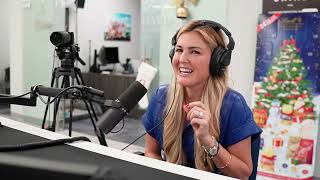
In this episode of Greg’s Got You Covered, host Gregg Blanchard interviews Stephanie Marinucci, a former teacher and principal turned high‑end real‑estate agent in South Florida. The conversation begins with Greg recounting how he joined the Warrior coaching network, met Joe Marinucci, and was introduced to Stephanie. Stephanie shares her personal story: born in New Jersey, she pursued a career in education, became a charter‑school principal in Palm Beach Gardens, and after a divorce pivoted to real‑estate through a friend’s referral, starting in rentals before moving into luxury sales. They discuss their blended family of five children and two “bonus” children, describing how they manage household chaos and parenting roles. Stephanie explains how she built a referral‑driven business (70‑75% referrals), the importance of a “power team” of lenders and insurers, and her use of AI tools like the Simple program to automate tasks. Greg and Stephanie talk about branding, social‑media presence, a forthcoming Netflix‑style show, and the extra mile she goes (e.g., cleaning homes before closing). They examine post‑COVID luxury market trends in Florida, noting buyer demand for turnkey, updated homes, a rise in cash purchases (≈30%), and the importance of community knowledge. The interview also covers goal‑setting practices, budgeting, networking, and client anecdotes that illustrate unexpected challenges. Finally, they reflect on the role of faith in their personal and professional lives, describing nightly family prayers and how spirituality supports them through challenges. The episode ends with gratitude, contact information, and a teaser for future educational sessions.
Chapters
All right, welcome to Greg's Got You Covered. This is another episode, and our special guest today is Stephanie Marinucci. She's the wife of my good friend Joe Marinucci. So I'm going to back up. Um, let me, let me tell you how this adventure had started for me. So I joined Warrior in October of last year, and unbeknownst to me, I had no idea who Joe was. Had no clue. And this podcast isn't about Joe, it's about you, but I wanted to make the introduction on how this— do you even know the story how this thing happened or no? Oh, you don't? Oh, so this is new to you. So by the way, thank you for coming. So I joined Warrior because Justin Harkleroad has been in Warrior for since since 2016. He happened to be an Allstate Insurance agency owner that started the month before I did in 2007. Many, many years ago. We're talking 18 years ago. He had exited the business about 6 years ago, I think, and started to do some things in the tech space and he did coaching and things like that. But he'd been in Warrior and then he'd been out of Warrior. So that's kind of what his journey has been. He and I were speaking at a conference in June of last year. And I noticed a difference in him. He was carrying himself different. He was just confident. He was determined. He had clarity. And I'm like, man, Justin, what's going on with you? What's the change? And he said to me, Warrior has changed. It's evolved. They're no longer punching each other in the face, rolling around in the sand like a bunch of 2-year-olds. Right? And you probably heard the stories of what Joe did in Warrior from the old days, right? I have something very similar to that. And back then, and when I heard about that, I'm like, there's no way I'm going to go out there at the age of— at that time I was probably— I was just turned 50. Was I going to go out and get punched in the face and roll around in sand like a bunch of Navy SEALs? I'm like, I'm too old for that shit, right? I said, yeah, man, I was looking for something different at that time. Things were very comfortable for me. You know, I've got the agency running on automatic pilot. I just needed a challenge. I remember telling my wife Jennifer, man, I'm kind of bored. And when I'm bored, that's a big problem.
Yeah, of course.
So along came Warrior, and I said, sign me up. So literally 2 days later, I get on the phone, or actually I get on a Zoom call, not with Coach, but one of the guys, Daniel, that was the guy that brought me on. And literally in 24 hours, I wired the guy an exorbitant amount of money to be into Warrior. And the first week I got into it, I'm like, what did I do? This is like, what am I got going on? So fast forward, I think at one of the breakout events, I met Joe and he had told me where he was from. And I said, "Wait a minute, you're from Jupiter?" He's like, "Yeah." I said, "Okay." And I started naming off some people and the first person I said was John Boyer. I said, "You know John Boyer?" He's like, "Yeah, he's my CPA." I'm like, "Okay." So we were connected, hyperconnected some way, somehow like that. And then to come to find out about his profession, I didn't know that he was the guy behind DMS, and I'd been in with Allstate obviously for 18 years and started to put the pieces of the puzzle together. Okay, lead generation, this is where we buy from, this is the relationship that he has with Allstate at the corporate level, he knows some of the guys that I know at leadership, and then come to find out you guys live literally 10 minutes from me.
Such a small world.
And we knew some of the same people.
Yeah.
And we, he and I bonded And then I found out his birthday is the day after my birthday, which is even crazier, but I'm older than he is. So these whole things kind of connected. And then he's like, hey, you want to come to my wedding party? I'm like, sure.
I remember you at our welcome party.
Yeah, it was your welcome party.
Yes.
So my wife is like, wait a minute, you got invited to a guy you don't even know, to his wife that you don't even know, to go to their wedding party? She's like, that's just the Blanchard way, you know.
You guys were welcomed at the wedding.
Wedding. Oh, we appreciate it.
All the parties.
But that's how the entire situation had— how I met Joe, and how I was so grateful to meet you. Now I know I married you. You're definitely the brains behind the operation.
Oh, thanks, Greg. Really depends on the day and time. We do pretty well together overall.
Yeah, so like, it was really amazing to see Coach officiate, you know, your wedding.
And so, yeah, Garrett did an amazing job. He really brought our kids together. You know, they did a lot of brainstorming and they honestly designed the day. It was, it was, it was really special because of all the things they had to say. I think if they weren't speaking, it would have been a completely different day, to be honest. We just replayed the wedding video.
Oh, you did? Yes, man. I would love to see that wedding video. I really, really would. But like, we talk about Coach a lot just because he's my coach and I've hired other coaches along the period of time. And I know Joe and him have a special bond and Jen says the same thing to Waylon. All of a sudden he's your best friend. Well, it's not. It's your— he's your coach. Now, there's a lot of things that maybe we don't agree with, the way he lives his life, but I'm not there to judge anything or anybody. I just know that when I sign up for Warrior, I'm in a room with a group of men that's different. So for you, and you're being married to Joe in your professional life, we talked to— we haven't talked about this yet, but tell me, you know, you started as a principal. Have you always wanted to be a principal, and where did you come from Were you born in the States? Were you born in Florida? What's your background?
So I was born in New Jersey. I did always want to be a principal. I love kids. I really enjoyed my time working in the schools. And I started as a teacher and then I kind of moved up through the rankings. I was a principal actually toward the end of my career in Palm Beach Gardens. Oh, at, um, middle school or Franklin Academy. It was a K-8 school, which was really nice. When I had gotten there, they were just opening. So there was definitely a lot of learning and a lot of new families to the area, which was really special.
Is that a charter school?
It is. It's a charter school in Palm Beach Gardens. It was actually one of the first charter schools here.
I remember.
And they had a really great model. They started actually as a single gender in each classroom, and then that changed throughout the, throughout the years. But they do a great job with, with the education system in Florida.
So always wanted to be a teacher. Can you remember that as being, being a little girl? You always wanted to be a teacher. Is that what your passion was?
Yeah, I loved kids. So maybe not necessarily a teacher. My passion was to open my own school, something I still would like to very much think about doing. But I just, I love watching the growth of children, whether it's, you know, at a pre-K level. I actually, my first job teaching was 31 kindergartners. I had no idea what was happening. I was student teaching and my teacher went into early labor and then I showed up day 2 and they're like, you have just been You're promoted and you are in charge of all of them. So I learned really quick, but it was really nice. I went to school at Drexel University. And so my first teaching job was in inner city Philadelphia, charter school over there as well.
So they threw you right in the deep end.
They did.
They did.
Yeah.
But that probably gave you a lot of insight as to how different demographics learn and—
Yeah, absolutely.
How people are brought up in different areas and things like that, right?
Yeah, I thought it was super helpful. And it also led me into wanting to get my master's degree in specific things with reading and language. I'm also Cuban, so mostly in my household Spanish was spoken growing up.
So, so, tu hablas español?
Sí, mucho español. So, so, yeah, so a lot of it was, it was really important to me to start where I started. And then I moved actually back to my hometown and I was teaching there for a few years as well.
So tell me, how— what brought you to Florida from New Jersey? Like everybody else, the cold weather?
For sure. I had had it with the cold weather. And, um, at the time I just felt like there was going to be more opportunity here for my boys later on. I thought they'd be able to be outside more and just, you know, it was always a goal of mine to be in, in Florida.
So talk about your family. How many How many children do you have and how many— what's the word— bonus children do you have?
So we are a family of 5 children, 2 bonus children, and it's his, hers, ours. So Joe, my husband, had 2 children and then I had 2 children and then we have ours, which Isla.
Isla's your youngest.
Yes. And honestly, we have so much fun, all of us together. It's funny how they just all love each other, and they all just love torturing Joe and I at the same time.
Yeah, so I had the privilege of going to your house. I don't even know what one of the nights was. His sister was in town, and his brother-in-law was in town, right? I mean—
Yeah, everybody was in town.
His brother-in-law is from England or something? Or remember the storm? There was a storm that night.
He's from South Africa.
Okay. There was a storm that night. Everybody's in the pool. There's lightning. I'm like, "Okay, this is kind of normal." 'Cause I'm used to it. You may or may not know this, but I'm one of 19 children.
Wow, I did not know that.
You did not know that. So it's an interesting fact about myself. But me too, we have his horrors and ours, kind of the same thing. We have 6, you've got 5, but the chaos that ensues at that level is completely crazy.
Yeah, I love it.
Yeah, it's the best. But I remember what was great about seeing your family interact with each other. There's craziness going on, you're yelling at your mom, you're yelling at your grandma, This guy over here is sneaking a drink of alcohol. He's underage, one of the young boys. And I'm like, I didn't see that. And your daughter is running around, and then you got the nanny here. So it was like controlled chaos. But I could tell there was so much love and energy in that room. And some people can't handle that. How do you guys handle all that chaos?
Well, I like chaos. I try to keep some order to the chaos if at all possible. Joe is not a fan of the chaos. So I think we just come together and just kind of know where we're both comfortable. And I can always tell when he's getting to his point where he's ready to pop. Yeah. Where he's ready, like he needs a walk. So I'm like, you know, feel free to like take a walk. You know, it is a lot when my family comes to town. I mean, we're a pretty big Cuban family. You know, they're used to just like popping in as a surprise. Whereas Joe's family always calls or, you know, checks in very structured 10 or 15 times before they come over. I'm like, it's an open door. You guys can come anytime. Um, so there is, there is that, which is definitely apparent in Joe and my personalities. Um, but yeah, we just try to work it together. Um, and you know, speak to the kids cuz there is boundaries and they do have to be respectful. And obviously one thing about being a blended family is you have different boundaries, right? And you've been doing this for a little bit now. So when Joe and I came together, you know, Charlie was the youngest and she was 6. Um, now Charlie's, 10. Yeah, so, you know, there's just— there's different things to it now. Caden's turning 17 tomorrow. He's the oldest. Um, so, you know, Caden was also younger, so we're able to have more of those adult mature conversations with like, this is all of our space, but we also have to be respectful of, you know, the difference in our personalities, you know. So the kids know, like, if Joe's away, we have like a crazy night. Like, there's like music outside. I mean They pretty much invite whoever they want over.
And it's not a big deal.
No, it's just so much fun. I order whatever, like, food's being ordered.
See how late you want to stay up, watch whatever movies you want.
We're watching movies together downstairs. It's just so much fun. There's like, all the chaos is in different rooms. It's all happening and it's great.
So is there a good cop and a bad cop between the parenting styles?
I'm definitely the bad cop.
Okay, you are.
Almost all the time. Okay. I'm always the one that's just like, I love you, but we're not doing that. Okay.
Someone's got to put the hammer down, right?
Yeah. Joe will usually tell me.
Okay.
Like there was one time he took all the kids and the two dogs to the airport and he thought that was a really great idea. And I actually stayed back because I had to, um, work. And he calls me on the phone and he's like, I cannot do this. I'm like, okay, well what's the problem? And he's like, all these kids right now, they're literally tormenting each other on purpose to drive me crazy. He's like, and then they're trying to do some weird thing to the dog to get the dog to go nuts in the airport. I'm like, okay, can you just tell them to stop it? He's like, no, they need to speak to you immediately. I'm putting you on speakerphone. So he puts me on speaker with the kids, and I pretty much said like, if you don't cut it out, I'm going to kill you when I see you. Like, I just tell them they're gonna lose it all, like it's gone.
Yeah, so that, that just is, um, typical in our household too, but I think the, the good cop, the bad cop, sometimes that takes place. But I mean, having uniformity sometimes, you know, helps, you know, what you guys are doing for vacations or education or the way you plan dates and things like that. So we happen to share, you know, graciously, Elena, who's one of your nannies, which is great. Thank you for referring over to her.
Yeah, we love it.
So talk about, like, I know that you're very successful. We're going to get into the career side of things, but how are you successful when you're with Joe? Is there time, date night? How do you guys make your relationship flow to where— every relationship's difficult, but when are you in that space to where Joe's my man, we've got this, we can conquer the world together? Is it date night? Is it walk and talks? No, we talked about that. But I mean, how do you guys get away time like that? And how does that affect your relationship? Do you guys have meetings, like family meetings, where you get together and you talk about different types of things? What does that look like in your world?
So we actually do have family meetings for the children. Um, which is nice. And we do weekly recaps often. Oh, um, we do that with, um, more of the older kids at this point, just like weekly recaps with where they're at with school and everything. So Joe and I do, um, sit for those together. Um, we also plan on a big-ass calendar.
Oh, okay, the one that Jesse's got.
Yeah, we love, we love Jesse. So we have it, it's, it's actually in the middle of the house pretty much where it is. Um, it's this hallway that you just can't miss it. So a lot of times, like, the kids will add to it, we'll add to it. We actually go to the calendar together and we'll go over different things. It, it just, you know, naturally, because there's so many people and things move so quickly, you know, it's hard to always adjust with it. But we do, we do a lot of goal planning together, Joe and I, which is really nice. Um, you know, planning with him has definitely helped my business this year, I would say, because he's definitely one of my biggest cheerleaders. Yeah, you know, I'll always give him like my ideas and then it seems like he's ignoring me, but like 3 days later he gives me like a printed out plan of like next steps. Um, so I would say there's a lot of planning. We do have date nights regularly. We really try not to talk so much about work on date nights. Yeah. Um, we were finding that we were going on date nights and chatting about work a lot, and it just like was all the things that you kind of want a break from. So it was like kids, work, got to disconnect, right? So sometimes we talk about on date nights like things we want to do, funny stories, things that have happened, um, things that went really well in the week. You know, last week we had a great week with, um, with the kids. Isla sat through her first full movie, which was a big deal.
And she's 3 or 2?
She's 2 and a half.
2 and a half now, right? That's difficult for a 2 and a half year old.
Yeah. So I mean, just like things we've survived or like made it through, more, more positives for sure.
Yeah, no, that's great. So talking about your business, so tell me, so you left New Jersey, you came to Florida, and then where was the shift professionally where you said, okay, I love teaching. I don't know if it was a monetary thing or if it was, hey, I wanted to do more of running my own business. Where was the inflection point for you to be able to, okay, I want to make a transition into real estate and how do I go about this?
So I was going through a divorce, so, you know, a pretty big life change. And I knew that I was going to have to figure out how to support my kids in, in the manner I wanted to be able to provide for them. And so I, I have a good friend of mine and she is an entrepreneur. She's built many businesses and I was over her house having a glass of wine and she was like, what are you going to do next? And I was like, well, what do you think I can do where I can just still work with people and at the same time make the amount of money that I want to make? Like, I don't even know what that amount was at the time. It could have been like I don't even know what it was. It was just basically like, I want to be able to make more than I'm going to make in teaching, because oftentimes in teaching jobs there's pensions and there's scales and there's steps, which is great because it gives you amazing job security.
But there's usually a ceiling, right?
Yeah, there is a ceiling. And for me at the time, because of everything that was transitioning in my life, the ceiling was, was not going to work. It was not going to be an option.
Gotcha.
So she suggested, she's like, hey, I have a neighbor, she's in real estate. You know, she's just starting a girls team. I think you'd be great. Why don't you look into real estate? She's like, you're always— I would always send her random— she, she builds daycares and I would always send her random like buildings or areas for her daycares. And she's like, Steph, it's the same exact thing. You're just doing residential homes. You love real estate. So I just— that's how I started. I actually started in a rental office.
They pretty much did rentals only.
I mean, that's pretty much what I was doing. Sure.
Because everybody was going to cut your teeth somewhere, right?
Everybody was already there in place. So it was pretty much what was available to me.
So I had a past in real estate. I had 7 real estate offices with my brother and partner. I got my real estate license too. So one thing that I don't miss about real estate is trying to be a mediator, a psychologist. Right? This is true. All those different types of things. Oh, and by the way, you have to be on call 24 hours a day, 7 days a week, like literally. And your phone is I know it's— thank you for not answering it during the podcast, but I know that you're glued to it all the time because that's your lifeline and that's your business.
Yeah.
How do you create a life-work balance when you're always on 24 hours a day, literally 7 days a week? And then the second part of that question is, how do you work in an environment where you have somebody across the table who's working on a real estate transaction with you that's not as competent and can't get anybody to the closing table? You've probably saved deals quite often, like I had to go through, that right there would scare the living shit out of me because nothing that I did, we couldn't close the deal, but I felt like I was picking everybody else's pieces up. So that's a two-part question.
So I think to answer the first part, I think you just have to be flexible and you probably also have to have a positive mindset most of the time. I mean, for example, this weekend, my— we had— we just celebrated our year anniversary and we weren't supposed to go away because I did have clients in town. And so my husband surprised me with taking our boat to Fort Lauderdale. And I was really excited about that because it didn't feel like I was too far, too far away.
So it was within striking distance, right? Yeah.
So I was okay. So it was, it was actually pretty funny because on my way back, my clients called me and we're like in the middle of the ocean and they're like, we want to see a house before we leave tonight.
And you couldn't like— I remember Joe told me you guys going to the Bahamas. We're like, we're not going to the Bahamas. Remember you told me that?
I was very overwhelmed by going to the Bahamas this weekend.
You wouldn't be able to come back in time to be able to show that property, correct?
No, I would not have been. So, so basically it was like it started raining as we're on the boat back. So we get back, it's, it's downpouring, and I ran off the boat. I was like, you know, Joe was like, it's fine, I'll pack everything up, forgetting that he didn't have a car at the marina. Ubered there, right, right, um, because I was also, um, arriving there from showing. And so I literally changed, like had one professional, like, dress to put on. Yeah, changed, ran off the boat and got to my client. I mean, it was— I just made it to them. And that day, like yesterday, pretty much was then 4 more showings. I didn't end up getting home till 8:30.
With the same— with the same client?
No.
Oh, different clients.
Another client then called me. Oh, want to see something else on the fly. So I ended up having to show 3 more properties.
So I would— your intuition that might have told you, hey, this is kind of where my beacon is right now. But yeah, I think that's the one. Real estate's an amazing industry. I mean, I've, as you know, you guys are the lifeblood and that's how you help support our business. Because if you get to the closing table more often than not on mortgage deals, you need insurance, right? So that's why it's a natural.
It's nice to work together.
Yeah.
Because a lot of people, you know, they really want to see their whole picture. When they're, when they're putting a transaction together, you know, they want to understand the taxes and they want to understand the insurance. And, you know, a lot of people don't understand that depending on what you purchase, some things are already insured more than others, you know, and there is obviously interior dwelling policies that you're going to purchase. So it's super helpful to have, you know, resources and people like you guys to work alongside us to just, you know, get them all of that information.
Yeah. So Speaking about a symbiotic relationship, we call them power teams. So you've got real estate, you've got lending, and then you've got insurance. All those people have to be in concert with each other in order to get deals done, right? So we are fortunate enough to be able to work together on a lot of different transactions that we've done. What is one thing that real estate agents don't really realize about those power teams? Do you think that they all have their same go-to people in that vertical? Or do you think because of RESPA rules that they'd say, okay, here's 3 people, go ahead and shop it to yourself? Because I know you, I know that you're very specific on where you send your clients to because just like with me, you want white glove service.
Of course.
So do you think that that plays a major role in why customers trust you so much because you're a great resource?
Absolutely. I think we're, you know, we're a full concierge service in a lot of different ways. You know, if we have an investor that's buying a property, they're going to follow through with us. Most often we're the people that are renting it for them. And, you know, we're always there to help. And I do think it's really important to have those people around you when you are in real estate because it's really providing a different level of service for your clientele.
Yeah, I mean, you definitely want to come in clutch because there are things that— like, I'll give you, for instance, last night I decided to buy a red light sauna. For my house, just on a whim, just like that, because I think at 56 I need to get recovery quicker. But that's a different, different story. But, um, so I shopped online, I got recommendations from Coach Carter, and I called 3 different places. The last place that I called, the gentleman picked up the phone after hours at 8:30 at night. I wound up spending around $10,000 on a red light sauna, but it's the way he spoke to me, the fact that he answered the questions that I had and that's personal level service. I know after the reviews that I read and after speaking to them, he immediately built trust with me. So I think it's the same thing, you know, in our industry. So kind of lead me to the next question. What percentage of your business in the real estate business, by the way, are you getting from referral?
I'm probably around 70 to 75% referrals. I have a lot of original business or people that I still work with from when I started real estate 8 years ago.
Yeah. So, so those listeners that are out there that are in the real estate business or any business just in general, I think that's one of the most underappreciated parts of the business now. Like I tell my team all the time, every single Friday, you need to write out a thank you card to your customers that had bought insurance from you, whether it be a renter's policy or if they bought a big homeowner's insurance policy. To be able to touch them and say thank you for the purchase and putting you in good hands. So, you know, it's so important.
They don't really always want to talk about real estate or insurance. I'm sure they don't. Sometimes they just want you to say hello.
That's right.
I have a client that she canceled on her purchase a month ago because it wasn't going to work for them. And I just texted her the other day and dropped her off a pie like, hey, how are you guys? You know, how's it going? You know, and we, we planned a night out. You know, sometimes people— you meet different people through real estate and insurance and just working with people.
Sure.
And it's nice because sometimes you connect with them because it's—
because it's timing, right?
Yeah.
It might not be— not right now, not now, but it might be in the future. But I think, and especially in the real estate business, you have to nurture those relationships because what's the old number? Every 7 years somebody buys a new home.
Yeah.
And they're going to call you back. I remember speaking to a couple of agents that have sold multiple generations of homes to families because they had so much trust in that real estate agent.
Yeah, I have a family like that. Everything they do, they call me. If it's, if it's not within Florida, they want their, they want the referral. They work with me for everything. They're the, they're the sweetest family and they're very loyal. But we talk about everything and anything. They, I mean, they call me when they're not purchasing and just ask me questions, you know, because they become, they become friends. Yeah, of course.
I mean, you're, you're helping You're in high-end real estate now. Is that kind of where you're at now?
Yes.
So in the high net worth real estate industry, is there a big separation between somebody that affords a million-dollar house versus a $10 million house? Because people are people, right? Do you find that there is any type of existing preconditions to where they think that they don't need a real estate agent because they know it all and they've been very successful, or is there a difference between a purchase price at $1 million, the way that people treat you as a real estate agent? Do you get any dissension about that?
To be honest, as you get into the higher price point, they definitely want some representation.
Okay.
You know, and there's obviously attorneys involved, you know, so they are kind of working— they're working through all the details of everything. So they do want representation most oftentimes, I find.
Okay.
I mean, the million-dollar point— I mean, the thing is, like, people don't even know the things they don't understand. Right when it comes to real estate. Like Zillow is such a good example.
Okay.
How many people call Zillow and they think they're going to get the listing agent or they think they're going to schedule online and just walk the property by themselves? I mean, there's so many different things out there now, you know, and people just don't really understand real estate, in my opinion, fully. I mean, when I talk to anybody, you know, whether it be like a cold lead or Zillow or somebody that's connecting my phone, I'm always really clear with them. You know, are you working with another agent? You know, I would be working with you. I'd love to work with you, you know, and these are all the reasons you should work with me or give me a shot. But I want to earn their business. You know, they don't have to stay married to me if they do not feel like it's a healthy relationship. Right. Because, you know, we're providing a service. So, I mean, you're supposed to be happy and enjoying the service, you know, enjoying the opportunity.
I mean, this is something that's a dream home for a lot of people, and sometimes it's their first home or Maybe it's the home that it's going to be the retirement home that they're going to die in. But we don't know what it is. But I think asking those questions and uncovering their why is important, right?
Yeah, it really is. It's, it's nice to create, you know, the stories because you are part of designing the story for them. So, I mean, I love showing people different places at all price points, to be honest. I have a great time and it keeps me sharp. Like sometimes, you know, I'm at a point where I have a lot of listings So I don't always get as much time with my buyers, but I still schedule it in because I love knowing the neighborhoods, knowing what's changing, and you can just see how everything's growing around you and everything does, you know, there is change.
So speaking of change, that's a great segue. So, AI, right? My wife is afraid of it. She thinks it's my best friend now, which it probably is. My AI named itself Eli, believe it or not. It gave itself his own name. I wanted to know, how has AI affected your business and do you see your business changing the future with AI? It's going to affect all businesses, but what specifically in the real estate world do you see, or how is AI going to change your business? Are you afraid of AI or do you think it's going to be a tool?
No, I think it'll be a tool.
Okay.
And we use AI. So one of the things developed at my brokerage that I love is a program called Simple, and it is definitely using AI. There's certain things that you can get done, tasks that you don't necessarily need to be a part of, that you can pretty much just ask them, say the command, and it all gets done to you. Automated to the email, schedules all your appointments. So it does really help us stay ahead because a lot of times you're just, you're wasting time. It's, it's not, it's not a productive activity, is what I'm saying.
Sure. I think it's the same thing for like the insurance business too, because I think people still want to buy from people because what you sell is probably the biggest ticket purchase they're going to buy in their lifetime, which is their home, their homestead. I mean, it's their home. And our job in insurance is to protect that home. So just like your attorney or your priest or your pastor, your rabbi or your doctor, that one-on-one relationship is extremely important to the relationship so you have trust in that individual. So I think that AI will be an important part of what we do, but it's going to automate and it's going to allow our teams to do things so much quicker. Maybe evaluate market trends or I don't know what it is in real estate now, but I know what it is in insurance.
That's what we can use it for. All of those different things.
So you're in real estate now. What is the— I guess what is the difference now between the firm that you're at now? Because we don't have to say it on here who the firm is. And the firm you were before, because I have noticed an increase in exposure at the new firm that you're at now. You have such a social presence in social media, and there's, there's something to be said about representing a brand, and you take a lot of pride in it. But you're, you're humble because I remember watching one of your social posts where you're actually cleaning up one of the houses before our closing, and I'm like, yes, wow, this Stephanie's a grinder, and she's just— she would do something that I would do. I would go above and beyond to make sure that that home is spectacular for when those people come and either view or close on it, whatever the case may be. And here you are cleaning up this house. So yeah, talk to me about the brand that you represent and why it's so important to do those additional final touches. And you went above and beyond for that client. Yeah.
So I, I, I do, I do think our brand really helps with exposure and presence. Um, obviously we're, um, about to have season 2 of a Netflix show. Which is definitely going to help with exposure. We actually have the premiere this week, this weekend.
Are you, are you, are you going to be on the Netflix?
I don't know if they actually did film. They did this season in Miami. Oh cool. Um, so I was at the few events. I don't know that I'm specifically on it. Okay. Um, because they did film in the Keys as well, and some of those times or when they were filming, I was unavailable because I was working.
But, um, okay.
But yeah, they, they are definitely doing some Florida stuff. I think it's one one of the episodes, which is going to be really cool.
So let me ask you this question. Can you share a unique story or an experience that happened with a client as it involves a real estate transaction? Because I've got plenty of them. I've got some funny stories from when I was in real estate. But you might have something you're like, am I— is it a dream or is it a nightmare? Is there anything interesting you can recall that might be PG-rated for our audience? Maybe, maybe not. I don't know.
I mean, there's just—
I mean, crazy stories, right?
You just never know, really. I mean, like that house I was cleaning out, like that was supposed to be a cleaned house.
Yeah.
And, um, they actually ran, um, a pest control company out of the front of that house. It was a waterfront home.
Oh, really?
Yeah. And so everything was left there in the house. So we were— I was trying to figure out what these things were. There was like traps and boxes of them, mouse traps and things like that.
Yeah.
There was so many different things there, I couldn't even figure out what it was. And then I went up to the attic, and the attic was like a winter wonderland of like little mini figures and dolls perfectly placed. It was like, I mean, it was an original owner, and then obviously, you know, his family took it over. And yeah, it was just a, it was a big surprise when I got that text message in the morning saying, we're not gonna make it there, we're gonna leave everything in the house.
Just— and you're like, what do I do with it all? Like, what?
I was pretty much like, I have 3 hours to clean this whole place out because my client was very much bringing things into the house in 3 hours.
Sure.
Um, but I mean, you just never know. I actually have another funny story now that I think about it. I closed on a house, and, um, so the new family got there. Um, I got them a basket as well. I was representing both the buyer and the seller, and they call me In like 40 minutes, the husband calls me and he's like, Stephanie, I just went back to the house and, um, there's a bunch of ladies at our pool.
I'm like, what, hanging out at the pool?
Yeah. And he's like, he's like, yeah, they're just hanging out, there's music, um, you know, they have like books out and they brought a cooler. I'm like, let me, let me call the owner and find out for you. And that was like, that was the, um, the house in the neighborhood where they had like their weekly book or book club of the month or whatever it is.
Yeah.
So that was the day for their book club. And I guess she forgot to tell them that she sold her house. So this husband, she's like, hello, like absolutely terrified when he called me. He's like, can you come right now, please? I think you should go over. I mean, there's just— I mean, you just never know. I mean, that's one of the funnier things that obviously has occurred.
So we talked about goal setting before, and you said that you work with Joe on your goal setting. When you go into a new year, do you like do a vision board? How do you get yourself ready for the goals that you want to achieve for yourself? Because let's face it, you are an independent contractor, you're a 1099. Like, so what you produce is what you keep, and what you sell is what you, you know, you, you bring home. And, and there's expenses and marketing and all these different things that have to come into play. So how do you, how do you, do you start every year with a budget? How do you arrive at the the volume that you want to do? What are your goals for 2026? So how does that work for you?
I have a spreadsheet of, you know, obviously expenses from the year.
Sure, sure.
And then I map around those expenses and then just coming up with— I always obviously want to grow my business. I never want to kind of—
sure, you don't want to shrink.
So it's just thinking of creative ideas on how to do that. And it's oftentimes just looking at, like you said, you know, what are how are you getting your business, you know? So obviously I do a lot of referrals. I do work with Zillow as well. Um, I do some cold calling, but it is not the thing I do most or often enough. Um, so there's just like different things, you know. Obviously social media is a play for people as well. I just, I find that I like to be around people. So usually, you know, if we're out and about, I try to go to networking functions. I— there's a few different charities I like to be a part of where you can really meet people.
Yeah.
And then as we're— as we have listings in certain communities, just getting used, comfortable with the— with the community. And sometimes we'll leave things within the community. I mean, it's just— you just have to be creative.
Yeah.
It's like I always sit back and I'm like, what could I have done differently? For example, next year I'm already, um, thinking about— I need to start cold calling, or calling. I need to basically start like touching base with people when I have listings in the neighborhood.
Got it.
Because oftentimes we'll call and we'll be Oh, you have your neighbor's house, you know, and we'll have great conversations. But then you just get caught up in it all. And, you know, there's not always that like follow-up where maybe somebody asked you a question or somebody maybe just wanted to hear about how, how the sale goes, you know. So I think there's a lot of that that can be done better. But this is where a lot of our, a lot of our tech is helpful.
Sure. You know, sometimes you have to get back to the basics, right?
Yeah.
Yeah.
Managing your CRM.
Yeah. Your farm area.
Yeah.
Market updates. I remember doing the market update, and every nosy neighbor wants to know what that house is selling for. I mean, but those types of true and tried methods, I think, will never go away. Direct mail, right? That's one of the things.
I think these are all great.
They're all great ideas.
I have buyers often that are looking for something that I can't find, and I love— I love the process.
It's like a treasure hunt, right?
Of looking for—
it's like a treasure hunt.
It's literally my favorite thing. So I do, believe it or not, I'll get a lot of clients doing that because I'll, I'll sometimes send, oftentimes handwritten letters. I will sit like on Property Appraiser forever and just like find the perfect property, or on the MLS I look through like anything expired, canceled, withdrawn, anything sold within the past 3 years. I'll like backtrack it in the community to see if they're— if they even have any interest for what my client's needs are. Got it. So it just—
it's—
there's so many ways in real estate to build business if you actually want to do it. But you got to put in the time.
You got to put in the work, right?
Yeah.
No, no, nobody's coming to save you. Nobody's going to do the work for you.
Yeah.
So what trends have you— is there any trends that you've seen in the luxury real estate market? I mean, if you think about post-COVID, right, we went completely nuts. It reminded me of when I was in business back in 2001 to 2006 and we had that run. But that was different. That was mortgage guys that are just committing fraud all over the place and putting people in homes they couldn't afford. So that was different than post-COVID. There was such a surge, especially in Florida. Even more people came down from historically the Northeast to be able to settle down in Florida for a lot of reasons, right? The weather, the income tax situation, all those different types of things. So is there any trends that you're starting to notice inside the real estate, luxury real estate market? Are people still going after the mega mansions or downsizing, or are they more seasonal now?
I mean, I would say obviously single-family homes are still You know, they're very resilient. They're, you know, it's still something that people are looking for. But I do think that in general, people want more turnkey now. They're looking for homes that are done, ready to go, like updated.
They don't want to go through the work.
Yeah, absolutely.
Will they pay a premium for that?
They will. In our market, they will. And I think that has to do with the, you know, obviously it has to do with the interest rates too, because depending on what price point you're in, if you're, you know, in that million-dollar or $2 million, you know, you're really trying to find the perfect thing while also balancing out the interest rates.
Sure. Sure.
So that is something to take into account. Some people can't get the house or the size or the neighborhood they need and still have money left over to do work. The other thing is people don't like the unexpected or the wait time. You know, we have a lot of people that are coming from out of state, so they want to be able to move into their property. You know, we also have very interesting trends with rentals because, you know, we do have seasonal market for rentals. So, you know, it's, it's difficult sometimes for people to buy a home and find a rental at the same time and be able, you know, to get all the construction done on the, you know, the time or whatever.
Yeah.
So I mean, there's, there's just a lot of different things, you know, and some people don't want to go through permitting or zoning or they'd rather avoid the hassle. Yeah. So I do think, you know, looking at more houses with buyers, people are definitely looking for things that are, are done.
So with that being said, are you— how would I— what's a great way to frame this? Are— what percentage of your transactions are cash purchases, would you say?
So this year I had a lot of cash purchases. I would probably say more than the previous years.
Really? Yeah. So would you say that 30% of your business is cash purchase? 50%? Is it a bigger number than that?
I would probably say it's probably around 30%. Maybe, maybe slightly higher than 30%.
So those transactions, they don't need a lender. So you're kind of avoiding the entire, you know, interest rate, right, situation, right?
Yeah. And some— and sometimes people, you know, do it through their private banks as well.
I mean, there's, there's a lot of different things, different strategies they use to do it.
Yes.
They might want to put the property in the name of the business or LLC or a trust.
Yeah. Some people are rushing to get properties now, end of year.
Sure. Yeah, for the write-offs and things like that. It makes a lot of sense.
Yeah. So it's just all different things.
Yeah. So let me ask you this question. What advice would you give to somebody entering the high-end real estate market and for a buyer that would be a good strategy for them to enable them to get with the right real estate agent to get their dream home? Is it, hey, I need to start looking a year out? Do I need to make sure my financials are in order 60, 90 days before the close? Like what are some of the things you can recommend to a buyer when they meet you for the first time? Because I would assume that some people that meet you for the first time know exactly what they want and they're not resilient, or other people have no idea where to start. So what, what preliminary work should a buyer do before they kind of think about purchasing a home in our market?
I mean, I definitely think they should have spoken to somebody, a financial advisor, lender, you know, have an idea of you know, what they'll be able to afford or where they would like to be comfortable. Um, I also think just getting familiar with our area— there's a lot of hidden pockets, hidden gems to this area. And, you know, it's nice to have the time to breathe and look at them. You know, one of the things I love about taking buyers out is I show them everything. Yeah, you know, you, you found it, we found it, great. Let's just make sure. Let's look at a few more things, you know, just because you want to be sure. Because Sometimes, I mean, you get to a new area and you just don't know it. There's like—
you're right. Like, you could go from Admiral's Cove, right, to Palm Beach Country Estates.
It's true.
And then you're in the Sanctuary. So all— you're right, all these different pockets have these little— I guess they're, they're, they're communities inside of the community because they're, they're, they have a different feel to them, right?
I was going to say, and they're all— everything's put together so differently here. Like, you have communities where you can get an acre and you can be gated and you have no amenities. Then you can have communities where you can have a full tiki bar but you're not paying club dues, you know. So it's really nice to know that when you're, when you're getting here. And it— and sometimes you don't necessarily know that by just shopping around, you know. You're not going to look at Zillow or realtor.com and necessarily have an understanding for the lay of the land here. So I do think it's nice to just look around, experience some of our local areas, and, and kind of see where you want to be. Because there is a difference.
Yeah. So I'm going to shift gears on here for a minute because I've been closer to kind of my faith over the past year and a half. What type of role does faith play inside of your personal and your professional life? Do you have conversations with God? I don't know if you're spiritual or not, but do you lean on faith in order to get you through some difficult times in business or some chimes with the family? Challenges just with life in general? Because I know for me, I've kind of turned inward, you know, to seek, you know, some type of assistance and ask for it. I always knew that God was there and he was knocking at the door. I just never opened the window, right? So does this faith play a part in the way you guys, you know, run your family and your life and just, you know, your business in general?
I mean, faith has always been a large part of, of my life. You know, it's gotten me through many many changes, um, and many hard times. You know, not everything's always easy. You know, you, you definitely have to work through things, and you have to survive sometimes, right? Like, sometimes you just have to get through it. Um, so I definitely do a lot of different things. I mean, Joe and I pray every night, which is really nice. It's something that we've recently just started.
And I didn't know that. I was just asking that question just to understand more. But that's, that's— does your— do you play with trade, uh, Do you pray with the kids at all?
Yes, we do. We pray with the kids, which is really nice. Um, we go to church also on Sundays just because honestly it's just so calming. It is a nice getaway. Um, I am not on my phone, which is really nice, and we're just watching the kids too. Just like disconnecting is great. Um, so I would say I think it really helps Joe and I work through a lot of different things, you know, and it's always nice to just, just be— know someone has your back.
Yeah, right.
You're just like, you're just trying to— we're all just trying to make it, right? Like, one way or the other, we're just, we're just trying to get through it. Um, so I think it does really help because I really do think, like, no matter how hard the situation is, whether it's in my business or whether, you know, it's something going on at home, I really try my best to always see the positive because I there's always a gain, you know? And I tell this to the kids too. I'm like, listen, you think it's really hard right now, and you think we're not being fair, which is fine, but you're gonna look back at this and there is going to be something that you learned. And you still might disagree with us, which is also— it's okay, you know? But the thing is, I think it's so nice to, you know, especially Joe and I, how we've been doing this at night, because it's like we've been praying for things that we didn't even think the other one had on their mind. Like things that we wouldn't know he was thinking about, right? Or I was thinking, sure. So it's, it's really nice, you know. And, um, I've recently, um, I had an amazing client recently, you know, and, um, we've become really close. And they actually pray in the mornings. And I mean, she says it's, it's absolutely amazing.
So it's a game changer for their family.
Yeah, she says it's a game changer. And I could see that for us. Our mornings are just really, really hectic.
Yeah.
So the night is kind of like a, I do my best work at night, to be honest. Like it's just quiet, the phone's not going off, the kids are sleeping.
Kids are sleeping, right? You can focus, things like that.
Yeah, so I would say, you know, faith is really important. I think it's definitely something that keeps us strong and steady even through, you know, the bumpy times.
God's your copilot, that's for sure.
Yeah.
So it's 3:17. I think you had a hard stop at 3:15.
I did.
I wanna be mindful of your time. I just wanted to say how thankful I am, number one, to have you come and spend 45 minutes with us today and to call you a friend. And the fact that you're so successful, I'm so proud of all the work that you've done. You're a grinder. We've spent not a lot of time together, but we've on more than one occasion, we share stories and you and I are very similar. Parts of me is very similar to you and parts of me are very similar to Joe. Yeah, but I think we're a good hybrid like that. But I appreciate you. I thank you for coming in. And where can they find you on Instagram if they want to follow Stephanie Marinucci? What's your Instagram handle?
So Stephanie.Marinucci. Can't— you can't— you can't not find me, pretty much.
So, okay, we're done with this.
Florida, though, is our website.
Sirhan Sells Florida. Okay, well, we are going to do a Lunch and Learn, uh, with your team probably in 2026.
Yeah, that would be great.
Because the more educated you guys are, absolutely, about why you need flood insurance, what's the difference between an HO-3 and an HO-6 policy, you have to have good working knowledge. But we are going to continue our educational session on Greg's Got You Covered. This is episode 2. Thanks, Stephanie, for coming in.
Thanks for having me.
All right.
More from Gregg
Gregg’s Gotcha Covered Podcast Episode 1: Why Power Teams Win in Real Estate, Mortgage & Insurance