Do You Have an Exit Strategy? Develop Your Exit Strategy Before Your Go To Market | Workshop
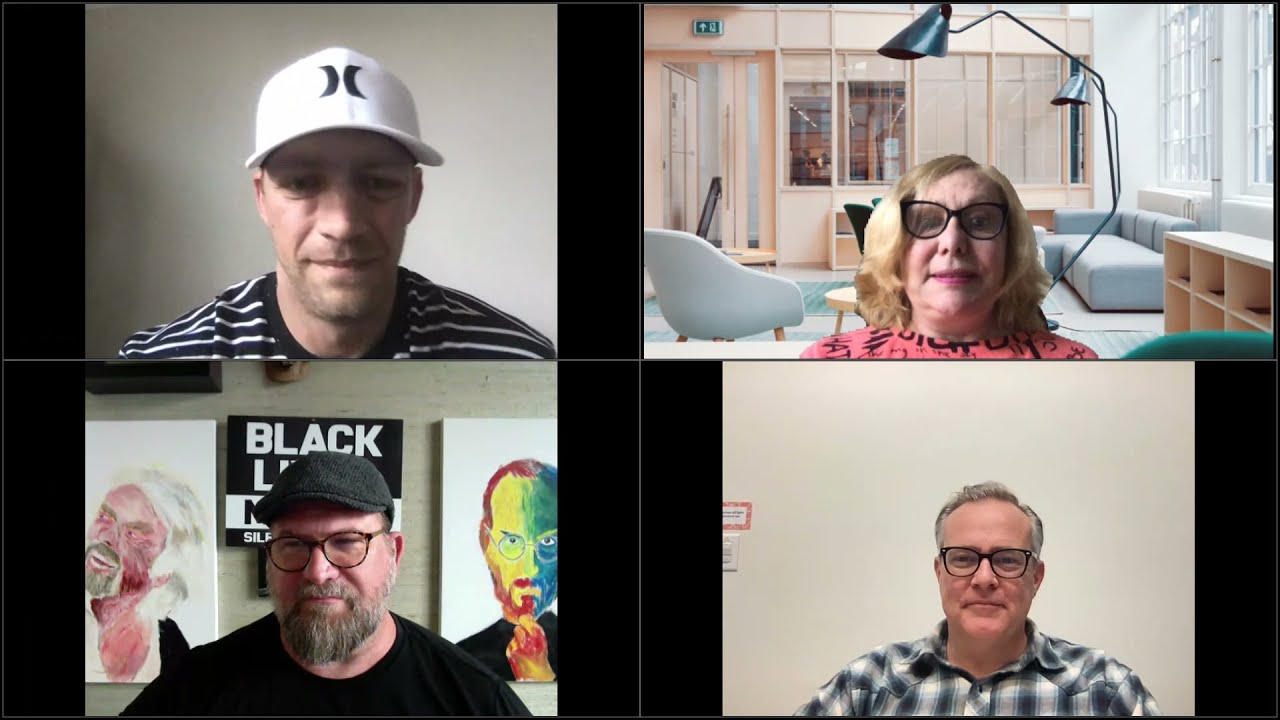
Greg Shepard, Randall Leveaux, and Marty Bickford explain why 99% of founders lack an exit strategy and how to build one before going to market. Define your Ideal Acquirer Profile, understand acquisition thresholds like growth and retention, and treat potential acquirers like customers. You have a 2-3 year window after launch before competitors erode your valuation.
Chapters
So welcome to CINDA's Thought Leadership Thursdays, and it's great to have you back, and it's great to continue this series that we have with Boss Startup Science. But before I introduce that, I do have a couple CINDA announcements. It's already the middle of June, if you can believe it, so Thought Thursdays will go for 2 more weeks. Next week we have IYP Apps on Thought Thursdays, And the last Thursday in June, we have great market research on data protection that we've done with Usercentrics, and it's very, very interesting data. So please join both sessions, and then we're going to go into a summer pause. So in July and August, we're going to pause the Thought Thursdays, and exciting news for everybody, we are going to have the conference in Berlin October October 10th to 13th with the German Association. It is going forward. The board of CINDA, as well as the board of the German Association, decided this week that things are looking up and we're going to go forward, of course, using all health restrictions and abiding by all German laws. But we're really excited to finally see people again in October. And with that, we're also starting opening next week the Digital Marketing and Innovation Awards. So those will be opening up next week for 2021. Both applications, the registration for the conference as well as application for the awards, are on the website. And with that, we'll start this today. So just a quick reminder that you are allowed to ask questions, raise your hand, put it in the chat. We'll get these questions to our guests, and we're continuing the exciting series with our partner, Boss Startup Science. And our guests today are Greg Shepard, who is the CEO of Boss Capital and the innovator of Boss Startup Science, and he has a lot of awards. We've had him in this series. So I won't reintroduce you, Greg, no offense, but I think our members and our audience is starting to know you now. But we're always so excited when you take the time to give us, to join us. And we also have with us Randall. I think our attendees know Randall, the CRO and founder of Boss— co-founder of Boss Capital Partners and Boss Science. Again, Randall, a lot of experience, entrepreneur for many years, and thank you again for taking the time to join us. And Marty Bickford, who is the head of the partnerships for BOSS Startup Science, and we're happy to have Marty as our partner to talk to, to try to develop this program for our audience and our members. And with that, then I'm going to give it right over. Right over to you guys.
Okay.
Thank you.
I'm gonna show my, my screen here. Just one second.
Alright.
And can we see this, Kimberly?
Yeah. Just take my— yes, I can see you. Yep. Wait a minute. Now I can't see it.
Nope.
I saw it for a minute, then I didn't see it. There we go. And if when you put it on full, it's not showing.
Not showing. Okay, no big deal. I will just move this over here. All right, so jumping in, good to see everyone again. My name is Randall Leveaux, and we're excited to continue this growing partnership with Cinda. Today we are focused on a specific section of BOSS Startup Science that has a lot of attention, right? And this is the exit strategy. The reason that we feel the exit strategy is so important is because at BOSS and BOSS Startup Science, we embrace a very important principle, which is beginning with the end in mind. Anyone who's read Stephen Covey's 7 Habits of Highly Effective People may recognize that as the second habit, and we believe it's crucial, especially in startups and entrepreneurship. So what we're gonna cover today is a way through building your exit strategy to realize your personal financial goals, right? As founders, we all start out with a vision and a dream to solve a problem, exploit an opportunity, and hopefully create wealth for ourselves. So this is a main crux of this. Also is to maximize outcome with strategy and decisions. So when you know where you are and you know where you want to go, It's easy to chart the path, and that's what an exit strategy really does for you. Now, what I want to do next is turn it over to Greg. And just for a little backstory, both Greg and I are investors and entrepreneurs. We run an investment syndicate called Boss Capital Partners, and we see a lot of entrepreneurs' deals coming through. So we have a lot of experience with talking to early-stage founders about their companies and their strategies. And one of the most important questions that we ask is around the exit strategy. So Greg, you've had a lot of experience with this from both the investor and the entrepreneur side. What are some of your experiences with people, uh, talking about exit strategy?
Yeah, thanks, Randall. I mean, you know, I can tell you that about 99% of the time I look at a deal— I look at probably 100 deals a month, sometimes more— And about 99.9% of the time, nobody has an exit strategy. So they don't know when, they don't know who, they don't even have the tips of the waves in terms of how they're gonna go about the exit. And so I bring this up. What you see on the screen here are some of the responses that we get from entrepreneurs. I haven't thought about it. I don't worry about it until after I get established. I wanna grow fast and then think about an exit in a few years. It's too early for me. You know, I want to start shopping the company when it's big enough, all this sort of stuff. And the fact of the matter is that most acquisitions are an acquisition because of some sort of a synergy between the acquirer and the person who's being acquired, or the business that's being acquired. What that means most of the time is that the customers are the same customer. So the customer that you have is the same customer as your acquirer. Now, why would that be? It's very simple. Those people, those businesses that acquire other companies have a customer base already. In fact, that's their biggest asset, is having thousands, tens of thousands, or millions of customers. The way that they grow is by increasing the lifetime value to CAC. CAC is customer acquisition cost, which is a ratio. They do that by selling more products to the same customers that they've already paid for. So the customer acquisition cost they paid for to lifetime value goes up when you increase the lifetime value. So they increase the lifetime value by buying other products that their current customers will buy. Now, if you have your ideal customer profile built out in your personas, And then you get down the road and you decide, oh, I'm gonna do this later. You could have a different customer than you're required. And if you do, they're not gonna acquire you. I had this personal experience where I had to get rid of half of my clients, half my customers, and then go back and rebuild because I had the wrong ICP and couldn't drive it to an exit. Now you spend all this money and all this dilution and everything trying to get to that point to find out that you've done something that is almost irreversible. And that's one side of it. The other thing is, is that you can get overvalued. These are just the 2 most common. There's a whole list of these things, but you can get overvalued. What that means is that if you look at the patterns that are associated with the acquirers that you could have in the future, say you went out and said, okay, there's 10 companies I think that would acquire us, and I don't mean Google. That's like saying I visited Europe. It, you know, there's a specific— so Google has a lot of companies, right? So a specific division in one of those giants. But let's say that you say, I'm gonna be acquired by a certain company, and then you look at the behavior patterns, the acquisitions that those companies had made in the past, and what you see is a pattern. And you can see this very clearly. It'll say acquisition $50 million, acquisition $25 million, acquisition $50 million, $70 million, whatever, whatever. What you see is nobody ever acquiring, none of your acquirers ever acquiring a company for more than a certain amount. And then you say, okay, I'm gonna start my rounds out, my valuation of my business at let's say $10 million. What you don't realize is that the investors want about 5 times that. So really what you're saying is you're starting at $50 million. So you may even in your first round overvalue your business. The investors see that. They know that they're not going to be able to make their money back. They're not going to be able to make their margin, and they're going to put their money in a deal that looks like it has the room to get an exit and return the returns that the investor wants. So that's another reason. And yet another reason is because investors want to know when they're going to get their money back and that you have a plan to get their money back instead of just saying, well, you know, These things right here. Well, I'm not going to worry about it until I get established. I'm not going to worry about getting your money back until we get established. I'll think about it, but I want to grow first. You know, this is the kind of thing, right? So you have to put yourself in the eyes of the investor and the eyes of the acquirer, and you build a company to be acquired. Your acquirer is just like a customer. You would never build a product without a customer, right? That would be illogical. Why would you build a business without a buyer when all they're buying is your product as if it's just a customer? So those are my thoughts on that.
Now, Greg, that's a very interesting perspective, especially from the investor perspective. Looking at it when not all investors from your experience are built this way and think about building a business like this in terms of beginning with the end in mind. In fact, I remember back to one of the first times I met you, and I was sitting in the audience while you were on stage on a panel debating investors over whether or not having an exit strategy is important. Do you want to talk, or could you talk about an entrepreneur looking for a specific type of investors, making sure there's synergy there, and identifying investors that have the same track, maybe even being a red flag if an investor is not asking about exit strategy?
Yeah, I mean, you know, there are— you have to realize that investors, because there is a 90% failure rate around the world for entrepreneurs, that means investors lose 90% of the time, and therefore it's considered high risk. Because it's considered high risk, what they do is they play a volume game. So they'll invest into 100 companies thinking one of them is gonna make it. Now for them, That strategy pays off. They have a lot of data and everything around it. But for the entrepreneurs, the 99% of the entrepreneurs that didn't make it, or the 90% of entrepreneurs didn't make it and put their life into it, that's not an option. So you have to remember that the investors are already looking out for themselves. You need to look out for yourself. And the best way is to make sure you have a plan. And a plan that gets you your money, just like the investors. think of yourself as an investor. I get into huge arguments with investors constantly over this because they're like, I don't want the founder to be thinking about an exit. I don't want the founder to be thinking about an exit. What they mean to say is they don't want a founder to be looking at an exit wrong, meaning they don't want them focusing on that. But the KPIs and the data and the things that you have to strategize in order to end up at an exit should be thought about quickly. That doesn't mean that you build a sloppy company and slap it together and sell it. That is not the case at all. You still have to build a really good company, but you're building a really good company around the requirements of your acquirer. Because that's where the, the ultimate exit happens. So it's just like building a product for the customer. You understand what the customer's pain points are. You understand how they're gonna use the product. Are they gonna make money? Are they gonna save money? What are they doing with this product? Acquirers are the same thing. And you see these happen all the time. And that's why the failure rate extends out to the other 40% to 50%, depending on the market, on the tail end of the 5-year cycle. So you see these guys get overvalued and go under, or they can't sell their business. For whatever reason, no synergy. And this is why you see acquisitions where they'll take, if you have 2 different customer types, they'll buy the, they'll give you valuation for the customers that fit their ICP, their ideal customer profile, and they won't pay you for the ones that don't, just flat out. And now you've used investor money thinking that you're gonna grow your valuation and guess where that money comes out of? It comes out of you, the entrepreneur. So plan for the exit originally and build your business for what's gonna happen. But that doesn't mean you build a bad business. It means you build a better business because you're focused on the business that the acquirer actually wants.
Exactly. And so that's a great way. And I think some of the key takeaways from that is remember, as an entrepreneur, begin with the end in mind. You have a vision, you have a purpose, right? You started this company with a belief and a dream. The best way for you to realize that dream is to identify your end state and plot your course to it. Just licking your finger and growing for the sake of growth, or just trying to do good work, isn't enough. We live in a fragmented market with a lot of competition and a lot of interested people out there and a lot of buyers who have a lot of options. So it's important to have a purpose-built company, and this lifecycle should help the audience here in understanding that. So we put together this Boss Startup lifecycle model in an attempt to show the playing field and level the playing field, frankly, for entrepreneurs. We talked about the investor perspective. Greg mentioned, and very appropriately, that when an investor makes an acquisition or an investment, They want to know when they're going to get their money back. The way they determine the probability of them getting their money back is based on validation points and the maturity of a company. If a company has achieved a certain level of maturity, the likelihood or probability of me getting my money back as an investor increases, right? So that's really the game we're playing here as startups and entrepreneurs. Now, I'm not going to go through this whole lifecycle because we've covered it in the past, but Just to show you what you're looking at here, this is the lifecycle of a company. Takes about 3 to 5 years to move through it to get to maturity or to your possible end state, which is an acquisition in this case. It covers the main points of growth and maturity along with the main points of fundraising, right, which lead to you increasing your odds of maturing the company. Now, the reason we're showing this in relation to the exit strategy is because there's 2 very important points that lead for the need to have an exit strategy and establish it very early on. Those 2 points are your go-to-market and the actual point of acquisition when you get acquired, right? And I'll explain both. So as you get to maturity and you have your product, your MVP product established, and you want to go to market, you want to start generating revenue off of that product, what companies do, a lot Logically is launch a go-to-market plan, and this go-to-market plan is sending a big red siren out to the market for good reason, right? Hopefully targeting your customers, getting them aware of the fact that you have a new solution that they could benefit from or service. Your competitors, however, are also looking at this, and when they see the fact that you have a new solution, new competing solution potentially, these competitors who likely have been established longer, have more resources in terms of people, money, and time. are able to start building a competing product. And what the data shows us is that within 2 to 3 years, you're able to not only build a competing product in most cases, but succeed that product that you were competing against. So it's important that from this point of go-to-market, you typically have between 2 to 3 years to find a suitable acquirer and get your company sold to that acquirer before a competitor comes up and lowers your valuation, right? So very important that this clock starts ticking at go-to-market. And many of you who have already gone to market may already be in this. So the time to build your exit strategy hasn't passed. You could still go back and do it. We definitely encourage that. Now, the other key point of this lifecycle is the point of acquisition. The reason that we call this out is because as a company, selling my company myself to an acquirer, that acquirer is going to buy me on the condition that they believe they could become more profitable, meaning there has to still be upside left in the business for me to get maximum valuation of my company and the acquirer to go through with the transaction. What companies do in a lot of cases, whether because they planned their fundraising rounds poorly or because they hung on to the business too long— and we call this greed, but essentially letting the moment pass. They're not able to recognize this key moment in time where their valuation and the company could exit for the highest possible amount. By defining your exit strategy and understanding the acquisition conditions of your potential acquirer, you could know the levers to pull as you're executing your go-to-market for those 3 to 5 years, right, in between your go-to-market and your acquisition. What you need to focus on. And here's a for instance. In our investment syndicate, Boss Capital Partners, we have a number of portfolios. One of the portfolios, their acquisition conditions are based on user growth year over year. So this is a high-volume play. In order to be attractive to that acquirer, this— our company needs to bring on as many new users as possible year over year and show that continuous growth. If we're able to achieve that, the acquirer will be interested in our company. If we are not, they likely will go look for another suitable company or build it themselves. On the other hand, there's another company in our portfolio that's focused on attachment rate. The acquirer wants to know that we have the same customers as they have and we can increase their share of wallet with their existing customers. So for that reason, in our go-to-market plan with that company, We are focused solely on penetrating the customers of our potential acquirers. That is the crux of the go-to-market plan, and that's what lets us know we are moving in the right direction in terms of maturity. So when you think about this holistically, and we like to use an analogy of a GPS, right? When you get in a car and you're going to an unfamiliar destination, the most important thing is that you have the address of that destination. The GPS will plot where you are, where you want to go, and find you the most efficient route. We believe starting a company is the same way. Where are you today? Where do you want to go? What are the conditions and what you need to achieve to get there? And then you're able to plot the appropriate course knowing you're building the company the right way. Greg, anything to add here?
I think a good way to think about it is that in And everywhere else in your life, you have a goal that's defined, otherwise just a dream, right? So you sit there even in school and you say, my grade point average or my grades have to be at a certain point in order to graduate. Acquisition conditions are the same, right? So the value drivers are growth, margin, and retention. But that doesn't tell you the acquisition conditions. You may have to be doing, you know, $5 million in MRR, and you may have to have a 90% in-ICP customer base, as an example. You may have to have 20% growth, 90% retention, and they don't care about margin. It depends on what the acquisition conditions are. So you don't want to sit there, raise money, and work your butt off to build a business all the way up to the point and then figure out, uh-oh, I did things wrong. It's very hard to go to back out of that because you've already raised money and you'd have to do a down round and your investors get restless and they won't reinvest. You need to plan for this. I can't urge this enough. You need to plan for what's going to happen down the line. Think about it logically. It is completely illogical to not think about where you're going to end up, where you want to end up, and what that looks like so that you can design yourself for that end. It's fundamentally important that you just, just process this. In, in the school, in Boss Startup Science, we teach entrepreneurs about this process and what to do to prevent these, these folks from getting to the point where they've overvalued, they have the wrong customer, they don't know what the acquisition conditions are, so on and so forth. You don't even know how much money you need to raise unless you know how much money you need to be making in order to sell your business because you don't know what your burn rate is. So there's just such a massive list. Please, entrepreneurs, plan for this.
And I guess this comes back to the name of our company, right? Boss Startup Science. And what the traditional school of thought is and the status quo is that building a business is an art. It's a matter of opportunity and timing for those who end up profitable from it, be it an exit or whatever it may be. But we believe it is a science, and we believe there is a methodical prescriptive way to go through this. And we've called a lot of these out, you know, throughout this webinar. It's very important to note that this isn't all just theory. When we operate in our portfolios and in Boss Startup Science, We like to combine the theory and the thought leadership with the practical execution, right? And that's where the science comes in, that it's not just a guessing game. There is an actual way to go through this. So part of our partnership with Cinda is all the members who are in the audience today will have access to our tools, an online tool that you could log into, and it will prescriptively take you Through specific questions to help you derive your exit strategy, your North Star, your ideal customer profile. All the things that are important and foundational to BOSS, you could do yourself with your own company information and get to these answers that you may not have today. So just keep that in mind as we're going through the webinar. A good transition at this point is to start to talk about our methodology. And our process in helping you get to this end state, right? Which is having a documented exit strategy. And guess what? This is a fun process. Like I said at the beginning, you have a purpose for building this company. You have a vision. Likely, you've invested a good portion of yourself, your money, your time, your family into this business. Part of the fun of doing this is getting to the point where you realize and recognize that the value of all this hard work that you're putting in, right? And the exit strategy helps you frame that, and it helps you frame it in reality. How much can I actually make from this based on what the market has set the price for? When can I make that money? What do I need to do in order to get there? And how will I know if I'm going in the right direction? We account for all of this in our curriculum. And like I said, it's open to all the CINDA members. So we wanna leave a little bit of time for Q&A. So I'm gonna skip over a couple slides. And Greg, if you could go through this exit strategy approach, 'cause I believe that this is where the magic happens, is going through dimensioning this slide right here and taking your company through it. So could you talk about how to go through this exit strategy approach?
Yeah, so what— there are certain things you need to know about your buyer. First of all, who are they? Who is the acquirer of your business? And like I said earlier, sometimes when I ask entrepreneurs this, when I'm listening to pitch calls, I'll say, all right, who, who are you thinking about acquiring this business? And they'll say something like Adobe or Google or Salesforce or whatever. And I'm sitting there going, Again, the analogy I use for people is they go, yeah, I've been to the United States, but they've been to like Chicago or something, right?
They—
there's— it's a big country. So is Europe. You can't go in and say that you've been to something so general. It has to be more specific. So when somebody asks who is buying your company, you have to say something like the XYDB division of this company, or even better, other companies where they aren't so huge. Those acquisitions to those big companies can take years. So it adds years onto your— onto the win that you're looking to exit. So that's the who, and that's the IAP, ideal acquirer profile. We'll talk— there's profile information on how to build that stuff in the Boss Startup Science courses.
Why?
Why are they buying you? So are they buying you to increase the revenue they have, like the CAC to LTV that I spoke about earlier, or are they trying to save money? So one is trying to raise top-line revenue and the other one is trying to raise bottom-line revenue. They're different strategies. So a friend of mine sold Amazon robotics, their robotics that they use in all their warehouses. They were buying that to save money on employee costs. They weren't buying that to make more money on top-line money on revenue. So people will say, oh, but aren't— isn't saving money making more money? I'm talking about the difference between top-line growth and bottom-line growth. So people that are trying to grow overall revenue and people that are trying to grow bottom-line revenue are completely different buyers. You need to understand who you're dealing with. The what. So what is your company problem, solution, impact? Why should somebody buy you? This is description, feature, benefit. And what is your product? Your company and your product should not be the same thing. Your company is your team and the people that are executing and the brand. The product is the product itself. Sometimes they'll buy a company because they want it. And, you know, in these transactions, they want the management team or they want the the capabilities that they've built so far, but they're not really after the product. That is again, a different buyer. So you need to understand who you are and what you're selling. The how, are they buying you based on top line? Are they buying you based on bottom line, right? Are they buying you based on growth, margin, or retention, assuming that you've met the acquisition conditions, meaning you've got a certain amount of revenue or either one of those valuation drivers are lined up. But top-line revenue buyers are different than bottom-line revenue buyers. You design your business differently. If you're after a top-line business buyer, you're investing a lot of money into growth, and so you don't care that much about margin. And that's because you know that they're going to buy on top line and they're going to monetize and optimize the business with their existing resources, and that's going to create bottom line. Versus in other scenarios, they're They're buying because they wanna grow bottom line. This lines up with whether they wanna buy you for income or profit or saving money. And then what are the valuation drivers? You've heard me talk about this a lot. The 2 that I haven't spoken about are the base and the attachment. So the base of customers that you have and then the attachment rate. And what that means is what they'll say is in ICP. So how many customers do you have in the same ideal customer profile as your acquirer? Those are in ICP, 90% in ICP, 80%, 100% in ICP. You prove that by selling the customers that are already customers of your acquirer. So if you go out and you say that the base is that, let's say the base of the acquirer has 100,000 customers and the attachment rate on that base is 50%, it means that you've gotten 50,000 of their customers in ICP. So this calculation shows them that they're going to get the benefit that they expect to get 'cause you've already proved it to them. And this can eliminate things like earnouts and holdbacks and other things that can prevent you from getting cash and it'll grow your valuation. And then how much? So the calculation of how much is obviously a back of the napkin rough calculation. You're swagging it out and you're saying, okay, based on the bookends, right? So the bookend on the acquisition side Is these acquirers are buying companies for $50 million. In fact, they've never bought a company more than $50 million. Well, then you know that your how much is going to be around $50 million to start out with.
You—
it could be take or give a little bit, but you have an idea because the pattern of the behavior pattern of these businesses hasn't proved otherwise. There's some arguments to be had there. I've had them with investors and entrepreneurs, but generally speaking, It is the logical process to think about the acquirer the same way you think about a customer. So if customers— let's look at Apple. If customers are buying Apple phones for $1,000, then you think the top end is $1,000, not $2,000, right? Maybe it's $1,200, maybe it's $900, but it gives you something so that you don't get into a position where you're overvalued, which happens I can't tell you how often it happens. I look at a deal and I do the quick math and I go, this thing's already overvalued. They're only on their seed round. So you assume according to the cycle, you have pre-seed, seed, Series C, A, and so on. They're on their seed round, so their second round. They're just getting into their validation. They haven't even validated product-market fit or MVP, and their business is already valued at $10 million, which means that you have a $50 million exit in order to satisfy investor needs, already overvalued. So you're sitting there going, by the time they finish out those rounds, they would have to sell this company for $500 million in order to make it work. And less than 0.1% of companies sell in the unicorn territory, which give or take $500 to $1 billion. So you automatically reduce your chances. What I tell people, base hits, 12 transactions for me plus our investments, Base hits. You want to do base hit, base hit, base hit. That in American baseball, that means just hit it and get on base instead of trying to go for the fences and swing for the big one. Because you swing for the big one and you come down hard. You swing for what is possible and you end up making it that far. So just like with goals or anything else in your life, you, you know, you You don't make a goal that says, you know, I'm gonna do a marathon in 2 weeks. You say, I'm gonna do a marathon in a year. The reality of the situation when you're driving into an exit strategy is in the data. Back your company into that and you're gonna be way better off. The upside doesn't go away. It's still there. Think about it. If you get it wrong, you're still in better shape. So you would just have more money for yourself and your investors. So plan accordingly. Thank you.
Yeah, definitely. And I think I'm gonna, you know, go back up to this lifecycle slide here. Greg brought up a really good point there. And sitting in your seats, I could see that when you look at this go-to-market, the red light and the acquisition, right, there's about 3 years. A lot of things could happen in between there. And so when you think of an exit strategy at the beginning, it could creep in your head, why would I do an exit strategy for something that's 3 to 5 years away when I know what's just happened in the last 3 to 5 years in terms of COVID market conditions, right? Things could rapidly change and they could change very quickly. The great thing about this, and like what Greg said, if it changes, you could always adjust, but documenting Your current positions and your vision are very important. So when external conditions like COVID or market conditions do change, or let's say maybe unfortunately one of your acquirers merged with another acquirer and that has gone away, or that acquirer has taken a hit via the market and they're not in a position to make acquisitions, you still have a purpose-built company. And you still have a plan that has been followed methodically with milestones that if you need to backtrack and reassess, that's very easy to do. Again, where most companies fail is something that Greg and I have personally gone through is growing for the sake of growth, going out and shopping the company only to sit down and realize that they're only interested in half of the company. Or maybe 50% of what I thought I could sell for. is now possible, and I'm very frustrated by that, right? Or you've overbuilt the product.
You know, you could overbuild the product, you could overraise money. I mean, you know, you build for the end, right? You're building for the product for the customer, you're building the company for the acquirer. I mean, it's logical, right? I don't know why I get into arguments with people. I'm sorry to interrupt you. This is like one of my biggest pet peeves, you know that.
But yeah, that— and then so the last thing I'll say, and I'll open it up for questions, is There's— you're likely one of 3 people sitting in the audience right now. Either you're an aspiring entrepreneur who has just started building a company or is considering building a company. You've started up, meaning you have a product or you're trying to go find product-market fit and you're just starting to navigate these early stages. Or you're an established company and maybe even you're on your way to a potential exit right now. These are all great times and actually triggers for going and completing or going through the exit strategy process. Even if you are getting to the point where you've already identified your acquirers and you're moving towards that path or approaching a transaction, it is still worth going back through because what it's going to do is prepare you to sit down at that table intelligently And be able to articulate your value to that company and some of the things that you have in place that they may not have understood through diligence or through your partnership that you can now easily articulate by the fact or by way that you have an exit strategy. At the same time, if you're early stage, haven't started yet, ideal time. Sit down, start with your exit strategy within your North Star. If you've already started taking on investor money and already have investors and are working through the maturity lifecycle right now, Go back, do your exit strategy. I promise you that the vision and the path that you will see going forward will be a lot more clear, and your interactions with your current investors and your ability to raise future money will increase by way of doing this. And that's all I have. We can keep on going, like we said, but Kimberly, I think this would be a good time to open it up.
I think we've got some questions coming in, and some people want to ask them themselves. And I think we'll go to Ben Barney in Switzerland first. Steph, can we unmute Ben?
Yeah, Ben, you should be able to unmute yourself.
I may be, I may be able to unmute him.
Hello?
There he is.
Yep.
Hey, Randall. Hey, Greg. Another great session. Thank you. Just to Any chance you could just clarify a couple of these steps on the startup lifecycle model? Many of us create what we think is the perfect product, and then we go to market with it, and then more often than not, when we get it in the hands of customers, we have to make significant changes to our market approach or the product pivot. And you do all of that before the revenue starts coming in. So my question is, you know, in your model, you've got revenue coming before the validation of the GTM. So I'd love to understand your thoughts on that.
So I'll do part of it, Randall. You could do the other part of it. So inside of each one of these things are a lot of different individual, what we call gates. Okay, so there's what we call ABLE, which is Alpha Beta Launch Experience. There's 2 levels of ABLE. The first level of ABLE is taking your product and get after you have an MVP. So you say to me, so as an entrepreneur, you say to me as the investor, I have an MVP, I have a minimal viable product. And I say, okay, validate your minimal viable product. Well, how do you validate your minimal viable product? You validate it through product market fit. Now, product, assuming, is MVP, and market is whether the customers will buy that product, not your go-to-market, not how you're selling it, the product itself. So what we tell people is you go out, you get 5 to 10 people that you think are going to be customers of yours, you put them into the ABLE process, and you tell them this is an alpha launch. And then you, you send it out to them, you get feedback, and then you say this is a beta launch. You go out to them and you get feedback. And then you go— the experience part of the alpha-beta launch experience that you enable is that you have that experience now and you've made those changes. Now you have product-market fit. Market is the people that you're selling to, the businesses, and product is the product that you have, which is MVP. So you're trying to make that pair up. Once you've done that, you validate it. That's what we mean by that. Now the next stage is the go-to-market validation. So whether the product, meaning the thing you built, and the market, meaning the people, the ICP that you're selling to, will buy it with the go-to-market strategy that you have. And that's where you test your go-to-market. After you have all the data and you, you know, there are spreadsheets and Lots of stuff in the courses that help you with this. But once you have the data, then you can lay down the accelerator. Why would you lay down the accelerator, put money into sales and marketing when you haven't verified those 2 things? Because you can have false starts. So what we're saying to you is that how do you validate whether somebody will pay for your product? By getting somebody to pay for your product. That's what revenue is. Randall, do you have things to add?
No, that was, that was spot on. And I, I think, I mean, a really easy way to look at this is you have this life cycle, right, that you see here. The first half of the life cycle is all about ABLE. The second half of the life cycle is realization of your exit strategy, and ABLE helps you get there. And an easy way to look at this is when you first have the idea for your company and you enter this maturity model, you go through a A couple of different validation points. For one, you have a vision, you need to validate that vision, right? You need people outside of your circle of influence to agree that your vision is worth pursuing, right? That's typically how it starts. Then you need to come up with a product. Well, in order to do that, you need product requirements. The best people to get the product requirements from are likely the people who validated your vision and will ultimately be your users. So what we baked into this ABLE process is as you're starting your company or as you're launching a new feature or a new product within your existing company, you start out with your user advisory board and they do everything from validate your vision to give you and validate the requirements, to test the product, to becoming your first revenue customers. So this is a very prescriptive and methodical way, and we're going to do another webinar series on ABLE itself so we could really dig into the specifics of it. But to answer your question simply, the reason that we get to revenue versus validate, before validating the go-to-market, is because we use that advisory board, those people who helped us validate the vision and the product requirements, and turn them into our first paying customers. When we've reached this milestone, that means we are likely ready to go to market, or at least bring a product to market. Now, ABLE has built into it go-to-market validation points and testing so you could make sure, right? And we talked about this earlier. Going to market is a big deal. And it's not just a big deal because it depends on how much revenue you're gonna be able to bring in and the success of what your company could be. But you're also, you know, alerting other people that you have a potential competing product. So one of the big mistakes I see startups do is they rush to market and they do it incorrectly. And then a company that has more resources and maybe not even the same product, but could spin their narrative in a way that you were attempting to do, could overtake you very easily. And now before you even got started, you've already lost. So by going through this methodical process of turning your testers, into your validators, into your testers, into your actual customers, and then using that as a springboard to go get other customers and go to market correctly is insanely important.
And you have to remember that this— that the valuation of your business has certain— there's certain points where the valuation goes up. So what I tell earlier, I was talking about make your valuation reasonable in the beginning, And then grow it, you grow it up over time, you can make it up in the tail, meaning you can make it up later. So the way that you make it up is by validating as you go. That gives investors confidence, right? So if you have validated your product-market fit with customers, they can go, oh, they've got product-market fit. That's one of the big risk points. The next one, the go-to-market. Oh, they know how to sell it and they can sell it profitably. Next one. And so on. So you're building up your valuation, which means less dilution. It's easier to raise cash, and your investors stay out of your, uh, out of your business because they're happy with what you're doing.
And we, we live in a world that's so competitive and so fragmented and so many, um, messages being inundated to the buyers that the idea if you just build something good, the people will come to it Does not exist anymore. We as investors have seen hundreds, if not thousands, of great solutions die out because of their inability to execute properly their go-to-market and prepare themselves for that launch. The best thing you could do is to use that user advisory board, validate your vision, validate product requirements, become your first paying customers, and even better yet, become your first referenceable customers. That will help you go out and get other people. And this is where referral programs and all sorts of neat little things come into capitalizing.
Yeah, so it's important.
We have a couple more questions. Ben, if that answered your question, I'm gonna move on to give other people a chance to ask a few questions, if that's okay. A couple have asked to ask, to ask through me, Amir. Okay, and Amir has a question on what are some of the key things that have killed acquisitions? Are they cultural, technology, process documentation, or something else? That's— he has 2. Amir has 2 questions. That's the first one.
Yeah, that's a good question. So things that kill transactions: first, overvaluation; second, anything in, uh, in the due diligence, meaning If you're, if you're selling a software company and your code is spaghetti and they go through it and they can't understand how they can take over that code and manage it themselves. The other thing is if your company isn't documented. So we have in BOSS best practices standardization. Basically, think about it this way. If you're trying to put together some furniture you got online, it comes with instructions, and that's furniture. So your business needs to have some level of instruction so that the acquirer feels like they can take on the business and grow it and adopt it according to the systems and procedures that you set up, and that whether or not they even integrate, right, whether they blend together. So that's— the code is an issue, overvaluation is the biggest issue, not having standardization is another Very large issue that I run into all the time. And then like, trust, and respect. So usually acquisitions go in this pattern. There's some sort of a partnership. The partnership develops like, trust, and respect. It tells the acquirer that your company can work with their company, and then they move to an acquisition. So it's a marriage. They want to get to know each other. Let's have some coffee before we get married.
And I think to go on with Amir's question also, he has a second half of a question.
He—
yeah, Amir asks, does the list of acquirers and strategy change as the startup grows?
It can. Absolutely, it can.
Absolutely.
However, the important thing to understand about that is your vision and your exit strategy is married to your go-to-market, and they are one and the same. By defining your exit strategy, your go-to-market is a vehicle to exploit that and capitalize on it. So as market conditions change and you house this within your North Star to be able to identify when something's going to be happening, you go back to your North Star and you determine, has my destination changed? If so, that cascades down, right? Now I need to ask myself, has my buyer changed? Has their buying motion changed? Has my customer changed? Do I need to change my customer? Right, so the important thing, I'm not sure how well I am going about answering this question, but something that sticks out to me when I hear it is that yes, absolutely, things can change. And when they do, the BOSS process of documenting all this through the North Star enables you to be agile with that change and adapt to it very quickly.
That's the key is that you, you You know it's gonna change. You're in a startup and everything is a thesis, everything is an assumption, everything is, I think this, right? And that's what the validation points are about, is to validate that what you think is actually what's going to happen by making it actually happen before you make the— take the risk of plowing in money to grow it. So the thought is with BOSS is that by intention, it's built to make it agile. In other words, you're counting on change. So BOSS is built in such a way that change is easy and it's not painful. And this, some of the stuff that we've talked about from the very beginning, like overvaluation, if you have a pivot and you're near your valuation, you're gonna be in trouble trying to get your next round. And a lot of people fall apart right after the next round. And the second point there is that your, you know, things like having your best practices, having your what, why, who, all that stuff, your ICP, your personas, all of the information that you need, if you have that packaged up and they're all in different capsules, right, these little pieces like microservices and code allow you, if you have a change, you don't screw up the whole company, you just change one piece. and then alter the course using the processes that you did before. So it makes the recovery from a pivot or simply just changing the narrative. I'll give you a quick story. One of our portfolio companies was selling mainly the ability to create and print collateral for people that are selling different things online. During COVID which created a pivot for us, nobody was printing anything because they weren't delivering anything to people's houses, they weren't mailing, nobody was leaving home. So what we did is change the narrative and we went on the digital marketing side. So we said, okay, instead of let's create collateral that allows people to print things and hand them out in person, let's create collateral that allows people to spread them out through social media, text, email, and all of that really easily on a process. And all we did is change the narrative. It wasn't a true pivot because the technology was just there. It was where it was being syndicated. Was it being sent to a printer or was it being sent somewhere else? So we were able to quickly get the management team and get the product team to focus it this way. We still have this here. Think about a house with a window that you can always put in, but it's boarded up. That's still there. So we didn't lose that. So you don't lose the opportunity that you pivoted from, but now you have a new opportunity that you're focused on. Now, had we not had BOSS in place, that That would have been a shutdown. It would have been seen as a completely different company. But because we had it in place, it was just steering it a little bit, just kind of tapping it in a different direction. And the market received it as these guys are quickly adjusting to the needs of the customer. And that's part of the narrative, right? It's always important to remember that the customer is at the center of everything, which is why ABLE is there. Right? The customer's in the center of your acquisition. Whoever you sell to, the customer's at the center of your product. The customer's at the center of everything. Keep them in the middle.
Very good point. We have— I'm gonna unmute. We have a question from Ciara. If you want to unmute, I don't know if I can do that for you to ask your question.
Sierra? I'm trying to unmute Sierra.
Yeah.
Can you unmute Sierra?
Yes. Okay.
Am I unmuted? Yes.
Okay.
So I was wondering if it's possible for a company to be acquired while it's still in the concept phase. Yes.
Absolutely, yeah.
A very good situation.
Yeah, I mean, I've done a few of those. I sold one, it was a year and a half, and it got bought.
But Greg, this is to the point though, right? And maybe the DellaRock story would probably be a good one to tell. Well, before you get into that though, I want one key point before we run out of time. This addresses a lot of the questions. The best way to exit to an acquirer is to partner with that acquirer first.
Perfect.
And it goes back to one of those questions before, what if something changes? Well, acquisitions happen and they're validated on 3 different terms, the technology, the customers, meaning I share the same customers, and the culture. And the best way to speed up that validation is to engage in a line of business or technology partnership with one of your potential acquirers. So every, or 95% of the BOSS exits that have happened, and there have been over 20, have all happened by identifying first the acquirer, then going to that acquirer and partnering in some capacity with that acquirer and giving that acquirer insights to how the company is growing and making them feel like they're a part of it. And that really helps secure that partnership and that acquisition. And in fact, it speeds up the transaction, which is where a lot of these things break down is during the transaction because you've documented your company, they know how you work, they're cool with the culture, the technology has synergy, right? Everything is good. It makes it happen a lot faster. Sorry, go ahead, Bill.
A lot of times people don't know that the acquirers want to hear from you. This is like a secret, right? They have corporate development people that they're being paid to go find companies to buy into the strategy that the acquirer has. So when you call one, they welcome it, and you could just simply ask them. People always say, how do you do that? I'm like, I call them, I ask for corporate development, and I say, what are you guys looking for? What are your corporate— I get requirements just like you would on a customer. So I think about it—
Most corporate development individuals have pipelines and they have quotas, right? And so by you reaching out to your potential acquirer and just asking these questions, it would be the same as if a customer just called you out of the blue and just started inquiring about your service, right? It's the same thing. These people have a pipeline. So to that point, Greg, A lot of people feel like, how do I go about even asking these questions? Or maybe I'm just going to do it behind the scenes and never actually talk to them, just do some research on them. Big mistake. Pick up the phone and call them.
You just call them. You'd be amazed. People are always so amazed. They're like, how do you do that? I'm like, I call them. I call them and they'll talk to me directly.
So, that's a great idea. We're getting towards the end. Um, you know, I, I, you guys have shared your email. If you have questions directly with Randall or Greg or Marty, they're, they're great. They answer emails. You can send things through Cynda. So I'm sure what we're going to do as we go forward and we, we get— Once the program is done, and which is on its way now, and we launch it here. Through Cinda in Europe. We're going to do some more of these webinars in the fall after the summer pause. And in the meantime, we're going to get this launched. And so, Randall and Greg, I'm going to give it back to you to close. Thank you so much. This has really been insightful. And back to you to kind of close.
Yeah, thank you so much for this time, Kimberly and Stephanie. I mean, we are We are so excited about this, right? We come from not a lot of resources, right? We were not born wealthy or had a lot of advantages, and our mission is to give back to people, specifically entrepreneurs. We did ourselves a service and created this art and turned— or looked at this art and turned it into a science, and it's our mission to give that science to people. We really believe in what CINDA is doing. We believe in the companies that are members of CINDA. So we're just excited to open this up to the group. Marty Bickford, who's on the phone right now, he leads up the product portion and the partnership. So he will be a key point of contact for all CINDA members. Greg and I are always available to answer questions as well. Marty is smarter than both of us though. I will tell you that right now. And has twice as much experience. So we're just excited about this. Marty will be sending out information in order to learn how to sign up for BOSS and take advantage of some of these courses. And we're just excited to be here again and look forward to our next interaction.
I appreciate it as well.
You—
everybody should know that BOSS Startup Science and BOSS Capital Partners are made up out of the same people. that we invested in and did transactions with. So I've collected my favorite people over the last 25 years and put them into one entity. Even our investors are past entrepreneurs that have exited. So it's a, it's a different kind of an organization with a different kind of a mission. We really appreciate everybody's time and energy, and I really hope that this was helpful.
And thank you again. It's been great. And You know, we've launched it on the CINDA website. You can read more about it, and we'll be sending more information out to, to the members. And we'll continue our discussions to these webinars to get people— give people insights on little pieces. And hopefully we'll get you guys on this side of the pond as soon as the restrictions are lifted. And I've heard they may be lifting late in summer. So let's keep our fingers crossed to get you over here on this side of the pond. And actually do some things in person with you. So thank you so much for taking the time.
All right.
And CINDA members, as I said, we have 2 more weeks of Thought Leadership Thursday, and then we do go on to summer pause. And put Berlin in your calendars, 10th to 13th in October. And Digital Marketing and Innovation Awards are opening next week. And we're really excited to look forward to the rest of 2021 with you. And for that, then, thank you for tuning in this week.
More from Gregory







Why you Might Want to Keep your Camera on During Remote Work Meetings | Minute Mentor


Same Side Selling | Ian Altman | Part One & Two | The BOSS Podcast with Gregory Shepard