Don't Miss the Secrets of Getting Acquired Workshop!
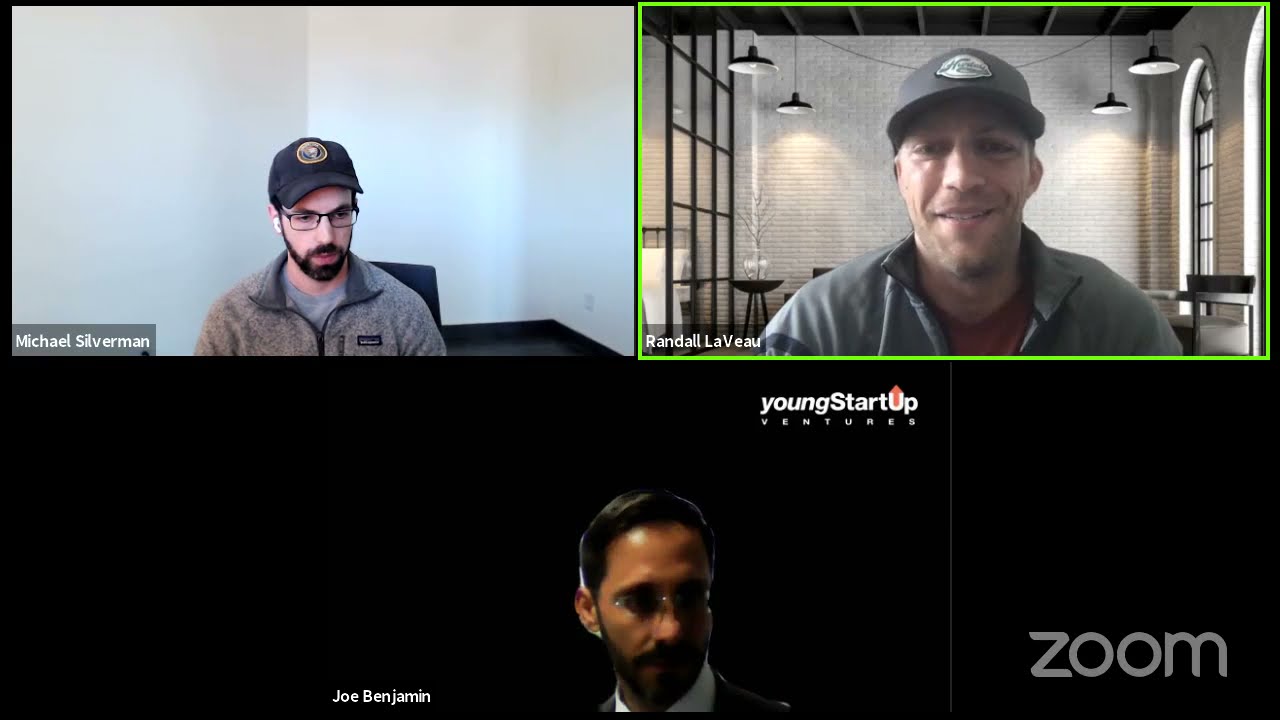
In this Venture Summit workshop, Joe Benjamin introduces Randall Laveau and Michael from Boss Capital Partners, who present a systematic approach to building a startup with acquisition in mind. They argue that getting acquired is a science, not an art, and outline a lifecycle model that starts with a clear exit strategy (the "North Star") and proceeds through vision validation, product development, revenue generation, go‑to‑market scaling, and optimization. The presenters stress the importance of defining an Ideal Acquirer Profile (IAP) using SWOT analysis, market research, and pattern‑recognition of past acquisitions (via Crunchbase/PitchBook). They detail valuation drivers—growth, margin, retention, and attachment rate—and explain how these affect top‑line and bottom‑line multiples. Practical tactics include calculating CAC/LTV, understanding time‑to‑revenue and cash‑flow buffers, and proactively contacting potential acquirers to gather valuation criteria. The session warns against common founder pitfalls such as chasing unicorn status, overvaluation, and neglecting timing, and emphasizes aligning go‑to‑market actions with the identified valuation levers to maximize exit multiples. The workshop concludes with a call to action for founders to build their IAP, engage with acquirers early, and view acquisition strategy as part of overall business planning rather than a lucky outcome.
Chapters
Hello everyone, Joe Benjamin here from Young Startup Ventures. Thanks for joining us for our next session. It's a venture workshop titled Getting Acquired is a Science, Not an Art. and is being given by our friends at Boss Capital Partners, both Randall and Michael. We've had the pleasure— I'll ask Randall and Michael to please join me on stage. We've had the pleasure of having Randall, uh, speak now at a number of our summits, virtual summits, um, always extremely insightful. And, um, they've agreed to give a chat about how we can help you guys. best practices are. Uh, there's a lot of knowledge they're going to be sharing with you guys here, and I'm sure you're going to want to connect with them also on, uh, the matchmaking platform and throughout the summit. Just briefly, this will wrap it up for today's, uh, sessions. Tomorrow we'll be kicking off bright and early with another workshop, Startups— What Startups Need to Know More Than Money to Succeed: How to Create Software That Scales. At 10 o'clock, we have an extremely insightful session by Jeff Hoffman, who's extremely well-known founder, co-founder of Priceline.com and many other ventures, about keys to success for entrepreneurs. Make sure to check out the venturesummit.tv schedule for more details about that. Again, over 170 companies are presenting on Wednesday and Thursday, so be sure to check out those company presentations. and all the various sessions that we have. Without further delay, I'd like to ask Randall and Michael to take over the session. Thanks, guys, for joining us.
All right. Thanks, Joe. Appreciate it.
Could you give me sharing rights?
Sure.
Let's see if we can do that.
So excited to be presenting today, as always. This Venture Summit is one of our favorite places to talk to people, engage with entrepreneurs, investors, thought leaders, subject matter experts. And we feel that we have something unique to share, especially today. So what I'd like to do is first go over introductions. And my screen is up here. So my name is Randall Laveau. For those who I have not met, I am the CRO and founder of both Boss Capital Partners and Boss Startup Science. My background is in growth. So sales, marketing, service delivery, support. I've been a part of a number of transactions, both as an entrepreneur and an investor. I even played a role in some large transactions. I was part of a $1.8 billion exit to Adobe and now focus my time on helping entrepreneurs. Really, my mission and our goal as an organization is to even the playing field. for entrepreneurs and give them the resources and abilities that they need, which a lot of it comes down to knowledge, and also adding some tools, right, that could help them in their pursuits of fulfilling their dreams. So I'm going to let Michael introduce himself now.
Perfect. Thanks, Randall, and thanks, Joe, for having us. Super excited to be here. Similar to Randall, I've worked on multiple sides of the table. Spent the first couple years of my career in private equity, working in San Francisco, investing in SaaS and software businesses at a firm called Banneker Partners. So we typically looked at businesses with sub-$30 million in EBITDA and kind of lower middle market transactions. One of the transactions that I worked on there actually ended up involving Randall at a later date, which was the divestiture of Magento and several other businesses called eBay Enterprise Marketing Solutions from eBay. That won a couple of awards, and now kind of in the same position as Randall, in the seat to help entrepreneurs in terms of how they think about selling their businesses for the most that they can, right? I also work in the operational side for Boss Capital Partners and Boss Startup Sciences, advising each of our companies on the product and engineering side. As well as shared services side, particularly around any deal work that those companies might be involved with.
And Michael also lives in Phoenix and is a Suns fan. So if that offends anybody, I apologize in advance.
It's true. It's true.
Game 1.
Game 1.
All right.
So really what we're here to talk about is the science of acquisition. And an acquisition would not be possible without an exit strategy. So a lot of this is going to focus on how to develop your exit strategy. And in fact, how to leverage your exit strategy and use a go-to-market to exploit the valuation drivers in your exit strategy, which are going to be able to increase the multiples that you can get on your business. So really what this comes down to is helping you achieve your personal financial goals. It's not just how much the company sells for, but it's how much you can make, and that plays a big role in how you fundraise. and how you strategize to get to your fundraising rounds, avoiding dilution and making sure you maximize your gains. So one of the things that we looked at in terms of how to build the right exit strategy is where do founders fail? And what we found is that a lot of it came to timing, their inability to exploit an opportunity or solve a problem and do it quick enough that competitors do not catch up to them And still leave enough time for upside for the potential acquirer. So this really becomes an opportunity and timing play, which involves a lot of pattern recognition and a lot of thought behind it, which we're going to show you how to do here. So like I said, how much can I sell this company for? Well, before I can answer that question, I need to know, will selling my company help my acquirer with existing revenue or to boost profits? What does the acquirer hope to actually buy here? Is it people? Is it IP? Is it the financials? Are they buying on top or bottom line? This is going to determine how I move my business forward and mature it. What motivates the buyer? What are they doing? What kind of things are they planning? Do they have a market play where they're expanding in a current market, or would they like to expose themselves to a new market and by way of buying your company could be an opportunity for them. And then we're going to dig deep into multiple variables and valuation drivers. And we have a whole process for how you could identify these yourself. One thing I want to say before I jump into the lifecycle model, and any of you who've been to some of our previous sessions have seen this, so we're just going to go over it quickly. But there's a couple principles that we employ here. And one of the biggest ones is beginning with the end in mind. We want to identify what our destination is going to be before we attempt the journey. Be the same scenario if you were going somewhere new in a car and had never been there. You need to know your destination and you need to have those coordinates, right? So once I punch them into the GPS, it then finds out where I am. And gives me the route to get there. Very similar, our lifecycle model helps entrepreneurs do that by way of using an exit strategy and something that we call a North Star. And this allows you to plot out how you're going to mature your company, making sure that one, you don't get caught off guard by competitors, 2, you leave upside for the potential acquirers, and 3, you maximize profits for everyone involved in the business.
Right?
So I'm gonna build this out real quick. This is our lifecycle model. And why this is important is there had really never been anyone who had laid out the field of play for an entrepreneur. And this is when I talked about one of our missions is to even the playing field, is investors innately understand the maturity of a company and the different validation points. And any entrepreneurs out there know this, and you know this by the way that the investors ask questions, right? When they're determining if I should invest, they're going through a series of questions to measure risk, measure maturity, and to try to determine when they're gonna get their money back. This lifecycle helps entrepreneurs understand why they're asking those questions and how to communicate with the investor. So from a very high-level overview, I'll just kind of walk you through this process. Step 1 is vision. In stage 1 vision, you are trying to validate your vision. The best way to do that is to go to an accelerator. Accelerator is going to help you with your pitch deck ideation and just generally understand how to deliver a message that is going to increase investors' confidence and allow you to get your first round of funding. Typically, this first round of funding is then used for the second stage, which lasts about 2 to 12 months, and this is product development or service development. Right, you now have to validate that the vision that I had can be turned into a product, and even more so, that people will use the product or service. So at this point, you don't need just validation from an investor, you need validation from an end user or from a potential customer.
Right?
They're going to direct you and guide you on this journey with your product or service. Next, you need to show that you can get to revenue, right? So you take your product that is intended for a single user, right, a group of people which we call an ideal customer profile, and you want to prove that you can get revenue from this ideal customer profile. Once you've achieved that, now it's time to go to market at scale. And what I mean by that is there's an interesting point in the evolution of a company, whereas in the first half you're really building a product and service or service to sell to a customer, your end user. But then as the company matures, the product that you're selling becomes your company, and you're now selling that to an acquirer. So when we say go-to-market, we don't just mean sales and marketing go-to-market. you're going to market and you're packaging up your company, meaning all 4 functional areas, your shared services, which is HR, accounting, legal, product and engineering, sales and marketing, and then service and support, are all going to market and all preparing themselves in terms of standardizing their motions. And this is gonna help you speed up your transaction once you get to the point of an acquisition. There's an inevitable point when an acquirer sits at the table with a prospective acquisition, It says, how does your company work? Right? And so by going through this motion, you teach your acquirer how your company works very efficiently, and this is done very early on. After you go to market, then you're just trying to get to the point where I understand how much money I put in and how much money I get returned. And this is simply done through CAC and LTV. CAC is customer acquisition costs, and LTV is lifetime value. So this is an ROI metric that is great for sales and marketing and go-to-market, but also great for your investors to know if I give you a dollar, you're going to use it here and it's going to return this amount to me. So this is the lifecycle, and it includes the different funding rounds, and I'd be happy to spend time with anybody who'd like to understand this more after. But really just wanted to use it to set up context for what we're about to get into, which is the exit strategy development.
And Randall, I'll just add in a quick point there from the investor side. So all of you may be watching this and saying, you know, that sounds awfully similar to seed, Series A, Series B, Series C, right? And thinking about how those financing rounds parallel the objectives and stages that we've outlined here, and that is absolutely intentional, right? When you're going out for your seed round, what do you need to have? Vision. Right? Most often for Series A, they're looking for product validation. Growth rounds get into revenue, go-to-market, and the growth stage that we have here, right? So these are absolutely by design and should align, right? So when you're going out to raise those financing rounds, the same objectives that we are going to talk about here for acquirers, you can also think about them as being relevant for the round that you're going out to try and raise. Right? In the same— in some sense, they're exactly the same, right? An acquirer is just investing enough money to acquire 100% of your company, whereas an investor is just investing less to acquire a subset of your company, right? So we'll walk through these stages and their applicability, but just wanted to add that in.
Yeah, that's a great point. The other thing you notice when you look at this lifecycle is the 2 strategic points really come right between the revenue and go-to-market. and right after the optimization. And what I mean by this is when you go to market, you're sending a giant flare out to the industry saying, I have something unique, I have something different, specialized, whether it's based on price, product, or service, there's something to it, right? It typically takes between 2 and 3 years for a competitor to build parity and to come up with a competing solution, if not better. And you think of most of your competitors when you're an entrepreneur, a startup, I mean, you have very little resources to compete with some of these larger firms that could deploy, you know, 50 engineers and a whole bunch of money behind their go-to-market. So you gotta go quick, but at the same time, you can't get greedy towards the end where you don't leave upside for your potential acquirer. And when I talked earlier about the failure points, Timing is a big piece of this. And I wouldn't necessarily call it greed, but it's understanding realistic expectations about what you can actually do. And we have a process of going through pattern recognition of your potential acquirers to even see what's the range, what's the ballpark range for what I could sell my company for based on what companies are acquiring others for.
Right?
There's a market price out there that you could start to drill down to.
And one more comment on, on there, Randall. The, the whole lifecycle is aligned to avoid a Wile E. Coyote moment. I don't know if I can say that on here without copyright, but we, we don't want you to kind of get to the end of your path, right? And then realize there's no more runway here, right? There's no more actual market to this product. I just took a massive round. I didn't think about how I'm gonna align with my acquirers. It's a tough spot to be in that a lot of companies end up in, right? So that's, that's the point of that optimization phase, is to make sure you don't walk right off the cliff.
Exactly. So when we look at the BOSS approach— and BOSS stands for Business Operating Support System— and this is all the presentations we give are around this methodology, right? But this is really the secret sauce, you know, to the methodology, is beginning with the end in mind. Setting up your exit strategy first, then using your go-to-market as a way to exploit your exit strategy and help push you faster towards your end goal or your objective outcome. So these are the elements of the exit strategy. The who, and we're going to go through these in more detail, but the buyer— this is really your acquirer, right? Your ideal acquirer profile, and I'm going to show you how to build that in a second here. Then the why. Are they buying based on income or savings? And a lot of this has to do with market conditions. And we talk about this to entrepreneurs when they're just determining if they should pursue their business or not. You should be looking at market conditions as a factor in there. And it's not necessarily the product or service, but it's the narrative around the product or service. So in a, in a bull market, people are looking to exploit opportunities and make money versus a bear market, people are looking to save money and solve problems, right? And so an example of this would be in one of our portfolios that was geared towards real estate marketing prior to COVID in a bull market, we were talking about how the product could help you do more add to your existing profit margins, and really just take advantage of this opportunity around print marketing for real estate agents. Now, when COVID hit, we had to adjust the narrative. It involved a slight product change as well, small, but it was more about the narrative that now we were going to people who were looking to save money and solve problems. And by saving money, we were able to say, you can now release certain headcount or you don't have to pay contractors, right? You could save money by using this product. So the why is very important. And when you look at that, the why not only needs to align to your potential customers, but also to your potential acquirers. So then the what. Are they buying the company or are they buying the product? Are they buying the engineering team, right? There's a lot of different motivations for acquisitions, and there's 4 common patterns of acquisitions. I'm not going to go through all of them now, but they indicate what a company is most likely to do with the company once they acquire it. For instance, IBM, in many cases, that company, once they make an acquisition, that company goes through a 6 to 12 month period of what's called bluewashing, and in that time they keep everyone typically. And they determine what the strategy is going to be within those 6 to 12 months. So the people are important in that case, right? You're selling the people to the company. In other cases, they're just buying the revenue or they're just buying the product. So the people, you would want to build a company with very little overhead because the management team isn't going to matter as much to them. Now, in terms of the how, Michael, you want to talk about top line or bottom line?
Sure. So top line and bottom line, right? You're all familiar with kind of top line, which is revenue, or bottom line, which is EBITDA. You need to know what your ideal buyer is going to purchase your company off of, right? And the multiples that they're typically purchasing businesses for in your given sector industry, right? We've often had entrepreneurs come to us and kind of say, you know, I'm in industry X and my ideal buyer is going to pay 14 times EBITDA or bottom line, and that is way out of range for that sector and industry. So we'll often have a conversation about that and say, you know, based on the number, right, that we talked about earlier in this presentation that you want to take home, we either need to shift who your ideal buyer is or realign the number that you want to take home based on the multiple. that you believe your bottom line can promote, right, in this sector. Same for top line, right? It just depends on the sector and industry that you're in, but often multiples can vary wildly. And this goes to Randall's point about the narrative, right? Often businesses or startups can shift the narrative substantially and thereby shift their multiple just by kind of changing the narrative around the industry and sector that they're in.
Exactly.
And to that point, in order to do that, you need to know what the drivers are that are going to shift that multiple. And so acquirers and investors, frankly, are looking at these drivers: growth, margin, retention, and then base attachment or attachment rate, which would say I have the same or I service the same customers as my potential acquirer. So if you're familiar with BOSS, we preach a lot about ICP, ideal customer profile. And this is the reason. One of the quickest ways to an acquisition is to be serving the same customer base as your potential acquirer and to enter into a partnership, whether it be line of business, service, financial, some form of partnership, because this allows the potential acquirer to validate you. as you're working with them towards your inevitable exit, right? And so acquirers are looking at 3 different points of validation. One, they're looking at culture validation, and this is one of the reasons for the partnership, right? Can we work together? Do we get along together? 2 is technology validation or service validation. So do we have complementing technology and service components You know, and have we validated that we actually work together in that capacity? And then the last one is customer validation, right? Whether they're expanding in a current market or they're wanting to expose themselves to a new market, the customer is very important. And you have to have, you know, the same customer. I'll tell you a story from someone that we're pretty close to. They experienced A large set of pain when they were going for their acquisition because they did not look at the ICP. And so essentially the sum of the story is, is they worked at the company for about 15 years growing it up. And growth was great during those 15 years. In fact, growth was coming from a lot of different places, meaning he had a lot of different ideal customer profiles. This was good from a cash flow perspective, but when it came time to sell the company, the acquirer was only interested in one particular set of customers, which represented about 50% of his customer base. So in his mind now, the multiples and the valuation that he thought he was going to get on his company was essentially cut in half, and he couldn't justify selling at that point. So I had to go back Release half of his customers because he couldn't afford to service them, go out, spend 2 more years building back up to the point where he was before. And thank goodness, you know, market conditions didn't change and that person didn't go away. So the story has a positive outcome. However, it's an indication to how not beginning with the end in mind and growing for the sake of growth, it could be a bad thing. Not all growth is good growth. Alright. So going to the next slide, this is how we start getting into what we call your IAP analysis, which is your ideal acquirer profile. So if you want to identify acquirers that, that could buy your company, you have to do the same thing that you would do for customers, right? You do an ideal customer profile, you should do an ideal acquirer profile. So the best way to start this is with a SWOT analysis, and what the SWOT analysis does is it puts you in the mindset of that potential acquirer, and you start to get a sense of what are they looking at, what is important to them, right? What you want to do from here is then build a basic set of IAP characteristics. What is the target industry, right? This should come from, from your market analysis, and then a whole bunch of other just ancillary information that we consider basic profile characteristics. These are important and not to be overlooked, but it's not the meat of what you're getting into. The next thing you wanna do is start to find your advantage, right? So we want to basically find out when engaging with this potential acquirer or these acquirers, what kind of questions would we ask? Do we know what they're going to be looking at us for and what things that they value. So we get asked this often. The way we figure this out is we call the potential acquirer and have a conversation with them. And people always look back like, that's crazy. How would— how do you do that? And it's really simple. You just have to stop and think about these acquirers and how their businesses are set up. They all have biz dev departments that employ people that are responsible for building a pipeline of prospective companies to acquire. So when you call them asking, you know, these questions, you're essentially giving them a warm lead. It's like an inbound lead for them, which, you know, we would all, you know, welcome at any time. So don't be afraid to call your potential acquirer. And ask them, what are the valuation drivers over the last 3 to 5 years? How many acquisitions have been made, right? It's important to get this information. However, you don't want to go into it blind, right? So you want to give yourself some advantage and some understanding of what's happening in the market before you pick up the phone and start to call them. So I'm going to skip ahead here. And one of the ways that we go about doing this is either through Crunchbase or PitchBook. A lot of the information is out here. And so what we do is we use a pattern recognition process where, in a sense, we start to look at potential acquirers in the space based on the industry that we've targeted. And then we want to look at their most recent acquisitions, right? Over the last 3 to 5 years, how many acquisitions have they made? How much were they made for? By determining the revenue of the company at the time of acquisition, you can get to the multiple. And then very— through a press release, you can understand what the plan was, right? What the opportunity was or why they made the acquisition. So we like to arm ourselves with this information by going through this pattern recognition process and just standing back and saying, what do we see here? You know, for this particular case right here, they don't make acquisitions every year, right? It seems to be a big gap between acquisitions. But the acquisitions seem to be between $150 to $250 million as opposed to their most recent acquisitions, Liberty IT Solutions, right? So you could start to get a sense of how much they're willing to pay, what their goals or strategies are based on the past acquisitions they've had, and how you could potentially fit into that.
And I'll add a comment on, I think, the prior slide here where you're going through each of the elements. One question we get a lot is, aren't you just building a company to get acquired? Right. And kind of the entire culture, startup culture is don't just build, build to change the world, build to change an industry or a segment or a product. Don't just build a company to get acquired. And I think our response to that is everything on this slide is what you should be doing to build a great company, right? We are, this slide is not suggesting to build a company to get acquired. It is saying you should identify who your ideal acquirers could be, right? Keep them in mind, but everything on this slide is, from our perspective, what you should be thinking about from a strategic standpoint to run your company well, right? These characteristics also apply to, say, going public in an IPO or getting additional investment, right? Just like you would have an ideal acquirer profile, you're gonna have an ideal investor profile, right? Same thing. So I think we tend to get that question a lot of, aren't I just building for something that may or may not occur? From our perspective, it doesn't really matter, right? It doesn't matter if you get acquired in year 2, 3, 4, 5, whatever. All of these things should align to your North Star and be what you're doing anyway.
And they're all wrapped around the reasons, you know, companies fail. overvaluation, running out of cash, you know, no fit, product-market fit. So, all right. So here are the valuation drivers and a definition for them. And we circulate these slides after, so this is gonna be helpful. But really, like I said, the purpose of the IAP and determining the validation or valuation drivers Is so you understand what you could do within your go-to-market to exploit it. So when we look at growth, right, growth could be looked at in a number of different ways. There could be customer growth, in which case they're not going to be looking at margin but maybe looking at retention. There could be year-over-year revenue growth, right? And this is going to make you do things differently in your go-to-market. One of which could be a very transactional go-to-market, the other of which could be long enterprise sales cycles, right? It depends on what they're looking for. Not all cases, especially in strategic exits, are they looking for extreme growth. They're looking for product-market fit and attachment rate, right? Michael, do you want to tell a story? about DellaRock and that strategic exit and how that was approached?
Sure. So one of the companies that we worked with and I worked with early on in terms of thinking through their ideal acquirer profiles, their ICPs, who their customers should be, this company DellaRock was acquired by Cubic. All of this is public. You can go look it up. And we kind of thought about the process of making sure That despite DellaRock being relatively small, we thought about, okay, if a larger company was to acquire them, right, could they sell and utilize the technology of this company across their entire customer base? Right, so when Randall and I are talking about this is a strategic acquisition versus just a financial one, right, you don't necessarily need to show that you have sold all of those customers today at the time of acquisition on your technology. You do have to show potential that, hey, we can take the technology currently in this company and sell it across your entire customer base. The value for that is X. And this is how you get to a lot of the strategic acquisitions you've seen in the market where with say WhatsApp or Instagram, where the companies are 10 people and it's acquired for X billion dollars. They They did not necessarily create all of that value in Instagram or WhatsApp in isolation, right? Facebook is thinking about, okay, it's not just the company that we're getting or its current set of users and technology. It's, I can then go and sell this across my entire product portfolio, right? And then it makes more sense to pay a higher price, right? Because the multiples expand, the purchase price expands. Another recent example of this, I would argue, is Salesforce acquisition of Slack, right? Salesforce is not just looking at Slack as a chat or messaging app in its current customer base, right? They're looking at it across the entire Salesforce multi-billion dollar SaaS portfolio of, I'm going to sell Slack across every one of those existing clients, right? That really changes the purchase price dramatically.
Exactly.
Alright, so when we look at the how much, and we look at, you know, how to have that discussion or conversation with your potential acquirer, this is a good framework for doing that, and you should get these, these questions answered.
So list the reasons your potential acquirer would consider buying your company and make sure that these are key missions within your company to either improve these, scale these, or innovate these.
What are they buying?
And we talked about this. Are they buying the product? Are they buying the service? Are they buying the people, the revenue? How are they buying? And Michael talked about this earlier in terms of revenue or profit. And Michael, from your experience, where do you see higher multiples in top line or bottom line?
I think, I mean, this is another good question that relates to knowing your IAPs. You don't really want to be— the multiples on bottom line are always higher just because of the math there, that bottom line is always smaller than top, right? But beyond that, you want to be thinking about how do I get a strategic multiple, which is often much higher or doesn't make sense in kind of the rationalization of typical multiples versus what is known as a financial multiple, and what I liked to buy on when I was in private equity, which is, you know, I'm going to give you a 3, 4x EBITDA multiple versus a 10 to 14x top-line multiple, right? And often companies don't want to do bottom line because they're plowing all the cash back into the business and there really isn't much in terms of EBITDA or bottom-line profits, right? There is something on top line. So often companies will want to go on top line.
Exactly. And then as you're moving through this and asking yourself how much, another important question to get to is when. When can all this stuff start to happen? And so we look at this as maturity milestones for a company as you move through the lifecycle. And one of those first ones is time to revenue. And this is an important factor. And you may be asking, like, why aren't we talking about time to exit? Well, One, you have to crawl before you could walk. So you got to get to revenue first. You have to get to revenue within your ICP, right, because that's going to matter during the time of acquisition. And you have to know how long it takes you to recognize or collect that revenue. If you're a startup and you want to avoid overvaluation or running out of cash, you need to know exactly when the money is going to hit the bank, and do I have a buffer potentially If I have net 30 payment terms or I don't start collecting revenue until post-implementation, right? There's a lot of factors that could play in here. And we always encourage entrepreneurs, one, to know how long it takes for revenue to actually hit and make sure that you always have at least one month liquidity buffer. So you could do something about it, right? You could recognize very early, right, if I don't have it and then I have a month to cover myself in terms of payroll. While I go out and try to source other money. So the way we go about time to revenue is just through a simple formula here of the contact to contract cycle time. How long is that? The terms of the start date, your payment terms— the start date terms are on contract signature or on activation post-implementation. Payment terms could be anywhere from net 15 to net 90. How long is the implementation cycle time, especially if you're not receiving billing until post-implementation? And then when do you have your first revenue, right? When does that come in? Now you just take your burden—
oh, go ahead.
I'll just add a quick comment there from an investor perspective. I mean, we often see companies come in and not know this, and it's one thing to not know it at the vision stage where you're still deciding on your ideal customer profile is, but if you come in at kind of the product or the revenue stage and don't really have any idea, it makes investors nervous, right? They don't know how long the money that they're going to give your company is going to last because they can't properly calculate your burn rate, right? And often that box on the right there ends up being much longer than you think it's going to take, right? It may be 30 days contract to contract, contact to contract cycle time, right? Term start date might be 15 days, payment terms 30 days. By the time they actually pay you, another 30 days. I mean, you could be looking at a 6 to 9 month cycle, which is not unheard of, right, in, in SaaS and B2B software businesses before you get those dollars, right? So if you're an investor or acquirer and you're looking at the kind of current financial situation, Versus what it might be in 6 to 9 months, if you as an entrepreneur don't have a great answer to this, it's gonna make that fundraise or that acquisition all the more difficult for you.
Absolutely. And then when you figure that out, when I know how long it takes me to get to revenue, then I could figure out based on my burn how long it takes me to get to profitability or break even. And then it's a different game, right, for you as an entrepreneur. Because like Michael said at the beginning, right, whether you actually execute the acquisition at the end of the 3 to 5 years, you know, according to the lifecycle or not, you still put yourself in a much better situation. Because what this does is if I look at it and I say I do want to exit in the next 3 to 5 years, well, likely I have to get to revenue and profitability before that. So it forces me to start moving towards these things quicker. And as I move towards profitability quicker, and I could do it without raising as much money as I thought I would have, I now have a lot of control, and I could decide how I want to move forward and if it's worth it to go for an exit or not. And I'm in a much better position to make it in that case. So this is really the core of what our talk is today, is around the fact that You know, remember the title, An Acquisition Isn't an Art. And I think a lot of the status quo in the ecosystem unfortunately treats it like it's an art, that I'm going to get lucky or I'm going to grow really big and one day someone's going to be interested and they'll come find me, right? It will be a destiny thing. And we believe that there aren't accidents here, right? And there are companies out there right now making the decision, do I buy or build something? And you could easily be that solution and tie yourself to market conditions and exploit these opportunities and become a very successful entrepreneur with a $50 million exit in, you know, 3 to 5 years, which is insanely impressive. So, now, the last thing I'll leave you with is if you're looking at a unicorn status, This lifecycle does not apply. Unicorn companies, while we feel are fantastic and we hope there are more unicorns, it's the pursuit of a unicorn that really leads to failure for a lot of companies, especially when it comes to fundraising, the amount they're raising, valuations. What we see is a lot of entrepreneurs in those situations who are pursuing unicorn status when they really aren't a unicorn end up overvaluing themselves and, you know, just digging themselves into a hole where they can't get out of. Michael, you wanna comment on the unicorn?
I'd love to. This is my favorite startup phenomenon. So I think at least when I was starting out on my entrepreneurial journey, that's all you heard about, right? And I think that's still kind of the common refrain from investors is unicorn or bust, right? If there's not a billion-dollar or multi-billion-dollar market, I don't care, right? And I think that's, that's been really unfair to the entrepreneurial community in a lot of ways, but it puts the entrepreneur in a seat of, I'm going to tell the investors what they want to hear, which is, well, if I didn't have a billion-dollar opportunity yesterday, I'm going to go invent one, right? And it leads to this perpetual cycle of overvaluation, entrepreneurs striving for growth where there may not be any, or in a market that may just take longer to mature. And it misaligns the incentives between the entrepreneur and the investors for pushing growth when it may not be appropriate, right? Or not thinking about the ideal acquirer profile sooner because, hey, you know, you just raised a $300 million growth round. You don't have any problems anymore. Right. And I think Randall and my message is there, there are alternatives, right? You're starting to see this in the ecosystem as well. funds and individuals willing to invest in businesses that, yeah, aren't necessarily aiming for a unicorn kind of outcome off the bat, but maybe something— reasonable is the wrong word, but something more methodical where you're thinking through the IOPs from the start and saying, you know, I want to build a great business. I want to build one with less dilution to me, less dilution to you, the investor. Yeah, we may go a little bit more— more slowly. We may target 3 to 5 years versus 10 years for a unicorn, but this is a valid path. This is a different but valid path that we can pursue, right?
Exactly. All right, so just to wrap it up, you know, what we talked about today are how the exit strategy aligns all strategy and decisions, and really the exit strategy comes before the go-to-market. Okay, and if you are executing a go-to-market right now, that's okay, but look at your exit strategy, specifically the valuation drivers. And then when you look at the KPIs in your go-to-market, ask yourself, am I pushing on those levers that are gonna increase the multiples for my business? And if you're not, obviously you wanna make an adjustment. Defining your goals. This is just coming out and saying, this is where I wanna be. Right? I wanna be this type of company. I believe I could sell for this much. And I believe myself and my team as entrepreneurs, you know, all aim to make this amount of money.
That's okay to have.
And you could build that into there.
One of the other things, we kind of covered that.
If you'd like information on fundraising rounds and, you know, our philosophy on that, please reach out. We alluded to it but didn't cover it. So I'd be happy to talk offline anybody about that. Defining your ideal acquirer profile, I hope everyone is excited to pursue that. And then, you know, contact your ideal acquirer now. Do not be afraid to do that. Obviously, arm yourself with the right information that you need, but it's just a matter of getting over the fear of making that call. They will talk in most cases and give you the information you need.
So thank you again, everyone.
Joe, thank you for having us. And my email address is randall@bosscapitalpartners.com, and Michael's is michaels@bosscapitalpartners.com. So reach out with anything you need. We'd be happy to talk.
Thank you so much, Randall and Michael. Thank you for joining us. An insightful workshop session. That does it for today, day 1 of Venture Summit Virtual Connect Global. We'll see you guys bright and early tomorrow again, kicking off with a workshop. Startups Need More Than Money to Succeed, How to Create Software That Scales, and then also Keys to Success for Entrepreneurs, a session hosted by Jeff Hoffman. Looking forward to seeing you guys tomorrow, and again, the over 170 companies presenting. Thanks so much, everyone. Be well.
Thank you, guys. Thanks, Joe.
More from Gregory







Why you Might Want to Keep your Camera on During Remote Work Meetings | Minute Mentor


Same Side Selling | Ian Altman | Part One & Two | The BOSS Podcast with Gregory Shepard