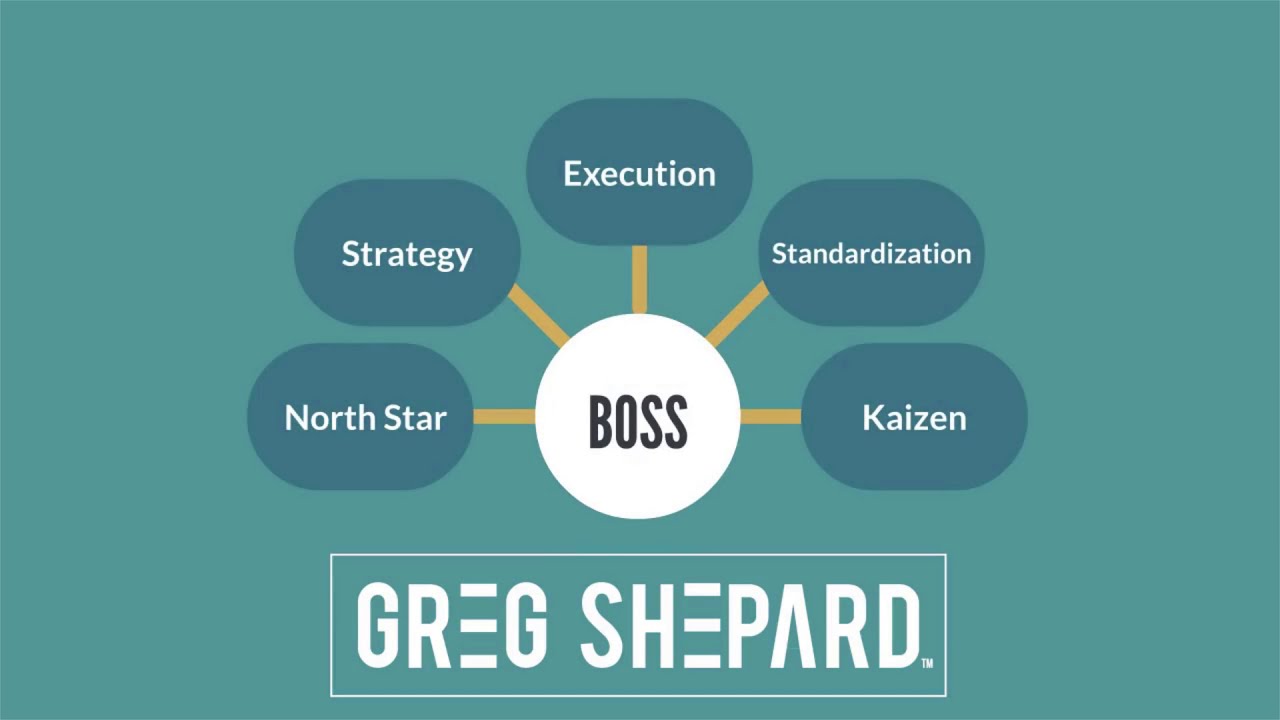
Gregory Shepard walks through the Strategy phase of the BOSS framework, covering SWOT analysis, MOCOMs (missions, objectives, key results, measures), prioritization matrices, and the RACI model. He shows how to align teams, set measurable goals, and plan a roadmap to an exit.
Chapters
The strategy phase of BOSS defines the plans necessary to align your company to your North Star and achieve your planned business outcome. It's the roadmap to your exit. During the strategy phase, you'll utilize a set of tools including SWOTs, MOCOMs, prioritization, and delegation to properly plan and communicate that roadmap. Use the SWOT analysis— strengths, weaknesses, opportunities, and threats— To identify the strengths and opportunities your company has, as well as your disadvantages and potential threats to your success. Once you've completed your SWOT, establish your MOCOMs: missions, objectives, key results, and measures that align to your North Star. Missions are clear statements of what needs to be accomplished in the form of from X to Y by date. Objectives are specific numerical values of the work that needs to be done. They fall under missions in the form of from X to Y by date. Key results consist of the individual tasks that need to be done to complete the objectives. They fall under objectives and are also in the form of from X to Y by date. Measures are how you track the success of key results, which lead to the completion of objectives, which progresses the overall mission. They always include the plan numbers, the actual progress, and better or worse percentage. Then you can prioritize your work using the Urgent vs. Important and Impact vs. Effort matrices. Urgent vs. Important helps you decide what to do first, what to schedule, what to delegate, and when to eliminate tasks. Impact vs. Effort helps you start with the key results that will result in the highest impact with the lowest effort. When priorities are set, you can then assign roles and responsibilities. 59% of employees say communication is the biggest problem within organizations. 29% say accountability was the second. We use the RACI model to ensure everyone is informed on who is doing what. RACI stands for the following: Responsible. This is the person doing the work. Accountable: This is the person overseeing that the work is being completed and on time. Consulted: This is the person or persons providing feedback on the work. Informed: This is whoever is notified once work is complete. The Strategy phase keeps functional areas aligned, in contact, and sets the stage for execution. To learn more about BOSS and how you can scale your business, please visit www.gregoryshepard.com and subscribe.