What does it take to be a successful entrepreneur? Keynote by Greg Shepard
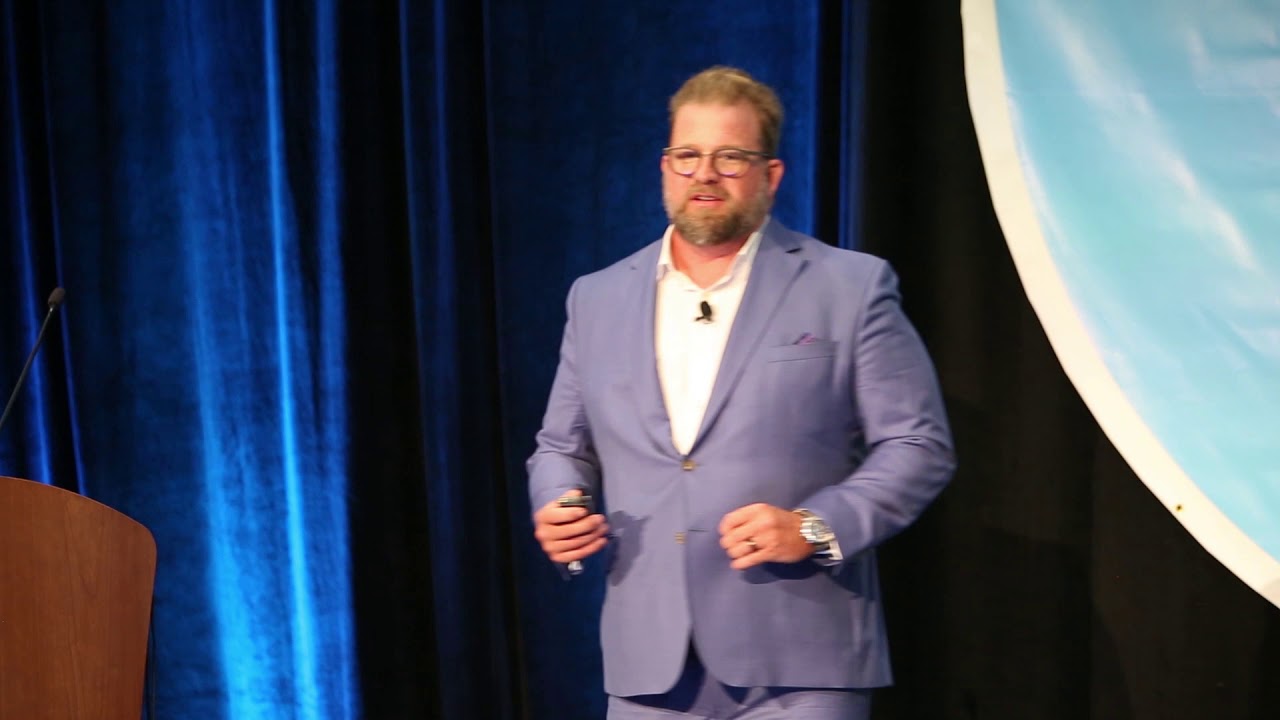
Greg Shepard outlines his BOSS methodology for building successful businesses, covering strategy, execution, standardization, and continuous improvement. He shares his investment exits and deals, then walks through practical systems like daily stand-ups, KPIs, and onboarding that help founders scale and prepare companies for sale.
Chapters
I am super excited to meet Greg Shepard in person. We have spoken on the phone, um, and this is my first opportunity to see him speak. He is a serial angel investor. He's also a venture capitalist and, of course, an entrepreneur who has overcome poverty and dyslexia.
That's right.
He has become a multimillion-dollar entrepreneur and a philanthropist. He is a contributor to a few publications that you may have heard of, like Forbes, Fortune, Entrepreneur, and The Deal Magazine. He has spearheaded over 12 company exits throughout his career. 2 of his former companies, Affiliate Traction and AdAssured, were acquired by a company you might have heard of, eBay Enterprise Marketing Solutions, in January 2016. So welcome to the stage, Craig. Thank you. Yo.
All right. So my deal is a little bit different. I'm not like a motivational speaker. So like, I'm just throwing that down right now. All right. I've won 4 private equity awards. For transactions over $250 million and 3 for over $500 million. I did a carve-out from eBay post-selling those transactions, which was $925 million. Those companies sold— 12 of those companies sold. They bought another one of my companies. After that, we went ahead and sold those. It was a total of about $3.6 billion when it was all said and done. I've done 12 of my own startups. My first startup was a bungee jumping company. Lost all my money. It was a fucking disaster. Then I decided to go into banking. I built a bank. Then I built an environmental applied biotechnology company. Then the dot-com happened. I built the first online, you know, what Wix is now. We called it a WYSIWYG. It was called 123 Turnkey. From there, I went and started getting into the affiliate space, and I played around in martech and adtech for a long time. I invest in a lot of different types of companies right now, and people ask me, what are you doing? So I tried sitting at the beach and smoking weed. That wasn't my deal. So instead, I decided I would apply what I had learned to help entrepreneurs because I have a passion from where I came from to help those people that are less fortunate. That don't have that safety net, the safety net that people have when they make a mistake, they can't fall too far. And my safety net wasn't there. So, you know, I mean, I ate at— I used to go to happy hours so I could eat for free. I had a whole routine. I had 3 or 5 cards set up. I knew where I could go at some time so they wouldn't get to know me. I knew what hotels I could go to so I could eat breakfast. And I used to go to garage sales and buy furniture and refinish it and get up at 3 o'clock in the morning and go to the swap meet and try to sell it so that I could make payroll, right? When I was young, I was a little kid and I was trying to sell Rubik's Cubes, right? I was, I don't know, 7, 8 years old. I was importing them from China when I was about 10, and then after that I started catching rattlesnakes and And selling them as exotic pets. I learned that the rattlesnakes needed food and they were feeding them pets, mice and rats, so I started raising them. I bought a couple, started breeding them and selling them so I could sell them the product and the inventory at the same time. So this is kind of like who I am. Now, the reason why I tell you that, how many people are just like that? Raise your hand if you're just like that. Like, You, you have it in you, right? Some of us just have it in you. These things create your motivation to make you a success. I have a TED Talk coming up, and my TED Talk is all about what I call the handful, which is focus, drive, enthusiasm, discipline, and optimism. And those are the things that you need to make something happen. That's the end of the motivational talk. Now, These are numbers that have to do with who's successful and who's not successful. I've spent the last 25 years studying all the different systems that are out there. So if you look at the different systems, you have Sigma, Six Sigma, and you have Lean and XP, and I mean it goes on and on, right? There's OGS-M, and there's 40X, and there's OKRs, and I mean you go on and on. I spent 25 years studying these. I combined all these into a program, and over 25 years I tested every single one in different stages of companies, as well as different types of companies in different sizes and different industries. And when I tried this process out, I learned a lot about what is really important. And I put this together in what I call BOSS. BOSS stands for the Business Operating Support System. And BOSS combines a ton of different things into one unified structure that helps entrepreneurs succeed. I do this because I grew up without anything. And my brothers and sisters were foster children and adopted, all different nationalities. And I came from a very hard place. I used to get beat up, I don't know, on a good day twice, every day on the way to school, on the way home. So I had it kind of rough. And I remember distinctly seeing guys like me driving around in a Bentley or a Ferrari and thinking, what the hell is going on? So I decided when I stepped down from the the running, what I was going to do. And I decided I was going to help entrepreneurs because I decided that I'm going to shake loose some of the money that seems to be very stagnated on the top down to entrepreneurs and do some wealth distribution. You feel me? Because those that earn it deserve it. And I do that. And I'm in that group.
Now.
So I created this system to help out. And when I look at the systems and the things that people have, I created this system, BOSS, which breaks down multiple different steps. And I'm going to give those things to you. The first thing I call is the North Star. The North Star is where you are all the time and where you're headed. Now, this is really, really important because if you're trying to cross the ocean, building a business is trying to cross the ocean and you are 1 degree off, You're going to end up on another continent. So the North Star starts out with what. What is your product? What is your company? Description, feature, benefit.
Why.
Why should somebody buy your company? Problem, solution, impact. Who. Who should buy your company? Again, a lot of conversations about this. A lot of the angel community and venture, they go, yeah, we don't think about an exit now. And I'm like, that's ridiculous. Do you build a product without knowing who your customer is? Why would you build a business without knowing who your buyer is? Also, if you're going to raise capital and you don't know who your buyer is, then how do you know how to spend your money to get to your ends? Also, when you sell a company to another company, you are a product to them. Your whole business is a product to them. No different. So sometimes the growth strategies that they tell you to do are not the right strategy because those companies that buy you already have CAC, customer acquisition costs, they've absorbed in building their customer base. They have thousands of customers. If you do a strategic sale, you have 100. Do you think they give a shit about your 100 clients? They want to know if you can take their— if they could— if you could take their 1,000 clients So why are you spending all this money on marketing? And so the North Star helps you understand that. And then you got the how much. The how much is how much do you want to make, not how much do you want to sell for? Because I hear people on stages and conversations all the time. I did $100 million. I did this. How much did you make? How much did you make? Not your investors. You. So when I talk to people, I say, how much do you want to make? Because you sell for $100 million. That's a long trail. You got dilution and a lot of things happen down that trail. And the more you kick that down, the longer your exit is. I exit companies in 24 to 36 months with 2 to 5x returns for my investors. Name anybody that beats that. I do it by using this strategy. The next thing is your strategy. Strategy is just a plan. Now, when you have a plan, you have to figure out, first of all, your SWOT. Everybody know what a SWOT is? All right, so you do your SWOT. Now after you do your SWOT, you have to divide your area, your things into a RACI. Who knows what a RACI is? Roles, responsibilities, does everybody understand what a RACI is? Raise your hand if you know what a RACI is so I know. All right. A RACI is a delegation strategy. So once you create your strategy, those things that you need to accomplish, you have to figure out a priority of those things. You do that through urgent over important and impact over effort. That creates your priorities. After you do your priorities, then you do delegation and you go into a RACI and you figure out who is going to do what. Now you've got things delegated to your team. After you finish that stage of things, then you can start your execution strategy. After you get going on your execution strategy, in order to make sure everybody is on point, You have to deploy a daily stand-up. Every day, I get on the phone with my team. And I ask, what did you do yesterday? What are you doing today? Do you have any blockers? Period. No defensiveness. Somebody's blocking, I'm out of your way. I'll make it happen. That keeps everybody on point. At night, everybody sends me a daily email. That daily email tells me the same thing But, but for that day, and that's what we discuss in the next daily stand-up. Now, the next stage of this is to try to put together a program that allows you to do standardization. Now, what's standardization? It's a breadcrumb trail. Now, how many of you guys went to school? Used textbooks, and textbooks pass information along, and they create duplication without dilution, meaning you can pass information, intellectual property knowledge that you have Over time, moving forward to people down the line. Every time you hire somebody in a new startup, you know what your biggest expense is in growth? Headcount. Do you know what the cost is for an average person that gets added to headcount? 33%. One-third. You're paying somebody $100,000 a year. You hire 3 people at once, 5 people at once, 10 people at once. That gets very expensive. You know what the time frame is for somebody to get to 100% usage, meaning they're effective? Averaging 6 months. Put the numbers together. That's very expensive. That's a lot of burn. Now when you put together standardization, what you're doing is you put together to start out with a boot camp. You teach them how to use your standardization. When they exit and they come into the month— into the business, They actually do what we call shadowing, where they watch other people do the job. Then they're on their own. The standardization is a knowledge base. The knowledge base inside of it has, first of all, a trigger. That's when something is supposed to happen. It has an accountability. What is supposed to happen? And has the best practice, how it's supposed to happen. So your trigger can be monthly, quarterly, when you get an email, whatever, and it describes how your business runs. When you onboard somebody else, my efficiencies went from 6 months to 30 days, 100% usage, cost dropped to 12%. The companies I invest in, my portfolio, and the companies that I work with, and all my startups do this. That's one of the reasons I can build them and exit so fast. The other thing that you need to know is when you sell your business, now let me give you an analogy because this always works for me. Have you ever tried to put together IKEA furniture? Has anybody done this in the wrong order? Like, holy shit, right? Like, first of all, it's like disposable furniture, and second of all, when you take it apart, it's impossible to put back together. So a business without best practices, without a knowledge base, is like a business— it's like putting together IKEA furniture without instructions. No buyer is gonna come in and take your business seriously in terms of its ability to scale or your ability to transition your company into their company without having that in place. When you sell a company, that shit has to be packaged up with a bow and a greeting card. When they go through due diligence, that thing needs to be on point. Every bit on point. You go through DD, on point. When I sold my company to eBay, I remember they told me, this is the best-run company we've ever seen. I want the minnow to swallow the whale. They wanted me to change eBay with these processes. For 3 years, I tried to make that happen. I'm not saying I failed. I'm not saying I succeeded. So what happened was, is this process actually of standardization allows you to document the way you do things. The next stage is what I call the Kaizen loop. Kaizen is a Japanese word for continuous improvement. And the Kaizen loop means that you go back through the company from start to finish in the same order that you went through in the first place. If you don't have your accountabilities and best practices documented, you don't have anything to step on for you to figure out where continuous improvement can happen. If you have best practices and then you have KPIs, you have dashboards with key performance indicators, then what you have the ability to do is to look at those key performance indicators, go back to your knowledge base, look at the processes that are in there, and they will identify friction points. Those friction points cost headcount. Again, headcount. Headcount is the most expensive resource. And then you can create efficiencies, and you can start adding scale without increasing headcount. Your margins go up. Why do companies look at growth, margin, and retention? Because growth says people like your product. Margin says you can do it at scale. Retention says people stay with your product. They continue to like your product. This process of continuous improvement makes that happen without having a KPI dashboard and a knowledge base and this structure in place. You can't do continuous improvement. Your financials are lagging indicators. Does everybody know what a lagging indicator is? It means that the results are there. You can't do anything about them once they hit. A leading indicator means it's leading. It means it pivots the lagging indicator. Your financials are lagging indicators. Those numbers are in. That's done. There's nothing you can do about it. The leading indicator are your dashboards, meaning your KPIs and your best practices and your strategy in these phases that I just walked through. Those things change the financials. That's what changes them. And that's where you use continuous improvement to make things happen. That's how you make that happen. So most companies run on lagging indicators. It's like driving looking in the rearview mirror. That shit's already done. It's, it's gone. You can't change it. So you have to look ahead with the wisdom of what's behind you. And that's the balance of having the strategy plan and your KPIs and your whole dashboard with your knowledge base and having your financials to see. Your financials are a report card. Remember, by the time your kid turns in the report card, the damage is done. So you have to start out by changing that first, and you do that through the leading indicators. And that's how I do this. I have done turnarounds. Turnaround means that the company's a giant catastrophe and you got to come in, clean house, you got to rebuild the entire company, right? It's like you buy a house, you got to rip out all the walls, all the drywall, the whole thing, and it just sticks and you have to rebuild the whole thing. I've done cleanups. A cleanup is where you just throw a new roof on, some carpet, paint it, some— do some landscaping and sell the house, right? So I've done different types of deals. I've used this strategy in investment companies, my portfolio, my own businesses, and now a $100 million syndicate that I run. I use this strategy to run a marathon. I've used this strategy to climb the face of El Capitan. I'm training right now for a 600-mile bike ride. By the way, I have asthma. Okay? I've done 39 14,000-foot mountains. I've wrestled crocodiles, alligators, swam with the great white sharks, bullfighting, You name it. So I know this shit works and I encourage people to try out the methodology. Now you can go to my website or whatever and, you know, I'm sure that somewhere in the paperwork you have or on the— you'll figure out how to get a hold of me and I'll send you a free book. All right. And you can go through it because BOSS, the Business Operating Support System, is built for this. It's built to help you. I've made a life out of doing it for myself and now I've dedicated my life to giving it to others to help everybody in this room take a little bit of that money that is just stagnated up at the top and spread it down to you folks that are working your ass off to earn it. Do you feel what I'm saying?
Yeah.
All right. I hope you guys are picking up what I'm throwing down.
More from Gregory







Why you Might Want to Keep your Camera on During Remote Work Meetings | Minute Mentor


Same Side Selling | Ian Altman | Part One & Two | The BOSS Podcast with Gregory Shepard