Why Founders Get Outgrown and What to do About It With Harrison Rose, CEO GoodFit
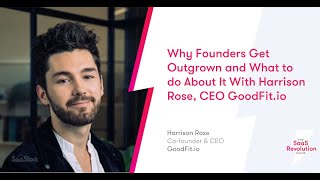
Episode interview with Harrison Rose (co-founder of Paddle; CEO/co-founder of Good Fit) on the SaaS Revolution Show. Harrison recounts running Paddle for ~11–12 years (growing to ~300 staff, ~$300M and ~3,000 customers), why he stepped back (loss of motivation, desire to rediscover identity, executive coaching), a brief sabbatical, then joining Good Fit with his friend Alex. Good Fit is an early-stage B2B data company growing ~100% YoY by word-of-mouth; Harrison discusses product fundamentals, hiring strategy, lessons on founder burnout, when founders get outgrown, and personal wellness practices.
Questions this video answers
About 300 staff.
$300 million (as stated in the interview).
About 3,000 customers globally.
Approximately 100% year-on-year growth (via word-of-mouth/referral).
89 Christmas cards.
Chapters
Foreign.
Welcome to the SaaS Revolution Show. I am your host Alex Duma, CEO and founder of SaaSdoc. And I'm delighted to be joined today by Harrison Rose, who is the CEO of Good Fit. Welcome Harrison, how are you doing?
Hey, thanks for having me. Yeah, not too bad. As we just said, it's winding down for Christmas at this point, but just about hanging in there, man.
Yeah, yeah, yeah, it's a couple of days so we're recording this a couple of days before Christmas Day. And yeah, I guess kind of as both CEOs of the company where or companies, our respective companies, we're still working. I understand you're writing Christmas cards and also bringing in, you know, the final few deals of the year whilst I'm mainly doing content and 360 reviews as well. So slightly different perspectives but hopefully we'll make this a good or I'm sure we will. A good kind of festivity podcast. And in fact Harrison, I'm wearing a Christmas jumper but you can only really see the stars on the, on the top of my shoulders spreading Christmas cheer.
Look, it's good.
Trying. I'm trying. Yeah. I'm actually going on an elf trail later today. Not, not work related but I managed to let it slip to my other half Gemma, that I was finishing about 5 o' clock today. So she said well that meant that I could probably take the kids on this elf trail and of course I'm very much looking forward to it but there you go. So Harrison, I think it's the first time we've had you on the podcast. We've had your co founder of the previous company that you founded, Christian on the podcast before but for our audience perhaps if they don't know you, who is Harrison Rose?
Yeah, I mean first of all thanks for having me. I'm not sure I said that earlier but yeah, I'm the Harrison. So I co founded my first business panel alongside Christian 12 years or so ago now. Yeah, he's been on the pod, I'm sure. Lines get blurry. I ran all of my go to market revenue and strategy there for the 11. 11 years or so, maybe 12. I can't remember. I'm terrible at Bates while Marcel is there. For those of you who don't know paddle, that's like 300 staff. $300 million already. 3,000 customers globally. We do revenue infrastructure for software companies. Ran basically that business. My hub adult life. I've been asked alongside question many times what other interests were along that kind of 11 year period. And we kind of said, what else other than Paddle, but step back full time in January last year, which is one of the biggest, most intense, kind of wild decisions I've had to make. I planned to take kind of a year off or so this year just gone, as you've kind of alluded to already. Wasn't so good at that. And I've ended up co founding another business called Good Fit off the back of some of the unique things we were doing at Paddle. So, yeah, they've been in tech and running businesses now since I was kind of 17, 18. Keep telling myself I'll have a bit of a break, but haven't been so good at that. And that's how I've ended up writing 89 Christmas cards on December 20, just a few days ago. Very glamorous.
Are you getting any cramp in the hands or like, are you ambidextrous switching hands?
Yeah, no, Terrible. I've roped in some help this year, albeit the gifts. Maybe I can share because I'll go out later and people won't ever. We're slightly mad people, to be honest with you. A Good Fit. And I was like, I really wanted to give someone a gift that people could share. So I've actually made, I think, 150 transferable good fit tattoos that I'm trying to encourage people to tattoo on their body and share on social media as a part of spreading Christmas cheer. We'll see how well that goes. But that's basically the plan that we have. I think 2023 has just gotten to us, but that's. That's what we're doing.
It's a good plan. 1. I could subscribe to a couple of quick ones on that. So actually, my local tattooist or the tattoo parlor where I've had a few tattoos this year, they celebrated, I think, their first birthday. And in doing so, everybody who was brave enough, and I'm sure everybody there was brave enough, got a free tattoo, which was their logo, which I thought was quite good marketing. And I also have two sasdoc permanent tattoos on me. So, yeah, I mean, transferable. Easy, easy. So send me one, send me one and I'll post mate. Yeah, good, good, good, good stuff. So. So you mentioned you co founded Paddle. You left paddle after about 1112 years. I understand Paddle is kind of like in and around 100 million sort of. ARR. And as you said, you spent most of your adult life having founded that business and then scaling that business and leading strategy, go to market, et cetera, and so on. So I Guess kind of question. Why did you leave when you left?
Yeah, I mean, I think it's a topic that doesn't always actually get talked about. I've tried to be as open as possible about it over the past year or so. I think my situation was a little bit unique. It was certainly a bit of a shock to my peers, my co founder and investors and board, which maybe isn't the best way to do it, maybe with some context. I started working with Christie when I was like 70, ran the business till 28ish or so. And I basically recognized it was the only thing that I'd ever known or experienced in adult life. People would often say, how did you start a software business that handled people's sales tax when you're like 17, 18? I was like, God knows how or what was it like handling all that pressure? And it was like it's kind of the only thing ever new. I was very grateful for all of those experiences. But it was kind of when we were going into the series D, which happened. Yeah, the year before, basically that that was something that was probably meant to be objectively exciting for us. It was huge fundraiser we were likely to hit and we did the kind of fabled unicorn status. We're acquiring a business called ProfitWell and Bright intelligently that Christian and I and others have discussed over many years actually about acquiring over dinner tables and stuff. And all of that stuff was meant to be objectively exciting. And it really struck me though that I just felt like I'd seen that story before, like the dd, the budgeting, the planning of the integration with acquired companies before and, and that, that led me. That really confused me, to be honest with you, like just not having that motivation. Like, I really prided myself on the energy that I bring to a lot of the work that I did. And for the first time, not feeling that was quite surprising. And I think I got. I basically been working with an executive coach for a number of years, something I'd recommend to any founders listening as soon as they can afford it. And I think I just got to the point where I realized I was more interested, I think, in getting to know myself a little bit better than I was in continuing to, to scale and learning a paddle. I recognize that your entire identity, friendships, mind share, get so wrapped and intertwined with this entity in paddle that I was just keen to get to know myself outside of that context and experience life for a new lens. So yeah, sharing with that with people was pretty intense. The board asked me just to do a SABBATICAL and maybe return. But yeah, ended up just taking a step back. But yeah, it was quite the emotional roller coaster, man.
I can imagine. And Christian's reaction was he at first saying, what are you doing, Harrison? How can you leave me? And how did that conversation go?
Yeah, we actually lived together at the first four years of Paddle's existence and when we stopped living together, the board and the investors called that the great breakup. They have preemptive this coming later down the line. Yeah, but you felt like you're portraying like you're one of your best mates that you've been through all this stuff with. And even more so. Christian was the same age as me. I was so grateful to having gone through a lot of those experiences with someone else who kind of grew up together through Paddle. And in stepping back, it felt like a little bit of betrayal for the company to our employees, to him. I also felt like I was removing the opportunity for him to do the same thing because no doubt he also had felt a level of burnout or wanting a break at times. So that felt quite selfish, but something that I felt like I needed to do. So it was really difficult to have that conversation. But he was amazing. He was super, super supportive again, was desperate to find some way in which I could continue or come back in some way. But he was just overwhelmingly supportive, which was awesome. It didn't make the conversation much easier. But yeah, it was the board too, as much as they were like, have a sabbatical, come back, don't ever do it. Make it two months. I was just like given my intentions and desire to just experience life and not constantly just be thinking about paddle or be harrison.com. i'm not sure that's helpful for the business or me. So made it a firm break. Expecting to do very little for the next year and ease myself out of the business over a six month period or so and then somehow ended up here. But yeah, I'm really, really grateful for how people kind of reacted during that.
So did you have a full year long break and within that year you didn't know? So how long before you found yourself getting back into business?
So it was the January last year, so not in 2023. 2022. There was that back. I worked throughout all of 2021 and in 20, I think I'm getting those years right. 2022, January. I think I stepped back. What are we in now? January 2023. That's probably right. I'm terrible at dates, honestly, but it was basically like three. I had probably A four months probably off. It was like April time. I explored a lot of stuff. Some investor friends and new ones kind of explored whether I wanted to go and work with them as investors and partners. There were lots of C level kind of offers at various companies. Maybe mid to late stage again, I didn't really fancy that and I thought I was just going to take a long break, but that didn't quite happen. I ended up joining my old colleague and best friend Alex in running Good Fit, which made sense at the time. We could talk through that decision making if you want, but yeah, that's kind of where I ended up.
Yeah, I think actually it's a good segue. So why take that CEO role at Good Fit? You know, why them, you know, and.
At that point, yeah, I think in the short kind of four months that I had, like that was terrifying by the way. Waking up on like January the first, like it was a clean break over Christmas and not having eight hours worth of zoom calls to go into. It's just like, what the hell do I do with my day now? Like it was wild. But in that time I did have obviously the stereotypical trip to Thailand to just kind of find myself. But I. I spent a really long time trying to think about what thought things kind of brought me joy and I really used that as a framework actually to decide whether I did certain things or committed to certain things. I did it actually tick off many of those boxes and, and I'll come back to that and assessing Good Fit. But how. I think it's really important to talk about how good it came about as to why it made sense to me to join so and at paddle, we were going to market in some quite unique ways using data from the very first day that we started. So much so that investors were as interested in that at every fundraise that we did as they were at PADDLE itself, which was actually quite frustrating at times. And what we were doing with the data really took a step up when we hired a guy called Alex straight out of uni. No coding experience. Amazing story of his. Long story short, our investors, eventually he started running revops at me and, and data to some degree. And long story short, the investors were like, we'd really love for you to replicate this in other portfolio companies. I didn't ask him to leave the business and go and set up as a product, but kind of let him know that that was a possibility. And obviously he went and did so. My blessing, I advised him from day one. He's like my best mate. And then obviously four months in, when your best mate's knocking on your door, you've been twiddling your thumbs. He's basically launched a product which is kind of your brainchild of Paddle as to how you're going to market. It's very difficult to say no to your best name. And it also did tick a lot of the boxes that were important to me. I wanted to spend more time with my friends, I wanted to grow other people, continue to grow myself. I won't bore you with the full framework, but it ticked a lot of boxes. So I eventually said yes on some very specific conditions which are also quite important. And he was awesome. He's giving me 50% of the business, given that I kind of came up with the idea back in Paddle and he took it on, so was really gracious in it too. So, yeah, said yes on some conditions at least.
And specifically, can you just share with us what does Good Fit do and maybe a little bit about data on the company itself, just to paint that picture?
Yeah, absolutely. So Good Fit basically provides data to sales and marketing teams, Sasa, core customer, Clari, all sorts of folks, basically B2B teams targeting other businesses with sales, sometimes marketing as well. We supply lists of accounts and contacts and sell in a very unique way that I won't bore you with, but happy to talk to people about it if they're ever interested. The business, yeah, is a couple of years old. Alex has been doing this for longer than I've been here, but it's doing really well. The company's growing 100% year on year exclusively via word of mouth and referral. We're not spending any dollars on sales and marketing right now because there was this kind of light like queue of people lining up to utilize data in the way that we had at Paddle before he even started, which I was very quick to tell him is not normal for people launching new startups, typically about just over a million dollars. There are about to start outbound and really accelerating things next year. And I think it was important for me, having got in the business, to just establish the product fundamentals to start with, like can we deliver data scalably and reliably and quickly for our clients as well as some, some other challenges. But yeah, we're really about to put the burners on, but have got yes and very, very big multi billion dollar clients already as well as some smaller startups that things go pretty well. Yeah, that's, that's kind of where we're at as business. Are you planning very different Jumping back to a kind of five, six person company from a multi hundred for sure.
I guess kind of on that point. Like are you enjoying that obviously more, you know, five, six person company than 300 person organization? Is that more, more you? Certainly for the moment I actually think.
No, like missing one of the other topics. You and I were kind of back and forth. Like we talk a lot about why founders sometimes step back from businesses. Sometimes actually like the gas, like greenwashed to some degree to be completely honest with you. But a lot of the time you hear, you know, founders really enjoy the early stages and like they love getting their hands dirty and solving a problem before handing it off to someone else. I actually think I enjoyed like series C time for panel by far and above the most. I didn't enjoy going to bed every day not wondering whether we were going to have enough revenue to survive and really enjoyed building a machine to be honest with you, as opposed to going from 0 to 1. I enjoyed that too. But it wasn't the desire to go back to an early stage which which led me to join Good Fit. It was much more so being able to support a friend of mine, give back to him in the way that he had to paddle, give some opportunities and some shots to some other people who I'm not sure we quite gave enough responsibility or freedom to in the past and some other things. So it wasn't necessarily going back to those early stages which attracted me the most and if anything is yeah, just really different. But it wasn't that. That is certainly the case. I think for a lot of founders that they just miss the days of being on the ground with every single one of their staff and grinding out product. Market Fit a go to market fit. That's been enjoyable. But again I think we accelerated through those phases quite quickly at Good Fit just given the nature of the demand for that we were doing before you started. Albeit our ambitions are very different. Some of the constraints that I talked about with Alex going into the business were I probably wasn't ready to jump into another 10 year journey to be honest with you, having just, just been on one. So I was like, look, I'll give you four years full time. Operationally I think within that time frame I can get us to X in revenue. At that point in time we can either go and raise a big, big, big, big round. There's been a lot of investor attention already to be completely honest with you, or sell the business, look at M and A, whatever. And in that time I'd like to control our Investment control, the pace of growth, decide our own outcomes without a board, et cetera. And so it's very different, to be honest with you. So I'm enjoying the new and the learning as opposed to just being back at an earlier stage. Like running a bootstrap business is completely different.
Yeah.
This time around.
Yeah. Well, and also great to be clear, very clear with Alex, you know, at the outset and no pretenses that, hey, you know, I could be running this to 100 million ARR or you know, for the next 10 years and putting your stake in the ground there. And yeah, I think that that topic about founders, when they decide to, to leave the businesses that they founded and the reasons why and as you said, you know, it's a little bit sort of greenwashed and you see it, but in the way that it's talked about is very much a kind of, often a PR kind of dressed way. I coincidentally saw just today in our Slack channel, but I don't know when it was actually posted. But the announcement of the CEO of Lattice, he's moving to exec chair and he's been there for eight years and you know, was talking about all the reasons why he was sort of not leaving but you know, moving to exec chair and the new CEO coming in. But it did feel very much kind of like, you know, like PR's kind of had its way with this announcement and what I've seen, I think, you know, so your tenure with like paddle was as you say, like 11, 12, 12 years, which is great. Right. And you know, from 17 to 29 and you see a lot of founders perhaps around that sort of eight year mark, really, perhaps having these existential questions about, you know, whether they are the right person, whether they still have that fire in their belly, whether the company is outgrowing them, you know, whether that, you know, they're having that same amount of fun or not. And it must be very difficult to, you know, continuously whilst being long on the company have that same level of fun. You know, there'll be those ups and downs, but often it seems to be, you know, maybe after sort of year eight, and I don't know what data there is around that, that founders, you know, often sort of move on in, you know, in some capacity. But like I guess your own personal experience, what you've seen, you know, why do you think this, this happens? You know, maybe I've touched on maybe some of the reasons, but why do you think this happens Quite, quite commonly. Right?
Yeah. And I think that the eight year marks as well. Like these tend to be the success stories, right, that companies have endured for that long. And as much as those people are stepping out into maybe a less operational role, they've probably done a phenomenal job over that period. Like, it's my belief and assumption, chatting to a lot more founders, that it happens quite commonly and earlier but probably in slightly less ceremonial fashions, which is really unfortunate. Something that doesn't get talked about that often, to be completely honest with you. And I think that the most common reason for it, we should be talking about it as founders to founders in order to try and avoid that fate. If people don't don't want it it, we should be talking about the why. I think. And like, I guess I would assume or feel chatting to people for three reasons. Right. Sometimes founders just aren't enjoying themselves, to be fair. Like a different stage, right. The skills and the things that you do, what's expected of you at different stages of the business are very, very different, quite frankly. That's certainly true in year 10 versus year 0. Right. So there's that, there's the. And I think this is probably most common, that founder skill sets often just aren't suited to some of the larger organizational requirements that folks have. I chatted to a number of founders that have gone through the IPO space, for example, and this is always something that worried me. Like, it didn't seem like a experience that I wanted or was going to enjoy, to be completely honest with you. And fortunately, I think the spotlight would have been more on Christian anyway as CEO. But that's quite a grueling experience that you need to be up for. But I really enjoyed the not kind of 100 kind of revenue, as you said. And then last but not least, it's like there's also the point that you, I didn't really think about in advance. I think you're completely right and I see in our executives too, whereby when you're solving the same problems or similar veins of problems every single day for eight years in similar, different, in similar ways, in a similar context in a similar industry, like getting a little bit lethargic is probably only normal. Like I think the longest tenured executives we had, like head of and above paddle were probably five years as opposed to eight. And like when both of those and I can think of two very directly who worked directly under me and I hired myself, left the company, they'd done a phenomenal job, they'd been amazing. They'd taken us from whatever low millions of dollars in revenue to High tens and objectively been awesome. And there was no shame in being like, you guys probably just feel a little bit tired of solving these problems. Maybe this stage is beyond you, maybe it's not. But I'm not sure you have the energy and drive you did. And even the people that are hearing your voice every day probably could do with just a different perspective on this stuff at this point in time. Like think about sports and the kind of merry go round of manager changes and things. Sometimes it would just need a different motivator. So I think that's certainly a part of it too. But they're probably the three most common reasons, I'd say, which are difficult to talk about, but I think are certainly true.
What about yourself during that 1112 year period and speaking of like motivation and maybe there were moments, there were mornings or there were weeks where you just feeling like, you know, a little bit more kind of lethargic around that. Was there anything that you did personally or that you can do to kind of get over that a little bit? Because you know, like certainly at that point you're not thinking, well, you know, I'm going to leave at some point. Right. Because you still sort of, this is, this is my business. You know, I'm in co founder role but you know, just this week I'm just feeling flat or like today I just, you, you know, I can't, I can't be bothered or whatever. Right. You know what, these are just natural human emotions. Right. But what were the things that perhaps you did to kind of help you maybe get over that if you experienced it?
Yeah, I think maybe not really that honestly like I really felt that I tried to turn up every day at Padel and bring my fourth and self and also bring a lot of energy to both everything that I was doing. Like I kind of have a personal mantra on like I really struggle not to do the very best job that I can and anything that I'm doing, regardless of how goes and grows important.
Yes.
And like I try to turn up with that level of positivity and energy all the time. It was actually the point in time in which I felt like I was struggling to do that for the first time, which actually triggered my, my thoughts around, oh my God, this is very different. Like I don't, I feel like I don't necessarily want to prep for this meeting or be it or listen as intently as I perhaps once did, which is really confusing. And it was really important to me to kind of maintain that Persona and that professional credibility that I was really proud of with our investors and organization, which is why I was keen to get ahead of the problems. Right. That's something I'd certainly encourage people to do. If you notice this behavior in yourself, it's probably time to do something about it. Maybe not as extreme as leaving your company, but you should acknowledge it and well, with the coach now think about it. Because the worst thing that you can do is ruin a reputation that you've built in growing a great company and hiring and work with a lot of great folks because you're burnout or whatever. So don't let this stuff settle. Like do something about my suggestion. But I think there's a. There's a lot of different things that are required even in the competency side which I think is actually the reason that most people leave is that as. As companies grow in scale, the skills that are required are very different and people struggle to keep up with those things. I'm completely honest with you. Like I think about boards hiring in their own folks all it happens all the time. And I think there's a bunch of stuff that are. That's required of you in order to keep up with that. And you're going from zero to $100 million in revenue. And like I think at the least something we talked about obsessively was that if your business is growing like 300% year on year, like you need to grow at a faster rate than your company otherwise you're going to get left behind.
Yeah.
That's true of you as founders, but everyone within the business as well. And I think about Christian or myself and it's easier to look at someone else sometimes. But like Christian when we first started Power to Christian today is night and day difference in like confidence speaking like his willingness to motivate folks like it's so different. Yeah. And unless you can look back on yourself six months ago and just like not be see not, not see change, you're probably falling behind and may eventually have to get exited because you're just not keeping up with the demands in the business which are growing. If you are.
Yeah. Obviously you both built this, you know, let's say and it's not fact checked but I've heard anecdotally 100 million ARR sort of business. Right. So that's an incredible feat. What were some of the things that you did right as co founders and maybe you know, some of the things that you did wrong and perhaps you're happy to kind of share and if you went back in time you could do it all over again. You wouldn't do obviously make some of those mistakes.
Yeah. I was having to think about this advance. Right. So the obsessive like needing to get ahead of the company growth in yourself. I think it's important, but I think it's probably really important you focus in on the right areas. I think generally we could all be more reflexive just as people. So I encourage people to work with coaches and mentors to be honest with you and like recognizing where you're both enjoying you're spending your time recognizing where you're weak. Recognizes where you're willing and able to let others do work that maybe your week out are not enjoying. Regardless of title as well. Sometimes. Sometimes things don't make sense. Sometimes a split in responsibilities between me and Christian in titles was just really weird. But it didn't matter. I'd run founder all hands to motivate it all because I was very comfortable doing that. Christian was much better. Fundraising, like whatever, it doesn't matter. And that sometimes you're really, really difficult either recognizing where you're not so good or letting go of something that you think you should be doing that otherwise couldn't. Sometimes you struggled on the culture piece. Right. It's like, do we pawn this off to a chief evil officer? We should kind of be leading the culture. What does that look like an organization? These are quite difficult discussions to have and they're really, really important if you're not going to get outgrown because you can't do everything and there's going to be things you're better at or worse at and things you enjoy or don't enjoy. So I think that's probably quite important. Just really spending a lot of time reflecting on that over time and also just being ruthless with change around the people that are supporting you. Ultimately you're building a team to make up for those things that you don't want to do or your weaknesses or to drive you forward. And I think something we could have done better but still did pretty intensely was just being ruthless with change around that exact team. I kind of think about three or four different phases of exec team that we had like the head of marketing, head of people and two problems officer. We had a series A. It wasn't the same at B2D and isn't that now the same at D? Plus they're literally completely different groups of people and you shouldn't cling on to some of those individuals that have done you a good job from A to B or C to D. Whatever it is, and that's okay. But the loyalty they've shown you in the work that they've done doesn't mean that they're the right people to do the next job. And it's actually doing them a disservice, keeping them in a role that they're not suited for. So I think being reflective about what you're good at, what you're bad at, what you would like to see doing versus not, and then building the team around that set of requirements is something to be quite obsessive about in growing your business, basically.
Yep, yep, good advice. Lessons learned, shared there. So appreciate that. So I'm going to move into the quickish fire round now, Harrison, so can you share with us what one thing has moved the needle the most for you in your career?
Probably that, to be fair, I think recognizing that you need to work on yourself as well as your business and the impact that has on you, making you a better executive, but also the impact it can have on all those around you, was just like a real one for, for me, like recognizing how my behaviors are impacting others, not just myself, was. Was a huge unlock for sure.
What about, what's the best advice you've ever received?
Lots of advice that was very required at the time, I imagine each and every time. I think probably the one that hit hardest was that probably that you don't need to wait till the end of the journey to start enjoying it. I treated myself, I think, like pretty poorly at times in the early stages of paddle. Just completely focused on running the business and growing it, thinking I was going to have a great time at the end when we sold it or whatever. But giving yourself permission to enjoy the ride too, I think is really important just, just for you and your sustainability, I think throughout that. So that's, that's something I'd encourage others.
To think about 100%. What about. I mean, maybe we've covered some of this, but the biggest mistakes you've made, lesson learned.
One we haven't covered. We didn't linearly grow the business in the early days that we were growing at 300% year on year for five years. We have like Max, like 15 people I think throughout that and didn't grow the team. There wasn't a hiring plan. We really didn't know what we were doing at the start. And then we had to add 100 people in eight months. And that indigestion just lost us probably 18, maybe longer months worth of solid growth because we weren't gradually growing the business and then just at one point realized what we were doing wasn't sustainable. So I'd have definitely been growing the business linearly as opposed to in these mad shots over time because everything broke that it was brutal including the office. We knocked down two walls and hired 100 scooters at one point. Sorry for another day.
I do remember a point where paddle was moving office like every four to five months or something like that which couldn't have been couldn't have been easy. What about have you got a favorite book on business on entrepreneurship. That's what one to share.
Yeah it's probably shocking that I don't like I was trying to hierarchy who's the founder of Coke Hardless the other day about this I probably should do more more reading. I learn a lot from others I think and articles as opposed to books. I think I probably have them by category in sales and you like the spin selling was was really impactful for me personally as like a leader. What got you here what get you there was quite good on likes probably the happiness equation. They're three that maybe could look at if I could tie myself to the master one of them. Yep.
What what about what do you do you do anything for your mental health and wellness?
I'm really obsessed with cycling. I started to take an hour for lunch every day in around Covid time when we weren't getting outside. I cycle, eat and shower every day during that on my walk bike and on Zwift. She changed my life. To be fair. I absolutely love it. I've never been bitter and healthier so encourage people to do the same.
Awesome. Good stuff. Well we come to the end of the of the show now Harrison if people want to reach out find you what's the best way to find you online and also learn more about Good fit?
Yeah so LinkedIn's less than me. Harrison Murray's on there relatively active so we should be able to chat on there connect if you wish. GoodFit's GoodFit IO and I met HarrisonDfit IO if you want to reach out.
And yeah awesome good stuff. Well only another 96 Christmas cards to write after this and to get them in the post before the postman wraps up for Christmas. So I hope you're able to do it but really enjoyed speaking with you. Thanks so much for coming on the show for the first time sharing openly and honestly. Obviously congrats with everything you've done with paddle and very exciting with what you're doing with with Good Fit and as you said sasdoc are a happy customer as well, so it's all good stuff. So, Harrison, thank you so much and a Merry Christmas. And yeah, looking forward to seeing you in 2024.
Thanks. See you soon. Thanks for having me. Sa.
More from Harrison
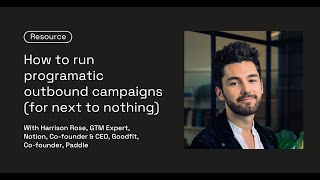
SDRs on Autopilot: How to run programmatic outbound campaigns (for next to nothing) - Harrison Rose
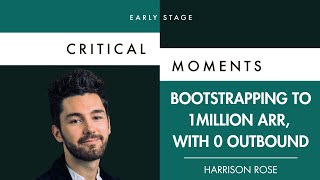
Harrison Rose - Bootstrapping To One Million Annual Recurring Revenue, With Zero Outbound
The New Growth Lever You Can’t Afford to Ignore with Paddle Chief Customer Officer Harrison Rose