Calley Means: Exposing the Secrets of the Food and Healthcare Industry | TUH #095
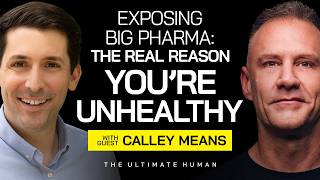
This is a transcript of Ultimate Human podcast episode featuring host Gary Breca and guest Calley (Calley) Means. The conversation criticizes systemic incentives in the U.S. food and healthcare industries, arguing ultra-processed foods and pharmaceutical incentives have created a ‘‘pandemic’’ of chronic disease. Means (former food/pharma consultant) describes tobacco companies’ 1980s acquisitions of food firms, the influence of industry funding on research and guidelines (e.g., the food pyramid), and personal motivation (his sister Dr. Casey Means leaving medicine; their mother’s death from pancreatic cancer). Key claims: ultra-processed food hijacks biology, childhood chronic disease is rising (childhood cancer highest in 2024; 33% of young adults prediabetic; 70% of kids’ diets ultra-processed), medical system profits from long-term sickness, and policy fixes should address perverse incentives and improve science/regulatory transparency.
Chapters
Most profitable thing for the healthcare industry is a sick child.
Can you expand upon that as a pure economic fact? The younger someone can get and stay sick, the better. Today in 2024 is the highest rate of childhood cancer in human history. 33% of young adults have pre diabetes. Then you get into it. Anxiety, depression, fatigue, chronic pain, infertility. We've normalized this suffering to such a degree that, that people who are clearly brewing metabolic dysfunction almost always say that they're healthy. And then the medical system conveniently says, well, people don't follow lifestyle interventions. Well, no, we have a 4.5 trillion dollar system that's incentivizing people to get sick and then drug them. Fundamentally, ultra processed food is designed to hijack our evolutionary biology. It's simple. From the food industry standpoint, it kind of makes sense. It's make food addictive and cheap.
We don't just like foods, we're addicted to them.
It's more mind boggling how fast you can reverse cardiology issues and diabetes issues from food and exercise.
The further we get from the basics, the sicker we become. Part of the people listening to this are like, oh gosh, it's hopeless. And part of the people are empowered to say I want to be a part of this change. Can you talk about some of those? Because I think it's important for the public to start to become aware that they actually do have a voice.
The politics drive the policy. So before we get into policies, I just want to say.
Hey guys, welcome back to the ultimate human podcast. I'm your host, human biologist Gary Breca and today's guest Cali Means is literally going to change the world. Guys, I know I say this all the time, but I just want to come to a full stop for a moment. I don't fanboy or fan girl over many of the guests that I have on this podcast, but but I am an enormous fanboy of this next guest. I have to tell you that rarely do I have the opportunity to sit down with somebody who is truly changing the world. I cannot emphasize that enough. I agree with Tucker Carlson that this man and his sister are going to truly change the face of humanity and they are going to do it quickly in a bottom up approach to fix our food supply. I really want you to pay attention to this podcast. It is going to be one of the most impactful podcasts you see in your entire lifetime. Please support him, order his book. Watch this podcast. Forward this podcast to anyone that you know. This is going to be an absolute seminar on the corruption in our food supply. The devastating effect that Big Pharma and Big Food are having on on the sick and diseased population that we are continuing to promulgate in this country is an absolute pandemic. The United States is the largest spender on healthcare worldwide and we are one of the sickest nations on the planet. I cannot say enough about my next guest, Callie Means. Cali is a former food and pharmaceutical consultant turned health advocate and he is the co founder of Trumed. This is a groundbreaking company that allows for tax free spending on health promoting activities and its products. He's also a New York Times bestselling author. He's currently, currently working on an eye opening book with his sister, Dr. Casey means that delves into how poor nutrition is at the root of many chronic conditions plaguing our society. Cali is here to share his incredible journey, his insights into systemic issues within our healthcare system and innovative solutions to improve public health. Please join me in welcoming Cali Means to the show. Hey guys, welcome back to the Ultimate Human podcast. I'm your host, Gary Brecker. Where we go down the road of everything. Longevity, anti aging, biohacking and everything in between. Between. And today's guest is a guest that has been on a meteoric rise. I am well familiar with his work and his book, a book that he and his, his sister wrote. I, I watched his podcast with Tucker Carlson which is actually a must watch podcast if you haven't seen it yet. And it resonated so deeply with me and the mission that I've been on at the Ultimate Human that I had to get this gentleman on the podcast. So welcome, Cali Means to the Ultimate Human podcast.
Pumped to be here, Gary Brother, it's.
It'S so good to have you. And like you and I were just eating each other's face before that. And like with a lot of my podcast guests before they come on, we're just in the kitchen going back and forth and eating some grass fed steak and, and you know what is, what is astounding to me is that, you know, the message that I've been trying to get to the world is one that we are not as sick or diseased or as pathological as we think we are. We're very often we're nutrient deficient. And your message, and your sister's message for that matter has resonated with me so much. I think it's going to resonate so well with my audience. But for those of my folks out there that don't know who you Are, could you just give us a five minute rundown of your background? Because I find it super, super unique.
I'll give the key points. I grew up in Washington D.C. and sorry. Yeah, grew up, grew up in the swamp.
Yeah.
And. And it was kind of. Yeah. Wanted to be in the swamp. That that was my goal. I was idealistic. I wanted to contribute to US public policy. So went to Stanford, studied economics, studied political science, got ready to get back to D.C. the day of graduation, went on, worked on campaigns and what was shocking was after the campaigns were over and I was on the Republican side, I was with Democrats people across the aisle working for consulting companies at lobbying companies and everyone in ghost and works for the big spenders in D.C. and the biggest spender by far is the health care industry. They spend five times more than the oil industry. Health care healthcare spends five times more than the oil industry, multiples more than any other industry. On public affairs, on lobbying, on influencing D.C. there's five pharmaceutical lobbyists for every member of Congress. And no matter what side of the aisle you are on.
For every member of Congress.
Yeah, yeah. So. So, you know, coming from a conservative background, you know, really idolizing American industry, I was really proud. I'm like, we're helping innovation. And I would meet in the morning with pharmaceutical clients and then I'd inevitably meet with the second biggest spender in D.C. which is big food. And we can get back. Food industry is about equal with oil. You know, the two most employed industries in the country are, you know, the food sector. And healthcare is by number one, you know, the, the fastest growing industry right now in America. It's not AI, it's not tech, it's actually healthcare. Healthcare is the largest and fastest growing industry in the country. And what I piece together later, unlike the tech industry or the tech industry, its best. For each marginal dollar we spend, we're getting worse outcomes, we're, we're dying earlier and, and have more disease. So it took took me a while to piece those together. I was very proud to work for these industries, even doing questionable things. I mean my first client was working for the healthcare industry was the opioids. It was 2011 and, and people were coming down in the opioid crisis and I was shocked. You know, as a junior employee I had lists of Harvard and Stanford professors and we funneled the money and you know, we couched it in terms of, oh, we're going to give Stanford. And the dean of Stanford who's a pain specialist, Dr. Philip Pizzo was his name at the Time we're going to give them, you know, from Pfizer and other other pharmaceutical companies some grants and some, some personal consulting payments and, and get to the right answer. Personal consulting. So and had a strategy from a lobbying office in Washington D.C. to funnel millions of dollars to the dean of Stanford Med School and other prominent professors. And then surprisingly, that dean was appointed the NIH panel to write the definitive report on opioids. And he was chosen. You can't have a more prestigious person, can't get higher than that. The dean of Stanford Med School. And he appointed the majority of that panel, other folks that we paid and, and they said the addiction claims were overblown. And today, today 75% of the opioid crisis that we hear about, those addictions started with a legal prescription, the fentanyl and all these other issues. Most people that die of an opioid overdose today, a fentanyl overdose, illicit drugs actually started with a legal prescription. So that, you know, those donations, kind of piecing it together had very disastrous consequences. Then working for the food industry, it's, you know, it's simple. From the food industry standpoint, it kind of makes sense. It's make food addictive and ch.
Yeah, I heard you talk about the genesis of, and if you would back it up a little bit, I've heard you talk about the genesis of the tobacco industry, their acquisitions of food companies and, and the shift of, you know, the staffing that actually created one of the most addictive compounds in America in world history. Shifting their focus to food.
How did that happen? Yeah, so, so my public affairs firm that I worked, was working at the time actually was the, really the architect of the cigarette industry strategy in the 70s and 80s. And what happened was in the 1980s, too late, decades too late. But finally, finally the government and the science, not even the government, the scientific authorities said there's harm to cigarette smoking. That's key. Forget any command and control regulation. These scientific authorities, my PR firm, right, we bought off the scientists and in the 60s, 70s and 80s to basically delay and basically, you know, you had in the, in the 70s doctors saying smoking was healthy. That was the kind of the scientific consensus. So in the 1980s, finally, at long last, the surgeon general really, you know, said smoking can be harmful. But Philip Morris and R.J. reynolds were two of the largest companies in the world. When you looked at the most valuable, highest market cap companies, it wasn't like Google, Microsoft, all the tech companies today. It was like cigarette companies. They were the two of the 10 largest companies in the world. And they had the highest balance sheets to the highest cash piles of any company in human history. Wow. So it's smoking was declining. They still had this massive cash pile. And the two largest M&A deals up until 1990 were cigarette companies buying food companies. So you have the movie Wall street and all this M and A activity in the 1980s, the biggest deals were cigarette companies buying food companies. You know, the definitive book on this era, Barbarians at the Gate about kkr, was Nabisco's acquisition by RJ Reynolds. So that happened. And then Philip Morris bought Kraft US Foods. So by 1990, the two largest food companies in the world by far were cigarette companies. And what they did is they, they, they, they shifted two things over. They shifted the thousands of scientists. So cigarette companies were one of the largest employees of scientists, the highest payers of scientists. They had the best scientists in the world making cigarettes addictive. So they shifted the addiction specialists, thousands by the thousands, over to the food department. And the second thing they did is they used the playbook from the lobbying and public affairs and they shifted that from cigarettes to food. So what happened? The cigarette industry paid Harvard. They created the Sugar Research Council and funded a bunch of research saying that sugar doesn't cause obesity. And that was the foundational this Harvard research. Again, how can you have something more prominent than study from Harvard? Yeah, the Harvard research was the cited basis and underpinning of the food pyramid. So the disastrous food pyramid that we all know about that by the way, the USDA forced other countries to adopt to do research funding and nutrition research funding with us. So the entire developed world was basically coerced through our corrupt system to endorse the food pyramid in 1992 shifted a huge part of the American diet, you know, from animal based fats, you know, it demonized those and shifted them to carbs and shifted them to sugar. And we all remember the food.
I remember this. I mean I graduated high school, I'm dating myself here in 1988, um, and that was about the time that I was going into college. And I remember myself walking down the, the, the, you know, the processed food aisle and, and looking for the lowest fat items that you could find.
Right.
My, my parents switched from vitamin D milk, and we grew up on a farm to skim milk. You know, we, we started doing the white bagels wonder bread. And you're right, I mean the big data screams in the face of that kind of research. Because if you overlay the incidence of obedience, obesity, type 2 diabetes, multiple chronic illnesses in the same biome, the skyrocketing rates of, of autism and everything else. You know, you, you think what all of a sudden caused this to balloon like that? I mean, I heard your sister quote a statistic the other day that, that I found fascinating that in 1950 1% of the population was pre diabetic, and now it's 50. I mean, that is, that is just astounding to me. So, so they, they acquire these food companies, they switch the, the researchers. You know, there's, there's interesting research that I've read about the compulsion for certain artificial sweeteners to actually trigger dopamine releases so that you actually do create that addictive cycle.
Right.
Similar to cigarettes. Right. There's a receptor on the back of the tongue. I, I think it's called the RF1A2 receptor. And that receptor is specifically sensitive to certain artificial sweeteners and sugars. And when it gets dinged, gives you a dopamine reward, which is like a drug. Right? I mean, it's, it's like there's your reward. Bing. You know, you get a little, little emotional boost. So now we don't just like foods. We're addicted to them. Want to get an extra hour of quality good sleep every single night? Let me tell you how I do it. My wife and I sleep on 8 sleeps pod 4 ultra. This is a technology that fits over your mattress to cool or warm each side of the bed, giving you up to an extra hour more of quality sleep every single night. My wife likes her side of the bed warmer than mine, but I've noticed that I've improved deep sleep at cooler temperatures. It even elevates automatically when it detects snoring to improve airflow. With 99% accurate sleep tracking, you can leave your wearables on the nightstand. And I even had this thing independently EMF tested to make sure that I was not getting any extra EMF at night, which I'm not. Get $350 off the Pod 4 Ultra@8sleep.com Gary. That's 8sleep.com Gary. And use the code Gary G A R Y for your discount. Transform your nights and elevate your sleep. Now let's get back to the ultimate.
Human podcast, what you just described. Nobody understood that better than these scientists. And we kind of just assume, oh, you know, the food industry, all these industries have. Our interests are hard and we get a lot into motivations. I mean, these aren't, I think some of the people are evil, but these aren't fundamentally evil people. But they do have a bottom line. They did use billions of dollars of debt to buy these companies and need to return money to shareholders. And that this fundamental insight about the idea of ultra processed food being able to hijack our biology, you know, we get lost in these studies and you know, the evidence based, you know, which is very important, but like, but like we can get lost in the weeds. Fundamentally, ultra processed food is designed to hijack our evolutionary biology. You know, when we were eating grass fed steak in there, you can't really overeat that. You know, there aren't animals in the wild that have, you know, chronic obesity and diabetes rates. It's only us. Right. And the difference we have with animals in the wild is ultra processed food. And, and the point I'm trying to add to this discussion is that was really, really intentional. Not figuratively, literally. Tobacco industry scientists and tobacco industry lobbyists and you look at cancer rates in 1985 or so, when the surgeon general started coming down on, on smoking, they've exploded. They're up like 8x. Right. And to today in 2024 is the highest rate of childhood cancer in human history. Childhood, childhood cancer, it's exploded. The New York Times recently had a front page article saying cancer rays are exploding among kids. Nobody knows why.
Nobody knows why now. Yeah. You know what's interesting about your animal analogy too is that if you actually take animals out of the wild and put them in captivity, you do start to see chronic disease, obesity, diabetic depression. You know, animals depression. You know, when you feed cattle soybean, they actually have, they, they become pre diabetic and actually diabetic. And I actually read a really terrible article on commercial cattle farming where, you know, a lot of these cattle are, are dying of type 2 diabetes at the time that they're slaughtered, where the grass fed cattle are not. And the amount of stress hormones and cortisol that's, that's circulating in their blood and their, their, you know, they're fearful and they're, you know, they're not their natural environment.
Yeah.
Their cortisol is so high in the stress hormone that gets into the meat.
Yeah, no, it's, it's, it's a, it's a great point. And you know, Casey and I talk about in the book, if you had two glasses of water and one had arsenic in it, you'd be able to understand that we can differentiate the components of, of something. But with food we have this mental comp lapse where we just see it all as the same and, and we dive into this really specifically with the difference between a industrial farmed, you know, GMO grain fed cow and a cow out in the wild grass fed as it's, you know, in the sun. Is it the, the genetic, the Omega 3 to Omega 6 profile is entirely different. It's reversed. That cow, you know, the industrial raised one is much more inflammatory, has much more cortisol. Just fundamentally that's making the, the genetic makeup of what we're eating and has profound effects. You know, you like and put beyond meat or some fake meat, you know, we see that as healthy and that's been advertised to us as healthy. You just look at the ingredients, look at the components. That is the key thing. Look at the components and how this, this animal is made. You know, we talk a lot about, and talking about some politicians who've been talking about this. Where have all these allergies come from? Where have all these lactose intolerance, gluten allergies? These weren't a thing. No, you know, these weren't a thing. And it's not milk is the problem. It's not, you know, gluten necessarily is even the problem. It's what's being done to that food. It's. And, and we just have a real understanding that. And that's just, I think a, a mental moral almost blind spot again when the food was able to be taken away from us. And in 1990, the ultra processed food percentage of the American diet was much, much lower. Today for a kid, it's about 70%.
70% ultra processed food.
70% food. That is a science experiment. I just cannot express it enough. You have a science experiment from tobacco scientists. The food industry still to this day is one of the largest employees and best paid, best paying employer of scientists. And they're not there, you know, to do unbiased research. The, the, the real criminal aspect of letting the cigarette industry buy food companies is, is now they're able to market to kids. Now their Target market is 100% of people and they've been able to buy off the usda, the nih, the fda, the Food and Drug Administration in order to push this product on kids. We truly would be healthier if the cigarette industry went back to making cigarettes.
I mean, it's laughable, but it's, it's not, it's a sinister laugh. I mean, it's, you know what's also astounding to me too is that, you know, well, first of all, I think that Covid may have done the whole world a, a favor in that I think it rattled the foundational trust of humanity in the elites to be. And, and I think for the first time maybe in modern history, people are looking at this, these, this elitism and saying maybe the government doesn't have my best interests at heart. And I don't actually think that there is a, you know, like senators out there and people running for Congress that are like, we're gonna, we're gonna increase the rates of childhood obesity in children. We're gonna, we're gonna drive up cancer rates in children. I don't think it's that conscious. I think that the machinery has been architected in a way that we just make so much money off of disease and there's just so many billions of dollars. I mean, type 2 DIA, 110 billion dollar industry in America. I mean, I don't think anybody's sitting in a boardroom right now saying, hey Stan, how do we shut that down, right? How do we get this 110 billion off the balance sheet? Let's just figure out a way to manage it. And I, and then when you look at, you know, most of the profiteering in, in, on the, in the medical industry, it is from the, the management of disease, from the maintenance of symptoms. It's like, well, we're just going to take the symptoms that you have right now and we'll just maintain them over your lifetime. But the trade off is they won't get worse. But you know what does get all of the things that are the side effects of those symptoms. And so that's why I think your background is so interesting because you came from a lobbying perspective and similar to you like your sister's epiphany, like when was the epiphany for you? Yeah, like what, what was the tip?
Yeah. So I hate to admit it, but, you know, I got out of this world more than a decade ago and I didn't fully put the pieces together. So I had a couple life events. One was my sister. So again, you know, we kind of were just, you know, conditioned to rise up the traditional ladders. And Casey was the star of the.
Family, climbed the highest that was educational ladders. I mean the most respected ladders in arguably in the world.
That's what we thought success was. And, and Casey was the real star. I mean, you know, she president of her Stanford undergrad class, went to straight to Stanford med School. Top, top of her Stanford Medical school class to her choice of residency is, did head and neck surgery. Top performing resident in her head and neck surgery had done, you know, Hundreds and hundreds of sinusitis surgeries, which is where somebody has such inflammation. Their sizes, you're. You're passing them out, cutting out the, the remnants of the inflammation.
My daughter literally just had this.
It's, it's epidemic right now. So everyone's ever so. So Casey, in her fifth year of residency, we talked about this in the book, had a kind of out of body experience where it's just all these inflammation conditions are exploding. It's really. She really is an inflammation Dr. Y. And she's doing her third sinusitis of the day. Somebody is passed out, she's got their sinuses cut open. And she has this realization that she did not know why that person has inflammation. And she's like, am I the idiot? Did I not learn this? And then she goes back to her Stanford medical school training, and not once did she learn what causes inflammation. She actually realized that she didn't take one nutrition class, and 80% of medical schools do not require a single nutrition class. She then unwound it a little bit more and realized more than 50% of Stanford Medical schools and Harvard Medical School's funding comes from pharma. She then realized that 90% of her entire course load was on pharmacology. So there's this invisible hand.
Goosebumps.
There's an invisible hand that is training doctors. Right. That medicine, that serious medicine, only kicks in once a patient is sick. Her first week of medical school at Stanford, the dean said essentially, the American patients are lazy, that they're going to eat their Big Macs and their big Gulps and they're going to be sedentary and the best we can do is stand here heroically with our scalpel and our prescription pad to practice serious medicine. When Casey, after sinus surgery, sinusitis surgery, mentioned some dietary interventions because she looked at the patient's chart and realized that that patient has seen seven other specialties which she's never stalked. That patient had diabetes. That patient was battling obesity. The patient was battling, obviously seeing her cardiologist. That patient, you know, had depression. The patient had all these other issues. Casey had never spoken to those other doctors. All siloed treatments. And she mentioned a dietary intervention. She read something on PubMed and she was reprimanded by her attending surgeon. And the attending surgeon said, we didn't go to nutrition school. Okay. We practice serious medicine here. Yeah, we cut them open. Yeah. And, and, and, and that really awoken me. So Casey bravely left the system. She put down her scalpel. She said, I need to Figure out why people are getting.
She's nine years in, if I remember.
Yeah, that's absolutely right. And you know, hundreds of thousands of dollars of debt and, you know, societal expectations. I mean, our system is taking the best and the brightest.
Yeah.
And then we saddle them. But she looked around the hospital. Every doctor realizes what's going on. They feel trapped. Doctors have the highest suicide rate of any profession in America, highest burnout rate. You know this. If you're on a missionary, you know, zeal to. To do something that you really believe in and working really hard. You don't have the epidemic depression.
The number one killer of cardiologists is cardiovascular disease.
Exactly, exactly. But if you feel, if you're working hard and feeling like you're in a trap system. She saw that. Every doctor around her says behind closed doors that they feel trapped. They know patients aren't getting better. We have the biggest decline in life expectancy in American history since 1860. Right now, rates of every single chronic condition is going up as we're spending more to treat them. In 2024, it's the highest rates in American history of heart disease, cancer, autoimmune conditions, autism, go down the list. Kidney disease. Every single condition is going up all at once, particularly among kids and as we spend more to treat it. So she realized that, doctors realized that. She stepped away and went on a real journey to understand what's causing people to be sick. And that helped me really crystallized by our moms supportive of that with your parents. I said she was an idiot.
Stanford.
So surgeon. So. So I screamed at her. So we didn't.
How dare you. With the family name.
So we didn't speak for a year. Oh really? It was, it was very, very. I think this was 2017. I called her. I just finished Harvard Business School. I'm kind of all, okay, this is, you know, I'm doing an E commerce startup. I haven't been awakened yet. And I said, you're being an idiot. You're disgracing yourself and the family. I said that essentially my parents were extremely supportive and although we really had this for some reason embedded trauma to just climb up the. My parents have always. I don't. But it's. It's not my parents fault. My parents were really. They threw her a party when she left medical school. I, I called them. I'm like, she's being an idiot. She's. This is disgrace. So they said, she'll figure it out. I know she. But she had no plan. She just had to get away and she has that kind of moral courage. And she just started seeing. People flocked her, she just started posting stuff. I'm like, what are you doing posting recipes and stuff about food on Instagram? And she had that hundreds of people started reaching out to her and she started her own practice to help people get to the root cause. There's a clamoring for this. There's so much pain out there. So what really, and my sister and I really vowed to make this our lives mission. And where it really came together for me is in 2021, my mom was taking a hike, felt a pain in her stomach, went into Stanford Hospital, got a scan, get to text the next day, stage four pancreatic cancer. She was, we thought she was perfectly healthy. She called me that night and she said, I'm going to die in the next couple of weeks and I'm not going to be able to meet my future grandkids. And we raced to her side and we went to Stanford Hospital, the top oncologist in the world. And they said to Casey that this was unlucky and a tough break. And my sister, you know, looks at my mom's charts and she's been on chronic disease medications for 40 years. She's the standard American patient. And this is, it's not about my mom. This is for everyone watching. The standard American patient is on that statin, which my mom was on is on that metformin for high blood sugar, is on that ACE inhibitor for high blood pressure. The definitions of metabolic dysfunction. Right, right. Obesity, cholesterol. Yeah. Triglycerides. Exactly. Blood pressure. Yeah. She was on a medication for all five. Right. And the standard American patient is you literally take the definitions of metabolic dysfunction. We're drugging it at every single appointment over those 40 year curve. Oh, it's pre diabetes. It's a pre disease. Most people your age are on the metformin. Oh, a statin is the most prescribed drug in the world. This is normal, it's very preventative. No problem. ACE inhibitor. Oh, your blood pressure's a little high. Take this. Not one warning sign. And what was so clear as we buried my mom is that she was a casualty of the system. She was the person who thought it was correct to be eating the carbs and eating the processed food from the food pyramid. We were really conscientious about food, but she was following the guidelines. She was a good American patient. And she was let down. And the majority of Americans are being let down because they're listening to the system and the big radicalizing point again. After my mom died, we decided to write this book in the days after death and decided to make this our life's mystery. We both have startups and just started advocating a key message I have. And Gary, you're a warrior on this is, is you really need to trust yourself on chronic conditions. If you have an acute issue that's going to kill you right away, an infection or a complicated childbirth or something, go to the hospital. But we have been totally let down, totally let down on chronic conditions. It's been completely co opted and it's much actually more simple and we have more empowerment than people have been led to believe. The second we started trying to medicalize chronic conditions, that's when things went off. Casey at the end of Stanford med school had to choose between 42 specialties. We've siloed the body, you know, to where my mom was seeing five different specialists for all those conditions. The cardiologist, the endocrinologist, all the things, it's the same route. We are being lied to that chronic conditions that are, that are, to your point, taking up 95% of medical costs. 95 of medical costs are chronic conditions a year. Yeah. Broken bones and, and you know, all these things that you think you know that are good to go a lot. That's 5%. Yeah, 5%. So, so, so that's what we need to rethink and that's we're on the mission to do. And I'm, I'm very optimistic. I think people are waking up and I think Covid was a big part of it.
I'm optimistic too because folks like you are actually bringing to light the, not just the corruption, but actually the, the real pandemic. And it's a pandemic of chronic disease. And I think that people have accepted such an erosion of their baseline sense of normalcy that this is normal. You start wearing readers in your late 40s, your early 50s, you start on cardiovascular medication when you get into your early 50s, in your late, you start managing your blood pressure with glucophage. And it's just what, and, and, and it's so normalized because everyone your age is doing the same thing, right? I mean, my parents are the same way. I mean my dad's a Navy captain, my former Navy captain. My mom was flight attendant. We grew up very, very middle class. But I, I, you know, looking back, I see that, you know, she had a little bit of low thyroid. So then she started Synthroid and then after Synthroid she started Enderal for beta Blocker. And then, you know, the, the, the chronic inflammatory conditions. They started her on a blood thinner, so then she was taking, forget what the blood thinner was, but she was taking a blood thinner, heparin. And, and then all of a sudden she started getting really, really severe joint pain. So they put her on a corticosteroid. And you know, I know now especially from the research in the mortality space, the corticosteroids actually, you know, initially knocked down the inflammation, but then they ate the joint like a termite. So she had bilateral knee replacements. And this is Mama Breca. And, and you know, 10 years ago when I started this journey, I mean, by the grace of God, both of my parents are still alive and they're thriving. Given, given their backgrounds now. And you know, I thank God for every day I get to spend with them, but they, but it's the very same thing, you know. You know, my dad was under the military care. My mom had really good health insurance through Delta Airlines. She worked for the airline for 30 years, but just on the big pharma treadmill. Just, just they, they got on that wheel early and it just progressed and progressed and progressed. My mom's weight ballooned and then she had bilateral knee replacements. Then they didn't get out of bed for 45 days. And then her cognitive function declined. And then they're like, oh, you have early onset this, early onset that. And it was like, I, I was like, enough, all right, this is crazy. And, and you know, we've revamped their diet. I have them getting in a sauna because they're deconditioned. I'm getting in sauna, breathing oxygen, doing multi step oxygen therapy, taking some peptides, you know, supplementing with some basic minerals, amino acids, omega 3 fatty acids. It is astounding how much different my parents are today than they were 10 years ago. And they're 10 years older. And I think so many people that are watching this, you know, know that there is this, this treadmill. And, and you guys call it the.
Forget what you call the pharmaceutical.
Yeah, the pharmaceutical treadmill. Yeah, yeah, put you on there.
And it's.
I, I love that analogy because the crazy thing is they drop babies on this. Day one, they're out of the womb and 15 minutes later they're on the treadmill. And I'd love for you to talk about that a little bit because I think this is what, you know, one of the, one of the things I've heard you say in the past, it was just a statement of fact, which I I like you. You weren't attacking any particular industry, was just a statement of fact. You said the most profitable thing for the healthcare industry is a sick child. And you just let that resonate for a second. Most profitable thing for the healthcare industry is, is a sick child. Can you expand upon that?
Yeah. Again, I want this to be really clear. Let's get out of the conspiratorial realm.
Absolutely.
And, and just like I want everyone. That's a charge statement, but I want everyone to just think about a pharmaceutical executive. I know many, many of my friends work at pharmaceutical companies and I don't think they're evil either. But, but, but, but they are going to get fired if growth doesn't happen. So I just want everyone to just think about this and think about what drives growth. 95% of medical spending is on interventions. Once people are sick. As a pure economic fact, the younger someone can get and stay sick, the better. And while financially. Yeah, yeah. And while working for the pharmaceutical industries, we really aggressively lobbied to get more vaccines on the schedule. Just as a simple statement. And once you're on the schedule, you're mandated for every single child to take it. You're basically not able to go to school and able to do a lot of things if you take it. And there was a big issue with the hepatitis B vaccine, which was actually an std. You can only get it, you know, basically later in life, or intravenous needles. And we lobbied heavily to have that first day of life. So in the first hours of life, a child is basically mandated to get a injection for an std. Now, I'm not saying this drug actually isn't good. In many cases, if the mom has hepatitis B, which they test for, test for you, you should have it. But this just as a statement of fact, is transferred through sex or intravenous needles. And there was an aggressive, I saw it, aggressive lobbying from the pharmaceutical company because they need to make the return. And once you get on the schedule, so, so that's just an interesting example that you're almost normalized from the first moment of life, that a pharmaceutical intervention, that there's something wrong with you from coming in this world. Then you look at kids. As you mentioned, diabetes wasn't a thing a generation ago. A person, a doctor that treats diabetes wouldn't see a diabetic child in their career. Today, 33% of, of young adults have pre diabetes. That is statin rates, metformin rates have doubled in the past five years among high schoolers. Antidepressants. You talk to any parent of a high schooler are prescribed like candy, you know, getting to adult women. 25 of adult women are on some kind of psychiatric drug that, that starts really in high school right now. Yeah, 20. It's the most prescribed drug in the country. Now the Academy of Pediatrics that, you know, when I was a lobbyist pushing for, you know, food stamp funding for soda, it's the number one item on food stamps. And you know, school lunches still have no sugar guidelines and agriculture subsidies all go to ultra processed food that are poisoning our kids. Not a statement from the American Academy of Pediatrics which sets the standard of care on those issues. They're predominantly funded by formula makers, processed food makers and pharma. And now we're saying that 12 year olds, first line of defense, they literally say not wait and see. If a 12 year old is overweight or obese. Ozempic for life overweight or obese, that's 50%. And it's to be really clear, even if they're pre obese for life. So, so you just. For all parents, if your child is a little bit distracted sitting in a sedentary room eating ultra processed food, low sunlight, any animal would be a little bit distracted. They're a little bit. It's Adderall, of course. Yeah. If they're a little bit sad, they're getting an ssri. If they have slightly high cholesterol, stand for life. If they have slightly high blood sugar, which again is more than 33% of young adults, Metformin skyrocketing. And now you as a parent are going to be told that you're going against the science if you don't accept an Ozempic prescription for your child. So, so the problem here is twofold. You hit on it the treadmill and the whack. A molecule. There was recently a, a psychiatry conference about the impact of SSRIs and GLP1s and people were actually very happy because actually SSRI and Ozempic rates are tied together. So just get this. When you take SSRIs, which now a bunch of kids are on, that's antidepressants. One of the key side effects listed side effects is weight gain.
Right. So now psychiatry and lessergy which actually furthest away gain.
Yeah, yeah. So. So a lot of psych. So. So there's big conferences now where psychiatrists are prescribing GLP1s with the SSRIs preemptively. Now what's the top, what's one of the top side effects of ozempic depression and suicidal ideation. So the EU is launching a mass investigate, a big investigation, into increased suicidal age ideation into GLP1. So this is actually very concerning. It makes sense because the GLP1s disrupt your gut and microbiome, which produces 95% of your serotonin. And this makes a lot of sense. Yeah, so, so there's actually, it's a, it's a whack a mole because you, you, you actually have to do the Ozempic because of the SSRIs. And then the Ozempic is causing people to need to up their dose of SSRIs. So that's the type of train we're getting on. And the most criminal part of all of this, and I think why, you know, public policy and parents, and I think that defines this, is that when a child is told that their cholesterol is a statin deficiency, or they're told they're slightly being overweight is no ZPIC deficiency, or told that their blood sugar is a metformin deficiency, or told that the fact that they're a little bit sad, you know, is an SSRI deficiency, that's a lie. And what you're doing is robbing that child of. Actually, I think the core thing they need for spirituality, for a thriving life, for happiness, it's just an understanding of the interconnectedness of their body and metabolic health. And that's why I think we're actually in kind of this spiritual crisis where we're told, okay, ultra processed food is fine. We're completely divorced from the soil. We're completely divorced from the fact that food today is, you know, by some measures, 50, 60, 70% less nutrient dense than it was a generation ago or two generations ago because of our soil depletion. You know, trust the industry, trust the science on this crap we're putting on our body. That's the science on this crap we're putting on our body. Then, okay, there's a cure for everything. There's a pill for everything. We can just poison ourselves and then cure it. That's what innovation is, that's what science is telling us. And then we're losing. We're robbing that child of, you know, an understanding of how movement, of how sunlight, of how food, of how sleep, of how just basic biological needs impact. And if a child, if a child doesn't understand that they're gonna live a less suboptimal life, does anyone think, because.
They don't feel empowered, like they don't realize that I can actually take make choices into my own hands that could have a material impact on, on the trajectory of my life. You know, I, I could actually be less fat if I moved more. And, and if I moved more, I would actually feel better. And if I felt better, I would actually be more engaging. And it's almost like the hub of the wheel, right? It's, it's, you know, I talk about this all the time. You know, all these. I just did post on Instagram and I, I, I put a 20 pound rucksack on and I went for like a couple hour walk in the woods. And when I was coming back from this walk, I felt so amazing. And, and, and I sort of threw myself under the bus and I was like, you know, I have all this fancy equipment in, in Miami. I got red light beds and I got hyperbaric chamber and I got, you know, cold plunges and, and, and all this stuff, right? And you know, costs a lot of money. And, and, and this like fiore walk that I did in the woods, I really just tapped in and I was like, like this is the best I have felt in a long time. And I'm very in touch with like, you know, how I feel and how I sleep and how I wake up. I was looking at my sleep scores at, you know, when I was sleeping at 10, 000ft, they were through the roof just in that short period of time. And, and I think the more disconnected we get from nature and the more, just the further we get from the basics, you know, the sicker we become. You know, you, you look at the number of sunscreens that have been pulled from the market for causing cancer, and yet the villain is this. You know, we vilified the sun and you know, we've, we've vilified grounding, exercise, sunlight, movement. You know, there, there's some really interesting studies recently on, on exercise, actually outpacing the results of depression, you know, versus exercise, versus SSRIs. But we, I guess there's no money in that. And, and what you're telling me is there's even, it's even worse. There's a conscious effort to dissuade people from doing those things. Hey guys, Gary Brecke here and I want to talk to you about something I consider a true game changer in my health regimen. Kettle and fire. Bone broth. When it comes to bone broth, kettle and fire is simply the cleanest on the market. They use only grass fed and grass finished beef bones, ensuring you get 19 grams of high quality protein per Serving it's the ultimate fuel, especially for those of you diving into extended fasting protocols. In fact, this is the only bone broth I trust and I use for all of my fasting challenges. And now you can experience it for yourself. Just head over to kettleandfire.com and use the code Ultimate Human to save 20% off your entire order. Trust me, you don't want to miss this. Now let's get back to the ultimate human podcast.
Yeah. And where I really try to play on this is like a systemic public policy level. I really do think Americans and humans have an evolutionary desire to be thrive, to be healthy, to not poison their kids. And I really do trust people that they want to be healthy. And I think you just look at what's happening in America where we're like three times more diabetic than Italians. Yeah. I don't think we're like less. Are we like that much more lazier than Italians? I, I think there's like something happening. So, so what I really go to when you're talking is I just think the standard of care in our medical system is wrong. Like, like we should just expect the medical system when somebody is depressed to give the correct medical advice. Now sometimes that might be involved drugs. I'm not fully anti drug but it's just, it's just wrong. You know, when a child in 80 of their diets all to processed food. You know, children are so sedentary right now that 70, 70, 77 of 21 year olds aren't eligible to join the military. Right?
77.
77. It's a national security crisis. 77% of young adults aren't eligible to join the military. So, so you have a child, they're, they're being force fed ultra processed food. You know our schools, we sit them and they listen to. Yeah, yeah, they're not moving, they're sedentary, they're in a sunless room. They've got a weapon of mass destruction for chronic stress in their pocket. Children are sleeping two hours less than they did 100 years ago. Matthew Walker talks about this. The school times are actually criminal. Know it's, it's totally against a child's circadian rhythm how early we started. So we've basically taken like every like pillar of their metabolic health and it's, it's destroyed to an unprecedented level and it's just not medically accurate for a doctor to see that kid for five minutes and just immediately prescribe them, you know, a drug that kind of mellows them and mellows them out. It's just not the right medical intervention. And, and then the medical system conveniently says, well, people don't follow lifestyle interventions. Well, no, we have a 4.5 trillion dollar system that's incentivizing people to get sick and then drug them.
Yeah.
Like if doctors actually said the truth and the correct standard of care. Let's look. And you were talking before we went on just how it's, it's mind boggling how fast you can reverse.
Oh yeah.
Cardiology issues and diabetes issues. These are reversible conditions from food and exercise. I always go back to Covid you mentioned. I mean, if this was a warning sign for our immune system and metabolic health and we were dying multiple times more higher rates than other countries and if the secretary of Defense and Secretary of the treasury, because we're going bankrupt and you know, all the medical leaders stood in unison, you know, in April 2020 and said this is a real warning sign for our, our immune systems and our metabolic health and we need to harden up a little bit and we need to shift medical incentives and shift medical guidelines, you know, not forcing anyone to eat or do anything but incentivizing it and recommending us again. When people, when the food pyramid came out, we followed that. When these smoking guidelines came out, we followed that. When Dr. Fauci said to take certain pharmaceutical products, we followed that. 90 people did. We listen to medical leaders and I think this idea and this gaslighting that we have that, that like, like, you know, if there was a resounding, you know, in unison from the dean of Harvard Med School, the head of the NIH to the head of the FDA saying that we have the paradigm for chronic disease wrong. And, and you know, the intervention for diabetes, the intervention for pcos and infertility, you know, we have millions and millions of women. Most of my friends are they, they struggling with pcos. It's skyrocketing hormones, you know, up until an intervention. IVF is a miracle. Great. That should absolutely. But, but it's an invasive, gruesome procedure and I think a lot of women would like to know that PCOS is insulin resistance and can be reversed, often very quickly, before going up, you know, and messing with your hormones and doing invasive surgical procedures. But those are much more expensive. We just need the standard of care and we need to attack the incentive of every single lever of the medical system profiting from people being sick. That is the simple economic factor. Pharma companies, hospitals, even insurance companies profit from people being sick. Premiums have risen 100% in the past 10 years. The largest source of inflation in America right now is health care inflation. That is because insurance companies can only make 15% profit margin by law, but they're able to raise premiums. So what does that mean? That means they want to take 15% of a bigger pie. And that's what's happened. They have no cost controls. They're able to raise premiums every single year. And what is raised cost means, that means more people getting sick. Fundamentally, every single industry that touches our health wants more people to get sick for longer periods of time. Unless we're attacking that incentive, which some politicians, we should be, you know, very, I think complimentary. This are finally talking about. Unless we touch that incentive, nothing else matters.
Yeah. And I think unless we make it politically unpopular, right, to support that, that the, the current message, which, you know, then it will continue.
Right.
And I think when Americans rise up and, and the world rises up and they realize that the pandemic of chronic disease is something that is preventable and that we really have been lied to about our food supplies and we've been told the glyphosates are safe and pesticides and herbicides and insecticides and preservatives. You know, I remember my mom telling me that when, when she grew up, her, her mother used to have to go to the grocery store every day, right. Like, so she went and got fish or she went and got bread or she went and got eggs or you know, every single day because they could, they stuff rotted. And now you can stick a piece of fruit on your counter for 30 days and, and, and eat it. It's not even food. It's like when we embalm bodies, those, those bodies aren't living. They're preserved. When we preserve food, it's not living. It's just preserved. And, and there is a way for us to not incentivize, in my opinion, from the top down, but from the bottom up where we, we should be incentivizing sustainable, healthy agriculture and putting nutrients back into, to the soil. If I think if you trace 99% of human nutrition, it will come back to the soil. Right. I mean, because the plants that grow in the soil that we either eat or that animals eat, eat, either have or lack the nutrition that they need to, to manifest the kind of nutrition that when we eat them, we're not what we eat, we're what we eat eat. And you know, you look at genetically modified foods and, and the, the impetus to try to increase yield and not increase Nutrition, right. Not, none of these, none of these agricultural farmers are saying, hey, how do we improve the nutritional content of our wheat? Soy, dairy, corn, you know, blueberries, bananas. They're saying, how do we increase the yield? Well, what you do is you make it genetically resistant to glyphosates, poisons and you get rid of all the pests. And I, I have a very good friend that's a farmer, Alfie Oaks, and he has a organic farm, thousands of acres of organic farming. He said there are some farms in the state of Florida that have been spraying their crops with pesticides and herbicides and insecticides for so long that there are no more pests around. Like there's not a white fly for 300 miles. But you know what they do? Spray it again the next year. Right. And, and there's not even the necessity for it because they have poisoned the environment so much that the pests that they were trying to stop from eating the crops are actually no longer pests. They literally, it's like the species is extinct, but we're still trying to kill the species. And you know, the, the, the, the thing that I love so much about your message is that it's not just one of fear mongering, you know, it's very, it's very fact based. You know, you're, you're not saying that there's, you know, some, you know, evil wizard behind the thing behind the curtain that's saying let's, you know, make more children sick, but the profit center is, is what forces them to do that. Right?
Yeah. And, and working for these companies, you know, more than a decade ago, you know, more on the conservative side, we used to go and say any regulation against farmers and against, you know, pharmaceutical companies is nanny state and anti free market. I used to make that argument and people still make that today. What I've learned now is that we don't have a free market. That's the key. I actually am not a fan of banning many drugs at all. I think people should be able to, you know, experiment with Ozempic. Experiment, whatever. The problem is that in america it costs 10 times more for Ozempic than in Germany, that the pharmaceutical industry has completely rigged Medicare and Medicaid. And let's take Medicaid, a program for lower income people that is not able to negotiate drug prices with the government. And the second a drug is approved for Medicaid, it's free reign. Doctors can get reimbursements for it. So there's a bill right now with hundreds of co sponsors for Ozempic to be approved for lower income people saw that 40, 18. So think about that incentive. The doctor then has a incentive to get as many poor people as possible on Ozempic. They're getting an annuity from the government. That's $1,800 a month. Right? $1,800 a month. Okay, so Novo Nordics is the 10th most valuable company in the world. It recently passed LVMH, you know, the fashion house as the most valuable company in Europe. It's the most valuable company in Europe and 85% of their profits are expected to come from the United States. It's not the standard of care in Europe and it costs much less. It's all about the rigged US system and the actually the US system is based on a co opted Medicaid policy. We're spending more on metabolic conditions just on Medicaid than the entire defense budget. Budget. Okay. Just on Medicaid just to handle the government metabolic conditions among poor people. It's bigger than our defense budget and growing much faster. So, so that's, that's not a free market. Right. Rigging the price so that we spend 10 times more than Germany and then incentivizing as many doctors to have a 50 minute appointment as possible with a lower income person to prescribe them an injection. Instead of getting them on metabolically healthy habits, they get this injection. Don't change their actual habits. So they're inevitably going to cost us more and more and rack up other comorbidities. Does anyone think if you're eating 20% less poison that you're not going to cause more damage to your cell and have other health issues and live a thriving life? Of course not. All right, that's a lie.
Right?
So, so you're getting people and incentivizing them on that terrain. You know my message top, top down. But I think this applies bottoms up too is is there's a lot of resources your podcast Casey and I try to talk about in the book, you know, really where people are gravity to it's tips on metabolic health. I think there's a real awakening at the top down level. I just ask for the incentives to be correct and for the science to be correct. It's just not scientifically accurate to say obesity is an oz epic deficiency. Generally.
I totally agree with you. And, and then there's the whole shaming side of things that if you speak out against it, you're either a racist or you're a bigot or you know, you're, you're you're anti low low income, you know, because why would you be against having Ozempic as a covered drug for poor people? Well, I'm actually against it being a cover drug for anybody that, that hasn't, you know, at least tried to improve their metabolic health. And it's like is, is, is the message that we can empower these people to take a little bit of responsibility and improve their metabolic health so maybe they don't get all of these chronic conditions or, or do I love them more and I'm not a racist because I just want to bring in a pharmaceutical solution, let them continue their toxic soup of, of what they're, they're destroying their cellular biology. But you know, I'm not racist because I'm in support of having this, this drug be the solution. And, and you see that that industrial complex shames you if you speak out against it.
It's so, it's so interesting to compare how the medical system talks about food and childhood nutrition and how they talk about drugs. Right. When it comes to children staying on a pharmaceutical program and staying to a schedule of pharmaceuticals in various sectors, there's no cost too high and there's no excuses. You are a bad parent if you do not administer pharmaceuticals to your kid. If your kid has a condition, a chronic condition later, there's huge, huge unrelenting clarity and guilt on those parents for that kid to take a sad. It is being. You think about how many your kids, they're threatened with their kid committing suicide if they don't do certain pharmaceutical procedures. It's the medical system knows how to guilt and they know how to explain something in a really serious way. The medical system is so insistent about the importance of adhering to pharmaceuticals that they have their claws in tech companies and media companies. And it's considered the highest level of dangerous disinformation to criticize a pharmaceutical product. But when it comes to not poisoning children at scale with ultra processed food, oh no, no, no, no. We can't possibly expect these dumb lower income people to not, you know, poison their kids. How can we possibly expect them to do that? How can we possibly speak to them like adults? So there's a bottoms up message I have and I think this can be a lot solved with the bottoms up. If doctors communicated to patients of all income levels with the same forcefulness and same clarity that they communicate with patients about taking pharmaceuticals, we'd be in a better place.
Yes.
The fact of the matter is it is really hard for lower income people and single moms making it Work, but we should communicate to them. And while the system's letting it down, you know, somebody recently asked me, what would I say to a lower income mom who says she can only afford lunchables and processed food for her kids? I would say she's poisoning her shoulders.
Yeah.
Like that's the first thing you have to say. That's a fact. Right. And. And the system's letting her down. The system's lined her. The incentives are totally stacked against her. But it is incumbent on every single parent to not poison their kids. And the first step. And again, I think this all just flows to medical guidelines. If I, you know, I'm advising a leader about this. You, we don't need to get into bans. We don't need to get into taxes. We literally can spend a year just looking at the fda, looking at the nih, looking at the usda, getting corruption out of those systems and asking them for report on glyphosate, for a report on food dyes in our kids food, for reports on all of these thousands of ingredients that are in our food, that aren't in other countries, that are part of that science experiment to make food more palatable, make the food addictive. Let's just get the truth. The policy falls where they may. If the USDA explains that glyphosate is a national security and public health emergency, I trust policymakers to do that. It's there, then, it's there. But we need the science. That's what we need. And I think, I think the problem is that parents and lawmakers, you know, you mentioned senators and the congressman not being bad people. I've met with 100 from both parties in the past year. No, they're not. They are just feeling bashed over the head with all these reports. They literally have lobbyists coming into their office with USDA reports saying glyphosate's fine and saying they're anti science if they go against that. Right. The NIH and Tufts Nutrition School, we all know about that study that said lucky charms are healthier than beef.
Yeah, that was my favorite.
It's funny. It's funny, but it's really not. Because that study, the top line, the reason for it, the cited reason from the NH was to influence childhood nutrition marketing guidelines. So the second you have these ridiculous studies saying lucky trauma is healthier than beef and eggs, that then goes to regulators and members of Congress. And I hear this time and time again from senior members of Congress on relevant committees overseeing nutrition and health. They're like, I Just, I just don't have, like, I'm a military guy. This isn't my area of expertise. I can't fight the NIH and this unrelenting information and studies from top schools saying that I'm anti science. Like, how am I supposed to disagree with that? That's the point of all this corruption.
Yes.
So we just need to get to that and just, just, just tell people the truth.
Yeah. You know, what was, what was interesting, I heard you talk on another podcast about, you know, because part of the people listening to this are like, oh, gosh, it's hopeless. And part of the people are empowered to say, I want to be a part of this change. And you laid out some really relatively simple things that, you know, an administration could do, you know, day one, to really effectuate real, real change. Can you talk about some of those? Because I think it's important for the public to start to become aware that they actually do have a voice. I mean, the elected officials are supposed to work for us. And if that voice, and I can't imagine that there would be much disagreement on either side of the aisle. You know, 98 of America's got to fall into too, that we don't want to see our kids sick. We don't want to see our moms and dads and ourselves and our families on the pharmaceutical treadmill. We've seen it in our families. We've seen the chronic disease. We all have somebody who's suffering from cancer, who is pre diabetic or who's obese or struggling with their waiters on thyroid medication or antipsychotics or all of these things. I mean, so this, this message resonates, but I think people feel hopeless in.
What they can, 100%.
And, and you know, you laid out some what I thought were very sensical things like, hey, day one, we could do this, this, this, and this.
So in these many meetings with leaders bipartisan, I actually have had members of Congress plead for the community to do one thing which is make this a politically important issue. The politics drive the policy. So before we get into policies, I just want to say way everyone watching, I think in the American populace, this issue of the chronic disease crisis, I think is one of the most important kitchen table issues. The fact that we're getting sicker and more depressed and our kids are, I think that is clearly driving a lot of frustration. We need to channel that to the politicians and have them understand that they.
More from Darrian


How to Balance Female Hormones Naturally: Blood Sugar, Estrogen & Cortisol | TUH #250


Sahil Bloom: On Social Compounding, All-Cause Isolation, and the Five Pillars of Wealth | TUH #249






