Dr. Aseem Malhotra: What 1000s of Doctors Are Saying About The COVID Vaccine Safety Data | TUH #173
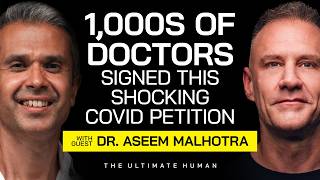
This content was created by Darrian Peck. This content was uploaded by Darrian Peck. This is a YouTube video titled "Dr. Aseem Malhotra: What 1000s of Doctors Are Saying About The COVID Vaccine Safety Data | TUH #173" created on June 10, 2025. It features a conversation between Dr. Aseem Malhotra and Gary Breca discussing the COVID vaccine, its safety data, and the influence of big corporations on public health policy. They also talk about the public's perception of the vaccine, the role of media, and the need for transparency and accountability in the medical field.
Chapters
The COVID vaccine and the handling of it really, I think has become the end result of decades of unchecked visible and power of big corporations. And that needs to be changed and overturned.
In my opinion, that's why the vaccine gets away with having caused so many conditions, but is not being blamed for so many conditions.
57% of Americans felt that the excess deaths in the US were linked to the COVID vaccine. And the main reason, in my view, is the handling of the pandemic specifically with the COVID vaccine.
If you were actually preserving so many lives, then a lot of these numbers wouldn't have changed.
We should utilize this as an opportunity to expose the whole system and society that functions well throughout history is also to stop any single entity getting so much power that it can then be abused. Even for example, with the COVID vaccine. I have many doctors who talk to me and say, I see my completely with you. Thank you. They get emotional, but I'm afraid to speak out. This is a symptom of a corporate tyranny. People say tax are rich. I don't think that sounds right. Let's tax the fraudsters, which happen to be some of the richest people in America.
Everyone purports to want to protect and serve the least fortunate. And yet these are the ones that are continually preyed upon by a lot of these corrupt practices. In fact, if you could rewrite something in the public health policy, where would you start?
I think one of the challenges we still have, Gary, and we should just talk about it, is.
Ultimate Human. Hey guys, welcome back to the Ultimate Human podcast. I'm your host, Gary Breca, where we go down the road of everything anti aging, longevity, biohacking and everything in between. This is a three time return guest now and one of my very close friends and a man I am so incredibly fond of. He's well spoken, he's well published, he's well revered the British medical journals and also here in the United States is a renowned cardiologist. And his refreshing view on everything ketogenic, low carb, LDL cholesterol, cardiovascular disease, metabolic syndrome is just so in line with the data, the big data, and so in line with my philosophy. I can't wait to chop it up with him again. Welcome back to the podcast.
Thanks for having me.
Dr. Aseem Malhotra. So yeah, we've had, we've had a really kind of a fun journey, you and I. You know, we've developed a friendship over the last year. It's been amazing getting to know you. And last time we, we chopped it up about the, the whole narrative surrounding statins and cholesterol. But before we actually get into that today, in fact, right before this podcast, I mentioned you because we were, we were talking about cholesterol and cardiovascular disease on a previous podcast and I actually told them to go look up the podcast that I did with you because you're so articulate with the way that you explain things. But early this year you actually called for and publicly demanded a moratorium on the mRNA COVID 19 vaccines. And I don't know if you began the petition or if you were just a part of the petition that was going around, but then a number of physicians had signed and it was citing some of the newest clinical data on cardiac risk and even newest data on autoimmune disorders. And I wonder if you might just expand upon that, you know, what was, what was the rationale, the impetus behind actually calling for a moratorium on these.
Yeah, really good question, Gary. So I think it's a culmination of what's been happening over the last several years. I was a co founder of the petition and the petition calling for this moratorium, you know, has got tens of thousands of signatures around the world from healthcare practitioners and specific tens of thousands, tens of thousands, and specifically thousands of of actual medical practicing doctors right around the world. So that's a lot of doctors who are saying, agreeing with what we wrote. And people can look it up online. It's called the Hope Accord. So look to go to hopeacord.com and you can, you can have a read of it. But essentially one of the, for me, I always go back to square one, which is what did the original randomized control trial data tell us when it was independently verified and analyzed? And that analysis was done by one of the co founders of the petition, a guy called Joseph Freeman, who is an ER doctor in Louisiana and a data scientist and himself a number of very eminent doctors. They reanalyzed Pfizer Moderna's original RCT, the one that the world was told was 95% effective.
Yeah, 95% efficacy, I remember.
No side effects, et cetera, et cetera. So what? When they were able to reanalyze that data with new to suffer serious harm from taking the vaccine that was described as life changing event, disability or hospitalization at a rate of 1 in 800, then you were to be hospitalized with COVID in other words.
Wow. So the rate Was less than 1 in 800 with COVID Absolutely, yeah.
You know, in a relatively healthy population. But they Looked at, you know, age groups, you know, from young to old, and there was over more than, I think 40,000 participants in that, in that, in that trial, in those trials. So what it suggests from the beginning, Gary, is it was more harmful than beneficial. They were able to match the serious adverse event rates with a list that was put up by an organization called the Brighton Collaboration in the uk and they already had a list that was endorsed by the World Health Organization. I mean, this is pretty shocking stuff because why was this not well publicized? The who, when the vaccine, even just before it was even being rolled out or when it was being rolled out, suggested these are the potential serious harms that could happen.
Right.
From different bits of data that we put together, you know, the platform that was being used, previous harms from other vaccines, animal studies, what Covid severe Covid did itself. So they said these are the potential serious adverse effects that could happen. Anything and everything and every organ system is in that list of harm, really, especially the heart. Cardiac arrest, heart failure, myocarditis, pericarditis, heart attack.
Wow.
Arrhythmias. It's all there, Gary. So imagine you start from that position, that place of, okay, at least 1 in 800 short term, there's just short.
Term harm in 1, 800 in just an average population. So this is like a 24 year old healthy athlete, 44 year old, you know, soccer mom and a 65 year old.
It was across the board. So we weren't able, they weren't able to find out was it more prevalent in any particular age group. So it was an average, but in a general healthy population and that too short term. So yesterday, that's incredible with what we know about COVID and it will fit with the vaccine, what we've seen, if you've got comorbidities, if you're already metabolically unhealthy, those people were more likely to get serious adverse events from the vaccine as well, because what it does is it accelerates underlying conditions already. So this 1,800figure is probably a gross underestimate. And then just to give it perspective in terms of what's happened historically with other vaccines that have been pulled, again, not well publicized now, but you know, that that was available. People can look this up. In 1976, the swine flu vaccine was pulled from the market. I think it was President Ford, was it? That was the 1976. He pulled it, right? He pulled it from the market because they found a signal that it was causing Guillain Barry syndrome.
Yeah, right, yeah.
A neurological condition. That's very disabling.
Right, Strange one. Yeah.
At a rate of 1 in 100,000, that was enough to pull it.
Wow.
Right. And then you've got the rotavirus vaccine, which was in 1999, that was suspended because it was found to cause a form of bowel obstruction in kids. At a rate of 1 in 10,000, we're saying 1, 800. And this is not some 1 in 800. It's not a blog. This is, you know, where they publish this. They published it in the highest impact journal for vaccines. It's called Vaccine, and I'll tell you what, called Vaccine, you know, and that was in the summer of 22. And I met Richard Horton, who I know personally, the editor in chief of the Lancet, in the street just before I gave a talk in London, after I published a paper summarizing my findings, including this paper, at the end of 2022. And I met him in the street where we live, in this village called Hampstead, and had. He's very pleasant, you know, I had a conversation with him and I said, you know, I'm giving this talk and he didn't know about this publication in Vaccine. And his eyebrows raised when I told him. I said. He said, oh. He goes, that's a pretty credible journal. He didn't say anything else after that.
Yeah.
So, yeah. And this should have been world news. It should have been the biggest story of the decade. There was no publicity in any mainstream press.
Wow.
All of the publicity came from me, ultimately, when I published my paper several months later, basically, and then kept highlighting this in all the news I was in. The conversation I was having with Joe Rogan or Tucker Carlson or Megyn Kelly or, you know, even hijacking the BBC.
People that would listen.
Yeah. You know, which I did in the beginning of 2023. And that on X got 25 million views because people were so interested in that story. We were talking about statins, but I said, the reason we're talking about statins is because we've got this excess death rate going on in the UK that people are trying to understand. And almost certainly the COVID vaccine is playing a role. How big a role? We don't know. I think probably the biggest role. And then, you know, all hell broke loose.
Yeah. For you?
Well, yeah, yeah.
Because you said the excess test could be related to the vaccine. So you called for this moratorium and you said almost 10,000 physicians have signed the.
To at least 2,000 physicians, but thousands more health care practitioners, which include nurses and other, you know, Healthcare workers.
Right. And now what's the status of that? Did they collect all these signatures? I don't even know what the procedure is. You turn it into who, Health and Human Services.
I mean, well, we publicized it, number one, certainly through social media. Interestingly, Gary, I also have been involved with the. Lots of different backlash goes on when you speak truth to power and you get stuff out there. Right. And I've been involved in this for many, many years in different ways, especially on statins, which we'll come on to later. But one of the things that was interesting when, when this Hope Accord was signed, I, in fact it was when I was in the States last time when I was here, I think it was after we met, I was in a situation where the General Medical Council, which are the body that control your license to practice in the uk they had been put under pressure to investigate my license to practice and they'd been holding on to making a decision whether or not to do this for. Since the beginning of last year. Okay, so it's quite a while at the end of the year last year, even though the evidence that I put forward was in my case was I think overwhelming that the, the advocacy I've done has been evidence based. I've not said anything that is, you know, far, so far fetched that it's going to cause patient harm or whatever else. In fact the opposite. They asked me to respond to further allegations that I was spreading misinformation, that I was abusing my position. And I looked at some of these allegations from anonymous doctors and they were absolutely just crazy. Including, they're saying that Aseemal Hotra is spreading misinformation on the COVID vaccine and exploiting vulnerable communities in India and South Africa. Oh my God. Right. Because I'd been so get this story right. So when I came out to speak about the vaccine, I got one of the most sort of, I don't know, two big moments for me on a personal level really made me, you know, gave me strength and hope that what I was doing was right. The first one, just after I published my paper at the end of 2022, I went on GB News in the UK and to say that we should suspend the vaccine. This was September 2022 and as I come out of the studio, I get a missed call from an U.S. number, right? I was like, oh, that's interesting. Who's that? So I called it back. It was Robert Kennedy Jr. First conversation I'd had with him.
So he had seen your.
He was aware of it. And he got my number from Robert Malone. Okay. And he basically said to me, Dr. Malhotra, it's Robert Kennedy Jr. Here. I want to thank you for your courage. And I was like, wow. Know, I said, it's an honor to speak to you. And then. And that's how we initially connected. So there was that. Wow. Obviously another story ongoing with Bobby after that.
Yeah.
And then what happened was again, around the same time I got a DM on X. It was then Twitter from. The man is called Jay Naidu. He's one of the most powerful voices in Africa. He is credited as being the person that almost single handedly organized the release of Nelson Mandela from prison by organizing a trade union leader. He organized a strike of a million workers in South Africa and it pushed essentially the South African government to release Nelson Mandela from prison. He was Nelson Mandela's best friend. He was in his first cabinet. And he was writing to me saying, asim, what you're doing is so wonderful and amazing. Mandela would say this. And I was like, wow, is this for real? That's super cool. So that was kind of like, you know, for me, that was. These are sort of moments that made me, kind of gave me strength to carry on in this battle. And so. So anyway, all of this was put forward to the General Medical Council. They then asked me, you know, you know, sorry. So. So, Jane, I asked me to come speak in South Africa. I went South Africa, spoke in one of their parliaments, got stuff in the mainstream news which no one had been able to do, of course, with backlash. And I went to India when one of the most powerful families in India and one of the richest families in the world, called the Ambanis, Okay. There one of the brothers, his name Anulambani, who owns, you know, they basically run the. The film industry of Bollywood. Right, right. Their son and daughter in law contacted me as well and asked me to come and speak in India because we've got problems with the COVID vaccine. Wow. So I went to speak, you know, in very credible places, including one of India's most prestigious hospitals. In my talk, Gary, because I believe in the evidence speaks for itself, if people will listen. Doctors who were there were gobsmacked and were turned in one hour. Doctors who had been responsible for rolling out the vaccine in India by the end of my talk basically thought, you know, metaphorically, holy shit, wow, what have we done? Like it was that kind of response. Okay, wow. I then spoke in another institute in India, one of the most prestigious institute in India called aims. It's the number one medical institution of the whole of India and even Asia, probably.
Wow.
But so, and I had feedback, right. I had feedback from these places, from these doctors saying, asim came to speak here. He was very evidence based, very eloquent, you know, et cetera, et cetera. So imagine I'm not having to respond to the General Medical Council from these anonymous complaints of complete bullshit, basically saying I'm exploiting vulnerable communities. Right. This kind of stuff. So in that I wrote, I added in, of course, the Hope Accord situation, interestingly, also wrote in my letter to the General Medical Council, which people can read it's open access on my website, and I mentioned that Jay Bhattacharya, who at that stage wasn't the director of nih, it was before his director of NIH had also signed it.
Right. Yeah.
Okay. So he was also part of this for me. One of the lessons in public health advocacy, Gary, is if you get an issue, media attention, you're more likely to influence policy than just private advocacy. Essentially. Sunlight is a very potent disinfectant. Yeah, yeah, yeah. It is.
Bright light.
So with all of this going on in the last few months, what suddenly happened is very interesting. Is the Daily Mail usa and their science editor. Yeah. Who used to work in the UK and we've done stories with before, suddenly become very interested and we've had conversations and convinced him at least that there's a case to be made here, that this needs more attention.
Wow.
That's why we've been getting, if you've seen and the Hope Accord has been mentioned and members have, you know, linked to the administration from J. Bhattachary to Bobby Kennedy, even Kash Patel, I didn't know had actually called. You know, he basically has skepticism about COVID vaccine as well. All of these players were then mentioned, you know, that saying that, you know, the potential U turn by U turn by Trump team on COVID vaccine. Because I think one of the challenges we still have, Gary, and we should just talk about it, is I think President Trump, I think he was misled and I think he's, you know, there is this narrative that's out there which suggests. I'm not saying from him, you know, he may have mentioned it, but didn't come from him saying that millions of lives and. Or maybe tens of millions of lives have been saved from the COVID vaccine. And the data on which they're making that assumption is from a modeling study. It's not even really. It's not even in the hierarchy of Evidence based medicine. Carl Hennigan, who is the director of the center of Evidence Based Medicine at Oxford University. He's one of the most eminent evidence based medicine doctors in the world. And I've had close conversations with Carl. Right. He supported my paper when I called for a suspension. Behind the scenes, he wrote in an article saying this suggestion that it saved millions of lives is implausible. Really completely implausible.
Most people don't realize this, but your energy, mental clarity, and even your sleep, they're all impacted by toxins every single day. You're breathing in, drinking, eating and absorbing mold spores, heavy metals, pesticides, and even plastics. Over time, they hijack your health. And that's why I created the ultimate detox challenge. As always, it's completely free and it's happening live June 23rd through the 25th. On day one, Dr. Will be will be here on gut and immune health. Day two, Dr. Jessica Petross on mold, metals and parasites. And day three is Dr. Josh Axe on full body detox and rebuilding your resilience. And of course, I'll be there the entire time. You'll get real tools at home, lab testing options, detox protocols, even supplement guides and actionable steps to help you reset your biology the right way. This isn't about crash diets. This is real, lasting transformation. Head over to detox.theultimatehuman.com your body was built to heal, so let's help it do what it was designed to do. Now let's get back to the ultimate human podcast, because the rate of death or the excess deaths doesn't support that.
Well, all of that. But also the data they're using to make that assumption is very poor quality. It's not even considered in the hierarchy of evidence based medicine. We've got the RCT from reanalysis right at the top. We've got all the observational data. We've got observational data.
You got excess deaths. And you say, well, if you were actually pretty preserving so many lives, not, not, not even extended, just preserving so many lives, then, then a lot of these numbers wouldn't have changed. But once you start removing people from the pool ostensibly because of death, everything changes so completely. Yeah, I mean, I was in probability and statistics. I and I know that you can take two completely identical sets of data and have them say completely different things depending on, on what you're after. I mean, an improvement of 1 in 100,000 is a 100% improvement over 1, you know, so. And a lot of people don't understand efficacy. You know, Effective, you know, these minimum effective doses, how, how effective a compound or vaccine or drug is. So when you start peeling back the layers of the onion and you say, well, you know, there were thousand people in this study. One person had positive outcome and in the, you know, in the placebo group, two people had a positive outcome in the non placebo group. So that's 100 more effective. And then all the consumer hears is it's 100% effective. Yeah, I, you know, I still remember turning on the TV and everything else during COVID I would almost second guess myself because it would be like, it's 97.6% effective, it's 99.2% effective, which makes you think that you have a 0.4 or 0.6% chance of, of catching the virus and having any kind of severe complication. In fact, I think it does more harm because you give people false sense that they're protected.
Completely. Right, Completely. You know, the evidence is overwhelming, but the evidence is overwhelming now. Right. So, you know, that needs to be moratorium. There needs to be an apology. Yeah. From the medical establishment. Yeah, for sure. Who?
From people like Fauci or from.
Yeah, absolutely, from Fauci. From the medical bodies that pushed it, that supported mandates, for example. They need to apologize. They need to. Well, you know, when you make an error in medicine, you're taught that first of all, you acknowledge there's a problem. Right. Acknowledge there's a problem, then you apologize. Then you say, this is what we're gonna do to make it better, to make sure it doesn't happen again. That's what needs to happen. Until that happens. The trust. There was a paper published last year in the US that showed that trust in doctors had gone from an all time high, about 74% in April 2020, right. At the height of the pandemic, to now less than 40, or about 40%.
That's like where Washington politicians are.
Exactly. And the main reason, in my view, one of the main reasons, not the main reason, is the handling of the whole, the pandemic, specifically with the COVID vaccine.
I agree.
I mean, a separate study showed 57% of Americans fell, that the excess deaths in the US were linked to the COVID vaccine. There's such a disconnect there. Right. And you look at, of course, we're really happy that we've got the likes of, you know, Bobby Kennedy Jr. And Tulsi Gabbard and Jay now and Mani Bakari in really prominent positions to influence policy and health. But I can assure you, Gary and please correct me if I'm wrong. I don't think anybody on this particular, during this election voted for Donald Trump because of operation warp speed.
No, nobody voted for him because of operation.
And he needs to know that he doesn't need to hold on to it like he was misled it. I agree that there may have been a slightly greater benefit than harm potentially for very high risk people at earlier stages. But as we've said already, if everybody knew at the beginning the rate of serious harm was going to be at least 1, 800, it would never have been approved. It would have passed authorization.
Right, right. You know, I, I, I was actually down the rabbit hole really looking at some of the papers on gain of function research and some of, on the COVID vaccine. I don't know if you subscribe to the fact that it was a lab leak theory.
Oh, completely.
Yeah.
It seems most likely I do too.
And, and I think, I think most people do by now. What was really interesting is when you look at gain of function, how you take the most viral or viral outcome or impact of one virus and you stitch it together with a different virus. So let's say you have a respiratory virus and, and a virus that causes neural inflammation, and now you have a neuroinflammatory respiratory virus because you somehow stitch these viruses together. This, this paper went on to say how in the human body there's no mechanism for two independent viruses, like say you have Epstein Barr and you have chickenpox. There's no way for these two viruses to get together and form their own supervisors.
Right.
They don't lock arms and form their own virus. It's possible to have different viral attacks in the same body. You could theoretically have influenza, you know, the common cold, and the next day get Covid.
Yeah.
And have both of them. Or you could have an Epstein Barr virus and, and also have shingles. Right. I mean, it's possible that you could have these multiple viruses. But one of the interesting things that it went into, and I don't know if this is, I love your opinion on it, was that the nucleocapsid protein on this virus was stitched together with something called a CGG sequence, cytosine glycine glycine sequence, which they said does not occur anywhere naturally in nature.
Right.
So the best way I could describe it is that you have had an influenza virus, you had a SARS CoV2 virus, you had a Middle Eastern respiratory virus. And basically because these things can't spontaneously combine, they were synthetically stitched together to form this, call it a super virus, SARS CoV2, what we call SARS19. And that that's what leaked. And when that leaked, we didn't have the antidote to slow it down. And it's a really, really interesting paper. I'm gonna make sense, I'm gonna link it. Yeah, very interesting in the notes below, but it does make sense. And this cytosine. Glycine. Glycine, the cg, cgg sequence of actually causing these independent viruses to connect and sort of become one did not exist anywhere else naturally in nature or anywhere else in the world. And they found it highly focused in that, you know, in that.
Wow.
In that one lab, you know, some of the things that you've. You've claimed is that the pharma companies manipulated the data and. And that. That politicians were actually misled. I think very often we think that our politicians are just on board with the whole game, right?
They're.
And maybe, you know, they're getting paid or they're part of the problem, or eventually they're going to get paid when they go to work for Big Pharma or Big Food. But. But in this. You didn't really say that. You said that the pharma companies manipulated the data and the politicians were misled.
Yeah, absolutely, Gary. That's also my experience speaking to politicians. I have, I know many politicians, very senior members across all parties in the uk, and some of them even come to me for medical advice. Some of them are my patients. Right. So I have honest conversation with them. And they. A lot of them were very shocked. Even recently, I was returning from Washington D.C. having been invited for the inauguration and from the Mahabhar where we last met. And I was on the plane and I met the former Attorney General and she was the Home Secretary at one stage named Suella Braverman. On the plane with her husband, I was introduced to her by a common friend and she seemed very pleasant. And, you know, I spent about half an hour speaking to both her and her husband. Right. About what happened with the COVID vaccine. Had no idea. And they literally. Her jaw dropped. I mean, she didn't know what to say. She.
Wow.
She had no clue. No clue. These are people in the heart of government.
Wow.
Right. So in the UK or here, this. In the uk.
Yeah, yeah, in the uk. Yeah, yeah, yeah.
You know what's fascinating in all of this is a lot of members of the public and even doctors get their information from mainstream media. I gave a talk in the British Medical association during the annual conference in the summer of 2022, before I published my paper. And it was all, it was on the corruption of Big Phoenix. Like, you know, essentially, you know, I think my talk title was something the corporate capture of Medicine, Public health. And in that, by this stage, Joseph Freeman's paper, the vaccine paper, was in a preprint stage. It hadn't been finally published in vaccine, but it was in a preprint. And I just brought that in in the middle of the paper. And then, you know, at the end of the talk, there was a lot of interest in what I'd said, but a lot of shock. And, you know, the chairman of the British Medical association were there and one of the things that I mentioned to him is that, you know, 86% of the funding of our regulator in the UK, MHRA, like the FDA, comes from big pharma. 86%, yeah. 65% of the FDA's funding comes from Big Pharma.
Right.
So you think about it, and he didn't even know. He was shocked by that. But I go back to several months earlier. I was involved in a campaign to help overturn vaccine mandates for healthcare workers in the uk. And the chair of the BMA at the time, Chand Nagpal, his name is. We've known each other for a long time. He was very close to my father, my late father. And I wanted to get access to the Secretary for Health at the time. His name's Sajid Javid, he'd come out calling for mandates, which was all very weird, by the way, Gary, because that happened sort of October, November 2021, the mandates were being pushed after real world data was showing serious harms, after we knew it was stopping transmission. So for me, at the time, I realized my intuition, my intuitive intelligence said, this is coming from Pfizer, this is coming from the drug companies for sure. And then it was later proved that Pfizer, I think Lee Fang is the name of the journalist, he found that Pfizer, in the summer of 2021 had lobbied respected grassroots organizations in the US by giving tens of thousands of dollars to push the vaccine mandate narrative. Wow, right. So they did that because they wanted to distract.
Ultimately, was that coming from like Soros or was it coming from who?
Well, it was coming from the company, I don't know, from Pfizer. That way. They're saying the company itself was paying money to these, these organizations because that's what they do deliberately to detract from the harms, to make you think if it's being mandated, it's got to be safe and effective. But anyway, during my conversation with Chand Nagpal about the mandates, he said to me, and I spoke about two hours on the phone with him going through all the information I knew, he said, essim, most of my colleagues in medicine, senior National Health Service doctors, right, policymakers are getting there, have not critically praised the evidence as well as you have. They're getting their information on the safety and benefits of the vaccine from the BBC.
Wow.
Right. Rochelle Walensky said the same thing, that her optimism from the vaccine came from a CNN news report. So I'm saying that because if that's senior doctors who are being indoctrinated and taken in by a mainstream media narrative, we have the same, all the politicians, same. So that's why part of the. An important key way to overturn all of this, this thinking and expose the truth is use of alt media and mainstream media.
Wow. And how do you think that we do that? What evidence do we need to be putting out there in the media platforms like myself to say, you know, objectively, not, not subjectively and certainly not in a way to take a political stance, just objectively to say, here are the facts and here is the solution and why I think the solution is so much more, more superior.
I think we have to do something first before that. Gary. Right. I've realized barriers to the truth are not often not intellectual, they are psychological. A lot of people don't want to hear it at all. They will ignore it. Right? They will. So we have to have a converse, a difficult conversation first with humility to say, this is what happened during the pandemic. What happens to the human mind when you're in a state of fear, right. You're less likely to engage in critical thinking. You're more likely to be compliant. Then you've got people that have taken it. You've got, you know, this concept of what we call willful blindness, which is when human beings on purpose, completely, you know, we turn it. We're all vulnerable to it, right? We turn a blind eye to the truth. And this can happen at an individual level, even in a simple sort of a scenario of like a spouse turning a blind eye to the affair of their partner. Right?
Right.
Okay. You turn a blind eye to the truth in order to feel safe, avoid conflict, reduce anxiety, and to protect prestige and fragile egos. So let's start there. And also, you know, it's very interesting, most people, we've evolved to use our intelligence not to look for objective truth, right. But actually to conform, to enhance our personal well being, our status. So I think starting from understanding like the human state, first and foremost with humility, I think it gets people to. Because the way I've been able to help change the narrative when I've been speaking to doctors who are completely don't know what's coming. Like for example in India is I start from the beginning with this conversation saying that the greatest enemy of, of knowledge, you know, is so the greatest enemy of truth is, is the illusion of knowledge.
Truth is the illusion of knowledge.
So, so that, so that gets people a little bit more open, like okay, right. And then you talk about the fear and willful blindness stuff and then people are suddenly a bit more open like okay, okay, that we're all in the same boat here. Yeah, right.
That's how I can actually control them.
And then you, then you walk them through to the situation of the COVID vaccine. But on this issue of the COVID vaccine, Gary, you've got to then unpick some of the problems in modern medicine even before the pandemic, which most people weren't aware of. Like for example, look at Operation Warp Speed now. It sounds great trials too, right? Well, no, exactly. Well, it makes people think we' this amazing technology we're going to fast track, blah, blah. But hold on a minute. If you look, for example, the history of fast tracked approved drugs approved by the FDA and other regulators around the world, the quicker you approve it, the more likely it's going to be withdrawn because it's more likely to bypass safety standards. So actually by definition Operation Warp Speed was already saying we're doing warpation warp speed. But by the way, this means we're more likely to miss serious harms. Yes, that was missing from the, in.
Some cases the longer safety trials were even waived. Right. Because you just don't simply have time to do a five year.
But if that's the case, the conversation should be very often say guys, this is a bit of an experiment.
Yeah.
Where was that conversation in mainstream media, by the way? American public? We are in this pandemic, but let's be a bit more honest here. It's really just affecting the elderly. And there are other things that we're not discussing around high dose vitamin C and supplements and improving your diet. Right.
Ivermectin, all of that was hydroxychloroquine.
All of that was missed because people say, well, people have this conversation with me, they're friends of family, friends and doctors and said, well aseem, okay, I get it. You're probably right, but what else could we have done? What was the other solution? I said there were lots of other solutions. You know, we could have focused protection on the elderly. We exaggerated the risk in younger people under 70. Gary, we know now it was probably no worse than the flu, right? Even from the beginning in children it was less lethal than the flu, like near zero.
I read something about five year old and under children's that it was either at or absolutely near near zero. And, and it looked at some of the other risk factors like chance of dying in a motor vehicle accident on your way to school and comparing the relative risk of, of the two and saying, okay, well, according to the rationale to support vaccinating children at this age, we should definitely not put them in the car to go to school because the chances are exponentially greater that they'll, they'll pass in a motor vehicle accident on the way to school, which we all know is extraordinarily rare. But I mean, that just shows you how extraordinarily rare. You know, the, the complications were in, in completely in the vaccine. You know, I was having this discussion before you came on today and a lady was saying, I don't understand how, you know, spike protein in one person's blood versus somebody else's blood could be symptomatic or not symptomatic, or could cause a myriad of different symptoms versus a specific symptom. And I said, you know, you're just kind of overthinking it. If you think about how the body methylates and just eliminates waste and people are good methylators or poor methylators of all kinds of, of things. So if we took the listeners that were listening to this podcast right now and divided them into three groups and said, okay, we're going to take these three groups and we're going to feed you all the same amount of mercury laden tuna fish and you're going to eat this every day for 90 days. At the end of 90 days, a small portion of that group would have deadly mercury poisoning. The next portion might have some complications related to mercury like brain fog or, or, or water retention or poor focus and concentration or what have you. But then maybe a third of that group is going to have no symptoms at all. So they took in the same amount of poison over the same period of time. One group's deathly ill, one group's kind of marginally okay and the other group's totally fine. That, that has to do with how they're methylating, how they're clearing this Spike protein, which is why you see this whole myriad of symptoms in the people that we purport to protect. And so we. We never. We never really addressed that. And in my opinion, that's why the vaccine gets away with having caused so many conditions, but is not being blamed for so many conditions. If that makes.
Yeah, I completely agree.
Sense to you, too.
Yeah. But in terms of coming back to what you said earlier, Gary, about how we. This conversation, I think we also had to realize that it was such a intense propaganda campaign behind the whole vaccine stuff. You know, there was a paper published that revealed that on a psychological basis, just to understand the barriers to getting through to the people, we need to get through it. It can be done, but it needs to be done in a certain way. And it will take time. Yeah, right. And not everybody comes on board. A different person will take a different amount of time to actually come full circle and say, okay, you know, yeah, I got this wrong. I was misled. Right. For whatever reason, but basic personality traits, you know, and the indoctrination was so deep and so strong that one paper that was published revealed that the way that vaccinated people looked at unvaccinated people. Okay. In terms of the way they look to them, perceive them, and thought about them was similar to how a. A neo Nazi would think and look at an immigrant. No. Yeah, yeah. They were so badly persecuted and treated so badly. This was the indoctrination campaign that happened, you know, And Ava Sharrard, and if you know her, but she was a Holocaust survivor, I think she's 90 plus. I met her a couple years ago, and she's a very outspoken, eloquent lady. And, you know, and she said, this is before all of this stuff came out, that the way that the. The pandemic was handled, it reminded her of actually Nazi Germany. Yeah, right. And this is the way. The way the unvaccinated were labeled. She was saying, this is akin to how the Jews were labeled. Wow.
They're looking at the unvaccinated because I remember, I mean, even here, you know, the. The certain administrations were talking about the pandemic of the unvaccinated. This isn't a pandemic anymore. It's a pandemic of unvaccinated. They actually had shame signs. They would pull kids out of school, not allow them to return to school or to the playground. It was. It was astounding to me how quickly society actually collapsed, you know, under that. So what do we do now? Where does this stand?
I think, Gary, we're We're, we've moved on a lot that you will see very few people now if you notice on social media talking about the benefits of the code vaccine, people have gone silent.
Right, right, right. Before they talk about the benefits, they'll.
Just, yeah, chill out completely. And then you get, and what's worrying is we're seeing more and more of these conditions, autoimmune conditions, more prevalence of certain. You know there was a paper from Yale recently that showed that 700 days after people who had seemed to have, I think it was even asymptomatic people, but actually certainly people that were vaccine injured included asymptomatic people, they still had circulating levels of spike protein.
Right.
Like 700 days after having the COVID vaccine.
These are the people, this is what I mean. Like there are some people that can clear the spike protein very well. Yeah, there's some people that can't. Like just like back to mercury laden tuna fish example. If we ate it all the same for 60 days and then we started the experiment, we said go. Some of us would have deadly, you know, heavy metal toxicity and other was, other ones wouldn't. And it doesn't mean that we got different dosages. It means that the body acted differently to each each of those dosages. Some can clear very fast and some clear very slowly. Right. And so you get a much more severe symptomology in somebody that, that clears slowly. And I think that very often we're not linking this as the hub of the wheel that links to all of these different spokes. You don't just have to have myocarditis. You can have trigeminal neuralgis and neuralgias, transverse myelitis, you know, these thrombolytic thrombocytopenias, the abnormal platelet clotting which you know, unfortunately took the life of a very good, very good friend of mine. And so, so now in order to, you know, in order to have the possibility to claw these back, what has to happen, you have to get peer reviewed in. Happy is an award winning digital wellness company and we invite you to join us in transforming the way people rest, renew and focus. The goal is to help people take control of how they sleep, how they feel and how they perform, all without taking drugs, supplements or high caffeine energy drinks. The neuroscientists at HAP B have created a set of mood enhancing programs. They're called vibes. So each vibe uses ultra low frequency signals to mimic the effects of relaxants or stimulants in the body. When the brain detects these signals. It reacts as if you're actually taking the substance, giving you all the benefits without the downsides. So it puts you in control of how you want to feel, when you want to feel it naturally with no chemicals, pills or side effects. Just select a vibe on the Happy app and let the soothing electromagnetic waves wash over your body. At Happy, we believe a more rested world is a better world. It's time to change the vibe now. Let's get back to the ultimate human podcast.
No, I think we've got more than enough information, Gary, first and foremost to call for a pause that the harm rate is extremely high. And, but as you said, you know, we should utilize this as an opportunity to expose the whole system because, you know, how did we get this wrong, why did we get this wrong and what are the solutions? It all comes back to the fact that Big Pharma have got too much power, the lack of transparency with their data, and this should be utilized in that way. Gary, we can build from this, but it needs leadership. It needs strong leadership. I know Bobby Kennedy is very strong on this. I hope, and I think that will happen with time and hopefully sooner rather than later, especially because of people around him. And I know this personally because I know these people are fully on board with this is President Trump needs to come out and say, listen, I was misled. We need to stop here. We need to call a moratorium. We need to now put the best scientific minds to understanding who is at risk, what are the long term potential risks and find potential cures. That's what we need to do because this problem isn't going away. And the other issue is, yeah, the trust is gone. Right. All the other vaccine uptakes are down. People aren't trusting the medical profession. As you know, it's probably the lowest trust ever. This is not good. All of us, not if you can't trust your doctor, Gary, who can you trust?
Yeah, so true.
We were like the last line. Yeah. Of, of, of protection of, you know, a profession that behaved ethically that you could trust that, you know, use the best of medical science to make decisions for you. It's all gone. Yeah, I totally have to rebuild. But that only happens with an acknowledgment of this COVID vaccine horror.
What do we do for the people that have it now that are really, really worried? Do you recommend Peter McCullough, Spike Protein Detox or.
Listen, it's great that there are people out there that are offering solutions because I think people want them. I think There is still limited evidence about how useful these things are. And certainly I've looked at Peter McCullough's protocol and you know, my approach is always first, do no harm. So if it's going to potentially do some good and no harm, why not? Yeah, I think that there are tests around the world that are being that are there that people can look to see whether they've got active protein, the spike protein. There are some small bits of data, albeit sponsored by those companies. So yeah, Pinch of salt augmented nac, for example.
Right.
As an acetylcysteine. Those companies claim that they can denature the spike protein in your body. But irrespective, something you and I very much align on is, you know, we've got this massive issue anyway of poor metabolic health in the United States. So if people optimize their metabolic health, you know, their lifestyle, they're much less likely to suffer the complications of, of the COVID vaccine and potentially even improve their situation of long covert or whatever else. So I think that has to be at the base of the solution. Right?
Yeah, I mean there's, there's no such thing really as long covet. It's not a prolonged COVID infection. It's the leftover, the byproduct of having been infected. But I know that it makes a lot of people. It just leaves them depleted with brain fog, with poor focus and concentration, with, you know, this water retention, with this terrible response to exercise and there's no zeal life.
Yeah, you know, absolutely. And the huge psychological component too. Right. The trauma of also what we went through, the pandemic.
Well, a lot of it was isolation. Yeah, you know, absolutely.
Being vaccine injured and then the anxiety related to that. So we need psychological support too. So all. Yeah, you know, it's, it's a healing of society that really is what's required. And the COVID vaccine and the handling of it really, I think has become the end result of decades of unchecked visible and visible and in invisible power of big corporations. And that needs to be changed and overturned.
Yeah. You know, I know that you're a big advocate talking about, you know, statin prescriptions and how these are over, over prescribed as well. You and I have actually done a whole, whole podcast on it. But I'd be remiss if I didn't just touch on it because it's one of my, it's one of my favorite topics to talk about because, you know, I'm not licensed to practice medicine, so when. But we've had thousands and thousands of. Of clients come through our clinic system. And, and we, I also had access to big data in the life insurance industry. You know, 361 or 381 million lives. And we weren't seeing centenarians, you know, people that were living beyond with age 100, dying with normal pathic levels of cholesterol, what we would call normal. 99 or less. Right. They would die with 106, 130, 170, LDL cholesterol. So I, I wonder if you might just touch on. On that, because there's a lot of interest in LDL cholesterol as a standalone risk marker.
Yeah. So if we start from the basics, cholesterol is a very vital, vital molecule in the body. It has so many roles to play, something that's.
To exercise, and there's no zeal for life.
Yeah, you know, absolutely. And the huge psychological component, too. Right. The trauma of also what we went through. Yeah. Pandemic.
Well, a lot of it was isolation. Yeah. You know, Absolutely.
Being vaccine injured and then the anxiety related to that. So been ignored for years because we've been conditioned to fear it involved in production of sex hormones, maintaining the structure of cell membranes and having a role in the immune system. And so we start from there and then we go back to understanding why did cholesterol become so feared. And, you know, from 1920 up until sort of 1950, 1960, there was a trend in increasing heart disease and heart attacks and cardiovascular deaths in the United States, in the Western European countries, and scientists trying to figure out what was causing it. And some scientists came in and thought, okay, this is saturated fat in the diet linked to high cholesterol, and we need psychological support, too. So all. Yeah, you know, it's, it's a healing of society that really is what's required. And the COVID vaccine and the handling of it really, I think, has become the end result of decades. The Framingham study, which was carried out and started in 1948 in Framingham, Massachusetts, and went over several decades to try and look for risk factors for heart disease, find associations with AIDS of unchecked visible and, and, and visible and in invisible power of big corporations. And that needs to be changed and overturned. Yeah. You know, and they, they determined that smoking was, for example, the risk factor type 2 diabetes and high cholesterol. But if you look at the Framingham.
Data, and it was then, you know, I know that you're a big advocate talking about, you know, statin prescriptions and.
How these are, you know, reanalyzed. Again by one of its co directors, William Castelli, and published in the journal Atherosclerosis in 1996. He said, unless you're LDL looking at Framingham, which is where all of the cholesterol, you know, most of the data or the guidelines or the thinking on fearing cholesterol came from. He said, unless your LDL is greater than 300 milligrams per deciliter. Wow.
Over. Over prescribed as well. You and I have actually done a whole, whole podcast.
It is no value in isolation and.
Predicting disease in no value in isolation.
Wow.
So let's start on it. But I'd be remiss if I didn't just touch on it, because it's one of my.
From there. Okay. And then let's just. Let's just build on that. So if we start from that point and. And it's true that now we don't.
Like to see it above 99 on the.
Well, well, no, exactly.
It's one of my favorite topics to talk about because, you know, I'm not licensed to practice medicine, so.
Right. It's crazy. So. So that suggests. And so the people who had LDLs above 300, Gary, were essentially people with familial hyperlipidemia. Lipidemia, a genetic condition, affects 1 in 250 people, where their LDL, they're born with genetically high LDL, which is at least above 190. Okay. Right. And often can be as high as 300.
But we've had thousands and thousands of clients come through our clinic system.
And now those people did develop heart disease prematurely, for sure. But even within that subgroup, 70% of women with FH and 50% of men would not develop premature heart disease. So the question is, can we figure out, is there anything in the, in these people's makeup or any sort of blood markers that can predict whether or not they get heart disease or not? Well, the first thing. And the research I did, published in BMJ Evidence Based Medicine with a number of co authors, we found, first of all, LDL was not a predictor in people with fh.
And we. I also had access to big data in the life insurance industry, you know, 361 or 381 million lives. And we weren't seeing centenarians, you know, people that were living beyond age 100, dying with normal pathic levels of cholesterol, what we would call normal.
The LDL levels were the same.
Wow.
Right. What was a predictor? Lp lipoprotein. Little. A fibrinogen. So clotting Abnormalities, Right. And then metabolic abnormalities, you know, so the ones who had FH and low insulin and low waist circumference as a surrogate for optimal metabolic health, their relative risk, Gary, of developing heart disease with FH was only very slightly higher than the healthiest person in the normal population.
But high LP and fibrinogen.
Fibrinogen, okay, those are the two. Okay.
99 or less. Right. They would die with 106, 130, 170.
And then of course, other things. Diabetes, high triglycerides, etc, Right. Smoking, hypertension. So because it's really interesting because I utilize all this information, I manage people with FH and many of them don't. They're not on cholesterol lowering drugs. So that's the first thing. That's fh. The other side of it is, let's play devil's advocate here on the side of the people pushing the cholesterol hypothesis and why they did that. They found that people who had genetics, genetically low cholesterol, okay, LDL cholesterol.
So I, I wonder if you might just touch on, on, on that because there's a lot of interest.
Those people didn't develop heart disease, they didn't live any longer.
But in LDL cholesterol as a standalone.
Risk marker, didn't develop heart disease. They didn't tend to. Right. And they call this Mendelian randomization studies. Right. Where they basically take people with certain markers and they look, they follow them up and find out there was no disease in that particular group because of what they predicted. Wow, now that's different. So that's where they thought, okay, we've got very high. Yeah. So if you start from the basics, cholesterol is a very vital, vital molecule in the body. It has so many roles to play. Something that's been ignored for years because we've been conditioned to fear. It involves cholesterol causing heart disease prematurely. Very low cholesterol, no heart disease. Right. Oh, it must be a linear in production of sex hormones, maintaining the structure of cell membranes and having a role in the immune system relationship. Like you lower the. So they went with this hypothesis to say, okay, if we lower the cholesterol. So they started doing these drugs were developed before statins. Can't remember the names of all of them, but they were drugs that randomized trials using cholesterol lowering drugs and even some dietary trials. And they, and so we start from there and then we go back to understanding. Kept doing these trials and there was no benefit. They were low in cholesterol but there was no benefit. It wasn't preventing. Why, When. Why did cholesterol become so feared and heart attacks. I was like this. So they kept thinking we must be doing it wrong, or maybe we're not. You know, from 1920 up until sort of 1950, 1960, there was a trend in increasing heart disease and heart attacks and the cholesterol. Enough. Suddenly they can discover statins. Yeah. Okay. And statins are now. And cardiovascular deaths in the United States, in the Western European countries. And scientists are on a showing a benefit, albeit small, which we'll talk about. However, what we know now, what wasn't fully appreciated then, is statins have an independent effect on. On inflammation and clotting. That's how they benefit, right? Probably. That's how they have a benefit. Nothing to do with cholesterol. Okay, let's move forward. Let's take the. Let's go figure out what was causing it. And some scientists came in and thought, okay, this is saturated fat in the diet linked to high cholesterol. And the Framingham study, which was carried out and started in 1948 in Framingham, Mass. Another step forward. One of the other interesting findings from Framingham, which was never publicized, that Once you hit 50, as your cholesterol dropped, your mortality rate increased, cardiovascular death rate increased.
Wow.
Right.
So as your cholesterol dropped, your mortality rate went up.
Because most of the issues around heart attacks coming up to the. And went over several decades to try and look for risk factors for heart disease, find associations with 30s, 40s, 50s, 60s. That was really getting a lot of people's attention that people were having heart attacks under the age of 60. Right, yeah. That was killing people. Therefore, you know, and they determined that smoking was, for example, a risk factor. Type 2 diabetes and high cholesterol. But 40s and 50s. Right. But after 50 or so, myself, a number of scientists in 2016, published in BMJ open a systematic review. If you look at the Framingham data, and it was then. Well, we looked at basically all the observational studies of people. It was involving over 70,000 participants in many studies looking to see was there an association with LDL cholesterol in heart disease and people over 60. First of all, we found Noah's, you know, reanalyzed again by one of its co directors, William Castelli, and published in the journal Atherosclerosis Association. Surprise. Zero. And an inverse association with all cause mortality. In other words, this is definitely not.
Making the media, man.
Well, you kind of knew this from your work. Definitely not the higher LDL less likely you have to die. So why was that? LDL has a role in clearing bacterial toxins. Right. In the immune system. And older people are more vulnerable. Dying from infectious. In 1996, he said, unless you're LDL looking at Framingham, which is where all of the cholesterol, you know, most of the actions and even probably in linked to cancer as well. So there's probably some protective mechanism there from ldl. So you've got noso data or the guidelines or the thinking on fearing cholesterol came from. He said, unless you station with heart disease in older people. Right. So the next question is, okay, there was a mantra that was being pushed in cardiology amongst doctors, amongst the profession for a very long time that the lower your LDL, your LDL is greater than 300 milligrams per deciliter. Wow. Using mainly drugs, but potentially diet as well. This linear relationship, as you lower ldl, you get a reduction in heart attacks and strokes. And that's a linear relationship. And the lower the better. Right, Right. To the extent where his name, if I remember correctly, is his surname was Roberts. I think it was William Roberts, who, in one of the cardiology journals edited his. It is no value in isolation and predicting heart disease in.
No value in isolation.
Wow. So let's start. Editor of one of the major cardiology journals, 2011, he wrote a paper, an article, which was entitled it's the Cholesterol Stupid. From there. Okay. And then let's just. Let's just build on that. So if we start from. Right. Yeah. And in that he wrote. I mean, you read it and you just think, this is just unbelievable. He wrote, basically, you can be an obese, diabetic, sedentary smoker, and as long as your cholesterol is low enough, you will never develop heart disease.
Oh, my God. Wow.
Right. So we tested this hypothesis by actually looking at industry.
Is he still practicing today?
I think he probably is. I mean, these people, to be honest, that point. And it's true that.
But now we don't like to see it above 99 on the.
Well, no, exactly. Right. It's crazy. So that suggests. And so the people who had LDLs above 300, Gary, were essentially, listen, I'm a compassionate guy and I'm open to people, you know, changing their minds. But people who still continue to cling to this, they need cardiologists, lipidologists, doctors out there having heard this, and they still cling to this hypothesis. I think they need to hang their heads in shame. People with familial hyperlipidemia. Lipidemia, a genetic condition.
Yeah, I would agree with you.
You know, enough is enough, Gary, honestly.
Oh, yeah.
Be too polite with these people. Yeah, right. They're reigniting the cholesterol hypothesis with the new drugs because it's a huge cash cow. This is a trillion dollar industry. Right. So we've got to understand this is what, you know, part of the reason why we are where we are. But myself and our second author in this paper, a systematic review. Two cardiologists in 2020 in BMJ. Evolution affects 150 people where their LDL, they're born with genetically high LDL based medicine. We looked at 35 randomized control trials involving some of the new cholesterol lowering drugs like Repatha statins and Ezetimibe to find is there a relationship. Right. From those trials. We looked at all the trials where they looked. They measured LDL reduction and looked at cardiovascular events.
Right.
And we put it all together. We found no relationship.
Wow.
At least above 190. Okay. Right. And often can be as high as 300. So really, when you put it all together, from going back to Castelli's report.
Wow.
And then most recently, Gary, this is brilliant. Only last week publication in. Now, those people did develop heart disease prematurely for sure. But even within that subgroup. Journal of American Journal of Cardiology Advances. I know one of the lead co author, Nick Norwitz. Brilliant guy. They did a study taking people who are known as. Just to explain to our listeners, these are called lean mass hyper responders. So these are a subset of people who go keto low carb, usually slim. Okay. Yeah, about 10 of them. When they go keto low carb, their LDL shoots up through the roof. Right. Really high, up to about 300.
Oh, okay.
Wow. Really high. So what they did was they. They used something called clearly, which is a more advanced.
The heart imaging.
Yeah, clearly scan. Clearly scan. Looking at soft black. Soft blacks. Right. And. But looking. And they did in their participants where the median duration that they'd had LDLs of that high was a 4.7 years. And then they took them 100 people. Exactly. And they measured over one year to see was there any relationship between plot progression. 70% of women with FH and 50% of men would not develop premature heart disease. So the question is, can we figure out, is there anything in the, in these people's makeup or any sort of blood markers that could predict whether or not they get heart disease or not? Well, the first thing and the research I did Published in BMJ Evidence Based Medicine with a number of co authors. We an ldl. Right. And it was very minimal to zero progression. There was no relationship at all.
Wow.
And people with LDLs of around, you know, between 200, 260, but some of them were up at 500.
Right.
Nick Norwitz, his own LDL is 560 odd.
Yeah.
This guy's a young medical student. Student, you know, brilliant at what he's doing. Brilliant researcher. And this has found, first of all, LDL was not a predictor in people with fh. That's what they found. There was no relationship with APOB or ldl. The only relationship that related to plaque regression is if you already had a bit of plaque. LDL levels were the same.
Wow.
Right. What was a predictor? Lp, lipoprotein, little A fibrinogen. So clotting abnormalities. Right. And then metabolic abnormalities. You know, so the what already? But not with ldl. So Apple B. So Gary, you put it all together.
You know, so sinister.
This is, this is I. My approach and I'm ones who had FH and low insulin and low waist circumference as a surrogate for optimal metabolic health. Very explicit with my patients. And I tell them in my consultations that lowering your ldl, their relative risk, Gary, of developing heart disease with FH was only very slightly higher than the cholesterol is absolutely not part of my management plan in preventing your heart disease, progressing, reversing your heart disease, or managing your risk. Yeah. And because this is what the data.
Tells us, and you know, what's astounding is, you know, we would see in the, the folks that had cholesterol lowering drugs, you would see the downstream consequences of joint pain, of water retention, of weight, brain fog.
Healthiest person in the normal population.
But high LP and fibrinogen of all kinds of even early onset cognitive decline across multiple categories.
Yeah.
And you know, when.
Okay, those are the two. Okay. And then of course, other things. Diabetes, high triglycerides, et cetera, smoking.
One of the things I bring up a lot is that we rarely if ever will do trials on looking at medications, multiple medications in the same biology. So we, you know, you have attention.
So because this is really interesting because I utilize all this information, I manage people with FH and many of them don't. They're not on cholesterol lowering drugs.
So that's a little bit of elevated ldl. So now you're on a statin and your blood pressure was high the last couple of visits. So now you're on a basal beta blocker, maybe an ACE inhibitor or maybe you're on a diuretic and you're, you know, a little bit sad. So now you're on an ssri and we start to put these different pharmaceutical compounds into the same biome to treat different consequences. But we've never looked at what happens in the synergistic pharmacological impact of multiple medications. At least I've never been able to find those.
That's the first thing. That's fh. The other side of it is let's play devil's advocate here on the side of the people pushing the cholesterol hypothesis and why they did that. They found that people who had genetically low cholesterol, okay, those people didn't develop heart disease, they didn't live any longer.
But studies and I've, I've looked at that, looked for them before to say what happens when you, when you put somebody on psychiatric medication or narcotic. We know about major drug interactions, right? Contraindications. But contraindications are, you know, develop heart.
Disease and intend to. Right. And they call this Mendelian randomized drugs.
That you don't want to combine because they do something sinister relatively quickly. But what about when somebody is on a statin and on an SSRI and on a beta blocker or a calcium channel blocker and they're on a little bit of thyroid medication and you know, they're on a corticosteroid for some anti inflammatory which by the way is not uncommon, you know, at. What is it at age 60 or 65? What's the number of medications the average American is on? I forget the number. It's five or seven.
Yeah.
And we've never studied all of these together. So we're just, we're putting these into the same pool very often unnecessarily. And one of the things that we.
Knew from the mortalization studies, right, where they basically take people with certain markers and they look, they follow them up and find out there was no disease in that particular group because of what they predicted.
Wow.
Now that's diff. So that's where they thought, okay, we've.
Got very high space. Was the more pharmaceuticals you were on, the easier it was for me to predict your life expectancy because I could not only predict the onset of, but.
The severity of and how cholesterol causing heart disease prematurely. Very low cholesterol, no heart disease. Right. Oh, it must be a linear quickly.
You would statistically succumb to certain conditions. You Know you, you've also highlighted a lot that inflammation, not cholesterol per se is the issue. And I want to drill into that for a second because we're seeing like metabolic syndrome and it's. And I think Maha has thrown a bright light on this. We're seeing metabolic syndrome start to occur in younger and younger and younger ages. I mean you have 13 year olds, 14 year olds, 15 year olds starting to show the early signs of metabolic syndrome. I'm in my 50s. It used to be reserved for when you got to my age. Right.
This is when you relationship like you lower the. So they went with this hypothesis to say, okay, if we lower the cholesterol.
So they started doing, doing your colonoscopies, of course. And you, you know, you, you start doing all the preventing wearing readers because everybody's wearing readers. So do you wear readers? Readers? Do you wear the readers, the glasses?
No, I. Long distance. But I've done sound. Neither do I since I was 16.
We're doing good. Yeah, we're doing good.
Sign of intelligence, apparently.
Yeah, I do feel smarter. I wear the blue light ones because it makes me feel.
These drugs were developed before statins. Can't remember the names of all of them, but they were drugs that randomized trials using cholesterol lowering drugs and even some dietary trials. And they kept doing these trials and there was no benefit. They were low in cholesterol, but there was no benefit. It wasn't preventing smarter.
So this, this myriad of combination of abdominal obesity, high, you know, hypertension, hyper cholesterolemia, low HDL cholesterol, high triglyceride, high insulin.
Yeah.
And the, and, and that the, the genesis of this is the inflammatory process, not necessarily the presence of, of, of cholesterol.
Oh yes.
And completely. And I wondered if you, I wonder if you might speak on that for a minute. I mean the, you know, I often liken cholesterol to the fireman that gets called to the scene of the fire to put the fire out.
Yes.
Right. I mean if, if no one called.
The fire the immune system, isn't it heart attacks. I was like this. So they kept thinking we must be doing it wrong or maybe we're not lowering the cholesterol enough. Suddenly they can discover statins. Okay. And statins are now shockingly, it's responding to injury 100%.
And, and they don't just show up. I mean if, if, if there wasn't a fire in this building we're sitting in right now, a fireman's not just going to all of a Sudden barge in the store and cholesterol is the same way. It's not just going to show up to the arterial wall, past the arterial wall, begin to make foam cells with. Without something calling it to that site.
Yeah.
And so can you talk a little bit about the inflammatory cascade? And then maybe for the listener, what would they test for? Like a C reactive protein or something? What would they test for and how would they best management manage it?
Yeah. So I think the underlying process that drives the inflammation, if you like the. So I think the best way to think about this and break it down, Gary, is that our immune system is obviously involved in all these processes of disease. Our bodies are designed to respond to any toxins that come into the body. And showing a benefit, albeit small, which we'll talk about. However, what we know now, what wasn't fully appreciated then, is statins have an independent effect on. On inflammation and clotting. That's how they benefit, right? Probably. That's how they have a benefit. Nothing to do with cholesterol. Okay, let's move forward. Let's take the. Let's go. You know, whether it's diet, whether it's something in the water supply, whether it's something in another step forward. One of the other interesting findings from Framingham, which was never publicized, that once you hit 50. Yeah. Whether it's something injected into us, even chronic stress is, in a way, is that it activates the immune system. Immune system has a role to play acutely to deal with pathogens. But the problem is that when it's over activated, constantly responding to some kind of threat in the body, or responding to a toxin, as your cholesterol dropped, your mortality rate, increased cardiovascular death rate, then the collateral damage of that immune response is that our own tissues start to get damaged. Right. And certainly when it comes to heart disease, if you look at insulin resistance, essentially the way to explain that is we've had too much insulin, which is of course a really important hormone in the body that has so many functions. Fat storage, metabolizing of glucose, for example.
Wow.
Right.
So as your cholesterol dropped, your mortality rate went up.
Because most of the issues around heart attacks coming up to the. Is that if it's over activated and too high, and that 30s, 40s, 50s, 60s, that was really getting a lot of people's attention that people were having heart attacks under the age of 60.
Right.
Yeah. That was killing people in their 40s and 50s. Right. But after 50 or so myself, a number of, of. Of bonds to high glycemics Index carbohydrates, ultra processed food, for example. Then chronically raised insulin itself is directly toxic to the inner lining of the heart arteries, the endothelium.
Ah.
And that's what happens essentially. That's the pro. That's why for example, even very well controlled type 1 diabetics, the most well controlled will have a Life Scientist in 2016 published in BMJ open a systematic vacancy 10 years less than average.
Right.
And mainly die of complications of cardiovascular disease predominantly because of the insulin. Right. So that's the issue. That's we. It's not fully understood the mechanisms, but we know that high insulin is not good. Right. And the cells even becoming resistant to the. The way the insulin. Well, we looked at basically all the observational studies of people. It was involving over 70000 participants and many works is what we call insulin resistance, usually because of chronically raised insulin. But it could also be happening. He's looking to. Was there an association with LDL cholesterol in heart disease and people over 60? First of all, we found nosing at a cellular level through different mechanisms. For example, through stress, through inactivity as well. So these are how they all interact. I think what's positive and gives us hope is. And we know this from. There's some good research out there on this and we know from clinical practice that when you intervene to reduce insulin right. Through lifestyle measures, then a lot of these conditions, these markers, these manifestations of high triglycerides in the blood, high blood pressure, you know, high blood glucose.
Yeah.
Association 0 and an inverse association with all cause mortality. In other words, this is definitely not.
Making the media, man.
You kind of know this from your. Your work. Definitely not.
Yeah.
They start to improve. And the. The quickest and the low hanging fruit for us to. The way to. For us to do that is really to go low carb. That seems to be the most effective, quickest way. There are other ways to do it too. The higher LDL less likely ought to die. So why was that? LDL has a role in clearing bacterial toxins. Right?
Yeah.
But low carb, you know, you reduce the foods that are causing the. The rapid surges in glucose which then cause a rapid surge in insulin.
Yeah.
From the diet. And that's how you can manage it.
I use whoop every single day. You guys see me post my sleep scores all the time. What gets measured and tracked is what you can improve. You'll start to notice what happens when you eat too close to bedtime, if you have alcohol. What makes your Sleep deeper. What prolongs your sleep, how you improve your rep in the immune system.
And older people are more vulnerable dying from infection sleep.
You can even start to track metrics like heart rate variability, respiratory rate and your actual pulse rate. These are all indications of how well you're recovering during sleep. I always say that people don't really have sleep hygiene or a good sleep routine and whoop will help you develop one and prove that it's working. Ready to unlock the best version of.
Yourself actions and even probably linked to cancer as well. So there's probably some protective mechanism there from ldl. So you've got no association with heart disease in older people. Right. So the next question is, okay, there was a mantra that was being pushed in cardiology amongst doctors, amongst the profession for a very long time that the lower your ldl.
Try WHOOP for one month on us and start the journey towards a healthier you head to joinwop.com/ultimate that's join w.
H o o p. Using mainly drugs but potentially diet as well.
Com forward slash ultimate to get started. Now let's get back to the ultimate human podcast. Yeah, and I think that all too often we're not looking at it as multifactorial, we're just looking at as a single number. If this is high, you have a high risk. Let's just push that one number down.
Of course.
And it's, it's too, too, too linear. You know, there's, there's a lot of talk about you potentially stepping into a role in the, in the new administration and maybe in a myriad of things. But around the, the MAHA movement with, with Bobby Kennedy, what would be some of your agenda items? Early agenda items? Day one, especially as a, this linear.
Relationship as you lower ldl, you get a reduction in heart attacks and strokes and that's a linear relationship and the lower the better. Right, Right. To the extent where his name, if I remember correctly is. Is cardiologist. Yeah. I think we have to put to the forefront that managing metabolic syndrome, improving metabolic health has to be a priority for all Americans. Gary 93 of American adults have suboptimal metabolic health. 93%. Right. And his heart disease. Her name was Roberts. I think it was William Roberts who in one of the cardiology journals added his.
And when you say suboptimal metabolic health because it sounds like a little bit of a word salad to people who don't come from.
So you want all your five markers to be in the, in the normal rate. So waste.
Write these down.
Yeah. Waist, circumference, triglycerides, HDL blood pressure, glucose. That's it. If you have all those. Editor of one of the major cardiology journals. 2011, he wrote a paper, an article which was entitled. It's the cholesterol, stupid 5. You're in a much better state. Not just from heart disease, but yeah. Even cancer, 5% right. After smoking, it's likely. I mean obesity is called the second biggest cause of cancer after smoking. But if you go before obesity, it's insistent, so it's likely to be even more beneficial. Wow, right. Alzheimer's is considered type 3 diabetes. Yeah. So most of them.
Resistance in the brain.
Yeah. Mental health problems we now know has a huge component linked to diet. There's a lot of work being done in Stanford for metabolic psychiatry unit, which I've been involved in.
Interviewed a Stanford metabolic psychiatrist. I am on my podcast. Forget his name. Who, who, what was his name? Max.
Right, yeah. And in that he wrote. I mean, you read it and you just think this is just unbelievable. He wrote, basically, you can be an obese, diabetic, sedentary smoker and as long as your cholesterol is low enough, you will never develop the Harvard.
The Harvard.
Christopher Gardner. Christopher Gardner. Chris. Chris Palmer.
Palmer, yeah. Chris Palmer. Thank you.
Yeah, yeah.
Very interesting guy. Yeah. I don't know why it slipped me.
So mental health as well.
Because of course, even drug resistant mental illness, like the actual drug resistance, really.
The really bad 100%. So I think that would be a big focus, certainly that I would, you know, across the board where. But what also that means Gary linked to that disease.
Oh my God. Wow.
Right. So we tested this hypothesis is empowering doctors with nutrition education to manage chronic. Manage chronic disease. Most of the doctors don't know about basics of this and it's not rocket science. We can teach them quite quickly so they can do it. But also thinking Gary as well, and this is really important. The elephant in the room, if you like, is that most of what drives our behaviors are socially and environmentally conditioned more than we like to think. By actually looking at industry sponsors.
Is he still practicing today?
I think he probably is. I mean these people, to be honest. Listen, I'm a compassionate guy and I'm open to people, you know, changing their minds, but there's all this kind of mantra and to some degree, listen, I'm. I am probably one of the most disciplined people I know. Right. In terms of, you know, I've really pushed the boundaries in everything I've tried to do, whether it's been sport people who still continue to cling to this, they need cardiologists, lipid docs, something in sport, whether it's pursuing career in cardiology, whatever else. Right. But I also know that, you know that our environment plays such a big role in terms of, you know, before I was fully aware this is up until my early 30s, I mean, I was a proper sugar addict. I mean I was, you know, consuming sugar like you wouldn't believe. And I just thought it was fine, it was healthy and I was addicted. Right.
You know, probably why. Because you know, you're naturally thin and so you, you know, if you're not morbidly obese and you're thin and you can eat a lot of sugar, I.
Mean and you're active. But without ologists doctors out there having heard this and they still cling to this hypothesis, I think they need to hang their heads in shame. And now discovered now is even if you're slim and active, eating too much sugar is still going to give you significant harm. Right. So all those plays into it. But, but I think that what's why the reason I'm saying this is if you look at the, what's driven the chronic disease problem, the big low hanging fruit with overwhelming evidence, if not the most important driver. One of the most important drivers is the food environment. Right?
Yeah.
You know, it's most of the default option in the United States for most people is ultra processed food. Food.
Yeah.
Right. So it has to have an environmental approach too on a policy level. And the way we do it, we have to think about. But what I would suggest the way we could start thinking about it is America led the world in tobacco control.
Right.
And you know, and that meant reducing the effective availability of tobacco in the environment. And the way to do that was increasing its price. Right. That automatically. That's economics 101.
Yeah.
You get reduced.
Bobby Kennedy's just gotten 25 states to sign on to, you know, the SNAP program prohibiting the use of our, you know, our welfare dollars for, for sodas.
Yeah.
I think there's a 10 billion dollar hole right there. 110, 120 billion dollars a year spent on SNAP programs for the, for the most vulnerable. And 10 billion of that going to, you know, high fructose corn, so laden sodas completely. Which is pretty.
That's exactly the kind of astounding.
Yeah. And it's also the kind of idiocracy that flies in the face face of conventional thinking because everyone purports. Yeah.
I would agree with you you know, enough is enough. Gary, honestly.
Oh yeah.
You've been too polite with these people. Yeah, right. They're reigniting the cholesterol hypothesis with the new drugs because it's a huge cash cow. This is a trillion dollar industry. Right. So we've got to understand this is what, you know, part of the reason why we are where we are. But myself and our second author in this paper, a systematic review, two cardiologists in 2020 in BMJ evidence based medicine. We looked at 35 randomized control trials involving some of the new cholesterol lowering.
Drugs like Repatha to want to protect and serve the least fortunate. And yet these are the ones that are continually preyed upon by a lot.
Statins and azitomib to find. Is there a relationship? Right. From those trials, we looked at all.
The trials targeted by these corrupt practices. In fact, if you could rewire, rewrite something in the, in public health policy, where would you start? You know, if you had, if you had the pen right now.
Yeah, okay, right.
Trump's pen.
Okay, fine. So ultra processed food. First of all, public health education campaigned for everybody ultra profiles where they looked, they measured LDL reduction and looked at cardiovascular events. Right. And we put it all together, we found no relationship.
Wow.
So really when you put it all together, from going back to Castelli's report.
Wow.
And then most recent food is indeed tobacco.
It is the new tobacco.
It's the new tobacco.
Like that.
So 60% of the calories consumed in the United States come from ultra processed food. To give people an idea like we're all. And it's interesting, Gary, if you go back to 1970, 50% of adults were smokers. So there are some parallels here. Right. Gary, this is brilliant. Only last week publication in Journal of American Journal of Cardiology advances. Now it's way less than 20, but it's huge of huge drops.
But cardiovascular disease. Yeah, it's still gone up even though smoking's gone down.
Yeah. Because the death rates went down. But now then patterns start to go up again. Right. So that would be one thing I would. I know one of the. The lead co author, Nick Norwitz. Brilliant guy. Listen, I'm, I'm against prohibition and banning stuff, but I think there are certain environments and places where, where those foods should not be available or sold. Hospitals, we should, we should ban the sale of ultra processed food in hospitals. They shouldn't be getting served to patients.
Maybe even public schools.
Yeah. They did a study taking people who are known as just to explain to our Listeners and schools as well. I was going to comment that. So schools and hospitals, let's ban ultra processed food availability. Right. Because that, what it does is it legitimizes the acceptability of those foods. There was a study very interestingly done by Kelly Brownell many years ago that showed that hospitals that sold fast food, these are called lean mass hyper responders. So these are a subset of people who go keto or low carb, usually slim, had junk food on sale. People who, visitors of that hospital were four times more likely to leave the hospital and purchase junk food than people who'd never gone to the hospital in the first place.
Are you kidding me? Yeah.
So it's almost like having this subliminal kind of effect on your mind. Like, oh, this is. If it's being sold in the hospital, it must be fine. It's not going to be bad for your health.
Right.
So that, so that's certainly what I.
Showed you the video of my buddy sitting in the ICU unit.
What do we do with tobacco? We banned advertising of tobacco. Let's ban the advertising multi processed food. Okay.
Yeah.
About 10% of them, when they go keto, low carb, their LDL shoots up through the roof really high, up to about 300.
Oh, okay.
Wow. Right. Especially as we've. You've talked already, they, they target some of the most vulnerable members of society.
Right.
Especially children.
And what's sad is that even for someone as astute as myself, even and astute as yourself, you know, like when I checked into my Airbnb, I mean, we're here in Austin, Texas. We opened the, the pantry below the steps and, and just for some fun, you know, one of my social media manager turned on the video and we started grabbing things off the shelf and there's a big bottle of really high.
So what they did was they, they used something called clearly, which is a.
More advanced, you know, vegetable oil. And, and it says heart healthy. And there's a big American Heart association label on it with a big beautiful red heart. You know, you walk down the cereal aisle and it says fortified or enriched, which, you know the word fortified, the word enriched or you know, natural fruit flavor or we actually put whatever is the heart.
Imaging. Yeah. How Imaging.
Clearly scan.
Clearly scan. Looking at plaques.
Soft plaques.
Soft plaques. Right. And, but looking. And they did this in their participants.
Where the median duration not on the label that really is, isn't even related to the food like non GMO or, and, or gluten free or vegan. As if that Health washing. Health washing. That's the word.
You know, it's actually an exploitation of behavioral psychology. So we know. I need. I knew about this work when I was doing stuff in the UK and advising government there is that they'd had LDLs of that high was a 4.7 years. And then they took them 100 people. People purchase foods based more upon the marketing than actually what the nutritional content.
Yeah.
And the food industry knows that.
You know. And I heard Alex Lugaver say one time, he said a couple of things that were really kind of funny. One, one was if your, if your grocery store has a health food section, what does that tell you about the rest of the store? But also that. Oh, did I say Alex? Oh, I meant Max Lugovar.
Well, exactly. And they measured over one year to see was there any, any relationship between plot progression.
Sorry, Max. I do know it's Max. But and, and, and the other thing he said was that, you know an ldl.
Right. And it was very minimal to zero progression.
There was no real health foods don't have. Don't make claims. Right. Like when, you know there's no claim on the avocado. Like when you look at the avocados and tomatoes and lettuce and spinach. There's not like big health claims in those areas. But you go to cereals and completely processed garbage.
Rule of thumb, I tell my patients if you. If it's advertised or marked as healthy, it's likely the opposite. It's gonna have the opposite effect on your health. Yeah, right. Because it's how these corporations work. But the other thing to add in another relationship at all. Wow. And people with LDLs of around between 200, 260, but some of them were up at 500. Nick Norwitz's own LDL is 560 odd. This guy's a young medical student, brilliant at what he's doing, brilliant researcher. And this is what they found. There was no relationship with APOB or ldl. The only relationship that related to plot regression is if you already had a bit of plot. The really important thing that we need to think about as well, Gary, is people having enough income to afford to live a healthy life. One shocking statistic I came across recently, I really couldn't believe, really touched my heart as well, and I was, is that, you know, the largest employee in the United States is the healthcare industry. More than 18 million people employed by the healthcare industry. Right. In the United States, US 20. Around 24% of. Of men and about 35% of women who are health working in the healthcare industry as, as care assistants or healthcare workers. Right. Are earning less than 15 per hour.
No.
Okay. And 1 million children of healthcare workers are living in poverty.
No.
I mean, how is that acceptable? Like how can any. I mean, I, I've mentioned a few people even in Maha, even I had a conversation today, this morning with some senior people in Maha, just about some work we're doing together. Together. And they were shocked. They were absolutely shocked. They couldn't believe it.
Wow.
So one of the things is we can say let's start in our own backyard. Okay already. But not with ldl. So, so, so Gary. So Gary, you put it all together.
You know, so sinister.
This is, this is I, my approach and I'm. Let's see, let's, let's work through the hospitals. Let's make sure that our staff are as healthy as they can be. Let's improve their metabolic health, let's improve their environments. Let's make sure they've got a fair income. You know, if they got at least 15 an hour. It's been estimated you cut poverty levels by 50% very quickly.
Wow.
Amongst those healthcare workers.
And we can afford to do it.
Now, very explicit with my patients and I tell them in my consultations that lowering your ldl. Absolutely.
Especially if we start trimming some of the fat.
No, but, but not just that. Like in terms of people say cholesterol is absolutely not part of my management plan. Where's the money assembly? I've had this conversation in the UK with policymakers like, well, well, the money is there. It's in the wrong place. You've got these big corporations who, you know, I'm all for people making money through merit and through innovation and doing good stuff. Right. But their business model is fraud, Gary. And there's Bill. Preventing your heart disease progressing, reversing your heart disease or managing your risk.
Yeah.
And because this is what the data tells us.
And you know what's astounding is, you know, we would see in the folks.
That have and billions and maybe trillions of dollars hidden in tax havens, which is not being put back into the public purse. Right. You could very quickly sort the problems out in America with some bold leadership that says, listen, you know what, you know people say tax the rich. I don't think that sounds right. Let's tax the fraudsters. Which by the way, which happened to be some of the richest people in America.
Yeah. Yeah. Wow. I, I could not agree. Had cholesterol lowering drugs, you would see the downstream consequences of joint pain of water Retention of weight, brain fog. Be with you more. And I really pray that, you know, you get to step into a role.
And Gary, one other thing I really do. I would also say, you know, President Trump's book, talk about making America great again. Bobby Kennedy says this. In the 60s of, of all kinds.
Of even early onset cognitive decline, America.
Was considered the moral authority in the world. World. Right. And it made sense up until about 1970. 1980, the health of Americans, the average American was better than most other across multiple categories. Yeah.
And you know when this is actually very true.
Right?
Yes.
But it was this economic policies, I'm sure they were well intentioned by Reagan. We had Margaret Thatcher in the UK of complete deregulation of these industries where they had a regard then for multiple stakeholders that their businesses would look after fine, you know, their profits. But actually it was about public good. Right. They've now just purely care about their investors and their shareholders.
One of the things I bring up a lot is that we rarely if ever will do trials on looking at.
Medications and to the detriment of public because of these policies. And then they've got more and more power and society that functions well, societies that functions well throughout history, multiple medications.
In the same biome. So we, you know, you have.
Knowing human nature, Gary, is also to stop any single entity getting so much power that it can then be abused. We have to have relative.
And it's hard to dislodge now. You see a lot of what's going on now is the entrenched, deeply ingrained, completely deep rooted, you know, spheres of influence that it's very difficult to uproot.
And it's become tyrannical. Yeah, right. Jordan Peterson says tyranny's a little bit of elevated ldl.
So now you're on a statin and your blood pressure was high the last couple of visits. So now you're on a basal beta blocker, maybe an ACE inhibitor or maybe you're on a diuretic.
And your tyranny emerges when people are afraid to say what they think. When you have something to say, being silent is a lie. Okay. Or when everyone lies all the time.
A little bit sad. So now you're on an ssri and. And we start to put time.
The tyranny is completely. And you see that even for example with the COVID vaccine, with statins. I have many doctors who talk to me and say, I see my completely with you. Thank you. To get emotional, but I'm afraid to speak out. I hear that all the time now. Gary, this is a symptom of a corporate tyranny. That's what we need to label it as. And once people, everyone knows that then we can reform it. We need industry, but we need to reform them. We created these industries through these different.
Pharmaceutical compounds into the same biome to treat different consequences.
But we've laws that by the way most of us didn't know were being changed behind the scenes to allow never.
Looked at what happens in the synergistic pharmacological impact of multiple medications. At least I've never been able to find those starting to have so much power.
But we have the power of the people and terms of policymakers to change the legal entity that's a corporation to get them back to what they used to be in America, which is actually helping doing public good.
Awesome. What does it mean to you to be an ultimate human?
I think to act with courageous compassion.
Well, you're doing that.
I'm trying my best. It's a work in progress.
You're doing that and I know these and I've, I've looked at them, look for them before to say what happens when you, when you put something you've taken a lot of, a lot of flack for. And by the way, I also want to give another, you know, plug for, for your documentary do no Farm.
Yeah.
First uniform. Yeah, absolutely amazing. We're going to link it in the show notes below. I may be an investor in this because I really want to help you get the, the, the word out and somebody on psychiatric medication or narcotic. We, we know about major drug interactions. Right. Contraindications. But contraindications are, you know, pray for you all the time. And I hope that you get this position and you can help us, us become healthier again.
Thank you my friend.
Dr. Malhotra. I could talk to you all day, man. I, I hope you'll come back on for a third, third run. I'm going to take you into my VIP group now. You know my VIPs, we, they, they have a lot of questions for you and I always that you don't want to combine because they do something sinister relatively quickly. But what about when given my chance to ask questions to you directly? If you're interested in becoming one of my Ultimate Human VIPs just go over to the ultimatehuman.com forward/vip sign up to be one of my VIPs. It's 97 bucks. 97 bucks a month and I pour myself into this group. This is where we get to do live Q&As with people like Dr. Aseem Malhotra and many, many others. I was in there yesterday with Joe Rogan. That was a, an amazing one. You can ask any question that you want, especially in these large group formats. So for the rest of you guys, I hope that you enjoyed this podcast. And as always, that's just science. Somebody is on a statin and on an SSRI and on a beta blocker or a calcium channel blocker and they're on a little bit of thyroid medication and you know, they're on a corticosteroid for some anti inflammatory which by the way is not uncommon, you know, at. What is it at age 60 or 65? What's the number of medications the average American is on? I forget the number. It's five or seven.
Yeah.
And we've never studied all of these together, so we're just, we're putting these into the same pool very often unnecessarily. And one of the things that we knew from the mortality space was the more pharmaceuticals you were on, the easier it was for me to predict your life expectancy because I could not only predict the onset of, but the severity of and how quickly you would statistically succumb to certain conditions. You know, you, you've also highlighted a lot that inflammation, not cholesterol per se is the issue. And I want to drill into that for a second because says we're seeing like metabolic syndrome and it's. And I think Maha has thrown a bright light on this. We're seeing metabolic syndrome start to occur in younger and younger and younger ages. I mean, you have 13 year olds, 14 year olds, 15 year olds starting to show the early signs of Metabolic syndrome. I'm in my 50s. It used to be reserved for when you got to my age. Right. This is when you start doing your colonoscopies, of course. And you, you know, you, you start doing all the preventing wearing readers. Because everybody's wearing readers. So do you wear readers?
Readers.
Dior. The readers. The glasses.
No, I. Long distance since I was 16.
We're doing good. Yeah, we're doing good.
Sign of intelligence, apparently.
Yeah, I do feel smarter. I wear the blue light ones because it makes me feel smarter. So this, this myriad of combination of abdominal obesity, I, you know, hypertension, hyper cholesterolemia, low HDL cholesterol, high triglyceride, prescribed high insulin.
Yeah.
And that, and, and that the, the genesis of this is the inflammatory process, not necessarily the presence of, of cholesterol.
Oh, yes.
And completely. And I Wondered if you, I wonder if you might speak on that for a minute. I mean, the, you know, I often liken cholesterol to the fireman that gets called to the scene of the fire to put the fire out.
Yes, right.
I mean, if, if no one called the fire.
The immune system. Yeah, it, exactly. It's responding to injury 100%.
And, and they don't just show up. I mean, if, if, if there wasn't a fire in this building we're sitting in right now, a fireman's not just going to all of a sudden barge in the store. And cholesterol is the same way. It's not just going to show up to the arterial wall, past the arterial wall, begin to make foam cells with, without something calling it to that site.
Yeah.
And so can you talk a little bit about the inflammatory cascade? And then maybe for the listener, what would they test for? Like a C reactive protein or something? What would they test for and how would they best management manage it?
Yeah. So I think the underlying process that drives the inflammation, if you like the. So I think the best way to think about this and break it down, Gary, is that our immune system is obviously involved in all these processes of disease. Our bodies are designed to respond to any toxins that come into the body. You know, whether it's diet, whether it's something in the water supply, whether it's something in the air, whether it's something injected into us. Even chronic stress, in a way activates the immune system. Immune system has a role to play acutely to deal with pathogens. But the problem is that when it's overactivated, constantly responding to some kind of threat in the body, or responding to a toxin, then the collateral damage of that immune response is that our own tissues start to get damaged. Damaged. Right. And certainly when it comes to heart disease, if you look at insulin resistance, essentially the way to explain that is that we've had too much insulin, which is of course a really important hormone in the body that has so many functions, fat storage, metabolizing of glucose, for example, is that if it's over activated and too high, and that response to high glycemics index, carbohydrates, ultra processed food, for example, then, then chronically raised insulin itself is directly toxic to the inner lining of the heart arteries, the endothelium. Ah. And that's what happens essentially. That's the pro. That's why, for example, even very well controlled type 1 diabetics, the most well controlled, will have a life expectancy 10 years less than average.
Right.
And mainly die of complications of cardiovascular disease, predominantly because of the insulin. Right. So that's the issue. That's. We. It's not fully understood the mechanisms, but we know that high insulin is not good. Good. Right. And the cells even becoming resistant to the. The way that insulin works is what we call insulin resistance, usually because of chronically raised insulin. But it could also be happening at a cellular level through different mechanisms. For example, through stress, through inactivity as well. So these are how they all interact. I think what's positive and gives us hope is. And we know this from. There's some good research out there on this. And we know from clinical practice that when you intervene to reduce insulin in. Right. Through lifestyle measures, then a lot of these conditions, these markers, these manifestations of high triglycerides in the blood, high blood pressure, you know, high blood glucose.
Yeah.
They start to improve. And the. The quickest and the low hanging fruit for us to. The way to. For us to do that is really to go low carb. That seems to be the most effective, quickest way. There are other ways to do it too. Yeah, but low carb, you know, you reduce the foods that are causing the. The rapid surges in glucose which then cause a rapid surge in insulin.
Yeah.
From the diet. And that's how you can manage it.
I use WHOOP every single day. You guys see me post my sleep scores all the time. What gets measured and tracked is what you can improve. You'll start to notice what happens when you eat too close to bedtime, if you have alcohol, what makes your sleep deeper, what prolongs your sleep, how you improve your REM sleep. You can even start to track metrics like heart rate variability, respiratory rate and your actual pulse rate. These are all indications of how well you're recovering during sleep. I always say that people don't really have sleep hygiene or good sleep routine. And WHOOP will help you develop one and prove that it's working. Ready to unlock the best version of yourself.
More from Darrian


How to Balance Female Hormones Naturally: Blood Sugar, Estrogen & Cortisol | TUH #250


Sahil Bloom: On Social Compounding, All-Cause Isolation, and the Five Pillars of Wealth | TUH #249






