Dr. Gabrielle Lyon: Simple Strategies for Building Muscle, Aging Well and Staying Active | TUH #027
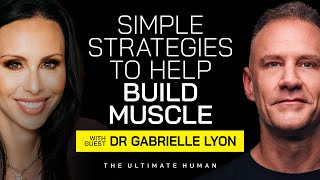
Transcript of a podcast interview (TUH #027) with Dr. Gabrielle Lyon on muscle-centric aging and practical strategies to build/maintain skeletal muscle for longevity. Dr. Lyon argues skeletal muscle is a primary organ of metabolic health and longevity (affecting glucose disposal, fatty-acid oxidation, amino-acid reservoir, secretory functions). Key practical points: exercise (resistance training) is 'non-negotiable'—aim for resistance training ~3 days/week with functional movements; skeletal muscle decline (sarcopenia) begins in the 30s; protein RDA (0.8 g/kg) is a minimum—Dr. Lyon recommends ~0.7–1.0 g per pound of ideal body weight (meal-level dosing 30–50 g of high-quality protein) to overcome anabolic resistance; favor bolus dosing of protein per meal rather than many tiny doses; monitor simple strength metrics (push-ups, squats, dead-hang, grip) and biochemical markers (fasting insulin ~5 µU/mL target, triglycerides <100 mg/dL, fasting glucose/A1c context). She supports using GLP-1/GIP weight-loss drugs when appropriate but emphasizes maintaining protein intake and resistance training to preserve muscle. Mindset/discipline and small daily promises are emphasized.
Chapters
We think about diseases like cardiovascular disease, Alzheimer's disease as diseases of aging, but I would argue they're diseases of skeletal muscle.
New York Times bestselling author. She's an incredible message. She is a physician. Welcome to the podcast. Dr. Gabrielle Lyon.
The more healthy skeletal muscle mass you have, the greater your survivability against nearly all causes of death. You can always become more capable and skeletal muscle is this organ of longevity. I think we should think about exercise as a non negotiable. 50% of Americans are not exercising, exercising. We need to overcome what happens with aging to maintain the health of skeletal muscle.
Burning fat, heart disease, reversing diabetes, staying sharp, building muscle and boosting energy. So if you're not interested in any of those things, please stop watching.
You know, as humans, we all want growth. The real key to longevity is.
Ultimate human. Hey guys, welcome back to the Ultimate Human podcast. I'm your host, human biologist Gary Bareca. We go down the road of everything anti aging, longevity, biohacking and everything in between. And today is a really, really special day for me. I have a guest on, I've actually been chasing for the last few months trying to coordinate calendars and schedules. I'm enormous fan of this osteopathic physician. She is a New York Times best selling author. She coined the term muscle centric aging and she has the muscle centric institute. She is also dominating the airwaves and the bookshelves right now with an amazing book called Forever Strong. And I will put a link in the show notes to this book. It's a must read. I read this book over the summer. She actually sent me a copy before it was released and I read it over the summer. It is a life changing book. She has an incredible message. She is a musician of the thing that I love about her. She's actually out there in the world really practicing what she preaches on real live human beings. And so welcome to the podcast. Dr. Gabrielle Lyon.
Thank you so much for having me. What a wonderful introduction.
I'm so pumped to have you here. And we, you were just on my water fasting challenge. You came in as a surprise guest. We had about 50, 000 people. We just took through a water fasting challenge the other day. We're going to do another one later in the year. You had, you know, amazing information for the guests. I want to talk a little bit about your journey, your message. I actually want to get into some of the main points of Forever Strong. I, you know, before the, the cameras started rolling today, we were having A conversation. And I said, I love your messaging because in our industry, I feel like there's a lot of super woke biohackers talking to other super woke biohackers. And I always say that's not our audience. Our audience is the masses. And you've got an amazing message for the masses. And some of the topics, by the way, covered in this book. Burning fat, heart disease, reversing diabetes, staying sharp, building muscle, and boosting energy. So if you're not interested in any of those things, please stop watching.
That's right.
So. So talk to me a little bit about, you know, your journey. You're an osteopathic physician.
Yes.
So you already had this sort of wellness orientation.
I had this wellness orientation from the very beginning, which makes this story unusual. I graduated high school in three and a half years, and I moved in with my godmother, Liz Lipski. Do you know who that is?
Liz Lipski. It just sounds like a famous name. I don't even know her, but it's a cool name. Liz Lipski.
Functional medicine has now, you know, it has legs to stand on now. But the generation before functional medicine was a thing, they were a handful of providers and practitioners. Oh, yeah, My godmother was one of those. Wow. Yeah.
So what an amazing mentor.
Yes. And I moved in with her when I was 17.
Okay.
And I sat in while she was seeing patients, and I just saw how nutrition transformed their lives. And I realized that that was something that I wanted to do.
And at that time, that was a very sort of tree hugger, granola, way in left field kind of approach that totally nutrition could have any impact on aging and longevity. I mean, to this day, it's astounding how many patients my clinical team sees and that are discharged from, like, oncology treatments. And it says dietary restrictions. None.
Right.
I'm like, none. Beer, but, you know, pasta, you know, Dunkin donuts. No. No restrictions at all.
Right.
So. So this kind of helped shaped.
Oh, it was. It was a huge driver. Because you're pointing out that there's a huge dichotomy between sick care and wellness. And I started seeing these patients come in and I sat with her. She saw patients who had had cancer, saw patients who had had eating disorders, all kinds of things.
Right.
And I realized that that was the direction I wanted to go.
That's awesome.
And I went to the University of Illinois, where I happened. I don't know how much you believe in serendipity, but I. Oh, huge. Stumbled into the class of Dr. Donald Layman.
Oh, wow.
And Dr. Donald Layman is a world class protein researcher, no doubt. And much of the information that we think about protein now came out of his lab very early on, okay. And I learned from him. And I became obsessed, I became obsessed with this nutritional science perspective. But I don't know how much you know about Illinois. Have you been to Illinois?
Yeah, I actually went to grad school in Illinois. I went to, I went to National College of Chiropractic, which is now National University of Health Sciences. So that's, that's where I got my human biology degree. Terrible place in the winter. Okay.
This is.
I learned to believe in seasonal affective disorder up there. I thought it was a bunch of nonsense until I lived in Chicago.
Exactly. So I'm about to tell you how I then went to osteopathic school, okay? So I'm at University of Illinois in Champaign, Urbana, where there is nothing but school and cornfields. Right?
Right.
Not fun. There was a tornado, essentially a tornado warning, okay. And we all. I was in nutrition class and we all had to go to this fallout shelter. And I must have been in that shelter for what felt like hours, okay? And I sat there and I'm like, I'm totally useless. And that's my greatest fear in life, right? Being not able to be useful to other people. And I, and I thought to myself, well, I can tell them to have an apple or eat some steak, but that's about it, right? And it was at that moment I decided to go to medical school, okay? And I chose osteopathic school because I was very interested in the musculoskeletal system. I was very interested in training at the time. I looked at MD school, I looked at DO school, and I looked at naturopathic school, and I chose osteopathic school.
Okay? And where did, where was this?
Arizona.
In Arizona. Okay. So you go to osteopathic school in Arizona, you get out kicking and screaming. You sort of own this space muscle centric medicine. I actually stole a phrase of yours. Muscle is our metabolic currency. I use that one all the time. Because I think it really. Nothing's more true than that statement. But how did you continue to gravitate towards, you know, you say all the time, you know, muscle is the largest organ in the body. Nobody thinks of muscle as an organ.
That's right.
I think. And it's the greatest organ in the body. And how is our muscle a part of an anti aging and a longevity strategy?
It's actually everything. And I had this aha moment So I went to medical school. I did two years of residency at the University of Louisville in psychiatry.
Oh, wow.
And then I changed from psychiatry to family medicine and I did family medicine residency and then I did a fellowship and I did a fellowship in geriatrics and obesity medicine. So here is what happened. I don't know if you've been exposed to geriatrics or end of life.
Have you been exposed to that directly?
It is.
My kids are in nursing school and they do rotations at the hospice and.
They probably come back and they say, wow, that was so depressing and so challenging and very difficult.
Mentally and physically just exhausted. My son, my daughter. Blank face.
Yes.
Don't even want to talk about it.
Now. Imagine doing that for two years, seeing anywhere from 30 patients a day. And in the mornings and in the evenings, I was doing obesity research. I worked on a project where I was looking at body composition and brain function. And I fell in love with one of these participants. We'll just call her Betty.
Okay.
You know, and Betty, Betty.
Shout out to Betty. She's still with us.
I don't know. Because a research participant, she was a mom of three, in her mid-50s.
Okay.
She had done exactly what the medical system had told her to do. The food Guide Pyramid. Eat less, exercise more, just do cardiovascular activity. And she struggled with the same 30, 20, 30 pounds her entire life. Did she lose weight? Totally. She lost weight, she regained it. She lost weight. It's the story that we've seen a million times, right. I imaged her brain and her brain looked like the beginning of an Alzheimer's brain. Wow.
In her 50s. Wow.
And I think a lot like you, I was mortified. I felt very responsible. I felt that as a medical community, we were doing her a disservice. And the information that she was provided was the same information that everyone was getting.
Right.
And I thought to myself, what are we missing? We're obviously missing something. Went to the hospital, started to think about this, saw the patients in the hospital bed, went to the dementia clinic, went to the nursing home on the weekends. And I realized that the one thing that all of these patients had in common was not that they were over fat, but was that they were under muscled.
Wow.
And it was the health of their skeletal muscle that was determining the trajectory of their life.
And so these were, these were later in life, there's something called sarcopenia. Right. Age related muscle wasting. And I've seen cross sections, you know, in human biology. We had a cadaver anatomy lab and you could see as People got older, sometimes the diameter like of their thighs would change, but the composition would change. You'd see the musculature becoming increasingly less and the fat becoming increasingly more. And it wasn't noticeable externally, but is. When we would dissect these cadavers, you could see that the older they were, the, the more sarcopenic, the more they had had muscle wasting.
And that happens. So it's sarcopenic obesity. And there is this fat infiltration in skeletal muscle, intramyocellular fat, intramyocellular lipids. But the thing that's so interesting is that the skeletal muscle ends up looking like a marbled steak. And if we believe that skeletal muscle is metabolic currency, which we do, it's the only currency that you have to earn, by the way. You can't bargain for it, Botox it, or do any of these other things.
There's no chemical, there's no synthetic, there's no pharmaceutical for it.
You have to earn skeletal muscle. Skeletal muscle is the site for glucose disposal. Everybody cares about carbohydrates, where it's going to go. People care about insulin resistance. We've all heard about insulin resistance. People care about lipids, triglycerides. Skeletal muscle is the primary site for glucose disposal. Fatty acid oxidation, it is an amino acid reservoir. All of these things is a secretory organ. But the reality is we think about diseases like cardiovascular disease, Alzheimer's disease, as diseases of aging, but I would argue they're diseases of skeletal muscle.
Wow. Or lack thereof.
Or lack thereof that begin decades earlier.
So let's say you're, you know, Peter Attia, Dr. Tia also talks about this, you know, your, your centenarian decathlon I think he calls it, you know, your plan for. What do you want to be doing when you're at 100 years old? Because you got a plan for it now if you're in your 30s, your 40s, your 50s, your 60s. So, you know, most of my audience is between the ages of 25 and 48 years old. They're, they're conscious about their health, you know, they know something about exercise. Most of them are slightly woke to some biohacking methods. But if you're gonna start on a good anti aging muscle building program, like where do you start?
I love this question. I think we should think about exercise as a non negotiable. Exercise is a non negotiable. 24% of Americans meet their recommendations for both cardiovascular activity and strength training.
24%?
Yes.
Oh my gosh.
50% of Americans don't Even work out.
Yeah.
Where would someone start? We have to think about exercise, is that we're not training to become better at exercise, we're training to become better at life. What are the things that we have to do? Definitely resistance training three days a week. You start with one day upper body, one day lower body and a combination. The question becomes what should people ultimately do? And I believe people should be doing movements that translate to real life.
I think it's a great idea.
Whether it's a kettlebell carry and people will say, well, I don't have kettlebells, then pick up gallons of water.
Right.
People will also say, I don't want to lift heavy weights because I'm going to get bulky. That's my favorite, my toddler, one of my toddlers is 40 pounds.
Really?
I am lifting her up all day long.
Right.
And same with all the moms. Nobody's getting bulky from that.
Right, right.
These are, these are strong girl numbers. You have to be able to lift up your toddler and put your suitcase overhead.
Yeah.
So individuals should be training at least three days a week resistance training. You know, I, I like to have them do between 8 to 12 reps, but again it depends on the weight, the intensity, if they are new at resistance exercise.
But that's just a blanket but non negotiable minimum. Three days a week of resistance training.
Yes. If you want to age well.
Yeah.
If you don't care about falling, breaking a hip, if you don't care about improving the quality of your life, being able to be strong. Because we have to plan for this sarcopenic experience.
Because it's coming. I mean age related muscle wasting is coming for all of us.
Even if we can offset it by dietary protein and training. There are changes within skeletal muscle that do happen. These type 2 muscle fibers change, the diameter changes. Yeah. The, you'd mentioned the contractile proteins change, you get fat infiltration.
Right.
This stuff happens.
And so, you know, a lot of people are, you know, you get to a certain age, Maybe it's your 50s, your 60s, certainly in your 70s, where you go, well, why bother? Right. Because maybe I can maintain, but I certainly cannot improve. And I think you would take issue with that.
Yeah. Right. The evidence doesn't that. The evidence does not support that.
It doesn't support that we can't build muscle even in later stages of life. So I'm 60 years old, I'm relatively sedentary. I, there is hope for me to not only become more mobile and strong, but to actually put on lean muscle yes. Great.
And by the way, the best time to start was yesterday. But, you know, the better time to start is now.
Oh, yeah. No, now is the.
I mean, like right now, at this moment, drop and give me 50.
I have a gym right next to my bed.
It's amazing. It's amazing. But people think that they're. What's the point? That I'm getting older. Even when they hit menopause, I've hit menopause, there's nothing I can do. None of that is true. You can always become stronger. You can always become more capable. And skeletal muscle is this organ of longevity.
You know, it's interesting that grip strength was directly related to longevity. When I was in the mortality space, we would study all kinds of indications and factors later in life that would actually have a demonstrative effect on your longevity, your lifespan. Some of those were, you know, losing a spouse. We called a broken heart syndrome, caregiver syndrome. When one spouse falls ill and you put yourself in the back seat, stop taking care of yourself to take care of somebody else. But interestingly, in the majority of the hip fractures that we saw, these elderly patients weren't falling and breaking their hip.
That's right.
You know, their hip was breaking and then they were falling. And I found that astounding. And so what you're saying is, you know, if you're. If you're doing weight training, you're also doing skeletal training, right? Because when we load a bone.
That's right.
It strengthens. When we tear a muscle, it grows. So if you're getting that kind of this double whammy, right, because you're. If you're doing some kind of weight training, you're also doing skeletal training. You're pushing off osteopenia.
That's right.
Maybe osteoporosis, and you're becoming more functional. I mean, the fact that grip strength and. And people go, why is grip strength matter? Well, because when you're falling or you're going upstairs or you're holding a rail and you're not strong enough to support your weight, down you go, you know, and Murphy's law says you're going to fall at the top of the steps, Right. You're never going to fall at the bottom.
Do not do that. We're not recommending that for anybody.
So I broke down some of the chapters of your book because, you know, you talk about being aware of the science. So let's maybe take a little dive into some of what the science says about, you know, muscle being your metabolic currency. And you know, muscle actually being a component of a longer, healthier, happier lifestyle.
Yeah.
Hey, guys, I think the most important website you may ever go to is theultimatehuman.com that's theultimatehuman.com because on this website we can directly interact with one another. You can give me suggestions for podcast guests and topics that you'd like to see me cover. You can ask me any question that you'd like to. More importantly, you can sign up for my entirely free newsletter. It comes out every single week. I write this so I can get the information to the masses on how to live a healthier, happier, longer, chemical free life. You can also sign up for a pre order of my book. And if you'd like to take the genetic test that I talk about all the time, it's available there too. And lastly, you can even see all of the products that I use in my daily life for a chemical free, healthy living style. A lot of people ask me, you know, what do you use in your daily life, Gary? What do you brush your teeth with and clean your countertops with? Well, it's all there if you'd like to see it. And you can again ask me any question that you'd like and get my free newsletter, theultimatehuman.com I promise you that information will help change the trajectory of your life. And now back to the ultimate human podcast.
I mean, one of the first things that we have to think about is there's very few things in medicine that overarchingly benefit a person where we can say, the more healthy skeletal muscle mass you have, the greater your survivability against nearly all causes of death.
Wow.
And we can say that about skeletal muscle. You know, and I was thinking about this. I was looking at the CDC and I was looking at the top causes of death, which I'm sure that you have looked at for many decades.
Very well versed.
What is so interesting is it will say things like Alzheimer's, cardiovascular disease, cancer, all of those. It won't say anything about skeletal muscle.
Oh, no, it doesn't.
But at the root of all of.
Those things, even in the top 20.
No, the root of all of those things is the health of skeletal muscle. And the whole perspective is wrong. We've been chasing this obesity epidemic for the last 50 years.
It's gotten worse.
We've gotten worse. And the narrative and the way in which we speak about it is incorrect. We're constantly focused on what we have to lose rather than what we have to gain. And if we Believe that skeletal muscle is this organ of longevity. If we believe that the more healthy skeletal muscle mass you have, the greater you'll be able to regulate carbohydrate metabolism, the better your fatty acid oxidation will be, the stronger you will be. You and I were talking offline about, about mitochondrial health.
Yes.
The healthier your muscle is, well, the.
More muscle you have, the more mitochondria you have.
So there you, there you have it. And one of the things that makes muscle sick is this lack of flux. If you think about muscle as a suitcase. So let's make it really simple, right? If you open up a suitcase and you pack it all up and you're going on a trip for four days, but you pack for 30, you're eating all this food, everything is flowing out everywhere. You can't get all the clothes back in. You can't even get the clothes. And it's a mess everywhere.
Sounds like my wife preparing to go away one night.
We all, we all do that. She's got good taste. She's beautiful.
Great taste, but good lord, is she a terrible packer.
So, so if you think about skeletal muscle as a suitcase, when it is over packed, then everything remains in the bloodstream. Glucose has nowhere to go. You become more insulin resistant, fatty acids increase, and skeletal muscle at its core is responsible for these diseases that we're seeing later on in life.
You know, it was astounding how much sedentary lifestyle was connected to all cause mortality in the mortality space, you know, sitting became the new smoking. And for the first time in modern history and measured mortality history, life expectancy is beginning to go backwards. And I found that astounding. Right as my career was starting to trail out, the career in mortality was beginning to end. You know, the evidence was coming out that, you know, all of this spending on healthcare is not helping us live longer. I mean, in the United States, we're the number one spender in healthcare worldwide by a massive factor. We're ranked 52nd in the world in life expectancy. We're ranked 38th in healthcare delivery. And the one thing that stood out was sedentary lifestyle. And you know, so I mean, people need to start now with a, with a program. One of the things you talk about in your, in your book is building a comprehensive strategy. I love the, you know, the takeaway that exercise is non negotiable. And if you haven't been exercising for a period of time, you could start.
With what, just bodyweight exercises, push ups, squats, planks. I love it. It doesn't have to be complicated to be effective.
Right. You don't need a trainer, you don't need a fancy gym. No, I mean, you can actually really hurt yourself with, with body weight exercises. I mean, there's some trainers that could just take you through. Ben Greenfield came and stayed with me for a few days and we went out in the park and destroyed ourselves, which is, you know, good mornings and rotation exercises and whatnot. So it's not as complicated as it sounds, but I think making it non negotiable is. I think something is a big takeaway for people.
And I don't know, Gary, I don't know how we're going to do it, because when you think about it, we know that skeletal muscle is so important in all of these things, yet 50% of Americans are not exercising. How do we then move the needle? And I think the only way to really get them to switch on is, number one, it's not about the person. If you're not willing to do it for yourself, you have to be willing to do it for another individual, like a family member. Excuse me. But the other thing to do is also embracing this discomfort that expect that maybe you're not going to want to do it.
Yeah.
But that you have to embrace discomfort.
Yeah. Aging is the aggressive pursuit of comfort. Yeah, I really think that that's true. I sort of coined that phrase because I think the more aggressively we pursue comfort, the faster we age. You don't even, your feet don't even touch the ground.
So just so Everybody knows, I'm five one, she's five one, 110 pounds. Maybe I need a booster seat next time for round two.
I felt so bad. I was like, her feet don't even touch the ground.
A booster chair.
I would have gotten you a booster chair if I, if I, if I had known. But yeah, it's, you know, aging is this aggressive pursuit of comfort. And, you know, we, we just do not like being uncomfortable. Cold showers, it's the great equalizer.
Age is the great equalizer. Muscle decline starts in your 30s. You know, these diseases that we have to overcome, they're not diseases of later in life. Sarcopenia is not a late life disease.
I didn't know that.
Sarcopenia begins in your 30s.
Wow. I did not know. Sarcopenia is age related muscle wasting.
Exactly. And if you are inactive, you will lose skeletal muscle insulin resistance. You can see that. 18 Gerald Schulman did some of the early work.
It's crazy. In our clinic, we're seeing it. Yeah. Younger and younger metabolic syndrome with also.
With no outward signs of obesity, you can not look overweight and have unhealthy skeletal muscle.
I don't disagree with that at all. Now. So there's two, two sides to this, right? One is okay, exercise is going to become non negotiable. There are so many different recommendations for protein out there. Sources of prote, types of protein, amounts of protein, half a kilogram per body weight. Kilogram, I mean an ounce per or gram per kilogram of body weight. Where do you fall in this maze of protein recommendations?
First I would like to say that I trained in Nutri. So the first thing people will say is physicians are not trained in nutritional science fair. They say they get seven hours. I've trained seven years in nutritional sciences.
Okay.
Dedicated training in nutritional sciences from one of the world leading experts and then went to a lab at Washington University.
Okay. Wow.
In St. Louis do a fellowship in nutritional sciences.
Okay.
Now let's talk about protein.
Yes.
Protein is the black sheep of the macronutrient family. And by the way, it wasn't like that when I started my training.
It wasn't?
No. So I've been studying this for almost two decades. Wasn't like that.
Yeah. I mean we turned the food pyramid upside down at some point.
It wasn't like that.
Yeah.
And the recommendation for dietary protein is 0.8 grams per kilogram.
Okay.
The RDA is the minimum to prevent deficiencies. The minimum to prevent deficiencies. This number is based on nitrogen balance, which nitrogen balances is, was originally used in agriculture to figure out how to feed animals with the cheapest way possible.
Ah.
So in order to. Right. In order to continue their growth, what is the cheapest way that we could feed animals with the lowest amount of protein? They'll still grow. We extrapolated some of this data. We created it for 18 year old men, young men and they determined 0.8 grams per kilogram.
Okay. This is a maintenance amount of protein.
No, this is the minimum for 18 year old males to prevent deficiencies.
Okay.
That recommendation has not been updated since easily the 80s. Wow. Now let me ask you this. The minimum to prevent deficiencies, this number is also based on high quality protein. There's a difference between proteins, there's high quality protein which are animal based proteins.
Right.
This is not an emotional discussion. This is purely based on the amino acids.
Right.
That's it.
I, I, by the way, I agree with you. I'm a huge fan of grass fed meats, wild caught fish, pasture raised chickens, pasture raised eggs. I Do not believe that these are the double foods that they're.
No, they never have been. And then low quality protein would be plant based proteins.
Okay.
And again, I am not making a judgment whether you eat one or the other. I am also not.
I think by low quality you mean low percentage of absorption per gram.
Percentage of absorption. And also the amino acid profiles are different. So if you were to look at quinoa and a chicken breast, the percentage of these amino acids are different. We don't eat for protein, we eat for amino acids.
Right.
There are 20 different amino acids, nine of which are essential. And we eat for those nine essential.
Amino acids, which means they're essential for life. If you don't get these nine amino acids, you'll die.
That's right.
Right.
And when we talk about protein, we have to understand we're talking about protein as an overarching number. But that really does miss the food matrix, which we'll eventually get to.
Okay.
The current recommendation is 0.8 grams per kilogram, which comes out to 0.37 grams per pound that you're assimilating that you. That would be the recommendation to prevent deficiency. Wow. So if you are 115 pound person, that minimum would be 45 grams of protein.
Oh my gosh.
Nothing.
That's nothing.
And people take this as a maximum. Now let's look at it from the scope of vitamin C. If 60 mg of vitamin C is the recommended dietary allowance and you were sick, would you go up? That's enough. The 60 milligrams is enough. Would you ever say that?
No. No.
Anybody who gets sick or feels that they have a cold coming on, they might take, I don't know, three times that, a hundred times that.
Right.
200. I mean, whatever it is. But we don't think about protein in that perspective.
Right. It's not just enough to eat protein, obviously, you gotta, you, you, you got. The muscle's gotta ask for it. So if you're damaging the muscle and it's asking for the protein, now you're growing the muscle, so you're talking about, you know, deficiency. I would imagine the minimum amount for deficiency is just so you can survive.
But look at what has happened. So if the average protein intake, and this is according to NHANES data, the largest data set that we have, the average female eats around 68 grams of protein a day. The average male is maybe around 100. When we think about how do we support aging? Skeletal muscle requires two main things. It requires a stimulus through exercise and it requires Dietary protein. Skeletal muscle changes as we age. The efficiency of protein utilization goes down, the capillary blood flow decreases. There's anabolic resistance that happens. Meaning the skeletal muscle. Skeletal muscle is a nutrient sensing organ, and it senses the quality of the diet in. Yes. In particular, it senses the amino acids. It senses high quality proteins. Okay, like leucine, we can talk about. Leucine is not a high quality protein, but it senses amino acids.
Amino acids. The leucine, isoleucine, valine.
Exactly, the branch chain amino acids. And it's particularly sensitive to leucine. As we age, this sensitivity decreases. Okay, but we need it because you're talking about hypertrophy and muscle getting stronger and turning over. We need to overcome what happens with aging to maintain the health of skeletal muscle. We do that through training, and we do it through dosing of dietary protein. Which will lead me to what I recommend. I Recommend Close to one gram per pound. Ideal body weight.
Oh, one gram per pound. Not per kilogram per pound.
Okay, so one gram per. And you could go anywhere from 0.7 to one gram per pound.
So I'm 195 pounds. You'd recommend I get 195 grams of protein, Right?
Well, you could go a little bit lower because you're very active, but at the high end.
Stop it. Dr. Lyon, I'm telling you, he did.
Like 200 push ups right before we started. See that? So that is a. Again, that might be a lot for some people, but the. And we have to be careful about how we talk about it. People will say, well, that's a high protein diet. It's on the higher end. But double the RDA at 0.7 grams, which would be 1.6 grams per kilogram, is not a high protein diet. That's a more optimal protein diet. And I think that, you know, we talk about, oh, this is a high protein diet. Well, no, it's not. If you're comparing it.
Because everybody says, you know, the high protein diets, they put stress on the kidneys. They. But. But I think that has to do with. If you're just shoveling in a bunch of protein and you're sedentary, probably would put a lot of stress on your kidneys. But if you're shoveling in a lot of protein, which becomes amino acids, and you're not sedentary, well, then that protein has a place to go.
And I would say that we use these amino acids for a whole host of other things. These amino acids, their unique molecules that are used for various things. Whether it's protein turnover or neurotransmitters, there's, you know, tryptophan for serotonin production.
Right.
There's threonine for mucin production.
In your gut you talk a lot about phenylalanine. Dopamine.
Exactly, yeah. So these people have to understand that these proteins are not interchangeable. We require high quality proteins to do all these other things.
The cool thing is that the liver is so intelligent that it can take these proteins and chop them up into one other necessary ones that it needs. I remember when I was in high school and even in college, the big thing, like the big breakthrough was branched chain amino acids. BCAAs, you know, leucine, nice leucine, palene and, and so all these BCAA powders started coming out and it was like all you needed to be, you know.
Super fit was to be looking like Arnold Schwarzenegger. This is it. This is all you need.
That was the secret.
And, and I've been trying that for a time. It has not worked out.
It's not working. But you're talking about the full spectrum of amino acid.
So you need the full spectrum. The way that I, I think about branches and I actually don't recommend branch chains alone, just sipping throughout the day because you do need the full spectrum. So if you're going to start the machinery, then you need everything to lay down tissue.
Yeah, you know, I, I, I have like kind of a secret rule of thumb that if you, you know, when you're developing a supplement or you're looking for a supplement to take, you know, how close is it to how it would naturally occur?
I think that's a great idea.
Right? I, what could I eat or drink? You know, naturally found on the surface of the earth somewhere out in nature that just has branch chain amino acids in a 2 to 1 to 1 ratio. Leucine to isoleucine to Valine and I.
Have you found it?
No, I haven't. It's like there's only has that, you know.
Yeah.
There's no plant that only contains that. So, you know, I find it hard to believe that, you know, because we've been able to isolate these in a laboratory, that that's now the secret. I think when things are the way they're presented in nature and meets for example, full spectrum of, of amino, if you're going to supplement, supplement with a full spectrum of amino acids. I mean I, I work out fasted, but I take something called perfect aminos, which is Dr. Minkoff and I take this before I work out and take it right after I work out. I think it has two calories in it. So it doesn't really break my fast. And I can absolutely tell the difference between taking that and not taking it and how I feel before, during and after a workout.
And there is some, you know, some people do really well with intra workout amino acids. And again, this is actually a full spectru spectrum amino acid or a full spectrum amino acid mixture. So you are getting everything you need.
So let's, let's talk about a typical, you know, morning routine and it, and is in your opinion, is there a better time of the day to work out? You know, I always actually feel stronger late in the day, but the truth is I usually rarely have time to work out in the day. So I'm selfish in the mornings because I say the first 60 to 90 minutes of every day belongs to me.
You are lucky.
And then I give the rest of the day away. Right?
You are very lucky. Okay, so for the listener doesn't know, I have a two and a half year old and a four and a half year old.
And you'll get a lot of your own time.
0. And a husband who is a medical resident, a surgical resident, actually. Let's talk about a morning routine. It really depends. I think you can always have a morning routine if you're willing to get up earlier than everybody else. My husband wakes up at 4. Before I came here, I woke up at 4. I got my workout in before I got here.
Wow. Did you fly in today?
I did.
You did? She flew in.
So I got, so I got up. Are you ready for this? I got up, got up at 4am for my husband, which is a big deal. He always wakes up at 4. I hit the gym, got dressed, left at 6am Come here. I've already knocked out my workout.
So your gym is down the street from your house?
We have a gym in our house.
Oh, you have a gym?
Yes.
Okay. So to have a gym in your house is not like, isn't that to be LA Fitness?
No. So here's what I did this morning. So today was actually an off day for me.
Okay.
And so what I did was 20 minutes of high intensity interval. We did a peloton. I did a peloton. I said, okay, I did a peloton because I typically try to at least get one day of high intensity interval training. And then I have weights and I do goblet squats. I do some kind of carry, some kind of push up because, you know, in Our household, if you have little kids, they love to get on your back. So I really got to be on my push.
Okay. I love that. I love the push up game.
So if you're willing to get up early, you will always have a morning routine and it doesn't have to be complicated. So I trained with a red light on.
Okay.
Train with a red light. I use, you know, some sodium right after.
I'm a huge, huge believer in sodium, too. I think the majority of people from seeing thousands and thousands and thousands of labs come through our clinic, they're actually sodium deficient. Not. They're not having.
I think there is. I. I think that that's a really interesting point that you bring up. I think that. So sodium is so tightly controlled. But there is. I, I do actually agree with you. There is some evidence that it's, you know, we think that we have to be so restrictive on sodium. But again, I, I think there's other evidence that support supports that potentially we do need more sodium.
Yeah. And I, and I talk about not iodized table salt, but like Celtic salts, Baja gold salts.
Yeah.
Pink Himalayan sea salt. I mean, recently I've been reading some literature about the amount of heavy metals coming in pink Himalayan sea salts, especially from China. So I've steered towards Celtic sea salt. But it is amazing how simply adding a mineral salt, like a Celtic sea salt or Baja salt to your drinking water in the morning, how many. Again, patients coming through our clinic report less muscle aches, less muscle spasms, a complete cessation of calf spasms, even a significant reduction in migraine headaches. And there's a clinical study I talked about on one of my podcasts where they found an inverse relationship between sodium and migraine headaches because of the dural covering of the brain, stretching or contracting improperly because of the sodium in imbalance.
So.
So you, you add a little sodium to your waters. Okay, so you got, this morning, smashed it, and then you got on a plane.
Got on a plane. And actually, after this, I'm heading home.
Yeah. Wow, that's great. A little round trip just to be on the ultimate human podcast. So massive weight loss craze going on right now. And, you know, a year and a half ago, ish Wagovi Ozampic Manjaro or semaglutide or semi glutide, depending on how you say it. And tirzepatide hit the market. Massive weight loss drugs. Great for people with type 2 diabetes and obesity. But a lot of people are using it for vanity and what are, what is your opinion on these? Lots of, you know, anecdotal stories about people lose muscle mass and lean body mass in addition to the fat they get. Ozempic face. What is your position on these weight loss drugs?
First question, do we really believe it's vanity if you have fat to lose? Is it, Is it vanity? Is having excess adipose tissue healthy?
No. It's one of the signs of metabolic syndrome.
So I would say even if someone has a small amount of weight to lose and maybe they've really struggled, you know, I think it's important to have the experience of. I am a provider that has seen thousands of patients. There is only so much struggle that as a provider, you're willing to accept for your patients.
Right.
That if you have a tool, you should be able to use it.
Okay.
And the treatment should match the severity of the challenge. So I'll give you an example. Let's say someone has ten pounds to lose. They've had ten pounds for the last ten years. And now we have a medication that, by the way, that we can titrate up or down, you know, whether it's ozempic or triazepatide, you know, whether it's semaglutide or trizepatide. And I think that the provider and the patient should have the opportunity to use it.
Okay?
Now the statement that I'm seeing that's been all over is that when you go on these medications, these peptides, that you will lose skeletal muscle mass as.
If it's a thing and it's a foregone conclusion.
Now, we put patients on the, on these drugs all the time and we do not see that, okay? We insist that they have high quality protein and we insist that they do resistance training.
Okay?
Those individuals, what we see is high quality weight loss, mostly adipose tissue. We see correction in their blood markers as well as maintenance of skeletal muscle mass. Now, if it was true that these medications, these peptides affected skeletal muscle, then we have to be able to give a mechanism of action. What is the mechanism of action?
I, I would, I would have to say that they're just in such a caloric deficit and their appetite shut off so much that they're beginning to metabolize lean muscle. But, you know, ironically, we don't see that in our clinic either. Dr. Sardar, clinic director, does the same thing that you do. Resistance training, high quality protein diet and, and use of other peptides, generally the growth hormone peptides like sir moralin or CJC maybe, or CGC 1295 ipomorlin. If you appetite shut off so much that they're beginning to metabolize lean muscle. But you know, ironically we don't see that in our clinic either. Dr. Sardar, clinic director the same thing that you do, resistance training, high quality protein diet and and use of other peptides generally the growth hormone peptides like sir moralin or cjc.cgc 1295 IPOM Morland if you can still get those. You know the fda.
That's right. I. Oh my gosh, I forgot about that. That's right. In November the FDA did. I think they also took off BPC like all of them.
A shame. BPC157. It's so many patients on that for tissue repair and injury. I hope that that one is still allowed to be produced, you know, in the, you know, outside of compound pharmacies. But so if, if someone's considering semaglutide walgovia or zampic tirzepatide mounjaro for weight loss, you're for that. But the importance of maintaining healthy protein, of course and resistance training may even be more important when you're on those.
And definitely possible use of peptides. Definitely. And we do know that the high quality weight loss and I worked on some of these earlier studies in the 2000s when individuals would eat the food guide pyramid versus a double the RDA protein diet. So 1.6 grams per kilogram and we always saw when calories are controlled that those individuals that ate a protein forward diet 1.6 grams per kilogram plus little two days of like yoga like activity and walking daily was enough to maintain skeletal muscle.
Wow. Okay, so that's good.
Is such a minimal amount of stimulus.
So I'm super, super happy to hear you say that. I'm sure a lot of people are happy to hear you say that because every. Well, not everybody, but a lot of people have that last stubborn 10 or 15 pounds. It's been hanging out for so long and maybe this could get them over the edge.
Yeah. And I will also say something else is when you hear a narrative where everybody is bashing something, I typically go the other way.
Yeah.
So pay attention.
I get bashed online all the time.
But here is humans are really funny. They hear something repeated over and over again. And humans, if something is repeated enough, people believe it to be true rather than it's just repetition.
Yeah, that's the hurt mentality.
And we have to really take a step back and just challenge everything that you hear.
So now let's go into diet a little bit. So we have an. Exercise is non negotiable. And.
And by the way, everyone will look for an excuse. The reality is you have to know your human nature. You're gonna. You're gonna look for it, right? Be wise to it.
Yes.
You know.
Yeah. I mean, I remember when I first started cold plunging. So I've strategically set up my. You know, you've seen it. I've strategically set up my home so that I.
It's amazing. I don't know. You guys should really complain to management about this full spectrum water view. You really need to upgrade this.
Yeah, I have.
Sage said I better not say that because you'll get an idea.
I will get an idea. Now, if there's an ounce of space in my house, I put a piece of biohacking equipment there. But I play this little game with. Because I have my bedroom and then my bathroom and then there's the cold plunge and then the gym and then you go down the hallway, there's the red light bed and then the kitchen.
So. Awesome.
And so I have this little thing I do with myself where I kind of earn my way to the coffee maker. And it works great. And I've never regretted it, but. And I used a. David, David Goggins. I saw a podcast with him one time and he was like, stop negotiating with yourself. And, you know, I used to walk to the edge of the cold punch and I go, man, maybe I should. Maybe I should get my coffee. Maybe I should go do my breath work first. Now I just walk over and I get in, you know, and.
And you know, it just reminds me, you asked the question is what is the best time to exercise? And I was talking to Sachin Panda and he is a circadian biologist, and he says it should be later on in the day.
Right.
Whether it's around. I feel three to seven. I don't. If you put me in the gym between three and seven, I'm a disaster. Really? Disaster. Okay, you put me in the gym in the morning and I got it. That.
Okay, so you're just conditioned for that.
I think that there is probably personalized biology, certain circadian rhythms for people, but I will tell you what. So that is what the data would support later on in the day, according to Sachin. But for me, no.
Well, I mean, the fact is that I think the majority of people listening to this podcast know that if I. If I schedule my workout later in the day, there's so many more things that can interrupt my work.
Totally.
Because life just Gets in the way. My dad, Captain John Brackett, used to say all the time, life is what happens to you when you're on your way to doing something else. So the greatest definition of life I think I ever heard that. He's a simple man. He's a Navy captain, and he, and he used to say that to me all the time as a kid. Life's what happens to you when you're on your way to doing something else. And, and it's true. And I think that, you know, your. Your day is going to get away from you. So I think, obviously scheduling your workouts in the morning is beyond the most beneficial time because then you're done and you feel amazing about it. I've never regretted working out in the morning. I've never regretted cold plunging in the morning.
I mean, you tell yourself it's a terrible idea when you're getting in. Like, I can't believe I'm doing this is the worst idea ever.
Yeah, exactly. But. But then you. But, man, you want to talk about the guilt of promising yourself that you're going to get a hard workout in and then missing it four or five days.
Gary, let's talk about the real key to longevity.
Okay, you know, let's talk about it.
Self discipline. That's exactly what you're talking about.
So discipline is more important than motivation.
I mean, you are talking about the real key to longevity is you made a promise to yourself. You have integrity with yourself. And when you are out of alignment with that, that's the real. Everyone will always ask us, right? We are practitioners. We are working with people, and they will say, what's the key? What? The secret?
Yeah.
There is no biohacking.
Hard work and mean way to biohack. Hard work. It's just hard work.
It's hard work. Yeah, it's hard work. There's no way to. You know, you're always reading, you're always looking at studies and thinking about how you can better serve humanity. You can't. That takes a lot of time and energy.
No doubt.
You might love it, but it takes energy and focus, and you can't shortcut that. No, the same thing with your body. And you shouldn't want to. You know, people are always looking, what is the. The hack or the. The shortcut? Yeah, maybe it's not fun that you and Ben did 5 million hours of whatever you did in the park. And maybe that ruck, that's three hours. You could probably have done it faster if you used a contraption. But the reality is, is it teaches you and cultivates something different. And again, muscle is this currency that has to be earned, right?
Yeah, it is. It is the one thing, no matter how wealthy you are, socioeconomic differences, I mean, you can't. You either do the work or you don't.
You don't.
So what's, what's a good healthy morning routine? What are some good high quality protein sources? I mean, you know, most of us, I think I know about eggs and red meat, but what are some high quality protein sources that people should have in their cabinets? What are some must haves for the refrigerator to have around so it's easy to hit that protein target?
A great whey protein.
Okay.
A great whey protein. Especially if you're a busy individual. Again, you don't have to cook it. Put a scoop and a half in there, hit 30 grams or so of whey protein and you're good to go.
Okay.
I love that. I love that. For fast. A fast food also, whey protein has lacto albumin, it has lactoferrin. It has these immunoglobulins that help support gut, health and body. It's amazing. Okay, so those are powders again. Lean meats are great. Certified Piedmontis. Have you had that? I told you I was going to send you some.
Yeah, send me some.
Although after being here. No, after being here I said, gary, I'm not sending you any presents. This place is amazing. What is the point of me sending you anything? Sending it to Madison. Yeah, send it to my daughter. People mistake this idea of breakfast that it has to be something different. All of a sudden we decided breakfast was going to be cereal or oatmeal. It doesn't have to be that. It can be a lean steak. That's what we eat in our house.
Yeah, we also, I have lean steak early in the day all the time.
We do eat Greek yogurt. We eat a lot of eggs in my, in my house we eat but fish I'm not so crazy about. But for no other reason, right? Turkey, chicken, have that for breakfast. Here's the other thing is you have.
To prep, prep, make sure it's just around.
What is the One thing that 100 of people do unless you're doing a water fast for three days?
Eat, eat. Yeah.
So you know you're going to be hungry. You know, you have to do it, plan for it.
Right? Okay, I like that. So plan your meals. Exercise is non negotiable.
30 to 50 grams of protein at that first meal.
Okay. 30 to 50 grams at the first.
Meal for overcoming anabolic resistance and for stimulating skeletal muscle. Skeletal muscle as a nutrient sensing organ requires a dose response.
Wow. So you mean if I had small, tiny amounts of protein throughout the day versus a bolus amount of protein.
Right.
It's actually better to bolus dose, correct the protein.
That's right.
Than it is to get micro doses of it throughout the day.
Right. Because you will never reach that threshold. And I would say that that's one of the reasons why we see sarcopenia, which is that decrease in muscle mass and function. And we see a lot of these diseases of aging because we can't maintain our, our muscle tissue.
You know, it's, it's that you bring that up because just anecdotally I've observed is my, my, my parents just, literally just left here to go back to Tennessee. You had them done for the holidays. I've noticed that as they've gotten older, they become, have become snackers and not really meal people. And you know, I'm, I'm doing this thing with my mom that I'm putting online showing how we're improving our cognitive function. A large part of what we're doing is, is, is getting her to be.
More mobile, which is so important.
But this is good, this is good information that, you know, the bullish dosing of approach is better to actually sit down and eat a meal than it is to just nibble your way through the day.
So the, the studies that support this and, and Don Layman did, Don Layman and Doug Patton Jones, they did these early distribution studies and there was some French group that did it. And this idea of you can have the same gram of protein, so you could have 75 grams of protein. Both people are eating 75 grams of protein. And muscle protein synthesis, which is the, it's a biomarker we use for skeletal muscle health, is the incorporation of these amino acids and overall important for what we believe as muscle health, that those that had a bolus meal had higher levels of 24 hour muscle protein synthesis than someone who had 10 grams seven times a day.
Wow. Okay.
And people have to really understand that if food is medicine, we need to dose it appropriately and especially as we age. And that 30 to 50 grams of high quality protein stimulates muscle appropriately. I cover this in the book. It is, you know, there's three tracks in the book. There's a longevity track, there's a weight loss track and a hypertrophy track.
I'd like to get on all three of those. I know my audience is like yes, yes and yes. You don't just have to pick one.
Right, right.
Okay, so what are some? What are some? I'm a huge, like data nerd and so I like data. You know, one of the things that we try to do in our clinics is give people data and sort of gamify their health. So what are some data points they could look at in their blood? Maybe some data points in body mass index that could look at and target to kind of get on board with sort of gamifying this perfect. This journey.
When you are thinking about skeletal muscle health, we have to think about strength metrics. And most, most physicians will not say how many pushups, how many squats can you do, how long is your dead hang? You actually should know those numbers. You have to think about skeletal muscle as this organ system. So we have to take a comprehensive approach. Number one, understanding where your strength is at. Number two. And listen, they do those in, they do some of these things in geriatric clinics where, you know, you're walking test or your sit and stand or your grip strength. Okay, fine. The other thing that you need to look at is things like fasting insulin, five or less. It's a great number. Fasting blood glucose and fasting insulin.
Okay.
You will see derangements in these things first before you may see pathology and skeletal muscle.
So for people that are, that are familiar with these numbers. So you're fasting insulin. Where do you want your fasting insulin to be?
Round five. I mean, it could be. So people will say, you know, 15 would be considered normal, but, you know, between, that's up there, right? So for me, in my clinic, I, I like to see it around 5.
Okay?
Now, I don't like to see it low people, and here's why. Sometimes when insulin numbers are too low, we worry about beta cell death and beta cell dysfunction in the pancreas. So, you know, you do. That's why I think cyclical feeding of carbohydrates works really well.
Make insulin.
Right, Right. Beta cells that make insulin in the pancreas.
Okay, so five for insulin. What about fasting glucose?
So fasting glucose is a little tricky. And here's why. Because is I believe, my mentor, Don Lehman, believes that when you are on a more optimal protein diet, and I don't have data to support this, that the red blood cells live a little bit longer. So over time, you might see a higher hemoglobin A1c, maybe you'll see a higher hemoglobin A1c, MAYBE it's 5.6, 5.7. But insulin will be on the lower end. 5 or less.
Single digits.
Okay, single digits. This is interesting. And, and insulin. And I'm sorry, blood glucose might be anywhere. You know, it could be in the 90s, which again, this, that is creeping up upwards towards. Of being out of range.
Yeah.
And it really depends on the person.
You know, it's, it's funny how many people, you know, we work with that will wake up fasted. Everybody wakes up fasted. But wakes up, wake up fasted. And they're wearing a constant glucose monitor. And before they even have coffee, they get up and they start moving around and they're like, my blood sugar is rising. How's my blood sugar rising? And I'm not even eating right. Right. So there's the liver factor there too. Right. Throwing glucose into the bloodstream. So I always tell them, hey, that's a good thing. Right. Trust me, you're happy that that's happening.
You'd be very cranky if it wasn't.
So fasting glucose, hemoglobin, a 1C 3 month average of your blood sugar and.
Triglyceride levels as well.
Insulin. Triglycerides.
Triglycerides. So we like to see triglycerides less than 100. You know, we begin to see insulin resistance. We start to see derangement in all of these things.
Okay. And talk, talk a little bit about cholesterol because I think we have vilified cholesterol so much and you know, we say high LDL bad. And I will just say that from my experience in the longevity space and not the longevity space, the mortality space, we did not see, during my career, a centenarian that at the time that they passed and we had blood work on, did not have what we would consider to be clinically elevated levels of LDL cholesterol. So what is your take on cholesterol, LDL cholesterol?
I, I think that APOB is a much better marker. Looking at APOB and triglyceride levels versus LDL cholesterol. I do believe that we're going to start to see some of the, the guidelines change eventually that people will start to care less about it, especially the LDL cholesterol.
That it's like marginally high.
Right.
Bad.
And also there's something else that I think it's really important to talk about is people will say, I'm concerned about eating eggs or red meat because of cholesterol. I don't believe that this is a cholesterol issue. I do not believe that There is evidence in that they have taken cholesterol, dietary cholesterol out of the guidelines in 2015. Where these issues come is if you're having higher amounts of saturated fat, a certain percentage of the population may see an increase in an abnormal lipid profile if they're having number one, too high saturated fat for them and also over consumption of calories. It's not that a lean red meat is going to be bad for them. And I think that we've really.
Lean red grass fed meat.
Yeah, I think that we've really vilified some of these things and it's out of, it's really out of turn.
Yeah, we really have. I mean, you know, we, we actually saw in the mortality space that driving cholesterol too low would show up in hormone balance.
Totally.
You can see cellular metabolism starting to be affected, I assume because of cell membranes are, you know, made from cholesterol, hormones made from cholesterol, vitamin D3 is made from cholesterol. I mean there's so many. It's a construction material. Right. I mean it's a building block. It's not a fuel source. And, and I think we've just labeled it LDL high bad. Get it down. And I don't, I don't believe it's that simple and doesn't sound like you do.
I, I do not believe that it is that simple. And then of course looking at a clearly scan, which is a hard and soft black scan, I think all of these things are really beneficial. I will also mention why the confusion. Well, we've got like 40 million people on statin.
Yes.
And that provides a lot of money to somebody. And that money puts a lot of money towards the way in which physicians make recommendations. Of course, not that the physicians are getting money, but the societies and associations. I think that rather than the first thing someone does, rather than go on a statin, is how are we addressing skeletal muscle health, which by the way, we don't measure directly.
Most of us have a very difficult time meeting our protein needs. And certain protein sources like whey protein and others can be as little as 20% absorbable. This is 99% absorbable and it has all of the essential amino acids that the body needs to build lean muscle, to recover, to improve our exercise performance and most importantly to repair after we have intense exercise. So this is called perfect amino by Body Health. It's like I said, 99 absorbable. It only has two calories. Eventually the caloric intake has virtually no caloric intake. It will not break a Fast. It tastes amazing. You mix it in water. I take this literally every single morning. If you're working out in a fasted state, you have to take a full spectrum amino acid prior to your workout to preserve your lean muscle and make sure that you're recovering properly. And again, it will not break your fast. So the caloric impact is virtually zero. You get all of the full spectrum amino acids. It tastes wonderful. I use it every single day. You can go to bodyhealth.com forward/ultimate. That's bodyhealth.com forward slash ultimate. And look for the perfect aminos. They actually come in capsules if you're on the go or it becomes in several flavors that they make in a powder, which I love, love. It's flavored with natural means of flavoring. So there's no artificial sweeteners in here. So this is one of my absolute favorite products. Give it a try. If you're working out at all, you need a full spectrum amino acid, go to bodyhealth.com ultimate that's bodyhealth.com forward slash ultimate. I love their lab tested products. You can actually see the absorption rate for all of their products. They've got great electrolytes, protein combinations. My favorite is the Perfect Aminos. Body Health.com/ultimate. And now back to the ultimate human podcast. What about, what about we talked about skeletal muscles effect on sugars and longevity and stability. What about its effect on cholesterol? Is there any evidence that improving your lean muscle mass would improve your cholesterol?
Well, fatty acid and we'll talk about is in terms of fatty acid oxidation. Skeletal muscle is a primary site for fatty acid. I said oxidation at rest.
Wow. So a way to lower your triglycerides. Other things considered, yes, you know, stable in your diet. Adding lean muscle would have a positive.
Effect on and exercise. So you know, you want to utilize both blood fatty acids as well as intramuscular triglycerides.
And you know another thing that you talk about in your book is the mindset. Developing a mindset.
Yeah.
Not just as simple as muscle, more muscle, live longer. It's a mindset. So talk a little bit about the mindset that a healthy adoption of a mindset. What do you mean by that?
As humans we all want growth. At least I believe that to be true. And if we do not seek out the challenge, it will find us and it will find us in ways that are unbecoming and really will put us through a crucible. You know, I've had the privilege of taking care of Some of the most incredible entrepreneurs. A portion of my practice services, all elite war fighters. My husband is a former Navy Seal. We see through Seal Future foundation and Task Force Dagger and Hunter 7, we take care of war fighters.
That's awesome.
Yeah, we love them.
I mean you're married to a warfighter, so you got it. Yeah.
And well, number one, I felt like they weren't getting the care that they needed. And you're seeing all this cancer, all this stuff, it's terrible. And when you talk about mindset, when you see things repetitively, and here I'm going to give you a great example, is that you were a mortality researcher. You saw data set after data set after data set. What makes someone a good physician is being able to recognize patterns of disease. We expect that to happen. What makes someone an effective physician is being able to recognize patterns of people. And after seeing all of these elite war fighters, these entrepreneurs, patterns emerge. And these patterns are not different. Whether they're going to war or going to proverbial war. They are neutral. They have a sense of neutrality. They didn't get too high or too low. It's not the last meal. They don't beat themselves up over the, the workout that they missed or etc. They're very neutral.
I see. And that, I mean not being too.
Hard on themselves but not having a narrative about it, it or a health challenge. I'll give you an example. I. And what really drove this home for me is I used to have a large practice in New York City and one of the war fighters came to see me. He was a former breacher. Do you know what a breacher is?
No. Breaching the door.
Yep. They're the muscle of the teams.
Blow up a door.
Yep. Blow up the door. He'd been in the teams for 20 years. He'd been to some of the most dangerous places on earth. He was home from a deployment on his motorcycle going five miles an hour, just like cruising, putting along a 17 year old girl, texting and driving. Completely took him out.
Wow.
He lost his leg.
Okay.
He's sitting in my office and you know, I'm thinking, I'm five foot one, I'm married to a team guy. I take care of all these team guys. I'm gonna get to the underbelly, right. Like I'm just gonna get to him because I want to know how he's really doing and he can open up to me and I have this whole narrative in my head. Right, right. As some women do. We just have like this whole thing and he's sitting there. I'm like, brian, how are you doing? And he looked at me like I asked him about the elephant in the tutu across the park.
Right?
He's like, well, doc, I told you, I'm having some phantom limb pain. I'm pretty tired. What do you mean? I'm like, no, no, no. And I lean closer in. I'm like, brian, how are you doing? He looked at me and he was like, oh, you mean my leg? That was like six months ago, doc. Oh, what are you talking about?
Wow.
And I was like, holy cow. He doesn't have a narrative. You know, in my mind I'm thinking he's no longer the big alpha dude. He spent his life protecting our country. All of these things. He'd moved on.
That's amazing.
And I see this pattern of similarity between those that perform at the top, take their health and wellness seriously, versus those that don't. Right. They have a neutral mind. The other thing that I see, and again, I know we're talking about how to develop a mindset. It is, there is capacity to do that.
Right.
It takes practice.
Yeah. I talk about visualization a lot. And you know, a lot of people that can't quit, stop smoking see themselves as smoker. People that can't lose weight see themselves as a fat person. They develop a fat person personality. And, you know, a lot of it has to do with the way that we see ourselves. And I think one of the ways to change the way that we see ourselves is to develop small promises to yourself. A discipline that you keep to yourself that even the rest of the world doesn't know about. I say it, I'm going to go to bed at 10 o'. Clock. I went to bed at 10 o'. Clock. That's a win. Right. You know, I said I was going to get a workout in this morning. It wasn't the best workout, but I got a workout in this morning.
You did it.
You know, I mean, and I, I agree with you. So, you know, sort of in summary to kind of summer up this, this whole discussion, there are some metrics you think that you can measure. Right. Push ups, hang dead hang, squats. Okay. And these are body weight. And you can maybe develop that baseline and, and you know, see your progress, improvement. There are markers in the blood that you can measure.
Yep.
Right. Hemoglobin, A1C, insulin, glucose.
We talked about those markers.
And we can develop a, a diet that sets you up for success, which is roughly gram per pound of body weight.
Yes. So for ideal weight.
Okay.
So you, if you want to go in the lower end, it could be 0.7 grams to 1 gram per pound. Ideal body weight. So, okay, you are 200 pounds, but you want to be 150 pounds, then you eat for that.
Men and women.
Yeah.
Okay. And then, and I don't know why it is that, that for some reason we think that men need more protein, maybe more volume of protein for the volume of muscle size.
But it's a, it's a size based.
Based, but it's weight based. So male and female.
As of now, the research, as of now, there may be some things emerging, but as of now, because it's about that level of amino acids in the blood, right.
It's really not just getting protein per se, but you want that full spectrum of, of amino acids. We talked about some of the sources for those. So if people want to take a deeper dive, get more information, where do they find you? Obviously, forever Strong. I really, I truly mean that. I read this book. I read it when I was at my retreat in Colorado. Had a big impact on me. I found it astoundingly simple to read real life examples in here. I can tell that you worked very hard on the messaging in this book.
Took two years to write and two babies. I had two babies and two years.
And do I have to have two babies to live forever? Dr. Gabriel?
I mean, I called it forever strong, not marginally weak. Right. Like that might be the next book, marginally weak, but so people can find me on my website, drgabriellelyon.com I also have a podcast.
Oh, great.
The Dr. Gabrielle Lyon Show.
Okay.
I am active on Instagram and YouTube. We have a great newsletter. Okay, beautiful. I summarize studies and it's all free information.
Can people get that at your website? Okay. Beautiful, guys. Dr. Gabrielle Lyon, one of my favorite guests. Very practical way for living a longer, healthier, happier life, not heading down the road of chronic disease. Hope you enjoyed this podcast that you will find in the show. Links below, links to everything that do Dr. Lyon spoke about all the ways to find her online. And as I end every podcast, I ask every guest the same question. And there's no right or wrong answer to this, but what does it mean to you to be an ultimate human?
What does it mean to be the ultimate human? Ultimately, no pun intended. To actualize my potential.
Wow. I. Simple, poignant. I like that. To actualize my potential. That's fantastic. Well, you heard it here first, guys. And as always, that's just science.
More from Darrian


How to Balance Female Hormones Naturally: Blood Sugar, Estrogen & Cortisol | TUH #250


Sahil Bloom: On Social Compounding, All-Cause Isolation, and the Five Pillars of Wealth | TUH #249






