Jen Smiley: How to Read Food Labels to Avoid the Hidden Toxic Ingredients in Your Food! | TUH #193
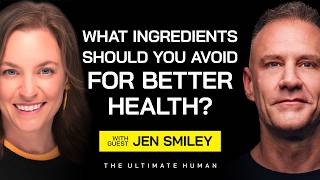
Transcript of a podcast episode (Ultimate Human #193) featuring host Gary Brecka and guest Jen Smiley discussing how food labels are largely marketing and frequently hide additives, preservatives and engineered ingredients that can drive inflammation and overeating. Jen shares her personal health-to-advocacy story (symptoms, family improvements including her father's PSA changes), practical label-reading heuristics ("read the bottom first", avoid ingredients you can't pronounce or those ending in '-ose'), examples of problematic additives (dipotassium phosphate, potassium bromate, carrageenan, dextrose, sucralose), deceptive label claims ("non‑GMO" on salt/orange juice, "all natural", "light and fit"), shopping and dining tips (local farmers, swaps, asking restaurants about oils, bringing EVOO packets), guidance for parents (one swap/week, tasty clean foods), and mention of Jen's ReadTheLabel app and resources.
Chapters
When you go to the grocery, what you're seeing on a label, it's 98% marketing. It's their billboard. They're trying to tell you what's not inside. The ingredient list is from top to bottom, it's tiny. Then I started realizing I can't even pronounce these ingredients.
Even if you don't understand how to read a label, I'm going to read the ingredients in this, see if I could find these ingredients in the store and build this on my own.
If you don't recognize an ingredient, neither does your body. These pretty preservatives in these additives that have made the food look better, taste better, extended shelf life, and ultimately it's leading to inflammation.
It's being engineered chemically to stimulate our dopamine and to avoid satiety. So our kids love it.
Yeah. I tell parents that kids don't need a lecture of how to eat clean. They just need tasty food. That's all they need.
I also think that kids are tough because it's not about the goals that you have for them. It's about the habits you can get them to adopt.
Kids will never listen to what you say, but they never feel fail to repeat what you do. So it has to start with the parent.
As a mom, I'm sure your first concern is your kids. Kids particularly are the target of a lot of convenience packaging.
It's a marketing point.
So where does a mom start?
I almost want to cry when I think of this, but I feel like the lost art in most people's lives is the art. Ultimate Human.
Hey, guys, welcome back to the Ultimate Human podcast. I'm your host, human biologist Gary Brecka, where we go down the road of everything anti aging, biohacking, longevity, and everything in between. And as you can tell from the smile on my face, because when the whole team was cracking up before I started this intro. We have a very special guest on the podcast today, and she is going to make you smile. Her name is Jen Smiley. And what a journey you've had and what an impact you've made. Jen, welcome to the podcast.
Thanks for having me. For everyone listening, that follows. Gary, you're probably operating at a pretty high level already, right? These people are doing cold plunges before sunrise. They're drinking hydrogen water like a champagne.
I love that.
Yes. So they are on their way already to the ultimate human. But maybe they don't know about food labels. Maybe food is this missing piece that can help their biohacking work better, number one. Number two, let's be real. They have a family member or they have a friend that is doing that is eating frozen pizza still, or they're thinking diet sodas and granola bars or health foods. This is going to be that secret weapon they can send to those people and say, hey, look, if you start making these just simple food swaps, there's. There's no overwhelming science that we're going to discuss and there is no intimidating protocols. Okay. This is just simple food swaps that can help them feel good quick, get fast results.
My audience likes the intimidating protocols. They like the pain.
They like the pain. Yeah. No, but this when, when, when they, when someone feels the effects of just swapping out these foods, not changing their habits, just they're going to feel the effects quick. And then you got somebody that is their first step to. On their way to being an ultimate human.
I love it. You know, you had a really interesting journey of your own. There is a bit of a common theme that runs through a lot of my podcasts and I talk about it all the time. I feel like a lot of the most impactful people that, the most purpose driven, the most impactful, the most passionate are ones that solve the problem in their own life.
Yeah.
And in solving that problem and creating that solution, they became this massive force in the industry which you become, uh, you know, yours is around food. But your journey with food wasn't always a pleasant one. I mean, I know that you had a lot of symptoms at one time that you were grappling with bloating and weight gain, water retention. I wrote a lot of them down from looking at some of your other podcast. Skin issues, stubborn weight gain. And you really look to food as the solution and you solve this problem for yourself. Now you're solving it for millions of other people. And I love your practical approach. I love your. The scanner that you've got, we're going to link that in in, in the show notes. We actually scanned some, some things in the house here which was clean and not clean. Yeah, clean and not clean. So talk a little bit about your journey, you know, to becoming, you know, the, the Jen Smiley, wake up and. And read the labels. Founder.
Yeah. So it started off, I'm a newlywed, I'm in my mid-20s, I'm getting diagnosed with asthma. I'm like sitting in the doctor's office looking around, going, wait, I'm 25. Why am I getting these tests done? Why is everybody else in this room young? Like, what is happening? This can't be the way. What do they do. They prescribe you inhalers? My husband's dealing with acid reflux on a prescription as well, but I have to credit it to him. He is like the ultimate human. He's the biohacker in the family. He's always been into this stuff. And he is a marathon runner, and he wanted his time to get better. So he starts reading blogs and he's like, jen, can you start cooking? You know, can you try vegetarian? Can you try gluten free? So I start trying all these things, thinking he's crazy. And we feel a little different. Like, one day we ate. I think it was cassava pasta, and we woke up and we're like, wow, our. We. We can, like, button our jeans without belly hanging over, right? Our stomach felt flat for the first time ever. So that made me wake up. And I call it wake up because I on this wake up mission where I'd wake up every day and I'd go to the grocery just to figure out how can I find foods made with simple ingredients. Okay. And I did work out. I would go to my local gym, and I used to be the girl in the back of the workout class reaching for their inhaler. My sports bra is only hanging on by one hook. I have one pair of stretchy pants in my closet that fits. I'm constantly putting on makeup in the morning to, you know, cover all these blemishes. But again, I'm 20 something. Well, it dawns on me, I was reading, like, premier protein drink right after my workout. And you can read it has, you know, like 30 grams of protein, zero grams of sugar. All these selling tactics. It's telling you.
We talked about in kitchen beforehand how, like, they've woken up to the fact that most people will look at that section of the label and, oh, yeah, it's. And, you know, they can kind of get it to look okay. Proteins, fats, carbohydrates. If they can get no added sugar or 1 or 2 grams of added sugar and, you know, so if that section looks good.
Yeah.
People don't jump over to the ingredient list.
You got to think about this. You know, it sells better. Is 99% fat free. What if that same product said 1% fat? What would you be drawn to get right? You get the 99% free. So I'm reading it, and then there's a longer walk home from my workout, and I flip it over and I think, oh, my gosh, the ingredient list is from top to bottom. It's tiny. You need like a magnifying glass to see what the heck it is. Then I started realizing I can't even pronounce these ingredients, literally. So my. My heart drops down to the floor. I feel like gray clouds come over me. I run home, and I immediately open up my pantry in my refrigerator, and I discover dipotassium phosphate is in my creamers. I discover that all these same ingredients are in my salad dressings. They're in my condiments, they're in my bread. They're in everything. So I'm like, wait a moment. This is. This is not supposed to be. So once we start swapping things out, my dad, he got diagnosed with prostate cancer six years ago. Heard the story, and, yes, and he came to me, him and my mom. He's getting ready to have robotic surgery at Johns Hopkins. And they're like, jen, dad has three months to get in shape. And the family used to call us freaks. They were like, oh, they got their freak food, right? But we have. But. But we have energy after all the holiday parties and everybod else is taking. Taking a nap on the couch. And so I just. I was like, dad, I know this works for me. I don't really know what it's going to do for you. So I head out to the grocery, and I have eight bags. I'm like, here's your biscuits, here's your marinara sauce. Here's your pasta, here's your bread. Here's your turkey meat. Like, and when you run out of this, just take a picture, go back to the grocery and grab those things.
And you're prepping them for prostate surgery a couple of weeks.
Yes. You want to get your inflammation down so that you're. You have better results, less side effects. Right? It's better overall. And so in three months, he was going get his labs done. Every two weeks, they take a test and they monitor your PSA level, which is your prostate cancer number. And at a time when he's getting no treatment, it should either be growing, right? Or it should be staying the same. And Gary, every two weeks, he'd send me a screenshot from LabCorp, and it was actually shrinking.
That's so awesome.
Yes.
And you mean his PSA is dropping? His processing specific antigen.
And when that happened, he calls me and he's like, jen, I. Maybe I shouldn't get it. I'm like, whoa, whoa, whoa. I'm not a doctor. I'm just a mom. I'm just grocery shopping, right? We're getting your inflammation down. We're getting you primed up, ready to go have a successful surgery. He has no side effects. He got out beautifully. But when that happened, I thought, maybe I have a message that could help more people. This isn't just for me, right? So then I got on my Instagram six years ago with 200 followers and brought them through the grocery store. Here's my turkey sandwich, here's my ice cream. And within two weeks, her name is Carrie, she walks up to me before workout class with a blank check and said, take me grocery shopping. And the rest is history. So within like three months, I had, I think, over a hundred private clients. Just word of mouth because they're sleeping better, their inflammation's going down, their workouts are getting better. Right. And so I was going into kitchens, cleaning pantries, out grocery shopping with them. That developed into group coaching, selling an online course, and now I have an app, Swear we are.
That is so awesome. I mean, you know, it. And the inspiration from that, you know, stemmed from your own struggle and then watching, you know, you address this issue in, in your, in your father, you know, as he said. And I couldn't agree with you more. I mean, having had thousands of patients come through a. I mean, I'm not a physician. I'm not licensed practice medicine. I'm a human biologist. But in our clinical practice, we had, you know, physicians that would look at these labs and, and you would see these inflammatory markers that, that when you get on WebMD and you. Or you Google, they lead to really sinister things like liver failure or cancer. And, and, and PSA was one of those that as it spiked, people immediately gravitated towards prostate cancer. And what I've learned is that these rapid spikes are generally not indicative of cancer. They're invented. Indicative of something called prostatitis or, you know, infection in the prostate or inflammation in the prostate. And it's one of those really sensitive organs.
Yeah.
To a lot of these things that are in pro. Inflammatory compounds that are in our foods. You know, Courtney was here yesterday, and I love what you were saying about the labels in the store, because one of the things she, she said was, even if you don't understand how to read a label, if you say to yourself, okay, I'm going to read the ingredients in this and see if I could find these ingredients in the store and build this on my own.
Smart.
And yeah, it's like, well, monosodium glutamate.
Where do you find that? What tile is that on?
Where do I get, you know, polysorbate 80.
Right.
Where's the polysorbate 80?
Yes.
Next to the series. So, you know, you came home and there are all these non interpretable words. It's interpretable. Did I just make that up?
You might have. It sounds good enough. Let's call it. If it's not, we're gonna like Wikipedia. Start it up.
Interpretable.
Interpretable.
Okay, that's it. Feel free guys, to use that at your leisure. Yeah, but I thought it was a really, you know, interesting way to. Instead of having to understand what all of these chemicals and additives and preservatives and, and thickening agents are, just read it and think if you'd know where to get it in the store. And I thought, wow, that's a really interesting.
I actually trademarked if you don't recognize an ingredient, neither does your body. And I did that a long time ago right when I came out. But this is the issue, what I tell people when you read a label, okay, when you read a label, always go to the bottom first. And why I say that is because the other ingredients, that's where you're going to find the preservatives, that's where you're going to find the additives. That's really like you got your big oils, flour, sweeteners that every label's made up of, but it's these, these preservatives and these additives that have made the food look better, made the food taste better made, made it extended shelf life and ultimately it's leading to inflammation.
You know, and we talked about this before the podcast on our, as I do with a lot of my podcast guests, we have a podcast before the podcast.
So. Right. Pre podcast.
And, and you know what is fascinating, you know, you've come to the same conclusion that I have and so many of my other guests have, is the intentionality of this in the chemical and the food industry is you can no longer say that there's not a sinister motive behind it or sinister intention behind it. Because when you're designing foods to be addictive to ding. The dopamine receptor, or you're designing foods to purposely circumvent the release of GLP1, which is our satiety hormone, or when you're. You're making foods hyper, palpable, palatable, right. That so that, you know, people are becoming addicted to eating more their favorite foods, it's not just that they like them, they're becoming addicted to them. Yeah, I would love to go down the label road with you a little bit because it sounds like fear mongering, but I think the truth is, you're just trying to help people get around the system. Yeah. Right. And so it's not that you don't have to be afraid. It's, it's. It's not that. I'm sorry, it's not that you should be afraid. It's just that you need to be educated. Right.
Aware. You need to be aware of this problem that's happening.
If you want protein to build lean muscle, but without the caloric impact or need to cut, you need perfect amino. It's pure essential amino acids, the building blocks of proteins in a precise form and ratio that allows for near 100% utilization in building lean muscle and no caloric impact. So we build protein six times as much as whey, but without the excess body fat we normally get during bulking. This is the new era of protein supplementation, and it's real. If you want to build lean muscle without having to cut, you need perfect amino. Now let's get back to the ultimate human podcast. So I want to talk about, like, GMO and organic food labeling, because I've heard you talk about how organic food labeling and genetically modified labels may not be what you think, and there may be a little something sinister going on behind the curtain there.
Sneaky, sneaky, sneaky. So first thing I tell people is, when you go to the grocery, what you're seeing on a label, it's 98% marketing. It's their billboard. They're trying to tell you what's not inside. They're like sugar free. It's dairy free. Zero grams of sugar. Would you shop the grocery aisles differently if you saw, you know, 40 plus ingredients and you can't even recognize them? Like, take away all the brands, take away all the colors, cartoons, sports figures. Like, what's actually going to drive your decision now on what to get? Right? Another thing is these, these labels, I like to say they're like a dating app profile. They are no substance. They're all charm.
Ah, I like that.
Okay, yeah, but let's talk about non gmo. Okay?
You show the, you know, profile and then you show up for the date and you're like, yes, that's not what I saw on the list.
Yes. Yeah, yeah, exactly. Yes.
So.
So, yeah, I guess that would be like, may help lower your cholesterol on oatmeal, something like that. But let's talk about non gmo. This is sneaky. And what I mean by that is you go and you look for salt, okay? And if you're looking for salt, and let's say you find a $3 salt. And it's just like, hey, here's salt. And then you see the same exact salt for $4, and it says non GMO. What are you going to do? You're going to. You're going to get the non GMO for sure. Like, I'm here to let you know that salt doesn't have DNA to genetically modify. There's no such thing as GMO salt.
Mineral, right?
Yes. They're doing that to orange juice. There's no GMO oranges right now. But the orange juice says non gmo. So it's a way for you to think it's healthier, number one. And it's a way for you to pay a little bit more money. And it's why you see it everywhere. You want to make sure you're not buying GMO if you're getting like corn, soy, canola and cotton. Right? Or I think there's papaya. There's also beet sugar. There is no wheat. Did you say wheat?
Wheat, soy.
There's no wheat. Gmo.
Oh, there's no GMO wheat?
No.
Wow. I thought there was GMO weeds.
There's no GMO wheat. However, Monsanto controls most of the GMO crops and I'm sure they're trying to figure out how to do a GMO wheat. So when you go buy, when you go buy your bread, there's no GMO bread. Does that make sense?
Yes.
There's no GMO wheat, but there could be. I mean, a lot of them contain soybean oil or they contain corn oil or something like that. Then you gotta worry about the GMO label. So you gotta know when to look for that. Another thing, organic. So there's been studies that show. And I'm here to let you guys know that I'm just a mom. I'm just someone that's reading the labels and has helped thousands of people. I. I do get quite bored reading studies, to tell you the truth. But anybody, anybody listen can go Google, you know, what does dipotassium phosphate do to me? Or what, what crops are GMO and what does organic mean? Organic means they don't use any synthetic fertilizers or pesticides, but they could still use some other kind. Or you could have organic farm next to non organic farm and they're spraying something that gets over there. Right? Which is why we need to bring up Mala. Make America local again.
Make America local again. Now, we talked about this too. I love that idea. And there is an. An app. And I'm going to find it and I'm going to link it in the show notes that helps you find local farmers markets and local produce and maybe even local farms in your area. We have one here called South Florida Ranches, which is great. Amazing. Yeah. And they have honeys and maple syrups and cheeses and, you know, raw cheese and raw dairy.
Healing, healing foods.
Great, great foods. And, you know, when I travel, I travel a lot and I can. I try to be as conscious as I can, but, you know, you can feel it. You know, when, when you travel, it's just like we were talking about going to Italy. You know, you eat a bowl of pasta and a basket of bread here, you blow up like a tick. Eat a bowl of pasta with some olive oil.
Yeah.
And some bread and some balsamic vinaigrette and maybe even some parmesan cheese. In Italy, you feel amazing. You're right to sleep.
Your head wake up deflated.
Yeah.
Feel real good.
Yeah. It's like actual food. And you know, our, our whole ecosystem in our, in our biology works on this lock and key mechanism. It works on, you know, recognizing ingredients, processing them through the cell, and then eliminating the waste. And, you know, when you have chemicals, additives, preservatives, nitrates, you know, things that our body doesn't recognize.
Right.
You know, it also doesn't know how to eliminate.
Yeah.
To eliminate the waste. So as a mom, I'm sure your first concern is your kids. Yeah, most moms, probably all moms. And I think this is where things get really tough because I think kids particularly and. And mothers and fathers, children particularly are the target of a lot of convenience packaging. You know, we're going to make it super easy. You're already busy enough.
Yeah.
So we're just gonna. We're gonna cut these into dinosaurs. So you get a T. Rex and you get a brontosaurus. Right. And we're gonna cut them into dinosaurs. We're gonna already bread it, we're gonna package it, we're gonna wrap it in plastic for you, and all you gotta do is microwave it. And so I think, you know, the combination of most of the unhealthy foods being more convenient. And then also, you know, it's just something that Max Lugaver brought to my attention was that you don't see health claims on. On really organic foods. Like if you shop the perimeter of the grocery store, there's not like a label on an avocado.
I say this all the time. Yeah.
Healthy fats and heart healthy. But there is on a western oil bottle.
Why don't we have cartoons on the bananas? Or why don't we have sports figures? Like, I eat this before a game.
Right.
It just doesn't exist.
It doesn't exist.
It's sad. So it's a marketing ploy.
So where does. First of all, it can start with your app. But I mean, where does, where does a mom start? Once or father?
Well, I, Yeah, I tell parents that kids don't need a lecture of how to eat clean. They just need tasty food. That's all they need. And I also tell parents that kids will never listen to what you say, but they never fail to repeat what you do. So it has to start with the parents. Now you can't, you know, just completely take everything away. I actually have a funny story because this could happen for parents with kids or it could also happen to people with spouses that may not get on board. So I had this one client, her name was Michelin, and her husband, he's like 65 years old and he is just adamant on, I'm not eating this new ketchup you're bringing in and I'm not touching that non dairy milk. Right. And so he went to work.
Non dairy milk.
He went to work one day and she got creative and she emptied out his Welch's jelly. She emptied out his Heinz ketchup. Yes. His iodized salts, all these things, and filled it with the clean swaps. And he had no idea that it was different. However, on Saturday morning, he's like waking up with energy, wanting to vacuum the carpet, singing. She's like, wow, this really works. But so for kids, I think you gotta find tasty food. Waffles, right?
Right.
There's a brand called Belly. It's cassava, it's collagen peptides, it's got coconut sugar, no preservatives. This is going to help your kid not need a snack before lunchtime. Number one, they are going to feel better. It's going to fill them up, they're not going to have that crash. Some other things that work really, really well for kids is like, how do you swap out what they're currently eating? So chips, right? Get them some clean chips. It doesn't have to be like you have to do it. All right? Now can you do one swap a week? And when you do it, I tell them it's got to start with you. So maybe you make the waffles or you make the tacos and get the chips and then the dip and say, hey kids, do you want to have a bite and if they like it, put it on the list and go get that at the grocery again. You can do four swaps a month. What is that, 48 swaps in a year? Something like that. Did I do that math right? Okay, good.
12 times 4 is 48.
There you go.
Okay.
Number 10.
First of all, I love that. And I also think that, you know, kids are tough because, you know, it's, it's not about the goals that you have for them, it's about the habits you can get them to adopt.
Yes.
And access to it is. If, if they have access to it, they'll always gravitate towards the stuff that's not good. But you're right. You can take masa chips, for example.
Yeah.
Which are non GMO and, and they're amazing. Grass fed beef tallow. And you could make, you know, ground grass fed beef and you could slice a couple of avocados and put some onions on there and then some, you know, raw cheese.
Right. And you're doing the same thing.
Unbelievable. Nacho. And I promise you, you couldn't tell the difference between the two.
I tell people like, okay, if you are making tacos for dinner, well, now get the grass fed and finished beef. Get a clean seasoning. You don't want silicon dioxide in your seasonings. Check your spices. This is an anti caking agent. It's not necessary. Otherwise. If you get a spice without that weird ingredient, you just have to maybe stick your fork in there and break it up. That's naturally how food's supposed to act. And so here you are, you're giving them a better quality meat, you're giving them better spices, but maybe you continue to give them the same tortillas and you get the clean tortillas and it's like it's not taken more time. At this point, you're cooking the same meal. We're all eating together as a family and they have a little bit better, you know, they have better meat and better spice. So it's a better meal. And this is how you slowly build it into their days.
And do you cook with your kids? You like, get them involved in. How old are your kids?
So they are 11 and 13. Two boys.
Okay.
And for a while they were just like, mom, we hate. This is not normal.
Probably not excited about your career path.
You know, I mean, when all the.
Kids are drinking Hershey's at my friend's.
House, I mean, oh, yeah, mom, my friend brought me to the gas station. They go in, they're like, I've never been to the gas station for food. But they're drinking Gatorades at sporting events and in parties. And that's when I make sure, like, if you go there, let them drink it. Don't make a big deal out of it. But they know at home, like, we don't have that. And then they also start to notice I feel bad when I drink that as they get older. So my son, now he's 13, when his friends come over, like, Ms. Jen, I love all the food you cook. Please do this.
Really? That's awesome.
So the tides are turning.
I want to talk about some of the things that we should watch out for, like in breads, non dairy milk. I think there's, there are a lot of these trends that catch on and sadly for the consumer, you know, it'll be it. And I'm not beating up vegans or vegetarians, but it'll be a like non meat trend. And, and the onus of this is if it's not meat, it's healthy. Right. So just because it's not an animal product, it's suddenly healthy. And then you read like the ingredients on like a non burger or some of these things and you're like, I, this is plastic. But so what are some of the tricks to look out for in breads, non dairy items? Because, man, you can go to, you can go to Starbucks right now and there are like 15 alternatives.
Non dairy milks. Yeah, I'm not dairy milk. I encourage people to be like, hey, can I see your milk? I'm always like, can I see what's inside of the milk? And I look, okay, carry Gian and all this stuff. Yes. So a couple things about this. First of all, let's start with bread.
Yeah, we'll go with bread.
There's something called potassium brumate, which makes it rise. It's actually banned in Europe and other countries.
Shocker.
It's been shown, you can Google this yourself, that it can increase your risk of cancer. And so potassium bromate. I've read that it's like, I think it's in, I think it's in Hormel sandwiches, It's in your fast food restaurants, it's in some breads. Which, by the way, there's only, there's a few bread companies that control all the breads. So whether you think you're eating, you know, Saralee or eating oral weeds and nature's own, it's, it's a lot of the same, the same people doing different things. So that's that as far as your non Dairy milk goes, there's something called dipotassium phosphate. I know nut pods has it, I know oatly has it. And I want to tell people that, like, hey, if America's doing it, you're going to feel like America, right? America feels like America. America is sick. They're bloated, they're tired, they are having health issues and this is what they're doing. This is normalized. And the reason you, you are like, if you see a brand seven times, you, you have recognition towards it, right? Why do you see oatly on end caps? Why? When you go to the dairy free section, which by the way, maybe your nutritionist or your dietitian or your doctor said go dairy free. You go to dairy free and you look around, you think, wait a minute, there's like a million dairy frees. What am I going to get? You're going to get the one in the center at eye level, the one that has seven columns, three rows. These companies pay money to, to be at eye level and to have more skew numbers. You have to actually look at the very top or the very bottom for something like three trees that has two ingredients or milk that has three ingredients. Right. But they, they don't, they don't have the funds to get all these skew numbers. But these non dairy milks contain something called dipotassium phosphate, which is a stabilizer and it makes the milk kind of stay together as opposed to separating. So kind of like when people use coffee made creamer, right? It's nice and creamy, looks beautiful. But if you put some almond milk in there with no additives, it kind of separates. There's a solution for that though. Either you can get a frother and froth it and put it on there and it's not going to separate or just drink it with iced coffee.
Okay, so diet potassium phosphate and what about protein bars, sauces? You know, when I, when I started getting wise to seed oils, I, I was absolutely dumbfounded by the number of ingredients. Nearly everything that's canned. It's hard to find a salad dressing in a food store that's not seed oil based. And even if you take the position, which I would disagree with, but even if you take the position that, hey, these are polyunsaturated fats, they're not bad for you. There's some evidence that they're, they're heart healthy.
It's the volume or just try it, Just try it. Just try. If you', if you're consuming it all the time and you Think you feel so great. Okay, great. Just try it. Try to go without it.
Oh, go without it, go without it.
You'll see such a difference in such a short amount of time. But as far as protein bars go, I think a lot of people are turning to these protein bars for like real sustainable protein when really they should be. You know, you take it in a pinch because maybe you, you have to wait too long to get to your next meal. You need to get your protein from real sources.
I would.
Eggs, wild caught seafood, grass, finished beef, all these other real foods. Right. But if you're in a pinch, what do you do? First of all, there's brands like Clif Bar and Go Macro and they contain something called brown rice syrup. Sounds really healthy.
Yeah.
Right. But brown rice syrup has a glycemic index of 98, which is like almost the highest you can get.
Higher than table sugar.
Yes. So what's happening is when you're, when you get this quick high. Okay, this quick, that's higher than extras, I think this quick, this quick extra, this quick dose of. Are you going running? Probably not. Right? Are you going workout? Probably not. People are eating it at their desk or they're eating it on a road trip, something like that. What happens is you crash real quick. The higher you go, the lower the crash. When the crash is low, what do you need? You need more food to bring it up. You need coffee. Right. That's why there's coffee on every freaking corner. We're all so fatigue. That's like number one thing. People are fatigued and it's because their blood sugar's all out of whack with these ingredients. So when you go look for the protein, go look for Bearded Brothers is a really great band.
Bearded Brothers.
Bearded Brothers. It's just real ingredients, but it's not going to have a source of protein like from whey or from, from something like that. But it's at least going to get you till you can get real protein. And then I know you have a protein bar, which I love is great. Scans is clean, by the way. Gary.
Yes. Ultimate human bar made it through. Yes, we were super intentional about that with.
I think it's great the way, the way bar bars should be.
So. And, and I think a lot of, again, going back to this trend of vegan, vegetarian, non meat or dairy free, you know, gluten free and vegan, those are largely recognized as healthy.
Yeah, right.
Because you're gluten free, you're dairy free, you know, no animal products, vegan, those just they're, they're like those alerts that, that grab you and say, this is what's inside is healthy. And, and they're probably hoping that you don't look much further than they're for sure. Well, it's vegan. Oh, it's gluten free. Yeah. Can we talk a little bit about how some of that labeling can be mislabeling and like, what might be hiding and.
Yeah, well, it's saying it's free. It's like, hey, we don't, we don't have dairy and we don't have sugar and we don't have animal products. But like, what do you have that's not there? And do you know, you're speaking of the ingredients being so small. Did you know that the nutrition Facts label was created in 1994? Okay. And it's really big. Right. The ingredients are tiny and it's really big. So it's a way to kind of disguise what's happening. Like, they want you to read everything except for those ingredients.
Right.
And it's, it's, it's really, really wrong.
Let me tell you about something that's been a total game changer for my sleep and my stress levels. Bioptimizers. Magnesium Breakthrough. Here's the thing. Most people don't know regular magnesium supplements only give you one or two forms, but your body actually needs seven different forms to function properly. That's why you might be taking magnesium and still feel tired or stressed or having trouble sleeping. Magnesium Breakthrough is the only supplement that combines all seven bioavailable forms in just a single capsule. Within just a few days, I noticed I was falling asleep faster, staying asleep longer, and waking up actually more refreshed. Plus, my post workout muscle recovery has been incredible. If you're ready to finally get the deep restorative sleep you deserve and feel more relaxed during the day, head to bioptimizers.com and use the code ultimate to save on magnesium breakthrough. Trust me, your body will thank you. Now let's get back to the ultimate human podcast. So what are some of the ways that. Like gluten free?
Yeah. There's gluten free Oreos. Did you know that?
Yeah.
Mic job. No, I'm kidding.
Probably non gmo vegan gluten free Oreos. How many other labels could we get on there? Low in fat, right? Oh, yeah. Bioengineered. Yeah. Yeah.
What about natural and simply. They're simply Cheetos. Come on.
I love that. Yeah, we, we were actually talking about. We. We. I pulled one sinister label out that I bought at the store for this purpose. We were looking at it and before we got on the podcast and was very intelligent. What did it say? Exotic. Oh, enriched exotics. I was like, well, that's a new one.
Well, that'll bring you to where you want to go.
Yeah. I'm like, that sounds amazing. And it had pictures of coconuts on it, you know, all broken open and looking really fresh. And then it had the word gourmet.
Which means like a chef did it.
Yeah, yeah, exactly like a chef did it. And. And I. I won't say the brand, but. But it had gourmet on there and had pictures of coconuts. And then it. And then it said, you know, these exotics. And then it said all natural. And I'm like, what's all natural? That's another one that's just like a.
There's no real definition for all natural. For simply. There's no clear definition.
Yeah. And then we spun it around, had 45 grams of added sugar. And then, of course, then you. There comes the high fructose corn syrup, and the food dies and everything else. And, you know, I. I really do think the average consumer nowadays just doesn't stand a chance. And I don't think that even Maha or Mala Make America Local again is about interrupting people's freedom of choice.
Absolutely.
It's not like, hey, don't smoke, don't drink, don't eat McDonald's, don't eat donuts once in a while. It's. It's just about giving you an informed choice, like giving you a shot, giving.
You an option at.
At getting through the grocery store. So, for sure, let's talk a little bit about eating out, because I have a very intense travel schedule, and I'm extraordinarily conscious of what I eat on the road. But I also feel bad for a lot of consumers. And I'm not just talking about consumers that are on a budget. I mean, even, you know, when you have means, you know, we. I go into some of these airport lounges, for example. You know, I'm a member of Delta and United and. And American Airlines.
Yeah.
And I walk past, sometimes I just go hungry.
Same. It's best to pass. But not everybody can. They feel bad. They feel like they're gonna pass out if they don't get food.
Right. I mean, and that's also their. Their. Their incessant reliance on. On blood sugar. They're. They're. They're insulin resistant. But let's talk about just going into a restaurant and ordering In a restaurant. And, you know, basic parameters for how I can navigate, you know, the menu on. On a restaurant?
Yes. Okay. Got some tips.
Okay, good.
If you're going to look for a restaurant on, like, Yelp or Uber Eats, I always say just search organic food, number one. Or maybe you could do like, Paleo. That'll. That'll. That'll get your search narrow. Right? Okay, then go look at their menu. Does their menu say things like vegan or gluten free or soy free? Then that means they're a little bit more conscious. But let's say that's not real life, Jen. It doesn't exist. Many places we going to a regular restaurant. I did this last night at a restaurant and I said, hey, can you let me know what kind of oils you guys use? You all use back there? And so she comes out and she's like, okay, we have olive oil with a blend of canola oil. And I said, oh, well, I'm allergic to canola oil, but I really want to eat here. Do you mind cooking my food in butter? And it doesn't matter. Their butter is not going to be grass fed. It's not going to be perfect, but it's going to be better than those oils.
That's great.
So that's number one. Right.
And you get a lot of resistance on that. Or most of the time they're like, okay, chefs, no problem with that.
No problem. Or they have certain things where they'll just char grill where there is no oil. And I'll ask that, do you have anything not marinated in oil? And they'll let you know about that.
Um, what if the chef knows there's no such thing as a true canola oil allergy, but you just. She still go with it?
Like. Well, I say, well, you know. You know, most of the time I'm.
Like, wait, wait, Like, I am definitely allergic to canola oil. Like, I will die in your restaurant. Okay, okay.
So I will say, hey, I have a big event tomorrow and I just want to feel good and look good. Okay, Right. And they're a little bit more understandable, but. Or you just say, hey, you don't even have to do the allergy thing. Like, can you let me know I love the allergies? Or just walk in and be like, can do you guys mind cooking this in butter instead of oil? You'll even assume the worst. Assume the oil's not good?
No, lest I die. That's a great one. It's like a real. Yeah, it's a nice little Threat. Yeah. Yeah.
Hey.
Somebody die?
Yeah.
Okay.
Yeah. So before, what can you do? You can take some digestive enzymes. You can also do charcoal pill. I do it all the time. Make sure you don't take your charcoal pill four hours before or after medications. But like if I go out to eat or I'm at a wedding or event or something, try to make the best of the decisions. Right. Can you stay away from the gluten? Can you stay away from the dairy? Start looking at a menu as like a pantry. Look at their size. Do they have broccoli? They have sweet potato. Do they have regular potatoes? Do they have all these things? Get those if your dish comes with pasta. Right. Or something like that. And then as far as your salads go, I always tell my clients to. They make these little extra virgin olive oil packets. They look like they come in like little ketchup packets. You can grab that on Amazon, put that in your purse. And then for your dressing, put that on your salad. And then you can ask them, you know, do you have some type of vinegar? If they don't, just squeeze lemon. Another tip, if you go to sushi, can you get a cucumber wrapped? Can you get it rice paper wrapped? And then instead of doing the soy sauce, do you have a trick for that? Because I do. Is going to change your life. I love you. You get, you get awesome.
I want to get notes out. I'll probably watch this podcast when it's.
Done, you get wasabi and you, you ask them. They have to bring you like three rounds of lemon slices. Yeah, but you squeeze your lemons in the wasabi and mix it up. No game changer for your sushi.
Wow.
It really is.
That's awesome. Even my kids like a little intense. What are you saying? You take a lot of little, a.
Lot of lemon with a little bit of wasabi and you probably a little.
Goes a long way. Right?
It's your soy sa swap. So I always tell people you don't have to eliminate foods or food groups. You have to swap it out for something cleaner and anti inflammatory so you can eat the foods you love and feel good.
So, you know, I've been tremendously supportive of the Maha movement and I think all of us love it. I think everyone in our industry loves it. I mean, the again, back to the chance for us to potentially affect public policy. Yeah, is is really exciting, right? I mean, but this is definitely not going to happen overnight. I mean, there's thousands and thousands of ingredients and in foods and in our food supply.
Yeah.
Sometimes it's not even listed on the label. Like, they don't list glyphosate.
Also in a label, if it's less than 2% of total weight, it doesn't even go in. There's like limestone in your cereal and they don't even tell you.
Yeah. And so, you know, I've, I, I, I've often heard people say, and I talk about this a lot, you know, that the dosage determines the poison. But the, the truth is most of us are not taking a dose in a single serving that is enough to cause harm in that serving. And, but over time, you know, especially with regard to forever chemicals or things that the body methylates and gets rid of very, very slowly, there's an accumulation over time. So just drawing your awareness to it is one thing. But what do you think is the most promising outcome that you see underway with the Maha movement? And you know, where do you, if in a perfect world, where, where should that start? Yeah, love it.
Going to unpack this one.
Okay, good.
Okay, first of all, you're, you're funny.
You're actually, you're actually really.
My husband is funnier. So is he. Yeah, maybe that's where I get it from it. So a couple things about this. Okay. The Maha movement is great, right? Everybody's like, well, we're getting red dies out. First of all, it's not going to happen, I think, to like 2028, which is scary, right?
I actually was in the ICU unit of Mayo Hospital, Oncology ICU. I have a friend that was, was there, unfortunately, in, in Scottsdale, Arizona. And I, I actually looked at the jello and it was red dye number three. And I was like, yeah, this just got banned. Yeah. And he had a Seagram soda and he had pureed applesauce. My wife posted about it and people lit up about it because, you know, you're sick. To their credit, they saved his life. He was, he was septic, but. And I was like, there's just no nutrition in this.
But anyway, that's okay. So the Maha movement is great, I have to say. Like, I'm pretty sure Big Media has been controlling the narrative for so long with sponsors. Like, I've hired PR firms and I get interviewed by Oprah, Daly and Town and country and all these magazines, and they immediately hear that I say, you can't drink oatly or you shouldn't be buying this particular ketchup. And they're like, er, we can't put you on. Right. So I think that this whole turning Tide of where people are getting their media and they're getting it from people like you who are doing really good things in this grassroots way. And it's making people start to talk about and they're like, hey, something that had. That we've had blinders on for so long. These food labels, they've been disguising what's really inside. So people are waking up, they're having wake up moments. And I feel like once you see what's going on with the food, you can't unsee it. You just, you can't forget about it. So I think that's great, but I think the best place for the MAHA to really get started and really get traction is to make America local again. Look up your farmer's market. Get to know your farmer. They're around you. Otherwise there are farmers out there who are doing shipping and they're going to be higher quality. They're going to help a lot of deficiencies that are coming from a lot of our conventional food that we're being fed. And there's actually one guy, he's. His name's formerly Jones. He's out in Ohio. Oh, he's great. He's big, jolly guy, wears the bow tie, red bow tie, all the things. But he, he does, like, regenerative crops, vegetables, but he gets his stuff. Third party testing has like 200 to 300 times more nutrition in the vegetables and greens. And when it shows up at your house, really?
Does he do the microgreens?
Amazing. I'm pretty sure he does, because I've.
Been down the rabbit hole of microgreens.
Oh, you got to look them up.
And the density of those called the.
Chef'S garden because he used to. He supplies the greens and the vegetables for like the Ritz St. Regis, Four Seasons, but he just started doing it to consumers. I just found him on the Internet and he has all the finest chefs around the world coming to him. I was like, wow, this is a.
And he grows produce and meats. Not meats, just produce. Wow.
Yes. But that's your produce guy. It's like there's, there's these things. You need to start talking and get to know your farmers. You're going to get more nutrition. It's not going to have the pesticides, and it's just going to be so much better for you.
By the way, all of these I'm going to link into the show notes, guys, my media team's paying attention. So if, if you, if there were tips and tricks in here that you liked, I'LL make sure that I, or we make a reference to her app or something like that. I'll make sure that I, I put it into the show notes. So, you know, back to the, the labeling. I mean, for, for the, for the average consumer, what are, what are some of the biggest that you see? Deceptive marketing practices? You know, we did a funny exercise on super bowl with my family and we all watched the super bowl together and we were watching the super bowl ads. I mean, first of all, there's not a single ad for a single healthy food. There was not a single whole food on any of the ads. And I watched like you said, celebrities, athletes, a listers, cartoons, jingles, choruses. One had a, one had a biblical choir singing like their jingle. I was like, this is like what's happening? Like you were literally in church, you know.
Yeah.
Then they were singing to you about their, their, their snack food. And I think a lot of this gets ingrained into our culture. Like normalize food says a little bit about who you are. Like Nike just do it. You know, I wear Nikes and, and I don't have any issue with Nike, but it like fashion says a little bit of, of who we are. You know, I carry Louis Vuitton versus I carry a Christian Dior. You know, it says a little bit about who you are. I, it seemed to me like a lot of these ads were designed to sensationalize these foods. Like if you're going to a party, expect to see this. These are the best, these are the tastiest, these, you know, and, and so it's, it's coming from so many angles. It's being engineered chemically to stimulate our dopamine and to avoid satiety. They're being engineered to be hyper palpable. So our kids love it. They're being engineered to actually change. And I've had a lot of physicians, even, even scientists on here that have talked about how the actual pallet of someone that eats a highly processed diet, it actually changes. You know, you, you enjoy and respond to the, the chemicals and you switch to a whole food diet and it's, you know, meat doesn't taste like food. Yeah, spinach doesn't taste like spinach. So what are some of the biggest, more deceptive practices in your opinion that consumer needs to be.
Yeah. Aware of? I heard you mention that advertising. I read today that like $14 billion is spent on food advertising and 80% of it is to targeted audiences like kids, things like that. I have a good story. This guy named Parker, he Does Lovebird cereal. Have you heard of him?
I have. I think I have Lovebird.
Yeah, I do love Bird's great. So love. He was on my podcast many years ago, but he used to work for Big Food and he was in the marketing department. And he remembers he was struggling with autoimmune and so was his kid. And he's like, one day I went to work and this guy rushes into this boardroom and he's like, you guys have got a great idea. I know how we're going to sell more units. We're going to sell slap a mermaid on it. And he's like, wait, what is going on? I can't be a part of this. You know, because he had a little baby and he didn't want to see that. So he's doing something different.
It's like, appeal the little girls.
Yeah. Yes. Or he said one time they were taste testing pizza rolls in the guys or girls, whoever's in charge of this says, you guys, we cut 30% of our cost by not using real cheese. We got a flavor that tastes like cheese. And he's like, what are we doing? Why are we not using cheese? You guys mind blown. So he's going against the grain. All of his ingredients are listed on the front. It's all organic, glyphosate free. The whole, it's like top of the line food. But deceptive marketing, like we said. I mean, they got simply, you got natural, you got non gmo, you got gluten free, you got organic. And these are like, for example, Dana, enlightened fit yogurt. It's light and fit and it says zero grams of sugar. There's so many ladies out there. Yes.
Oh my God, that's so like, you know, that's so mean. Because who doesn't want to be light and fit?
Who does?
Women. I want to be light and fit.
Heck, I still want to. I good and I still want to be more light and fit. You know, I need to drink more hydrogen water. So with that being said, though it has sucralose in it. There's a popular energy, energy drink out there, sucralose in it. Sucralose is a sugar that is reacted with chlorine. Okay. And there's studies out there that show in animal studies that that it increase your risk for leukemia and blood cancers. And it's like, why are we, why are we not eating just yogurt? Like, shouldn't yogurt be just some grass fed milk and then some, some probiotics, which there's another guy. His name's Coconut Cult Noah. He's really great. Have you heard of them?
Coconut Cult.
Yes.
Okay, cool.
He's great. So he went around to a bunch of yogurt companies to figure out, like, how do they bottle it, how do they process all these things? And he figured out that the yogurts say billions of probiotics, when in fact, most of these probiotics are actually dead because they apply high heat after they put the probiotics in there. And it's like, this is, this is fake food. It's not even working for you.
Most food dyes are antimicrobial. And so if the trace amounts of probiotics that are in there are absolutely killed by the. By the dyes, you know, the dyes are, you know, bacteria are. I mean, you know, probiotics are bacteria, and an antimicrobial kills the bacteria. Listen, there's what I share on this podcast, and then there's what I share with my inner circle. If you've been following me for a while, you know how I hold nothing back here but my VIP community. That's where the real magic happens. Picture this. You're struggling with energy crashes, brain fog, or just feeling like you're not operating at your peak and you don't know where to get real answers. But here's what really sets this apart. You're not just getting my insights. When I have incredible guests on the podcast, VIP members get to submit questions for a private podcast segment. So that world renowned expert we just interviewed, you get exclusive access to their knowledge tailored to your specific situation. This section is under the private podcast section in the ultimate human community. And speaking of exclusive, you're getting my personal protocols, the exact tools I use for water fasting, gut optimization, and morning routines that have taken me decades to perfect. This isn't theory. This is what works in the real world. The community launches challenges throughout the year where you get direct access to me and my network of experts. It's like having a personal health advisory board for less than a hundred dollars a month. Your health is your wealth. And this investment pays dividends for Life. Join the VIP community at theultimatehuman.com VIP and step into your ultimate potential. Now, let's get back to the ultimate human podcast.
This is why you need to start talking to people, though. Because most people, they see a yogurt, they don't understand the processing right? You see your oils, you don't know what kind of solvents are being used, your stevia, you don't Realize that there's petroleum based solvents being extract used to extract that. And it's coming out, it's messing up your gut. And when your gut microbiome gets messed up, it leads to inflammation and then you got a whole host of chronic issues.
I talk about this all the time, how one thing causes everything. Usually people don't have multiple things going wrong. They have one major thing going wrong. It's kind of like the dominoes. It causes everything. So let's go down the, the artificial sweetener route for, for a moment because I think, you know, advertising kind of falls into two camps.
Yes.
One is glorifying natural sugars. Right. So cane sugar is saying, hey, this actually, they actually put forward on the label. This is cane sugar.
Yeah.
And that's why you should eat this.
Yeah.
And others are sugar free, no sugar added.
Yeah.
Because you know, they're playing with, you know, both sides of the coin. The people that like, okay, I want it to be organic. Okay. If it's cane sugar, it's natural. So I'm gonna grab this one, but. Or I'm trying to avoid sugar and eat low carb. And so I'm gonna add the sugar free or no sugar added. There are different levels to the artificial. I, I know my opinion is. But the different levels to this artificial sugar pyramid, everyone, here you go. What are some of the no fly zones? Like what are some of the sugar substitutes to Absolutely avoid.
Absolutely avoid. So I would say dextrose is number one, which by the way can be found in your Costco chicken. We can go down that rabbit hole because I made a post once.
Dextrose is glucose. Right.
I mean, dextrose is made from corn.
Okay.
Which is a highly GMO crop.
Okay.
Okay. So you want to make sure that you're avoiding that. Another one is aculfame potassium. Sold as like a C, a K, something like that. Yeah, You've got, I tell anybody or I tell people. If it ends with O S E, avoid it. So dextrose, sucralose, sucrose is one. The acetame potassium. Those are like the ones you're going to see the most of. But I actually got this guy, Dr. Michael Goren. He studied the effects of sugar mostly on kids for 20 years. I'm like, thank you for sitting in a labor for 20 years and studying this because I don't have the patience for that. But he said there's over 60 names for artificial sweeteners. So. Another one's brown rice syrup. It sounds really healthy.
Yeah.
But it's not. And so these are ways to like spot on a label. Just put it back. Right.
So aspartame, sucralose, potassium dexterous, obviously brown rice syrup. Yeah. And because I think a lot of the. I remember sweet and low, you still see everywhere. These are just chemical sweeteners. So now on the, on the better side, because, you know, there's. There's no harm in having a little bit of a sweet tooth. Right. Or wanting something that tastes sweet. So where do you gravitate on some of the, you know, like low glycemic.
Yeah.
Sweet substitutes.
Yeah. So I love. Well, unrefined. Right. So it's going to have more vitamins and nutrients and minerals in it. So I love, I use maple syrup for my kids waffles. I also love coconut sugar. Unrefined is a great one.
I use a lot of maple syrup, too. I get it from South Florida ranches.
Yep.
So maple syrup.
There's dates. Date syrup in your coffee. So good. It's called like date lady, something like that.
Really?
Yes. Okay, so good Date syrup, date sugar.
Some love today.
Date sugar. Date lady, maple sugar. And then for low glycemic, I love non GMO monk fruit.
Okay. I like the non GMO monk fruit too.
I think that's in your bar, right?
Yeah, I use the non GMO monk fruit in my bar. And I also when, when I do some of the swaps and I'm gonna put, put a link to your manual and swaps. The interesting thing about if you can try to eat home more often.
Yeah.
I found. Is it can often be less expensive to eat organic and less expensive to eat whole foods. Once you learn how to navigate this and people think it's like overwhelming and it's this lifelong education, but once you understand the food labeling and you have your favorite products in the grocery store, you can just keep going back and buying those over and over again. So maybe it's a little bit of a curve in the beginning, but it's not like it's. It's overwhelming and onerous forever.
Yeah, I got, I want to bring this. This. People are going to love this because did you know that Costco sells 2 million chickens a week?
2 million chickens a week?
2,000,000 chickens a week.
Are those the rotisserie ones in there?
Yes, it is like the magnet that gets people in there. It's a low price.
Yeah.
Chicken should be what? Chicken. Right?
Yes.
I was waiting for that.
I thought it was a trick question.
But not a trick question. It should be chicken Chicken, maybe salt, maybe herbs. I know if you go to Whole foods and you get chicken, it's just chicken and salt. Okay? Costco's chicken has carageegan in it. It has dextrose and it has sodium phosphates, which is an additive that's been shown to induce aging. And it's like, why, why is this, first of all, what is this chicken eating? You are what your chicken eats. You are what your cow eats.
A lot of them are injected though too.
Yes. And then I got a video once of them putting this just blazing chicken, steam and smoke coming off in this plastic bag. I'm like, no. But anyway, what I want to tell people is like, there is a food swap. It's not going to take you more time. So instead of getting the chicken with all the additives in it, you get just chicken and salt. And guess what? When you have your chicken salad, your chicken wrap or your chicken sandwich, whatever, you're going to stay fuller longer. You're not going to need that. You're not going to need that energy drink, you're not going to need a second cup of coffee. You're not going to need a snack. You can actually like wait till dinner and stay fuller longer. So that is really how you save money. You take less medication when you aren't having all these ailments and these pains and you're taking less time off of work. Now you're high performing because you feel good and maybe you get a promotion, maybe your relationships get better. Like. Right, the list goes on.
Yeah, I mean, you know, inflammation truly is the root of all evil. And I don't really believe that people are fully aware of this low grade inflammatory complex that happens in the body. Brain fog, weight gain, water retention, you know, poor focus and concentration, low waking energy, even hormonal disruption. You know, a lot of this is directly related to the chemical additives and, and ingredients, but it's also related to this downstream inflammatory cascade that is just basically bringing ailments from your future and drawing them into closer. Yeah, you know, we, we are borrowing from our future and I think that we, we talked a little bit about this too. You know, when, when, when you're young enough, I mean, you can't be killed by a bullet, right? So because your metabolism works well, your methylation works well, your immune system's not overwhelmed, these inflammatory cascades in many cases have not brought you to the brink of disaster. But as we move through life, and most of our friends are in their thirties because we're in our thirties, most of Our friends are in their forties or most of them are in their fifties or most of them are in their sixties. You, you move through life at the same stage and it's like, well, all my buddies are on high blood pressure medication and we're all taking methotrexate for joint pain and four of the five of us have arthritis and we all wear readers and so. And we're all bald. And you know, it's like it becomes acceptable.
It's just normalized.
It's normalized.
And what we've normalized sickness.
It's the sickness.
Yeah.
And you know, I hate to say this and I hope people in my high school are not watching this. You know, so I went to high school in southern southern Maryland. I'm be really cautious about what I'm saying because and, and some of you guys are still my buddies. I'm not talking to you. But I went to my high school reunion.
Scary.
I thought it was in a room with some aliens. I remember, I'm not gonna say, but you know who you are. This, this kid that was like two farms away from me, he beat me up in eighth grade and I still remember it. And I came face to face with him at our like 25 year reunion. I was like, man, we should run this back, you know, like as long as that bed. But the, that area that I came from was very much like, you know, middle America. I grew up, grew up on a farm in southern Maryland. And you know, we just didn't eat well and. Yeah, and I see the consequences of, of that and. But it was so normalized again because everybody was in that same group. And I think we need to normalize like movement and sunlight and, and hormetic stress and reading food labels and normalize real food again. Normalize real food again.
Yeah.
Are there any tips that people can garner to maybe eat more local food? I mean, when we say eat local, how do you eat local? If you go to, I mean, I have a grocery store that's local, but I don't know where they're getting that stuff.
Right.
So how do I do it?
That's a good question. We're here to solve that problem.
Okay, good.
So, so what I tell people is just type in into Google farmer's market near me. Go talk to your farmer. A lot of times they can deliver this stuff to your door. Otherwise if you're going to look or you know, meats or eggs or something like that at the grocery, you gotta, you gotta actually like read, gotta look on the label and see where it's coming from. Um, odds are it's not gonna be local here in America. At most of our grocery stores, which, by the way, in the 1990s, there were 7,000, approximately 7,000 food items on the shelves. And today there's, at the average supermarket, 56,000.
There's 56,000.
Yes.
So, you know, they're not inventing new foods, right? Like, is there a new broccoli or a new Brussels sprout?
Saying.
Yeah, no, that's, that's, that's.
Yeah, absolutely. But you gotta, you gotta get local. And I mean, I know you're gonna ask me how to be the ultimate human or what it means.
Oh, it's coming.
Yeah, that's the last question. I want to save it.
See you ready? You watched ahead.
This is what people need to do in order to. To feel better. And when you feel better, you'll look better. When you look better, everything's going to be better.
What was it? Skinny and fit?
What was the light and fit?
Light and fit. You'll be light and fit. Yes, but like the natural way, not through eating preservatives.
Right.
And what's got you really excited right now about your mission, your purpose? I mean, you know, we, we. We both share humility and a gratitude for the people that come to us and.
Yes.
And thank us for, you know, our message. And there's nothing better than meeting somebody. You were just talking about it in my wife's closet while we were walking around the house. Yeah, but you know, just how amazing it is to meet people in. In public, and they go, oh, my God, Jen, you changed my life. And so what's got you really excited about your. Your future?
Yeah, what's got me so excited is that, like, I'm sitting here talking to you about this. Because when I started this, helping people six years ago, it was. It was like no one was talking about it. I didn't see it all over social media, and now I'm seeing it. So it's like this idea is becoming alive, and we're seeing, you know, these bigger brands are buying out these smaller ethical brands. Like, for example, Pepsi just bought Siete. And while Siete isn't, you know, meat or fish or vegetables or fruit, which is the ultimate way to be.
Right.
We're get. We're eating mostly processed foods, but these foods are getting less preservatives and less poisonous. And so we're seeing more of those pop up on the shelves and people are talking about it more. So I think that's really exciting. And then another thing is, like, I was pulling my hair out trying to help so many people. In the beginning, like, I had groups of 60 women, five groups. I'm meeting them. They're texting me on my phone, and I'm up all night, hours of the night. My husband's taking care of the kids full time, and, like, I'm. My health is almost going down because I'm helping so many people. Right. I'm not cooking, but when I developed those groups, somebody told me, jen, make an online course. Make an online course. And I did that. And that, again, helps so many people. But nobody wants to read an online course. Nobody has time to do an online course. They want easy, accessible. And so we've created this app called Read the labels app. And I'm so excited that this can actually be me in people's back pockets showing them. Eat these foods. It's gonna lower your inflammation. You're gonna feel a difference immediately. And so giving that accessibility to so many people has really got me, like, fired up about this.
Amazing. That's so awesome, Jen. Well, my. My VIP community knew you were coming on board, so we're. We're actually going to go into a private room in a minute with my VIP community because they have a lot of questions for you. They love you. They've got a lot of questions for you. If you're interested in becoming an Ultimate Human VIP, just go over to theultimatehuman.com forward/vip Sign up to be one of my VIP guests. This is where I pour myself into this community. You get to have private podcasts with guests like Jen, and we do live Q and A's there. I put my course in there as well for my VIP community, but. And for the rest of us, I always end my podcast by asking my guests the same question. You knew it was coming.
What makes me an ultimate human?
What does it mean to you?
What does it mean to me?
Okay, so, you know, it makes you an ultimate human. You're, like, saving lives from food labeling, you know?
Okay, so, Gary, I almost want to cry when I think of this, but I feel like the lost art in most people's lives and homes is the art of cooking. Just cooking a meal, right? And so cooking a meal every night for my children and my husband, I feel like means ultimate human. And when we sit down every night, we say highs and lows. What was your. We tell the kids?
Oh, I do that.
What was your school?
Daughter loves that.
Yes. School best and personal best. And it's a great way to just. You have to check in. We're sitting around and of course my kids, they have to set the table, they clean up the dishes. Probably that only happens once a week, but we're hopeful. But I feel like I'm doing this little bit for my unit and so if people listening can do this little bit for their unit, it'll do. It'll just tenfold for you.
That is amazing. So Jen, for my audience that wants to find you, how do they find you on social media?
So I'm all over at wake up and read the labels on Instagram, YouTube podcast. Also I send a weekly recipe, an anti inflammatory recipe and all the sweets. Sweets? Yes. There are sweet sweets or sweet swaps. Sweet swaps, yes. You could go to light and fit. Yeah, we're going to write one about that.
We are, yes.
Every week I send a recipe so you can go to thelabelletter.com and I just kind of talk about swaps in there as well. Also we have an app where you can scan an item and see instantly if it's clean or not clean. And it'll even dive into the ingredients, why they're. Why they would be inflammatory. So you go to your app store or on Google Android, just search, read the label.
Reading the labels. Amazing.
And you can use the code. Gary, I have a code. Yeah, you do. I want to say is it. It's 10% off for people. Yeah, there you go. They'll save 10% just by knowing me.
That is amazing. Jen Smiley, thank you so much for coming on the ultimate human podcast. We're definitely going to follow your journey. And until next time, guys, that's just science.
More from Darrian


How to Balance Female Hormones Naturally: Blood Sugar, Estrogen & Cortisol | TUH #250


Sahil Bloom: On Social Compounding, All-Cause Isolation, and the Five Pillars of Wealth | TUH #249






