Joe Rogan: On Trump Interview, Media Manipulation, UFC Journey, & DeExtinction | TUH #183
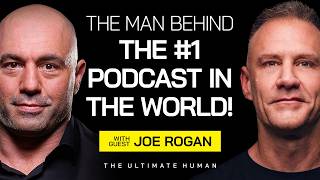
This is a podcast interview (Ultimate Human) where Joe Rogan recounts his life and career: competitive martial-arts youth (Taekwondo, kickboxing, Muay Thai, jiu-jitsu), transition into stand-up comedy, TV work in Los Angeles (development deals, NewsRadio, Fear Factor), early involvement with the UFC (post-fight interviewer → commentator), and his 2020 move to Austin. Rogan also reflects on the UFC’s commercialization and growth under the Fertittas and Dana White, and criticizes LA’s pandemic policies and municipal failures.
Chapters
I was really in a bind when I was young because I was like, what am I going to do with my life? From the time I was 15 till I was 21, all I did was compete.
It was the buddies that you were actually doing martial arts with that pushed you to do comedy.
Yeah. Everybody was like, what are you doing? And then open mic night. I was probably more scared going on stage the first time than anything I'd ever done, including fighting.
Yeah. And it didn't go well. Like.
The values that I have for real, not to be supported by a bunch of businesses that are trying to push these things because they're going to profit. Is it because you really care about people, or is it because you're reaping massive profit?
That's the whole thing with the Make America Healthy Again movement is not about taking away the freedom of choice. It's about getting some of the corruption, which means there are ways to do this that are just a lot healthier for us.
Well, here's what's crazy. They're saying, this is going to kill our business. Bitch, you already make them for other countries that don't have that.
That's the craziest thing. You won't do it for us.
The best thing about what you do is, like, live by example, talk about what's healthy. And then the more people hear it and then they start to act on that, and then they start feeling better, because the more influence you have in that regard, more people will make healthy choices.
I know there's a lot of influencers out there like yourself. What do you think the it factor is that separates the Joe Rogan podcast from the rest of the media by such a margin?
I think what you do and what I do, that's the most important things.
Ultimate Human. Hey, guys. Welcome back to the Ultimate Human Podcast. I'm your host, human biologist Gary Brecker, where we go down the road of everything. Anti aging, biohacking, longevity, and everything in between. And today's podcast is definitely going to be in between. Welcoming a UFC commentator, a fighter, a podcaster, a very accomplished comedian, and just an all around incredible human. Welcome to the podcast. Thank you, brother.
Pleasure being here. Thank you.
Not a long time in the making, man. I'm so. I'm so pumped to sit down with you today.
My pleasure. Thank you.
You know, in Austin, Texas, it's like there's like, a real wellness vibe here.
Yeah, there certainly is.
I wouldn't have thought 10 years ago that Austin, Texas, would be like the home of wellness. I mean, it's the comedy mothership. I mean, there's like a, like a real wellness vibe here. I mean, there's so many restaurants that are like seed oil free and glyphosate free, and I think they've caught the bug here.
It's a healthy city. You know, it's been a healthy city for a long time. This, if you go to Lady Bird Lake, there's always people running and it's. It's a really healthy place. And there's, you know, we started on it here way back in 2010, you know, so there's always been like a, like a fitness. It's a really big jujitsu city too, now.
Yeah, but you didn't come until the pandemic, Right?
I moved here in 2020, in August of 2020, which is, you know, that.
Seems even odd to me too, because, you know, that's height of your comedy career. And I would think, you know, being a comedian, the, you know, that, that vibe seems like New York, Louisiana.
Well, they'd shut LA down. That was one of the easiest, actually motivations to move here. They'd shut LA down during the pandemic. And first it was supposed to be two weeks, and then by, by May, you know, so we're talking like March, April, May by, you know, March, everything shut down by May. I was already looking to move. You were like, yeah. I was like, these are never going to let this go.
Yeah. And they lock down hard.
It wouldn't even let people do outside shows. They wouldn't let us do outside shows. In the parking lot of the Comedy Store. They tried to set up a show outside. It didn't make any sense. Wow. It wasn't logical, it wasn't reasonable. And the people that were running the government, it was the first time I ever said, oh, it's important who your mayor is. Like, it was like, who gives a shit who the mayor is?
Yeah. I never cared. Yeah.
You know, I never even voted for mayor.
I was like, yeah, the pendulum slowing way too far. I mean, I mean, then, now you look at the, like the wildfires and just all the nonsense that's happened out there, I mean, it's like an abject.
Failure, pure madness in la. And they're not going to course change. They're not going to course correct.
Yeah.
It's going to. They're going to ride that thing right into the rocks.
Yeah. And you just wonder how they're going to pull out of that. Because, you know, we were out there week before last and I drove through the Palisades and it doesn't seem like they've even touched it. I mean, there's nothing.
No, they've done very little so far.
It's. It's just it. It looks like a third world country out there.
Yeah.
So you move here during the pandemic, and was this because of your comedy career? Because you just were like, hey, I need.
Well, it was a lot of. There was a lot of factors. My kids were. The youngest kids were 10 and 12 at the time, and I didn't want them growing up in LA already. And it was an opportunity to get out of L. A, which I've been. I tried to get out of l. A in 2009 when my young. My middle daughter, when she was one, I moved to Colorado for a little bit, but we were in the mountains way above Boulder, and it's really, like, very high altitude, and my wife got pregnant while we're up there, and then it's really rough on pregnant women to, like, 8,500ft above sea level. It was. So we had a. We had a bail on that. And then when I went back to la, but I always had it in my mind that I was going to escape.
You're going to get out of the taxes and then. And the nonsense.
Well, it's not. The taxes are one thing, but I would be happy with paying taxes if it made sense, if you guys were doing a great job and if there wasn't tents on every street corner.
Yeah.
You know, it was just. It was so crazy.
Yeah. So you, you know, for my audience, I want to rewind the clock a little bit. I mean, of course, I think the whole world knows you as a podcast host, and obviously they're familiar with your comedy career and your career at the ufc. So I want to take you back to the. The early 80s in Boston. And, you know, Dana and a lot of people call this the Mafia era.
Right.
And I know you weren't in the.
Mafia, but I actually trained a guy as a hitman.
Really? Okay.
So, yeah, when I was in Taekwondo, one of the hitmen for Whitey Bulger.
That's one of the reasons why Dana had to leave that.
Yeah. Yeah.
Which is so crazy because, you know, you guys came from the same place now. Your worlds didn't collide for years later.
Right.
But I find it really interesting that you guys are so close now and your careers are, you know, intertwined, and you guys have been really loyal to each other, but you both came from this mafia area, early Boston, 80s. But, you know, my father is a salty old Navy captain, has a definition of life. And he says, life is what happens to you when you're on your way to doing something else. And as I was kind of looking through your background, I feel like that's a really good explanation of what happened to you. You started this martial arts career, Taekwondo. Right. And. And. And you actually became a Taon do champion. I think you won the Massachusetts. Massachusetts? What state?
Yeah, I won that four years in a row. Four years in a row. I won one of the American opening championships. I came in second in the US cup in the year that it was the Olympics. So the guy who I was. A bad decision. I brought. I thought I should have won, but he went on to be the national champion and fight the Olympics.
Wow. And. And this was Taekwondo, and it was like your early martial arts.
That was the first thing. And that was also part of the problem, is once I started kickboxing, I realized, taekwondo is kind of silly.
Yeah.
And then I started doing Muay Thai, and then I realized, oh, that's. That's even silly to not have leg kicks. Leg kicks are even more important. Then I started doing jiu jitsu. I'm like, oh, my God, it's all silly. Yeah. Because as soon as someone grabs you, you're doomed.
What was the inspiration for that? I mean, early ufc, like Hoist Gracie.
This was before the early ufc. So I was fighting. My last fight, I think was 89. Professional fight, or it was amateur. I never fought professionally. But then UFC didn't come along till 93. And, you know, I was already, you know, doing standup comedy. And I was. At the time, I was just moving to la, and then I'd watched a videotape of the UFC on. I became obsessed. I found UFC 2. 2. It came out on VHS, dude.
That's when you could just kick in the face when people are down on all fours. I remember. I actually remember very vividly somebody's tooth just literally flying out of the ring, going over the octagon. And I remember Hoist Gracie's fights going on for almost 30 minutes.
Yeah, he was.
After some of those fights, I think.
He had a 90 minute one in. In Pride.
Yeah, same. Just saying, no time limit, no rules.
Yeah, it was a wild time, you know, where they were trying to sort out. So when I was a kid, there was all these different arguments about what was the best martial art. You know, the judo guys would tell you, judo's the best. Boxers would tell you, that's the best. No one really knew until The UFC came along. It was all just theory.
Yeah.
And then once Jorge and Gracie decided to put together this cage and have. And, you know, in the beginning, he wanted to have like a moat around it and have crocodiles.
No really medieval shit.
He wanted to make it just completely ridiculous to be, obviously, for Martin marketing, super Gladiator. Yeah, they had some really wild ideas, but until that first UFC came along, no one really knew what was effective. The Gracies knew more than anybody because they had a bunch of challenge fights that they did in Brazil, and they did Valley Tudo events. You know, Hickson had some pretty big fights in Brazil where they're big audiences.
And were those fights where they could. They could use Muay Thai or any.
They could use anything.
Anything they want.
Bare knuckle, you know? Yeah.
Because I remember at one time when I. When I was younger, I remember hoist made a statement. He said, I'm. I'm not afraid of any man. I'll. I'll fight any man. And I saw him. There was the Hawaiian dude that had the ponytail.
Chemo. Chemo, yeah.
Who just looked like an absolute wrecking ball.
It was huge. He was £260. And the hoist was like 175 at the time.
Yeah, I mean, I still. I still remember those. He was on his back and in the guard grabbing his. Yeah, you could grab it back then. You can't do it in the UFC now.
The air, you could punch in the balls. It was crazy.
Yeah, you could kick in the face, on the ground. So. So this brutal sports, you know, emerging, and, you know, you're. You're working your way through your martial arts career, but at some point, I think you knew because of your upbringing, you didn't want to be in the construction business. Your dad was an architect. Right. And. And you. You sort of grew up before you got into martial arts on construction sites.
Yeah.
And. And I had a similar upbringing. I actually grew up on a. On a tobacco farm. My. My parents, when I was young, and I hated it, and now all I want to do is get back. So they bought 12 acres in the middle of this, like, 300 acre tobacco farm, and then they leased the land back to a farmer for a dollar, and they. And he grew tobacco. So my whole life growing up until I went off to college, I was. I was cutting tobacco.
Where was this?
And this is in Southern Maryland? Upper Marlborough. Right outside of PG County. Yeah. Most people don't realize it's a big tobacco country there.
Wow. I have no idea.
And it's It's. If you've never seen tobacco get cut, it's the hardest manual labor you'll ever do. It's absolutely brutal.
Really?
Oh, yeah.
Why is it so brutal?
Because you. You cut tobacco in August by hand. So imagine a field like as far as you can see, just rows and rows of these six foot tall tobacco plants. Five of these plants weigh about 60 pounds. And you got to push the plant over and cut it with a machete. Push it over, cut it with a machete, push it over, cut it with a machete. And you walk from one end of this field to the other end of the field, and you turn around and come back. It's just brutally monotonous. And it's hot. And the gum gets. You have to shave your arms. You have to wear long sleeves so that tobacco juice doesn't get on you.
Oh, wow. Do you get a nicotine high from, like, your skin, you know, having all that juice?
I think so. I never, I never chewed tobacco or dip tobacco like, all my buddies like dip tobacco. And now that I know it was in that with the glass and everything to cut your lips.
Oh, yeah. Like skull. Yeah.
It's like when I went back to my 30 year high school reunion, I felt like I was on a different planet. I was like, man, these people look like aliens.
I'm so.
I'm so glad I found biohacking. You know, I remember there's one kid, if you. If you're still alive, Ike, I hope you're watching. His name was Ike Moreland, and he owned. I don't even know why I'm going down this road, but I just had a childhood memory come back, and I saw him at my high school reunion, and I'm like, like, this kid beat me up in the eighth grade. You know, I remember you telling the story about being put in a headlock, and I think it was in high school, and. And somebody wrenched you to the ground, and he pulled back to punch you in the face, and for some reason, he actually decided not to hit you.
Yeah, he was so. He felt sorry for me. He did decide not to beat me up.
But at that moment, you realized, I'm so freaking helpless. I got to do something about this.
That's when I started wrestling.
Yeah.
Yeah.
So I wanted to run it again at F. At 50 years old with Ike Moreland. But no, I'm like, I held on to that. I was 14, dude.
I'm.
I'm coming back for, for, for payback. But. But I just, I very much identify with not wanting to do the structured kind of labor as a long term career.
Well, I also didn't want to have an office job. I was really in a bind and that was a real dilemma for me when I was young because I was like, what am I going to do with my life? I had to find something unconventional. I had just too much energy to sit down, which I didn't know at the time. That's a good thing. Like, I just needed to find something else. But no one would ever guide you saying, oh, you should be a comedian or you should be something else.
Yeah.
You know, it was always like, you have one path and that is to get a job. Yeah. And Boston was a very blue collar town. It was a very hard working town. And they, they really respected if you worked hard.
Yeah.
And if you didn't, you were lazy, you were shunned, you know, and that's just.
Yeah. Not a lot of role models that had broken out of the Matrix, like, you know, none gone and no. To look up to.
No. They looked at you like you were an alien. Like, what are you trying to do? It just like teaching martial arts at least was kind of respectable, kind of made sense.
Yeah.
Like, oh, I get he's teaching martial arts. So that's what I did for until I was 21. And then when I started doing stand up comedy, I realized, like, I've got to pick a path I can't be doing. I can't have one footage each world.
Right.
And, you know, I really.
What was your. It was your. It was the buddies that you were actually doing martial arts with that pushed you to do comedy. Yeah, right.
Yeah, I was the guys that I was.
Because you were the funny guy in the locker room before fights, like, trying to take the attention.
We would go to tournaments and everybody would be so scared. It was like there was so much anxiety and, you know, fear in the air that I would have to cut the night. I would have to cut it. You know, I'd be the guy that would be cracking everybody up, try to break the tension.
But I think there's a big difference between chopping it up with your boys and walking on stage in front of an audience.
Yeah, that's what I thought too. Yeah, that was my thought. Like, you guys think I'm funny because you're all a bunch of psychopaths. Yeah.
Was it like a sobering moment going up on that stage for the first time and going, shit. I got to, I got to say, I got to say something.
Well, I thought about it for A long time because I waited until I was 21 to get into a bar because, you know, that was the age that you could get into a bar, so I didn't think I could do. They actually let some people in before they're 21. You just have to get like an exemption from the club. They have to make sure that you don't drink. But I didn't know that. So I had about six months where I was contemplating it, where I wrote material down and, you know, and tried it out on my friends and thought about doing it, and they're all like, what are you doing? Like, everybody was like, what are you doing? And then open mic night. I was probably more scared going on stage the first time than anything I'd ever done, including fighting. And I remember thinking, boy, this doesn't make any sense. Like, I'd probably fought a hundred times by then. And I was like, this is so weird that I'm. Because from the time I was 15 till I was 21, all I did was compete. I traveled all over the country. I fought almost every weekend or every other weekend, once a month for sure. I was always competing. And you fight multiple times in a day. Wow. And I wasn't scared of that. Like, I was scared of that, but not like I was a standup stand up. I was petrified.
Yeah. And it didn't go well. Like, the first one, that's like, even reinforces the fear, but nobody was doing well.
That was the other thing. It was like, everybody bombs on open mic night. Which is the good thing, because he realized, like, as bad as you are, like, at least I'm not as bad as that guy. Yeah, yeah, he's really bonk. It's like you're just trying to get a couple chuckles, you know, and then if you got. If I got a couple chuckles, and I was like, I think I can do this. And then the second time I went on stage, I actually got laughs because I was more comfortable, I was less scared, and I was more loose. And then I bombed the third time. And then, you know, it takes a while. You have to figure it out.
Yeah. Because this is. I mean, the. The big move to LA was for comedy.
Well, I only moved to LA because I got a development deal. I was living in New York at the time, and I was doing standup and I got on something called the MTV Half hour Comedy hour. And right on, you do like 10 minutes or something like that. There's a bunch of comedians and it went really well. And I got a development deal which is some weird thing where they give you a pile of money. Like, for the first time in my life, I think it was $150,000.
Wow.
I had money. I was like, this is crazy. I have money. And. And then they wanted me to do a sitcom for this development deal. So. Okay. So then I came out to la, I did this sitcom, and I didn't even like doing it. I hated it. And I wanted to go back to New York, but I had got a lease on an apartment, so I'm like, well, I gotta stay out here a year. And then after that show got canceled, I was still there because of my lease. And then I got another development deal to do this thing at NBC. And that turned out to be how I got news radio. So that was with Phil Hartman, Andy Dick, and all those super talented people. And I did that for five years. And then Fear Factor, it's just like. And all the while still doing standup at the Comedy Store. And. But it was. I didn't come out to LA for anything other than money. It was just. I couldn't believe that you could get $25,000 for a week of work. I'm like, this is crazy.
Yeah, this is crazy. And so when you're out there, you. I remember you talking about Fear Factor as being, like, something you thought would never take off.
Yeah, I did it because you're like.
This is the most ridiculous thing I've ever heard of.
I'm like, we're gonna stick dogs on people and make them eat dicks. Yeah, I'm in all. I was thinking, like, this is gonna be great material. I'm gonna have some great material out of this.
I love the show. What? Finally blew it up. They were. They did some stunt that was, like, inappropriate, but I forget what it was.
Well, that was the second time we did it, so. We did it for six years. So we did 148 episodes for six years. Then we came back again. I think it was 2011, because my youngest daughter was one at the time. And that was six episodes. And then they. They made them drink Donkey Kong. They had to play horseshoes to see how much donkey come you had a drink. And there's only been two times when I did that show where I told the producers, hey, man, you can't do this.
This is like.
And that was one of them.
Yeah. I mean, first of all, the first thing that comes to mind, obviously, is how do you get donkey come?
Yeah. Well, you actually use a cattle prod and you. You stick it up. Oh, you don't up the donkey's butt. And then we. You shock their prostate and they just bust. And then you collect it, and then you get some poor kid who's got credit card debt and that kid is on Fear Factor to try to pay off his credit card debt generally.
Dude, I got to. I want to be like. I want to be a fly on the room. I mean, on the wall in the. In the producer's room.
It was a fun room.
I got. I got a great idea, guys.
Yeah.
Okay. We're going to take a cattle prod.
Well, up a donkey's ass. The second time. We're going to go back. So we stopped doing it in 2007, and it didn't even really get canceled. I mean, I guess it got canceled because they never did it again, but it would just. They just stopped doing it. We did so many of them was just. Everyone was worn out. We, like. I said we did 148 episodes in six years. And then they waited, like, five years. And then I get this phone call. Do you want to do Fear Factor again? I was like, oh, my God, Are you guys serious? And then I went in to meet with them. It's going to be bigger than ever and this and that, and only you can host it. And, you know, my kids were young at the time. I was like, I probably could use this money. All right, let's do it. And again, I was like, this time I was right. I was like, this. This is not gonna last. And I was correct that time because they were going way too far the second time because they were trying to make it bigger and crazier than ever. I'm like, someone's gonna get hurt. Luckily, no one really did. But the other time that I said, don't do it, other than the donkey jizz was they had a ride bulls. When they had to ride bulls, I was like, don't do this.
Yeah, yeah. Somebody's gonna really get her.
This is so.
Did they do that episode?
Yeah, they did that episode. Really? We just got lucky that no one got hurt.
Yeah. I mean, that. You can get really jacked up.
These are real bulls, too, man.
And nobody knew what they were doing riding a bull.
Oh, they'd say, hold on, Look. Okay. Like, that was the height of reality TV in, you know.
Yeah. It was the jazz of it, really.
So Survivor was the big one, Right. So Survivor happened first, and everybody was all into these reality shows. And there was a show called now or Neverland that was on in Holland, and NBC purchased that or End them all. Purchased that show and then brought it to America and changed the name to Fear Factor.
Wow. So what time does the early commentating.
For the UFC 97? I started work. Yeah, Before Fear Factor, while I was on News Radio. Campbell McLaren, who was one of the producers of the UFC, was good friends with my manager, Jeff, and they were just having a conversation about how they needed a new post fight interviewer because they got rid of the guy they had. And Jeff was like, joe loves the ufc. And I was like. At first, I was, you know, I, you know, I watched it. You couldn't even get it on cable tv. It was banned from cable, so you had to get DirecTV to get it because they, like Budweiser and John McCain, they were doing some shady to ban it. They were, yeah, human fighting. And they contacted me and said, we need someone to be a post fight interview. And I'm like, yeah, let's do it. Let's do it. And then I went to Dothan, Alabama. We were supposed to do it in. I think it was Albany, New York.
Albany or Buffalo, because it wasn't sanctioned. Right? I mean, obviously.
No, it was also. It was New York State Bandit, like, right before we did it. So we got sent down. They. They had a backup plan. The backup plan was Alabama. So we went to this place in Dothan, Alabama, that was UFC, oh, my God, 1997. And I did that for about two years, but it was actually. At the time, it was actually costing me money because I would do the ufc and I couldn't do comedy that weekend, so I was making more money doing comedy. But I really love doing it. But I was like, this is not going anywhere. And it wasn't getting anywhere as far as cable. Like, they were really banned.
Yeah.
And then what happened was the Fertitta brothers and Dana came along and purchased it in 2001.
And what UFC was that? Right.
Well, I came back. UFC 37 and a half was the first time I did commentary. Before that, I was just doing post fight interviews. And what happened was that was 2001, and it was. They were on Fox Sports for the first time. It was like the best damn sports show, period. Remember that show?
Yeah, yeah, I remember that.
They had an episode that they did where they. They did the UFC on Fox. And it was like a big thing to have it on Fox Sports.
Yeah, but it was sanctioned then.
It was sanctioned in Vegas. Yeah. Okay. So what happened was, you know, the Fertittas were very wealthy, and one of the things my friend Eddie Bravo and I, we'd always said was, you know, what the sport needs. Like, we love the sport. What the sport needs is someone to come along that has a ton of money, that just can throw a bunch of money at it and then show the world how great it is, and then it'll just become successful. And that's what happened. Like the Fertittas came along, these billionaire guys who love the sport and training in the sport, and Dana, and they just came along and put it together. And Dana and I became friends because he was, you know, like inviting celebrities to come. And this is when I was hosting Fear Factor and it was the number one show in the world. And he was like, why don't you come and, and see the fights? I'd be like, I'd love to. When do you have. It's in Vegas. Then he and I would get together and I'd go, what about this fight? Do you know about this guy? Have you ever watched these guys fight in Japan? Do you know about Pride? Do you know about Fedor Millionenko? Have you ever. You ever seen all these? And I was like naming all these different fighters and he, and then he saw, he found a tape somewhere of me on the Keenan Ivory Wayne show making fun of like Steven Seagal or something like that and talking about the ufc.
Yeah.
And then he goes, would you do, will you do commentary? And I'm like, I don't want to work, man. I go, I just want to come and watch the fights. Honestly, I don't. Because I was like, I had already done that before. Yeah, it was too much of a.
Pain in your pockets either.
Yeah, it wasn't.
Here's what I've learned. After optimizing thousands of lives, information without application is just entertainment. That's why I don't just create another course or another program. I've created a living, breathing community that evolves with you. My VIP community isn't just about what you get. It's about who you become. Every month, I'm live on video calls answering your specific questions. Not generic health advice, but targeted solutions for your unique biochemistry and your goals. You're getting decades of human optimization experience distilled down into actionable steps for your life. But here's the game changer. You're not doing this alone. You're joining a community of like minded individuals who are all committed to becoming their ultimate selves. When you're facing challenges, when you need accountability, when you want to celebrate the wins, they're there with you. You can find this section under Connect and Discuss in the community and the value. It's ridiculous. You're getting my personal protocols that took me years to develop, my water fasting methodology, my gut health strategies, my optimization routines, all for less than what most people spend on coffee in a month. Plus massive VIP discounts on biohacking products, supplements that I personally use and personally recommend. My members often save more on products than they pay for the membership. The 10 month becoming the Ultimate Human course alone is worth the entire annual membership. Add in the quarterly challenges with top experts, the exclusive podcast segments, and direct access to me, and you're looking at thousands of dollars in value. This isn't just an investment in information. It's an investment in transformation. Join the VIP community at theultimatehuman.com forward/vip and unlock the ultimate version of yourself. Because average isn't an option when excellence is available. Now let's get back to the ultimate human podcast.
So I did. I did it for one, just for Dana, because we're friends, and then I want to still do. I kept doing them and I did like the first, like 13 or 14 of them.
I did for free after they bought it.
Yeah. I just, I said, okay, let's just get, get, get me plane flights and get my friends tickets and I'll do it.
Yeah.
And so I did a bunch of. Because they were hemorrhaging money.
Yeah.
And, you know, I was friends with Dennis. He was telling me how much money they were losing. I'm like, oh, Jesus. So by the time the UFC took off in 2005, they were in the hole. So I've been working for them for four years. At the time, they were in the whole $40 million. Wow. Yeah. And this was this one thing where they did the Ultimate Fighter. They go, look, we're gonna put together a reality show. They couldn't get it air. They could. They had to pay for all the sponsors. They had a. They had a bankroll the entire show.
Wow.
And they said, this is it. This is the. We're gonna get one shot. And if this doesn't work, we're.
Yeah, it worked.
And. And Forest Griffin versus Stefan Bonner.
I remember that crazy fight.
It was so crazy that the whole world started tuning in.
I remember he gave him both contracts at the end of the fight. I remember.
So close. It was such a close fight. It was a perfect fight to introduce people to the ufc. And then next thing you know, it became huge.
Yeah. And, you know, back then, it was like nobody was a full time UFC fighter. They're like, right, Rich Franklin, a history teacher from.
Math teacher.
Math teacher.
And you're like, what?
And this guy was a cop, a firefighter. This guy was.
Yeah. There was no full time fighters at the time. Well, there's probably a few that figured it out. I think Frank Shamrock was full time. There's a few guys that were like, legitimately full time, but it was a hard way to make a living. And, you know, it was like human fighting nobody respected. It was like, you know, when I would tell my friends when I was working on news radio, and I would tell my friends that I was going to do these UFC events, like, why are you doing that? Like, you shouldn't be associated with that. It was.
Yeah.
Almost like you're doing snuff films or something.
Yeah, yeah, exactly.
Connecting yourself to something so shady.
And then it just became the fastest growing sport in the world. I think it's still.
It's probably. It's. Well, it's absolutely.
I read something about the opening in Asia and that it returned it to the fastest growing sport in the world.
So. That was 20 years ago. So 20 years ago it popped. Wow. Yeah.
And then you just never stopped.
No.
And, you know, there's. There's rumors that, you know, you and Dana have been so loyal to each other that your. Your contract in the UFC was one goes, you both go.
That's mine.
Yeah.
Yeah. If they get rid of him. Yeah. I'm gone.
Wow. That's. You know, I find Dana to be one of the most loyal human beings in the world. He's done a lot for me.
He's an awesome dude. I love him to death.
I love him.
He's just a great guy and the perfect guy to be at the head of such a chaotic sport because the sport is so crazy. It's like you need a maniac at.
The helm, and you also need somebody whose compass doesn't. Doesn't shift. I mean, you see all these reporters trying to knock him off track all the time, and he just puts them right back in check.
Well, he doesn't give a fuck. He really doesn't. He has real you money. And I've always said, if you have you money, you don't say, fuck you. You're wasting all that you money, you know, because it's the only reason to have it is to be able to do whatever you actually want.
Yeah.
And the guy loves fights. He and I will have conversations where I'll call him up, like one o' clock in the morning and we'll have, like, a fight talk for, like, two hours.
Really?
Yeah. All the time.
Yeah, He. He actually just loves it.
Yeah, loves it.
And he. And he knows the sport.
He loves it. Yeah. But he only watches the ufc, so I'm always telling him about all these guys that are fighting in Japan. This guy's fighting in Russia. Pay attention to this guy.
And was that a big part of what helped build the ufc? Because you started grabbing people from, like, Pride leagues, and.
Well, they purchased Pride. That was the big thing is the UFC came along and purchased Pride, but they got screwed because, really, they just bought a tape library. You know, they thought they were buying all the fighters and the contracts, but all the contracts were invalid. So then they had to, like, restructure. Oh, my God. So that's why they never got Fedor.
Yeah.
But, you know, they put out an amazing product, and Japan was putting on them. Like, when they were doing Pride, Japan had 80, 000 people showing up at these arenas when the UFC was in the.
More from Darrian


How to Balance Female Hormones Naturally: Blood Sugar, Estrogen & Cortisol | TUH #250


Sahil Bloom: On Social Compounding, All-Cause Isolation, and the Five Pillars of Wealth | TUH #249






