Justin Mares: Here Are the Bone Broth Benefits and Why It’s a Health Game-Changer! | TUH #069
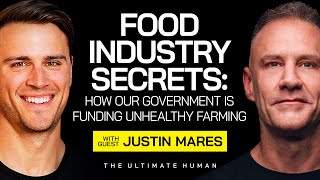
Justin Mares founded Kettle & Fire to make bone broth from grass-fed bones. He explains the nutritional benefits, why cook time matters, and how his company True Med lets people use HSA and FSA accounts for preventive health products instead of just treating disease.
Chapters
I've seen how and why the big food companies have made all of these health trade offs. To shave a little margin here, a little margin there. Making these small compromises over decades leads to the super messed up food system we have today. You look on the back of so many of these products, it's just half the ingredients. You don't understand.
The average American visits 28 different types of doctors before they die. It shows that the deficiencies that we have in food lead to deficiencies in the body which are the expression of disease. Disease is not something that's happening to us. It's something that's happening within us.
Bone broth is basically unbeaten. You know, right now, even today, almost no one knows what bone broth is.
Bone broth has enormous benefits. But how do we wake America up to this? How do we take the next steps towards actually impacting the food supply?
I think the answer is actually.
Welcome to the Ultimate Human podcast. Today we have a remarkable guest with us, Justin Mares. Justin is a visionary entrepreneur who's made significant strides in both the tech startup and health and wellness sectors. He's the founder of Kettle and Fire, America's leading bone broth brand and the co founder and CEO of True Med, a pioneering company that allows Americans to use pre tax, HSA and FSA funds for health promoting products. Justin is also the author of the best selling book Traction, a must read for any startup looking to achieve explosive growth. His passion for health advocacy and functional foods has driven him to create solutions that not only support wellness, but also make it more accessible. We're excited to dive into his journey, beliefs and the incredible work he's doing. Welcome Justin to the podcast.
Hey guys, welcome back to the Ultimate Human podcast.
I'm your host, human biologist Gary Brecka, where we go down the road of everything anti aging, biohacking, longevity and everything in between. We have a really special guest for you today as you hear from his bio. I just spent the whole last night and, and this morning biohacking with him. So I think we've done two cold plunges, a couple of sauna sessions, vicious workout, we did some breath work. So we've done a red light therapy. Yeah, we've kind of done it all. And then we had a nice Amish meal of grass fed steaks and some, and some raw, raw dairy which is only for use in dogs and cats. But I had a little bit of my pet's dinner last night. So. In any case, guys, welcome to the podcast.
Justin Mayer and who's the founder of True Med.
He's also the founder of Kettle and Fire, one of my favorite, if not my favorite, bone broth brand. If you did my water fast, you know all about kettle and fire, bone broth and the benefits of bone broth. And he is the. He is the founder of that company as well. So. Welcome to the podcast. Justin.
Stoked to be here. It's been fun hanging out today as well.
Yeah, man, it's actually been such a blast. You know, it was kind of funny. My cameraman, we were doing. We were doing these. This kettlebell workout, and we finished, and he's like, hey, can you do a few more so I can get this shot? Just as I. Come on, man, I'm smoked. I'm trying to look like I'm fit over here. But you had a really interesting journey to building Kettle and Fire. I found it fascinating because who wakes up one day and is like, I want to boil a bunch of bones and take the broth and box it and sell it?
No one. Who wants a good dating life, I'll tell you that.
I would love to see how that. On your, you know, on your first date, what do you do for a living? Well, I chop up cow bones, I boil them, and then I take the water, I put it in a box, and I sell it. Please. Right, yeah. Make sure to do that with humans or just with cows. You know, probably launching right around the Jeffrey Dahmer episode. Okay, so that terrible intro. I should stay away from comedy and stick to biohacking. But in any case, man, I'm really happy to have you on. Let's talk about the journey to, you know, Kettle and Fire. We actually met because I featured Kettle and Fire on one of my water fasts. And, you know, I very often will shout out brands and. And really give a platform to. To brands that. That I just think are doing a great job. You know, we had no affiliation deal at the time. We had no revenue share agreement.
And.
And you're like, hey, man, thanks. And. And I said, look, I really, I really love your brand. I really love your product. I love the fact that you're going the extra mile because, you know, in a lot of the conversations we've had over the last few days, you and Tim and I were sitting in the kitchen last night, and we were really agreed upon, you know, one major thing.
If we.
If we don't solve the food crisis, we'll never solve the. The chronic disease crisis. Yeah. And it's going to take an army to do that. So I'd love To hear about your journey to what. What led to kettle and fire. And how's kettle and fire doing?
It's going great. The business has been great. Honestly, it's been, you know, it was going great, and then it really inflected after, you know, you and Dana kind of did your thing late last year. Like, Dana's, you know, 82 hour water fast or whatever it was with kettle and fire was. Yeah, a huge thing for our business, which was awesome. Yeah. But, yeah, I mean, the story really started in college. I went Paleo, basically, in 2011, when no one that I went to college with knew what paleo was like. I was like.
There was a big book that came out around that time.
Yeah, Mark Sisson.
Mark Sisson.
Yeah, exactly.
He. Great guy.
Exactly. Yeah. And so I was a college student, you know, and all of my friends are like, peer, you know, beer, pasta, pizza, like, kind of doing that thing. And I was like, the weird guy in the fraternity that was not doing this for a bit. And literally, after two weeks of watching what I eat, eating clean, eating Paleo, my sleep was better, my acne went away. Like, I just felt like, whoa, this is. This is like a material change, you know, in how I'm experiencing life. And it was the first thing that. Now might sound a little trite or stupid, but it was the first time in my life I was like, what I put in my body actually determines how I feel, my energy, you know, like these. These different skin and other, like, biological conditions. And so I kind of had got into Paleo. Then when I moved to San Francisco, I was doing CrossFit in San Francisco, and in 2015, had a bunch of friends there that were talking about bone broth for gut health. Like, buy it at this farmer's market stall. Do this, you know, here. And I was starting to get into it. And around that time, my brother. I'm the oldest of seven kids, and one of my brothers, he tore his knee playing soccer and was, like, got surgery and was looking to heal. And after Talking to my CrossFit coach, I was. They were like, you should send him some bone broth. And so I went online to just buy him some or tell him to buy some in rural Pennsylvania where he was living, and no one was making anything. And so at that time, we decided to.
Yeah, exactly. There's the light bulb.
And so it was really then that we were like, hey, Nick, my brother, you should skip college, and we should start this. What we thought would be, like, a small kind of family bone broth business. And man, we like, we emailed hundreds of ranchers to figure out.
I was just gonna say, like, I, I don't even know. I'm so curious, like, how do you go about like, hey, you guys got any bones? I mean, like, where does it start? Like, I'm just so, like every other business entrepreneur that I have on here, I have a clear understanding of how they started. I just, I wanted to be a fly on the wall in your office when you guys were calling ranchers and they were like, yeah, we throw those out, you know.
Yeah, well, they literally did at the time. I mean, we would talk to ranchers that, you know, had amazing like pastured grass fed practices and they were just dumping all of these bones or grinding them up and turning it into like fertilizer. And so our first couple of farms, you know, we emailed, they were like, yes, please, like, take these off our hands. After a while though, they were like, we understand that this is becoming a market, like, people are starting to look for this. But we literally just emailed hundreds of ranchers all over the U.S. we also had to find a manufacturing partner, which we found when my brother, he cold emailed Mark Cuban and was just saying, I'm a 19 year old entrepreneur. How do I do this?
You know, I love that. I mean, that's ballsy.
Super ballsy. And Mark Cuban was like, talk to my food person. And that person put us in touch with our manufacturer that we still use today.
Wow. So Mark Cuban actually responded to the email.
Yeah.
That's good. Mark, you are about to get inundated with emails.
Yeah, he, he basically put us on the path of finding the manufacturer and, you know, from there we made our first couple batches. I empty.
Was it called Kettle and Fire out.
Of the gate, we, we launched it with a horrible name called Bone Broths Co. Because I bought. I know.
Oh my God, that hurts me, dude. Every, every marketing entrepreneur right now just got a pain in their ribs.
It was so bad. So we couldn't buy Bone broth dot com, but we could buy Bone broths dot com, which at the time we figured would be good for SEO. This is like how much we were not thinking this would be a massive business. And so we bought Bone Broths Co and I dumped my life savings into our first production run and was like, well, you know, worst case, I guess I'll have 30,000 boxes of bone broth to drink over my next 10 years. And so we did that, did our first production run in four months. Four to six months after we Launched the rebrand to Kettle and Fire.
Yeah.
After consumers roundly said, this is a horrible brand name.
That's, that's amazing. And so, so you've got. First you got to source the bones, then you got to find somebody to take those bones and, and, and boil them.
Yeah, right.
And then you extract. Yeah, you got it. So, so talk a little bit about the process, because I don't think that it's gone lost on any of the health nerds that are, that are watching this podcast or listening to this podcast that, you know, bone broth has enormous benefits. And I could go into a lot, a lot of those, and not, not the least of which is digestion. It's one of the best ways, in my opinion, to break a. The best ways to ease your way into the fast. And I used it on both ends of the water fast that, that we did because it's, you know, very low caloric, has proteins, it's, it's, it's satiating. And yours is delicious, man. I mean, really. It really is.
Thank you.
And so, so talk a little bit about that. You start sourcing these bones, but then where do you, where do you find a manufacturer to, you know, mass boil these and extract the fluid?
And it was really hard. I mean, so we were talking to manufacturers, and this is where, like, it gets into some of the food system stuff we can talk about later. But we were talking to manufacturers and they were like, hey, we're making soup, sauces and glazes where we throw a bunch of stuff in the thing, we cook it for two hours at high temperature, we rip it out, and we, like, run another batch. And so when we come in and we say, hey, we want 24 to 48 hour cook times. We want you to boil down these bones. Like, we want, you know, to do it the way that you or I would probably make it at home. They were like, we literally don't cook anything more than four hours. Like, if you, you know, before we launch, this was. Everyone in the bone broth category was just, they would throw like bad cuts of muscle, meat, and some bones that don't have a lot of nutritive value, don't have a lot of like, the joint and connective tissue and stuff like that, and blood of the marrow, which you need to have like a highly nutrient dense bone broth. And they would throw it in a kettle, they would cook it for four to six hours, and then they would, you know, put it on shelf and like, that's that.
Right.
And so we would.
They Add things to it, like sodium and things like that to try to try to beef up the taste, add.
A lot of sodium. I mean, you also saw a lot of like nutritional yeast and other things being added to try and jump up like protein and other sort of contents. And so when we came into the space, you know, a lot of the manufacturers that we talked to were just like, this is, this is a big ask. Like, right. We don't know who you are. You're not funded. You're two guys with a horrible name. Like, why are we going to like cook for 24 hours for you guys?
Yeah.
And we convinced one, with the help of Mark Cuban, to, to take a risk on us.
Really?
Yeah.
Is it Mark Cuban an investor or not an investor?
He responded to a cold email, put us in touch and then like, we never invested.
Wow.
Hilarious.
And so you get this manufacturer and you're starting to boil the bone broth, you're starting to extract it and then, you know, for bone broth's got to cool before you put it into the.
Yeah.
Package, I assume. And then you, you, you seal it and then how do you go about getting distribution? How do you get shelf space? How did you get the brand off the ground? Because in a minute I want to talk about where the brand is now. Yeah, but how did you get it off the ground? And then I really want to go back to some of the nutritional content in bone broth and, and the process that you use because I feel it's my duty very often to give a platform to the, to the best companies. And, and I think that you're, you know, the best in space. And I want to talk about what steps you go through to make sure that people are getting the most nutritious bone broth. Yeah, but so talk first a little bit about. So you do this first couple of batches and where is it manufactured?
It's manufactured in the Midwest.
In the Midwest. Okay, so these are US Cows. Many. So it's a us.
Well, we source from US And Australia, New Zealand. Yeah.
And, and why Australia and New Zealand?
Basically because they, you know, in, frankly, in New Zealand, Australia, the food system is just not as toxic as it is in the US like we buy from cattle. That cattle down there are by default pastured, grass fed grass finished, like just a really high quality of animal welfare down there. And in the US that's much harder to find. And so as we scaled, you know, tens of millions pounds of bones bought per year, we decided to go international rather than sort of sacrifice our Sourcing standards, which unfortunately is just the reality of the, of, you know, the food system.
And I think, I think the people listening to the podcast are happy that you do that. Right? I mean, you. Because rather than for convenience or for profit, you know, when you start. And I think that happens to the best of companies. I know when I was formulating my multivitamin, I was making a methylated multivitamin. Every manufacturer that I spoke to without failure was really pressured me to say, well, you know, you don't have to use the hydroxycobalamin or adenosylcobalaminform B12, number one. It's more expensive, it's harder to source. You know, we can use the cyanide based form called cyanocobalamin.
It's cheaper.
We got tons of it lying around. We're never going to run out of production. I said, no, it's the ingredients matter.
Yeah.
And, and they said, you know, sourcing methylfolate is way different than sourcing folic acid. We just, let's just use folic acid. You can, you can even label it. They told us their tricks on the label to put folate and then in parentheses put as folic acid. And he's like, that gets around most people's concern about full of gas. And I'm like, I'm not trying to trick the consumer totally, right? My, I'm trying to get this ingredient into their body. And we held to our standard too. So I know that it's, it's difficult. And, and for a lot some of these manufacturers, they said, all right, well, we'll get back to you on whether or not we want to compound this. You know, we want to capsuleize it. And, you know, we have a phenomenal manufacturer now. But, and then, and then, you know, same thing with fillers. They want to use cheap fillers. I wanted to use, you know, organic rice, rice flour. And because you do have to, you know, when you're mixing a capsule, you've got to spread the ingredients out so you actually get the right milligram strength. And I think sometimes people that have never gone through that process don't know the intricacies and how much of an absolute pain and chore it is to really build a supplement or a brand like what you guys are, are building, I remember, you know, so we fought about ingredients, we fought about capsules. We thought about what the capsules were in, where they were, where they were gel or plant sterols or any number of other things. I had a very specific set of nutrients that I wanted in there. And then the frustration for us was, you know, there's only a certain number of milligrams you can fit in a capsule and you push a milligram in, it pushes a milligram out. So if you really want something in, something's got to go. And eventually we solved it by having multiple capsules. But I'm digressing. But so, I mean, we've seen the.
Same thing like the number of times our manufacturer has basically said, and especially when we were interviewing manufacturers, why don't you just dial down the cook time and like throw in some natural beef flavoring or something like this, or any number of these things that provide no nutritional value but that make a product taste like more like the real thing. Right? You know, is, is crazy. Like just running this company, growing this company. It has been abundantly clear to me, like I've seen how and why the big food companies have made all of these health trade offs and you know, to shave a little margin here, a little margin there, and production time, totally.
Shelf life, all these things and you.
Know, making these small compromises over decades leads to the super messed up food system we have today where you have these companies that are selling Frankenfoods that are just, they're not real Frankenfoods, they're not real things. Basically you look on the back of so many of these products, it's just half the ingredients. You don't understand. Half the ingredients are in their most processed, most sprayed, most toxic form. And that's just a result of decades of decisions to get a little bit of margin, you know, across all of these different ingredients.
Hey guys, I think the most important website you may ever go to is theultimate human.com that's theultimatehuman.com because on this website we can directly interact with one another. You can give me suggestions for podcast guests and topics that you'd like to see me cover. You can ask me any question that you'd like. More importantly, you can sign up for my entirely free newsletter. It comes out every single week. I write this so I can get the information to the masses on how to live a healthier, happier, longer, chemical free life. You can also sign up for a pre order of my book. And if you'd like to take the genetic test that I talk about all the time, it's available there too. And lastly, you can even see all of the products that I use in my daily life for a chemical free, healthy living style. A lot of people ask me, you know, what do you use in your daily life, Gary? What do you brush your teeth with and clean your countertops with? Well, it's all there if you'd like to see it. And you can again ask me any question that you'd like and get my free newsletter, theultimate human dot com. I promise you that information will help change the trajectory of your life. And now back to the ultimate human podcast.
So what goes into making a really high quality, you know, organic bone broth? That's nutrition, you know, has a high, high level of nutritional value and, and, and nutrients. I mean, is it. I mean, you've got bones, you got connective tissue, you got obviously some meat still on there. You have the bone marrow, what bones are better than other bones? And then how do you guys ensure uniformity between. That's the other thing between. I mean, after all, it's bones in a bowl. How do you ensure in that quality, that quality control throughout and like, what goes into really making a good, nutritious, high quality organic bone broth?
Yeah, I mean, the first one is sourcing. So we have like a bone mix that is a blend of, you know, sort of knuckle patella, ribs, a bunch of like joint bones that effectively have a lot of their connective tissue and have a lot of the marrow still in them. And why that's important is, you know, if you take sort of like a, a cartoon version of a bone that is just a dry bone with no connective tissue, you can make bone broth with that. It'll have some nutritional value, but not nearly as much as if you take the thing that still has like the tendons, the ligaments, like the connective tissue. All part because you throw these things, you know, into a cooking device and you cook it for 24 hours, which is at least, which is like the.
Other big part of really high temperature, is it cooking time, is to really extract the nutrients.
Yeah, it's just to have it like slowly break down and extract the nutrients.
Okay.
And so you cook like quality bones for a long period of time. And what you get, especially if you're using high quality stuff, is you get a really gelatinous, you know, high in protein, high in gelatin, high in collagen, high in amino acid product that I think from a nutrition standpoint, like, if you have good inputs, you have this amazing output that, you know, for most people, I'm sure you know this better than I do. Most people are not getting enough amino acids, gelatin, collagen in their diet, you know.
Absolutely.
The Average American is just eating. When they eat meat, it's always a muscle meat. Rarely with any sort of like gelatin or amino acids that help with the digestion and help like build those parts of the body, the connective tissue, the gut lining, the skin that, you know, where those compounds act as building blocks for, for these different functions in the body.
And, and, and so you, you get these and you put them in just 24 hour cook time. And then how did you guys go about getting distribution and how'd you get on your first shelf? And because, you know, I've got to also believe that even at the time, even in the health food industry, you know, bone broth wasn't as big or accepted as it. As it is today. And they want to give shelf. They're like, well, it's not really a soup. It's kind of a soup.
Yeah.
So talk a little bit about, about, about that. Especially not having a big name behind you and definitely. And getting off the ground.
So that was actually the big reason that we launched online was so that we could try and find our people. The Paleo community for us in the early days was massive. Like, we were one of the first, we were the first bone broth brand on Thrive market when they were like going through their.
I love Thrive.
Yeah, those guys are great. So we were the first bone broth brand there. We launched with wellness mama. Ben Greenfield was an early supporter. Mark Sisson was an early supporter. A bunch of these people were just.
Right down the street here in Miami.
Yeah. And a bunch of these people were just like, yes, this is a product that we think is important. We think it fits with the Paleo philosophy that we've been preaching and a nutritional philosophy that we've been preaching. And this is like a product that I can get behind. And so as soon as we launched online, we had truly like a, you know, maybe 30 to 50% of the early big Paleo influencers kind of getting behind us just because it was a good product and it was a category they cared about. And we turned that into one of the Whole Foods buyers saw, I believe, Mark Sisson talking about Kettle and Fire, and he was like, oh, I want to bring this into my store and just see, you know, let's see how this moves on shelf. And so in, I guess that was 2017, we went in that we got into like 50 Whole Foods in Colorado and some parts of the west was on shelf at 9.99. So it was 10 bucks a box, which was significant even for Whole Foods and We just had, like, one little facing, like, way up there in the corner. And even with that, even with us not knowing what we were doing, even at a high price point, the product just sold and did better than the category average. And so we got a Whole Foods national rotation, like, six months later.
And how did you go from having just a small few Whole Foods? Because the parabolic difference in supply that you need and supply chain management is everything. The worst times in my business were when we started to nearly collapse under the weight of our own success. It's like the most oxymoronic thing in the world. I think it happens to a lot of network marketing companies. They have this parabolic success, and the infrastructure can't keep up. And so this is when, in my opinion, the really tough decisions are made, because do we downgrade the quality of the product? Do we start compromising on some of our core values, or do we hunker down and expand with a real manufacturer because you just can't go overnight to 10x your production? So what was that like? How did you deal with those choices and how did you overcome them and eventually supply to somebody like a Whole Foods?
Yeah. I mean, supply chain has been a thing that we've spent a ton of time trying to get our arms around. So we've invested, at this point, millions of dollars in building out, supporting our manufacturing partner and, like, building out a real manufacturing line that can support our growth.
So you went with the same partner and helped them expand their facility.
Exactly. So we got really. We got lucky. We worked hard, and we, like, put a ton of company money into making sure that we could scale, you know, every year, like, we could at least double or have the possibility to do that. And it hasn't been easy, though. Honestly, like, every year for the last four years, we've had at least one period where we've been out of stock for a period of time just because demand outpaced what we could do from a supply chain standpoint. And if I had to, like, say, I think that that part of the business has been. Especially before we brought on professionals and people that knew what they were doing. My brother and I, managing supply chain was a nightmare. Yeah, we were just, like, in stock, out of stock all the time.
Hey, you started as Bone Brothco. Yeah, exactly. I already know a lot about your brother.
Yeah, exactly. So, yeah, that was a challenge. That. That just took a lot of time. Investment and hiring professionals that. That actually knew what they were doing. Where I feel like we have our hands.
Where's the, where's the brand now? I mean, how are you guys doing now?
We're doing fantastic. I mean, from when I told my brother we should start this company, I pitched it to him as like, I think this can do like 10 grand a month. You know, like, this is sort of the vision, you know, and he was like, yeah, right. He was 19 in rural Pennsylvania, you know, like five grand a month, if we split it for a 19 year old, is, is more money than God.
That's a lot of beer.
Yeah, exactly. You know, and now like we're going to hit like the nine figures in revenue this year. We're in 20,000 plus stores. We're going to be 20,000. Yeah.
Wow. Congratulations.
Thank you. Like, we should be in, in your local Costco, like at some point next year if we're not already. And so I'm just, so. I've been amazed by the response that we've seen from the market as people have started to understand and appreciate the benefits of bone broth. I've been overwhelmed by like, the way that consumers are excited about our brand and the values. And I'm just fired up honestly, to use kettle and fire as a, as a mechanism and as a tool to like, continue to try and change what I think is the most messed up thing in the country, which is our, our super broken food system.
Yeah, I know. I was reading some of the stats that you sent me for the podcast and they were just astounding and I'm, you know, a big fan of stats, but I mean, just looking at the obesity rates and, you know, a few that stood out were, that I did not know were that the richest American men live 15 years longer than the poorest American men, almost entirely due to nutrition. You actually put the source and, and, and I'll, and I'll put these in the show notes for the science nerds too. The average American visits 28 different types of doctors before they die. 28 different types of doctors. That's not 28 physicians. That's 28 different physician specialties. And 17.6 prescriptions are filled per person per year. And 19% of adult women take an antidepressant. I mean, it just, it shows that the deficiencies that we have in food lead to deficiencies in the body, which are the expression of, of disease. I mean, that's long been a philosophy of mine that, you know, disease is not something that's happening to us. It's something that's happening within us. And the majority of the time it happens within us is because we lay fertile ground for it to exist. You know, we deplete the soil and then we wonder why the plant's sick. And then we deplete the nutrients in the human body. We wonder why the organism is sick. So where does bone broth fit in? So for, for a healthy consumer that, you know, wants to incorporate bone broth or maybe on those days where you're eating a little lighter, there's a, there's a large trend emerging now out on the backs of intermittent fasting, which is not just time restricted eating, but fast mimicking. And I think Dr. Walter Longo's research has really laid ground for this. I actually had him on a podcast recently and his, his book the Longevity Diet, using days of lower caloric intake or periods of lower caloric intake, not necessarily fasting, which is where I think bone broth, it's in amazing. With days of regular caloric intake and all the benefits of that. But my point is, where does bone broth fit in for somebody that is adopting really healthy lifestyle? How do they incorporate bone broth into there?
Yeah, so I, I think there's three things that are worth talking about. I think one is fasting. Bone broth is basically unbeatable.
Yeah. Like easing in and easing out. Perfect.
Yeah. Like I think if you're going to do a three or five day fast, you know, doing like two.
You said three year or five year, you meant three day or five day. Right, Right.
Yes, three day or five day fast.
I've never seen a single study on a five year fast. I love to see that one.
But yeah, I think if you are going to do a three or a five day fast, starting day one and having a box of bone broth or two box, two boxes and ending in the same way, I think is basically unbeatable. I think if you're trying to lose weight, having something that is low carb, high protein like bone broth first thing in the morning and get towards like you talk about the 30, 30, 30 thing. I think that using bone broth as a tool to achieve the 30 grams of protein first thing in the morning is amazing. Like you just don't get as hungry later in the day. You don't have the cravings, you don't have all these sorts of things. And so it's something that we do as a team every year at Kettle and Fires. We do like a team fast that people kind of opt into.
That's cool.
Yeah. And everyone will have bone broth first thing. And then the last thing I think is Like I alluded to earlier, the average American, they're getting most of. If you're eating meat, you're getting most of your. Like, you're almost always eating cuts of muscle meat. And so you're missing out on the full spectrum. Amino acids, collagen, things like that, that help support a healthy gut, healthy joints.
Things that are coming from bone marrow, connective tissue.
Exactly.
Even organs.
Exactly. Yeah. And so I think that, you know, if you look at how humans ate ancestrally and historically, at no point except today, societally, would people only be eating cuts of muscle meat, like organ meats, bone broths. Connective tissue has a long cultural history as part of being part of, like the food story of humanity. And I think that people today are just not eating, you know, not eating the organ meats, they're not eating the sweet breads and like all these sorts of things that, that people ate historically. And I think bone broth is basically the easiest way to get the glycine, the gelatin, the amino acids and the collagen into your diet.
And, and, and so for the continuation of your brand, where do you see, where do you see your bone broth brand going? I mean, are you adding, I noticed that you have turmeric and you've added, you know, other kinds of flavors. So do you, Are you trying to build out an entire suite of, of bone broth to make it more palatable to a larger audience?
Yeah, definitely. Yeah. I think that there is a, you know, right now, even today, almost no one knows what bone broth is. Almost no one drinks it on a daily basis. And so I think that we have a huge opportunity to truly, like, blow up the category, own it, and then create a bunch of products that people want where they go, oh, I really like the turmeric ginger bone broth or the lion's mane mushroom bone broth, like both of which we have. And if you have a seasoned version that you like, it's going to be much easier for you to incorporate this into your, your health routine, your health stack, all these sorts of things.
Yeah. You don't want to tolerate it. You want to really, like, enjoy it. Yeah.
And it's good.
Yeah. You know, you know, something else I find fascinating is you are the co founder of another business which really doesn't have anything to do with bone broth, but it really has a lot to do with the business that I'm in. And I think a lot of times when we talk about bio optimization or biohacking, longevity, aging, it, it seems to be A sophisticated person's and more of a well off person's, you know, option, if you will. Right. Especially when you start talking about modalities and other things. And I often labor on how do we get not just the message to the masses, but, but how do we get the masses in a position where they can take advantage of it? Like, for example, I do this thing called lateral shifts where I'll take any food that somebody likes to eat and I will give them a more nutrient dense option. And I promise them two things. One, I don't change the flavor profile, and number two, I don't add a dollar to their budget. Okay. So if you're, if you're eating Doritos, then, you know, we're going to shift them to this. If you, if you like, you know, processed yogurts, we're going to, we're going to make them this way. You know, we're going to use whole Greek yogurt and blueberries and nuts and maybe monk fruit. But the whole point being that to try to take away the stigma that it's really expensive to be healthy, that you can't afford to eat organic, you can't afford to make good food choices. And one of the projects that you started that I find really fascinating was True Med. And, you know, this is a way for people to use their health savings accounts. Right. Which, which right now are pretty restrictive on what you can use them for, for healthcare and use them for things like nutrition, maybe even some biohacking modalities and coaching, things like that. So I want you to talk a little bit about True Med because these are projects that I think really are going to impact humanity because you're going to give people access to things with funds they already have.
Yeah.
That might change the entire trajectory of their life.
That's our hope. Right. Like why, why I started True Med with my co founder, Callie is at Kettle and Fire. I was just looking like. And you walk into the grocery store and the food that is worse for you is also the cheapest.
Right.
It's like cheaper to not have a gym membership than it is to have one. And the American healthcare system almost incentivizes people to get sick because they go, oh, yeah, we're not going to spend any money on prevention. You know, literally less than 2% of the entire health care budget goes towards prevention. And yet as soon as you get sick, you know, if you're on Medicare, Medicaid, the American taxpayer will pay 2 million on average to handle like your diabetes per year. And so Per year? Yeah.
Wow.
It's crazy. And so I think that like these incentives in the system are just so insanely broken. And what we saw with TRUMED is that hsa, FSA accounts are.
Those are Health Savings accounts.
Yeah, Health Savings Account, Flexible spending accounts. They're these accounts that are super underutilized. But what they do is they basically say that you can use these tax free dollars to invest in things that treat, alleviate or prevent a given condition. And given that almost every American unfortunately today is either struggling with or at risk of one or more chronic diseases, like it is fully compliant and Americans are eligible to use these dollars to pay for things that, you know, clinically are effective. Like if you have a supplement and you have a methylation, you know, the mthfr, genetic mutation or something like that.
And there's a rationale for it, right?
Yeah, like there's a rationale for it. I mean supplementing someone with that condition and tying the purchase of that supplement to an intervention is going to do wonders for that individual. Like getting someone to work out for 150 minutes a week just because they can now afford a gym membership. That intervention works better than any pharmaceutical drug that we are aware of today. Like the recent study came out from a, it was a meta analysis of like 16,000 people that were struggling with treatment resistant depression. And they found that things that worked better than SSRIs for treatment resistant depression were dancing, weightlifting, yoga, cardio meditation. Just like the whole stack of things that you and I care about that most people when they think of medicine don't think, oh wow, I need to hit the gym for 150 minutes a week.
Right.
Yet if you look at the studies, the evidence shows that these sorts of interventions work better than pharmaceutical ones. And our goal with Truman is basically to drive more and more dollars away from a very, very broken health care system that's purely reactive and towards one that actually helps people treat and prevent chronic illness through a litany of like very effective tools, programs, things like that that I think you and I are probably.
And what are some of the stats on, on HSAAs, FSAs? I've had them two or three times throughout my career. Now as an entrepreneur and self employed, I, I don't have an HSA or fsa, but I know hundreds and hundreds of people that do and the majority of them don't use them.
Right.
You know, they, they build up cash and you know, the employers sometimes pay into these.
Yep.
And you know, I think they think of them as rainy day funds. For an emergency. Not just, you know, they like broken ankles, vehicle accident, things like that. They don't think of it as ways to actually supplement their optimal health journey.
Right.
And so what are some of the things you've seen with, with, with True Med? First of all, somebody's interested in True Med. Do they go true to med.com?
Yeah. True med.com.
And what do you do? Evaluate whether they can use that fsa.
Yeah, you can see a list of a bunch of our partners that, you know, like the pelotons, athletic greens, you know, the brands like eight sleep, brands like this that we work with where assuming that someone qualifies, like, they'll be able to spend HSA FSA funds with these brand partners.
Wow.
So, yeah, they can just go to true med.com. but yeah, I mean, there's. There's, you know, almost 40 million Americans that have an HSA or FSA today. Over 100 million Americans are eligible. There's close to $150 billion in these accounts as a whole. And like you said, they are totally under optimized.
Yeah. I just don't. I don't think that people have a good fundamental, including myself, completely understanding of an FSA or hsa. But I mean, if you, if you have one and you've got a couple thousand bucks lying around in there, this might be a way to unlock it for something that's preventative and could really serve you. And what's that process like?
Yeah. So basically what happens is someone says, you know, here's. Imagine like an intake that someone would do at the doctor, like, what are your risk factors? What are sort of your markers? Do you have high cholesterol? You know, do you have a family history of heart disease? Things like this. And based on that, we have a medical practitioner in our network go through and they go, okay, based on your set of risk factors or your specific conditions, you are eligible for X, Y and Z intervention that treats this underlying disease or condition. Wow. And the intervention that they can prescribe could be exercise, could be improving their sleep via eight sleep, could be, you know, a sauna, like multiple times, like both the product and a protocol. And then basically we issue something called a letter of medical necessity that says, here is why the justification for this purchase being hsa, FSA eligible. Because here are the studies and the research that show this, you know, this thing is eligible and is going to treat or prevent this chronic disease. They issue that, and that makes the purchase compliant.
Wow. And then they can go and use their.
And then they use Use the card or submit for reimbursement to their administrator. Yeah.
And what kind of things are you seeing? Like, you know that Trumet is getting reimbursed. So it's like a typical client. And what do you, what are you seeing them have access to that they might not otherwise have access to?
Yeah, a big one honestly is things like a sauna, things like a cold plunge, things like an eight sleep. Like some of these products that have very tangible benefits but are in the many thousands of dollars from a purchase standpoint are the things that we kind of see people get, get excited to spend money on and you know, are by going through true med, by using tax free money, they're effectively saving like 30 or 40% depending on their tax rate on these many thousand dollars pre tax dollars. Right? Yeah, exactly. And you know, the today, like as a married person, you can put almost nine grand into these accounts tax free per year, you know, about $4,000 as an individual. So it's not insignificant.
Yeah, I mean $9,000 for the average American family is a big deal.
Totally.
So when we talk about living a good nutrition based lifestyle, you know, you came in with a lot of stats, you know, before, before the podcast. You're welcome to share them with the audience, but I think a lot of people are, you know, wonder, where do I start? Right. I mean, and, and I ask a lot of my guests this, like, what's the foundation of good, healthy nutritional plan for, for your kids and your families without, without breaking the budget. What are some of the things that we should be pulling off the shelf?
Yeah, I, so I think that the biggest travesty in the US is that, you know, 80, 90 years ago, basically, like my great grandmother would live in rural Pennsylvania, did not participate in diet culture, didn't read anything about diet culture. I love did nothing. And like she was healthy and lived to like 98, you know, that. And she didn't have weight issues, anything like that. She just participated in a food system that wasn't actively trying to poison and kill her. And I basically think that today we have a food system that is actively trying and harming, you know, millions of millions.
And what do you mean by actively trying to do that?
Like if you look at the food system and the big food companies that are behind it, it's something like 12 companies are responsible for almost 80% of calories consumed in the U.S. most of these are ultra processed foods. They're foods that are very profitable, they're addictive, they're hyper palatable and they have basically no nutritive value. Think of like a Twinkie, an Oreo, DiGiorno's Pizza, or any number of these things. And as these companies have grown and as they've gotten more profitable, what they have done is they have started to fund research, you know, that says their stuff is maybe not that bad for you. Like I use Coca Cola as an example of this, where Coca Cola, after decades of lobbying, basically, you know, between 2011 and 2015, they spent $150 million around this campaign that they called the Global Energy Balance Network. And this campaign was.
I already don't like the name. Yeah, exactly. I'm already suspect of these guys, Global.
Anything, you know, and somebody suspect was, it was a reaction to a lot of doctors and people starting to say maybe you shouldn't be drinking super, you know, 50 grams of sugar in water. Coca Cola said, no, no, no. The problem is through this Global Energy Balance Network that they funded, the problem is that not that you're eating anything bad, what you eat doesn't matter. It's that you're not moving enough, you're not, your energy balance is off. Whereas if you're balanced energetically, if you're working out, then you can have that Coke. And so they fund. You see this happen with big food, like over and over again over the last 60 years is they basically say, we want to fund research that. Research that shows that what we are doing and the food products we're creating and everything is not actually as toxic to Americans as it is. And I think that that core thing. Can I give you another example?
Yeah, yeah. I want as many examples as you can, dude.
I think one of the biggest travesties that has been funded in the last couple years is last year Tufts Nutrition School of Nutrition came out with something called the Tufts Food Compass. It was an NIH funded study, partially funded study that took three years and like PhD time to research where they were doing this full nutritional analysis of like, you know, we're going to look at every food that we possibly could and rate it from a nutrition standpoint. And the results of this study, which denone and other big food companies contributed to, found that there were 68 brand name cereals that were healthier than ground beef. So like, lucky, I heard something about this.
Is that, is that true?
Yes.
Is it really true?
Yes.
100% brand name cereals. And what was healthier about the cereal.
Than this was like the rubric, the science behind it that they use where they basically, if you look, of course they're Looking at studies that say red meat is killing you, red meat is bad.
Cardiovascular disease.
Exactly.
Saturated fat.
Exactly.
Whole bit.
And so, and so what they're saying is they did this, you know, multi year analysis and I believe it was Cheerios are like a 95 out of 100, ground beef is like a 29 and pita bread was like a 1, which is also weird, but wow. Yeah. All that to say again. Another example of corruption is like Danone, one of the funders of this study. One of their top selling products is a chocolate almond milk. Turns out chocolate almond milk is like in the 70 ish range from a point score. I eat as much as you want, it's good for you. And what I think is happening is we can look at the Tufts nutrition study and go, this is clearly bullshit. Like this is just bad. It's a joke that this is even called research. But what's happening is you see like big food companies are outspending the NIH 11 to 1.
From 11 to 1. Yeah.
From a nutrition studies standpoint, which means that they've funded 50,000 nutrition studies in the last three years. And these studies are not making Americans healthier. They're not meant for us. They are meant to inform policies that then, like a lawmaker, regulator, whatever can point to when they decide we're going to roll out lunchables in school lunches across America or we're going to go plant based Monday and Friday or we're going to have sodas in every cafeteria across, you know, 85% of U.S. schools have contracts with major soda companies to serve soda. And schools. And the reason how they justify this is pointing to this fake, biased research thing, stuff called science that I just think is like that, that system, whatever we want to call that, that like corruption, I think is what is making and has created a food system that is so adversarial to the average person and is actively making Americans sick.
And I mean, it's hard to not be one of the conspiracy theories when you start, when you start hearing this. And I, I think that this happened slowly over time. And we were talking last night about the glyphosates and some of the, some of the herbicides or pesticides, insecticides, what have you, that, that are actually not necessary. And, and also how the government determines whether or not they're safe. And we'll just put safe and correct quotations. There's a prevailing wisdom that the dosage determines the poison, which I think is true in some things. But I also think there's something Called the cumulative dosage, which means that, you know, a single dose, you know, infrequently certainly is not likely to cause you harm. But consistent dosing, especially multiple dosing, you know, can really lead to, to serious consequences. And in the food supply you have so much non food, you know. And so talk a little bit about like the, you know, the glyphosates and herbicides, pesticides, some of the things that you talked about in, in the report that you sent me and, and what kind of effect those are having.
Oh man.
On our health span.
I, I think that this, what I would broadly bucket in this like environmental toxins bucket. I think that these compounds, glyphosate, atrazine, different pesticides, a class of chemicals, you know, that's sort of like pesticides. There's another class of chemicals called PFOS or like the forever chemicals that companies are.
And what is a forever chemical?
It's basically a compound that is bioaccumulative. So your body has a hard time clearing it. And it seems it's a polyfluoroalkyl substance. Your body has a hard time clearing out these substances. And it seems like data is very early, but it seems very likely that these things have huge negative repercussions, especially on your hormones and other sort of development. Like there, there was a study I was reading about which this is so crazy that showed that pregnant dogs who were exposed to different amounts of these PFAS when they were, when they were pregnant, it impacted the likelihood of the fetus that was developing. It impacted the likelihood of that dog to be a hermaphrodite by like a huge amount. It impacted the development of their hormonal system, like how well they slept, their likelihood of being obese or anything like this. And I think that like we, we already are starting to see some studies around, you know, microplastics being associated with four and a half times greater risk of heart attack or heart disease.
Yeah, the number one killer.
Yeah, exactly. And no one, like we are only at the cusp of starting to understand what exactly these compounds are doing to us. Like I, like one quick thing I want to say is I think that the way that regulators approach these compounds, I think is completely backwards where we are running this large scale America sized clinical trial of what happens to 330 million people when you introduce these chemical compounds, these pesticides, these, you know, into the food supply, into the water supply. What sort of cross, you know, side effects do you have when you get overexposed to glyphosate? And then you get like a nice dose of microplastics, like.
Right.
We don't know. We're like running the experiment and we've.
Done these and very often we do these experiments in isolation. You know, we just look at one compound, one nutrient, one toxin, if you will. And we don't see a negative outcome in that dose. And so they go, okay, so it's okay to repeatedly dose it. But you know, we were talking about this on another podcast yesterday, how human beings behave in communities. We live in communities. And, and so when we put single compounds into the human body, we only look at one biomarker. See the inflammatory marker didn't rise. And then we go, okay, this food is non inflammatory. You know, and I think it allows us not, I think it allows not just food manufacturers in the government to get away with certain things. It also is really confusing to the consumer completely.
And I think this is one area where regulators should be doing a better job. Like the US basically uses 150 pesticides that are not allowed in Europe. And you.
I didn't know it was that high. It's 150 pesticides.
So about 25 of the total pesticide load for that's used in the US each year is illegal in Europe. You can't do it.
Wow.
Which maybe in my opinion is one reason why people will remark they go to Europe and they eat bread, they eat pasta and they feel fine. They eat right here and they like break out and destroys their gut.
Yeah, yeah.
They have all sorts of health issues.
I've seen a lot of that myself, you know, firsthand.
Totally. And I think the, the other thing that I think is extremely broken about our regulatory approach is that I think Europe does a better job of is in the US Basically we require manufacturers self certify that when they are using a new chemical it's safe. They basically can just go, hey, we ran a study like here's this study. It says it's safe and it's looking exactly at the things that you're talking about, which is like one compound on one small marker that the FDA or EPA goes like, yep, this is fine. In Europe they're running much more intensive. They sort of have a new chemicals are like, are more likely to cause harm than good. And so we're going to be conservative in the things that we allow.
Wow.
And I think that that approach generally has a lot of wisdom to it and I think that it leads to Europeans not being anywhere near as poisoned as, you know, the average American is Today.
Wow. And when you say they're not as poisonous because they're not using these things like glyphosate and. And other herbicides or pesticides or genetically engineered foods to the extreme extent that.
We'Re using them here, totally. And I think that's for two reasons. One, the European regulation, like, regulatory bodies are much stricter on new chemical compounds that are being introduced to their food system. The second piece of that is I think that the U.S. one of the original sins of our food system is that we, like I said, we have like, almost 80% of our calories run through about 12 big food companies. And so that is astounding to me.
That's still astounding statistic.
And so when. When you think about why do we need all these pesticides, why do we need all of this, the pfas that goes into food packaging, why do we need all of these things? Well, it's not to. We don't need any of these compounds to pick a thing of kale and drive it 20 miles into a city center and then sell it, like the same day or the day after. Like, the reason that we need all of these pesticides, additives, you know, food flavorings, packaging material, like, all this shit is because we have this massively centralized food system where something is harvested in California, it's then put through some process and it ends up on shelf two to three weeks later and in the consumer's mouth almost a month later.
Wow.
And like, that, the way that the food system functions with that gap between harvest and actual consumption has all of these unnatural requirements, pesticides, you know, additives, all these things that. That I believe are poisoning Americans. Not to mention, like, you've talked about the nutrient density stuff.
Yeah.
You know, like, if you. I. I've read lack of satiation in the brain, totally. But. But like, in America, because of how our food system works. Have you ever looked at, like, this is very nerdy, but nutrient decay curves in vegetables and stuff like this. So this one study that I was looking, at, it measured, basically, if you were to pick a leaf of spinach now and then eat it the same day, it has like, effectively all of the nutrient. It's about 100% nutrient dense. Right. If you pick a leaf of spinach and eat it five days later, that is about 70% less nutrient dense than it was when you cooked it.
Because I know a lot of people buy that stuff in bulk and they just throw it in the crisper drawer and totally. They might not use it for a week.
Yeah. And, and I think that this is like again, one of these huge issues that's in the food system that almost no one is thinking about is not only has our food become less nutrient dense over the last 60 years due to our soils being less nutrient, you know, having having fewer minerals and other nutrients in them due to the presence of pesticides which lead to higher yield but lower nutrient dense kind of crops. But we also have a system that the average crop is like harvested and then eaten something like two to three weeks later. In the u.
S most of us have a very difficult time meeting our protein needs. And certain protein sources like whey protein and others can be as little as 20% absorbable. This is 99 absorbable and it has all of the essential amino acids that the body needs to build lean muscle, to recover, to improve our exercise performance and most importantly to repair and after.
We have intense exercise.
So this is called perfect amino by body health. It's like I said, 99 absorbable. It only has two calories. Eventually the caloric intake has virtually no caloric intake. It will not break a fast. It tastes amazing. You mix it in water. I take this literally every single morning. If you're working out in a fasted state, you have to take a full spectrum amino acid prior to your workout to preserve your lean muscle and make sure that you're recovering properly. And again, it will not break your fast. So the caloric impact is virtually zero. You get all of the full spectrum amino acids. It tastes wonderful. I use it every single day. You can go to bodyhealth.com ultimate. That's bodyhealth.com ultimate. And look for the perfect aminos. They actually come in capsules if you're on the go. Or it becomes in several flavors that they make in a powder, which I love. It's flavored with natural means of flavoring. So there's no artificial sweeteners in here. So this is one of my absolute favorite products. Give it a try. If you're working out at all, you need a full spectrum amino acid, go to bodyhealth.com ultimate. That's bodyhealth.com ultimate. I love their lab tested products. You can actually see the absorption rate for all of their products. They've got great electrolyte protein combinations. My favorite is the perfect Aminos. Bodyhealth.com/forward/ultimate. And now back to the ultimate human podcast.
Wow, that's shocking to me. You know, I read, I read that about bottled water, about how stagnant it actually is and how how many Months and very often how many years it's actually been sitting in the bottle before you drink it. And there's one of my favorites, the hydrogen water. Huge fan. And, you know, I was, I. I was just really astounded by the paucity of nutrition in a lot of water in the way that, you know, the gases, you know, are exchanged out of it. You know, sometimes the mineral content is. Is virtually zero. So whereas you could be hydrating and getting really good, you know, mineral input, you're hydrating in a way that actually is dehydrating you because you're. You're stripping those minerals, you know, right. Right out of the body because the water's coming in its unnatural form. It's not flowing in a stream with magnesium and zinc and molybdenum and selenium and sulfur and all the things that you would find in a running stream.
They're.
They're essentially, you know, non. Non sources of. Of nutrients. Yeah, especially when it. When it comes to water. But how do we wake America up to this? I mean, how. How do we take the next step towards actually impacting the food supply? I mean, obviously Kettle and fire is doing that. It's going to take some kind of regulatory action at the top to say, hey, we cannot put these things into our food supply anymore.
So I used to think that it would take some regulatory action. I'm still hopeful that some will come. But I actually think now that the answer is not to hope for regulators to, like, regulate the existing big players in a very already broken system that I think basically doesn't work for anyone. I think the answer is actually people buying whole foods, buying locally as much as you can. Because just by buying. I mean, we were talking last night about this, like, Amish farm that you.
Yeah, yeah, I sourced everything from.
Yeah, like.
And how good was it?
It was amazing. Yeah, it was amazing. And, and like, those. The Amish farm there, not because they're Amish, but just because they're a local farm, has no need for, you know, spraying their crops with a bunch of stuff to make sure it's preserved, making sure that pesticide, you know, that like, pests are not going to overeat their monocropped field, which would cost them hundreds of millions of dollars. Like happens in the Midwest, like, when you grow things and have a local food system oriented around whole foods, oriented around smaller farmers, I think that a lot of these problems just sort of go away.
Yeah.
And that's like the. That is my ideal of how we break this very broken Food system or at least one path. I think the other path is through, you know, what we're trying to do with, with Kettle and fire, build like a better type of food company. And then what we're trying to do with True Med, which is make companies that are doing the right thing also more affordable than the crap that you can buy, you know, in the center of the aisle at Walmart or whatever. The highly processed big food stuff.
Right. And you know, I always tell clients to shop the perimeter of the grocery store because on the perimeter is where you're going to find mainly things that are going to expire in, in a short period of time. Like, you know, you walk down the street in Paris or, or, or Italy and they'll have day old bread. Like, well, what the hell is day old bread? Well, it's bread made the way it was supposed to be made because in 48 hours you can't eat this anymore. So you cut the price in half the next day.
In France, it's actually illegal to sell a baguette more than two, more than a day old. Yeah, illegal.
Go France, man. They're, they're screwing up a lot of stuff, man, but they're getting some of this.
Their food system is great.
You know, you know, Putin has made it a felony in Russia to grow GMO foods.
Wow.
So, yeah, you can actually go to, go to prison for it. And I know that Italy just banned lab grown meats. I was reading about their lab grown meat ban and you know, some of these other food initiatives that are taking off here that, you know, the Europeans and the Italians and this, and the Spaniards are going, hey guys, this is not, not, not in our best interest, but there has to be a way. You know, I had a very interesting. I don't want to take too much time away from you, but I had a really interesting trip that I put all over social media the other day. It was a. One of the most successful single grocery stores in the country. It's called Seated Table. A friend of mine, Alfie Oaks, owns it and I watched him for years starting it. What fascinated me was we actually got on, he came over here to Miami and he picked us up, we took a helicopter, we hopped around to some of his fields and he was showing me how. And I told this story. He was growing his produce and vegetables organically for less than he could actually spray the crops and with poison. And I found it really fascinating because he used things like refractive reflective cellophanes to, to scatter these white flies. And you know, Push them towards the woods and away from the crops. So there was no poison on there. There were, there were these natural remedies and you know, they had to hand weed these fields, but that's actually creating more jobs. And at the end of the day this, the strawberries and you know, the, the, the peppers that he was growing were identically comparable in price to something that was non organic. And so then it starts not making sense to me. If we can actually grow organic produce and grass fed meats and things like that at or below the same price, why are we going this extra route to put, I mean there's a chemical industry, maybe we're trying to support the chemical industry. I put all those pieces together, but.
I mean my view on this is, is subsidies. So the government basically spends, I think it's $6 billion a year subsidizing corn, soy, wheat mostly. Funny enough, the government spends about three.
Most genetically modified or genetically engineered foods on the planet.
But that's the reason why, right? Like the reason that they are the most genetically modified, the most sprayed, the most covered in chemicals is because farmers who grow them literally can't lose money on it. Like the government subsidizes them growing these things which then makes the chemical industry go, okay, we're going to invest in making sure that these, you know, wheat crops are the most productive, don't have pests, all these sorts of things. And it creates this vicious cycle that, you know, the, like farm subsidies are introduced and basically 20 years later, you know, Coke is using, rather than sugar, they're using high fructose corn syrup. Why are they doing that? It's not because sugar in Coke is, you know, like high fructose corn syrup tastes better. We're not consuming 20% of, you know, the average American gets almost 20 of their daily calories from soybean oil. Because it's just like in every processed food, every restaurant, everywhere.
Wow, I did not know that.
It's not because everyone is like, oh my God, soybean oil. You know, it's because it is the cheapest possible input and because it is so cheap, it makes its way into everything. And like same with corn.
I see it in all the salad dressings. Exactly, yeah, yeah, all canned veggies.
And so I think that that is one of the issues is, is like you're saying it is totally possible for us to have a food system that, where organic is the default, where it's not unnaturally more expensive.
Yeah.
I think the unnatural thing that is happening in our food system is we have these subsidies that are, that are making things artificially cheap. And then once they're artificially cheap, the incentive of all of these big food companies is to put them everywhere in everything. And that's why you see mostly like wheat in its most processed form, high fructose corn syrup soybean. You know, like most of the subsidies that goes towards Soybeans, only about 7% of that is for human consumption. The rest goes into soybean oil, cattle feed, or into like other sort of alternative uses. Yeah, so it's crazy.
Yeah, it is, it, it is so fascinating and I, I was so inspired by this trip because one of the things, and I know a lot of, you know, municipalities and a lot of grocery stores don't have the luxury of being able to have a farm in close proximity to where they are. I mean, there's rural areas, there's weather issues to consider. But what was really fascinating about this farm visit that I did was the, I watched the strawberries get picked that morning, go to a facility, get washed and processed, get on a truck and then drive the hour and a half, two hours to the store so that by one o' clock in the afternoon, a strawberry that had been picked that morning was actually available on the shelf. And the, the, the nutritional value and the value that that has for the, for the consumer and just the difference that that's going to make in their body in a nutritionally dense, you know, food is, is, is astounding.
It's crazy.
So, so bringing it all back together, you know, the, you, you, kettle and fire is first of all a brand I'm a huge fan on, I think a fan of and I think bone broth is something people should be incorporating into their, into their daily lives. And True Med is a way that they might be able to use these HSA and FSA accounts. Is there a possibility that they could use those for food products at some.
Point, at some point in the future that circle. Okay, yeah, I mean basically is have.
Practitioners be able to link this, you know, the payments from these accounts to actually more nutritious foods.
Yes, exactly. And we are going to make a big push in the future to make specific medically tailored diets or you know, people who are saying you have this chronic condition, you should be allowed to eat X, Y and Z foods and use tax free funds to pay for it. That is like absolutely where we want to go as a company. It'll probably take us about a year to get there.
I think that's like, this is great. Listen Man, I love having guys like you on. I hope that you're going to come back again and sit and we're going to. We're going to run another podcast. I want to keep up with the. With the progress that you're having in True Med, the progress you're having in Kettle and Fire. Where can my audience find you? Where can they find Kettle and Fire? Where can they find out more about Truman?
Yeah. So Kettle and Fire, you know any grocery store around the country? Fortunately, at this point, yeah. I write my own personal newsletter just for fun on health and the food system. It's called the Next. If you just Google Justin Mares and the Next.
And that's M A R E S.
M A R E S. Yep. And yeah, those are. And then true med.com, if you want to check out some of the brand.
Partners and other FSA hsa. Totally. You should be going there. And where do they find you?
On social Media, I'm @JW Mares on Twitter and then Justin Mares on Instagram.
Fantastic. I. I end every podcast by asking all my guests the same question. If you've been watching the podcast, you know it's coming. There's no right or wrong answer to this, but what does it mean to you to be an ultimate human?
For me, it means really being present and grateful and enjoying every minute that I have. And I feel like, I feel so strongly to tie it back to my mission in life and why I've started these companies. I feel so strongly that it is so much harder to enjoy your life, to enjoy the present moment that we've all been given. If you're not healthy, if you're dealing with chronic conditions, if you're low energy or any of these things. And I think that today we have systems that are robbing people of the ability to fully enjoy their lives in a healthy present state. And, you know, I experienced that for myself. Like, I've had a great time hanging out with you today, and you really.
Are grateful and, and, and thankful. You've been so cordial. You know, you're staying here at my house and you're super into all the, all the biohacking stuff, too. And I love, I love bringing, you know, guests and friends and, and all over and, like, eating a good meal and doing breath work and doing all the biohacking things, because I think it just helps us really create a community and get to know each other. But you're definitely practicing what you're preaching, and I hope you come back on and continue to tell your story on the ultimate human.
Thanks, man.
And as always, guys, that's just science.
More from Darrian


How to Balance Female Hormones Naturally: Blood Sugar, Estrogen & Cortisol | TUH #250


Sahil Bloom: On Social Compounding, All-Cause Isolation, and the Five Pillars of Wealth | TUH #249






