Mike Mutzel: Is the Omnivorous Diet the Unexpected Edge Over Vegan for Longevity? | TUH #073
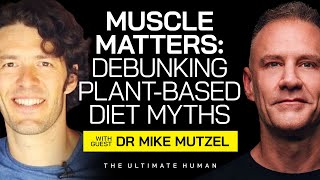
Mike Mutzel argues that whole-foods omnivorous diets outperform vegan approaches for longevity, citing animal nutrients like EPA, DHA, creatine, and B12 that support muscle mass and cognitive health. He emphasizes avoiding seed oils and processed foods, which trigger gut inflammation, and recommends tracking omega-3 index and apoB levels.
Chapters
A lot of what we're all preaching now is really kind of getting back to the basics again.
I would love to eat just a vegan diet. You know, no animals are dying, all this stuff, it's just not really totally aligned with human health. In my opinion, especially as you get older, the amino acids from plants don't contain the leucine and other essential amino acids that will stimulate the muscle protein synthetic pathways. When a lot of people go on a vegan diet, they might supplement with B12 or folate, but they're forgetting about the other conditionally essential carno nutrients like I mentioned, creatine, carnitine, taurine, some of these other compounds that you're not going to, you get from plants, sadly. So I think that if you were to look at just one thing, it would be make sure you at least.
Welcome to the Ultimate Human Podcast. Today we have the pleasure of speaking with Mike Muscle, also known as Metabolic.
Mike, A highly respected figure in the field of nutrition and functional medicine.
Mike holds a BS in biology from Western Washington University and a master's in.
Clinical nutrition from the University of Bridgeport.
He's also a graduate of the Institute.
For Functional Medicine's Applying Functional Medicine and Clinical Practice program.
Mike's worked extensively as a functional medicine consultant, nutritionist, and he's also the author of the highly insightful book Belly Fat Effect. The Real secret about how your diet.
Intestinal health and gut bacteria help you burn fat.
Through this popular YouTube channel and podcast, High Intensity Health, Mike shares cutting edge research and practical advice for optimizing health.
Through diet and lifestyle.
Join us today as we delve into the importance of gut health, the benefits.
Of intermittent fasting, and the latest trends in functional medicine with Mike Muscle. Hey guys, welcome back to the Ultimate Human Podcast.
I'm your host, Gary Brecke, human biologist.
Where we go down the road of everything anti aging, longevity, biohacking, and everything in between. Today's guest is a figure in the field of nutrition and functional medicine. I had a, you know, chance to, to spend some time with him before the podcast. I think that this is going to be right in the sweet spot of my audience and I really want to welcome to the podcast Mike Mutzle.
Gary, thank you. Thank you for having me on. It's a pleasure to be here. That was a great walk we had. We got about 2,000 steps there, which was fantastic.
You know what's amazing about being in the biohacking space? Like, you know, we, we, we both sat down to do the podcast and then my team was like, hey, we need to back up this SD card. It's gonna take 25 minutes. And you are like, let's go get.
Some sunlight and go for a walk.
That's awesome.
And then I almost got hit by a car because we're in London and I didn't expect them to come from the right and not from a little.
Bit to get used to that.
Hey, yeah. And then I got turned around, but thankfully you knew your way around London somehow. I don't. I don't know how, but he got us back to the hotel.
So here we are.
We're both in town for the. The biohacking event in, In London. You know, I. I always talk about, you know, with. With guests of mine, and I find that very often that the people that are making the greatest impact in the world are the ones that have solved a problem in their life. They have gone through some sort of pain, some kind of innovative moment, and it changed the course of their life. And it led to them becoming an advocate for Lyme disease or for addiction or for physical exercise or any number of things. And we started, you know, on our walk to talk about your trajectory from having worked in the sales industry to starting your own supplement company and some of what you've discovered along the way. So tell us a little bit about that journey that's brought you to where you are right now. One of the authorities on muscle. And it's linked to longevity and muscle as our metabolic currency.
Sure, yeah, I would love to. You know, it started out for me really being fatigued in college, you know, as an undergrad. I was a pre med biology undergrad. And so was I. Yeah, I love. Biology was so fun. I mean, now it's so relatable to everything we do. I just wish the professors back.
Yeah, it wasn't super fun or cool back.
Like, here's the Krebs cycle. But they don't relate it to energy metabolism. It's just like this theoretical thing that happens within your cells. But I wish they could tangibly relate that to, hey, when you breathe oxygen or eat carbohydrates, this is where it goes, you know?
Right.
So, yeah, to make a long story short, so I told you, you know, I dabbled with anabolic steroids. I wanted to be a bodybuilder early on in college. Hurt my back. Deadlifting. And realized that, you know, doing a couple cycles of steroids probably wasn't a good idea long term and. But I really wanted to get into intense. I loved intense exercise and I couldn't lift weights anymore because my back hurt. And I have since resolved that through core work and everything. Got into cycling as a way to like and you know, Lance Armstrong was competing in the Tour de France back then. My father is really nice. Got all fired up. We went on a bike ride one time and just started crushing some hills. I was like, this is amazing. So I joined the bike team at my college, Western Washington University.
Okay.
And I realized after losing a lot of muscle through the, through endurance exercise that my libido wasn't what it used to be. My energy, my confidence. I was lean and physically fit. But I realized that I was overdoing exercise and went to the school doctor, the nurse and they said I was depressed. First time I've ever, ever been really depressed. Like I'm talking, I can, can't even focus in cellular and molecular biology classes. Like I loved organic chemistry and I used to just be a straight. Loved all that. Sat in the front of the room, couldn't follow the course. And the school nurse said, well you're just, it's common, you're a pre med undergrad, we'll just give you an ssri. And I was like that sounds not like really it's going to solve the root cause of the problem. Typical though, very typical standard. Just give a, give a short term solution for a problem that we need to unravel. So I started to dive into PubMed because we were learning how to do research and things like that and I was learning about over exercise and how that affects and can contribute to hypogonadism. So I was just really on a quest to figure out how to resolve my own health issues. And that's how I found functional medicine. Thankfully, serendipitously, I got a job selling professional supplements to doctors that work in the functional medicine space, working with compounding pharmacists, integrative medical doctors, dos nature paths and just.
And when you say professional supplements, you mean these are supplements that are sold to physicians to use as treatments for.
Correct hypothyroidism, autoimmune disease.
Yeah, I like that, that they're. You're actually in the supplement space for.
It's awesome. Yeah. There's differential medicine sort of criteria for supplements, if you will, or hierarchies. And the practitioner channel is a billion dollar channel that many people don't know about.
Wow.
And in so doing you get to work with some really great doctors that are, as you mentioned, treating Lyme disease or intestinal permeability or mold issues or thyroid issues.
Those are the trailblazers too.
Exactly. No doubt they're doing things that old mentor, a friend of mine, Charles Poliquin, would always talk about how practitioners are ahead of the academic literature because by the time someone enrolls people in a randomized clinical trial and gets money for that, practitioners have been observing this, you know, anecdotally, and that's what led to the clinical trial.
Right.
We can talk about the Carnivore diet, for example. I mean, people have been doing that for the last five years. That's now just being studied academically in a randomized controlled trial format. Same with the keto diet. I mean, the keto diet's been used for well over 100 years, but right before we had clinical trials for preventing dementia or treating autoimmune disease or weight loss, people were losing weight on keto, you know, before there was no doubt. Clinical studies.
Yes. So originally keto was. Was for epilepsy, as I understand it. Right, Correct. It was really done to reduce the inflammatory condition in the brain to help improve transmission speed. And it was quite successful.
Very successful. If you look at the literature, it's. And then along came Dilantin, which was the first prescription antiepileptic drug. And then practitioners, I think, and probably patients as well, didn't want to change their diet. It was easier to take this pill. And so the keto diet really lost favor until about the early 2000s when people started using anecdotally.
Right.
Individuals like John Row and Dom d' Agostino started utilizing this clinically. And now there was a huge resurgence in interest, not only just for lay people, but academically, you know, looking at cancer treatments, looking at, obviously treatment, refractory epilepsy, but also weight loss and all the other metabolic health applications.
You know, it's interesting, I did a podcast with Dr. Palmer, who's a Harvard, MD, PhD, I think, as well, and he is treating some of the most drug resistant mental illnesses. And I'm talking about very severe mental illness. Right. Where people are literally tortured inside their own minds. Schizophrenias, paranoid schizophrenias with. With diet. And I found it really, really refreshing and very exciting that someone of that caliber, with that level of expertise, especially in one of the mainstream institutions, was really leaning towards things like ketogenic dieting as a way of helping treat drug resistant mental illness. And I've used diets like the Keto diet. We were talking about this before the podcast, you know, to therapeutically help patients like, you know, Dana White and intervene for a period of time to help help correct their blood work. But I Didn't mean to steal the thunder from you, but we're, we're so much on the same page. And I'm so excited about this journey because I think you're really, you know, on the same page as far as diet and, and muscle go and exercise, but totally.
Well, I mean, just to unpack that a little bit, I think the connection between metabolic health and cognitive health is just incredibly fascinating. And now we know the molecular pathways. You know, when you go on a low carb ketogenic diet, for example, you can increase GABA neurotransmission in the brain, which can help improve feelings of anxiety. And just the connection between normal glycemic levels and mood stability, I mean, has been well recognized for a long time. You know, working in that practitioner channel, I got it to chant, got the opportunity to speak with a lot of medical doctors. And one, a friend of mine, Norm Schwartz, who was going through his residency, was working in a hospital with someone who was just really violent, very aggressive, and they had to like, chain this person down to the bed. And he remembers this moment really well. And they tested her glucose and it was over 300. And so they gave her some insulin, dropped the glucose, and all of a sudden she calmed down. And so we've all, as parents, seen young children just running around, you know, seemingly all the time impatient, like, give me, I want this and, and just really this hyper impulsive behavior. We see this in protests and college campuses and things like that. So I think it's really important that we understand that our diet and our fluctuations in the glycemic variability has a direct impact on our cognition and our mood and how we feel. So.
Right.
Anyone with anxiety, depression, any mood issue, seasonal affective disorder, they should consider, I mean, it may not have to be full keto or carnivore, just a lower carb diet or the diet that you.
And I think especially refined carbohydrates and high sugars, things, things are going to spike and, and drop your, your insulin levels. Like a heart monitor, right?
Correct.
Yeah. We want to minimize the peaks and troughs. So just the huge swings is what we want to avoid.
Right.
And when you eat a real food diet, an omnivorous real food diet, you don't get these massive ebbs and flows. And because those ebbs and flows affect our hormones, they affect, you know, adrenaline, noradrenaline, cortisol, those hormones impact neurotransmission, they affect behavior. So it's all connected and it's not hard to see in real time, but the mainstream Medical community just doesn't have time to work with patients. It's much easier to say, here's your Wellbutrin, or well, you know, we know.
That the majority of our neurotransmitters are made in the gut, right? So you have this factory in the gut that's creating neurotransmitters. We're taking tryptophan, turning it into the neurotransmitter serotonin. It's traveling up the vagus nerve, creating mood in the brain. So you could say that, you know, my mood starts in the brain, but it really starts in the gut. And you could say that it starts in the gut, but it really starts with what we're putting into the gut. Right? I mean, if you didn't have the essential amino acid tryptophan, you wouldn't have anything to convert into the neurotransmitter serotonin. So sometimes I think that I'm finding that we're getting back to the basics. You know, we're at the biggest biohacking event in London in, in Europe right now. That's why we're both here. And I had very interesting dinner last night and talking to Dr. Gundry and some just the real thought leaders in the space, yourself included. And a lot of what we're all preaching now is really kind of getting back to the basics. It's like we haven't figured out a thousand years ago we unfigured it out and we're refiguring it out again. You know, the best medications are coming from, you know, Mother Nature. We're never going to be able to replace sunlight, grounding, you know, breath, work, movement, exercise, sense of purpose, you know, all of these things that are all around us, you know, and we're just chasing the exotics.
So it's incredibly fascinating. But I think us Western trained minds, we need the subjective data to confirm what maybe our ancestors did inherently. And so I'm all about like you looking at the research and trying to prove these methodologies because it does come across to mainstream people as sort of witchcrafty or a little bit woo woo. But when you actually start to do this, you feel so much better, you look better, you age better. So yeah, I agree. We are sort of just reconfirming what our ancestors inherently did.
Right.
But I think going back to the gut, there's one thing I want to highlight there, and it talks. I spoke a lot about this in my book Belly Fat Effect. And you, you talked about the gut and tryptophan and all this, there's also bad actors or pro inflammatory bacterial fragments in the intestine known as endotoxin.
Yes.
And so when we start to eat the french fries, the processed foods, we over consume alcohol, we start to release some of those gram negative bacterial fragments and cause a porousness in our small intestine. People know about intestinal permeability or leaky gut. And this can happen meal to meal. You know, you could have really good gut health and then go eat fast food and have a, you know, milkshake and french fries. It's really the high refined carbohydrates with oils together that creates this phenomenon of increased intestinal permeability. And when these bacterial fragments get into your body, they cause the symptoms of depression, anxiety.
Is that endotoxemia?
Correct.
Because I've used that term kind of, I've heard that term kind of thrown around that. And the endotoxemia is highly prevalent in autism and other neuroinflammatory conditions, Alzheimer's, dementia. You know, we think they're caused by these non plaque formations and these neurofibrillary tangles. But those are the consequences of. Right. The inflammatory process for a period of time. Would you agree?
Yeah, I think there's ample evidence to support that. But even just common metabolic health issues you look at, there's blood endotoxin levels correlate with visceral fat tissue. So just belly fat, the degree of insulin resistance. And so we look at these foods and we know they're high glycemic or processed. But mechanistically what are they doing in addition to releasing glucose and insulin because they're so hyper palatable and so on, they're causing changes to the gut ecology and the integrity of the intestine. And as a consequence of that you're getting literally you're poisoning yourself with bacterial fragments. And so when we think about metabolic endotoxemia, Patrick Canny, he's in Belgium I believe, has done a lot of research on this and even just alcohol consumption. And I've, I'm not an anti alcohol person per se. I tried a year of alcohol free. I'm like 470 days alcohol free now.
Are you?
Yeah, I feel just much better, honestly. Yeah, I mean I miss every now and again a biodynamic wine, but the con, the juice isn't worth the squeeze in my opinion.
Totally agree.
But anyway, alcohol will increase the absorption of these bacterial inflammagens. There was a study at a Boston college that randomized people to drink, one drink or up to four. They just took shots of vodka with a little orange juice. And the feelings, blood alcohol level correlated really tightly with endotoxin levels. So the feeling of a hangover, we're thinking, oh, it's the ethanol or it's the acetaldehyde.
Right.
It could be that the bacterial fragments from your gut coming into the blood, creating inflammation, which creates the symptomology of a hangover. So if you're going to binge drink, you definitely want to have maybe some polyphenols, some organic wine, or even just a little bit of orange juice or maybe, maybe pomegranate juice to mitigate that, or just not bench drink at all.
There's. That, there's that option as well. But what were you saying? Just, just so I heard it correctly, your, the amount of alcohol and the degree of the hangovers was related to the level of endotoxin. Yeah.
There was a parallel increase with the blood alcohol level and blood endotoxin level.
Oh.
As the alcohol rose, the endotoxin level rose.
Right.
And this was what you're referring to as making the gut more permeable. So these endotoxins were getting. You're causing endotoxemia and inflammation by drinking the alcohol in addition to making the blood more acidic, in addition to the acetyl aldehyde. So lots of consequences.
And then the investigators also looked at inflammatory byproducts. So they looked at Interleukin 6 and TNF Alpha from Macrophages and monocytes, and that correlated parallel with blood alcohol as well as metabolic and no toxemia. So binge drinking, the feeling of being buzzed is linked with more inflammation. And then we know that obviously that people who binge drink will have more prevalences of dementia, cognitive decline. Well, if you're increasing TNF alpha and interleukin 6 in your brain, you're going to exacerbate, you know, the decline of your cognitive capacities and beyond. So no question, incredibly interesting.
No questions. One of the, one of the things that you said was eating a whole omnivores diet. So I didn't, I didn't want that to fly by without us taking a, a deep dive. Because, you know, my audience is also always looking for, you know, evidence based mechanisms to help them make good dietary choices. I'm a big believer in whole foods, eating whole, whole real foods as close to the soil as possible. I mean, very often it's not my opinion, it's not the food itself, it's the distance from the food to the table. We take a Lot of harmless compounds and really make them harmful by the time they make it to your table. Well, what do you mean by a diverse omnivores?
Yeah, I like to emphasize the omnivorous aspect of it because when we talk about a whole foods diet we often hear that sort of obfuscated with a plant based diet. And I grow vegetables, I have 400 square feet of garden space. We have raspberries, tomatoes, you know, apples, pears, a lot of blueberries.
I love you want to push your limits and feel your best. Hi, I'm Gary Brucka and plunge is your secret weapon. Cold plunging can reduce muscle soreness, boost energy and enhance mental clarity. With regular cold plunging you'll support your immune system and even elevate your mood. It's more than recovery, it's a lifestyle. Take the plunge, change your life. Visit plunge.com and shop now.
Fruits and vegetables, right? But I think that the powers that be are really pushing a plant based diet. And when people just start eating a plant based diet they're getting hyper palatable meat like alternatives, you know, that are vegan junk food. And recently published study in the Lancet actually just showed, this was days ago that a plant based diet if it contains vegan junk food, which is what most people are consuming.
I think I saw this, we oughta, we gotta put a link to this into the show now. Text you that I, I saw it getting on the plane, I didn't have a chance to download. It was in Atlantic.
It was okay I think Tuesday very I think incredibly fascinating because again, you know we have Stanford and Harvard and these institutions really foisting this diet saying that as long as you don't eat red meat that you're okay. Right. You can get all your protein needs and requirements, amino acid requirements from plants. There's no reason to have animal foods in your, in your diet.
Saw that too.
But now we know that these, especially when you're eating processed plant based foods and most of the plant based foods, most people are not eating a lot of vegetables and whole foods when they start to go on a vegan diet. They're getting a lot of processed foods beyond meat, impossible question. And that's just, it's processed junk food essentially. And we now have research that shows that this is linked with higher prevalences of dying from all causes in cardiovascular specific mortality.
Wow. Because you know there's obviously other plant based research that, that indicates the opposite. But it was always fascinated me that I think you can make that argument for, for any diet. But if you're A vegan. And this isn't to attack vegan diets particularly, but to say that you could eat, you know, white flour, white rice, white bread, white pasta, white potatoes and beer. Right. Which would all be vegan or your cookies and, or cookies and, and so that's your diet. There's no question that that's not healthy, but it's vegan. So and, and you could make an argument for non, non grass fed, non grass finished meats and, and highly toxic, you know, carnivore based products too. I think when we say whole foods we mean in their purest form without being highly processed. Because you could eat a lot of processed meats, high nitros, keto, junk food. Yeah. Seed oils, things like that. Because you can have a clean keto diet. You can have a dirty keto diet. Right. If you were eating a lot of you know, processed salad dressings, for example, they're high in palm oil, palm oil and canola oils, you would be keto. But you would be in a pro inflammatory state. And, and so I think that you know, that's one of the reasons why I don't advocate hardcore particular for any dogmatic diet. But, but, but, but keep going. So you, you said that you know, really the research indicates by having meat in, in the diet, clean sourced, I'm.
Assuming more grass fed, more grass fed, things like that, but just more whole foods from an omnivorous standpoint. And the nail in the coffin for me was a study in 2018 that looked at whole blood essential fatty acids and looked at the omega 3 index and the byproducts of that. I'm sure you've talked about this. These so called resolvins that are created as a consequence of eating fish and animal derived foods that the EPA and dha, the health promoting, you know, launches, they're converted into these anti inflammatory metabolites that are specific for reducing inflammation, particularly in the brain. And they, they wanted to look at these metabolites as well as the omega 3 index and levels of linoleic acid which is an 18 carbon long fatty acid that's really derived from vegetable oil and how that can be converted more preferentially into pro inflammatory products. And so these investigators in the UK actually looked at whole blood essential fatty acids with linoleic acid and then their downstream metabolites into these so called Omega 3 resolving compounds. The vegan dieters had zero levels of these pro, these anti inflammatory resolving mediators, these so called pro resolvings, some people call them SPMs. There's different supplements out There that sort of quantify or isolate these anti inflammatory compounds. In contrast to the omnivorous diet group where they had significantly higher levels of omega 3 fats in their whole blood, much lower levels of linoleic acid and much higher levels of these anti inflammatory long chain polyunsaturated omega 3 derived compound. So for me that was really the icing in the cake. And then a recently published study this year looked at we'll talk about muscle.
I'm sure that seed oils were the culprit. You're saying rather just more meat based fats.
Correct.
Is what you're getting at that more.
Of the, the vegan dieters were getting much higher levels in their diet of linoleic acid derived seed oils. So probably canola, probably cotton, you know, cottonseed with Crisco and whatever else. Just it's really soy. Canola and cottonseed are really where people.
I've been censored by the Canola Oil Society of Canada. It's insane. I didn't know there was actually a canola Oil society. Again, it's called Rapeseed by the way, guys, Canola is sort of a brand name. But you know, even in my rant on seed oils, I wasn't particularly attacking the seed itself, but what I said was, you know, when you industrial process these, right, you put them in a commercial press, it comes out gummy, you degum it with hexane, which we know is a neurotoxin, then you heat it to 405 degrees, turn it rancid and the deodorize it with sodium hydroxide, which we know is also a carcinogen. And then some of them are commercially bleached, you know, and then, and then bottled and then put on the shelf. I mean you'll never convince me. I don't care how clean the plant started. Yeah. If it ends with sodium hydroxide and hexane and potentially, you know, commercial bleach, and then even at safe levels, then you'll never convince me that that's somehow healthy for you. Healthy and non pro inflammatory. And, and there's a lot of indications now that are starting to, you know, take the blame off of the infamous LDL cholesterol molecule is just being at the scene of the crime, not pulling the trigger. And these pro inflammatory compounds that are really calling the inflammation to that, to the damage in the endothelial wall, would you kind of agree with that?
I agree wholeheartedly with that. And I think the, there's this whole LDL oxidation hypothesis, you know, that it's not the LDL inherently going around and damaging your coronary arteries. It's that the oxidation is initiating the, the process of atherosclerotic plaque formation. And part of that oxidation is the high prevalence of linoleic acid in our blood and in our cells. And so I think the omega 3 index is nice. Bill Harris has done a lot of research on helping us better understand when our omega 3 index. And this is, I have no financial ties with the company. It's a $49 test and it can help to basically enumerate and give us better ideas about sudden cardiac death.
And what's it, what's that test looking.
At the proportion of omega 3s in your red blood cells? It's a blood spot test.
Blood spot test. Is that the. Dr. Gundry was giving me one that he thought. Because I want to put that, that test in the, in the show. Yeah, that's not a test that, that my company runs. We do 74 biomarkers in the blood. We do five markers of in, in the genes. And I think that that helps you target supplementation. But, but certainly looking at the processing of fatty acids in the red blood cell would be a great test. Say the name one more time.
It's the Omega 3 index. The company OmegaQuant, they're out of Sioux Falls, South Dakota.
Okay.
I actually went and visited him, did a podcast with him. I've been a fan of that work for a while. But yeah, when you eat an omnivorous diet, the point is that your omega 3 index and your levels of these health promoting omega 3s and their metabolic byproducts are going to be higher compared to if you eat a vegan diet. And, and the consequence of having high linoleic acid in your red blood cells and other cells could be they're more prone to oxidation.
Right.
And that could contribute to, among other things, atherosclerosis or the narrowing of, you know, your very small coronary arteries, causing plaque and even clotting cascades. And then I think almost even more importantly is the half life of linoleic acid when you eat it is about 600 days. So that's what I heard. It's insane when you start to look at this and we are having orders of magnitude more linoleic acid. If you look at consumption of linoleic acid in the 1990s compared to now, where it's like 300%, every restaurant, every, you know, processed food item has canola.
Oil because it's cheap and we can deep fry in it. And, and we, and it tastes just like some of the other oils that are, that are healthier for you. So we can, and it denatures even at high temperatures, but we still fry in it. Right, right.
And the, the repeatedly fried stuff is the problematic when you look at that the, all the oxidation products and advanced glycation end products that are created as a result of that are, are problematic. So yeah, I think that, you know, that's why I emphasize the whole food omnivorous diet. And again, another nail in the coffin was just looking at muscle protein synthesis, comparing a protein matched omnivorous versus vegan diet and looking at the rates of muscle protein synthesis. And we know that as you get older muscle is even more important compared to when you're younger. It's harder to stimulate skeletal muscle. As you get older. There's sort of this animal, even grams.
Per kilogram of body weight equated for plant versus animal derived and, and keeping those grams the same. And what was the muscle synthesis outcome?
So I want to. Yeah, the difference was between 40 and 60. It was pretty massive. Yeah, because eating a, and again, I would love to read just a vegan diet. You know, no animals are dying, all this stuff, but it's just not really totally aligned with human health in my opinion. Especially as you get older. I would agree with that because the, the, you just need the amino acids from plants don't contain the leucine and other essential amino acids that will stimulate the muscle protein synthetic pathways.
Okay.
So those two studies for me were like, okay, this is why we really should be pushing a whole food omnivorous style diet.
Okay. So with, with, with, with meats, clean source meats as the foundation and vegetables and would you say fruits? Yeah, in very limited quantities.
Correct. And a friend of mine, Stan Efforting, he's done a lot with the vertical diet. Really big in the bodybuilding space. Something that I borrowed from him is eating vegetables that agree with you. So I think a lot of people think oh, cauliflower is healthy or kale is healthy. Most people, the brassica derived vegetables, they don't do well with that. They're having a lot of GI issues and so forth. So for me it's like having fermented vegetables. So having kimchi, sauerkraut, olives, for example, coconut, avocado, so you can get a lot of diversity in there. And these are low anti nutrient, low oxidative isolate vegetables and fruits that you can digest readily that support gut health, that have the polyphenols that are healthy for you and it tastes Good. That's the most important thing. You know, I think honestly, for autoimmunity, for GI issues, for depression, going carnivore is amazing. But most people get kind of bored of having ribeyes or just ground beef all day long every day. So adding that diversity again with whole foods that don't upset your stomach and GI tract.
Yeah. And you said, you know, depression going carnivore. And I don't want to gloss over that because I think that you're, you're really on to something. Something that we've noticed not just anecdotally in our, in our practice because we see a voluminous amount of new patients on a monthly basis. We provide supplements that you find in carnivore based diets and meaning B vitamins. B vitamins, B complexes, methyl folates, things like that. And we do see a significant impact on what patients, at least anecdotally, report is depressive symptoms, symptoms of anxiety, add, adhd. So talk about that a little bit as it relates to the carnivore diet. What is, you know, what's the mechanism of what's going on there? And why do some of these elimination diets have such profound effects for people? And, and why do you think it is that modern medicine is not very accepting of, you know, just the impact of, of diet on overall well being, even, even mental, mental illness. I can't tell you the number of patients that have come to see my clinical team that have been discharged from oncology treatments. So these are people that have finished chemotherapy and it will say dietary recommendations. None.
We see it all the time.
I think you're really on the same page as far as diet and, and muscle go and exercise, but totally.
Well, I mean, just to unpack that a little bit, I think the connection between metabolic health and cognitive health is just incredibly fascinating. And now we know the molecular pathways, you know, when you go on a low.
So I'd love to dive into this a little bit with respect to the.
Carnivore on more granular details. So the first part of your question is mechanistically, how is this working? I think it's multifactorial. I think, you know, as you alluded to the different levels of micronutrients that are very specific for improving cognition and the synthesis of critically important neurotransmitters, serotonin, dopamine, norepinephrine, et cetera. I think that's part of it. You are getting, you know, you're getting more zinc, you're getting B12 you're getting folate, thiamine and then the Omega 3s like we alluded to. I think that's part of it. I think on the flip side it's just lower in inflammation. So when you and the medical community doesn't really grapple understand that. Well, because we've been told red meat is inflammatory. Red meat has saturated fat fat. Saturated fat is bad for you because it's purportedly linked with heart disease. Although we now know that that data is really not sussed out, which we can talk about later. So I think it's hard for mainstream medicine to grapple with that. But in my opinion it just minimizes the amount of anti nutrients and problem compounds that can contribute to feelings of dis ease or malaise supporting gut health and beyond. One study found several studies. I think a lot of people with depression have GI issues, you know. Oh, I mean almost strong correlation.
I have. I don't know that I've ever had a client that complains of any significant level of anxiety that didn't also have.
Carb ketogenic diet, for example. You can increase GABA neurotransmission in the brain which can help improve issues. Yeah. And a lot of people with gut issues, they are there.
Amongst other things.
Yeah. That link, but also feelings of anxiety and just the connection between normal glycemic levels and mood stability, I mean, has been. Well, just the fiber. You know, I think there's this myth that if you have more fiber, it's going to improve your gut health. And a lot of people eat high fiber diets. They either have tenismus and they're going to the bathroom multiple times a day, have no warning. Once they get the urge they have to go. Or you have people that are constipated and new recognized for a long time, you know, working in that practitioner channel, I got it to chant, got the opportunity. Studies now show that lower fiber diets are actually better for gastrointestinal issues than higher fiber diets. But this one study or a group in China has been tracking individuals as a gastroenterology clinic. And there's such a bias in people towards fiber, even though that when they went on a low fiber diet in this particular study, it improved their GI symptoms, but they reverted to a high fiber diet and their symptoms came back. So there's this bias that we have to have some threshold of 20 or 25 grams of fiber.
I agree. Right.
So I think if you are having GI issues and you eat a high fiber diet, it behooves you to mod modify the amount of fiber that you're eating so as to see clinical resolvement in your, you know, gastrointestinal problems, especially if it comes to constipation or tenismus.
Yeah, you know, we, we, I've certainly seen that. I think you're right. Part of it is the elimination of the anti nutrients and part of it is the inclusion of what we need for to not have the absence of the basics. You know, all human beings need two essential fatty acids, eight essential amino acids, 91 essential minerals. And as we get depleted in those areas, I think we get the expression of disease and speak with a lot.
Of medical doctors and one a friend.
We go chasing the disease that's in the leaf instead of the nutrient depletion in the soil.
One of my Norm Schwartz who was going through his residency was working in a hospital with someone who was just really violent, very aggressive and they had to like chain this person down to the bed and he remembers this moment really well. And they tested her glucose and you.
Know I've, I find that that's why sometimes.
And it was over 300 and so they gave her some insulin, drop the glucose and all this.
These types of elimination diets can be the panacea for people. They're not the panacea for everybody. And I think being hyper dogmatic for a prolonged period of time is usually not sustainable. But in the short period of time they can be, you know, life saving, very effective.
And then moreover, the other conditionally essential micronutrients that are found in an omnivorous diet, e.g. carnitine, creatine, these other very important, karna derived, animal derived nutrients are really important for metabolic health. Creatine really helps with cellular energy production, it helps in the brain. There's numerous studies that find that creatine helps with cognitive recall and memory, especially in elderly people. So I think that's another part of it as well. It's not just the B12 and the folate and all this. You know, when a lot of people go on a vegan diet they might supplement with B12 or folate, but they're forgetting about the other conditionally essential carnal nutrients like I mentioned, creatine, carnitine, taurine, some of these other compounds that you're not going to get from plants, sadly. So supplementing with that I think is helpful if you don't eat enough red meat. But several studies and there's a researcher in Australia, I can't remember her name, she's looked at putting especially women who have anemia and issues with iron absorption and so forth and depression, putting them on a whole foods, animal based diet and, and correlating that with possibly the creatine and other parts of the, the meat matrix that we don't really talk about that are very helpful. Sudden she calmed down. And so we've all as parents seen young children just running around, you know, seemingly all the time impatient, like, give me, I want this. And just really this hyper impulse.
Yeah. And I think when you see a normalization of hormones, you see, you can even see the anemias being affected. We know that, that men and women that have clinically deficient levels of testosterone free testosterone have a higher propensity for anemia. You know, the red blood cell counts are lower, their hemoglobin levels are lower.
Their behavior, we see this in protests and college campuses and things like that. So I think it's really important that we understand that our diet and our fluctuations in the glycemic variability has a direct impact on our cognitive adequate.
Their blood viscosity is, is usually lower. And then when they either go on hormone therapy or they go on supplements to support healthy hormone production like DHEA, D3 Boron, if they're dealing with SHBG, then as their hormone levels come back, boom, the, you know, anemia seems to fade away and their energy level returns and their sleep returns and, and what have you. So what is a normal, what is a day in the life of Mike muscle look like from a. Yeah, yeah. From a dietary standpoint, how, how are you wandering around London right now?
Yeah, it's a good question. It is a little bit hard when you travel. Yeah, but, but at home I have backyard chickens, so eggs. We have 17 chickens, one rooster. And it's great because my daughter gets involved with that and we use the manure for the garden and all that and it really connects you with your food.
Yeah.
So we have fertilized eggs because we have a rooster. So I'll do raw egg yolks in a smoothie, for example with some blueberries and some grass fed whey protein. But I eat generally two to three meals a day based upon my activity level.
Right.
So I think, you know, people get really hyper focused on how much protein to have, how much food to have. And I base this as sort of, you know, it's like fuel in the tank. How mission in our mood and how we feel. So Right. Much do I need to fuel what I'm trying to do. If I'm going to do a 20 mile, you know, two day backpacking trip. I'm going to eat a lot more food than if I'm just sitting around doing podcasts. Anyone with anxiety, depression, any mood issue, seasonal affective disorder, they should consider. I mean it may not have to be full keto or carnivore, just a lower carb diet.
Right.
Or the diet that you and I think especially refined carbohydrating or video editing or whatever else. But generally two to three meals per day, you know, 30 to 50 grams of protein per meal and very heavy on protein, red meat, grass fed, you know, or wild caught game that I've.
Harvested myself and high sugars things, things that are going to spiking and drop.
I work with a local rancher and get cuts from him. Try to cook in a slow cooker as much as possible. So using bone in, you know, whole food, you know, derived, you know, we'll do, you know, ribeye, of course with the bone in. We'll do rib, rib, rib steak, rump roasts, I mean you name it, but I love to saute onions in ghee, put that in the slow cooker and cook it on low and slow with rosemary for example and cook a roast or grass fed, you know, just ground beef and then mix. My daughter is an athlete, she's willing to track and so we'll do some sprouted rice.
Do they like to eat like that too, your kids?
Yeah, she's actually never had fast food ever.
Really?
So good for her, you know, it's crazy.
I bet if she did it would taste like chemicals to her. Whereas, you know, someone that's brought up on, you know, having access to a lot of fast food, their palate changes and they would prefer not to eat whole foods. They actually prefer the taste of artificial sweeteners and, and, and fried and processed foods.
Yeah. What we're doing to kids is so sad, Gary.
I think so too.
The studies journal of the American Medical association in 2021 found that kids are 65 of the calories that kids are eating is coming from hyper palatable ultra processed junk food. So we are training our children.
65.
It's. Yeah, it's almost three quarters. I mean in some house your, your.
Insulin levels like a heart monitor, right?
Correct.
Yeah. We want to minimize the peaks and troughs. So just the huge swings is what we want to avoid.
Right.
And when you eat a real food diet and omnivorous real food diet, you don't get these massive ebbs and flows because it's 100. You know, you've taken your kids to birthday parties and Whatever else. And we are rewarding our kids with junk food. If they do well, we give them junk food. Oh, it's Valentine's Day. It's so and so's birthday. It's, you know, St. Patrick's road trip.
It's Cheetos and Doritos and MSG and, you know, fake cheese. I mean, it's, you know, because you're, you're. You're on a.
Those ebbs and flows affect our hormones. They affect, you know, adrenaline, noradrenaline, cortisol, those hormones.
Road trip. And it's what we do in the kids classrooms. You know, bring donuts to school. We bring processed, you know, bagels to school. I think that the school lunches and, you know, a lot of times in the, in the public school system are.
Hey, guys, I'm really excited to announce this. Perfect aminos has gotten a serious upgrade. They've added nucleotides, the building blocks of our nucleic acids, DNA and rna. And this is important. We know essential amino acids are the building blocks of protein and collagen. Having all the essential amino acids in the correct ratio is necessary for complete protein synthesis without the caloric impact. But if we want perfect protein synthesis, we need to look at the process of protein synthesis itself. Because if the process is faulty, we won't get the correctly made protein, collagen, fibrin, or the red blood cells in our bloodstream or our muscles. We can even stop creation of specific proteins, which can affect us in so many different ways.
Artins impact neurotransmission. They affect behavior. So it's all connected, and it's not hard to see.
DNA and our RNA are what? Direct protein synthesis, building new proteins. If our DNA or RNA get damaged from toxins, harmful bacteria, or just plain aging, we get faulty protein synthesis. So cells, enzymes, and hormones are less functional. And we get premature aging by adding nucleosides and. And nucleotides, the building blocks of the.
Nucleic in real time. But the mainstream medical community just doesn't have time to work with patients. It's much easier to say, here's your Wellbutrin.
Well, you know, we know that the majority of our neurotransmitters are made in the gut, right? So you have this factory in the gut that's creating neurotransmitters. We're taking tryptophan, turning it into the neurotransmitter serotonin.
It's traveling up the vagus acids, DNA and rna. Our cells get exactly what they need to help repair Faulty DNA and RNA and improve the process of protein synthesis itself. This is next level science and you need to try these.
Terrifying. Yeah. You know, we, we usually made lunch for all of our kids growing through until they graduated from, from high school. And now luckily they're, they're all adults and they, they're in control of their choices. And I for the most part, they very, very healthy. Nice. But how do, how does it typical American family get ahead of this? I mean, because if your kids are going to do public school, public school. And you know what we feed kids mostly in the morning? Pop tarts, cereals, bagels. They're not only nutritionless, but I believe that they have a lot of anti nutrients in them. Like they're of creating mood in the brain. So you could say that, you know, my mood starts in the brain, but it really starts folic acid, which is a non natural form of, of folate, like say anecobalamin, which is a very non bioavailable form of B12. And then you know, lots of empty calories that make them hungry again. So what are some like tips and tricks for getting your, your kid, your kids on the, on, on the bandwagon? And then I want to ask you some, some questions about our muscle discussion.
Yeah, no, it's a great question. I don't have all the solutions, but I think cooking with fat and using salt, salt is key. So my daughter lives in the gut.
And you could say that it starts in the gut, but it really starts with what we're putting into the gut. Right.
I mean if he loves lamb and Liam happens to be very fatty and so a lot of the food that I cook for her is in the slow cooker. Add in a lot of real salt. I'm a big fan of the Redmond real salt. And you know, use didn't have the.
Essential amino acid tryptophan. You wouldn't have anything to convert into the neurotransmitter serotonin.
So garlic and spices and just make it taste good.
Right.
So she wants to eat it.
And sometimes I think that I'm finding.
Most importantly getting your child to feel the tangible effects of how that food is impacting their, their health and how they feel and getting them involved in the process too. We go to the store together, she's picking out the fruit she wants. I say, okay, well what do you think about this lamb? You want more eggs, more yogurt? So in the morning it's yogurt and berries and I'll sneak in some whey protein. So it's very simple for her and.
Just mix it into the yogurt or kefir or whatever you're making in the morning.
Totally. And if I add raw egg yolks, it tastes, it makes it really rich. I mean the things that we like are salt, sugar and fat. So if we add more fat and salt or a little sweet from the berries, then she's going to enjoy it.
Right.
You know, I think it's hard once your kid is addicted to processed food to get them off.
Right.
And that may be where a vacation or some sort of elimination diet comes in. I don't have the, the all the tools for that. But we slowly weaning kids off of that really affects her performance and she can run a mile in just shy of six minutes, you know.
Wow.
So she's doing, she's 11. Wow.
She's fast.
Super fast and great.
Good for her.
She can do on a hike. I mean we've done a 22 mile hike in one day before and that.
We'Re getting back to the basics. You know, we're at the biggest biohacking event in London in, in Europe right now. That's why we're both here. And I had very interesting dinner last night and talking to Dr. Gundry and some just the real thought leaders in the space, yourself included.
And, and that was when she was nine. So she's very. And so she gets it and so she's very unique. But I think it's important any.
A lot of what we're all preaching now is really kind of getting back to the basics.
It's like we have kid could do what she, she does. It's not like she's genetically gifted. We just have primed her mitochondria and her exercise capacity and her diet so she doesn't crave these things. She's in bed by nine, you know, no screens, no iPhones, things like that. But getting back to the nuts and bolts, what do parents do? Just not buy the processed food, not buy the packaged food and learn how to cook. Cooking is a lost art.
I think so too. And it doesn't have to take a long time. I mean I, I love to cook. I mean I constantly. And posting what we're cooking on our, you know, on, on my Instagram channel. One of the things we talked about that I think you and Dr. Gabrielle Lyon are doing a very good job bringing to the forefront is the importance of muscle. Not just exercise, but our actual muscle mass over, over our lifetime. And I think again, both of you guys out there, you know, are bringing this more into the mainstream. Muscle being our metabolic currency and being more than just something that looks esthetically pleasing. It's not really considered by mainstream modern medicine to be an organ.
Right.
You refer to it as an organ today, which I tend to agree with. But talk a little bit about where, you know, your journey has led you to, to really prioritizing muscle and what figured out a thousand years ago. We unfigured it out and we're refiguring it out. Supporting Abbott Evidence is there that muscle is our metabolic currency. And again, you know, the best medications are coming from, you know, Mother Nature. We're never going to be able to replace sunlight, grounding, you know, breath work, movement, exercise, sense of purpose, you know.
Yeah, well, there's, there's tons of research there. I mean, I've been fascinated with muscle since I was just a little kid watching Jean Claude Van Damme and Arnold Schwarzenegger. Just the aesthetic side the of of it. And it was just serendipitous that now we have this dossier of literature supporting the fact that muscle and muscle mass and strength are independent variables that were, will predict lunge.
All of these things that are all around us, you know, and we're just chasing the exotics.
So longevity. Yeah, grip strength, you know, and speaking of grip strength, there was a recently published study that found that people who have better grip strength age biologically slower compared to people who are, are weaker. So we hear a lot. You know, we're at a longevity conference. This whole field of geroscience or longevity science, you know, people are taking, you know, NAD boosters or getting IVs or methylene blue, all that stuff is fine. But if you're not strong, good luck trying to live to 180. I mean, how are you going to get up to the bathroom by yourself? And so strength, I think is really important. And prioritizing exercises that support strength. And it turns out zone two training, as good as it may be for capillary density in your aerobic base, it's incredibly fascinating. But I think us Western trained minds, we need the subjective data to confirm it doesn't necessarily translate into improved strength.
Right.
And so I think that's the most important thing that we should prioritize. Throughout the COVID 19 pandemic, numerous studies emerged. People who are more likely to die from COVID had low grip strength. Yes, we have multiple studies.
Strength, low vitamin D3 and, and the more frail, the higher the incidence. Totally agree with you.
That's what maybe our ancestors did inherently. And so I'm all about like you looking at the research and, and trying to prove these methodologies because it does come across, across to mainstream people as sort of witchcrafty or a little bit woo woo. But when you actually start to do this, you feel so much better, you look better, you age.
Right. As a mortality expert, we saw that.
Yeah.
Higher visceral fat, lower body mass index, people that were very sarcopenic from age related muscle wasting much, much higher. Didn't have to do with the diameter, had to do with the density of the muscle, the muscle and fat ratio. I, I read some of those, you know, studies myself. So for somebody listening to the podcast, that's a lot of my audience is not sedentary, but we have sedentary family members, friends and family. What, what's the importance of getting off the couch and getting mobile and like how can somebody incorporate strength training into their daily routine? Where do they start?
Yeah, it's a great question to tackle the importance. So recent NHANES data, the National Health and Nutrition Examination Survey. Better.
Yeah.
So yeah, I agree. We are sort of, this is the longest ongoing study, cohort study in the US finds that 96% of us are on some spectrum of being insulin resistant and 96%. Yeah. So only about 4% of US adults are metabolically healthy.
Wow.
And so when we think about our organs of metabolism, we tend to think about the liver and the pancreas and fat tissue. But our muscle is where most 80% of glucose is disposed into muscle. So it's really a glucose and insulin just reconfirming what our ancestors inherently did.
Right.
But I think going back to the gut, there's one thing I want to highlight there and it talks. I spoke a lot about this in my book Belly Fat Effect and you talked about the gut and tryptophan and all this. There's also bad actors or pro inflammatory bacterial fragments in sink. It's also a leptin sink. So if you want to be leptin sensitive, you want to focus on muscle. So that's what I think is the why we want to support metabolic health by prioritizing muscle strength and I think just capacity and muscle health really.
And why is it important to be leptin sensitive?
Yeah, so leptin, it turns out is really, it helps regulate or is critically important in appetite control and regulation. But I think even more importantly, leptin is a pro inflammatory immunologically active signaling molecule. So the more leptin you have as a consequence of being overweight or over fat, the more inflamed you're going to be. And that's why I think leptin is so problematic. We in the early or late 90s, early 2000s, it was all about the leptin resistance diet.
Right.
I've read all about that, you know.
So, and that's fascinating. And, and really leptin resistance correlates with insulin resistance. So you don't really. People can test their leptin levels. You want to do it first thing in the morning fasted, because there is a diurnal rhythm of leptin secretion and so on. You can test that. But the best way to ascertain whether or not you have high leptin levels is just to look at your body fat.
And what about looking at insulin when you're, when you're looking at a glycemic profile and you're looking at glucose, hemoglobin A1C, the three month marker of blood sugar and insulin. Where, where do you like to see those, those biomarkers? If people are going out and getting.
Data on their body intestine known as endotoxin.
Yes.
And so when we start to eat the french fries, the processed foods, we.
Where do you like to see those.
Those biomarkers over consume alcohol, we start to release some of those gram negative bacterial fragments and cause a porousness in our small intestine. People know about intestinal permeability or leaky gut. Wonderful question, Gary. You know, I think having a fasted insulin under 5 is ideal. You know, there's really no need for high fasting insulin. If you think about what does insulin do. It helps us in the post meal window to partition the energy that we ate. So if it is high in the fasted state, that would suggest to many of us that and this can happen meal to meal. You know, you could have really good gut health and then go eat fast food and have a, you know, milkshake. And there is some degree with post meal processing because of being sedentary. We can talk about how being sedentary causes hyperinsulinemia but also too much processed food. And so I like to see facet insulin under 5. Most people are between 5 and 7, you know, so it really depends on your last meal. And by the way, I do like to see postprandial insulin as well. Once people have a baseline about 90 to 120 minutes after a meal, it is good, you know, to look at your non fasted insulin and non fasted glucose as well as Non fasted triglycerides.
And where would you like to see postprandial insulin? Let's say two, two hours out from a meal.
Yeah.
Like under 12? Under 12 generally.
Okay.
And glucose under 125, you know, and then triglycerides. It depends on how much fat that individual had with the meal. But triglycerides generally under 150.
Fasted.
Yeah, post meal.
Oh, post meal, fasted.
I like to see them low, like 70, 65. 70.
Yeah, I would agree with that.
French fries. It's really the high refined carbohydrates with oils to get glycerides. And this is what, by the way, not to interrupt you, why I got off the bulletproof coffee. I mean, I love Dave Asprey and what he does, but I was having a lot of these bulletproof coffees and I was learning about this lipid load test that was emerging in the literature. So I look together that creates this phenomenon of increased intestinal permeability. And at my post meal triglyceride levels after having a bulletproof coffee, my triglycerides jumped to 220 and fasted. They're 60. So to me, I was like this, this liquid fat, when these bacterial fragments get into your body, they cause the symptoms of depression, anxiety, as health promoting as it may be, maybe for enhancing ketone levels.
Is that endotoxemia? Correct. Because I've used that term kind of, I've heard that term kind of thrown around.
That was not doing me any favors in the post meal window.
Right.
So I really tamed that down.
Right. And a lot of that is. Well, I mean, not with, with Dave Asprey's, but you know, it's coming, but people are getting those, those fats from pro inflammatory sources of, of fats and even seed oils. I know people are putting seed oils. Right, right into their coffee. It's not grass fed butter or the MCT oils. It's, you know, it's the high levels of seed oils. You know, what's interesting is we knew in the mortality space when we would look at people's cholesterol profiles and their, their lipid levels, that people that had elevated levels of LDL cholesterol and low triglycerides were, were generally markers for longevity. People that had the same level of LDL cholesterol and elevated triglycerides over a period of time, it would be a marker for cardiovascular disease. And why do you think that is? Do you, does it have to do with the particulate size of cholesterol? There's a lot of hypotheses surrounding cholesterol as being the. And the endotoxemia is highly prevalent in autism and other culprit. Right. When I think it's at the scene of the crime but not pulling the trigger.
Yeah, I, I think it has to do with the remnant lipoproteins that are related to the elevated levels of triglycerides. And so these are very atherogenic, the.
VLDLs, the remnant lipids, neuroinflammatory conditions, Alzheimer's, dementia, you know, we think they're caused by these non plaque formations and these neurofibrillary tangles. But those are the consequences of. Right. The inflammatory process for a period of time. Would you agree?
And these tend to correlate on par with triglyceride levels. So if you have high fasted triglycerides and post meal triglycerides, you're going to have high levels of these very atherogenic remnant lipoproteins that are much more problematic than just ldl. So I think the context in which LDL is particularly problematic is if you have low HDL and high triglycerides. And this has been repeated in the literature and now we know about the lean mass hyper responder phenotype. Dave Feldman has really helped us better understand this literature for a long time. So when individuals have a high non fasted or sorry, high LDL cholesterol, I automatically look to their lipids, their triglycerides and HDL. And so if their triglycerides are say 60 or 70 and their HDL is around 60, 70 in that ballpark, I really don't get too concerned about the ldl.
Right.
But when we see this hypertriglyceridemia, elevated levels of blood, triglycerides with high.
Yeah, I agree with you.
Then we, then there is more of an increased risk of cardiovascular disease.
We saw exactly the same thing. The opposite correlation with low triglycerides and high LDL than. Than with both of those being elevated as being markers for cardiovascular disease. So if someone is starting out and wants to get data. Yeah. On their body, what's it, what are some of these? Because I think you could go down the rabbit hole of biomarkers until you get paralysis of analysis. Right. And, and I think, you know, I think LabCorp has something like 1500 panels that you can pull. Right. And so where does somebody start? Like what data would you say is where the three or four most important things to look at.
Love that.
In the blood.
Yeah. I mean I'm sure you include all these on what you do, but I like to get a baseline of just your chem 24 and CBC. So just your standard potassium albumin, white blood cell count, high sensitivity C reactive protein. And if you're going to run LDL, you might as run APOB and APOA1. It's $17 to add on and that will help you better understand, you know, the potential atherogenicity of your high ldl.
Right. So if you have those, those April little A's or April little B's. I, I'm actually, I have apo little A. Okay. So I'm starting on a niacin protocol. My cholesterol triglycerides are amazing. HDL is amazing. VLDLs, low single digits. But, but the APO little A. So I'm, and I'm going on a niacin protocol and I'm going to track it and yeah, post about it. But so you would do full cholesterol.
Triglyceride panel, liver enzymes, including ggt for whatever reason that's often omitted. I never understood why. Yeah, we omit that. But yeah, the liver really tells you what's going on metabolically because the first place you start to fill up with fat ectopically right outside of your fat cells is your liver, your pancreas and your muscle. So if your, your liver is starting to reflect fat, build up those AST alt GGT will start to increase over 25 or 30. And so I like to look at those because they really not only look at metabolic health but also the toxin load. And we know that if we're filled up with these so called obesogens, these toxins, well it's going to be hard to be healthy and lose weight. So I like to look at occupational exposure to toxins. What does your house look like? Do you have perfumes? You know the conventional scented scented candles?
Capital of the world Florida. Yeah, in, in, in Miami. So do you recommend that? So you, you think a hormone panel, glycemic panel, you know, looking at glucose, hemoglobin, A1C, iron, iron C, CBC, the complete blood count, comprehensive metabolic panel. And then when you say toxic loads, what are you referring to?
Well, I think just measuring that can be tough. I mean I know there's boutique labs that look at blood levels of persistent organic pollutants and heavy metals and things like that. I think I would way down the.
Rabbit hole of that stuff.
Yeah. So I would just look at your liver function test initially and then look at more symptoms and, and then occupational Exposure, you know, that way. But if GGT is pretty high, like in the 60s, for example, then I would suggest. Or we want to look at maybe a glutathione need because GGT can increase as a consequence of increased glutathione turnover, that that enzyme is involved in the pulling of glutamine glycine into make glutathione tripeptide. So.
Right.
I'll look at that. Fibrinogen I like to look at as well.
Fibrinogen. Yeah.
Because of the clotting potential and then especially if LDL is high, there's a strong correlation with potentially blood clotting and more blood viscosity. So I look at also the hemoglobin, hematocrit as well, especially in men on hrt, that tends to increase.
Yep.
And so sometimes we recommend blood donation.
Okay. For therapeutic phlebotomy. When the hematocrit level for. So for male hematocrit getting what, in your 50s?
Yeah, if it's. And Gary, I like to look at unearned, you know, so if Your hematocrit is 47 and you've never been to the gym, that's an unearned hematocrit. If you're not an endurance athlete, why would your hematocrit be 47?
Right.
You know, so it's kind of like some people say, oh my, my HL cholesterol is 120 and you eat like crap. You're like, well, that's not an earned high hdl.
Right, Right.
So the same thing with hematocrit, you know, if you don't live at altitude and you don't exercise, your hematocrit shouldn't be close to 50. I mean, this is.
Right.
People in the Tour de France would love to have a high hematocrit.
Right.
That's earned from years of exercise.
Right.
So that you kind of differentiate that along with the hemoglobin as especially in men, it gets close to 18 or 19.
Right.
That's going to suggest more. Well, first of all, iron is pro inflammatory. Can be. And then just thick viscous blood, you know, that can contribute to this process of atherosclerosis.
Right.
So, you know, sort of helping people to better understand that very simple stuff. You can gather a lot of insights from just a basic Chem24 and CBC.
Yeah, that's.
That's what I try to tell people is that you should just get a starting point, get some data, because what you can measure, you can change. Right. So the chem, the the chem24 and, and what other basic data would. Are you a big believer in body mass index? You know, looking at visceral fat versus body fat versus overall muscle and then tracking that to see if you're making progress.
I, I do like the bioimpedance for adexa. Yeah, I do, I think very helpful.
Yeah.
A colleague of mine, friend, Sean Omara, he does a lot with the visceral fat mri.
Okay.
And he's found that just helps motivate the patients that he's working with.
Yeah.
When they see that their abdominal, abdominal region is filled up with fat, it's going to motivate them to not have the ice cream and the cookies and the crackers.
Right.
And so I think if you have access to that and paying cash, we're talking four or five hundred dollars. That can really motivate people to adhere to lifestyle change.
Yeah.
But I'm more of a big fan of other objective markers, like looking at your VO2 max. Doing that once a year.
Yeah.
It's not just for athletes. You want to get a baseline of where your strength and fitness is. Because going back to the importance of muscle, we're going to lose that as we age. So slowing down that loss, I think is really important. So having these objective biomarkers, we don't have any way to really characterize this, but how many pull ups can you do? How many push ups, how many squats? I mean, this is real stuff. It's not just for fitness junkies. You know, we know about grip strength and biologic aging. The weaker you are, the faster you will age biologically, the more likely you will die from all causes. So why are we looking at objective ways to quantify and enumerate?
You know, it was incredible. Years ago, I was an investor in a CrossFit gym. And one of the things we did was different community outreach. And we would reach out to the public school systems. We said, hey, we'll do this basic fitness assessment for the kids in the public school for free and we'll allow after school programs, you know, at, no, at no charge. If you get the kids here, we'll, we'll do, you know, these 90 minute programs or three hour programs with the kids for basic physical fitness. What shocked me, and I've talked about this before, was it was a group of 6th, 7th and 8th graders and we bought it, we brought them into the, to the gym and from Naples, Naples Elementary School. And, and we just did basic, basic testing. One of the tests we did was we had them Sit down on a box jump that was 12 inches off the ground and without their hands, just stand up from a box jump. You would be astounded at the number of sixth and seventh graders that could not stand up unassisted. Wow. From a box jump. Now, mind you, their butt was a foot off the ground, so they couldn't just take it from that squatted position, stand up without rolling to the side, without putting their hand down, without putting their hands behind them. And I just remember the coach, TJ Was my partner back then, Joey. I remember us looking at these kids going, I can't get my arms around this. I mean, and they were, they looked healthy. They were so weak. Their hip flexors. You'd put these kids in a basic plank and we wouldn't even say hold it for a minute. We would say hold it for 10 seconds. And they would get up in a plank and their butt would just sink down to the floor. They couldn't dead hang for more than 15 or 18, 20 seconds, just hanging under their, under their own weight. So super, super basics. You know, I just remember when I was in high school, you know, PE was pretty, pretty intense. You know, in grade school we played like kickball and stuff. By the time I was in high school, PE was like full contact. We called it flag football, but exactly. We, we call it smear the something other and we throw the ball up, we just smash each other up. But I mean, we were, we were intensely exercising for. Right, for that. And I think that that's, that's fallen by the wayside. So back to muscle as our metabolic currency. You know, the basic blood panel that you say, adopt a lifestyle of an omnivorous diet, including healthy meats, eggs, yogurt. Yogurts, fermented vegetables. And, you know, if, if you were going to say that one thing makes the greatest difference in what you do in terms of longevity, you know, how many more years you have left on earth, what would that one thing be?
That's a tough one. I mean, I, I would kind of go back and forth with, I think, outdoor exercise and walking, you know, because.
It'S probably the most underrated activity in the world. Walking.
Yeah, I really do think so, because it translates into better sleep, better hormones, better metabolism. So there's just one tool that, that you could do. And if you look at the blue zones, you know, this has been very controversial, you know, because the blue zones, the media likes to portray these blue zones as being very plant heavy in their nutrition, and some of them are not actually right. And so but one commonality with the blue zones is they're very physically active. The people that live in amongst community and meaning, a purpose and all this.
Right. Purpose and very active.
Very active. So I think that if you were to look at just one thing, it would be make sure you at least walk 8,000 steps per day. And that was kind of the thesis of my talk today was, you know, most people are just sedentary and when we're sedentary, even if we go to the gym and we work out, and Edward Coyle and folks over at UT Austin have been studying this. When you relegate people to just walking 2,000 steps per day, when they go and do a hit workout for 60 minutes, they actually don't oxidize much fat during that exercise session.
Wow.
It causes a phenomenon known as exercise resistance. So we need to be just recreationally active, just moving all throughout the day, take little exercise snacks or exercise, snack on exercise.
I, I talk about that all the time. Yeah, yeah. And you know, I think there, there was a study, I don't want to quote it, but it looked at the difference between a single 45 minute walk in the morning versus three 15 minute walks. You might have seen this study on, on the glycemic profile. And the three 15 minute walks had a substantially greater impact on hemoglobin A1C. Right. Even though it was the same duration of exercise, but it was broken up into 15 minute walks after each meal. Right. And this goes back to, you know, your, your comments about the muscle being our, you know, metabolic sponge for, for glucose. And anything that's going to keep our hemoglobin A1C down for a prolonged period of time is obviously not only going to help us with weight loss, but it's going to help us with a reduction in all cause mortality. So it's interesting too that I think people sometimes look at the daunting commitment of exercise and they go, I don't have 90 minutes. Right. I don't even have 60 minutes. Well, if you've got eight or 15 three different times a day, you could actually spread this out and snack on.
Exercise and it would be superior in contrast to just one 45 minute block.
Right.
You know, so I think that is the take home and if possible do it outside. Then you're improving your circadian clock health, you're getting, you know, natural vitamin D, for example, help with sleep and sleep pressure. So we fall asleep. So I think that's the most important thing. And Bannock et al just put out a meta Analysis involving it was using the UK Biobank data big data set. And he enumerated this individuals, or they enumerated this. Individuals that don't walk at least 8,000 steps per day have a dramatic increase in all cause mortality and cardiovascular specific mortality.
And.
And every 1,000 step decrement off of 8,000 in translates into a 15% added risk.
Wow.
So if you just only walk 4,000 steps per day, you're at a 60% higher risk of dying from all causes compared to when you walk 8,000 steps per day. So I think that's really pretty compelling to suggest that we just have to be more active. And here in Europe, I don't know if you've noticed, but there's really few obese or overweight people.
Yeah.
Everybody's walking everywhere. Yeah, yeah, we just went out for a walk and I was running in all kinds of people. So. Yeah. Mike, where does my audience find out more about you? Where can. Where can they find you? Find out more about what you support and what you're teaching.
Sure. Well, thanks for having me on. High intensity health.com is my website and we're pretty active on YouTube, so the channel is just high intensity health on YouTube as well. And then my. If you want to follow me on Instagram, it's Metabolic Underscore Mike on Instagram.
Metabolic Underscore Mike. And what big things do you have on Horizon? My audience needs to know about.
Yeah, working on a book all about metabolic health to really help people to better understand these concepts because they're pretty simple. But I think people need the research now to really sort of validate what they're doing. And then we have a lot of just great, great videos, you know, breaking down studies and things like that over on our channel. We've talked a lot about LDL cholesterol, the importance of looking at triglycerides. Huge. So just basic stuff, but people need to hear it because when they go to the doctor. The doctor, doctors are like monomaniacally focused on LDL cholesterol reduction. Meanwhile, triglycerides can be through the roof. It's like, hey, why aren't we talking about that?
Such a great message for the masses, man. Such a great message for the masses. Well, thank you for coming on. Get ready for, you know, my audience to find you everywhere.
Thank you so much.
And I appreciate the work you're doing, man, and I appreciate you giving me your time today. So I, I wind down every podcast by asking all my guests the same question, and there's no right or wrong answer to this question. That is, what does it mean to you to be an ultimate human?
I love that. I think to be resilient, you know, emotionally, physically, psychologically, athletically. To be resilient. You know, strong people are resilient in all sorts of facets. You know, we all have tough life circumstances, but to bounce back from that and then also to be physiologically resilient, to be able to travel like we did in our time zones are all screwed up. And to be able to cognitively perform.
Yep.
I think, you know, resilience is key in all domains of life. And if you look at these different disease states that are characterized by being of poor health, it's just a disease of poor resilience.
Yeah.
From diabetes to depression to what have you. So focusing on being resilient and choosing exercises that improve and modalities that improve resilience.
Yeah. Somebody will call this hormesis. Right. I mean, stress with the strengthening response, but also resilience. And I happen to agree with that. There's no right or wrong answer, but we are definitely aligned on that.
Nice.
And as always, guys, that's just science.
More from Darrian


How to Balance Female Hormones Naturally: Blood Sugar, Estrogen & Cortisol | TUH #250


Sahil Bloom: On Social Compounding, All-Cause Isolation, and the Five Pillars of Wealth | TUH #249






