BJ Miller about Hospice and Grief
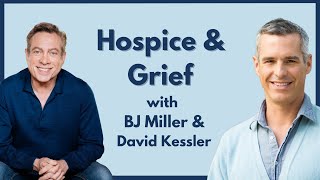
David Kessler interviews palliative care doctor B.J. Miller about hospice, grief, and dying. Miller shares how a severe college injury led him to medicine, then discusses anticipatory grief, air hunger, and whether hospice can ease a difficult death. The conversation includes practical resources and Miller's own experience with his sister's suicide.
Chapters
Hi, everyone. Welcome. I'll give everyone a few moments to come in. I had a technical glitch for a nanosecond, so I will check to make sure I see us somewhere. And if you see us somewhere, say hello in the chat. Let me know where you're from. All right, good. I see us on Facebook. I see us online. Let's hopefully. All right, Angela from the UK saying hello. So we're live in the uk. That's a good sign. All right, everyone, I'll give it just a few moments. Bj, Good to see you. Excited to talk.
See you, David.
All right, welcome, everyone. I'll give everyone just a few moments to come in. All right, and this is maybe before your time, bj, but there was a thing years ago when I was growing up called Romper Room.
Oh, I remember Romper Room.
And the teacher would pretend like she sees everyone. So in our virtual world, I pretend like I see everyone. So Vivian's here from New York. Hi, Vivian. Cheryl's here from Maryland. Deborah from Los Angeles. Jackie's here. Lucia from Vegas. Signy from Norway. Hi. Colleen from Grand Rapids. All right, let's see. Kentucky, Connecticut. Welcome, everyone. Glad to see everyone coming on. Cindy's from Westport, Maine. All right. Christine's from Illinois. Glad to see everyone coming on.
Welcome. Amy from Miami. All right, looks like we're going everywhere, so that's a good sign. All right, well, for any of you who may be new to the group, this is a group. I'm David Kessler. You're going to meet BJ Miller here in a moment. This is a group that I set up after Covid in March. The grief groups were all shut down. People obviously were unable to see their loved one who were dying, unable to have funerals. And we decided if we can't physically be together, we're going to virtually be together. And so this is my free grief group. It's also my tender hearts group. So a number of people combined here that are watching, and many of you will watch this in the replay.
So, as you all know, one of the things I like to always do is just start with a moment of silence. You know, I'm a big believer that when our loved ones die, we don't quit loving them and they don't quit loving us. So just a moment of silence to honor and connect with them, if you would.
Thank you so much. All right, let's see. Lynn's here from Minnesota, New Mexico, Australia. Welcome, all. Good to see you.
I'm really excited to talk to Dr. B.J. miller today. Nice to see you again.
Many people know your work from Zen Hospice or from the Oprah show or from your book A Beginner's Guide to the End, which, by the way, I love that title. Who's not a beginner when it comes to life and everything we deal with. You know, I have a number of questions, and we have questions that came in ahead of time. I want to start with something I found interesting. When I told a few people not in this group, in this group. When I told people you were coming, they're like, yeah, we love him.
Some people in our world said to me, well, he does palliative care. He doesn't do grief.
Or they said, isn't he a palliative care doctor? And I thought about that because it's something that I've gotten over the years straddling my work in hospice and palliative care and grief and this crazy notion that there somehow a disconnection or a choice we make. And seems like in life it's a continuum that's not even linear.
Yeah, super with you. And yeah, that's a funny response. I mean, A, we all have access to grief. B, our field does explicitly say that our the purview extends beyond the patient's life, into the family's life and beyond death and to grief for the family. And as you and I both know, that grief starts before death anyway. So for all sorts of reasons.
We talk about that as. Sorry, didn't manage to take my phone off there.
It's a good reminder, brother.
Good reminder. Exactly. Exactly. And I was told you could have animals, as I could too. I have a dog, so anyone's welcome. You know.
Let me see again, there's Maisie over there.
So, you know, I think about that arbitrary line that we think is there that obviously isn't. And I am a big believer in discussing anticipatory grief and talking about early grief and then mature grief. And I think, you know, people are always shocked when I say early grief is two years. We have a society that often wants to say, no, early grief is the first week. But that's not the world we live in. You know, we had a discussion the other day in the Tenderhearts group that I thought was an interesting one. And it was about.
The idea of we need to make time for grief. But I also talk about grief needs dedicated time, but not always a lot. And what's interesting about the conversation we ended up happening that I'd love to get your take on is.
Can we make a mistake not that there's any real mistakes in grief, but can giving it too much time. And I'll just use myself as an example. After my younger son died, I canceled lectures and everything for six weeks. And at about a month I said, so do I just sit here in the pain doing nothing? This is hideous. And are those distractions? Is work? Is sort of the going in and out of grief helpful? Have you thought about that concept and how it might relate to suffering?
Well, yeah, and.
I think.
I think we can cling to our grief, our sufferings, our miseries. I, you know, I, I think it is possible in a way to.
I'm gonna be clumsy with language because I, this is, I, you know, I don't know that there are words for a lot of what we, we do, but I suppose we can over identify with our pain.
And so what would that look like? As you said, David, there's really no right or wrongs here. So I guess the question always comes back, is it serving you? So is me really identifying with my disability, say, or the loss of my sister is a real part of my identity and how I think about myself in the world.
Fine, those are big things. Better that than hair color or jawline or, you know, whatever other ways we identify ourselves.
I suppose, though it can get tricky if you, if it's starting to get in the way of the rest of your life, crowd other things out. I suppose that's the metric. I don't know that I'm just thinking out loud together, but I have much of the time I spend with folks and myself is trying to help us pay attention to our grief, pay attention to our suffering. And so I do realize I'm usually trying to point people towards their pain. And I'm coming from a place that is because we usually don't give it enough credit, we don't give it enough space or time. So I'm often in this, trying to make up for it by pushing people towards it. But as you say that I have met people and I have found myself in these zones where I think sometimes I'm overdoing it. And last thing I'll say about it is, I think the trick is not the trick. I think the point is to integrate our grief with the rest of our life, not barricade around it.
And I think, you know, the distinction that shifted in this new world we're in, in the pandemic is sometimes when I say to people, you know, you've got to make time for your grief, they're like, I am sitting Here, out of work, isolated, alone. My husband's dead, my wife. And there's nothing but pain, David. So, you know, in those cases, it is a strange world that we live in, a society like you said, that usually doesn't give it enough. And now people have been shoved into being so isolated. You know, it's interesting. I would love for you to take a moment or two and just tell us about you, how you got into this world. And then I want to go to a few more questions that have come in already.
Yeah. And I will love to. And I just want to sort of pick up on what you just said too. And then we, maybe we'll circle back to it. I think like anything else, there's time with anything that can be relatively quality time or it can be, you know.
Right, right. It can be going have quality time with your grief.
Yeah. Versus just sitting there and banging your head against the wall or whatever. Or deep in a well of anger and not seeing anything but that.
So that's exactly. I said, pay attention to the woman who we're talking to. I said pay attention to your thinking. Is it ruminating? Is it circular thinking? If that's it, that isn't serving you? So I think that makes perfect sense what you're saying.
Yeah, good, we're together.
So for me. Yeah, so, hi, you know, I came to, I came to this work and when I say this work, I'm saying now palliative care, my profession, I suppose, is the way to put it, my vocation. I got injured in college when I was 19.
Sophomore in college and lost three limbs.
To electrical burns. And happy to talk about any of the details of that, but that was a big moment in my life, obviously, and that.
Delivered me to healthcare and it was, you know, I was saved by healthcare. I got amazing support in all sorts of ways and I was fascinated by that experience. And so I got really sort of turned on by what healthcare could be. And I was also deeply aware of where healthcare didn't. Doesn't serve us so well. So I got this sort of line of sight into its pros and cons and just became very interested in it. So that kind of teased me around healthcare and medicine in general. But after it took me a while to think about it if I really wanted to do that kind of work.
And I came around to it again after college and went back and took the pre meds. I majored in art history and, and did other things with my mind at that time. Then I circled back to it, not out of a love of healthcare or medicine, but a love of humans. And it was the same kind of interest that drove me to studying art, that drove me to studying medicine. So looking at humans and human beings and human relationships just from sort of different lenses.
And I also. The other point there is that I really. I had inherited a sort of a relatively. A newer take on disability, thanks to the disability rights movement, where it was no compliment to look beyond my disability. It was. My disability is part of my life. It's part of who I am. I'm not interested in putting it behind me because I can't put it behind me. So it's not something to overcome. Rather, it's something to use, something to texture our thoughts and our feelings, et cetera. So I knew I wanted to work from those experiences that I had. And that also pointed me back to health care. So anyway, that's how I got into medicine. And then through medicine, it was. I actually became disillusioned deep into medical school. I thought I was going to do rehab medicine and then fell out of love with that for a number of reasons. And I was going to drop out of medicine altogether. I just. I knew life was. I had come close enough to death to not to know that I wasn't going to sign up, to sacrifice my life to work that I didn't care about. But I then stumbled onto palliative care during an elective in my internship and fell immediately in love with the subject in the field. And then that's. That's what I've done. Off to the races.
Wonderful. You know, I think that.
It is interesting how so many people sort of talk about it as I do, that, you know, it's not an elective. We just sort of look at. There's something that sort of resonates in us.
Someone said in the chat. And.
It'S always something I like to address right up front.
I had a bad experience with hospice. Hospice is bad. And I want to get your take on that, because here's what I always say to people whenever I hear that. I always say, first of all, I'm so sorry that the experience isn't what they had hoped for. And it's an interesting world that there's no other industry. If I had a bad experience at the restaurant on the corner, I would never say that's it. Restaurants are bad or hotels bad. Hospice. And it's unfortunate there is mediocre hospice out there. There's great. Just like anything else. If you don't have a good experience, people do tend to think Hospice bad. And it's not a black and white topic like that.
Right on. That's much my response too. I think there's so much misunderstanding around hospice and palliative care for that matter. And sometimes I think that people think there is a national organization called hospice. So if they had a bad experience in Lansing, Michigan.
That is a comment on hospice in general. But to your point. No, no. Hospice.
Is an industry. It's a discipline. It's many things. So there's good hospice just like right.
Hospitals and doctors and everything else.
Everything else where humans are involved anyway. And so that's absolutely true. I think another thing worth pointing out is I think a lot of the early hospice work that you know so well too, like you know, in the 70s, 80s, 90s, then it really. I think in a lot of when I've gone into the field too, I think a lot of folks early on had went into hospice because of a vocation, a feeling of wow, this is a calling, not just a job. And I'll speak for the medical side in my, I'd say the last 10, 15 years, in my experience, I'm meeting more and more people going into this field who didn't really have a calling. It's where maybe they like the hours or, or it was less intensive in some ways and maybe intensive care or they were coming to the field for different reasons. All fine. It's not me to judge, but I have noticed a change in some of the spirit of the work. And then another point too is in the last how many years, maybe 10 years or so. Almost all the growth in the industry is in the for profit sector. Now that doesn't mean for profit doesn't make you bad and nonprofit doesn't make you good. I've had, you know, those that's want to be very clear there. But that does point us to why other industries are getting into the hospice work is, is for financial reasons, not necessarily heart driven reasons. And so anyway that. So it always pays to interview a few hospices if possible. And if things aren't going register that complaint, you might be able to get a different team involved, etc.
I'm sorry, go ahead. Sorry, I just wanted to wait one more point. David. Sorry, I'm babbling.
Okay, you're good.
I also think, and this is whoever in the chat was making these points, please, I want to be careful here. You may have really had just crummy care and I am very sorry about that. I will also say, as is in the generic conversation, I do meet folks Who There can be something of a shoot the messenger phenomenon that there's so much heartache and pain and sorrow around the death of a loved one, period. For some folks that.
I think oftentimes I'm getting the sense that they're focusing their ire on the hospice agency, when oftentimes it was just the fact that someone died can be the source of the pain. So there's some of that, too.
And there's a third option in there worth mentioning that I would often see, and that is.
Your loved one's going to fight this. They are going to beat it. They are going to make it.
Gone. Julie comes in from hospice and it is a little bit of shoot the messenger, but it is also that we did such a poor job preparing this person that we went for this poor family. From cheering them onto a cure to, sorry, consolation prize hospice.
Yeah.
And they're like, what?
Right.
I think that's gotten so many people too. That's certainly a challenge.
Yep. Amen. And with that late referral. Sorry here, guys. That's amazing. Sending her love. And oftentimes I'll hear that hospice nurse killed my father, you know, because he died just minutes after he got an injection from the nurse of a medication. So there's always a less so that I've heard that many times.
And let me tell you, I do a lot of work and I did a lot of discussion about that in Finding Meaning, the book, the last one I wrote about how to scientifically challenge some of those concepts. And we do a lot of that in here to really look at what's true. That sort of brings me to one of the next concepts I wanted to ask you about, that I think I see so often.
You know.
When a loved one dies. And I think sometimes when there hasn't been the proper lead up, we become filled with something went wrong. Just like you said, the doctor didn't come to hospice. The doctor didn't round that day. The nurse did this, didn't draw his labs. And I'll say, well, wait a minute. Why were they in a hospice? Oh, well, they were in stage four advanced cancer. And I'm like, you are ignoring the cancer and saying because the nurse didn't do the labs.
Yeah.
So what do you think that is about our mind control? What is it that makes us want to find fault.
Versus understanding? There is a time we die and no one wants that ever.
Well, this I think gets at, at least in part, that the why you and I and so many others increasingly are sort of trying to Help everyone realize that death is part of life, not a failing, not something that went wrong. It is a life. Going right includes dying. And so if we can really get at that root, and as a, as a, as a, as a country, as people can wrap our heads around the idea that death is not a failing, well, then maybe we'll be less likely to be looking for blame at the end because we will not have absorbed this idea that something. Death happens when something goes wrong. So that's a huge, huge piece of it. And then the second piece, I think this psychology of humans.
It'S very helpful to have an enemy. It's very useful to have something to blame. It's very satisfying if it's real. And so sometimes we'll hunt for something to blame if something's going on that's just unfathomable, something that we. That makes us feel so hard. You know, it's such a hard thing to wrap our head around. And I do see this happening. A lot of times we can't deal with that huge fire that is life and death. So we'll make some smaller fires that we can have some control that has a good narrative, that has a good guy and a bad guy, that. That supposition or putting. Putting some sort of structure around it to make it sensible, logical, rational. And we have a nice little narrative that helps us digest big, big things. The problem is that can pull us to non truths and half truths too easily. Right.
So I have a few questions that came in that I thought if you're up for it, we would go over some of them. Okay. And feel free to write them on Facebook to put them in the chat here.
Lucia says it's been difficult to let go of the air hunger that my husband struggled with in his final hours. Can you recommend help to us? I wonder if there's anything I could have done. Are there books to help you deal? Yes, I'm sure there is. Yours? Mine and a few other great ones. I'm looking forward to this talk with Dr. Miller.
I don't think we know what death looks like before we actually see it.
Yeah, yeah.
What do you say to people who see death and certainly go, I can't get that image out of my mind.
The air hunger or the look in their eyes or whatever it may be for them.
You know, to your point, I think it's important that we don't make stuff up, you know, to try to just smooth something over. And very often we have to honestly say, I don't know, I don't Know what your husband or brother, your daughter, whoever was feeling in those final moments. But it's my sense that as a physician, as someone who's been around dying people a lot of the time and just understanding physiology, that in the final hours.
The hardest role really is very often for us on. Seems to be for us onlookers. So the person who's actually doing the dying and no matter what their body looks like and signals that you may read from the rest of life can be very different in the dying process. And it may very well have been that your husband or whoever was nowhere near feeling what you were witnessing, and that it was much harder for you than for him. And that's just. I can't prove that. But that's my sense from being around a lot of deathbeds.
I tell an embarrassing story of years ago. You know, we talk about. It's called the agonal phase of dying, which I think is just a hideous phrase and name for it.
I was on a plane, bored, walking up and down the aisle, trying to stretch. And I swear it looked like someone stopped breathing. And it was like, literally was having air hunger. And I just tapped them and I'm like, oh, my gosh. You know, because things happen on planes. I've been part of that. And I was like, what? What? And I tell people, watch your loved ones sleep. It's not pretty either. I mean, we often don't know that what you see at the end of life sometimes looks like some of those things we do when we're sleeping, but we're not used to seeing it. I would love to hear your take. I think we all have words we use to talk about it. I talk about. Because someone said, what's quality grief? I think about just made that term up. But.
Pure grief. The pain, to me, the pain of my loved one, that's part of the love. And then for me, there's another thing called suffering that my mind complicates grief with. You know, a parent, your. Your child shouldn't have died. All those kind of things.
What, What.
How do you talk about suffering? What's. How would you explain suffering to us that you've experienced?
So it's a really important point. I think we all often mean slightly different things by these big words. I mean, the definition that I've been using for a while is that suffering is a gap or a wedge that opens up inside of us.
The gap is between the world or the reality that we want and the reality that we have. And put more simply, like, you can Simply say suffering is when you wish your life or otherwise, you know, deeply, intensely wish reality were otherwise. In other words, that suffering is this thing that puts you at odds with reality. And.
We, a lot of us, I think, are fueled by a low level of suffering. It's, there's, it's a. It can be a will force that wills us to change the world, change, change our reality to close that gap. So sometimes suffering, a little bit of suffering can kind of spur us to action. But anyway, that started getting farther afield. But anyway, that's how I.
Define suffering and describe it. And to me, that, that may be the. Runs a risk of being a little light.
But I'd rather run that risk and us become much more familiar with our own suffering and how we do it on a big scale and a little scale. So I'm happy enough with that definition for now anyway.
Right. And I think it's a challenging definition for people in grief. And, you know, I'll speak to only my own experience that certainly there were years I got into this field because my mother dying and a shooting and all that. She. She wasn't supposed to die. And of course I spent years in angst and she wasn't supposed to die. I learned much like you talk about, there is a freedom found in reality. And that freedom helps with the suffering, doesn't bring her back, doesn't make the loss okay. And now, you know, years later with my own son, it is the same thing.
Sitting in the this shouldn't have happened is of course, something I think all of us early on in grief, many, there's no all, but many of us, of course, have to go through. This shouldn't have happened. And there is a wrestling that I think we have to do little bits of acceptance with. And this did happen.
And that reality is eventually where the suffering can decrease.
Yep. Yeah. Amen.
Sort of along the lines of totally.
Yes. And so I think it's really helpful in that way. And so I love how you talk, David. There's in all these things, so much of this stuff is on a spectrum or continuum. It's not like are you suffering or not? It's what degree are we suffering? It know, probably same with grief, I would imagine, especially.
The way we can be so connected to so many people now. I would imagine most of us are in grief much or all the time, some amount of it. So it's really, I think it's so helpful how you lay things out on a spectrum. And I think that's true of suffering too. And what Seems like a subtle shift of saying this shouldn't have happened to I wish this hadn't happened. You know, makes a big, big difference. It's us, but it's a small difference. But experientially it makes a lot of. Qualitatively it makes a lot of difference. Right.
And I think we don't realize the suffering is the fight. And I would never turn to anyone early in grief and ever say but it did happen, except I mean, I would never do that. So don't think I'm saying that whenever I use words like denial or acceptance. Just I always like to remind people, you know, with Kubler Ross, the stages she and I said they're not linear and all that. So I always like to remind people, not a map, not linear, all that good stuff. A number of questions have come in from so many people. There's many, many, many people in this group. Large proportion who are dealing with this. What guidance would you have for those of us who are not able to be with a loved one when they died to Covid or to something else during this period?
First of all, like you're, like you're saying early David. First of all, you know, I, there's no, I'm so sorry. There's not, let's, let's not spin that as that's not a big deal.
But I do, I find it helpful to point out a couple things these days around dying. One is that when I hear people say, you know, I lost a cousin to Covid and if only I could have been there.
Then, then I think then I would be at peace or then I would have had closure, et cetera. And I, you know, there's a time and a place to push back on any, anyone's thoughts or statements. But I think it's very much worth noting that pre Covid, when I've been around families who could be at the bedside and families for whatever reason couldn't be at the bedside, everyone's still left. Closure is a made up thing in my view. It's a useful thing.
Closure, by the way.
Yeah, I don't even know. I mean it can be a useful thing to kind of for your own narrative, but it doesn't really exist. And so I would really challenge that. This would be so much easier if you could have been at the bedside. I think for us, moving, living on, we're always left with the charge of making meaning from a bunch of things that we can't control and that we wish were otherwise, even under the best of circumstances. So not to talk anybody out of the pain of being separate, away from each other at times like this, but just to. Again, to temper it a little bit. I don't think it would make all the difference. So that's a big point. And then related is, you know.
This is a very important time for us in all sorts of ways, including our tuning, our muscle of going inward. These days in Western life, there's so many distractions. There's so much energy on our phones. There's so much activity all the time. Actually, the art of going inward is.
Dying art, but it's endangered. Has been in recent years. And right now, that is what I think a lot of us are being called to, is to go to our lives inside. And I think once we're in there, you realize that's where these relationships live all the time. That's where my relationship to my. To my parents who are both alive, whether I'm with them in person or 2,000 miles away, I'm still very often responding to the relationship is in me. I'm often responding inwardly. So I would just say to call people's attention to. Just because you can't be in someone's company, think of them. Go there like you summoned us at the beginning of this session, to think of people we've lost. Go inward to that place inside of us that's a very rich place, and that's not bound by geography or time. And so that might help break up this. This idea that we're so removed from one another, one another.
And I think you and I have the experience that before COVID it wasn't like everyone got to be there. I mean, before COVID people were mad that they were at the grocery stores, they were at work, they were down the hall talking to the doctor. I mean, I always say that moment is out of control. And just like you said, I'm in no way minimizing the robbing of that opportunity that people are not getting.
Yeah.
And I always say, they died with all of your love. They died with all of your love.
And I will add one more little note to that, too. It's not uncommon that people. I've had seen so many deathbed vigils where families so want to be there for those final moments that they don't sleep. They just sit there and stare at their loved one in the bed. They don't leave the room, they don't go to the bathroom, they don't go outside, they don't sleep. And it can go on for hours and days, and it's like. And then there so often happens is right when that person leaves the room to go to the bathroom or whatever it is, they finally leave the room. And that's very often when the person dies. I don't know why that is, but it's a thing, it's a pattern I and you and many, many of us have noted. So on some level, again, not to minimize anything, but just to temper all this, on some level, many of us need to actually be alone at that dying moment, it seems right.
Karen asks, what's your opinion on suffering and the death of a family member by death by suicide? It's so easy to blame yourself for missing something or not recognizing the signs early enough to prevent it.
Well, I can jump in there. David, I lost my sister to suicide and.
Will you tell your sister's name? Your first name?
Yeah, yeah. Lisa.
Lisa.
Lisa was my one sibling, my older sister. She died when I was, when I was 29 and she was 32, almost 33. So this was about 20 years ago.
And you know, I think we all. I think it's very dangerous to compare sufferings.
But I do think that suicide, when someone chooses to leave the planet, it does bring a different. There's some details that go with that notion that can make it pretty challenging and certainly has for me. It feels different when I meet elders who've had that full life and have done their work and love life, don't want to die, but are ready to go. And then we get to console each other around the fact that this, this just has to be. And isn't that sad? But what do we do when death is actually.
Asked for, when death is requested, when death is actually better than life? I mean, it can upend a lot of the things we say and think about it. And it just. All I can do here is acknowledge that it has its particular difficulties. And I like so many family members who or know or love someone who killed themselves. It is.
I have for years dealt with this idea. What could I have done? What should I have done? If I have a slew of regrets of how I spent my last moments with her, etc. And all I can do over time it's gotten a little easier by just tempering that voice with the fact that, well, it was her choice.
She left. And on some level, did I know she loved me? Yeah. Am I hurt? She left me? Yeah. Do I think she left me? No. I don't think that was what was driving her. And it's just taken me a long time to actually answer some of my own questions that invariably come up. So all I can say is it's really hard and it takes a long, long time. And yeah, I don't know that I have much more wisdom than that.
And you know, I would add to that that what we're learning about brain science is telling us that it might not even be as much a choice as the result of a mind or a brain that was misfiring and had wiring difficulties.
Yeah.
And for anyone watching, I just also want to mention if you go to griefsuicide.com I have a three part free class there who's anyone who's had that type of death because there are certainly some differences. That's@griefsuicide.com so check that out because it's. It's a painful thing to have to deal with.
Shirley says my husband passed six days after being in a hospice facility. I would sit, hold and rub his hand. The nurse came in one day and asked me to stop doing that because it was stimulating. I regret that I stopped it. They just kept increasing the morphine. So what was the point?
Yeah, hard to say without having been there, of course, what that hospice nurse was thinking. I did reference earlier that sometimes when folks can be. You would have known this. Sometimes stimulation can be agitating. So if, you know, if talking to or touching someone who's in the throes of dying is causing them to be restless, changing their breathing pattern for a brow, we often might counsel someone to sort of read the person's body in real time. And if it seems to be agitating, then back off a little bit. That's very different than hey, don't touch your loved one. And I can't, quite obviously I can't speak to what your husband was, what he was showing at that time. I hope you didn't get some sort of thoughtless generic reflex by a hospice nurse who didn't know enough to kind of parse when is stimulation good thing or is maybe a less good thing?
And that going up and up on the morphine very often to treat shortness of breath or pain at the end of life does require going up and up on the morphine. I hope that that nurse wasn't actually trying to hasten the person's death because that's not legal or ethical. So hard to really say exactly what was going on there in that situation. But I just wanted to spell out why we sometimes find ourselves giving that counsel.
Right. This is an interesting one. Catherine says just before my partner died, his breathing changed to.
I think it's sniffling and two, sniffling. I don't know, snuffling. And two tears roll down his cheek. I'm haunted by that. And also that I learned afterwards that hearing is thought to be preserved late in the dying process. And I regret talking about dying in front of him.
You know, I hear you. And whether those were tears of sorrow, of joy, of love, some sort of reflex, whether they had given him medications that make his eyes water, you know, it could have been many, many things. And like we were saying earlier, you, who lives on. There's some. There is some flexibility in how you might read that situation. I guess I would encourage you to read it in a way that obviously feels right to you, but also that serves you.
I would imagine there was a lot of love between you. And even if someone does all the work and prepares for dying and understands that it's part of life and blah, blah, blah, there's still plenty of reason and room for tears. Tears aren't an enemy. So I. And I also have had the experience that I've counseled families. Yes, that hearing is often we think of as one of the last things to go. So keep that in mind as you're in the room with someone. But I also have generally encouraged family to just talk, honestly, talk about dying, talk about them, talk about their life. Because in my experience, the dying person knows better than we know. The dying person knows what's going on in ways that we can't. So I don't think we need to tiptoe around the dying person so much. I think we can extend.
They have wisdom that we don't in those moments. And my sense is they know how to hear you.
I also started out years ago in Children's Hospital here in Los Angeles. And I always think of sort of lessons from the children I learned. And.
It'S interesting how they would talk about. We've got the issue with dying. They can talk about it. Their parents can't. So. And I would say to this person, I always ask, as you've heard me say before, what might the story your mind be making up around this? You know, that it sounds like you might have a story which could absolutely be true, that your husband was going to have a blissful death and you said the D word and you caused, you know, his bliss to go away. And I don't know that I would believe that is true. Not that it couldn't be, but just to maybe think about that if, as we said early on, does that story serve you?
I think it's it's, it's. We. We can make up stories that can really, as we talked about, cause more suffering.
Often I will tell a quick story.
I met a man at a conference once who wanted to talk to me and review his mom's death. And so I'll keep it short. We went through. So tell me about the story, what happened, blah blah, blah. And essentially his mom's death. His mom had talked to all the family members about how she wanted to die, had documented her wishes. Everything in the family honored every wish that she ever stated. Everyone knew there was no confusion around it could not have been in some ways a better death insofar as it went according to what she had hoped for. And this man, he was still. This was about two years in and he wanted to review this with me because he was sure that he was to be blamed somewhere. Like he just couldn't. He, he, he. In his, in his, in his mind he caused her death. And as we reviewed it there was just. I could. It was. Took me a while to understand what he was telling me. And I was just use this as a story to remind myself that I watched myself do. This is like we were saying earlier about blame beyond just blame. We're really good at turning that gun on ourselves. I mean most of us get really. When there's any doubt, we'll blame ourselves for the first. You know, when there's any doubt, even if there isn't any doubt, there's something satisfying about blaming ourselves. So just. I just offer that up just to check yourself if that's what you're. If that's what you're doing. Are you hell bent on seeing your being at fault in some way? Does that make somehow this tied to your story?
Well, I want to combine two questions that'll be our last ones here. And I've so appreciated your time.
Pleasure.
Gil and Sarah, two different ways. I'll give you both questions. I think they connect. Gil says, what is for you the difference between death by suicide and the decision to end cancer treatment, knowing it causes death or causes an earlier death? Then Susan says, Sarah, does anyone else feel guilty for authorizing Comfort Care? I think those kind of relate a little bit, but I'd love to hear your take on those. And obviously I got stuff to say.
Yeah, I want to hear yours too, buddy. Yeah.
So you know, do I. Let me. I'll start with the second question. Do I ever feel guilty for authorizing Comfort Care?
And I think they were talking about them as the family, but.
Oh, I see. Yeah.
Okay, not you, but them, but your. Your perspective is still important.
Yeah, well, and I was going to say, yeah. So as a physician, as a person who then when I saw that word authorized, I'm sort of signing the orders for comfort care kind of thing. But so, you know, I have not actually had not felt. So there's a different question that you're probably asking. I have not felt guilty for authorizing covered care, but I, I guess I point us back to.
Is it consistent a. With the person's wishes, most importantly, and is it just consistent with reality? Is the end coming no matter what and eking out some comfort and peace in the final moments, even if you don't, even if you want to fight illness tooth and nail when that fight is obviously over, there's some real power to comfort care. And it gives. Can oftentimes give a moment of. Of reprieve, a moment where that person feels anything but pain to actually connect, et cetera. But especially if that person had requested or if that was their wishes for comfort care, then amen. But now, what was your first question, David? Because I want to make sure to open this up.
Let me give you my take on that too. Yeah, well, they actually relate. The first one was about. Is ending treatment another form of death by suicide. And what I would say to the, to the person about comfort care is, you know, decades ago, I talk about Marcus Welby. If you watched him on tv, he was the TV doctor. He practically told you when it was time to get married and have kids. And he also told you when it was time to die. And that was sort of our paternalistic way to practice medicine. The problem is we moved into this world where it's about individual choice, which is so wonderful.
However.
There is a time that the body begins to die.
If we out of that presenting a menu. Do you want another chemo or do you want comfort care? I think it gives you the illusion there's really a choice in what this body will do and that body is going to die whether they're in comfort or in chemo. That's sort of my take on that.
Yes. That is so beautifully put. Amen. It is very often presented as a choice which I think we often, we in the healthcare do families a disservice by. We think choice is freedom and we all want choice, but actually not always. Choice can be a big pain in the ass, especially when it's a false choice presented in this way to give the illusion that you have some freedom and some agency, because we think that implies something Good or powerful. But in fact, it's very often not really a choice at all, like you're saying, David. And otherwise, I think on this bigger question, this earlier question about stopping chemo and is that a kind of a suicide, I do think there's a meaningful distinction between getting out of the way of death and, you know, inserting the blade, actually ending the life with your own will.
And so I think there's a meaningful distinction between those two things. And that brings up, like you guys had said, you and some of the folks in the chat had pointed out around suicide. Is that really a choice? Because it's tempting to say, well, someone commits suicide, makes this choice and actually inserts the blade. Metaphorically.
And the more we study it, the more we know they weren't choosing death, they were trying to manage pain that became intolerable.
Yeah. So in some ways there may not be such a difference between these two things if we see them as getting out of the way of something that was going to happen anyway. Last point to make on that for me anyway, is that suicide, as language goes, gets loaded up and laden with its own baggage. And this is suicide has a negative pejorative connotation. And so you'll notice why, like states who have assisted dying laws, aid and dying laws that used to be called physician assisted suicide, we dropped that word to get away from the baggage. So that the idea is someone is choosing suffering versus getting out of the way of death. But that may also end up being a meaningless distinction. That's where you learn more and more about suicide and choice anyway.
Right. And you know, just like there's someone else made a comment on Facebook, I ended resuscitation on the phone. I'm still traumatized when they asked me. I regret saying, yes, you can stop. There's almost an illusion we get in that call that if you didn't say, yes, your loved one would be here and fine. And I often ask people about, well, what was going on? That was everything underlying that there's even a resuscitation on the table because it isn't like they would be here. Fine.
Yeah. And also this pushback on the. The TV notion that resuscitation is a. Usually brings people back. Most time it doesn't bring people back. And most time we've just spent their final moments in a frenzy of futile activity and sometimes somewhat painful activity. So let's not romanticize resuscitation. It's rarely actually works.
And I let me stop there because I really want people to hear that resuscitation rarely works.
Rarely works.
Rarely works. And one of the things I always say that shocks people is I said, I always say, do you know the number one failure? Why resuscitation actually fails. Fails 95% of the time. And they're like, oh, we didn't get there in time. We didn't do this, we didn't do that. I go, no, it's always done on the dead. Like the person has stopped and we're trying to bring them back. No wonder we can't do that very often.
Right?
That's getting the word romanticize.
CPR and resuscitation.
Yeah. So let's be that's not confuse TV with the rest of life. And even more to the point with most folks who are living with advanced chronic illness, advanced cancers, heart disease, lung disease, et cetera, that the number of successful resuscitation starts approaching zero. It's not just rare, it's almost never. So let's be clear. And the other thing is, it's interesting that that person called you in the middle of a resuscitation and put it on you to choose whether to keep going or not. That also smells a little bit like cya. Cover your tail a little bit. Or a provider that just didn't want the responsibility themselves or I'm not sure what. But that is an odd thing to put on a family member on a telephone. I say that much, right?
Thank you so much. It's always a pleasure to talk to you and tell people about your amazing book, tell them where they can find it. I mean, obviously Amazon and everywhere. I was going to show it and I lent my copy out because it's the kind of book you're going to be giving out to people who need it.
And.
I know they can also get a free chapter. So tell us how to know more about you and all that good stuff.
Well, thank you, David. It's such a pleasure being with you, buddy. It's good to see you and really a pleasure to be with this big extended family here. So. Yeah. So A Beginner's Guide to the End is a book I wrote with Shoshana Berger, me as a clinician. She is a non clinician and the book is really meant to be a practical guide and it will discuss a lot of the things that we've talked about here. And it's meant to be a resource. You can dip in and out of it as needed. And a lot of it has to do with navigating the health care system, which is its own bear. So That's a beginner's guide to the end. You can order at any old bookshop. We do have a website for it and it's just the acronym A B G T T E dot com. And if you reach out to us there we'd happy to share free chapter and things like that.
We.
So that's, that's the book. Simon and Schuster put that out about a year and a half ago.
And then the rest of my work nowadays is I left my, my academic medical job at UCSF to start a little company called Metal Health metalhealth.com which is basically online palliative care counseling and coaching. So that's, that's what I'm doing these days. And you can find us there online. People would use that.
Is that for the public?
Yes, it is direct. We. Yes, we're trying to sort of.
So tell me when I would call you.
To know this.
Well, come to see us@mental health.com. you don't need a doctor's referral or anything else. We go around the health care system and we are there for direct to consumer as a business and you come to us like palliative care in the bigger purview. Anytime you're dealing with, whether a patient or a family member, if you're dealing with. You're sitting struggling to cope with illness or disability. If you're struggling to communicate with your family around illness or communicate with doctors or navigate the healthcare system or if you're dealing with grief. These are the things that people come to us for or we want help going through your advance care directives. Those are the most common things. Most of our clients end up being caregivers more than patients, but all are welcome. And we also see some clinicians who are burning out and need a safe place to go and vent and talk through things. Things. So go online and you just schedule. It's just. You schedule an hour session at a time with us and that's how we work.
Great. Thank you. You are, you are a true gift to the world and I really, you know, I, I so enjoy your. There is a kindness and a warmth and an empathy that's just in your words whether they're in your book or here or anywhere you speak. So thank you for being you. Thank you for being you.
No problem.
Thank you David. That's beautiful, especially coming from you. Good to see you too. Thank you everybody.
Take care all. Bye bye.
Bye bye.
Well, I'm going to put all his links in all your chats so you will find it. Thanks everyone. Take care.










