Breakups, Grief & Emotional Survival ft. David Kessler | Khloé In Wonder Land Ep. 15
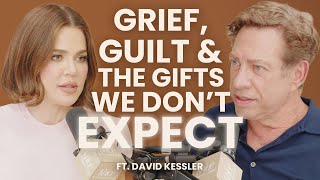
Grief expert David Kessler talks with Khloé Kardashian about loss, defining grief as a change you didn't want. He shares how his mother's death shaped his work, and they discuss why grief needs to be witnessed, not fixed, and how to actually support someone who's grieving.
Chapters
We're good. Hi there. Hi, everyone.
I'm excited for this chat.
You are going to be helping so many people just by us having this conversation.
Thank you.
I think we have the illusion that grief is somehow this straight arrow. Better, better, better, better. And it really is just a big mess. What's the goal of grief? It's to remember with more love than pain, in your own time, in your own way. Grief must be witnessed. We need to witness. Without fixing. There is no. Let me point out the bright side. Let me get you to a better place. Let me let you have your experience. And I don't know what it's like for you, but I'm just going to show up and be with you. One of the things about grief and loss and breakups and divorce and betrayals and death and everything is we continue, we survive.
We're very resilient.
I always say we're resilient and fragile. None of this is logical. It's matters of the heart.
Hi, David. Thank you so much, so much for being here. You are the most renowned expert in grief and you've written so many books about it, and I'm just so excited to chat with you today. So thank you. You and I were just chatting on the side and I was saying how I'm so excited for this conversation because I really believe it's going to help so many people channel their own grief in whatever capacity they have it in. And I don't think grief is spoken about as much. I think people feel a lot of shame in grieving or the timeline of what they feel like they need to meet this grieving expectations by. I'm not for any of that, and I know you're not either. But I just wanted to first dive into how you came to the position that you're in helping millions of people process grief and what, what occurrences happened in your life that brought you to this stage.
I'm so glad we're doing this publicly because it's so important for people to get these conversations modeled.
Yes.
Because no one does it. So as you can imagine, I grew up with a mother who was a normal mom, but she had some illnesses and then she had to go to the big city hospital, which was hours away. Now no one decides, like, I wasn't in third grade or fifth grade, and everyone's talking about police officer, oh, no, I want to be a fireman. And I'm like, it's death and grief available. I mean, no one thinks that. Right. So it's a profession that chooses you.
Right?
So she has to go the hospital. We're there. You have to be 14 to visit. I'm 13. That was in the day when families were like a little bit of an interruption of the healing process. Spent a lot of time in the hospital lobby. Then at a certain point, we're at our hotel across the way, and someone starts yelling, fire. Everyone runs out. We're all outside looking at this fire on the 18th floor. Fire trucks pulled up. I'm kind of a bored kid. So this is interesting at first. And then when they start to extend the ladders, shooting starts. It turns out it was an active shooter. It went on for hours and hours.
Oh, my gosh.
It's now considered one of the first mass shootings in the US.
And I saw police officers and hotel guests killed. My father was desperately trying to get us back to the hospital.
We finally get back, and then in a couple of days, my mother dies without me being able to be with her. I'm downstairs, and I even remember them bringing me upstairs to see her after she had died. And I had been so, you know, upset about all the rules, that. That by that point, I remember seeing her hand and so wanting to hold it one last time. I came away from all of that, number one, realizing there was no one there to help me back then. And I've kind of tried to grow into the person who could have helped me.
Yes.
And I also wanted to make end of life and grief better for people. I mean, we're all going to go through it. It's like the death rate's a hundred percent.
Right.
We're all going to go through it.
It's inevitable.
And we don't talk about it.
I think we don't talk about it because it's so final. And people don't want to accept that finality. Right, right.
And it's a pain. You know, I often say I'm talking to people about what our great grandparents knew, how to be with the dying, how to be with people in grief, how to talk about it. You know, if you want to see death now, it's kind of in a TV show or movies. And what do we see there? We see the first episode, someone's diagnosed or dying. Second episode, person cries. Third episode, back to life.
Right.
And grief has a longer shadow than that.
Yes, it does. I mean, you just made a good point about our grandparents or great grandparents. They would converse so much more about death, and it would be more of the norm, if you will. Do you think that has to do with sort of. I Don't want to say the loss of religion, but religion isn't as strong as it used to be 50 years ago.
I think it's partly religion. I think with that, we've lost rituals. Religion has wonderful rituals, and its spirituality has wonderful rituals. There's also changes that happened in the 40s. Illness moved into the hospital. It used to be in our home. So I think we lost a sense of this part of life.
Right. But do you feel like people are more accepting of death and grief? Because we've sort of been faced with so much of it?
I think Covid got us talking about it.
Right.
Like, how did you not talk about what was happening? We had to all talk about the loneliness, the isolation, the collective grief. It wasn't just one of us. It happened to all of us. So there's all those feelings that came up that I think finally are getting it talked about more and more. And I'm so glad. You know, I think the other thing that Covid helped with is we often think about death and grief as those two are the only grief. But I always say grief is a change you didn't want. So a breakup is the death of that relationship in the romantic form. Divorce is the death of a marriage. A job loss is the death of that paycheck with those people. In Covid, we collectively lost our freedom, our contact, our touching one another. So we live with so many types of grief and loss, and I am so glad we're finally talking about it more.
I loved. I saw an interview you did, and I loved what you said. You were on a walk during COVID with a friend of yours, and someone came up to you and was expressing her grief over having to reschedule her wedding. And you just lost your son not too long before that. And your friend was like, I can't. Once the lady left, I can't believe she had the audacity to go on and on about this wedding with everything you were going through. And you were like, no, it's not a comparison, not a competition. And it is such a profound, empathetic way to think about people. And you're right. It's not about comparison or, well, mine's bigger than yours because it is still a loss, and it's that person's reality.
And it's. It's interesting that people always want to know which is the worst grief. Is it the death of a child? Is it a murder? Is it this? Is it the loss of a. You know, a marriage where the person's still rejecting you and all Those things. And what I said to my friend in that moment is, she's 20 years old. Her marriage got canceled because of COVID She couldn't have her wedding.
For her, that is her worst loss.
Right.
She hasn't had the other things. And I think we too, get into a mindset of trying to compare. And yet it's about our experience. And no two people grieve alike.
No.
Every grief is so completely unique, like our fingerprint. And so to understand that when we're comparing, we're in our mind. And we don't have a broken mind, we have a broken heart.
You're right. What are some tools that you could share with people about dealing with grief?
I think talking about it, you know, sometimes people will say, my friend had this horrible loss. And they're so isolated. And I often think.
You might be isolating them. And we isolate them when we don't see the world as they do. Like, what's the world like through your eyes? Through my eyes, everyone's got a different world, especially when it comes to grief. And so it's that idea of listening and being present. And one of the things I don't think we understand is grief must be witnessed.
We need to witness without fixing. You know, there is no. Let me point out the bright side. Let me get you to a better place, but let me let you have your experience. And I don't know what it's like for you, but I'm just going to show up and be with you.
I couldn't agree more. I lost my dad when I was 19. And I can't tell you what people said to me, but I can tell you who showed up for me. Because you're in this state. I'm 40 now. It doesn't matter that I was 19. You're sort of in this. Well, at least I was in this fog and just living life through autopilot for a while. And you don't have a clue really what you're doing. You're just navigating the best you can. And so I think I always try to remind you, the people around me, when they are dealing with someone else's loss and they are that person that they want to know, how do they show up for someone? I just tell them to show up.
Yes.
And as long as you're there. And yes. Not trying to be like, I'm going to get you through this. Like, people have to feel their feelings. And it could be so uncomfortable for that other person that's trying to be the supportive person, because you, you feel like you're never doing enough, but. But just by being there, you really are.
And you're trying to find the right words. And your scenario and situation is so true of what happened to you. It's not what people said that you remember, it's how they were there, that they showed up. And the other thing you mentioned that I just want to point out is it's actually been proven with science. There's a thing called grief brain, brain fog that you get. When we're in grief, we. We can't focus, we can't concentrate, we can't remember. And that's why we need people in our lives to show up. One of the things we say to Grievers is, what do you need? I don't know what I need. I'm barely getting through the day. I didn't make a list. I didn't think they were gonna die, you know?
Right.
Let's be real. Finding clean, trustworthy and effective supplements these days is hard. Too many brands hide behind fillers, mystery additives and natural flavors just to cut corners and hope you won't notice. But here's the thing. Caring for your body shouldn't be that hard. That's why I love Symbiotica. The quality of their supplements is truly undeniable. It's something you can taste and feel in every packet. They are all natural, ethically sourced, and use cutting edge absorption technology. This means you get all the nutrients right where you need them. These are truly the cleanest, most effective supplements out there. Plus, we have an exclusive offer just for our listeners today from our friends at Symbiotica. And we can't wait to share it with you. You guys have to try my recent favorite Symbiotica obsession, Liposomal glutathione. It's called the master antioxidant for a reason. This stuff works. Did you know your body naturally makes glutathione, but as you hit your late 20s and 30s, those levels start to dip. Enter Symbiotica's liposomal glutathione. It helps recharge your cells, fight off toxins, and age gracefully. Just one packet a day and you're giving your body the support it needs to thrive. It really is that easy. And let me tell you, after taking this product for a consistent month or two, I feel different. Better. Younger, firmer, brighter, more energized. All of it. You can even throw some packets into your purse or carry on for a girls trip like I did recently. And save yourself the hangovers. Glutathione helps detox, so you're left feeling your best, even after a little overindulgence, ready to glow from the inside out. Refresh your spring routine with 25% off and free shipping at symbiotica.com that's C-Y-M B I O T I K A.com Chloe for 25% off and free shipping Shopping for plants in person is a lot. By the end of it, your car is full of soil, your weekend is gone, and you're not even sure if you bought the right thing. That's why I started using Fast Growing Trees, the smarter, cleaner, far less chaotic way to build the yard of your dreams. They're the biggest online nursery in the US with over 6,000 plant varieties and over 2 million happy customers. They have everything your yard needs, from privacy trees to fruit trees, flowering shrubs, and so much more. Whatever plants you're interested in, Fast Growing Trees has you covered. You can find the perfect fit for your climate and space. I was looking to add some privacy to my yard. Something green, fast growing, and ideally not something I'd kill in a week. I told Fast Growing Trees what I was working with. Clay soil, part shade, slight fear of commitment, and they recommended the perfect tree for my space. It arrived a few days later, healthy, packaged like it just came from a spa, and with easy instructions that even I could follow. Fast Growing Trees makes it easy to get your dream yard order online and get your plants delivered directly to your door in just a few days without ever leaving your house. You just go online, choose what works for your space, your light, and your climate. Yes, they help with that too. And voila. No mess, no mystery, and zero time spent wrestling a tree into your trunk. No pun intended. What really sets them apart though? Their alive and thrive guarantee ensures that your plants arrive alive and healthy. And their team of plant experts can help you plan your landscape, choose the right plants, and learn how to care for them. And right now, it's the best time to get started. No crowds, no guesswork, just great plants. This spring they have the best deals for your yard, up to half off on select plants and other deals. And listeners of our show get 15% off their first purchase when using the code Chloe at checkout. They that's an additional 15% off at fast growingtrees.com using the code Chloe at checkout once again, fastgrowingtrees.com Chloe now's the perfect time to plant. Use Chloe to save today. Offer is valid for a limited time. Terms and conditions may apply.
Can I Ask you, of course. So you mentioned it was at 19 when he died. Grief is what's inside of us. Trauma and grief are what's inside of us. It's not really about the details, it's how we experience them. How did you experience it at that time?
It was interesting. So when my, my dad died really quickly, had esophageal cancer and I think he died like six or seven weeks after diagnosis of his cancer. So it was really fast. And my dad, I don't think was lying to us. I don't think he could accept himself that it was terminal. But he never used those words with us. So I just thought, oh, if I don't see him, this isn't real. So I, at 19, sort of distracted myself with my friends. And when he did die, I remember what guilt I felt for not spending more time with him. But then that guilt turned into anger because then I was like, oh no, I'm going to, I need someone to blame. So I'm going to blame my dad because he didn't tell me that it was terminal. And in my head I rationalized it. If he would have told me, I would have showed up more. But I don't know if I would have. I just dealt with his passing the best way I knew how. And my dad was a healthy shaped man. And then towards the end of, he died in hospice at the house and towards the end he was very thin and it was really hard for me to see him like that. And so I think I would have stayed away regardless because at 19 I didn't know what else to do. I wasn't mature enough to be like, this is the right thing to do. I'm gonna sit with him. I have limited time. I didn't think that way, just a dumb 19 year old. But I would say, huh, I gotta.
Stop you there, I gotta stop you. You weren't dumb, you weren't dumb. Just, you know, we, we are judgment machines on planet Earth. We are, we are judgment machines. And I, I, I could maybe compete with you on self judgment. I, I probably would win. But you know, here's the thing people say to me, my loved one's ill. I'm going to force my 19 year old, my 15 year old to spend time with them. One of the things I say to young people and people who are adults, you're doing grief, right? You were doing it in character as a 19 year old. 19 year olds don't know how to do it. And you had a father who didn't know how to Die. It kind of goes right back to he was as much in the dark too. We don't teach people how to die.
Right.
And so he's lost. You were lost. So what are you going to do? You're going to be a 19 year old. Yeah, there's no dumb in that.
Well, and it's interesting because every. Obviously I would love more than anything to have my father still here with me. But now that I'm older, there's so many life lessons that I've learned to navigate my life. Now 10 years ago, a friend of mine, she passed away this past Halloween and left behind a 13 year old daughter. And you know, the daughter, when her mom was dying, still wanted to go out and celebrate Halloween. And I remember saying to all of her friends, I did the same thing and I didn't, I don't think I shed a tear until his funeral because it wasn't real to me. I just remember I was avoiding, avoiding and then the funeral, I was like, okay, now this is my reality and I processed it. But it's so interesting things that I would probably be so judgmental on if I didn't have the experience of losing my father. I have so much empathy and understanding for when other people are on their journey and as horrible as it is, but there's so many different elements of who I am today that I wouldn't be if my dad was here because he would be that person that we would always lean on. Like there's so much I don't want to say good that came out of him passing because that's not the right thing to say. But with such grief you can find these glimmers of greatness that does come. Or like I forever have this guardian angel that I know things are working out because he's up there meddling around.
And how lucky they are to have you in your, in their life because you, you do know this world you get, you know, once we've had a loss, we get X ray vision. You're like, oh, I know that 13 year old. Now I want to go back if we can, to the guilt and anger because I want to make sure to give folks some understanding of this. First of all, anger is grief. I think many people don't realize it's grief. And anger I often think is pain's bodyguard. It is the anger shows up first to protect you. And 19 year old you had to shut down on all of that to survive. You know I always say if you had all the feelings of your father's death in that day and I had all the feelings of either my mother's death or my younger son's death. In one day we would be on the floor and we would never get up.
Right.
There's a grace in denial.
You're so right about that.
Denial paces things out so that we can digest it a little slower. You couldn't have taken it.
Right.
And the guilt, I always say, and this is an interesting one to think about, we would always rather feel guilty than helpless. A 19 year old or anyone really, when they experience grief, sometimes life is out of control. What, he died, some more people could die. So what happens? Our guilt gives us the illusion of control. Oh, maybe if I had showed up more, it'd be different. It would feel different. All that. And it's like a Rubik's cube that we play with so that the feelings don't overpower us.
Right.
Can you go back and see that 19 year old different now with those thoughts?
No, I can completely. And I think what's so interesting is how you said it comes in phases because we couldn't handle it if it was all knocked us off of our feet in one wave. And you're so right about that. And I think we should almost thank the phases and encourage that as opposed to.
Absolutely, absolutely. Because it's. It is. You get just so flooded with so many emotions. So that's how you held it then. How do you hold his death Today?
I'm totally at peace with his death. I will say for about. I always say, like for about three years I was incredibly angry and I was filming my show Keeping up with the Kardashians. And on season one, I remember one of my producers was making me do an interview about my dad because I wouldn't talk about my dad because at that time if I spoke about him, I would just breakdown. And I was so annoyed at this producer. I was like, why are they making me sit in this dark room and talk about something I don't want to talk about? And it was honestly how we said at the beginning of this conversation, we're so happy that because people do need to talk about this more. It was as if a house got lifted off of me after that conversation and I was kicking and screaming while doing it. But as soon as I had that conversation, that was the last time that I cried when talking about my dad, like in a bad way. I let go of all of this guilt and anger and now I could talk about my dad with smiles and happiness and admiration and understanding. Even the understanding of. Because I used to be so angry. Why wouldn't he tell us that this was terminal? But I could understand how hard, now that I have kids, too, how hard that would have to be to admit to yourself, I'm not going to be here for my children. But maybe he also. He's Superman, right? Like, maybe he thought it wouldn't be terminal and that he could fight that there's a lot of.
Right. He was going to maybe beat it at the end. Or I could have a million conversations with strangers. It's really hard, like, oh, my gosh, even to talk to my older son about, you know, his younger brother's death. It's hard to see, like, for your dad, I think about, to have to look into all of your faces, your sister, your brother, and to say goodbye. Yeah, I mean, brutal, Brutal. Brutal.
Yes.
And so it's the best he could do. It's how society taught him. We also have a medical system that misleads people. We don't know how to even tell people who are dying the truth. Always right. And prepare families still today that, oh, you know, there is a time for optimism, and I'm the most optimistic person in the world. There's a time for optimism. I believe you, and I am. And there is a time when optimism becomes denial. And we're not great at understanding that. That's why these kind of conversations just will mean the world to people who are like, no one's talked to me. And, you know, the thing that the producer did, I'm always, I say, people need to do this in their own time, in their own way. So I wish you would have had more choice in that.
It was very producer heavy, like, in hindsight. But it's. It did got you there, get me over that.
Because somehow.
They became the camera, the audience became a safe place for you to talk. And what you learned is, we can't heal what we don't feel right. And you got to say it. I also know that, you know, we both love writing. And one of the things I love about writing is it's a place you can witness your own grief because we have distortions, we have stories around death. I remember I used to always think, since my mother died at 13, she abandoned me. And then I did this exercise with myself on paper. I wrote this story out from my father's perspective who wasn't good with grief. I thought, what's it like for him? His wife's dying and he's got this kid he doesn't know how to raise. What's it like for these nurses that won't let me in. Oh, they've been told these rules that are best for the patient. And then I thought about my mother.
This woman who has to say goodbye to her child, doesn't know why people aren't visiting. She probably didn't know about the visiting hours. And once I put it on paper, I suddenly got. My mother didn't abandon me. She died.
Abandonment was a story my distorted mind made up as a child. Children's minds always think they're at fault or something's wrong.
Where do you think you get your optimism from? Because all the events that you said to me right now that would make me so angry at all of those individuals.
Oh, anger is my go to emotion. Oh, believe me, I get angry. It's like one of my go to emotions, but I try to really release it. My father was steeped in his addiction, didn't know how to be a parent, but oh, my gosh, the biggest optimist. If I said to my father, I think I want to be an astronaut, he would go, well, which planet? He would never say, well, how's your eyesight? Do you think you'll get. Get in? I mean, and I think I got some of it from him. I got a lot of other things from him. I wish I didn't, but I got a lot of good things from him, too.
But like you said not to be confused with what you say. Denial, right?
Yes, we confuse. Like, you know, at a certain point, optimism can become denial.
Right.
And I'll tell you, sometimes people can also distort religion and spirituality. I mean, what breaks my heart so many times is I'll hear a child say, I guess I didn't pray hard enough.
Oh, that's so sad.
And I try to really teach people, you know, that the idea that sometimes healing isn't of the body, and we so internalize everything. I know. And with children, they're like puddle jumpers, just like you. They go into the pain, then they jump out back to school. They play, they go in, they go out, and they have to do grief their way. One of the things people often ask me that you already have mentioned here is, what's the goal of grief?
It's to remember with more love than pain in your own time, in your own way. Mm. Not anyone else's way. Not the person who's telling you to move on or get over it or why are you still in it, but in your time, in your way. You know, you mentioned the idea of some of the gifts that you got from your dad's death. I talk about that as meaning. And just like you said, people think like, oh, wait, how does something good happen? I always say, no matter what comes out of anyone's death, I'd rather have them back. That goes without saying.
100. Yes.
But I know when my younger son died, he loved my work.
And I had that moment that I thought.
I live in this cute little neighborhood, these little, small, cute houses. And I pictured someday in the future, teenagers riding by my house and going, who lives in the haunted house? What's that? Cobwebs. All that. And someone would go, ooh, it's the grief expert. And then one day, his son died and he never came out again. Chloe. I knew that could happen.
Wow.
And you know, I thought.
My son loved my work so much.
His death can constrict it or expand it.
Yes.
And all of us, after we've had any kind of grief, after we've gone through so much of the pain, so much of the hurt on our time, then have a decision to make, right? Do we stay or do we begin to swim again? Does this event constrict us or expand us? And I love, you know, how things have expanded you and how you can get messy and show it. And, you know, I, I, I think we all need that in life. So I'm going to get messier in your honor online a little bit more. I just, But I want, want to let people know that, you know, one of the things people don't realize is all the colors of grief. People think it's happy, sad, angry. No, it's not right. There's bitter, there's jealous, there's upset, there's good days, there's bad days. There's a million of them.
You're right. And not that I feel like you need to do that. I just, if. Because if you're not feeling that that's in you to do, right, then don't force yourself to do it. Just the same thing, if you're still grieving, don't force yourself to have an end date because somebody else.
And there is no end date. No, I mean, people say to me, like, my loved one there, my sister, someone died. So tell me, my brother, my mom, dad, how long? How long we're going to grieve? And I always go, well, how long are they going to be dead?
Right?
If they're going to be a dead for a long time, you're going to grieve for a long time, but hopefully with more love. When we talk I feel your dad's love through this. One of the things I always say is, it's talked about, Einstein, that energy can't be created or destroyed.
I say this all the time.
And when your dad died, a part of you died with him, but a part of him lives on in you. That replaced that part. So we're always still whole after people die because we have a part of them with us.
Yeah, I believe that for sure.
Do you ever feel him?
Yes, I feel him a lot. My sister Kim will dream about him. I don't necessarily dream of him, which sometimes I get jealous about.
Right, right.
And I'm like, well, why does she get to see him in the dreams? And I don't? But then I try to, you know, be happy for her. And I'm like, okay, it's fine. Because I feel him in ways that she doesn't. I think we all. Me and all my siblings, we do in different ways.
And you all had different relationships with him.
And my little sisters, who. That's not their biological. That's not their dad. They have signs because they were really close to him, and they feel him or he'll come to them. And I think it's such a beautiful thing. Some people get scared or sad, and I. I look for it. I love that.
And I think it's fascinating. It is the place where psychology and religion, I think, coincide. Years ago, it was thought, let's help someone find closure. And we know now we don't close the book ever.
No.
And we learn to live with that loss. And now we talk about continuing connections, continuing bonds. I wore my dad's old antique watch today in honor of us talking about fathers, you know, that he still lives within me. And one of the things that was really shocking to me, this is the other side, is when my father was dying, he was just in such despair. And at one point, a day or two before it shifted, and he seemed okay. And I said, what happened? And he said, your mother came to visit me.
Oh, wow.
And I'm going to be with her again.
Doesn't that give you a little peace?
And he said, you know, we're all going to be together again.
And I did a lot of research on that about this idea of how the dead come to greet the dying. Wow. And how.
All religions, people, no matter who you are in the world, this experience happens. And I think that veil between life and death is thin. And it's meaningful. And for us to just be a little more open. I mean, so many times we want proof, but I think religion tells us, spirituality tells us, and psychology now says those bonds continue. You know, I always say, don't give death any more power than it already has. It has the power to physically take our loved ones. It doesn't have the power to end their eternal life. It doesn't have the power to end our relationship, and it doesn't have the power to end our love.
I have no fear of dying at all because I know where I'm going, I know who I'm going to see. Like, I have such a faith and confidence in that. I'm not. I don't want to leave my children, but I'm not afraid of when it is my time to go. I just hope it's in a very long time. Are you someone that has a fear of death?
It depends on the day. Okay. And this is a hard world to leave.
So there's been times when I'm like, up, yeah, if it happened, I'd be fine. And one of the things I really try to practice is, is enough.
Am I enough? Can this be it? Because. And yet I also know from being with so many dying people, we don't let go of this body easy. We want to stay. We want to be there for our loved ones. They never look ready, feel ready. So I think it is hard, but in terms of just fear of death, no. Like you, I'm like, what if we don't arrive into an emptiness, but instead we're in a fullness? Everyone we've ever loved and known is there with us. You know, what if.
Birth isn't a beginning and death isn't an ending? When I've been with people who have died, there's an essence to them. Like, there's an essence, I feel. And sometimes when you're with people who are dying.
Six months, a month, an hour, depending on if they were in a coma, whatever you can feel, they're kind of gone already, Right. And when you're with someone who's died and you're with their body, they're gone. Whoever that was, that energy, that was a suit of clothes that we wore this lifetime.
Have you ever been around someone who has passed and then came back to life? Like, had a near death experience?
I've met people with near death experience. I've also met a lot of people who were, you know, revived. And, you know, sometimes they see the tunnel, sometimes they don't, and all those things. And what's fascinating to me is in all my years of this work and people sitting with people who visit as they're dying relatives, it's always comforting. No one goes, oh, I don't want to go there. Sometimes they go, I don't want to go yet.
Right.
But it's really interesting that people seem to find peace even if it's in that last second.
I read a bunch of books about near death experiences. I don't know why I'm a little morbid and find that just so fascinating to me. And most of the time when they are now back and living again, they feel this emptiness. Not that they want to die, but of just what they saw was so peaceful and beautiful and they did see familiar faces or energy feelings. It's like reassuring.
It's coming absolutely for me because I felt like, oh my gosh, you know, the end of life, the end. And I had my own religious and spiritual beliefs. But when I did my research and writing around.










