Byron Katie and grief expert, David Kessler do "The Work" on grief
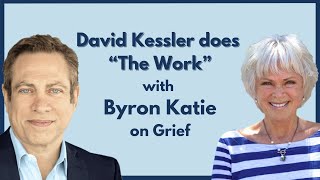
Grief expert David Kessler and Byron Katie demonstrate The Work, a four-question practice for examining painful thoughts. Kessler applies it to his 21-year-old son's death, questioning beliefs like 'he died too young' and exploring how turnarounds can open space for love and presence.
Chapters
Hi, everyone. David Kessler here. I'm so glad to be with you today and honored you're tuning in to join us. I am here with the amazing Byron. Katie who? I'm just so thrilled you're here with us. Thank you, Katie, for being here.
Thank you for this privilege. David.
I know it always takes a couple of minutes for folks to find their way on. So when you come on, just say hello, let us know you're here, and then we'll begin talking. Katie, I don't know if you remember, there was a show on called Romper Room, and the teacher used to pretend like she was seeing the people at home. So through the tv, I do that, too. I see Sharon's here from New York, Diane's from Virginia, Shannon's from Connecticut, Betty from Ohio, John from Massachusetts.
So I love to see them coming on. If this is your first time joining us. This group was set up after COVID 19 had us all stay at home. So many people, they said they had no grief to go to. They couldn't get support.
One was dying and they couldn't say goodbye.
Even have a funeral. So we started this group and all of us meet once a day. So I'm so glad.
Sometimes we were doing it twice a day at first.
So good.
So many people are coming on. So I'm so glad they're here. I can't wait to get into this with you, Katie. So one of the traditions we have is when someone dies, I don't believe we quit loving them. I don't think they stop loving us. So I like to take a moment of silence just to send love to all those who have died. All of you would join me in that.
Thank you so much for doing that.
Katie. I know some people have already said in the comments that they know your work. Other people are asking what it's about. I've had the privilege of doing work with you before. I love your work so much. I think it's so helpful. I also think it can be challenging around grief. If there's any a place we want to keep our beliefs, I think it's in grief sometimes.
So I would love for people who maybe aren't familiar with you and your work to tell us a bit about it.
Well.
What this group understands, and I think at some level we all do, there's suffering in the world, and this group knows what that is. There's suffering in the world, and there's no one in the world that hasn't suffered. So that's the world.
Now there is a Cause for the suffering. There is a cause. And I had a moment, I'll just say, after decade of.
Suffering, as I lay sleeping on the floor, I was so depressed I didn't believe I deserved a bed to sleep in. So as I lay sleeping on the floor, a bug crawled over my foot. I was just fast asleep. This bug crawled over my foot. And before the ego, when I woke up, before the ego could take over that space.
I saw before the eagle could jump in, I saw how the world was created, this world of suffering was created.
And the change, the shift to me was so profound that people started inviting me. And I only knew to say yes because I didn't do anything for that gift. It was a gift. And to pass it on is how it lives in me and deepens in me. And so there is a cause of suffering. And that's what I'd like to share today. And, and, and.
Here, you know, here's how, here's how to end suffering. So we'll just, we'll just get to it. The work is, consists of its inquiry. It's four questions that we ask ourselves. So to ask the first question is, is it true? So we're going to meditate in that now. What is it? What is it that is the cause of your suffering? What we're thinking and believing. So David, you shared with me earlier that you have.
A concept.
That you'd like to work through. And when I say work for all of you, I'm talking about inquiry. So we're going to question it. So David is, is where you landed, is it? Your son David died too young.
Right. And just for people to know what I did, I went to the work dot com. I downloaded a sheet that are completely free. That's where I wrote this down on. So yes, the belief I wanted to work on is that my son David died too young.
So I'd like to break that in half, if you don't mind.
Sure.
So your son David died.
And I invite all of you to join this, your beloved, your, that person in your life that you're grieving. And this is tough work. If it, if it were so powerful, I certainly wouldn't invite people to it. And I know David wouldn't either. They both have some experience in this.
But David, your son David died. First question. Is it true? So you all know it's true. You're all. But ponder the question. Go, go beneath your answer. Yes, he died. What are you talking about? Just. Your son David died. Is it true? Are you sure?
So just, just close Your eyes. And.
Whatever is answer is there to meet that question. Just allow it.
Yes.
Okay. So just feel what that feels like. Now go to a place where you are really.
That place where you're really grieving.
David. Go to that place, that situation where it was so painful. Maybe it was at the funeral. Maybe it was. You couldn't have a funeral during this. These COVID 19 days. So what is the situation where you're in that deep, deep grief? Not that you don't live out of that in moments, but what was the situation.
Where you were last night? I had a situation in my backyard where I just couldn't believe he is never going to be here again. Never going to see him again.
So he's never going to be here again. I'm going to write that down too.
Okay. So.
My son David died. So you're in the backyard. Are you standing in grief or are you sitting? Are you?
I'm sitting. I'm looking at the stars.
Okay, so now we know it's evening. So all of us join David in the backyard, looking at the stars in such grief.
So your son David died.
Notice how you react. What happens when you believe the thoughts. So start with your emotions. How do you react? You believe the thought your son David died emotionally. Where do you experience that?
Physically in my heart.
I'm sad. I'm heavy.
So you. You experience it there in your heart and. And it's heavy. So how. How far does that ache go? Does it go up your neck? Does it cross your shoulders? Does it go down to your toes? All of you get in touch with this. Physical emotions. Emotions are here to wake us up. They're not something to fear.
Allowing emotions have a right to life, just like everything does.
Feels enormously deep in my body. The sadness feels deep.
Just feel what that feels like.
Now.
Notice.
This question. How do you react? What happens when you believe the thought? For you to feel emotions like that, you have to be in what I call the not now. You have to be seen in images of you in the past. And you and David in the past and you in the future without David. And you as you imagine David to be with you. And now he's not. You're in the past again. So what do you see? You're looking at the stars. You're feeling this grief. How do you react? How does the mind react when you believe the thought?
It seems images of him never being here again. Never walking up, never hugging me again.
I feel.
Empty, small. Crushed.
So you watch those image in the past where you. You Were together. You see him growing up. You see him at what, 25?
21.
21. And you see that, and then you see him dead in your mind's eye. Then you see the future where you're never going to see him again. You see? Okay, so all of you.
Wedding. No. No grandkids with him.
No grandkids. Ah. Okay, so.
There are. Let's say, David. There are three of you in the dream of past, future you've just described, right? So as you witness that, there's David.
Of the past. You're both David. There's you and David of the past, right? And there's you, and there's you in the future with no wedding, no grandkids of his. That.
Now, David, what.
The next and last question I'll ask you is. You're in the backyard.
Looking at the stars. Would you be without the thought.
My son David died.
And for some of you, this is gonna. You're gonna feel like a traitor. You're gonna feel like.
Like.
It's. Like it's. I have to keep him in my head. I have to keep this in my head. I don't want to give him up. But I'm asking you, just in this meditative state, looking at the stars, who would you be without the thought, my son David died.
I would just be sitting in my.
Backyard, look at the stars.
I'd just be someone sitting in my backyard looking at the stars.
Just be there now. Look at the stars.
Look at the stars and feel. Feel your breath. It was going on.
And.
Be at home there without the thought. No matter how.
How troublesome that can be. We're so addicted, like suffering is love. It's not.
So tell me this. I don't want to get sidetracked. We used to have a game we would play whenever we were separated. He was on a trip or I was on a trip. He would always say, go out to the night and look at the stars.
See each other through that.
Oh, that is so beautiful.
So when I look at the star, even when I'm alone, I wonder, is he looking at it?
So let's stay in you three kinds of business. There's your business, your son's business, and then there's. There's. Okay, so just for now, stay in your own business. Get out of David's.
Okay?
It doesn't mean he's not looking at the star, but get out of his business.
I'm just in my backyard looking at the stars, looking at the universe, looking at the night sky.
So close your eyes and and get comfortable there. You've been grieving a long time. Get comfortable in the. Given the stars, the seat you're sitting on, the air you breathe. Just relax into this. This. Who would you be just now, just now looking at the stars.
Now?
David. Let's. Let's turn it around.
My son David died.
What is an opposite?
My son David did not die.
Okay? Now, these turnarounds, we're not trading one belief for another. It's not about that. This is about being. We just try it on. Like, we went into a shoe store and we found a pair of shoes we just love, but we don't know if they fit right? So we try them on. How does. How. So we're just trying this on. My son David didn't die. So try it on. When you ponder that, what does that mean to you as you try it on?
I think about the ways he's eternal. I think about how he lives in my heart.
And in your mind.
And in my mind.
Oh, my gosh. He's. He's everywhere.
He.
He's in your past. And even though he's not here physically, he's in the future. But you're not celebrating it. You're grieving what you don't have, as opposed to being grateful for this. This visit. He's in you. When you were in the kitchen, when David was alive, you were in the kitchen and he was in his bedroom, right? You had no proof that he was in your bedroom, and yet you felt so secure, right? So happy with the story of, he's in his bedroom, he's going to come out for breakfast. For all you know, he ran to the market, right?
My son David died, turned around. My son David lives. You're. You're there looking out at the stars. He's in you. He's in you.
You see him in the past, and you see your life without him in the future.
And that's what this work is for. Lord, just be here now and allow these visitations that David makes in your mind without the grief.
He'S with you. I mean, here he is. Here he is in your head, and we're saying he died.
Just tried it on.
Just trying it on.
What I'm learning here is no, they're not in the physical, but with the emotions you're feeling. That's a very physical experience. And maybe it's not grief. Maybe it's love.
Right?
Her children don't leave us. The people we love don't leave us.
So let's try on another turnaround. My son David died. Can you see another opposite?
I died. Oh, not another opposite.
Well, that's it. I died. My son David died. I died.
I died.
So what part of you died? What part of you. Look how you have stopped living. The things you don't do anymore, the things that you put off, procrastinate in just. And I'm not saying it's wrong. It's just. Try it on. Try on that shoe. I died.
I can find the truth in that.
Our lives, when someone we love just can fall apart.
I died. And is that what David would want?
No.
No.
We feel some kind of loyalty to Mise.
Is that what they would want? What I would want?
That's why, you know, people can afford to say, you know, let's celebrate that person. Well, it's ongoing. All the days of your life. There he is. Celebrate.
And he cared so much about my happiness.
Yeah.
He wanted me to be happy, and.
That'S a beautiful turnaround. I cared so much for my happiness, and I only wanted to be happy. And now that you're not happy, you know, David's taking a part of the wrap, and there he is in. You.
Know, when the people I love come to my mind, I celebrate. I'm able to, because I'm awake to. Even when they. Like my. My mother's in Texas. I'm in California.
Right.
And I wasn't grieving.
Right.
Right.
Right. I think of that like when I am sitting there without the thought he died. I'm whole.
I'm loving him and being whole.
And with the thought you're loving and being told, you're just in the dream world, you're lost in the daydream.
The dream of past, the dream of future, the not now.
Right.
You know, we sit in this, and then David comes to your mind again. And, oh, the beautiful times together. And until that ego of the future comes in and then just wipes it out.
Right.
And I love to take those thoughts and put them on paper the way that you have done with this concept. Gosh, it's. You know, this is Earth school.
Right.
And. And if I thought I could free my children up by dying, I. You know, what wouldn't we give our child? Well, what makes us more special than our children or the other people we lose in our lives? You know, they die. That's Earth school. But they don't die. They live in us.
And every time you talk about him, you share him with us.
Right.
And you don't have to call him first, or.
So I can see people who aren't Familiar with the work, going, okay, but he's not going to knock on the door.
Not showing up. I missed the physical hug.
That happened to me. And, you know, this. This work runs deep. And I.
As you know, David, I just. I live in. Is it true in reality, as opposed to this crazy head of past, future. And I.
I was. I was with my husband at the time. He's. He's deceased. And I was with Paul, and he doesn't like public display. And I said, honey, would you. Would you hold me for a moment? I need to be held. And he was really embarrassed, and he's. No, no. And so I just turned to the person standing next to me, looked directly into their eyes, and I said, would you hold me now? And they just put their arms around me. I mean, do I want to be held or not?
So I'm not suggesting that people do this. It's just that I've needed hugs, and I don't hesitate wherever I am. And, And.
And I noticed the last few years.
I'm just as bold with other things, but it's not bold. I understand us by nature. I understand us all by our true nature, and that is to love. But love doesn't require a physical body.
How many times we heard our children say, or those. The people that were bereft of just. Just.
Please, just be quiet, go away. Or. Or want them to, whether we said it or not, you know, I just need a break, you know? Well, it's. We do well without them when they give us a break, and then we want them at will. Well, my mother died several years ago.
Good. I was going to ask you to talk about her.
Well, I dropped my schedule, and I spent the last month with her, and.
It was the most amazing experience.
It was such a gift. But as she was dying, I knew the moment as love would have it. And I was there with her. And. And when she died.
I was looking into her eyes and I waited for her to die. And it never happened. And it still has not happened. And that may sound crazy to a lot of people. It's just that what we're pondering now, I was steeped deeply in, and I still am. I like to say no one can ever leave me. They don't have that power.
And then if I feel grief, I just do what we're doing today and, you know, I question it. And this is tough. Some of us agree we're not ready for it. You know, we need to grieve. And there are stages of grief that you speak so well. To David. And those are to be respected and honored. And you know, this morning I was looking at the news as I sat across from Stephen and he was reading an article in, in one of the magazines, online magazines. And I began to cry.
And it was so deep.
It was so deep.
And I couldn't even name it. But what I can do is allow it.
Feelings have a right to life. I said that earlier. And I don't try to alter them. I don't try to fake me out. I don't stop, stop them.
And that's a misunderstanding that somehow the work might be a spiritual bypass to our feelings. But that is not what you say.
That's not what I, that's not my life.
Right. No.
When I say feelings have a right to life, it means I, I, everything is welcome here. This is, this has given me and thousands, maybe millions of people now.
A fearless life. And when they are in fear.
Anyone can go to byron katie.com and there are the four questions. And specifically and directly showing people how to move their thoughts from their head to their paper. And, and, and meditate in what you're thinking and believing. And again, David, you know, we're not all ready to do anything with grief. It's the only way we know to be close to that person, no matter how painful it is. And, and eventually it lets up. And, and.
And I, I wouldn't rush it. It's just if, when people are ready, you know, they might just try on these four questions, this, this inquiry. And it takes great courage to do this work.
Right. And you know, for me, knowing your work and having done some of it over the years, I feel like when I do it in the area of grief.
It doesn't make me disloyal to my loved one. It doesn't make me forget them. It actually helps me get in touch with the pure love that's within me for them. That actually is the grief.
That's beautiful.
And I think, as you said, we have this feeling that if I'm sitting in my backyard and I'm not in pain, I have a story of what kind of parent could be happy if their child dies.
Yeah.
I have to be a bad parent to be happy after a child or a spouse or a brother or sister dies.
Yeah.
And that story isn't what my son would want.
Well, I can tell you to this day, my mother has never died. Her, her body.
Right.
But.
And you know, I often think about the idea that you were saying about. There was a time I was in the living room and he was in his bedroom. And there's a time I'm here and he is in another room. I may not understand that other room, but I don't know that he doesn't exist in another room right now.
No. And there's some arrogance in thinking otherwise, right?
I know.
Yeah, I know. I know where he is, or I know where he could be, or he could be here. I mean, arrogance just. He lives.
She.
He lives in me.
That's closer than close.
And if I have any resentments, like if I have said or done anything.
Hurtful to that person.
Then that's what this work is for. I go back to that situation because I haven't forgiven myself yet. I go back to that situation. I feel guilt. That's how I know. I go back to that situation and identify the cause of my suffering. And what was the cause of my suffering in that situation with that person? What was I thinking and believing? And there it is, the cause of my suffering. So I put those, those thoughts on paper and there's a worksheet on the word.com, only six questions on it, but I questioned those. And now I'm closer to my loved one, closer than close. That's that thing where, you know, they never die and we be. We get as close to them as we possibly could, closer than the physical can get.
And I think many times, you know, so many people here or grief documents, Palmer, and workshops and places say, if I had done one thing differently, I could have saved them. And, you know, I go back to.
That in the heart, right?
And if you actually had that power to keep a body alive, my guess is they'd still be here in a body. But I don't know that we have that power to keep bodies alive.
I don't. And I don't have any. I don't have any claim on this body either. This body has a right to life and it has a. Has a life, a right to life. And I don't know when that'll end. But what arrogance could I say, oh, I'm too young to die, or, oh, I am. I. It's. I don't know that I'm ready. I'm ready, I'm ready. I'm not.
And if I'm not ready, I'm living a fearful life and I need a little work.
Right?
We're just talking about a fearless state of mind. And another way of saying of. And the equivalent of a. Of a fearless state of mind is a loving, connected state of mind.
You've helped me, and I've had to do a lot of work around the idea of a complete life. And I use your work a lot to teach about that because I think, you know, my father died when he was 84. It's very easy for me to do the workaround. He had a complete life. Yeah, I had to do a lot of work around my 21 year old son had a complete life. And there, there is an additional pain that I. I don't want to speak for we, but I sit in in addition to the physical death of him, when I sit in, it's incomplete. It was the wrong time. He shouldn't have died then.
So let's look at that. His life was incomplete. Is it true?
No.
No. So all of us, you know, this, this, sit in that, let's ponder it. That's David's answer. But you know what is ours? This is this work is this, you know, yourself with yourself.
Right.
So David, how do you react? What happens when you believe the thought his life was not complete?
I'm in even more torture than just the grief. I'm in torture that there's 60 years that didn't get to be lived.
Yeah.
So who would you be when you see this image of David? You see his life, you see his death in your mind's eye. Whether you like it or not, it's going on when it's going on. But who would you be without the thought his life was incomplete?
I would be someone who knows my son lived a complete life.
He lived a full life till 21. Not the story I would have written, but it's the story that is.
You know.
Now look at you when you believe the thought.
Feel connected or loved to him. Because I'm just in torture around that.
Now look at you, right here, right now, without the thought. Are you okay? Other than what you're thinking and believing, all of you, are you okay?
Well, I get to love him then. I get to love him fully.
There he is. There's a home he can't inhabit now.
Right.
And for me, that's a home that even a little death can't knock down.
You know, when we're at war with reality, there's no room to experience.
Love.
So my David's life was incomplete. Turn it around.
David's life was complete.
Okay, now we're not talking about people that live to be 80. We're not talking. We're not talking. No, we're talking about David.
At 21. How do I know it? Because that's when he physically died. That's what is Complete.
Some of us are tough cases. We need to be here longer.
Right, right, right.
You know, this is Earth school and, and yeah. You know, how arrogant of me to think anyone's life is incomplete.
Well, we have a story that you need 85, 95 years where something went wrong.
And that's the story we all buy into. I tell people thinking of your work. I go on planet Earth, in all my decades of working with people in grief, they die at one day, they diet three years, they die at 21, they die at 45. I never encountered a grief world where everyone died at 95.
And when it's your loved one, definitely.
Something off with that.
Right.
And the proof is all over the planet.
Right.
But there is that sense that that's not the story I had. And I have to look at the story I had versus the story that is.
Yeah.
And so.
David's life was incomplete. Turn it around.
His life was complete.
Yeah. So let's try that on. And by try it on, I mean, you know, that's like that, that pair of shoes we love so much, you know, how does it fit?
His life was complete.
He got to travel, he got to love, he got to have fun.
He got to do a lot of things in those 21 years.
And something more powerful than I am.
Has the last word.
And here I am. His life was incomplete. Who am I right.
To argue with what is so obvious?
You know what I, what I love too, when I, when I think of, of young people dying, you know, and I tried on his life was.
You.
Know, that this, you know, when you really love someone, their pain is over.
No more suffering.
It's, it's, it's a, it's a, it's a beautiful thing that.
To consider and a difficult one.
So David's not dealing with a pandemic.
Not dealing with the pandemic.
It's not dealing with protests and riots and looters and people wrongly dying.
Yeah. People that can't feed their children, that have lost their jobs, people panicking. The pain of, of.
Of hard working people losing their jobs. And.
It'S hard if they work for.
Years.
You know, that, that, that just.
That, that just.
And, and, and in this country that is so, so wealthy and you know, David, you know, that's, that's why we do what we do. It's about the end of suffering and the celebration of what we can celebrate. And when we're not so wrapped up in self, we're generous, kind, loving people and then someone dies and it's just like it chops us off and we can even become bitter with this. So his life was incomplete. So turn it around to yourself. Let's try that on. His life is incomplete.
My life was incomplete.
My life is incomplete. When I believe the idea that his life was incomplete.
Yeah, and your life is incomplete. When you think of David, rather than welcoming into your. Your mind and heart.
And being.
Being present in that.
And grateful in that visit.
It'S like your life is incomplete. It's almost like we throw this tantrum. Without David, my life is incomplete.
That is the war, a war with reality. We're never going to lose.
Right.
And the turnaround with that. Without David, my life is complete. Other than what I'm thinking and believing, to just get still and look around and other than what you're thinking and believing, are you okay? And then to open your heart to the visit and if there's any. Any sadness there. For me, as you know, David, it's a. It's a worksheet and to question the thoughts that I'm thinking and believing in those moments of great grief and sadness and pain and anger.
And when I do this, when I get to that place, I come to a place of how grateful I am that in this physical life I got to spend those years with him now. You know, because when I think about the only thing worse than him dying physically would have been not getting to know him.
Oh, honey.
And I'm so grateful I got to know him.
You got to know him all his life.
All his life. And now we get to be together for eternity.
Yes. Yeah. When you love. When you love his visitations, like when you think of him, in other words, when you love that, then the two of you are together again. It's a beautiful world, and it's one where you're never deprived of that individual.
Makes my heart swell.
Oh, honey, me too. Me too. I love this conversation. It just brings me, you know, when my mother died, then my only living siblings died one after the other, and it was.
You know, obviously I needed. I needed a little of what we all.
Go through in life. It's. If my. If I thought I would. Could set my children free with my death, I definitely consider it. And that's what my children, the people I love in my life, have obviously done for me. And that gratitude is what I live.
So I'm so grateful for you and your work and what you've done. And I want to make sure people understand this. Beliefs people in this group or anyone can work on is my spouse shouldn't have died. They shouldn't have died that way. They shouldn't have died suddenly. It wasn't their time. The wrong person died. It was a mistake. You can take any idea around a physical death and work on it.
Yeah. You can ask yourself, is what I'm believing true? And. And get it as just a simple sentence like David was. Like we witnessed with David. And then ask, is it true? And then look at it again. Can you really know that it's true?
Right.
And then notice with your eyes closed. Some of you are meditators, some of you are not. But clear. Close your eyes and just sit in it. It takes courage. And notice how you react emotionally, how you react, how your mind goes into the not now, past, future. Just notice how you react. What happens when you believe the thought that that person. We'll say that person died. And then who would you be just in this moment, Just in that moment when you're doing your work other than what you're thinking and believing, are you okay? Who would you be without the thought? And then just look around and notice, you know, there. There are windows and there's a sky through the window and. And there's. You're seated on a chair and the breath is going in and out and around the room and there are pictures maybe on the wall or maybe you're outside with the stars and you just feel the air and. And the chair that holds you and the night that surrounds you and the stars and. And just. Oh, the beauty, the beauty. But no, we just throw it all the way. I want, I need. Well, those are the things that belong on paper because it is. It is what. It is what the people who love us, what want.
I think it's very challenging to do the work right away, at least for me, on grief. I'm so grateful I got to see you do it with so many people on other things that happen in life. So I would say to anyone who's watching this, they can look on YouTube, they can go to your website. There's lots of videos.
I do Monday through Thursday from 9:00 o', clock, 9:00am to 10:00pm Pacific Time.
It's an amazing thing. It's just live. And you're all welcome to sit in it and get a deeper understanding. And I'm not sure, David, you know, that, that.
I have. I can. I can't imagine what people hear when we talk like this. It even seems blasphemous to. To go in and question what we consider most sacred. And that is. I know I believe this to be true. But it can be a trap. Anything that doesn't match the heart, anything that opposes the heart, anything we think or say or do that opposes the heart, we are not thinking and living out of our true nature. And so to question what we believe gets us in. In sync with that, in sync with our right mind. And a right mind is a happy mind. Happy. It's, you know, up for our own descriptions, each of us, but it's connectedness and a life of how can I help those that grieve? And so many of the people that I imagine on this call are a part of your program and community and are sharing it with a lot of people these days. And we can certainly use a lot of that.
Well, I hope people will go and check out your work 9am to 10am Monday, Thursday.
And that's. They can find it@byron Katie.com.
Well, it's at home with Byron Katie.
At home with Byron Katie. I also know they can find the worksheets at the work. You're actually very easy to find on the Internet.
Oh, I'm so glad.
And there's like lots of YouTubes and one of the things I always think about a while back I reread your first book. And in your first book, it's interesting to look at our books. You years later.
Yeah.
You said, and if you happen to have access to the Internet. And I remember the day when we all lived in a world where maybe you could get to the Internet. Maybe now we all live on it.
Yeah. Yeah. It's like some of us had a computer, some of us didn't.
Well, Katie, I want to thank you for being here for helping people. I know for a lot of people this is new for a lot of people, they've done the work and I just want people to know you are all about feeling the feelings. You have a right to them and it's.
And welcome them.
Right. And it's those stories we make up that we're questioning here. Right.
Feelings have a right to life. Emotions have a right to life. And, and David, I'm. I'm so grateful you're in the world.
I'm grateful you're in the world too. I so appreciate you and I so appreciate the work you're doing for so many and continue to do. And you've been a blessing in my life. So thank you for being here, Katie. Yeah.
All right, everyone, I will see you tomorrow. Thanks again, Katie. Much love to you and you and you, David. All right, bye, everyone. I will see you tomorrow.










