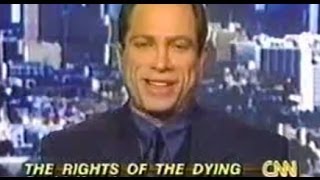
Short excerpt from a TV interview with David Kessler about hope and end-of-life care. Kessler emphasizes the importance of allowing hope for dying patients and notes that clinicians can present medical facts while preserving hope. The interviewer references Kessler’s work with Elizabeth Kübler-Ross, Mother Teresa, and Michael Landon.
The right to remain hopeful. In your experience, how important is that?
I think it's one of the most important aspects of our lives. We are hopeful people, and sometimes the medical community doesn't realize how we take hope away and how the dying really need to live, hopefully rather than hopelessly. And that, I think, is such an important issue to allow hope. We're afraid sometimes we're going to give someone false hope, but the truth is we can present the medical facts and yet still allow someone to maintain hope, to live with their hope as well as to die with their hope.
You've worked closely with Elizabeth Kubler Ross, who wrote on death and dying. You've talked with Mother Teresa. You worked with Michael Landon as he prepared to die. What did those experience do for you?
Well, Elizabeth Kubler Ross is certainly the trailblazer in this area and was very helpful with my book and checked me out to make sure I was hitting all the important issues. And she is a strong woman and has taught me if you don't know what to do when you're with the dying, to just listen. And certainly my experience with Mother Teresa, talking about the book and getting advice from her was I said, what can I tell Americans about death and dying? And she said to me, tell them not to be afraid. The dying need tender loving care, nothing more. And it was certainly a privilege to work with Michael Landon. And I think he did us an enormous, gave America an enormous gift to get on the Tonight show with Johnny Carson and talk about his cancer and talk about his illness and be very open about it and share with his fans and friends.