Dealing with Death and Anticipatory Grief with Hospice Nurse Julie
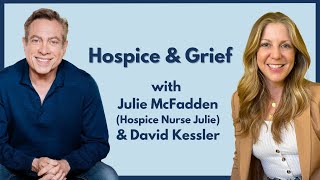
David Kessler interviews hospice nurse Julie McFadden (YouTube, July 10, 2024) about her transition from ICU to hospice, her hospice practice and public education via TikTok, and core topics: how hospice works and common myths, the physiological 'built to die' process, rallies and deathbed visions, anticipatory grief for caregivers, use of medications (morphine) and issues around sobriety, and practical advice for families (focus on safety/comfort/cleanliness; use hospice team resources). Julie is author of Nothing to Fear and cites Barbara Karnes' Gone From My Side. The transcript includes clinical anecdotes and guidance to demystify dying and encourage preparation and honest conversation.
Chapters
Foreign.
Thank you so much for being here. I'm really excited to be doing this. Thank you so much. I'm going to just change my recording settings for one moment. Give me a moment here.
Here we go. I'm redoing this. Thank you for saying hello in the chat where everyone's from.
Hi, everyone. Welcome to this session. I love that people are saying hello in the chat and they are from all over. So thank you so much for being here. I am so excited to be doing this today. I have the perfect person, as you know, by the way, I'm David Kessler and I'm thrilled to be joining you and bringing you none other than hospice nurse Julie. And I'm going to bring her on here. Hi there, Julie. Thanks for being here.
Hello. I'm so excited. Thanks for having me.
Just before this, I was saying I haven't seen Julie since a party and I haven't seen her since she became a New York Times best selling author. Congratulations. And I just want to say.
No small feat with a book on death and dying.
You know, even a romance novel is hard to get it on the New York Times bestseller list. But amazing, amazing work. Thank you so much. I got so many questions. Let's just dive in.
Let's do it. I'm excited. Good to see you again, by the way. Good to see you again.
You're an ICU nurse in the past.
That is like the biggest fix it world possible. ICU nurses going to hospice. Nurses sometimes don't do well.
Yeah.
Like in hospice, you're like, we've got to teach her to stop doing it. How did you make that transition and was that hard or were you like, oh, this is where I belong, or was it both?
I think it worked well for me because I had been an ICU nurse for almost eight years and I was done being an ICU nurse after two. So I had six years of being like, I don't know what took me so long to be like, hospice is the way to go. I was, I was thinking I wanted to quit nursing altogether. I tried like, cre. I tried like other little bits of types of nursing, like here and there as a traveling nurse. So I think by the time I was like, hospice, I'm going to try hospice, I think I was ready. So I was kind of ready. And I was already seeing how, like, I just don't want to do what I. What, what this is anymore. Like, I don't want to do that anymore. So I think because I waited so long, which don't do that there's nurses. If there's nurses in the chat, don't wait as long as I did. But I think because I waited so long, I was ready. I was ready. But I will say that first year of nursing was mind blowing. I thought I knew it all. You know, I was an ICU nurse. I worked at Johns Hopkins. And then to me, it was like, it was just mind blowing to learn all the things I didn't know. But it wasn't hard. I was ready to let go of all the things that I had been doing as an ICU nurse.
You know, I remember when I did pride of care in the icu.
You could easily get in trouble for bringing those techniques in. Like, I can remember there would be a code in the icu, meaning someone's heart stopped, and everyone would, like, be coming out, and then, you know, coming out, looking out of their room. And everyone would be like, get in your room. Get in your room, hipaa. And I'm like, no, no one's giving a name and a diagnosis.
Sure, let's talk about what's going on in that room. Like, people need to know about this. And you started having those conversations that people didn't want to have or the. The. I think the buzz is we don't want to have them.
Right. Or we're not, like, taught. At least I. From what I saw in the ICU as. As a nurse, right. And it took me two years, like, it took me a long. A long time for my brain even to go, wait a minute, we all have blinders on here. We all are trying to, like, stay in our lane and just, like, do what we know. And like, I always thought it was, like, someone else's job to talk to the family about someone so on their loved one possibly dying or the end of life. I didn't even know. No one even told me that it could be my job, that I could do it, that I could talk about it. And it just took, like, a couple years of kind of seeing that no one was doing it, that it made me be like, well, I guess I will. And thankfully, you know, once I started, I didn't get a bunch of backlash. I didn't get people telling me, don't, don't do that. You know? You know, But I didn't get a bunch of people telling me to do it either. Just. And you don't really have. I always harp on this because I think it's a big problem in our healthc care system. I didn't always have the time. I think it does take time to be able to, like, sit down and speak with patients and their loved ones about what was truly happening.
Having this, like, nurse doesn't have.
Yeah. And you don't really have the time to have these really tough conversations. So you sort of. I'll do it later. Maybe next time if it comes up. Like, you just don't. You don't have the time. All the time.
So I see you to hospice. Were you like, this is home.
Was it? Or was it still in another adjustment.
It was still another adjustment, I have to say. Like, I wasn't, you know, who I am today has developed over time. One from sobriety, which I'm very open about, which is a whole nother discussion we don't have to go into. But, you know, I'm going to have.
A question on that.
Yeah. I'm openly sober and I'm in recovery, and I wasn't when I first started hospice nursing. So I was a different person back then. I will say the. The biggest thing I felt was like, I did feel relief, but I wasn't into death and dying and hospice like I am now. I was more like a tired, jaded ICU nurse who just wanted a frigging break, you know, I just wanted a break. And that's kind of why I did it. I did it too, because, like, I knew I wanted to see a different way. But I wasn't this, like, kumbaya, no, I know how to speak about dying type of person. Yet I was this tired, angry drunk, you know, not at work, but I was a drunk, you know, after work, you know, when I first started. So I was just like, beaten up and beaten down and just ready for a change when I first started hospice nursing. And then I transformed. And then I transformed.
So here you are in this transformation. You are a hospice nurse. And then. Do I have this right?
A visit to your nieces kind of change your life?
Yeah, my tween nieces who are in this age now, again, this is another topic. But who are in the age now, who. They're like kind of jerks. They're like this teenager, like, not quite teenagery, but kind of tweenish. And now when I see them, they're like, hey, you know, like, they don't. They don't even care. You know what they say to their friends now that I'm on Tick tock? Because they're. They're the ones that introduced me to tick tock, right? So I started a Tick Tock page because of them. Like, I was watching them dance on TikTok. And then that's what got me into like, oh, I can educate on TikTok, but. And now that I have a TikTok following, that doesn't even give me cred with them. They're like, they're like, she's on TikTok, but she's like an adult teaching stuff. They don't even care. They don't care, but it's because of them. And I put that in my acknowledgments in my book, because without. Without TikTok, even though I'm not like a crazy fan of TikTok anymore, don't tell anybody, but just kind of annoying. But it changed my life. It changed my life.
You know, I just arrived at Tick Tock this year. That's how late to the party I am. Yeah, I, you know, and it's funny, no matter. Just like you say, New York Times bestseller. No cred with the young I. With my kids growing up, there was nothing they found interesting about me. And then my book on deathbed visions was used for the premiere of the Walking Dead. For one week I was cool. Like, one week I was cool. Then it went back to the usual. But. So.
Let'S talk about this. It's. It's interesting. I'm. And I do have a lot of like, post traumatic stress as I kind of went through watching your life just because of how much times have changed.
In my first book, 30 years ago now, the Needs of the Dying, literally, I described what death looks like, a whole chapter on it, and the editors took it out and they said, no, no, we. It's not going to sell. People are good. You can't freak people out. I was like, I had to fight for it to be there. And the compromise was it starts out with, you can skip this chapter if you want. Like, who writes that in a book? Skip to. Skip this chapter if it's too much. But.
You have really brought this conversation of death to the forefront. By Tick Tock, by Instagram, by all the social media channels you're on. What's been the response to that? Because I'm sure it wasn't what I got. The pushback, I mean, but I bet you do get some pushback. Tell us about that.
Yeah, that's the one. Okay, so there's a few videos. I definitely get pushback from the actual social media platforms. And I was like, you. I mean, I, you, you know, you and I both know this. And many people here who are listening know that people don't know what it looks like to, to be dying, to be actively dying. They don't know how that looks. Tv, TV and movies have done a disservice. Now. I don't know how they really make it that realistic anyway, because it is hard to replicate if you're alive. Right? But, and, and I went to. One day, I go, I, I want to show that on my video. So I went to go Google it, like real life actively dying. And they're no, it's nowhere to be found. You can't, you can't find videos like that because, because apparently they don't let us show it. Because when I, I actually sent out a video to my followers. If you feel comfortable, send me videos of your loved ones actively dying. And I went through a whole legal thing where, you know, they sign things off and they give me the, the ability to actually show this video. And that started my series of real life actively dying videos that always get millions and millions and millions of views. People want to see this. And I get the biggest response in the sense of when I get personalized emails or personalized messages, almost all of them are from people saying, I saw this video of the real life actively dying and it prepared me so much. It helped me so much. Thank you so much. Right. So I get a bunch of thank yous. This is great. This is so helpful. And I get the most push back because social media platforms try to. They basically have, almost all of them have warned against me doing this and have threatened to shut down my channels for being too graphic, which I push back and say, this, this is the problem. This is not graphic. This person is not suffering. They are not being tortured. This is, this is real life. This is actually what something, what someone actively dying looks like. And it's not graphic. That's the problem that we think it's graphic. This is more natural than anything we've ever. This is life. This is life.
Would you think about, if you dig on the Internet, the things you can.
Find, the things you can actually find.
Are just like hideous and shouldn't exist.
Right, right.
If I can add why this is so important, I'm sure this is true for you, me and everyone here that works in end of life care, Hospice people come up to us all the time and go, I wish I had known about your stuff and all this sooner. My loved one had a horrible, traumatic death. And I'll say to them what happened and they'll describe the active dying process. And I don't even want to say to them, I mean, I said to them gently, I say, I know your experience felt traumatic, but just know that is what death looks like. Because they were looking for the nodding off TV version.
Yep. They were looking for the long monologue and then the die. People always ask me, what, what were the best last words you ever heard? And I'm like, I hate, I do have a couple good stories with that. But, but generally speaking, I hate to tell you this. People don't know they're going to say their last words. People aren't talking before they die. People are, you know, like, that doesn't, that's not really how it happens most of the time. So. And I think that's important for people to know that it's not this big. People don't know exactly when they're going to die. Give this big long monologue of last words and then die. That's not how it goes down.
So let's talk about hospice.
You know, I have this as we speak going on in my family and it's interesting. We had a conversation this morning and one family member said, you know, I'm concerned if we go on hospice, it's the beginning of the end. And the family member said, what's our response? And I said, well, my response is the end is already happening. It's about, do we add some support? Hospice doesn't create the end. Our body is winding down. Tell us about those hurdles to get on hospice and what blocks us from going on hospice. Because it's in your home, it's wherever you live. Amazing. Nurses, social worker, clergy, physician. What's our hang ups in your view?
I think lack of education, including in our health care system. It starts with our healthcare system. I have heard doctors and nurses say things like, oh, it's not time for a hospice yet. Oh, oh, not yet. And I'm looking at this person like, if not when, what. What do you mean? And also, have you talked to them? Do you know what they want? Like, maybe it really is time. So I think it starts there too with other. I know as ICU nurse, I never talked about hospice ever.
I, I was an ICU nurse. People were dying all the time. Why are we not discussing this? Right. So I think it can start there. There's a big problem with a lack of awareness around the program and how it even works. Even in our own health care system, if you're not working in this little sleeve of healthcare, no one knows about it. That's kind of how it is everywhere. We. I don't know a lot about cardiology. Right. But I know a lot, because I don't. I haven't worked there extensively. So that's 1. 2. I think it's like what you said. People say. I think hospice is the beginning of the end. And the, The. The.
The.
The harsh answer is kind of like, well, it is. And if it is, how do you want the end to be? And why. Why can't we talk more about the end? Right. We're all going to have it. That's inevitable. So if that's inevitable, what do you want your end to look like? And wouldn't I? Personally, I think the denial of death is like this huge, huge issue that we all have. We all deny that we're gonna die. Or at least we tried. We. We try to.
Or, like, we don't really think about it. We. We know it, but it's kind of like out there somewhere, not now type of thing. And I think it's like, no, no, it's all about the now. We're always in the now. I think we should all live like that. That's about, you know, I think, contemplating our own mortality on a daily basis. It's not depressing. It actually helps us live out the rest of our life. And the last thing I'll say about hospice, which. Which I could go into, you know, there's so many regulations and stuff that people don't fully understand, but I truly believe hospice is about living. I think when I say that, it almost makes me cringe because it sounds so cheesy, but it's real. Hospice is about living. You're not dead yet, so how do you want to live out the rest of your life until you die?
And some of those myths, you know, people say, like, well, what if they get better? Well, great. You go off hospice. Like, no one forces you to die. I'll tell you, as long as we're talking about things we've heard, I just want to say, one doctor, years ago, when I was working at a hospice, said to me, david, I'm not sending anyone over to your hospice. And I said, can you tell me why? Oncologist. Lovely, lovely oncologist, but not surprising. He said, every patient I send to your hospice dies.
And I said to him, that's so true. And your patients, you could send them to target or 7 11, and they would still die. They're not dying because they're going to hospice. They're dying because it's the end of their life.
Yeah, they're dying whether they go on hospice or not. They. They're dying whether they go on hospice. Or not.
Right.
And it's been clinically proven now, only specific diseases, because they've only done studies on specific diseases. But certain. It's been clinically proven that hospice helps you live longer because you stop certain treatments that are actually detrimental. You get the care you need, you get the symptom management you need. Many people come to life when they're on hospice. People don't believe that. I've seen it many times, especially people with like really severe pain and stuff that have been like, really suffering, trying, trying to. With. Trying to do different treatments for their cancer. And they haven't really been getting good pain management because it's hard to do good pain management if you're not on hospice, which is a whole nother unfortunate thing. But then they go on hospice, their pains managed, and they finally feel like themselves again.
So, so true. And one of the other things, just since we have people and we have such a chance to educate here, the other thing is, and you're all about the education, and I love that of this realm is hospice is paid for out of a separate bucket in our Medicare. It actually is really.
A lot of savings when you're getting rid of some of the things you don't need. And hospice will pay for so many things. And people are always so afraid. Well, if I go on hospice, like, if I need to see the eye doctor, I'm going to go blind. Or if I fall and it's like, no, no, no, we're still going to take care of you for those other things that aren't related to the illness that you're on hospice for.
Exactly. Yeah. So Medicare cover. Medicare is our boss on hospice. All hospices, if they're getting funded through Medicare, which most are, should be functioning the same. We all have the same regulations. We all have the same rules. Right. So we have to follow those rules. Some hospices are stricter than others, I will say, but technically speaking, they should follow those rules. And if you can see all the doctors you want, as long as it doesn't fall under your terminal diagnosis. So like you said, if you are on hospice for some type of terminal cancer, but you have a thyroid problem, you can still go get medicine for your thyroid and go to your thyroid doctor and get tests for that. Or if you have like a terminal cancer, but you also have lung disease, you can still go see your pulmonologist and have them help. Like we, we would encourage that, right? Yeah.
We're going to get into death as itself in a moment. I just want to say a Few more things about this and ask a few more things.
I also think people get confused. There's nonprofit, there's profit, there's this, there's that, there's all these different hospices. And the other thing they'll say is, they'll go, no, I had a relative in hospice, it went bad. I always say to that, I'm so sorry that you had a bad experience. But that's like saying I went to a restaurant and I'm never doing restaurants again. Like there's not one hospice out there.
Right.
And I'm curious about your take with people like profit, non profit, this, that liberal, small, big mom and pop. I always think it's about the people in the hospice.
Yeah. And sometimes you honestly. Okay, so not all hospices are created equal. I will say that, you know, not all, not all hospice nurses are created equal. Not all. It just depends, right? Everyone is just depends on who the people are, who's running it and even the most well oiled machine. Sometimes I particularly I have, I have a bunch of videos and stuff where I talk about like specific questions you can ask during your admission. Like the admission part of the hospice to see if they are like well equipped. Right. Because some I think are more well equipped than others as far as like what they're willing to do for pain management. Like do they have an inpatient hospice, part of symptoms get out of control. So there's different things you can ask. But generally speaking they're not all created equal.
And if you don't like the one you're in or you don't think they're, you don't think that they are like helping you where they need help, where you need help. Go to a different hospice, which switch. Yeah hospices and I do think even the most well oiled ones can have bad weeks, bad months where a nurse is on vacation or you know, we're still human. We're still human. So.
I think the biggest thing people need is education. That's hence, that's the whole reason why I started my channel is because you can have the best, the best hospice team out there. And people still just don't know that like they're mostly doing the work. Like I think most of our families are.
Disappointed because they're like, we did everything. Our hospice nurse was there a couple times a week. CNA was there a couple times a week. But I was there. You know, they didn't, they didn't realize that that's what's expected. Like unfortunately that's the, that's the world we're living in. Like, if you go on hospice in your home, you, the family are the ones doing most of the work. We are there to guide you, to help you, to get to, to provide you with a 24 hour number to call us so we can tell you what to do. But like when your loved one's actively dying, we're not there. You know, as long as they're comfortable, you are there. And I think many people are like, what the heck, you left me out to dry over here. So I think just educating about how like they, they actually did a fine, quote unquote fine job and are like, what they did what they were supposed to do, but probably didn't feel like a lot of support because you don't get tons of support. Does that make sense? Like, I feel like we don't. One thing I would change that every family gets a 24, 24 hour care.
But that's what they think they're going to get.
Like, that's what they think they're saying.
TV version again, unf. And we're going to talk about that moment of death too. But you know, I have a big group grief group, Tender Hearts. And in Tender Hearts, one of the things, and it relates to your ICU experience.
There'S people who are so traumatized by the shock of their loved one's death. And I hear the story and I have to say to them on behalf of the medical system, I apologize because we failed you. Yeah, you think you were thrown off a cliff and in some ways you kind of were. Like, one minute we were trying this and then all of a sudden, you know, they said there's no hope. And I'm like, and we did that to you? We did that. So I always feel bad. We're also doing anticipatory grief now, which is what we're talking about. What do you think is the most thing someone's watching or we're helping caregivers. What's the most important thing you would want them to know about entering this time of their loved one's life?
I think it's less about doing things and more about being with them in the sense of when someone, I think you can feel a lot of scent, you don't have a lot of control. There's a lot of lack of control, which makes us feel wildly uncomfortable. Including me. So then you. I'm the same way. Like, I get it. I want things to be black and white. I do this. This happens. Like, tell me what to do. I think we get in this do mode to kind of try to feel better and feel like we're doing something. And a lot of times that's not how it works. And it's really uncomfortable.
Not physically, but emotionally uncomfortable for the person caring for the dying person. So I always say, when that is your story, if you're in your head kind of racing around, or it feels like you're on this, like, hamster wheel of, like, what do we do? We have to do more? You're lying in bed at night thinking of these things, Ask yourself, is my loved one clean? Are they safe and are they comfortable? And if you can say, like, technically, yeah, technically, they're. They're okay. They're sleeping, you know, they're clean. Yeah, they're safe. They're safe here with me. Okay, that's it. You're good. You did enough. You did enough. And just to try to calm that part of you that is anxious and wants to know more and when and what if. And you know, because you'll start. I know because I hear people tell me, they say, like, well, how long do I have? How long is this going to last? How do we know if they're okay? They're not eating. How do we know? You know, it's constant. So are they clean? Are they safe? Are they comfortable? So you can take a deep breath and just sort of. Okay. And get comfortable with being uncomfortable because it is uncomfortable. You're not doing something wrong because it doesn't feel good. It's not going to feel good all the time.
And I would add one other thing. When you get anxious and your loved ones dying and you're like, should we go to the hospital? Should we go to the. To just sort of stop and go. Is this something fixable.
Because. Or reversible? Because most of what we're calling 911 or trying to change isn't reversible, no matter what you do or where you go.
Yeah. And remind yourself this is what they wanted. Right. If this is, you know, this. We've already planned all this. Hopefully they're dying at home. This is the natural progression, you know, and hopefully that's what the hospice team is there for, too. I always say, if you ever feel that panic or the thing, call us. That's. That's when you call. I mean, you can call anytime, but that's a good time to call.
Help me with this anxiety to do.
Yeah, tell me what to do. Is this normal? Someone please come here. You know, and hopefully they can or at least let you know what's going on.
So one of the things you say, I love this term, we're built to die. Yeah, tell me about that. We're built to die.
So that was when I first learned my, that first year of hospice nursing when I was coming kind of coming out of that cloud of like ICU hate. I was following this doctor on Dr. Anna Cartmel, and she was amazing and she. A lot of the things that I rattle off is from what she would say to patients and teach me because I didn't know that our body had like built in mechanisms to like help us shut down. I was always in the fix it mode in the icu and then we fixed it, fixed it, fixed it and then all of a sudden just turn everything off. And the body didn't die naturally. It, it just died differently in the ICU because that there had been so many interventions done and so much fluid and all these things. Right. So to see it naturally happen where we weren't doing these interventions. And Dr. Anna Carmel used to always say our bodies are built to die. You know, we would. We have basically switches in our brain that start turning off the hunger and thirst mechanism because the body is, start is preparing itself. And when you start, when the body stops eating and drinking or at least decreases it, the calcium levels go up. And then when our calcium levels go up, we sleep more because the body is basically getting into like hibernation. You know, I'm going to sleep more, eat and drink less, sleep more, eat and drink less. People will start talking in metaphors. I'm going home. I feel like I'm, you know, like when we think they're confused and maybe they are, but they, you people do often say metaphorical things about going home or going on a trip or going away. And I just started seeing that time and time and time again and hearing my. The doctor always talk about how the different things that can help us like and it's mostly just turning off the hunger and thirst mechanisms so we don't feel hungry and thirsty. We just naturally don't. And I was just so fascinated by that. And I just saw it with my own eyes. Like I heard her say it all the time. And then in that first year, I would see it over and over and I was like, wow, we don't have to do a thing. I mean sometimes to can manage symptoms and stuff, but many times the body just did it on its own. And I couldn't believe it because I was so used to seeing the opposite.
The other two things that we both wrote about and I was surprised when I. The first one. No big deal when I wrote about it. But the other thing, I did a book, Vision strips and crowded rooms. 20 years ago. Now, I think.
People said it would be career ending for me to write about deathbed visions. They said that was going to end my career, that it was just too wacky. And I would say, but you don't understand. I'm not making up something a reporter from the deathbed. I'm just reporting what everyone is seeing. So talk to us about rallies and deathbed visions.
Yeah, the. So the rally and deathbed visions. 1. I just want to talk about how I know what you mean about the. I. I didn't feel shy talking about deathbed visions because I felt like I wasn't trying to convince. I kept saying, I'm not trying to convince you. This is, like, real. All I'm trying to let you know, all. All I'm saying is we don't know why it happens, but it does. And it happens so often that we have to educate about it because families are thinking their loved ones are hallucinating, and maybe they are, but hey, guess what? It's comforting. So what do we care if they are? But, yeah. So I also didn't believe it when I first saw it. And we always handed out this little book by Barbara KS that I love called Gone From My side. Yes, Barnes, love her. And I remember where it said, like, oh, usually about a month before death, people start seeing the unseen. I remember that line in the book because I, as an ICU nurse was like, what.
What is this nurse saying to these people? Right?
But then, of course, you start seeing it with your own eyes, and you're like, oh, wow, this is the thing. I mean, so much so that it's, like, hard for me to even recollect, like, times when it happened because it honestly happens so often where. And I've seen ICU psychosis, I've seen delirium. I've seen when someone's oxygen's too low and they're. And they're saying weird thing, you know, I've seen all of that. This is different. Visions are different than a hallucination. Yeah, they're clear. Sometimes the person is fully alert and oriented and. And literally being like. I had a guy, I got called to a patient's house once, and the family called me in because he was confused. So I went there, and I'm talking to him. He's not confused at all. They're at bedside. No one's really saying anything to me. About the confusion part. So I was. I was kind of like, why am I here again? I thought he was confused, right. His family leaves. I'm talking to him a little more. He grabs my arm before I leave and goes, hey. They think I'm confused because I told them that my parents came to me last night and said they're coming to get me soon. He's like, not yet, but they're coming to get me soon. And I'm like, oh, okay. I'm like, how do you feel about that? That's what I always ask. How do you feel about that? He was like, I'm good. I feel so comforted. I don't know why it happened, but I feel great about it. Right. So I'm like, lovely. And I educate him about how that's normal, yada, yada. And then I leave his room, and the family grabs me before I leave. Hey, he said he saw his dead parents. We need to start medicating him, blah, blah, blah. And I'm like, no, no, no, no, no. This is okay. This is all normal. And just go with it. Just go with it. And the rally happens more than that. The rally happens in, like, one third of all of all patients, where people look like they're getting very close to death, and then suddenly, boom, they have this burst of energy, and they. Some. Some rallies are huge. They get up, they walk, they're joking, they're hungry, they're doing all the things for a few hours, maybe a couple days, and then they die shortly after. So it's like this final burst of. Of energy. And I like to educate about it when I first see the family, so they can kind of savor that moment if they see it. Because I hate. I mean, I will do this, but I hate doing it when it's happening. Like, when being like, they're going to die soon, just the bearer of bad news, of course I will do it. But I like to try to educate before. Right. They. Before it happens. And go on.
Here's how I finally ended up doing that one. This was years ago. I would say, did you see the movie Moonstruck? Because, like, in Moonstruck, the guy's mother got up and started cooking for everyone. I was like, that's the rally.
Yeah.
I would also say, because I didn't want to say people would go, oh, my gosh, it's a miracle. And I didn't want to be the one to go, it's not a miracle. It's the rally.
Yeah.
I would say, wow. Think you've Been given the gift. Little more good time.
Yeah.
Advantage of it. Yeah.
Yeah.
It's remarkable. My story I will never forget.
Is I was in a room, the whole family was dying all of a sudden.
Elder parents there, everyone's there, and the person's dying. And she goes, robert's here. Who is Robert? Why are you here for me? And she starts talking about Robert. And the whole family's like, does anyone know Robert? Does anyone know Robert? No one knows Robert. And I look at mom, who's probably in her 80s, and she's white.
And in a few minutes, she got up, and I went out and followed her. And I said, are you okay? She goes, I need some water. I need to get outside. I said, let's go walk outside. This is in a hospice unit. She gets out and I said, do you know who Robert is? And she just starts crying. And she goes, no one knows this. And I said, I won't share it with anyone if you want to share it with me. She goes, I made a mistake with a co worker named Robert. He's actually her father.
Oh, my God.
And he died years ago.
Now, how do you explain that?
No, seriously, like, you see things like that.
Like, how do you. That's like, not. Oh, a lack of oxygen. Like, how do you come up with Robert when, like, no one knew?
Yeah, yeah.
I mean, I like, those stories came up. That's like, I interviewed so many doctors and nurses and clergy who had all these stories, like, you know.
Yeah.
So amazing, amazing stuff.
Tell me about this title, Nothing to Fear.
So what's funny? Can I tell? Okay, so truth, Truth. I do love Nothing to Fear. And I. And I. And I. And I truly believe it. I love. I love. I love that title now. But I was kind of. I was thinking, so there's a caveat in the beginning that says it's normal to fear because I wanted normal to fear because it is normal to fear the unknown, the ultimate unknown. And I kind of lost that battle to nothing to fear. Because it sounds more catchy. And I also think that, like, demystifying death to live more fully. Nothing to fear. But I do give a. But they did let me have a caveat in the beginning of saying, you know, not only is it nothing to fear, it's normal to fear. And I always say, like, it's. If you feel afraid, that doesn't mean you're doing something wrong. It just means you're normal, human. Like, everyone's going to have it and just speak it anyway. Speak the fear. You know, speak about how you're afraid. My, the, the patients that I've seen live well and die well just weren't not afraid. They were afraid and said something and there's something about speaking your truth that kind of releases that grip that it has on you.
Right.
You know, so that's my main message with that. That's why I do think it's nothing to fear. And we're human, so of course we still do have emotions.
Yeah, right, right. I love that. So.
What do you think is there's a fascination that I would say a lot of tick tock viewers and maybe all of us admitted have around this thing we're all going to do called death.
What is it about death that scares us and how do you think it can help us?
Well, for me, like from what, what, what it scared, what scares me about it. When I have like my human emotions, it's just the unknown. Right. Like anything unknown, anything I don't fully understand, I will avoid. And it's scary. And I think that's, that goes for most people from, just from working with people who are dying all the time. Also I think people don't want to leave their loved ones. They don't know what it's going like the feeling of being leaving and how the loved ones are going to handle it. So there's, there's that fear and there's fear around the. What it's going to be like, is it going to be painful? Am I going to suffer that kind of fear? But I think ultimately it's about the unknown. At least I, I really do. I think anything you don't understand, you don't fully know. It's like the last frontier, right is, is always really scary. And I think the. How do you, how do you help that? I think by learning about it. There are things to be known about the dying process anyway. I guess the final once you die that's the ultimate unknown and that can feel scary. But ultimately I think preparing, preparing and educating yourself can actually, you can actually do something about that to help decrease some of the fear or quell some of the fear. And ultimately I think it's just about being honest and connecting and you can connect through honesty.
Now a couple of things here. I just want to hit a few things and then I'd love to take some questions if people have been putting tons of questions in. So we'll grab some. Let's go to sobriety. Because I've talked about this many times in my own program.
Taking pain medication at the end of life in My view is not breaking sobriety.
I think everyone has to make their own choices. Your thought?
Same, same. I mean, I think I get the fear around it. I will have fear if I. If that has to happen. But I'm a big. I'm a big advocate for. We are not doctors. Like, you know, like. Or some people are in program. But I mean, generally speaking.
I think if it's under a doctor's prescription and you only. It's individualized. Only the person doing the thing can say whether they are abusing it or not. And I have seen many people who were sober or not.
Were.
Are sober and in hospice and have to take pain medicine. And to me, it's like you're not even necessarily getting. People don't understand that if you have pain and you take pain medicine, you're not really getting high from that you are taking away the pain. Like, you're not like you have pain and pain receptors working in your brain that are firing and that this medication dulls that so you stop feeling that pain. So you're not necessarily even abusing it or getting high from it because it's actually what you need. Generally speaking, I'm all. I would. I don't think that's breaking sobriety. Now, I do have fear over that because I'm sober, but doesn't mean I wouldn't do it.
Anticipatory grief. Someone's asking the definition. That is the grief before the death. I always say two things about it. Be present and don't attend the funeral early because you still be there. So what do you think helps people with anticipatory grief?
You know, I see. I mean, that anticipatory grief, I feel like, you know, definitely is happening on hospice. People are already grieving the person they have lost, the person they once were, the life that they were going to have, you know, And I think, you know, I'm definitely not an expert in. In grief. So all I can speak on is my own personal experience, like what I've learned as a hospice nurse and what I've seen other people do that seems to be helpful. And I think it's what. What you said. I think utilizing all of your resources. So we have a. Especially on hospice, you know, there's a team of people. People always refuse the chaplain, and they always refuse the social worker. And the chaplain and the social worker are like amazing resources in the hospice team. They think the chaplain's going to do something religious, which is not.
They try to convert you or whatever. Change your religion, right?
Yes. And My main thing is to always use those resources. They will make visits. They will make weekly visits. They will talk to you about all of the things. Generally speaking, I'm a big, I'm a big advocate for speaking truth. So if you're having pain, if you're suffering emotionally because of the anticipatory grief or feeling guilt that you're like. Many people feel guilt that they're like, how long is this going to last? You know, like they've been unconscious for 10 days. How long do I have to sit here and wait? And they feel guilty for feeling that way. That's anticipatory grief. That's normal. You don't have to feel shame for that. And, and just say it. I mean, the, the biggest thing people say to me when their loved one dies, specifically if they have something that's been long term, like dementia, Alzheimer's, Parkinson's, they say they felt relief when their loved one died. And then guilt. Guilt and shame for feeling relief. And it's like, you are so normal. You need to voice that because you. They carry that around not telling anybody. No one can know. That's what I felt. And it's like everyone feels that. Everyone feels that. It's so normal.
The other thing, I think people like, have the evil eye fear. Like, if we think like, oh, my God, they're going to die, I'm inviting it. It's like, no, once again, they're either dying or they're not. You're not, they're not dying because you thought of it.
Yeah.
Let's just do a few definitions real quick. I'll say them. You can tell me if I'm correct with these.
Okay.
These are just mine. The way I explain them.
Yeah, I love it.
Often say height of care, last five years of life. Hospice lasts six months to a year of life. And comfort care, someone asked. It can be the exact same things or sometimes people call comfort care what they do in the hospital.
Yeah. Yeah. Comfort care, I think can be confusing because I always consider comfort care something the hospital does when they can't get onto hospice or like. Or if they can't, like make it home or something, they'll do comfort care only in the hospital. Meaning, like, it's kind of like hospice, but you're not going to hospice.
Yeah. And I think one of the biggest things I also remember that we had in so many H's have, and it's actually mandated. They have them is volunteers who have usually been through the experience themselves. So shout out to all the volunteers out There in hospice too.
The book's name she mentioned was.
Barbara Carnes's book. And it's just a little pamphlet from my site. All right, so a couple of things. Just these two myths.
Someone's asking about suicide. I always teach withdrawal from support. Deciding not to take support is not suicide, and assisted death is not suicide. Same page.
Yeah. Agreed. Yeah. When people say assisted suicide, I always correct them and say it's not. I wouldn't consider assisted suicide Sister medical aid and dying.
Right.
That's what do they.
Isn't hunger cruel? Allowing hunger and thirst?
Oh, right.
But just go back and say another thing about.
Yeah, yeah, yeah. So people on hospice are. Are not really hungry and thirsty. So. Okay, so generally speaking, if your loved one is alert and oriented and they're saying, I'm hungry, I'm thirsty, let them eat and drink. They can eat and drink all they want. Okay. If your loved one is on hospice and cannot speak and you're trying to feed them and they are not doing it because they have a disease that's not allowing them to. They are likely in the phase already that has turned off that hunger and thirst mechanism. Because they are. Because their body is already shutting down their body. That's why people with Alzheimer's disease and dementia, I always say, again, you can do whatever you want. This is not medical advice, but I would never give a feeding tube because nine times out of ten people who do, their body doesn't tolerate it anyway. By the time they're at the point where they cannot eat and drink, if you put a feeding tube in, you'll see nine times out of 10, their body won't tolerate that tube feed anyway. Showing us, proving to us their body is saying, no, enough is enough. So our bot. When. When I say my bodies are built to die, that is what I mean. People do not have big hunger and thirst pains. The only time. This is the only thing, I'll say caveat. The only time I have seen that happen is when someone has had a stroke and it's affected their ability to swallow, but everything else is okay. So they're not technically dying, but they can't really swallow. They can have the uncomfortability of hunger and thirst. And that's something you have to work with your doctors with about what to do. And there could be a feeding tube suggested or things like that. But generally speaking, end of life people are not dying because they're not eating and drinking. People are not eating and drinking because they're dying.
Right.
Because they're dying. Yeah.
So true. So true. The other thing about that is when we talk about anticipatory grief, for people to understand, it really is grief. There's a million little losses and there's huge losses, and they're happening before death. I just think, like, all these things when they can't eat, when they can't get out of bed. You know, one of the things I always teach is how to watch people as they're dying in the last year, their worlds get smaller.
Yep.
They quit going places. They're not leaving the house. Then at a certain point, they're not leaving the room. Then at a certain point, they're not leaving the bed. All those are so many huge markers of anticipatory grief that the family members really need to grieve.
Yes. Perfectly said. And the person going through it needs to grieve. I always say, one, it's. It's still hard to die emotion, like, for many reasons. Right. But also, like, the biggest thing I've seen, people who. Who do it, who do it well, quote, unquote, well, whatever that means, are people who can kind of accept that, get into acceptance that this is the new normal. That's hard. But if you are adaptable, the more adaptable you are, it seems like the more you can kind of accept.
And no one wants to see their loved ones die. Yeah. You know, it's interesting. My older son.
Serious heart condition growing up, hypertrophic cardiomyopathy. And we were going to UCLA and I kept going on about what could we do? And all this kind of stuff. And I was in another plane and talk about social workers. There was a social worker who said to me, I don't mean any disrespect. I know your field is grief and death, but I just want you to know you need to grieve that perfectly healthy son you think you had. And you need to accept where you're at now with him. So you can fully advocate, because as long as you're in the last thing, you are not in the present moment advocating. And we kind of need to do that in anticipatory grief as we need to come into this moment us to make sure we can advocate and connect and be aware.
That's beautifully said. I could not say it better. Yes.
God bless social workers. Yes, God bless social workers. Seriously, someone asks, and you and I know, this is hearing, does it continue on in a coma? Hearing is considered the last sense to go.
Yep.
I actually, I don't know if you have this experience. I tell family members for all we know they might still hear even after death. Not with our ears. What do you think about that?
Yeah, people always ask me that. So I give the scientific, you know, like the nursey part of me says after they're dead, they don't hear. But that's still not really true because we know the brain still kind of is active even after the body dies. Anyway, there's, there's, there's stuff going on with that. But. So I give the nursing answer. Once they're dead, they don't hear. But there's a part of me that's like. And also, who knows? We don't know. They could still be around, sense things, feel things, hear things.
Let's talk about this. This is a thing that I teach in our grief educator certificate program that, like, I really go into detail because in grief. And here's the thing, Kubler Ross, who was my teacher, and every time I say her name, I hear her say, tell them the stages aren't linear. So the stages aren't linear. But.
When we talk about.
Morphine, people are always afraid it's going to kill their loved ones.
I know.
I always tell people I literally broke my arm and a rib. You go to the er, you're getting tons of morphine. We give it in orthopedics.
They'Re not dying because of morphine. They're getting morphine because they're dying.
Yeah. And it's been clinically proven in hospice patients specifically that it doesn't hasten death. It doesn't hasten death. People often will. I think it kind of, it doesn't. We kind of perpetuate the issue because people will see their loved one dying. Then they get on hospice. We give a little morphine because they're breathing kind of heavy or they were moaning, and then they die. Right. And then, of course, it's like they were, they got morphine, they died. It's like, oh, they would have, they would have died anyway. We just helped them be a little more peaceful. And sometimes I will say I do think people are, they're. They're kind of fighting it, Right. And then you finally get their body to relax.
And they let go. They let go. But technically speaking, I mean, just from an ICU looking nursing standpoint, you know, the amount of morphine we're giving usually is minuscule. Now some people have, like, long standing pain, so they're on a bunch of stuff. But generally speaking, the amount of morphine we're giving most people on hospice could not cause a respiratory arrest. Like, people think Just not clinically possible.
All right, let's see. So here's the, the, the last question that I think's an interesting one. And by the way, people are like, and let me just say this, probably wrong to say it, but I'm going to say it. People are asking the name of my books, the name of your book, Barbara Connor's books. All wonderful books. But this is the one right now to get. Could we give you another week on the bestseller list?
Yeah, that'd be amazing. Yeah.
You know, while all these other books, the older ones are wonderful, this is like what's up right now? So keep that in mind. We'll send you all the links and all that. So.
So all this talk about death and being around it. You depressed and unhappy, you afraid of death.
I know people always like ask me like how do you have good self care? What do you do to take care of yourself? And one, I have a lot of things just in my own personal life with sobriety and my program and stuff to take care of myself. But I don't really need that because of my job. My job is not depressing to me and I, and I truly mean that. One, I think I lucked out. I work in California. I'm a unionized nurse. That helps with like the stress of a job. And two, I truly love what I do. And hospice nursing to me is not depressing compared to other nursing thing and ICU nurse, like that's my other experience. Right. I have in on a day to day basis. It feels like I'm helping people. I see relief in people's eyes when I can educate them. Like it doesn't feel depressing to see that to me it feels life giving. So generally speaking it doesn't make me sad every once in a while. It's hard but truly every once in a while, maybe once every couple months. And I feel like being around so much death has really helped me shape the way I look at life, shape the way I live my own life. I mean it when I say I contemplate my own mortality on a daily basis. I do. And that helps me shape the way my day is going to go. Am I going to be excited that the sun's shining on my face, that I can drink my coffee, that the bree that there's an ocean breeze, you know the little things that it opens my eyes to life as we know it. Right in the day that I'm in. So I'm so grateful have how my life has turned out for all the things that have led up to this. This. I'm so eternally grateful.
Well, and we are grateful for you, and nothing to fear. Thank you so, so much for being here. We really appreciate it. All of you watching live and those of you in the replay, thank you. Thank you, Julie. Thank you opening up the conversation. So, so important.
Thanks, David, for being so generous and sharing all of your people with me. Hi, everybody. I'm so glad. It was so nice.










