Donna Schuurman, Brennan Wood of the Dougy Center and David Kessler on the grief and children
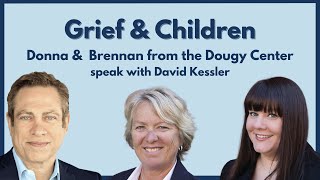
Recorded November 10, 2020, this YouTube conversation (host David Kessler with Donna Schuurman and Brennan Wood) centers on supporting grieving children. The speakers share personal histories, summarize the Dougy Center’s origins and services, and provide practical, age‑appropriate advice (truthfulness, rituals, validating feelings, when to seek extra help). The transcript includes audience Q&A addressing suicide disclosure, funerals during COVID‑19, and long‑term support.
Chapters
These lives are always tricky to find. Hey, Donna, good to see you.
Good to see you.
David, nice to see you again. You're one of my favorite people in the world. Hey, Brennan, nice to see you.
Hi, David, nice to see you, too.
And folks, when you come on, say hello to us so that I at least know we're here and broadcasting, I always try to find us, too, but you always seem to find us quicker than I do. All right, let's see. There we are. Good. All right, people are beginning to join. Say hello when you come on. It's a lovely day here in Los Angeles. What's it like there in Portland?
It's a little overcast and I don't know, maybe 57, 56, but we'll take it.
It's not raining.
Well, let's see. I see Shirley's here from Pennsylvania, and Sandra's here from New York. Sandra's my mom's name, so I always love a Sandra. Hey, Vivian from New York. Good to see you. I'm glad people are finding us. Welcome, welcome. If you're brand new, you can say hello, but you don't have to say hello. It's completely up to you. You know, I always say there's so many different people. Some of us are engagers, others of us are back row sitters. So whatever you want to be, just like in grief, there's no right way, so you get to be you. Hey, Mike from Nazareth, Pennsylvania. Jennifer from an Alaska fishing boat.
Are you kidding?
Like, first of all, I just want to go. You have WI FI on an Alaska fishing boat, but it's probably on your phone. Hey, Mary from New York, Terry from Indiana. I. I joke about. I don't know if you two remember this at all, but when I was growing up, there was romper room. Brennan, you're too young to remember. You might be, too, Donna.
No, I don't think so.
I think I'm the old person here in the crowd. But there used to be romper room. And the teacher would say, I see Andrea and Chantal.
Yep.
Andrea says she loves Portland. Moved there from. Oh, moved from Portland to Denver in 2014.
See?
Hey, Diane from SoCal, Cheryl from Virginia. We're gonna have a really good discussion tonight, so I'm glad you're all here. Naomi from the Bay Area. Welcome, welcome. Good to see you. Sandra remembers romper room. All right. I'm not the only.
Faruza. Hello. From Marina del Rey. Hi. Thank you. You're very comforting. I try. Hey, Ivy from Chelsea in New York. Welcome, welcome. I'M glad to see all the different places during the day session. It's funny because the UK is going to sleep and Australia is waking up, so they're all saying hello and good night. Hey, Kenny from Puerto Rico, Darrell from Santa Cruz. Good to see you. I'm glad to see folks coming on. So if you haven't been on, I'm David Kessler, and I come on every evening with wonderful people like the two we have tonight who volunteer their time because this group was started because of COVID 19. And as the world's talking about reopening and moving on, we all know if you've had a death, you're not moving on, and your world has been changed forever. And so we're all here to let you know that you matter, and we care, and we want to give you some information to help you during this difficult time. So during the day, I come on and give you different tools and techniques. And in the evening, we have wonderful speakers. Come on and share their experience and share some old tools. Carla's here from Georgia. Joe's from New Zealand. Abby's from Adelaide, Australia. I am just so disappointed right now. Like, in a couple days, I was supposed to be taking off for the UK and then on to Australia, but that's not happening. Hey. Lisa from Pennsylvania and Maura from Massachusetts. I'm so glad you're all here. So we're all here because someone we love has died. So I just like to take a moment as we begin just to send love to them. You know, I think that connection is so important, whether you believe they live in your heart, the afterlife, or heaven. I just like to spend a moment just in honor of all those who have died. So if you would join me.
Thank you. You know, it's interesting. During the day when I do that, I send love to my parents and send love to my son. In the evening when I do it, I send love to someone in my guest life. Brennan, I sent love to your mom and thanked her for being here for you being here. And, Donna, I sent love to your sister, right? It would be your sister.
Yes.
So I'm so grateful you're both here. So, Donna, as I said, you're one of my favorite people in the world. And you and I met, had compassionate friends, and I was just there being a father, trying to be underground and just dealing with my own pain. And you were so kind to me there, and your life and story has touched me.
You.
You ended up being, in my book, finding meaning. So I'd love for you to share a little bit about how you got into this world, Donna, and touch on that story, if you would. I will.
David, thank you so much. I mean, I think most of us, you don't have to look very far back, either with your parents or your grandparents to recognize that there were deaths in your family and gaps between children. And, you know, we sometimes think that.
Siblings we didn't know or people we didn't know who died don't impact us. And when I was growing up in Philadelphia, I have two older brothers. I'm the only girl, the youngest. Every June, my mother would get very depressed, and my father would say, it's about that baby. By the Fourth of July, she'll be fine. You know, and we knew, like, there was a baby, but we knew also we weren't supposed to ask about it. And ultimately, through my grandmother, I found out it was a girl. Her name was supposed to be Lynn, which is now my middle name. She died at five days old. My parents were 19 and 20 in, like, 1947, 1948. And it was kind of shaming, actually, to have an infant die in those days. My mother never spoke about it ever, but we all knew. And I was well into my work at the Dougie center, listening to and working with grieving children. And, you know, people would say, why are you in this work? And I'm like, I don't know. Nothing personal. And I was, you know, probably in my mid-40s before I put it together. Like, oh, I had a sister. My parents were impacted by that. I wonder what that was like. And I wound up calling my mother, who's Irish, very, you know, pull up your bootstraps, stiff upper lip stuff, thinking, I'm gonna ask her about this. And it was, you know, 50 years later, something like that, 60 years later. And I thought she would just say, I don't want to talk about it, or hang up. And I wound up listening to her for three and a half hours. It was the first time she had ever talked about it. And, David, what I recognized from that was, even though this was a sister I didn't know, my life was deeply impacted by her death because my parents never dealt with it. To my father's dying day. My mother's 91.
They never knew how to deal with it. And so these unaddressed deaths and unaddressed losses that are in many of our lives that we are deeply impacted by without even necessarily knowing it.
Wow. And there was a question you asked that was so shocking.
I'm trying to think what the Question was, do you know what I mean about. Oh, you said something like, why did you. What. When did you know that you and dad weren't meant to be together or would divorce?
Oh, yeah, yeah, yeah. So my parents were married for 40 years. And actually everyone.
40 years of marriage.
Yeah. 40 years of marriage got divorced, actually on their anniversary, which was really bizarre timing. But I said to my mother, you know, in your mind, when was your marriage over? And she looked at me and said, when I came home from the hospital without the baby. And we could never talk about it.
So, you know, again, this stuff doesn't. It goes underground, it festers it. We need to have ways to get it out, ways to share with others. And our society doesn't always build that in very well.
And I also remember, you know, and that was also a different time. We're still not great about infant deaths.
Yeah.
Getting better. But we still have a ways to go. But I remember, I think you said your mom even asked, like, what happened to the baby? And your dad said, we took care of it.
Yeah. My grandfather, her father said, don't worry about it. We took care of everything. Which meant we took everything out of your apartment that would have indicated that you were even going to have a baby. So when my mother went back to their apartment, everything was gone. And they might literally. My parents never spoke of it again for 40, you know, for the rest of his life.
And that was the moment she knew this marriage wasn't working and then stayed in it for 40 more years.
Yeah.
Mind boggling. People talk about that story all the time from finding meaning and.
It. And it's also just about that old notion about if we clear the house and pretend it didn't happen, you are fine.
Yeah.
And if we just don't talk about it. Proof that you're not fine.
Yeah. If we just don't talk about it. And I think that's very true with children as well. It's like growing up that way. Like, we knew, but we also knew we weren't supposed to talk about it.
Right. Well, that's how you were taught about grief.
Yeah.
It's interesting. Today we were talking about what happens if any of you want to go back and watch it. We talked about. Of friends who don't get it. And we were also talking about. Sometimes it's not about you that they're not talking about it. I mean, Donna, you, through your work have learned to talk about it, but if you never went into this work and maybe were a lawyer or something else, you would have had this belief we never talk about grief, and we might have called you not a good friend, but that's how you were taught to deal with grief.
Exactly. Yeah, We. I mean, we. It's demonstrated to us by our parents, by our adult caregivers, whoever they are, and by society as well. So it's, you know, our own system and then right into larger society.
Right. Brennan, so you know this work intimately and personally, would you sort of share about your early life and how you got to be where you are today and what you're doing?
Sure, I'd love to. Thank you.
I do know this work intimately, and I, along with Donna, work at the Dougie center as a staff person. But I came to the Dougie Center a long, long time ago, actually. And the Dougie center was started in 1982 by a nurse named Bev Chapel. And she was kind of interested in the end of life field, and her husband was a pediatrician. And she really recognized that kids weren't often part of the conversation when things were happening to other family members. This was in the late 70s. And she really wondered about that and kind of saw the ripple effects of that.
And there was some connection with Kubler Ross, with Elisabeth Kubler Ross, wasn't there?
Right.
Yeah.
She had taken a few of Elisabeth Kubler Ross's seminars, and. And she.
And I think Dougie wrote to Elizabeth, Right?
Yeah. So Dougie wrote to Elizabeth, and Elizabeth connected Bev with Dougie. And Dougie was 13 at the time, and he came to OHSU here in Portland for treatment for an inoperable brain tumor. And when Bev met Dougie, Dougie would go around to the other kids in the hospital, and he wanted to connect about his situation, so he would ask questions and talk about it. He'd say to the other kids that were sick, what do you think is gonna happen when we die? I think I'm gonna die. Do you think you're gonna die? Do you think we'll ever get to kiss girls? He really wanted to talk about it. And what Bev learned from Dougie is that kids help other kids, that they really speak the same language. And so, with Elizabeth Kubler Ross encouragement, she started the Dougie center in Portland, Oregon, in 1982. And it was this fledgling organization. And actually, Donna got involved not long after that as a board member and volunteer. Luckily, I grew up in Portland, and for me, my mother died at 36 years old of breast cancer. And it was three days after my 12th birthday that she died. And, you know, my family, we were a young family. My dad was 38, my mom was 36. I had an older brother and an older sister. And, you know, my parents just did not have the tools to navigate her illness or her death. And the aftermath of her death was incredibly rough for all of us. And as a 12 year old, it was just really tough for me. And what I remember actually is kind of having a meltdown in the kitchen and, and my dad saying to me, you're going to be okay. You're going to be okay. And I remember saying, like, what if I'm not dad? What are you going to do? And he said, I heard about this place called the Dougie Center. I have no idea what they do, but do you want to go? And I said yes. And so not long after, I walked through the doors of the Dougie center for the first time. And I say this all the time, but the Dougie center saved my life. I might still be alive, but it would be an entirely different life if I hadn't gone through the program being with other kids who have had a similar death in their family. Right now we're serving 550 kids a month and 425 adult family members. So almost 1,000 people a month in person in peer support groups. And we've transitioned virtually in this moment because of COVID 19. But, you know, being with other kids who'd had a similar experience, being with the adult volunteers and adult staff members was critical. And so for me, it was life changing. It was life saving and learning that grief is natural and normal and healthy. And, you know, really we grieve as deeply as we love and as deeply as we feel, because it's not always just love. It's all these complicated emotions. But we, you know, grief is a natural part of the human existence. And I learned that. And for me, learning that was so critical because what I saw often around me was people trying to keep grief apart or away from themselves. And that, as we know, doesn't work and it's not sustainable and it's not healthy.
So after going through the Dougie center program, I ended up doing a lot of volunteering. I was a volunteer facilitator and worked with kids. And I met Donna when I was 14 years old. So that's 31 years ago now. I met Donna and maybe even 13. But I remember being on a stage with Donna, being kind of the token grieving kid and telling my story, and Donna was teaching folks about children and grief. And I remember looking at her and being like, I want this is what.
I want to do.
I want to be her. And how do I do that? And so, very fortunately for me, Donna has always been a friend and a mentor. And I volunteered for a lot of years at the Dougie center in my teenage years. I left Portland for about a decade, and then I moved back to Portland 15 years ago, and I really. I moved back to work at the Dougie Center. I wanted to support the work that the Dougie center is doing, knowing that, you know, the Dougie center model has been replicated all across the country and around the world. The impact that the Dougie center has on grieving kids and families is just. It's really not measurable. And so I started off as the receptionist, and 10 years later, I moved into the executive director role when Donna decided it was time for her to transition out of administration. And so I've been the executive director for the last five years. And about, gosh, four years ago now, four, almost five years ago, my family welcomed another member of our immediate family. So my husband and I adopted our daughter Jordan after the death of both of her parents. And so we became Dougie center parents as well. And seeing the Dougie center through that lens, through her grief, has been just amazing to see the impact on her and in ways that she doesn't even recognize. But, of course, from my perspective, I can see it and see that the impact is huge for her.
And it's interesting. I was honored to speak at the Dougie center when I was up there recently, and when we could go around and speak and go places and do things. And I talked about, you know, this is so meaningful to me because as a kid, I had trauma and grief and was not attended to in any way.
Yeah.
And a couple of things I think about that. You know, number one, we hear kids are resilient, and we're all resilient, but I can tell you I was resilient, but some support would have been nice, and there was nothing like that then.
Yeah.
So I think about. We need support.
And so much of what adults go through is also shaped by how our family did grief and what happened to us as children.
Yeah.
So I'm just, you know, your biggest fan when it comes to helping children and grieving a loss that they've had. So what do you think is sort of the biggest misconception we have about our children and grief?
Well, I want to tap into what you just said, David, which was, children are resilient, but an add, but they're not resilient in a vacuum Right. So not all children do well after trauma or after a death. So there are factors that lead to them doing faring better. And of course, one of them is how the adults in their lives are dealing with their own grief, if they have it, you know, and how they are supporting their child or children through that. But I think some of the. Some of the easy things are, tell the truth.
Don'T lie to your children. Don't withhold really important information that they'll probably find out anyway.
When you lie to them and they find out the truth and they can't trust you. Anything you say. And I think just be curious about what. I think we're in such a hurry to, like, fix them, make them feel better. And I understand that it's not easy to watch a child be in pain, but we have to allow them to be sad, be mad, be whatever they need to be. And I think we're too quick to, like, try to do fixes. And sometimes it's because it's too hard for me to see your pain. And if we can just relax and ask them questions like, well, what's that like for you? What does that mean for you? We're going to learn a lot from them.
Yeah, go ahead.
Sorry. Please.
I was just going to say that I think that my experience of being a grieving child, much like many others, was that the adults around me wanted to fix it. They wanted to make it better. And one of the wonderful things for me about being at the Dougie center was that the adults there just allowed me to have my pain and.
Experience that. And instead of saying things that I was hearing outside of the walls of the Dougie center, like, you have to be strong. Your mom was so incredible. You've got to live on in her memory, which puts a lot of pressure on kids. I heard things like, that sounds really hard. Do you want to tell me about it or. You know, I remember that your mom made incredible Halloween costumes. If you were going to have her make a Halloween costume this year, what would you want her to make for you? You know, things that honored her memory and allowed me my pain.
Right. And I think back to, you know, my own experience in a child's mind. One of the things that I can remember is, with my grief being so unattended to as a child, is my mother had kidney disease and was supposed to be on a special diet which she and my father were not following. And I can remember my mom, when she was sick, would have me make her sandwiches with luncheon meats that you should not have.
Not, you know, when I didn't realize all that. And I can remember a discussion in the hospital where, you know, I think I forgot whether it was a doctor. Someone said, you gave her what don't you know? I mean, that contributes to it. And there was no one to, you know, as you know, I don't have to tell you two expert. What did children do? We personalize it. We think it's our fault. I grew up thinking I contributed to her death. And it took a long time for me to work through. Wait a minute. The adults should have been in charge of that. I was just the go to kid that was sort of grabbing what's in the refrigerator. But our mind takes on so much fault finding, doesn't it?
Oh, yes, it does.
And it's actually not unusual because for children to think that they contributed to a sibling's death, a parent's death, even a friend's death, either by something they did or by something they didn't do, like if I'd just been a better kid or if I hadn't asked him to pick me up from my basketball game or, you know, there's a. And they don't always verbalize that. They're not always even aware of it, but it's not uncommon.
Sure, go ahead.
I was just gonna say guilt and feeling responsible is such a huge part of all of this, isn't it?
I mean, and so how do you deal with kids in that guilt? How do you help them with their guilt?
Well, one of the things I do is ask them, you know, if they'll say something like.
If only I had not told my father to pick me up at this time, you know, maybe he wouldn't have been in that car crash. So it's my fault. And instead of, you know, what we often do is like, no, no, no, no, it's not your fault is to say, so what if he had picked you up at a different time? What would that have looked like? You know, to unpack it with them. Because typically when you start to do that, most often they'll say, well, I wasn't really in control of that. That wasn't my decision. So they're coming to their own understanding that it's a wish I had, like an if only and a what if. But when we jump in and just say, it wasn't your fault. Don't feel that way. What we're doing is stifling their ability to try to understand it, to make sense of it, to make their own narrative around it.
And kids just connect dots, you know, that, you know, mom said, oh, my goodness, you wear me out. And then later, when Mom's dying of cancer and she's so tired, they're like, oh, I wore mom out.
Yeah, I should have been a better kid, right?
Are you two up for taking some questions?
Sure.
All right, so anyone who wants to ask some questions about you as a child or children now, there's a few questions that came in that I want to grab some. All right, let me see here. A lot of people are agreeing with you. All right, Andrea says, how do I Talk to our 2 and a half year old about his daddy that won't ever be coming ago, coming home again, Daddy, where is he? She asked me.
One thing we have to understand is it's the nature of children that age to be repetitive. So it's not like you answer once and then they don't ask again. So that's part of being two and a half, part of being three. I think.
You answer in the way that is in your belief system. So you say, it's sad, but Daddy died. And when you die, we can't see him anymore. He's in our heart. Or we have pictures, but he can't walk, he can't drink food, he can't laugh, he can't poop anymore. You know, he can't do any of those things. They're not going to understand right away what dead is. They will understand gone. They might not even understand not coming back. But you just put it in very, very concrete terms.
Right.
And be prepared to continue to answer those same questions.
So you mentioned this a little bit, Donna, but I'm going to re ask it to you, Brandon, a little more directly. That comes up all the time. What if we're not telling little kids it was a death by suicide? Should we tell them? What do you think? I know that's a big one that comes up.
Yeah, well, I'll answer it a little bit, and then I'll also let Donna chime in as well. But I think that telling kids this truth in a age appropriate way is critical. Kids need to know the truth and know that they can trust you. And oftentimes kids at any age have heard things that they have taken in that we have no idea that they've heard. I think back to a story, and this was from a long time ago, of a kid coming to the Dougie center, and, you know, we work with families to help them learn and know how to tell the kids the truth. And this was a very Long time ago. A little boy was around 9, and he came into a group. And in our opening circle for our group, we give kids the opportunity to share their story, their name, their age, who died and how they died. And we offer that opportunity for every group so that kids can get comfortable with that story and tell more parts of that story over time. And this little boy introduced himself, and his father had died of suicide through carbon monoxide poisoning in his car. And he. It was his turn. And he introduced himself and he said, you know, my dad killed himself in the car, but don't tell my mom. She thinks it was a car accident. Because his mom had been saying he died in a car accident. And this little boy knew the truth. Whether it was through friends who knew the truth or. Or just hearing adult conversations that the adults didn't know he was listening to, he knew the truth. And.
It'S so critical that we tell kids the truth and answer their questions. And if the answer is I don't know, that's a perfectly okay answer. And again, I'll let Donna kind of speak to this as well, but that's my belief, is that we should tell kids the truth because it's. It's helpful for them and the right thing.
Well, and I also think because of social media now, it's even more important. They will hear it. They will hear it from others, and.
Then they're going to go, wait, they're not telling me the truth. Can I do something?
And also, what else are they not telling me?
Right, right.
And how can I trust you? How can I trust you now?
You know, I think one of the big challenges, and I feel this as a parent, is we want to protect our children, and we don't want them to be in pain. And, you know, I don't know if I told this story when I was there, but I was really challenged when my younger son died a couple of years later. I was giving a talk in Santa Monica, was like two, 300 people. And my older son came, who, you know, still was young at the time, he came with his girlfriend, sat in back, and I was like, oh, I've been wanting my son to hear this grief information, you know. And afterwards he came up and he said to me, hey, could I have asked you a question during the Q A? And I went, sure, of course you could ask me a question about grief during the Q and A. And I said, by the way, you can ask me a question anytime you want. He said, okay, I'll wait till your next talk. And, you know, Inside, as a parent, I'm like, tell me now, what's your question? But I had to just give him the dignity of letting him ask his question in his time, not to soothe my uncomfortableness. As parents, don't we just want to fix our kids to get them past the grief so they can have an amazing life?
Yeah. And David, you bring up such an important point, which is allowing them in their time to unfold what they need to ask. It may not be all at once. And also just developmentally, a 10 year old is probably going to ask different questions than a 16 year old or an 18 year old or a 3 year old. So, you know, it's not one story told in one sitting.
Right, Right.
Yeah. And I think that one of the things I know that, yes, as a parent, I want to make it as easy as possible on my kids. And as a grieving child, though, and now where I stand, you know, as a 45 year old person, I recognize that by going through what I went through and by really working through that and carrying that grief, and I learned how to make meaning out of what I've been through. I learned how through my work at the Dougie center and outside of that. But I think learning from the Dougie center kind of that grief is a part of life and it is okay and normal and natural. And I was able to make meaning out of what I've been through in a way that I never could have if truly someone was able to, quote, unquote, fix it or take it away. And now as an adult, I recognize that there's this beauty in holding both things to be true.
Right.
You know, I am eternally grateful of the gifts that I've been given because my mother died. I'm a stronger person. I have made meaning out of things. I have this kind of career. There's so much beauty that has come from that horrible thing. And at the same time, the truth is that I would never, ever, ever want to have my mother die to get all of those gifts. So, you know, you can, you can have both. And I think that as parents, we want to make sure that we fix it for our kids. But sometimes going through these things lead to a deeper appreciation for, as Donna would say, the beauty and brevity of life.
Right. And I know for me, when I was 13 and my mom died in the mass shooting and all that I would have loved a Dougie center to help me. I would have loved it. And I didn't get any of that. But on top of that, there is Grief work I did in my 20s, in my 30s, in my 40s, in my 50s, when I reached my mother's age. And no parent could have compacted my healing into fixing it, you know, when I was 14. And I think as parents, we want to do that. We want to get it fixed. And it's hard to get. There's nothing to fix. It's grief. They're not broken.
Yeah. Yeah.
Some more questions here. Brenda says, my grandson was nine months old when he died, when his dad died. He's now two. How do we introduce this idea to him? His mom takes him to the cemetery regularly, but what else can we say? So he's 2 years old now and was 9 months. And this is grandmother asking.
Yeah, well, I think you share photos. If you have photos and you say, this is your daddy. He died, you know, and it's really pretty simple because they're learning, like, what does died mean? And what does daddy mean? And why don't I get to see him? But the thing that we want to do is keep the memory of our loved ones alive. We don't want to not talk about them. We want to talk about who they were. And this little boy.
Will likely, as a young man, want to know about his father. In what ways am I like him? In what ways am I not like him? What kind of a man was he? And we don't always encourage those kinds of conversations, and that's unfortunate.
I think the relationship with the parent who died continues on, and. Or the person who died, whatever the relationship is, that relationship continues on. And there's this opportunity to help children create and maintain a relationship with the person who died through family traditions, through different ways of remembering and honoring the person. And I know that. I think that that can be really hard for people who are also grieving, you know, when they. To engage with their kids around that. But if as a family, that there's things that you can do to honor that person's memory and remember them, then you give your kids this opportunity to continue that relationship. I still have a mom. She died when I was 12 years old, but I still have a relationship with her. I think about her all the time. She taught me the art of kind of making every day a celebration through the way that she lived. And so the way that I live is in honor of her. And I often say my prayer. My life is a prayer to my mother, and that's a beautiful and powerful thing. It's not the same as having her here, but helping kids to maintain those relationships can really be a gift to them.
This next question I'd like you both to answer. And then after that, we're going to ping pong back and forth because we got a lot of questions.
So for a child and for a teenager in the age of COVID 19, if you can't see a family member as they died in the hospital and there isn't a funeral, what's your advice?
Well, one of the things I would say is you can always have your own sort of ceremony, whatever you want to call that. You can light candles, you can share memories, you can write letters to the person, you can share with each other, you can make videos, you can do zoom calls. They're not the ideal, but there are situations prior to this where family members could not be present for a service that was there. So being able to connect in some ways, and I like the idea of punctuating, having some sort of ritual that.
You'Re gathering together to say this happened.
Right, Right. Brandon, anything you want to add to that?
I just reiterate what Donna said. I think ceremony and ritual can still happen. It's not ideal. It looks different. I shared a news article earlier today with the staff of the Dougie center of a family that wasn't able to be there for the service of the mother who died in an assisted care facility. And they livestreamed it to the family and they zoomed and they had local neighbors came together even though they didn't know the woman, and cut flowers from their garden and one embroidered something to be placed on the casket. And, you know, folks are gathering together in virtual ways. And I think that's a beautiful way to honor the person's life, even when we can't be together in person.
I had a.
A family member who was dying and their child could not be there. And as they were dying, they were actually quite beautiful. And the child was very young at the time. And I took a picture and, you know, it wasn't the time then to show the picture, but there will be a time to share that picture. All right. Mara says my son still gets upset that he did not have a birthday. As my mom died on his birthday, my son still wants to know why he could not have a birthday that year. Brennan, what would you say to that child?
I guess if it were me and I was that child or that parent, I would want to listen to their concerns. I think validating that experience for the child could be really helpful, like really just listening to it and understanding it. We do a lot of reflection with kids at The Dougie center, where instead of offering a response that tries to take away feelings, we just reflect back to the kid what they're experiencing and what they're going through and potentially problem solving and brainstorming together about what would it look like for you to have that now? Can we go have a celebration? Can we do something different? What would work for you to feel like you got that day or some sort of honoring of what that experience was like?
Yeah, that validation is so important. I think even right now with the virus, it's so easy to just say to a child, no, you can't have a play date. You can't have a birthday party. Don't you get there's a virus? But to a child, they're not in the big picture. Their birthday has been taken away. You know, their play dates are taken away. They're not in the big picture of a virus or a death. Yeah, right. Andrea says my mom died on Monday. Oh, Andrea, our heart goes out to you. When we were told he had 48 hours, I cried. Deep cries all day. My kids, preteens and teen have seen it. I don't hide anything, however I'm too vulnerable or share and show my kids maybe things I should protect them from. My mom hides so much from me, and I'm 100% the opposite. I wish I could be more balanced. What do you think a balanced approach would look like? How about you, Donna, for that one?
Well, I think it's important to show your children that it's okay to cry. It's okay to feel what you feel. I mean, too many people go into a room, close the door, door come out. It was clear that they were crying, and they say they're fine. So that's another extreme that isn't helpful. What I would advise is to find ways to take care of yourself, to do things that nurture you, whatever that may be. Listen to music.
Take a warm bath, take time to reflect. It's okay to cry. What you don't want is for your children to have to parent you.
That's kind of the line that I draw. Don't put them in the role of. I mean, they can comfort you, but not to switch roles where they have to become your parent.
Oh, and as a parent. So hard. Yeah, so hard. I can tell you when my younger son, after he died, I would say to my older son, how are you doing? And then I would begin crying. And, you know, and the grief expert in me goes, you asked him how he was, and then you went into your own feeling. And I'm like, oh, and that's why I can't be his counselor. He can't be mine and share a loss, but we can't be each other's counselor.
Yeah.
Mara goes on to say about her son, she did give him cupcakes that day. And it's been two years, and he still asked me. And, you know, I think the thing is, it just sounds like there's an acknowledged disappointment and sadness there.
That sounds like, you know, even to say, I wish I could have done it differently.
Yeah.
You know.
Regina says it's not too late for us as adults to help ourselves regarding the lack of grief support we should have gotten in children. Oh, is it too late? Can we help ourselves? Can we heal?
I don't think it's ever too late. I really don't. And, you know, whether you do that kind of thing through. Through reading reflection, through talking with friends, or through, you know, professional quality grief therapy or counseling groups, there's lots of venues. But it really is never too late.
I went on a retreat with Hope Edelman. It was a motherless daughters retreat. And what was so fascinating to me, I think there were about 25 women there. And some of the women were in their late 60s, early 70s, and this was the first time they'd ever talked about their mother dying. And all of the women in this retreat had mothers that died very early in their lives. And, you know.
This was their first time. And it was powerful and meaningful. It's never too late.
I had a man who came to one of my retreats and workshops in his 90s.
Wow.
With his father dying. Yes. Yeah.
Karen says my sister doesn't think it was a good idea for my son to say goodbye to his grandma in hospice. I couldn't imagine not allowing him that time. We think.
It'S better parents, our parent hat gets in the way, and we think, I want to see save my kids and protect them from that horrible goodbye at the hospital or the hospice. But that's not really the reality. That's not what's best for them.
No, really, what's best for them is informed choice.
So let them know what's going to happen, what the room looks like, what they may see, what they may smell, what they may face and say, you know, maybe I have concerns about you having that last image of Grandma, but.
I want to respect what you want to do. It's when we force them to do things or when we don't allow them to do things that it winds up kind of coming back at us in ways that aren't so helpful.
I remember a social worker in the ICU used to have when parents would say, I don't want my child to go in the icu, she would have the children draw pictures of what they thought their loved one looked like in the icu. And the pictures were always so much more horrible than the actual what was going on.
Yeah, yeah.
That our imaginations can be our worst enemies.
Yeah. Like it must be so horrible that you don't want me to see it. And then there's. It's difficult to.
Let those images go if you don't have a reality to base it in.
Right. And I remember one of the photos I saw was they said, you know, grandpa's on a machine, blah, blah, blah, and all that. And the child drew this machine crushing grandpa and blood. I mean, it was just horrific. And I'm like, no, no, the machine's next to the bed. It's not hurting him. It's not on him. He's not on it. But if they don't see it, you know.
Yeah.
Jennifer says, how do you help kids? This is such a good one here. How do you help kids who appear not to be grieving? My 10 year old does not want to talk about her 14 year old brother who died by suicide January 10th. Oh my gosh. And January 10th in grief terms is like the day before yesterday.
Yeah.
She had a panic attack when I tried to take her to counseling before the COVID quant quantine. She now appears to be functioning again, but I'm worried about her not processing death.
Well, I go back to, it's not a one time event.
Children process things in different ways. Not all children or teens are big talkers.
So you're in it for the long haul. This is a long term thing, coming to terms with death, with grief. And I just would say look out for signs that things I look for that are problematic. Hurting herself.
Hurting other people.
Big changes in behavior that could be potentially destructive. But otherwise journey along with her. Give her time. It's not been very long. She may still just be in like, I can't believe this happened.
And let me drill down on that. So I could see me doing this. If I had a child who's young like she does and the child is doing okay now, I would think, well, I'm going to wait till there's a tough moment before I'm going to try to introduce counseling again. Should we introduce those thoughts in the tough moments, in the good moments? Is there any rhyme or reason to.
That I, I like kind of a sort of a one down approach, which is to say as a parent I want to know that I'm doing everything that I can to be helpful to you, but honestly I don't know what all those things are. This is new to me too.
Right.
And so from time to time I might ask you things that are annoying and so you can just say stop it, that's annoying. But I am going to check in with you and you know, I may want to see if at some point you want to talk to somebody else who's not me.
Right. I always say kids don't want to talk about sex or grief with their parents.
For good reason.
Reason for good reason. Right. That's appropriate boundaries.
And what else would you say are some issues that we should be aware of with our kids and grief work? I mean, does every child need counseling? Does every child need a group? What's your thoughts on that?
I'll just say this and then I want one statement and then off to you, Brennan. But I don't believe that every grieving child, every grieving teen, every grieving adult needs professional help, some doctors and it may be because of pre existing issues. It could be all kinds of reasons. Some will absolutely benefit from and I want to say qualified grief counselors or therapists. Grief is not a disease, it's not a mental disorder. So.
I would say everyone would benefit, will benefit and does need support. What that support looks like may vary. It could be the support of friends that is or family that is fine for them. Off to you Brennan, in terms of the value of support groups.
Well, I think support groups are amazing and oftentimes kids and teens can be hesitant to join them. We do have a lot of families at the Dougie Center, I think that bribe their kids or teens to get them to the first group. And then we hear all the time from teens that they didn't know that was what it was going to be like and they're so grateful that they're there. You know, we have just a lot of teens in our program that express that. What I would also say is that kids need opportunities for expression that work for those kids. So some kids are going to be talkers and they're going to want to talk about it. Some kids it's through art or music. And at the Dougie center we try to provide a lot of different opportunities for self expression so that kids, kids can express themselves through whatever means works for them. And I think as a parent, knowing your child and knowing that Maybe they're not going to ever be a talk about it kind of kid, but they might really benefit from a journal. We have different activity books and journals available through the Dougie center and tip sheets and downloadable activities and all of those kinds of things could also be helpful for kids that just might want to do it on their own or process it on their own. So you have to kind of tailor things to your child. And again, I think this is that the saying might sound a little trite that it's a marathon, not a sprint, but it really is. This is a long term process. And so what works for a child in this moment might be completely different than what they need a year from now, six weeks from now, six years from now, and kind of committing to that long haul and saying, I'm here and I'm going to keep checking in on you and offering different ways to process what they've gone through.
And I'll just add, there's no one size fits all. There's no one magic wand, one that works for everyone.
And I'll tell you one thing I think is so important for parents that whatever you introduce, you have to introduce it in a way that doesn't make the kid wrong. I've seen kids being drugged into a counselor's office with the kids present going, what's wrong with them? Why aren't they crying about their dad? And you know, the kids just all they hear is, I'm doing this wrong.
Yeah.
And you know, that's so important that on top of grief, they don't feel wrong.
Yeah, absolutely. Absolutely.
So this next question can help us wrap up here because time flies. Is there a Dougie center in New York? Can you tell us about the Dougie center, how people can find out? Do you have anything going on right now we should know about?
Yeah, sure. So one of the wonderful things that Donna has done for the, for the world is to help found the national alliance for Grieving Children. And that is a group of folks that have come together. We're all in the grief field and there are programs, many of which are based on the Dougie center model all across the country and throughout the world. And you can find those on the Dougie center website as well as through the national alliance for Grieving Children. The Duggie center website is dougie.org and super easy to find. Sure. D o u g y.o r g and we are working on a new website. But on our website there's tip sheets, resources. Our podcast, Grief Out Loud is a.
Great resource for I was on it. I love it. It's a great podcast. Folks should listen to it.
That's awesome. And if there's folks out there that want to learn more through our website's a great way also through our Facebook. And we do have a big event coming up a week from tonight at 6:30pm Pacific Time. That is our big fundraiser online virtual auction and benefit. We'll be live streaming through our Facebook page and we also have auction items available now. And I'll get you some links so.
Maybe you can post them in there right in the comments section.
That's great.
And I tell you, if, you know, whenever I see, and I've said this before, whenever I see a silent auction, it's sort of double thing that, you know, you feel good about what you're getting and you feel good that you're helping.
Well, the option is open for you.
All right, so I'll post that in the comments right after this.
Thank you. I'll send it.
Thank you both for the work you were doing. It's just amazing. The Dougie center is amazing. So I'm just so honored to be friends with you and be part of the Dougie center in just a little small way. And I just honor that work.
Thank you, David. And we can't wait to have you back when it's safe to travel again. Come, come see us in Portland. And thanks so much for inviting us. Really, really always lovely speaking with you.
Thank you. I appreciate it. Brandon, thank you so much, too. I appreciate you being with us.
Oh, my pleasure. Thank you.
So as we wrap up, I just want you to know that I am here every day, 1pm Pacific Time and then again at. So it's 1pm Pacific, 4pm Eastern. You can go to the timezoneconverter.com to see where it is in your local time. I talk about tools and things during the day. Then we have speakers on tonight because I want you to know, you know, I'm only one voice in grief. There's many, many voices in grief. We've got amazing people just like these two who were here today that are going to be on. We're going to be talking about tomorrow night. We're going to be talking about men in grief with Garrick's going to be here, Paul Dennist and Bradley Vincent is going to be here, Garrett Caldwell and then Sunday night, sex and grief. Isn't that going to be interesting? Whether it's people find out their spouse, partner was unfaithful and before they died or you've had a loss and you're trying to figure out how to deal with sex again. So that's going to be Dr. Tammy Nelson, who's really, really wonderful. Monday, Catherine Schwarzenegger Pratt. I always have to remember to add her new last name now that she's married, Chris Pratt and she's pregnant. So I'm so honored she's coming on. She's going to talk about forgiveness, which is going to be wonderful. Then Tuesday, we're going to have Susie Orman, who's going to talk about money and grief. So all these folks who are showing up are doing it for you because they really want you to know that you matter and your loss matters. Then I think Wednesday we have Will Reeve, who's going to be talking about the death of his father, Superman. Christopher Reeves. So amazing people are coming on. Those are all in the evenings, by the way, with the Susie Orman. If you have financial questions, send them to me@davidrief.com put in the subject line, Susie, we don't want you posting any questions about your finances here. So just send those in an email and we'll ask Susie when you when she's here with us on Tuesday. Thank you all for being here. I'm only here two hours a day. You folks are supporting each other the other 22 hours. I love that you are sharing your pain, sharing your love, sharing your grief. And even if you have a good day, you're sharing that. You're being an elder. You're giving other people hope. So thank you all so much for being here and I will see you tomorrow. Take care.










