Frank Anderson MD and David Kessler
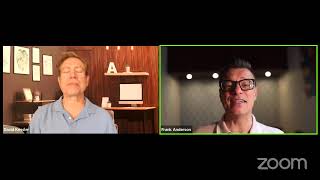
David Kessler interviews Dr. Frank Anderson about his memoir To Be Loved, which recounts physical abuse, conversion therapy starting at age six, and family secrecy. They discuss how trauma compounds through frequency and relational violation, and how writing about it became a path to healing.
Questions this video answers
To Be Loved (subtitle noted in the interview: A Story of Truth, Trauma and Transformation).
Starting at six years of age (he says he went through conversion therapy for six years).
The interview states the book has been the number one book on post traumatic stress disorder (category) and a strong seller on Amazon and independent bookstores.
He said it was his birthday and mentioned he is 61.
Chapters
Foreign.
Welcome, all. Thank you so much for being here. So glad you're here. I am here today with Dr. Frank Anderson, and I'm very excited about that. Hi, Frank. Nice to see you.
Thank you so much for having me. It's so great to be here. It's so great to be here. Thank you. Yeah.
So, Frank, I'm here. You're here. I'm excited about.
A wonderful new tool that we have, and it's this new book you wrote to be loved.
Yeah.
And I want to talk about some of the ways that you illustrated how trauma works in life. And I just want to say up front.
So many trauma books are really hard to access.
Yeah.
And they're. They're even for not just the average person, but clinicians to sort of, like, figure out things. And you took a very unique route in writing your story and your trauma so that we see your journey in a way that I think helps us all on our journey. So, first of all, just for people watching, like, how do you define trauma?
Yeah, it's a great question. And, you know, David, I think I. My evolution of defining trauma is changing over time. Honestly, it really is. Like, I had a definition of. Back in my residency, back when I was in psychiatry, working as a psychiatrist for Bessel Van der Kolk and the trauma, and in his trauma center, you know, it would have been one definition of trauma. And, you know, more around that, what we, you know, physical sexual abuse, someone who's been through war, who's been through kind of, you know, domestic violence in this kind of place. So more a more classic definition. But honestly, as kind of my life has unfolded, as the world has evolved, I think there's this whole relational component of trauma that's becoming much more significant and popular. Is not the right word, is, like, more prevalent with awareness. And this is what I think about these days around trauma is like, these overwhelming life experiences in moments. Relationally, there's been so much relational violation, whether it's growing up as a child and you grow up in a dysfunctional family, whether you're repeating this kind of relational dynamic in your adulthood, in your adult relationship. So I think about frequency, intensity, and duration. When I think about anything traumatic or overwhelming, you know, I'm not a big fan of the big T, little T, because people talk about that as if, like, oh, this is a big trauma, or this is less significant. And I don't like to do that. I think about what is the, you know, what happened to you and how do you respond to it. Right. And what is the perception of it. Right. So when I talk about frequency, intensity and duration of any of our experiences, like something for me, like when I talk to my. Talk to my brother, like grew up in a kind of a similar household, even though we were treated differently, like, you know, the frequency, the intensity and the duration of what I experienced with my dad was very different than what my brother did. And what I did with it was very different because of who I am as a person. So I was very sensitive. I took all my trauma very personally. I thought I was a bad and wrong person. And I became a trauma expert in a way to compensate for my trauma history. Right. That's is what I did.
Now I just want to like so much there. I just wanna a couple of things. I love what you said, not only about intensity and duration, but I think our old way of thinking was trauma was a day. It's something that happened to you on that bad day.
Yeah.
And of course horrible things do cause trauma that happen in a day. But we also know it just be neglect. It could be this enduring conditions that. By the way, we were in it.
Yeah.
You know.
Yeah.
You reveal so much of yourself in this book and I think there's something. First of all, the thing with your brother is such another great lesson that we can be in the same situation as a sibling even and we experienced trauma and they didn't in their eyes and.
Or they go about it differently or experience it differently. Like my brother became this avid hunter. Right. Like he is obsessed with hunting. It's his passion in life. He'll hunt and kill anything that doesn't hunt and kill him. Like that was a certain adaptation, if you will. Even though he truly does love hunting also it's a sport for him. He loves being in nature. But it was an adaptation to our chaotic and overwhelming experience growing up. Right. He didn't have quite the same experience and he didn't do the same thing with it. Right. Some people become therapists, some people become caregivers. Some people, you know, shut down and never really kind of recover from it. Like there's all these different ranges of. Of options and people are my favorite is people pleaser.
I got some of that in me, that's for damn sure.
And so, you know, I'm so proud of you for writing this. The new book that just came out is to be loved because here you are. I think one of the things I, I really appreciate about you doing this work is, is especially with our social media, it's so easy to feel everyone has it Together. But me. Yes. There's three easy steps for fixing it. Thank goodness they're on social media. To fix me.
Yes.
But we have this illusion.
We'Re damaged. And here you are.
Yeah.
Harvard trained psychiatrist, physician, trauma expert. And you open up about all your own trauma.
100%. You know what, David? Well, I open up about my trauma, for sure. Which I think for a purpose in this book.
It is for a purpose, you know, to help us with this. Which is amazing.
100. Like, I open up about my trauma in this way to break the divide. Like, trauma in and of itself has a power differential in it. Trauma is a violation of a power differential. It's someone in power taking advantage of the inequity and using it to their own gain in some way. So for me, being a trauma expert in staying in that us and them only perpetuates trauma, honestly, from my perspective. So I wanted to say, yeah, the expert also has a trauma history, just like you. That was important for me, David. And the second thing, which is a little bit. It was scary, but it's not scary anymore now that the book is out, is. And this trauma expert messes up all the time, too. Like, we all have trauma, even the experts. And. And nobody is perfect, even the experts. I had this amazing experience yesterday. I'm going out of. I had this amazing experience yesterday where my son was. Was tuning in on one of the Instagram lives that I did. It was incredible. And he's like, hey, I'm here. I'm his son, and I'm so proud to be his son. I was like, oh, my goodness. Like, that was a moment for me. And then he got invited in on the Instagram live, which was amazing for him. And he then started talking a little bit about transgenerational trauma, which was very powerful and important for me. Right. Like, I did things that were wrong. I did things that weren't so great. There was a part of me perpetuating what I experienced to some degree. And to have that out in the open and to have people see, like, my son and I working it through was so powerful and so impactful. So it's like, yeah, the trauma expert has a trauma history. And, yeah, the trauma expert has also done things that haven't been so great too. And there's a way to work it out. Do you know what I mean? So that was super important to me.
And I think one of the things that comes out in your real life and in the book is.
Wounded people. Our parents.
Yes.
Wound us.
Yes.
And despite our Best efforts, we wound.
Yes, yes, yes.
Like, we want it to stop with us, ideally.
Yep.
And, you know, one of the things you say is, we're going to parent differently than our parents did. We're going to get it right.
Yeah.
How'd that go?
Good luck with that one. Well, you know, and I was talking to my son today. I was, like, walking back from a lunch, and he's like, oh, my gosh, Papa, it's all transgenerational trauma, isn't it? And I'm like, yes, honey, it is. And he's like, and we're gonna. We're gonna do it, you know, like, we're gonna do it differently. And I was explaining to him, some people try to do it differently, and they end up. Sorry about that. They end up doing the exact opposite.
So if they were abusive, they parent neglectfully. If they were in a, you know, a wildly chaotic environment, they become super controlling. So there's this way that we try to correct with the polar opposite, and then we end up perpetuating a different version of it. Right. So for me, the trick is to acknowledge what happened and then not either go 180 degrees opposite, which perpetuates something different, or, you know, doing it differently from a place that's more healed and aware. And I think that's the big challenge for all of us, honestly.
Right. And, you know, I think you and I have laughed about this, that.
I was teaching this morning about old wounds in one of my programs, and you're a speaker in it, and you're a trauma expert who's kind of gotten your minor in grief, and I'm a grief expert who's kind of had to get my minor in trauma.
Yeah.
Because they go hand in hand. I always say, you know, all grief doesn't have trauma, but all trauma has grief.
Yeah.
You. We. We often talk about. We get activated and triggered, and we often want to fix it in the outside world.
Yes.
So you have written this new book to be loved, about your growing up.
Yeah.
Your struggles with physical abuse, anger, your sexuality, finding you, being told who you are, who you're not.
Yeah.
What's that journey been like?
The journey of writing it or the journey of going through it?
I guess let's do both.
Just share whichever one of those. Or both. You know, I mean, I guess it ha. I mean, you have to be putting it out there and talk about people getting activated. You know, one things I think about as you. As you were doing this and doing it now that I had to go through is we have to say, this is my story.
Yes.
Even though you may or may not like it.
Yes. Yeah.
What was this journey of you that, like, this is your story, whether your friends, relatives like it?
Yeah. So that's been. I'm still in that right now, David. It's really interesting. I'm actively in it right now. Like, you know, as some. As a dear friend of mine, like, I was driving to New York. I want to tell the story because it was so powerful for me. I was driving through to New York, doing all this press for the book release, and all of a sudden, out pops the song from the Greatest Showman. This is me, right. And I just start my. Burst into tears. I burst into tears because it's like, brave and bruised. This is me, you know, the good and the bad. This is me. And I realized I am out there now in the world. Like, I have put myself out there. And the reason I put it out there is because my biggest hope is people can relate and people can kind of hear through story, tap into their own story. So if my story can help you, then it's. This book has been a success in that way. But just like you say, I'm aware that this is not going to touch everybody in the ways that I'm hoping it will. Some people will get activated by it. Some people will find it offensive. Some people are embarrassed by it. Like, my mom is really struggling right now around me, putting my story out in the world, which then forces her to deal with some of the shame that she has lived with in her life. And I am not here to harm anyone. I really know that. But I'm aware that my story isn't going to touch everyone in the ways that I'm hoping it will. You know, some of my family honestly were shocked to read it. Like, oh, my gosh, Frank, I had no idea this was happening. You know, my brother, for example, is.
Before you even go further, just, that's such a big moment about people going, I had. Like, you. You look like the lovely family, the per. You know, we had no idea what was going on behind closed doors. And your mom may be embarrassed, but isn't. And I'm. And I have compassion for her, and I'm sorry about that. And don't we all have stories that our worlds look like we're fine on the inside, 100%.
Like, that's so in my family I write about.
Before I changed my name, the Guastellas. That was the family I grew up in. The Guastellas presented well. The Guastellas presented well. So no matter what was happening, the chaos inside the house, when that doorbell rang, we put smiles on her face, and we showed up looking. Looking fabulous. And we knew that was in a lot of people who grow up in those types of families. You know, what happens inside is very different than what happens outside. You know, as a kid, I used to. I used to hope for bruises. Like, I would be like, oh, I hope somebody can see this. Right. I want. I want it to be seen so people will know, because we were taught clearly to keep it under wraps. To keep it under wraps. And I think that's common for people when you grow up in some form of dysfunctional family, you know, is to. To have it be seen. So my cousins, it was power. It was touching for me for my cousin to say, frank, you know, Frankie, they call me Frankie. Like, we always thought you were the perfect family. I wanted to be your family, you know, because we always see somebody else's story differently. And I. That was important to kind of share that.
That piece of it. Right. What it looks like on the outside isn't always what's going on, you know, behind closed doors, for sure. Yeah.
And I think there's a vulnerability with sort of, you know, going back to the greatest showman and like, yes, this is me. And you may not like it. It may disturb you. You may not like how I said it, what I'm doing, who I am. And at the end of the day, this is you.
And you know what I can hold now, David. And this is because of the. Honestly, the. The work that I've done is, this is me, and I got this this morning. Your reaction is you, right? This is me, and I'm okay with sharing this. Like, I've done the. My work, and I am really okay with sharing the good, the bad and the ugly of, you know, Frank Anderson. Like, it really is okay with me, and you're going to do what you want with it, and that's about you. And that's okay, you know, it's about you. And maybe you're going to do something with it, and maybe you won't. That's up to you. But your reaction is you is about you. My story is about me, and I hope we can find common ground.
Yeah. And it's interesting. You know, one of the things I've often shared in grief and trauma work that has surprised people is there is this sense of personalization. This has happened to me, only to me. No one else in the universe was sexually abused. No one else was physically abused. No one else was abused because they're gay or whatever it may be.
Yeah.
And there's an isolation in that 100. And so I've always told people, even when they think no one else has ever had a child die, no one else has ever had a spouse die. All those things that. I mean, intellectually we know it's not true, but I'll tell people to read memoirs and biographies because it's such an easy entrance.
Yeah.
Into, like, rather than reading, you know, and by all means, I want people to read the grief books and the trauma books. I've got grief books. You've got trauma books. But there is something about a memoir is a ride that you take us on.
Yeah.
Through your journey.
Yeah.
That we begin to heal by just going along.
Yes, that's right. Yeah. I think, you know, some of these themes, even if the details of the story are not exactly the same, the themes are the same. People can relate to the themes. You know, you talked about. It's. It only happened to me, like, going through trauma in isolation is so common. So many people experience all forms of trauma and grief in isolation. Right. It's. It's a big piece of what it is. So that's a universal story. Like, the other thing, like, I've had people already reach out to me, which is so touching around. Like, I went through conversion therapy, a form of conversion therapy as a child for six years, Starting at six years of age. Right. And people who didn't go through conversion therapy have reached out and said, oh, my goodness, I grew up always getting the message that I wasn't supposed to be who I was either. Frank, thank you so much. Right. And so, yeah, they don't have to go through the exact same experience of me, but those universal fear themes that are held in trauma are relatable, you know, at some point. And I checked with my husband, so. So that was. That's powerful for me. Right. It's like, wow. Like, yeah, people can relate to the themes. Isolation, loneliness, rage, you know, disconnecting, wanting to be loved. Right. All this stuff. I wrote about this one scenario at the end of the book. This. You know, I'm a damn therapist who works with couples all the time, and I had such a hard time talking about my husband and my inequity and desire around sex. And I'm like, can I write about this in the book, Michael? Is it okay? You know, and he's like, okay, Frank, go ahead. Right. But like, even that theme, like, how many couples struggle with inequity around desire. Right. And how do we navigate that? Like, that's a universal theme. So my hope, as you say with memoir or story, is that people can relate whatever's going on for them. In some ways that they can learn from me and in other ways they can learn what not to do for me. Both are true.
And I don't know if this is true, but I think it is.
Yes.
I think whether we talk about conversion therapy, sexual assault, or, you know, physical abuse or neglect, I think there's a theme through them all.
Yeah.
I'm wrong.
Yes.
Who I am is bad.
100.
And just like you said, we all don't have to have the same expression of the abuse.
Right.
We understand there is an I'm bad, I'm wrong. Sometimes even I did. I caused this.
Yes, 100%. It's a distortion of responsibility and trauma. This is the best way I can say it is most people take responsibility.
Take personally what happened to them. I did. I was so, like, I, you know, sorry. Like, not sorry. You don't. You don't become. I didn't become a Harvard trained psychiatrist because it was fun. That was great. But I became a Harvard trained psychiatrist because I was trying to counteract the insecurity and the worthlessness I felt. If I'm revered that way, then maybe. Right. People will see me different, people will think about me differently, you know, and I now, David, honestly, I mean, thank goodness, you know, today is my birthday. It's.
Today's your birthday?
My birthday, yes. What a way to celebrate being here. How wonderful.
Happy birthday, Frank.
Thank you.
Thank you.
And you know, like, it's 61. Like, I feel good about myself. Like, it's like taking me a long time, but I don't carry. I'm less than. I'm worthless, I'm no good. And I did carry that for many, many years in my life. I really did. And it's so nice. Like, am I perfect? Like, hell no. And I don't need to be perfect anymore. I don't need to be perfect. I could be myself and I feel good about it, you know, and that that's a huge gift I have experienced.
You know, and what a nice gift to say that and realize that. And it's your birthday.
Yeah. You know, it's like, it's okay. It's okay to be me. And, and, and I like. I like who I am and you don't have to. And that's okay too, you know.
So the book is out.
We were talking that it.
Has been the number one book on post traumatic stress disorder. No coincidence there. It's been such a great seller on Amazon and independent bookstores. Yes, the book is to be loved. A story of Truth, Trauma and transformation by Dr. Frank Anderson. It's such a gift to the world. I see it's resonating. So please, everyone, check it out. Get your copy. Really, Frank, thank you for sharing because I know not easy to do and to do this, to really help others is really amazing. So thank you, Frank.
Thank you so much. I appreciate you and I appreciate you having me on.
Absolutely. I'll make sure we put a link underneath to the book. And thank you all so much. Thank you. Available Amazon, your independent bookstore, Barnes and Noble, everywhere. Fine books are sold, as they say. All right.
Beautiful.










