Gloria Horsley of Open to Hope is interviewed by grief expert, David Kessler on the death of a child
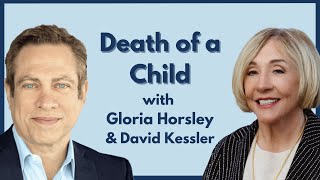
Live interview/transcript of David Kessler and Dr. Gloria Horsley discussing grief after losing a child, practical coping strategies, community support, and Gloria’s work founding the Open to Hope grief resources and podcast. The conversation mixes Gloria’s personal story (her 17‑year‑old son died in 1983), clinical perspective, audience Q&A about anniversaries/virtual funerals/Father’s Day, and promotion of an online international grief conference (June 22).
Chapters
Hi, everyone. David Kessler here. I'm here with Gloria, my friend. We're going to talk about her in a moment. But hey, Gloria, good to see you.
Hey, David. It's wonderful to see you and great to be on. I love it.
All right. I'm going. Just going to give folks a few moments to find us live here tonight. All right. It'll take a moment for us to be seen and see and all that good stuff, but hopefully will come up in a moment.
I'm trying to. I always try to see us on here. I see people are saying hello, so that means they're seeing us. Even though I haven't found us, I actually try on my phone to find us. Just, oh, there we are. Good. It's a nice. Just a reminder that we're here. So I don't know even if you're old enough to remember or you remember, there was a romp, a show romper room years ago. And the teacher used to pretend like she sees everyone. So I do that. I'm like Diana here from Southern California. Shirley's from pa. Robin's from New York. Hi, Robin. Diane's from Virginia.
Jennifer's from Alaska. What's the weather like in Alaska right now? Ivy's here from New York City. Karen's here. Hi, everyone. Good to see you. I put up a post that we were coming on at 6. I hope that you all saw that. Diane's here from Texas. Good to see you, Diane. Lori's here from New Hampshire. Well, we're here from all over. Betty from Ohio. Good to see everyone. Sandra from Maryland. I'm coming to you from Los Angeles. And Gloria, you're in Carmel, California. Carmel, very nice. So we're here from. I'm under curfew. You don't have. Do you have a curfew there?
No curfew, thank goodness.
You just started a moment ago, so I'm safe inside with you. All right. Annette's here from Tennessee. Teresa's here from Upper Michigan. Marie from Brooklyn. Jennifer says Alaska, sunny and beautiful. Jolene from Phoenix. Martha from San Francisco. Mary from New York. Well, I'm glad you're all here, finding your way on. And as we do, if you're new, I'm David Kessler set up this group after COVID 19. So many people, their grief groups were closed down. People weren't able to say goodbye to their loved one. If you needed support because you were struggling with grief, you didn't have anywhere to go. You were newly bereaved. So we came together virtually here and in the evenings, I have a different guest on because there's many voices in grief. As you've probably learned, there's not one way to do grief. There's certainly not a right way to do grief. So I love hearing from people in the evening who've experienced loss. And our guest tonight, Gloria Horsley, is. Dr. Gloria Horsley is certainly a teacher of mine, and I'm so thrilled she's here. But we are all here because someone we loved has died. So if we could just first take a moment to honor them, to send them love, to just dedicate a moment to them. If you would join me in a moment of silence.
Thank you all.
Gloria, we're going to give you the family rate we've had your daughter on. He was one of the first people who came on. I say family, right? Everyone here is volunteering their time to come on. But Heidi was here. And how's she doing after Covid? I know that she told us she was recovering.
She's doing really well. It was scary. Scary for us, particularly as a brief mom of many years, still having my child get Covid. She's a very adult child, but having her get Covid was a scary thing. And my husband and I weren't by her, and we were connecting with her by telephone and by Internet, and she's doing really well. She's been a trooper. She was quarantined, and they brought food to the door, and she showed us her mask and gloves. She was in Arizona, and I'm in California, so she showed us a mask and gloves, and she got through it really well. But I have to say she said it was very scary at night because.
She was in that room alone. And with the breathing problems that you have with it, it's very scary, you know, but she got through it. She's doing well. But she doesn't have her sense of smell or taste back.
So I hear that takes a long time. And it feels like for people I've talked to, it takes a lot. It has a long tail.
Yeah. They're talking about months, right? Yeah. Yeah. So.
So, Gloria, I. I mentioned you've been one of my teachers, and you've been a teacher. Not probably because. Well, I don't know. I'll be cur.
One how you came into this world. And I don't know if you were a professional in this area before your own story. So tell us how you came into this world of grief and loss.
Interesting that you should ask me that, David, because people don't ask me that very often, and the reality is I was very much in the world of grief and loss. I actually was kind of. I taught at the University of Rochester Medical center and I was a clinical nurse specialist in psychiatry. And my specialty was grief and loss. And I remember before my 17 year old son was killed in a fiery automobile accident, I remember going to a family. I used to consult on the whole surgical service at the University of Rochester Medical Center. And I remember going to a room of a young man who'd had a van roll over and his brother was killed. And I was also a family therapist. And when I went into the room, the family was there and I remember saying to them, well, you know, I have some things that I think could help you, but this doesn't happen to me. And you know, I think this will help you, but I honestly don't know exactly what you're going through. And man, it happened to me three days later. And I can tell you I did not have the foggiest idea what that family was going through. Wow. I, you know, and I think I had some things that helped him on the away. But I remember I read all the grief and loss. This is in 1983, so it's been a long time ago. And I was very much involved with Elizabeth Kubler Ross material and I taught it. And it was around that time in the beginning of hospice, I worked with AIDS patients. I worked on a burn unit, which I think is very key. I consulted to a burn unit at that time and I was doing some research being if you've ever had a burn, it's very, very painful if you're on a unit because they do something called tubbing and scrubbing where they actually put you in a tub and scrub off all your scabs every day. I mean, I can't tell you how excruciating painful that is. So I was doing some work on meditation with those people that were having the tubing and scrubbing because they can't meditate, those people to medicate them all the time. So. And then guess what, three days after I was in that room. So I knew all about burn, burn units and other. My son was driving in Maryland with his cousin. It was very rainy. His cousin was driving the car hydroplane. They hit a wall, the car literally blew up and they burned to death.
So I will say over. It's been many years now and over the years I, you know, you just find these small fragments of things that you realize that have been fateful that I want to say God has Helped me out. I understood what it was like had he lived and been severely burned. So, you know, he died immediately in the accident. So, you know, I mean, you find these weird little consolations along the way. Right. So anyway, that's, you know, how my. I was very interested in hospice and grief and loss before Scott died. And one of the things I like to think is that I was immaculately prepared for the experience. Even though I knew the material, I had to take the trip.
Right.
You know, it didn't matter how educated, how much I knew, how many people I'd worked with. I took the trip.
It's not an easy trip.
And we've talked about this before because we've shared that idea about knowing this academically is very different than living it.
Yep, it is.
And as you know, I've. I've always said, after my younger son died, I wanted to write a note to every bereaved parent I counseled saying I had no idea.
Yeah, yeah, because that's. David. I just want to say what I didn't realize about it was it's a physical experience. It's like hitting a brick wall going in 90 miles an hour. I mean, it's. Honestly, I think it takes a year to recover your physical balance. And you know, I know that people who've had kids die of cancer and that kind of thing, or family members die of cancer, they say, well, it prepares you for it and you're better. Well, I think immediately you look better, but down the road you got to take the trip with everybody else. And I have never been with a family where it didn't shatter them when they said they're dead, when it's kids or whatever. Because there's always hope when you have a younger person. You know, if you're older, maybe it's not a shattering, but if you. I mean, I'm not even, I don't even say that because I know there are people who live with their 90 year old parents that are shattering. So, you know, but when they actually are not with you anymore and they've actually passed away and that spirit and soul is actually left that body, it's really something.
Right?
And I know.
You from open to hope. I also know you from compassionate friends. Can you tell us how those began with you or how they intersected with you in your life and your loss?
Kind of interesting because I really didn't do a lot with grief and loss. After Scott, I was basically on an existential journey. I did things with Carolyn Mace and Byron. Katie and I taught for Them and I. I actually took. I joined the. It was association of Death Educators. Now it's called the adac. I actually put on my professional hat and kind of went into the grief and loss world more. Well, when I did. I don't know, I don't want to say I put. Put on. I did. I got connected with some powerful, wonderful people through my academia. I was able to get close to them. They taught me. I learned so much from people like Byron. Katie, I know you had her on last night. But, you know, over the years and I did the Enneagram with a woman named Helen Palmer who actually brought it into the first book, Personality Typing. And you know, I. Trying to stabilize. Find myself and it was. I want to say it's been a wonderful trip in the. All in all. But that's how I got into it. The way I got into the Compassionate Friends was they asked me, oh, I went to one of their meetings because Heidi was trying to get a sample for her PhD. So I said, well, let's go over to the Compassionate Friends. And she wanted to do PhD on sibling law. So we went over to the Compassionate Friends and. And I met Pat Loader, who was the head of it, and I said, you really should have a professional then give continue any credit. So she said, oh, yeah? Well, why don't you do it? I said, okay, I'll do it for three years. I don't know why I ever said that. So I ran their professional day for three years and met some wonderful people. I ended up going on the board. And then they asked me 14 years ago if the Internet was just coming into play. And Pat said, would you do an online radio show? And I said no. And then I thought about it and thought I didn't know anything about the Internet or anything. And then I thought, I've never done a radio show that I'd done a lot of family therapy, video stuff. And so I said, all right, I'll try it. And honestly, I signed up for eight weeks. It was pay to play. Signed up for eight weeks. And after six weeks, I got an email from this woman, said, I see you're only doing two more shows and I want you to know you're my lifeline and please don't quit. Whoa. So it still takes my breath away when I think about just even impacting one person in the world to have somebody say that I was their lifeline. It was like, wow. And we were talking about grief, loss and recovery and giving a voice to grief and recovery. And then so I kept On. And Heidi said, mom, you're not talking about sibling loss, and it's discounted. And I'm like, well, then you'll have to join me. And so Heidi joined me. And so we've been doing a podcast and radio show for over 14 years. Yeah. Yeah. So it's been quite.
And that's called Open to Hope. And tell me about that name.
Well, we. We started doing the radio show, and it got so big, and. And then people want to talk about spouse loss and about parent loss. One of our biggest visits is adults losing parents. And I said, we just can't, Heidi. We're going to have to do our own place to put this show, because it's not just child loss anymore. It's broadened. So we decided that we would have to. We would do our own website and start our own foundation. So, frankly, for tax reasons, that we would do our own foundation. So we got together with a person who names things, and we went on a big whiteboard and we went. She put all these things down and made this Venn diagram, and we just threw down words and. And. And we came up. Hope was a big word for us. Hope. And then I said, no, no, no, I don't want to tell people to be hopeful, right? If you just had a loss, I don't want to tell people what to do. I said, I just want to say, oh, I know how bad it is. Just open yourself to the idea that there could be hope again, you know? And that's how we got it opened. Hope, Right?
So tell me. There's. I've been looking at some of the comments.
There is so many people here have just that. And I'm using their word, but we could all use it at different times. They're in the unbearable pain.
And a lot of people have had children who have died. They've had people. Spouses who've died, parents who died. What do you say? What have you learned.
About that unbearable pain?
The first thing I think of is, you got to take care of yourself so that you can bear it, so that you can bear the unbearable. And, you know, you got to drink water, go for walks. I mean, I remember I was just so destroyed when Scott was killed that after two weeks, I. I hadn't left the house and. And all of a sudden a little voice came into my head, and it said, if you don't go out and run. Because I used to run, and I'm not like an Olympic runner, just, you know, And I was in my 40s, and a voice said, to me in my head, said, if you don't go out and run, you're going to get sick. And I argued a little bit. My mind, I said, no, no, no, no, you know, I'm not going to get sick. And then it kept saying. So I remember putting on my running shoes and I headed out the door and it was hell. Because I knew that all my neighbors were looking out the window and they were saying, she doesn't really care about him because if she did, she wouldn't be out taking care of herself. And that was crazy. So clear in my mind. And it was a while before I didn't feel like I shouldn't be doing this. I should be showing people, you know, I should be, you know, I should be devastated, you know, and. And I. And the thing was, that person who asked that question, you are devastated. I mean, it's so painful. And you've got to take care of your physical body so you can bear. Bear the unbearable. And it gets better. I always tell people, it'll get better. It gets better if you will let it get better. If you will take care of this mortal body so that you can bear it.
Right. And I think we want to be in different places than we are. I think we have the outer world telling us we should be in a different place. And I think we even have expectations.
Right? Yeah. Yeah. There. Yeah. People are maybe saying they want you to be who you were. They want you to be like they were. They want you to be back, you know, and they want to help you and they want to fix you. And they, you know, and. And, you know, they just want the old Glory back. And they, hey, the old Glory is never coming back. But over time, I think it's a better version, frankly. Yeah.
And I often think about them wanting the old Gloria back, or the old David or the old Susan or Bill or whoever it may be. And it's. I often say when someone says, can you talk to my sister? We just. We miss the old Susan. I bet Susan misses the old Susan. But we can't get the old Susan back because we can't bring her son or her daughter back.
Right.
She's kind of forced to deal with the new Susan. And I guess we gotta learn to deal with the new Susan.
But not everybody will.
Not everyone will.
I think I have to tell you, find yourself. Good grief. Support. It's so fascinating. I had new friends. I had people who never showed up before. Suddenly they were at my door and they be. And they did wonderful little things for me, like I'll never forget this one family that we barely knew. It was Christmas time, and Scott died in April, May, June, July, August. It was about seven months later at Christmas time. They became little elves and put little gifts on our door every. Every day, you know, during the holidays. And I didn't know that family. And they became one of the most blessed families in my life. So there will be people that will show up that are good grief support, and, hey, don't give up on everybody. You might go back later, don't worry about them now. But in three years, two years, you might go back. Also. There are some people who are good to take you. Well, you can't go to a movie now, but don't forget, the people that want to take you to a movie or whatever don't. I mean, not everybody has to be good grief support. If they. If all they've got for you is to take you to the gym or something like that, Go to the gym with them. What the heck.
Yeah, I often think about those. You know, sometimes we may go. Our superficial friends, you know, my superficial friend can't have a deep conversation with me. All they care about is the latest movie or the latest theater, and I'll go. Did you have conversations with them about the latest movie or theater? Well, yes, but not anymore. And I'll go someday. You might want that distraction.
Exactly.
Get tired. You know, there's a time where, you know, one of the things I know is after my son died, I would go to the gym and there's someone I would work out with, and I. It wasn't right away. It took me a long time. I never told the person I worked out with that my son had died.
I wanted one little corner of my life to just go in and just lift weights and just not be the grieving parent. Just for like an hour.
Right.
You know, it didn't last forever, but I just wanted that little bubble for a moment.
And sometimes you want to go to places you've never been with that person too, right. On vacation or whatever. You just want to go somewhere where you're not yearning and searching. How long does it take that yearning and searching and thinking? You see them, you know, you see a head of hair or, you know, that reminds you of their hair or whatever. The yearning and searching is really unbelievable right now.
I'm supposed to be in Australia before everything got canceled. And the last time I was in Australia, two, three years ago on tour, I was on a bus and 10, 20 seats ahead of me, I saw someone who looked Just like my son David from the back. And I sat back there going, should I look? Should I look? I mean, and there's a part of me that goes, it can't be him, but should I look? And I eventually.
As he was getting off, sort of ran up just to look and saw it wasn't him. And I thought I needed to do it that way that time. I think the next time I probably won't. I'll just let it be and just enjoy that glimpse for a moment.
Right? Yeah. Yeah.
I think we all have to do. I mean, that's the thing. Everyone has to discover this journey for them.
Absolutely. Absolutely. No question.
You've had so many guests on your podcast and your shows. What have you learned from all of them?
My gosh, I learned something from people on a regular basis, I think, you know, the way people cope, the way they deal with it, the courage that they have, and it's just amazing. It blows me away. You know, I remember somebody made the comment that grief is really longing for the unavailable. That just happened to me about five weeks ago, and I thought, grief is.
Longing for the unavailable.
Yeah, that's what her grief was.
Wow. Interesting. Now, you know, one of the things that you do in your work is you bring a lot of different voices to grief. Every night I bring a different voice to grief. Last night was Byron. Katie.
Right.
Some people. I see people are still posting. Some people loved it. Some people were like, what is this?
Thoughts on that?
Interesting that, you know, longing for the unavailable. And we talked about with Byron. No, they're available. That's just a thought.
Yeah, right, right, right. But forget that they ever were available.
Longing, longing, longing.
Yeah, it's. You know, I like bringing different people on. There's no one right way to do grief. There's no one right person to tell us. And I hope, you know, people grab just a snippet here and a snippet there that sort of helps them.
Absolutely. And it. That was the way it was with me. If you. If anywhere, I went somewhere and I'd get one small thing. I think it was great, you know, and you just gotta. It's a exploration. It's an exploration of your new world, your new life, the new you, the new whatever. I mean, it's. It's like you're born again as a different person after you've had a traumatic loss. Right.
Can you do some questions? Sure.
Love it.
Okay. Anyone who has a question, please let us know. Just post it. I will look and see as questions come in.
Susie says it's only been four months and I'm tired of grieving. I need a break from being sad. I don't want to look at pictures that remind me my son won't ever have whatever experience was being captured there again. Just not now.
Wow, four months is really early. I will have to tell you that I think the first year is like a time when you are saying, okay, I got through this, I got through that. It's a time of being proud of yourself. You know, kind of like, I made it. I made it through the first birthday. I made it through, you know, all these events. One of the things I think, Susie, it's important again, physically, I think especially I don't such a hard time now. You got to figure out how to take care of yourself physically. But also remember that first year that.
The anticipation for me of events were worse than the event.
Right.
The end that first year, the anticipation that the birthday is coming up or that Mother's Day is coming up or whatever, when the day comes, you get through it, so hang in. It's right.
And I do. I tell people, you know, when people go, oh, the anniversary of their loved one's death is coming up, what should I say to them? Or call them that day? And I'm like, call them days before. They're in it already.
Going through it. You think it starts at 6:00am oh, no, they're in it four days before.
Patricia says, I lost Tanya nine months ago. I get angry, sad, depressed. I was never like this. Yeah, it's challenging grief. It's challenging, challenging deep grief.
Yep. Again, nine months. It's half of that. That first year is really, really rough. The second year is hard too, for people who ran it for different reasons. I say this to people. The first year, I can only speak for myself really knowingly, but the first year I was frozen. I call it frozen grief. The second year, sometimes you don't. You feel worse because you're facing up to everything. And I say to it, because you're thawing out and when you think you're getting worse, you're getting better. And. And by the way, six months can be the height of a very depressing time for people. But as you feel, you may feel like you're getting worse. People think grief should be like, okay, I'm going to get. Every day, I'm going to make progress. I'm going to feel better. It's been nine months. And family members expect them. You know, okay, it's been nine months. You know, let's move along here. It's not the way grief is. And it feels a little worse sometimes when you're getting better because as I say, you're thawing out. You're realizing, okay, crap, this is really the way it's going to be. And you're starting to. Your. Your body and your mind are starting to let a little more of the reality in. But if you take care of yourself, trust yourself, you're going to be okay.
How long has it been since your son died?
Oh, my gosh. He died in 1983. You had that. It's been a long time. Long life for 30 years.
What would you say about your grief around him today? Differently than then.
He's my guiding light. I celebrate him. He was an. I mean, he's an amazing person wherever he is and whatever he's doing and, you know, if I really look into. Into it, he would have been married and had a wife and all that kind of thing. I said to my husband the other day, this is weird, but, you know, we had the best years of his life for our. For me, because he was 17 years old. I adored him. He was our boy. He never got married and moved on and had kids. And so I wish he'd been able to do all that. But I do celebrate those 17 years. They were special and precious years. And people are afraid they'll forget. Oh, my gosh. I want to tell you will never forget. And you will love those memories and being this long. I've got grandkids and we talk about Scott and with them and I don't know, it's just. I do it with joy now. Occasionally something will really touch my heart. I'll tear up and all that kind of thing. You never know when it's going to hit you. But, yeah, I'd rather have that. I'd rather feel that tinge hit me than not have it right. You know, it's special.
It's been, I think, I don't know, it's been like 45 years since my mother died. And you don't forget. People don't forget. We worry we're going to forget, but it just doesn't happen. It doesn't happen.
My mom, too, and my dad and, you know, and different things with different people. When you. When your mom dies, you lose a historian of the family. You can't call up and find out about everybody and, you know, know they're just different things about different people that are. That are so special and they're always with us in the fabric of our lives.
Someone asked if you have dreams of him?
I used to. A lot more than I do now. I think that I don't have dreams about him anymore because he's kind of in reality for me now.
He's part of like I have the opportunity to talk about him today. So you know, I have a lot of. So I don't dream about him because I talk about him. And he did appear to me early on in a very special dream. And that was kind of one of those healing dreams that I had and I know healing connections and we find dimes, the whole family finds dimes and all sorts of crazy places and you know, so there's all sorts of connects like that.
Right. Kathy says I seem to be getting worse instead of better. I lost my 47 year old daughter to a massive heart attack a year and a half ago and now and I have no desire to leave my house. The virus is giving me an excuse I need not to.
Okay, remember what I was saying, it's been a year and a half. The second year can be really, really a challenging year because it's the year that second year, this is it. It can be a little bit depressing. But I would say to you, if you as. What was her name?
I think it was Kathy.
Kathy. I would say to you, Kathy.
You. After a year and a half, I can hear you saying that you're not sure that you like what you're doing with your life right now. You're not sure that it's right, that it's best for you and, and that's a good hit and it's good that you have come on and said that today because you are looking into the fact that you don't want to leave. So you're not feeling totally comfortable about it. So I would say to you probably a time for you to reach out and you are reaching out and do more of it because I think it's going to be good. You do need to get out after two years. You really need to start moving along because in the third year you're generally ready to say, okay, you know, I need to get something going. So. But I want to say that, you know, people can Minimize losing a 47 year old daughter because it wasn't a kid, a baby or whatever, for God, she probably had kids or whatever. I want to tell you that it is just as painful and my heart goes out to you.
Martha says my son died eight weeks ago. I'm always exhausted. I don't want to leave my house struggling every day. I have a wonderful grief Therapist. And my oldest son has been a huge support. I feel like I'm relying on my oldest son too much.
Wow. Four months.
That's like an hour and a half ago in grief time, isn't it?
Pardon?
An hour and a half ago in grief time.
Oh, yeah. Oh, yeah. You are in such short grief time. Rely. Lean on everybody you can right now until you are able to reach out and help people. If you lean on other people, listen, you need to give people the opportunity to help you. It's an opportunity, and it is a privilege to help somebody who's in early grief. Let those people that are good support. If you're. If your son's a good support person, lean on him. You'll get through it. You'll be able to then help him. You'll be able to move out and help other people, but start out by letting people help you. As I say, it's such a privilege.
And I would just add to that just from my experience with my older son. You know, part of our job as parents is to demonstrate grieving for our kids.
Absolutely.
And demonstrate continuing to live.
Yes.
We got to be careful not to just demonstrate grieving because we don't want them to become our grief counselors either.
No. All right. Yeah.
They'll resent that later, and we don't want that.
You know, let me say, if you feel like you're leaning too much on him, then find some other people to lean on to bring in. Bring in some troops. Go to your minister, call the house, call your local hospice, and ask them who the best grief counselors are. If you don't know, or they might have some free people. If you can't afford it, call your community centers. Find out who's in your local area that can give you help and support, and, you know, shop for a grief counselor. You better get somebody who knows something about grief and loss.
Yeah. If you go to grief.com, we have a directory there. A lot of groups, a lot of counselors, so check that out. The other thing I knew. I knew the pain of my son dying was too much for me to hand any one person. I knew I had to spread it out far and wide. And, you know, any part of me. I don't know if you had people who believed you should be able to handle it since you were a professional. There was no part of me that thought, since I'm a grief expert, I should be able to do this because I knew it was different. It was my son.
Right. Right. I had. I worked in a hospital. And I had all these psychiatrists that were watching me 24, 7, and one of them pulled me in and said.
Basically gave me a assessment. And I looked at him because I was at work, and I said, you know what? I cry on my own time. I'm not going to cry on yours. So, you know, people have to do what they do, and we have to work and we have to bucket up and. But you've got to find people, as you said, David, you got to spread it out and figure out and also maybe do some compartmentalizing of your grief so that you can work and do this stuff that you need to do. And as you said, don't grieve too much around your kids. It depends on how old they are, but they're going to be watching you.
So, yeah, I also found with my older son, and he was 23 at the time, there was a point whenever he would come to visit, I wanted to talk to him about his brother. I wanted to connect around that. And I realized if every time he comes to visit, it's a grief session.
He may not come to visit.
And I've sort of learned to some of that. Spread it around and let him bring it up with me.
You know, you just made a good point about. You wanted to talk about it. Because one of the most important things, as far as I'm concerned, is to tell your story. I say to people, find people you can tell your story to how it all happened. You just can't tell it enough. And I like to tell the story till I got bored with my own story. Every time you find a story, tell your story, it takes on a little bit different bent. So that's why I love groups, because you get a chance to tell your story to the group. And when you hear other people's stories, it builds on your story and makes you realize some things.
Right? And what do you say to people who they share that, you know, they feel like they're in a world that their spouse died or a parent died and. And they feel like there's so much grief worse than theirs. And their spouse dying in the world isn't as bad as someone who's had.
A child die.
I think. Well, I know the only thing you can know is your own pain. You really can't know. You can empathize with people, but to really know the pain, you've got to have it yourself. And that's what I learned from my son dying. So, you know, if the worst thing that's ever happened to you is I Used to say this, I hang. Nail that then a hangnail is a hell of a thing. So, you know, you just can't know. And spouse loss, loss of parents, it's, you know, if that's your loss, that's your loss. If that's a loss that's knocked you down on the ground and you can't get up from, that's it.
Right. And the thing is, I always say, Gloria, you and I have both lost sons and I will never know what it's like for you and you will never know what it's like for me.
Right.
And so we really can't ever know another's pain.
Annette says, I feel like I'm afraid of the next tragedy that's going to happen. Did you ever feel that after your son died? Like, oh my gosh, like even with coronavirus and your daughter.
Yeah, yeah, already just recently. I was concerned about it. But I will tell you, I was really paranoid after Scott died. I had a 14 year old daughter at home and two older daughters, but they were both in college. And I was panicky. I remember panicking. Heather. This is before cell phones and Heather had gone to a party and it was like 9 o' clock at night and one of Scott's friends came over to visit us and, and he could see that I was frantic. He could just see that I was upset about Heather. Where was she? And he said, do you want me to go out and find her for you? And I said, yeah, would you do that? And he went out and found Heather and came back and said she's at a party, this party with. He went over to this girl's house and said she's fine. And I'm like, you know, but that's, I just can't even believe right now. I was terrified. So.
Well, we talk about you're catastrophizing and we catastrophize after a catastrophe has actually happened.
Right, exactly. And I was afraid to have my kids drive because he was killed in an automobile accident, you know, and I just had to buck it up and say, okay, you can take driver's ed, you know, and that's say two years later. So, you know, you've got these little fears.
Kalia says, sorry if I'm mispronouncing that name. I would imagine it's Hawaiian. Hawaiian. Because you're saying, mahalo for the insight. I'm at the two year mark. I'm trying to figure out the, I'm trying to figure out the moving forward for me, my, for, for my Sons who are both fathers, how do I help them get through Father's Day? Their dad passed away. As I mentioned earlier.
I love rituals, I really do. I don't think you just. I think you can have a ritual to celebrate the day. And one of the rituals I love is to have people maybe write down something about their dad and, or, and if they've got kids, they're growing, the kids write something or draw a picture and then you take it all and you burn it and you make ash out of it and you bought a rose bush and you go plant the rose bush to celebrate Father's Day. Some, some ritual like that. The rituals are so powerful.
So we have a lot of people on here who have had a loved one die from COVID They weren't able to say goodbye, they weren't able to have the ritual. Do you have thoughts for people who aren't able to have that rituals now that serve us so much, like the funeral, the memorial?
Well, let me say they didn't get a chance to say goodbye. Just let me stop with that a minute. What would you have said if you could see him right now? What would you say? You say, I love you, right?
They knew. Did they know you love you? Yeah, they knew it. So the fact that you didn't get to say goodbye, they knew it. So there you, you know, so don't worry about that piece. But I, I'm one who believes that you need to do something right now.
You know, with the Corona, some people are going to have celebrations of life later on. I think that's fine. But I think you need to do something right now. I think you need to write a letter, do a rose, do something, maybe have everybody write an email or you know, do something to remember that person now and then later on. If you want to do something, that's fine, but do something right now that's important to you in connection with that person.
And the other thing I've heard, you know, I always say people in grief are our teachers. One of the things I've been taught is so many people who have had a virtual funeral, her memorial have told me how disturbing it was when they looked out.
And they saw someone in a tank top shirt in a lazy boy chair. They saw someone else at work stapling while they're at their loved one's funeral. So I tell people, if you're going to do something virtual, tell people to treat it with all the reverence of a funeral.
Right?
Yeah, I love dress up to not be at work and doing Your paperwork. You know, there's a gift that when I stood in front of people and some people are on here, I seen Stephen, who was an amazing support to me. When I looked out of the. The memorial and saw the faces of everyone who was there when my son died, that was so meaningful. And if you're going to look out at Zoom and see someone in a tank top, right, who's texting someone else and someone who's stapling at work, it's not the same.
No, it's not. It's very, very weird, in fact, when you. When you think about it. Yeah, I totally agree.
So you got to show up at a virtual funeral with all the reverence you would.
That's right. That's right. And what, David, I think you just said something that's important. Sometimes we have to teach people to be good grief support. And I know you're going to hate to do that, but that's the reality. If you want it, you need to tell people what it is. You need to be good grief support for me. And if people are saying you need to get over it, you can say, that's not good grief support for me. That's not what I need. And I love the idea that you tell people. And if you're going to come to the memorial or the funeral, please dress appropriately.
And these days you can fake it with a shirt you could have. You could be in your shorts and no one would know, but put a nice black shirt on, you know, sit there.
I agree.
Mary says. I didn't say. I have a wonderful daughter and six beautiful grandchildren, but I lost my parents 10 months apart, and then my husband four years ago. I am an only child, and I feel like so many are gone. I do worry about losing more.
And. Well, I'll let you. Do you have something you want to say? Because there's something I always say to that, but.
No, I want to hear what you say.
I'm going to give you the reality. You are going to lose more. Either someday other people are going to die or you going. Going to die. So we don't have control over that, but we do have control over what we do between now and then.
You know, Gloria, I'm going to die someday. You're going to die someday, right? I don't want that to ruin this moment we're having.
I agree. And let me say that there are so many friends to be made in the world when people tell me that they are alone. If you are feeling like you are alone, go to your community Center, Take a class. Do something. There are many, many people to meet in this world. There are many beautiful people that you can. Of course, it's not going to be like your husband or your parents, but still go to your community center. Take a chair yoga class, go hang out with some people. There are lots of people that are looking, that are very nice and kind, and I just think there are a lot of new friends. Of course, it won't be like your friends you went to high school with or whatever, but, you know, you got to do the best.
Don't we have the expectation that the people who are closest to us should be the best Grief support. Sometimes they're not.
That's true.
Sometimes they are truly not. Sometimes they're in pain.
Right? So time flies when you and I talk. Tell me about how we find you, what you're up to. Open to Hope, the conference. Tell us all about stuff.
Okay.
Something exciting going on I want everyone to know about.
You can find us@opentohope.com and our mission is helping people find hope after loss and giving a voice to grief and recovery. And there have been so many conferences and events canceled that my Open to Hope community, my family have decided that we are going to sponsor a conference. And it's an international grief conference, Finding Hope during Uncertain Times. And it's going to be great. David's going to be speaking there, and we are going to have some wonderful people. We're going to have Eben Alexander, who wrote.
Let'S see, what is the. There is I'll Finding what's happened.
Right. I forgot. It's about.
Heaven is real.
Right?
Is real. Neurosurgeon. He's. He's fabulous. And we're gonna have Ken Druck, who did the Gina Druck Foundation. He's fabulous. And we're just gonna have a whole bunch of wonderful speakers. We're gonna have a panel, if you like the afterlife kinds of things. We're gonna have Raymond Moody's gonna be on, and Bill Guggenheim, and they're just going to be some of the great people in grief, loss and recovery. So you can go to opentohope.com and. Or you can go to Open to Hope Grief Conference. And it's. Want to tell you it's free.
It's free to all be on Facebook, correct?
Yeah, it's going to be on Facebook.
If you're watching us, it's going to be on Facebook. So you'll. You're already on Facebook. If you're watching us, right?
And we're going to have it on Facebook. It's going to be all day long and it is on the 22nd of next of June. It's going to start at 8:30 in the morning, California time and it's going to run till 4 o' clock and I hope you'll all stay till 4, 3 o'. Clock. We're going to have a candle lighting so I hope you'll all join us and get your candles and our friend Alan Peterson's going to sing. It's. It's just going to be a wonderful, wonderful event. And hottier and iron podcasts. We actually have over a million people listening to our podcast now, which is kind of amazing a year. And we're just so happy that we can help people with grief, loss and recovery because I don't know David, I don't know how people have found. But it's very hard to get people to talk about grief recovery. It's hard to get it on television. It's hard to get in the media. They want to hear all the horror, horror stories. They don't want to hear about how people have recovered, what they're doing to recover. And David is so blessed that you do this for people because it's just not there. I mean there is hope. There's a great life out there for you.
Well you and I have learned something about this world. If you're going to ask people permission, if you can do it, you're going to hear no. So we've just created our own stuff.
Yeah, exactly right.
We're never going to get the yes we want. People aren't going to get it.
Yeah. And I want to say to people, not now because you're taking care of yourself. These people that are in early grief, you're in that first year, your second year and then moving on to your third year when you can start moving out to help other people. It really will make a huge difference in your life and you will do that. You will have find opportunities to help other people. They're all over the place. But don't do it too early. You're the number one right now and, and you're giving other people the opportunity to be of service, which is such a blessing.
Yeah. And I love seeing people in the group that there are people who are early on that are talking about their pain there. You know, I say people are posting about their pain, which is so important. Grief must be witnessed. And I always say to people when they post that they're having an okay day, please do that. Other people hope that every Day is not going to be gut wrenching.
Right. And every moment is not going to be. We're not built to grieve 24 7.
Right.
So there are some wonderful things in the world.
So let me make sure we have it open to Hope.com that's where we can go. It's June 22nd.
Yep, open to it. By the way, on OpenToHope.com we've got tons of material for you. We've got radio shows, we've got TV shows that we've done, we've got articles, everything's tagged for content. So if you've lost a spouse, you don't have to read about child loss. I mean, it's. It's really a rich site that we've got available for you. Yeah. And our conference is on June 22 is the International Grief Conference, Finding Hope During Uncertain Times. And as we said, David's going to be speaking there.
So you're going to definitely amazing speakers you have. So I'm really thrilled to be a.
Part of them.
And we are thrilled to have you.
Thank you so much for all the work you've done for like I said, you were, you were an elder to me, not in age, but in Greek, in age also. David, I don't know about that, but I so appreciate all you've done. And you and Heidi are the best. And you are a walking demonstration of living with loss and healing with loss and, you know, helping us to be open to hope.
Can I give you my closing line?
Yes, please.
My closing line. And I want to say to all of you that if you've lost hope, please lean on mine until you find your own.
Beautiful. Thank you so much. All right, we have lots of amazing other people coming up this week and next week, so come here, y'. All. Let you know I'll post every day, whether it's 5 or 6pm And I know Paul's going to be doing grief yoga again, so good things coming up. Thank you so much, Gloria. Thank you, everyone, for being here. Thank you. I will see you soon.
Take care of yourself, okay? Take care of yourself too, David. Bye. Bye. Love you.
Bye.










