Grief Awareness Day with David Kessler
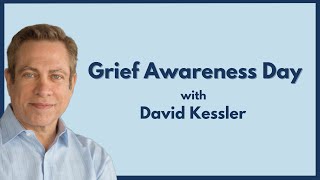
David Kessler, a grief specialist, discusses why grief isn't linear and there's no five-stage sequence. He warns against toxic positivity, explains grief extends beyond death to job loss and trauma, and shares his own losses of his mother and son.
Questions this video answers
August 30 (Grief Awareness Day) (speaker states "Today's August 30th, which is grief awareness day.")
Angie Cartwright in 2014 (speaker: "It was started by Angie Cartwright in 2014.")
Finding Meaning Workbook (described as "the blue one" and a standalone workbook; companion class available).
griefbook.com (speaker: "You can go to griefbook.com")
Giveaway is limited to residents in the U.S. (speaker: "I want to give one away to someone who's in the U.S.")
Chapters
Let me give it a few moments to get me live for folks. Hello. Hello.
I'm going to give it a couple of moments. I'm just coming on here. It's National Grief Awareness Day, and I am popping on all over today. And here I am here, and I'm just talking about grief and sharing about it and hopefully helping some folks. So I wanted to just come on. You know, I wanted to tell you a bit about National Grief Awareness Day that was started by Angie Cartwright. And then I'm going to give you hopefully, some tools and tips and things that may help you. It was started by angie cartwright in 2014. Angie had a sister that died. She had a mother that died and a husband. And she's really been a teacher by helping in so many ways, just even establish this day for so many people. And I wanted to come on and I have been going through, what would we call it? The Internet. I started this morning in Facebook and I went to someone's Instagram. I was on another Facebook. Then I was on a TikTok. Then a private, private grief group. My grief group, Tender Hearts. And now I'm here. I even did LinkedIn. I didn't even know you could go live on LinkedIn. But I really wanted to try to get the words out today to help people be aware of National Grief Awareness Day. I mean, there's a donut day. If we can have a donut day, we can have a National Grief Awareness Day. So I wanted to give folks some tips here, some tools, little discussion about grief and awareness. And I also wanted to.
Share.
New book coming out, Finding Meaning Workbook. It's the blue one. Always look for the blue one. And because I want to give one away here today. So. So we're going to choose from the comments. We're going to let this play for the weekend, and then we're going to choose from the comments and I'll give you some directions on what I the question I'd love you to answer in the comments. I want to give one away to someone who's in the U.S. but I want to first begin by just talking a bit about grief and loss. I think the biggest thing people have said to me today is let people know that grief is not linear. Let people know there's no timeline, there's no sequential stages, there's no five easy steps. And that there's so much that we need. We need people to see us. And some of you may be familiar with me, you know, obviously David Kessler, but it's right there. So I'm sure you can see that. And you know, I have not only been a grief specialist for years, I had the death of my own mother and I had the death of a son. So I know this world professionally and personally. And you know, there is no right way to do grief. There's no way that anyone can tell you. You know, there's an old saying, I think it was a Rumi saying about don't ask someone for advice who's never left their home about traveling in the same way. You know, especially today in the grief group, people have told me how many people gave them advice about, get over it, move on. Why are you lingering? Why you still? And the truth is, the people who are giving them advice, their loved ones are alive and well. Here's the reality. Sometimes our grief makes other people uncomfortable. Our grief makes other people uncomfortable. And a lot of times, without knowing it, people will bright side us.
Have some toxic positivity. Your loved one who died wouldn't want you to be sad. Okay, What? I'm going to snap out of my grief because they wouldn't want me to be sad. I miss them every day, you know, or starting a sentence with at least trying to make us feel grateful when we're sad. You know, at least they didn't suffer. At least they died quickly, all of those things. And you know.
I think grief changes us. Grief changes us in so many ways. And I really wanted to hear from you. And one of the things that I wanted to hear from you is today, if you can put in the comments whichever feels true for you, and then we're going to randomly choose a comment to send one of the new books to is if you're dealing with grief yourself or you've had grief yourself, which who hasn't? What do you wish people were more aware of in your grief? What do you wish they were more aware of? The other question, if that's not the quite right one for you, is how have you helped to make the world a little more aware of grief? Maybe it's just by saying their name. Maybe it's just by asking people about their grief. Maybe it's just about talking about it. So I'd love to either hear in the comments and we're going to look later in the weekend. So if you're not here live, it's okay. We're going to just choose someone over the weekend. Today's August 30th, which is grief awareness day. So we'll choose someone's comments. So even if you see this later, you can still be eligible to maybe win the book. And by the way, if you're, you know, you're like, I don't care if I win it. I'd like to buy it or know more about it. You can go to griefbook.com griefbook.com and you should be able to get it anywhere there, whether it's from Amazon, your local bookstore, Barnes and Noble. There's lots of places. And the good news is if you get it there on any of those places, I have a free companion class that's going to go with it. So let me know. I'm so curious. And I'd also love to know, like, even as I mentioned, even if you're watching this later, I'd still love to know in the comments. Where are you from? Where are you from? So.
I think so much of grief that we don't understand because we see the movie and TV version of grief. The movie and TV version of grief is.
Episode one, someone dies. Episode two is they're sad. Episode three is they get back to life. Here's the reality that you and I know. Grief has a much, much longer.
Shadow in real life. And all the studies are showing us that too, that grief lasts much, much longer than we think. And I think sometimes we don't understand how long it lasts. And we think we should have the movie version or even worse, our friends think we should have the movie version and we should just be over it. But the reality is grief doesn't work that way. Grief doesn't work that way. It's much, much.
You know, many of you have heard me talk about my own son. I after my younger son died, I wanted to write every parent I had ever worked with a note that said I didn't know how the pain bad the pain was. Our friends and family who aren't dealing with grief.
They.
Don'T have a basis to know their parents are still alive, their siblings are still alive, their spouse is still alive, their fiance is still alive, their friends are still alive. And you know, know you're earlier today when I was in Tender Hearts grief group, I have to tell you, like so many people said, one of the dreaded questions was how are you? And they talked about the challenge is, is how are you?
People often don't really want the answer, or at least they don't want a truthful answer. They, they want you to be fine and they want you to be over it. And yet, boy, that's just not the life we live in. That's just not the life we live in. And so I think it's up to us. We shouldn't have to be. If you're in grief, you shouldn't have to be the educator of the rest of the world. But I think as soon as we can, we need to be. And it's a challenging role to have to take on. And yet I think the reality is we often do have to take it on and, you know, finding meaning. This book and now the workbook that I wrote. And the workbook is standalone. You don't have to have finding meaning for it. I really talk about, you know, how there's no right way to grieve, how post traumatic growth happens actually more than post traumatic stress. And we don't have tools. And, you know, part of many of you who are here, maybe therapists. You know, most of my work is training therapists and coaches and helpers and mental health professionals to help people in grief. And many times they've told me in their education, they didn't get one class on grief anything. They knew they had to do it electively, go out and learn more. They had to go to my grief educator certificate program to get the knowledge. And that's what I love about finally being able to do this workbook that I hope you'll check out is that I give you the tools directly or if you're a helper now, you've got these amazing tools you can use for people. And I'll tell you, part of what we have to realize is that in grief, especially on a day like today when we're talking about grief awareness, grief is a time when family and friends can feel like strangers.
When they don't see the world as we do. And strangers, other people who are in grief that you may have not met before.
Can suddenly feel like family and friends. That's why grief groups so work so well. And there's also trauma. You know, I teach about all grief does not have trauma, but all trauma has grief. And yet the reality is, as we talk about that.
Grief is not just the death of a loved one.
Grief is sometimes the end of that relationship, the end of a marriage, the end of a job. That trauma can be the end of trusting the world for a while, the end of feeling safe in the world, the end of feeling happy in a relationship. And, you know, listen, I'm a big believer that healing is possible. I know sometimes people healing feels like a dirty word, like I'm never going to be healed. And I think that's because we have sort of this myth about real grief is.
Staying in pain for our loved one. And you can't skip ahead to the pain at all. But there's no loyalty and there's no disloyalty in letting the process unfold. As I always say, we all come from a long line of dead people. And in many ways, I teach people what our great grandparents knew.
How to be with those who were dying, how to be with other people in grief, how to sit with them, not fix them, but just sit with them, just be with them. Not wanting them to change, not wanting them to be further along in the process. How many of you were with a friend or family member and you thought they were. You were getting questions because they wanted to know how you are. And then all of a sudden you realize they're assessing if I've done my grief work, if I'm far enough, if I should be further. And how upsetting is that? So, so much grief awareness is needed in the world for us, for them, for others.
And we have to talk about it. And I'll tell you, one of the things that really is amazing is we need community. Even if it's a YouTube community, even if it's an online grief group like Tender Hearts, even if it's your local group, even if it's your church, your synagogue, you know, wherever it is.
Really, though, the reality is.
Other people in other situations.
Caused our pain, and we need people and other people to help heal. Grief has to be witnessed. We need to be around other people. And that's why, you know, if there's nothing else I can do except just connect with you for a few minutes on YouTube to let you know you're not alone. Don't let anyone tell you how to heal, how to take care of yourself, how to do grief. There's no right way. There's only your way. And just know there's always more help out there if you need it. Please remember in the chat we're going to give away one of these to someone on YouTube. Just all you need to do is be in the US and just put a comment under the video sometime this weekend. Just saying how you wish your grief was witnessed. A little more people were more aware of your grief or maybe how you've done even a little something to make the world more aware of grief. Thank you all so much for being here. You know, if anything, in the world of end of life grief and loss, death and dying, that I've learned, the most valuable thing is our time. And I appreciate you spending just a few minutes here with me. Thank you so much. I hope to see you soon. I hope you'll check out the book griefbook.com. thanks.










