Grief Awareness Day with David Kessler
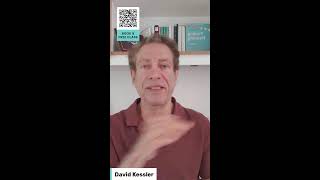
Live session with David Kessler promoting his new workbook Finding Meaning (a companion workbook to his work on grief). He introduces the workbook as a practical guide (not just a journal) aimed at helping people excavate pain after losses of many kinds to find meaning. Kessler frames key themes: "where loss leaves you" (timeline of grief, loneliness, numbness, longing), excavating pain to reveal meaning, and secondary losses including the loss of a shared future. He references Victor Frankl and Edith Eger, discloses personal bereavement (his son), notes he has written seven books, and describes logistical details: the workbook releases October 1, preorders/sales in the next weeks are important, QR codes will link to retailers, and a free companion class will be offered to buyers.
Chapters
Hi, everyone. It's David. I thought I would pop on and do a little live session for just a few moments. I'm curious to see if this is working, if I'm coming on in different places. Hi, everyone. Thank you for being here. I'm so glad you're here. If you're joining me. Thank you so much. All right, I see I'm on in one place. If you're here, if you're joining me, say hello, tell me where you are, and if you see me. That'd be fun. If you do. I'm so grateful that you're here. Thank you for being here. I'm just popping on to say hello. I want to just take a moment and talk to you about this guy here or this girl here. Are they here? This is the new Finding Meaning workbook that's coming out in less than two weeks. And I hold it up for you like this. Not because I'm trying to be an amazing salesman or salesperson, but because there are AI copycats out there these days, and it's easy to go into.
Amazon or other bookstores and put in Finding Meaning workbook. And you will see one, but it actually won't be by me. And it may even look a bit like this, but not quite all the way. And I want you to, if you're considering this book, to get the real one. I've been working on this for quite a while now, and I'm so grateful to actually have it in physical form. And I want to just pop on from time to time and talk to you about it. I think it's fascinating. One of the things I start with is where loss leaves you. And by the way, we've all seen workbooks that, when you look at them.
Looks like a.
A quote with lines. And you're like, this isn't really a workbook. This is more of a journal. This is actually a workbook, but it's a book. And you could start with this one if you wanted. So I want to just.
Share that. And the idea of loss leaves us in a new place, in a place we didn't expect, in a place we didn't want to be, in a place that's painful and tough.
And we're lost and we need direction. And I wanted this book to be as if I've come over and I'm sitting at your kitchen table, and at.
Your kitchen table, I'm there with you, and we're doing this together.
That's how I wanted this to be. That's what I wanted.
You to feel and know. So I hope you're feeling that also. So I'm so grateful that you're here. If you're just tuning in, if you're just seeing the live, I'm just wanted to talk about the book and let you have just a little idea of what it is and how it's working in case you want to consider getting it.
So the book is called Finding Meaning.
And when I think about where loss leaves us, doesn't it often leave us alone, leave us in pain, leave us without hope, leave us in loneliness, leave us in longing. And.
We'Re such a grief illiterate society. No one tells you what to do, how to do, how to get to.
The next place, how to understand what this pain is. And that's what I wanted it to be.
A bit of a guidebook.
By the way, if you're here live.
With me, I'd love.
Or if you're watching this in the.
Replay, I'd love it for you to see where you're from. So feel free to tell me where you're from and feel free to ask any questions. And I'm trying to figure out all the streaming devices, how to learn to see all the questions, but I'll be working on that. But I would love for you just to.
Share a bit, if you would, about, you know, what brought you here, what brings you pain in this world of grief. As you know, I've often talked about grief as many things. Of course, it's the death of a loved one, but it's also many, many other losses. And when I think about this idea of where loss leaves you, one of.
The things that I chat about is.
You know, two people who had a similar loss and one person says, life can't go on. You know, maybe they're both two years out. And two years out for me is early grief. Maybe they're both saying.
I don't know how to do this, I don't know how to live again, I don't know.
How to ever feel. And when that happens, what do you do?
And there is no guidebook for this. And that's why I wanted to give us a little guidance and find a way to maybe help folks feel, oh, there's a little hope, there's a little information here, there's a little way to talk about this. So I'm so grateful that you're here. Wow, I see someone's here from New Zealand, someone's here from Hollywood. That's really amazing to see all the places. I'm just checking on my device to see some other places I can see. It's really beautiful that people are sharing the places they're from. So I want to talk about. That's where I begin in the workbook is where loss leaves you and how do you find a way to excavate the pain you're in, to excavate the challenges of the loss? And I wanted to give really clear guidance on how to do that. I'd love for you to also say, what device? I mean, what you're on. Are you on.
Here with me on Instagram or Facebook or YouTube? It's fun to sort of see all that.
Oh, look.
I mean, my goodness, Richard's here. Oh, Richard, I'm so sorry. Your loved one.
Died in mysterious ways. I mean, death is brutal without any mystery to it. Lincoln, California, Las Vegas. Thank you for being here. Billings, Montana. Montana. Alaska, New Zealand. Lovely. Thank you all. Like I said, I'm going to be popping on from time to time because I do want to tell you about the book and make sure you sort of know what it is to decide if it's something you want. And I showed finding meaning. Just so you know, this is the COVID because there's some AI copies out there, and I want you to find the right one by David Kessler. And that's why I didn't want to start with this idea of where loss leaves you. And it's also interesting to think about that idea. When we say where loss leaves you is.
The timeline of grief.
Do you feel like your grief hasn't hit? Do you feel like this pain will never change? You know, does your grief feel right on time? Do you feel numb? All of those things I really tried to cover in the book. And, you know, I'm going to be vulnerable here that, like, it's a challenging world that you have been through such grief and pain and that there's not help. And, you know, many of you know me from. Whether you know me from the now seven books I've written.
Or from me being a bereaved child or a bereaved father to know this knowledge I'm hoping to share comes.
To you professionally and personally. I've been through the dark nights, and, you know, I really took that heart and tried to put my heart and soul into doing this book.
And, you know, the weird reality is.
Books are judged.
In the two weeks before they go out. Whether it's going to be in your.
Local bookstore or whether it's going to.
Be well shown on online platforms. All depends on sales in these next few weeks. So that's why I'm going to be coming on.
I want to give you some valuable information, whether you buy the book or not.
But I want you to, if you.
Are considering getting it, to please do.
The book's called Finding Meaning.
If you're going to pre order it.
Or order it ever, this is the time.
I'll put a link up with a QR code. You can just hold your phone right on that QR code and you can get it directly from Amazon. And in a way I'll in a moment I'll show you.
Another code if you wanted to get it and through Barnes and Noble or an independent bookstore. And I'm also going to be giving you a free class. So we're going to start the book together. But I also think about this right here I talk about the life you didn't get.
We are dealing with where loss leaves us. We've been ripped off one road and thrown on another.
And you have to.
Deal with where you've been left. And we have to grieve this road that we were on with our loved one and that's the road we were hoping to have. And we got taken off of that and thrown on this other road and this other road.
We're grieving the loss of the future with our loved one. We're grieving that they're not here. And we're grieving that.
There won't be a future together. And I think, you know, I talk about the losses and the secondary losses. We have so many losses to deal with. And that's why I'm going to be coming on and talking about some of the content from the book and some of the things that may help you. And it is that idea of, like, when you start out.
How do you find your footing again? How do you find your footing? And you would think our mind would be so helpful, and yet it's not. Let me just read you something here. The grieving mind often finds no hope after loss. But I want you to know the potential for meaning is ever present in our lives. And this really isn't a workbook about getting to meaning. It's a workbook about.
Excavating the pain so that you find the meaning underneath. One of my dear friends.
And I'm.
Going to read here about it, the.
Austrian Holocaust survivor and psychiatrist, Victor Frankl. And I, you know, I also, my.
Dear friend is Edith Eager, who also.
You know, a Holocaust survivor.
And you know, I look at these.
People who find meaning after loss. And I remember when My son died. It's like, meaning, well, that's pretty impossible. And I wonder if some of you.
As you hear this, are going, meaning, well, he's crazy.
That's impossible. But I always remind people, meaning is.
Not a in the horrible death. It's not in the murder. It's not in the divorce. It's not in the narcissistic person that destroyed our lives. It's not in the breakup, the divorce. It's not in the betrayal. It's not in the abuse.
Meaning is in us. It's what we do after. And I really hope you'll consider whatever type of loss you have that this book can maybe help you with the death of it. You know, because they're all endings we didn't want. They're all deaths. So.
And I also, as I mentioned, I.
Wanted to let you know, here's the QR code if you wanted to look at Barnes and Noble or your independent bookstore. This will also help you sign up for a free companion class I'm going to be doing. No matter where you buy the book.
Even if you physically go into your bookstore and order it, which I would love if you would do that, too. You just get your receipt, you just put the number in there and you're enrolled in the class. So I really hope you'll consider the book and we'll all start it together. It's coming out October 1st, and like I said, these next few weeks are crucial.
For craziness of the life and the death of a book. But it is what you're judged on. That's the reality. And having all of us here being.
Forced to accept the reality of life. But I hope you'll get it. I hope you'll join together. Like I said, I'm going to keep popping on with maybe some valuable information, talk to you about what you're going to find. And if you just come on when you see me on and just watch some of these, I hope you'll find them valuable. So consider making sure on your phone your notifications are turned on From Facebook or YouTube or Instagram, wherever I am coming from, because I'd really love to see you again. And like I said, I'm going to be popping up a lot. And the reason I am going to be popping up so much, I hope, is that I'm really committed to helping people ease their pain. And I'll tell you, you only have to look on social media to see how bad the pain of loss is. And anything I can do to help with it, I'm here to do that. So thank you for joining in, no matter where you're coming from. I'm grateful to you for getting the book, pre ordering the book now so you can get the free class. And I hope to see you in the free class or somewhere. So thank you. Thank you so much for being here. I really appreciate it. I'm sending you all much love and I'll be popping back soon. I promise. I'll be coming around. So thank you, thank you, thank you. All right, see you soon.










