Grief expert, David Kessler interviews Frank Ostaseski, author of the The Five Invitations.
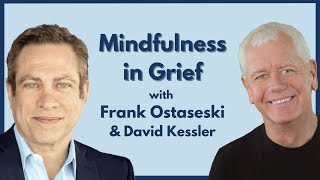
David Kessler talks with Frank Ostaseski about his stroke recovery and Buddhist approach to grief. Ostaseski shares the Five Invitations: don't wait, welcome everything, find rest in the middle, bring your whole self, and cultivate a don't-know mind. He explores vulnerability, suffering, and how to serve others through loss.
Questions this video answers
fiveinvitations.com and metainstitute.org
"Last summer" (as stated in the interview)
Zen Hospice Project
He says he has been a practicing Buddhist for many years.
He reports losing half of his vision (partial visual field loss).
Chapters
Hi, everyone. I'm David Kessler. I'm so glad to be here with you tonight. I'm especially glad to have Frank here. Frank, so good to see you.
Nice to meet you. Nice to be with you, David.
Some of you are going to be trying to find your way on. I came on a moment early just because I have the belief it helps. We'll see if it does. So when you find us, come on.
It's a challenge for people to find this, Frank. There's a lot of refreshing that has to go on. So I have people say hello when they come on. And you'll see we'll be joined in just a few moments as people begin to find us and find their way here.
I don't know, Frank, if you experienced this when you were young, but when I was young, there was Romper Room and there was a teacher who would pretend like she was looking through a glass at all the kids out in TV land. So sometimes I think of myself as doing that. Like, Diane's here. Just came on from Virginia and I'm like, hi, Diane, Virginia. Jennifer just joined us from. She says sunny, Alaska. Hello from Alaska. Janice is now here from British Columbia.
Ann is here from Washington. Garrick is here. Zane is here from Kansas. So we get to see where everyone's from. Sharon's from Midland, Texas. John is from Massachusetts. It's good to see everyone. Lucy from Indiana. Welcome. Welcome, all. I love seeing where people are from and them being here. Pat comes to us from Virginia. Karen is happy to be here. Karen says, I read the five invitations shortly after my husband of 36 years died in October. So moving and helpful for me. Robin is here from New York. Betty from Ohio. Kathy from the Bay Area. Karen's from Vancouver. So nice to see all of you joining us. Yali from San Diego. Laurie from New Hampshire. Bonnie from Weston, Florida. Jolene from Phoenix. Welcome, welcome. Hi. Dolores from Los Angeles. Mara. Hi, Mara. Nice to see you. Jennifer's here from Michigan. We get to see these folks just popping up from everywhere. Frumit from North Carolina, Pat from the Bay Area. Ida from the Bronx, Beatrice from Houston. So nice to see everyone coming on. Welcome, welcome.
We're all here. As you know, I set up this group after COVID 19 people were having to shelter at home. People were unable to attend their grief groups. Loved ones were dying. They weren't able to say goodbye. Funerals weren't able to be had. The rituals we rely on were gone, so we couldn't physically get together. But we're at least here gathering And I love bringing you different voices. There's no one voice in grief. So I love having so many different voices. And we're all gathered here because someone we love has died. I'm a big believer that when they die, we don't quit loving them. I don't think they quit loving us. And I love to just take a moment in their honor, just a moment of silence for all our loved ones who have died. So everyone would just join me in that moment of silence, please.
Thank you so much for that. I appreciate it.
So nice to see you, Frank. You and I have an interesting history.
That's not a long history, by the way. We. We are both students of Elizabeth Kubler Ross.
And.
I got a call, I think I had heard that you had had a stroke. How long ago was that?
Was last summer.
Last summer I got a call from a retreat center that you had had a stroke and would I fill in for you. And that sort of began our intersection with one another.
Well, that was very gracious of you to do that. And I know the people in the program were very, very appreciative.
Yeah, it was interesting. You and I have talked about this. I.
I had never thought about how to fill in for someone in a.
Way that was honoring them. And I quickly got your book and read your book, even before I made the decision, because I wanted to. Of course, I was going to be teaching what I teach, but this was a program on your work, so I wanted to honor that and teach it. And I thought, let me read this, because the last thing I want to do is, like, if I disagree with it, I should not be the one. And I fell in love with it and knew I could do it with integrity. And Paul of Grief Yoga came and did it. And we had a weekend that honored you and honored your work. And it touched me deeply. So it's a nice full circle moment to get to be here with you.
Yes, it is. Yes, it is lovely to be with you.
I would love if maybe you've been someone who.
Worked with Kubler Ross. You helped with the Zen hospice. You've been through the AIDS crisis. You've been at bedsides of people who were dying.
How was having a stroke? How did that come about? What was that like for you? You know, we talked about what happens when you're the one and not the giver.
Yes. Yeah. We were talking about this earlier, before we came online, about how we can sit bedside with other people and, you know, accompany them through their dying process. But when you find yourself on the Other side of the sheets, if you will. It's a really different experience in my case. Without telling you the whole story, I woke with incredible pain, and I didn't actually know what was happening, but I was having a rather severe stroke. And what was curious, David, and helpful was that my mind, my awareness, could observe my brain going offline. I couldn't tell the difference between night and day. I could no longer tell direction.
I was quite confused. But my awareness was able to watch this. And so there wasn't a great deal of anxiety with it. That was a saving grace in my case.
Yeah, there was not a lot of anxiety.
No, there wasn't. Because the awareness could hold it. The loving awareness could hold it. Yeah. Yeah.
Wow.
We can talk more about that as we go along. Yeah.
How has this road of recovery been for you?
Well, it's interesting, you know, I.
The clinicians that I work with and others have really talked to me about recovery and how through neuroplasticity, we can rebuild the brain's pathways, et cetera. But the way I've been settling with it, David, is this is what's here. What does it have to teach me? So I've been talking more about discovery rather than recovery.
And my brain may or may not recover, but I feel like if I walk this path of discovery with some degree of love and integrity, then I will understand some amazing things along the way, even if my brain doesn't necessarily recover. Yeah. So it's a discovery process. Yeah.
And have you made some big discoveries that you could share?
Well, I don't know that they're big, but the thing that has been most touching for me, I think, is the value of vulnerability in our life.
You know, we often think of vulnerability as the susceptibility to harm, that we can be hurt. And so we defend against our vulnerability. But the actual experience of vulnerability is something quite different. It's open, it's porous. It's more like permeability. Yeah. And so, for me, it's the most wonderful of human conditions because it allows the beauty and horror of the world to impress itself on our souls. That's one way to think about it. And so it's been both a.
Support, for me, vulnerability and also a kind of strength. It's interesting. One of the things vulnerability does is open us to what matters most and to a deep love.
I'll give you an example.
When I came home from the hospital.
The home health nurses came to visit our house. We live on a houseboat. And so they were quite nervous about My falling and things like this and really guided me up and down the stairs and such. And the next morning, I was standing at the top of my stairs. One of the things the stroke has done is caused me to lose half of my vision, my sight. So I was standing at the top of the stairs. I had to navigate these stairs. And so what I did was I imagined my son, who I love beyond words, at the bottom of the stairs. And I realized that I was quite vulnerable. And if I were to fall, I would hurt not only myself, but I would harm him. And so I made a vow, standing there at the top of the stairs, that I would be very careful, that I would go slowly and attentively. And I have to tell you that that vow, which came out of my love for him, was very stable for me, more stable than the handrail actually going down the side of the stairs. So I would say in that way.
The love, that vulnerability has opened in my life has been incredibly powerful, useful. And I was, of course, familiar with it before, but I've become more intimate with it now. Yeah.
Are you a Buddhist?
I have been for many years. I'm practicing Buddhist and I teach Buddhist meditation around the world. So that's been part of my support as well. Yeah.
I was going to ask you. I would imagine that's been a great support to you.
Yeah. Not so much the belief system, but the direct experience. You know, much of what meditation practice is about is paying attention to what's happening as it's happening and not turning away from our experience.
Yeah, I want to get into that with you. So could you tell us, for people who aren't familiar with them, the five invitations?
Well, first we should say that an invitation is a kind of request. Right. If I invite you to my house for dinner, your job is to show up. So the invitations are a request to show up for your life. And all of them came to me from people who are dying, from our conversations, etc. The first one is simply, don't wait, don't wait. The second, welcome everything, push away nothing.
The third.
Find a place of rest in the middle of things.
The fourth, bring your whole self to the experience.
And five, cultivate, don't know, mind the last one so we can talk about each of them if you like. So they're kind of, we could say, slogans, invitations to. They're meant to challenge us. Yeah. They're not easy to live into.
No. And I'll tell you, it was fascinating. And I. As I've pondered talking to you, I have Thought about, I want to do this more. When I was doing your weekend, literally, there were so many moments, just little things that just happen or go wrong just to. Or someone who's annoying or whatever it may be. Just anything. I was like, push away nothing. You know, I was like. And it was really interesting to learn to see how much I can live with this.
Yeah. I mean, to welcome everything, push away nothing. I mean, one would ask, is that even intelligent to do? I mean, really, is that smart to do? I mean, it'd make a great bumper sticker, but is it really smart to do? And I think the word welcome, it confronts us with our judgments.
And what it's really about is not. So it doesn't mean we have to agree with what arises or that we have to like it. It just means that it's on our doorstep and can we meet it? And what does it have to show us? What can we learn from it?
So, grief.
Yeah.
How would we do? Welcome everything.
With grief? Because I don't want to welcome grief.
Yeah, well, that's understandable because it's harsh and it takes us into difficult and sometimes dark places in our lives, but it's here. And we have to trust that grief has its own wisdom and it has something useful to offer us.
You know, go ahead. No, no, go ahead.
Don't wait with grief.
Well, here again, you know, waiting is full of expectation. Waiting for the next moment to arrive. We miss this one. I mean, I can't tell you how many times I've been with people who are dying where the family has said, when is mom going to die? And waiting for that moment, we miss all the moments in between. Yeah. So grief is here. It's asserted itself. It's shown itself. It's now our curriculum. It's now. It's come here to show us, I think, how to love more, actually.
I mean, you know, grief is.
It's the way we love what we have most treasured, whether that's a person or an object that we've lost. And that's really the heart of grief. It's a path from fragmentation back to wholeness. It's a way we learned to love. It's the way we do love what we miss.
So let me dance with you on these for a moment.
Okay.
So the. Don't wait. I'm in enormous pain and grief and Frank, I want to get to the moment when I'm feeling better.
I don't want to be told, don't wait in this moment. This moment's horrible. I'm all about getting to the next moment, the next day, when this feels better. What would you say. Say to that person?
Well, first we would. Yeah, first we'd have to acknowledge that. I would never say to someone, don't wait. Right. It's an invitation. People can choose to use it or not.
What's its value? In my life now? What's grief showing me now? Yeah. Yes, it's difficult, and there's, you know, very painful aspects to it. But. But what's here, you know, what's actually here is that what's the face of grief right now? It's not just sadness, as you well know, David. You know, grief has got a lot of faces, right. It shows itself as anger or fear or, you know, loneliness or numbness. Like we feel like we're walking through molasses and we might never, you know, find our way again. So I have confidence that if we face what's directly in front of us, it shows us how to enter the next thing. It's.
The way we end. One thing shows us how the next thing begins. So the way in which we meet this experience opens the door to something else. So don't wait. Don't wait to see what grief has to teach us.
All right, I.
The last book, when I was doing research on finding meaning, I.
Studied buffaloes and storms. I'd never heard of this. How buffaloes will run into a storm, thereby minimizing the time.
They'Re in storm. And how we run from all these feelings, which to me is a little bit of the don't wait that, you know, pushing what is away never seems to make it go away, at least in my experience.
Yeah, I mean, the great African American writer James Baldwin, he spoke about this when he said something like, you know, there are many things in his life that we must face that we cannot change, but nothing can be changed until it's faced. And that's. That's don't wait. That's welcome. Everything. Yeah. The healing, at least the healing in my life has always been found by going toward the suffering. You know, that's where the healing is. You know, where else are we going to find it, you know, not someplace external to us. There was a guy I was working with in the Northwest once, and I said this. Go toward the suffering. And he said, that reminds me of telephone poles. And I didn't know what he was talking about. Telephone poles. And I said, tell me more. He said, well, he said, I used to install telephone poles, and when I put them in the ground, they're Quite unstable. And they can fall. And they can fall on a man and break his back or even kill him. So he said, the first day on the job, when I saw those telephone poles, I said to my partner, if that pole falls, I'm running like hell that way. And his partner was an old timer, said, oh, you don't want to do that. He said, if that pole starts to fall, you want to go up and put your hands right on it. He said, it's the only safe place to be.
And, you know, it's a beautiful metaphor, and I think it's true of our grief, too. It's the only safe place to be. We put our hands gently, mercifully, kindly on our grief and say, please show me how to live my life.
Talk to us about suffering.
Well, it's a big word, isn't it? You know, some of us think, oh, I don't have suffering. I have discontent. I have, you know, unpleasantness. But I don't have suffering.
You know, the suffering is sometimes, you know, it's like grief, Right. It's sometimes about what we've had and lost, but sometimes it's about what we didn't get to have. Yeah. So right now we're experiencing that. A lot of us, it's not just the death of a loved one. It's also the death of opportunities, you know, death of dreams, death of.
An imagined future that we don't have.
Right.
That's all part of this experience of suffering. So what does it have to show me and how do I complicate my suffering through my resistance to it? You know, there's a famous teaching in Buddhism about the second arrow, you know, that there's already enough pain, and then sometimes we add to that pain. We create unnecessary suffering by our resistance to the experience.
What's the story about the second arrow? I remember hearing that. Is the second arrow, our suffering?
Well, basically, a fellow gets shot by an arrow, you know, and one thing you can do is say, well, who shot this arrow and what kind of arrow is it? And what's the nature of the wood? And start doing a kind of intellectual inquiry around that arrow. But that's really the way in which we add to the suffering, you see, it's what we add to the experience that creates the kind of unnecessary, extra added pain. Yeah, it's already bad enough. Let's not make it worse.
Right.
And the next one is bring your whole self.
Yeah, that's a good one. I mean, this is a danger for you and I, right? Often we think that what will help is our expertise, or other people think that what will help is their strength or their religious beliefs.
But, you know, in my experience, what really helps is our capacity to deeply and generously listen to one another. I find in my experience that the things I'm most embarrassed about, that I'm most ashamed of in my life, have oftentimes been the very meeting places with people who are grieving or dying. It's the investigation of those experiences that allows me to build an empathetic bridge to their lives, to meet them. I mean, here's an example. If someone's afraid and I haven't really looked at my fear, if I don't know what happens to me when I'm afraid in my body, in my heart and my mind, if I say I understand, the other person will sniff out my sentimentality and my insincerity, and I won't be a reliable refuge for them. So to bring my whole self means to bring not only my skills and strength, but also my helplessness and my fear and all of the other aspects of my humanity that I have come, I have in common with this other individual. Yeah.
One of the, it's funny, one of the experiences, the first day that I met Elizabeth Kubler Ross, who walked in, and it was after she had had her stroke, and she said, come close and, and I came close, and she said, close enough. I want to smell you. And I went, okay. And then I immediately went to, I hope I did deodorant. I smelled and, you know, she smelled me. And she goes, go sit down. We'll see. And I said, something wrong? And she goes, just trying to smell. If you're a phony baloney.
Yeah, that sounds like Elizabeth. Right?
Yeah, it's true. When I was in the hospital, when someone opened the door, I could almost smell whether or not they were going to be a trustworthy person. Did they come in and make contact with me, or were they busy looking at the monitor?
Were they there to cheer me up? Or did they actually. Would they actually have the space to sit down with me and listen?
You know, I have a lot of tools that I developed over the years, David, as you have, but I don't lead with my tools. I lead with my humanity. And then when I need a tool, well, it's there. I can draw on my expertise. But what's most important is to touch each other, human to human, heart to heart.
Right. I, I, it's sort of embarrassing, but I preface it with I was in my 20s. But speaking of.
I was fairly young When I met her, I think I was either early 30s, late 20s, and in hospice, end of life world. I'm seeing Elizabeth Kubler Ross. You know, it's a huge thing. I said to her, maybe on my second visit, maybe first, the arrogance, it kills me. But I said, elizabeth, is there anything I can help you with? I'm very good with symptom management, medication management, advanced directives. How can I help you? I mean, like, I'm talking to Elizabeth Kubler all about my tools, right? And she said, yes, I could really use your help. And I said, absolutely. What can I do? And she said, I need my air conditioner filters changed.
That sounds like Elizabeth. Yes.
And I had that moment where I thought.
That'S not what I do. I'm. And I said to her, and then I had, you know, I had to go, am I here to help or not? Because I'm saying I'm here to help. And so I said, well, where are they? And she goes, there's a few of them through the house. You'll have to look. And I said, where are your filters? I don't have them. You'll have to go get them. And it was really a moment that I had to go, am I. Am I a helper? Who Am I here? Yeah. So it's an interesting. So needless to say, I changed her air filters. But, you know, it was that moment of, you gotta go. The tools were silly to begin with. I. I needed to lead with, am I here to really serve, or who am I in this?
Yeah, we. We can get stuck in these roles, right? Not only those of us who are professionals, but we can get stuck in the knowledge of being the knowledgeable person about grief, you know, and thinking that we know, and that's a place from which we can do a lot of harm to other people. Actually.
I have a friend of mine, Rachel Remond. Rachel Naomi Remond. We teach together a lot, and she has this one.
Pretty amazing.
Yeah, she is. She's wonderful. And she has this wonderful distinction, which you may have heard, which she distinguishes between helping, helping, fixing, and serving. And helping is actually an action between people who aren't equals. You know, if I'm the helper, I'm the strong one, I'm the knowledgeable one, etc. And when we help someone, we may cause them to feel weak, actually. And fixing, of course, is great when we fix broken pipes or cars, but people don't need fixing. When we fix people, we may inadvertently cause them to feel broken, Right? But when we serve, we really are serving the wholeness in them. And we're. In a way, what we are is an instrument for the wholeness in reality. That's what's actually happening. So there are ways of thinking about moving through our life, actually helping, fixing, and serving. Serving is a relationship amongst equals, and it's always mutually beneficial. Yeah. You know, when we serve, we're always serving ourself as well as the other. Yeah.
Right.
And how do we. How do we bring our whole selves to grief?
Oh, by letting us. Letting it have its way with us sometimes. You know, we are so. We have so many cultural and personal habits around grief, and we have ideas about what's allowed and what's not allowed. And it leads us to the idea of managing our grief or getting over our grief. You know, it's curious to me. You know, grief is kind of. For me, it's. You've used the analogy of a river with grief. And for me, grief is like a river, an underground river moving through our lives. And sometimes it emerges onto the surface.
That experience, you know, of it exploding onto the surface of our awareness is unlike almost anything else. But what's curious to me about it is that it's our common ground with each other. It's our common ground. We all have this experience of grief. Yeah. So how come we're so busy trying to get rid of it? We never talk about managing our joy or getting over our joy. These are also common human conditions. Right. So our relationship to grief, our habits around grief, can lead us to also trying to hurry people along through their grieving process instead of recognizing that it has its own rhythm and its own texture, and it's a deep, slow process of the soul.
For the others, who maybe aren't in grief at that time.
Why do they want to rush us? Why are others so uncomfortable?
I don't know exactly, always what it is for each individual, but we have a lot of fear. Grief is unpredictable, uncontrollable, and that scares the hell out of us. That's part of what it is. And it's messy. It's really messy oftentimes. And we, like, tidy. You know, we want life to be, you know, reasonable and measurable, and grief explodes all those myths.
It's the most human thing, though, David. I mean, I think we're hardly human unless we grieve. Yeah. And for me, while this experience that feels so much like fragmentation, like we've been split apart, actually, the river of grief as you describe it, kind of knits us back together again, not in the same way we were before. We're different. We've been reconstituted. But it's a trustworthy process. It's a really trustworthy process. We can go from fragmentation to wholeness. And if we just pay attention, grief will take us there. Yeah.
I think about that idea of being on the outside in tools and, you know, one thing I'm pretty open about is there's a sense of the world that I came out of, and I came out of the hospital world, the medical world where.
I'm discussing studies and my personal life doesn't sort of play into it. And I used to get.
Some. Some stuff from people that whenever I would talk about my personal history and my mom dying and shooting and all that that I sort of came out of that it gets too personal development.
And one of the things. After my younger son died.
I certainly had thought, for decades I've been in the river of grief with everyone else. And when I was thrown back into the epicenter of it, I wanted to write a note to every parent, to everyone I counseled and say, I've forgotten how bad this is.
Yeah.
That there was something about being thrown back into it and realizing the humanity of it, the pain of it, the love of it.
Yeah. I mean, like what you described and experienced with your son, you know, it's kind of impossible, actually. You know, in a way, it's. In one way, it's impossible. It's impossible to wrap our minds. Our minds, our egoic selves can't wrap itself around death. You know, it's just not big enough, our egoic thinking. So we have to find something big enough that can embrace this, that can hold this, you know, and it isn't our theories, you know, it isn't even our religious beliefs necessarily. It's a direct experience of something, some part of ourself, that's larger than this experience. And that was the thing that always amazed me in working with folks. I worked with a lot of folks who lived on the streets of San Francisco. They didn't have an inner life. They hadn't had the advantage of, you know, counselors. But they regularly found remarkable ways of meeting an experience that was unimaginably difficult. And it's because they found some place in themselves that was reliable, that was there, big enough to hold this experience.
And that's innate to us. Each of us have that.
One of the things that I think is.
Interesting is the next invitation, which is find a place of rest. I think about that one. In the middle of grief, find a place of rest. Could you talk about that?
Yeah, I mean, you know, we always think we're going to rest when our list is checked off, you know, or when our email box is empty. But I don't know about you, but my list is never checked off. You know, my ebo box has never been empty since I had one.
So if we wait for those experiences, we may never rest.
This phenomenon that happens in my work with people with cancer that I really love, women have talked to me about it most especially and they speak about what they call a secret gratitude. And what they're talking about here is that there's this.
Perspective that having long term illness gives us. And one of the things that they are speaking about here is that now they can say no to things to that, no to that boring dinner party, no to that activity that they didn't want to do. You know, and one woman said to me, now I can finally rest. I can finally rest.
And it occurs to me like, do we have to die before we can rest in peace?
I mean, couldn't we find a way of resting right in the middle of our experience? And I think that comes.
By giving our attention fully and completely to our experience. You know, when you're reading a good book or you're in a film, you know, and you're completely absorbed in it, you find there a kind of rest, a kind of sometimes a kind of ease. And we can find that right in the middle of the pain and the suffering and the anguish that is part of the experience of grief.
When we're not fighting against it, when we're allowing it, then in fact there's some quality of rest that merges and then we can lovingly, caringly be with what's so painful, what's so difficult. Yeah.
I was just looking over at one of the comments. Julie says my husband doesn't grieve anymore, he doesn't get attached. He says I didn't know when I married him.
Interesting.
Well.
You know, this word attachment gets thrown around a lot in Buddhist circles. There's a lot of talk about non attachment. You know, I think actually we need to be well attached. You know, it's a way that our love develops in our lives.
But there's a difference between attachment and love.
I mean love is open and free spirited and it's generous and it's, it's, it moves. Attachment is closed and often self centered and, and it leaves scars. Yeah.
Boy, I had to look at that. Yeah, I had to look at that. I can tell you I had a revolution in my own mind some years ago, where I had to really look at my love.
And a lot of what I thought was love was expectations and manipulations. And I really had to.
Figure out a definition of love that was more loving.
More open and more encompassing. And it wasn't about what I wanted. It was about.
An internal feeling of giving without expectation.
Beautiful. Beautiful. Yeah. I mean, if we come back to welcome everything, push away nothing. I mean, you can't do that as an act of will. It can only be done as an act of love. Right. And love is not a gated community. Everybody gets in all the, you know, all those aspects of ourself that we think are unlovable, they all get to come in. Yeah. And in the experience of attachment or expectation, it's just totally different. At this. Our guard is up. I mean, I'm curious. What did you discover about your experience of attachment?
And by the way, it isn't something I even, you know, the way I said it probably isn't true. It's something I'm constantly working on.
Yeah.
Whether it's my old wounds that the manipulation comes. I mean, it's all still there. I just don't listen to it the way that I used to.
I think it is sort of, you know, look, the dying have taught me so much.
I know now that.
I can't change another, nor is it even my place. I. I know to respect them on their journey. Like I said, it doesn't mean I don't once in a while catch myself trying to fix someone. And it's, you know, and sometimes now it's sort of my fixing has gotten ridiculous. And I can joke about it. I mean, my. My older son and I had a very funny moment that I just. I said, you know what? I would just love for my ego to speak and tell you. This is to my son, probably when he was 24. I said, if you would give me 30 days of your life and let me make every decision, you would so love your life.
And he looked at me like. Like that's going to happen. And we had the best laugh about it.
Yeah.
There was a time in my life all that might have been serious and real, and now it was just a ridiculous ego thought that I had.
Yeah. Yeah.
It is amazing how it changes. And we realize what, you know, how much of love. And Kubler Ross used to speak about how much of love is what we think of. Love is so conditional.
Yeah. You know, I'll tell you Elizabeth's story. I was. She invited me to come and shadow her for some period of time. And I would come to her workshops, which were fairly small in those days, 40 or 50 people. And I would sit in the back of the room, and she would work. And there was a lot of suffering in those rooms. Tremendous trauma, deep loss, grief, etc. And I would sit in the back of the room doing a Buddhist meditation practice that's called metta practice or loving kindness practice, showering everybody in the room with loving kindness. So I did this, and then I got up from this room and I walked down the road and I fell down to my knees in a mud puddle. I was so overwhelmed with the suffering that was in the room. And my love and my meditation practice was just a defense. It was just a way to try and keep that suffering at arm's length. I wasn't really opening to that suffering. Do you see?
And along comes Elizabeth. Here I am in this mud puddle, weeping and crying. And she got a cigarette in her mouth, and she picks me up, and she said, oh, you were trying to hold the suffering. You can't hold it. It's not yours to hold. She said, you have to let it move through you. Come back with me. And we went back to her house and had coffee and cigarettes.
So, you know, there's a way in which we can use love as a defense, or our idea of love as a defense, or there's a way in which it can actually embrace everything. You know, I've. I done years of psychotherapy. I have meditation practice. I've sat with thousands of people who died. And, you know, David, I haven't gotten rid of one single neuroses. Yeah. After all these years, I haven't got rid of one. My relationship to them has changed, but they haven't gone away. And that's been my experience of grief, too. It doesn't really go away. You know, it's part of the human condition. But my relationship to it has shifted dramatically over the years. It doesn't have me by the throat anymore. Yeah.
And what about, you know, you mentioned accepting those parts of us that are bad that we judge as bad.
Yeah. Talk more about that. Because I see so many people, you know, in the midst of grief, I think, well, oh, my goodness, your. Your son, your husband, your wife, your parent has been murdered. Something horrific.
Yeah.
And you're beating yourself up about it because you think you're bad. You were across the country. What, What, What? You know, talk about that sense of bad and wrong that we have and what to.
Oh, boy. You know, if.
Yeah, I mean. Well, you've said it beautifully. I mean, if we could just listen and we were to hear the sound of our own voice, our own cruelty, in moments when we most need our mercy, when we're clubbing ourselves with self criticism. Longfellow had that beautiful thing. If we could look into the other and see their lifetime of sorrow and discontent, it would be enough to dissolve all hostility toward them. And the same is true of ourselves. So when my critic emerges, I've had to learn to defend against it. You know, I've had to learn to say, thank you very much for your advice. Right now I'm doing something else, you know, or stop. Or sometimes even more strongly, I speak to it.
We confuse the critic with wisdom. The critic is just the standard bearer. It's what we've acquired over our lives, but it's not wisdom speaking. I've been around many wise beings, His Holiness, the Dalai Lama, great teachers, none of them ever transmitted their understanding to me with meanness.
So when that voice of meanness comes up in me, I listen to the tone of voice of it. And it helps me to distinguish between what's wisdom and what's criticality. And criticality doesn't help anyone.
I also find in working with some, many people in grief.
Sometimes old wounds come up. Really old. You know, we often think it's the death. That, of course, happened this year. But I'm surprised at sometimes that.
Inner critic was born out of a perceived abandonment around a death when they were young.
Yeah.
It feels like those voices sometimes take hold early on.
Yeah. And when they're not examined or not known, they raise their ugly heads, you know, so to speak. And we misinterpret the situation that we're in.
We transfer that experience from the past onto the current experience. If we were unloved as a child, as I was, you know, I lived in a very crazy household. Both my parents were alcoholics. They were violent, you know, And I had to really understand that that was not because of me. It's not. It wasn't because of who I am. And eventually, gradually, I had to work with that. That material so that it wasn't continually asserting itself in my current experience.
Yeah, right.
One of your other invitations.
Cultivate a, I don't know, mind.
Yeah.
You know, I think about in grief so many times, we go, I'm never going to be happy again, or this pain is always going to be horrible, or I'm never going to get through this.
Talk about that. Don't know, mind and grief. What would that even look like?
Well, as you said in the introduction, I was the co founder of the Zen Hospice project, so I felt obliged to put something Zen like in this list. You know, Zen is full of these kinds of expressions, cultivate don't know mind, and you know, they're meant to push us out of our sort of logical mind and have us come to something more fundamentally true. A don't know mind isn't ignorance. It's not an encouragement to be ignorant. You know, ignorance isn't not knowing. Ignorance is misperceiving. I know something, but I misunderstand it or it's the wrong thing. There's a lot of that going on in the world right now. A don't know mind is a mind that's open, it's receptive, it's curious, it's full of wonder. It wants to know, wants to know. And so.
It has this kind of sense of discovery about it. I mean, when we're so filled with our knowing, whether it's some knowing that someone else gave us something we read in the book or something we've transferred from our childhood, there's no room for anything new to enter. So don't know mind has this kind of sense of discovery. That's what I was talking about with my strokes. Yeah. So what is this grief? You know, what is actually happening here? What's it like when I feel sad? You know, I don't want to feel sad. Well, our effort to keep things at arm's length, to push them away, causes us to never know anything about the experience. So we're always a victim to it. When we come to know something intimately, then we have choice, then we can. Then we have some way of working with our experience. So don't know mind is a mind that's open, receptive, wants to know, wants to know. And not just intellectually. Our minds can help us discern and distinguish a lot of things, but it's our heart that reveals what's true for us. So when we say mind here, we have to include the heart as well.
Yeah, it's a wise heart.
We were talking earlier about the idea of grief versus our story about grief. Yeah. And our story about our grief or about the loss.
Can you speak about how that story can get in the way?
Oh, you probably could do better than me. But I just think that sometimes we live in our story of life, which isn't our direct experience of life. We confuse the story with the reality that's here. And so sometimes we can get weighed down in our grief and.
Kind of stuck in it. For a long time, Years and years. But we're actually not stuck in the grief. We're stuck in our story about it. And our story about it may involve the content of the death or loss that we've experienced, but it's also the way that we, again, keep ourselves at arm's length from the experience. So what's the experience of grief like? What's it feel like in the body? How do we know it in our hearts? What does our mind do when we're grieving? Does it get swept up with memories or strategies to avoid it? What happens? Let's get to know it. Let's sit down with it and have a cup of tea with it and get to know it really well so that we're not a victim to it. So that we have choice.
When we're in our story, we're not in the direct experience.
Our stories are important, but let's not confuse them with the direct experience.
Right.
So we are in a world that's in a pandemic.
We're in a world now that.
Horrible racial injustice, injustices are getting revealed in a way they have not been revealed before.
Yeah.
And it's a time.
Of a lot of stress for people. Reformation, fear, anger, grief. What do you think about these times? What is. What are you curious about in these times?
Oh, boy.
You know.
One of the things that I think is happening now is that.
This collective suffering that we're experiencing is putting us in touch with what Elizabeth used to call the pool of grief. Right.
That we've been carrying our whole life, some of us, for a very, very long time. And what it seems to do, at least it has for me, is it triggers the personal grief of my life, but also the everyday, ordinary grief of my life. You know.
Grief isn't always about something heavy. You know, sometimes it's just about not getting our dreams, letting our dreams live, or getting our wants met, actually. And that everyday grief of our life is really important.
I remember being with a young woman who died. She was probably in her 30s, and her dad came to see me. He worked on a meatpacking plant in the Midwest, in South Dakota. And he came to the house.
And he was with his daughter, who had died shortly before he arrived, actually. And he and I were sitting there for quite a long time together. And about three in the morning, I said, you know, Clyde, I gotta go home now. I gotta go be with my kids. He said, all right, I'll stay with her. I'll stay with her. I said, well, come on outside. Let's visit outside for a while first. And we went out in the back garden and I said, claude, I can't really imagine what this is like for your daughter to die. And he said to me, you know, Frank, it's kind of familiar. And it shocked me at first. But what he was talking about was this everyday grief of our life. He wasn't saying it's the same thing, but he is saying that he lived a life where grief was not a stranger. And somehow, because he turned toward that grief over the years, he. It was helping him now to meet this impossible grief of his daughter dying. So we all have our grief. We've been carrying it for a long time. And I think in the moments that we're experiencing now, that pool of grief is being exposed. And I personally think that we need to find ways of collectively dealing with that grief, not imagining that we can do it just by ourselves.
Right, right.
And I think about your invitations, and I think with all the stress in the world and all the work that needs to be done, I think that sense of don't wait, it's not for our next generation to solve. It's for each of us to look inside and see what we can do to make this world better.
Yeah. I mean, one of the things that happens when we touch the precariousness of life, which is happening for us now, is that we're also coming in contact with how precious this life is. Then we don't want to miss a moment of it. We want to jump in with both feet. Right. We want to tell the people we love that we love them. That's the great teaching, the great gift, if you will, that comes from being close to death is it reminds us of what matters most. And so don't wait to tell the people you love that you love them. Don't wait until you find yourself on your deathbed to learn the lesson, Lessons that it has to teach. Yeah.
And I'll tell you, I think so many people talk about death. Being a teacher, seeing George Floyd and seeing someone's life go out of them.
I think that was a wake up call that's been long overdue.
Yeah. There was no turning away from this. And, you know.
I think it's interesting that this all happened during the COVID quarantine, that in a certain way, what's been happening is we've been nestled into our own little homes and our own little neighborhoods. And often what's been happening in those neighborhoods is various gestures of kindness. Someone goes shopping for you, or they leave some Flowers on your front deck. And so we're beginning to understand our interdependence with each other, that we're tangled up in each other, that we're of one fabric, you know, and so when something like this horrific murder occurs, we feel it more personally now than we might have before. We might have thought, oh, that guy over there, some other time. But now we can't do that because we understand that we're tangled up in each other and that what affects one of us, affects all of us.
And so I think, I'm hoping that this creates a kind of tipping point for us where we'll begin to understand that what we've been turning away from is what we need to turn toward.
Beautiful, Frank, a lovely, lovely time and honor to be with you. It's an hour that breeze by and I feel like we could talk to you for hours.
I want to thank you for who you are, and I look forward to the day we meet in the physical world.
I'd like that very much, David. And I just want to say what a gift this is to the world, what you're doing. You know that there's a place that people understand we're not alone in this. We're not alone in our grief, that others are sharing it with us. And you've created that forum here, and it's a beautiful thing that you've done, and I'm happy to be of some very small support to it. But thank you for doing it. And I trust you'll keep doing it as long as you possibly can.
I will. Frank, if people want to find you, find about your work, where can they find you? I know you're on Facebook.
Yes, that's an easy place to find me. They can go to fiveinvitations.com and they'll find lots of resources there, etc. And also the organization I founded called Meta M E T T A Meta Institute, which is an organization that trains caregivers and healthcare clinicians in mindful and compassionate ways to be with dying. Either of those sites, they can find resources and, you know, find out where I'm going and where I'm teaching and that sort of thing. So. Fiveinvitations.com or metainstitute.org either one of those.
Thank you for being with us. Thank you for your time and I want to thank all of you for joining us. It's. It's been a remarkable hour and I will see you tomorrow. And I appreciate all of you and we're going to have a Stair Perel tomorrow. So it's going to be. She's quite interesting, and I'm looking forward to a conversation with her. And, Frank, I look forward to more conversations with you.
Any way I can help David, just give a shout. Okay?
Thank you so much. Take care, everyone.
All right, my friend.
Bye bye.










