Grief expert, David Kessler interviews Kelly Farley on Grieving Fathers
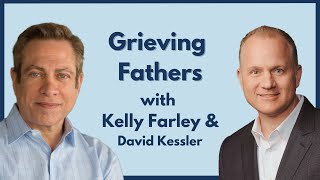
Kelly Farley lost two stillborn children, Noah in 2006, and talks with grief expert David Kessler about how men grieve differently. Men face pressure to stay strong and often express grief as anger or guilt instead of sadness. Counseling, support groups, and rituals help, but grieving fathers need permission to feel.
Questions this video answers
2004
June 2006
Yes — both children were stillborn.
Grieving Dads
grievingdads.com
Chapters
Hi, everyone. David Kessler here. Good to have you joining us on this Father's Day. Hi, Kelly. Nice to see you.
Hey, David. How are you?
I'm good, thank you. So if you're new to the group, you can just say hello if you want. You don't have to. I came on a moment early because I have a little theory that it helps us find one another. It's just a theory, but we'll see. So I'm looking now myself to see if I can find us, because I know if I can find us, then you can find us. Let's see.
And I'm looking.
All right, where are we? Coming up soon, I hope.
Say hello when you. Come on. Oh, hello. From the uk. All right. That's a good sign. That's a good sign.
Welcome, welcome, everyone. Say hello when you find your way on.
Hello. Hello, all. All right.
Kelly, where are you coming from?
I am coming from the Chicagoland area.
Oh, wonderful.
Yeah.
All right. Yes. Tracy's from the uk. Hi, Tracy. Betty's from, I think, Ohio. Hey, Robin. Good to see you. Christy's here. Hi. Let's see. Robin's from New York, as I remember. We'll give everyone a moment to Come on. I came on a moment early to help you find us, so I'll. I haven't learned whether it's helpful or not. So let's see. Mary. Hi, Mary, Good to see you. Hi, Gloria. Gloria from Quebec, Canada. Mary from New York. Welcome.
I'm so glad you're all finding us here. I'll give it a couple more minutes before we begin.
Jill is from Virginia. Hi, Jill. Arcadia is from Louisiana.
Mary's from Redondo Beach. So we had an earlier session that was from London. Chicagoland is a lot easier to get in touch with than London. Doris from Skokie, Illinois. That's kind of close, isn't it? Or so.
Yeah, very close, actually. Yeah.
All right. Valerie's from Oakland, California. Welcome, Valerie.
All right. So if you're new, you can say hello. You don't have to. I sort of chat about that, you know, Some of us sit in the front seat. Some of us like to say hi where we're from, if we're new. Others are sort of at the back rows who just like to watch. And just like grief, you get to do it your way. So however it's comfortable for you, you'll see many people do say hello from different places. Alex is here from Arizona. Kathy from Boston, Karen from Florida, Carla from Georgia. And we're all here after COVID 19 brought together this group of people because everything was closing. So we found a way to virtually connect. So I like to have different voices because there's many ways to do grief. There's many voices in grief. And Kelly is a strong, wonderful voice that I have. You're going to enjoy hearing from him tonight.
And I think his words will be very helpful. So we're all here because some. Someone we loved has died. So let's take a moment on this Father's Day to send love to all those who have died. If you would just join me in a moment of silence in honor of them.
Thank you so much.
All right, Eva's from Ohio. Nicole from Aurora, Illinois. Arlene, would you bring all the. All the Illinois people with you?
Must. I'm actually in Aurora myself. I'm in the Chicagoland there, but I'm actually located in Aurora, Illinois.
All right. Arlene is from Canada. Stephanie from Georgia, Paige from St. Petersburg. Welcome. Welcome, all. So, as I said, we always have. We many times, not always, but many times have a different guest, and tonight it is Kelly Farley. Kelly, I'm so glad you're here with us.
Yep.
Great to be here on this Father's Day. How you came into this world of grief.
Oh, yeah, it's a. It's a tough world of grief. It started for me, actually, back in 2004, and at the time, I was. I was about 45, 36 years old. And it's the first time I'd ever experienced grief in my life. And the loss was actually my daughter. And I didn't know. I didn't know how to handle it. I wasn't equipped to handle it.
I tried to go back to work right away. I was off for, like a week. And I thought, well, if I got back to work, I could just kind of get beyond it, right? Just bury it deep and keep moving. And.
It worked for a little while, maybe like a month. And I found myself in my doctor's office and thinking something was wrong with me physically and never was never able to connect the two for some reason that, you know, the. The psychological issues I was having was a result of the pain, you know, the grief. And I didn't know much about grief. And I've always been told grief, you know, is about. About a month or about a year long, right? It takes about a year to get through grief. And I was here, I was a month into it, and I'm in my doctor's office, and I'm like, man, something's wrong with me. I'm not sure what's wrong. I think it's something physically wrong with me. He's like, kelly, I think. I think you're dealing with grief. And I'm like, I don't think so. You know, I was. It was like over a month ago. I'm back to work.
That was over a month ago.
I just didn't. I just didn't know. Right. I was just trying to get away from it as quickly as I could because it was extremely painful. And my daughter was. She was a baby, and we lost her to stillbirth.
And I went on for about a year of me just fighting it, fighting it, fighting it. And then about 18 months later, I. I started having these psychological problems where I'd wake up with depression. Never experienced depression in my life before. I was always, you know, 10 being your best day. I never really operated much below an 8, but here I was at a 0 or 1. Couldn't figure it out. Wake up crying, fighting it. And. And about that time, I. I lost my second child. I lost Noah in 2006, in June of 2006, actually. We just passed the 14 years a couple weeks ago. And it put me into a tailspin that I didn't. I honestly didn't think I was going to be able to survive. I didn't think I was going to survive it because I was still trying to fight through it. The first loss. And here I just piled on another loss of losing my son.
Pretty much. I didn't surrender at that time, but I kind of gave up on life a little bit, if that makes sense. I just. I stopped going to work. I just told work, I'm not. I'm not coming in. I don't. I just didn't know how to handle all these emotions that were inside of me because I was never really shown how to grief or told how to grieve.
It took me a few months to realize that I needed help, and I fought it for a long time. And, you know, I went back to the original doctor. He's like, kelly, I think you should give me. Seek counseling. I'm like, yeah, I'm not going to counseling. That's. You know, counseling's for weak people. I'm not going.
Little did I know he wanted to prescribe me an antidepressant because I was again, I was having severe depression, which I'd never experienced before. It kind of scared the heck out of me. And here I was a couple days after leaving his office. I'm on the phone, I'm on my hands and Knees in my living room just begging for some sort of relief from this grief. I found myself on the phone trying to get an appointment to see a counselor. Filled the prescription. And I tell this story a lot. It was hard for me to walk into this counseling office because here I was, this guy I thought was, you know, can handle anything, right? I was taught to toughen up. Big boys don't cry. But I'm sitting in his counselor's office and I just had this emotional breakdown because I thought, man, how weak am I that I can't handle this on my own? Why do I have to be in a counselor's office? So I'm kind of chastising myself for having to be there.
So that was kind of the start of my healing, I guess, when I finally surrendered to asking for help and accepting it.
I know that's a lot in two years, but it was kind of.
I'm just curious, is there.
First of all, can you pinpoint where that came from that you should be able to handle this and it'd be weak to need to go to a counselor? Is that just how you were raised?
Yeah, it was. It was kind of. It was just the norm of how I was raised. It wasn't just my household, it was the town in which I was. I grew up in a very blue collar town in Iowa. And it was very.
Just, you know, if you had a problem, you go to the bar, you figure it out and you get on with your life, right? There's no time for weakness, you know, And I told many times when I was younger, you know, if you cry, I'll knock it off or I'll give you something to cry about, right? And.
You think it applies. And I say this a lot. You think this applies to everything in your life because you're programmed to believe that ever since you're a young child and you think it applies to everything in your life. But I learned the hard way, it doesn't. You know, you have to learn to surrender. You're not designed to carry around all this pain for a long period of time. You're just. You're just not. And to surrender and accept the help for me was. It was. It was like a load coming off. It was. It was amazing. When I started going. Once I figured it out, I started going to support groups, three or four of them a week, wherever I can find them, because I got to tell my story. And every time I told my story, it got a little easier to tell.
Right.
And was there things in that counseling or that you learned about grief that were sort of your eye openers.
You know, I think I spent probably six months showing up every week asking her, am I going to survive this? Am I going to survive this? I needed her to tell me, yes, Kelly, you're going to survive it. It was, it was that the pain was that profound for me. It's just I didn't think I was going to survive it. And so six months of just me getting reassured. Yes, Kelly, this is a normal process. Okay, well, grief supposed to like do this, this, this and this, but it's not doing that. I'm feeling all of it all at once.
And grief's supposed to last a year. I remember it was a one year anniversary of being in the counselor's office, the loss. And I'm like, you know, it's been a year. I'm not feeling better. Is this, is this going to get better? Am I going to be stuck like this forever? She's like, well, Kelly, it doesn't really work that way. It's not like it's 12 months and then you're fine. There's a lot of waves, right? It comes in waves. And one of the biggest tools I had someone teach me and I did it for like six months, is I as I wrote a journal every day and I ranked every day, like in the a.m. when I got up, how was I feeling? You know, was I feeling okay today? Was I not feeling okay? And I'd rank it from 1 to 5. Five being best, one being not so good. And I do that in the morning, I do that at night. And after doing that for like six months, I was able to look back at patterns, which my background's in engineering. So it's good for me to be able to see patterns in my pain. Because on the days you're not feeling so good to go back and look at that and go, you know what? Last week I said I was a 4 on 2 of the day, so I must be doing better. I'm just, today is so bad, I don't think I'm doing better. But it's just such an iterative process. The healing just doesn't happen overnight. It takes time.
Right?
And you, you know, and there is something about you, you know, you just compare the day with the day you don't realize, like you said, maybe the painful day you're having today is actually better than the painful day you had a month ago. Right. But you're not comparing those days.
You know, let's talk about men in grief. It's Father's Day, people are missing their dads, right? People are grieving their dads, dads are grieving their children who have died. I mean, there's a lot going on today around men, right? And it's fascinating to me how a few things, like you said, the whole thing about crying. Feelings are all signs of weakness. That's one of the big myths that those, I think, men are taught, like, you know, be strong, meaning don't have feelings.
Right.
The other thing that I think happens to men is when we're in a dynamic, a situation where there's grief, we often get asked, how's the other doing?
Oh, yeah, I'd say.
How'S your wife doing? Never. Never asked, how are you doing?
Right.
And I'm pretty confident my wife never gets asked, how's your husband doing? Right. So you feel. You feel like you're like.
Maybe you shouldn't be grieving, right? Maybe you shouldn't be feeling this way. Maybe for me, I felt weak. It's like, well, you know, no one's asking me how I'm doing. Maybe I'm not supposed to be feeling this way. Because for me, when I finally surrendered, I went out there looking for other men to connect with in grief, and I couldn't. There wasn't a whole lot of resources out there 14, 15 years ago where I could find other men, like, to network with and go, hey, you know, how you guys doing? How you feeling? Can you. You know, just. Just a. I guess what I call now is a brotherhood of guys that just understand the pain, that it's okay if another guy's crying in front of you.
I remember.
I remember I worked with a Stevens minister from my church. Someone recommended I should work with him. Real nice guy. This guy volunteered his time. His first time we met, he asked me, so you know, what's going on? And I told him my story. It's the first time I told another guy my story and how I was feeling. And I'm bawling, and I'm just bawling. I just had to let it out. He sat there and he listened to me. And it was a big guy, you know, big burly guy. And he goes, that's a heavy load, brother. And for me, it was like a turning point in my grief because here I was with another guy that I haven't really, really had that opportunity to talk to another guy and having an open, honest conversation. And here he was saying, that's a heavy load, brother. You know, it confirmed to me that what I was dealing with was, in fact, heavy, and that he wasn't judging me because I'm sitting there in front of him just bawling like I'm an emotional wreck. He wasn't telling me to, you know, it's okay. You know, you'll be fine. He was just letting me tell my story. And for me, it was one of the best gifts anybody could ever give me.
Right.
The whole thing about being strong and all that, it's interesting. So many times when I've worked with men over the years, there's that sense of, I can't cry. I've got to be strong. And it's interesting on Father's Day, I think, you know, when you get asked about, how's your wife? How's everyone else? We are sort of the leaders of the pack.
That's right.
We're missing our dads today. If your dad died because he was sort of the authority, the leader, you know, the leader of the pack. And I think when that anchor is gone in our lives, it scares us. And I think, like I said, there's a. Like, you know, the idea of you losing your anchor. And it's also interesting to me when I would work with men and still do, you know, when they're like, I can't cry. That's the sound of we. Oh, you know, sign of weakness. And I'll go, I've been to ground zero. Like, I was at ground zero. Like, when that happened, firemen were, like, digging through rubble for their brothers.
Right.
They didn't appear weak to me.
Right.
And it's like, oh, oh. Like, you have to help people change that notion. Right. Of a man having feelings as a sign of weakness, right?
Yep, you're exactly right. And it's a. It's a perception, and a lot of, like, you kind of touched on it there. Of, like, being the. At least for. From a grieving dad's perspective. Fortunately, my father's still alive. I don't know what that feels like to lose a parent, thankfully, but to lose a child, you know, you're the anchor. Yeah. My father was the anchor of my family growing up. I was supposed to be the anchor of my family. I have no living children. So you feel like there's that little bit of guilt and a little bit of, I failed. Right. Because I'm supposed to be the anchor, the pillar of strength for the family. But my. My children died, so I must have done something wrong. Right. There's a little bit of that. That your mind kind of messes with you. A little bit of of all the emotions you go through, that's just one of them is the guilt. Part of, like, you know, I'm supposed to protect, but I didn't protect, so I failed as a father. So it's interesting, you talk about the anchor and.
And I think parents in general have that.
Sure.
Women have that, too. Where at a bare minimum, my job was to keep my kids alive.
Right.
What happened there? So there is that sense that, did we do something wrong? And the other thing is, I think on a day like today, if your dad died, there's two people you have to grieve. You have to grieve the dad that you had. And if he wasn't the dad he should have been, in your mind, you have to grieve. The ideal dad, too.
Right.
You know, if you had a dad who was neglectful or abusive or wasn't the anchor in the family, Right after, you know, deal with that dad you wish.
Was the helpful one.
Right. He could have been or would have been.
Could have been. Right. You know, whether it was addiction or narcissism or another family or whatever it was, you know, that's a good point.
You're right. It's. It's two. It's two levels of grief there. It's just the loss and then the loss of what he. You wish he would have been. Yeah. Interesting.
So what would you say?
I'm sure we have some women who are here, love to know more about.
How their dads, how their brothers, how their husbands grieve. What could you. What would you tell them about how men grieve?
That's interesting. I get asked that question a lot because, you know, the work I do with the grieving dads. But the. The biggest thing is, you know, people say men and women grieve differently, and I get that question a lot. Do we. Do they grieve differently? And I'm sure there's a lot of studies that say we do and we don't. Or I look at it from the standpoint of.
I think society says we should grieve differently, and I think we've been programmed to grieve differently. But I've seen fathers just as devastated at losing the child as the mother, but they may not show it in a way the mother would do it. Right. They may bottle it up again because society maybe says he should have.
He just doesn't have the tools or been taught the tools and how to surrender. And that can be done a lot of different ways. It could be just encouraging him to seek counseling or Support. And a lot of guys, you know, don't want to go to counseling. I thought it. Because I thought I didn't need it. But to just give him the space and allow him to tell his story, you know, that's. That's a. That's a lot of it. I wish. I wish there was a magic answer to that. It says, okay, yeah, here's what you do. You set him down and tell him you really want him to tell your story and let him open up and just tell you everything. Because that's not going to happen. It takes time.
Yeah. You know, because I can hear people saying, even though they're not. I can hear some people go, I want him to tell his story. I want him to open up. Right. And.
This is going to be a challenging thing to say.
Sometimes, you know, especially with parents, sometimes the other grieving parent who's in so much pain isn't the person we open up to.
It's true. And a lot of that for me, you know, I. And I speak from my own experience here. After our first loss, my. My wife was on the couch. She was a mess. I'm trying to hold it together because I thought that was my job, right, to keep. Keep the family together and just, you know, stay positive and. And just get through this and then everything will be fine.
But after the second loss, my wife was that for me. I'm the one that came completely unwound. I was the one on the couch, so to speak, that needed help. I'm not saying she didn't need help, but I was much more of a mess, an emotional mess. I think a lot of had to do was. What? I didn't process the first loss. She did. She went through that grief process, allowed herself to feel it. I didn't. So for us, it was kind of a. It was a swap a little bit. So. And. And how did I get to that point? I think it was just the depression and despair had gotten so bad, I just. I knew I needed something else. There's gotta be a solution or a fix to this. I just didn't know what it was. And thankfully, you know, the counseling and the.
Support groups, networking, just telling your story. And again, surrendering is the biggest thing. And learn to be transparent, which is not easy to do. That's a very difficult thing to do for everybody, not just men. Right.
It's interesting. It makes me think about you talking about the idea of your wife who, you know, fully present for you for the second loss. Years ago, when I worked in the hospital, System. We had a hospice. And there was a.
Nurse who would attend the funerals of her patients who died. She was invited. And one time she had a new supervisor who came on board. And the supervisor heard this and went, oh, she goes to the funerals. That's interesting. And.
The nurse, you know, followed her to see a patient. The supervisor followed, see a patient. And when that patient died, she was going to. To the funeral. And the nurse said, the supervisor, do you want to come? And she said, sure, because she was concerned about this nurse. Like, is she too enmeshed? Does she not have boundaries? And she went to this funeral of this patient she had been seeing for three or four months, and she just sat there weeping.
And the supervisor thought, poor boy, she can't handle this work. She's in trouble. I don't think she should be seeing patients. And then after they were done, they were getting ready, the nurse get. I got into her, they were saying goodbye at their car, and the nurse was, you know, finished her crying and all that. And the supervisor said, are you okay to see other patients? And she said, yes. Why would you ask that question? She goes, well, you were crying really bad there.
Yeah. I wanted those feelings to come out. So I express them in honor of that person who died and not bring them to my other patients.
Right.
And I thought that was so healthy. And it's that idea that your wife and I don't even know this is true.
Right.
From what you're saying, you know, your wife might have felt the grief in the moment it occurred with the first child.
Right.
Where then when. Second child, she was ready to grieve that child, where you had two kids. Two children to grieve at once. Right?
That's exactly right. I think, I think you're exactly right. She. She was just more equipped at that time and to help me. And. And probably it probably scared her a little bit. I think she's even said that it scared her a little bit to see me that out of control. Because I've always been someone that kind of prided myself as being in control of my life and my emotions. And here I was. I couldn't control anything. I just. I was, I was. It was bad. I mean, it was, it was. I never got to the point where I was suicidal.
But it was bad. Depression was bad.
Right? Yeah. I think, you know, we. We underestimate the power of these losses.
Oh, I.
And the reality that we're going to deal with them.
Right. You can't. You can't not deal with it. You're going to deal with it one way or the other. And it's. And I've learned that the hard way. And I, and I tell a lot of guys this, you're better to do it in a controlled way. And then being forced to do it in ways that you don't even know it's coming out in your life. And, and, and I've, I've heard from men say, I'm sitting on my kitchen table with a.357 Magnum, right. The year prior, he called me and just thanked me for, you know, working with dads. And then he was doing okay. He was upbeat. A year later, he calls me sitting at the kitchen table with.357 Magnum. He said, I just, I can't continue living my life like nothing happened. He hadn't learned to surrender yet.
Right.
You know, he just hadn't learned to surrender yet. And it's a, it's not a word people like to, to experience. Nobody wants a surrender. Right. But I think if you get, if you have to get through this or if you're. Well, well, you do have to get through this, but you have to find a way to, like, let it out. If that means surrendering. Whatever you want to call the. Whatever the word is, I use the word surrender. It's just allowing it to escape.
And let's talk about that. Surrendering, people think of is obviously like you're putting up the white flag. You're defeated. To me, surrendering is. You're surrendering to what is. I have to deal with this reality in front of me.
Be off in another reality. My freedom is found in the reality in front of me. It's not a good reality.
Right.
It is your reality.
It's a truth. Right.
I, I think today about, you know, the idea of all these men, fathers, sons, missing our fathers.
And how, you know, grief is something that is either passed on in good ways or bad ways. My father, I grew up with my father having an antique watch on his arm. And it wasn't an antique watch when he got it. It was just a watch.
Right? Right.
Time to time. This is it here.
So I especially wear it on Father's Day.
Very cool.
And I also remember one time I lost the watch and I was like, oh, crap, I can't believe I lost the watch. And one of the things that I always tell people I had to realize when I lost the watch is I was parting with that watch someday I was either going to part with that watch because it got lost, it got stolen, or I died Right. I would be parting with it. And what hurt me is that I thought a piece of my dad was gone. And what I learned is that we're the living, breathing evidence that our loved ones were here.
Right.
More than this watch, I'm the evidence.
That my father was here.
Right.
I'm the evidence that my son who died was here. Right. We're the storytellers, we're the history keepers.
That's right. Exactly right. I, there's certain things like that I carry with me all the time. That's a. And I try to live my life in a way that would make Katie and Noah proud every day. I want them to wake up every day or I want to wake up every day knowing that they're going, yep, that's my dad. He's, he's, you know, I'm proud of him. And so I try to live my life in a way that would make them proud. And there's certain things I carry with me. I have like a heart shaped coin I had that I had, I've been carrying it for 16 years now in my pocket. And it sense cracked down the middle, which was fitting. Part of the heart broke off, so I just, and I lost that part. But I still have the other part, which is very fitting. Right. A piece of my heart is gone. It's something I carry with me, but it's just, it gives me comfort. Right. I'm sure putting that watch on gives you a level of comfort from time to time when you do wear it. Right.
It reminds me of his arm. I mean, my arm looks like his arm.
That's healthy.
That's very healthy. Tell me.
Let'S talk about anger in men. Are you seeing an angry man in your time in grief?
Oh, yeah. I, I was that guy. I was, that was one of the first things I went through was, was anger. And I was, and people around me knew before I started going to counseling, I, I, I, I had a rage, actually. I was, I was extremely.
Irritated, quickly irritated and didn't tolerate at work. I just, I didn't care, I didn't, I didn't care about a lot of stuff. And I was just, I was just trying to get through the day and I didn't tolerate a lot of nonsense from people. Still don't. Actually. I've gotten, I've gotten better in my, my response to it, but I don't, I think it gives, going through a loss and grief gives you a different perspective too. For me, like I said, I lived on, I put myself on this pedestal like oh, nothing can. Nothing can get to me. I'm not touchable. Right. Nothing's gonna bring me down. And then I found myself on my hands and knees in my living room. It's. It's kind of. It's humbling. And it taught me a lot about that you just never know what people are going through. Right. Whether it's grief or a health issue or whatever. It's just opened my eyes to that. There's a lot of people out there that are hurting, and. And if I can find a way to help them in some small way, then you do it. It's just. But that anger.
Didn'T go away easily. It took a lot of work to get rid of the anger. And I hear that a lot. Because what's the one. What's the one emotion that it's okay for men to express?
Anger. Right. It's not comfortable for people sit there with another crying. It's okay with you. That's your profession. But most men that don't do that for. For a living isn't. They're not comfortable sitting with another man that's crying. It's uncommon uncomfortable.
And.
But if he's irritated and pissed off about something, then, well, that's just normal. He's blown off steam. Right.
And, you know, it took a lot for me to get to this place where I can cry. And my go to emotion. Here's the thing I think people don't understand. Grief is love. Grief is also pain.
Yeah. Right.
And that pain can get expressed usually two really big ways. If.
Dad dies and me and my sister are in the room, maybe she sits in the corner crying.
And the nurses, everyone would come in and console her. Oh, my goodness. So sorry about your dad.
Mm.
I'm there in the other corner angry, Right. What happens to me now? We have the same pain. Her go to emotion is sadness. My go to emotion is anger. If I show it in any way, it's going to be, you need to go outside, you need to go handle this, blah, blah, blah, you know, And I get dismissed, right? Until I can get it under control.
Right?
Where no one ever says, hey, get those tears under control. We're not talking to you till you fix that.
Right.
We'll call security if you keep crying like that. It's a very different situation.
Right.
Go ahead. Sorry.
And the guy thinks that he's. He is. There's a little bit of grieving going on, but he manifested in anger. So if you're told that. You're told you can't cry, then you're told you shouldn't be angry or to keep it under control, then what are you supposed to do? Blow up even bigger, Right?
You're right.
And unfortunately, there's been, you know, a lot of men I've heard from that.
Just.
Couldn'T get through it. You know, I've lost some guys that just couldn't survive it. That's just the truth. They just didn't know how to surrender. And I'll have guys say, how do I. How do I cry? I can't cry. And I'm sure you hear the same thing. I can't cry. And I always say, well, what always works for me if I want to sit down and write a letter to my children? You know, Write a letter to your children, tell them what you love them. I mean, that first couple words, and I'm a mess.
That's a good way to get and be an honest letter, right? I think that's a good way for people to start getting comfortable crying, even if you're by yourself when you're doing it, which is kind of how I started. And then I just started. I just actually started writing my story. I sat down over, like, a week, period glass of wine, and.
My wife was taking classes at night. I was just typing my story, just getting it all out, and I had. I wrote like 40,000 words in a matter of a week, but just something. I sat there and cried and bawled. And she'd come home for class and be like, what are you doing? Why are you doing this to yourself? You know, like. Like, it's a. It's a form of release for me. And. And it. But it worked. It worked for me, right?
And isn't it interesting how we want men to feel more, cry more, and then like you, when they begin to express it, it's like, why are you doing that to yourself? Why are you.
Why are you beating yourself up like this? This is just like, looks like you're having a hard time. Like, well, I am. But some reason I've noticed that every time I release, I actually feel a lot better, you know, because I'd go to the first. Go to the counselor. I'd cry for an hour, and I'd get up and I'd leave, and I wouldn't cry probably for another couple days until I came back. But I noticed, like, man, I actually feel like something's been lifted off my shoulders. Like this. This pressure. It's been on me is like. It's.
It's been.
A small piece of it has been released And I kind of like the way this feels. I'm. I'm coming back, and I'm gonna keep trying to let little pieces out at a time. And that was. That was one of the. One of the many things that helped me.
So, you know, on a day like today, when people are missing their children, when they're missing their dad, when you, you know, when it triggers a lot of other things, maybe, you know.
Your dad wasn't that great. Lots of. Lots of things can get triggered by this. You know, I think part of the thing to do on a day like today, first of all, you know, people are tired of me hearing this, saying this, you know, you have to let the day be the day.
That's right.
And this, it's going to have a life of its own. You know, you can say, I'm going to make this a great, amazing, celebratory Father's Day for him in heaven. And you might be too sad for that day.
Right.
You know, it's hard not to make ourselves wrong for how we express the love of the dads, of our fathers, of our children.
And it always comes out just a little imperfect. You and I were talking about this before.
You know, today for me, my older son came over and could not have been more wonderful. I mean, you know, anything I said, he was like, well, dad, what do you want to do? It's your day. It's Father's Day. I mean, he was just great. And I still felt, as I told you, I had a bit of a wall up, and I couldn't figure out what that wall is. I mean, obviously. I mean, I was really cordial back, and I was so thrilled he was here. And I realized when I thought about it after he left, so much of what that was, is I had had so many other Father's Day since my younger son died. I mean, literally, there was one Father's Day. My older son came over to celebrate it with me, and I was, like, in the bed and couldn't get out. Right. So, you know, part of my work was to still have Father's Day for him. And.
I think that's part of the challenge. And it's also to make sure we build time into the day, ideally. Now, what I learned from my day, if I had it to do over first thing this morning, I would have gone straight to the cemetery. I would have really given my grief time first. I'm going to go to the cemetery right after this, but I would have done that first if I had it to do over. So I Could have been sort of more.
In touch with my son who is living and was here.
Right. Interesting. Yeah.
You get to do these days again. Unfortunately, there's going to be another Father's Day. And that's the good and the bad news.
Right. I've done 16 of them now. And one of the things I try to do on these days is, just like I mentioned to you before, before we jumped on here, is I like to get up early. If it's sunny day, I love, we don't get a whole lot of sunny days here in Chicago. So when we get sunny days, I, in the summer, I love to get up, enjoy the day, have some quiet time in my backyard. And then I, you know, I went for a, a long bike ride, 15, 13 mile bike ride. And then my wife and I spent the afternoon kayaking, just being outside nature, just peaceful. You know, I, I, I don't like to just sit around and, and think about it because it just eats at me a little bit. And I don't want to think, I don't want to sit there and think about.
Hey, I'm a, I'm a father. But my kids aren't here today to celebrate Father's Day with me. I don't want to be on social media seeing everybody else celebrating fatherhood with their children at a barbecue or cooking out or whatever they're doing. I don't, I don't, I don't need to put myself through that. So I just get out and enjoy the day. And I've always associated being in nature with being connected to them. So for me, it's just kind of spending time with, with them and my.
Wife and just curious, since you brought it up, does it, you two have a conversation about it or is kind of, everything's been said at this point.
Do. Who did Christina, my wife and I.
Your wife have a conversation about it today?
Yeah, she always asked me how I'm doing. She, I mean, around. We're on kayak. And she goes, you seem kind of grumpy today. I'm like, no, not really. I just, I don't, I just, I'm not, I'm just kind of just melancholy. I don't, I'm just not, I don't know. It's, it's hard to. You almost don't know how to act on like daylight today. Like, you know, you are a dad, but you're not like.
But you don't have the children here with you to, to celebrate them. Does that make sense? It's just, it's Just a weird. It's an awkward day. Kind of like their birthdays, you know, their death days are all. All those anniversaries and those holidays that they're not here. They're all. They're all different. You know, we've. We've got traditions that we do every. For the birthday a couple weeks ago, we. We. We always buy balloons and we do a balloon release. We buy a birthday cake, we sing Happy Birthday.
And we hang out. That's it. It's. It's not sad anymore. Sixteen years ago, probably till about.
12 years ago, like three or four years, you know, we'd cry every time. Now it's just a smile. We think about them and just. You know, I'm not gonna let the day go by without acknowledge it's their birthday or their. Their anniversary day, their death day, just because I don't want other people to. To forget them either.
And you up for taking some questions? If anyone has questions, Easy. Anyone has questions, feel free to write them down.
The other thing is.
You know, it is that space to just be grumpy if you want or be whatever. And the other thing I thought about is, you know, we end up raising our kids in our heart.
Right.
We're not doing it externally, raising them in our heart.
It's kind. Like I said earlier, I try to live my day each day in a life that would make them proud of their dad. And that's what kind of drives me.
All right. Lots of people are saying social media, is that absolutely hard on days like this.
How old was Noah? Was Noah stillborn also?
Yes, both are stillborn.
Okay. Ivy says, on the other hand, David, once you part for the evening. Now, how will you be able to visit your younger son with no time constraints or worries of having to get back to a schedule? I hope you have an easier visit.
I'm not quite sure what that question means.
I don't have anything after this, so I'll. I don't. I'll have time to do whatever I want. Celeste says that's the nice thing about loved ones being buried. I wish I had a family plot, but ashes end up who knows where. Or my mom's ashes in the door in the ocean. Or my dad in my wife's closet, probably, you know, in his wife's closet. You know, I think the thing is, if it's not that, if you don't have a cemetery, I think establish a place that's a place of connection.
Place you go and just feel connection with them or whether it's.
You Know a place that meant something to them. Says first Father's Day without my dad. Tough day.
Miss him so much. Trying to remember the good stuff. Tracy wants to know what helped with your anger.
What helped with my anger? Well, first of all, it just. It went on for a little while until it. As I mentioned, the counseling and realizing that I don't just have to be angry, right. It's not the only emotion I can use. It's okay to be sad. It's okay to be angry. It's okay to be happy. You know, that's. It's okay to smile again. You know, it took me a while to laugh, and then when you do, you feel a little guilty about it, but once you start doing that, it's just all part of letting all your other emotions shine through whenever the moment is. And that was part of me going to counseling, realizing it was okay to. To feel all your emotions, whatever those happen to be at the time.
Right, Ivy? Oh, I see. Said now, not how. Okay, got it. Now I understood her statement. Paige says, I don't know how to celebrate my dad now that he's gone. I feel like I can't celebrate anything.
Sounds early. I don't know how. How long ago your dad died or whether you've had other losses, but, you know, I don't know if you have anything to say about this, Kelly, but I feel like celebration is a feeling, right, that you can't manifest if you don't have.
I think one of the things that's helped me a lot is finding a cause that your loved one was passionate about or what you think they might have liked. Right. And do something to honor them. Like, whether it's. If you're. You know, if your father was in the woodworking or. Or, you know, build a bird. Birdhouse in honor of him and put in your backyard, you know, and just. There's a lot of different things, and it can be something big or it can be something small. And I've. I've heard a lot of different things, especially from grieving dads that do things to honor their children. And it doesn't have to be anything major, but find something that reminds you of your. Of your father, and spend the time that day doing that or spend your time doing that hobby or volunteering or doing something they were passionate about. That's at least for me, It's. I feel like I'm connected to them by doing that.
Right. See, Paige says her uncle died a week after her dad. So Paige, you know, with a lot of losses Together. It just isn't time to celebrate. You can't, you know, we can't order feelings like we're at a restaurant. They sort of are what they are.
You'll know when it's time.
Right?
All right. Patricia says I pretend to be happy most of the time. I'm pretty good at pretending I'm happy inside. When I'm a mess to the world, I'm a rock. So.
I hope you can find some folks that you're authentic with. I mean, I get. We all have to sometimes put on a happy face, right?
People. Some of those people will. I've learned a lot of people disappeared in my life that didn't know how to handle the. The sad Kelly. Right? That was. I was the.
I was the. Usually the guy joking around or having fun, but when I wasn't that guy anymore, there's people that didn't know how to handle me, and I learned that that's okay. There's been people that's come and gone in my life as a result of what we've gone through, and I'm, I'm. I'm. I learned to be okay with that. They couldn't handle me where I was at, and I get it. But I've also moved on and I've learned to form more, what I call authentic friendships. Right. People that are going to be there when. When things.
Are. Go bad and vice versa. Right. You've learned the importance, or I've learned the importance of what it means to be there for someone else. So I try to be that guy now that I wasn't. I know I wasn't that guy before. I was the one who's like, okay, are they. Are they feeling better yet? Can we have dinner with them? Can we go have a dinner party with them again? Or are they still grieving? You know, I mean, I just didn't know because I. I hadn't gone through it myself. But now I know.
And I think, you know, we want. So many times, I often say, the thing I hear most is, you know, David, can you work with Kelly? We want the old Kelly back. And I would say, I bet Kelly wants the old Kelly back.
That guy's gone.
Since we can't get the Kelly back because Kelly can't get his two children back, right? He sort of stuck with those two horrible losses, right? And those missing children forever.
He's got to be that Kelly now. And we, you know, we're either going to be friends with that Kelly or not.
That's right. You're exactly right. Because it's a. And I tell a lot of guys this. I'm like, you know, a lot of them are like, I can't get back to the way I was before, and I just can't do the job I used to have. I just. It's become too stressful. I can't do it. I'm like, you know what? You're not the same guy anymore. That guy's gone. You know, the old Kelly's. He's gone. And the sooner you can get comfortable with that, the sooner you can start designing a new life for you and bringing in people that you want in your life. You know, again, comes back to the word authentic. It's a more authentic life.
Right. To realize grief changes us. Grief changes.
Yeah.
So I would love for all of you who are watching today, if you haven't post something today in the group about your dad, post a picture about your dad, post about your child, whatever it is, you know, today, these videos that I do, you know, I feel like today we're honoring our dads who are missing. We're honoring the ideal dads who are missing. Were honoring the part of us that doesn't get to be a dad in the physical world when our children have died, at least with them. So I hope you'll find ways to express yourself today. Kelly, thank you for being here. If people want to know about you, how to find you, tell us about the book, the website, all of it.
Yeah, I actually wrote a book after I came out of my pain because I wanted to connect with other men. I knew if I was feeling like I was feeling, there had to be other guys out there feeling the same way. So I spent a couple years traveling around the North America interviewing men that experienced the death of a child from all backgrounds, all reasons, all religious backgrounds. I wanted anybody to pick up that book to feel connected with some story in that book that they could relate with it. Everybody was welcome to read it. The book is called Grieving Dads to the Brinkenbach the website. You can find the book on Amazon or you can find on my website and learn more about me and the workshops I do for other grieving men. It's grievingdads.com and it just amazes me that this has been around for about 10 years now, that it continues to grow and have the opportunity to be on programs here with someone like David. So, David, I appreciate you having me on here this evening. I greatly appreciate it, and I welcome anybody to drop me an email you want to ask questions about the guys in your life if you're a guy and you want to just bounce questions off me. I get emails all the time from men just trying to figure out how to navigate through the death of a child. And that just kind of happened to be my expertise, but also in men's grief.
Well, I really appreciate you sharing the loss of your two children with us, sharing your journey and, you know, helping is healing, as we talked about.
Yes, it is. No doubt about it. I have no doubt in my mind. I wouldn't be where I'm at now if it wasn't for doing the work with the grieving dads. No doubt.
Thank you for the work you're doing. And I really, as a grieving dad, I appreciate your work. Yep.
Thank you. I appreciate it. Thanks for having me.
Absolutely. Thank you, everyone, for being here. I will see you soon. I hope today is whatever it is, peaceful if possible, if not be present for it. It's sort of the only choice we have and would love to know more about the loss of your dad or your son or your child today. So post about that if you want, and I will see you all soon. Thank you again, Kelly. Take care.
Take care.










