Grief Expert, David Kessler interviews Seane Corn on loss of a parent
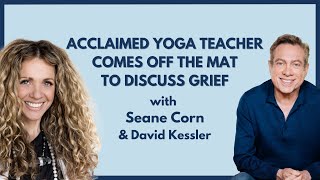
David Kessler and yoga teacher Seane Corn talk about losing her father Stuart to prolonged illness. Corn describes repeated goodbyes, how somatic practices helped her grieve, and shares tools for panic and anxiety. They connect personal loss to the pandemic's exposure of social inequities.
Chapters
Hi, everyone. David Kessler here. Hey, Shawn. Good to see you. Hi.
So good to see you.
All right, folks, let me know when you're on and finding us. I'm going to look for us, too, to see if I can find us. It's always a good sign. I appreciate everyone coming on.
Up. I hear us. All right. Very good.
All right, we'll give people a few moments to find their way on.
It usually takes a moment. All right, Allison's here. Trish is here. If you want to share where you're from, that's always nice, too. It takes people a few minutes to come on. That's why I come on just a moment early, because I've heard that helps a little. All right, Keddie's here from Puerto Rico. Kathy's here. Welcome. As you come on, you can say hello. You don't have to. It's. It's just like we say in grief, you know, some people do it one way, some people do it the other. I sit in the front row of things. Some people sit in the back. Allison's from Big Bear. Vivian's from New York. Welcome, welcome. Karen's from Illinois. Trish is from Rochester, New York. I love getting to see where everyone's from and them coming on.
All right, let's see. Suzanne's here from Dallas, Texas, and Trish is here from Adelaide, Australia. Do you know I'm supposed to be in Australia right now? In the alternate universe where things did not get canceled, that's where I'm supposed to be. Adrian's from Cranford, New Jersey. Jennifer's from Alaska. Wow. We're all over the place. John, Massachusetts. James, Ola. Heather, East Texas. Welcome, everyone. I'm glad everyone's finding their way on. Pat says hello from the back of the room in Virginia. Ann says from Washington. Wonderful. Hi, Reese. Good to see you. It's so much fun to see everyone where they're coming from and coming on.
It's nice. This group was set up for, you know, in the face of dealing with COVID 19, and being sheltering at home and staying at home, that in our disconnection, we found ways to connect. And so this is our way to connect. All right. Trish says, yes, we're disappointed we can't see you, but being here is the next best thing. That's so sweet, Paul. Deeply grateful. You guys are wonderful. Diane's from Massachusetts. Hey, Beth. Beth is here. Beth did a wonderful session with me on the death of a fiance and how she's had to navigate that horrific loss. So I so appreciate Beth and her work. Pat's here from Ontario, Canada. Well, welcome everyone. I know people will be finding their way on. So I mentioned. I'm David Kessler. We have wonderful Sean Korn here with us today. The group was set up because of stay at home people dying, not being able to see our loved ones as they died, people without a grief group COVID 19 causing so many deaths. And I'm sure I'll have to just be a little political about that in a moment. But first, we're all here, and not political in a way that's going to drive people nuts, but just in general in a grief political way.
We're all here because someone we love has died. And so this is a nice way to take a moment of silence and honor them. So if you join me in a moment of silence, that would be wonderful. Just close your eyes and let's send them love, please.
Thank you so much. I'm a big believer that when someone.
Dies, we don't stop loving them. And I don't believe they stop loving us. So I'm so glad you're here, Sean. It's an interesting time for you to be on.
So welcome. Glad you're here.
Thank you so much. I mean, I feel almost just as a community member moved to tears by this gathering right now. As you know and as everyone who's on here knows, our world is in deep, deep trauma. And I'm a yoga teacher and we believe in the mind body connection and understand that the impact of trauma impacts our health and our wellness in so many ways. And often the underlying what underlies trauma is grief. And our world is in grief. And when we're in grief, all the griefs that come before from a child going off to college, the loss of a cat, the end of a relationship, the death of a parent, it just all layers and people feel it. And without a place to communicate and express that overwhelm. These are the times where people can understandably try to anesthetize those feelings through alcohol or food or drugs or other kinds of behavior and not allow themselves.
Humanity. So to be able to be in a community where we just name it and the complexities of grief and we hold each other in that feels like a relief in my body. So thank you for this and for everyone who's on right now.
Oh, well, we're so glad you're here. So, you know, I think all of us have experienced loss in one way or another. How has loss touched your life?
Yeah.
I'd say the biggest loss that I've experienced, that I still process, that is core to.
My growth as a human being. And my empathy for the complexities of grief is the loss of my dad. My father died, it will be 10 years ago this August from renal cell carcinoma, which is kidney cancer. My dad was diagnosed with cancer when he was 60, so seven years prior to his death, and he was only given four months to live. And yet, for whatever reason, my father clung on to life like no one I've ever known and managed to live and even thrive with this terminal cancer. For seven years past, when they told us, prepare, this man's going to die. And we used to call him Cockroach Daddy because nothing could kill that man. Every trial, my father just did everything. And it worked. Until it didn't. And being his daughter and part of his team of caregivers was really complicated as the role began to shift from someone that I look towards for guidance and support.
Validation and nurturance. Suddenly, as he brought me into the world, I started to realize it was going to be my job to bring him out, and I didn't want to. And I worked hard with my father to encourage him and to cheer him on, but I would never let my father see me sad or cry because I didn't want to, in front of him, admit defeat. And.
A couple of the most profound things. I mean, so many moments were profound that I couldn't see in that moment. Now I look back and I see that every single moment was truly a miracle. But one of the most profound things happened.
That really changed my relationship with grief. And I wonder if my dad knew what he was doing or not. I'll never quite know. But when my. There was maybe three months before my father died.
We'Re all laying in bed together. My mom, my father and I were watching tv. And at this point, actually, I'm sorry, it's three weeks before my father died. My father's weak. I mean, he could barely, you know, really move at that point. But he looks at my mom and he says, alice, get out of the room. I want to talk to my daughter. So I look at my mom. My mom looks at me, and there's a moment where she catches eyes with my dad. And I see something between them transpire. She nods her head, turns off the tv and leaves the room. So my father, in his weakened state, he takes me. I'm from Jersey. My father was a virile, hardcore, like, Jersey dude. And I remember him reaching up and pulling me down into his chest. And I was so carefully laying on his chest, you know, not wanting to hurt him. And I remember listening to his heartbeat and thinking, how many more beats are left are there? Like a thousand? One hundred ten. And my father is stroking my hair, and he starts saying to me, my baby, my baby. Which is what he called me. My baby, my baby, I love you. You are amazing. I am so proud of you. And he proceeds to tell me all the amazing things of who I am and what I've done. At least I think that's what he's doing. Because the moment he said, I'm so proud of you, I just dissociated. Jumped out of my body. A part of me was like, oh, my God. I know what's happening. My father's saying goodbye to me. I can't do this. I don't want to. I can't. I can't be present to this. Jump out of my body. Another part of my brain is saying, sean, this happens once in a lifetime, if you're lucky with a parent. You listen to every word. Get back into your body. Breathe. You can do this. So I get back into my body, and my father was talking about his regrets, and he was asking for forgiveness. Gone. Just gone. Out of my body. I'm just nodding again, shawn, get back in your body. You need to be present. Got back in my body. When the conversation was over, of which I may have been present to about 15% of it, my father says to me, now get out of the room and get me a Coke. And I remember barely being able to move out of the room. And I yelled down to my mom to get my dad a Coke. And I went into the other room and passed out cold. Until the next day.
About a week later, we're laying in bed.
My father says to my mother, alice, get out of the room. I want to talk to my daughter. So I look at my father. My mother, she looks at me. She shrugs. She turns off the tv, goes. My father pulls me down into his chest and says, my baby, my baby, I love you so much. And I'm thinking, what the. We did this. Why are we doing this again? And I'm thinking, is it the drugs? Is it the like. Is he delirious? Is this dementia? And I'm starting to have an anxiety attack because I'm thinking, I can't do this. And he proceeds to tell me all the amazing things. I dissociate. He proceeds to tell me his regrets. I dissociate. He proceeds to ask for forgiveness on and on. At the end of the Conversation I got maybe 30%, tells me to get out of the room and get him a Coke. Basically the same thing happens. I crawl out of the room, I go into bed, I sleep until the next day. To make a long story short, my father said goodbye to me nine times. Nine times I had to live through this and hear all of whatever he had to say. But by the ninth time, I heard every single word, was able to be fully present, was able to receive his acknowledgments of me as a person, was able to hear his regrets, was able to offer forgiveness. And it was so comfortable that we were actually able to. My father wanted me to put together a playlist for his funeral that included songs of highway to no, Another One Bites the Dust and.
Something else about Hell, I don't know. But we were able to make jokes because my father was hysterically funny when it came to death and dying. And I remember after it was over, I walked out of the room, I went downstairs to my mom and I said to get him a Coke. And I said, if my father says goodbye to me one more fucking time, I'm going to kill him. It wasn't until after my dad died that I realized what he was doing and the gift that he had given me. I think my father knew that I couldn't process what was about to happen and that I was already in a deep state of dissociation, that I had disconnected. I was doing all the things, but I was not feeling my feelings. And by getting me to talk and cry and witness him crying and discharging the energy out of my body, he normalized the process to such a huge degree that by the time my father did die, I wouldn't say I was at peace. It was very difficult, but I was present. And that's all I ever wanted to be, was to be present to my dad, to be present to this experience and not miss this moment, as incomprehensible as it was to not miss it. And that was one of the gifts that he gave me, second to asking me to teach. My father was a yoga teacher also, and his request to me was that after he died, he wanted me to teach something called Yoga for a Broken Heart. And he wanted me to create mind, body sequences that acknowledged death, that talked about loss and that brought it into the body so that people could feel their feelings. And I know that I couldn't have done that had he not gotten me to talk and to normalize the complexities, the incomprehensible nature of death, dying, loss, and Grief and to be able to both cry and laugh and to hold both as really sacred. So that was one of my many very holy experiences of loss that pulled the rug out from underneath me, but also opened my heart to a level of empathy that I would not have as a woman today had I not walked that path of grief the way that it was as awful and as tragic, but also as magnificent as it was.
So beautiful. So beautiful. Tell us your dad's first name.
Stuart. Stuart Corn. Cheers, Daddy.
Daddy. Very sweet. Thank you for sharing that. So many people are commenting what, what a gift, you know.
And I reckon.
Death and grief has an intensity. Death and grief has such an intensity that when you say, you know, you couldn't take it in, we get that, you know, it's hard to take it in.
I remember at my dad's funeral, grief is weird. It's so weird. And that's all I could describe it as. I mean, there were moments where, and I know everything goes. People would say to me, like, and I'm sure it's happened here too. I know just how you feel. And I think to myself, how. I can't even define this right, right. In one moment I'm making jokes, inappropriate jokes, cracking up hysterically. The next moment, literally, I fell asleep while taking a pee at my father's funeral. I had a friend walk me to the. To the bathroom. I was so overwhelmed by everything, with a big smile on my face, greeting everyone like, hi, how are you? And I went to take a pee and sat down. And the next thing I know is like, oh, my God, I. I just fell asleep. And that weird falling asleep, that haunted me for about six months, where I would just be like, mom checking out my nervous system was just complete. Grief was weird. It would. The deep, level belly cries out of nowhere, just out of nowhere, and then stop as quickly. And I would just get on with my day. And no one could have prepared me for these complexities and. But thankfully I did have people telling me that you can't do grief wrong, but you can't also expect anyone to understand that there really is such a thing as grief brain. But what they also didn't tell me is that my dad's grief unleashed every single grief that came before that, I was transported. I missed every ex boyfriend, every dead cat, every moment since I was a little girl that hadn't gotten really reconciled, all of that came up. And after my father died, since then, I've lost two cats. And I know myself well enough now to know that when I lose an Animal or any. I'm dealing with any loss, I have to stop life. Not for very long, but I have to stop life because. Because I know that that grief is going to trigger all of the other griefs, and I'm going to go into a moderate rabbit hole and have to sit in that for a moment. I can't teach, I can't return phone calls, and I know that it lasts maybe three, four days, but I give myself that gift because I know that grief is cumulative and I'm feeling it once again and I've got to bear witness to it.
Right. You know, I'm curious.
You know, the nice thing about this group is so many people come in and, you know, it just looks like, Sean, you're just telling us about your dad.
Big deal in the world.
You know, besides probably one of the most.
Successful, inspiring yoga teachers, you're an amazing activist, a voice out there in the world, an author.
We're talking so much about being present at a time in the world where so many of these people have the opposite. I mean, I had the same with my father. I got to be present. And so many people these days because of the virus, aren't getting to be present. What do you. What's your thoughts on the world today?
Like I said earlier, our world is in trauma. And trauma is defined as anything that overwhelms our capacity to cope and leaves us feeling helpless, hopeless and out of control. And I think what people are feeling right now is the lack of stability, the uncertainty, the rug being pulled out from underneath us. And that fractured feeling is kicking up so much internalized grief again, cumulative grief. And because there's loss, there's. There's grad, missed graduations, there's missed funerals, there's missed proms, there's isolation, there's fear of financial security, fear of health, knowing people who are sick, who are dying, this is real and it's big and it's collective. And when you're dealing with a virus, there's no one really to blame. And what people tend to do when there is this level of chaos is they want to control their environment, which makes perfect sense, except it also kicks up the anxiety that lives within our body. And so right now, people are understandably, deeply overwhelmed. In the practice of yoga, when we experience trauma, whether it's the loss of a parent or what's happening now in the world, what happens is that chemicals release from the brain and they flood into the body and they put us in fight, flight, freeze or collapse in the moment that that Happens, there's a narrative. And that narrative now lives in the body. Our body contracts in fight, flight, freeze, we contract. That narrative now lives in ourselves.
When it's internalized. And that narrative includes the emotions of rage, shame, fear, anger, guilt and more. When that energy, that vibration becomes internalized, it becomes the tension that we feel. Tension, stress and anxiety are the number one causes of illness, depression and disease. That contraction, though, is also control. And so what we learn in yoga is that we have to discharge the energy. You have to move it, you have to cry, rage, scream, laugh, dance. There's so many different ways to discharge, but we're not really taught how to do that, how to just let the tears come and know that it's energy and it needs to release. Because if it doesn't, that suppressed grief, anger, fear, shame, rage, it'll find other ways to come out, like onto our partners or in other ways, you know, yelling at people, being dismissive. Or we, like I said earlier, will dissociate. We'll shut down using substances. So it's pretty predictable right now because our nation, our world, doesn't have great tools because we don't talk about grief enough. And as a result, people are angry and they are scared. And the vitriol is getting bigger and bigger, especially online, because everyone is looking for something to blame. And it concerns me because what we need to mirror the collective grief is collective compassion. But if you don't have the tools, it's hard because.
If I'm not comfortable with my grief, your grief is going to terrify me. And so I'm concerned about the world. And there are so many people like yourself, David, who are showing up, talking about it, creating space for people to acknowledge grief, spaces for people to do yoga, to move the energy so that we can acknowledge that this grief is real. And there are tools in which we can utilize so that we can be present to it and then transform it. In my community, there is a often, and when I say my community, the spirituality, wellness, yoga community, there's often a really quick desire to bypass the suffering, as if the suffering is not in and of itself holy. They want to assign meaning way too quick, right?
What's the spiritual lesson in this? Well, that's what we get asked is, let's find out what the spiritual lesson is so we can be done with this.
Right? And there are so many. One day we will be able to come on and talk about what this all meant and the opportunities for incredible growth that we were being presented with. But when we move too quickly, to the spirit. And we disconnect from our own humanity, which is what we tend to do. We avoid.
We avoid our humanity. We don't allow ourselves the opportunity to ground, to resource, to self regulate our central nervous system and be present to all those big feelings, as if those big feelings are somehow flawed. And if I don't respect the complexities of my emotions, I will never be able to stand in front of. Stand in the presence of someone else with empathy. I will want to change or fix them because their big feelings make me uncomfortable, rather than being able to hold their experience in my heart and know that this is the moment that if they can cultivate the necessary skills, will transform their life and open their hearts to love. They can't know it in this moment because in this moment they are in pain. But to hold that, the knowing that on the other side of that pain is transcendence, that is what is happening right now in our nation. But I am not going. I am not setting spiritual context for my students right now. I am just telling them to feel their feet on the floor, to breathe into their bodies and if the tears come, to give space to them.
I don't know that we've got the pain yet. You know, when we talk about you can't go around the pain. You know, one of the things that's that, you know, when I said the only political thing I'm going to say that isn't really about politics but just about our world.
That'S disturbing to me is, oops, Sean, we just.
I'm back. All right, good.
Is we are hitting the hundred thousand mark.
Yes.
And it's interesting because I've been talking about that. I even wrote some things for the press that people like. That's a downer. They don't want to hear it. But the challenge is this is a time in history, unlike the AIDS epidemic, unlike 9 11, unlike the Vietnam War. There's no visuals, there's only statistics. There's no hundred thousand caskets. There's no funerals. The one thing I say to people about that number, just to help us take it in, it's been two months. That would be like 724 planes crashed in the last two months.
Right.
Would be a 737 plane crashing every two hours.
And it's just a number that we're not digesting. Except people in this room know that number because it's their loved ones.
Yes, yes.
And I think it sort of goes to how we don't get the loss, Whether it's Collectively or individually, we don't get the loss.
You're right. You're right. It's too big for us to comprehend and for everyone who's on here who has lost.
A family member, who's walking through this.
I just, it's hard to imagine, especially because there are no words for this kind of grief because we've never experienced anything like this. It's literally like no one can know how someone else feels because there's absolutely zero evidence for this experience prior.
And you're right, there's no visuals for it. All I can say is that my hope.
When people talk about this new normal that's coming up, what we know is that the old normal was not working, that our society was and still is severely divided, that our society was in intense trauma and what's happening now is all of that is being excavated and we're as individuals being forced to stop, reset and look within, at our own complicity towards the separation that has been dividing us all. And.
If we can do the work that we need to do right now and step into profound leadership and as we transition and go back out into the world, demand serious policy change and hold our leadership accountable and become leaders ourselves and create a world that is equitable and just and fair and free and safe and equal and resourced for all beings, then maybe we can hold that moment where we can look back and say, mom, Dad, I wouldn't have wished this moment on anyone in the entire universe, but your sacrifice was not in vain because of what we get to do going forward. And that's my hope, is that we won't let this moment in time just be a statistic in history that was this weird just moment. This is a wake up call for all of us. We are only as strong as our most vulnerable and therefore we now have a responsibility to uplift those that are vulnerable and make it our responsibility to be in service to all beings. Otherwise this kind of suffering in many different ways will continue.
Yeah, I'm just, you know, there is a talk about a moment of I think I am my brothers and sisters keepers, you know that what affects one affects all.
Yes.
And if we didn't get it before, we're getting it now.
Yeah. Asked me the other day if I was going as we transition and as yoga schools open up, will I be going and teaching in yoga schools? And I said no, I don't think so, not for a while. Because my biggest fear is my mom, my 75 year old mother. And when I think of my mom going out into the world. I want everyone within 100 yards of my mother in a hazmat suit. I want everyone to look at my mom and be like, oh, that's Shawn's mom. We gotta be careful because she loves her so much. I want to walk around the world and think of everybody as my mom and me put on that hazmat suit. Not literally, but symbolically figuratively. That I walk through the world with that level of care that everyone is my mother. And if I want people to behave towards my mom in a certain way, then I must be willing to make certain sacrifices. Until we are secure enough to know that we cannot continually impact or infect others. That's where I stand perfect personally. But I can also say that because I have the resources and the kind of job that allows me to stay home, whereas others do not. That complexity.
Right. You know, it's interesting. I just the other day, with my mask on and gloves on, I went into staples and, you know, sanitizer is finally back in. And it's sanitizer. A little bottle for $14.
Yeah.
And you think about the communities that are affected. Who has $25 for two masks and sanitizer? I mean, we. We sort of don't get the reality of what some people go through.
Yeah.
And how hard this is in a world.
So it's really a wake up call on so many levels.
Well, when you look into the community and we can see how folks on the margins are disproportionately impacted by this. And it's systemic and we have to look at that like we're responsible for that. We're complicit. And that grief has to live in our bodies. Because.
In the practice of yoga, we're taught that we're all one. But are we when people don't have access to resources? Are we when there is just such blatant inequality, since we are connected, that grief is internalized in all souls. So they say, like we can't be free unless we're all free. And that we have a responsibility to each other. And maybe that's what this time is all about. Because as dark as we've gone is as light as we can be. But we have to do the work on ourselves to see where we're participating in that darkness, in our own behaviors.
It's. It's been. You know, I. My father said something, and I've written it many times in different books, that when we're at our worst, you can see our best.
Yeah.
And I hope that's what comes Out. I mean, I can remember doing disaster work and going to Houston after the hurricane. And one of the things I will never forget is I'm waist high up in water and people are walking back into their destroyed homes.
Yeah.
And a man pulls up in a truck with 20 takeout pizzas that he's gotten and starts handing them out. And I said to him, do you live around here? And he goes, no. And I said, do you. Well, do you own a pizza company? Because. No. And I go, why? Well, what's this about? And he goes, people are hurting. I could help.
Yeah.
And we don't know how to do that anymore. No, we don't have those symbols like that anymore. We don't know how to take this personally.
Yeah. Yeah. Until it is personal.
Until it is personal. We had Juan Lopez come on here the other day. His mother died of COVID And. And, you know, he talked about that, like, put your mask on. My mom died.
Yes.
You know, a Very similar to sort of what you said.
Yeah.
So wonderful comments about you. And I would love. Is it okay if we take some questions?
Of course.
All right, You've got questions for Sean, by the way. I also want to say people on here have usually about once a week been working with Paul during doing grief yoga. By the way, is a student of yours. He studied under you, so you are a master to many.
Well, I am so happy to know that people are doing yoga because truly, that will be the thing that can help people heal. When my father first died, getting on the yoga mat was very, very hard. And I remember him saying to me, roll out your mat, and even if you're in child's pose, just breathe. And that's all I could do. I couldn't do anything else. And then, like, eventually I got my legs up the wall and I would just, like, fall asleep, and slowly I was able to get back in my body and move the energy. So for people who are listening, I. I don't think that you have to go in there and do every single thing. Your nervous system might, May or may not be able to handle it. But if you sit, visualize the poses, and breathe along, just the process of breathing is going to regulate your nervous system and change, at least temporarily, the way that you feel so that you can be more present in your body.
That's exactly. You know, someone had asked. They said, it's been three months. I can't do yoga anymore. Since I've had a loss. You would say, just go to the yoga mat and cry.
Oh, absolutely. Or Just stare at a wall, like, just like, like if I could just do it symbolically, get my leggings on, put on a sports bra, roll out of, you know, light a candle and then just sit. And I would pick on my toes, I'd pick on the corner of the mat, but I would sit. It was just a ritual. And I. And also it's. I mean, I don't know if it was for every, everyone here. That first year, all those rituals were so intense. That first birthday, that first Christmas, all those moments. And my yoga practice was another ritual that allowed me to connect to my father, allowed me to connect to my grief. And after that first year was over, it was still the thing that I had to go to that kept me both connected to the past while simultaneously moving me towards the future. So it wasn't this abrupt cut. It titrated my nervous system, which is key to anyone who's in grief. And what that means is it balances the nervous system, helps you to feel integrated and in a slow amount of time.
Someone said they're having panic attacks these days. Any thoughts on how to deal with it?
The anxiety is the fear of the fear. That's often what we carry. Restorative yoga is key. Anything where their body is being supported, just laying on the floor with a bolster under their knees, deep, deep breaths, tracking the sensations in their body. Usually what they say in somatic experience is if you're having a panic attack, you feel your feet on the ground, you breathe, you look around the room and look for five red objects.
And that's one way to bring you back into present time. It also slows down your brain and it gets you to breathe. That's like those are the first steps. Looking at your body, where does that sensation live? Identify where the panic is. Is it in your jaw? Do you feel it in your heart? Is your heart beating fast? Is it hot? Tickly pringly Again, all of our ability to focus on the sensation gets our attention more pinpointed, which is also really, really crucial. Getting support. Panic attacks are real, you know, they are real. And sometimes having someone just to what I call my teacher in the past used to say, get the crazy voices out and what they meant by that. Do not spiritualize. Say, I'm fucking angry, I'm fucking scared. I think I'm going to die. I think everyone's going to die. Just say it, name it, give it, put it in the room, breathe into that and then just start to discharge the energy. And don't go to spiritual too Quickly just name the fear, but with somebody, you want support there to hold that for you. So finding a therapist is also really, really critical and key. But restorative. Asana breathing exercises and Somatic experience helps. And Somatic experience you can go online and look at for somatic experiencing or somaticexperience.com Peter Levine is the teacher. He wrote a book, Waking the Tiger. I highly recommend it for anyone in trauma and in grief because it really helps us to understand what's happening in the body.
Do you know the visual? I have people do. Besides the five things I have them. Name the five things I say picture. You've gone to the movie Cineplex and you were in a movie that is called your worst scenarios. And you are sitting there and you are watching every worst scenario unfold.
Yes.
Get up. Picture yourself getting out of that theater, naming all of that just like you said. I can't believe in that movie everyone dies. They all lose their job and it's really horrible. And you picture yourself walking down a hall to another movie where it's called the best scenario.
No one dies. Maybe they get mildly sick. They might be laid off for temporarily. And you see that movie and just know reality will be somewhere in between.
Yes.
But to not think there's only one.
Movie, I think that's brilliant. The thing, it's funny, I wasn't going to mention it because it's something that I do because I'd struggled with anxiety in the past and I also struggled in my youth with obsessive compulsive disorder, which was very much attached to death and dying. And I would bargain with God. And if I did things in certain patterns, I could control whether or not someone would die. And I'd be panicked if I didn't do it. Usually in even numbers. And I'm not alone in this. I have a feeling there's probably other people, their version of this. But this bargaining with God from the time I was around 8 years old and it came from childhood trauma. This was the way I responded to it. But it followed me into my adulthood. Very much attached to death. When I would get anxious. Poor part of my work is. And this was given to me by a therapist when I was younger that I had to. I have to recite the eulogy. I have to imagine the funeral walking up to the podium, standing there, look at what I'm wearing, who's still there in the room with me and say all the things. And what would happen is my body would start to go into panic. Like all the Sensations would come up, but I was being invited to allow the sensations simultaneously. Watching my heart's beating fast, my hands are tingly and numb, and I'd be encouraged to keep doing it until I started to cry. And then once I started to cry, just grieve and grieve and grieve until the energy would shift out of my body. And when it was over, it's like I just got on with my day. The trauma was so deeply embedded that I had to go through the process almost the way an animal in the wild. Like when a fox chases a possum, a possum plays dead. After the fox goes away, the possum shakes itself and then gets on with its day. I've been told that if you watch the film of the fox shaking, it's actually replicating the movement of running. So in its subconscious, it's finishing the trauma. So my work is often I have to go to that place of my worst fear and let myself move through it, that I will be okay, that I will be able to hold this. I don't do that next piece, which I'd be curious about for myself, like, you know, finding, you know, if it was my mother or my father and finding them, you know, still alive and engaging would be interesting to do that as an exercise. But for me, I have to discharge this old, old information that's still very much present in my body when I'm in anxiety.
And, you know, at the end of the day, I always say grief. You know, people want to know.
You know, should I. Is it okay to cry? Or can I be happy? Or, you know, and I'll go. You come from a long line of dead people. Every ancestor you had has died. Your soul, your psyche knows how to do this. And.
Just do what's organic. You want to cry. You're feeling sad. Cry, feel sad. You've got a moment. You feel happy. My goodness, take it, please. You know, they don't come around long enough. Take your good moments wherever you can find them. But it's interesting how we know. I don't like that feeling. Maybe I'll take that. You know, when we sort of don't feel the feelings, we kind of judge them all.
When my dad died, my brother's also real Jersey dudes.
My older brother came into the room and he said to me, look, we need to talk.
My children. I'm concerned about my kids. I don't want them getting upset at the funeral. I need you to do me a favor. And when it's your turn to get up there. Try not to cry. And I looked at him and I said, I intend to have a very normal reaction to my father's death. And I cannot promise you that. That I won't leap into his coffin if that's what moves me in that moment. I said, so I'm going to apologize in advance because I don't know what's going to happen. Cut to my brother, stoic, solid, getting up there to give his eulogy and weeping nonstop. The deepest crying I think I had ever witnessed in. In a man. I don't even think he was aware of it. Snot tears. And I thought, what a gift that he just gave his children, letting them see him bear witness to his suffering and to his grief. And I looked over and I watched all of them just weeping with him. And I thought it was one of the most poignant and beautiful moments that I had. I had ever experienced. And I didn't throw myself in that coffin, but I did weird shit. I took a selfie with my dead dad. I don't even know what I was thinking with my brothers, with him in the coffin. And I was like, I think I want a picture. And my brothers were like, I think I do too. And I'm like, are you allowed? And I think, who's going to stop us? That's weird. And I can look back at it now and think my father would find that his hysterical. And anything goes. Anything goes. And that's what I hope everyone gets out of this. Grieving is awkward, it's weird, it's funny, it's painful, it's very unique. Sometimes it's internal, sometimes it's dramatic, and it is all spot on. And anyone who's uncomfortable with it, it's because they're uncomfortable with their own big feelings and the inevitability of the loss that they do not want to face, Which I understand. I don't wish this on anybody. And yet I also know that I love bigger. Because of my dad's death, I walk the world. There's. I take my father out to movies. There's movies that I know my dad would like. And I'm like, you know what, dad? I'm gonna go see this stupid ass movie, because I know you would get a kick out of this. So I take him out to the movies, I take them out to lunch. And every year on his birthday, I take a hike and I sit down and I tell him all about my life. I buy a sandwich and I have lunch with him and I tell him everything. That's happened and all of my experiences. And so I feel that he still is enjoying the world as long as he's in my body and in my DNA and in my experience, my dad is alive and well and I intend to live my life like that so that he as well as myself can enjoy it fully.
It's beautiful. And I have to give you one little piece as the grief expert who's got the history. Just so you know, our grandparents and great grandparents took pictures with the dead all the time.
Thank you for that.
You know, back in the days when you could afford only one family portrait and no one smiled in portraits, you know when you would take your one family portrait when the first person died.
Wow.
They propped them up and you'd all take your family picture with a dead person.
That's wild. And I love hearing that. I don't feel nearly as weird sharing that story.
Sean, time flies when we're together. Tell us how can we find you? Tell me, Tell folks about your book. That's an incredible, wonderful book that's out. Tell us all about you, what you're doing, how to find you.
People can find me@seancorn.com My Book Revolution of the Soul came out in September and I deal a lot with trauma, the mind, body, experience.
Finding the God within, forgiveness, and all sorts of different very personal stories that also then have different, different methodologies like yoga and.
Psychology that align with the different stories that I'm telling. So I look back at the story with 2020 hindsight to be able to say this is what was actually happening. But I couldn't know that when it was happening. I didn't have the tools. And so it provides a lot of different kinds of tools to help people to process their experience, to understand what it is that we internalize and how to be in relationship with it in a more integrated way.
Those are the things that I'm doing. In a couple of weeks I'm going to be doing a workshop online. If they go to my site, they can find out, but it's a three day workshop on, I haven't titled it yet, but basically yoga, grief, resiliency.
How to manage trauma in the time of COVID and how to work it through your body and really addressing some of these issues, but bringing people through a physiological process to help them to understand the mind body connection, where the narratives live and how to release it and let yourself feel and also how to ritualize it, how to bring prayer into your practice, which is something I do every it's going to change but Every, every Sunday since COVID has happened, I've been doing a prayer based yoga practice on Instagram for free to pray for those who have passed, to pray for our frontline workers, our essential workers, the caregivers, to really acknowledge our own fears and name it, name it, name it and give people a forum where they can express themselves and then we use our bodies to pray. So this Sunday I'll be doing another one of those. It might be my last one, but they'll continue on my website in the near future. So these are some of the ways that you can connect with me.
Tell us once more.
Website name seancorn.com S E A N E C O R N and my book is Revolution of the Soul.
Thank you so much for being here and I just want to thank all of you for joining us. Shawn, you're just an amazing gift to the world.
Thank you David, so much and to Paul as well for offering this to the community. And these are the kinds of gatherings that will help to bring purpose and meaning into the incomprehensible and help us to remember the most important thing right now is community. And if we can't be there one on one, this is the best that we've got. To be there virtually is truly an incredible service. So thank you and God bless everyone who's here and I truly I wish you the best as you move through this brief and keep your hearts open, your minds, pray present and your love alive.
Thank you so much. And for those of you who are maybe new just joining us, just know I'm doing these every evening. Wonderful people like Sean are volunteering their time. They're all in replays. You can see we've had incredible people from Susie Orman to Vanessa Williams to Melissa Rivers, lots of people. Paul Denniston does grief yoga. Tomorrow night we're going to have Brad Lamb on who's a wonderful addiction specialist because comes up in a lot of ways in our past, present and future. So that'll be tomorrow night at 5pm thank you all so much. I will see you tomorrow. Take care of yourselves.










