Leslie Gray Streeter and grief expert David Kessler, discuss the death of a spouse
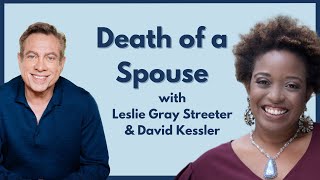
Journalist Leslie Gray Streeter describes the sudden death of her husband during intimacy and how she navigated the first year of widowhood. She talks about the shock, identity loss, and what actually helped: humor, Camp Widow, and grief groups with other people who got it.
Questions this video answers
Around July 29 (about 3 a.m.), described as ‘some odd 3ish in the morning’.
He was 44, almost 45.
About five and a half years.
About one and a half years old.
Against Black Widow: Sad, Funny Journey Through Grief (subtitle: for people who normally avoid books with the word ‘Journey’ in the title).
Chapters
Hi, everyone. Welcome. David Kessler here. I'll give everyone a moment to find us. I came on a moment earlier. I think that may help. I've got Leslie here. Excited to have you on, Leslie, thank you so much. Oh, you're welcome. I'm glad you're here. All right, let's see if I can find us. I have my little phone here that I'm looking myself.
Excellent.
I always say, find us. No one can find.
So if comments would be on the side. So people are saying hi.
You won't see any.
Names, but you'll see comments as people come.
Awesome sauce. Very good.
Great. Awesome sauce. That's too funny. All right, Robin has joined us. People are beginning. Coming on. I see. I know. Robin's in New York. Where are you at?
I am in West Palm Beach, Florida.
Wonderful. That's good. So you probably got some good weather there. Nice and warm.
It is right now. It's been raining off and on. But I find that when people from Florida complain about anything, weather wise, unless it's a hurricane, nobody cares because we'll go, oh, it's December and it's 50 today. And people in the snow are like, shut. You shut your mouth.
So, yes, absolutely.
I don't complain about it.
I know I feel that way in la. Deborah's here from Los Angeles.
Arcadia's from Louisiana. Chris is here from Virginia Beach. Diane's from Fort Worth, Texas.
Wow. Utah. I was in Utah last year hiking with some friends, and I'm not a hiker, so we went to Provo, and then we went, like, up into Coral Capitol Reef State park, which was really fun and very outside of my.
Outside of my comfort zone. Maria. Oh, I'm so sorry for your loss. Maria from Oregon.
Yeah. Morgan lost her husband three months ago. And in grief time, that's like an hour ago. It is John from Massachusetts.
Ann from South Carolina.
Lynn from New Jersey. Shelly from Minneapolis. St. Louis is. She's like, St. Louis is in the house. Marilyn from Redwood City. Janet from Albany. Ivy from New York City. I'm so glad everyone's coming. Bill is here from Georgia. Hi, Theresa. Welcome, everyone. Heather from Stoney Creek, Venice, Florida. I don't even know where Venice, Florida is.
I don't know exactly. Oh, my goodness. Fiorella. Fiorella lost her husband a month ago as of yesterday. Owen got married in January. Oh, my gosh. So sorry.
Brutal. So brutal. Cheryl's here from Team Sharing. Cheryl came on and was one of our speakers. Toby from Massachusetts. Kara from Massachusetts. Also Robert Chantal is here from Connecticut, Janice. 32 weeks since her husband died.
So sorry, Janice.
He's in New York. All right. Lots of people. Anniversary is Wednesday for Anna and Louise.
I lived in York, Pennsylvania, for eight years, so I don't know where in PA you're from, but. Hi.
Commonwealth. Yes. There you go.
All right. Well, for those of you who may be new, I'm David Kessler. I come on bring incredible people like Leslie, who's volunteering to be here tonight to share her story. And we're all here because someone we love has died. And after Covid began and we were all stuck at home and people were having loved ones that they couldn't have, a funeral for their grief group got closed down. We started this. So we're having a virtual community these days. We're all here because someone we love has died. So I like to just start with a moment of silence, just to send our loved one our connection, our love, our sweetness, and let them know they'll never be forgotten in just a moment of silence in their honor. So join me, if you would.
Thank you all so much for doing that.
So, Leslie, you and I have, like, just met.
Yes.
Tomorrow morning, we're doing the Today show together.
Craziness. So I was excited to do this, not just because I like doing these things, but we had a chance to, like, kind of get each other's thing down. So I like that.
And it's interesting because people in the group said we want to hear from more people who have had a spouse die. So I'm like the moment I heard of you, and I'm like, oh, perfect. So I'm so glad you're here. Would you share with us just how you came into the world of grief recently and how has it been and what's that been like?
And it'll be five years in July, July 29, some odd 3ish in the morning that my husband Scott, died. And it was very sudden. He was. We were Both in our 40s. He was 44, almost 45. And we were planning his 45th birthday. We were gonna go to the Keys. It was gonna be a whole thing. And he had not been feeling well that week. He was a kind of a big dude. Liked the cheesesteaks too much, that kind of thing. And we knew he had, like, type 2 diabetes and, you know, some history in his family of heart disease or whatever, but it was nothing that anyone said, like, you must be hospitalized right now or this will be fatal. And I guess this is horrible to say, but I always felt like if he Had a heart attack or something. That would be like his morning heart attack. And then he'd become like a vegan yogi or something. And he did not survive his first heart attack. It was. We were actually making out. I had gotten up to write a story because I have weird hours at my newspaper job. And I was like, if I wake up really early before the baby wakes up, our baby was a year and a half at the time, I can hurry up and finish the story. And. And he was like, hey, you want to. He was like, you know, hey. I'm like, hey. So we were kissing, and then he said, something's wrong. And I turned the light on and his head was shaking. I was like, this isn't normal. And so. I mean, it's obviously not normal. So it seemed like it could have been three minutes. It could have been three hours. I kind of. You know, when moments of panic happen, you don't keep time. But, you know, we call 91 1. He was probably already gone by the time they came, but called 911. It took forever. I felt. It probably didn't, but once again, it felt that way. They took him to the hospital, had a friend drive me, and they pronounced him.
There. And I. It was weird because it's like, I watch. I'm a pop culture reporter, so I watched a lot of TV and a lot of movies, and there's always that scene, like in a cop show where you're watching the widow to see how she's acting and the cops are watching. And I actually had that happen. When a relatively young person dies at home or appears to be dying at home, they send someone to the house. So my friends who stayed with the baby, there was someone there. And the people at the hospital were mean to me. It was weird. Like, would they take you in that room to show you the bad news? And the bad news room was locked. They go. Go in that room, please, to wait for us. And I hit the thing. And there was, like, a doctor, and they're, like, charging his phone. He's like, oh, sorry, gotta go. And they. Everyone was weird and squirrely, and there was a police officer who was, like, just watching me, like, to see what I was gonna say, because he watches too much Law and Order too, I guess. And it was just. It was so weird. And I. You don't know what's happening. When you learn what's happening, there's a part of you that goes, how do I look? Do I. Am I act? What am I doing? What am I saying? And I have both. A lot of memory at that time and then no memory of it. Because, like I said, I couldn't tell you, honestly how long I was at the hospital. I couldn't tell you. I could. There were things that said to me that were said to me that I remember. And there were some things people say, do you remember that you called me and told me and my twin sister, she said, do you remember that you called me? And I said, no, I have no memory of that. And she said, do you want me to tell you what you said? And I said, no, because it was painful and it hurt you. So I don't want to know.
And that started it. That's what started it.
First of all, heartbreaking.
Thank you.
You know, I. I saw from the little bit of your writing and your reporting, I was able to look at.
You bring a sense of humor to everything I do. And I could just see that you and Scott had a wonderful life.
We did. We did.
And you brought that sense of humor to grief, too.
It's weird. I think, like, I would say, okay, I'm writing a book, and it's funny, and it's about grief, and people are like, is it like slipping on a banana peel, you know, into the casket? Is it like a weird, farcical thing? It just. I've always processed everything through humor. And when I started to write the book, that's just the way that it came out. I mean, it's obviously sad, and it's a very rough moments, but I wrote them the way that I dealt with it, which was like, in the beginning of the book, the day after he died, we're picking out the gravestone, and I realized I was hungry. And so someone had just got. One of my friends had just got off the plane. She had a bag of chips in her purse. So I'm eating chips as the guy's talking. He's like, oh, and this is how your loved one will be placed. And I'm going, ah. You know, it's just like, July 29th. Me too. That's when I lost my husband, too, in 2015. Someone at the same date. So it was just one of those moments where I wrote it funny because it was absurd. It was more like funny absurd. Like you forget that you're human and you're hungry, and our mother's going, stop dripping chips on the dead people. And we're like, inappropriate. But that's. It felt right to do it that way because that's. That's how I wasn't making it up. I wasn't looking for things to be funny. It just came out that way.
Well, it's also, you know, I think about how there is a human experience of grief.
Yes.
And we also sometimes like to make up a sacred journey that we're on. Yeah. And I love that you talk about your number one. You didn't want any kind of Journey. You didn't want no books with Journey and that. Like, your. You didn't turn to yoga. You turned to fries.
I turned to fries. And I did take. I took a yoga class. I have a friend who's a yogi, and she came down after the funeral, and she and my mom and I went to a yoga class. And it was actually because I'm not the smallest person in the world, but I was watching all these little perfect yoga people, and they were actually a distraction because I could go, oh, I can't do. Oh, hell, no. I can't do that. Like, head over feet over your head, and they're like, you can do the easy position. I'm like, tell me about it. And that made me laugh because I do do yoga now and stuff. But, yeah, my solace came from, like, watching John Wick.
Because a friend. I end watching Roadhouse and watching Patrick Swayze beat people up. That was soothing to me in a weird way. And I just. I didn't want it to be, like, a thing that I made up. I wanted to feel it the way that I felt it. And I know that so many things. And we had this discussion before. So many things are helpful to. Whatever's helpful to you is what's helpful to you. And there's some people I know who've been helped by. By that and by. In a very spiritual way, in a very spiritual path. And I was like, I'm just gonna make it up as I go along. So I kind of borrowed some things from everywhere. But I also went back to the fry place a lot because fries are delicious.
Well, I love that. And.
What'S it been like with other people dealing with the person in grief?
It's so interesting because.
You want to be sensitive. I write in the book that when you're a widow, particularly, you are, like, ground zero of grief. You're, like the person that is the most affected by it. And so, I mean, everyone else is, too, but you're, like, the central relationship of choice. So I was very aware that, like, my sister had lost Scott, too, and that his family obviously, whatever. So I tried to be with those people that were in the understanding. I tried to be really cool.
About remembering that it wasn't a competition. No one was competing. Although I had a couple people go, I'm in pain too. I'm like, it's not a competition. But it was more like the people. Like two or three rings outside of that. Like people who want the grieving person to comfort them, which is so inappropriate. A person I met through camp Widow. If there's any soaring spirits people here. Hi. Talked about gushers about people who, like there would be days like two months later I'd be like in the grocery store walking around, you know, picking up frozen food or whatever. And you're feeling like that day like my earrings match and I brush my teeth and I'm not hideous today. And then you'd see someone who hadn't seen you since the. The loss and they would run over in this big performative thing and go, oh no, it's so awful. And hug you and it's embarrassing. You're like, well, I'm just gonna go back and eat something again. Because centering yourself and other people's grief is very weird. But also I think that we have to have these conversations because those people mean well. They just don't know. And it's awkward and it's weird and they're feeling something. Oh, it's can't quit a person. They're feeling something very real and they don't know who else to share it with.
And it's you.
Fortunately.
I can remember after my younger son died, I don't remember time wise, but I was going to a public event and in my mind it was literally. I'm sure it was probably months later. It was the first big event. Like it wasn't a grief event, it was just general public. And I had a lot of angst about it. And I felt myself sort of building up my armor getting ready to go to this public thing. And I walked in and literally someone grabbed me and said, how are you? And I went, glad to be here, thanks. And. And they were like, no, how are you? And I'm like, stop it, stop it.
I know, I know.
Together. And they go, no, you can tell me. And I'm like, no, can we not do this here? I'm just trying to get it together.
Just trying to get it together. And I just. The people that know, you can tell. Like for instance, my friends who came down knew when I wanted to talk and they knew when I just wanted to. Like someone mentioned watching Gilmore Girls. I watched a lot of Gilmore Girls. They are, you just want to chill out and hang out and not worry about stuff. And if you want to talk, you will talk about it. And also, I think I didn't want. I wanted to talk about either to the people that love me or love Scott or people like other grieving people who I just met, who I knew. Knew what I was saying. That was one thing about Camp Widow that, you know, you go to this place, and I do talk a lot in.
In pop culture references. So there's this early 90s band, Lion Melon. They had a video where this little girl was dressed as a bee, and she was. Everyone made fun of her. And then she finds this place where everyone's a bee, and she finds her people because they're all weird and bees together. And that's how I feel about can't widow that. Like, I found my people, and we can just all let it hang out. And no one's gonna think you're weird for talking about your spouse. No one's going to think you're weird for crying at a weird time or just saying, you know, I've had enough of this. I got to go back to my room now. I'll see you at dinner. Because we're all in that place at different parts. So when that person who is trying meaning well and trying to be helpful, you know, was saying this to you, and you're like.
She want. Like, it's so strange about how it can be different. Like, there's so many times your friends are, like, all being superficial, and you want them to, like, talk about the grief. And then that happened to be a moment where I was like, I'm just trying to keep this together. And she wanted to go deep. And I'm like, I can't go deep right now. I'll just fall apart. I know. I'm sure it's confusing for people.
It is confusing for people. And. Because you said. But, for instance, it wasn't a grief event, but that's the first time that they had seen you. I went to this thing. I was like. I was covering this media event where they were making pizza at a restaurant, and everybody knew, except for this one lady who had been away for the summer. And it was the beginning of the social season, and she and Scott always used to hang out, and she. At these events, he would be the funny one. And she goes, where's your husband? And I could literally feel everybody behind me take a step back. Like, we knew what's gonna happen. I was like, well, actually, he died. And she goes, what? And everyone's, like, taking Another step back, you know, and it turned out she was a widow, too. And we had a nice conversation, but literally I was just there to have a glass of wine and make some pizza with the photographer. That's all I wanted to do, and I didn't want to have to do that. And then I went outside and these dumb, blithely racist young valets. I was literally standing there, like, with my purse, holding a pizza to take home. And they thought I was a delivery person delivering things to the valet. The guy goes, did we order a pizza? And I go, I'm giving you my claim ticket. Here's my claim ticket. I'm just an old lady going to get her car. They're like, oh, sorry. And the other guy goes, he's really dumb. So, yeah, so that was actually funny because it broke up my, like, irritation about that because I'm like, oh, I get something else. Focus on, like, dumb people. So, yeah.
So what would you tell us.
Is one of the biggest challenges when a spouse dies? Or at least for you? What's been your biggest.
I think in the beginning, it was just the way that he died, is that I. I didn't have any warning. He didn't. He wasn't ill for a long time. I wasn't expecting it. It was. He hadn't been in the hospital, so I mean, that would be hard to. My father had been ill for a very long time. When he died, my mother's widowhood was no less traumatic. It was just from a different place. So for me, it was that I became this word widow overnight. Something that I had just been. Literally, when I woke up that morning, I was a wife and a mom, and an hour later, I was a widow. And it was the thinking myself. And then that also means I'm a single parent. Didn't expect that. It meant that I was now the person who had to make the decision about where we lived and all I was where the buck stopped being. Having a partner. You have a partner and you make decisions. Are we going to spend money on this? Are we going to move? Are we going to buy a car, sell a car, whatever? And we'd only been married for five and a half years, but you become. I've been single till I was almost 40. So finding someone, it seemed like a real weird, cruel punchline universe, you know, to be like, oh, I, 38 years old, remit. This guy went to high school with. We fall in love, we get married at 38, almost 39, and he dies when we're almost 40. 5. It's like, that sucks. It sucks anyway, but.
Recreating your universe again that fast, because once again, when my father died, it was incredibly traumatic when we were close, but we didn't live in the same place. It did not change my day to day life, except for my heart. It didn't change my finances. You know, it didn't change what time I had to pick my kid up or that I was the only person unless until my mom moved in.
So.
So it just. It changes the circumstances of every aspect of your life. Changing your will, changing your insurance beneficiaries. I mean, just like weird stuff like, oh, can I. Like my bedroom? You cannot see. It's like someone said, it looks like Stevie Nick's curse. I got like pink stuff all around it. I got flowers and stuff. I never had a bedroom like this when I was married. It was I literally a comforter with the Baltimore Ravens on it. I had so many compromises, and now I get. And I remember I bought all this pink stuff and I felt guilty for a minute.
Because I'm like.
I wouldn't have this with Scott. And then I thought, but Scott's not here. And I get to have a pink bedroom again. And he doesn't care because he's not here.
Right.
You learn that it's not a portrayal to change your life because your life changed without your permission.
And I can't.
For people. I'm sorry, say that again. For people.
It's. When I did. It's not a portrayal to change your life because your life changed without permission.
It's not a betrayal to change your life because your life changed without your permission.
Absolutely. Absolutely. It just did. And I just. You can either live in the space where you're like, your life is a shrine to that person and you don't change anything. But once again, it is different. He was not there. I still. And I wonder if other widows feel this way. I still sleep on my side of the bed.
And sometimes I try to get in the middle because it's a big bed. Why wouldn't I? But I still. It's not like I think he's there. I don't, like, call the pillow Scott or anything. You know, I just. That's where I am, you know, And I still kind of feel it. So when my son snuggles in with me and I want it like on the edge of the bed, it's because I'm too close to the edge of the bed because that's where I used to being. So it's. If I find another partner at some point, maybe I'll switch sides. Or I'll say, I'm sleeping in the middle. You sleep over there.
I don't know.
And you have a refreshing honesty. I. I mean, you can tell that just by the book. Black Widow. You know, I'm not going to put Journey in the title. Like, that's. And, you know, you're like, there's no stages. Which I'm so glad that, you know, even I, who wrote the book with Elizabeth Kubler Ross, people like, there's stages. We've got to follow them. I'm like, no, that's not what we said.
And I wanted people to understand that. And because what. It's so funny because when I heard I was going to be talking, he was like, oh, no. I talked about the stages. And that basically that it was more like, what lesson? That they didn't exist, but that, like you said, they didn't happen in a perfect sequence where you get over it and then you're here and then you're here and then you're here. That if they're like, bloop.
You know, I can go through 10 in the same day and 10 other things that aren't even a stage. So.
The other thing is, you know, I think about your honesty. It's pretty honest to tell us this all happened when you were being intimate with your husband. I mean, you could have easily just said, oh, he died in the morning. So was that an active choice to be that honest?
I decided you should.
You say that.
Oh, also, what happened was it started back when my father died. I wrote a column about him dying. And I have written about, you know, I wrote about movies and food and, like, hanging out with my girlfriends. I used to say I was like Black Carrie Bradshaw, you know, but without the sexpert. And then when my dad died and I was tasked with writing this really emotional thing, and I wrote it and gave it to my editor, and he gave it back and he said, it's like you're avoiding writing about his death. I go, yes, yes, I am. And then I made a deal with myself that if I was going to do it, I was going to do it. So I sat down at the computer, took a deep breath and just wrote. And 20 minutes later, I had a thing that I barely changed and I handed it and it was perfect. So when I decided to write about Scott, both first for the newspaper and then this book, I decided that I was going to be honest. And, I mean, not every single detail, right? But that thing about us for. I included the, the making out thing for two reasons. One, well, three. One, that happened. Two.
It, I think the juxtaposition of you're in a really wonderful moment and then literally in a second it's done, it's gone, everything has changed. And I didn't even appreciate it was happening. I was annoyed. We were stopping kissing and he was dying, you know, and that is bizarre. But that how quickly change, things change. Also it was important for me because often when people die, you have this moment, like you hear they died and you go, oh my God, were we speaking? What did I say to him or her the last time I spoke to them? Were we doing okay? And I know in the weirdest way that we were okay because we were, we were kissing at the time. So whatever else was happening, whatever other things we hadn't said to each other, we were really expressing how we felt about each other at that moment. And there was no anger or tension or stress at that moment. It was just us hanging out, being Scott and Leslie. And so that was really important to me to note. So, yeah, it's, it's, I think it's.
Good you said it and told the truth. And I love your reasons why. From doing grief retreats for years, I can tell you it's one of those things that someone comes up to me on the break and go, by the way, you know, I told you my husband died, here's what was happening. And it's like, so I've heard it. But people don't often talk about it openly. So I love how you see it, how you talk about it.
Thank you.
Thank you. Let's see, let's look at these. Do you want to take some questions and comments?
Sure, let's do it.
All right. Christy says that takes courage to be authentic and brutally honest. She likes that about herself too. Karen says, today is six months since I lost my 53 year old husband of 31 years in a tragic accident. Actually, I'm pretty good today, much better than before.
And honestly, if I can say that's the only progress you can have. If you can say it's better than it was yesterday and acknowledge that maybe tomorrow might suck, but really be excited about today where you were okay. And sometimes with the stages things, there's no. They go back and forth, you will be okay one day, you will not, and they will be okay again. And maybe you're going to be more okay as it goes on, you know, so I'm proud of you. Thank you. I'm glad that you're feeling better today.
It's such an or. Grief is a very organic process, and we either feel like it should look like something or we want an instruction book. And it just is what it is.
It is what it is.
Beth is here. Beth Segaloff. She says, what a beautiful expression. Talking about, I'm assuming, your last moments. And Beth had the death of a fiance and came on and talked to us about it.
Oh, wonderful.
Sophia says. One of my closest friends and I have mocked the word journey for years. Sometimes I kind of have to use it. And, you know, one of the things I like about you is so many people, whether it's the stages or journey or whatever, they just think, like, I'm very serious about all. You know, and it's like, there's no rules. You're. No one's going to offend me by how they're doing. Greed.
Well, what's so weird is. And I tried to. Let's. When I wrote that, I tried to be respectful. The fact, like I said that some people do that, and for some people, it's so weird and unexpected what it is that we're going through. And if you need a template, and if you find a template that works for you, and if it work working stages or going through, like a journal that has different questions or whatever, if that is helpful to you, do that, because you're the only person who's going through that. I didn't. There were people who gave me these journals and stuff, and I felt bad that I never. I would open them and go, no, this isn't helpful. And my mother would go, it doesn't have to be, you know. And I would say, I feel bad because so and so sent me this and. And it was always pink or had like, you know, a silhouette of hands or something. And I. Let me make fun of it. It just wasn't who I was. And maybe I would have found at that moment that's really who I was in grief, but it wasn't. I like the ones that I like. My friend of mine gave me adult coloring books. I'm like, yeah, this is awesome. You know, it's like, you know, or just journals just to write, you know, or a flask. That was fun, too. I enjoyed that, too.
And I've always felt bad. You know, where I kind of get it in the book world is even in my last book. No, like, I love my publisher. All great. But, you know, when they first show you artwork, they're like, we're not sure what direction. Dead tree and the other one's like a lonely path. And I'm like, those have kind of been done. Yes, that's kind of been done in grief, by the way, I have to.
Tell you this very quickly. I saw some really important questions. There's a Jewish cemetery question I want to answer. But they were like, what do we do for art? And my idea was. And it was a bad idea, but I was like, I want the COVID to say sad, funny. So I was like, how about you have like a hearse, right? And the hearse is going to thing. And there's a hand right outside, reaching from outside, holding a.
Holding a martini glass. And they did that. And. But it instantly looked like it was a beach. Read about like some young girl who married some old guy and murdered him. And she was on it because it's literally called Black Widow. I was like, that doesn't work. So they came up with this on their own without my input, which is like a visibly black person going, are we doing this? And it looks like a cartoon and it's really neat. And so they came up with it. And yeah, I just, I. I did not want sad palm trees or, you know, willows or doves or, like, whatever. And I also, I did, but I didn't want it to be like Jack in the box, you know, going, woo hoo. Grief is fun. You know, I didn't want that either. So they, they found the right thing.
Leslie, did you find love again? Do you want to find love again? It's a question here.
I had. I thought I did briefly, and it was not. And that is okay. I would like to find love again. I would. I think it was so weird because I was so used to being married that I kind of thought, well, I have to do this again semi quickly. Not right now, but semi quickly because I was so. My. So much of my identity was in being a wife. Because I got Even in five and a half years, I got really used to that. And then I was like, never mind. I'm never going to find anyone. Whatever. I will never find love again. You know, so now I'm in a place where I'm, you know, I'm 49 years old. You know, life is weird and changing. And I deleted all of my apps because there was weird, like, widow things. Like they told us I can't widow. Beware of putting. You want to be honest, Put widow on your profile. But there are literally men and scammers who are looking for widows because they assume maybe there's an insurance policy or you're sad and weird and you're going to give all the money to people. So I had this guy on Hinge the day that I deleted Hinge who said he was a widower and his picture of him, a little girl in the things we start talking. I said to how long have you been widowed? It's like he forgot what his scam was. He goes, what? And I go widowed? And then he goes, so do you rent or own?
I was like, why would you need to know that? And he's like, I just asked. It was like, you're scammy. Delete, delete, delete, delete, delete. So now I feel like it'll happen kind of organically if it happens. I'm. I mean, I do go on dates. I'm not dating one at the moment. I'm just kind of out there seeing what happens.
One of the shocks about doing this group is every time I would say for every real widower we get, there are 10 phony ones.
What?
And it's shocking. I mean the people in this group have been really good about policing it too. But it's just like, you know, it's always the same thing. It's, you know, there's one or two photos in their thing. They usually just started their Facebook.
I will often take their photo and do a Google search and you'll see like them in 10 scams.
What.
The other thing you'll see that I've learned because I had to learn these tricks of the trade. So I was want to put them out here. The other thing is when you go to. And I don't know if everyone can see this. I think they can. When you go to join a group, I can look at all your groups.
Could look and see those aren't the nor. You know, I can't put all his groups together in a person.
You know. You know. So anyway, can I answer the question.
Someone had asked about the Jewish cemetery thing. So this is in the book that. Well, I didn't. I think I put. Yeah. That when his mother died in Baltimore, there was a space next to her and his father was still alive. Is still alive. So when Scott died, one of his cousins emailed and said it would be okay if you use the spot if you buried him next to his mom.
But then I wouldn't be able to be buried in the same. Was a Jewish cemetery. I did not convert so I would not be able to be buried in that cemetery.
And.
And I wanted him here with me. So we found a regularly not.
Entirely Religious cemetery that had a Jewish section, but also had what I call Benetton Village where it was like, you know, black person and a Korean guy and I think. So it was everybody together. So I bought a space next to him and that place so that we just kind of hang out, you know, together. So yeah, he's hanging out, waiting for me.
What do you think about.
What do you think about. Some people are talking about feeling guilt, feeling like you're being disloyal. I always tell people.
You actually completed your vows.
Yeah. So you parted. So. And I, it's that it's interesting because like I knew that like Scott's brother and his cousins.
Were not immediately going to be okay with the idea of me dating because to them it was still very fresh. So I kind of floated it to my brother in law. After about a year I said, how would you feel about me dating? And he said, I think that Scott wanted to be happy. He was like, but it wasn't too soon because I know if I'd done it too soon. But then again, people judge people that you hear about. Like there's famous people that have moved on faster than their public thought they should have and they've said horrible things about them and it's not your business. It's not your business. And it bothers me so much when people aren't in your soul. I mean, yeah, if it's like someone who appears to be taking out large insurance policies on you, then maybe you should be worried about that or someone who just shows up out of nowhere. But as someone on here said, they, they're better with a partner. And you know that. And your, your kids can't be that for you. And your mom can't be that for you. And your brothers and sisters can be that for you. And if you feel good about it, and once again, maybe you ran them through a check a couple times and you feel safe and secure and maybe there are some things in place.
Legally to protect you or your kids. College fund Then I, I say go for it. I mean it's. Life's too short. Scott said was weird because it's not like we knew that he was dying or anything, but he wasn't always the healthiest guy. And he said once, just out of the blue, if anything ever happens to me, I'm like, I don't like this conversation. He goes, get married and be happy. And I was like, just stop eating that cheesesteak and take your medication. I don't know why we're having this conversation.
So when that happened and when he died after about a year, when I thought I was ready, I was like, I already know how he felt about it. I already know how I felt about it. So I don't ever have to feel like. Even though I wrote a story in the paper that someone asked me, well, it's too soon for you to date. I was like, I don't know you. They're like, well, I work with single moms, and they're always rushing off trying to find a man, and they become bad parents. They ignore their kids, and you will do that, too. I'm like, the heck? So it's like, no, seriously, I'm fine.
Yeah. You know when you and I share that in common, that I always say to people, whenever people go, well, she's doing this wrong, or he's doing that. And I'll go, so is that what you did when your husband died, or is that what you did when your mom died? Oh, my mom. I'm like, wait, wait. You're not even in the situation, and you're telling them it's wrong. I mean, you don't even have any standing in this. Come back when you go in that situation. But even then, you wouldn't have any business. But, you know, it's what other people think about. All this is just none of your business.
It doesn't. Someone said, what do you recall about your husband's friends? That helped. The thing that helped me the most, my husband, I met in high school. We weren't really friends. We knew each other, and he went to college with my sister randomly. And I went. They went to a Little Small School, St. Mary's College of Southern Maryland, and I went to University of Maryland, which is big school. So when we got back together, like, we'd never been together. When we became. We came together, I had all these people suddenly who. We all knew each other, but from different points of life. So after he died, the best parts of it were when people would say, let me tell you about Scott in college. Or, let me tell you about Scott. Like, at the funeral. His cousin, who's one of his best friends, told a story about.
Losing all their money in Atlantic City and coming home on $1, you know, and, like, the last hand, they won money, got to come home to Baltimore, or, like, just goofy stuff. And the stories help because I was learning new things about my husband, which was such a gift, you know, that there were things I didn't. I mean, it wasn't. Nothing was really shocking, but it was really great to hear. These stories and hear different people. There's a guy I went to high school with that I've known his family since I was in middle school. And he and Scott went to college together. And last week he said, you want to hear a Scotty Z story? I was like, tell me Scotty Z story. And he told me a great one, which. About a friend of theirs who was kind of being bullied by the girls on her sports team. And Scott asked her to the winter formal, you know, so she would have someone to go with because her friends were like, you gotta ask someone at the dance. And Scott's like, I'll take you. And he was a perfect date and opened the door for her and bought her flowers. And I was like, A, I expected that. B, it was really nice to hear that. And that he was always the person that I knew him to be, was really beautiful.
And I think people have this weird thought that it's going to make you sad or something. But when someone dies, you can't make more memories with them. You can't get more of them. But the one thing is when people share a story you didn't know. Yes, that's more of them.
You get to know more than you get to know. And I wanted that. What I didn't want was this idiot who was a doctor, apparently cardiologist. I ran into him. It was the next social season. There was a restaurant opening, and there's a friend of mine, Lindsay Autry, who was on Top Chef, and she owns a restaurant here, and she and her husband had this big opening. So my best friend Libby and I were at this party, and she's like, are you okay by yourself? I got it. So I'm. I got appetizers in one hand, glass wine the other. This guy comes up to me with his wife, and they're going on and on. They were, like, violating HIPAA laws, telling me who they were, who I worked with, that they knew who was this patient. Like, he wants to talk about my husband's heart disease and his history of heart disease. And at this party. So were there warning signs? Was he on medication? I'm like, read the freaking room. It's a cocktail party. I would much rather have a conversation about, like, funny stuff Scott did in high school and fights he started and, like, running, you know, a gambling ring in the hallway, which he did. Then go over the details of his death, particularly with a stranger, and particularly at a place where I was trying to get away from that. Yeah.
Someone said, I. I have an opinion on this. But I'd like to hear yours.
Okay.
Someone said, my husband said he didn't want me to remarry.
And I guess. And the person can answer these questions. It's like, were you married a long time? Did he know that he was dying? Was it something that. Like.
He'D had time to think about it? Was it just a general.
Hey, you know, I don't. Like, I don't feel comfortable with you getting married. And then you died, he died, and then you're like, oh, crap, it happened.
Right.
That. And that, to me, I mean, I still go back to the fact that I know lots of people who never married again. I've talked to, like, older women who go, my husband died when I was 50, and now I'm 80. I just dated a lot, or I have a friend in my community, and that's fine. Whatever it is that you want to do. I would feel so sad about that, particularly if I was younger, because.
That seems. I don't want to say. I would think that if Scott had said that to me, it would be like, I'm 44 years old. I should not be with someone for the rest of my life. You know, I should be alone. And he knew that's not what I wanted. But it also. I imagine if you're dying, it would be scary to think about life going on without you. It would. It would hurt because, you know, things are ending.
Right.
You know? Yeah.
So what I would say to that is. And I can only speak for myself, and I'm much better today, and I have worked on myself tremendously, but I was certainly someone who had abandonment issues.
Yeah.
Who had jealousy issues, that if we were together and the topic of death came up, I could see myself. I actually didn't do it, but I could see myself saying, oh, my God, if we ever die, we're never going to remarry again. And it really would be my abandonment. Sure. And it would be my jealousy issue speaking. Not. Not me.
Sure.
Second piece is, you know, it would be me speaking in the moment. If we're together and in love, of course I want more of this. I don't want to switch to someone else. I want this. And the other thing is sometimes people, you know, some. Some especially, like you said, when they're young, sometimes people will say to me, you know, it's been five years, and I promised her I'd never love again, and I'll go, have you matured since her death? Oh, yeah. Well, can you imagine, wherever she is, she might have matured, too. And Wherever she is, she might actually want you to experience love.
Yes, yes, absolutely. I agree with that. And it just. Guilt. It goes back to that. It's so hard because you feel guilty about moving on or forgetting them. I mean, when we moved, my mom and I moved from the house where Scott and I lived to this house together, right? I gave away like a lot of his work clothes because they didn't mean anything to me. But so many of his Ravens and Orioles jerseys are still in my closet. And if I move again, I. I will probably take a lot of them with me. A, because I'm gonna give them the cousins and stuff and B, because it's still once again, it's not like keeping things that are shrine, but they're really special and I like them and they look pretty, pretty color coded in my. In my closet. So I don't know. You can feel guilty about anything.
Time flies. But hey, what. How about we get together tomorrow on the Today show again?
What?
Let's get together. So tell us. Tell me about the new book. Where can we find it? Tell us about how to find it.
The book Against Black Widow. Sad, Funny Journey Through Grief for people who normally avoid books with words like Journey in the title. It's about the first year of my widowhood, from literally standing in the graveyard to the end of the first year where something really awesome happens. I want to spoil it.
And it's just the fact that I didn't have a template and I was kind of flying blind. And it's about like, you know, moving back in with my mom or going back to work and not being ready or literally having this moment where I was like, at my mother's house, terrified that my child, since I was now a single mother, was going to become like, morally bereft, like Lance Armstrong. I watched too many Lance Armstrong documentaries in a row and had this panic attack that my child was going to become Lance Armstrong. It's just a dumb thing, but. Or like yelling at my mother's friend who was trying to help us pack, and she was like, oh, you don't need that Christmas stocking. And I grabbed it like it was an urn. I was like, no, you can't have this stocking. I mean, just that kind of thing that happens. And just giving myself a break, giving my family a break and giving Scott a break for dying on me.
And also, you know, a little sex and some food and gaining weight and lots of crying and Patrick Swayze movies.
Thank you so much. I can't wait to read it. I'M going to read it because it's anything like you. It's going to be heart and funny and sad and laughing and all those things.
Thank you.
It's a tough world right now. You and I are going to be talking tomorrow a little bit about George Floyd's funeral. I mean, this is a world that suddenly all everyone's grief has caught up.
Aw of it to a war and the layers of that and what we're grieving that, you know, we're grieving our lives before COVID and now we're grieving this world where it literally is not on fire and having to confront some very tough things that maybe some of us have not wanted to confront about ourselves and our world and, you know, sort of our future. And it's a really weird time, but I think it's also really the time for a reset, you know, not in an opportunistic way, but in it. It's. It sucks. Anyway, what are you gonna do about it.
You know?
To be continued tomorrow.
Thank you so much and thank you guys all so much. You can find me@leslie graystreeter.com there's my contact information if you ever have any questions. I'm Leslie Streeter on Facebook. Leslie Streeter on Facebook, Twitter, and let's look. Grace Treater on Instagram. Just put Leslie and Streeter in there. And if it's me and not my cousin who's a guy that comes up, you'll find me.
Perfect. Thank you for being with us.
Thank you. Bye.
Bye. We're gonna have Melody Moore tomorrow and she's going to be incredible and see you all soon. Thanks for joining us. Let a friend know who may be struggling alone. All right, take care, everyone.
Thank you. Bye Bye.










