Maria Shriver and David Kessler on Heartbreak and Grief
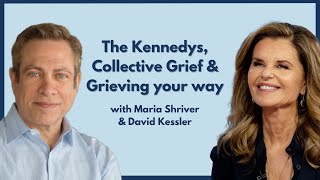
Grief expert David Kessler and Maria Shriver discuss loss, healing, and identity. Shriver shares how grief moved through her Kennedy family across generations. They explore how slowing down and naming who you are beyond your roles can help you survive heartbreak.
Chapters
Hi, everyone. Welcome. Thank you so much. Oh, my gosh. We've got people from all over. Wow. Look at all these amazing places. People are coming in from Minnesota, Pittsburgh, Arizona, Connecticut, New York. Too many for me to mention. Well, I know why you're all here, and I'm so excited that everyone's here because we have an extraordinary guest today. Thank you all for joining us. I'm David Kessler. I'm so touched that you're all here. We're talking today about grief and heartache. And many of you know I am a grief expert. And not only do I know this world professionally and academically, but I also know this world as someone who's. My mother died when I was a teenager. There turned out to be one of the first mass shootings when I was in a hotel across from the hospital where she was dying. So it's a profession that in some ways chose me. And you also may know my father died and also my younger son, David. So I have had a lot of grief. And I know this personally and professionally. And it's so important that we connect with one another and help each other, really, through the dark times of our life. And that's what we're here today to do. And I am talking to someone who is quite extraordinary that I'm sure many of you already know, and that is Maria Shriver. And Maria Shriver is a mother, a grandmother, an author, a journalist. She brings us the Sunday paper every week. She has her own publishing imprint called Open Field. And she has a new book out coming out actually Tuesday, but you can pre order it right now called I Am Maria. And so we're going to be talking a lot about grief and heartache and really hearing from her perspective about really finding ways to move forward after loss, as we all have to. So I'm so thrilled. I'm going to bring her out here, and she's going to be joining us here. And let me bring her out right now. Oh, sorry, I went the wrong way. Let me find her and bring her out the other way.
This is me. I have that one job to do. It's so funny. And I go the other way. All right, let me bring her out here now. And then she's going to come out here and join us. And it's a little just excitement about this new book that I can't wait to talk to you about. All right, now here's Maria again. So, Maria, I'm going to have to. There you go, Maria.
They trained me in all the tech, and then it all is good until it's my moment. All right. I'm so grateful to see you and that you're here.
I'm so happy to be here with you, David. And you know what a big fan I am of yours. I consider us to be friends. I consider us to be colleagues. We have walked together through your loss and my loss. And I am so grateful for your voice in the world. I was trying to think the other day of when we first connected. And I think it was when you asked me to read to write the foreword to Elizabeth Kubler Ross's 15th anniversary edition.
Yes. The book that we wrote on grief and grieving. And then you and I also connected again at a mutual friend's house for dinner.
That's correct.
So it's I. And I got to tell you, when I heard you were doing a book, another book. And you've written some wonderful books. When I heard you were doing another book, I knew it would be good. I knew you're a journalist, you're an amazing writer. Read the Sunday paper religiously. And I'll tell you.
I. One of the things about this book that I did not expect.
Is it to be so relatable. I really thought I'm going to hear about your world and your experiences and your grief and your heartache and your hope and your living your life. I did not know I was going to find myself in every page.
Oh, that makes me feel really great because that was my hope. My hope was. And that's the reason I ended up.
Publishing the book. Because I've gone back and forth and back and forth about publishing it. And so many people that I showed it to said this ignited my own self exploration. This is my life today too. I could write these poems, maybe different headings, different names. But this is also my experience. And it made me think about going back to the beginning of my own life and charting my way forward. And that's my hope. Because what I've come. And you know this so well, I've come to understand that we are all so unbelievably similar that we're all struggling with identity, with loss, with figuring out where to go. At what point can we claim our own lives. All of these things are so common. And we all think we're the only one struggling with self worth. We're the only one struggling with grief. We're the only one afraid of the death of our parents. We're the only one that both love our parents and struggle with our parents. We're the only one who's having heartbreak. And I wanted to. To initiate or ignite a kind of very general Main street conversation about these subjects that you talk about that I find great connection in talking about, but yet don't have a universal stage.
Yes. And I'm going to just start without just the word universal. I think that's why. Because it's easy to think about your background, your family, your worlds you've traveled in, and to go so different than ours. But there's a universality in pain and grief, isn't there, that connects us totally.
That's how you and I connected. Right. And the first book I ever wrote was called what's Heaven? Because I myself had so many questions about death, about what happens after death. And I wrote a children's book because I actually wanted to do a special at NBC on heaven and death. And they were like, no way. This is depressing. We don't want to do this. This isn't what we do. And so I went and wrote it as a children's book, and I wrote it also. I wrote it for my own children, but I wrote it for myself because I grew up in a house that did not talk about feelings, that did not talk about grief. Even though there were these kind of huge grief stories that were going on out in the public involving my family, my family didn't talk about it. So I would be kind of like, whoa, this is going on. I hear it out there, but why aren't we talking about it in here? And it gave me an introduction to how the different ways people deal with grief. Some soldier on. Like, in my family, we don't talk about it. We just keep on going. And some have a lot of questions and need to work it through, talk it through, cry it through, take their time with it. That was more me. And so I found that in writing.
It helped me answer some of the questions I had as a child. And it also helped me answer some of the questions my own children were having when my grandmother died. So I've always been interested in the subject and how to handle grief, how different people process grief. What is the right way to handle it. I was given the example of my grandmother, my mother, my aunts, who just were stoic and carried on. And yet then I would see other people who had a very different experience with it. I looked at it around the world, and some people wore black for a year. Some people wore armbands. Some people sat in shiva. Some people went right back to work. Some people could never go back to work. Some people, you know, Were undone, brought to their knees. Other people were like, meh. So I think it's a very interesting experience, and I've come to learn that there's no right way to grieve and that we need to support each other in all the ways that people grieve.
It's really interesting to think about.
How. And I know people on the outside of grief don't understand this if they haven't experienced it. When my mother died, I literally thought I was the only one who. Who had a mother die. You forget the crazy isolation that happens when you're in that kind of pain. And here you are as a child in a family that's experiencing a death that the world and the nation is talking about and your family is not. And that's so powerful in the book. And here's where I want to go, because you and I have talked about many times on the day that marks the death of your mother. But I want to, like, go back to. Do I have this correct? Your grandmother, her mother was a bereaved mother, for sure.
She lost several children. My grandmother, Rose Kennedy, she lost two sons to assassin. She lost a daughter in a plane crash, a son in the war, in a plane crash. And she was a woman of deep feet, deep faith. She went to Mass every single day, as did my mother and my father. And she was not. She did not demonstrate feelings. She was like, we carry on. That's what we do. We have stiff upper lip. This was, you know, how she was raised, and this is how the example that she wanted to give to her grandchildren and her children. And so her children did the same. They. They did a stiff upper lip. They went out to work. They were focused on changing the world, making it better, and not feeling sorry for themselves, feeling to whom much is given, much is expected, and we just need to carry on. But what I came to learn is that there's no outrunning grief. There's no outrunning trauma. There's no outrunning loss. So maybe you think you're just carrying on, but it's in there. It's in your body, and it comes out in all kinds of ways, Right? And so we often think we're not equipped to handle the tsunami of grief that might come at us. And of course we are. If we're doing it in community, if we're doing it in support, if we're doing it with people who have been there, who share their experiences. And I certainly thought, well, you know, no one here is talking about that's the right way to handle it. And so when I did kind of confront my grief after my mother died, my father died, my uncles died, my cousins died, and my marriage died, I was like, whoa, this is a tsunami. What is this? And, you know, I struggled to breathe, I struggled to figure out what was this, how did I cope with it, how would I move forward with it? That's where healing comes in. That's where the path comes in. That's where the support comes in. That's where people who've been there before turn around and say, I've been here. This is my path. Hopefully it will help you on yours. That's really the reason for this book. The book is, you know, this is a path. This is one way of dealing with whether it's heartbreak, grief, trauma, whatever it is in your life. For me, writing poetry and not, I would say poetry from the hallowed halls of Ivy University, Ivy League, but poetry that's raw, that's guttural, that just comes out of each and every one of us putting it to the page and watching it lead you home.
Well, I have to tell you, just, it was so moving to read the book. And you were probably one of the most grief literate people I know in a world that is grief illiterate, as we've talked about. And one of the things I think about, all grief does not have trauma, but all trauma has grief. And I don't think you and I have talked about it, but I'm a big believer. Going back to your grandmother and probably further back.
Grief and trauma get passed down through generations until someone is willing to feel it. And that's you and your family. Yeah, you are one. Feeling it and sharing it and expressing it so that it doesn't keep getting passed down.
Well, that's my hope. I mean, one of the things that I've tried to do in my life is look at certain patterns that have been passed down and see what is worth breaking, what is worth taking, and what is worth leaving behind.
Wait, you gotta say that again. That's so good. What is worth patterns that are worth.
Breaking and leaving behind, and what is worth taking you forward. And I've tried to do that in all aspects of my life. In my mothering, in my own womanhood, in my. In my own being, in every way. When it comes to my faith, when it comes to how I parent, when it comes to how I've separated, how I've divorced, how I led, how I've become an activist, I've tried to do. Tried to take certain things from my family. But I've tried to develop my own patterns and my own path forward.
And this book. I am not your average poetry reader.
Right. That's what everybody has said to me. Person is like, it's so funny, David, because when people say to me, I'm so excited about your book. Is it. Is it a memoir? I go, no, it's not. They're like, well, what is it? What is it? And I go, it's Reflections of Poetry. And they're like, poetry? I don't read poetry. I don't feel it for poetry. And I'm like, just give it a moment. Just check it out. See when they come back and they're like. I write poetry. My daughter calls it reporter poetry because it's words from the front lines of life is what I call it. But it's the kind of poetry or they're the kind of poems that all of us can write. They're maybe influenced a bit by Mary Oliver or Emily Dickinson or Derek Walcott or. And others, but David White. But this is not.
I would say it's not Pulitzer Prize winning poetry, but it's honest, it's real, it's guttural. And I think it paints a picture. I try to paint a picture, my words. And I hope that it helps people paint pictures with their words or understand their own journeys in a different way.
Well, and here's what happened to me. Reading the book and reading the poems. I was like, oh, I'm going to read this on the plane. I'm traveling. I'm like, I'm going to read this, get this done. And I have to tell you, I'm like, no, no, no. This is not a book to be read quickly. This is a savoring book. I wanted to read a poem and sit with it.
I love that.
It was just.
That's my hope, is that you read a poem and you sit down and you think of your own life. You think of yourself maybe as a mother, or maybe as a father, or maybe as someone who didn't. Wasn't able to have a child. Therefore, you think about the imaginary child, or you think about your time without a child. Maybe you sit down and think about the death of a mother or a father or an animal. Because some people have a much deeper relationship with an animal than they do with family members. I've come to learn that. And that you write to that person. You write how they made you feel, what you felt while they were here, how you have felt since they've been gone. What have they Left behind in your being. What do you want to talk to them about? What didn't you talk about? So I write about all of that. I write about pivotal moments in my own life. I write about the public square. I write to God, I write to the trees. I write to dogs. I write to.
You know, heartbreak. I write to hope, I write to longing. I write to rediscovering myself. I write to what is home. I write to the open field. I write to survival. So to me, this is a book really that is about love and loss and longing and redemption and picking oneself up and carrying on. It's about grief and trauma and stitching oneself back together again. It's about the broken places, as Leonard Cohen says, where the light gets in and it's about putting the broken pieces together but still allowing the light to get in. And it's about transformation. I'm a different woman today than I was 10 years ago, 20 years ago, 30 years ago. And I'm thrilled by that. And that woman has come from hard work, has come from grief, has come from loss, has come from learning what love is and isn't. And it has come from picking myself back up, putting my shoulders back, putting my head up and going ahead.
And the title, I Am Maria, yes, it speaks to so much of your life, but also I think that grief is.
A transformational experience that makes us truly find our identity. How did grief in your life and you write about it so eloquently in the book, how did it help you find you and shed all those roles that weren't you?
Well, I think all of us, to me, I am is a very spiritual declaration. It comes, you know, for many people it's biblical. For me, it's religious and spiritual. I'm a deeply spiritual person. And I think, you know, our parents give us our name, right? But we have to claim who we are. And by saying I am Maria is me claiming my own identity. I come from a family, but I am my own being within the family, as is everybody, right? Many people change their names to claim their identity because they feel more like a David than a John or a, you know, a Billy or they feel like a JD and not an Andrew, whatever that might be. But I think claiming your I am and being able to stand in it, who is that person underneath of journalist, former first lady, right advocate, activist, lawyer, mother, who is the essence of this person? And I think identity is such a.
Evolving thing. You know, so many people struggle. Well, I'm a full time mom. And then your kids go off to school. Who are you? I'm a lawyer. You lose your job. What are you? I'm a journalist. You get kicked out of the media company that you are, a journalist. Does that mean you no longer are? What does any of that mean? And so many of us, myself included, have been taught to lead with what we do in our lives because we're told that that's what people are interested in. So we think we're only interesting if we're doing something interesting. And I'm hoping to ignite a conversation about less about what we do and more about who we are. So when I meet somebody, I tried to ask them, who are you? I don't want to know what you do. Tell me something about who you are and people will meet. Well, I'm a lawyer. I'm a banker. I said, no, who are you? Who are you?
Those are the things you do.
Yes. Those are the things you do. But I think we're taught that society won't be interested in who we are. It's only interested in values. What we do, it values fame, it value money, it values a net worth. So it values what company you work at. But I'm hoping that we will begin to value one another for our essence, for our. I am. For what we are bringing to the world, how we are walking in the world. And that is the conversation I'm interested in igniting and having.
And it's interesting, I think, so many times in grief, it has forced us to go, well, I am no longer that.
Yes.
I am no longer the wife of the parent, the child. And I always love the remember, remind, rebuild a lot of those words and transforming into this changed identity that we're always going through. Yes, but you're talking about really claiming it.
Yes, I think we have to claim who we are to actually fully stand in who we are and to be grounded in who we are. Otherwise, we're moving with the way society throws us around. Right. We're moving with the noise, we're moving with the wind. Right. But if we always try to visualize a tree, firmly planted, grounded in the earth that is our I am. And so whatever happens, if you lose your podcast, you're still David, right? If I lose my media company or my job, I am still Maria. And who is that separate from the family I was born into? And I tell a story in the beginning of the book that I was, you know, raised in this specific family. And every time I would say, when people would come up and say, well, who are you? I would say, I am Maria. And they would be like, well, no, but you're a Kennedy, right? I'm like, well, I am Maria. And they're like, no, no, no. But no, no, no. Which Kennedy are you? Who's your father? Who's your. I was like, oh, okay. Well, I'm Eunice's daughter. And they're like, but you're still a Kennedy, right? And this was the message that I grew up with. The I am wasn't enough. The individual wasn't interesting enough. The family superseded that. So I struggled for a long time with, who is this? And is this enough? And what do I have to do with this in order to become enough? And so I think these are lifelong journeys for many of us. And that happens to people whose parents might be the pastor in the local town or might have the store in the local town or might be the best lawyer in town or wherever, or, you know, they come from a place where there is no history, and then they wonder, what does that mean? So there's. But what I've come to learn, David, which I thought, you know, Well, I can't complain because I come from this family, but this question and this struggle, as I said, is universal, that people are all walking a path of trying to figure out, who am I? Who am I? Why am I here? What difference does it make that I am here? And does anybody care if I am who I am?
That's what makes the book so lovely, is that when you talk about feeling not enough as you.
Yeah.
I mean, all of us go, me too.
Right?
I'm not enough.
Right.
And how many of us are raised to be defined by who we're adjacent to?
Yes, yes, yes, yes, that's right. And I think that's something. Once again, I don't think it's any one individual's fault. I think we live in a society that shines a light on fame, that shines a light on power, that shines a light on people adjacent to fame and to power, therefore making people who are not that feel, well, who am I? What happens to me in this? And then you lose, maybe your grounding, your family, your identity, your job. And then you kind of are like a rapid. Right. You're being flapped around, which is why. Community support. You have all these beautiful support groups. You offer support to so many people who are in that rapid moment. Right. Of helping them ground themselves again. Know that they're not alone, know that this struggle is universal, that there's not something wrong with them. If they're questioning you know where to go. And I have found that in going back to the beginning.
Back to when we are young, and then charting our way forward for me turned out to be a yellow brick road that I could then follow and carve out forward. And so for me to understand that heartbreak happens early and that it kind of continues to happen in life and that we have what we need to get through it. And that too is universal, that healing is a choice. And for some it takes a lot longer than others. And. Okay. And then finding our way home to ourselves. Once in home, being in ourselves, I believe. And so if that person or that child or that parent or whatever is gone, we can still be at home in ourselves and we can still move forward. Right. That's. That is a choice. And I think that is a choice that you have made that everybody probably in your community has had to really think about making. And that's such a brave thing to do.
Well, thinking of bravery, I just also want, you know, one of the things I literally thought about. It would have been so easy for you not to write this book. This is the hardest book. And I don't know whether it was, but it is, you know, to write about heartbreak is not the easiest thing you could have done. And you have options to write about many things. And one of the things that I try to be, you are, is evidence that life continues. Not that it's not the most painful thing and we're not going to be in dark, lonely, lonely nights. And you write beautifully about them, but you stand as evidence. I hope I stand as evidence that despite the tragedies we've been through, life, happiness, joy, all those moments can still be possible.
Yeah. You know, that's so beautifully said, David, because I have to say that was not a message that I grew up with. I did not understand that you could have laughter and pain in a day. I did not understand that you could have heartbreak and love in a day. I did not understand the paradoxes of life. I, you know, you kind of hear like you live happily ever after and everything is rosy and onset. Right. Or, you know, I also thought, okay, if something really bad happens, you're going to get super serious and you're never going to laugh again and you're going to be stoic and going to have armor upon armor, armor. And that's going to be your way. And you have, you are in community. You have built meaningful work, you have built meaningful life, a meaningful mission, and you've experienced deep, guttural pain and is what life is right?
Right. That is it. It's not. You know, it is all of it. You know, we live in a world that's all about the peaks.
Yeah.
You have to walk in these valleys. No shortcut.
That's right. It's like Disneyland. I try to say to my kids all the time, look at. You know, stuff's going to happen, is going to happen in your life. Nobody goes through life without heartbreak.
Right.
You get to make decisions about how you navigate whether it's breaking up with a boyfriend or a girlfriend or a partner, whether it's getting divorced, whether it's surviving the loss of a parent. I say to my kids, you're going to all have to navigate life, God willing, after your dad and I pass away. You cannot be undone by that. You're going to have to find community with your siblings in a new way. You're going to have to build your own families, build your own foundation. You're going to have to seek support. You're going to have to look at healing as some of the most important work of your life. And I try to say that some of my kids are like, well, I.
Know, and like we were that too, if our pet. But most of our. My. I never heard anything from our parent. My parents.
No, no one told me.
Yeah, no one told me there's going to be any, you know, dark night.
Told me that there was such a thing as healing work. Nobody told me that there were grief specialists. Nobody told me there was grief work.
Well, and there actually wasn't that many, you know, when I was a kid.
That's probably why they didn't tell me about it, but, you know, because it didn't exist. That's why you're a pioneer. Right. That's why the Elizabeth Kubler Ross foundation is trailblazing. That's why these things are so valuable. Right. Because this is not an old profession, really. Right. What you're doing is carving a new path forward.
In a strange way. I say, I'm teaching what our great grandparents knew how to do. You know, they knew how to be with the dying and be in grief, and they didn't know how to have feelings on feelings and, you know, rush through things the way we do in our modern world.
Yes. I'm doing a book. I'm publishing a book by a death doula at the end of this year because I'm super interested in that profession. I'm super interested in people who choose to be doulas for birth doulas and people who choose to be death doulas. Right. People who choose to be with someone as a child comes into the world, and people who choose to be with someone as they go out of the world. And what can we learn from both of those extraordinary moments in life? Right. And people, you know, who sit with the dying. How do you sit with the dying?
That's, to me, you know, extraordinary. The hospice work that goes on in our country, in our world, it's really extraordinary work. Extraordinary compassion that is being modeled for us and the bravery of people who.
Kind of let their dying be for the good of humanity, who. Who share their lessons, who share their regrets at that time of their life. I think all of that is super interesting. I way more want to have that conversation than what do you do?
Right. And it's interesting that, you know, when we talk about grief and death, those people, all of us, who can sit with the dying or sit with the griever, the tendency is to fix and to understand when our body is winding down, it is not broken. And when we're in grief, we are not broken. We feel broken.
Yeah. That's hard. It's hard, yes. Because when I was. When I found myself in grief, I'm like, somebody fix me. Somebody make this stop. Somebody help me here. I don't. I want this to end and end now. And if you're kind of a person who's used to getting stuff done, you want this to be done. And then you realize, you know, it's interesting, when I went to read the audio version of the book, it was hard for me because I realized that many of this phase of my life I've come out of, and I kind of stand here at the epilogue of a lot of it. And it was painful to remember how painful some of these poems were to experience and to write and then to be on the other side. And so I also try to share that. That there is another side, that there is.
Another way. When you get to the mountain, you start to walk down into the light, that you look back and go, like, wow, that was a lot. That was really hard. And here I am. Wow. I've done well.
And when you're in. Feels unsurvivable.
Yeah. Yeah.
And I'll tell you, so many people in my online groups, they come on and they say, please, just get me out of pain. And I have to say, I wish I had a magic wand and could do that. We are going to sit with you. We are going to walk with you.
Wow.
But we cannot take your pain away. And I try to remind. Remind people that the Pain is part of the love. I. I have to give you the dignity of your own pain.
Yeah, that's beautiful.
Try to take it away. I want to if I can really love.
If you didn't really love, you wouldn't feel any pain. Right. If you didn't love whatever is gone or has left, you wouldn't be sitting there going like, oh, it's. It's too much. You would be like, right, right. So it's love.
Right? Exactly. And the truth is, I always say grief is optional. This lifetime, you don't have to have grief. You want to connect with your children, your parents, your friends, your spouse, your pets, your partners, then it's a package deal. As it's been said, you know, you're going to have love and grief.
Yeah.
I want to just read the table of contents. I mean, look here. You could see there's a lot of markers here.
Year. I love that.
I've been through it.
Does it make. Did it make you think about, like, taking a stab at writing some of your own emotions down?
You know, I have, and I think the last book, when I wrote about my son's death, was brutal. And it's like. But there is something healing about hearing the words, getting it on paper, doing that.
Yeah.
I have a question, but I want to read you how. Want to read, folks? Just the table of contents here.
Okay.
Reflections Uncovering, Discovering Longing, Revealing Heartache, Healing, Loving, Hope, and home. Here's my question on it. I got to tell you, I always end things on healing, and I love that. Healing was not your end. You had sections and chapters after that. Tell me about after. The healing is the love and the hope and the home. I love that idea.
Right. Well, I think the. You know, when you're in heartbreak, it's hard to have hope. Right. It's hard when you lost your home. What. However that translate. It's hard to think I'll ever love again, I'll ever have a home again, I'll ever be whole again. And that's what I was saying, that when I read this book, I was like, oh, I remember. Oh, that hurts, you know? And that I feel, in the epilogue, I try to say that I feel so grounded, so of the earth, so in my calling, so hopeful.
In my life today. So to me, being at home in myself has been a lifelong journey to here. And it came through grit, resilience, and pain and suffering and love. And I don't want to not love any. I want to love. Right. I want to be loving. I want to be Forgiving. I want to be accepting of others and of myself. Right. I want to feel like I have a home, whether it's in community, in my neighborhood, with you and your community, which is why I wanted to do this, right. That I feel, even though I don't know the several thousand people who have joined here today, I know, and so.
Many thousands more will be watching the replay, believe me.
I feel like we're in community, we're at one, and I need that right. I don't want to be alone in the world. I spent a lot of my life being alone with armor up, with shields up, one step removed. I've done a lot of work to break it down. So I want to be in a place of hope, personally, politically, professionally, in all those ways. I want to be at home in my country, in my community, in my body, in my spirit. And that's what I'm trying to write to life after, go to life before, go through life during, and think about life after.
It's interesting you use the tree metaphor. A few moments ago, I learned today a redwood that is 2000 years old and 38 stories high has shallow roots. And the only way they can stand so high with shallow roots is that they connect to all the other trees. Yeah, it's connection, just like you said there, that really is what matters at the end. Connection that has been lost, but connection also that gets found after loss.
And I do believe, David, that, you know, so connected from ourselves, from our feelings and from one another today, due to politics, due to the media, whatever is the cause, we can debate all day long, but I think finding our way home to one another is the work of this moment. And I think it will be the healers, the poets, the wounded who will bring us back together, who will rework, reweave the fabric of our society, because they will be able to meet people where they are in their healing, where they are in their grief. They're not going to be asking, first of, who did you vote for? What's your position on the border? They're going to be asking your community, ask one another, how are you? How are you doing? How can I support you? And these are the questions we need to be asking each other if we want to rework, rethread our great country, right? The way we've been is not sustainable. And I think it will be communities like this one who have known pain, who have known longing, who have known loss and have hope. And I hope that these communities will be the ones that weave us a new way Forward.
So beautiful. Beautiful. And you know, I gotta ask you. You got a poem you'll read us?
Sure.
Maybe. Yeah. You just choose something. I know you got them. They're beautiful. Here.
Well, like, I mean, I, I. You'd have to. Let's see. Yeah.
Oh, I can tell you some, believe me.
Okay. Well, I've got so many. I don't.
You've got so many.
What's your favorite? I'm like, gosh, it's really hard to pick my favorite.
I don't, I don't. Let me see. I'll.
I'll do.
I'll read this. Be miracle minded. It's called miracle minded. Your mind wages war on your tender little heart. You know that, don't you, child? Said the voice from afar. So instead, be miracle minded. Yes, miracle minded. I like the sound of that. But just how does that work? How does miracle minded feel inside the busy mind? See yourself as the miracle you are, said the soft voice. Look at nature. See that flower bursting forth. Look at the animals that meet your eyes, that hold your gaze. Aren't they too, just like you, miracles? Yes, said you. You are alive, as is your spoken word. Don't be afraid of the dark. Don't be afraid to let what's in your mind out into the light of day. See everything this way and your path will clear. I lay down the mind that fought me for so long. I push through the darkness into the light. I pick up my miracle mind and go on. My.
Beautiful, beautiful. And you also realize what a miracle this world is. Our lives. You know, it's interesting, I. One of the questions I often ask people is, why did you wake up this morning? And they'll say, the alarm clock, the dog, my spouse. And I'll go, there's people, their alarm clock went off and they did not wake. There's people, the dog jumped on the bed and they did not wake. Like, it is a miracle that we have had those people who are no longer with us and that we continue on. And just that idea of miracle minded.
Yeah. Isn't that why I. I can't even credit him. To be meditation. It came to me in a conversation in my mind. I had never heard the phrase before. And I heard miracle minded. That's. I'm going to write something to that.
Going to write something.
I'm going to write something. But I write wonder. I write to marvel. I write to betrayal. I write to God, write to despair. I write to connecting the dots. I write to longing. I write to my mother. I write to fear. To rejection. I write to the public square, right. To places that I am perfect. I write to choices. I write to life. Right? I write life and yours, mine and ours.
And you also. There's, like, really things that people who have gone through heartache. And one of the things I know, you know, people hear sometimes outside of this world, grief, and think, oh, grief is death. Oh, it can be the death of a job, the death of a relationship, estrangement, the death of a marriage, death of a relationship, death of a pet. All those things I even say, you know, like, there's so much talk. You know, a friend of mine is Dr. Romany. Like, even when you're in relationship with a narcissist can feel like the death of yourself. Her and I often talk about. I know you published one of her amazing books. And the thing is, you write specifically about so many of these different heartaches, whether it's. There's. There's one of the poems about being in the hospital. I mean, there's moments you capture that. I promise you, everyone who sat in a hospital is going to go.
Oh, my gosh. There's just.
I didn't include it in here, but I remember sitting in the IC unit with my mother and a nurse going by, and I was there, and she said, how are you doing? And I said, oh, you know, fine. You just keep going. Because there are other people that are much worse off than my mom and I here. And she said, maria, the ICU isn't competitive. Everybody is suffering, therefore we. Everybody, as if they're in the icu. And I never forgot that. And I think all of us are in the icu. Everybody is suffering. Everybody deserves compassion. And I think we need to slow down. I should speak for myself. The slower I'm moving, more compassionate I can tap into being. And the more I'm rushing through life, the busier I am. I just am like, I don't see what I need to see. I can't hear what I need to hear. So I'm working on slowing my pace down and trying to remember that everybody's in the ICU unit.
Well, that's. That's. That's quite the statement. And it is true about our world. Now that's so fast and everything's three seconds. And yeah, I also say slowing down. And I'm trying to strive for less. I've all. I'm always striving for more. Now I want to strive for less.
Yeah, that's an interesting thing. I have a conversation a lot is what is less what is enough? What is more? What are we all doing? Where are we rushing to? What is that place we think we're going to get and then feel what.
And how does that work with Today is all we have because we don't know whether we're going to get up tomorrow. How do all these things work together?
And you speak in the book about how grief gives us the illusion of control.
Yes.
How, boy, death is, like, strips us away. If we thought we had control.
Changes us.
Right. You learned that after sitting in the ICU unit. You learned that, you know, by praying and saying, you know, please, please, please don't take my mother. And then, boom, your mother's gone. And then you're like, okay. Then, you know, okay. And for me, my mother's death was really a seminal moment because she was really, you know, everything to me. And so I had. She had been sick a lot of my life. And so I always was worried about that moment, worried that I wouldn't know what to do, worried that I couldn't go on, worried about who would I talk to, who would I ask advice of, worried about what life would look like without her. Right. And so her. Her death did bring me to my knees. And, you know, once again, those are times we have to decide, are you going to stand up or, you know, lay down? And you can lay down for a bit, Right. And you can delay standing up, but at some point you have to stand up. Right. Or I hope you can stand up. Right. And I think that life has a series of things like that that it throws. I've always, like when I said to you, you know, when you lost your son to me, that's when I meet people who have lost their children. It takes my breath away. Their stories of how they stood up and how they bond and how they start foundations in their children's honor, how they grant forgiveness in situations where maybe a child died as a result of a drunk driver, and they somehow find it within them to grant for. I'm just like, whoa. These are stories that just take my breath away. And there are a lot of them out there and people who carry on. It's just. I'm doing a book with Dr. Laura Berman, you know, whose son I think.
Yes. Dear friend. Yes.
Yeah, dear friend. But I'm just, like, in awe of people who.
Go on. Who go on and how they do it. Sometimes I just. I don't even have the words. I don't have the words. They inspire me. They inspire me. And I know that, you know, what I'm writing to or dealing with pales in comparison to that sort of thing. Well, you know, but I always unit so we're all right.
And I always teach people, when people say, which is the worst grief? Is it a murder? Is it a death of a child? I always go, yours, beautiful yours is the worst grief. And, you know, when I think about your work and I think about your. Your sweet mother, I often think about the last lesson a parent teaches us is by dying.
Yeah.
That we have to then find that way to go on as they often had to after their parents died, too.
Yes. I watched my mother, obviously, throughout my life, and I watched her, how she dealt with everything. The death of her brothers, the death of her parents.
You know, I watched how she dealt with my dad being diagnosed with Alzheimer's. I watched how she managed her brother's divorce and how she kept his wife close to our family. I watched how she raised my brothers and myself. I watched how she dealt with my father. I watched all of it. I watched all of it. And I took strength from it, as I said. I took my own ideas from it. I took like, I want to copy that and I want to throw that out. And I loved it all the way through. And so I think our children watch us watch how we navigate a fight with a friend, a divorce, a loss, an argument, all of it. And it can all be, as you said, you can have a fight with your best friend. That's heartbreaking. You can lose your job. It's heartbreaking, all of these things.
And to still live all the days.
Of your life with joy, with hope, with joy.
And, you know, and if you don't have hope, we're going to hold hope till you find it. And, oh, it's interesting. You're in la. Yep, I'm in New York. The sun's setting. We're talking about the seasons of our life, really. And even. Even as the sun sets here, I know it's beginning to make its way back to other parts of the world. I mean, life continues on. There's something remarkable about that. And I just want to. I just want to tell people, you know, right now I'm about to start our certificate program for people who turn their pain into purpose. And you have had a lifetime of turning your pain into purpose, whether it's Alzheimer's, grief and loss. And I want to tell people, you can have this delivered Tuesday. It comes out. I am Maria. My reflections and poems on heartbreak, healing and finding your way all home. It is an incredible gift, Maria, to ourselves and I hope people buy this as a gift to other people.
Thank you, David.
That kind of book.
Thank you. Thank you so much. And I hope that we can continue to be in conversation, to be in connection, to be in community, and to be there for one another.
Well, thank you for being there for all of us and really sharing your gifts and. And it's going to be a remarkable book. I can't wait till it's in the hands of folks because they're going to love it. And I'm so grateful for you in my life and in the world.
Thank you to everybody who came to this webinar. That's what you call it, right? Webinar. All the thousands of you. I wish I saw the cities that you came from in the beginning. And I see that there are questions. Here you have, David, in your Q and A. I don't know how to access that.
I didn't know if you wanted to do any of those. There's.
Let's do a couple.
All right. Sure. I can find some from you.
Let me do a few of them.
Cannot hear. Maria. Oh. Cannot see. Maria. Oh.
Oh, there. There's. You know, it's always. Here's a good one. How do you. You know. And, you know, unfortunately, there's always challenges with these things, but that's why there's a replay.
Yeah.
How do you deal with anger? And I'll tell you, you had some great poems in there about anger.
Yeah, well, you know, that's a great question, because I wasn't raised to think, particularly women. You know, anger in women was always something. I think that there was a certain downground, and it's human to have anger, and it's different. So I. Right. Anger. I try to use that in my work. I try to use it in my Women's Health work and in my Alzheimer's work, tremendously trying to right a situation of decades of lack of research when it comes to women's health. And I've had to have righteous anger in that space, trying to get attention for Alzheimer's, trying to fund research for Alzheimer's, particular particularly into women, because women are two thirds of those who get it. Bringing dignity to caregivers who are in this space and how many millions and millions of Americans are in this space and what's our future? You have to bring a sense of passion and purpose and righteous anger to that space. And I try not to bring it home. I try to. If I have it, I try to respond from a place of centered, strong strength as opposed to reactive rage. Or anger. I've read a lot about that.
And we have lots of questions on. Can you speak to the painting behind you?
Yeah, I can. This is. Let me move. This is me here. And these are my parents.
And Oprah, who has been my friend for almost half a century, about 50 years. We started in journalism together. She gave me this when both of my parents died. And it's painted by a woman named Ann Nielsen, who paints angels. She's from the south and she did Bibles and angels and scripture cards and some of her things now in the Sunday paper general store, actually, because I've become such a big fan of her artistry and her ability. And so she gave this to me because she wanted both of my parents, she believed, were angels standing beside me. I'm glad someone asked me about this. No one's ever asked me about it, so I've never been able to talk about it.
Well, we have people who see beyond the obvious here.
There you go. This is a heart that was given to me from the Ruvo center at the Cleveland Clinic for my Alzheimer's work decades ago when I first started out.
Purple is the color of Alzheimer's. My heart is definitely in this work, trying to find a cure and.
Plastic. But it's still. It's really beautiful. And these candles, I'm a big candle freak and they're fake. Don't. Yeah. But I'm going to do these conversations all over the country and I want to do them by candlelight. I want them to be intimate and moving and inspirational. And so.
We started just trying out putting the candles here. So do you like that? Do you like the candles?
Beautiful. Beautiful.
And then this cover is a old picture of myself with my horse, who I wrote to in the book, who was my best friend and the first person person, the first entity or the first energy that made me feel enough as Maria.
And you are so enough and such a wonderful person and I'm so grateful to you.
Thank you.
Thank you for. I hope folks, check out her Instagram, check out her website. You're going to see she's going many places in the country and get the amazing book I Am Maria. It's out Tuesday, but you can pre order it today. Link is in the bio. We're going to send it to everyone.
Okay. Thank you, David.
Thank you, Maria. Much love. Thank you so much.
Thank you.
Bye bye. Thank you. Bye.










