Marilyn McCoo & Billy Davis Jr and grief expert, David Kessler discuss life and loss.
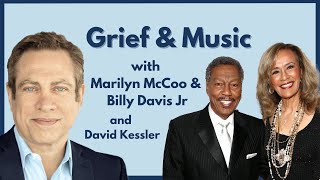
A recorded YouTube conversation (host David Kessler with guests Marilyn McCoo and Billy Davis Jr) that centers on experiences of loss, mourning, and resilience. Marilyn and Billy share personal bereavements—Marilyn’s brother (suicide, 1971) and mother (sudden heart attack on Marilyn’s birthday), Billy’s father (sudden death), and the death of bandmate Ronald (health-related)—and describe how faith, scripture, community, and creative expression (writing, ministry) helped them cope. The discussion also addresses broader issues: racism (historical examples like Emmett Till and recent events), COVID-19’s disruption of funerals and rituals, and the role of music and service in healing. The transcript includes audience interaction and ends with practical notes about following the duo online and potential future appearances.
Chapters
Hi, everyone. David Kessler, welcome. So glad you're here with us on a Friday night. This is sort of our Friday night date night, I guess, and we're going out with an amazing couple tonight. So it's a couple night. I have the amazing Marilyn McCoo and Billy Davis here. Oh, so nice to have you here.
Well, thank you.
Thank you, David. Thank you for inviting us to join you.
I was just telling you, since I heard you are coming on and someone else just said this in the comments, I have had your music in my ear all day. One less answer has been going non stop Aquarius. Just so many songs. So.
Just I'm thrilled to have you here and everyone, as you find your way on, say hello to us. And I'm going to look for us too, so I can find us. Just say hello. It's nice. I don't know if you remember, I joke with everyone. There used to be a show called Romper Room and the teacher used to pretend like she could see everyone at home. So.
I say hi to everyone as if I can see them. Sharon says she's here from Midland, Texas. Ann is here. Betty is here. Betty also says she's been listening to your music and thinking about it all day since she heard you were beautiful.
Great.
Shirley is here. Diane's here. Love your music. From Fort Worth, Texas.
Okay.
Naomi from the Bay Area. Sandra from California. We're going to get people from all over here. Ivy from New York City.
Patty from New Orleans. John from Massachusetts. I love that you're all finding your way here and joining us.
Yes.
Melissa says she loves you, too. Jody from New Jersey. Welcome, everyone. Arcadia from Louisiana.
Wow.
Lovely to see so many people coming on here and finding their way. We'll give it another couple of moments before we start. Hi, Joanne.
You're what?
I was born in New Jersey.
You were born in New Jersey. How about you, Billy?
I was born in St. Louis, Missouri.
St. Louis. All right. Steven's watching, Nora's watching. Ann is here from Central Washington. Jody from New Hampshire. Well, we're representing the US And I'm sure we'll get a little Australia before it's all over. Okay, we are all here. If you haven't joined us before. This was set up after COVID 19. There were people who. Their grief groups got closed down. Then they found out loved ones were dying. They couldn't be with them. Loved ones died. They weren't able to have funerals. People who were newly bereaved, people who have been struggling for a while. Everyone is welcome here and we just needed a place to virtually gather and it turned out to be thousands of us. So I'm so honored that you show up here for each other and for all of us. And we have. You know, one of the things I said early on, there's no one voice in grief. We all do it differently. We all have to deal with loss. So many amazing people have been showing up to volunteer like these two tonight in service of all, to lend their voices and support to let you know that as the world moves on, we know you're not forgotten. So we're all here because someone we love has died. I would love if we could just take a moment of silence in their honor, so if everyone would join me.
Thank you so much.
I am so excited to have you two here. First of all, seven time Grammy winning winners, you are the background music to our lives. I mean, I can think of one of your songs and I can remember the breakup or the concert or the night or whatever. I mean, you, you connect us with ourselves in so many ways.
And I was saying, well, and I was also saying, on top of everything else, married 50 years. Did you get married at nine years old?
I can't. You know, 50. It's amazing. When we, we celebrated last year and it was like, oh my gosh, I can't believe I thought I would never get married. Or I thought if I got married, I'd be married three or four times.
Well, one of the things that rolled up on us so fast, before we knew it, 50 years was here and it was like, oh my God, we getting ready to celebrate 50 years. It was, it was amazing. Really.
That is amazing. If there's anyone out there, maybe you've been under a rock and you don't know their songs, you actually do know their songs. Aquarius Let the sun shine in One less bell to answer. You don't have to be a star. Up, up and away. I mean, so many songs. There were even songs I was looking at today and I went, oh, I don't know that song. And then I played it and I'm like, oh, that's winning bells. I didn't. Oh, of course I know that song. What was I thinking? So it's just so wonderful to have you here.
Well, thank you, Dave. Thank you so much.
And you know, you've had a long career and I know there's no life that doesn't get touched by loss and grief.
Curious if you could share how loss and grief have touched your lives.
Well, you know, one of the first, one of the first that came to mind for me was, you know.
When someone passes away suddenly, I think that's a really hard thing to deal with. My brother, the baby in our family, he committed suicide. And that was extremely difficult for all of us because.
I just wasn't expecting it. And Billy and I were out on the road.
And that was a hard one. I learned a lot about grief during that period because I've heard you say that one of the things that happens when you deal with death of your loved ones is denial. And I really went through a long period of denial. It took me a couple of years of pain before I finally was able to come to terms with my brother deciding to kill himself. I always felt like I could have had the right words to say that would have changed his mind. And then I found out that that's a common thing for people to think about. Billy thought he would have had the right words. My two sisters thought that they would have said the right thing. And you learn a lot about those kinds of things.
That was in 1971, long time ago.
And I'll tell you, so much has changed around that. We. We now know, we used to think it was a choice that people made. They were being selfish. They did it to us. But with mental illness, now we're learning that it's an illness of our mind.
Yeah.
Yes, that's true. Yeah.
Is that different now when you look back and go, oh, his mind was ill?
Well, yes, and I'm so sorry. You know, I think about that with a great deal of sorrow that we couldn't help him. We couldn't be there to.
Ease him through whatever that was that made him feel that life just wasn't worth living anymore.
Well, not only that, we actually, like you said, found out that his mind was ill because we found out that it wasn't the first time. He had attempted it a couple of times. And that's when you start to realize that there's really something going on in his mind that we can't fix.
And of course, just like you say, everyone left behind thinks, oh, if only I had done this or said that or called one more time or checked on them, they'd still be here. And.
Scenario, sometimes you save them for the day, but the illness is still there the day after.
Yes, yes, we think we can make the difference. And I think with time, you start to realize that probably not.
And it's also one of those things that obviously we want to make sure with anyone who's suffering, who has illness of the mind, who's having self harming thoughts. We do everything we can for them and we check on them and all that. And yet it doesn't mean we're to blame for it afterwards, but we all do blame ourselves.
Yes.
That certainly is a huge loss to have to deal with.
Yes. Yes. Well, one of the things is that.
You know, Maryland, I mean, I work, we on the road all the time. My father died suddenly and.
Our relationship was very strong. I mean, he worked with our company. I mean, my relationship was one of the perfect relationships with a father that one would have. And.
So one of the ways that I handled grief, I was learning from just living a while was I never, I never go and, and, and view the body.
So that's not the last way that I see them.
Right.
I like to, to, to have the picture of them in my mind with us doing something, doing the things that we were doing. And so therefore I always feel like I have them with me.
Right. It's very sweet. Yeah.
Yeah. Everyone has to make their own decisions on that stuff and it's good, you know, what's right for you.
Yes.
You know, I always say we have to become an expert on our own life and our own losses.
Yeah, that's right.
Yeah. Yeah. So Father's Day is coming up. Tell me a little bit more about your dad. Tell us about what kind of man he was.
Well, actually, my father.
He was a very kind, gentle man. He was a southern gentleman type. You know, he.
There's nothing you could answer that he wouldn't do. And in fact, sometimes you used to tell people, you know, stop asking him because he's going to do it. You know, the kids would ask him for one thing. He would take you anywhere if you asked him in the car, you know, and.
He was just one of those kind of men that everybody fell in love with. And I did too, you know, so.
He was a very kind sweetheart.
So one of the things I often ask people, and I'll ask both of you, you know, there's that saying you'll hear. When my loved one died, a part of me died with him. And I. But a part of them lives on in you for each of you. How does your brother live on in you now? How does your dad live on in you?
Well, you know, after what I went through with my brother.
And I realized the pain of that, how it stayed with me so long. I had also. My mother died suddenly. My mother died from a heart attack. And it was something that I just was totally unprepared for. And to make Matters more difficult. She died on my birthday.
Yeah.
And we were on our way to have dinner together, and we got to the restaurant, and the. The call came to the restaurant that she wasn't going to be there. And so that was very difficult. And I really. I. You know, I have a very strong faith. And I. And I was wondering, I thought, lord, how did. Why did you let this happen like this? You know, I really wasn't ready for this. And I had to spend some quiet time for many, many days just praying about it and asking him.
Why and how and all of those things. And then I found some scriptures that really kind of helped me get through this. You know, it says, trust in the Lord with all your heart and lean not on your own understanding. In all your ways, acknowledge him, and he shall direct your path. And as I continued to have my conversations with him, with the Holy Spirit, you know, he brought to me, he said, you know, there were a couple of things that your mother was very concerned about, and I knew this for a fact. One of them was that she didn't want to have a long, drawn out illness that was going to take her out of here. She didn't want to suffer. And she. So she died from a heart attack. So it was like, oh, Lord, you answered her prayer. Like, that.
Made it a lot easier for me to understand and to accept it. And the other fear that she had was that she didn't want to be a burden on anyone in the family. And again, by her dying suddenly like that, she ended up not being a burden. And so I began to realize that. That her prayers were answered. And that made me. That made accepting her loss.
More easier for me. And I've been told by many people that I'm very much like my mother in so many ways. So she lives on inside of me in many ways.
Right. And. Yeah, go ahead. Sorry, please.
Actually, just speaking about how they live on in us, right. Sometimes I can go around my family. I got a pretty big family with seven of us, and I can go around my sisters and brothers, and they'll look at me and they'll say, oh, that's Daddy.
Because I know I look like him. But.
They truly live with us, you know, the memories. Even people who work with us and work for our company said that, you know, working with Dan was just one of the most beautiful things, you know, and he'll come up in the conversation, and it's like he's still here, you know?
And let me say one more thing, that Billy's father's kindness and gentleness and desire to give.
Describes his son. Billy is very much that way. So his father lives on inside of him in so many ways.
I can tell you, I was going to say, just from our brief conversations, I can already see his kindness in you. I mean, when we had our conversation earlier, I said, oh, my gosh, they are so kind and lovely. So I can already see that.
Tell me. I love how you share about your faith. Helped you through some of these. And you've had family losses.
Also. Ron from the fifth dimension died.
Yes.
Tell us about that loss and how you dealt with that.
Ronald's passing.
We were concerned about Ronald for a while because. Because we didn't. Because Ronald didn't take care of himself. Ronald loved food.
Yeah. We used to call them sweets.
But. Well, one of the things is that Ronald a lot of times wouldn't eat right, and we all knew that. And.
But, but. But when he passed away, it was. It was. It was hard for us. It was very hard for us because he was. He was such a part of us. He was a part of our family. We'd been. We'd been together for 10 years, just singing on the road and being a group. And not only that, I knew Ronald and Lamont, both the other guys in the group. We grew up as kids in St. Louis, Missouri, so it was a long relationship with both of the guys. And so.
It was a hurt there.
And even after. Even after Billy and I left the group, Billy was talking about, we were with the group for 10 years, and then we left the group and started performing as a duet. But we stayed in touch with the group.
Oh, yeah.
And so we did. We did see Ronald on a pretty regular basis. And then we got back together and had a reunion tour. And so the friendship was long. And.
You know that one day somebody is going to leave you, but you never know who or how or when. So it was. It was sad. It was difficult.
Yeah.
And I'll tell you, I think he suffered with kidney diseases.
Yes.
Yes.
That's a horrible diet. The idea, I mean, for anyone who's had to cut out salt, it's. That's a brutal thing because salt is like, what everyone lives on. And. Yeah, that's a tough, tough thing. When they tell you the best thing to do is not eat salt, you're like, really?
So, okay, so what else? So what else do you want to tell me?
What else is there to eat?
Exactly, Exactly. My mother was. She had kidney failure, too. So I remember that. Those diets. And, like, there's Little flavor in food. Once you remove the salt.
Crackers, it's pretty much crackers.
So how does. As you go through life, losses continue to happen? How have you. You know, the last book I wrote was about finding meaning. How do you feel that sadness but also find meaning in those losses? And I love. You know, you kind of answered the question already about your mom, how you went to scripture to sort of find meaning around how that happened. But in general, how has your faith sort of helped you cushion you during some of these losses?
Well, knowing, you know, I really, truly put my faith and my trust in the Lord, and I feel like he knows what's best, and he knows when things are happening, you know, that they're happening for the best. And like, even this coronavirus situation, you know, people will say, well, how could the Lord allow that to happen? But his ways are not our ways, and his thoughts are not our thoughts. And so we cannot assume that we know the better way or the best way to handle situations and circumstances. We have to trust him, that he will show us ultimately what this was all about. And I believe that with this Corona situation as well.
I turn it over to him and it gives me a lot of peace.
And I trust Him.
Yes.
Well, like Marilyn was saying, we are truly strong believers. And right now I deal with a lot of people because we have a ministry, and I deal with a lot of people through our ministry, through my pastoral. Pastoral duties. And a lot of times people are calling me about with different things that they're going through, and I have to deal with them. And it's. It's something that I. I just do. I just do. I have the.
Said I just can do that, you.
Know, and doesn't surprise me a bit. I mean, tonight you're being of service. Tonight you're, you know, you're. This, you know, I look at. Everything's kind of, you know, you're. You're ministering to us. You're helping people. I always feel like helping is healing. You know, Marilyn, what you said, we're.
Here to help one another, you know.
Right. One of the things you said that someone told me early on, and I sort of often think about it whenever we ask God, how can you allow this to happen?
Might also ask, how did we allow it to happen? Yeah.
Yeah.
There's a lot of things we turn and blame God for that we maybe weren't the most loving, that we all could have been here.
Yeah.
Sometimes we put other things before. Love and kindness and being our brother's keepers. Yes.
That's right, David. God, he gets blamed for a lot of things that he didn't do, right?
Yeah. Sometimes I don't feel like God did it to us. God was here with us when it.
Happened, when it happened, and he will not stop us from doing something we decide we want to do and we're going to do. Then he allows it to happen because we have to learn through our experiences whether or not that was a wise way to go, or.
If you have a chance to decide the next time you say, well, I don't think I'm going to do it this way this time because it didn't work too well.
A lot of times, the growth period.
Yes.
You know, it helps us to grow because once we do something one way and it doesn't happen, we won't do it like that again. You know, we will do it a better way.
Yes, yes.
You know, since we're bringing up the coronavirus, the other thing that's pretty prevalent in our world is.
Racism. George Floyd, what's happened in the news and the tragedy of his death, and, you know.
I would be an ignorant person if I was to say, oh, have you ever seen any racism? Because the truth is, I know I've been seeing it and we've been turning away and we've been in denial. I would imagine, over your career, you've seen a lot and you've seen things change for the better, for the worse. How has this all been for both of you?
Well, I had a. I. My godfather was. Was murdered.
In Georgia when I was, oh, gosh, five years old, six years old.
I mean, racism, discrimination have all been a part of my entire life, as it is for most people of color, that we have different experiences that happen because our country, there are certain things that we have to come to terms with. And until we accept the way they are and start to realize that and start to.
Allow these things to be shown, which is a very exciting thing that we're seeing now with a lot of the young people that are out there protesting and saying, enough already. This has got to stop. I feel like this is the beginning, perhaps of a real serious, honest change in our country, which we need.
Yeah, yeah, that's right. You know, it's something that we've been dealing with a long time, and it's something that we have to deal with. I kind of related to.
It's like dirt. You know, if you take dirt and sweep it under a rug, it's going to be there. If you cover it up, you don't see It. So you don't see it. You don't see it, but it's still there.
Yeah. All you have to do is lift.
Up that roof, lift up that rug. It's still there, you know, and that. That's what it is, that it's something that. This. This fight that we have right now, I would call it a fight, but the situation is something that's got to play out because it's been 400 years of oppression.
We can get to the other side, and we have to get to the other side for harmony, peace.
I grew up in the south, and I went to school, and in my school, in my elementary school, there was. I was the one Jewish person.
One black girl.
I knew that we were on the outside.
And this is like second or third grade, and her name was Mary. And I remember once we were all getting ready to go inside for recess, and the teacher said, last one in has to kiss Mary.
Remember going, wait, wait. The teacher said that.
So I've had such an awareness from such a young age about how much has been going on.
Yeah.
And it is important that we all talk about it. And I think it's good we're talking about it, but it's more important that we are talking about it, the white people. Because, like you said, this is not new news to you. No, no. You're like, oh, we're shocked. There's another video. And it's like, are you. Are you really, really. So we have to work on this. We've got to make changes.
Yes, we do.
You know, I. You know, when you ask about. I go back to when I was in junior high school and Emmett Till was murdered. And I'll never forget that day because somebody brought the picture to school.
Yeah.
And I saw it, and I lost my appetite for the rest of the day. And it was just one of the most upsetting things that I had ever seen. I mean, I knew about racism and I knew about injustice and all that, but I. But to see that visual of Emmett Till being murdered after he had been murdered, and he was only. I think he was 14 at the time or 15 at the time, and I. I have never forgotten that to this day. But. But people have to know. People have to realize. And once you realize what you're dealing with, then you can start to really want to make a difference. But you have to accept that this is a. This is a reality. It's a truth.
Yeah.
Would you two be open to taking some questions if folks have questions in a moment?
Oh, sure, sure.
Great. I'M sure people will have questions. I'm curious.
One less bell to answer. Some of your songs do.
Were they like that for you? Were they the background to your life? Did they connect you? I would imagine the way we connect to moments. You have to connect to moments, too, with all your music.
Oh, yeah, yeah. This is true. Yeah.
We all sing about, you know, about lost love and the pain that goes with it. And the lyrics from One Last Bell along with the melody were just so powerful. Burt Bacharach and Hal David did such a wonderful job on that song. And to this day, I enjoy singing that song.
And we think about Laura Nero with Stone Soul Piglet and Wedding Belle Blues. And the first time we met her, and we met her before we recorded the song, we never even dreamed that we would be recording some of her music.
And it so happened, years later that we recorded what must have been four or five of her songs.
Yep.
Yeah.
Well, I am so hoping for the day to get to see you two in person.
That would just be an amazing concept. Michelle here writes, I remember watching Marilyn and thinking she was the most beautiful woman. She is beautiful inside and out.
Oh, that's so sweet.
Very true. Very true.
Thank you.
That's beautiful. Yeah.
Patricia says, my daughter that died was the only girl on the hockey team. Her teammates were always with her, and they would get pulled over all the time because she was the only white girl. I didn't raise my girls to see color. It's. It is shocking about how.
You know, you just. Oh, my gosh. I saw the news the other day about a video came out that someone got pulled over and ended up dying because they had their bright lights on. It's just. It's so good.
I thought that was terrible. That was awful.
Really?
Yes. Yeah, I heard about that on the news.
Like, literally, for most people in the world, you wouldn't even get pulled over. And if you get pulled over, someone would say, turn your brights off. But the idea that something so small like that.
Come on now, that is outrageous. That is just outrageous.
And let me ask you, what was it like for you, Marilyn? How did. Because it's. It's. Now that I think about it, my goodness, between your mother and your brother, you really have had a lot of sudden death.
Yes. Does that change you in any way? Does it. What does that do to you? Does it.
I mean, it just is. It is what it is. And you realize that. You realize that nothing is promised. Nothing is promised to you.
And.
You.
How to accept it again? I keep going back to the scriptures.
That I turn to and realizing that God knows what he's doing. You know, we can't tell him when somebody's ready to go or when the time is right. You know, we. We just have to trust that he knows best. And truly, that has carried me through.
And when they go, we never feel like the time is right for us. But as you said, there's much more to the story we don't know.
Yes, indeed. Yes, indeed. You know, I was thinking about. I think I mentioned earlier that we have a niece who has some. Who is involved in grief.
She's been writing about her life and many things that have happened to her that have been. You know, my losses of my mother and brother were strong and powerful and painful for me. She has. Our niece has been through a lot of loss, and she has handled it so beautifully by writing about it, by talking about it, she speaks about it. And she's written a book about teaching young people how to deal with grief, and it's called Miracles in Action. Never Too Young.
So we can see it.
Oh, yes, I would be happy to do that. It just came out. Let's see. Can you see it all right?
Yeah.
Okay.
Okay. It just came out. And she talks about her two sons who died in an automobile accident, and she shares about the pain and all that she went through in dealing with that. She was in Japan when it happened, and she came home and had to deal with that. But God showed her. I'm sorry.
But you know what, David? That was just a part of.
Starts even before then with her husband. And just all through her life has been some tragedies, and she's learned how to deal with all of them, and she writes about it. I think that's one of the ways she deals with it. And she has strong faith, and she writes about it and she shares it.
She had an incident in her family where her sister, who was her best friend, ended up being murdered by her brother.
Yeah.
And it was because the brother had mental illness himself. And she's written about that and she's spoken about it and shared with people how you can take some of the most tragic incidents in your life and.
And she teaches people about coming through.
Those things and how to help people with what they're going through.
Her name is Angela Alexander, and she's just amazing. She speaks a lot, and she's written about these things, and she's a real blessing.
Oh, I know of her. And this is your niece, right?
Yes, yes.
So maybe I have a connection to get her on here.
Oh, that would be wonderful, David.
Oh, David, that would be wonderful. I know that she would such a blessing to your audiences because the things that she's been through and she is such a positive. Her energy is positive, she's full of love, and people would meet her and say, we cannot believe that you've been through all of these things. But she has. Yes. I think that you would enjoy her, and I know she would enjoy you.
I would love to have her. So please put us in touch. We can make that happen.
Okay. All right.
That would be great. That would be great.
Holly asks, she says, of all your amazing songs, what is your favorite? Do you two have favorites?
Well, that's kind of hard.
There's a song called Loves Lines, Angles and Rhymes that was about a very complex song. It was not one of our biggest hits, but I certainly enjoyed recording it, and I. And again, I still enjoy singing it today, now.
Well, you know, we always like the songs that, that, that, that. That don't become hits.
There was a song called Together, Let's Find Love, and it's like one of my favorites. And it's. It's a big sound that when it. When it. When it opens up and then we sing it to each other and about love, and it's. It's just. I think it's just beautiful.
I told you. Billy's a wonderful romantic.
Someone asked a question, and I think I could. I see the answer. Are things easier for you, too because you have one another?
Well, that could be so. Yes, that a lot of times. Well, first of all, you have to realize that we're best friends. So we. Our friendship started before we even got.
Married, before we even fell in love.
Before we fell in love. We were. We were friends. Right? Right. And so that friendship has continued all through this union. So, yeah. Yeah, we lean on each other all the time.
Right. Are you too, a lot alike or very different? Are you opposites attract?
Well, I would say in the beginning it did, but. But, you know, they say the longer you stay together, you start looking alike.
Right.
You know, I think we've been together, we start acting alike. I think that that longevity starts you to doing. Doing things. You take on each other's lifestyle.
Right.
I must say that I've learned so much from Billy, from us being together, and he's taught me so much about.
He's helped me to grow. I think I've become a much better person from being with Billy, and I'm so thankful for that. And watch your head. Your head's starting to swell.
No, no, no, no, no, no, no.
He's such a kind man, and he has. He has a lot of wisdom, and I've learned a lot from him. When I finally decided that I didn't know everything and maybe I needed to start listening to him when he spoke.
Oh, someone says they've heard your niece's story. So powerful and positive. Amazing story. It would be great to have her here. All right.
Yes.
Karen says, love you too. Love your music. People are sending you lots and lots of love. Let me ask you this. The world now, so many people who have, you know, funerals, rituals.
Going home, all those things we do are so important. And people aren't able to have them the way they would like to and certainly haven't been able to.
Yes.
What would you say to them? Anything you would say to help folks who are here, and maybe right now they're deep in their pain. They're really suffering right now.
David. That's hard. That's hard because we are dealing with.
With.
With a situation now to where we can't help that. I mean, you know, we've never seen anything like this in our lifetime. So we're used to being able to go to a funeral and say goodbye.
And be there with the family and kind of sharing that moment together. Because of the coronavirus.
We can't do that. So it's a new time in life, and it's something that we have to accept, and how we have to deal with it is unknown right now. It's something that we have to, I guess we have to learn about.
Our hearts truly break for them because we know they need it as much as possible. We have a friend who just passed away, and his funeral had to be stopped because he passed away before the coronavirus started. But then they were unable to have his funeral, so they're going to do a. They're going to do a service online. And.
I just spoke to his wife today, and she was talking to us about what their plans were. And again, as Billy said, it's just a difficult situation, and we just. I think that the more friends can be there to support them and make sure that they know how much.
Their loved one, who is deceased, meant in their lives and share wonderful stories of their times together. I think that hopefully will help.
I think one of the biggest hurts is that you can't be there when one is passing away. I mean, this day in the hospital, you can't. Their loved one has to pass away by themselves. I mean, it's. That's in Our life in our lives, that's unheard of, but that's, that's what we get to deal with now.
Yeah. I think that that final goodbye is so important and it is so heartbreaking. Like you said, I'm so glad people are doing at least virtual get togethers, but all of us, I mean every loss I've ever had.
The funeral, the homegoing, the getting together, the celebrating their life, they're crying. The stories. So meaningful.
Yes.
So many people have been robbed of that.
Yeah. Yeah.
You know, it marks a life.
Yes. And we have to look at what's going on still now it's spiking. And 111,000 has have gone through that already.
Right.
That's a lot of people.
And you know, I'm saying this, you know, people say don't say it anymore. But I say there's no visuals to that.
No.
We think about a visual that's like as if in the last few months, 724 planes crashed.
Wow. Now that.
Yeah, that's right. That's right.
People. Yeah.
That's like. And I say Southwest Airlines, I love them, but that's like a Southwest plane going down every two hours.
What would we be doing if a plane was crashing every two hours?
And yet because they're.
People who are elderly and often aren't spoken for, able to speak up because there are people who are in poverty, people of color, you don't hear about it. And because there's no funerals, there's not a visual. 1, 000 caskets and funerals on TV and on Facebook. We would, we wouldn't. We'd be beside ourselves. Yeah.
Yeah.
So it's a. I hope it all becomes a wake up call for us to do more and, and look at how we're living our lives. I, I saw pictures the other day online of people at parties and get togethers.
Yeah.
And they were all holding their phone. Not talking to one another.
Yes.
Ever get together. I hope we're going to hold one another and not our phones.
Yes. Yeah.
I think the phones have taken, have.
Really taken over our minds.
And we start. We really miss those moments of being together. Everybody wants to grab those photos. They want to take those pictures and then. But they don't talk to one another.
Right.
They don't spend time with one another. They're too busy taking more pictures.
Right.
And that's. That. That really makes me very sad.
Right. Well, you two are a treasure. Time has flown by. Tell us, any idea, do you think 2021 we're gonna see you on the road again. Where? I mean, I would just. I can't wait for that to happen. And.
Well, that's our prayer.
Is there a website we can find out and follow you at?
Well, yeah, well, of course there's mukudavis.com and.
Of course, on Facebook. You know, they'll know, too. You know, we had a booking in Vegas in April, which was changed, and so now we're supposed to be there in October.
Yeah.
But from the way things are going, maybe by 2021, we'll be in Vegas.
Well, not only that, all of our jobs fell out right during the coronavirus when it first came up, and they were canceling all the jobs all over, everywhere. And quite naturally, we had about 15 of them to get canceled. And.
So hopefully they're all booked for 21. So we. We looking forward to it. Yeah, we. We planning on being out there.
Yeah, we still love singing. We still have a good time, and we love. We love entertaining our audiences. And so we're hoping soon they look.
At us and say, you mean to tell me you guys haven't retired?
What?
Don't do it. Don't do it. Don't do it. I want to hear that music. Well, fingers crossed. For October, if it happens, I want to be there.
Okay.
If not 2021, put me in touch with your niece, because I would love to have her on here.
Okay.
For so much that you're doing for.
People and helping people. A blessing.
Yes, you are.
And thank you for what you do and then how you help so many people.
Yes.
It's amazing.
Oh, well, thank you for what you do. We're going to look you up online. We're going to follow you. And, you know, while we're all home, this is a nice time to revisit some of those amazing songs of yours.
That's what I'm going to do. Thank you again for being here. I really, really appreciate. For those of you who are joining us, you know, you're not forgotten. People like these folks here, amazing people. Marilyn McCoo, Billy Davis, we're all here to remind you you're in grief. In this reopening world, you can feel invisible, but not to us. And you're in art. You're in our prayers.
Yes, yes.
You know, thank you.
Thank you all so very much.
Oh, thank you. See everyone soon. Take care. Thank you.










