Melissa Gould and David Kessler about Loss of a Spouse
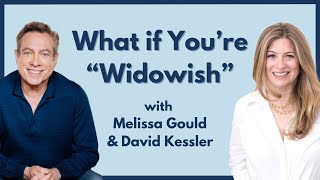
Melissa Gould became a widow at 35 when her husband Joel died from West Nile virus in 2013. She talks about feeling invisible in grief, dating again within a year, and the practical and social minefield of widowhood. Her memoir Widowish explores what it means to be young and alone.
Chapters
Thank you so much.
All right, onward and upward. Let's just give everyone just a few minutes to come on.
It'll just take a couple of moments here.
Glad you're all coming in. Welcome, welcome. All right, good. We're on Facebook, so I'll give folks a few moments to get in there also.
So as you come in, you're welcome in the chat or wherever, if you want to say where you're from. Welcome. We're broadcasting in two different places, so we're in Facebook. We're in Tender Hearts. So I'm glad you're all here. I do this thing. It's before your time, Melissa, that when I was a kid, there used to be a show called Romper Room.
Oh, yes.
The teacher would pretend that she saw people. So I. I asked people, come on. I sort of do that. It's like, oh, hi, Sandra and Ad and Christine. I'm glad you're all here. I love that in our virtual world, I feel like we're all so unseen these days, so I like to be able to.
That's a good point.
Even the illusion of being seen is sometimes better. So welcome, everybody. I'm glad you're here. I'm just going to give it just a few more minutes, and I just want to make sure everyone gets in because I think it's a really important topic we're dealing with today. And Melissa is going to be a wonderful guest, so I'm so thrilled that she's here. So welcome Tina and Jody and Joan and you can say where you're from on Facebook. 80s from Montreal. Welcome, all.
So well, let's get started if you. Oh, we've got Australia in the house. Wonderful. If you haven't been here before, we are in two different groups. We're in my Tender Hearts group. We're also in the Facebook group. The Facebook group was started after Covid shut everything down in March, and thousands of people have come in who are dealing with grief and loss. And my goodness, grief is isolating in a normal world, but in our new world, it's even more isolating. So I love to bring guests on to join us who have incredible experiences and insights. And we have one of those today with Melissa. But let's first start, as we always do, just for a moment of silence for those who are no longer with us physically, just to honor them. So join me, if you would.
Thank you so much. I always, in those moments, connect with either my parents or my son or people I've lost. But when I have a guess, I thank their person for having them here. So I was thanking Joel. So, you know, let me just put this in context and then I really want to dive into your story. I wanted to talk to you. It's Valentine's weekend. The commercialism, the sales, the love, all of that is everywhere. And it's about finding the one, getting the one, keeping the one. And you know, I think we're taught at a young age, I decided to go with purple, the color of love today.
I think I almost did.
I know. I think we're taught that, you know, there's one soulmate out there for us that's something to talk about, that there's only one. And what about the cruelness of the universe, that if you're lucky enough to find that person, you may not be able to keep them? And so many people who are here have had a spouse, a fiance, a partner, a boyfriend, a girlfriend die. And it's that it's just, it's, it's the chosen person. You know, we all have parents and kids that are kind of assigned to us, but this is the person you chose. So I wanted to talk to you. Melissa Gould, your essays have appeared in the New York Times, the Los Angeles Times, the Washington Post, the Huffington Post, buzzfeed and more. You're an award winning screenwriter whose credits include Bill Nye, the Science guy, Party of Five, Beverly Hills 90210 and Lizzie McGuire. And you're the author of the number one book on grief right now, Widowish. So I am so honored you're joining us. You and I got a pre talk yesterday that we were both on one of the TV channels, KTLA here in Los Angeles. And I think we're going to be on together on Frank Buckley show. But here we get to really interact. So how did you come to this story in your world? Melissa?
Well, first let me say it's so nice to be here with you, David, and with everybody joining us. And I really think it is such a gift to share our stories and bear witness to other people's stories. It makes our grief real and resonant and I think it is so important.
And I do look forward to us talking about soulmates because I think that's a very interesting topic. But how I found myself widowish and writing this memoir is my husband Joel really was my person. He was my love. He was my husband. He was the father of our child. And he died very unexpectedly in 2013.
Of complications of multiple sclerosis and West Nile virus.
Seven years ago. The world was not fluent in viruses. I felt very alone in this diagnosis of West Nile virus. I write about it extensively and widowish, but it took My husband, like I said, had multiple sclerosis. We did not know that he was bitten by a mosquito. So he was in the hospital in a coma for three weeks.
Of those three weeks, it took about 12 days for the diagnosis to come back definitively as West Nile. In that time, there was tremendous confusion. The doctors were very concerned about Joel's well being, if he would survive what was happening to his body. I was really left to figure these things out. I had a lot of love and support around me, but There was no Dr. Fauci offering sound reasoning or information.
It really was a shock.
When he passed away. It was very unexpected. He walked himself into the hospital. We made that decision together for him to go to the hospital. He fell into a coma the next day and that was it. But in my memoir, I really write about having to reconcile what it meant for me personally to be a widow. I was a young widow. I felt like the town widow in many ways. Even though I live in Los Angeles, it's a very small community and neighborhood. And I felt very self conscious.
Because people wouldn't know when they looked at me necessarily that I was a widow. And it was very important that they knew somehow. I wanted to share that because I wanted people to know I was suffering. Even though I looked young. I mean, I came up with widowish because I say I didn't look like a widow, I didn't act like a widow because people would see me at Trader Joe's, they would see me picking up my daughter from school, but I felt like a widow. And that's how I decided I was widow.
Ish.
And especially, and I write about this in the book as well, I started dating again within a year of losing my husband. And this new person in my life in no way.
Made my grief go away. He was very accepting of my story and of my grief and of my loss. And I think that's why he managed to be in my life at that time. But, you know, it's what they say, David. You don't move on from your grief, you move forward. And I felt like I was moving forward in this new world that was entirely familiar to me in terms of I was in the same house, in the same neighborhood, doing the same things, but everything felt different. And that's really my widowish journey. Journey.
Right. So let's unpack that a little bit. First of all, this idea that Joel had Ms. Yeah. And you were sort of on that journey fighting.
And then there's a mosquito and West Nile. Like.
That seems like just hideous luck.
How did you. I mean, just the.
I often talk about how you can have a sudden death and an expected illness. I would imagine the Ms. Almost threw things off, that it's like we're always looking at the main problem. And here's this random, strange thing that happens.
It was so random. I mean, what was so interesting about it being West Nile and it being. Really. The thing that ended Joel's life is that we, as a family, were managing the Ms. He was diagnosed in 2008, so he was living with it. We were living with it for four or five years, and he was managing it quite well. Obviously, there was a shock when the diagnosis first was discovered. Joel was a very active person, and moving and exercising was everything to him. He was in several sports teams. He went to the gym every day. He played racquetball. He was an active guy. And what Ms. Does is it compromises your mobility. And so that was devastating.
But you still expected decades ahead together.
Absolutely. Absolutely. But things change. In 2013, he really started feeling like he had MS, which is a funny thing to say because he had been living with it for so many years. But the medication that he was on that was working so effectively all those years stopped working quite as well, which is what happens with these autoimmune diseases. The medication sort of has a lifespan. So it was during that transition from one medication to another that his immune system got very compromised, and that is what made him susceptible to a mosquito bite, which, yes, is just crazy. And it is shocking. It's shocking even to. Every time I talk about it, it's like, you know, it's unbelievable.
And you have a daughter in this. You two are raising the whole time.
That she's dealing with a dad who has an illness and then gets this other illness. And you're writing in the book.
You feel the suddenness of it. You take us into it, you know, where. Where you do such a wonderful job of. We're on the Ms. Journey with you, and then all of a sudden, we're in a new world of what. What. What's going on here?
So. Which is just a, you know, a minor, condensed version of the big 3D version you were living.
Yeah.
That, you know, was just horrific for you. So I also find it interesting. One of the things I thought is that I encounter so many people who tell me they have trouble with the word widow, that they're a widow.
Yeah.
I Thought that was so interesting that that was your title. And I guess we do have an image of the widow.
And what is that image? I guess the image is older. Black life is over.
Yeah.
I see people struggling. Someone just put in the chat. I'm not able to call myself a widow yet.
Yeah.
So talk to me about that idea, about what was your dynamic around. Am I a widow? Am I not a widow? Why? Because you talked a little bit about. I don't fit that mold.
Right.
How. How did you see yourself?
You know, it's funny. I. I had this sort of revelation at one point in the book where I realized I'm a widow. And once I had that realization, I wanted to tell the world, and I kind of did. I went through a phase where I would just tell anybody. I would be passing on the street, I'm a widow. I'm w. You know, But I think for me, the reason I. The reason there was a disconnect is because I still felt so connected to Joel, to my husband, and I couldn't fathom that he was no longer here and that our marriage was over because he had died. It was so surreal that I couldn't place myself as a widow because it didn't feel right. I felt like I'm still married. My husband just happens to be somewhere else, but we're still married. And I didn't like that I was a widow until I did. And then once I did, I told everybody. But then I went into that hole. I don't. That even didn't feel quite right because of public perception of what a widow is.
And it's interesting, on the TV spot yesterday, which just was a coincidence, you and I, this long before, and then we're suddenly on another TV show together, that you made it clear, that idea of, like, we don't get over it, all those things we know in grief. It's also, I think, interesting we have a timeline in grief. First of all, obviously, I teach everyone in grief knows there is no timeline. And we still want to project a timeline onto people or a timeline onto their healing. One of the things that I thought was interesting years ago, when I went back and studied the concept of a widow, and, like, how you would wear black, which obviously now everyone wears black, but you would wear black for a year. And then in a year, you were given permission to throw off your widow's weeds.
And you had the choice you could keep wearing them.
But what was told is now you have permission to live again. And we all know there's nothing magic about that calendar day of 365 days, nothing magically happens with our grief.
But there is no moment that anyone says, you now are allowed to live again and to find a living identity.
Yeah.
Into a grieving identity.
Was that anywhere in your mind? Did it. Was it just a subconscious thing? Or.
You were just in the moment and life continued?
It's a. It's a great question, because where I really faced that was in my writing, because I didn't start writing about this until close to a year after Joel had died. And I felt like.
Has the window closed? Of, like, should I not be writing about this now? Because it's been a year? Which was so ridiculous because now he's been gone seven years and the book just came out. But I think it took me such a long time to really process this experience of loss and this experience of grief and losing my husband and. And like I was saying, still feeling like we were married, still feeling like he is my husband. So why would I call myself a widow? But I do believe that everybody handles grief in their own way and in their own timeline. So I don't like that idea. And so many people ask me that all the time. Like, when are you done grieving? And are you. The book just came out. Are you done now? And that's like, no, I'm not. I carry my grief with me. It changes.
But, yeah, I don't like the whole timeline thing, but I understand it. I definitely understand it.
And I think we want people to find closure. I'm not a believer in closure. I don't think closure exists. We want them to be at peace and be happy again. And I think we all have. We've all heard that you can get married again. You're still young. You know, husbands are replaceable, you know, and the reality is, you realize, no, that person isn't replaceable. They are going to hold space in the universe, just as them and in your heart forever and ever. And that's not changing. Doesn't mean you can't live again. But there is that sense of there's some correct way to grieve.
And just like you say, I always say, if I've seen one person whose husband or wife or partner or fiance died, I've seen one person, like, every widow is different. Every widower is different. But what do you think about.
The idea that grief has a look, means you should do it in a certain way, means there's judgments.
How did you feel? Did you feel the judgments about, how am I supposed to carry myself in the world? Is there a right way to be a widow?
I felt that pretty early on. Again, because I just looked like every other mom in the neighborhood. Living my life, picking up my kid, going to the market, living my life.
I absolutely felt a tremendous amount of judgment when I started dating again, which I said was within a year of losing Joel.
People would say things to me. That's the other thing, David. People really don't know what to say. They're so well meaning. But I really did feel like I was a blank screen for everybody else's projections on grief and what it should look like and what it should feel like. And it was always wrong. I felt like people were always getting. People would come up to me crying, you know, and say to me, I don't know how you're doing it. I keep thinking about you. And really what I felt they were thinking about their own life and the possibility of losing somebody they loved or were in relationship with. That had nothing to do with me. And somehow I just had the wherewithal to not take all of that in and just try to discern the well intentioned words behind it. But I think there was so much expectation in our world about grief and widowhood and what it should look like. And I think it's most of the time incorrect.
And it's interesting. I don't know if as a writer you came to this, but I often think about who's the author of the story, you know, person who comes up to me and they're crying and tells me my life is unimaginable. I'm like, you don't even have to imagine ask, you know, but they're the author of their interpretation of grief and what they're projecting onto me, you know, and then we end up comforting that person.
But you know what's so funny about that, David? I actually refused to do that. I was like, I am not comforting anybody. Like, I'm the one that deserves it. I don't know how I came to that, but I just was like, I think because I felt again, just the town widow and I was subjected to everybody's feelings and projections that I got to a point where, like, I'm not taking that on. And like they can, you know, manage their ideas about this on their own. Like if they want to offer me their. To me. And I said this on the show we were both on yesterday, you know, it was enough for me to just have people say, I'm thinking of you. I heard what happened. I'm so sorry. That was plenty. I didn't need to.
I thought that was such a good point. Say the whole thing for people. Because the question yesterday was about what people say and you said, which I thought was fascinating. I didn't want a question.
Right.
I didn't want them to say, how are you? Say again? I didn't mean to interrupt you.
No, that's okay.
You did want. Because I want people to get the full thing. Because we always think our job is to ask the griever how they are.
Right. And it was always with a how are you? Like a sat. Like a hand on the heart. How are you? I couldn't stand it. Again, this is my experience. But. And for me, what worked was simply. I am thinking of you. I heard what happened. I'm so sorry. You're in my thoughts. That was plenty. If I. If that's all I got from anybody I would encounter on the street or wherever I was, I would appreciate that because it. It, to me, it felt so genuine. It didn't have to do with their own fears and, like, we're talking about their projections. How are you? I don't know what I would do if it were me or. I can't imagine. No, just. I'm thinking of you. That's everything.
And I think, you know, I've always, you know, taught over the years as a grief specialist the idea of forget the how are you? They're like, how are you? Is a ridiculous question.
Yeah.
But you also talked about the idea about getting back out into the world and facing that question. And I never understood it until the day. It was after my younger son died. And I was going to the first. It was months and months later, and I was going to the first big event that was sort of. Everyone would see me. And I remember how much it took in me to show up.
Oh, yeah.
And then immediately walk in. And I got. Just like you said. And it was the therapist.
How are you? And I'm like, I am just holding it together, and I am not prepared to go there. Bye. Good to see you.
Right.
No, I just walked in the door. I'm barely holding this together, and you don't get to crack me open right here and now.
That's exactly right. And I doubt that that was even their intention, but it's like, again, these are, well, intentional.
Well, the thing that she did to me is I said, fine, thanks. And she goes, no, really? And it's like, no, I'm going to throw out a fine. There's 100 people in this room. It's superficial. I'm not going to give you really here.
That's crazy. And also to your point about going out into the world again, I mean, I could barely manage going to the market. I had to. I had to. I was left. I talk about how my daughter is an only child. I became an only parent. And as the only parent, all of the responsibilities fell to me, as they did as part of my marriage as well. But I now was doing it alone, so I had to be out in the world. And there was a time when the invitation started coming, or there were school fundraisers or whatever it was that I committed to being to. And it was terrifying to go to those events and to sit there and to feel it wasn't a judgment from people, but just kind of like this expectation of like, she's going to be here. The widow's here. The widow, the widow, the widow, you know, and it was. It was. It was a lot to overcome.
Right.
So let's go to.
You meet someone.
How's that happen? What's that feel like? Your world, the outer world. Tell us about that.
That's a journey all its own.
That really is. You know, it's funny. I met my boyfriend. We're still together. We knew each other. He was my daughter's guitar teacher. And my husband actually knew him better than I did because guitar lessons fell under Joel's jurisdiction. So he would take Sophie to her lessons. Every so often, I would take her. I would meet Marcos and just think, he's attractive, you know, Moving on. And our paths seldom crossed, but whenever they did, it was always friendly and happy to see each other. And after Joel had died, around.
Six or seven months had gone by, and I started to get rid of his things. It was that moment for me, which I realized, this isn't helpful. I didn't like seeing his toothbrush in the bathroom next to mine anymore. His shoes by the front door.
It was too sad for me. And I started to get rid of his things. And among them were guitars and amplifiers and all of this equipment I completely forgot that we even had. And I ran into Marcos, the guitar teacher, one night, and like everybody at the time, he said, if there's anything I can help you with, if you need anything, please don't hesitate. And by the way, I also found that that was very good when people did ask that if you could be specific.
Instead of people just saying if there's anything, and you never hear from them or I would never call them. But this was like I had just come across this music here. Here was the guitar Teacher. And I just said, oh, actually, yes, I have all of this stuff. I don't know what to do with any of it. Maybe you could use it. Maybe I should sell it. I have no idea. So he decided to come and help me with that. And I was so appreciative. And what I was also appreciative of was that he easily talked about Joel. He mentioned him with no hesitation, where, you know, at the time, a lot of people were nervous to say Joel's name or they were nervous to ask about anything that was specific to Joel.
We might make you sad again.
Yeah. I mean, you probably forgot.
But Marcus would say, joel was such a great dad. I so enjoyed it when Joel would bring Sophie, our daughter, to guitar lessons. I remember Joel was in the music business. Joel has some great equipment here. It was. And it was so. Such a breath of fresh air. It was so, like, such a relief. And then slowly, we just started connecting over this equipment. We went to lunch one day. We eventually went to dinner. And this. It just started to happen that I sort of had this attraction to somebody new while still maintaining this grief and holding onto this grief of my husband. And I realized that they could coexist, that I could still be grieving my husband, still be completely bereft, and also have this tingling sensation of an attraction to somebody new. And I think because of the kind of person Marcos is, you know, he was very confident in who he was and what he was kind of bringing to the table. And I didn't think we would still be. I thought, okay, I'm gonna just have this fling. I always thought he was attractive, and it'll just move me further along in my grief. And, no, he's still in the picture very much. And again, he's still extremely respectful of my marriage and my love for my husband. And.
I think it takes a special person, and somehow we found each other.
All right, I have questions, but I also want to let folks know on Facebook if you have questions for Melissa, put them in the chat now, and she'll be gracious enough. Then later, we're going to go to the other chat up here with our tender hearts folks. But let's do some of our Facebook folks first. Here's the questions. The harder questions. Not going to be hard for you, but the harder questions.
You know, there is a sense that I often. Sometimes I will encounter people whose spouse has died, and they will say, I feel like I'm cheating. And I say, I just want you to know your commitment was till death do you part. You actually fulfilled that agreement. You actually kept your word.
Yeah, that's.
The agreement is over now. Did you ever, either internally or externally, judge yourself, feel judgment from others? It's too soon. Are you cheating? Did Joel mean what you thought? I mean, all the stuff that people I hear. Let me just throw it at you to see if anything says that, because I think we don't realize how horrendous that is to get all that judgment and to hear all that from people.
So I definitely felt it from others. I definitely had moments of that myself where I felt like, is Joel going to be okay with, with this? You know, back to there being a timeline, this felt so. I mean, just as unexpected as it was losing Joel. It was not equally as, but, but unexpected that I would find love again so soon after losing him. I gave myself a tremendous amount of self judgment for that. It took a lot for me to get over that. But somewhere deep inside, I knew Joel would want me to be happy. We were a young and vibrant couple and family, and we were very social and we had fun together. And I knew that Joel would not want that to change for me. I think he would still want me to live my life. But, you know, the first time that I brought Marcos to a party, and I write about this in widowish, a woman, literally, we had just walked in the door. Like, I went one way, Marcos went another. This woman pulled me aside and she said, you're here on a date. When did your husband die again? I mean, I could have fallen over. You know, I, I, I stammered. I didn't even know how to respond to her. I mean, it's funny what I write in the book, but, you know, it was that kind. I couldn't believe that somebody actually said that to me. I had a feeling that's what people were thinking behind my back. But that somebody said that to me, you know, immediately upon arriving was just, just, it was very upsetting. And I felt that judgment for a while.
What if you could go back and answer that question now? What would you say to them?
That's a great question. I think I would say, yes, I am here on a date. Thanks for asking. You know, like, I wouldn't give much more. I don't think it, you know, at the time, I felt so judged. I'd have to think about that. But I think that I would say something like that, like, yes, I am here on a date. Like, you have a problem.
Right? And, you know, I think that in grief, it can be so easy. No matter who dies, your child Your spouse, your parent, to sort of live the grieving life that others want you to live in their way. And no two people's grief looks alike, and you got to do your own.
Yeah.
So Christy says, I have talked with many who experienced. I'm in love with two men. Do you understand this emotion as well?
Oh, absolutely. Yeah. And I think my love for Joel, you know, the beauty about having a book in the world about my husband and this whole experience is like, here we are, we're talking about Joel, and for me, that's everything. And these are the things that keep him alive and keep our love alive and spirited. And it doesn't take away from or add to the relationship and love I have with Marcos. To me, they're. They're completely separate and also very different. There's a different kind of love.
I also. I just feel like I would be remiss if I didn't say this as a man. There feels like there's a double standard. Oh, that a man dating again. It's like, of course he is. Well, of course he is. A woman dating again is like, well. Well, you know, it is the sense, really, of a date.
You know, And I think that's such a horrific double standard between men and women.
Thank you for saying that. And I totally agree with you. And there were people in my widow group, men and women, and the men seem to be dating immediately afterwards. And if you were comparing timelines, some might say I started dating immediately afterwards. The men never felt the judgment that I felt ever. So I do appreciate you saying that.
Absolutely. Absolutely. I think that happens so many times. So, you know, I'm always curious, especially with. Just because I've had this experience now, too, writing a book that involves a personal loss. You're still so new. When did this come out?
February 1st.
February 1st. So we're only 13 days into it.
This feels good. You said talking about him and getting this out.
It's like I said, I think when we started. It's a tremendous gift, I think, to share our stories, to bear witness to other people's stories.
Again. To me, these are the things that keep my husband close and alive. And that is such a gift. I just. It's a lot to take in. I wasn't expecting this part of it, but it's amazing, right?
So I'm going to. Let's see. Someone says, is it that women are stronger and men need us more? Who knows? I don't know how to even go there. I think there is a saying about what is it women Grieve, men, replace or something. I forgot. What?
Oh, my God. I haven't heard that.
Yeah, but it's one of those things that unfortunately there's some little thing there that could be a little true. So.
We'Re going to be leaving Facebook here. We'll stay in our tender hearts group for a few more minutes. But I wanted everyone just to know the book right now. Number one grief book, Widowish, A memoir. Melissa Gould, could you tell us where to find you? I mean, the book obviously online in.
Stores, the book wherever books are sold.
Right.
Amazon's a great place to buy it.
Online now.
Yeah, any book on anywhere online. You can find more about me at my website, widowish.com and you can also find me on Instagram where I tend to post the latest and greatest. And my Instagram is Melissa GouldAuthor. Maybe I'll leave that in the chat.
Actually, I'll actually put it in a little later so people can find. Okay, so it'll be there. Don't worry.
Okay.
So we're going to say goodbye to our Facebook audience now and continue on in Tender hearts for a moment. So thank you all in Facebook. Please continue to support one another. Talk to us when you're having a bad day, a good day. It gives hope to others. I'm always so sorry you're here and I'm so glad you're here to support one another. So thank you for being a part of the Facebook group. Remember, use your words. No links, no memes, graphics. Your words. Because if grief is anything, it's personal. All right, everyone, thanks so much for joining us in Facebook. All right.










