Melissa Rivers and David Kessler on the loss of a parent
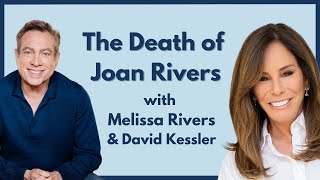
Melissa Rivers and grief expert David Kessler talk about losing parents, including death by suicide. They cover anger and humor as responses to grief, the stigma around suicide, and resources like grief groups and advance directives.
Chapters
Hello here. I know it'll take a couple of moments to find us. Hopefully everything will look good at your end.
Oh, it's like the end of the week. I feel like the week. Don't you feel like the weeks are like two years long?
I've lost track of what day it is.
I'm the same way. I'm like, can anyone tell me.
Yeah, I don't know what day it is, what time I lost track of time, the whole thing.
Great.
Not great, but okay.
Well, no, I was just saying great. He said where we're both on this time, so I'm glad. So, yeah, the whole idea of, like, there's a disorientation that I feel like is just happening to the whole planet right now. But I'm so excited that you're here and giving of your time. And I see people are finding us finally. So we'll give them a few moments. And I even see us. So that's good. Very good. All right. And there. I even hear us.
Wow.
So let's see who's coming on. They're finding folks. You know, I joke about Melissa. I don't know if you remember this Romper Room. Did you ever see Romper Room?
Yes. And you look in the mirror, right?
So I look in the phone and I go, I see Patricia from New York, Puerto Rico. Melissa's from Connecticut. All right, let's see. Sandy is here. Rachel's from Tarzana, California. Not far at our. Gina from Staten Island. Wonderful. Midland, Texas. Dallas, West Virginia. Shirley's from Pennsylvania. Welcome, everyone. I'm glad you're finding us. I know we'll have some Australia and UK people soon.
I'm just readjusting and getting comfortable.
This is our time. Sarah's from Brooklyn. And I think in the time of physical disconnection, it's sort of nice to see one another.
Yes, very much so.
So and to connect and to know that you're being seen by someone like that. I actually see you. People are saying they loved Romper Room. So I'm so glad all of you are here. This group, as you know, was set up after COVID 19. So many of you wrote you were home alone, your grief group was canceled, or you had someone die that maybe you weren't able to see. And you weren't able to have a funeral, a gathering, a Shiva, a get together, a memorial, cocktails. Cocktails. And people wrote me and said I'm just home alone, so it couldn't be. So this group is started and wonderful people like Melissa give up their Time for all of us to say to you, you're not alone. We see you. We're here for you. So we're all here because someone we love have died, maybe more than one person. So I like to just take a moment of silence just to send them love. You know, when. When they died, I don't believe we stopped loving them, and I don't even think they stopped loving us. So just send them love, wherever you believe they are. If you would join me.
Thank you so much.
I have to say, Melissa, you coming on? I was looking at some stuff today about you, your life, your mother. It all made me very sad.
You know, because it reminded me about the force that Joan is and the love she brought to the world. And I suddenly had that sense of, she's gone, she's missing. But I. I'm sure you're going to address that and.
Tell us your world and your experience with loss, but I just want to just acknowledge that for me, there's just. And I. And I don't want to take away from your loss at all. But I was like, oh, my gosh. I had just a. A pang of Jones going again.
Well, you can always just go to my Instagram and see that I'm posting a joke a day from the card catalog, so.
Right. Right.
People always say, do you hear her? I'm, like, way more than I want to. Like, I wish she would just, like, shut up for a second. Just back off. All right. You know.
Yeah, I think. I think everybody misses her. I mean, I still miss her. I still miss my dad. And it was. He passed in 87. You know, I'm really fortunate that I'm also. I'm involved with suicide prevention and mental health through the Dee Dee Hirsch Mental Health Foundation. And we've just posted they are erasing a Stig. Erasing the stigma. Awards had to be canceled this year because of the COVID but we just launched a thing on online. And I was thinking about this because one of the things we're doing is writing still on our hands and then washing it off. And I'm also really fortunate. I'm also the ambassador for our house Grief Support center, which is an amazing, amazing group here in California. They are very involved with Camp Aaron. For those of you who don't know what Camp Erin is, it's a grief camp for kids. Look it up. HBO did a big documentary about it. It's really moving.
I think, in a lot of ways. I think what I was thinking was grief and stigma kind of sometimes go hand in hand because it has to do with no one knowing what to say to you. And I think that's one of the most isolating parts about grief and about loss is people don't know what to say. They don't know how to handle it. They don't know. They feel like they have to do or say something. And all you want to hear is, hey, I'm here for you. I sadly had a friend whose father passed away early, early, early this morning. Not from COVID or anything like that. And she texted me, hey, my dad passed today. And I wrote, I love you and I'm here if you need me. And I think when you're grieving, that's what you want to hear, right? I mean, it's wonderful. Like for me, one of the things that became incredibly difficult was there was. It was a double edged sword. The outpouring of love and grief and support about my mother's passing was so wonderful and really did keep me afloat for a long time. But suddenly I found myself having to.
Care for other people and support other people and comfort other people. And I made the mistake of not saying something out loud to my circle and my group saying, hey, I need to be comforted as well. And I think especially now with everything happening so fast with COVID everyone's going, oh, I'm so sorry. I'm so sorry. I'm so sorry. Oh, are you? You know, I miss the person. I can't believe this happened. Sometimes you just need to make sure that you find your core group that you can cry to and say, please don't make me take care of you emotionally for a minute.
Right.
I don't know if that makes sense.
Perfect sense. Perfect sense. And, and by the way, I don't know, we haven't talked about it, but after being a grief specialist for 40 years, a few years ago, my younger son died.
I'm so sorry.
Dealing with that loss, being a grief specialist did not help a bit. And do you know who I turned to? Our house.
Aren't they the most amazing group?
I turned to Freda there. She was my counselor.
They are an amazing, amazing. What they do, especially for kids and teens, is spectacular.
Right?
So if you're in the California area or the Los Angeles area, look up our house. It's. It's amazing. And if you're not in Los Angeles, make an effort to watch the documentary about Camp Aaron.
So, you know, when I, when I think about so much of your experience that we are aware of, a couple of things come up that I'd like to ask you about, first of all, with your dad. What would you say the beliefs, how have they changed since it happened to. Now, I know we're still not where we have to be on death by suicide, but how have you seen that change over the years?
You know, I, I think it's not nearly as taboo of a, of a, of a topic now. I mean, it still very much is. But when my father passed and I went back to school, people would be like, oh.
And it was very whispered about, and I don't think it's as whispered about now. And I think that's one of the reasons. You know, it's funny because my becoming very vocal about suicide coincided with my also speaking so openly about grief, which 10, 15 years ago, people did not like to talk about either. I mean, like I said, when I have a friend who goes through a major loss, I'm very honest. I say, guess what? It sucks. And anyone who tells you otherwise is lying. Yes, maybe they're in a better place, but I'm not. And you have to kind of own that. Like, this sucks and it's gonna suck for a while. And I, I know my language isn't.
Flowery about it.
Kids, maybe they, your kids should hear this.
You never know. But that's what works for me. It's just going, you know what? This is gonna really, really suck and be awful and terrible. And guess what? You're going to be okay.
And it's crazy that our friends want to find the silver lining, try to cheer us up. And what you're saying is exactly what people feel. And there's no making it better. There's no going around it.
And there are times where people have been suffering. And I have had friends who have lost parents and friends and husbands and wives and siblings to horrible diseases. And they really do believe, like, oh, my God, thank God, their suffering is over. But with their suffering being over, my suffering is beginning.
Right? Right.
You know, I always joke that when it comes to death and grief, the person who dies is the star of the movie. Yet they've got the easiest role.
Right? Right.
They've got the easiest part to play.
There is so much stigma around death by suicide. We're just beginning to understand it is an illness in your brain as real as any other illness in your body. No one chooses it. All those things we, we've all are learning and trying to teach. There's a lot of personalization that still goes on, like, how could they do that to you?
Yes, there's a Lot of that still. There's. I mean, there's. I mean, there's still people who believe, you know, and it always frustrates me that suicide, quote, unquote, runs in families. No mental health issues and depression can run in families. The idea that that is an option is. Becomes part of the familial conversation. The act itself does not.
Right, right.
And I think that's so, so important. It's so important. You know, I went back to college feeling like there's a giant S on my chest.
Right.
You know, and I found out, yeah, there is. But it's okay. I can talk about it. I can talk about grief. I can talk about loss. And I like to think that, you know, what.
You know, it's like the old In. There's. There's safety in numbers.
Right.
You know, and it's. It's the old joke, you know, what are the two things in life you can't get away from? Death and taxes.
Everybody's going to become part of the grief club at some point. You don't get a choice.
And yet I often say in America, people treat death like it's optional. Maybe I will, maybe I won't. And they're really afraid. Whether we look at death by suicide or death in general or a child's death, people get afraid. It could be contagious, right?
Very, very much so. I sadly had a friend who two years ago or three years ago, lost one of their sons. And we were talking about it over the holidays, we were all on a vacation together. And she says to people, she said the thing that made her the craziest, and maybe you can relate to this, was people say, oh, my God, I don't know, I couldn't get through this, or, oh, my God, there's no way I could survive this. And she said that made her want to literally shake people and say, I have no choice. Stop telling me that you couldn't tell me that you're that support me that I can.
And in that moment, they've left you and they're talking about them.
Yes.
You know, it's. You know, sometimes people go, I can't imagine losing a child. I'm like, you don't have to. You could, like, ask me anything. You don't go into your imagination, you know, and.
And when, with this family that I was friends with, when I saw them, the first thing I said was, this is there. I said to her, there's nothing right about this, and we're here for you. But I. I'm acknowledging that There is so much wrong with this situation that I can't get my head around it right.
You know, and I, I think, you know, again, I, I hope that I was helpful in saying that.
Absolutely.
You know, it's okay. We all know that this is all bad.
Right? People want to know what's the right words, like tell us. And I'm like, there's no right words. Make it better. Make it better.
I always feel like I did with my friend this morning and say, I love you. I am here if you need me. And I also believe people are so bombarded in the beginning, the best thing you can do for someone who you're close to is say, I'm not going to be in your face. You would. All you have to do 247 is throw up a flag. I'm there. But I'm not going to do not feel compelled to have to call me, say thank you, respond, I'm here.
You know, because there's this wave of people and bombardment that come at you. And the thing that I found, what I always tell my friends is, look, you tell me when you want me around, but let me tell you that in three weeks or two weeks when everyone's gone home, I'm gonna start blowing you up.
It's funny you say three, because I always have the rule of three. I say keep after them at three days, three weeks, three months, three years. They haven't forgotten.
You want to be a real friend, Be there when everyone else has gone home.
And there's this feeling, oh, Melissa looks fine. I'm sure it's six months. She, she's fine. Or a year. I don't want to upset her. She probably forgot all about it.
I actually, strangely. And I have a very good friend who's just the one year anniversary of his mother just passing, just was like, wow, a month ago. And it could be very different for other people. For me, I found the second year harder than the first. The first was surreal. The second was like, oh, shit, this is real. This is the new normal. And I found that with, with both my parents. Yet I had very different experiences on with the loss of my father and then the loss of my mother. I found the process very different.
I feel like there's a difference between losing your first parent versus losing your second parent.
Right. And I always tell people when you've lost both, you're not an orphan. No one left you on a step. Your parents have died.
Yeah. And always you're like, oh, I'm an orphan now. It's like oh, you're an adult. No, you're not. It's like my mom used to joke, my dad, I was, I was 18, turning 19 or 19 when my. Already 19 when my father passed. And my mother was like, yes, and I'm a single parent. We're an intervention. No, you're not. You're not a single parent.
Right.
It's like, yes, I am. I'm like, no, you're not. I'm an adult. I'm raised right.
Right.
She's like, well, I like to think of myself that way because your father would have helped me when you're being difficult. So I'm like, okay, call it what you want.
So I do think that when we think about reaching out to people.
There is that sense of that second year I always hear. Just like you said, the permanent sets in. You no longer can say, last year they were here. This time.
The support's gone. I mean, we assume grief is over after a year, so why would we even bring it up ever again?
Right.
It's so, it's interesting how that hits people.
Yeah. Like I said, it's real suddenly.
Right.
You almost float above everything.
That first year you're in the busyness, you're just trying to, you know, you're.
But also it's, it's, it's. You can't get your head around it.
Right. The shock.
Yeah. The second year, you're like, wow, grandma Silver really is mine now.
I can do what I want with it now.
Exactly.
The other thing that I think you've dealt with many people mention this many times is people deal with medical errors. You know, when a loved one dies thing. I worked in a hospital system for 10 years. Things go wrong, sometimes accidentally, sometimes people were negligible.
How was that for you?
I have to be very careful how to say this.
I.
You know, medical mishaps and I have a very. Two very close friends who are doctors and my cousin's a doctor.
Doctors are human. They make mistakes. That does not excuse them from poor judgment and negligence.
And absolute.
Not negligence. An absolute.
Ego.
Their own egos and.
Taking over versus the well being of the client.
Right.
You know, egos really got in the way of a completely preventable. I can't even use the word accident because the negligence.
Was so great and the egos involved were so over the top. And the, the, the.
The one of the doctors stood in the hallway, this is before I knew what even had the, the hallway saying, oh my God, if I could do things differently. I was, I don't know what happened? I don't know what happened. Oh, my God. I find out later that a lot of the things people read about and everyone goes, oh, that's impossible. Guess what? It did happen. It's all public record now. You can go back and read why I feel like she was. I can't even say it was an accident.
Right.
And we're careful enough.
Yeah, you did that good. So, you know, look, we're in a world now where I think we have so much appreciation for the doctors and nurses.
Oh, my God.
That there's not some bad apples there.
Well, you know, you. I feel so badly even saying that. First of all, my dad had a massive heart attack two years before he committed to. When I was still in high school. And I can honestly tell you, as impressed as I am with doctors, as many friends who I have as doctors, how much I love my doctors, I believe it's the nurses that heal people.
Right.
I believe it's the nurses in the hospitals that pull patients through. So my, The. The doctors in for me, the nurses with a capital N are what they're doing. They're truly the front line. There are heroes, there are warriors.
And, you know, I won't go into anything that, you know, I won't ask you anything, but I'll just say when I heard pictures were taken. So you get to have a picture with Joan Rivers while she's unconscious. That just fried me. I thought it was just so. I don't even know the word. It was, you know, just things like that.
It's things like that that make me wonder about people's egos.
Right, right.
And how much ego come. Falls into. Comes into play with. With everything in life, actually.
And, you know, I always tell people when they feel like they have those issues, I. I say, well, if you feel like you need to pursue it, pursue it. We want to make sure we send a message that, you know, no one should be making mistakes over and over. And sometimes calling someone out does stop mistakes from happening. And, you know, I can only hope that anything you did will help people in the future.
I appreciate that very much.
Doing something.
Yeah, it's funny. Excuse me.
Is that a Corona cough or no?
No, not at all. That's an.
We have that. We're like, is it a Corona?
No, no. Are you okay? That's called allergies. That's called. I don't know if anyone else in LA says, but my car is covered in pollen. It's like, I got outside today, I'm.
Like, whoa, it's the Blue skies, blue skies, flowers blooming. They've never seen sun like this.
I know, I know.
You know, I think it has.
Ever since this has happened. Every doctor that has worked on me is very, very aware, brings it up, tells me not to worry. If anything, it's made me very safe. It really did rock quite a, quite a large portion of the medical community. I've yet to run across any doctor, even socially, who has not said to me, like, wow, you know, I read the case.
And it's there, you know, and again, it comes back to ask questions. There's no question. That is too stupid. If you do not feel comfortable with your doctor, do not use that doctor. My mother was with doctors she felt comfortable with.
That didn't matter. You have to constantly ask questions and you're allowed to be scared and you're allowed to ask. I mean, I just had ACL surgery. I'm still recovering. And the anesthesiologist, I talked to him before. The day I got there, I think he was more anxious than I was. But I asked, you know, 10 questions. You know, again, you know, you need to educate yourself. You have to be your own advocate. What drugs are you using? How are they being administered? I get nauseous. Are you going to give me an antiemetic? How am I going to feel after? What do I need to do? You know, and if they, if they get snappy, too bad. You're paying their bill. They're on the clock that you're, you pay your insurance premiums. Guess what? They're on there. You're the boss, they are the client. You're the client. Matters.
Right?
Don't let them push you off. And if they do push you off, ask for someone else.
So do you feel like that, and this is just the silliest question asking it, do you feel like that shifted your grief? That it interrupted your grief? It's complicated your grief?
I, you know, I.
I'm in a very unique and not in a good way position. Most people don't lose one parent suddenly. I lost two suddenly. Where, as I always say that I once said to me, well, why are you so, you know, difficult about people not checking in? I said, he goes, my friend said, you know, not my friend, my ex friend, let's just leave it at that. Said to me, you know, planes don't fall out of the sky there. And I go, guess what? In my world, to have, right?
You know, it brought a lot of the anger back to the surface. It brought a lot of the rage.
Back to the Surface.
And there's a lot of that with. With grieving, with suicide. There's a lot of anger.
I think that's where they were similar.
And in both cases, I had to learn to sort of let it go.
Which is. Which is again, you know, within the fact that everybody in the world goes through grief. I feel like there's different subsets, right? And within those subsets, you have to find your. Your group, and you also have to figure out how to find your peace, right? And at the same time, you're allowed to be angry.
You're allowed to be mad. And I think people get very jammed up thinking they're not allowed to be.
I often talk about our go to emotions. You know, I see many people in grief that their go to emotions are tears. And I say tears are evidence of love. My go to emotion happens to be anger. And, you know, if someone's in the corner crying, we all rush over and go, what can we do for you if I'm in the other corner angry? They're like, you need to get out and get yourself together. And they're both emotions in grief. But we're not. We don't like the anger part of it. And I always say, you know, anger is pain's bodyguard. When I'm angry, it's the same pain as the tears. It comes from the same place.
But I love that anger is pains bodyguard. I love that I'm gonna steal that.
Okay.
But, yeah, I think, you know, the other thing I always say to people is, you can't let yourself get jammed up in either, right?
At one point, you gotta, you know, stand up, wipe your eyes and put your lipstick on and head out. You. You can't. There's no time limit. But you hear about these people who, 20 years. At one point, you do have to say, and hopefully you're in a grief group or. Which is like what our house does. It pushes you out of the nest, right? You have to, at one point not allow yourself to get so mired down that you become incapable of moving yourself forward. Because part of grief is moving forward.
And that becomes hard for a group of people. There's a subset that, you know, the word I hear is I can't. You know, I'll be very honest. In my career, I used to hear, you wouldn't say that if you had a child die.
Now I've had a child die. You still have a life to live. And there is this sense with a lot of people that living again might be disloyal or somehow pain is more loyal.
I. I understand that. I understand that much more from losing my father than my mother. It's something you have to work through. You know, there are no wrong emotions in grief. And I'm always very clear. Don't let anyone tell you how to grieve. The way you grieve might not be how someone else grieves. You know, I went through two major bouts of grief in public, and there was a lot of criticism, a lot of love, a lot of, why are you doing this? A lot of, why haven't you cried? Cried? Why are you crying? Like, you. You feel like you can't win, but only you know how you need to grieve and you have to work your own process. And the thing is, you know, especially with my dad, I found up when I felt like I couldn't get out of bed, literally, I would, you know. Do you know the movie what About Bob? Okay, baby steps. I would get my feet on the floor. I'd baby step to the bathroom. I'd baby step, brush my teeth. And all of a sudden, you have found that you can take a few more steps forward every day. And that doesn't make you disloyal. It makes you a human right?
And one last piece I want to ask you about, and then maybe we'll take some questions if you're up for it.
Wouldn'T be funny if I went like, no. It's like.
Everyone.
No.
Boom.
Now. Now I have to ask this question, right? But one of the things that I hear so much is people say, it fell to me to make the decision to take them off life support.
I had to do that. I had to sign.
That's why I'm asking. And they go, I can't believe I had to kill them.
First of all, everyone should have an advanced directive.
And anyone who has children and does not is doing. You must hate your kids because you need to. And I hate to say it so harshly, but you really need to have the conversations and the advanced directives that there is no question of what your wishes are and what your personal. It doesn't have to be like the standard, what your description of a quality of life is. My mother was very clear on what she defined as quality of life. And.
It'S an awful decision. It's an awful. You know.
I just remember thinking there was an option for someone else to sign the papers. And I thought, no, I'm. I. I have to do it.
And once you make. It's a whole horrible decision. But when you're there.
You Just know when it's time. And I guess the most important thing is to make sure that the loved ones around you know clearly what you are, what you consider quality of life. Because what one person considers might not be what another person considers. I was very clear on what my mother considered quality of life.
And I think back and I applaud you for going to the advance directives, because I say to people all the time, people go, I don't need an advanced directive. I'm not sick. I said, you don't need an advanced directive because you're sick. You need an advanced directive if you have family.
Yes.
The reason for an advanced, that's the reason for it. And you got two things. You got to pick who you're going to help, and you've got to choose what you want. Two things and to remember we're not deciding. We're carrying out what they would have wanted.
Yes. And that's why, like I said, my mom's just wasn't a standard advanced directive. It was completely spelled out what her version of a quality life was. There was no.
There was no gray.
Right.
There was no gray. Right. And there was a gift to you, actually. Yeah, it's a huge gift.
It's a gift.
At one point there, we thought maybe there was a little bit of hope. And they told us what the.
Potential outcome was. And they're like, you know, she would have to use a cane. And I'm like, I remember being with her assistant who was with us for 20 odd years, and I remember going, oh, she'll hate that, but we can live with it. She can blame us for that because we knew that in the scope of what she considered like, we could get away with that. But the rest of it, you're right. It's a gift you give to your family.
Right.
Don't make them have to guess. That's when you're in that situation, the last thing you want to do is guess.
And we guess really poorly. I can tell you when I would work with people in the hospital and they would go, this is what she would want. Or he would want. And I would go, tell me about them. Oh, she was such an elegant person. You wouldn't see her without her makeup. And I'm like, she has seven tubes and a gown that doesn't cover her. And you say, she's an elegant person, but you think this is how she would want to live. I mean, really, what would she say or he say if they walked in this room now?
Well, also, it becomes about the person Making the decision, not the person whose wishes you are carrying out.
And that's what it needs to be.
Yeah. And it's hard, right? I mean, I took a minute to sign the papers because I realized it was a major moment in my life.
Right. Of course.
I remember just stopping and being like, after I signed them, just going.
To. It's a major moment.
And, you know, to those people who will use the word kill, I just have to say, I have seen so many people in my career being taken off a respirator. And, you know, they breathe on their own or they don't, or they breathe.
On their own for a little while.
Right. I mean, the thing is, you are. The choice actually isn't in your hands.
Right. You know, usually a lot of times, like, my mother did breathe for quite a while, when I think quite a few hours once we took her off the respirator, but we already knew there was complete and total brain death. The body was just shutting down.
Right. So anyone have any questions they want to ask? Melissa. There's people sending you just so much love.
Thank you.
Saying and doing and talking about the important.
It goes back to, like, what we're doing with. With de hers, with erasing the stigma. The more we talk about it, the. The more normalized the conversation becomes. It takes the fear, it takes the. The scary out of it.
Right. And the. The other thing that has changed. And I've told people to try to understand this. We used to have a paternal system where the doctor would come in and say, it's over.
Now it's shifted to the menu program of like, well, here's your options. What do you want to do? And there's not the guidance and the knowledge that there once was given to us because people are so worried about, well, the decision's yours. Just let me know.
Well, also, people are scared of being sued.
Right.
You know, all right. And one of the conversations I did have with our doctors constantly is like, I know that you have to tell me everything. I am, you know, tell me what I need to sign. I'm not going to. You know, you. You're giving me. What is your. Well, I can't tell you that. She might not get better, but I'm like, okay, but what have you seen in the past? Advise me.
Right, Right. So a couple of things here besides lots of love for you.
Oh, thank you.
One of the Anna asks, how do you not resent the friends who aren't around or don't show up?
Hmm. Well, maybe there's. I have so many Funny answers, you know, write them out of your will, make sure they get nothing when you die. You know, I carried a lot of resentment towards a number of people.
And you know, you just get past it and you think, oh, I'll remember.
You know, forgive and forget. You don't have to forget.
Right.
I know. You know, and you, and you, you, you.
When they need something from you or when they call you, be like, you know what? You really did not show up for me. And by the way, it's okay to call them out. You wait for them to come to you and then you could be like, I really haven't. I don't need you. Go away. I'll never trust you again. And it's about taking, and I hate these like woo woo, new New agey kind of words, but it's about taking your power back from them.
Right?
That's what I did.
And I love the, you know, the confronting. I had someone who didn't show for the funeral and I called them and said, how could you not show?
Right?
And, and it was actually very helpful to me to go through that process.
With them, you know, and, and to say, look, I cannot. You really hurt me.
Right.
You know, it's about being honest or just, you know, next time they want to be around you, just say no. So you don't deserve my friendship.
Well, you know, there's a crazy thing in the world now and I've heard more and more people and I actually part of most of my work is teaching counselors and therapists. And one of the things that I'll hear once in a while is what if you have a client who can't go to a funeral because they find it too sad. And I'll go selfish, self centered. Like when did funerals be have to become uplifting to attend?
Put on your big girl panties or big boy pants and go. It's not about you. I'm sorry. You're going to be sad and it's sad. It is sad. And you know what, if you really have a problem and can't do it, sit in the back.
Make sure you sign the guest book. Sit in the back and if it becomes overwhelming, step outside. Right? Let them know that you are there.
So important. Here's one more question. When does your joy come back after a loss?
You know, it's different for everybody.
I remember, you know, my mother had finally passed and everyone sort of left the room and I asked for a few moments by myself and I did not realize that one of the nurses was still in the room. I was standing there over the body and just thinking and crying. And I started to laugh.
And I hear someone moving. And, you know, I think it really took this woman by surprise that I was literally laughing. I said, I'm sorry. She goes, are you okay? I said, yeah, I'm just thinking about that. My dad's really. My dad's having a really bad day.
She's here.
My dad's having a real bet. Hey, when does the joy come back? God, I don't know.
I can rephrase that. I would rephrase it by how does humor help you?
Oh, we've laughed through everything. That's how I was raised. That's how my family was. We laughed. You know.
Laughter through tears.
Greatest painkiller of all. I laughed. So my father had passed. This is an infamous story. And about three and a half weeks later, I had to go back to school at Penn. He had killed himself, actually, in Philadelphia. And I was living off campus. And anyone who knows where Penn is in West Philadelphia, when I was there, it was not the greatest neighborhood in the world. Everywhere we all lived was very, very run down. And my mother walked into the house my friends and I were living in and looks around and says, thank God your father's dead, rather than see you living like this.
So, yeah, when does the joy come back? You get it. You grasp it in little moments, right? All of a sudden you'll be happy and you'll realize, like, oh, my God, I'm okay for this one particular moment. And you start stringing the moments together.
And it goes into. It becomes. And you'll always carry some amount of bittersweet.
I have a lot of things with my son that are still very bittersweet.
Right. It's very sweet. People are talking about the importance of humor and. And I think, you know, your mom, you are just such a gift to the world that you brought so much laughter to the world.
Well, and by the way, when you're grieving, it's okay to laugh.
One of the greatest half hours of television is the Mary Tyler Moore episode.
With Chuckle. The Chuckles the Cracks Clown Funeral.
If you haven't seen that, look it up, it's on YouTube. Chuckles the clown, Mary Tyler Moore.
It's okay to laugh. Laughing does not diminish your pain.
Let's just say that again. Laughing does not diminish your pain. And laughter doesn't diminish the love. It's not disrespectful to the love.
I stood over my mother's body, weeping and howling with laughter.
Scared the hell out of the nurse.
Can imagine.
I'm like, man, my dad is having a real bad day.
That is funny. What? Wait, wait, she's here?
Yeah.
Melissa, you are such a gift. I. Time just flew by. I'm just. I know you want people to know about our house.
Yep.
I often talk about finding meaning and purpose and honoring our loved ones. I love how you're doing the jokes.
Thank you. Also, you know, with suicide prevention, the Dede Hirsch Mental Health Services, we're launching our Erasing the Stigma campaign, which is. We're going to write stigma on our hands. And then you video. You film yourself washing it off. Please remember to use ink and. Or makeup that comes off. Do not do what I did when we were testing this. And use a Sharpie.
Right, yeah. Like, who wants the stigma to stick to you? Right?
Exactly.
Haven't you been through that already?
Exactly. But, you know, the more we talk about grief, the more we talk about mental health, the more we talk about suicide. You know, you can't be scared to have the conversations because guess what? Like I said in the beginning, when I have someone who loses, guess what? It sucks. But you're going to be okay.
Well, I just want to thank you for giving your time and being here tonight. You know, part of our work is. And you showing up to let people know it's okay to talk about it and to just for all these people who are dealing with old losses and new ones and Covid losses and not being with their parents, their child, their siblings, you know, you being someone who stands here and talks about it and. And is showing up for people is just amazing. And.
Thank you, because I think I went to grief counseling after my father. Find a group. I tell everybody, you must find a grief counselor. You must find a grief group. You must, you must, you must. You need to be around people who are going through the same things as you, because when you're in that space, you feel normal.
So true. And I'll tell you, I said that for years. And when I had to deal with my own loss, I called up Fred at our house for grief counseling. I literally sat in a grief group with a cap on, with my books five feet away, and never said, that's me. Because you just need to connect on a human level with other people who are dealing with it. And I say, our online group, that's almost at 10,000 now. It's a poor substitute for being in person. And I look forward to the day when we all can connect again physically together. Who knows? What that's going to look like now. But I'm looking forward to that day again. I think we're going to appreciate that day even more, Melissa.
All the work you're doing helping people with grief, you. You're, you know, you're doing God's work.
Oh, thank you. I. I so appreciate it. Thank you so much for being here, Melissa. You're just such a gift to us all.
My son would disagree.
Yeah.
Yeah, it doesn't matter. You're a gift.
He's a love of my life. I'm the bane of his existence. There you go.
Well, that's how kids are. That's how kids are. I mean, I could tell you stories about my older son who, like, having the grief expert as a father doesn't help at all.
Oh, I'm sure it's like having a therapist as a parent. You're gonna just, you know. That's gotta be rough.
It is. It is. Thank you, Melissa.
Thank you.
Thank you. I just tell everyone that if you are alone, you know, someone who's alone, please let them know about this. Wonderful people like Melissa showing up tomorrow night. Tanya Wright from Orange is the New Black is going to be here talking about the death of her brother, some amazing people. Will Reeve is going to join us to talk about the death of his father, Christopher Reeve. Susie Orman is going to come and talk to us about finances. People are showing up because of you. Because we want you to know you are not alone. We care for you, we appreciate you and we witness your grief. We can't fix it. No, nor do we need to because you're not broken. But we stand with you. I'll see you 1pm tomorrow, 4pm Eastern. And I thank you so much for being here and I look forward to seeing you tomorrow. Thanks.










