Raymond Lee about Finding Meaning and Purpose after a job loss
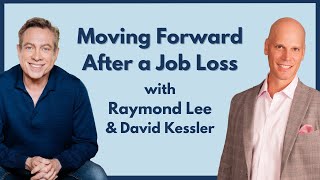
Raymond Lee talks about rebuilding after job loss, drawing on his book Clocking Out. He shares his mother Barbara's story and walks through four principles: choice, mindset, agility, and trust. The conversation includes audience questions about applying these ideas when you're grieving or thinking about a career change.
Chapters
I'm always thrilled when all this works, so my fingers remain crossed.
All right.
I think it might be working. We'll see. All right, very good. I think we're happening there. All right, let's see here. Hi, everyone in the chat. Hi, everyone in Tender Hearts. Everyone in Facebook.
Welcome, welcome. Say hello. Let me know where you are. Let me see if I can see us on Facebook just to make sure we're all good. Raymond, I'll be introducing you in just a moment, but good to see you there. I'm glad you're on with us. All right, let me just get us all set up here.
We got people from Florida and Riverside. Welcome, welcome, all.
All right.
Hi, everyone.
Say hello. If you would let us know where you're from. Welcome, welcome. Good to see everyone coming in. All right, let me begin saying hi to everyone. All right, Charlottesville, Va. Annette's here from Florida. Let me go to our Facebook friends. Grand Rapids is Lisa. Hi there. Daniel in Wheeling, Illinois, Maura from Boston. Amy from Albany. Hi, Amy. Nice to see you. Hi, Connie. Hi, Sue. Welcome, everyone. Come on in. I'm so glad you can all be here on this Sunday afternoon. And Raymond, where are you coming from?
I'm coming from Philadelphia.
Welcome, welcome.
Yes.
East Coast.
East Coast. All right, Gloria, you might want to go into the Tender Hearts link. And Kimberly, also, so that you can ask questions in there if you want, because we will have the extended version, as always in Tenderhearts. Welcome. Kathy from North Carolina and Jennifer from Wisconsin. Hi, Diane, you also might want to go into the Tender Hearts link. Welcome, all. Glad you're here. So for any of you who are new, I'm David Kessler, and this is a group that I started two groups, actually, after Covid in March. One is our Facebook here. The other one is Tender Hearts group. And it was in a time when everything was closing down and we weren't able to go to grief groups and people were dying without their loved ones at their side. So we decide we would at least be able to come together virtually. And the group has been going so strong, and I'm so glad you're here. So, as we always do, let's begin with a moment of silence for those who are no longer with us physically. Join me in that, if you would, to honor them.
Whenever I have a guest, I often know who in their life has died, and I thank that person for having them here today. So. And that person's really responsible for you being here today, Raymond. We'll talk about that. So welcome all.
This came about you may be wondering, what's up with this? This came about months ago.
There was a woman in this group, in the Facebook group, who shared her husband had died and she was going to be going back to work, and she had no idea how to make that shift and how to get back into the workforce. Then not long after that, someone talked about after their loved one died. They didn't want to keep doing what they do. They did. They were thinking of maybe finding something that had more meaning to them. They were thinking of going into social work or hospice or a few different things that would resonate with them. Of course, at the same time, so many people have been displaced, out of work, fired, laid off, furloughed because of COVID At that time, when I was thinking about, oh, this is a topic we should address, not long after that, I got an email.
When I received the email, I thought, perfect, perfect. How the universe works that someone shows up. But it didn't seem right to do it during the holidays. Raymond has been so patient to wait a number of months to come, and it felt like this was a good topic for after the new year. Our guest today is Raymond Lee, and he's the founder and CEO of Career Minds. And I love this part. It's a holistic virtual.
Outpatient provider designated to take the stress out of career transitions at any level. Stress and career seem to go together just like grief does, too. So I am so thrilled that you are here with us, Raymond, and why don't you just take a couple of moments and tell us how you got here with us.
Absolutely. Thank you so much, David. I'm incredibly grateful to be here with all of you. And I have to say, first, it started back in the fall when I came to know your book, Finding Meaning. And I was really interested to learn about your book, your work around this six stage of grief. And as you know, eight years ago, I lost my mom to cancer, and she was only 60 years old. And when I saw your book, I thought to myself, wow. I thought acceptance was when it all ended. And it took some time for me to achieve that. But when I saw Finding Meaning, I was just struck by this concept and idea about the sixth stage of grief. And when around the same time of the fall of last year, I was just launching the book, and the book, of course, is dedicated to my mom. And I was just so. It was just so profound because when I was reading the stories about you and your son and all of the other stories about people who have lost loved ones, it occurred to me that this book was really about finding meaning in my mom's life. And so that's what led me to reaching out to you. And quite frankly, I was really honored when you emailed back and invited me to be on your show. So thank you for that.
You're welcome. I'm so glad you're here. So tell us about your mom. First of all, tell us her first name. I always say people are no loss there. What's her first name?
Barbara.
Barbara. Barbara. So, yes, in my moment of silence, I thanked your mother for the gift of you to be here with us. So we're going to be talking about a lot of the wonderful concepts that you put in this book called Clocking Out. And I would love for you maybe to share the story of her and maybe some of the concepts in this book, because we all have stress around career, and I think that's a great place to start.
Absolutely. And I'll tell you, the book itself is a collection of stories of 10 individuals. And so there's the common theme around the book is around career transition and career journey. And one of the stories that I share is the story of my mom. And. And this is someone who started her career in a field of teaching. And shortly after my parents separated when I was eight years old, she had to make the decision of finding a job where she can earn a living. And so the type of person she is, she was always someone who provided for myself, my brother. And she got into court reporting, not because it was a career that she wanted, but it was a job that was going to make good money for her to provide for her kids. And she did that for 25 years.
And so.
When I think about all that she has done for us, it was not until later in life when she turned 50, that she realized, stuck in a career that I'm not incredibly passionate about. And so, you know, at that point, my brother and I were already moved on and, you know, doing our own thing. And she realized I needed to do some soul searching and figure out what is it that I want to do. And so she decided that she was going to go back to college and get her master's degree in archaeology. And she always had this desire. She had done some digs in Israel with my stepdad, and she loved it. And so she went back to school and she got her master's degree, graduated, and should, I guess I should just finish the story. But, you know, it was really sad because she, you know, she spent her whole life providing for us. And then at the end of her life. She realized, I need to do something for myself. And she graduated in the May of May of 2012. I was there at a graduation, and six months later, she got. She ended up passing to cancer and really didn't have that opportunity to live out her dream. And so, you know, when I think about. When I think about the principles that I share in the book, you know, it's really about choice. And that's one of the primary principles that I talk about, is choice. And we all have a choice to make when it comes to our career.
But it's sometimes hard, you know, because life gets in the way and, you know, there's priorities and things that are important and. And so anyway, that's.
We talked about that last night, actually. I shared this story that when my kids were young, I worked over a decade in a hospital system, and I had grown up to sort of do a daily grind working somewhere. And I loved hospice, end of life care, grief work, palliative care. But it was sort of something I did on the side. And I would do a book every five years, this time permitted, because I had this day job of working in the hospital. And I got to the point where I finally thought, all right, my kids are getting older. There's money for college. What if I actually decided to do what I loved, which was do this full time? And for me, it was the scariest thing in the world to step away from a paycheck and go, this feels like my calling and I'm jumping off a cliff.
Right.
And I think a lot of us, when we think of the choice, go, great, and what if I fall?
Yeah.
It'S difficult to make that choice out of fear. People, I think, are. When they think about careers, they're wondering.
You know, what if I do fail? Or, you know, what's the end gonna look like? Or what if something doesn't work out the way I intended it to work out? What would I do then? And so you sort of get stuck, you know, into the. You know, you get stuck in this routine where you just sometimes find yourself not fulfilled with what you're doing.
So I'm looking in the book, and we're talking about choice. What's the next thing you would share with us besides choice? And by the way, you'll all have a chance at the end to ask questions of Raymond.
Yeah. So there's four principles that we talk about in the book, and they're pretty much a common theme throughout all the 10 stories that we share, including my mom's and the Principles are choice, mindset, agility and trust. And what's important to know is that, and by the way, if you read the subtitle, it's a stress free guide to career transition. And so there's no job loss that is stress free. So I've heard people say, well, is it really stress free? And so when I think about these four principles, choice, mindset, agility and trust. Mindset, agility and trust are behaviors that you can develop.
Choice is an action. So you have the ability to make a choice. Whether you make a choice or you don't make a choice, that's your decision. But if you can develop these three concepts or these three behaviors of mindset, agility, being able to pivot when things aren't necessarily working out, and then last, trust, trusting the process. So that oftentimes when you make a choice about whether it's a career, professional, personal, you're not necessarily going to know what the outcome is going to be in the end. And that's the scary part. Because you'll make a choice, you don't necessarily what the, you have this vision of what the outcome is going to be. But if you're able to develop that growth mindset, you can pivot and change course and you can trust the process, then it makes it much easier to make choices and feel like if I make a choice and it doesn't necessarily work out initially, that's okay. And so it's sort of these three principles working together.
Right, Right. So talk to us about what you would say to someone whose loved one died. They can go out and get the safety job.
Or they might have this whisper in their mind of I've always wanted to do that. What do you advise? Do we do the practical and work on the whisper voice? Do we, you know, jump in? What do you say to people and how maybe do those principles apply?
Well, I will tell you, the mind is a powerful thing, of course. Right. And so on one side you're having the whisper of your thoughts saying, what if I did that one thing that I'm just incredibly passionate about. But you have the other side saying, oh, you can't do that.
You only have so much experience or you have some limitation that would not allow you to achieve that. And so you sort of have both of those, you know, and from a mindset perspective, that's why, you know, people stay fixed in just going back and doing the normal things. Because you have that voice saying, there's a limitation here that's not going to allow me. You don't want to listen to that voice. And there's a saying that don't believe everything you hear, right? And so first of all, you need to sort of minimize and play in your mind what is it that you want to do, what would bring you fulfillment, passion and purpose and meaning. And I oftentimes encourage people to journal.
What is it that you want to do in the next phase. And so if you find yourself in a situation where you lose a loved one or there's a loss and you wake up one morning and you say to yourself, you have sort of a wake up call and you realize whatever it is you're doing today isn't something that's making you happy. You listen to that voice and you start this, you start to visualize a year from now what is it that you want to see yourself doing. And you start to journal that. And you play that in your mind over and over again. And it's going to minimize the, you know, the voice that's saying you can't do it and you'll start to believe and you can take steps toward achieving that.
And I just need to add, sometimes those voices are external. Sometimes they're the people in our life, sometimes they're society. You know, even for me, when I was jumping off and thinking about going into it, I talked to so many people who were speakers and worked in the field of grief and said, do not do it. You're going into a profession where no one wants you to make a living. You better get back to your paycheck because there is something. And I'm going to be doing a grief educator program in the future because great people aren't going into grief because there's this bias that you shouldn't even be able to make a living. You should do this kind of work for free. And I always say, great, I would do it for free if someone could just cover my rent and my electricity and the car payment. But, you know, this is a field like so many people, that when you want to go into your dream profession, there might not be the resources to get you paid to live. So I think that's a huge challenge for people and grief and other things that my dream might not pay as well as my sellout plan. And what do you say to that?
I have to say I'm thinking back when I was taking a step out of the corporate world and as an entrepreneur wanting to start a company and you certainly having a support, whether it's a spouse or partner or family, supporting your ideas is incredibly important. I can Only imagine if you're going through this grief of a loss. And at the same time you have these forces that are outside of your mind.
That are pushing you down and are saying you can't do that. And so.
That'S incredibly tough. And.
I think that motivating yourself and trying to push forward and just believing in what you can do. There's so many stories of people who have overcome that adversity. And you probably. David would give this advice, and we oftentimes tell this with people who lose their job is don't make any big life decisions. If you're. If something has recently happened, you need to sort of get past the, you know, those five stages to the point where you've overcome that adversity, where you're in a stable mindset before you can move forward. Because I feel like that it's at that point when you'll have, you know, you'll have the confidence and courage to achieve what you're looking to achieve.
And whenever anyone mentions the stages, I always feel the need to go as a Kubler Ross co author they're not linear, they're not in order. I always like to just remind people of that. But one of the other things I wanted to ask you, knowing you are coming on.
Grief.
Just not only turns our world upside down, but often changes our identity. You were the husband, you were the wife, you were the this. And you are ripped off that road onto a new road.
And you might not know who you are, you might not know what your passion is. You just know you no longer have anything you had before.
How do we learn or figure out what our passion is, to even translate that into a job or a career?
I. So from a career perspective, I think getting out of, out of your shell and having conversations with people.
Listening to other stories of people. And so.
There'S so much that you can get just through conversations where, you know, you have a conversation with someone that's a friend or maybe a former co worker who you look up to, surrounding yourself with people who love you and support you. And I believe that through conversations you get ideas and you get inspiration. And I think so, you know, trying to just talk to as many people as you can and learn from, you know, I call it informational interviews where you go in and you just learn about what people do, what do they like, what don't they like, and then give. Have you give the opportunity to share your story. And it's just through that where all those conversations will evolve to where you start to get some clarity. About what's important to you. And so I think people connection. And I have to tell you, I've been listening to one podcast after another. There's so much content. I don't think I watch much of TV anymore, but there's just so much content out there that I think can be inspirational in terms of helping you think about what it is you want to do next. So connecting with people and listening to great content, that that's inspirational would be my 2.
And I also think there's just wonderful books. And, you know, whenever you read, I always say when you read about someone you admire, there's often two things. They've had a loss. They've had great adversity and challenges. I mean, no one dreams big or has a passion. And the world goes, here you go, it's yours. I mean, that's when the obstacles usually begin. And, you know, I have one friend. I remember she changed her career after watching a movie, Shirley Valentine. And there's just, you know, a million movies that have this subplot of finding your passion, whether it's Shirley Valentine or My Big Fat Greek Wedding. And there's a lot of things like that that people can hear and learn how to, you know, read those whispers that come through. So if any of you, either in the Facebook group or tender hearts, want to ask a question, this is a good time to begin to put some questions up. Raymond, if you're all right answering some questions.
Well. So, David, I just saw a question pop up in the chat. What podcast are you listening to? And the couple that comes to mind, which I heard you on. Brendan Renee Brown, by the way.
Unlocking Us, which I think is just a fantastic one. I listen to Simon Sinek, A bit of optimism as an entrepreneur. I love Guy Raz. How I Built this is another one. And so those are three that I just really enjoy.
Great. Very good. And if you want to come on and ask a question, you're in tender hearts. Just know you'll be coming on live face to face, and you'll be on Facebook. So be okay with that if you raise your hand for a question. All right. Tina says in the Facebook group, how do you start a new career path and get past the grief brain, which makes it so hard to retain information and affects your memory? We talk about how you just can't concentrate early in grief. We call that grief brain. So how do you do this when you're just having trouble holding three thoughts at the same time?
So I was. When I just. I'm thinking back to 2012, when, when my mom passed. And I found from my perspective when I was, you know, like I was grieving but I was also, I was working at the same time and I felt like there was, I had to compartmentalize in my mind, you know, to some extent.
You know, grief versus work. And for me I found that working and doing other things sort of distracted me from that. And so there was a routine that I felt like, kept my mind focused and then I would have downtime, you know, that would outside of work or outside the routine where it would bring me back and I'd have a sad moment. And so I think trying to separate the two. And David, I would be curious from your standpoint as an expert if you know what you would do. But that's what I think back to.
You know, I think that it's an excellent time.
To create and to ponder. It maybe isn't the best time to execute, but it is a time to gather information and if you got grief brain, you learn you got to write it all down and to get either a little journal or a pad or something.
That'S just, you know, your possibilities and just begin to write down your possibilities. You know, so many times we want to write down what's realistic. But I like the idea of writing down the possibilities.
Oh absolutely.
Because you know, there's, there's, there's always going to be the reality later. But at least start with your dreams.
Oh, absolutely.
All right, there's a couple other questions here. And I put in both chats to B' Nai Brown. People were asking, what's the B' Nay Brown podcast? All right, so let's see.
Couple of other things here that came up. Compartmentalizations, emotional boundaries with self devote, a certain amount of time to work and distract. That's a good piece here. All right, let me go to some people who are here that maybe want to talk. Let's go to Darren. Darren, I'll bring you on to ask a question from tender hearts here. He'll come on. Darren, I know is coming to us from the uk. We get to know folks in these groups so he'll be able to start his video and come on in a moment, I believe.
Hey, Darren.
Oh, hi David. How are you?
Good. What's your question?
Well, yeah, it's kind of half check in half question, if that's okay.
I would say let's make it all question and we can do a check in tomorrow just because of the number of people we have to get to.
I'll keep it Brief, but I just started a new job last week and a friend recommended me into this new job and I've got it and it's okay. It's what I've always done. But I'm thinking, you know, I'm coming to the point where, to be honest, I don't really need the money.
So kind of, you know, I'm thinking about what should I do next? You know, I'm thinking about that. You know, for years I've been the sort of. Jerome used to describe me as the beetle that just kept working, but I don't really need to anymore. So I'm thinking of, you know, I've always been in this same sort of IT data field, but maybe, you know, I'm getting a sort of curious thing about what's next, what could I do next?
But also because I've always done the same thing. It's out of my comfort zone. So I'm thinking, you know, it's. It's kind of what should I do next? Or when, you know, when it comes to that, what, you know, and it's scary because you kind of. You don't know how you're going to get on with it. And. Yeah, so that's, that's kind of, you know, after, you know, kind of, you know, I'm 51 this year and I'm not old enough quite to retire, but maybe I'm looking for something next, you.
Know, and, you know, I just always want to caution people on here, this is going on Facebook and stuff, so it's not our usual privacy. So I just want to make sure. Don't say anything you don't want on the Internet all over. So I always just like to make sure people get that because when we talk about jobs, I don't want it to be, I'm thinking of leaving my job. I don't want anyone to say that publicly.
Yeah, it's something. I mean, I'm not thinking of doing it now, but I'm thinking in a couple of years, you know, because, you know, I'll. Do, you know what it's like?
Let him go ahead and answer the question because I don't want you to keep giving out information. I want him just to answer the question. That'll come back to haunt you soon. Go ahead, Raymond. Thank you, Darren. I appreciate it.
Aaron, thank you for your question. And as you were speaking, I feel like, you know, when you said, I just started a new job and it's not. It was just a couple of weeks after you started. Did you realize wow. This is not. You know, you're sort of the honeymoon period of that newness of the job is behind, and it seems like that period gets shorter and shorter when you're starting a new job. And so, first of all, the idea that you don't. You mentioned you don't need money. That's not a main driver. And that's oftentimes one of the obstacles that people have to overcome is that you have kids in school or in college. And so that's sort of like a reality that just.
Which is not for. I happen to know. For Darren.
Exactly. And so.
I have to tell you, I would say nonprofit is a really good place, could be a place to start, because you're able to give back. And oftentimes you may hit that point, whether you're 50 or 60, and you're. You're sort of thinking about reinvention versus a new career. And. And so I would say, you know, start to tap into some of the hobbies. I don't necessarily. I wouldn't say go quit your job, but I would say start volunteering your time doing things that.
Give you meaning and purpose in life. And.
It could be working for.
A specific cause that could be tied to you or your family. It could even be. If there was a loss, it could be something that's tied to that, and that sort of would give you meaning. And so I wouldn't. My advice would be stay in your job, but I would start exploring. Journal the things that you like to do and then find opportunities where you could volunteer your time and see how that feels and go from there.
The other thing, I'm a big believer in keeping your eyes open where you are, and sometimes things evolve. I have one of my best friends, he had parents who were like, you're going to be an accountant. And he loved the theater, and they were like, you're going to be an accountant. And as a good son, he became an accountant. And throughout his career, he was an accountant. He sort of made sure some of his clients were in the entertainment industry. Then at one point, he got an accounting job in a theater here in town. And he sort of moved up till he was running one of the biggest theaters in the world, you know, and he didn't, like, leave accounting. It actually led him there. And I thought about that with Darren that, you know, he said, he does it. I mean, who doesn't need it on some level? Maybe it's not, you know, the nonprofits that you mentioned that deal with. I mean, everyone needs it. So it's you know, it doesn't necessarily mean you give up what you're doing. You might even do it at a place that has a different mission.
That's a, that's a really great point.
I.
One of the stories, if I can share from the book, is a good friend of mine who has worked in human resources his entire career. His name's Matt. And Matt was in a grind. And he was working, you know, 60 plus hours a week. He was just, you know, just working, you know, just hours upon hours. And he ended up leaving his job, but it was because he ended up getting diagnosed with. It wasn't terminal, but it was with.
A serious illness. And that was a wake up call for him to say, what am I doing? And he ended up becoming a human resource professional in an industry for a drug company that actually treated his illness. And so he's. To your point, he's providing the same skill set, but it's in an industry that he's passionate about. It's a company that he truly believes in. And so I think that's a really good point that you make there.
And I've seen people over the years who, their loved ones die. All of a sudden they become the person at work who begins to reach out to the other people who have had losses in the big company. And the next thing you know, someone saying you should go into hr, go into becoming our eap. And the next thing you know, they found a new career out of just naturally helping after a loss. One of the things that comes up a lot and someone put it in the comments and I have opinions about it, I'd love to hear yours, is when we've had a loss, especially maybe if you're at a new company or something, do we tell them we're dealing with a major loss? And I guess it's different maybe if it's a company you've been at for decades or you're brand new in a job. So what's your thoughts, Raymond? And I'll share mine.
Sure. And so you're saying that you're brand new with the company?
Well, I think it's two different answers. If I've worked for a company years, for years, and my son dies, do I tell them?
And there might even be a different answer. If I'm one month into a new job, do I tell them? Before I came to this job, my son died. And I'm still dealing with that.
Just as an example.
So the first thing that I think about is what kind of company are you working for? Right what are they? The type of company that is going to support you? I feel like if you've had that happen, regardless of whether you started there or haven't, I feel like I would tell them I would share that experience. You can't avoid it. And if the company responds in a way where they say, well, the bereavement policy is you get three days off and we expect you back to work. And it really says a lot about the company and the culture and how they're going to support you. It may not be the right company for you. It's just my opinion, but I believe that transparency is always the best policy. And.
I think so. That's just my initial reaction to that. David.
I am much more cynical, jaded.
Are you?
I'm a little bit more.
Your grief is very precious.
And.
If you're not requiring leave or anything like that.
Is this company. It's really along the lines of what you're saying too. Do they have the ability to hold your grief in an honorable way or are they going to use it for. Oh, God. Susie sounds like she's already got baggage. She's already telling us about her grief and it's week one. I don't know. Let's keep the number two person standing by who didn't get the gig. I do get worried about those realities.
And I wish. And as everyone in here knows, they've heard me talk about what a realist I am. I wish we lived in a world where no one would dare consider grief baggage. But I have seen how the world does think of it that way sometimes. So that's why, if it's a new job, I don't know that I would. I would get your grief support elsewhere.
And not make your new job. The people who are really going to be the ones that understand what you've been through.
And that's a, that's an important distinction, I believe. Is that where you're actually getting your support? I think that's important. And.
So.
Yeah, I agree with you from that perspective. I don't necessarily. I may say that I had the loss, but I may not necessarily look for the support from the co workers, but.
Or understanding that I might have grief brain, I might have that, you know, or if someone goes, jane, it seems like you're having trouble catching on.
If there's a problem, I might go. I've had a loss. I'm working through it. I'm doing my best. I'm going to be so dedicated. Please give me a little more patience. I might do it that way.
Just looking to see. All right. Anita says this was a long one here. Let me see. I'm 71 years old, and I recently had to quit my job because I no longer could work 60 hours a week in my career. I lost my grandson duration due to a drug overdose last year. And my dream job would be to help others that are suffering from addiction and grief. I have 35 years sobriety. It's scary to change careers when you've had success, especially at my age. I need and want to make a salary to pay for my grandson's treatments.
I have started to contact nonprofits and be volunteering to help raise money. I think that's so important, that idea about.
Can you. Because it's 71 years old.
I wish she could have found a way to not have to quit her job because of the 60 hours. And I also think whenever you have a passion, if you can just really make sure you.
Sometimes maybe keep the paycheck and make the passion, you're volunteering.
Especially if, like, you know, she does she has kids to provide for her grandkids. But that's. That's the tough realities we deal with.
The 60 hours a week is. Is a lot of work.
A lot. Right.
And it's to. To do that day in and day out at that stage in your career is tough, you know, especially when you have all of these. All these personal things going on.
I wonder if there's an opportunity to work less hours. My question. But it's tough to walk away from that. Right?
Right. And, you know, my hope is that she can find something that is the right amount of hours. All right, this next person says, I'm feeling overwhelmed hearing all of this because I can't wrap my mind around it. I've been out of work since COVID and Covid started, and when the salon I worked at opened back up, I stayed home to take care of my husband who got injured. I am scared that I can't get myself going. I'm scared that I won't be able to get a job and get everything I need. So does that fall under mindset and talk about that, our fears and what's going to happen?
Yeah, definitely falls under mindset. And.
I go back to journaling. Writing down what your fears are, writing down what your possibilities are and just imagining what. What you can do, you know, versus trying to dwell on the things that you can't do and what. Where you're stuck and start to, you know, start to envision what are. What are the possibilities what are other jobs that you can do? Start looking and even networking and talking with people about your skill sets. And where are there companies that are hiring? I mean, there's a lot of companies that are hiring. I mean, I'm not suggesting doordash, but it just seems like everyone's, you know, there's. And I'm using that as an example. But, you know, even during this pandemic, there's companies that are really doing well and growing. And so, you know, just looking at transferable skills, you know, what is it that you do today that, you know, your skill set that can transfer to another job or another industry? And so thinking about those possibilities and writing those down and then networking with people and talking with people about, you know, where, you know, you could be one degree of separation from an opportunity. And so. So it's really important to put yourself out there and start with just your immediate family and friends who you can trust to have those conversations with. And that's really how you'll move forward and get into more of the growth mindset versus a fixed mindset.
And I'll tell you, it's amazing to me, and it's something I learned throughout. Helping people over the years with jobs is exactly what you're saying. Reaching out to friends and family, even talking about does anyone know leads on Facebook and other places. It's amazing how people do want to connect people with work. We do want to help one another.
Let's do one more question here. Susan says she's starting a new job. Do I tell people I'm widowed and.
Yeah, so what do you think about that?
Starting a new job, I'm widowed. And I guess there's also a context.
Is to how you tell them that.
So what do you think about that? Do we. It's kind of another version of our question. Before I introduce myself as being a widow or widowed.
As I'm processing and I'm thinking about this, David, I don't necessarily think that I would leave with it, but if you're in a conversation with co workers and you're having conversation and the question of what does your spouse and partner do for a living or where do you live? Sharing that you're widowed is an opportunity to make people aware of it. And it's more natural, I feel like, versus, you know, introducing myself. And so I would say in the course of conversation, depending on how the topic evolves with coworkers, I think it's appropriate to mention it.
And so I think that's exactly right. You don't Lead with it. You know, grief is something we experience. It's not our whole identity.
So I think you're absolutely right. I wouldn't be. I'm Jane, the widow. Nice to meet you. Or I'm. Hi, yes, I'm glad to be here. My husband just died and it doesn't sound like Susan thinking of saying it that way, but certainly when you're on a break with someone or people are chit chatting and going, oh, you married? Do you have kids? I mean, I think then, you know, there becomes a moment to then maybe do a little sharing.
But I'm just a big believer in knowing people before you trust them with your loss, you know, because I don't want that to get into the way of your work or your grief.
I want to talk about your work for a moment. So this is the book Clocking Out, a stress free guide to career transitions. I want to make sure I show it for people to see. Raymond Lee Raymond. So people want to know more about it. Where can they find the book? Where can they find you all those good things?
Well, I would say professionally, I'm on LinkedIn. You can find me on LinkedIn. Personally, I'm on Instagram raymondlee.co. you can follow me there. Obviously, the book, you can get that on Amazon if you feel like you want to order the book. And so I would say those are the three. My day job, I work for a company called Career Minds. And David, as you mentioned, we're an outplacement company. So we're in the business of helping people find their dream job because of maybe their company laid them off or they had a reduction in force. And so the stories in the book, beyond my story and my mom's story, are a collection of people who have lost their job and what their career journey look like. And so there's 10 stories that we share. Right, right.
Well, thank you so much. We're going to continue on with some questions and tender hearts, but I'm going to say goodbye to our Facebook folks here and thank you all for being here. Rhonda Shirley. Thank you all for being here. Rhonda. Saying I lost my precious son, one of two. I cannot ignore the fact that he lived by saying, I only have one child. Nor would anyone ever ask you to do that. And I would hope no one ever asks you to do that. Terry. My patients ask me all the time. The first time I said I was widowed was so hard. Absolutely. So thank you all for being here on the Facebook page. I so appreciate you in the group we have many more speakers coming up on the 14th. We're going to have Dr. B.J. miller. Many of you have seen him on Oprah show. He's quite extraordinary. So he'll be here on the 14th. I'll make sure there's a post about that. So he'll be here in Tender Hearts. We're going to say goodbye to our Facebook folks in a moment and continue on with Tender Hearts. There's some questions in there. So thank you to everyone in Facebook and I will see you all soon there. All right, everyone, take care.










