Riley Keough On Grieving Lisa Marie Presley, The Presley Legacy & What She’s Learned About Healing
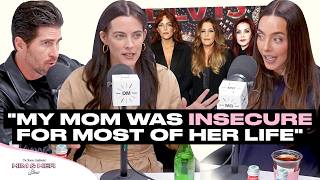
Riley Keough found 16 recorded tapes her mother Lisa Marie Presley left behind, which became the basis for their joint memoir. She talks about grieving her brother's suicide, working with grief therapist David Kessler, and learning that staying present with pain matters more than moving past it.
Chapters
I definitely am a human and having, like, very human experiences of grief and sadness and difficult emotions.
When you told your mom that you wanted to get into your career, was she like, "Fuck no," or was she like, "Let it rip"?
She was definitely like, "Fuck no." She didn't want us to fail or, like, have the experience she had.
Elvis, your grandfather, is arguably maybe one of the most famous people throughout the— in the history of the world. For you, it was probably just like, "This is just my childhood." You don't know, 'cause you don't know any different.
I was putting it off 'cause it felt very intense. Do you think that maybe your mom didn't like attention because she saw what attention did to her dad?
Growing up, it was like, never put your name on anything. Don't put your address anywhere. Don't talk about anything. Like, it was very secretive. When someone passes away and you feel like there's all these loose ends that you need to tie up, that was one of them.
You start putting it together and it's kind of like a mindfuck.
Right before she married Michael and after she married Michael was, uh, really intense.
Oh my gosh.
I first discovered you. What do you think I'm going to say?
I don't know. Like something weird.
I was sitting at home alone. I was looking for a show to watch. This is years ago.
Okay.
And up pops—
The Girlfriend Experience. Yes. That feels on brand.
And I was like, this is so juicy. I'm like, who is this girl? She's amazing.
That's so funny. What a fun show to film. It was. It was. It was really fun.
Tell Michael what that is so he can— you're not gonna have to watch it.
I've heard you talk about it. It's just about, you know, women who are escorts but offer like a full girlfriend experience, basically.
I'll put it on my up next. Yeah.
By the way, I'll drop it. I could use a break too if you could find one of those. Sometimes I just need a little space.
All right, I'm gonna watch it. I'll watch it on the plane ride home.
Riley, welcome to the show.
Thank you. I'm so happy to be here.
Well, we're so happy to have you. I have told you multiple times, your book was so good. So amazing. You and your mother's book that you both wrote together, it was so beautiful and so open and so vulnerable. And it was honestly shocking because sometimes you read celebrity memoirs and you're like, you're like, you're not telling me anything. I'm not gonna name the person that I'm talking about.
Yeah.
But there is a very famous person that I was just reading her biography. I was so excited to read it. And the whole entire, I had to stop it. Um, halfway through was positioning herself as a hero. There was no— there was no, like, openness about anything.
Right.
It was just about how great she was, which is awesome, but, like, we need to see a little behind the scenes.
Yeah. I think that that— like, my mom was so, like, raw and authentic and herself that the only version of an autobiography would be a version where it was kind of just everything out there. And when I got the tapes that she'd recorded, she'd basically recorded 16 tapes of her entire life story, you know, 'cause she was gonna write her own book, and then she passed away. So I got these tapes, and like, the honesty in the tapes, she's talking to somebody who she doesn't really know well, who she's planning on writing this book with. Mm-hmm. And her honesty in the tapes was everything that's in the book. And so I kind of, you know, if she didn't want it in the book, she wouldn't have said it in the tapes. So I think that she had always just planned on being really, you know, straightforward about difficult things like her addiction and her, you know, grief and the loss of her father. And I was quite surprised at how—
Yeah.
Open she was willing to be.
How did you even go about getting, like, listening to those tapes? Was it, you had to, you'd mentioned off air, you had to like pace yourself into it.
Yeah. Well, it was like 3 months after she died. So it was, or a couple months after she died that I got them. And I was putting it off because it felt very intense. I don't know. I mean, I'm sure many people listening have lost parents and just hearing their voice is really jarring.
Yeah.
Like, a photo is jarring sometimes if you're not expecting it, but the voice is very, like, visceral. And so I prepared for it, and I, like, put my headphones in and laid down 'cause I knew it was gonna be, like, emotional. And then I started at, like, tape 1, which was her first memory in her childhood.
And did she film these all, like, in a period of time, or was this throughout her life that she was filming?
It was over the last like 5 years of her life. And she was, it was all being recalled actually after my brother died. So she was in grief for a lot of, like a lot of the tone of her book was through the grief of losing her son. And so I think that one, with that said, like there's so much humor and like, and love and all of those things in the tapes as well. But the weird thing was, is that after a few minutes, it started to just feel like she was on the phone and there, which was then hard to like hang up, you know, because I felt like I was just in the room or something while she was chatting with a friend or something.
Mm-hmm.
And then slowly my method sort of changed and I switched into the writer brain part of me that was like, okay, and I need to structure this and here's this story and this is great and whatever.
She writes screenplays too.
Oh no, I'm aware. But how long throughout your grief process till you jumped into, how long after it passed till you decided to go into that?
It was pretty quick. And I think that that's because it came from a place of like when someone passes away and you feel like there's all these loose ends that you need to tie up, that was one of them. Like this book was something she was mid-process and it just felt like this thing I needed to do. And it wasn't like, I wasn't like, oh, I'm so excited to do this. I was more like, I don't wanna do this, but I'm going, but I have to, it kind of felt like. And so at the beginning, yeah, it was very much like, just felt like a task sort of. And then I started enjoying it.
The book, maybe it doesn't start, but it begins with your mom being 9 or 7 years old, I can't remember. And seeing Elvis like being like carried out in front of her. And it seems like your mom had had so many intense things happen. There's like a string throughout her whole life. And it seemed like that was, The thing that—
That was the age when her— when he passed. That's how old she was.
She was 9. She was 9 when he passed.
Which, by the way, side tangent, we were thinking about this on the show. All right, now we talk about this and we're like, okay, fame has changed.
Yeah.
Now—
Totally. That's really important because in this time—
It's important context.
There's like 5 people.
And I was sitting here the other day. We were in the car literally yesterday. Ariel was there and I was like, It's crazy because sometimes we'll meet people doing what we do and I'm like, how do I not know more about— they got like 30 million people following or 25. And I think it's because the world now can follow so many people and we see so many. But Elvis, your grandfather, is arguably maybe one of the most famous people throughout the, in the history of the world. Yeah.
Right?
Like, like there's not people like, people like, who are you talking? Like people like that had to, be strange for not only you but your family seeing that level of fame compared to now.
Right.
Because, and then also Michael Jackson too. But like there's certain people that are like that, I don't know, I don't think that level of notoriety—
It doesn't really exist.
It doesn't exist. I don't think it can exist anymore.
It doesn't really. It's kind of, I mean, it, yeah, it's a, it was definitely, I think, a really singular experience and that, I think that maybe it exists for, like, Kim Kardashian.
No, I don't even think that. Lauren and I went to Beijing, China one time.
Yeah.
We just went. This is not a comment on that. We were there. And they didn't know who— I mean, at the time, they didn't know who she was. There were certain people they didn't know. And there was, like, you know, people knew, like, Ronald McDonald, Santa Claus, and Elvis.
Right, right. Yeah, totally. Or, like, Jesus or something.
Yeah, Jesus.
Totally.
But now, I mean, maybe you could say someone like Trump. Right. He's known throughout the world, but there's very few, and he's the president of the United States, but there's very few people that I think the entire world knows about now.
Right, and the crazy thing about that is he didn't even travel internationally or tour internationally, 'cause he just toured America. Isn't that wild?
It's interesting seeing Elvis through your mother's eyes because to her, that was her dad.
Yeah.
And it was interesting how your mom sees everyone around him. And I also got to read your grandmother's book.
Yeah.
And your grandmother had a very similar perspective of Elvis. It was her significant other.
Yeah.
It wasn't like Elvis. Elvis. Yeah. So that was interesting. And it seemed like through the book that your mother idolized her father as a daughter, not as a fan.
Totally, totally. I think she would get like a kick out of the, like certain moments with him, like coming to her school or whatever. But she was the kind of person who like, was kind of the wrong person to be born into this life. Like hated attention, didn't want anything to do with it, didn't wanna be famous, you know? And so I think that, but they had a really special relationship. And I think that he was a really loving father to her and the best father he could be. And I think that the loss of him was—
Yeah.
Really like dictated her life in a sense.
Do you think that maybe your mom didn't like attention because she saw what attention did to her dad?
She probably just got so much of it, you know?
Yeah.
That it was like intense, I guess. I think that like speaking of like the grief in the book, she kind of talks about the funeral service and like fans coming into the house and watching people fainting and getting carried away by ambulances and like the— this sort of like global grief of someone that's very personal to you, I think was a really strange experience for her because I think that it didn't really leave room for her to have her own personal grief. And therefore, I don't think she ever really processed the loss of him. And it was something she kept very close to her vest. And actually until this book, like she never talked about the day that he died.
It's almost like other people took ownership over his death. And so it's like she, like you said, she wasn't left to have the feelings that she could have.
Right.
It's interesting to me that too, that she ended up dating Michael Jackson because—
Not just dating, marrying.
Marrying. Because he, he like, like it's the same kind of thing.
Yeah.
It's almost like you're always attracted to one of your parents.
Right.
What is it? It's like Freud. It's weird shit.
But it's like, we're just, I'm just trying to think like the who, like where that would, response would exist in this world. Like people would be, but it's just so, it's a crazy thing to think that the entire world is paying attention to the passing of a family member.
Yeah.
Right.
I know. Yeah. It is crazy.
When, when—
I mean, I don't know any different. So like—
It's just regular.
It's regular. But I appreciate, I can understand that it's a, Crazy.
When you were a little girl and your mom would tell you about her dad and her mom, how would she describe it? In the same way she described it in the book?
Kind of. I mean, she just would tell us stories about him and a lot of the stories that are in the book, she would just tell us as kids, like, especially if we were in Memphis, she'd say like, this happened here and this happened here. And there was so much love there, but she wouldn't really talk about her grief. Very much until I was, you know, in my mid-20s. But she would talk about him often and, you know, how much she was a daddy's girl and the loss of him.
Did you realize when you were— when you guys would go to Graceland and stay in the room and there was tours out, like, there was, like, tours happening and she was in the room with her mom and brother and they would, like, you have to wait in the room. Did you realize how crazy that was at a young age, or did you have no concept of it?
So we didn't do that when we were little. That was more in our 20s.
I thought it was when you were little.
No, we were actually like, me and my brother were like probably 20 and 23.
Okay.
Yeah. But we would, my mom went through a phase where she wanted to stay in, at Graceland upstairs in her dad's room, which is not part of the tour. And if we didn't get out of there early enough, then we would, basically be stuck there until the tours ended. So the security would kind of like bring us McDonald's or whatever.
Did you understand like Graceland when you were that age? Like, did you understand how, why there was people touring it? Did you understand how people were so like attached to the story of it?
I don't think there was ever a point when my mom like had a conversation with us. I think it was just around, always. So I think that I never know how to answer this question because it was just something that was normal to us.
Yeah.
But I was aware of the love and the fans and the whole thing.
It seems like she did a good job of protecting you guys in your childhood from all of the stuff that comes along with Hollywood.
Yeah. She did. I mean, look, like the '90s were really crazy for her. And especially like right before she married Michael and after she married Michael was really intense, like—
Paparazzi.
Paparazzi and like people in our trees and like a million security and like just very like people kind of throwing their bodies at the car, like just really kind of, chaotic.
And how old were you during all this?
Probably like when I was born until, well, probably like 3 until 12. It was the craziest.
Yeah. I think for people that are like listening, it sounds insane, but for you it was probably just like, this is just my childhood.
You don't know. Yeah.
Cause you don't know any different.
No, I don't. And I, I reflect on it and I, I know that it's unique.
Yeah.
Yeah.
But, but at the time it was just like, this is just You know, and now like my life is very simple. So I think that definitely it had an effect on me. You know, I don't want that lifestyle.
Do people tell you that throughout the book, you seem like you're, there's like an element to you that you're like the one that's in control, even as a child. Like you're, you seem like you're organized. You seem like in a way, like a little bit of a parental energy.
I definitely felt that, like, though my mom was very parental and very maternal and strict and like very much our mom, like, you know, we'd never talk back. And like, it was very different kind of parenting than there is now.
But, you know— There wasn't gentle parenting.
There wasn't gentle parenting, though she was really loving. You know, she was firm and very—
I think you could be loving and firm. Yes.
She was, you know what, she was loving and firm. I actually think it was very effective parenting because we all turned out pretty great. Like I was so disappointed. But like we have good manners. We felt really loved.
Like I loved my parents while at the same time I was also scared. Scared of them.
Yeah. Me and my husband talk about this all the time.
Yeah. I don't think that's a bad thing.
Yeah.
Right?
And look, like I wasn't scared for my safety. I will say I was scared that my mom had a sort of Southern, like, mama strength where we would never, like, never— like, I have friends who grew up saying, calling their parents names and stuff like that would've never flown in my house.
I did that one time to my dad. And I'll just say, I'll just say that was the first and last time I ever did it.
Yeah, exactly. Yeah, that wasn't fun to see you after that.
Also, my mother was like a black belt in Tang Soo Do. So she would just— they're just like, I watched her one time break a brick with her head.
I was like, Never mind.
Exactly. With— it seems like that you had such a good experience with Michael Jackson and you talked— like, it seems like he seemed like a great guy. Is that correct?
The only context in which I can talk to him about is like my actual experience as a 6-year-old. And in my experience as a 6-year-old, he was my stepfather who I was really attached to and I really cared for. And, you know, they were very much married and very much a sort of normal couple, even though that sounds— I know that's, you know, people have a hard time conceptualizing that for, you know, but it was very like, they would stay in the house together and would take us to school. And so it was very like normal. And I think at that age, you're— Yeah. My mom had multiple partners and I did find myself being emotionally attached to almost all of them because it's like, I don't know, there's like someone in your house who's caretaking, you know, that, that, yeah. So I did, I did feel close to him and I did really love him.
I understand that my dad had, if he's listening, sorry, he had a lot of different, mates.
Right.
And you do, you form like a bond with them, even if it is for 6 months.
Yeah.
Or 6 days.
Yes.
Daddy.
Yeah, I know.
So I understand that.
Yeah.
At what point of your childhood did you let your mom know that you wanted to go into the career that you're in? And was she like, no, or was she supportive?
Side note, is it weird for my wife to still call her dad daddy?
Yeah, I call him daddy.
I think it's okay. My dad's in my phone as daddy.
All right. Yeah. And you like when I call you daddy. No, but I—
They want you to now.
I'm like, no.
I'm like, I don't know.
I think you have to choose one or the other. Yeah.
I don't know.
Papa and Daddy. Big Papa and Big Daddy.
Right, right.
Or I could call you Little Papa.
No, that's even worse.
When you told your mom that you wanted to get into your career, was she like, fuck no, or was she like, let it rip?
She was definitely like, fuck no, but she also, She also like wanted to be supportive. I think that she didn't want me, she had so much, like I think being the daughter or a child of a celebrity at that time was more kind of embarrassing than maybe it is now. Like I think now it's kind of everyone does everything. And there's like, I think that she, I think that her view on like celebrity children was, or nepotism was like very cringy. Like she was like, "Oh, don't just be like a celebrity kid who's out there trying to act. If you're gonna do anything, you have to be the best at it. And you have to be really good and better than, you know, than or as good as your peers." And so I think there was a lot of, she put a lot of pressure on us. To not sort of be a dilettante, I guess, or try things and like, just to take it very seriously.
Well, you know how some people will be like, "Oh, that's that person's son," or, "That's that person's daughter." I think all three of the generations, especially having Elvis as a grandfather, have done a good job of differentiating themselves. Like, I look at you as an actress, I look at your mom as her own, like, sort of entity, and then you look at Elvis. I think that's cool that you guys have been able to like establish your own niche and do it the best.
Well, it's always like people that come from prominent families or wealthy families, or they're always, they're always going to be from an outside perspective shortchanged in a way because no matter what accomplishments they have, mm-hmm, either some people are gonna say, well, they didn't deserve 'em and they, or they were given them.
Yeah.
Or they're gonna look and say, well, or they're not, this person.
Right.
And you know, it's not like, I don't, I don't think people are crying tears for these people that are, that have platforms or come from wealthy families.
Right.
But it is, it's an interesting way to go through life when you are constantly being compared to a previous generation.
Yeah.
That was well to do because it's kind of like, hey, I'm here and I'm doing really great things.
Yeah.
It's like, I'd like some credit.
Yeah.
But it's just, you know, I think that comes with anything. Like if we, if we do well in life and later and our kids do things, they're, They're going to be like, there's always going to be the people that say, oh, well, they had this.
Yeah.
And you're also building a future for your children. So I don't know. I think that in our case, it was very different generation to generation because you had my mother who is Elvis's only child. So her ability to have a career and be her own person, I think it was really hard for her. It was like, they look like each other. They have the same last name.
It was very much, And it was of that time.
It was of that time. And it was kind of like, there was never really a chance for her to like have her own identity, I don't think. Whereas for me, we have a different last name. I kind of wasn't, I didn't grow up as famous as she did, kind of. Like I didn't, we were photographed all the time, but it was for my mom. You know what I mean? Like it wasn't like they were chasing, I mean, for the most part, me and my brother got out. I get what you're saying. So I was able to like have an acting career before, you know, for many years where it like, people didn't necessarily even know my family, who my family were, which I felt really lucky about. 'Cause I watched my mom really struggle with that. And so I think in her case, it was much more of a hindrance than in my case. I think that it's been, I've been luckier with that.
Did she not want you to go into this line of work or profession because of all of that and the comparison, or because she also knows what comes along with having a public platform?
I think the comparison. The comparison was the— I think it was mostly like she didn't want us to fail or feel like, like have the experience she had, like when she, You know, she wrote records and put music out, and she was a beautiful lyricist and a beautiful poet. And it was just, you know, the record labels trying to make it more Elvis-y and wanting her to do Elvis songs and duet the whole, you know, so I think that, and, you know, she would, she had wonderful fans, but she also would have a lot of like Elvis impersonators at her shows. And so it was, I think it was, hard— her own career was hard for her. And I think that she just didn't want us specifically to do music. Like, I very early on asked for music lessons and wanted to play piano, and I think she— her and my father both were a bit afraid of us doing music.
So I think in a way, film was a little more like, "Oh, that's a little less scary." How crazy would it be for her to see this book though that's stood on its own two legs, nothing to do really with Elvis. It's you and her.
Yeah. I think she would've been really, like, blown away by it because she was actually incredibly insecure and, like, didn't really feel deserving. Like, she felt— it was interesting 'cause she was extremely strong-headed and strong-willed and tough. But also really fragile and deeply insecure. So I think that she would be truly shocked that the book was a bestseller, that she, you know, that her story mattered, that people were interested in her.
How did that affect you when she was insecure when you were little? That's such a good question. I share this with my own daughter.
That's such a good question. It didn't, I felt, sad for her. I don't think it made me insecure. I think I felt a sadness for her, but it was crazy because she was, she was really insecure about her physical appearance and she was so unbelievably beautiful. Like one of my first memories of her was her putting on her lip liner in the mirror. And she, I just remember thinking she was 28 at the time. Yeah. And I remember thinking that she was the most beautiful woman in the world. Like, I, I, and she was her whole life so stunning, but in that particular era to me, like, she was like just like beyond beautiful. And she was just, never saw a photo of herself she thought was pretty. I think I just felt sad.
You seem so secure and confident. So it's, it's interesting. And throughout the book you feel that too. Like you, you just feel to me like a, you feel secure even when you're little, when you're talking about yourself when you're little.
Maybe it's like, 'cause I felt really loved.
Yeah.
You know, I don't know. I do feel secure.
Yeah.
Of course I have, like I'm human and like I feel insecure about many things, but I would say for the most part, I, that is, there is truth in that. And I think that maybe I was raised by parents who were, like unconditionally loving, you know?
And what's so cool too is about how your dad and your mom were able to maintain this beautiful friendship throughout. I mean, I've barely heard that in my interviewing everyone. I've never heard that.
I know, it's really impressive. And I think that like that was also really dictated like the way I approach relationships in my life. And I would like, my parents basically got divorced and when I was 6, and then on and off lived together. And then until she died, basically, he was there with her in the house. And I think they just tried to, like, they were very platonic. They didn't, I asked her at dinner, like, a few years ago when the last time they hooked up was, and she was like, it wasn't, you know, it was in like 19, I don't know, '98 or something like that.
So they mostly just like drifted into friendship.
They just drifted into friendship. They were awful married, I think, but they were great as friends. And he would live in the back house when she had different husbands and boyfriends. And I think it was uncomfortable for a lot of— He was fine. He was fine. I think some of the boyfriends had a hard time, but he was fine. And we were fine. I mean, we were, you know, really lucky, I think.
And are you still like, have a great relationship with your dad today? Is he so proud of the book?
He also grew up in a time where like our family story felt so protected. Like it was like growing up, it was like, never put your name on anything. Don't put your address anywhere. Don't talk about anything. Like it was very secretive. So I think he still has a lot of that. Like, oh, it's like very unnatural to like share so much.
And what, I mean, outside of the obvious reasons for safety and stuff, like, Why did the family feel the need to be like that?
I don't know. We were just raised that way. I guess it was safety mostly. Mm-hmm. Well, that makes sense. Yeah. Safety and probably just, again, I think celebrity at that time was much more private in a lot of cases where now it's everyone just shares kind of everything.
Don't you also think that everyone was so entitled to every single little last thing that Elvis did that his daughter was probably like, this, I'm gonna go the other way.
Also the stakes were higher, right? Like you leave the house and you go to the grocery store and the photo's like 50 grand or something, you know? Oh.
Like, like— Did you ever, as a child, do you, did, was it challenging to become friends with other kids? Like, did you have instances where people are like, oh, this person's not here for the right reasons? You had to like kind of watch out for that?
Definitely. But I, I always, could perceive it, you know, but there was a lot of like, is your mom home? Can we come over?
From the kids?
From the kids, from the kids. I mean, which would be from the parents, 'cause how would they know, you know?
Oh my gosh.
But there was a lot of like, can we see your house? Do you have a big house? Like that kind of stuff. And then as I got older, just like ridiculous questions about, you know, so, but those kids were always very, transparent.
I feel like you, you get a nose for it too.
You kind of—
you do. Yeah. You're like, eh, next.
Yeah, exactly.
Some kid and their dad show up in Elvis outfits, it's a dead giveaway.
Yeah, right.
Um, with what happened with your brother, you seemed like you had the most amazing relationship with him. My mom committed suicide, and so—
Oh my God, I didn't know that.
Truly, I would not wish it on anyone. It's really—
Wow.
It's really obviously devastating for the person to go through, but it's really hard in the aftermath.
Yeah.
How are, how have you dealt with that and how did you talk about that? You seem like you're such good friends with your brother.
Yeah. Um, well, as you know, it's like the most fucked up experience. Yeah, it really is. Um, and I don't know, I'm only a few years out, but if it's something you ever can shake because it's so intense.
We had a grief— not a counselor, but what do you call him? Expert specialist on the show literally yesterday.
Oh, wow.
And he was basically saying it never leaves. You never shake it. It's just you learn to live.
You learn to live with it. So you learn to live with the pain and the trauma and the fear and the anxiety and the, like all of the things that accompany grief. 'Cause I think it's like grief is so big. It's, and changes all the time. And I think that that's something I realized, like when I think that I have a handle on it, it shifts and the next year it's a totally different experience. But I just try and stay present in like, the uncomfortable moments really is all I, when it happened, I kind of had this like feeling that if I wasn't extremely present through the pain of the grief, that I wasn't gonna make it through it. So I felt like I consciously was trying to feel everything, I think. I don't know what that did, but that was my method.
It's overwhelming. I think the suicide is so overwhelming because you start rewinding the tape of like, you know, the last time you talked to them. Could you have said something? And then the last month that you were with them, could you, did you see a sign?
Yeah.
And then you're like, well, why, why? Like, why? And then you start thinking about, for me, I started thinking about like years later or years before, 2 years before. Like, was there something there that was weird? You start putting it together and it's kind of like a mind fuck.
It is a mindfuck.
Yeah.
In your situation, was it something that was totally shocking or was it, from your perspective?
Now that I'm an adult, not at all.
Right.
Now, you know how you have like the perspective, you can see how that could have happened? Yeah. I can, I actually, this is really weird, I've never said this to anyone but Michael, I actually understand it.
Okay.
This is a long time ago though. So I can, I actually understand it and I feel empathy for it. And what you said about your mom, about how you said, she was insecure, that you weren't insecure, you felt sorry for her.
Empathy, yeah.
That's how I feel. I will tell you that when I had a daughter, it brought it back up, like, to the surface.
Yes.
And I think, like, you just, the same with you, grief sort of never ends. And like, for instance, if you were to have a little boy and you have your daughter, and you see that relationship, it kind of brings stuff up that you think is shoved down.
100%. And like, I also had a daughter and my mom passed away when she was 5 months old. And so I have spent a lot of her life in grief so far. And it brings up a lot of like fear and, you know, like, irrational fear and going, oh God, am I gonna, is this gonna happen? You know, I think the fear of lose, like the loss of connection between a child and a parent is like so terrifying.
Yeah.
That it does bring up like, am I gonna end up like that? Is this gonna happen to like somewhere, you know? Yeah, it's definitely been an interesting time parenting.
It's because it's like, like you said, everything is a reflection. It's like, Especially with what you've been through with double. I mean, I can't even imagine. It's like hitting you from both ends and then you also have to show up as a parent, but then you're looking at yourself as the mother. It's a mind fuck. Totally.
It, it's totally been a mind fuck. And I think it's funny cuz a lot of the interviews I do, everyone kind of is like, well, do you feel like so proud of yourself for breaking the generational trauma? Like you've, You feel like putting me, or like giving me this responsibility that I've, you know, that I—
It's a weird question.
A weird question. And also people keep saying like, how did you break your family's curse or something? Oh, Jesus Christ. And I'm like, that's so intense. But also I'm like, I definitely am a human and having like very human experiences of grief and sadness and difficult emotions. And I definitely don't feel like I've like, done anything special.
I just wasn't given what to say. I think they don't know what to say.
I know.
I think that they're trying, I think that with suicide specifically, and can you imagine how long ago for, this was so long, no one wanted to even touch that word.
Talk about it.
Yeah. It was like someone told me to lie and say my mom died of brain cancer.
It's crazy.
People did not wanna touch that word. So I think even now they don't know what to say to you. And so what they do is to overcompensate is they'll put you on a pedestal.
Right.
As you're the one.
They're like, wow, you, you're alive.
We just did, it's, it's, I mean, this is, obviously timely, but we just did this episode with him yesterday and he was saying just this. He's like, people just don't know how to behave or what to say or how to say it or how to respond or even how to have—
Totally.
We talk about so many things as a people, but people are so uncomfortable talking about death. Death.
Grief.
That's crazy. And also things that are considered, especially suicides, we're so uncomfortable with it.
It's so uncomfortable. And I'm like, I hate to break it to you, like you're gonna have to confront it at some point, you know?
Yeah, yeah.
Not that it has to be such a violent experience, but like, I think also it's, I was saying to someone recently, like it's viewed as like a failure too. Like then people are constantly like, I'm so sorry. And of course it's tragic, but like everyone's gonna die. And so I think that the sort of like, like my feelings around death have changed so drastically in the last few years, losing two family members. And I just feel like the conversation around dying, like first of all, it like doesn't happen. Yeah. But also like, I actually went to, I found it so isolating what you're saying, how nobody, really knew what to say. And it was really uncomfortable for everybody else. And I'm like, yeah, of course it's uncomfortable for you, but it's also extremely uncomfortable for me. And not being able to talk about it is, you know, it isn't great. So I went and I had to like find people, I had to find podcasts and things that were, you know, that made me feel a little bit less alone in that experience. And through that, I found out that there's something called a death doula. Mm-hmm. Which is basically like a birth doula, but for people who are dying. And so I went and trained to become a death doula. And so I was like, how can I help people be less uncomfortable talking about, you know.
That's amazing. I've never heard of that.
Well, it's just like we were just talking, this is a universal thing that everybody is going to experience at some point, whether it's to a loved one or to a friend or to yourself.
I think specifically with suicide or drug addiction death. Sorry, I wasn't saying suicide or drug addiction death.
No, no, no, I'm just saying we kind of went like totally off topic.
They just don't even know what to say.
I think that suicide's really specific because people are really afraid of it and it feels really violent and like, I don't know, people just are really, really, really scared.
David Kessler. There's a topic. Didn't he say yesterday?
Oh, were you with David Kessler yesterday? Yes. He's my grief therapist.
Oh my God.
Oh my God.
That's amazing. That's who we were with yesterday.
Yeah, awesome.
He was amazing. So I found him.
I found him and he was the only person I could find. And I called him and I was like, can you please come help my family?
And he, I bet he was there in a second.
He drove over from wherever he lives and he was like, I can be there tomorrow. Like, I was like, please mop us up.
You know what's so crazy?
And he really helped.
He really helped.
Sometimes we have meet like that and we do a lot of these shows obviously. And sometimes you meet some people like that and you're like, that is like a good person.
Yeah.
Like just like a good person.
The best, the most amazing thing was So I found him because like, what did I don't know? I don't know what I searched, but his name came up and I showed it to my husband. I was like, find him. Like, I don't know how, 'cause we were, this was days after.
Is your husband like Dog the Bounty Hunter?
Yeah, real, literally. And I, we were in such a state of shock. This was right after my brother passed. It was, I couldn't, I literally couldn't lift my body off the, like I would just lay on the ground in the summer and I couldn't, get out of bed and my parents were just like destroyed. And so he reached him and I was so surprised that he was so like responsive. Like he wrote back in like a few hours and then he was like, "I'll come over." And so he came over and he did his grief therapy and talked to us. And when he left, I was like, "How do I pay you?" And he was like, "I don't charge." Wow.
That's what I'm saying. That guy's just like, I'm telling you.
I was like, what?
He came in yesterday. We spent a lot of time with him on and off camera. And like, you just, some people you meet and you're like, that like person is a, certain people like that.
Yeah.
As we head into Christmas and the new year, what better gift that you could give to people than the gift of health, which is why I'm so excited to talk about Symbiotica, one of our favorite companies, one of our favorite supplement brands. We absolutely love every single thing that this company creates. We've had the founders of Symbiotica on this show so many times to discuss all of the amazing breakthroughs that they're creating over there as a company. And what we love about them so much much is that they are innovating all the time and constantly adding to their line of products. If you've been following us for a while, you know I'm a huge fan of Symbiotica Supplements. So many supplements contain fillers or harmful ingredients, but Symbiotica's products are truly made with intention. They are formulated with the highest quality ingredients out there— no seed oils, preservatives, toxins, artificial additives, or natural flavors. They're transparent about how and where they source their ingredients, which is incredible as a company. I personally love Symbiotica's Magnesium L-Threonate and their Glutathione. I've said for years I think their Glutathione is the best on the market. Their Complete game changers. Their Magnesium L-Threonate can be taken in the morning with coffee. Instead of using artificial sweeteners, you can also take it at night before bed for a better night's sleep. Both products use liposomal delivery, which means your body can absorb the nutrients much faster and more effectively than other traditional pills. You're actually eating the supplement as opposed to just ingesting a pill. Plus, they all taste so good. Like I said, you can add their Vanilla Cream Magnesium L-Threonate to your morning coffee or matcha. Completely enhances that experience. They have products for sleep, brain function, relaxation. You name it, they've got it. So check them out. Start your Symbiotica subscription today. You can save 15% off your order with our code Skinny. Just go to symbiotica.com/theskinnyy and use code Skinny on your subscription order. Again, that's symbiotica.com/theskinnyy.
Every time one of my friends has a baby, I say the same thing. I think I've hacked the code to sleep with kids. I really do. There's a couple tips I have for you if you're a new mom out there or a new dad. So I keep the room super dark. Andrew Huberman told me this tip and he said the room needs to be completely dark, no light. So that's the first tip. And then I make sure that there's not any kind of light from the diaper wipe machine, anything. There's no light. And then what I'll do is I'll put 528 Hz on and I will always use my Dreamland Baby gently weighted sleep sock. Both my kids use this. It's absolutely a game changer if you are looking for your children to sleep through the night. This is what I figure. My son associates sleep with this Gently Weighted Sack. So when I pull it out, he knows it's time to go to bed. So I've essentially like trained him, if you will. And then it's slightly weighted, so it kind of relaxes his nervous system. So he goes to bed peacefully and stays asleep. I am such a big fan of this brand. It's really pretty. It's quality material. It holds up after washes. It's a better sleep for Michael and I. It's a better sleep for you because when the baby sleeps, the whole family sleeps. You guys have to check it out. It has Cover Calm technology, which is like evenly distributed weight from shoulders to toes. Dreamland Baby gave you guys a code. You can go to dreamlandbabyco.com and enter our code SKINNY at checkout. You receive 20% off sitewide plus free shipping. Mm-hmm. This offer is for new and existing customers only. Go to dreamlandbabyco.com and enter code SKINNY. I've had quite the journey with my hair. It was shedding after my first baby, and I really took matters into my own hands. So things that have helped my hair are scalp massage, a lot of scalp massage. I do it all the time. I think that stimulates growth. I also do microneedling on my scalp. I do it myself at home. It's super simple. It just really helps grow the hair. And then also I eat a lot of organs, so I'll eat like my ancestral blend of meat. I'll do a little liver, a little heart in there. And the supplement that I use for hair is Nutrafol. So if you have hair thinning, if you have shedding hair issues, if you're like me and you just notice little pieces of hair on your silk pillowcase, this is a good one to try. It has a really proactive approach. And it targets the root cause. If you haven't heard of Nutrafol, it's the number one dermatologist-recommended hair growth supplement brand. It's crazy. It's trusted by over a million people. They're seeing thicker, stronger, faster growing hair with less shedding in 3 to 6 months with Nutrafol. For me, I saw less shedding. That's been the biggest game changer, and my hair has never been thicker, and I'm not wearing extensions anymore. So that has been a really fun thing to watch and experience. It's 100% drug-free ingredients. Nutrafol supplements support healthy hair growth, just targeting everything from within. Whether you're gifting yourself or a loved one, you guys can give the gift of great hair growth this holiday season. Right now, Nutrafol is offering our listeners $10 off any order. Enjoy free shipping when you subscribe. Go to nutrafol.com and enter promo code skinny hair gift. That's nutrafol.com, spelled N-U-T-R-A-F-O-L.com, promo code skinny hair gift. Go to nutrafol.com and enter promo code skinny hair gift. The book that helped me with my mom's death the most was You Can Heal Your Life by Louise Hay.
Oh wow.
I'm talking to him yesterday and I'm like, your energy reminds me of Louise Hay. She's dead now. Yeah. He's like, Lauren, I wrote a book with her.
That's amazing.
He ran down to his car. I have read every single book by this woman. For some reason, the one that he wrote has never been served to me.
Wow.
He brought me the book. It's called You Can Heal Your Heart, and it's all about death.
Wow.
So now I have to read that one. That's, those are my two books that I would recommend for anyone dealing with grief. The book You Can Heal Your Life is amazing, but he does have that energy of Louise Hay. It's a really pure energy. And the fact that he deals with grief on a day-to-day basis and, and helps so many people is really incredible.
Yeah. And your pa— and your mother was still alive when your brother passed?
Yeah. My mother and David were very close. She kind of came over all the time and did, like, they would do grief groups together for other parents. And she wanted to do a podcast with him. Like, they were very close. And he helped her immensely.
Wait, did you realize that that was the guy when you found him on the podcast for grief? The guy that your mom did stuff with?
No, I found him.
She found him.
Oh, you found him and then your mother connected with him.
And then my mother connected with him. Got it, got it. And he just was at our, he basically was at our house every day for a few months and really helped my family through like the worst part of the grief.
And so what was your relationship like with your mother when all that was going on? Were you—
We were all living together.
Okay.
In her house, me, my dad, my mom, my sisters, and some of my friends would stay over and it was during COVID So it was really isolating.
Oh, what an uplifting time. I know.
So it was pretty gnarly. And the thing is, is that he would come over, but really all he would do, not all he would do, was talk to us about my brother and be there and sort of just witness the, the grief. And so it's not like he was like doing some magic spell, you know, like—
You wanna tell all the friends, like, that's exactly what you really need.
Just be present in the other person's pain, you know? But he was remarkably helpful and is a truly wonderful person.
You say in your book, you said that when that happened with your brother, one of your immediate thoughts was about your mom. You thought, like you knew. How did you know that?
I think that she and him had a really special relationship.
Yeah.
So there was that.
Only son.
Only son.
Only son.
She has two twin sisters, two little sisters. Yeah.
Only son. And he was like her favorite, you know, to be straightforward, not out of me and him.
Well, it probably was like reminded her of her dad.
I'm sure, you know, and they looked really similar.
Yeah, they did.
He looked a lot like her father and they had a really incredible bond. And she also, like, wouldn't watch movies where parents lost children, like, couldn't handle, like, even conceptualizing a parent losing a child. And she, it was like her worst nightmare. She would talk about it. She had a friend, friends who lost children and she was like, I wouldn't make it. I would not make it.
I would not.
I don't think I would make it either. You know? And she would say it all the time. So I kind of just knew, I knew that she wouldn't make it.
So how did you show up for your mom then? Like how were you even strong enough to show up for your mother knowing that and also just losing your brother?
So the amazing thing thing that happened, or the unexpected thing that happened actually, was when my brother died, I was like, I, we were all grieving differently, of course, but I needed help, like from them. And I was really not doing well. And so our dynamic changed a bit. Like my parents kind of were, being the sort of responsible ones handling the funeral service and all of that. And I was like, I can't get out of bed. And so I was in a different role than I normally was, which was not what I would've anticipated, but they were actually taking care of me through that, 'cause it was really hard on me.
But that was probably really nice.
It was, it was. And so I think that, yeah, they both kind of, stepped up, you know, in this beautiful way together as like a non-married couple. And, you know, obviously they were devastated, but I think in that moment they were taking care of me more than I was taking care of them.
How has your husband supported you? It seems like you have a real solid relationship with him.
We do. He's like the most solid person ever and very like stable. Emotionally.
It's amazing for you.
Yes. And he feels sort of like an angel in a way that I was kind of given to help me through all of this stuff.
You better talk about me like I'm an angel.
And so I don't know, I just feel very grateful. Like he's the kind of person, like I can get anxious or catastrophize things. Very like, very calm and stable. So it's been really nice to have that. Did you hear that?
You take your call. You're gonna call me an angel?
No, it's intense. And how has it been being a mother, balancing everything you're balancing, the book? How do you juggle all these balls and do it effectively? It's a lot of work.
It's a lot of work. It's a lot of work. And I do work a lot, you know, like I like working. So I'm really busy. I work more than my husband. He has been amazing in that he's not a stay-at-home dad. He works, but he's like, he travels everywhere with me. So I, you know.
So nice.
So yeah. So he's kind of holds it down a bit and lets me allows me to work, which is amazing. And we, I don't know, we just make it work. It's really hard.
So at this point, do you like writing more? Do you like acting more? Do you like, like, what do you like? I mean, now that you've done, like, you've had—
Yeah, I feel like she's an octopus.
Well, you've had success obviously as an author and as writer and as an, like, what do you find your kind of like sweet spot now? Or is it just kind of—
They're just different. Like, I love performing as an actor a lot. I love writing. It's a very like isolated experience, whereas acting is like very, you know, more social, I guess.
I guess you're doing it with a team.
You're like with, you're with around people. And directing is also very fun. I really enjoy all of those things. Writing a book was really different and hard. I don't know if that's something that I would, you know, do again. Only a psycho would want to do that.
Why did you do it? Like, what was the, like in the beginning when you—
It's like she had to close the gap for her mom.
Because my mom, okay. She literally started writing a book.
Okay.
And she, in the middle of that, my brother died. And she was like, I don't want to write this book anymore. I don't care about this book. I only care about writing about grief and your brother. And I was like, well, you have to write this book because you're in the middle of it. So it needs to be finished.
And had you read any of it or you?
I hadn't. I had read like, I'd read like the proposal and like a few things, and, but not really. I was kind of actually staying out of it. And then she, in December, the December, like a month before she died, came to me and with, she called me with her manager and she was like, I don't wanna write this book. I know I have to finish it. I don't wanna talk about myself. Like, I think she was feeling very like, why am I writing a book about myself? And I kind of was like, I think the problem is you are expecting this to feel like a salacious celebrity. Like you're expecting this to be like another like Star Magazine kind of a thing. And I was like, and it needs to be something really elegant and beautiful about your life. And she was like, well, can you do it? And I was like, sure. Mm-hmm. Yeah, I'll help you for sure. And then she died. And so I felt like I had to.
You had to finish it. Yeah.
That makes sense.
And when you read it, like, there's different fonts.
So like—
So you can like see her writing.
You can see who's writing and who's—
and actually the audiobook's really cool 'cause you can hear Julia Roberts is my mom and then I'm me. And then you also, there's intros to each. Chapter that is my mom.
Why did Julia Roberts do it? Just like, did you—
I don't know. I just asked her and she said yes.
So you had a relationship with her?
No.
Oh, you didn't?
I didn't. I just sent it to her and she like responded to the book and she said yes. But she was the only person like the publisher—
Not that she's not amazing. I was just like, oh, is this like someone that you were like close to?
No, I never met her in my life. She just, there was a list they sent of actors who could read my mom's part. And she was the only person that I felt had this sort of strength that my, like, in her voice that felt right to me. And so she was the first person we asked and she said she would do it. And I was just like totally blown away.
Such a cute gift that my mother-in-law got me. She got me this like last Christmas and I think it's so efficient and amazing. You know how when you have a frame, but then you have a lot of other family members and they come over, friends, and they don't see their picture, they don't see themselves on the wall. Well, now you can get everyone on the wall thanks to Aura Frames. So this is a digital photo frame. Aura makes it effortless to upload unlimited photos and videos directly from your phone. So what my mother-in-law does with all of us is she gifted this frame to everyone in the family, so we all upload images. And they circulate throughout the family. So I can see what's going on with my nieces and nephews or my kids' grandparents, and then I can also pepper in our family. And so when anyone comes over, everyone has a picture of themselves. It's amazing. It's in my guest room. I also have one downstairs in the family room. My kids absolutely love it. It's white, it's chic. You can personalize it and preload it, which is cool. So if you wanted to give a gift of a bunch of photos to a friend or family, this is a really special way to do it. How I would do this and how I think I will do this for the holidays is like I'll gift this to my dad and I'll upload a bunch of different fun photos that we've taken throughout the years. And then I'll also do ones from when I was little so he can like have his whole memory bank right on an Aura Frame. Save on the perfect gift by visiting auraframes.com to get $35 off Aura's bestselling Carver Mat Frame by using promo code SKINNY at checkout. That's auraframes.com promo code SKINNY. This specific deal is exclusive to listeners, so get yours now in time for the holidays. Terms and conditions apply.
With the holidays just around the corner, it's time to start thinking about those special moments gathering around the table with the ones you love, sharing meals, and making memories that last a lifetime. And this year, Good Ranchers is here to make that feast even more special. With Good Ranchers, you can Skip the chaos of the grocery store and the last-minute panic over finding the perfect food for your holiday meal, because when you choose Good Ranchers, you're getting America's best meat delivered right to your door so you can sit back, relax, and truly enjoy the Christmas season. And with our exclusive code Skinny, you'll get to pick a free gift that is included in every box for a year, plus $25 off. Treat yourself to the convenience and quality of American meat delivered. Also, if you wanna know one of the best gifts to give this holiday season, Nobody has ever turned down a steak. This year, give something that's a cut above the rest with GoodRanchers.com. They have an all-new selection of luxury gift boxes, from burgers and ribeyes to surf and turf, and even a gift box full of tender filets. Good Ranchers has a gift box for everyone on your list. Send them a box of meat. What we love about Good Ranchers is there are no antibiotics, hormones, or seed oils because it's local. You can trust the American process. It's steakhouse quality. The meat truly tastes better, and you won't want to go back. And of course it saves you time and money. All the cuts are pre-trimmed, which makes meal prep so easy. We absolutely love this. So check 'em out, subscribe to any Good Ranchers box and use our special code SKINNY to get a free gift of chicken breasts, ground beef, bacon, or salmon for a year, plus free express shipping. Again, head to goodranchers.com and use our code SKINNY.
When I make a bed, I like different textures. I don't like all the same texture, so I'll mix in like a waffle sheet, linen, cotton. I like to have different fabrics and feels. That's really important to me and I think it makes it feel really luxurious. So there is a sheet that I've talked about on my Instagram story that's a waffle sheet. It's available at Bloomingdale's. It's by Brooklinen. You guys have heard me talk about Brooklinen before. And basically Brooklinen is known for offering luxurious hotel quality sheets at an accessible price, which is really nice. So I can switch it out and play with it. Everything's minimalistic. It's modern design. It fits seamlessly into your home, but most importantly, you can like experience with different textures. They have like a Luxe Core Sheet Set that is 480 thread count, and that's gonna give you a soft, buttery feel. The one that I have is the White Waffle Sheets. They also have beautiful, super plush bath towels. All of these make incredible gifts, and you're getting the gift of luxury. Who doesn't like that? The brand has over 80,000 5-star reviews. Which is incredible. Right now, when you shop Brooklinen at Bloomingdale's online, you can use code SKINNY20, which is amazing, for 20% off. That's code SKINNY20 for all show listeners to get 20% off your purchase. Go stock Brooklinen at Bloomingdale's online. What has surprised you the most after this came out and it's become such a huge hit? What are some things that have surprised you about it?
Um, Well, I mean, it surprised me that it was like a bestseller 'cause I wasn't—
Did it really surprise you?
You didn't think it was gonna—
I like to be like, I don't know. I was trying to be like cautiously optimistic, but I didn't know.
See, that's my problem because every time I release one of these, I'm like, this is gonna be a huge hit. And then when it's not, like I'm the opposite. I'm like, this is gonna be the one.
But I think there's something to that. I think that's— Every time I'm like, this is gonna be a bestseller. I think that the positivity, Holistically is probably better.
It's a lot though. Like when we're out to dinner and he's looking at the mirror behind me instead of me, it's a lot.
I gotta go through life constantly disappointed as opposed to pleasantly surprised.
It's a lot. I think that's my method is I'm like always undersell in my mindset.
So it surprised you that it was a bestseller?
Kind of, yeah, I did. And I think also the response that people had, the like very human response people had, because I think a lot of the time my family has been, interacted with in a way that feels not very human. And I think that how much people were relating surprised me.
Are there things that irk you or bother you that people say about you and your family to this day that they're just like, oh, that's just like so off base?
Oh, that's a good question. I think that it's just, Not really, because I kind of grew up hearing all kinds of things all the time, and most of it was totally off base. So it just kind of felt silly. But recently I think like the idea with this book that like, I keep getting asked, like I said, about like a curse that like a family curse or something. And I just find that so annoying 'cause I'm like, it's like very human experiences. Like everyone I know has somebody who's like, suffered from addiction or lost a parent or lost a sibling or—
Well, this is like what I, you know, to observe all this, like we were saying the other day, if you were just anybody else with different grandparents or different parents—
You'd be like, that's a person who has—
Yeah.
Like I was giving the example yesterday, we had somebody that's got a very well-known prominent platform and they talked about like how they sleep with their children. And it was like somebody machine gun firing publications like, oh my God, this. And I'm like, if anybody else in the world said they slept with their kid, they'd be like, who cares?
Right, no one would think about it.
It was this person. It was like literally like news article after news article. I'm like, does anyone really give a shit?
Yeah, exactly.
And everyone's commenting on it, their opinion.
I'm like, oh my God. Yeah, yeah. So I think that that, like the dehumanizing, I guess a little bit where it's like, can bother me sometimes. But you know what? I also don't care.
Yeah, it's because it's like exposure therapy. You've done, you've put yourself out there so many times. It's like, doesn't, it's like, I'm good. I've done it so many times, I'm over it.
Yeah, I think that there's, the truth is, is there's not much that bothers me in terms of like press stuff. I don't really, it doesn't really affect me.
Well, the press people are gonna hate me saying this, but like, it's not really even relevant anymore. Like, everyone, when people say like, oh, look at it, you got featured in this, or I'm like, nobody cares.
It's also in this time.
It's probably not gonna get me any more story. You know, who's gonna write about the fucking podcast now? But every time I see it, I'm like, great. Maybe that'll give me a boost. I would make the argument that a lot of these old publications, they need these kind of things more than we need them. I mean, it's not like the old days when you pick up an Us Weekly or a People and pay attention. Nobody's paying attention anymore.
Yeah, I know. And then that's the other thing is things just sort of come and go and I just don't care.
People are like, "You need press." And I'm like, "Why?" They're like, "Well, because you need it." And I go, "Why?" They're like, "Because it's important to have them talk about." But I'm like, "Nobody is paying attention to them." I will say I pay attention to podcasts. That's what, but that's different. That's what I'm saying.
Like, oh, you're gonna put yourself in a different category.
Of course.
I always do.
But the public, the, the point is, is like, I think that kind of like salacious, clicky, let's pick apart. Like, I think, I think people don't care anymore.
No, no.
Like everybody's got flaws. Everybody's got a human condition. Totally.
Like nobody, which is great.
I, I think it's the downfall of people that are hanging out. People want substance now. Yeah. They wanna know who the person is, what they have to say.
Yeah.
It makes sense though why everyone's DMing you in a humanized, a human way. Like, it's like the book did that. It made your story like approachable.
I think that's, to rephrase it, like what I'm most proud of is that it's like, there's this sort of like mythology of my family. And I think that the, like the DMs, I'll read my DMs and people will say things during the book tour. And it's very like, I also experienced grief, or I also experienced addiction. It's not like, oh, Elvis and Lisa or whatever. It was very human stuff. And I think my mom, that's why she wanted to write a book really is to—
About grief.
About grief and addiction and her struggles and just her life as a human being and wanting to connect with other people.
Well, I think what people would, they see someone who has that kind of platform and comes from the background she comes from and they're like, oh, these people are human and they struggle with the same human things that we all, and I think it's relatable, right? Where it's like, oh, like everybody has problems. Everybody has struggles.
But what's cool about all of it is that it sounds like your mom wanted to focus on grief and you, the book did that. It didn't make it, like you said, about Elvis.
Yeah.
Lisa Marie.
Yeah.
It's like the book helped people.
Yeah.
That's crazy.
Yeah.
Like that's so full circle.
Yeah.
Okay, everyone needs to go check out the book. What are you working on? Where can they get the book? Tell us all the things. I'm sure you already follow Riley. I love following her.
You can get the book like anywhere you get books. The audiobook, and I'm not just saying this, is really beautiful. Like, I think that it's on Audible, and I, really recommend it just because you get— it's a totally different experience. I recommend both, but I really enjoy the audiobook. What am I working on? I'm just finished filming a movie. I'm still an actor.
When you go and you do something that heavy, do you have to go into something a little lighter after, or can you keep going on the heavy subjects?
Well, I've never done anything— I've done a lot of heavy work as an actor, but never anything that's real.
What do you mean?
My real life. Like when I'm—
She's acting.
When I'm acting, I don't like recall my own trauma. Like I don't really use my own stuff. So this was a very different experience. Like, and it was very intense and very heavy. And I, so honestly, I was like very happy for it to be over and I was happy to be done writing it, but it was really cathartic because I think that there's really something in like sharing your story and just being really honest and open that helps you process what happened.
It's cathartic and amazing. Is there anything— I forgot to ask you this— that you wish you included in the book that you didn't?
Anything I wish I included in the book?
Anything. Like, is there anything that you were like, I wish I included that? Or do you feel like you got it all out?
Good question. I think there was a lot of things that felt like my experience that I didn't put in the book because it was my mom's book. And so there were moments where I was like, I wanna really share this thing, but that's for another time and place and maybe for my memoir when I'm 80.
Maybe you and your daughter.
Exactly.
That's a good idea. Write a memoir together.
That's a really good idea.
And she can do the same thing that you guys did.
Don't you think it's strange when people write a memoir when they're 35 and they're like, still going.
That's why I didn't write my memoir. I just like focused on her.
No, you have it in here.
Yeah, yeah. Because there's some people that are like, this is my memoir. And I'm like, dude, you're 35 years old. Like, you gotta keep going.
I know. And that's another thing on this press tour. People keep asking like, when's your memoir? I'm like, hopefully not soon.
I feel like we gotta mix the questions up with the platform.
Like in my memoir, Lauren, I would like—
We gotta get creative.
I agree.
In my memoir, I would like, 'cause I fantasize, I'm like, one day—
When are you gonna write a memoir?
Well, so I'll tell you. So, but this would be like, we would be like 20% into the story in my memoir at this point. Okay.
We're 20% in.
Like, we'd be like, if the book was 1,000 pages, this is like page 200.
Yeah.
That's my hope.
Okay.
So that I got like 800 more to go.
Wow.
And I'd be like, "There was this one old time when I used to talk on this microphone to people." Okay. But it would be like a blip on like the thing, because I got a lot of shit I gotta keep doing.
Okay. I can't wait for that chapter.
You can make it.
Maybe I'll do the commentary.
That would be cute. Yeah.
Let me see how long you make it in the memoir. Like, hopefully you can get past the 20%.
Are you in the memoir?
Yeah.
I think I'm on every page. I can't get away from the memoir. I'm on every fucking page since I was born. You guys have been together for a long time. A long time.
I was thinking about this as you were talking. Let's just make it about me for a second.
Okay. Please. I'm enjoying this.
I was thinking about this as you were talking. I was like, well, you got to listen to your mother talking in these tapes. And then I was like, holy shit. Our kids could potentially listen to it.
Also 100%. They will.
Yeah. That's kind of creepy.
They will. They'll listen to every single thing. If my mom had hosted a podcast, I would definitely be listening to every single episode.
There's like 800 things they can hear me say.
So be careful.
You gotta delete all the sex ones before I go.
Yeah. Before they're like, yeah. Able to—
That's what—
Hopefully my son or my daughter, as I'm They can, like, help me finish my memoir too. Yeah. If you're listening to this, son, in 20—
It's not about your memoir.
—2016, you better help me. But you know what?
You reminded me, like, something that was so special was having all these hours of my parent telling their whole life story. It's amazing. And I'm like, everyone should do that.
Do you know how bad I wish I had that? You are so lucky.
Everyone should just, like, take their parent and give them a day and be like, okay, let's start from the beginning.
You know what we've thought about doing?
It's hard to get some of them to focus.
I know. I'm like, Dad, You know what we've thought about doing?
Daddy.
But I think, um, oh my God. Little Papa. Papa Daddy. Big Papa Daddy.
We've thought about doing this and I want to do this, but anyone can do this because podcast equipment these days, or just even recording equipment's not that expensive. I've thought about with Lauren sitting each of our parents down and doing what we do, but not releasing it, but for like 4 hours.
You absolutely should.
And doing like, doing like actually conducting an interview with them about their life and going through it. You don't have to release it, but I think like—
To have it. Yeah, everyone could do that with their parents. I mean, most people like that lose a parent have the voicemail.
Yeah, I know.
The fact that you have all of those tapes, I'm sure it's like, it's also, there's different dynamics to it. You also feel a lot, but it's amazing that you have that forever.
Yeah.
But if you think about it, like people can just buy equipment and sit down with their parent and like record and ask them things about their life. I think it's like a good thing to do.
It's a great thing to do.
I, for some reason, feel a documentary. You think a documentary is going to happen?
I would be open to it because I'm a movie person. I know. So like, that's more my, I don't know, like exciting. I mean, I love books, but I think that the idea of a documentary like would excite me. It's not something I necessarily would want to like direct because it's so personal, but I think that I would be open to it.
When I read it, I'm telling you, I was like, oh my gosh.
The phones are gonna start ringing. That's for sure.
No, they're already ringing, Michael. She's Oprah's Book Club pick, number one national bestseller, as well as a New York Times bestseller. Go buy the book, From Here to the Great Unknown. Riley, thank you for letting me stalk you on Instagram to come on the show. I also stalked you through other people. I was like, she needs to come on, please, please, please. So thank you for taking the time.
Thank you for all of the like health recommendations, and I'm pretty sure I found colostrum through you.
So thank you for that. Which kind? From the tit or from the skincare company?
No, the cow— was it Cowboy Colostrum? Did you post that? Armra. Or I don't know, you posted one that my daughter's been on and she has not been sick in 8 months.
Ah, so— You know, I don't get sick anymore either.
Oh, we gotta end it about you. Okay, thank you for coming on the show.
Thank you for having me.
Thank you, Riley.
Amazing. Goodbye, Riley. Thank you.










