Shelley Buck and David Kessler discuss the death of a Child
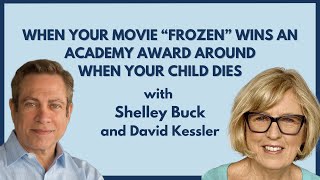
A recorded live conversation (Facebook/Tender Hearts) between grief educator David Kessler and Shelley Buck about the life and death of Shelley's son Ryder. Shelley describes Ryder (born 1990) as an introspective musician, his 2012–2013 testicular cancer diagnosis and nine-month treatment culminating in being declared clear in May 2013, his post-remission travels and music, and his sudden death after being struck by cars while walking on a foggy freeway shoulder. Shelley explains how she coped — journaling, psychics and posthumous messages, friends/family support, therapy for a time — and how she co‑wrote the memoir Leave Your Light On (with co‑author Kathy Curtis) that launched on what would have been Ryder's 30th birthday. The interview also covers family grieving styles, the surreal juxtaposition of public success (the guest’s husband’s movie Frozen released one month after Ryder’s death) with private loss, and advice for others in grief.
Questions this video answers
1990.
May 2013.
Leave Your Light On — by Shelley Buck and Ryder Buck with Kathy Curtis.
Approximately nine months of treatment (with several inpatient chemo stays totaling seven weeks in hospital).
He was struck by two cars while walking along the freeway in dense fog at about 5:30 AM; David Kessler and Shelley state authorities reached the family the same morning.
Chapters
Wherever you would like.
Welcome, welcome.
Let me see. I always see if I can find me. It's not real until I can find me, too.
Hi, everyone. Ah, good. Glad we're coming on there. Ah, Shelly. I see you, I see the world. It looks like things are okay today.
Great.
Hi there. I'm so glad you can join me, Shelly. People have been excited about today, so.
Oh, absolutely. It's my pleasure. Thank you.
Of course, of course. All right, I'll just give everyone I came on a moment early. I have a theory sometimes that helps people find us. So we're going to just wait while people come in. Feel free to say hello in the chat or on Facebook. Let me know where you're coming from here.
All right.
I was telling Shelly ahead of time how when I was growing up, there was Romper Room and would. The teacher would pretend like she was saying hi to people. So I still do that. So I love. Angela's here from the UK. Hi, Angela. And from St. Louis, hi, Jennifer. Glad to see you all. See, I'm telling you, Shelly, it's a lot like Romper Room. All right, let's see. Oh, there's someone all the way from North Hollywood, California, Shelly.
Oh, great.
Isn't that it? Australia, the UK and North Hollywood. What more could we want?
Oh, and I'm from Chicago. There we go.
Right? There you go. Melbourne, Australia. Melbourne. Sorry. Melbourne, Australia. Those Americans pronounce it Melbourne, but they taught me it's Mel. Ben.
Okay.
All right. Judith is here. I see on Facebook from North Carolina. Hi, Judith. I'm working sort of the Facebook and the chat here. All right. Julie is from Texas. Hey, Julie. I know you were in Tender Hearts the other day, and we were breaking into groups with children and people who had a spouse die and a parent. So make sure you change your name back Julie. Just to Julie. Not child Julie. I actually was child Ava, too. All right. Hi. Karen from Alberta, Canada. Orna from Santa Barbara. Good to see you. Some of you are here in the Facebook group. Some of you are here in Tender Hearts. So I'm so glad you're all coming in. Welcome. All. All right. I'm going to give it one more moment, and then we'll start. Lisa's here from Grand Rapids, Michigan. Carrie from New York. Hi, Kerry. Elizabeth's here. Maddie's here. Welcome. So glad to see everyone coming in. All right. As we always do, if you would join me in a moment of silence for those who we love dearly that are no longer with us physically. As I always say, I don't think when they leave physically, we quit loving them. And I don't think they quit loving us. So join me in a moment of silence to send them love, if you would.
Thank you all so much.
I always say I usually connect with my own son, but when I have a guest, I send thanks to Ryder. So we'll be hearing about him in a moment for bringing us you, Shelly, and not in the way you would have wanted, I'm sure. And we'll talk about that. So for anyone who's new, I'm David Kessler. This is coming through in two different groups. It's in my Tender Hearts group. It's also live in our Facebook. The Facebook was created right after the COVID shutdown in March, and we've been going strong ever since. So please share. When you're having a bad day, a good day, it's amazing peer support. I love how everyone takes care of one another. All right. I'm so thrilled today to have an amazing guest with me. Shelly Buck is here. Many of you might know her from Leave youe Light on an incredible book here. We'll be talking about that, but I want to just start. And by the way, you'll have a chance to ask questions of Shelley here in Facebook, and then we'll have an extended version in Tender Hearts. Shelly, welcome. Thank you for being here.
Thank you so much for having me, David.
So, Shelly, what's brought you to this moment here with us? Tell us about you, your life, Ryder.
Okay. Well, I moved to the west coast when I was 25, but I knew I was going to do it when I was 10 and Walt Disney died because I was worried about the studio. And that was where I intended to spend my professional life. And I finally came out when I was 25, met my husband at Disney and started having my children. And Ryder was my first of three sons.
And was born in 1990, so he would be 30 now or last year.
And let's see.
As he grew, even as a baby, he was an extremely calm.
Introspective, observant, wise old soul. And my energy did not match Ryder's energy at all. I was kind of frenetic, very excitable, high energy. And we had to find a place where we could meet and I wouldn't irritate him too much and be too excitable for. For him.
As he grew up, he got into. Well, he was into dinosaurs, and he eventually, in high school, found girls, and they were fascinating as the. As the dinosaurs had been. He went on to play water Polo. And was grew into a man in that way. He became a young man and eventually found his guitar.
He had always listened intently, as I said, and when he found the guitar, he seemed to blossom in a way that he hadn't yet.
He said to me once, mom, I don't know what to do with my life. And I said, ryder, go look in the mirror. It's strapped to your back. And that was sort of his launching pad. He finally found a music school, Musicians Institute in Hollywood, and continued songwriting. He formed a band. He started doing small gigs in the Hollywood area, and then he moved to the coast and did some in Malibu, some in Pasadena. It was all in the Southern California area.
And then he called me one day from school and said, mom, I have good news and bad news. What do you want first? I said, give me the bad news. He said, I have cancer.
I said, wait, what? I need to talk to the doctor. Well, Ryder had to give me permission because he was 22 at the time. So full grown young man and in charge of his own life. It took me all day to get him to send permission, written permission, to the doctor via fax.
I finally got to talk to the doctor and he said.
Yes, we'll do surgery. I have a surgeon for you. It should be as soon as possible. It was testicular cancer, which generally has a pretty good prognosis. And that's what we found with his oncologist. He was very positive. He infused me with confidence. And Ryder felt very comfortable with him too. He actually did the choice because we interviewed several doctors.
The cancer journey was a whirlwind of clearing the house.
Washing the dogs, getting healthy food in the house, which of course, Ryder insisted upon. But then he would come home with junk food.
In his off time. When he was in the hospital, I was with him every day. He would be inpatient for one week and then out for two. During his out time, he would spend a couple of days recovering from the chemo, and then he was off and running and I couldn't keep track of him. He came in late at night, never was up in the morning for breakfast.
And I found pictures on his phone from San Francisco when he was supposed to be camping nearby.
He actually shared them with me. I wasn't snooping. And with his typical chuckle and laid back way, he said, you know, I was going to tell you eventually, Mom. He went to concerts, he went to Dodger Stadium, he went surfing and hiking and all sorts of things where I could conjure up things to worry about. Sharks and rocks and Snakes and germs.
So I never really got any peace except for when we were in the hospital together. And I knew that he was safe. That was not an easy road. And it took us through nine months of treatment. He was declared clear in.
May of 2013.
Just before he turned.
23. And he went. Throughout his cancer treatment, he would do gigs. He performed with his band whenever he could, even after he lost his hair.
We have pictures of him performing then with his sweet bald head.
That summer, after he was cleared, he wanted to go to Bali with a class from a local college and study music. Now this was hard for me. I just wanted to have him around and healthy. He wanted to get away from the cancer house and the cancer mom and all things related to his recent past.
Valuing travel the way I do. I know it's the greatest teacher.
We, we decided together that he should go ahead and go now. Much of this time my husband was extremely busy.
And on Frozen he was co directing that movie. And so though he was involved in these decisions, it was mostly Ryder and I who came up with the plan. So Ryder left for the month of July and spent the time.
Learning music, immersing himself in the culture and the belief system.
He was an avid reader and he read about Native American culture, Buddhists, of course, he was raised Christian.
Not of course, but he was. And.
A few months after he came back.
We were still celebrating and so happy and his hair was coming in and he finally met the band of his dreams and actually went backstage. He got to speak at their concert, told his story to a crowd of thousands and got a pass backstage where he connected with all of the band members in the way he always did, which was very personally, as I said, he was a great listener. And whenever he was with you, he made you feel like you were the only person on earth. So he made friends of the band members and one week later.
His car broke down on the side of the freeway and he was walking home through a dense fog in the middle of the night and was hit by two cars. I didn't find out until the next morning. Well, it was morning when he was hit. It was about 5:30 and the CHP came to my door at about 8. Now my husband was in New York and my second son Woody was in London and studying there. And I only had my 16 year old at home with me. So we went to the hospital. The doctor went through all the ways Ryder was broken. And I thought, well, we can fix that. We've been through cancer, everything's going to be okay. And he dropped the bomb that Rider wasn't coming back. And I went into a spin.
Didn't think I would survive it. Didn't really want to survive it. But then I looked at my other two boys, and I realized I still had a reason to live.
That started my long journey through grief.
I had been writing a journal, an online journal, since the day he was diagnosed with, which I'd shared with close friends and family. And that became the premise for my book. I had had several people tell me, you really have to write a book, Shelly. This is really good. And I said, yeah, yeah, you know, I put it on the back burner during his treatment and so on. But.
Then I got a message from Ryder through a friend who's very connected to the other side, and he said, mom, write my story. Don't be afraid in any way. I'll be there to help. This was, you know, I couldn't deny it. I was getting messages from him that were full of Rider isms. And so, you know, being very hungry for contact with him, I bought it and ran with it. So a few years into my grief, I'd say about five years, I started writing the book with my best friend who is a writer and uses her. She's my co author, Kathy Curtis. She uses her talent as a writer to help people through grief or any difficulty they're having divorce.
And she has a writing program. So we started putting the book together, and it took us about two and a half years, and we finally launched it last year on writer's 30th birthday.
You know, the other boys and my husband went through their own versions of grief. I was angry. I wanted people around me. My husband wanted solitude, and the boys each had their own way of dealing. I shared my grief openly, hoping that it would give them an example.
But I couldn't contain myself. Anyway, so fast forward to the book, and here we are.
I can't hear you. I'm sorry, I can't hear you.
Thank you so much. Of course, I was muted just because I was just absolutely riveting on every word you were saying.
It's a startling story.
It's actually a startling story.
I think about.
One, the connection and seeing how you were so in tune with your son's personality growing up and the differences between yours and his, and then fast forward into your grief. You also seem to be so clear on how everyone in your family had a different style of grieving.
Yes, My youngest son, Reid, wrote about this, and it's included in the book. Kind of recounting that day and how he set his own grief aside to be there for me, because he was that day, in that moment, he was the man of the family and he just wanted to focus on me and try to hold me together. For a young 16 year old, that was herculean in my mind.
Yeah. And my middle son had the hardest time because he was in Europe and really.
Couldn'T believe it. He was angry. He was angry with Ryder. He was angry with the drivers. He wanted to know if they were drunk. They were going about 75 miles an hour through, like I said, a thick fog. And we drove that road the next morning and couldn't see three feet in front of our car in the bright sunlight of 8 o'. Clock. So.
We all just came together. We were able to do some traveling. One month after Ryder was killed, my husband's movie came out and Frozen became a worldwide phenomenon, as everyone knows. And we got to do some traveling as a family, which was good for us. Some new experiences. Of course. My grief never left me. But I stayed in touch with Ryder.
I was visited by him when I was dreaming. I got myriad messages from different people. I saw psychic and she, she was the one who had the writer isms that were just undeniable. You know, he's throwing his head back and laughing. Well, that was what he always did, you know.
So, yeah, you know, it's. I brought up the piece about. I think that as a family we often have this illusion we're going to grieve the same way. So I'm so glad to hear you sort of knew that. It's also, my goodness in life I have seen this and it's. It's such a horrendous thing that just, you know, we go through. I think about him and the cancer journey and everything that went on, and it's like, finally there's going to be light at the. I mean, how did you.
Keep walking through, wait, we're coming out of the other side of cancer? I mean, how do you even. Not that you can make sense of it, but I can see how you could just get stuck in forever and this doesn't make sense. Can't even go on.
Well, that's exactly how I felt in the beginning. I was, like I said, I was angry with God. I mean, I found myself shaking my fist at heaven and saying, why me?
You know, how could you do this? If you're supposed to be good, what's the good in this? I don't understand. I will never understand.
It.
Was a long road. And I did have incredible support from family and friends and his band members. Three of them actually moved in with us for a period of time. One had been living in his car, another one had lost his mother just a year prior, and another had come from Texas to make his way in the music industry. So he was really alone.
And that lifted me up. I mean, it brought the music back into the house. It gave my youngest son.
Kind of older brother figures in the house.
It was very helpful and very healing for me to have their presence and have writers, music still in the house.
Rhonda on Facebook asks, how did you come up with. And you don't mind questions, right?
No, I don't mind at all.
All right. Rhonda says, how did you come up with choosing the title of your book writer song?
Very good question. Yes, it was the first song Ryder ever wrote and kind of became his mantra.
He also wanted to spread the love. And he finished all of his gigs, not with one of his own songs, but with Bob Marley's song.
Oh, it's Escaping Me Now. One love.
Right?
One love. And that was Ryder's message to his audience. But we chose Leave youe Light on because that was the first song he ever wrote. And. And because it's the theme of the book, it really makes sense.
Right, right. You talked about that connection after life.
You.
You know, I. I shared in the book that I wrote about my son and finding Meaning and all that, about how psychology used to have this idea long ago that the relationships end at death, and thank goodness they've come around and we've come around to. No, no. A connection with your loved one after death is healthy. And however that plays out for people, it's just talking, feeling, whatever it may be.
Have you always been that way? Have you always been in tune? Was that something that came up because of this?
Well, Ryder and I were always flip sides of the same coin and very psychically connected.
One of us would pick up the phone and the other one was on the other end of the line.
It was just serendipitous, the way that happened throughout his life.
I did have help. I had a friend who, very connected to the other side, received messages in her sleep and would wake up and see it like a fax and transcribe it on her computer, then go back to bed and send it to me in the morning. I got poems from Ryder. We got letters from him. One of them we even turned into a song. One of his bandmates wrote the music for it, and it's in the book. So that was a posthumous song. Wow.
And did I hear you correctly? Did Frozen come out after the death?
One month exactly after his death.
So it's a weird thing that's often happened in my life. It happens to other people. How do you deal with the worst moments of your life with amazing outer moments happening?
Well, it was pretty schizophrenic. I sat out the first party, the wrap party. I just. I couldn't go. It was too soon. But then Oscar season came and all of the accolades came in, and my husband had it the worst because he had to be at all of these events. He had to be doing press, and people would lead with, no, I'm so sorry, and then congratulations in the same breath. So I compartmentalized my feelings and was there for him and in the jubilant moments and.
And did my grieving privately or, you know, with. With my close friends and family.
You know, I just think about. There's just. There's that irony, and, you know, it plays out for you. It was the movie Frozen. For someone else, there's a wedding they have to go forward with and other things. And. But I just can't imagine the high and the low of your son's death, which has to be the worst. And Oscars and movies, Frozen and let it go and you're like, wait a minute. Really? Is this, like, on some level, a Twilight Zone?
You must have felt it was surreal. It absolutely was surreal. I mean, I have pictures of myself all decked out for the Oscars, smiling, and I think, wow, how did I do that? You know?
But we did. And then we traveled. We did some world travel, and Disney was kind enough to keep us together as a family at that time, so we got to travel together.
Yeah. And I also just think about, you know, how the saying goes. Everyone, you know, has a struggle going on, you know nothing about. And I am sure there were people who looked at you that didn't know the story and were like, frozen success movies. They've got it made and no clue.
Right. Well, Chris did thank his guardian angel when he accepted his Oscar. So that was. That one made the papers. And then everyone knew Ryder's story.
Right, Right.
So what have you learned most? And by the way, the book. Let me just make sure I show it to everyone, is Leave youe Light on Just an amazing book. We'll talk more about that in a moment. But what did you. Was there anything that surprised you in your grief journey and then surprised you in writing the book?
Well.
In My journey. I started immediately watching writer's videos of his performances. Nobody else could tolerate it. I listened to his music on the video.
We videotaped the band after he passed and. And there were orbs of light floating through the screen. There had been no disco balls, no moving lights in the place, but there was Ryder.
And what was the rest of your question?
I'm sorry, what did you. Was there a surprise in writing the book?
Oh, well, yes. I felt very connected to Ryder on a daily basis. Kathy and I spoke every day, maybe several times a day. The hardest part of writing the book was what we had to leave out. And there are myriad stories.
That just didn't make it to the pages just for the flow of the book.
But writing it was very cathartic. The writing process was extremely helpful in my grief, and I was surprised at the lightness I started to feel as we were putting it together.
How does Ryder live in the world and in you today?
Well, he's touched so many people so deeply.
I get messages from past girlfriends saying, I finally found a guy who measures up to Ryder, and I had to let the one go that didn't measure up in order to find this one.
His bandmate who moved here from Texas.
Was so moved and so talented that he went on to have a big career in music.
I see in his friends. We didn't know most of Ryder until he passed. And at the service where we expected about 300 people, 1200 showed up, all of these people moved in one way or another by Ryder and his light. And.
We had cards out at the service where people could write down a memory of Ryder. And we collected those and many of them made it into the book.
Lisa writes, what is the most difficult part of the death of your child for you?
Feeling like I was never going to see him again. Which was. Has not gone away because that's the fact.
Yeah, it was. He was like my soulmate. And I was.
Split in half. Half of me living on another dimension and me having to get through this life without him.
How has it been being a mom and a bereaved mom for your other children?
Well.
I tried my best, and I think I did it pretty well to focus on them. They were what I had left of my family, and I could see their needs.
And they did ask for my attention and. And so I made myself be present for them. You know, I was as devoted to them as I was to Ryder as a mother, so I really couldn't ignore their needs.
It's a fascinating.
Wake up call and it's surprising that we even miss it for a moment. But I often tell the story of the first Father's Day after my younger son died, Literally, I was face down in the bed, and I wasn't getting out, and my older son came in and said, it's Father's Day. Are we doing anything? And in my mind, I went. I literally heard my mind say.
My son has died. Why would I celebrate Father's Day? And then I had to quickly go, oh, my gosh, his father is alive, and he wants to celebrate Father's Day. And I got another son I have to show up for on Father's Day.
And it.
Like, it was that moment. Like, it was a split second in my mind, but I'm like, oh, my gosh. I've got to get this together here.
Mm. Exactly. You do pull it together for those. Those who are with you.
And that doesn't mean it's easy.
No. I slept through my first Mother's Day. Yeah. I found that in my notes recently, and.
I don't know what that did for my other two. I think Woody was. Woody was back at school, and Reid was here and present, and I'm sure showered me with love because that's the way he is.
But that was a difficult day for sure.
So couple of things. People are such good listeners on here. One, Patty says you mentioned angry at being angry at God. Where's your faith now?
Well, I'm. I believe in God. I always have. You know, calling him by many different names. You know, the force, the light.
And she as well.
I'm stronger. I'm stronger in my faith now because I know writer's spirit is. Is in a blissful place. If you want to call it heaven, that's fine. But, you know, his messages have said as much. And.
You know, I've made my peace with that. That greater good.
Though I will never understand it.
Right, right. Yeah. I always talk about, there is no why. There is no satisfying why. It's really just learning to live.
I stopped letting myself ask why because it was a straight path to hell, there was really no answer.
I stopped asking that question as soon as I could.
Someone else says here, I love this. They are big listeners. You said when Ryder called and said he had bad news and the bad news was cancer, he said he had bad and good news. What was the good news? They want to know.
Oh, well, the good news was, as he put it, it can be cured. So that was the good news. I have cancer, but it can be cured. And that was the Way we went into it, there was never a thought that he might die from cancer.
We just didn't allow that to be part of our reality. The doctor was so reassuring and actually did an extra round. Rider had seven weeks in the hospital over those nine months, and he said that one was for insurance. Now, I never told Ryder that because he was done before he had his last round of chemo. I mean, he threatened not to come back, and. And I was distraught and at my wit's end, but he did. He went along with the treatment very well, very cooperatively, very serene.
And barely complained.
So, Shelly, tell me this. I work with so many people, and a lot of my work is helping people getting unstuck because they can get stuck in grief in a certain place. You know, we don't ever get over grief. We learn to live with it. There's no timeline.
And.
So many times when people are stuck, they'll say in different ways, you don't understand. Here's the evidence of, like, how unfair this is and why I should never live again. I got to say, dealing with cancer, doing an extra chemo. I mean, everything you've been through, and then for him to get hit by a car. If anyone has a reason to stay stuck in unfairness and anger, it's you. I mean, that story, if you never came out of the house again, we could go, well, you don't understand. He made it through the cancer only to get hit. And we would go, oh, we get it. That's why she never came out again. So what in you and what's helped you not get lost in that?
Well, a drive. A drive to move forward. I mean, I've always been a driven person and.
Writer'S light, and I haven't really emphasized that enough, is what brought me through.
Memories of him, his communication with me, his communication with his father and brothers.
Really.
The special light that he always had.
Infused me as I went through this. This journey, this grief journey. And then the other thing that really helped was the writing. It helped get the feelings and the thoughts down on paper, organizing them for the book. Not that anyone needs to write a book, but that really released a lot of the stress, the distress, and my anger.
So let me just. For anyone who hasn't seen, the book is called Leave youe Light on the Musical Mantra Left behind by An Illuminating Spirit. It's by Shelley Buck and Ryder Buck with Kathy Curtis. So here's the book, by the way. So many of you in the Facebook chat said you read it and you loved it and you're telling me, and I'm so glad you're telling me. But by the way, if you've read this and you love it, please write an Amazon review or an indie review, because letting me know it's great is wonderful. I actually know it's great. I want to make sure that other readers know it's great. So make sure. Because it's a thing, you know, author to author where, like, you know, sometimes you don't have a lot of reviews and people go, there's no reviews. And people are like telling us it's like, tell the world. So anyway, we're going to be signing off here in Facebook and continue on in Tender Hearts for a moment. Any last words of advice you would say? Because you must have met so many people who are dealing with losses through this year. Well, maybe you haven't because the book has come out during the pandemic, so.
Right.
Well, authors are like sitting with like hundreds of people in grief that you didn't expect, so.
Anything. I would say.
It does get better. It'll never be the same.
But there is. There are steps forward and life is still there waiting for us.
And besides the writing, did you get other support? Did you. And family and the things around you? Did you seek professional help? Were you in groups? Did you do any of that?
I went to one group and it was so cerebral. And I was there with my heart broken open.
So I never went back. I spent my time with the psychics and my friends and Ryder just communicating with him, went through all of our pictures and all of his videos and that was how I stayed connected.
And I think that I'm a big believer. I tell people, get support. No. 2, none of our supports look the same.
For some people, it's the local church group. For others, it's Compassionate Friends. For others, it's the suicide support. For others, it's Al Anon or a private therapist. We've got Tender Hearts. To me, it really doesn't matter what your support is, but please get some support.
I did go to a therapist for a while, so that that helped me get some of my anger and despair out.
Wonderful. Thank you for being here on Facebook. We're going to end our Facebook broadcast and move into Tender Hearts. Any of you who are needing more support, Tender Hearts is open these days if you want to join. And thank you all our Facebook friends and I appreciate you joining us. And please keep posting, share your stories, share your love, share your words. Not graphics or memes. If grief is anything, it's personal. So Please share your words and I appreciate all of you on Facebook. Thanks so much.










