The Holistic Psychologist - Dr. Nicole LePera with grief expert, David Kessler on loss/old wounds
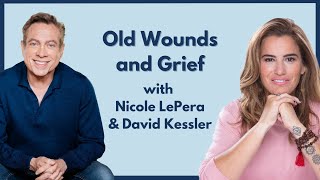
David Kessler, a grief expert who lost his son, defines grief as "a change we did not want" and explains how childhood losses shape us. He describes meaning-making, "installing the good" by savoring positive moments, and how shame and disloyalty beliefs block healing.
Chapters
David, thank you for joining me here.
I am so excited to be with you. I just want you to know you are just one. You know when people say to me, who's influenced you, who's an amazing teacher, it's you. I just want you to know you are such a gift to the world and your self healers community is just so beautiful. You know when people tell me, oh, I'm in your community and hers, or I read your books and hers. Yes. I'm like I in great company. So thank you for being here, doing this with me.
Oh gosh, it's such an honor. Like I said, your work, just generally speaking, has been impactful, not only on my own grief journey, but just generally speaking. I just love who you are. I love how you embody so much of your own journey that you share, as I imagine you might do so here today. I think those of us who gift the world with our own healing really gives all of us out there, I think those moments to feel a little less alone. Especially as I think we dive into this topic of grief, which can be a very solitary experience. So just thank you, thank you for joining me in the self healers community. If we have any self healers members. If you haven't yet checked out David's workshop, we have a beautiful gift in there waiting for you. But I think a great place actually to start imagining that there might be some people on this live who haven't heard of you, haven't heard of your work. And because so much of your work is personal, if you could just share a little bit about kind of what brought you especially, especially for those of us who are maybe hearing grief. Grief. How can I. Why would one want to work with grief and become an expert on it or around it? Can you tell us a little bit about the journey that brought you to do the work that you're doing here today?
Sure. As you can imagine, no one in the third grade says, oh, I want to be grief expert someday. I grew up in a home where there was neglect. I was sexual abused, sexually abused. I had a father who was enraged and in his addiction. I had a mother who would probably now be diagnosed as bipolar. And I actually still hold them with love, despite the fact they were really wounded people. And I learned early on there's a lot of different types of grief. The loss of our childhood, our safety, so many things. And then When I was 13, my mother was transferred to a large hospital. And when that was happening, we were at a hotel across the street. We heard people yelling Fire rushed out. And I'm telling you, there was flames coming out of the 18th floor of the hotel. And then when they started to extend the ladder, shooting began. It was one of the first mass shootings in the U.S. so, oh, my gosh, I'd had this childhood with so much and then the trauma of seeing people killed and all of that. And I'll tell you, and then my mother dying. We couldn't go upstairs to be with her. I came away feeling so damaged. And I thought damaged was going to be my life. Damaged and broken. And I went to community college and I took this class on death and dying. And I heard about this woman, Elizabeth Kubler Ross, that gave it a language. And I always hear her whispering in my ear right now, remind them the stages aren't linear. There's no one right way to do grief. I always put that out there for everyone. And I will tell you, after decades of doing this work as a grief expert, eight years ago, my younger son died unexpectedly, and I had to really go back to the epicenter of pain and do so much work to find meaning. And that's where this book came from, because I didn't want to just accept his loss. There had to be more. And that was finding meaning for me. And I always tell people about meaning because people go when they hear it, there's no meaning in a death, there's no meaning in a divorce. There's no meaning in abuse. And I go, you're absolutely right. Meaning is in us. It's what we do after the events.
I have chills hearing you say meaning before we get to meaning, because I really want to expand for those of you who are maybe on this event and can't, or in the traditional sense of grief and loss, you know, it might not be hitting. I love the way you define and talk about and you kind of intro'd a little bit of kind of the different types of grief and of loss. But you have a very beautiful definition. So to make sure that this is speaking, speaking to, I believe, the many of us in the collective who are grieving the loss of something, can you offer us kind of how you view loss and grief just as a concept, as a process in and of itself?
Grief is a change we did not want.
I love that.
Grief, yes. Is a change we did not want. And here's the other thing. Grief is the death of something. A breakup is the death of that relationship in that romantic form. A divorce is the death of that.
Marriage.
Death of a pet. You know, death is a death of a job is job loss with that paycheck and people. And I'll tell you, the other death that doesn't get talked about enough is the death. Death of ourselves in our childhood. And it is the one death that we can come back from. The other physical ones are permanent. But how many of us watched ourselves die in childhood.
And we've had to revive ourselves. I know, I know. Like, I get sad when I think about that. You know, like, how many of us lost ourselves in our childhood?
Yeah. How many of us. I can't even extend that further, wondering how many on here still feel lost and then feel even shameful as we continue to age biologically, as we look around and imagine the world around us. Right. Has that together, knows who they are and how many of us are somewhere down the line and still. Right. Living in this sense of maybe acute and active loss.
I want to tell you one of the things that goes so wrong. Sorry, I didn't mean.
No, please, go ahead. Yes.
One of the things that is so helpful, and I think we stumble on, is without thinking, we compare grief. Oh, but I shouldn't feel that way. There's worse things in the world, or their loved one died, or he has a child that died or something else happened. And here's the thing, comparing is in our mind. And we don't have a broken mind. We have a broken heart. And people always ask me, which is the worst grief? Is it the death of a child? A murder, Sexual, like, which is the worst? And my answer is always yours, yours. Whatever you've been through, abuse, loss, neglect, it's yours. Whatever anyone else has, you can't grieve them. You can only do your own grief work.
You speak. I'm happy you're kind of bringing the topic here because you speak about, I think, what can be a tendency that a lot of us have. But I think, especially when we're grieving, when we think of comparing. Right. Of dichotomous. I'll use the word black and white. All or nothing should.
Right.
I think these might be resonating with a lot of listeners. So you talk a lot about, kind of, as I think often about, like, what are the patterned ways that we're thinking. Right. That can be causing or exacerbating our suffering. So I'm really happy that you're kind of bringing this in because again, I think grief is definitely one of those areas where whether we're comparing to other people in terms of the severity of our grief, another ex or another kind of space, you speak of is where we put a timeline or an expectation on our grief for our own purposes. Like we want to see an end. We fear it's never going to end. So can you say a little bit about kind of, I guess the. You call, you use a language and it so much resonates with me, who I'm always thinking about empowering. And you say, you kind of speak of how to begin. If you are noticing for listeners this kind of should all or nothing type of thinking. You speak about how to use your power to move toward healing.
Yeah, it's interesting, you know, when people say, how long will I grieve? Like, if they say, how long will I grieve a death, I often say, how long is a person going to be dead? They're going to be dead a long time. You're probably going to grieve for a long time. It doesn't mean you'll always grieve with pain. Hopefully you can grieve with more love than pain. But so many of the other losses, look, I always feel you bring out the vulnerability in me. I'm really further along in life and I gotta tell you, my neglect, my childhood wounds, those early losses are still with me. I'm like, sometimes I go, are you kidding? Like, the sexual abuse, it's still there. Are you kidding me? But what I have learned and worked through is taking those traumatic wounds and helping them become my cherished wounds. And, you know, some of those voices and wounds haven't gone away. But I have learned and with people like you, and so many work around the world, how to turn the volume. Volume down. How to turn that volume down, how to not respond from it and to really pay attention to my thinking and the stories. And I'll tell you one of the things I. So, you know, when I turned in the first edit of this workbook, they said there's a lot not about grief. And I'm like, like what? Well, the narration and the stories we tell ourselves. And I'm like, are you kidding? That's. We have to have that. We have to, like, pay attention to the stories. I'm never going to be happy again. I can't heal. You know, I just, you know, that's where I hear Louise. She used to always say things when people go, I can't heal. She'd go, that's an affirmation. And I go, oh, that's an affirmation. Crap. I didn't want that as an affirmation. I got to choose again.
And I think I couldn't agree More, let me word it that way, that that is where empowerment happens. Right. When we really begin to wit and tune in to the narration to quite literally these repeated things that some of us might even not be aware that we are telling ourselves throughout the day. Right. Becoming aware of that then gives us the opportunity to begin to turn that.
Volume down and to find ourselves in our power again. You know.
It is brutal that so many people have been victimized in so many different ways. And.
We can find our story again. We can find our power. I hope to be evidence that, like, of all the things I have gone through, that I can still find joy and happiness in the world. It doesn't mean I'm forgetting my son. It doesn't mean I'm ever forgetting what happened to me and. And the things that I have gone through. But I'll tell you one more thing, and I'm sorry. I'm just so excited about the Workbook. Here's how it looks, by the way.
Yes, thank you.
One's on its way to you and Nicole. I'm showing. I don't know if this has happened to you, but there's now a I that copies books and there's like copycat work.
Yes.
This is the one to buy, only this one, you can get it@griefbook.com and there's a free class there. But I'm telling you, it's so important that we find our power again. And one of the things I put in the book, many people in the Workbook is many people have heard about the Hero's Journey. Joseph Campbell. Campbell did. And I will tell you, we know it from Star wars, the Hunger Games, a million different things. I take people on their own hero's Journey. I want people to see what you've been through and how.
How heroic you are for surviving and being here.
And it can become. Even going back to something that you said earlier that I can. I want to continue to emphasize here for listeners. Right. It can become a part of our journey. Right. Not all. Not all compassing. We can still move forward. And I'm happy you spoke to the reality of someone living with a lot of different types of grief yourself. That is because one of the questions that I get most frequently, I think, whether whatever I'm talking about, the past hurtful trauma that we might be reliving in the present is always some version of, well, can I actually heal? Is this always going to be with me? Like, what is the goal here? Because I think we all have that little voice, not only of worry and that it's always going to be here. But shame. Right. That. Well, what. What does it mean if there is an aspect of me that is always challenged in this area? Sad. If we're talking about grief activated. If one of my old traumas is coming up, does that mean I'm not healed or right? I haven't done the work. And so I really appreciate you speaking to the dynamic nature of how we can bring our past with us and be integrated because it is part of our journey and our story, though it doesn't have to be the past that we're repeating, reliving, stuck in and just going on this idea of empowerment. Because I want to speak to the beautiful title of not only this workbook and I want to ask you a little bit about workbook type questions. Questions. But first.
Before we go further, just.
Two things you said there. Shame. I'm glad you mentioned it. We have to talk about it. I mean, shame needs secrecy. We got to talk about it. I made sure I put that in the workbook. And I want to tell you my definition of healing. Healing to me means the event no longer controls me. I remember, remember my abandonment. I sometimes feel my abandonment, but I don't make decisions from it. I don't have relationships from it anymore. Sometimes I do, but I try really hard to not go from that place. So sorry, continue on. I just wanted to get.
No, I appreciate you because I lose my train. No, no, thank you. Interrupt me. This is about you. What I was going to ask you about is to speak to the title Finding Meaning. Find. Right. What can you say a little more about and how that concept or the journey or the process, like what finding meaning means to you, not to repeat the word there, but how that even applies because we're talking about empowerment here. It's the title of both your book and now this companion workbook. So again, for people who haven't or have no idea even what meaning is, how maybe are even questioning how can meaning be made of something that is so terrible and difficult? I think that's a really great opportunity to, you know, unpack what, what finding meaning is and how something that is so filled with pain can actually, I mean, listeners are here talking about empowerment, this and that, and integrate it. So I think this is one of the hugest gifts you give us is this idea of what finding meaning even is. And of course, then the process. But we don't have to go into all of it, but just generally speaking, to talk about finding meaning.
And I, I just want to say, I Said I saw someone said it. That you do not have to buy the original book. You can go straight to the companion workbook. And by the way, we've all seen workbooks that are like a quote with pages of lines. This is a real book. You can start with this book. But you know meaning. When we talk about meaning, it's. I will tell you, one of the things I think about is I have trained for decades, therapists. That's been my biggest group that I've trained with over the years in all kinds of losses. And we would have these big, huge meetings with hundreds of people in a hotel in the meeting room. And next would be the realtors, and over there would be the nurses and down the hall, the Rotary Club. I'm sure you've done those talks. And at the end of the day, the staff would say to me, what were you teaching? And I'd say, why do you ask? And they would say, because your group was laughing the most. And I would say, grief, grief. And they would not understand it. You know, there's grief from all the abuse and everything else that's going on. I will tell you these horrific events that all of us would choose not to have, but we must accept the reality that they did happen, unfortunately, is what they can do to us to expand our bandwidth for pain and for joy. And I think meaning is part of that. And meaning is. We often think when people hear meaning, they'll go, what? I have to start a charity? And I'll go, no, meaning is in the moments to name the meaningful moments. Like right now, you and me talking to thousands of people who watch this now within the replay. This is a meaningful moment to be with you, to be with everyone who's watching. I want to name this. I don't want this moment to go by. And you and I probably sit here as a result of a lot of our abuse, but more of a result of our hard work and our dedication to self, which was not easy. And so I think it's so important. And meaning is how we live after these events, how we allow them to change ourselves, not just in the negative way, but how we bring insight and compassion to ourselves and to the world. I gotta tell you.
The word grief means to be robbed. And I wish I could have known who I would be if all those horrible things didn't happen. I was robbed of that in my childhood. But there's also a part of me. I don't often say this, but I could see some ways I could have ended up being a real Jerk. And I have to tell you, these horrific things that happened made me kinder, had made me gentle, have made me more loving. So it's been important to recognize the meaning of those things.
Hearing you talk about moments and, you know, being present now, we're kind of shifting from the grief, the suffering, and we're kind of expanding the conversation to allow for the other end of that spectrum, the joy. I could even say the love.
You.
You talk about a concept that I just love so much, and you call it installing the good. And this is kind of making me think about that. That practice of. Right. Being in a moment, seeing, shifting focus. So can you say a little bit about kind of what, Installing the good?
Yeah.
Especially again, magic that's not intuitive, as.
You know from Rick Hansen and all. Many, many people about really taking in these moments. Like, can I just recognize, oh, my gosh, I'm enjoying my coffee this morning. I'm. The small moments, you know, look, we all know our minds are like Teflon for the good, nothing good sticks to them. And Velcro for the bad. I can hang on, you know, oh, my gosh. Like, one person signs off and I'm like, what happened? What I do? All that craziness, that's our minds. And if we can shift that by noticing the good, installing the good, taking it in, you know, really sitting with it, like, what a good moment, Nicole, what a kind person you are to do this, what a gracious person you are to take that in and just be with this. That's just installation, calling the good.
Kind of playing the tape forward for possible listeners who are loving this conceptually and perhaps coming into contact with a topic that you touch on that I would appreciate you speaking to here because I think it could be really powerful and is ever present, I think for a lot of us, what might prevent some listeners, right, from applying this idea. You talk about disloyalty. So can you say a little bit about kind of how and what that looks like and kind of how that can not only keep us stuck, but of course, then your kind of process of working with. If listeners are having those moments.
Some of us are very aware of our disloyalty beliefs. Sometimes we're not in the workbook. I put a checklist and people are like, wow, oh, I didn't think that was being disloyal. And you know, for me and so many other people, we became so other oriented in our childhood, as you well know. And many of us know. And with that, we're all about. It's not about me. It's not about my happiness. And when bad things happen, it reinforces that. And we have to work really hard to notice those beliefs and to change them. I mean, I'll give you a really strange, unique example. After my son died, I canceled everything, canceled all my lectures. Then when I got back on the road, they resent out the brochures that it's been rescheduled. And I got hate emails all the way to hate emails of people going, you shouldn't be smiling on the brochure. Your son died.
And I had to really ponder that and go, I knew who my son was. My son loved my work. My son loved my smile. I'm not going to buy into a belief that for me to heal, for me to smile again, it was an old picture, so it really even wasn't. But that idea. And I'll tell you, that's how it happened in my world. But we're bombarded with, who are you to be happy? Who are you to be healed? And, you know, who are you not to be? You deserve a life. You know, we're so used to going, yeah, why not me? Well, why you? Why you? Because you deserve life and healing. And just like you said, our abuse, all the things, the deaths, all the losses happen to us, but they are not us.
This had me thinking when you were even talking about honoring the good cup of coffee, right? How much, you know, wondering listeners on here can how many times we override, right. Even the joy. Because our mind might go right to the person who isn't physically present to even have that same cup of coffee, right? So these are, I think, all these moments of this concept of right. It is disloyal to some extent to maybe even as generally speaking as it can be to live when someone else. Right. Is no longer physically present. And I think again, there's so many ways this thinking traps us with an expectation. It's almost like what we were talking about earlier, all of these narrations and stories and ideas. And I will be the first to, as I'm sure you wholeheartedly admit grief in general. Right. Like you were joking in the beginning. In at least the Western culture is something that's. So we're ill equipped to put it very. In one very, you know, general way, in my opinion, to deal with grief. And I can make a statement. My belief is why are we ill equipped to deal with grief? Because in my opinion, at least a lot of us adults are ill equipped to deal with our emotions in general, let alone such a Destabilizing emotion, that loss, especially again when it's these early losses, needs, things that didn't happen, that should have happened, abuses or violations, loss of actual people, caregivers, even if our not in childhood, right now, we're in adulthood. So I think generally speaking, humanity is quite globally ill equipped to deal with the big overwhelmingness of these emotions, especially around grief in particular.
And I believe those of us who grieve well, live well. And I'll tell you, I think we're a generation that has the luxury and the burden of having feelings on feelings. Oh, I'm sad, but I don't have a right to be sad. So I'm going to throw that feeling behind me. Half felt. I'm angry, but anger is inappropriate. I put it behind me and we're dragging all these half felt feelings. And you know, people say to me, David, like, what if I do this workbook and I start crying and I never stop? And I'll say, I've worked with thousands of people, everyone stop crying. We may start again, but we all stop crying eventually. Don't let the fear of your feelings stop your feelings.
What this is reminding me of is the concept of you talk about both a love burst and a grief burst. And I just love how you like conceptualize and really explain the burst like, or wave like, right, reality. And I do agree with you. I think oftentimes we avoid our feelings because we do. We fear that we'll be all consumed. Why do we fear it? Chances are because at one time in one place, we were all consumed. We were left alone with overwhelming feelings without the support that we wanted and needed. So I always want to validate those beliefs because they're not just out of nowhere. They're often based in the reality, the memory in our mind and body of being overwhelmed at one time. So even if we've grown, we've matured, even if we objectively have support around us, we quite literally become the person, right? Who doesn't, who is isolated, who is overwhelmed, who is under resourced. And then. So it's so natural. Why would we dip our toe even in, if that's the very real living memory? And you think of this idea, people.
Go, oh, do you grow up to touch the pain? And I'm like, no, you don't grow up to touch the pain. The stove fell on you like, no. And just like you said, I'm so glad you brought that up. It's like an armor we put on and we didn't learn that there might come a Time that the armor is no longer needed. We don't need that mechanism.
And.
And yet, thank goodness it protected us. And I think about when those old wounds come up, it's so easy for me to have that story. Here it is again. Why am I so screwed up? Instead of going, oh, this is like little me knocking at the door, saying, I got one more thing to heal and for me to go, of course, come in. I want to hear that.
You mentioned this concept earlier and I just think it's important as we're kind of getting to the end of this conversation of acceptance. And I know you speak a lot about kind of what acceptance means to you, what role it plays in this whole process of being with, navigating, processing ultimately our grief. And I'm sure many, you know, even not like, acceptance is a word I think that a lot of us throw around. And so when you say acceptance and ultimately what is the role that you see it plays in terms of being with integrating our loss ultimately.
I hate acceptance.
Hate it. I don't like it. I think people think to find acceptance, it means you must like it. To me, it just means you acknowledge the reality of it.
It's there.
And I find that freedom is found in reality. And so as much, and I think also we think there's one big acceptance. Oh, my gosh, I have to go through 25 acceptances each and every day. It's really hard to live in the reality of this world. But that's where my growth is, to not just go through this, but to grow through this, to come out the other side and to find a life. And it's, you know, so many times we go, I want the old me back. I get it. I want the old me back to not an option. There is a new me that I'm daily creating that I'm trying to bring forward. I got a great.
Worksheet on acceptance and I'll make sure we put it in the comments. That's really interesting for people to do. And believe me, I put it in the book a lot. As you can imagine, acceptance is in there. I talk about, you're going to make a different kind of acceptance speech than the one you thought.
Well, share with me then. This is the companion to your very beautiful Finding Meaning book. Why a workbook? What made you kind of think about translating this into this very practical, incredible resource that you are now offering?
I don't know if you you got this, but I'll tell you, when I talked about a workbook, someone says, oh, no, you you can't do that. It is serious authors don't do workbooks. And I'm like, what am I committed to being a serious author or I'm committed to helping people? Like, that's just ego talk. So I wanted to do this workbook because people want to know, like I need the real practical things. Writing down things as a way to really witness my own pain, to be there for myself. And I tell people wherever it says death, that can be the death of yourself by the narcissist, that you can find yourself again. It can be the breakup. It doesn't have to be a physical death. And I wanted these exercises that would be like we're sitting at the kitchen table and we're doing these together. And I'm walking you through this at your pace. I so wanted to do that and what I also am doing because I know it's hard to start anything. We are going for anyone who pre orders and you know how important pre orders are when you got a new book coming out. So I'm being vulnerable. If you ever think you're going to buy this book, please consider buying it in the next week or so, if not today. And I'm going to do a three week companion course and we're going to do the workbook together because I really want people to get started and excavate the pain I want them to see. And here's the thing, so many times people will say I'm, I'm, you know, I'm very curt, I'm very this, I'm very mean. I'll go, those are voices of the other. That's not who you are. I want people to find their authentic, kind self that is in all of us.
That is one of the most inspirational and aligned aspects of our work is, you know, that there are so many parts of ourselves, some of us become so identified with our story, what happened, what didn't happen, that we feel powerless to even the opportunity to be create a different outcome. And I love how even again it's something that can feel like it disintegrates our entire identity, our entire life. Grief. How you are able to instill, you know, that empowering message of hope throughout it. Because again, you speak of being stuck and nowhere, I think, as I imagine many listeners are having experience, you know, in the immense pain of suffering a loss can be what for some of us keeps us stuck for the entirety of our life. So again, I just want to continue to commend your ability to especially around such a heavy topic that can bring so much suffering. And again, I want to continue to honor the universality of the topic in and of itself. I mean, there are, I can't imagine one, one listener on here, now that you've given us this beautiful expanded definition, hasn't experienced some version of loss.
So thank you, I can say then, for following your mission and your purpose and for putting out a workbook, not, you know, kind of not caring about the type of perception that that offers. Because I can say, having had the opportunity to take a look at the PDF version of it myself, I cannot wait till I get the actual version of it. My, it is so full of like you're saying, I've seen the workbooks that you're mentioning. I've had my books, workbooks translated into like these workbooks. And yours is just so full of information.
Practical resources and it's so approachable. Like I went through quite literally every page and there was just a piece of, you know, me that I could see so clearly as you guided us through that. So thank you for staying true to your mission, embodying the work. For those of you who don't know authors, when we ask for pre orders, the amount of pre orders that come in, really all of those numbers, it really is a numbers game, help make sure that when the book comes out that they are stocked on shelves. So I want to thank all of you out there who are pre ordering David's book and let you to officially, objectively know what that translation is because quite literally you are going to be be the ones helping that get into hands of other individuals. Because the practicality of it is we need these books on shelves so that people, when they Google keywords and they want the resource on grief or they, as I often do, walk and spend many hours in a bookstore. Right. That these kind of books are here and at the ready. So for anyone who didn't know, absolutely. I would love for you to take David up on that offer. We are 100% going to make sure that this live is saved on the grid, that all of your information, including this, where you can get the workbook. Anything else in terms of, of course, your handle on Instagram is here. You have grief.com can you tell us a little bit about everything else that you do in case someone else wants to continue to follow along or engage with your work in any other way?
Sure. Grief.com is the website with so many free resources on it. Just look under resources. Lots of great videos. I have a community for people who have had the death of a Loved one called Tender Hearts. So many people are in your community and in my community, so two wonderful communities. We also have a grief certificate program for any of you that are coaches, therapists, helpers and want to go through that. You know, the shocking thing is, you know, you can become a therapist without one mandatory class on grief. Thank goodness.
I think I have had one. Yeah.
And so it's a wonderful place for anyone who's a coach, a helper to get certified and really feel confident in helping people. And griefbook.com is what it looks like. Look for the full teal book and not the pony1. @griefbook.com you can find the Amazon link independent bookstore, Barnes and Noble. Please go to your local bookstore, ask them to buy it to order for you. Do it now. I'm so grateful for that and thank you so much for. You know, when one of us heals, it just helps us all so much.
I couldn't agree more. I know my community's heard me say this a million times over. I am so inspired to continue to do this work because I truly understand the power of individuals. Right. Joining together in beautiful communities like your own, of quite healing our generational cycles, our own grief, our own loss. Because quite literally we do change. Then the way we show up and the ripple impact of that, in my opinion at least so humble I will share, is life changing for those outside of you? And never in my opinion is that more necessary. Now, not only around this topic that is so universal, that is grief and loss though just even contextually. I mean, so many of you, I imagine even sitting in your living rooms right now, right, are awake to the reality of grief and loss that might even be on your street corners. So no time, no space, is it ever as important. Again, I'm so honored to be connected with you. Your incredible work, it has helped me individually. I am so grateful now to share you with this greater community again. We'll make sure that this is saved and that you can find David and all of his work if you're viewing this on the replay. And I will continue to send you so much love to look forward to our opportunity to connect next and to send all of you who have joined this live, so much love to wherever you're tuning in from. Thank you so much and until next time, have a beautiful day, David, I'm gonna be cheering you on.
Thank you. Thank you everyone.
Thank you everyone who is supporting David. Like I said, the gift you're giving is gonna go well beyond yourself in terms of helping you through your own journey is gonna help these. This book get into the hands of so many other people. So thank you so much. Take care, everyone.










