Vanessa Williams discusses job loss with grief expert, David Kessler
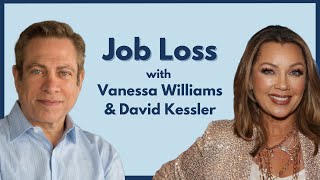
This content was created by David Kessler. This content was uploaded by David Kessler. This is a YouTube video titled "Vanessa Williams discusses job loss with grief expert, David Kessler". It features a conversation between Vanessa Williams and David Kessler, recorded on November 26, 2021. They discuss various topics including grief, personal losses, the impact of COVID-19 on their lives and careers, and the importance of resilience and finding meaning in difficult times. Vanessa shares personal stories about her father's passing and her experiences during the pandemic, while David provides insights on coping with grief.
Chapters
Hi, everyone. David Kessler here. Hi, Vanessa, Good to see you.
Hey, David.
Thank you for being here. I'm going to give folks a few minutes to find their way on.
So I joke about. It's a little like Romper Room, that in our disconnection, I say hello to people so they can know that they are being seen, at least by someone, even virtually.
Yeah.
So let's see. Folks are coming on. Hi, Carla, good to see you. Michael Green. Wonderful to see you. Robin from New York is watching. See, this is the Romper Room part. I have my little phone here.
Hey, New York Robin.
Rachel Hanfling's here from New York. Hey, Rachel. Diane is here from Virginia. Welcome.
If you're brand new, you can say hello. You don't have to. Some of us sit in the front row, some of us sit in back, so whatever you want. Hi, Betty. Good to see you. Betty's from Ohio. Jennifer from Princeton, New Jersey. Betsy, Tallahassee. Hi, Carol, Vivian from New York. Wonderful to see everyone. For those of you that may have not been here, I'm David Kessler and I set up this group after COVID 19. So many people said they're loved ones had died and they weren't able to get support at their local grief group, at their church, wherever they may have gone, their local hospital.
Also. Then people realized they couldn't say goodbye to their loved ones who were dying. And then after so many people died, there weren't funerals. So we didn't want you to just be disconnected. So this is far from the kind of connection you deserve and should have, but it's better than nothing. And amazing people like Vanessa are showing up because we want you to know in this pandemic, as the world's optimistic and moving on, you are not forgotten and your loved ones who have died are not being forgotten. So that's why we're here. Lots of people are joining us from all over the world. Welcome, welcome. Let's see. Australia is coming on. They're waking up. Or sometime in their day. Well, I'm so glad you're all here. One of the things that's a tradition, a ritual that we do is we're all here because someone we love has died. So I like if we can just take a moment to.
Honor them, send them love. If you would just join me in dedicating a moment to them. Thank you.
Thank you so much for doing that with me. I.
During the day when I do these, I send love to my younger son who died in the evening, I send love to My guest folks who have died. So I was sending some people in your world. Love, Vanessa. So some of the people who helped.
Get you here, I appreciate it.
You know, we're at a time where there's so many losses going on. There's actual death, as people know, that's why we're here. But there's also so many other losses between things. Getting canceled. Weddings, graduation. You and I were joking. We're out of work. Like a lot of people are out of work. You had a show that was just beginning in London that got canceled like everything else.
I was just about to debut, my West End debut and an amazing musical called City of Angels, which had an extraordinary cast. And we started previews March 5th and I had been in London since beginning of January and it was a dream of mine to be on the West End. And we had a week and a half of previews and then we showed up Monday, March 16, to work and that's when one of our castmates was feeling ill and did not show up. And then Boris Johnson got on the radio, the media that night and closed down the West End. And I thought, okay, it's only going to be a couple of weeks, you know, this 14 day quarantine and then we'll get back. And ended up having to come home that the 20th, that Friday and you know, haven't been back since and obviously miss not only getting a chance to open the show, which we were supposed to do the next day, but missing the camaraderie of all of the cast and crew production that worked so hard that we were gearing up to show everyone what we did. Luckily, some people in the previews who saw us got a chance to see it, but now we have no idea when it's safe to come back. If we come back, how big are the houses are going to be? Do we have the theater for the extended period of time and, and, and working? I mean, there's no paychecks coming in. I was just talking to a dear friend who was an opera singer, a very famous opera singer, and she said everything has been closed and there's nothing going on until the beginning of the year. I have nothing to do.
It is so. It's, it's so many losses on top of losses. And when it comes to other losses, you've had your share too.
Oh yeah.
Would you share some of that with us?
Well, not only, you know, recently in terms of COVID just recently, thank God, my musical director ended up getting sick, was on a respirator and recovered. Thank God. So that was the most. The closest that I had. Another friend of my mother's. Of my friend's mother passed away of COVID And then another friend had to bury their. Her father in law. And only 10 people could be in the mausoleum. Separated by six feet. They weren't allowed to touch the body. And it's a completely different experience than what we normally have. My biggest grief in my life that I had to deal with was my father passing at age 70, which was relatively young. And it was a shock to the family because he was in great shape and he kind of had some issues with. We don't really know. We think it was some kind of pancreatic gallstone issue, but ended up collapsing out of the country. By the time we got him back, he passed away in three days. But it was devastating because it was such a shock. But out of all the shock and the. The sadness of it, what gave me the most satisfaction was that so many people were touched by his life. And the more and more people came up to me and said, your father. I used to love the long walks with your dad. Oh, the conversations that I had with your dad. Your dad taught me this. He is the first saxophone player that, you know, taught me how to play. And when I realized what an impact he had made, my heart grew wider and wider. And I said, well, he was my dad. You think he's great, but I got a chance because he was my dad, and. And I got my whole lifetime with him. So that sense of pride really helped with helping the pain.
Will you tell us a little bit about him and his work?
My dad grew up in Long Island, New York, so all, you know, New Yorkers, Oyster Bay. And, you know, he was born in 1935, loved to farm, kind of grew up in a. Everything was kind of rural back then, with an outhouse, and he picked beans. And he would get, you know, as a child, love. Loved to garden and grow vegetables. Went to parochial school, but wanted to learn an instrument. And he knew that Oyster Bay High School had an instrument program, so he transferred to Oyster Bay High, learned how to play sax and did marching band and everything. And when he graduated, he was going to be a farmer.
And.
And Mr. Knobloch, his band teacher, said, you know, Milt, you're really good as a teacher. You should think about being a music educator. So he went to Fredonia College in upstate New York, and he went for music education and didn't have a lot of money, so he was. He picked grapes for. Was it Welch's Was it Welch's grapes? You know, he did every job on campus. He was a fry cook when he could be. He was a janitor when he could be, all to pay his tuition. And his senior year, that's when my mom came in as a freshman. And she was a vocal major at Fredonia. And that's how they met. And they were 2. They got married when she was 20. He was 24, moved to Westchester county, and both of them were in music education. So he taught for over 45 years and loved it. Loved it. And he had just retired.
A few months before he passed away, but teaching was his absolute dream. And not only teaching, but he was kind of a jack of all trades. He could fix a car, do plumbing, wiring. He had saws and all kinds of tools in the garage, repaint a car, built a deck for my mom, built a pool for my mom. She wanted a solarium put in a solarium. I mean, he was always doing everything, not only to please his mom, but because he could. So he was the one that Always a wealth of knowledge. So if someone couldn't figure it out, they'd call Milt and he'd figure it out and come help him. So just a wonderful, wonderful man and just getting. Was in great shape. That's why it was shocking when he passed, because.
Was he on vacation?
He was on vacation with my mom. One of their friends was having a birthday party in the Bahamas, and the first night they got there and he had some Chinese food, didn't feel really well, and then ended up collapsing. And my mom took him. They went to the local hospital, and he got worse and worse. And thank God I was doing something in Miami with my brother happened to. I was doing a concert. My brother was there in attendance. We flew to the Bahamas the next day, and he was in serious condition. And we had to make the hard decision to medevac him back to New York or keep him there. And we decided to. We much rather handle things back in New York. And we medevacked him to New York and all flew home, and he passed away two days later.
One of the things I always say to people is so, first of all, you know, heartbreaking for that loss. There's something about our father. You know.
There'S no one like our father, no one like our mother in the world.
I often think, you know, I hear people say when someone dies, they'll say, a part of me died with them. And I always say, and a part of them lives on in you. What part of your dad lives on in you?
Oh, well, you know, some people believe that life is over when a body dies, but I feel his spirit all the time. And I think he, we communicate through music because he was a music teacher and so I affiliate so many songs of my life with him. Bill Withers just passed away and he used to play Bill Withers all the time back when we had an Econo line van and we had an eight track player and he put in the Temptations or put in Bill Withers or the Spinners or something. So whenever I hear a song like the Beatles, see, he introduced me to the Beatles in the play. So music is my connection. So for instance one. And you know, these are those strange coincidences if you call right. Remember being at the Obama inauguration and I was not. I was outside with everybody because I wanted to be there. And they had cut off all the WI fi. You could not get any WI fi service at all due to the security. So I'm standing there freezing and I just closed, closed my eyes and I said, oh, dad, you would have been so proud. And my phone started to buzz like I got a message and I was like, I hadn't got any service in an hour and I looked down and there was nobody there. But I knew just because I felt that he was saying, I hear you and I'm with you and I'm witnessing it with you.
So it's seeing it through your eyes.
Yeah, yeah. So, you know, I can, I can feel he's. And I also talk to him when I need to because I feel that he's still part of my life. And I feel that I, I feel most like him. When I'm teaching, whether it's on stage and I have to teach a new person, a background apart, whether I'm describing something to my children, I'll think, how did my dad do it? Or I'll just automatically move into what his ideology was. And that helps me, it helps me continue his wonderful art of teaching. But I know that that's a little part of me that I got through him.
One of the things I noticed when I posted on social media about you joining us, you get so much love. There is something about you. I think it's. There is something. We love your strength. We love your resilience. We love, we know so much of what you've been through in your life. Do you have any sense with all the different challenges you've had in your life, where does that strength and resilience come from?
Well, I think the survival mode, which I'm known For. And I think that that sense of resilience is recognized and honored, comes from two parents that loved me and were there when I needed them, particularly. I mean, I became famous at 20 years old. So I was not even starting my junior year in college. All of a sudden, I was Miss America. And everything I said was criticized, and who I was was a target for assassination. And at 20 years old, it was completely overwhelming. But they were both very practical and very supportive and said, well, this is your path. You've got to continue. And then when I had a huge scandal with pictures coming out without permission and had to resign the crown, like, a month before I was finished, and it was a huge, humiliating scandal, my parents said, we love you. And that's all I needed to get through. And I knew that they would always be there for me, so I think it's their support. But also there is that fire in your belly that I think gets handed down generation after generation, especially as a black woman, because there's lots of times where all you have is yourself to rely on and get through. And I think that's definitely something. That's that inner fire that comes ancestrally for me.
And one of the things that I thought about is all you had to deal with at a young age with, you know, I don't think any of us, we look at, oh, you were becoming Miss American. We didn't think about death threats and all that, but with everything you had to deal with at a young age, your parents still kept a lot of it from you to protect you, you know, because they knew it would have been too much.
Yeah, that was. You know, I wrote a book with my mother called you have no idea. Because I had no idea what they were protecting me from, because I had a job to do. And the job that I did not only was the normal Miss America route, but I had 50% more because it was a whole new black community that I was going to Urban league functions and. And black, Historically black college functions. So my. My. My. My agenda was nonstop every day. So I don't know whether I could have coped knowing that there was so many threats on my life at the time because of who I was and being black.
And how did you not let all that just make you fold up and go, I'm going to just. It's done. It's done. I mean, you came back like, really, the concept of a phoenix could be based on you.
You know.
When the dust settles, I knew that I'd get a chance to see who I am and People get for people to see who I was. And I just find that in life that, you know, you eventually get an opportunity to show who you really are. And I knew that no scandal is going to take my talent away. It's not going to take my dreams away. My dreams might be sidetracked over and over and over again, which they were. It took 10 years to get to Broadway, as opposed to the following year, which would have happened. And of course, it hurt me. And especially being in my 20s, when you take everything so personally and think, oh, my God, I'm gonna. It also makes you very determined, but it also is very personal. The older you get, you realize opportunities will come. And there are people that are helpful people. So look out and make choices that speak to who you really are. And that's kind of relying on your inner gut and having faith that helpful people will come to help you out. Whether it's something that a role that you didn't even think you'd even be offered, or an opportunity to travel somewhere and you meet somebody who changes your life, you just never know where those helpful people are in your life. So don't close everyone off. Be open to accepting.
Right. And I'll tell you, one of the. One of the things I often have is don't give death any more power than it already has. Death can't take away your love. Death can't take away your relationship with your father. And it's interesting, when I was hearing you say that, I could actually substitute the word loss. You didn't give loss any more power than it already had. Just like you said, you didn't let it touch your talent. You didn't let it touch your voice. That's really remarkable. It's really remarkable. There's always.
Yeah, go ahead.
No, no, please.
Either. You know, I guess it's an. It's not a Pollyanna pie in the sky, optimistic point of view, but it's just having an opportunity to kind of be still and just kind of. You know, when. When you say, get a grip, it's just take a breath and. Because you can get so caught up in trying to be busy or not dealing with things and being in denial and never dealing with what you're really feeling. And the biggest part about even. Even my divorces are a death. And it's. You have to feel it and process it and fully grieve. You can cry as loud as you want. I find writing is really, really good because you don't even know what's going to come out. But just and you don't have to give it to anybody. You can burn it if you want to, but just getting it out physically, whatever you're feeling, that really helps. And it's just that process of purging and moving through the pain that will help you get to the other side. And it doesn't mean that you're forgetting who that person is. If you. If you go through it fully committing to the pain.
You could literally teach this with me. You could teach this with me because it is true. I mean, everything you say is sort of the premise of what I teach. That, you know, you. You don't move on. You don't get over it. You move forward with their love. You don't give it any more power than it has. You can't get stuck in it. You have to feel it. Once you feel it, there'll just be a new feeling after that. And the other thing I want to mention is when all this happened with the Pandemic, I was on tour for lecturing with my new book, Finding Meaning. And I've done so much research on how finding meaning is important. And one of the things I think about you that people may not know is in your family, you have had so many heart attacks and had so many people die from it, and instead of going, well, too bad, you took on heart disease, and you have been out there promoting prevention and helping people live a healthier life. And that's such an amazing example of finding meaning.
Absolutely. I think it also came out of fear because my father's mom died at 28 after having five kids and pregnant with her, six. Then her husband died at 53. And then my. My maternal grandmother died at 64. So it was the narrative growing up. Take care of your heart, take care of your heart, take care of your body. And so I think that was something that I just felt I had to do. And I'm so happy. And I'm. You know, that's one of.
The.
Heart health is one of the.
Ideas and causes that the whole family is particularly involved with because of the history. But just one more thing about grief in terms of when it happens suddenly or when it doesn't happen suddenly, you always think, oh, I wish I could have. If I had only done this, it would have happened. And you get caught in this cycle of, if only I could have saved their lives. And that spins you nowhere either. And I get it, and I understand it, and I've been there. If he hadn't gotten this, he had eaten that. If I'd listen to this. And so that's also a big part, which I know you talk about, of if I could have, would have shoulder. And then that doesn't help you get out of that circle instead of spinning you toward the light.
Absolutely. And I think so many times we think what preceded the death caused the death and death and all loss is so big and out of our control. Our mind tries to find little things to control. Oh, it was my call that did it. And one of the areas, we just talked about this last night. I had the head physician on from the American foundation for Suicide Prevention. And so many times when there is a death by suicide, people think the argument caused it. I should have checked on them. I could have done this. You've had to deal with that too. With the creator of Ugly Betty, Correct?
Yes. Silvio Orta, who created Ugly Betty. We started in 2006 and we had a beautiful four year run. We saw each other about three years ago. We did a reunion in Austin for South by Southwest. And he took his life in January in Miami with a shotgun, which was pretty brutal. So of course the first thing is, did I miss the sign? And then I look in my Facebook, oh, my God. I didn't, I didn't reply to him that night. Maybe that would have changed things if I'd only spoken to him. And it's. Everyone thought the same thing. And we all had our email chain and it was with heavy hearts. But we knew that he was struggling because he really hadn't had a hit since Ugly Betty was so huge. But he was a lovely guy and again, that was his journey. There's no amount of love that we could have done to make what he needed to go through better.
Right, Right. And I think our mind just wreaks havoc on us. And you know, as we say, all those things happen. We all, you know, every time I don't return a text, thank goodness someone doesn't die. If someone does die, you go, clearly they were reaching out for help. And they, you know, and yet they might have just been, you know, it's. But we all, we all deal that and we all have a tough time. There are amazing comments, if any. Can you. Will you take a few questions?
Sure.
So if anyone has questions. But lovely comments from people. They're like, this is so good. She's amazing.
So people just love how you have just persevered through the years.
Great advice. You're a special person. You got some fierceness there.
She loves you. So lots of people are talking about this.
Let's see.
Annette says yes. Guilt is horrendous. Anything you would say to help us with guilt?
Yeah, it's. It's a natural thing because we all feel like we could have done something or. Or contributed to the not knowing and not preventing it. But those, you know, death is out of our control. And that is either you. You. Yeah. You know, you can say there's another.
Being that they're moving on to or. Or it's an act of nature. So it's going to happen to all of us. And I know we fear it a bit because we don't know when it's going to happen, if it's going to be painful. Are we going to be surrounded by our loved ones, which is the dream. And when we don't get the dream, that's when we kind of have the bad feelings.
And certainly these days now, people who want to be with their loved ones can't be with their loved ones. And, you know, one of the things I tell people is you just have to. Have to assume that all the love you've given your loved ones over all these years is still with them. All right, someone wants to know, how are your children?
My children are all away from me. I have four, and they're all in their own private apartments. I've got two out in California and my older two girls are in New York. I miss them. We do a lot of zoom and facetiming. And my middle one just made a lasagna. So I was on the phone with her before I jumped on with you. She was asking, do I put the sauce first or the noodles? And then when do I put the fennel on this? So she had to do the mommy thing. But they're all lovely. And we could thank God for technology because we're all connected. And my mom lives next door, so I get a chance to see her every day. Thank God.
That's great. You know, one of the things that I've been talking about is I look back at pictures from three months ago of people at parties and get togethers, and we were all looking at our phone and nodded each other. What were we thinking.
Now we just got our phones right. What were we thinking?
That's.
Heidi wants to know what is your greatest source of expressing your emotions, maybe even with your grief at times. Acting, singing. And she loves your music.
Well, let's see. I get a. I mean, I'm lucky. I get a chance to kind of.
Express my emotions through acting and singing. But I would say my music consistently allows me to touch people. So, you know, When I sing, and I can, I usually hear people say, oh, you made me cry. You made me cry. Because I picture myself as an actress. When I'm singing a song, I feel figure out the. The moment before and sing as an actress, as opposed to doing vocal riffs and seeing how, you know, how fancy I can get with the melody. I like to sing, what the true meaning of the song is. So. And that's kind of how I touch people. So I definitely have to say music, me singing allows people to feel emotion, but me hearing, I mean, I can fall apart when. Especially, you know, when I hear a piece that my dad would play for me. And that's, you know, that's when I'm. I'm done.
I'll tell you. And you've been the backdrop of our lives in so many ways. I can remember today, literally is my goddaughter's birthday. She's 30 years old, and I can remember being in the theater.
Seeing and hearing Colors of the Wind with her. And then years later, I was at your concert here in Los Angeles, and you saying that, and, oh, my gosh, took me right back there to her. It's just, you know, it was a magical evening. Magical. If you're ever in concert, anyone go see her. She is magical.
Well, one of my favorite memories, speaking of death and music, I got a chance to work on a great show called Sondheim un Sondheim, back in 2010. And I worked with the legendary Barbara Cook, who was 83 at the time when we actually did the show. And she had taken a number of years off because she was dealing with her own alcoholism, which she was clear about, and came back to the stage. This is the first time she was back on Broadway. And not only do I remember the delight that she had when we would come off, I'd hold her. I hold, you know, hold her arm because she was. Had her knee was hurting, and I would just, like, kind of walk her off stage together, and she would look at me and say, oh, that was a good one. That was a good one. So I love seeing the light in her eyes when she's mid-80s and feeling the people and the music and the excitement. And then we got a call from her son two years ago saying that she was not well and it was the end and could become a visitor and pay our respects, you know, at that state. So Norm Lewis and I went to see her, and, you know, she was in. In her bedroom in a hospital bed, and she had the death rattle, so you can hear her being labored and, you know, she didn't have her wig on and no hair and makeup and it was startling, but she. And she was not.
I don't know if she's comatose, but she was definitely twilight. And so I held her hand and I had my own moment with her and I started singing Sending the clowns, Isn't it Rich? Because that's what she would sing. Are we a pair? And I could see her, her hand just started to. And I just sang it over and over again and she got little twitch in her hand. So then Norm came in and we started saying, hey, oh friend. What do you say? Oh, friend. And we sang it loud and just kind of screamed it. And we could see her hands kind of trembling. Nothing else on her body, body was moving, but you could feel that we knew that she knew that we were there supporting her with song. And that was the best send off we could have given her.
Well, and we always talk about medically, hearing is the last sense to go. So she heard you.
We always say, you know, keep talking. And.
You'Ve done children's books. Congratulations on them. You have, you have a book with your mother. Will you tell us about those books?
Well, the book I did with my mom is called you'd have no Idea. And that came out in 2012. And I had been asked several times to do a memoir. And I was like, I was just dreading it because I didn't want to hash up all these memories that I was, you know, had worked so hard to move on from. And I would go to her and say, mom, what was happening then? And because I think she'd say, well, I think this. And we had such different but parallel like ideas of what was happening at the same time. Right then I, I pitched to the, to the publishing company, said, can we write a book together? Because I'm on the road and she's protecting me with the FBI from death threats. I had no idea. And she's got a whole nother agenda. So it was much more interesting hearing me and then hearing her version and hearing who I chose as a husband and hearing her version of what I should have done. So it's like point, counterpoint.
We go through the loss of my dad and. And you get a chance to see why she is who she was. Growing up in inner city Buffalo and really being a tough, tough cookie. And my dad was the complete opposite. So me growing up having those two different influences really shaped me. So that was a wonderful opportunity to write together and have our stories Kind of coincide. And then the book that I just did for children is called Bubble Kisses. And it was a song that I had had in my. My arsenal for probably 25, 30 years. And I kept saying, one of these days, I'm gonna do children's album. One of these days I'm gonna write a book. And now I have no kids at home, so I had the time to write a book. And it's based on this great song called Buh Buh Buh Buh Bubble Kisses. And it's kind of got this really cute Andrew Sisters kind of bebop sound, and it's a great alternative to Baby Shark. That's all I got to say. Good.
Absolutely. That's good. That's wonderful. I want to thank you. I mean, I didn't expect to hear your lovely voice singing. So what do all of us do? Thank you so much for doing this. You know, so many people are sending you so much love, and it means so much.
People are talking about someone saying their mom just passed away from COVID and, you know, you honoring your mom and singing songs and writing a book with her and remembering your dad. And I just, you know, people are saying they love the title Bubble Kisses. So one thing we can get is our book. So get books still. We can get that. That's a lovely gift. Someone, by the way, people can find you, I think, @vanessa williams.com. is that right?
Yes. Yeah. And Vanessa Williams.
When events start, we want to come see you wherever you're at, whatever you're doing, when they start.
Let's hope sometime soon.
Yeah. For everyone. For everyone. And for all of you are here, just know amazing people like Vanessa are just here for all of us to remind you. We see your losses. We see the pain you're going through. And, Vanessa, you are just honoring so many people by showing up for them, to let them know they are not forgotten. Because it feels like for so many people, that the world is moving on and they've lost someone, and they're kind of the forgotten griever. So you're really honoring people by being here.
We remember and we love everyone, especially. Especially people that in this particular time don't have an opportunity to get that final bonding that normally, if you were to have a loss at any other time, you would have an opportunity to have a funeral, a gathering where we can hug and kiss and touch and go to the wake and share stories. It's a completely different situation. So my heart goes out to all of you that have such a bizarre and incomplete closures.
Thank you so much for being here.
Your words and your love. And once again, you've touched all our heart. Everyone, thank you for joining us. And I will see you tomorrow. Vanessa, thanks again.
Thank you.
See you soon. All right, take care, everyone, and I will see you tomorrow. Bye Bye.
Bye. Bye.










