Vivian Nunez about Grief when you are young and grief in college.
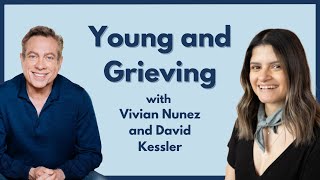
Vivian Nuñez lost her mother at 10 and became her grandmother's caregiver in college. She founded Too Damn Young to support grieving young adults, and discusses how rituals, writing, and peer community help when grief hits early.
Questions this video answers
10 years old.
Around age 21 (during her senior year of college).
Instagram: @vivnunez; writing: vivnunez.com; community: toodamnyoung.com (Too Damn Young).
Chapters
Which I never know for sure is working till I actually see it myself. Then I know we're there.
Hi, everyone. Coming in.
Welcome, welcome. Good to see you.
Oh, I love seeing everyone dropping in where they're calling in from.
And yes, please say hello.
Let us know where you're at. Always love to see your faces. Hear you. All right, let me just see here. We are coming in here. Good to see everyone. Yeah, let us know where you're coming from. Welcome, all.
A lot of East Coasters. I miss the East Coast. I'm from New York originally, but just relocated to Portland a few months ago.
I was gonna ask you, where in the world are you right now? You're in Portland?
Yeah, in our apartment in Portland as of October. We'll be here for a while because of travel and such.
But, yeah, everyone sort of is where they are right now.
I don't know if that's correct. We talked about writing. I don't know how my writing is.
That is where they are.
But honestly, I think it is a great writing prompt as well. If you are where you are. Where are you?
You are where you are.
Where are you?
Exactly.
All right, I'll give folks in the Facebook group time to find their way. So let's hear in tender hearts, Deborah's here from Minnesota. Gloria. Glorie from Canada. Linda from Olympia, Washington. And on the Facebook group, Betsy's here from North Dakota. Jill from Virginia. Welcome, all. Carrie's here. Connie's here. Glenna from New York. This is way before your time, but when I was growing up, there was a TV show called Romper Room, and the teacher used to have a magic mirror where she would say to the tv, I see Liz and I see Nemrec, and I see Connie. And somehow your parents would submit your names, shocked that she could see you. So I always feel like when I'm looking at names, it's like I'm talking to Romper Room here.
Oh, my gosh.
Renee's here from New York. Patty's here from Minnesota. Wonderful.
I give you major props because usually when I do these, I have someone else helping as well. And, like, the helping me see all the different parts.
I just look around and try to master it all, which, like, I often feel miserably at that. Susan's here from Minnesota. Carrie from Milwaukee. Hi. Kerry. Janet. And Kim. Jeanette from Philly. She remembers Romper Room.
Good, good.
I love that I'm showing my age, everyone.
All right, I'll give it just another few moments for everyone to come on and find Their way here.
Let's see.
Mary's from New York. Jody's here.
Christine's here from Bangor, Maine. Nora from California. I'm in Los Angeles, the US Epicenter of COVID right now.
Janet from Missouri. Jacqueline's here. Welcome, all. I'm glad to see everyone coming on, finding their way here. Welcome.
All right. Good to see everyone coming in. I'll give everyone a couple of moments to come in if you haven't been here before. I'm David Kessler. This is a group, two groups, actually, that I set up after Covid put us all into lockdown. We couldn't have our group, so I thought, at least I'm going to have people virtually connect, and we can hold each other's hands that way, at least virtually, because grief is isolating in a normal world, and we're in such an abnormal world right now for everyone. So as people are coming on, one of the traditions that I always have is, is to have a moment of silence for those who have died. I don't believe when they die, we quit loving them.
And I certainly think that they don't.
Quit loving us either. So join me in a moment of silence as we honor those.
Thank you so much for that. I appreciate it. I love seeing everyone coming on. Suzanne from North Carolina. Welcome, all. Diane's here. Gloria's here. People are saying they need this tonight.
All right. So.
You know, we're going to be talking to you in a moment, but one of the places that you and I met was through Sheryl Sandberg at option B.
And so we both kind of have.
These groups in common.
And I'm just.
And I've shared this with you personally, and I'm just chuckling at this, at the stuff that goes on in the groups. And today especially.
You know, in the groups, people can report something that seems untoward. And everyone was reporting this in the free group today. And I have to say, most things don't take me back, but this one did not tell saying her name out of respect for her. But she says, I'm a therapist. And by the way, I teach therapists. This has nothing to do with therapists. This is one person's opinion. I'm a therapist. I actually see no use for this group. Everyone's post is about grief. Don't. You know, talking about grief will traumatize others in a group setting. This should never be allowed. Descriptive posts shouldn't be allowed either. I'm going to ethically report this group. I joined with Hope or Processing Feelings, and people are posting about their own specifics. And I just kind of sat back and thought, is she calling us out about talking about grief in a grief group? Is that what this is? And I just was like, alrighty, then.
And I think that's so indicative about people needing a place.
Where they can speak freely without people feeling like, you shouldn't be saying that. And I thought, has this person never.
Been in a real grief group? Because when I was in Compassionate Friends.
We talked about our kids who died. When I run groups, we talk about who dies.
And you know, what I loved most.
Is that people were just responding to.
Her and going, this is very healing.
I love this. So. And I'm sure you've seen it all in option B. So, Vivian, here we are. Why don't you tell us, growing up a little bit about your history. How did you end in this world that's sort of intersecting with grief yourself?
Yeah. And I actually think that that's a perfect segue that common in and of itself. So I started in the grief space, I think for that exact reason, because there were so many different spaces that I couldn't exist in with my story and the realities of what it had meant to lose someone at a very young age. And in wanting to create that space for others and myself, I carved it out. And there was pushback initially, I think from the perspective of, oh, no, people are not that young when they lose someone. But the reality is they are. I lost my mom when I was 10 years old. And I grew up in New York, like I mentioned prior, but with a family that didn't really have conversations around grief or mental health or anything really related to how death impacts those who remain living. And over the last. Over the few years after my mom died, my grandmother was my legal guardian, and she was 75 when she took over legal guardianship of me, and I was 10. So. So the older I got, the older she got, very obviously, and the more responsibility I had over her. So at the age of 21, I'm a senior in college. I'm navigating already having lost my mom. And I come up across the real reality of being my grandmother's primary caretaker, of trying to navigate what that looks like, of making end of life decisions for her during my senior year of college and coming across this crossroads of knowing that all the things that I had at that point thought that my life would be. I was in college, I was thinking I was going to be a magazine editor. There were so many different paths that I had envisioned for myself. None of that felt in any way, shape or form like the thing I should be doing next because I felt so drawn to carving out these conversations. How can we openly speak about what it means to grieve someone at a very young age, what it means to caregive for someone, make end of life decisions? How does this impact where we go next? And I started Too Damn Young, which is a community and a resource for young adults who have lost someone they love. Right after my grandmother passed away, I remember I told myself that that fall, because I graduated that May, that that fall I would go look for a full time job. But this was only kind of a summer thing. And then the fall rolled around. I loved what I was building and I wanted to find a way to financially support myself so I can continue on and building it. And that's where a lot of my consulting work ended up coming from. But since then, it's almost been seven years now. And a lot of what most of what I do is writing and it's writing about grief and content creating around the topics of grief and mental health on Instagram has been like my best and most useful platform over the last seven years of really creating that community of people who are young and understand what it is to lose someone, but also feel incredibly alone in that loss. So I think when someone comments on a Facebook group like that, and speaking especially a grief Facebook group, you kind of see up against in a very clear way how important these communities actually are in helping demystify what this looks like, but also in helping those who get that conversation presented to them constantly and often that actually there are these amazing groups of people who know that these spaces are important.
And it's an interesting thing that I think we run up against. And it's something I've ran against. Run up against. There's always one or two stories in my book that we're like, is this too triggering? And a lot of times the way I've handled it is my, my biggest audience that I teach to is therapists. And a lot of times as I'm writing the book, I'll literally go, all right, here's a story I'm thinking of putting in the book, let's vote triggering or not. And usually we find value in it. And I think that.
And first of all, like I said, she was one person. We're not talking about therapists, we're talking about, is that we have a need to talk about our experience. And it does make others uncomfortable and.
The details and the pain make others uncomfortable.
But as I always Say we're not.
Really here having this experience for their comfort.
So I'm curious, given your story.
I often say this and it so gets misinterpreted.
Children are resilient, just like adults are resilient. And when I say we're all resilient, I mean the human species. And I'm not talking about, oh, they're resilient, they don't need support. Children need support. What do you wish adults knew that you needed that you didn't have? And obviously you didn't have someone there to care for you and parent you, because that flips so quickly. But what else could we have done better?
You know, I think it's really interesting when we talk about young adults or children who are grieving and the role that the world plays in that caretaker role after they lose the significant person in their life. I gave a speech last year at End well and it all focused on this idea of constantly being told I was so mature for my age. But the reality was I wasn't right. It wasn't something that I wanted, it wasn't a reward I was proud to carry, but it felt, felt like something that I was holding onto tightly because it seemed like the only way people would notice me was through my maturity. And I think it was because it was convenient. It was convenient to tell the 10 year old, 12 year old, 16 year old girl who had lost her mom that she was so mature for her age. Because that meant that you didn't have to sit with me in the depths of that pain and in the reality of that grief. And I think that that's human nature to not want to have to deal with that, especially when you're looking at it through the lens of someone so young. Because that lens makes us really think about mortality, about the nuances of life and death and what that could look like. I think that so much of.
The things that could have made a difference for me as I was growing up that I think a lot about when I think about kids who are losing people now, it's the little things, right? Like yes, it is the larger conversations and let's shift the conversation on grief and make space for this to happen. But as adults in roles that maybe didn't want to have that one on one conversation would have made a difference was having counselors in school who were actually informed about the process of having a legal guardian or not having a parent because they were deceased. When it came time to filling out my FAFSA or my college applications, I remember so awkwardly feeling Like I was othered because there was no space for me within those lines. And how do we make sure that the things that we can control, that are much smaller in detail can be shifted to be more inclusive to those who are actively and actually grieving the loss of a parent. And that makes as much of an impact, I think, in understanding that in the general society, we aren't othered as much as it is to have a conversation with someone who has lost someone. I think both of these things kind of go hand in hand and making a really big difference on someone at 10 years old, having lost someone, not feeling maybe like they had to create something at 21, because actually all those things were already in place. Like, that's the world I'm aiming for. I'm 28 now. I'm still in this space and I'm still working towards that because I think it'd be great for someone who ends up, unfortunately, having to live through similar circumstances, to not feel so alone and unseen.
And I also think one of the things that gets missed, and my mother died when I was 13. And I've worked with a lot of people who have had those feelings of, oh, you're so mature. And there is something about they did gain a maturity that they had to deal with something so horrific. So. But yet later on, when it comes to life and relationships, I'll often point out, as they're turning on themselves or getting mad, I'll go, you have a blind spot. You didn't have a mom at 15, you didn't have a dad at 16 to guide you. That we don't even understand all that's missing. So I think while you're right, it's a way we get off the hook by saying, oh, you're so mature. It's also neglecting, I don't want to say the arrested development, but the things you should have gotten.
Yeah, you didn't get. I think about that a lot, actually. And it was a big part of the speech because there were so many moments that I didn't get to have. And I think sometimes people feel like those moments are the big ones, right? The parent at a graduation, the moments that are stereotypically teenager or young adult. But I tell a story on that stage where I didn't have Taco Bell until I was 20 something and my boyfriend bought it for me because we were talking about all these childhood things that he had. And I never had Taco Bell. I never had a specific candy that he went to Duane Reade immediately to purchase for Me. And those are the blind spots sometimes that are as shameful for a 20 something or a teenager as the big ones. And when we are able to close that gap, that gap gets closed by acknowledging that everyone needs to be parented and that not everyone's parent is their parent, but that we all have an opportunity to be that person for someone else and to allow them to feel seen in that way.
Right. And sometimes, you know, we have to grieve the parent who died. We have to grieve the ideal parent. We didn't get this.
And parenting is such an interesting concept. As I mentioned, my mother died when I was 13 in the shooting and all that. And I can tell you.
40 years later, I'm at work in the hospital. The CEO says to me, one of your good friends that I worked with there, that I became friends with is being fired in another room right now. Wanted to let you know so that maybe you want to, you know, just check in on him and see how he's doing. And I said, okay, sure, happy to do that.
I.
Helped him pack up his desk and all that just horrible stuff. I was in a separate car. I said, I'll come over for a few moments. He told me he called his wife on his way home. He got in his house, I walked in with him. He sat behind his desk at home, picked up the phone and called his mother. And I suddenly was hit with, oh, I didn't know, if I get fired, I don't have a mother to call. I didn't even know that was something you could do when you're an adult. It was like the absences continue on in a million ways. People don't know.
Yep. And the older you get, the, the new version of that grief and the space it takes up starts popping up. Right. When I was a teenager, not having my mom look different than when I'm 28, living in another place for the first time, you know, like all of those, what she would say on the other line and what I need her for, you know, that becomes a really complicated relationship. And I think one of the things I wrote about recently too was this idea that, you know, our relationship with those we love doesn't end with them when they pass away. It keeps on morphing and it keeps on becoming. And I look at my mom now as a, as she must have been when she passed away, which was this 40 something year old woman, and I wonder like, wow, at 28, I wonder if she was thinking about the fact that like she was a single mom already. For my brother. And in four years I was born after that. And what does it look like for her to have been 20 something? And that relationship constantly morphs. And I think that that's another part of grief that's okay to experience, which is this idea that it will constantly be something, even if it's not the same thing it was yesterday.
Right? Right. I. I've often shared in my 20s, horrible abandonment issue. I mean, anyone that told me they had a commitment issue, I wanted to date. You know, it was like I just chose the wrong people always. And I would come, always recreate that abandonment. And it wasn't until I did some writing. That's where my love of writing around grief and loss came from, that I started writing. I'd often told my story, but I decided to write what it was like for my mother, for my father. I had horrible judgment on how my father handled the grief. And then when I had to write a story, I went, oh my goodness, he had to deal with this wife dying, couldn't afford a hotel, probably was lost, didn't know how to raise this son. He was about to take over. And I went from having judgment to him, to compassion for him. And then I wrote about my mother. What was it like for her in the hospital? And when I didn't visit, did she know it was because of the visiting hours? And was anyone telling her? And as I wrote her story out, it dawned on me for the first time. My mother didn't abandon me. My mother died.
Abandonment was what a child's mind did with that loss. And it really freed me in life and in relationships.
I think we miss those things. And certainly writing is something you really love also when it comes to doing healing work, 100%.
And I think, you know, that really put into context even my writing. I write, and I've said this often as well, I write because it's how I figure out what I'm thinking and what I'm feeling. So in ways that it helps me see the world as well. I write a lot of personal essays in ways that it helps me see the world. And more importantly for me, it helps me figure out what I'm thinking, what I'm feeling. It helps me be kinder to myself because I think we're talking about those blind spots that you may lose along the way. Constantly being told I was so mature for my age and all the responsibility that came with growing up without a parent and having to parent someone else, that pushed me into a role of perfectionism and of needing to check all the boxes, all the time. And that didn't leave room for my humanity. So I find my humanity a lot of times within my writing. And then it helps reinforce, like, wait, I should actually be doing this in my life to be kinder to myself, and how do I do that? And where do I connect the dots? And, you know, you're not given a handbook when someone passes away, and you have to navigate that day in and day out. And sometimes it's really hard to even acknowledge how much you've actually done on a day. If, for me, at least, if I'm not writing it down and saying, you know, I was really brave today, or it was really comforting to myself today. And that's in and of itself something to be incredibly proud of. But I think it can. Writing for me can be this coping mechanism through which I actually find myself a lot more. A lot more me and a lot less lost.
I'm going to be the parent here for a moment about my own loss. You know, one of the things that I had to really translate in my own life, because I've worked with parents for decades, and then I find myself having my own son die. One of the things that children, adult children have shared with me over the years, they don't want to talk to their parents about sex or grief. It's just don't want to go there with their parents. Now, as a parent, oh, my gosh, like, when my younger son died, I thought, that's going to be this discussion that my older son and I were going to have just all the time. And of course, it had to shock me when I realized, oh, if every time he comes over, we're doing grief counseling with one another, he's not coming over. And the other thing is that. And I had taught this, but it was so much.
You know, it's easy to teach, it's harder to do.
I had to teach how when parents we say, you know, when my son was in his 20s, both sons, the one who died and the one who's living, when I would say, how are you doing? To him? I would often go, how are you doing? It's so hard. And, you know, and immediately go into my grief. And I had to really work on, can I say, how are you doing without me overtaking the moment? And I think for kids dealing with parents, you don't want to see your parents cry. Those things make young people uncomfortable. And yet, as parents, we so want to help our children.
Yeah. And that I think there's so much of grief that we don't have a guidebook for. Like I said, it's also a language that we're acquiring, a whole dictionary that we're trying to pick up along the way. And having forgiveness and grace and just a lot of room for learning as we go built into that teaching and for ourselves is important, but it's also incredibly important to teach someone else in the teaching of someone else of what. What that grief looks like. How do I make sure I'm making space for it for me, but also for those in my. In my life. You know, that's not easy. And I have a family, I come from a Latino family, where talking about grief openly is not a reality. You know, we don't. Other than the moments in which it is a name being said at a Mass, we don't really say the person's name after they've passed away. I grew up in a culture that very much honored their dead by wearing black and having the ceremonial parts, but never really discussing them. And that was the opposite of who I was, because I liked writing about it and I liked talking about it, and I found a lot of peace in that. And so I think that those are the moments where the generational gaps come into play, but also the understanding that even within the nuclear units where we have lost the same person, no one loses the same relationship, and no one inherits the grief in the same way. And if we're able to give ourselves the room to really navigate that, then we're able to at least spot those. Those gaps of how one person wants treat it versus the other.
Yeah. And it's interesting because I think Catholicism, our cultural backgrounds, our religious backgrounds, a lot of them, just as you mentioned, do well with the rituals, but not the feelings. And many times it's like, put all your feelings into the ritual, and that way we're done. And grief is not that neat.
Oh, my goodness. There's this essay I wrote a while back, and it was just about those traditions and how much I could, thinking back to my mom's passing, immediate passing funeral, and this experience that in the Catholic Latino religion, you have a novena, which is just like nine days of prayer. And I was reflecting back on the fact that within those nine days, the meat of that was that we were supposed to be praying my mom into heaven. And that was the power of prayer. And so much energy and dedication was into making sure the house looked clean and the altar was perfectly laid and all this stuff. And at 20 something, I'm just like, wow, that's a lot of Pressure to put on people to have to pray someone into heaven. And the nuances of that tradition, though, were the things that were holding them together because they couldn't just sit around and grieve to them. They needed a vehicle through which to push that through. And I think that, you know, there comes a moment where that tradition is necessary and it's invited in, honestly. But I think that there also comes a moment where we have to realize, like, it's also okay to have these conversations to create the space specifically for them, and not everyone will want to be a part of that. There are a bunch of people in my family who don't talk openly about grief or mental health, and that's fine. But I think it also. So it's okay to take it as a case by case, right?
And half of my family is Jewish, half is evangelical Christian. So it's always interesting. And.
I can remember, because I was raised in some ways Jewish, in some ways not. But in the Jewish part, I can remember hearing at a funeral how when you shovel dirt into over the casket, you turn the shovel the wrong way so that it's ineffective and it's backwards. And I remember being told this symbolizes we must do it, but we don't.
Want to do it.
And I love, like, oh, that symbolism. That ritual shows the conflict.
And then a month later, when you.
Feel conflicted about them dying, people are like, move on. And it's like, wait, there was a conflict. We've got to move on. And whatever happened with that and did, it just needed to get smoothed out. And do I have to wait a year to the unveiling for us to talk about this death again? And that happens in so many different cultures that just the hardship of grief.
Is like, underwater identity is such a big part of grief. Right? We can't separate our identities from our grief experience because they inform each other so much. And. And I think also society informs it so much. You're so right. Like, our religion, our identity, our traditions, they really take precedence those first few weeks, the first month. And then society kicks in and you're pushed into this overall mainstream idea that you're supposed to be over it and you're not, and you're never over it. It'll be 18 years in January since my mother passed away. And I still feel that as deeply as I did when I was 10. In different ways, right. With different contexts and different experiences. And I like to say that out loud because I think it also normalizes that nothing about time makes that pain less poignant. For the moment that you're in. Because the moment that I'm in right now isn't when I was in 18 years ago. It's brand new to me. But that grief came with it. And how does it look like now? And I think that we're up against a larger society and trying to fight back and say, actually, I'm not over it. And this is how it looks like. And this is how I'm trying to carve space out for myself.
And we're actually in two groups right now. We're in my Tender hearts group, and we're also in the Facebook group. And we. One of the discussions we had the other day that I thought was fascinating and Tender hearts. As I was working with someone, they were so afraid that as time was going on, they were moving further from the person. And we had to make this very clear distinction that we move in time away from the death date, not the person.
My mother died over 45 years ago. She's in my heart. I'm not 45 years away from her. I'm 45 years away from the day she died. That the time and the person are carried in such different ways.
I love that reframing. How do you distinguish for. I don't think I've ever explicitly thought of it that way, even though I felt it that way. But I think for someone who maybe is just experiencing that for the first time, how do you help yourself distinguish between the date and the person? When I think, especially in conversations, once you bring up the fact that someone has passed away, it seems like their life is truncated to the moment they died and no one else wants to talk about anything else.
Right? Right. And I always say, you know, that moment they died is one day out of their life. You know, sometimes I'll even calculate with people how many minutes and days and seconds they lived. It was a moment in time. It was the worst moment. And we know from brain science that the worst moments become like Velcro and the good moments are like Teflon. But we have to realize in time because we live in time and breathe time and spend time and give time that they're no longer in time there in us.
I think that's such an important distinction. I'm not moving further away from my son, moving further away from the day of his death, but not him. I'm always going to be connected. I'm never forgetting. You know, when people say, well, how long are they going to grieve? I'm like, well, how long are they going to be Dead. They're going to be dead a long time. You're going to grieve a long time. Now, I have more love than pain, but you're still going to grieve a long time.
I do think that there's freedom that comes with that. I think even in the way you framed it, it made it clear for me that the freedom that comes with that distance between the death date and where you are in this exact moment, that's a freedom from, like, the anxiety of the eminence of that death, of the ripple effects of what that actually meant right after, but not of the love you carry for that person. Because if anything, I think it becomes clearer the further away you are from that death date.
Time is such a unique thing that someone said to me the other day, as I get all the time, david, can I ask you a question about work? And I'm like, sure. I have a friend who's like, really? I'm worried about her. She's saying something so abnormal in grief. And I'm like, can't wait to hear this.
What do you got?
And he's like, she's talking about going into the new year, and she's upset that her loved one's not going to be in 2021. And I go, oh, my gosh. Every person in grief has those moments where you go, I'm walking into this new year without my son. I'm walking into motherhood without my mother or fatherhood or. There's a million moments. We walk into our future, and on one hand, we do notice. Wow. I mean, for me, it was 2017. I was like, my son will never see 2017. Every year he was getting to see, this is the first one he misses. And people in grief talk like that. And the outside world thinks, oh, my gosh, something abnormal is happening.
I think, you know, it's that dictionary I was mentioning. Like, we pick up this whole new vernacular of ways to describe the things we're feeling, but at least we could describe them, you know, at least they get to see exist in the world as words that we say and that we hold true to ourselves versus just this feeling that can sometimes be so annoying and. And just with no form in and of itself, that makes it feel a lot more suffocating for us.
I think you've also written about mental health. Talk about mental health, the importance of all that.
For you and others. Yes.
Yeah, it's definitely. It's the same formula, I think, for me, in terms of talking about grief opened up so many conversations and Connections to a community who, like me, had also lost someone. And in the space of that, I realized, for me, my grandmother's passing especially opened up this whole door of realizing that I was probably for much longer than I noticed, living with anxiety and depression, but especially after the aftermath of caretaking for her and having to make the end of life decisions, and that fear and anxiety that came with what am I doing on any given day? And the triggers of the ambulance and kind of all of that, that came under the umbrella. So that ultimately also led me to talk about how debilitating it can feel to have anxiety and to live with anxiety, but also how much the reason why we talk about it, why we cope with it, we go to therapy, why we deal with it, the ways we do, is so that on the other end, we're able to see all these happier moments and that we're able to notice life in its brightness and its color and its layers without feeling like it's an avalanche that's stacking up against us. And I've mentioned here as well.
Being a Latina, I can't really separate my identity from any of my lived experiences. And I realized within the nature of my family that my family wasn't the only one who wasn't having these open conversations around mental health or grief. It was a very prominent reality within the community, and that it was especially beneficial for communities of color that we have these conversations, because it makes a difference when someone who looks like you or who sounds like you or who grew up in the same places as you did talks about things that feel incredibly taboo because they were never talked about while you were growing up. And so I've been so passionate about just opening that conversation up, not necessarily instructing anyone in one shape or form. I'm not a therapist or a licensed do that, but I love sharing from my perspective on how I'm coping with things. I think that.
The details of that story end up being incredibly universal because they're so nuanced and specific. It's why in that Facebook message that we started the conversation with, I was like, actually, it's the nuances that make it universal that make those connection points. Because even if the T shirt I'm referring to is purple, but yours was pink, we're both wearing a T shirt. And then that's the connection point that we can really relate to.
And I always tell people that, you know, if you're here talking about the death of a parent, we're all going to hear something, even if we have that. And Even though you and I both had a death of a parent at a young age. I don't know what it's like to lose and you don't know what it's like to lose my mother. You know, there's a part of it that's universal, connected. There's a part of it that's similar, and there's always a part of it that's going to be so different. I'm curious, this world you're in, option B. Too damn young. Is there something just from watching those of us in grief that you've learned a nugget or two that you've taken away?
I think that the premise of all the work that we do, anyone in the grief space, anyone in their personal grief, you'll realize that the main thing that triggers a connection, a communication, a movement, a community, is the simple notion of asking a question that very rarely gets asked, which is like, do you want to talk about your loss? You know, Trudamyung isn't a complicated idea. It was literally built on.
Tell us about Trudymyoung.
It was built on this idea that no one else was asking young adults and teenagers about their, like, lost. No one was asking them to explain what that meant to them, how that was connecting for them. And so that's all I did. I posed a question. And people flooded in with essays and poems and wanting to share stories about the people that they lost because they wanted to hold space for them and for themselves. And when we really bring it down to the nugget that it is, it is simply just the fact that we have so much power in asking someone. You mentioned it before too. How do I ask them how they're doing without projecting my own thing on it? And how do I make sure that that question actually invites a conversation and not just a formality? So that's probably one of the biggest nuggets I've learned, is that people are much more willing to answer that question as long as they are asked it, as long as we ask it.
So I'd love to take some questions on Facebook and if you're in Tender hearts, you can actually just raise your hand and you'll be able to come on face to Face with us. But while people are raising their hand or putting their questions in, tell us how to find your blog, how to find you, how to find social media.
So the best place to find me is on Instagram and on my blog. So it's vivnunez.com Vivnuno is on Instagram. I'll put them into the chat just for anyone in the zoom who can have them. And then2damnyoung.com is the resourcing community I created years ago for those who are grieving and young adults. I'll also put that in.
Okay. All right. Perfect. All right. I don't see any questions. I see lots of wonderful comments in the Facebook and people can relate and they're really loving what you're saying. Feel free to put a question in there. A few people here want to come on with us. Let me invite Kathy on real quick. Just be aware, in tender hearts, you're going to be in Facebook. You're going to live on in other places. So only come on if you're willing to be on other places. Okay. All right. So I always like to make sure people know all that.
All right, let's bring Kathy in. Kathy's going to be coming on. And.
Here comes Kathy. Let me.
Hi, Kathy.
Hey, Kathy.
Hi, Vivian. Hi, David.
So what's your question?
I've just been sleeping all day.
Regarding, like, losing your parent, which I understand, and I know you lost your mom very young and my mom lost her mother when she was 16 and I lost my mom now that I'm 37 years old. When I don't look it, it's hard to process because I know my mom is going to. I'm going to go through a total different trance this year. And I mean, I mean, this past year I spent time with my mom before her leaving. And my mom's death was just shocking to me. And I mean, yesterday I broke down in tears just thinking about her. And it's just been a hard process for me and everything has been changing for me.
And I don't know. And like, being from a Mexican family, my parents never really, like, we've gone to funerals, but we never talked about that person ever again or we never. I started doing my own tradition, celebrating Day of the Dead because even if they were close friends to me, I will never forget them. They leave trademarks in my life as much as my mom did. Even though I came from a family with a dis, you know, dysfunctional, you know, and I just want to be able to cope with this as much as I can, to be strong for myself. And I. It's one of those things that I don't know how it's still new to me. My mom died about a month ago, so I, at this point, I don't know what to explain.
You know, it's interesting. You and I have talked before Obviously.
Yeah.
I wonder why. We all have a sense that there's something we need to do instead of just be.
Yeah.
And I think I'll echo that too. And I'll give you the context of I literally had. And I have the same issue of always wanting to do and always wanting to be over there when I'm right here instead of just honoring where I actually am because I feel like I should be. And I'll be honest, I think a lot of that comes from having grown up in a Latino family and always feeling like I had to be doing and I had to be giving and I had to be. And unless I was and I wasn't worthy and I wasn't actually doing anything right.
And so that can be really hard and up against the reality of what grief is, which is just how can I be and how can I give myself permission to be? And what does that look like? And what I do is I fake it a lot. Like, I'll create scenarios for myself where I. It is both the thing that I am used to, right. Where it's like I'm creating some form of structure, but it's a structure that's fake with a lot of empty space inside. So that. That way I can invent what I actually need on that given day. I just wrote a blog post today that's about one of my best grief day hard days, holiday hacks, which is just make plans that you can cancel with people who don't mind it because that means that then you have this in your back pocket. Something that is structured, that still goes by the way that you're living, but it allows you to also have things that if you wake up that day and you're just. I don't want to be around anyone and this day is just too hard. You can cancel that and still be honest to who you are without the feeling of feeling like there's guilt attached to it.
It's one of those things. Sorry, sorry to interrupt you, but, like, it's been one of those things for me, like going to. Even yesterday, going shopping to buy small things, it's just nerve breaking. And I had to write it on that group and on Facebook, which has been helping. I mean, there's a lot of random people that come together and they, they. I think they grieve with you. That's amazing. And what David put in. And yesterday I heard, because I missed it yesterday, what he was saying. And it's true. It's okay to miss a little bit. I mean, if you don't Want to celebrate Christmas and you just want to just eat dinner, like, usually make it a regular dinner.
You can have a frozen pizza that you up on Christmas Day.
And while I was cleaning the bathroom, I. You told my husband. I told him. Did you hear that? He's like, yeah, give yourself that day. It's okay. It's okay. And. And I told my husband we were thinking of having children. I said, my mom's not going to be here when I. When I have a kid of my own. What am I going to ask her? What am I going to do? Where is she going to be? And. And she's no longer going to be here because I'm like, am I going to miss her? And I listened to her old voice messages on my phone that I have so still telling me, oh, I'm home. I just got back from the hospital, you know, from the doctor's appointment. But I don't want to let go of that. I just don't have the, you know, the courageous to delete it because I don't want to forget what she sounds like.
Why on earth would you feel like you need to delete it?
Because I would be like, oh, no. Like, I don't want to delete it because that's my mom's voice. I don't want to get her voice or when she's calling me, when she's angry. I miss her scolding me for little things.
You know, by the way, I tell people, I assume you have an iPhone or an Android.
Yeah.
You can take that message and email it to yourself so that if something goes wrong with your phone, your phone breaks. You haven't lost that message.
Yeah, that's what I. I mean, like I said, David, and when I was hearing from what you said and with everybody in the group on Facebook, it's an amazing community we have. I had people come forward and tell me, I feel the same way you feel, you know, that you miss your mom's.
A lot of people are saying in tender hearts, you were so moving to them and they connected with you.
Yeah.
And you froze.
That's so life in the zoom. Kathy, thank you so much for being with us. And I think, you know, once again, you're helping people dealing with it by just sort of normalizing what we're going through.
I know. I thank you more, both of you, because with your advice and everything, it's been helping me and I've been helping my. Even a personal co worker of mine to grieve for herself. And it's okay. It can be anything, though. Not like family dying, but about other things as well.
Thank you so much.
Thank you.
And I did, you know, and it's interesting, someone that you and I both know, another mutual friend, is Liz Hernandez. Liz and I were talking about in the past few years, she's done a Christmas alone. I've done a Thanksgiving, or vice versa. She's done a Thanksgiving, I've done a Christmas. You survive. It just isn't that big a deal. I tell people, my goodness, you've been through the death of someone you love. It's just a Thursday. It's just Friday. It's a day of the week. It's, you know, so let me go through some Facebook questions here, and then we have some other to bring on.
All right, let's see here.
Someone said they are so afraid of forgetting their parent. What do you think about that fear?
I think that it's normal, I think, to go back to your advice to right now, to Kathy, of just being.
Grief can bring up so many anticipatory fears of things that may happen one day and that probably in some ways may very much well. But I think that the more that we are in those moments, we'll remember that of the things that we may forget that are tangible, that are like memory, present, there will be other things that will help us fill those gaps and that will help us feel like we are still very close to those we love. Maybe we'll find something else along the way. Maybe it's a book that we'll turn to more often that we hadn't remembered. And so I think that there are new ways in which we're able to connect. I don't think that because someone passes away, that relationship goes stale. I think we're both reinventing and trying to figure out ways to continue to connect in ways that make sense to who you are in those specific moments as well.
Because I always was talking about, worried about forgetting the details of her mom. And I think that's why writing is great. I also think, you know, I said the other day in, in the group, I said, you know, when anyone starts, people come over and they start to reminisce about my son. I turn on my recorder on my phone, like, I'm just going to get that story down.
Betsy says, I'm dealing with the loss of my mom and infertility. How do I deal with both losses at once?
So challenging, Betsy.
So, so hard. You know, I can't speak from personal experience. The latter and everyone's unique experience with grief is Always unique. But I think that if there's one thing that I have learned through this whole process of grief and just living is that the kinder we can be to ourselves and the more empathetic we can be and just be.
The easier we are on ourselves when we are navigating the really hard waters. Right.
And I think, you know, to also understand those are two separate losses you have to grieve. One is, you know, what should be in motherhood and what's not happening. And the other loss as a person that is the epitome.
Is the mother, you know, and it's so connected to you being a mother. So of course there would be two challenging losses to be dealing with at once. And don't let anyone minimize the infertility. That's the one they all have minimize, you know.
Let's bring Frederick up. Hi Frederick, you should be coming up in a moment.
Hi there.
First, many, many thanks for this great program and also many thanks to David for his incredible tender hearts and Paul's grief yoga benefited so much from that. Insofar as the loss of my parents. I have kind of a question here. So I'm a college professor, I work with the 20 something population and as a caregiver over a six year time, as someone who uses selective disclosure to call it that, I found that it was my students who were incredibly supportive to me while I was a caregiver and after the loss of each of my parents. So I'm very much appreciative in that role. However, I really see myself as a mentor. I think the mentoring and the spiritual direction that I can do with my students so central to what I do. So I'd like to ask you, Vivian, sounds like your work is just amazing. What recommendations might you have for people like myself who work with a population of young people? How can we show up in the best ways? And I might also ask, you have any insight? I'm just thinking that there's always gender difference in terms of how people respond, share, disclose, etc. If you have any thoughts there.
Yeah.
My last final remark is just to say my Latinx students were just like so understanding of our relationships of the family in ways that the Anglo students of my generation or my colleagues just didn't get what it meant to be taking care of a parent or grieving a parent, that matter. So it gave me permission to grieve in a particular way and to care given a particular way. Thanks a lot and I'll listen to your responses.
Yeah, honestly it was. That's exactly where I was going to start. So it's a really good way to end in the sense that I think that because of the culture that I was raised in and the reality of being Latinx, that I was raised where having a caregiver role in my grandmother's life was normal, completely normalized. It was what it was supposed to happen. I was a woman in my family. I was the woman that was living with her. The reality of that was present and what I found really hard when I was in college, it was my senior year, my last semester, when she got really sick. And my professors had such a hard time understanding my relationship to my grandmother because they put it on paper as well. It's just your grandmother. And there was this distance they created. But the reality is she was my mom and I lived with her and I was up in the middle of the night multiple times changing her diaper and like, all that came with that and that was directly affecting my. My ability to go to school and what that meant. And so I think that one of the things that can that you're in a unique position to be able to do is have that open conversation of what is that relationship like? I'm not going to impose what I think it may be. What is it actually like? And what are your responsibilities? And how can I make sure that the things that you're doing in my class and curriculums widely reflect the need for you to have caregiver curriculums? Or like, what does it look like if you are someone who's actively caregiving or grieving? How do we bake that into the overall? I think that I wish I would have been more understood in the nuances of my reality versus just in the generalization of, oh, this person passed away, give her two days and then she'll be right back to it. Because I had so much post traumatic stress that I had to deal with after my loss, Especially because it wasn't just that she passed away peacefully, it was that she was in the hospital that I made the end of life decisions. And so I think if we can open that conversation and make it wider and make it more inclusive of like, actual realities, that's probably the best piece of advice I can give. But I can say that the fact that you are here and already actively trying to have this and think about it from the perspective of how can I make this the most understanding thing, that's already like five steps ahead. And I will say this is another thing that I've realized over the last few years, especially as I've dived deeper, more into the caregiver reality of my own identity and just the work. Very few people of color, Latinx specifically, from my perspective, ever identify as a caregiver. They're just a family member taken care of. And so I think that language in that way is also really important because they may not self identify as a caregiver, but they are. And so understanding sometimes the roles and responsibilities makes as much of a difference as even if they're not calling themselves the thing.
Sorry, go ahead.
No, I was just going to say so my family has been in this country for four generations and I'm of a particular demographic, but I identified so much more with a kind of, if you will, old world sense of family, as the only child of an only child and as someone who doesn't have children and has really close relationships with my students, whom I love to work with. And so, like I said, it just was such an awakening that they understood so much better than my colleague, peers, whomever might have understood the kind of feelings that were coming up for me. So I really think that there's a lot for your generation to teach us, teach the older generations, as well as how we can use our positions to be able to support your generation and younger folks in the processes that they're going through.
That's what I wanted to say to you, Frederick. That's so important. I mean, I can remember when I had my kids, two boys, literally, after someone said to me, oh, God, you needed a girl. When you get old, you've got no caregiver. And there's such this gender thing that men are not caretakers, caregivers that I think you talking about it openly, talking about being a caregiver, talking about being a man in grief. You have no idea. The students in that audience that are taking their cues from you.
So very important what you're doing. And thanks for being a part of Tender Hearts.
Thanks.
Thank you for your question.
Much appreciated. All blessings on your work, both of you.
Thank you.
Thank you.
So we're going to be. We have more questions in Tender Hearts and if we can stay a couple of moments, we'll do a little extended In Tender Hearts. It's almost time to wrap up the Facebook portion because I like to do an hour there for people just to be respectful of their time. Tell us again how to find you.
I will. So you can go ahead and find me on Instagram ivnunez and then vivnunez.com is where my writing lives. And toodamyoung.com is too damn young.
Great. And for those of you in Tender Hearts, just stay on. We're going to continue. Don't leave where you are. If any of you are in the free group that you're in Tender Hearts, just jump over. You'll find us. I also want to say Tender Hearts is open this week. It's a week to get a lot of support. This is like something my team's like. Really? You're saying that? But you know what? If you join, because Tender Hearts is going to close in a week. If you just need extra support and you want to jump in Tenderhearts for the week and then cancel at the end of the week, you'll get a full refund. I mean, I know I shouldn't be saying that, but get some extra support. We're there five days a week. We have two things on Christmas and one Christmas Eve. So please get lots of support. Whether it is from Tender Hearts, this group, option B, you deserve as much support as you can get. So to all my Facebook friends in the group, thank you so much. Our friend who didn't want us to talk about feelings is no longer here with us. So thank you all so much, and we'll continue in Tender Hearts. Now, take care, everyone.
Thank you.










