E102: The Art of Networking & Relationship Building
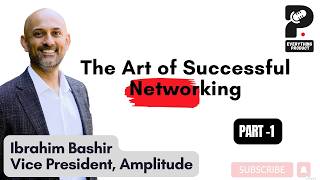
Podcast episode (E102) featuring Ibrahim Bashir (VP Product at Amplitude) discussing how product leaders advance from senior individual-contributor roles to cross-functional director roles. Core advice: craft a three-part promotion story (quantitative impact + qualitative anecdotes + a "why now" momentum narrative), pursue high-visibility cross-company initiatives, build trust through small, repeated follow-ups and by "closing the loop," and broaden relationships across go-to-market teams. Also covers practical networking tactics (personalize outreach, use intermediaries, create inbound content) and mentorship patterns (sustained relationships, peer mentors, what makes a good mentor). Recommended reading: Essentialism by Greg McKeown.
Questions this video answers
August 19, 2024.
Vice President of Product at Amplitude; "almost four years" (as stated in the transcript).
Essentialism by Greg McKeown.
Chapters
What do you do to get better at storytelling?
I always tell people you need both a quantitative and a qualitative story. So quantitative story is like the metrics of the company showing up and to the right. Right. 20% improvement in this, you know, 30% reduction in that. But then there's also a qualitative story, Customer anecdotes, internal stakeholders saying like, oh, this person is operating next.
What are some of the things that you think would work best in maintaining that relationship but and be successful as a team?
I think a leader, you don't want to be alarmist or stress people out, but when you don't regularly stress people out and then you sort of tell them, now is a moment for us to be stressed in a good way and over prepare, then they listen to you. Right.
Can you give us some insights or strategies on how we can find Right. Mentors that can guide us?
Hello everybody. Welcome to our podcast Everything Product.
So.
So we talk about latest technologies by bringing in industry experts and leaders to our podcast. So today we are super excited to bring Ibrahim Bashir to our podcast. So Ibrahim Bashir is a seasoned product leader with extensive experience in B2B products and scaling B2B products. So Ibrahim currently serves as a vice president of product management at Amplitude and he's also an author of for a newsletter called Run the Business. Ibrahim, thanks a lot for joining us today and taking your time out to talk to us. Welcome to the podcast.
Thank you for having me on.
Awesome. So could you give a very brief introduction about yourself?
Yeah, I mean, as you mentioned, I'm the VP of Product at Amplitude. I've been there almost four years. Before that I was a VP of Product at Box, which is a cloud content management platform. Before that, spent a number of years as a platform PM at Twitter and then worked on the Kindle ecosystem at Amazon for a while, and then before that spent a number of years in management consulting and then before that was an engineer.
Okay, awesome. Srinaz is also ex Amazon, so. Okay. So Ibrahim, so you know, a lot of times we get these questions repetitively from our audience and viewers. Right. So a lot of people who are product managers or mid level product managers often feel stuck in either a principal product manager or a staff product manager role. So, you know, throughout your career, you know, you have worked with different organizations at different levels. Right. So you know, if you were to maybe talk about ways to overcome the bamboo ceiling, which, which we would say, right. How would you go to that next level? What would be some of those strategies be?
Yeah, I think, I mean you call out an interesting junction which is I think principal PM or you know, in some organizations it's even called staff or group is probably the last level where your functional expertise is what got you there. And I think director is the first level where operating like a cross functional leader and less like a functional domain expert is what's required to get there. So it's a. I think one of the reasons people hit that ceiling is they're trying to do more volume and more quality of what they've been doing. And that's not really what's going to get you to that next level. What's going to get you to that next level is showing that you understand fundamentally the business you're in and the different levers you can pull and operating cross functionally to do that. And so I always tell people like as a principal product manager you have more in common with other product managers, but as a director of product you actually have more in common with a director of sales or a director of support or a director of finance. Because you should all be thinking company business outcomes first.
Yeah. And you know what, what would be some of the skills which you maybe have to get be good at to get to that next level? Could you maybe throw some light on that?
Yeah, I would say the first, I mean I'll answer both like the types of situations you should put in and the skills you should acquire. I would say in terms of situations you want to be working on cross company initiatives that have the visibility of the executive leadership team. That's number one. Right. So it doesn't fundamentally matter if that is a product initiative or a tech debt initiative, or a UX initiative or a go to market efficiency initiative. You want to be part of a tiger team that is working on those critical business outcomes because that gets you on the radar of the leaders who are eventually going to make that decision. And a lot of companies, including amplitude like director plus level promotion is not purely within the functional leaders purview. There's a cross functional committee right across the company that decides that. So you almost want there to be an awareness of your work at a company level. That's number one. From a skills perspective, I would say two things. One is you want to get really good at storytelling. I think that's the part where a lot of people drop the ball is they do the work and they have the impact, but they don't actually know or their manager frankly doesn't know how to tell the impact story. Right. And I'm not just Talking about the quality of the slides or presentation, I'm actually talking about a really simple paint by numbers. This person did this, they influenced that. This leads to this critical outcome for the company. And I have corroborating evidence that this person was on the critical path to doing that. Right. So you don't want to just be in the vicinity of success, you want to be the driver, the change agent of success. And so that type of storytelling and I always tell people you need both a quantitative and a qualitative story. So quantitative story is like the metrics of the company showing up and to the right. Right. 20% improvement in this, you know, 30% reduction in that. But then there's also a qualitative story, customer anecdotes, internal stakeholders saying like, oh, this person is operating next level. Right. And particularly at that director level, you want those stories and those anecdotes to be told from a cross functional perspective. So you know, a principal PM getting a glowing review from a director of product, that's useful. But a principal PM getting a glowing review from a director of customer success, that's something else. Right. And so you want that visibility and that storytelling told from a 360 view.
It's essentially you're saying this is not just in your function or this, this is basically cross functional. And you basically take the storage telling skill to everybody who is involved in building the product, which could be customer success or engineering and so on and so forth and all of that stuff and different cross functional leaders.
Absolutely. Yeah. And I think what you're really looking for is people who will put aside their functional concerns for bigger company outcomes. Right?
Yeah. And storytelling.
Right.
Like when you say storytelling or skill. Right. Like how do you develop that muscle? Right. Like what do you do to get better at storytelling?
Yeah. So I'll answer in two ways. One is I gave you a little bit of my framework on storytelling. There's qual plus quant, but it's, that's not complete because a lot of times people will say, look, I have so many metrics in my promotion packet and I have so many anecdotes, why am I not getting promoted? There's a third element that has to happen which is why now you have to create like a momentum for the candidacy, saying this is this person moment. Right. It's like they've hit all the milestones and this will be the icing on the cake. So you almost want to create this perception that it's their crowning moment. Right. And build like a momentum within the Organization. And I think sometimes I see packets that are perfectly fine and qualitatively and quantitatively, but don't have that rallying cry of everybody feels like now is their time. And this is why actually a lot of people, if they get shot down for a promotion once, they make it through the second time because people remember that story. They're like, you know, you failed once and now you succeeded. So in a way, people want to feel good about promoting people. They want to feel like it matters. They want to feel like they're part of their success. And if you can't give them a narrative on how this person has evolved and grown and, and changed as a leader, then they're not going to feel like they should vote for that.
Right?
So that's, that's one is qual quant plus like why now? What was the second part of your question?
You know, it's more how do you develop that muzzle? Right? Is it more doing it? Yeah, yeah.
So storytelling can happen through many mediums, right? And I think if you spend 90 days at a company, you'll be able to figure out this is the default storytelling mechanism of this company. It is long emails, it is slack threads, it is PowerPoint presentations, it is live meetings, it is whiteboarding, it is product mock ups. Right? Whatever the medium is. And sometimes companies have multiple mediums. You have, you, I mean, you can spend time arguing about it, you can say, well, I prefer to write and this is a slide culture. But at some point you're not going to get people to promote you if you can't communicate them with the way they prefer to be communicated to. Right? So one is just make your piece with this is how communication happens at this company and then get really, really good at that. How do you get really, really good at anything? Reps. Right, Reps. Like with your peers in a safe environment, then one degree removed, then two degrees removed, and it's a little bit of a chicken and egg because like, how do you get good at something if your manager is hesitant to put you in something that he not know you're ready for? That's why it's really, really important to have managers who are willing to take calculated risks.
Right.
I'll put you in front of the CEO in the next meeting. Here's my guidance for you. You know, don't screw it up, but like, let's get you more and more exposure. So, so I would say exposure is really, really important. And that's why it's really, really important to have these kinds of conversations Directly with the manager. Right. It's like, hey look, why do you think I, what do I need to do to get ready? Oh, I think you need to get better at showing the business impact to our finance team. Great. Can you create a forum or a venue for me to do that? Yes. But this is what I need you to do first. Right. It should be that kind of back and forth. And as much as I hate to say it, if you're trying to have that type of conversation with a manager and it's not going anywhere, it's already game over. Like you're not going to get promoted if the person can't tell you how the plays are run and how the playbook should execute and what you can do. Right. Think of a manager as a coach. If your coach can't tell you this is what you need to do to become a champion, you need a new.
Coach that makes sense. I love that thought process there. Right. And I've seen that a few times too. Like especially when you're trying to get a person promoted, you need to have that cross, cross team recommendations or cross stakeholder recommendations, especially from like customer success or operations, marketing etc. Can you shed some more light there as well? Typically this is what PMs do. Right. And we have a lot of contacts too. We work with each of these guys on a day to day basis. Weekly meetings probably solve a bunch of initiatives for them. But I think One thing that PMs lack is they do all the work but they don't spend that time to make sure they have that relationship. They're getting that recommendations for them from them. How do you think we can get out of that barrier and then get those things done?
Yeah, you know, it's interesting. Product feels like it's hard to cross that barrier. But the reality is every function wants a piece of product. Like if you went to, let's just make up a team, you're in B2B software and there's a demo engineering team. And you said to the demo engineering team, the PM for this product wants to come to a happy hour with you guys or wants to come to a roadshow, a preview, you think they're going to say no? No. Right. What I'm saying is there's so many opportunities because people want time and attention from product. Right. And so it goes both ways. And so I definitely encourage people to dabble in that. And where the manager can be helpful is if I go to one of my directs and say, hey, you need to get, go to market to be a Fan of you. That's a never ending proposition. They're like, hold on, do you want me to go to the sales all hands? You want me to go to the demo meetup and you want me to go to the customer success thing and there's a bug bash, the support. I can't do all those things. Right. And so a good manager will say, hey, look, these are the areas where your narrative is complete and these are the areas where I think you have to put some time and energy. And it's not a popularity contest. Don't make it transactional. It's more to be like, go really understand their point of view. They should feel like you understand their point of view and that you can represent them equally well. Right? Like the, the best product managers make everybody feel like they heard their opinion on the roadmap and incorporated it to some degree without actually caving in and sort of giving control to any one person.
Right?
That makes sense. Actually, I want to go a little bit more deeper there, Abraham. Like, I've also seen people like once given opportunities, they might not have fully utilized that. And that's where the manager struggle a little bit, right? Hey, given you opportunity to make sure you come up well, how do you think like VMs can come out of that? Like, gotten a chance, let's say I messed it up, got another chance, but did well, but didn't get there, how do you think we can get that continual feedback and then continue to improve?
So I mean, the heart of what you're talking about is active coaching, right? I think a really good manager will prep you before, maybe sometimes even during like, you know, now in this age of zoom and slack, you can get live feedback like you're in a meeting and you might get pinged me like, hey, I think you should tone this down or dial that up, right? And then timely, right after feedback on what went well, what you could improve. Right. And that's why I think it's important as a manager not to make it one chance for everything. Right? You want to give low risk opportunities for exposure. You want to give people feedback in second and third opportunities. And when it's really like you're presenting in front of somebody who's hard to schedule and it's like, hey, we had one chance a quarter. I. When I manage people, I'm sometimes honest with them. I'm like, it shouldn't be this way, but this meeting counts a lot, right? And so get a good night's rest, rehearse your truck track, almost treat it like a Public speaking engagement. Because right or wrong, if you nail this five minute slot you have, it will give you five months of Runway. Right? And so that's the reality. And so I think as a leader you don't want to be alarmist or stress people out. But when you don't regularly stress people out and then you sort of tell them now is a moment for us to be stressed in a good way and over prepare, then they listen to you. Right? That's one of my approaches to management and is I'm generally very calm. So if I ever like push or raise my voice, people are like, oh, this is not normal, I need to pay attention. Right? Yeah, yeah.
You bring up a very good point. Especially on the cross functional, the relationship management. I mean after a certain level it's all about kind of maintain the relationships, trying to work cross functionally across different teams.
Right.
I one thing which I often hear and I myself faced in my initial thesis was how do I continue to maintain that relationship? I mean very frequent because for example, some of the teams like customer success or sales, I mean they are very close to customers. As a product manager we need to empathize them and obviously they're pretty vocal because customer is probably facing pain points. But sometimes you may not be able to solve immediately their problems. So in that cases it becomes a little difficult to manage that relationship initially. It takes some time to develop that trust with all these different cross functional teams. I was just curious to get like, what are some of the things that you think would work best in maintaining that relationship and be successful as a pm?
Yeah, I have two thoughts for you, Srinath. So the first is you bring up a very good word, trust, right? Which is to me trust is not, hey, there was an emergency and you solved it and now I trust you. To me trust is a million small moments of like, hey, I pinged you about this JIRA ticket and you responded and we were able to do something, right? And it's like that times 10 builds trust, right? And so I always tell people, stop trying to go for the home run but focus on those micro moments of like, do we regularly check in with these stakeholders when they bring things up, do we listen? Do we close the loop? And it doesn't have to be expensive, right? It's like, yes, respond to the ticket or send the email or whatever. Because those moments build trust. But from a very tactical, operational perspective, one thing I've seen done is it was something we used to do at Box. We called it a go to market interlock where we would actually do two days with the product team and every go to market function, sales, enterprise sales, partnerships, biz dev solution engineering, customer success support, developer relations. Every single stakeholder gets like about an hour. They prepare their top themes for the quarter, how it's gone since last quarter and A, it's like super informative, right? Like a high dose of quality content. B, it gives all the go to market stakeholders visibility into oh my God, we're saying different things to the product team and confusing them. Right. And then three, it holds the product manager accountable. Be like, this is the third quarter in a row I'm bringing up that roles base is hard to do, right. And so it's a really, really interesting discussion. It's an expensive discussion, but I think those kinds of things. And then think about two days with your entire go to market part partners. Obviously there's going to be 15 minute breaks, there's going to be a dinner, etc. So those can be great trust building and relationship building opportunities. Right? And I find most of our sort of tech work evolves that way which is there's sort of like a rhythm to the week, the month, the quarter, but then there's these like spikes in time where you're like I can learn a lot, I can build a lot. And you have to take advantage of those. Right. And so I think it's always problematic when you're preparing for a promo and somebody's like hey, you just don't have these relationships with our cross functional partners. And then people start overreacting and saying oh hey, can we have a one on one, hey, can we go to dinner? You can't manufacture it, right? You have to lay the groundwork. And that's why I always go back to a good promotion is like prepared six months in advance. You're like, these are the things you're going to do. These are the two leaders you're going to spend a bunch of time with. And if you don't put that plan in place then it's hard to execute it, you know, in a short time horizon.
100% agree on that. I mean I did something in one of my previous employer at Twilia where kind of like that, more of a shorter version, like a one hour of our every month, more like an informal roundtable. With all this I felt that open created an open forum across all the different teams. More like an informal conversation than just talking about work. That really helped over a period of time to kind of gather the trust that we are looking into it. Not just like, leaving them behind, like, what are the pain points that they are sharing.
Yeah. And you bring up a good point. Those moments in between the official discussion are very important for relationship building. And I think that's one thing we lost in Covid and Zoom world is we've started hyper focusing on efficiency. It's like, hey, summarize it for me. Send me a loom. Async. Async. But I'm like, you still get the same information density, but what you lose is sort of the casual time to collaborate. Right. And so that's why I'm a big fan of. You know, people are always arguing like, should it be two days, three days, four days in office? And I'm like, figure out the moments where in person is hyper valuable. Right. And then make that in person.
One thing that resonated a lot with me is there's 100, like, small moments or 10 small moments, and then the other one is closing the loop. Many times I've seen myself facing that as well. Like, there are things that come to us from different stakeholders. We work on that, or we make sure our engineering team looks into it, but then we just stop there. Like, we don't go back to validate whether the loop was closed. We don't go back to validate whether the actual problem is solved, even though that ticket could be resolved. But is the actual problem resolved? What else could we do? Those moments are.
No, absolutely. I mean, those definitely build trust. And it's such a low effort thing to do. Right. In fact, I recently got an example. People will be like, yes, but it's hard to remember. And you have to be super structured. You can even use automation. I recently saw a demo of a product where the person basically would compile app store feedback on your product. And the tool actually had the ability, you know, if you picked up product feedback and you created a JIRA ticket out of it and the JIRA ticket moved and got resolved, it would actually integrate all the way back and alert the original App Store writer and say, the thing you flagged has been fixed in this release of the product. Would you like to revise your product rating? Right. And that kind that's, you know, the PM doesn't have to do anything, they just have to use that software. But that's an example of closing the loop does so much to build trust. Not just internal stakeholders, customer trust. Right. And, you know, I spend a lot of time in things like customer advisory boards and research calls and things like that. And the number one complaint, like the meta complaint People have is they're like, you don't listen. That's the most frustrating thing for a customer is they're like, you don't listen. And then the PMs are like, I do listen. I listen all the time. That's my majority of my time. And I'm like, there's a disconnect because you're listening and they don't know how much time you're sifting, organizing, tagging, listening to stuff because you don't close the loop. So it's actually like a last mile thing that kind of feels like you never went on the journey.
Yeah. One of my mentors, like told me some time back, putting that bow on the arrow. Like we do a lot of things and we make sure it hit, but we don't put that bow on that arrow at the end to make sure it's closed.
Yeah, yeah.
Doing a lot of, you know, sometimes I, I also feel that there are some teams which I know I got this, I can get things done. There are some teams which, oh, maybe I, I'm not sure. It, it might take some time to get things done and all of that. And that's all due to the personal relationships which you develop through these cross functional teams. Cool.
And you know, the idea of, yeah. Photoguard building trust, the, the small modes, it's not purely with stakeholders, it's also manager and director. Right. Like the way I came to learn that lesson was people don't need their manager to be a hero. When people bring up simple things, they're like, hey, I need to take Friday off. If the manager remembers and says, yes, I know you're taking Friday off, I've got you. Those things go a long way. Right. And vice versa. If your manager asks you to do something and then they have to ask you two or three times, those are trust losing moments. Right. They seem like really simple things, but follow up and follow through, I think go a long way with relationship building.
Yeah, that's right. You know, we have talked about the teams and relationship building and all of that stuff.
Right.
But how do you like, you know, maybe talk about different strategies on networking, Networking outside your company. Right. Reaching out to people and building that professional network around you. What does, what are some of these strategies?
Yeah, you know, it's interesting. I mean, you guys might find this hard to believe. I'm an extreme introvert and I actually really, really struggled with networking. So started my career, as I said, as an engineer, where you don't really need to network unless you're looking for A job, right? And then I actually went into management consulting, which is all about networking. And it's super awkward. I mean, like, you're constantly forced to network to find your next client and your next role. And, and it's actually a very anxiety inducing thing for a lot of people. And it was for me. And I would say I developed a lot of different strategies that were unnatural to me, right? I would say the one thing I realized is when you approach it as, hey, I need to network, or I've been asked to network, it starts to feel very transactional, right? And people are kind of turned off by it. Like, you know, you get a blind LinkedIn note saying, like, hey, let's network. And you're like, do I know you? Like, what's the bridge? And I think if you can personalize the outreach and if you can personalize the connection, that starts to help, right? And so I always tell people, like, I get a lot of pings saying, hey, I'm looking for a job. Do you know any job? And I'm like, probably, like, I don't know. And I always tell people, if you can just do a little bit of legwork, I can be infinitely more helpful to you. So if you send me a note saying, ibrahim, I notice you're connected to these three companies and I ardently want to work on these because it's my passion area. And this is why I will 100% follow up on that note, because you met me more than halfway. So that's my advice on networking, is meet the person you're trying to network with halfway. So that's number one. Number two is don't get discouraged. Because I think sometimes when you don't get the reciprocity, people start to make up a story. They're like, oh, they're not a nice person. Oh, they don't care about me. They don't try to help people. And I'm like, the reality is like, LinkedIn messaging is really hard to use, man. It's like always confusing what's in focus, what's in other. You know, I. I've tried to like, tag things and start things and they all just disappear. And so a lot of times people are busy, things get lost, it's not because they're trying to be unhelpful. Third is use intermediaries, right? Like, there is a universe of people that you're directly connected to that you want to network with. But probably the more interesting universe is second and third degrees, right? And one of the hard lessons I've had To learn in my career is the people who get what they want are the people who ask. So ask, ask. Reach out to people and say, hey, I notice you're connected to so and so. I really want to talk to them about this and this. And as long as you have trust with that first person, your odds of getting to that second person are higher. Right. I mean, I myself am going through this, which is, you know, I run this newsletter. I try to have interesting guests to interview. I would hesitate to reach out to people. I'd be like, oh, this guy wrote a book, he's probably really busy, he teaches a class. And if you just reach out to people and say, hey, I really enjoyed this thing you wrote, and this is why it resonated with me. People appreciate that. Warm intro, right? So that's probably my best advice is like, don't take it personally. Try to personalize it and try to use intermediaries where you can.
Yeah, and there's a, you know, we always have this conversation amongst three of us. We are also introverts. But podcast is a way to talk to people and, you know, meet new people for us.
I think one thing to keep in mind is if you find networking difficult, I think we need to revise the definition of networking, because the traditional definition is we're all in a physical space and you're bumping into people you don't know and trying to make small talk. That's one type of networking. A different type of networking is I am one too many, broadcasting my insights and understanding and knowledge. Right. And so that's actually one of the reasons I started writing my newsletter was I was like, small talk is hard for me, but if I get to sit down, pen and paper, think it through and write it out, then people come to me. You have inbound networking. They come to me and they say, hey, I really like this thing you wrote. And I'm like, now I'm getting to network, right? I can respond to the ones I want to respond to. And you sort of take control of how you network and who you network with. So, yes, creating content and building an audience is a great way, especially if you're a bit introverted. One more thing, which is if I think back to, you know, I've been working for about 20 something years. Twenty years ago, the networking felt insurmountable because there's a bootstrap problem. There's like a cold start problem. Right. But you have to shorten it. You have to be like, look, I need to network with like five to 10 people. And what starts to happen is when you build a small network, over time, that network will grow and evolve and those people will end up in interesting roles and positions and it starts compounding on itself. So in a way, I'm just. If you're early in your career and you're trying to network, please understand that that early networking is the hardest. Networking. It actually gets easier and easier over time because now people will ping me and they'll be like, hey, can you connect me to somebody who does such and such? And I'm like, I don't know anything about such and such. And they're like, actually, you do. You're connected to this person. I was like, oh, I had no idea they went into medicine or law or blah, blah, blah. Right.
Yep. Actually, I have a question on that, Ibram. So we, we do that a lot too. Like as PMs, obviously you talk to a bunch of friends, which eventually. Who eventually go into, like, different companies and stuff. Beyond that, I think I spoke to another person in the past too. Mentors, like, mentors could shape your career big time. Like, especially getting the right mentors could shape your career big time. So can you give us some insights or strategies on how we can find Right. Mentors that can guide us?
You know, I may not have good answers for you on this one. I have seen most mentors tend to be past colleagues or bosses, and if you have a good relationship with them, you stay connected for the long run. I mean, like, I'm very happy to be a mentor to a lot of people. My personal star is the number of people who would consider me their best boss ever or the number of people who I would be on the short list. They would call for career advice. Right. And so, and. But that's because I consciously make time for it. If you've ever worked for me, you know, direct or skippable, I will make the time for it. So I feel like I try to be a good mentor, but I've struggled on the other side. Right. Which is. I'm like, oh, this was a great boss, but now that we're not at the same company, I struggle to get time with this person because they're busy or, you know, unavailable or remote or in a different country now. Right. And so I've genuinely struggled with it. I think there's been a lot of attempts to do mentorship through networking, but it's really hard to get good mentoring when the person has not seen your work product, has not seen you operate right. They're hearing, like, A distilled version. You're like, oh, I'm struggling with this thing. And they're like, okay, they're giving you almost a pattern matching answer versus like a hands on answer. And then obviously there are exec coaches and you know, paid mentorship type things. And I think it serves a purpose, but I think it's very like formulaic and playbook versus what I really crave is somebody to be like, I know you, I know you at a deep, deep level and I'm giving you hyper personalized mentorship. So I guess the short answer is like, if you find a good boss, this is probably why people follow them along or try to stay connected with them. Or if you're going to work with like a paid coach or something, make sure it's a sustained relationship versus like, you know, we spent two sessions together and then you switched. But honestly, that's something I have struggled with is how do you find, curate, and take advantage of really good mentors?
Actually, I want to like double down on that. So sustained. I know you stressed on that word as well, like sustained relationship or sustained mentorship. I faced this 100% in the past where I've reached out to people and told, hey, I would love to get your mentorship because I've seen you excel in certain things and you'll have few conversations, you'll get really good insights and after some time you might phase out to say, okay, now I solved the problem, or have I moved on to something else? I've seen those conversations fade out. Like, any thoughts there? Like how we can continually keep it.
Or phase it out of a counterintuitive answer. I think that's okay. I think if you're like, look, we, our journeys crossed because you have something to teach me. And maybe it took three weeks, maybe it took three months, maybe it took three years. But I've learned what I can. It's okay to let it go. At that point, it'd be like, I've learned what I can from this person. It ran its natural course. We don't have to artificially continue this. Right. And it shouldn't bruise their ego. Because I've been a mentor to people who've politely told me, hey, I think I'm good now. And I'm like, oh, okay. Like you don't, you know, don't take it personally. The other thing I would say is, you know, now that I'm reflecting on mentorship, sometimes it's really, really helpful to have a peer mentor. What I mean by that is somebody who is on the same level as you on 50%, maybe ahead of you on 25% and behind you on 25%. And then you can almost have this like collegial, competitive, like here's what I'm learning. Like you're better at go to market, I'm better at engineering. Right. But we're both product people and so you can then compare notes and I now that I'm thinking about, I have that with a lot of people where I'm like, we're essentially at the same level, but I'm learning from them and they're learning from me. And it's a give and take. And those relationships persist for a while because your journeys are not too far apart and you can stay connected for a very long time. Yeah.
And, and I've also struggled a lot with mentorship. And you know, it happens to me that I get mentorship from different people at different levels and, and, and portions rather than, you know, two or three people I regularly go to. Yeah.
So just add one more thing. Funny. Which you said, which is like, you know, somebody is like really good at something. Just because somebody has achieved success in something doesn't mean they know how to teach it to other people. And I think that's a trap we fall into sometimes is we chase people at a certain title or level or expertise and they're not. Right. I mean, like I, I'm a huge basketball fan and there's, there's a big gulf between people who are the best players and the people who are the best coaches. In fact, it tends to be average players make the best coaches because they had to learn every single thing at a molecular level and they had to learn how to communicate and they had to learn how to survive. So they have empathy. Right. So I think a good mentor has really good empathy for the position you're in. And if they look at your position and they're like, well, that was easy for me, they're not going to be a good mentor. Right.
Especially just to add. Right. Like anybody who's, you know, successful at something. Right. They only maybe know a percentage of what that success is attributed to. And there could be a lot of things that are subconscious which they are not aware of. Right. Which, which could not be attached to it.
Probably they did not even see the failures.
Yeah. If you, and it's hard to know, you know, because LinkedIn is like a hyper sanitized platform. Everybody looks like a wild success on LinkedIn. But if you really get to have a real conversation with somebody and you Hear a little bit about their struggle and their resiliency. I think those people tend to be more good mentors because they understand they did not get to where they are without some luck, some mentorship and some good fortune. Right. And so I think they're more willing to give back. Like, one of the reasons I am so willing to mentor other people. You know, people send me notes. They're like, I'm sure you're super busy and you don't have time for me. And I'm like, time out. Like I was you once. I have not forgotten. Right. I've absolutely not forgotten. So, yes, I will make the time. It might take a week or two, but I will make the time.
That's a great thing that you're able to like, spend the time for upcoming people because I'm sure you're busy, I'm sure you have a lot of stuff going on. But keeping the thought in mind that, hey, I have to help other people is awesome.
Yeah, I mean, you know, there's moments in life where forget just work and stuff. Right. Like, I've literally been a college student moving to a new city, just emailing random people in the computer science department saying, does anybody know where I can live? Right. Does anybody know a good place to eat? And there's always going to be people who are helpful. And so you have to pay for awesome.
Yeah, I know. I'd say this was a power packed session. I would call it that. Thanks a lot, Abraham. So before we close, what we do is we ask, ask our guests to share, you know, some books they like or podcasts they listen to with our viewers. Like, what would be some of them?
You know, I may be. I've not listened to too many of your episodes. I've listened to a couple. So I may give you a strange, unconventional answer. I look for product lessons outside product content all the time. And so the book I'll give you is not necessarily a product management or even a business leadership book. It's a book called essentialism by Greg McKeown. It's one of my favorite books. It basically is a thesis on the importance of focus, prioritization and choosing right. Focusing on what is essential and everything else is non essential. And I think that is the thing that brings down a lot of leaders and teams and companies is the inability to choose and the inability to focus. Right. And so I'm a big fan of a decent strategy well executed is better than a perfect strategy that you talked about for five years. Right. And so Essentialism, to me is almost like a life philosophy. And it's how I focus on, like, what is the core, core reason we exist as a business and what are we doing every single day to move that forward? Everything else is noise. Everything else is noise, right? And so it almost is like ruthless prioritization brought to life, right? And it can be sort of uncomfortable for people because it involves taking a stance and saying no. But I think that is what the market demands sometimes. I have a friend who deals with customer escalations, is very interesting guy, and he tells me funny things from time to time. And he's like, no product team will do this. But he's like, I almost want you to label all the customer feedback requests as, like, now, next, later, never, like, never. He's like, I want never as a category. And he's like, nobody will do it. But he's like, how clear would that be to your customers? It's like, we are never going to do this because it is philosophically misaligned with how we view things, right? And so that, to me, is the crux of essentialism. So I love essentialism. In terms of podcasts, honestly, you know, to go back to the beginning of the discussion of, like, hey, how do I get from principal to director to me, when you're getting at that level, it's much less about product craft and much more about unlocking the potential of people and getting people to collaborate and engage in ways that they're unfamiliar and unaccustomed to. So I would say I honestly listen to a lot of psychology and, like, neuroscience type podcasts and apply that kind of stuff. So, you know, one I've listened to from time to time is like, Esther Perel or Brene Brown. And I'll sort of just understand what makes people tick and try to apply those. So I'll give you a simple example. I listened to a neuroscience podcast a long time ago that talks about this model called Scarf. They basically deconstructed people and said, scarf defines every kind of people. Scarf is status, certainty, autonomy, relatedness, and fairness. And I read it. This has nothing to do with work, but I couldn't get it out of my head. And then I like, you know, like Terminator, I would, like, see people and I'd be like, oh, status driven person, fairness driven person. And it almost helped me, like, manage and mentor people. Because a lot of times you as a manager, start trying to apply the same playbook to different people, but the reality is people are different. I'm not saying there's five kind of people But I'm saying people have a core trait that they exhibit. Like, we've all have the person who's like, how do I get to this level? That's a status driven person. Right? You all have the person. It's like, how do we know we're all going to have jobs tomorrow? That's a certainty driven person. How do I know I'm going to be a part of a team? That's a relatedness driven person. Tell me what to do and get the hell out of my way. That's an autonomy driven person. Hey, why do they make more than me? That's a fairness driven person. And so I try to apply these kinds of concepts. So I would say any kind of pop psychology stuff is a go to podcast for me.
Actually, I'm very interested in psychology. Maybe we should do a psychology podcast with Ibrahim. But yeah, thanks a lot for sharing all of that information, Ibrahim. You know, thanks for spending your time and it was truly a power packed podcast. And we'll actually link all the resources which you talked about in the description below and also we'll give your LinkedIn and you know, places where people can reach out to you. Thank you.
Yeah, awesome. Appreciate all the thoughtful questions and thank you so much guys for having me on the podcast.
Thank you very much again for your time.
Bye.