The Future of Product Management
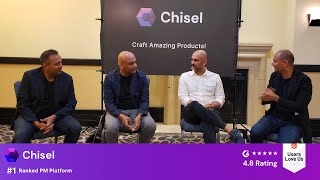
Parag Vaish, Rahul, Ibrahim Bashir, and Praful debate how AI will reshape product management. AI speeds feedback collection and can auto-classify it into PRDs and status reports, freeing PMs from tedium. But human judgment on strategy and cross-functional alignment will stay critical, even as some middle functions compress.
Chapters
So back to the introductions. I think we'll start from the other side of the table and we'll have each of the panel members give their background. I've told them not to be humble because I'm not going to be humble. So please.
Sure.
My name is Parag Vaish. Nice to meet you all. I've worked at a number of different companies in pretty much every industry. So I began my career at the Walt Disney Company working on live action movies, literally rewriting scripts, hiring writers. This was Enemy the State, Armageddon, if you remember any of those movies. This was back in 97. I went on ESPN. At the time, the Internet was just beginning. We were trying to monetize ESPN.com and get people to pay for something. There was no such thing as advertising on the Internet at the time, if you can believe that. From there I went to Microsoft. I was in the MSN division as a product manager. First time as product Manager, that was 2003. I went into a startup in the travel industry. Was before Airbnb was cooled. This was a software for vacation rental platform. From there, msnbc. At a time when mobile apps were just beginning. So we made all the mistakes in the world building mobile apps across the different portfolio brands like Today's Show, Rachel Maddow and Egg News. From there I led product at StubHub. That brought me to the Bay Area from Seattle. And so it was an awesome time to be at StubHub. We were moving to be a mobile company from a desktop company. So got a chance to partner with Google and Microsoft and Apple and everyone that was out there doing something in tech because we're agnostic to all the companies. From there I left to go lead digital at tes, Thus the cybertruck reference. So all of the digital platforms in vehicle, the retail stores, the mobile app, all of the design elements that go along with that. So wild and crazy window of time. It was 17 and 18 because we were very close to being out of business. From there I left to go to Google and was a founder in residence. Got a chance to build a company from within Google for a couple years. And what do you do after all that? Right? You go into weapons detection using artificial intelligence. So that's what I'm doing now. I made product that company that does AI weapons detection. It's a publicly traded company. We've been around for 11 years. Customers would be Oracle park, as you go to a baseball game, Wrigley Field, Dallas Cowboys. About half our business is schools and hospitals. And we're using AI to detect weapons and unfortunately it's a big problem in the US in particular. So I'll turn it over to Rafo, but nice to meet you all.
You know, after his background this is going to sound very monochromatic. I spent bulk of the last two decades working on Enterprise or B2B SaaS. Currently I support the product and the Eng teams at pin Drop. It's a late stage startup. We're into voice intelligence. We can listen to any audio and say whether it's synthetic, whether it's genuine, if it's genuine, who the user is, is it fraud, and so on so forth. Used by a lot of banks and so on. Prior to Pindrop I've had stints at Palo Alto Network. I built out their cloud security business. Before that I was at Facebook trying to help Facebook enter the enterprise and that didn't go so well. Before that I was at Google. I spent nearly half a decade then the Google Apps team, now the workplace team or the workspace team I guess I joined them and they were $300 billion in revenue with them to over a billion dollars in revenue. And before that I was at SAP. This is a European software company. I started my career in consulting when you know, on the enterprise side I worked with the full spectru companies that are trying to sell to the very high end companies that are selling to very small businesses, companies that have a PLG motion, companies that have a sales type motion from a stack perspective, productivity apps all the way to infrastructure and platform. But you know, all this while I've generally focused on enterprise SaaS. I've done almost every job in a tech company. I've run sales, I've run product, I've run inch, I've run marketing, I've run partnerships, run the full cabinet. I mostly as you can tell, work with large companies except my last tent. But even with large companies companies, majority of my work has always been around starting something new or focusing on something which is not a cool. That's my back.
Hey folks, I'm Bashir. What can I tell you about myself? I think probably like a lot of you, I studied computer science in school, wanted to be a game developer, did not get a job as a game developer so then just decided to be a software engineer. I used to work on radiology software at a hospital. I work on e commerce platforms. I was one of those engineers who was always asking why are we building this? Who are we building this for? How do we know it's the right thing to build?
I know those kinds yeah.
And so I kept, I kept being told to stop asking questions. And so I realized being a IC engineer was not for me and I hadn't quite discovered product yet. And so I took a career 180 and I went into consulting for a number of years. So I worked for Deloitte and Touche, crisscrossed the country solving really simple problems that got overly complicated. Like company A buys company B and their databases don't talk to each other. And it's been 36 months, what's going on? And so solved a lot of those kinds of problems and realized a lot of it is organizational dynamics and communication and stakeholder management, things like that. So after five years of that, got frustrated with not really owning the experience and the product through and through and really lasered in on product as what I wanted to do with my career. And I actually remember this moment, I was like, not only do I want to build products, I want to work on products I'm really passionate about. So I made a really short list of products that I was going to work on and it went the Kindle at Amazon, the Twitter application and then Netflix. And I was like, I'm going to work at these companies one by one. And so I actually belligerently interviewed at Amazon and I'm famous for actually turning down an Amazon offer with the merchant platform team and saying I just want to work on the Kindle. So the recruiters had a good laugh. It took another six weeks and then they finally introduced me to the Kindle team. So I actually was one of the very early PMs on the Kindle. Worked on international expansion, worked on some hardware stuff, some accessory stuff, some on device stuff, some retail store stuff, some online sales experience stuff. Just got a collection of experiences across the Amazon ecosystem. Was the PM of the first ads based device, which was a new business model, was the PM of the Kindle Fire tablet if anybody remembers that. And then moved to the Bay Area and actually started working at Twitter, which was number two on my list. At Twitter I was part of engineering and I was on a PM team that really focused on the platform and infrastructure side of Twitter. So the problems at Twitter at the time so I joined pre IPO were it's slow, it's not reliable. The fail wheel was very famous. And so my charter was really performance, reliability, cost and getting the infrastructure to a point where it could be bulletproof, which we did over the course of five years. So worked on a lot of really interesting stuff. If there's any feature you've ever wanted on Twitter. Whether it's more than 140 characters or editable tweets, the infrastructure for all of it exists just to pull the trigger off so it's never a back end problem. So did that for five years and then I think it was around the time of was Twitter causing election chaos and what's going on with bots? And I really felt like I needed a break from ad space revenue models and I wanted to just do something where it's like we build a product and if people like it, they pay us and if they don't like it, they don't pay us. And so I kind of stumbled into B2B products that way. I was like looking for something cleaner and simpler. And because I had worked on so much infrastructure stuff at Twitter and because at Amazon you have to kind of work on infrastructure stuff just to survive as a pm, I actually got an opportunity to be the GM of developer products at Box, so actually was the product lead, but also dotted line managed sales, solutions, consulting, marketing, professional services, developer relations, et cetera, and got to actually scale up a SaaS business from less than 10 million on a path to close to 100 million, which was a really interesting role. And then eventually ended up running all add on products and Vox's portfolio. So Vox's cloud storage and everything around it, security, compliance, governance, workflow, deployment, developer, etc. Ran most of the product and had a really good time. But you know, CPO change always leads to change on your end. And so I kind of took stock of my career. I think it was 2020 and I was looking for something that would give me the strategic discipline of Amazon, the scaling experience of Twitter and the B2B products of Box. And so I actually landed at Amplitude, where I still am, been there for three and a half years and then combined all those things for me. And the real icing on the cake was Amplitude is a product for product people to help make product decisions. And I a lot of time sort of writing, speaking, teaching, coaching about product management. So it was kind of a win win where it's like everything I do outside of work leads to pipeline for the company and working at the company creates legitimacy for everything I do. So that's my story. And for three years I led the core analytics product in Amplitude. So whether you love it or hate it, that that was me for three years. And then as of the last couple of months we've grown into a multi product company and so I have a new role on the product leadership team. We're basically trying to expand the edges of the platform. So that looks like partnerships, that looks like acquisitions, that looks like internal Inc. So that's what I've been focused on.
Awesome.
So I've been a product management leader for almost 23 years now. And my career is also split between large companies like Microsoft and startups. So for last seven, eight years I've been in the startup world. I've founded two companies. Chisel is my second company. Before this I founded a natural language processing company and sold it in two years. Prior to that I worked for another startup as a VP of product which was a machine learning company in the HR tech space. Before that, large company experience, Microsoft. My last job there was as a head of product in Office365 team. So I led the Mondoview team over here, a bunch of products. Under that I work like the whole Outlook.com experience, the actual people experience in Outlook, Skype integration, all those pieces of Outlook Office365 before that I built the entire Windows app store from the ground up at Microsoft. And in the early days I was on the consumer side. So I did a lot of work, if you can call it work on high definition Xbox playback. So watching a bunch of NIGHTF movies and games was daily job. Yeah. And for last four years I'm at Chisel. We founded the company during COVID in 2020 and then we launched our product in the market in 2021. In very simple terms, basically Chisel is a platform for product managers which does two things. There are a lot of roadmap tools in the market. So the way we are different from these tools is that we are a two in one tool. We have feedback management in the same app where we have roadmaps. And so there is no disconnect between the customer discovery and customer needs when it comes to connecting every item to the roadmap tool itself. So we are two in one. And the second big differentiator we have is that we're doing a lot to push the agenda on automation.
Right.
And so we push the boundary on scenarios like an automatic PRD creation, automatic status report creations. And because we have the feedback and the roadmap system underneath that, it basically provides us that system of record on top of which AI can perform quite efficiently. So just a little bit about myself.
Cool.
So let's jump into it. I think you know the panel was asking me what's going to be the softball question. And I said there is no softball question. We are not going to waste time, we're going to jump right into it, right? And so I think we just have like four or five key meaty kind of discussions to have. I think my first question for the panel is that, you know, everyone knows that emerging technologies like AI etc are going to change the way a lot of jobs are done. And in particular, it will also change the way product management job is done. Now, obviously, product management job is about a lot of things, right? Right. From the customer discovery all the way to delivery and closing the loop of feedback or validation with the customers. And so my first question is that if you look at that, those stages of product management, right, the very first stage is customer discovery. And so how do you guys think the process of customer discovery going to change with emerging technologies and AI?
Happy to start. So we happen to be a Chisel customer. So we're using the Chisel platform and we have a new product launching in about a month. And what I found the difference versus five years ago or ten years ago is the speed and the breadth that you can cover with getting feedback from users. So we have a product that we're building for college campuses, so we can be at hundreds of college campuses in an instance using the Chisel platform, we can automate the process of getting feedback and then feed that into our full roadmap process. So the rapid pace of getting that wide distribution gives us certainly the quality feedback. But it also gives us a really interesting lever to go to prospect customers and say, we've been testing at hundreds of universities and so it turns into a lever for how do you win business just as well, because you have the breadth, you have the scale and the depth of feedback, and it gives the impression that you're actually at hundreds of universities when you really had a couple dozen people at those universities. But still it gives us a lever, speaking startup language to kind of fake it till you make it and say, you know, Beth East University. So I like really very much appreciate the breadth because it turns into a revenue lever just as well.
So let me give you a very different perspective. You know, pin drop here in voice intelligence. Voice is fundamentally an ML problem. So we've been doing ML work for well over a decade. We have customer specific ML models for almost every customer that we have and so on. But when it came to genai and LLMs and copilots and all of those things, it took us six months before we could even start using any one of them in either engineering or product. And the reason for that is we are a biometric company selling to financial institutions. Financial institutions have A really long list of requirements that they have around use policy and we had to put a use policy for genai across the entire company before we could start using it. We still went ahead and did it because it was so important for us to do it. And you know, I'm just curious, show of hands, how many of you currently use any genai for any of your engineering or product management work? Yeah. So, you know, the reason for us is, I think before even product management, what's very clear is the biggest impact that all of us are seeing is really on engineering. You know, depending on who you talk to, people talk about productivity improvements of anywhere from 30 to 50% at least in engineering. Product managers typically, you know, at least in most startups are fairly scarce resource. Right. Most people would rather hire engineers before they hire product manager. Ratios, you know, are different ones to 10, one is to 15, whatever you want to go. But now you take those 10 engineers, make them 50% more productive. The 1pm that you had supporting him, supporting that team is now not even getting sleep. So that's the problem you really need to go solve. Now in the B2B world, customer discovery is a little bit more, it's not a scale problem. You don't have to go talk to a thousand people. You really need to have anywhere from 30, 40, maybe 50 really detailed in depth discovery sort of conversations or engagements with customers. For me personally, that's not where I would put the focus for something like jizzle in a B2B setup, the areas where I think you can get the biggest bang for the buck for productivity. When it comes to B2B, customer discovery is mostly in the customer outreach, which is more of a marketing function than product management function, which is figuring out who you want to get to. There are all sorts of ratios of you need to touch a customer seven times before they'll come back and respond. So it's much more that side of things. But I can clearly see if you had a B2B product, even if it was for small and medium businesses where you have thousands and thousands of customers like we had at Google Apps for example, their aggregation is a real problem. Aggregation of insights is a real problem. And wherever you have aggregation of insights is a problem. As a pm, you end up spending a lot of time trying to figure out what is the pattern, what is the signal from the noise. And I can clearly see, you know, a lot of value there.
I'll build on Prague and Rahul said, which is, I think in my experience a lot of PMs end up not actually making product decisions. And that is, I think the reason why most people get into product is like I want to make decisions about where the direction of this product is going. And they actually spend a lot of time in just boilerplate stuff, right? Collecting feedback, scheduling meetings, collating feedback, trying to make sense of data. And so I think if what AI can do is basically simplify and level the playing field there so that it really just comes down to who is actually good at decision making. Because now all the boilerplate stuff is gone. Because when I think about, especially at junior levels, when people sort of celebrate PMs, what they're actually celebrating is their organizational ability and their ability to get stuff done even in a very chaotic environment. And if you can simplify all that chaos, then everybody gets a chance to actually make meaningful bets and try things in the product. So that's the part that's probably the most exciting for me as AI is just removing a lot of the tedium work out of the job so that we can actually focus on decision making. The other thing is, I think a lot of times customer discovery itself, as you scale starts to become an interesting problem because you might find insights in different pockets and you don't really know which one to index on, right. And so I think that's a place where I haven't seen much from AI, but I think that's one where I would hope to see more gains is actually help me understand if I'm getting a signal on group X and a signal on group Y, which of these is more likely to become a core user over time, to be monetizable over time, et cetera. So you can actually prioritize feedback based on who it's coming from and their likelihood to evolve.
Very good.
I think just one piece to add to this. The one theme on customer discovery that we keep coming across again and again where customers are interested is essentially the automatic classification and insights generation from the feedback. Few customers have told us that they physically were not able to just do this analysis of every ticket or feature feedback, right? Because volume is very, very high. And so where AI kind of helps is if you, if you can auto classify those things, then the problem becomes manageable that, you know, for 5,000 tickets I have there are only 300. For example, if you're a bank, you see, you know, there are only 300 which are in the bill pay area. And now you can actually, you know, manage that 300 better if you're a bill pay PM.
Right.
And so we've seen that come again and again in terms of how do we basically apply classification to a large.
Set of feedback kits. So let me just build on what he said and you know, talk about Ibrahim. Engineers are great, but it takes a lot of convincing for engineers to do stuff and a lot of time for a pm. Oftentimes it's not necessarily arriving at a decision, but bringing the rest of the crowd along, whether that's the rest of the engineering team, whether that is the rest of the cross functional team. And there's much more effort you end up putting into that because you need to convince people that the call you're making is the right call, it's based on the right data, does it have the right supporting rationale, and so on, so forth. That's where I feel, you know, there's a lot of value that you can get from a tool like chisel because it, it simplifies it, it automates it, and you don't have to spend as much time as a PM in most cases. You have a pretty good feel as you go through the discovery as to what is the, you know, what is the answer, what's the insight, what you want to build, but the effort of convincing everyone else that that's the right thing to do, that can be really, really painful.
That's actually a good switch to the second question Kana I had right, which is, you know, one part is customer discovery, the second part really is about, you know, prioritization, right? And aligning the team and actually delivering what you promised. So when you guys think of that piece of a PM's job, or in general, how the discipline is going to evolve in the future, how technology is going to make a difference to that, what are some of the key things that come to your mind which make you feel excited that my job of prioritization, in my job of actual delivery of these things, things are going to change because of emerging technologies, whether it is AI or any other kind of automation.
I'll happily be provocative on this answer. So if you think about Rahul's response just a moment ago in Abraham's as well, their stakeholder management is a key component of it, which means aligning other people to be part of the journey of the decision. I believe AI will cause for role compression. And so if the product manager has more time to make decisions or less to focus on the details, they can do more biz dev, more marketing, more product marketing, more something else where you need fewer people to align to.
And.
Therefore you self solve the problem of stakeholder management.
So I actually, I think he's onto something. Because if you think about the simplest product execution, right, it's a founder CEO who knows a domain and is like, nobody say anything. I know exactly what to do. I know exactly what to do. I know how to market it, I know how to price it, I know how to message it. And then as the product evolves, all of a sudden it's like, well, we need 10x the people to do that and starts to get more and more complicated. So I think he's not wrong in that if you can compress it, you do actually increase the likelihood of product market fit more and more. And the part that I'm actually really excited about is there's too many product opportunities where you need to be a domain expert to even take a stab at it. And I think what AI and emerging technologies can do is, is flatten the learning curve a lot so that more people can apply product thinking from different disciplines to new disciplines.
Let me give you an example.
I went to an event like this a couple years pre Covid and I was sitting next to a guy who.
Was.
They basically were a farming startup. They're like, you can grow food in a vertical rack. And I was like, oh, are you a botanist? And he was like, no, I used to work on cooling systems at Tesla. And I was like, how did you go from this to this? He's like, it's a very similar problem. This is just completely different domain. And so I always find those kinds of things fascinating where it's like you learn something and one domain and you apply to another domain and that's the heart of innovation. And so I'm hoping this frees up brain cycles and incentivizes people to tackle different problems and innovate more.
So I think your point about it enables people to tackle newer problems, shortens the learning cycle. I think, you know, that makes a lot of sense. I still feel in most companies if you really look at at what a PM does it really three things. One is figuring out what needs to be built. I think that in some ways is the easiest job. Second is convincing the engineers and the rest of the group this is the right thing to be built. I've worked with a lot of strongly opinionated engineers. You need to convince them so that they truly have the passion and the empathy. And then you've got to get your go to market engines and your sales teams to really go figure out how they're going to go sell this. And they will have hundreds of different things that they will want you to build into this that you will probably never have cycles to put into the roadmap. And that part of the problem is when you talk to PMs is stuff that most PMs don't enjoy doing, it takes many more cycles than they frankly have to be able to tackle that. And that creates a lot of confusion and frustration on the other side, which is you launch something, you didn't really engage with us, you launched something. We had input and we couldn't really provide you input. I think simplifying that and making Heroes out of PMs in my mind is we'll probably get to a stage where you need less people, but I think in the short term just removing the friction from that entire process and making the entire product launch the product prioritization process no longer a black box, but allowing many more 10x more people to be part of it and have visibility into it, it'll be a huge win for most companies.
Cool. So my last question for the panel then I want to open up for the audience question is that when you think about some of these changes coming, what would you as a product leader advise PMs who are earlier part in their career or mid part of their career and growing, what would you advise them to focus on? What would be your advice in terms of top two three things that they should keep in mind to stay at the cutting edge of technology other than just like learn about it? Yes, we all know that you can read some books and go to webinars, but what else can they do to actually stay at that and maintain the edge?
You know, let me go first. I think at the end of the day the core skill set for a product manager really is can you figure out what to build and can you help her get built? Everything else is supporting functionality and the more you can use tools to automate the supporting functionality so you can go really focus on the core craft because that's the stuff that gets the twinkle in the eye, that's what gets you passionate. That's why people stay up late at night doing stuff. So the more you can do that, the more satisfying it will be for you and frankly the more impactful it'll be for your team.
Just a quick follow on on the answer. When they are trying to do that, how should they think about specific impact that changes in technology or the emerging technologies like AI or any other thing like robot micro process automation or any other field of AI machine learning? Should they keep something specific in mind as they are trying to keep the Eyes on what to build and how to get it built.
Yeah, so.
Or do you think the changes in technology are not going to change the job dramatically?
You know, I think it's the same thing we tell our customers. It's not the technology. Right. It is, you know, how you end up using it. So, you know, to some extent, ML has been around for a long time. Time these things have been around. I think what's really changing now is the way they are being adopted by applications like chisel and making life easy for people. So I think there's a part of it which is all of us have to do all the time, which is you've got to stay current with what's really happening in the market. But besides that, in terms of what you do day on, day out, you know, my daughter's in the room and she's going to be an intern as a pm. My advice to her is focus on the core craft and the more time you can give to yourself focusing on the core craft and not getting distracted by everything else that needs to happen, the more time you have to develop yourself.
Does anyone else in the panel have a counter opinion?
I actually do have a counter opinion and I know people are going to think it's a very privileged answer, but it's a conclusion I came to slowly over the course of my career, which is it's a fallacy to try to get your one day job to give you all the learning you need as a product person. It's just not going to happen. And it actually leads to some strange behavior, which is you start pushing certain technologies at work because you're like, I need to get this on my resume and it just doesn't make any sense for your product. And so my counterintuitive opinion is actually you need to have a portfolio of product management every step of your career. And younger people I've seen who are doing product management operate this way. They're like, oh, I do a little bit of angel investing. I advise on this. I'm building a thing here. And I used to be like, where do you get the time for this? And then when you actually add it up, you're like, we actually spend like 120% of our time on our day job, Right? And I think if you could say, actually I'm going to spend 95% on my day job job and dabble and try things, I think it's going to lead to much better rounded product managers. And I think if everybody starts doing it, it will force employers to be like, look, we got to give you time to hack, but it doesn't always have to be work related.
Literally 95% of what I was about to say is what Abraham just said. The term intellectual curiosity comes to mind as the single attribute I look for in product managers. And the best way to exhibit that is to do something outside of your core role at work. Because you're going to get limited exposure to the full breadth of capabilities as the world evolves. Your company will evolve in its linear path in that industry, in that space, but the technology world will have a far wider breadth. And so the hands on application outside of your day job is where a lot of the learning comes from. Makes you more interesting as a candidate. It gives you more interesting topics at dinner part parties. It's where a lot of the learning happens. So when you expand outside of your job, that's where you start to accelerate your career.
I want to add some context here, mostly from what I've actually seen from the market and what customers have shown me. I've had situations where, you know, a corporate bid me for a very, very large company, right? Everyone knows me. She literally showed me that. Look, these are the prompts that I'm actually giving to just write a prd. I gave a whole talk to my team over here how we can use this. She just did that. She spent two, three hours and sent out the whole member of the team saying look, here's how you guys should be using this sub. It is so fast, right? Not only that, even when I've talked with some of the actual PMs who were doing the work, they have actually said that Praful, if I wanted to write a spec on sign up, it used to take me four, five days and the spec wouldn't be ready for four or five days. Today what I'm doing is I'm using like you pick your favorite tool, right? They use some kind of tool, it gets them to 80% of the way. And now they have a lot of time. They're now using time to actually focus on the key decisions rather than writing the basic use cases which have been written for a signup experience for more than 20 years now in the market, right? So it's really sharpening where they are spending their time. In fact, you got at that point, I was just talking to someone here and they actually built the PLA application themselves and they are using it just for themselves, not for anything else.
Right?
And so there are so many ways PMs are already trying to get an advantage here. And mostly it is just to save their own time.
Right.
And be able to focus on things that really matter more. So I think that one thing which I kind of continue to believe is that it will free up so much time of ems. Right. It'll reduce busy work and allow you to sharpen your attention only on things that really matter. Customers revenue, winning the market. Right?
Cool.
I want to open it up for the audience.
So with all this conversation about AI and how it can be used for product management, how does a tool like Chisel help future proof your strategy and your roadmap? By, for example, helping you look into different scenarios that could happen? The market being so volatile, the distraction attention span being so short, you have a dynamic space where machine learning and AI switching attention to one part or the other. How does it. This tool helped me figure out a dynamic way to update my roadmap, following both market trends and using information such as the segmentation and classification features that teach me what users are driving the use, who's really driving this and what do they need, and how can I use that to inform my roadmaps and keep them dynamic? Being future proof. No matter what happens, I will have a roadmap there.
Happy to give you a perspective, but yeah, go ahead. I think the future proof reference is where the human actually still matters quite a bit. And that's where you've got to read the market to then be able to seek out feedback from different audiences, possibly different than you had targeted originally. And so having that recognition that you need to go after a different segment to get feedback from those users, you can use Chisel as an enabler to get that feedback, but you have to have the human who understands that there's a possibility that you expand your range beyond what you had originally targeted. If you think about that, what's that cup that everybody got crazed about? The Stanley Cup, Right. So the initial market was the construction workers or whatever it was, and then they figured out that there was this wider audience. If you can take your product person, whoever's in charge, and say, well, what if we made different colors?
What if we.
We got after this different market and triggered this whole craze around it, then you use the chisel levers that you have in the toolset to be able to go seek out that feedback and validate it more quickly than you can on your own. So I think it's one of those unusual instances when you think about AI so much, where the human actually matters quite a bit to be able to expand and then use the tools accordingly.
I think what tools like chisel or chisel in particular can do is is make it really easy for those signals to be right in front of your eyes and you can't miss it. Right. For example, you know all the signals that we derive from customer feedback or from different systems of records like Salesforce or your CRM system or your support system, etc. Those signals will be right in front of you in addition like in front of every roadmap item. So then it's up to you. You don't need to go anywhere, you don't need to work really hard to extract. It's all there right in front of you. Now it's about as perhaps saying your decision. Anyone?
Any other question?
Yeah, I think I would like to add more.
Yeah, so.
So I think listening to one of my friend actually he just joined as a VP of product in one of the startups. His thing was like we have two products, the APA products is the most used and that's where we're making revenue. At the same time the UX product is used very less and I think it's not making that much money and they sell it on a license. I tried to give some advice to them. Then I thought like, let me see actually if I'm thinking different or not. So I just put out the same whatever answer I gave it to him, I put it in the chat. GPT gave same thing, but to Parag's point, that's where human comes into picture. And the same thing I asked him, think like a product manager. But first think after these two, you figure out the revenue models for these two. Try to think about cannibalizing your own product because if you are not thinking about your competition, you already think you about it. When you start thinking about destroying your own product, you'll find a lot of gaps where I think you can figure it out that part a chatgpt couldn't give it because it's trained on that model because nobody has given that idea to chatgpt. So that's where the human factor comes in. Because one, as I said, free up yourself most of your trivial work by using the tools and that remaining 80% of the time you put on a 20% of the time. So that was a differentiator.
Cool.
Yeah, please. Yes.
So as you all have come through.
Your careers as LEPMs, you had issues.
That you faced, whether it was being.
Thrown down the paperwork rabbit hole or.
Continuous stakeholder management or just iterating continuously on your projects now that you're leaving Teams. How are you helping your teams not.
Go into the same problems that you faced?
And even better if you're you with Chisel.
So I'm not doing it with Chisel yet. But I would say I have a overriding philosophy and it's the Amazon in me, because that was my first product role, which is, I think there's a desire in a lot of PMs today to scope the problem down to the product surface that they own, quote, unquote. They're like, I own this tab or this panel or this page. And the customer experience is not confined to that. Like, the customer got there through a series of interesting events. How they discovered your product, how they bought your product. Product, their prior experience with your product, the page before your product. And so my philosophy and what I encourage my PMs to always do is say, I would rather you understand the entire user journey and the customer journey all the way to docs and sales and support and all that, and be less detailed on the piece that you own versus going super deep on that. Because from a customer perspective, it's Conway's law, right? It's like you, I don't really care that you own this and they own that. That I care that this is the entire portfolio that I'm interacting with. And so I think, to answer both parts of your question, the thing I encourage my team to do and the thing I think that ultimately helped me evolve from an individual to a lead, to a manager, to an executive, is actually thinking about the customer experience holistically and not listening to anybody who would say, well, that's not product's job, or that's not this product team's job.
Right. In fact, it is a rate if this thing is that a lot of PM sometimes think feedback is only feedback if we got it. If I was involved personally collecting it from the customer, the feedback is available in so many places. Right? Customer is speaking to you. In fact, we have Iran in the room with us. He's the EVP of Gong. And we were having this conversation the other day that, you know, like, Gong is recording so much of the customer feedback already, or prospect feedback even more important, right? Like, these are the people you're trying to sell to in many cases when you're having sales conferences, decisions. And so GONG has all these things captured. They are there, right? There was a time when AI based summarization was not available. Now it is. But, you know, tools like us can integrate that and pull all that into the view of a pm where the PM is no Longer tunnel visioned about, you know, hey, I didn't talk to the customer. So there's not feedback. No. This customer has been talking to your sales guy for such a long time that they have the best feedback possible.
I just want to add one more thing. I have a good friend who has a very unique job title. He is like chief escalation officer at a product company and he has had that type of job for that same CPO in multiple companies. And he always tells me the thing. He's like, no PM wants to hear this, but he's like, I would rather remove 80% of the features on your roadmap and just fix your documentation and your demo and it would solve like 80%. But no PM wants to hear that.
Right.
Career jeopardizing. And so it's just something to keep in mind is if the problems of that obvious analysis there, you're either you're not accessing them or you're not internal.
I think this is the, this is the feature factory disease.
Right.
Like lot of PMs unfortunately think that unless they create new features, they are not worth their thing. You don't need to create a feature factory. You could just have one winner and that kind of gets you to your goals.
Superfood just to jump on that one.
So I've done marketing companies and so.
I'm served as a.
Just to put some color on that. That Topan was the chief marketing officer for Productboard and Product board is one of the tools in the PM this thing. Right. So he knows a little bit about what he is like.
I'm more curious.
So when I interface with product managers, the product managers often get lost in features, you know, so they're just spinning in features. And I think oftentimes there is an opportunity, whether you're on the sales side, marketing side or support side to articulate the story on what you're building, why you're building, how you're going to help customers. And it's hard for a person on that side to go into the in depth PRDs and kind of comb their way through.
Right.
And so I was curious about your thoughts on using like let's say AI, right. As a means to do the other parts of a PM's job, which is.
A really important job interface to go.
Market teams as well as interfacing with.
The customer support team.
Like I was at Rat Book most.
Recently which does entertainment payroll.
And half the time the PMs are working with large customers, whether it's Netflix.
Disney or something like that.
Right. So anyway, I was just curious. I know we talk a lot about building.
I'm talking about the interface aspects of the function.
Yeah, I mean, look, one of the biggest pain points right now for a lot of product managers typically tends to be all the questions you get asked by sales or customer success or marketing and maturity. Those questions are frankly the same questions. Right. They get asked the same questions over and over again. And I actually had someone on my team keep track of the number of times the same questions are asked because that basically means enablement is broken. Right? So look, I 100% agree with what you're saying, which is a lot of our time as PMs is really spend on things that are non core to the craft of building great products. But it is still extremely important to making the product successful. So without that, your product would not be successful even if you take a prd. Right? A prd. At the end of the day, while it has some element of the market and the user story, it is still geared a lot towards engineers. How do you create a summary of a PRD and send that snippet to all your customer support people and say, give me a few feedback.
I want to answer his question. I love movie references, so I'll give you guys a movie ref. If nobody ever has seen this movie in good company, it's like 20 years old. It's Topher Grace and Dennis Quaid. And Dennis Quaid is like a magazine ad salesman and he gets like MBA. Like his boss is like 20 years old and he's like 50 years old. And this guy's preaching to him about how to do it. And at some point some company buys their company and this guy's giving a big speech beach and they sell ads in magazine and he's like a child wakes up in Malaysia and decides to buy cereal. He just keeps saying like nonsensical things and the guy raises his hand and he's like, I thought we sold magazines. And I don't understand what you're talking about. And I think to answer your question, like a lot of times everybody's so obsessed with like how is this new and shiny and take advantage. And I'm like, your core product and motion and ICP is already established. So 99 of the time that's what you should have be talking about as sales, as marketing, as enablement and as product is like, how does this enhance the thing that already works? If your thing is a whole new thing, it's actually not layering into what you already have. Right. So I push That a lot. It's like unless we are explicitly trying to build a new business, you should talk about connecting to the existing business as much as possible. And that reduces the cognitive load on everybody to try to understand the thing.
It's bad and I think it's just almost guilty to be. So what problem are we solving? Oftentimes I feel like I have to extract that out.
You've internalized it as pm, but anyway.
I think that makes sense.
I'll offer one perspective. Your question is about like interface with marketing or other team members from the product perspective. So I've got a product that is very early stage and the product manager is unlikely to get resourced from other departments and the team in the company. So PR and product marketing, whatever, they're.
Gonna be busy with other stuff.
So instead of having this person just feel deficient and under resourced, I just told them they have no resources. Okay. Nobody else is going to support you. You're the only person who's going to make this product successful. Go find the AI tool that'll do the job of the department that's not supporting you. And the moment you pivot your thinking to AI can probably solve this. When you defer to AI as the solution, you're gonna find plethora of tools out there. So this product manager now is. Posture is very different. It's not deficiency, it's opportunity. That's the first big shift. Then once they got there, they found 20 tools for PR that get them 85% away there. And they found dozens of tools for sales enablement and video management, all kinds of other stuff. So it's about shifting your thinking as a product person and then seizing the opportunity that's put in front of you, even if it means resource.
How far do you think we are from the future where that 1pm is.
Single handedly running out?
Yeah, it's the day before, I think Sam Altman said, you know, a billion dollar company with one person. I think you're talking about the day before that happens.
Sherry, you had a question and then there's a question.
So that picture, it's is really relevant to the question that I was going to ask. Kind of shifting gears a little bit, I think. We talk about productivity, we talk about feature, talk about stakeholder management at the execution level. If we zoom out and think about product vision and product strategy, a very important part of the product management or chief product officer's job is really to anticipate, right. Anticipate the future market trends, not only just to listen to the feedback of today and also anticipate your competitors move and where your potential competitors could come from, because a lot of times they could come from different fields. I was interning at Ford when I was in college and I remember I was developing the product roadmap for navigators, right? The navigation system in the car. How funny is that? Like right now everybody has this. And then also if you think about the last wave of OpenAI just totally wiped out a lot of startups with shiny product roadmaps. So really the question is, how do you build product moat? Just given how fast the landscape is changing as chief Product Officers, how do you anticipate, what are some of the good practices you've seen?
I think there's, I mean, if you read like business strategy books, there's a few tried and true techniques to building moats, right? And so I think if you have a product inside and if you can get enough champions on your side or enough market share or you sort of control a Persona, those are all classic modes, right? Community is a classic mode. So I think there's a bunch of different modes. I think what's more interesting than how to get the initial mode is how to maintain it. And I think where a lot of companies fall apart and this is the, the root of innovators dilemma, is their moat and their differentiation starts to fade and they don't translate it into something else, right? I think that's where things fall apart. And so to me it's like if you have a successful product, if you've made X in revenue or you have Y in users, you have a somewhat successful product, you need to do some hard thinking about what is it that helped us get traction and how do I actually double down on it and if it's a fleeting differentiator, how do I actually turn it into something that can be everlasting, right? So I'll give you a simple example. I teach a class and one of the case studies we use is GitHub. So GitHub gets like almost every developer on earth using GitHub by saying you have free repos right now. Eventually repos become cheap enough that everybody can offer free repos. So you don't actually have free repos as a differentiator anymore. But what GitHub managed to do is they managed to become sort of top of mind for every developer to be like the free repo leads you to putting your code on there. And now that's how you do collaborative development, right? They have a huge community now and so they had A short term differentiator in free storage. And they were smart enough to be like if I use play my cards right, I can actually get enough of a community that's going to be hard to displace. So even if you come along with more storage, cheaper storage, you're not going to break this community. Right. And so I think that's what most product people and most companies don't think about is what is actually a lasting differentiator do we have and how can we capitalize on it for the long.
You had a question?
Yeah.
So one of the things that I think is often overlooked is most teams and most companies are going to grow, let's say over 100 people. The silent killer of every routine is we can call it org design roles and responsibilities. So I wonder how you think about this. My thesis is that AI would make the people aspect and those org design aspects even more important than today because the difference, the competitive advantage of PMA versus PMB is going to be a lot more on the personal side because the tools are going to be so much better. Better that the drudgery that some people do today in half a day, another take two weeks are that's not going to be such a big differentiator. So I wonder how you think about that as you think about scaling teams in this new era where AI makes things easier, but they don't really solve the human piece.
You know, I don't know if I have a good answer, but I think the fundamentals of where we are today seems to still apply and maybe at some point they will break, but I don't know when they'll break for me. So, you know, the basics tend to be do you have clear ownership around how you will have an impact on the customer's journey, customer's experience and do you have a team that can execute against that? And so I don't have an answer for you as to how AI will drive it. I do have an answer. In today's environment, how do you go from to 500 to 1,000? Because that is a real problem even today. I think to a great extent that problem doesn't really go away. And you know, teams struggle with that because I think you refer to this, which is the interdependency between teams really grows. The way you plan products then has to fundamentally change. You have to do a lot more horse trading on I need to get this feature, but this feature needs these three teams to support how do I get them to prioritize and so on. So I think A lot of those things don't really change in my opinion. There might be new things that we'll have to worry about. But I think if we can solve for what we already know needs to be solved for, I think we'll be in a decent spot.
I'll offer one perspective that's from Elon at Tesla, which is flat organization. So no person is more than two people away from the CEO. This is a multi tens of thousands person company but he strives for that. Second is artificial deadlines, Completely artificial. Everything's one day or one week, that's it. There's no other long term projects one.
Day or one week.
Third is removing people from meetings. No meeting needs to be more than some number and some number of minutes. And it goes to what Rahul's saying is those are fundamentals, those are independent of AI. That could have been an answer five years ago, you know, but I think they're actually still there's elements of those that make sense not holistically. Tesla's chaotic for a variety of reasons, but there's elements that are keeping the administrative burden.
You agree that this aspect would become even more important because AI would level.
The playing field on a lot of.
Other aspects or do you think it's.
Going to be the same? I think it'll simplify things because again the fewer people, the role compression point from earlier, fewer people need to work align so you have flatter more efficient decision making. So AI is an enabler for that.
I, I actually don't know. In fact we share the same kind of process because I think I'm somewhat in your camp. I think what's going to happen like you see today, imagine a particular pm right today. The difference between PM A and PNB is not necessarily just judgment or intuition. There is a lot of other stuff which is mechanical. This guy can write really fast, this girl, she can actually, actually document requirements. There is a bunch of stuff which is mechanical which can be replaced by AI. So now what happens is the way you differentiate between PMA and PNB essentially boils down to creativity, intuition or just pure judgment, right? Very, very soft intangible kind of skills. If you extend this, it gets even worse. Like imagine a PM who's kind of decent at marketing or vice versa. Marketing peer who's kind of recent at the product management team job. Now both of them given the right tool sets, the difference in their skill set is really zero. At that point there is no one person having a lot of experience versus another. So this can I personally think this will make things a little more challenging because it is uncharted water. Through your example, if you tell your PM that hey, you know what, go find the best PR tool, best marketing tool, that person goes and starts doing this. They step over three other people's stores, whether for right or wrong, that's going to create a churn in the organization and some chaos in the organization. And I don't know that we know what that effect is going to be or what are the parts which are going to get more amplified and how is it going to break.
So I have yet a different opinion on this and maybe this is not the question you're asking, but I think all these solutions of like kill meetings or like flatten the org, I'm like, it's a hammer, we're looking for nails. And I think one of the most distasteful things I find is when a leader comes in and says this is how we used to do it at this company, now we're going to do it here. And I'm like, but this is not that company. So you know, it doesn't really make any sense. And so to me what AI can help do is I think the problems these solutions are trying to solve is one is drift and then two is thrash, right? It's like the leaders get in the room and they're like, this is the market, this is the problem, this is the solution, let's go. And then once it gets out there, the message gets obfuscated and then politics kicks in and there's horse trading and all this stuff. And what AI can do is basically show you how much you're deviating from your documented strategy and execution plan versus what's really happening. Because it should be able to analyze everything that's happening in the org, all the slide decks that are created, all the PRDs that are written, all the JIRA tickets that are moved and how fast they're moving. And so I think that's where AI is going to be really handy. Your strategy is sound but your execution is boring, right? Or your strategy is never make made any sense anyway. And then you don't have to play these games of org design. You can just be like, oh, we're drifting because this is not staff or this the wrong person is on this project or things like that.
Just to wrap up with this, what is your intuition on this? I'm curious.
I don't know if I have an.
Answer to my question, but my observation over leading product team, go to market teams, operational teams that I think more and more the reasons some come companies succeed and some not is more attributed to how they're set up than the people they are.
Yeah.
Okay, now just one second. You know, we are way past our panel time, so we will take two last questions and then we can mingle. Obviously we'll be here, but we like at least, you know, some of the panel members there to name a hard stop. So two more questions and then we'll stop. There are too many hands.
I don't know question really. I have a hypothesis on the previous question which is I think it depends based on the level of PM or the seniority of the pm. I think you're going to see a lot more of that leveling at the entry level, PMs. Right. Where you don't need that much intuition in terms of like where to take the product, what the trends will log it out. But as you go up the ladder, I think that's going to become a differentiator. And PMs can choose like where they want to invest their time or what skills they want to add on. So you could have PMs who like PM go to market people. PMs who are like PM plus tech people. Right. Like I think that's going to be the evolution. That's my hypothesis.
Cool, go ahead.
So since this was about the future of product management, I think the CPO function didn't exist say 25 years ago. And then we're in the age of AI. So my question is, where are we going from here? Are certain functions merging? Like you talked about product marketing and management especially maybe in the same B2B scenario. Are certain functions merging with product management? And then the second question is the future of product management itself.
Right.
I know certain companies, they got rid of all PM saying I don't need PMs anymore. So where are we headed towards like given these kind of different trends, merge versus you know, getting rid.
You know, if you look at any large tech company on the B2B side and you look at which jobs constitute majority of the people, really two jobs that constitute majority of people. Sales, engineering or engineering. Right. So either you're building something or you're selling something. I think everything else. And if you look at staffing ratios, all staffing ratios are based on either of those two numbers. Those are the real physical activities that need to happen. I don't yet know how AI will impact sellers because I think sales are still very much human. For a class of product plt things are different. But for most enterprise sales, those are still Very classic people driven. I haven't seen quotas grow exponentially yet. Maybe they will somewhere, but they're not so far. Engineering. I think you're already seeing productivity improvements. It's pretty clear you can get much more work done with fewer people. I think everything in the middle, whether it's product management, product marketing, program management, I think those things will mush and you'll get a lot of bang for the buck through AI tools like Chisel.
I would cluster on what Rattle is saying. I think there's going to be ahead of building things and ahead of selling things. Now, whether ahead of building things is called cpo, cto, cmo. I'm not sure, but I think ultimately you'll have one person, not cmo.
Come on.
CMO is not willing to get outside. Inside the Bay Area, you will find interestingly, a lot of the digital product is owned by cmo.
This is somebody who spoke in south by Southwest and he had this term creative generalist. And basically it said combination of multiple roles. But it's the individual who's able to use the tools accordingly at their disposal. So the person who has the range and the fungibility to be able to say, let me go figure out what a biz dev deal might like, look. Look like with this company. Let me go figure out what the legal restrictions are for going into this space. You can use the tools to do such a thing. You don't need a lawyer, you don't need a biz dev person. You can do it yourself these days. So that person who has the creative ability to be able to use the tools is the one who's going to lead things, whether that again is the product person or chief building officer, whatever.
It may be, or the cmo.
There are some tech companies where the.
CMO is the better.
And that's the problem with those companies.
Typically, I'm not advocating for it, I'm.
Just saying it happens.
I know what you're saying.
I think just one little thing to add to this is, you know, I think sometimes people get confused between a task or a function versus title. I think a lot of this nonsense about PM Rulies going away is about titles. We still need to decide what are we building. We still need to decide how do we prioritize? We still need to decide who's our customer. Customer, right. So these functions have to be done by someone. Whether you name them product managers or whether you mix some stuff and say, I have this new role, it doesn't matter. In fact, even today many large companies have same function being performed by people whose title is not the same. Right. So it's just like, we need to kind of differentiate that. Hey, I just want.
Frog.
Lahul and Ibrahim, thank you so much for coming over here and all of the participants as well.