Insights, Joys, and Pitfalls w/ Igor Pogany of The AI Advantage at Imagine AI Live in Las Vegas: E28
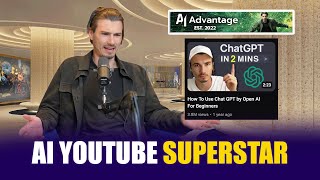
Igor Pogany, creator of The AI Advantage, shares how a ChatGPT tutorial hit 3.7 million views and why he's cautious about AI's job impact despite early wins. He's seen a 14-year-old learn to build apps and seniors make family art, but warns that real, widespread change is still coming, especially with autonomous agents.
Chapters
I've got with me Igor Pagani. I'm so happy to have you here. The creator and Mastermind behind the AI Advantage, a very popular YouTube channel. You're on TikTok, Instagram, Twitter. Thank you for being here.
Thanks for the invitation, Chris. Good to be here. Looking forward to talking to you.
Yeah. We're at the inaugural event of the Imagine AI Live conference. How's it going so far, in your opinion?
Oh, it's fantastic. I mean, first of all, it's packed. Second of all, the location is incredible. First of all. First of all, the people are so curious. You just talk to random people on the hallways, I guess, and you get into different conversations. Everybody has a different angle coming at it from a different industry. And whenever you. You can post the same question 10 times, you get 10 different answers, and the speakers are great. The atmosphere is amazing. I'm very glad to be here. Thanks for the invitation and, yeah, we're.
Happy to have you here. And in your own words, what it is, what is it that you do? What is it the value that you provide people?
So there's multiple ways to express it. I think a good one is that I'm a synthesizer. So I take in information, process it, and then present it in my very own way. Another way to put it is communicator or educator. So I essentially spend my weekends digging into new releases. And then Sunday night, I sit down, and in about two hours, I kind of summarize everything that I came up with, everything that me and my team discovered, and then I present it to the world in video form. That's kind of the essence of it. But obviously it can take many forms, you know, many different AI tools, many different developments, and I have to adjust. That's my job. My job is organizing the chaos that is AI.
Yes. And being consistent with it and not taking breaks, I imagine, because that always.
That's the hardest part.
Yeah, that is the hardest part.
It is really the secret. There is, you know, having a team that keeps you accountable, because when you know that the video editors are waiting for upload Wednesday nights, it doesn't matter what you feel. You just got to get it done.
Yeah, definitely. So what was the aha moment with AI for you?
I was always trying to stay up just naturally, you know, Even if I look back, like 18 years ago, when I was 12, I was always super interested in technology. I'll answer a question here in a second. But, like, even if I got a new phone, you know, one of those flip phones back in the day, I Was always the one weird kid that like pulled it up, went into the settings and then had to look at every item in the menu. Go for everything, try everything out. Like, ooh, the camera has like all these settings. Let me see what's up with that. And then when I got into snowboarding, I like grabbed the camera and started filming it naturally, right? There was no, like nothing behind it. As I mentioned to you in another conversation, for me, this was. This is YouTube channel number five. I've always been doing it on the side. So the aha moment with AI for me was really, it was twofold. One was when I found out about Dall E. I think that was summer 22. Just blew my mind. That's where I went into that rabbit hole for the first time. Didn't really end up like using it because I didn't even have access. Right. That was an early access at that point. I think that was Dall E2. But then the day of ChatGPT release, well, over time you attract what you kind of radiate. And I suppose my energy is like early adopter tech nerd energy. So. So I was in like different communities and one community, one discord community in particular, was talking about ChatGPT on the day of release. So when I got my hands on it, first of all I was intrigued, then I was excited and eventually I was just blown away by it. And I was like, I spent all this time ideating and writing and writing is not my strongest suit. You know, as you can tell, I like to freestyle of bullet points and all that. I don't need a written out script. And after about 24 hours of usage and I'm very obsessive type, so I just like sat down and like spent all day, you know, didn't leave my place over the weekend. Yeah, after about 24 hours I realized like, this really is a game changer. And after two days I was like, I feel the need to share. Like, I want to. I want to tell people what this is about. And I was doing YouTube videos at that time, uploading regularly on two channels, and it just came naturally. I had the video recording and editing set up at home. And this was the thing that I obsessed over that weekend. Created a video on it and all of a sudden overnight it didn't get like 60 views, but it got like 100 views overnight. I was like, wow, people really care. They want to know about this. Mind you, this is, this is like December 4, 2022. So like five days after release, like, luckily I had my Editors. I was quick with it. I was like, YouTube video. I was reinvesting everything. The business, like video production business was making.
Yep.
So that got me curious. I learned something. I created a video on it that got a little bit of traction. You know, I didn't get 60, but like 100 views overnight. So I created another one. It was a two minute tutorial on how to use ChatGPT. That thing got a thousand views overnight. I was like, a thousand views overnight? What the heck is going on? So I just kept going with it.
Yeah.
Turns out one to two months later the whole world caught on and like realized that, oh yeah, this is actually completely game changing. And, and that video with the thousand views at this point has 3.7 million, I think so 3.7 million. That is essentially the whole story. But it all started with just this is really interesting, I want to play with it. And then I just turned around and shared what I learned. And ever since then I've just been repeating, following the curiosity and then turning around and teaching people what I found.
That's amazing. And being early to this new technology and being an early voice in it, it's very valuable. So the life of a content creator, it's got lots of ups and downs. And I wonder if you could first talk about some of the highlight moments for you of, I don't know, experiences that you've had where people have reached out to you and how their lives have changed from your work or story you may have of how AI has helped somebody.
So the funny thing is about, especially about generative AI, because I think it's, I mean, even with the conference you can tell it's targeted at a whole different demographic than AI before, you know, end of 22, let's say, or like 22 and before. This really speaks to everybody because you don't need to be very technical to use some of these tools. Right. You don't need to be technical to use diffusion models like midjourney. You don't need to be technical to run basic prompts in ChatGPT. So to answer your question, the beautiful thing about it is it attracts a super wide variety of people. And I see it within the emails, within the comments or within the community that we've built around the channel. It is so diverse and 100 people are going to get a hundred different things from it. So it's just beautiful to see that, you know, a 14 year old managed to pick it up and he maybe learned Python a month ago, but now he's generating all these scripts that he wouldn't be writing otherwise because he just. Maybe his English is not even good enough to kind of look into the documentation. But, like, he watched a video of mine of how to get started with the API, and then at the end, I'm like, and if you run into problems, take the error message, throw it into ChatGPT, troubleshoot that way. And he's like, man, like, I just do that. And all of a sudden, look at this app that I built, and look at this other app that I built, and I made my first few dollars online, like, doing that. That's incredible to see. I was, like, literally 14 year old. Yeah, love that. But on the other hand, I have seniors coming in and generating art with their family in it because they saw a tutorial and they send it to me. And that is so, so cool to me. Essentially, like, these emails that are like, hey, I watched this video. I learned a skill now. I created, like, a family picture with, you know, with my. With my grandson remixed into, like, superheroes. And she sends me the image and she's like, he was completely stoked. This was so much fun. And those little moments, those are the ones that you remember, and those do make it worth it. But point being, it really depends because the stories are so. They're so varied. It really does apply to everyone, and everybody can use it, and it's just nice to hear from people.
When they do use it.
That is very heartwarming to hear and to know that get those personalized messages from your listeners, from your audience, and how it's positively affected their lives. There's nothing better from a creator's point of view, I think, than hearing that stuff.
I agree.
So those are the high moments. And can you talk about the low moments? Because I'm sure you put a lot of, you know, glitz and glamour and everything looks very professional in the end, but, you know, it is hard at times. Can you talk about.
Absolutely. Actually, there was a recent short, TikTok, whatever you want to call it, real, that really resonated with me on this because I think, you know, being a creator is so glamorized these days, all the. You know, I remember when I started the first YouTube channel 13 years ago, I was doing Magic the Gathering tutorials on Xbox. Okay. I just love the game, and turns out I was, like, decent at it on the ladder, and I just created, like, videos because I wanted to, but I was embarrassed to tell people in my class about it. It wasn't cool to be a YouTuber at all that I Don't think people these days understand how different it was. It was weird. It was like, what are you doing right these days? It's super glamorized now. Now, you asked about kind of the valleys of it to loop back to the reel that I've seen recently. This guy was essentially saying that, yeah, I create content, but not. I don't. I don't love doing it. I love doing what I do. But staying consistent is straight up painful. Sometimes. It's. And it's not supposed to be glamorous. It's not supposed to be fun. It's not supposed to be, oh, I'm doing my biweekly uploads now, so I'm going to sit down and be excited and, like, happy about the fact that I'm recording. No, it's just something you've got to do and something you commit to. And it takes a certain amount of responsibility you got to take on to actually do it consistently. Sometimes you're having a terrible, terrible day or phase or whatever. Not to get too personal, but last year I had a phase where my girlfriend broke up with me because I work too much. There's a part of the reason. It doesn't mean I could like, just, like, you know, hide in a dark room and just ignore everything. No, like, you know, my video editors needed, needed work. My viewers wanted the new coverage. And sometimes you just have to. You just have to look at the bigger picture and do what you got to do. And, you know, to certain people, that might sound boohoo. Content creator has to create a YouTube video. Poor guy. But, like, being enthusiastic and happy about something that is new, hard, you haven't done before.
On command, it does take a certain amount of emotional resilience. You have to build up. There's no other way.
The whole creator thing might start from a place of excitement and joy, but if you do it for years, that's not how life works. You can't always operate at that. So I think ultimately you just, like, have to have a certain amount of discipline, because if you're just gonna do it when you feel like it, there's no way that's gonna work.
Have there been any rules or boundaries you set up for yourself as you're trying to work on this? Life, work, balance.
This idea is something that is very popular in society, and I completely threw it out the window actually, relatively recently, because I realized there's no such thing. Like, if you do this, you're always on, I'm in the shower, I'm in the car. I'm always thinking, always, like, even after this. I like. Right now that you brought it up, I figured that we have to have an upload today, and we're in the middle of the thumbnail ideation process, and they're waiting for my feedback on it. So. So, like, right after this, I'm going to, like, it's always there. I'm talking. And now I, like, actually had an idea for how we could position the video thumbnail, like, because it's about a new tool that can process videos. So I just had an idea. I'm not going to go into detail how to place that in the frame. You're always working, so there's no balance. The only thing that works is an integration where it's really like, you just. You just work all the time, but also you live all the time, and you got to kind of make it a lifestyle.
I definitely feel you there. And then, you know, that's the only way. Finding a partner that understands that and appreciates that is very important. And I'm lucky that my. My wife does understand the obsessive part of it and the need to be, you know, working every day. Like, you don't take Saturdays and Sundays off.
It's a different mode of functioning.
And, you know, what I'm appreciative is that I just love the space so much and that there's always new stuff coming out, and that's interesting. And so you're learning, and then you're teaching what you learn to your audience, and it's that it's like a fulfilling cycle, and that keeps me going. And. Is that what keeps you going as well?
It does. And there's these moments that are kind of anchored in my head where, you know, I was just grateful to be able to do what I would have been doing anyway in a lot of cases, like, a lot of new tech.
Yeah.
As I. As I told you about, I love new tech. And a lot of times, even if I might not feel like creating something, I can always find a space inside of myself where I'm happy to look at the new thing and figure out what it is. And if I can kind of tune into that and then think about how many other people are going to benefit from me tuning into that little space where I want to learn something new that works pretty consistently. But again, the big answer for me to all that and is consistency. And the answer to consistency is having somewhat of a format if you're just trying to freestyle it. That's the beauty of podcasts. Right. You Have a. You have a format that you follow, you have a conversation. But when you're just doing these educational videos, if you don't have a specific format like I cover the new apps of the week every Monday or something like that, it becomes really hard over time because you got to reinvent the wheel every single time you sit down to create a new idea. So that is kind of like probably a hack that you'll find more creators that have been doing it since year retreats to you kind of. You can't be reinventing the wheel every single time. You need some guidelines. Otherwise it's just if everything is an option, then it's too much.
And the format and getting in the process with your team and it becomes this machine after a while and you just feed the machine with they need a tool. So one more question. What are you most to anticipating about the future of AI?
It's a good question. There's many ways to answer that because it really depends on what you do. Right. But, but I think you're asking for me personally, so I'll, I'll answer that. For me personally, I am excited for the point where it actually starts changing the world because I think right now we're not at that point yet. I think there's a lot of hype, but I don't think there is a big shift in how people operate in their jobs. Before ChatGPT and after ChatGPT. I think it's significant, don't get me wrong, but I don't think it's this like 10x productivity unlock that a lot of people talk about. You know, I think it's rather marginal. If I look at my workflow and my video creation process, maybe 15, maybe 20%, but sometimes only maybe five are AI. Right. And I try to use it as much as I can, but it's not this thing where it's like hey, I was able to produce one video a week and I'm able to produce 10 a week. Right. Like that. That didn't happen yet. And that's also the case for most industries. So I personally am excited for that. I know that it is completely fair to also be super anxious about that moment because everybody's kind of like realizing that it's coming. But I always try to be on the, you know, on the positive side of things just because I believe that humans are super good at adapting. And if you study history a little bit, I mean if you just read Sapiens by Yuval Noah Harari, just that one book, you'll realize how resilient and how adaptive we are. And I like to believe that will be able to do that even in the face of this massive technological change that obviously is coming. And I personally am excited for that moment where it's actually going to start reaching deeper than just, you know, ideation or being an assistant, but like this future of autonomous agents actually doing things because it's going to reshape the world as we know it, you know, and as I say, I'm answering that for me. Right. I understand that. I'm a 30 year old technologist that makes a living of covering this and gets excited about these things ever since I remember. And I understand that not every person is like that. But nevertheless, I'm optimistic about the future. I think humans have always adapted and will be able to figure it out yet again. And I can't wait to see what the world, with five years down the line, where this technology matures a little bit, is going to look like.
Well, Igor, you found the right conference in being here. We're so happy to have you here and as a speaker. Looking forward to our panel discussion tomorrow. Yeah, thanks so much and have a good rest of your conference.
Thanks, man. Wonderful talking to you and looking forward to our talk tomorrow.








