New Claude Cowork Projects Explained in 9 Minutes
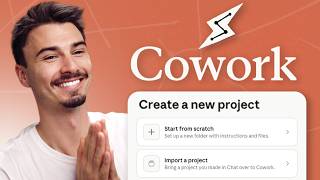
Igor Pogany shows how Claude Cowork's new Projects feature organizes AI work by context: each project gets its own folder, memories, and scheduled tasks. Seed projects with Markdown files for personal identity and values, then automate workflows like a daily news brief that runs every weekday at 8 AM.
Chapters
Finally, we got the ability to have a really, really user-friendly interface for a personal agent that works for you while you're not at the computer. I'm talking about the new projects feature inside of Claude Cowork. A way to organize your different tasks that you're doing in there. And if you haven't made the jump from just using an LLM or an AI in your web browser like ChatGPT or Claude to this new agentic layer, then this is the perfect moment. It's becoming so capable and projects allow you to organize the mess that an agentic application can be. And in today's video, I'll be showing you how I use this and why I think everybody that uses Cowork should be making use of this. If you're not using or building agents yet, then this is the one application to do it in. So what did I ship here? Well, if you're familiar with projects inside of ChatGPT or Claude, it's the same thing but in Claude Cowork. And as you might know, Claude Cowork is a level above ChatGPT or Claude. It actually does things. It has access to your computer's folder. It can remote control your browser. It can plug into various tools. And now you you can also manage the different tasks in there with projects. Now that's an intro to Claude Cowork. But even if you're using projects, I just have to rehash why I think they're so essential to working with AI and why they're at the very, very core of my workflow and my teaching. All the programs, everything we do always revolves around projects. Because as you might know, a big part of using AI well is giving it the right type of context. I've been hammering this point for 3 years now. Now with all this agentic stuff, it's more true than ever. The one big problem with context is managing it. If you're working on something related to your new side hustle, that is a different context than maybe your main work, which is a different context than you doing personal tasks with AI. It's where projects come in. You can create different sets of context for these different situations. And then when you need to get something done, you just get to work instead of worrying about re-explaining yourself. I practically use projects all over the place. And usually what I do is I seed them with various Markdown files. Like this, where I tell it about my identity, my values, and more. Now you can finally do the same thing in Claude Cowork. And I want to show that to you in practice, because with all these features that they ship now, everything has become so simple and so seamless. I absolutely love it. So here I'm on my desktop app on a Mac, and I'm just inside of the Claude app here under the chat tab. And as you can see, I have multiple projects set up here already. Now if I tab over to Cowork, this is really what they added, this projects feature, this tab. And basically what I can tell you already, I'm going to stop using just generic chats. Everything is going to happen inside of projects for me from now on because context is so important. So how do you set one up? How do you use this for yourself? Well, you just click plus here next to project and you can either start from scratch. I could call this one AI education, for example, and I could add specific files that hopefully contain the type of context that matters here. If you're new to the channel, then you should know that what you want to do is add the different types of information and context that is true now, but will also be true a month from here. And you should do that with a markdown file, which is preferable over a PDF. Just easier to work with and you get more consistent results with LLMs this way. In my case, I would be using a new project if I'm working on a new project. And I'm not trying to be witty here. Literally, I have my base personal project that I use all the time, call that Igor's clone. I have a work-related project that is more focused on the education and community building related tasks. And then for everything else, I just spin up one-off projects if I'm going to be working on something over an extended amount of time. This framework has really served me well over time because then as I have ideas, I can just get to work rather than having to prepare and pull information together. So in my case, rather than starting a new project, I will be using another option here. If I click the plus on the project again, I could say import a project. And this is exactly what I did with my commonly used Igor's clone project here, which by the way, I'm still in a bit of a habit of using ChatGPT. So I go there a lot, especially on my phone. But more and more, I noticed my usage switching to Claude, just because so many of these new features are just not available in chat. Anyway, back on topic here. If I wanted to create, I would just click Create. And then here's the wonderful thing that I want you to know. It creates a brand new folder structure on your device just for this project. Whereas before it used to be a bit messy. It just had a Claude folder. And then when you were doing things here with Cowork, just created stuff in there, which really piles up quickly. This way you create not just segmentation, but you also create these little pockets of context. Because let's be real, usually your personal goals and relationships and details about your life look different from your professional goals. Which are probably different from the goals that you have as they relate to a side project or a side hustle that you might be trying. And now each one of those is contained in the project. So Igor's clone is my personal one right here. As you can see in the interface, which is also new, the instructions would live up here. I usually don't have much in the instructions. I put everything inside of the files that we get to in a second here. You can see all the scheduled tasks for this project in here, which I love so much. We can now set up personal tasks in this one, business tasks in the second one, project-specific ones in the third one. Again, this just organizes something that before was just a long list. Maybe that's just the upbringing in German culture in me that really appreciates this. But trust me, as you start working more and more, the ability to compartmentalize your work and your tasks based on personal, business, specific projects is invaluable. Let's continue the interface tour. There's more here. As you can see on my computer, there's an Igor's Clone folder that you can see right here. And then I work within here. Then it also adds custom memories just for this project. So this folder gets smarter over time and learns more about this specific category of tasks rather than your whole account learning about something. Amazing. Again, we had this inside of projects in Claude and ChatGPT, but now everything is moving towards this agentic future. And I'm so glad Cowork has this too now. Last but not least, there's a reference to the original project inside of the chat interface inside of normal Claude. So this really just says, hey, it links over everything that you have inside of your chat interface. And then I could tab over here to chat on the top and see what's in there. So if I go to that project, you will see there's two Markdown files in there along with a bunch of memories. All of that is brought over to this Claude Cowork project dynamically. So now we covered the core point of this video. I really wanted you to understand this idea of having different projects for different parts of your life. This will make learning this app easier. But now let me show you a use case. What can you do with this? Why is this so powerful? Well, if you go in here and you run one of the common use cases for this agent, this is what I see people doing all the time and I get value from this myself. It's this: create a personalized news brief for me. That's it. Because that project includes all the information on me already with a bunch of memories, in other words, Claude Cowork knows me pretty well here. And because this is now happening within the project, I don't have to upload any files. It just happens. Again, nothing new, but this was my core workflow within Claude and ChatGPT, and now it's here. So here immediately, you will see it's using all the context from within the project and using its web search. It also has the ability to remote control my browser because I have the Claude extension installed here, and so much more things that Claude Cowork can do. But it all happens with the custom context of Igor's clone over here. And as you can see, it searched for the latest generative AI news with its web tool, it searched for major global events, and now it's compiling a simple news briefing. And immediately, it talks about OpenAI shutting down Sora. That's something that happened today. Anthropic releasing advanced agent design patterns. This is new to me, I gotta look into that. Changes in stock relating to AI. It knows what I care about, what I work in, and it picks the sources and summarizes it based on what I care about. And all that with the power of Cowork. Now, of course, I could refine this more. I could spend time here adding more details, telling it exactly which sources I prefer, and give it more details on what kind of stories I want. But even at face value, even the super simple prompt with some details about me and my project allow me to now take this task that is done successfully and schedule it out. They added this too a few weeks ago. So all I need to do is go here to the top. Click this little arrow and here I just say schedule. I could add more details or simply hit enter. Now it's going to ask me, when do you want this news brief? Every weekday at 8 AM seems perfect. And then one final confirmation creates a scheduled task. Now every day it's going to run this news brief inside of my project. As you can see right here, beautiful. And I know exactly where to find the outputs. You guessed it, they're within the Project 2. And additionally, if you're not aware, if you create tasks like this, it actually improves the prompt for you. So if I click on the scheduled task here, you can see it added way more details, which I could now review one time, and it would affect my daily news briefings forever. Concretely, I might want to hit edit and add a little sources sections with my preferred mandatory sources, which it will scan for me every time this runs. Gosh, we're really getting to a point where these agentic applications are becoming so user-friendly that I think everybody watching this channel should give them a shot. Yes, you need Claude Plus, which costs around $20. But what I'll do is I'll copy one of these invite codes, put them into the description below. That referral code, free people will be able to get a week for free. And if you get it, you can copy your link, share the love in the comment section below. And that way most people watching this video can try this workflow out for free, see if it's for them. And that's pretty much everything I have for today. All right, my name is Igor Pogany and I'll see you soon.








