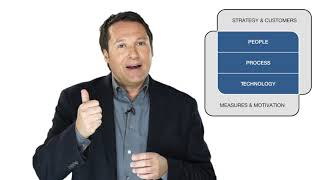
Stephen Shapiro explains a three-level model for how organizations evolve in their ability to innovate: (1) Innovation as an event — ad hoc and sporadic; (2) Innovation as a process and capability — repeatable, efficient, with defined roles, measures, and accountable people (innovation teams act as catalysts rather than sole doers); (3) Innovation as a system — embedded in organizational DNA, organic and self-sustaining. He advises diagnosing your current level, defining the target level, and implementing the necessary structures and processes to move efficiently toward a repeatable, predictable innovation engine.
Chapters
When looking at an organization, we want to recognize the fact that it will go through an evolution as it gets more innovative. And there are three levels of innovation. There's innovation as an event. Innovation as an event is where a lot of companies are. And basically what this means is innovation is ad hoc, it's sporadic. Basically, you innovate whenever you decide to innovate, but it's not repeatable, it's not predictable, and it probably isn't efficient. So companies then move to the second level. This is innovation as a process and capability. What this means now is we start treating innovation the way we will treat any part of a business. Think about it for a moment. The reason why finance works is because in finance, we have a chief financial officer, we have a leader, we have CPAs, skilled, trained people. There are processes and technologies and measures. So we've created this capability which allows it to be repeatable and predictable. Now, we haven't done this for innovation, but we can, and we should. The more we create measures, skilled people and accountabilities, the better off we are. Now, this doesn't mean that we necessarily are going to have an innovation team that does the innovation. They become more of the catalyst for innovation taking place in every corner of the organization. So once you're at that innovation as a process and capability, it's repeatable, it's efficient. The last level is innovation as a system. This is the ultimate goal at this point. Innovation becomes embedded. It's part of your DNA, it's organic, and it happens naturally. People are efficient with it, on their own, without the structure. So we can start undoing some of the structures we did in the second level. This is where we want to get to, but you can't get there until you go through the second level. So the key in your innovation journey is to recognize where you are today, where you want to get to, and then what are the structures and processes you need to put in place in order to get there as efficiently and quickly as possible. This will give you an efficient innovation engine and, and will allow you to do it on a repeatable, predictable basis.