Sudarshan Sridharan built an "internet Chad" persona on Twitter to assemble Gen Z Mafia, a network he used to recruit unpaid talent for Fionn, his wildfire-prediction startup. He'd previously launched an esports org with 20,000 members and PartyTalk before learning to sell ideas without coding skills through years of reading and stock trading.
Chapters
Hey, what's up? How you doing?
Hi, how you doing? Not bad.
Not bad. How's, how's life out in SF treating you?
Yeah, no, SF is great. There is almost no COVID cases around because people wear masks. There were 200 last week and there were like 12,000 total. Yeah.
Has it been crazy over there since Biden was declared the winner?
Um, no, I live in Nob Hill, which I didn't really know, but they, it leans a little bit more red. So there was, I didn't hear a car horn. I didn't hear, I didn't see anybody go out. I did, there was, it was just as dead as it usually is. But then like I walked to Fort Mason Park. I walked to like another park and I went to the Mission and I think I got AIDS. So yeah, yeah, it was very germy and people-filled in other parts of the city.
That's cool. So yeah, one of the, one of the craziest things for me about you is I first, as I mentioned to you, I saw you on the Gen Z Mafia server And I started poking online and you said that you cultivate this. You said this on Twitter. You said you cultivate this internet Chad personality. I was just wondering if you wanted to explain what that means.
My story is fairly unique in the sense that like 4 months ago, I still don't know how to code, but 4 months ago I didn't know how to code. I was a junior in college and I had no company or business or anything like that. And so once we started Gen Z Mafia, I was like, this is, It— if I think personally I'm not stupid, so now let's go prove it. And once I had something to evangelize, I was very quickly just, how do we just make sure everybody knows who I am? And then once I meet them in person or something, I can flip their opinion. But the important thing is to just be known. And so I was— it seemed to me that people who are just very abrasive, very loud, very authentic, or like just very say whatever they think end up being labeled controversial, and that's a really good way to grow. So, okay, that's like the internet Chad personality. It's not really like some sort of— it's, it's not like, uh, like me being an asshole, or me— it's just me saying whatever I think that comes to mind. Sometimes it's stupid, sometimes it's really smart, and most of the time people are just like Oh, cool, Sudarshan. And so they just, it just goes into their head and they just remember the name and nothing else.
What's the most controversial thing you've said online?
I don't have anything that like I think is controversial. I'm not like, women shouldn't vote or like this or that. Like I'm very a normal person. I'm just like, everybody should be equal. Don't get involved with other people's problems. Be a normal person, make some money, help people if you can. I think my tweets are fair. Fairly normal. I just, I'm not afraid to call people out on their BS, which is how I made a name for myself on Clubhouse really early on. Like, it was like 2 AM one day, Jason Calacanis was on Clubhouse and I was just grilling him. And then he was like, oh, so you never made any mistakes? And I was like, no, actually, I'm in the middle of getting canceled right now. I need your help. And like, he talked me through it. He's like, all right, this is probably how you should respond. I was like, great, cool. But it's just, I think, a combination of I had access to all the people thanks to getting— starting Gen Z Mafia and then getting on Clubhouse in August, or just even like doing the fireside chats in Gen Z Mafia. So yeah, like I basically was able to like make sure everybody knew my name really fast. And so I was able to fake, oh, I definitely belong in tech, until we built a team, built a product, and then actually I did now deserve to be in tech. So I think like that internet Chad personality, it's just other people have labeled me as this controversial person. So I've just decided, okay, I'm going to lean into it, but it's not controversial to people 10 years older than me that are like eugenicists or something like that. I'm just like, everybody should eat and we should have these things that all the socialists want, but we should also be trying to make money. So we should be capitalists and help people. And I don't know.
I don't know.
I think I have a very normal, moderate view of the world and you can't be moderate. So that's radical in its own sense. Okay.
Yeah. Where did— when, how long have you had this desire to break in and belong in tech?
I've been grinding since I was 15. I'm 20 now. So it's, I've been trying really hard. I just, didn't work until I finally— and I, I didn't also wasn't really convinced about anything else. And then I started Gen Z Mafia and I was like, oh, this is—
this—
I know exactly what to do with this. But I've been grinding for 5 years. That's the other part that people often overlook.
Yeah, what, what didn't work? What was the first thing that didn't work?
The first step is it probably takes a year at least to get acclimatized with Twitter, to understand who people are. For me, I wasn't a builder and I was in Richmond, Virginia, Charlotte, North Carolina, Clemson, South Carolina. Like I was on the Southeast, lots of brain drain, not really a whole lot of tech. So the biggest parts were just first understanding what's the culture, what are the people like, what do I actually even need to know? How do you build a business? Like I got the product management, the business stuff, all that through like years of just osmosis. On Twitter and reading and meeting people. Those are the things where it's like, are there ways to go in cold and truly hack the system and be an internet chatter, whatever you want, and start thriving immediately? Probably. But I've never seen anybody that hasn't spent years and years just doing a ton of groundwork. And then they look like overnight hits, but that's because we've all seen how Twitter works or what is the right avenue, the right channel, whether it's a Medium post or something else, and then it's just been a matter of just trying to break into that medium through a bunch of different ways. So for me, first I thought being in South Carolina I could just be building products. So my first company was a company called— well, I started an esports organization when I was 16, the summer I turned 16. That grew to over 20,000 people and made a good amount of money. That was my first time ever being in a leadership position I learned a lot of social skills. I learned, grew personally, but also just having to manage 20,000 people is really hard. So we very quickly just, I had to just scale and I did. And so I learned a ton of things that I never would have. And the biggest thing was it's the people that matter. So I'm just a delegator. Like I just bring people together, give them the vision, figure out how do I get them the resources. To build, but in the end of the day, they're the ones building. And so I've spent a lot of my time in my life understanding that I'm going to be this like kingpin, like linchpin, but I'm not going to be the person doing this stuff. So I need to be able to communicate with them. Like I need to have the knowledge, even though I can't code, to be able to explain to my devs very technically how things need to happen. Like I need to be able to write those specs and talk to them. And then if it's design, right, one of the things I'm— I've spent a lot of time studying is frictionless user design. How do you get users to perform the incentivized action that you want them to do as fast as possible? Because each click, each tap, each loading screen animation is a place where somebody in the funnel is falling off. And so how do you minimize all that? So it's just a lot of really small stuff like that where I just went What kind of product am I gonna create? I don't know. And so I had a mix of consumer and enterprise, things like that, to various levels of success. One blockchain white paper for $50,000 in 2017. And so stuff like that where it's okay, cool, I've just been grinding, but everybody has that kind of grind, right? Like for you, you'll be like, oh, I podcasted with 5,000 people. And so I, just collectively absorbed all their knowledge, which is something I've done too, where I've talked to thousands and thousands of people. And so I've just like collectively just internalized a lot of the lessons that they had. And so I think the biggest things would just be that it's not really what I've tried and like failed in the past, which there was a lot. There was Eventbrite with no transaction fees called PartyTalk. There was a nonprofit I started earlier this year that was insanely successful. And so that nonprofit and PartyTalk were probably the first two things that were successful. And so I knew that, okay, I've got the skills, now I've got to do the branding part of it. Now I've got to go play the game and get into SF somehow. And so like PartyTalk had 100,000 users within 3 months, and I made it last October. And that was just for me to promote parties easier because I was a party promoter in college. And then the nonprofit I started That was— I used all no-code tools to build the payment infrastructure to sell gift cards online if you're a restaurant. And so we had over 1,300 businesses sign up on our platform. We got loads and loads of press like Inc., Adweek, CBS, ABC, all those things. And then the team grew to over 30 people all working for free. And then the SEC finally shut us down in 5 weeks after we started. But we— that was where I was really like, okay, I know product design. I know how to get things built. I know how to scale a team. I've got the media component. Like we've done, we basically went from 0 to 100 in 5 weeks. That was crazy. So that's when I was like, I'm ready to actually take my talents to South Beach. Yeah. South Beach. Yeah. Yeah. I think a lot of it is just, you have to understand what your strengths and weaknesses are and then just extremely build around that. I think it's really important to be lopsidedly well-rounded, meaning you are really good at one or two things and then at least average at everything else, which sounds hard, but you just gotta be. For me, the one thing I just have zero relationship to is coding. But for me, being well-rounded in that, in a managerial position, meant I just have to understand how do people— like, what are the— how do I communicate with my coders to get the product built? And as long as I can get everybody to execute, then I'm good. So those are the things where it's— I think people just need to figure out their strengths, weaknesses, triple down on their strengths and make it like their superpowers, and then try to increase their proficiency in their weaknesses so that they're— they can work. Well, as long as you can execute, that's all that matters.
Okay.
Okay.
How did you end up in SF?
Okay, this is such a horrible timeline for anybody else. I do not recommend copying this. August 22nd, I jokingly tweeted about, "Oh, why don't we have firefighting drones?" By August 26th, I was obsessed with the idea of firefighting drones. And so Danielle Strockmann tweeted out, from 1517 Fund, tweeted out a link to like the Invisible College, which is a $50,000 grant. That anybody could apply to as long as one person was dropping out of college. So I tagged my entire team, or at that point they didn't even know they were my team. They were just people that I talked to. I tagged them like, hey guys, so I'll drop out, but I'm excited to work on this. And my team was like, oh, guess we're working on this now. But they've been building this model for 8 months to predict the spread of wildfires. So we decided to very quickly on drop the hardware, the drones part, and just focus on the software. Yeah, and so that was August 26th. So that was 4 days after I had the idea. And then September 10th, the sky turned orange in California. So September 10th evening, I was in a car on my way to San Francisco. So that was like, that was literally— I'd also had people at that point because of Twitter, like everybody was like, yo, moving with me, moving with me. So I had my pick and I was able to be like, okay, what is the nicest area? Where am I going to be able to host people? Where— what is that? I have no idea what just happened. All right, sorry. But basically I was just like, okay, what is the place that's going to have the most connections? Where am I going to be able to host people? Where is— where am I going to be able to get back into my groove? And then it was this house, the atmosphere. And so moved in here basically overnight, brought my best friend from South Carolina. He was just like— I met him in college And then he transferred out, but we stayed in touch and I was just like, yo, Nick, I'm moving. You want to come? He was like, yeah. I'm like, great.
Did he drop out too?
Sorry?
Did he drop out too?
No, I'm trying to get him to, but because there's no way he's going to finish school. He's got another year and a half. Like, I just, no, it's never going to happen. So stop wasting your money. But yeah, no, like right now he wasn't in tech at all. And now he's just like in the middle of like, just tech culture. And that's the first time I've seen someone who act like he scaled really well too. But I just pulled him out. I'm just like, all right, meet all these VCs, meet all these founders, meet all these people, you're gonna go work for them, do it. And he just scaled. And so that's the kind of thing where it's, um, I ended up in San Francisco in a like time span of 15 days where I totally would not have expected to. And then I dropped out 2 weeks later and I got funding, or totally randomly, like I dropped out because I was just going through it, and then totally randomly that night my angel calls me and goes, yo, I've heard way too much about Fionn. I know the tech works, so where am I wiring this money to? And I was like, nice. So we got to raise at a— at the time it was pre-product, pre-revenue, so it was a pretty absurd valuation. Now we got product, we've got or we should have some sales soon. So it's getting justified, but it was, yeah, it was an interesting experience. But basically, yeah, I just tweeted a lot and then I just— the sky turned orange. Like, I can't—
SF was calling you.
Yeah, yeah. I mean, dude, my Twitter was blowing up with people tagging me. Like, I had over 300 people who tagged me in those like Blade Runner videos of the sky turning orange. That's when I was like, okay, I've done my job branding. I should probably go do the job of getting the product.
And you really shared your goals in public. Everyone knew that Sudarshan is interested in firefighting drones or solving this problem. Is that why 300 people tagged you?
Yeah. I think one of the things is the night before that, it was so funny. Suheel had tweeted out and I just randomly saw this on my feed. I don't follow him or anything. But he tweeted out, share your startup like a 20-year-old would. So I was just like, we stop fires before they start. And I woke up and the tweet at that point in time was like my most liked tweet ever.
How many likes did it have?
It had like 49. So it wasn't even that big. Yeah, yeah, right now I put out some random like thot boy thing and it's 200 likes minimum. And so it's just— and that seems like it doesn't matter. I walk around the streets and people— I bumped into this girl once and she like Looked up, she's like, watch where— oh, you're from Twitter. I'm like, I love my life so much. And then like other times, like just random people will be coming through our house anyways. And then they'll just be like, wait, you're the Twitter guy. I'm like, I'm the Twitter guy. Let's talk. And then they'll always be like, you're so not what I expected. I'm just like, yeah.
What do they expect?
Generally like a dumbass. I'm just like, look, I had a plan. I saw an opportunity, I took it. I think everybody should do that. Like, I'm always thinking about what is the best case scenario that can happen, and then I just go on Twitter and try to make that a reality.
Um, so Twitter was this medium where you tried to break in and forge your path. So who was your— right, Miles Davis had his like Dizzy and Bird. So who is your Dizzy and Bird? On Twitter, you didn't get it. I don't know what that is.
Sorry, I'm getting more and more cultured these days as I become more and more—
No, that's fine, that's fine. Miles Davis said the idea is basically he had to learn how to play like someone else before he could play like himself. So the idea is that imitation comes before originality. So now you've built this pretty original brand, and I'm just wondering who you imitated Oh dude, okay, so that's, uh, that's one of the funniest parts.
I grew up with no friends, like zero friends, so I just had a lot of time to watch how everybody interacted, uh, and just amalgamate. Like, I just took the best parts of everybody in every ecosystem I saw, and I was just like, I'm just going to take that trait, I'm going to take that personality quirk, and I'm just going to make it mine. Oh, which is pretty— it sounds pretty psychopathic. It's just I think I didn't have much direction growing up, so I was able to just look at everybody as this thing. And yeah, like, I was a sponge well into, like, until probably like my first semester of college where I was just like, okay, now I've learned all the rules of how to be a normal person, let's go break all of them. And so that's really where I got to build my own personality, where I was just like What can I get away with? And then soon I just learned that just laughing a lot and just telling people, trying to add value to people. If it's a party, there's different value-add than if it's business, but same thing. Everybody end of the day wants something, and if you can just get, get that to them, then they will just ask you what do you want and then just elevate you. So for the longest time, it's not that I was copying a few people or one person. I was copying just everybody, like the best parts I saw in everybody. Even like when I was starting to tweet 4 months ago, I just steal like the best tweets I saw from other people and then I'd just be like, like who? Okay. Yeah. No, like just one-offs, right? Johnny Dallas. He's in Gen Z Mafia. He's 18 or 19. He had one tweet that was one of my first tweets that took off. It got 20 likes, but it was like a tweet about, oh, who are the 'Who are other kids under 21 that I should meet?' or something like that. And I was like, 'Wait, actually, I don't really like the Gen Z brand. That's too— what do I like instead?' And then I started tweeting like Naval. Like, I literally went, used GPT-3, and just fed it 100 of his tweets. And then those tweets did super poorly because everybody was like, 'You're not Naval. What the fuck are you doing?' And so then I just kept optimizing. Like, I just kept changing it back and forth and back and forth until Finally, I found, oh wait, just the thoughts that go on in my head are so tech broed out at this point. It's just, they'll do fine. Like, I've been drinking the Kool-Aid for 5 years. I should just tweet what's in my head. So that's exactly what I did.
And where'd you get the Kool-Aid? Where— who did you—
you're asking where— who are the people in tech that influenced me? I did. I like— it's everybody. I don't know how to put it. Like, when I watch the Twitter fights between people or things like that, I'm just like, this is something I want to replicate or it's not. Like, at this point it's just so subconscious. And so many people come across my feed. I'm very liberal with that follow and unfollow button. I'm just like, I want this on my— I want this content, more of this or less of this. And then Twitter is really receptive to that. So like, I'm always just tinkering with it. I would say though, they're like the best performing tweets in general. And the reason Twitter matters is because it's not like the Mark Andreassons or like the Balaji's or the Hunter Walks of the world that you want to find you. Which you do, that's great, but it's the people like the Rajat Kanas of the world who may or may not go interview somebody else that's then, oh, what's a good company you've seen? And you're like, oh, Fionn. It's like the stuff like that where it's like the people with like 30 followers, but this is a real story. This guy, Michael Luu, he had like 26 followers or 30 followers. I don't know when he followed me or when I started following him, but then he ended up being like one of 3 checks into Twilio or Zapier or something like that. I think it was Zapier. And like, he had 9 unicorns. And I'm just like, dude, you're like a Wall Street guy that just showed up and you have, wait, what? And he's like, this guy and that guy and this famous person and that famous person invited me. I'm just like, but I've never heard of you. You've got a better portfolio than anybody I've met in my life, like any individual angel ever. And he's just, yeah, it is what it is.
I'm different.
I like it. I'm different. And so those are the people that I try to reach with my, like, when I'm like busy spamming Twitter because I built my whole team off the app. And so for example, this one guy, Jimmy Greaser, like we're literally bringing him on almost like co-founder level, actually not that much equity, but still a substantial amount of equity. And he had 200 followers on Twitter, just DM'd me one day, was like, yo, he was one of my reply guys. Like he used to reply to a lot of my like tweets and stuff. And so I generally recognized him. And so when he DM'd me, I was like, all right, I guess I'll respond. He wanted a job, or he wanted to talk about FION investing. I was like, no, I don't need money. And then he was like, wait, there are only 3 companies I'd work for: Tesla, SpaceX, or FION. I'm in the middle of selling my like edtech startup and I'm 22. You should totally talk to me. And I was like, you know what? Yes, because education, Sales processes were the same and I needed a sales guy. And this guy, he's a product designer by trade, but he's also did all the sales for a ZedTech company. So he understands how to sell to fire departments because it's like way harder to sell to school districts than it is fire departments. Yeah. Um, and yeah, we talked in our first interview, he came with our entire website redesign, which is what's up right now. But he did all the website copy. Like he did all the science, the research. He like took everything that was in my brain and without asking just put it onto our website. I was like, okay, these are the type of people I want to hire. And I met so many more people like that. Like this guy that we were looking at hiring for compliance, he was the guy who got the Model 3 approved for manufacturing in Europe. Just like stuff like that. This dude has 40 followers? And it's just, he came to Taco Tuesday with us, got some margs, and we were just talking the whole time. And then This just comes out randomly, and we were like, damn, bro, you just totally buried the lead. And so it's just a lot of things like that where, um, really, I'm looking to meet those kinds of people, like the people that have been undiscovered. And the thing is, at some point I will stop for sure, but I'm young enough that the other people who are around in my age haven't spent time branding because they haven't had the opportunity or they haven't had the they didn't have a Gen Z mafia or whatever. So that's really why I like still spend a lot of time on Twitter. I think if you're like early on and you're trying to figure out, I think the first step is building your knowledge base, and that starts by understanding yourself really deeply. You have to understand, start the strengths and weaknesses, and then how do you make up for those? And then from there, you got to understand like your why. I think a lot of people who don't who have the skills but don't really achieve at a high level early on are the ones who don't have any sort of why or don't understand their reason for doing things. And so that's something that I think people have to understand before they move on to the next step, next level, whatever that is. And then once you have all that mental stuff and you're able to socialize and be a normal person Then I think this is just for the founder route, because like most of being a founder for me, because I'm not technical, is making sure I'm pulling my team together, establishing and driving the vision, getting everybody the resources they need. And once we reach like getting us out of dumpster fires, which we're always in because we're working like with super deep tech, and almost all of that is held by the central theme of I need to be good with people. Depending on what your career arc is or what your skill set is, you can skip all this and just start building stuff. I think that's really where my life changed is when I just started pushing products. And it first started with just one product, like Party Hunt, uh, Party Talk, and then the nonprofit, and then it just kept going and growing and going. And so that's, that's like where I think I really differentiated. Was my ability to get things built because I always knew one coder or I always knew one person that could do something. Or worst case scenario, I get a pen and paper out and I just start sketching and then I'm like, hey, can somebody build this? And yeah, just build, uh, follow a lot of people on Twitter. I guess like the starters would be journalists who are covering the thing, podcasters, people who are really highly networked and don't seem like they do anything, but they Those people are VCs. You want to follow those too. So there's just a lot of people that have done their time that are now like retired. And so they've got a lot of time to just meet people because they're VCs. Those are the people I'd follow. I would just see who are they interacting with, what trends are they talking about, and just anybody you think is important or inspirational, just see how you can add value to them in any way. Also, all these people open their emails. If you need something and you're not like, I need $10 million at $100 million valuation to build my company. If you're not like being stupid, people will respond. They'll engage in dialogue with you. They'll be like, I'm going to pass because of X, or I think this is smart or whatever. Yeah. Sorry. That's just more advice.
Yeah. So your whole team was the brainchild of Twitter, it sounds like. So what about all of your people on Twitter? I'm assuming you didn't really meet any of these people before. So what about their online brand clicked with you?
Dude, I said earlier, like, I've met like thousands and thousands of people. I think one of my own superpowers, especially because I got my start investing in stocks and writing about that, like I had an investment blog where in 2015 I wrote that Amazon will be the first trillion-dollar company. Like things. So I was really good at just like looking at information at a really young age and just pattern matching and synthesizing all that information in order to understand what's going to happen next or generally be right. Nowadays I've taken that ability and transferred it to people and trying to understand people just by a few minutes of conversation or looking at their social media feeds or just even like how they carry themselves, their quirks, their physical Traits. There's different things, different tells in everybody. So I just spend some time just trying to like get to that and coming up with my own like conclusions of what I think people are going to be like before I meet them. And then I'm always just like changing it in my head, like constantly. Okay, this is how to handle this person. This is how, you know, this is what's going to make this person tick. This is blah, blah, blah, blah, blah. I think like I basically archetype. Everybody, right? I'm always, this person fits into, give or take, this mold of this other person I've met before. So I think that makes me a really potent, like, people person. I'm very quick to trust because my gut's normally not wrong. And it's not wrong because I've been burnt a ton of times. I've been through a lot of internal team problems, co-founder problems, just people problems in general. Once again, it goes back to that whole my job is to be good at social life, like to understand people and understand what makes them tick. And for that, going to college and getting that social life that I was missing throughout high school, middle school, just growing up as my whole life, that was like insanely pivotal. So I dropped out of college, but I was there for 2 years. I was on city government, student government, all like party promoter, all that stuff. I was like all about just How do you get in the intersection of helping people and helping yourself? And once you can do that at a small scale, you can do that at any scale, I feel like. And that's just what tech is, just finding people, helping them. And then I think where people really differentiate is when they start to be like, oh, I've worked with this type of person before. Let me just do what— like, I think it's just a lot of just getting a lot of just repetition and hands-on just doing. Yeah. Yeah. Um, older you get, you can skip a lot of those steps. Like, my friend I brought from South Carolina is probably going to get to skip 90% of the grind that I put in, just because he's like naturally smarter, like, than I was starting out, but also just because like he's in the right environment now. So a lot of that too is the older you get, the more money you have, you can afford to spend money on rent in San Francisco and just move out here, try to hustle.
And so you talked about, and you talked about this on Justin's podcast too, but you said that you were very awkward as sort of a preteen.
I was really awkward until 2017 March.
Yeah. So what was your life like middle school, high school? Work?
Like I was always just reading, writing, reading, writing some more, trading stocks, reading about stocks, writing about stocks, trading stocks, reading about business people, writing about business people, reading about politics, writing about politics. I probably could not write a 2-page paper now. Actually, that's not true. I just wrote a 7-page paper for Chamath's Climate Challenge, which we placed top 150. So proud of that. But no, I think a lot of it was just really early on. I just, dude, I read so much. Like I read my entire elementary school library, like 6,000 books in 2 years. I was just always reading. And then I started writing because the books got boring. And so I think that there's something there as far as the critical thinking. That's all I was doing all day. And then I was trading stocks. Like all day long. Initially it was like fake money, and then my parents saw that there was so much— actually, my fourth grade teacher, computer teacher, brought my parents in and were like, hey, we did the stock market game. Everybody else on average lost all their money. Your son turned $100,000 into $36 million in 6 months. So just if you guys have any sort of interest in nurturing this, you should.
Yeah. And what did your parents say?
My parents were like, great, cool, go back, focus on school, go become a doctor. Yeah, yeah, they're like, so who cares? But then we got, um, into interesting financial situation where it was a Hail Mary play. They gave me like $500 and they were like, go. And that very quickly turned into $20 grand off of penny stocks. And then I never traded penny stocks again and just started buying fairly unknown companies that were really risky at the time. Like Netflix was at like $14 and it doubled. Like the weekend I bought it, it was at $90 pre-split, and then like I bought it on Friday night, Monday morning, first period, 9:30 AM, 7th grade, January 2012, it like went to $170. Pre-market. I was just like, wow, I'm so good at life. And there's just stuff like that. I bought like Tesla at like $36, and a week later it was trading at $75. And like Google doubled one time in 2 months. Um, they're just like random stuff like that where I'm just like, I got all of FAANG in like 2011, 2012. I got all of these different stocks really early on. And so then I was just I got really bored. And so then I started trying to figure out what else can I do. And that's when I started writing about the stocks and writing, because I was always looking at what are other people doing. And I can't remember the kid's name, like I've never heard of him since, but there was one kid who started a hedge fund when he was like 18. And I saw it on Business Insider and I was like, why can he start a hedge fund but I can't? All right, I'm starting a hedge fund. And so then like Totally illegal. Like I just went and got like a bunch of people's money, just people who were subscribed to my blog. Like I had 6,000 total post views at that point in time. And so then like I moved out to Charlotte. This was like 2016 February. So I moved alone to Charlotte, North Carolina. And so I started writing on Quora.
You live by yourself?
Yeah. Yeah. And so I started writing on Quora and I've got like millions and millions of views. Within like weeks on Quora. And so then like CNN reached out, hey, what are you legit? Duh, yes. So this guy was like, oh, you should totally have CNN write about you. And so I was like, cool. They connected me and then I just sent them proof that I wasn't full of shit. And they, they like published an article, which was interesting because It wasn't like completely all the facts, but it was enough that it sounded good. Like it was a good article. So then like I used that to break into tech basically. And the only reason I knew about tech is because this kid Ben Pasternak, who runs Nugs now, he— ABC did like a whole special on him the same week that like my CNN article came out. So I didn't get any clout from it. And I was like, damn. What is tech? Why do tech kids get so much more clout? And so that's when I started tech, like going into tech. And this summer, like it was summer 2016, I'd also been running that esports org. So I finally started shifting from, oh, I want to do hedge funds, to, oh, I want to be really building stuff and managing people. And so then I got on Twitter and I started just cold DMing hundreds and hundreds of people. And at that point I'd had— I had no followers or anything, and I— this was 2016. I Never gained any, but people would take notice and occasionally message me. And so I started building a network really early on.
What did you DM them about?
I would just DM them like, hi, I am— this is really weird text. I don't actually want anything from you. I just want to learn about tech. Also, maybe you work in VC. Here's a CNN article that proves I'm not full of shit. But it would be like paragraphs this long. There was no reason. Never send any messages that takes up more than 30 seconds to read. That's stupid. Yeah, my emails now are like 3 lines long tops. Like, never send something more than that. But yeah, no, so I was just messaging people like, yo, I have potential, please give me your time. I don't want anything from you. I just want you. And there were people like Jack Altman, like Sam Altman's brother, who was really like pivotal in like guiding me and telling me to get my shit together and being very just honest that I was a loser. Dude, no, I just remember like he'd get on 2-hour-long phone calls with 16-year-old me and he would just give me like really freaking good advice. I don't remember any of the advice other than you're totally full of shit, get your stuff together. But like he just always talked to me and I'd be like, okay, I need to get my stuff together, how does that look? And that looked like, what are my strengths? What are my weaknesses? How do I over-index on my strengths? And how do I bring my weaknesses up to par? And then how do I just all the background stuff I talked about at the start of how do I just get ready? So when I get the opportunity, I can run with it. And yeah, like I just spent years, like, like 2017, I spent all of 2017 just cloud chasing. I was in LA, I was in New York. There were days where I'd get lunch in Portland and I would end the night in Miami. It was just like the greatest, like I was like 17. I hadn't even turned 17 for half of this and I'd gotten a job at a VC fund in Charlotte. So I was like an entrepreneur in residence, which meant absolutely nothing. That opened a lot of doors for me when I go to LA. These people would be like, wait, you're totally full of shit. They'd want to always be like, oh, you're 21 when I was like 16, 17 because I was like tall as hell. Oh, And thinking about it now, I'll go look at pictures myself and I'm like, there's no way this passed for anything. But then, yeah, it did. Like, I'd get in everywhere. I'd never have an ID. I'd go to these like red carpet events that I just crash, and people always loved me. And so I— it was a lot of it was just even when I had no friends socially, I was still like able to move with people at a higher level because all they care about is money. And oh, look, here's somebody who's a VC who has money, which is totally not true in any, any means. But that gave me like the experience I needed and bought me the fake credibility to go ahead and just say whatever I want to do, whatever I want to talk to whoever I wanted. And so then like we, I started a blockchain consulting company and that was whatever. And then that shut down. And then by 2018 February, I was like, okay, I'm going to focus on social skills. And by October of 2018, I was like, oh, this is really boring. I have way too many friends. I don't know what to do other than party. My life is so miserable. I need to get back to work. And that was like a good, like, mental reprieve for a short amount of time. And then I was like, I need to hit it. I basically, within a matter of like weeks, like raised very small amount of money, but it was only 30 grand, but like I raised it with no product. No. Oh, the valuation was $200,000 valuation. This time when I raised with no product, it was like 40 times more. But yeah, it was a, it was a good time in general. Just my life. Like I look back at it, just like my childhood. Normally it sounds miserable. I feel like I was miserable for a lot of it, but it's way better to be miserable when you're like young and barely remember what the hell's going on. Than it would be if I had to grind right now. Like, I'm grinding, but it's a totally different grind. It's like a, I just need to build my product, I just need to go sell. Everything I do is now just feeding into like my fantasy life I never thought I'd ever get to have. So that's, I guess like, I'm by no means successful yet, still need to do sales and still need to go raise our next 10 rounds and do all that stuff. But it's the fact that it feels so inevitable that it will happen. I've just had that since I was a really young kid. And I'm like, for the first time in my life, I'm really realizing not everybody just has that like feeling of just conviction in themselves. And so I feel like that's another thing where it's just, people have to just believe that it's going to happen to them and they have to be like constantly working towards it. And then things will just happen. That's like the takeaway. It's just, you never know when you're going to get your break. So just keep grinding and never give up an opportunity.
And so, yeah, the thing I'm interested in is you said you were like a really lonely kid growing up. Why was that?
I just had no social skills. I was really annoying to be around. I'm sure it's probably not too hard to imagine.
Do you think this now, or did someone else tell you that?
No, everybody was always telling me though. It was like very— I was like openly like super bullied. Like I was like, it was like, it was more contrarian to be like, treat me like a normal person than it was to not.
Yeah. And do you think that had anything to do with you being living in South Carolina or?
So initially I lived in Richmond until the bullying got to a certain point and then I moved to Charlotte. And then Charlotte was where I finally— I got a fresh start and I was more cognizant of my like, oh, these are all the mistakes I'm making. Like, I talk too much, I don't really feel like I have substance, I don't think anybody has the same interests as me, this and that. And it could be virtual. Okay, once you get to high school, people actually start thinking about life and like what they want to do. Um, but by the time I got to high school, I was just like— or by the time I got to Charlotte like 11th grade, I was already like shutting down, not talking about stuff. I was like understanding, okay, I've got the part everybody wants. Now what's the part that everybody has that I don't have? And so I just— that's when I started just shutting up and listening. And so it was like partially my fault too that I was like in high school like a loner for until senior year because— but I was also just not wanting to. I would rather— that was a better outcome for me, in my opinion. Than it was to like make the same mistakes again and again. And so I just waited and took my time and tried to understand from a very first principles approach of like, why did this person do this? Why did this person do that? And yeah, like I just, once I started thinking about what were the actions people did, and then I started seeing different people handle the same situation two different ways. That's when I was like, oh, Wait, what if they did this? What if they did that? And then in my head, I would just run through situations. And even if I'm standing in the shower, like when I was younger, like I would just be running through social things or, oh, why did I say this in third grade? What was wrong with me? I don't know. I just remember things like that where I was like, oh wait, here's how I would have handled this situation from 5 years ago totally differently. I'm really glad. I'm really glad. Like I had this like really what I would consider at that point in time, like just miserable existence. Because now I don't have to have the— so yeah, it was just like everybody's got to do their time. I just got to do my time like opposite of everybody else.
Because everyone else has to do their time to figure out what they want to do, and you did your time to figure out how to— I guess you call it be a normal person.
No, yeah, like literally by doing my time, I got to maximize like my, like, happiness for the rest of my life. Yeah.
And you would say it shifted in college? Yeah.
So it shifted, shifted senior year, like when I was traveling so much, it's just, it's impossible to travel and maintain the same views of the world that you have. And so I was just like, no, I was traveling on other people's dime, which was really nice. Cause then I just, had money to buy clothes and had money to flex and had money to do— like, the money I was making was going towards very stupid superficial things, but it's what like really let me change my worldview, change how I look at just— like, I saw a homeless guy get stabbed in LA 3 days before I turned 17, and that was just like a very pivotal moment in my life for a long time. I don't talk about it a lot anymore, but it was just like That's really where I started defining my why and understanding, holy shit, like I thought I had this very not great, like financially, socially, all this other stuff. Like our life was really hard until I pulled myself up from the bootstraps. But what I didn't realize was like, there are just people who coming home to a meal every day isn't guaranteed. Coming home to a family isn't guaranteed. Coming home to a home isn't guaranteed. And so that's when I started like being like, oh, I need to start looking outside of my bubbles. And so that's how like my whole life has been. Like even going back to Twitter, it's just been like, oh, I need to continue to look outside my bubble. I need to be exposed to more, even if I think they're like bad ideologies or thoughts. I need to be exposed to that. I need to be exposed to more people. I need to be exposed. And so I'm always being driven by that. There is more room for me to grow. How do I go do that? And for the better part of 5 years on and off, it's been Twitter, but I'm sure at some point it'll be other mediums. And like now, like I'm slowly, unless I want either serotonin hits or— when's this podcast coming out, by the way?
Uh, a week or two from now. Yeah.
Okay, cool. Yeah. So I can say, yeah, like we're about to start raising, we're finally about to go on our seed round raise. And I'm, that it's gonna clean up faster than anything I've ever done. Just because the second I put out, yeah, we have a few fire departments using us, here's a white paper of our tech working, who are the best investors I should talk to? All the people that have just been emailing us, DMing us and waiting, they're gonna be like, yo, come to me. And I'm just ready for that. But it's taken 5 years of building to get to that stage where Oh, I can put out a tweet and now I can guess in 7 figures how much money that tweet is going to generate if I want, right? And that's one of those really— oh, I just live a totally different reality than most people I know. But I think everybody can get there. And so like right now, a lot of what I want to do with Gen Z Mafia is setting it up in a way where we can help other people get to that point and we can also like where people no longer have to really depend on connections, or are they for money, or this or that. Like, I reckon I used to always be like, oh, all these people going Silicon Valley is a boys club, or this or that, they're all stupid. Look at me, like, I'm not in the boys club, fuck you guys. But now I really understand that no, it's— I got lucky, and so it's my job to try to help people break that cycle of luck and make it a little bit more like a little bit more, okay, if you have the skills, you'll get rewarded.
Yeah. When are you planning on sending that tweet out?
Next Friday or next? Yeah. I want to do next, next Friday.
Yeah.
Normally I do Wednesdays, but let's do next Friday. Cause I know that the actually like the top VCs, they never stopped working. And if they all pass on me first, then we can talk to everybody else after the weekend. I'm kidding. But at the same time, I'm like, I know if like it's good, people are going to be flooding our inbox all week long. So it just, yeah, whenever is going to get the most traction, but probably next Friday.
Talk about serotonin hits. Yeah.
Yeah.
You were flying around Portland, Miami, Charlotte, New York. And so you said other people were paying for all of that.
Yeah, yeah, like I was giving speeches, I was consulting, I was—
right, who was paying for that?
Like different companies, different founders, like angels. Like anytime people needed something, they'd be like, yo, we need this. And pre-COVID, getting on a Google Meet, Skype, all these things were awful. Like Zoom wasn't really a thing, and all these product lines were getting so deprecated. The only way to really reasonably communicate with someone was to be in person with them. And so they would always be like, all right, cool, come on out. And then it would just be like, oh nice. And I've always been really good at just wheedling my way into things. And so I just wait for them to say something, be like, yo, can I come? Can I come? Like, I should totally come. What the fuck? Like, I totally should come. Fuck you guys. And so like, people just always let me come to stuff. And like consulting is something that like you will, the more you run your podcast, for example, people will hit you up. Oh dude, it sounds like you've got your pulse on the, your finger on the pulse of whatever. And so people at some point, some company or some VC fund or somebody is going to contract you for something and you're going to make 10 times more money per contract from doing that thing than you will make all year running your podcast. Right.
Oh, so you were missing high school to do that stuff?
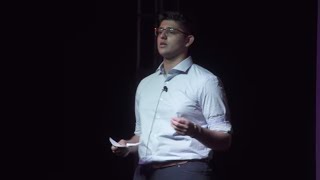
Yeah, yeah, yeah. I failed AP Calc because I was giving a TED Talk the day of my midterm.
What'd you give a TED Talk about?
Oh dude, all the information in that TED Talk is totally right. I'm super impressed with 17-year-old me, but it is so poorly delivered. I was really nervous. It was in front of 1,200 people. And I, I have a problem. Like I was telling my roommates yesterday, I was like, you guys see me at the parties and whatever. It looks like I'm the social butterfly, but I just have insane anxiety. Like you guys gotta let me leave when I like walk out the room. It's not because I'm like flexing on you guys because I'm just like about to have a panic attack. So take that and just in a room of 30 people and compound that to like 1,200. And I was— it took till like halfway through the speech for me to calm down. But yeah, it was called the Four Keys to Success. I think like now more than ever, yeah, what I said in that talk was super valid. It's just really poorly delivered.
So that's all right. That's all right. Yeah. Typically the last question I ask people is just what makes you the most hopeful or excited for the future?
Oh, AI automation. The fact that everything is going to be— we're quickly heading towards a world of like post-work, meaning that people won't have to work for the tasks, even like white-collar, super high-skilled tasks that they were doing before. It's going to get automated away. And so now it's— we're finally unlocking we're getting to a place where probably before you and me are dead, we're going to understand, are humans living to die? Like, literally, do they just— are they born to reproduce, work, and die? Or are we— do we have some external meaning to life? And can— is everybody able to find that? Oh, that sounds really, like, grim because the answer could be, oh, No, like we're literally just meant to be born, reproduce, die. But I think that the same way how like moving from hunter-gatherer societies to like agriculture created the artisan class, like that, like humanity as a whole is going to elevate again. I don't know what that looks like, but I spend a lot of my time thinking about once we get to this world of automation, who are the people that are controlling the levers? Like who are the people that are going to own the infrastructure to make a difference, make a change, do whatever they want. And then how the people on the flip side, the billions of people who don't have access to that infrastructure, don't have access to the, like, able to create it, how are they going to be affected by— how's the people in Nigeria when even like the picking the rice or whatever they were doing now just gets automated and it becomes way cheaper to use robots? What happens to their life. And I think if people like me, like people in San Francisco, people young enough that are going to be the ones building these things, like if we are looking to unlock and maximize human potential, it's going to totally change how the future is built. And so that's— right now I look at myself as I unlock everybody I meet, like I try to. My team, for example, my roommates, anybody, anywhere I go, I'm always trying to like How can I add value? But now it's like, for the first time ever, we're getting to a stage where if we build things the right way, we can unlock all of humanity and its potential. And that's not just for economic gain, that's just, we are going to be living in that like flying hover car, like massive super nice city, like Gilded Age type environment. What happens then? And so that's like the thing that like makes me most hopeful. For the future. But the framework I just gave you can also just be flipped, and you can very quickly go, oh, the wrong people get control, we're fucked. And historically, the wrong people have always gotten control of these things. Right now, Cloudflare is your only DNS provider that like really matters, right? Like they're building for the new internet on the old internet, right? Like you've never thought of Cloudflare as some super monolithic company. But they're better positioned than 99.9% of even big tech to take over the reins of whatever comes next. I'm not talking about automation, but I'm talking about just the internet. There's a lot of people trying to like graph knowledge, things like that. Cloudflare is there. You never thought of that. Like, I never even thought of that before people told me, right? Like, why is Verizon— the internet's going to be the most important thing ever. Verizon, AT&T, Comcast, like, they have a monopoly on the future of development. Like humanity as a whole. In the US, at least, just 5-10 people, like companies, have control of all of that. And then you look at Tesla and, uh, or Amazon, right? Jeff Bezos is a fucking nation-state. Elon Musk is starting to flex his 'I'm a nation-state' muscle by moving all his factories to Texas, by threatening the government and wherever in California where he had his factory, going, 'Yo, I'm just gonna leave. Fuck you guys.' Those are things where these people are inherently just super powerful. Are they going to do it for good or bad? And it doesn't really matter because I just plan on getting to that level and doing it to unlock human potential. That was such a long answer. Holy shit.
Yeah.
I'm just really tired today.
It's all good. It's all good. Yeah. I saw Naval was talking about a similar thing where if you automate everything, you give everyone the potential to have creative jobs, which is why I like the fact that you mentioned artisans, because then if you let people focus on making art, that does elevate mankind in a way. And yeah, we'll see what happens. I'm excited, right? We're still pretty young. And so the world's unrecognizable from even 10 years ago. So it's, it'll be interesting to see what happens 40 years from now.
Our, our education system, ever since we started moving towards STEM, initially we saw like an immense, like immediate ROI. Die when we needed in the Cold War, building the nuclear bomb, the space race, all that stuff. And then we now— we're seeing the long tail effects of that in the sense that we just completely stripped liberal arts education out of everybody except people in really high property tax, generally wealthy areas, or people that, you know, can go to private school or just super smart or just like really rare self-starters who can go learn these things. And I think when we can start integrating liberal arts back into a lot of stuff, giving people a full humanities thing, emphasize that. I think history is the most important thing ever. I think the saying history repeats itself, it's not like history doesn't exactly repeat itself, but it totally rhymes. And I think that people need to have a deeper understanding of what is going on, why are things going on, and they need to be able to like apply some critical thinking to understand where things are headed. And that's just something that we totally stripped people when we went, okay, rote memorization is the way to go, standardized testing is the way to go, learn math, learn this. And those are all important, but I think, yeah, that's— once we get back to automation, we'll probably have a 15 to 20, like a whole generation or more of lag time. But then finally we will get to a place where people are looking to be progressive again and advance humanity forward. And I'm just really— that's that moment of arbitrage for people who are capitalists, but that's also really where people who've already made their money, or just people who care, can come in and try to like shape like the world itself in a more positive, better environment. Okay, cool. You now have a general vision of what my vision of the future is.
So Yeah, you could argue that you're already doing that with Gen Z Mafia. One of the things that I talked to Justin about is I asked him what community building is really. And so he talked about it as, and he wasn't afraid to use the word escapism. So he was talking about literally creating a new reality online, which is the beautiful thing about the internet is that you let people maximize their weirdness online. Except the interesting thing is now we're getting into a situation which this virtual online reality is starting to impact our actual reality. And so in doing so, it's changing the world. Yeah.
And so, I mean, one thing about Gen Z Mafia, and it's something I realized after the fact, but you don't know the compounding effects of a network until— because once a, like, a network comes together, the people are all forever tied by their association with that network. And so we have 2,400 people in Gen Z Mafia right now. Most of them I've never met. Most of them I'll probably never even talk to or never see. But there was one girl, Tobe, that Paula Graham—
yeah, I saw that—
I went to the bottom of the thing and it was like bottom of her bio just said Gen Z Mafia Discord lurker. I go look at our server and she doesn't have a single role, doesn't— nobody knows who she is. I've never seen her talk.
I'm just like Right.
That's that. How many people do we have that we haven't even fully realized yet that's just like next level insane, out of this world? And that's when I was like, yeah, I was like, whoa, the fact like people put this in their bio the way people put YC or something like— yeah, and it's because it's a constant repetitive stream of value. And when you join that community, you get something out of it. If you're looking for fundraising You can get that. If you're looking to get hired, you can get that. If you're looking just for community and network or how to break into tech, you get all of those. And then of course, like I host the fireside chats, we host the fireside chats as a whole. And all these people have all these different like things going on. That's always like super interesting for people to just come here. And so it's just the fact that we have constant touchpoints and repetition, and it's always going around some corner of Twitter. I just realized if I make Gen Z Mafia as best as I can, then Phyon and everything else will just follow suit, right? Because people have a vested interest. Unfortunately, right now, like, I've just been focusing fully on Phyon. Like, I've had no time for anything else. But sometime soon, I hope that we can go partner with the right people. We're talking to some people right now that are very interesting. Yeah, so partner with the right people, build out like an incubator almost and get like a lot of people just broken into tech. I think, and a lot of people, a lot of my friends, like our group chats always disagree on this, but I think Paul Graham, um, as far as like Silicon Valley goes, maybe Steve Jobs, but Paul Graham over the last, like from like 2000 to 2012 was the most influential, important man. Like I think his, like the effects of his writing and all that stuff is finally starting to diminish now and slow down. But the number of people he brought into tech, the number of people that like he worked with at YC, the number of people he funded that just— it's had like literally probably has impacted damn near everybody in the world. And so that's the kind of thing where I'm like, what if we do that but do it even earlier with Gen Z Mafia? And it's like the companies that are getting built— I've raised, I got my angel check, I got it because the guy, our angel is amazing, and everything about the deal was great too. So it made sense to take the money, but realistically we could have built this with like $60, right? Like our entire super deep tech company. And Branch, for example, they raised— I think I can— yeah, I'm pretty sure they've announced it— $1.5 million after 2 or 3 months of work. And they'd only spent $3,000 total, and part— $1,000 of that was company incorporation. And so it's just, there's so many companies now, and we know our generation more than anybody understands very deeply how to make a very small amount of money last a very long amount of time. And I think there are now more people than ever that have just grown up on the internet and understand how to get people to just work for free. Stuff like incentives align a lot more than you think. And so every time my team's like, how do you have— anytime people are like, how do you have a guy from Deloitte? Like, how do you have a guy— like, my CTO is from Deloitte, formerly at Google, Oracle, all these places. Our researchers are like from Rougetti and Lockheed Martin. We got two former founders on our team, and we've got Tesla guy. All working for free, and people are just like, how? Why? Because the incentives align. And so I think that's like what I want to do with Gen Z Mafia. I think a lot of people have just missed that as far as like providing a space. Like, I think Pioneer tries to do this. I just think we can do it a little bit more effectively as far as just viciously forcing as many people through into tech as we can. And like just diversifying the entire ecosystem. Yeah.
That's awesome.
You keep talking. Like, I'm just going to keep talking.
So yeah, no, it's awesome. Obviously to talk to you. I, I think you mentioned it earlier, talking to people that provide immense value, but also talking to people that you look up to. So that's what this represented for me is talking to someone that's right, 5, 10 steps ahead of the curve and getting your insights on different things. And the more I do these right podcast episodes, right, which is literally just these recorded Zoom calls, is I learn how people have similar thoughts and ideas to me. And I think we're all navigating the same things, which is really interesting. So yeah, I really appreciate you making the time and doing this.
Yeah, of course. And the last thing I'll leave you with is just build, just do it. If you have an idea, there's this guy from Gen Z Mafia, he stopped by our house a couple days ago and it just blew my mind how he had people lined up, like customers lined up and all this stuff, but he works at Bloomberg as software engineer. And so he just was like, wait, it's going to take me a while. Execution's my problem. This and that. I'm like, shut up, quit your job. I'll get you a $50,000 check. Go build. Like, I'm like, that's, Either you do it or you don't. Like, I dropped out before I got the check. Like, I just had— I just knew it. So stop worrying about what if this, what if that. If you've got 2 years saved up, dude, just go do it. Even if you have nothing saved up, just go do it. What's the worst that can happen? You're gonna be way better off than you were. And that's the thing, something like I hate— I hate like telling people, but it's totally true. It's just as long as you do it, even if you fail, you're gonna be totally fine. Once you're in the ecosystem, it's a circular economy. People understand that the same person that failed when they were 20 is going to at some point, more than likely, they will have a hit. They will have a half a billion, billion dollar exit. They will have, you know, like assuming they meet some criteria. And so I think that's for a lot of people, you just gotta say screw it and go for it because you're gonna meet other founders, you're gonna meet a bunch of VCs, you're going to build those relationships. And this ecosystem, if you can't raise like half a million dollars, then you're probably not ready to be like a founder. If you just can't go out there, either you have a product or you've got letters of intent or you've got just that ability to put a team together and explain the vision, something like that. Like the amount of capital out there, we just printed $6 trillion. Most of that came whether through Google ad spend or through like enterprise, whatever, or cloud spender. Most of it came back to tech, and most of it's then filtered down through the system by now. And just the money managers have way more money than ever to manage. And so you've just got to be able to either make sales or get some— fundraise some money and just do it. Sorry, sorry. But yeah, my final advice is Carpe Diem. See you today. Go do it. Knock that shit out.
Okay, appreciate it, bro. Appreciate it. Thanks so much, and awesome to talk to you. Take care.
Bye.
More from Sudarshan
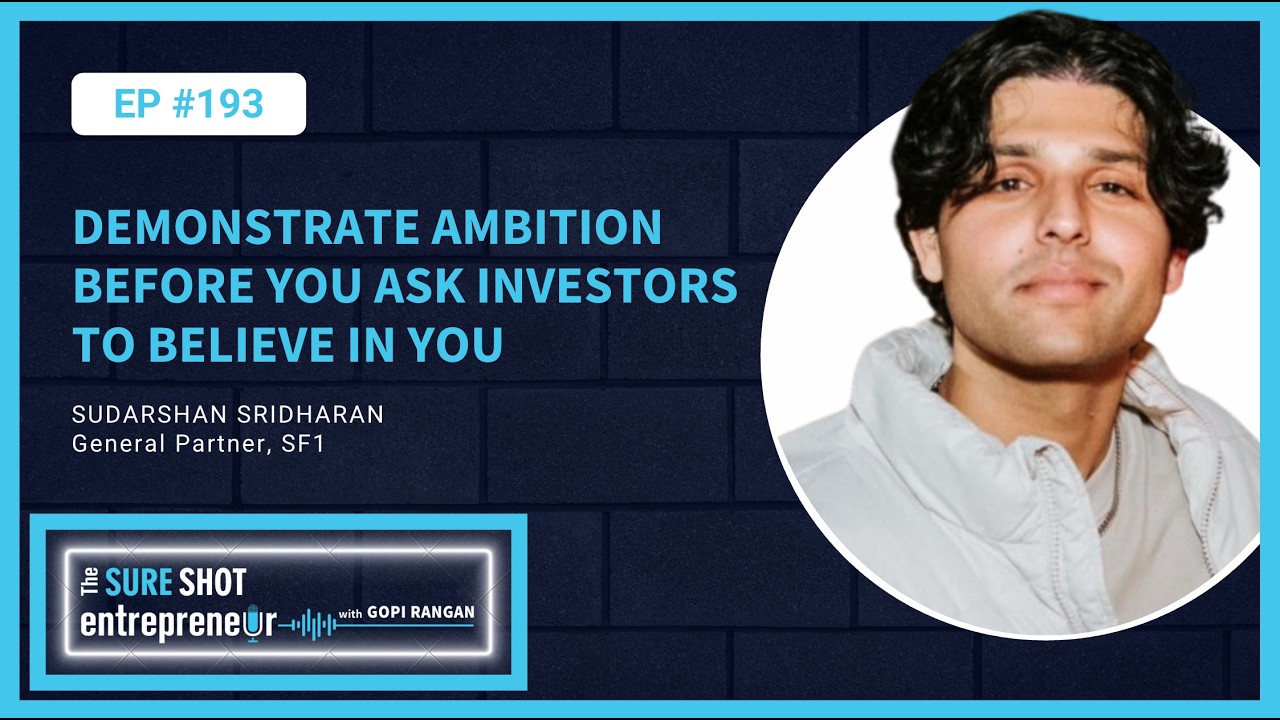
Episode 193: Demonstrate Ambition Before You Ask Investors to Believe in You | Sudarshan Sridharan

How to start a startup? Building Pipeline CRM with Sudarshan Sridharan CEO, Pipeline - Interview #10
How VC diligence works at different stages + Fion's Sudarshan Sridharan on wildfire tech | E1522